EdTech Data Standards: What They Are & Why You Should Use Them
EdTech Data Standards: What They Are & Why You Should Use Them

Who Am I?
- Dennis Slade Jr.
dennissladejr@gmail.com
- 25+ years experience in web & desktop applications, software support, training, and management
- B.A. in Computer Science from Vassar College
- 30+ years providing tech support to Mom

In the beginning...
... There Was EdTech!
Educational Technology, or Edtech, can be defined as "the practice of introducing information and communication technology tools into the classroom to create more engaging, inclusive and individualized learning experiences."
While EdTech sometimes intersects with eCommerce, it usually does not. This is especially true for EdTech dealing directly with students and educational institutions.
... There Was EdTech!
A prime consideration in EdTech is the security and interoperability of student data between classes, schools, districts, and EdTech providers.
Major laws like COPPA (U.S. Children's Online Privacy Protection Act), FERPA (U.S. Family Educational Rights and Privacy Act), CDPA (N.Y. Child Data Protection Act), CCPA/CalOPPA (California online privacy), and GDPR (E.U. General Data Protection Regulation) continue to strengthen protections for student data and complicate data handling for EdTech developers.
... There Was EdTech!
Interoperability is the ability of computer systems or software to exchange and make use of information. This information exchange can be between internal systems as well as between internal and external systems.
In EdTech there is a perpetual dance between easy interoperability of student data and the security of that data.
Pre-existing specifications which handle both interoperability and security are very valuable to schools and districts, which typically use dozens of systems to track student personal data and assessments.
So where are we going with this?
Welcome to Everyone's Nightmare...

So many systems,
so much interoper-ability, so little time...
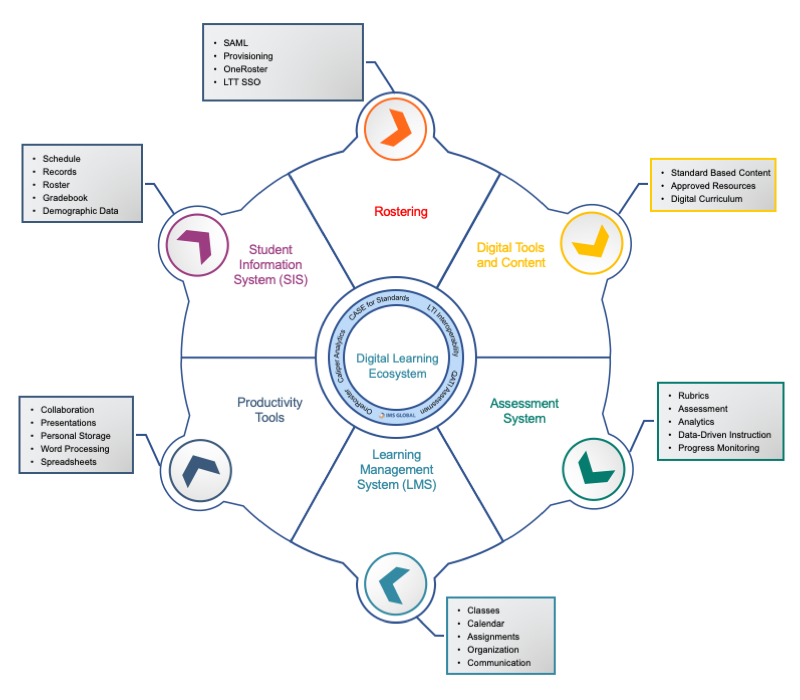
So many systems,
so much interoper-ability, so little time...
What unites the previous two slides? Why are they two sides of the same coin?

Communication problems
Standards to the Rescue
EdTech customers and providers are increasingly using standard APIs and data formats to ease interoperability/communications between their systems.
Medium-to-large sized companies have dozens of systems communicating with one another but few have adopted standard APIs and data formats. This slows down development internally, and can be a factor when customers request interoperability with newly developed systems.
Companies are at a competitive disadvantage when their systems do not adhere to any standards.
For over 20 years the 1EdTech Consortium (formerly known as IMS Global) has brought together educational providers, state/national governmental departments of education and tech companies in an effort to standardize every aspect of the EdTech ecosystem.
This ecosystem includes all corners of the digital curriculum from basic student/teacher data to school organization and calendaring, rostering, digital credentialing, assignments, assessments, content discovery, and more.
Standards to the Rescue
- Better interoperability and security with vendors and customers (school districts)
- Broaden the capabilities and offerings of our enterprise
applications - to both internal applications as well as vendors and customers
- Decrease development time and onboarding
- Attract employees more experienced in EdTech
- Opportunties for connection to (and leadership in) the wider EdTech world
Overall Reasons to Adopt Standards
Focusing specifically on APIs...
Development teams frequently need to create and expose new APIs, and so often they find themselves "reinventing the wheel", spending significant amounts of time trying to figure out interfaces and their underlying schema.
Adopting standards that are already published, comprehensively documented, and industry peer-reviewed can significantly reduce the time needed to implement and expose new APIs.
Overall Reasons to Adopt Standards
1EdTech Standards
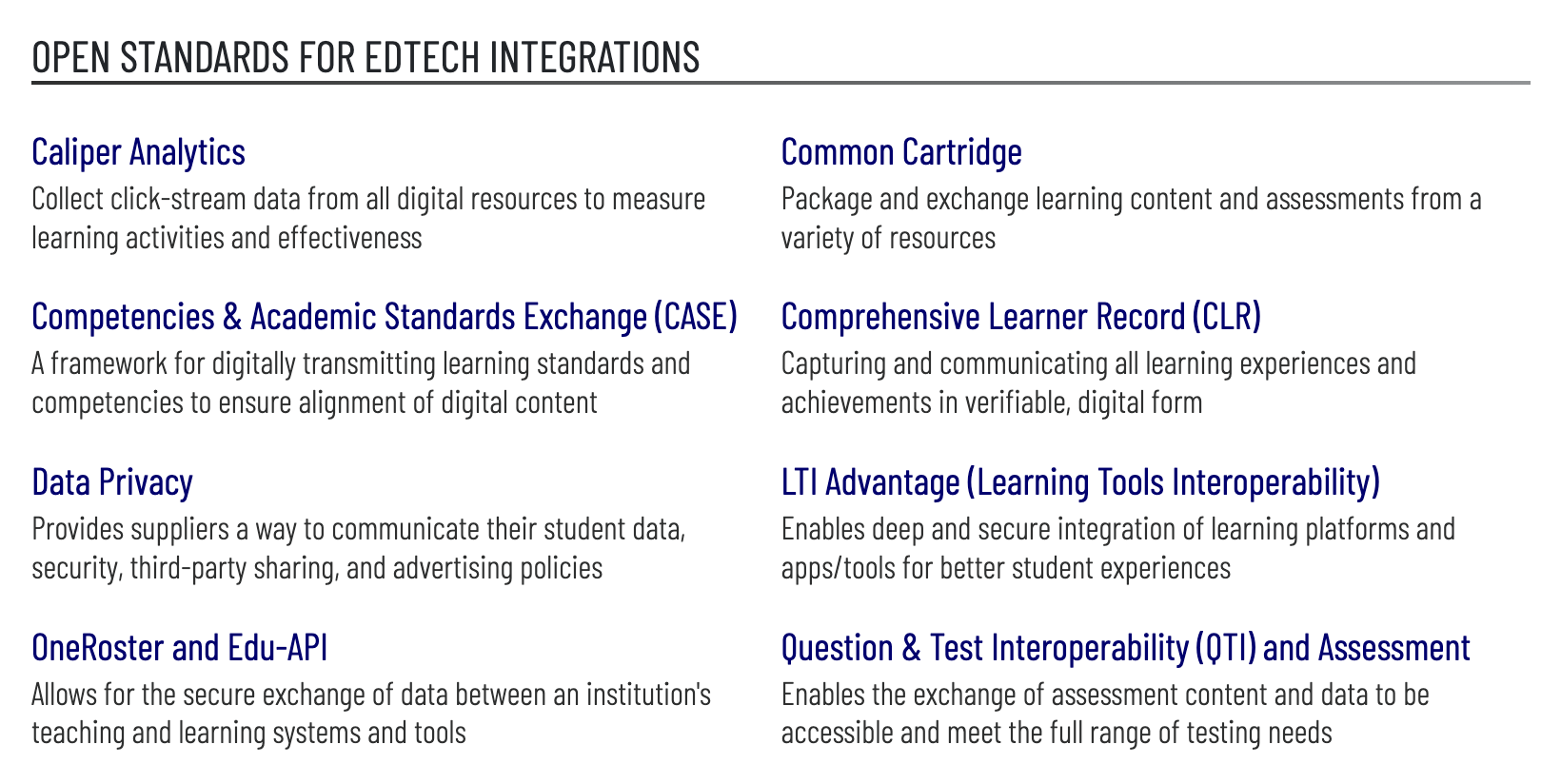
1EdTech Standards
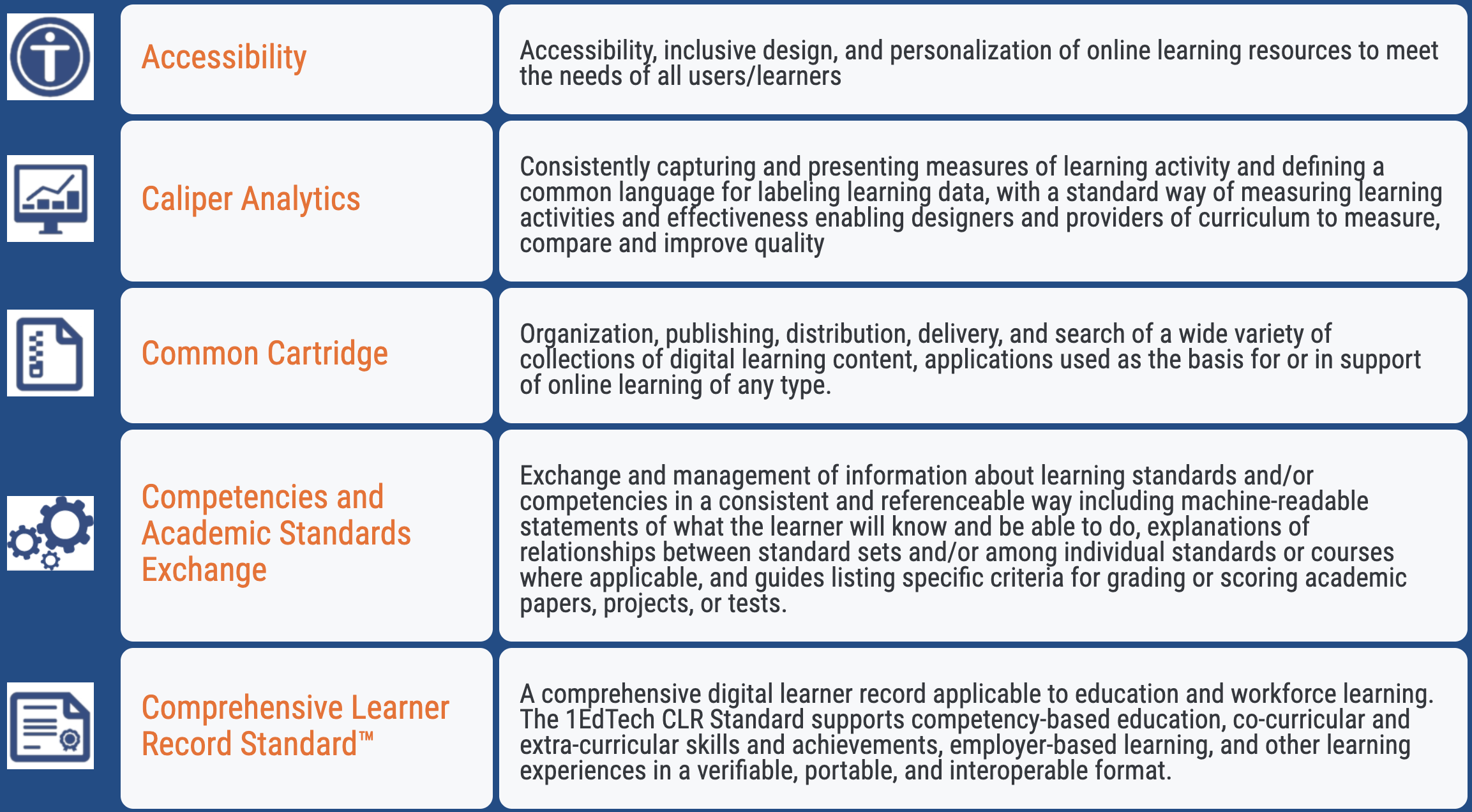
1EdTech Standards
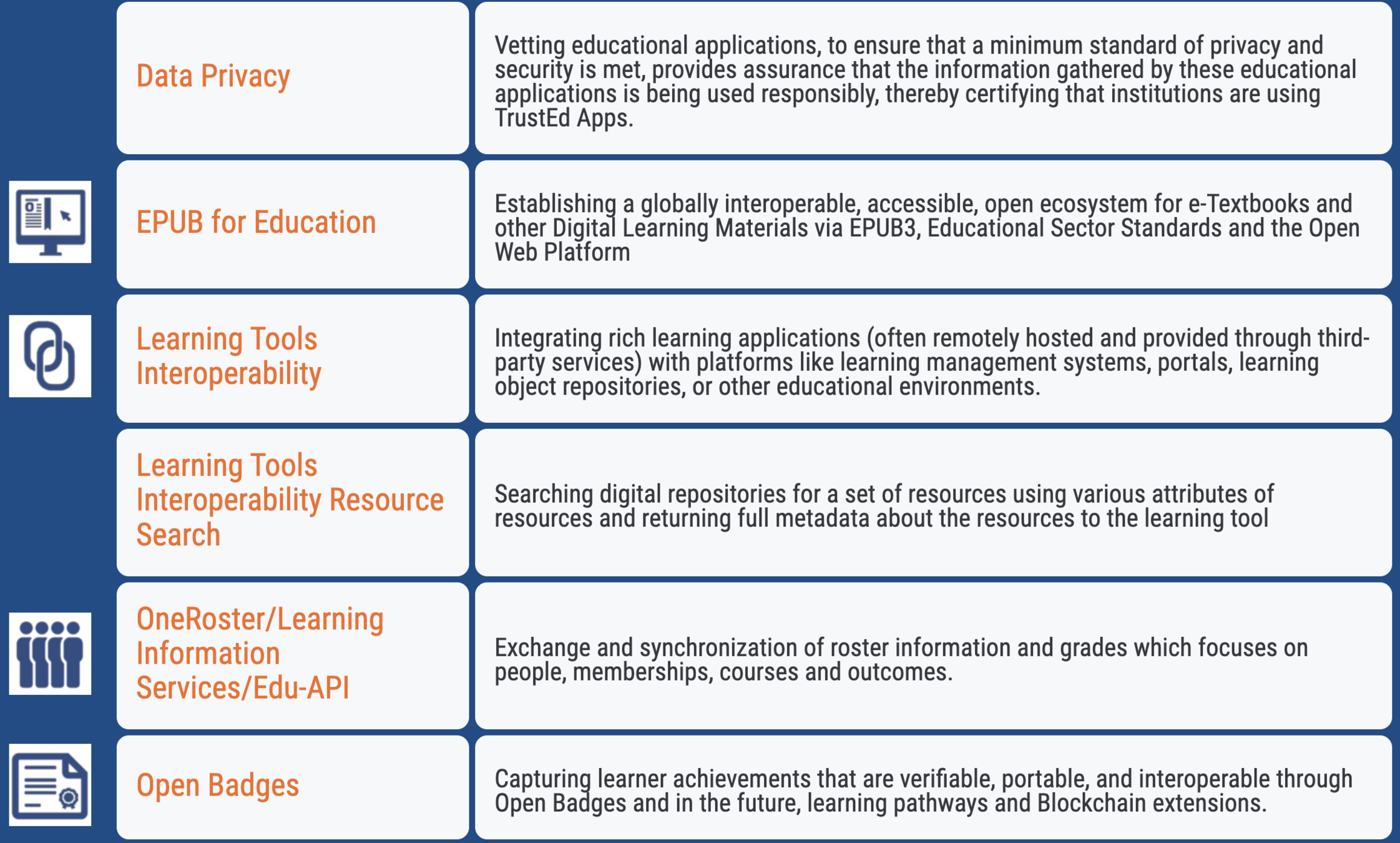
1EdTech Standards
OneRoster APIs: Pass school, teacher, and student data between all internal applications in a standard way; extract school, teacher, and student data from customer and suppliers in real-time
Learning Tool Interoperability (LTI): Securely launch applications between platforms; Receive student roster data from supplier systems at launch time (including support for deep linking)
Accessibility: Meet legal accessibility requirements in many jurisdictions in a less ad-hoc manner
What Standards Should I Start With?
Common Cartridge and LTI Resource Search: Common implementation of deep linking and search across many applications
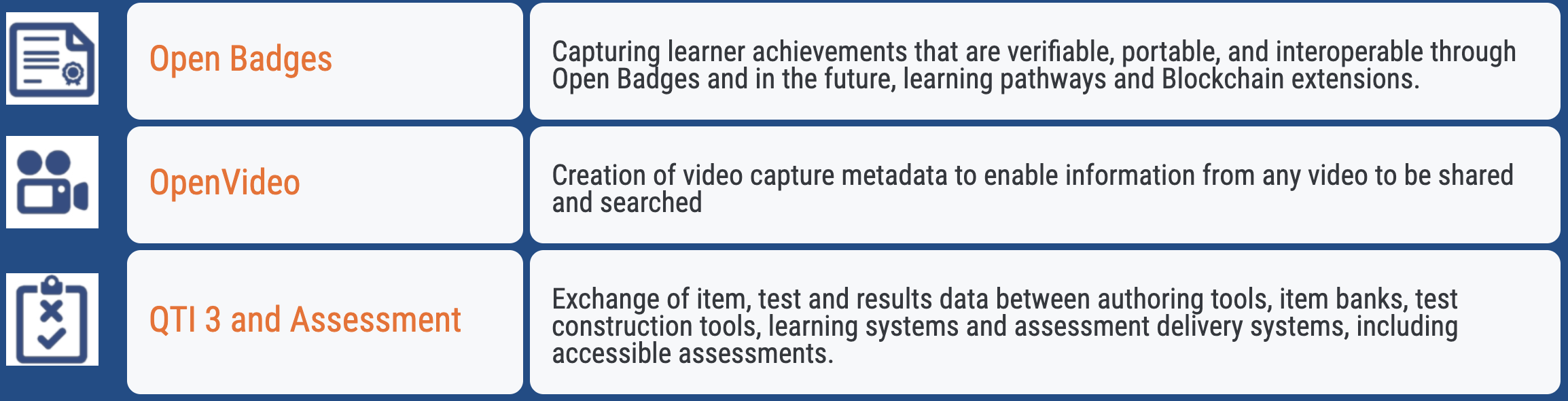
QTI 3 and Assessment: Ease interoperability of test and results data between authoring tools and assessment delivery systems
EPUB for Education: Standardize book content across all our applications
What Standards Should I Start With?
Read up on 1EdTech at 1edtech.org or jump directly to the standards definitions at imsglobal.org/node/701
Check out videos on 1EdTech's YouTube channel
Consider attending the annual Learning Impact Conference
What's Next?
Q & A
Thanks for listening!
Dennis Slade Jr.
• dennissladejr@gmail.com
• https://linkedin.com/in/dennissladejr/
This presentation on Slides.com: