Routing Protocols
Dr Alexios Louridas
What are we going to see today?
Why IPv6?
more addresses
IPv4 nearly depleted all addresses.
Reduce Delays
Need to improve processing and forwarding of IP packets
More specialised data
More high priority data available. Need QoS to make sure that critical application data are received timely.
-
Header Fixed Length (40 Bytes)
-
No on-route Fragmentation
-
Deleted 7 parts of IPv4 header
-
Added one field in IPv6
OUR SERVICES
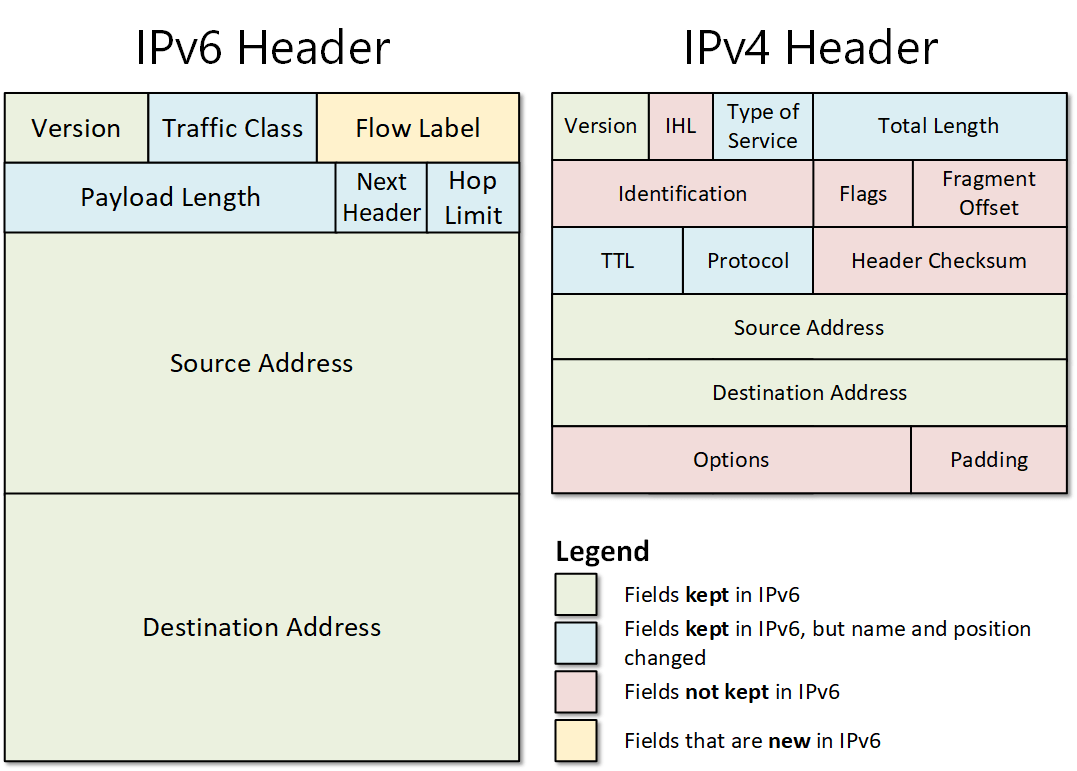
| Header Field | Description |
|---|---|
| Version | Version number, 6 for IPv6 |
| Traffic Class | The Traffic Class field indicates the IPv6 packet’s class or priority. The size of this field is 8 bits. This field provides functionality similar to the IPv4 Type of Service field. Like the Type of Service field in the IPv4 header, the first 6 bits of the Traffic Class field represent the DSCP field as defined in RFC 2474, and the last 2 bits are used for ECN as defined in RFC 3168. |
| Flow Label | The Flow Label field indicates that this packet belongs to a specific sequence of packets between a source and destination, requiring special handling by intermediate IPv6 routers. |
| Payload Length | The Flow Label field indicates that this packet belongs to a specific sequence of packets between a source and destination, requiring special handling by intermediate IPv6 routers. |
IPv6 Header Fields
| Header Field | Description |
|---|---|
| Next Header | The Next Header field indicates either the type of the first extension header (if present) or the protocol in the upper-layer PDU (such as TCP, UDP, or ICMPv6). The size of this field is 8 bits. When indicating an upper-layer protocol, the Next Header field uses the same values that are used in the IPv4 Protocol field. |
| Hop Limit | The Hop Limit field indicates the maximum number of links over which the IPv6 packet can travel before being discarded. The size of this field is 8 bits. The Hop Limit field is similar to the IPv4 TTL field except that there is no historical relation to the amount of time (in seconds) that the packet is queued at the router. When Hop Limit equals 0 at a router, the router sends an ICMPv6 Time Exceeded-Hop Limit Exceeded in Transit message to the source and discards the packet. |
| Source Address | The Source Address field indicates the IPv6 address of the originating host. The size of this field is 128 bits. |
| Destination Address | The Destination Address field indicates the IPv6 address of the current destination node. The size of this field is 128 bits. In most cases, the Destination Address field is set to the final destination address. However, if a Routing extension header is present, the Destination Address field might be set to the address of the next intermediate destination. |
IPv6 Header Fields

IPv4 to IPv6
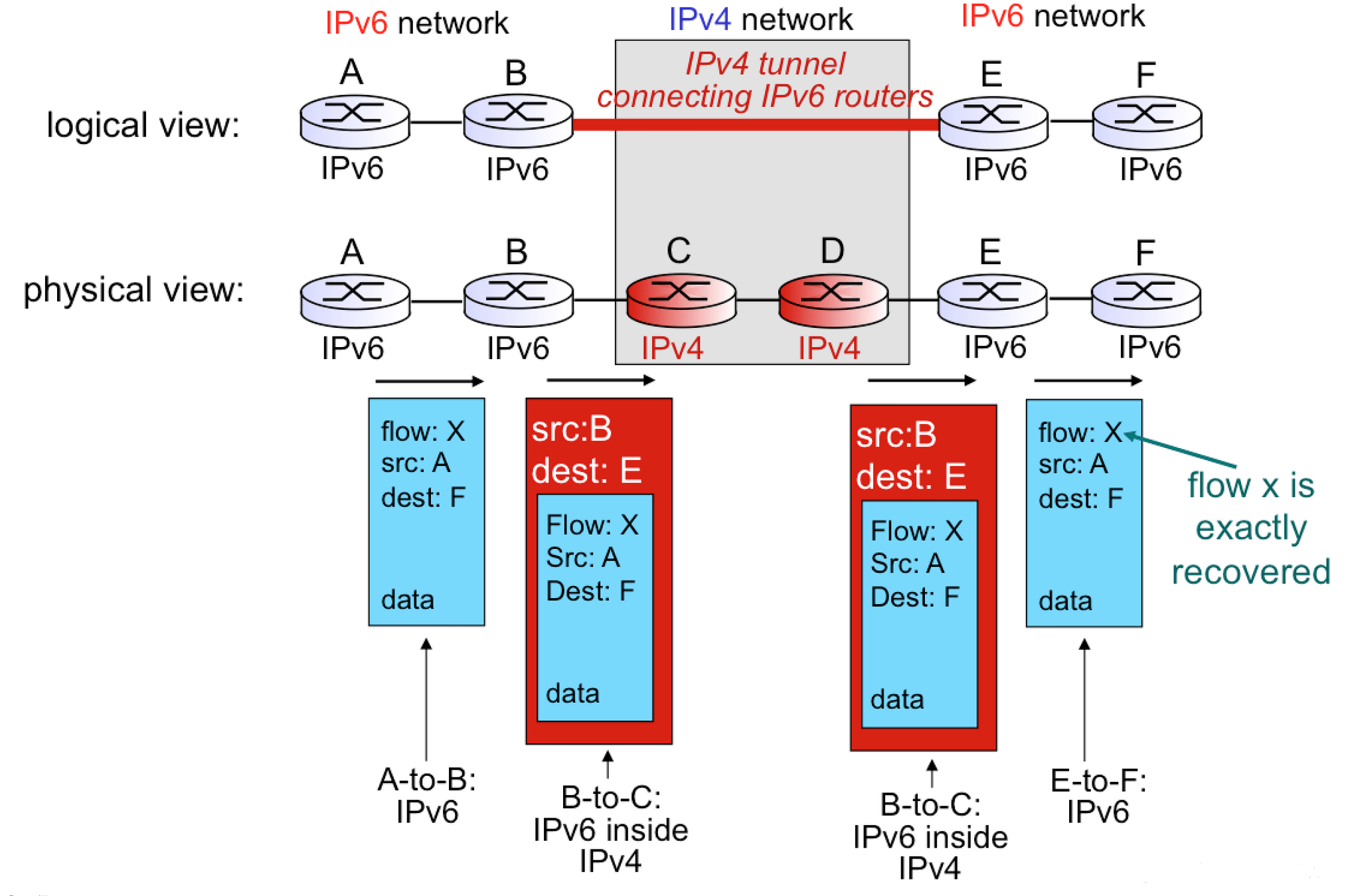
Cannot update all routers in one day.
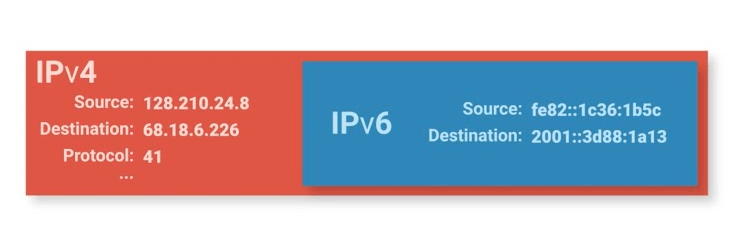
Thus IPv6 datagrams would need to be carried as payloads in IPv4 datagrams. This is called tunnelling.
Tunnelling

Internet Control Message Protocol (ICMP)
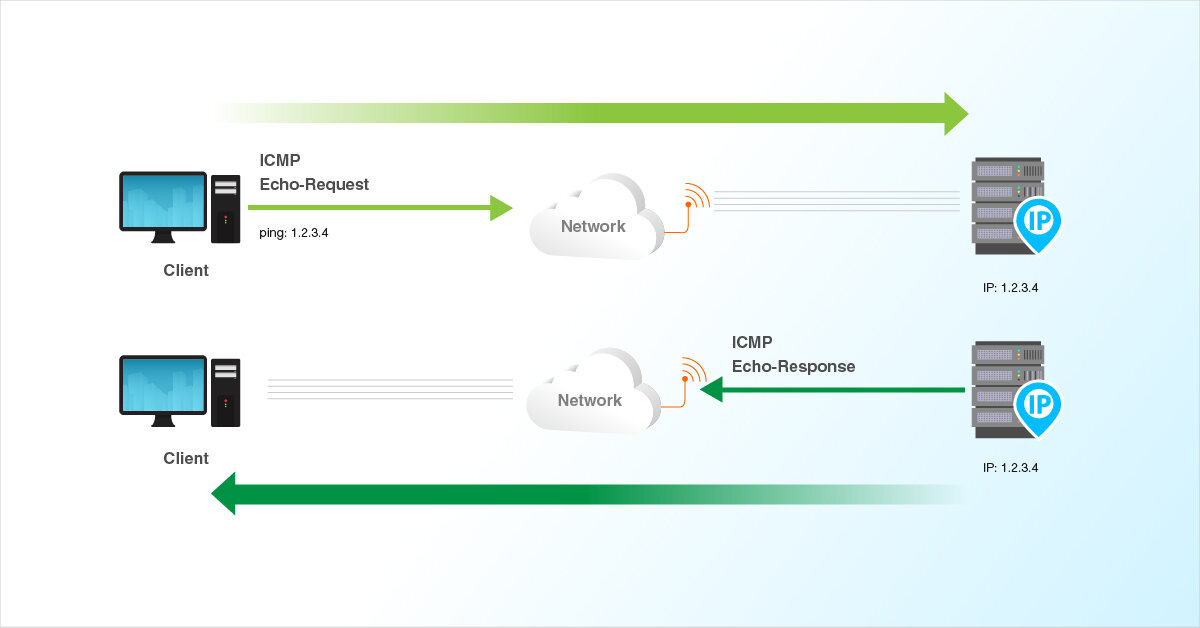
A network layer protocol that communicates vital information between network devices about connectivity and network status.
-
Error Reporting
-
unreachable destination
-
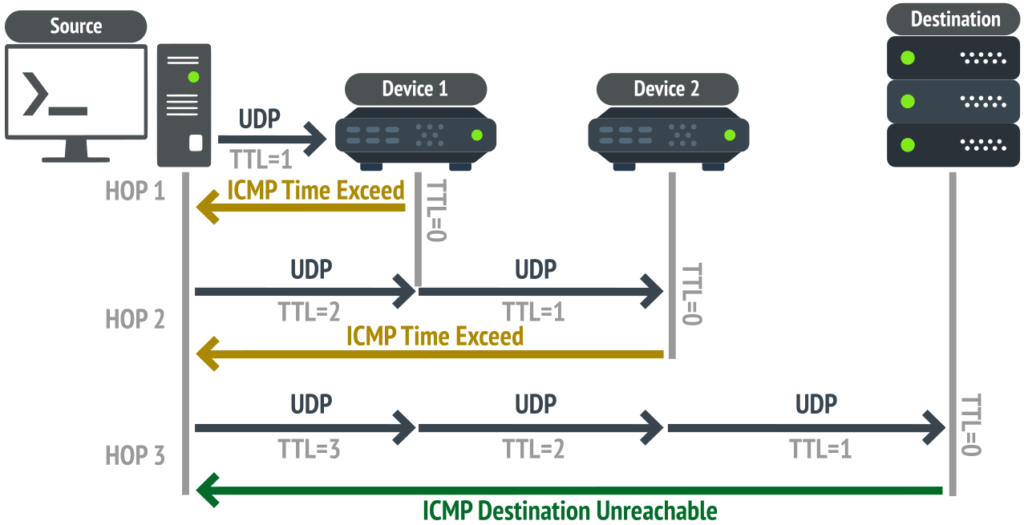
timeout (0 hops reached)
-
Fragmentation issues
-
-
Diagnostics
-
ping command
-
trace route command
-
-
Network Security
-
Detect unusual network traffic
-
Use Cases of ICMP

Ping = ICMP packets
Trace Route and ICMP
-
Buffering, classification, and scheduling
-
Help routers efficiently manage network traffic, ensure data integrity, and optimize network performance.
-
-
Throughput
-
Maximising throughput within the whole network.
-
-
Delay
-
Minimizing the mean packet to send traffic through the network effectively.
-
Routing

-
Routing decisions are done on the fly
-
Routing reflect changes in the topology, and sometimes changes in the traffic as well.
-
Also called Dynamic Routing
Adaptive
-
Routing decisions happens offline
-
Routing is preloaded in router before the network is booted
-
Also called Static Routing
Non-Adaptive
Routing algorithms
-
Routers know physically connected neighbours, link costs to neighbours
-
Iterative process of computation, exchange of info with neighbours
-
Bellman-Ford - Routing Information Protocol (RIP)
distance Vector
-
All router have complete topology, link cost information.
-
Open Shortest Path First (OSPF)