Blockchain and Decentralized Finance:
The 2024-25 Intro Lecture
Presenter: Andreas Park


What is a Blockchain?




What is a Cryptocurrency?


Conceptually, what is a blockchain?
What our financial infrastructure looks like
payments
stocks, bonds, and options
swaps, CDS, MBS, CDOs
insurance contracts
payments
stocks, bonds, and options
swaps, CDS, MBS, CDOs
insurance contracts
\(\Rightarrow\) a single common resource
- easy value management
- straightforward transfers & ownership accounting
- new types of contracts and usage of assets
- \(\ldots\)
What would the most efficient financial infrastructure look like?

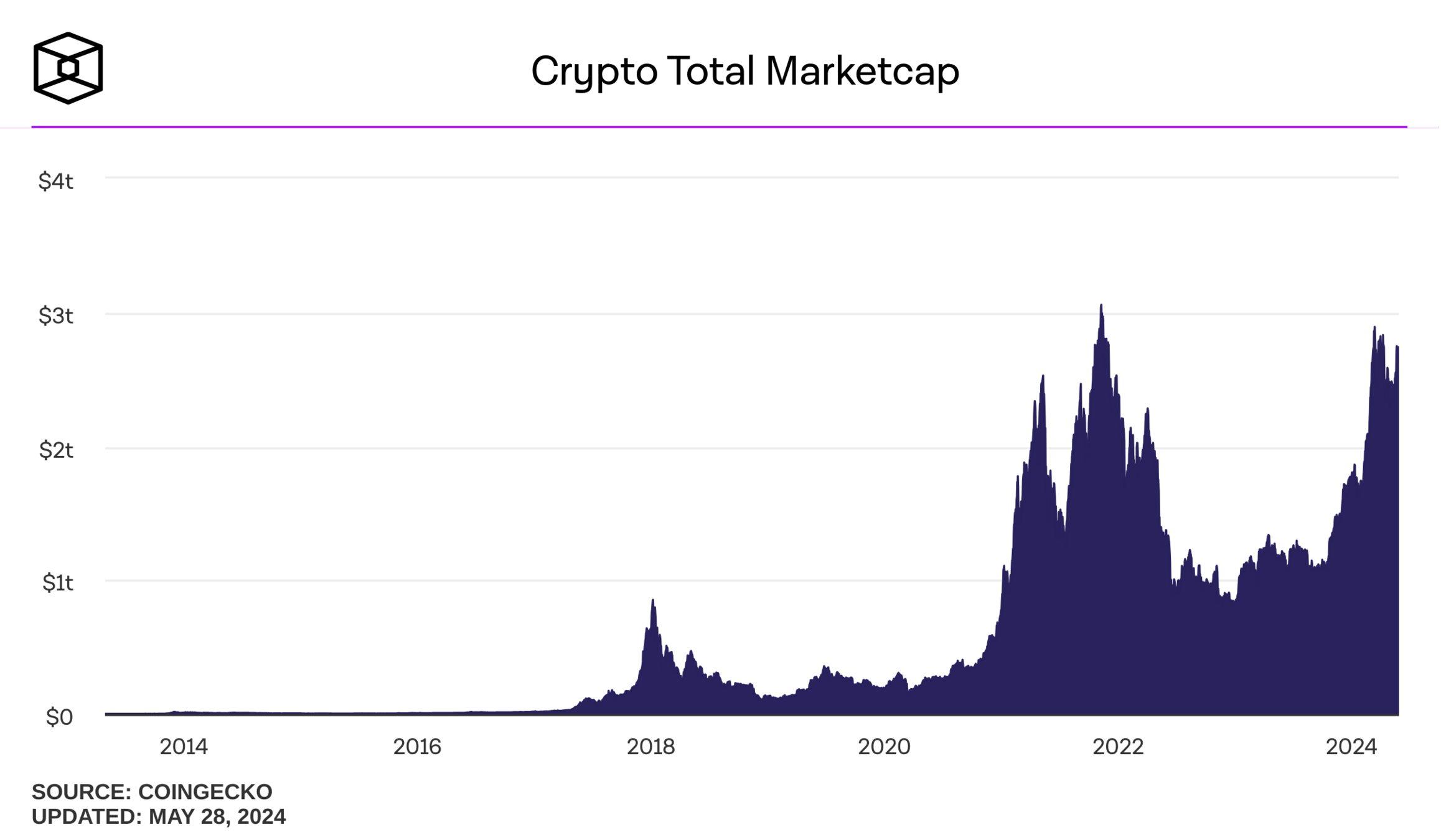
\(\approx\) 50% is bitcoin (but used to be 70%)
How do you own a blockchain asset? Addresses, Accounts, Wallets, and Public/Private Keys
Smart contract accounts
- controlled by code
- decentralized applications
- tokens
Externally owned accounts
controlled by private keys
private
key
public
key
seed phrase
public
address
wallet = software to keep and use private keys
- Self-custody of assets
- Access to financial infrastructure
- Value management layer = common resource
- Platform approach to commerce
What makes blockchain-based finance different from TradFi?
Decentralized Trading
Trading Infrastructure
payments network
Stock Exchange
Clearing House
custodian
custodian
beneficial ownership record


seller
buyer
Broker
Broker







Application: decentralized trading with automated market makers






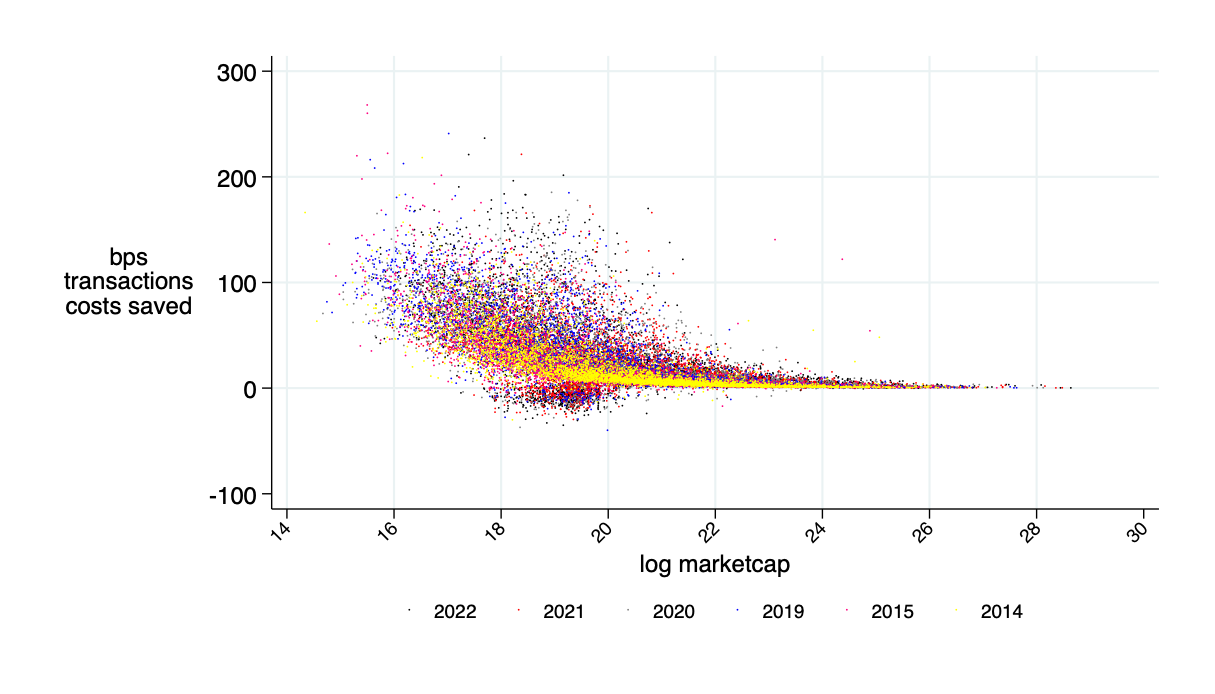
Source of savings:
- better risk sharing among liquidity providers
- better use of capital
Possible transaction cost savings when applied to equity trading: \(\approx\) 30%
Source: "Learning from DeFi: Would Automated Market Makers Improve Equity Trading?" working paper, Malinova & Park 2023
Pool-based lending principles
borrow
provide collateral
Application: Pool-based borrowing and lending
Obvious Smart Contract Application: Automate Investment Strategies
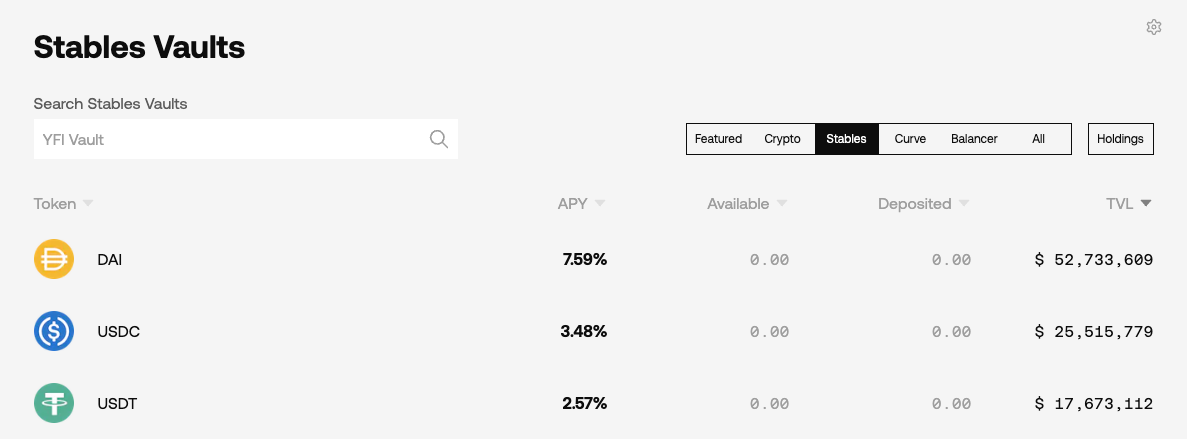

idea: create new mutual fund like asset
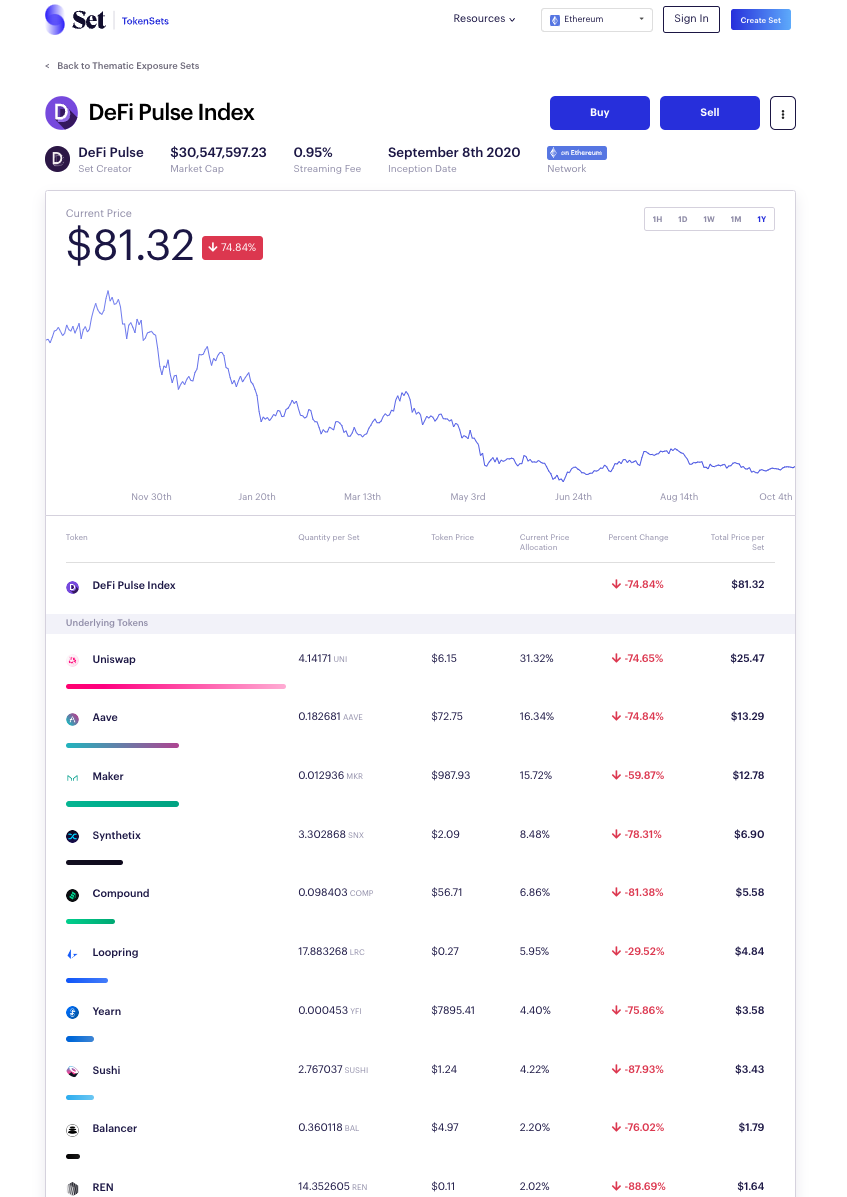
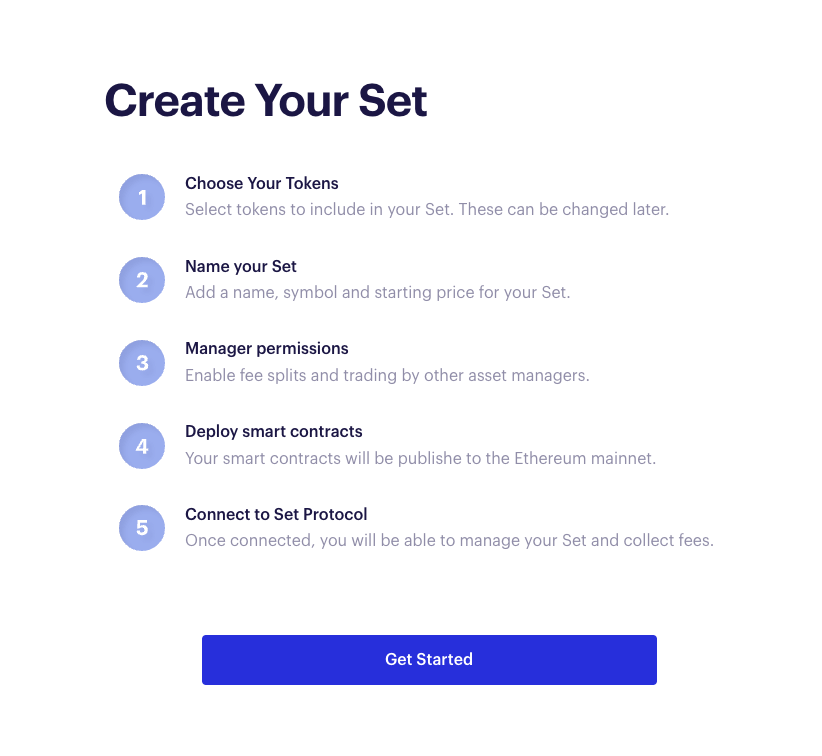
"yield aggregator:" push capital where rate of return is highest
Flash Loans
5. repay DAI

for loan
with health factor <1
liquidation
opportunity

1. flash-borrow DAI
2. repay loan
with DAI
3. claim
collateral ETH
4. convert ETH to DAI


What roles do tokens play?
- People clearly treat tokens and cryptocurrencies as objects of speculation
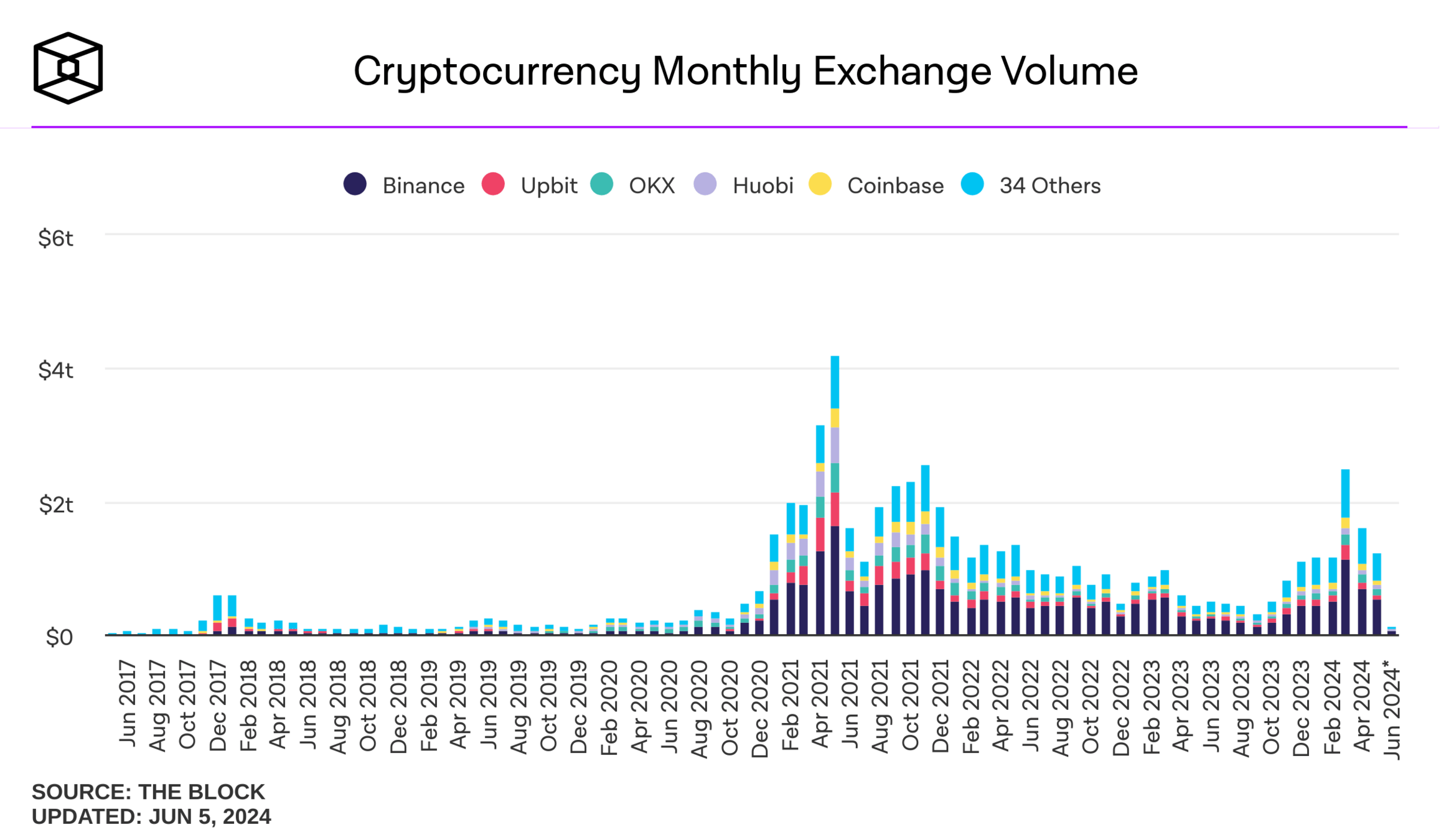
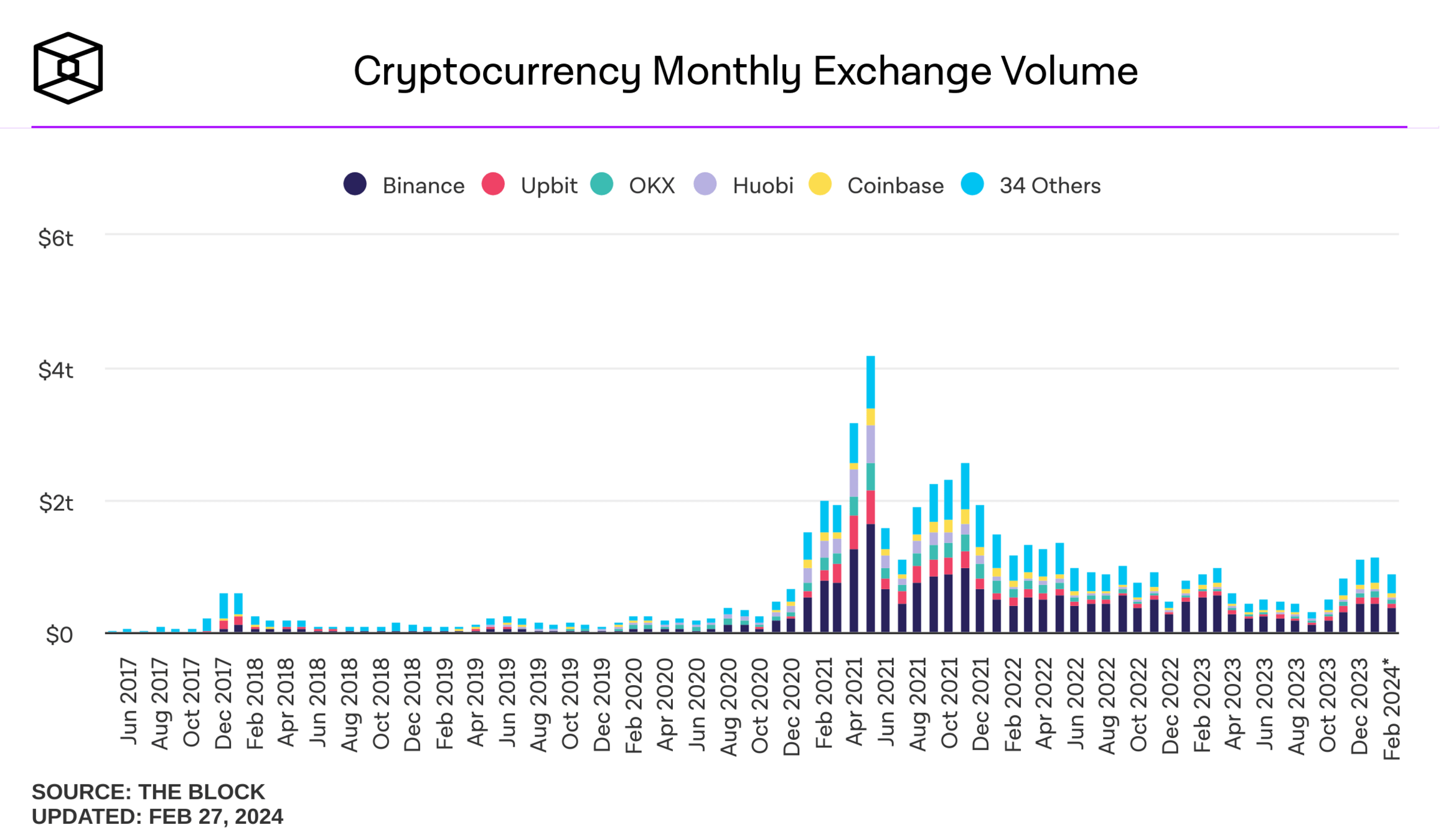
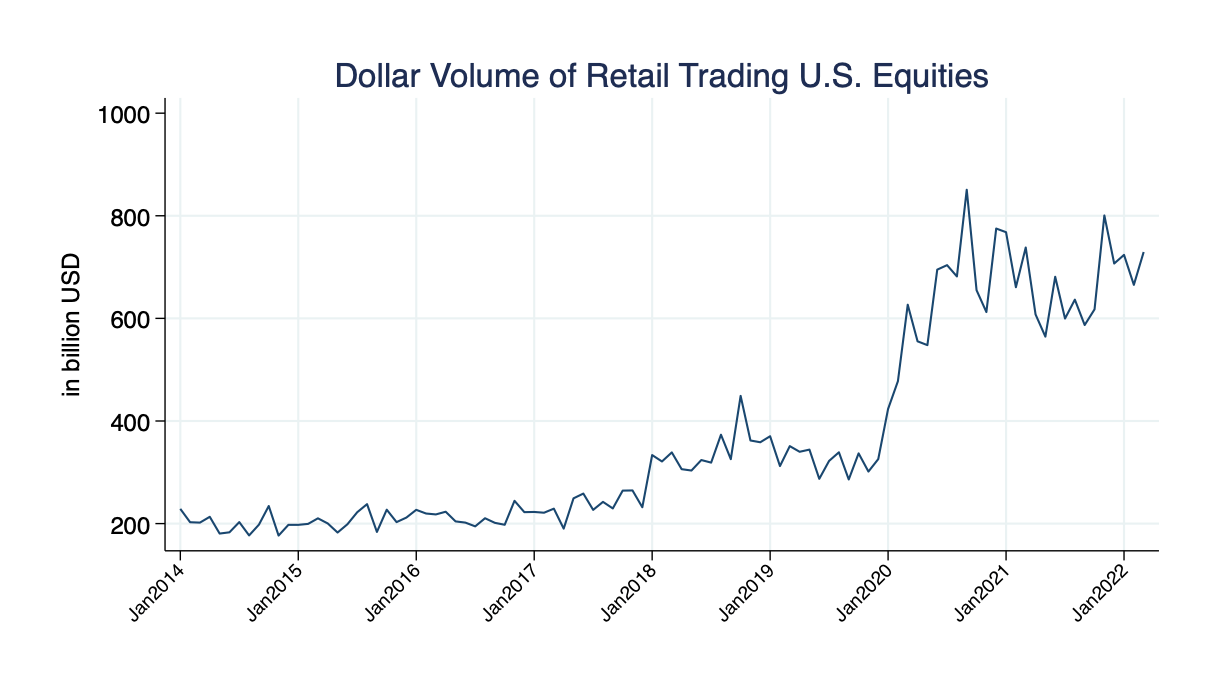
- data: authors calculations from TAQ (up to March 2023)
- crypto volume worldwide is larger by factor >4
- Self-custody of assets
- Access to financial infrastructure
- Value management layer = common resource
- Platform approach to commerce
What roles do tokens play?
recall the differences
\(\to\) key feature: no necessary intermediaries
Application 1: decentralized trading with automated market makers
Problems:
- How to get liquidity?
- How do you attract traders?
lesser problem because
- tokens trade elsewhere
- arbitrage creates activity
Common solution: create a reward token! Here's how this works
Step 4: users receive a reward token based on the time that they lock up the "receipt" token

Step 3: users lock up the "receipt" token in a smart contract

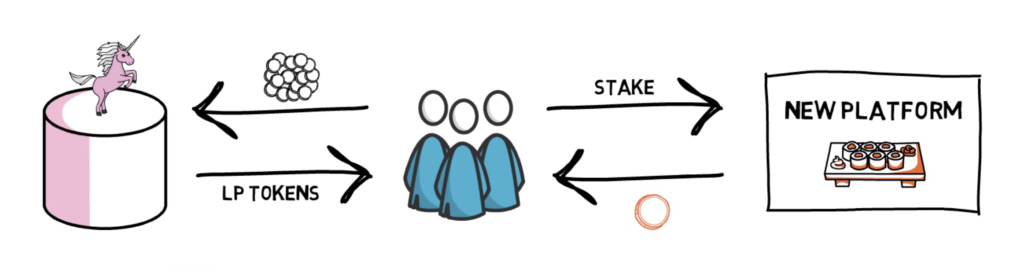
Step 2: users contribute liquidity and get a "receipt" token
Step 1: create reward tokens and deposit into a smart contract
borrow
provide collateral
Application: Pool-based borrowing and lending
Application 2: decentralized Borrowing and Lending
Same problems as with trading:
- How to get liquidity?
- How do you attract borrowers?
But: in contrast to trading, here you need both!
liquidity \(\nearrow\)
volume \(\nearrow\)
protocol fees \(\nearrow\)
token value \(\nearrow\)
Platform economics is tricky:
- What's the product?
- How do you get it started?
- How do you get people to contribute?
- How do you earn money?
Without intermediaries:
platform economics!
incentives for both?
Asset Tokenization or
"The Creation of Asset-Linked Tokens"
Tokenization is coming
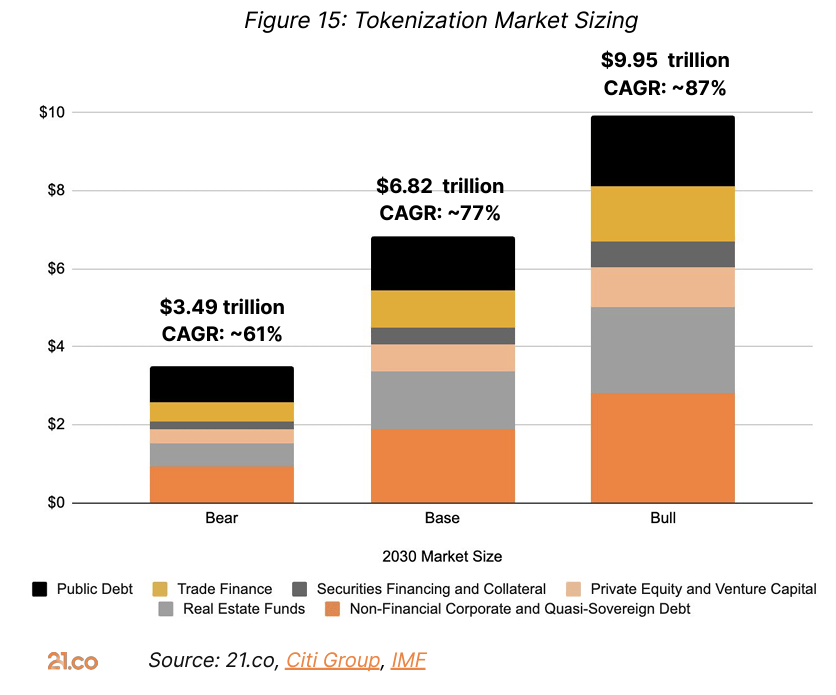
- this list contains mostly "neglected" assets
- what about very "busy" assets aka equities
- what challenges apply to tokenization?
- what problem are you trying to solve vis-a-vis traditional markets?
- what do we have to worry about with a defi implementation?
- what are the opportunities?
What is a stablecoin?
digital representation of a unit of a fiat currency on a blockchain
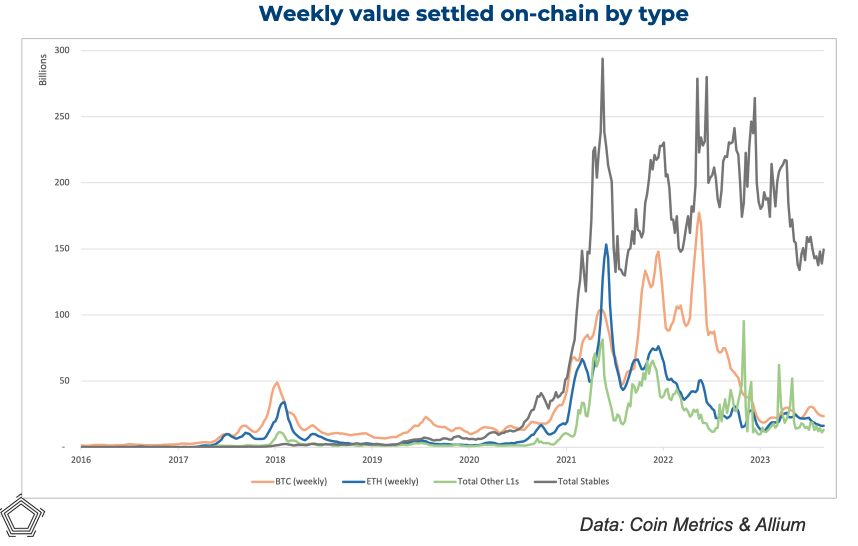
pulled from Nick Carter's talk on "Will stablecoins serve or subvert U.S. interests?"
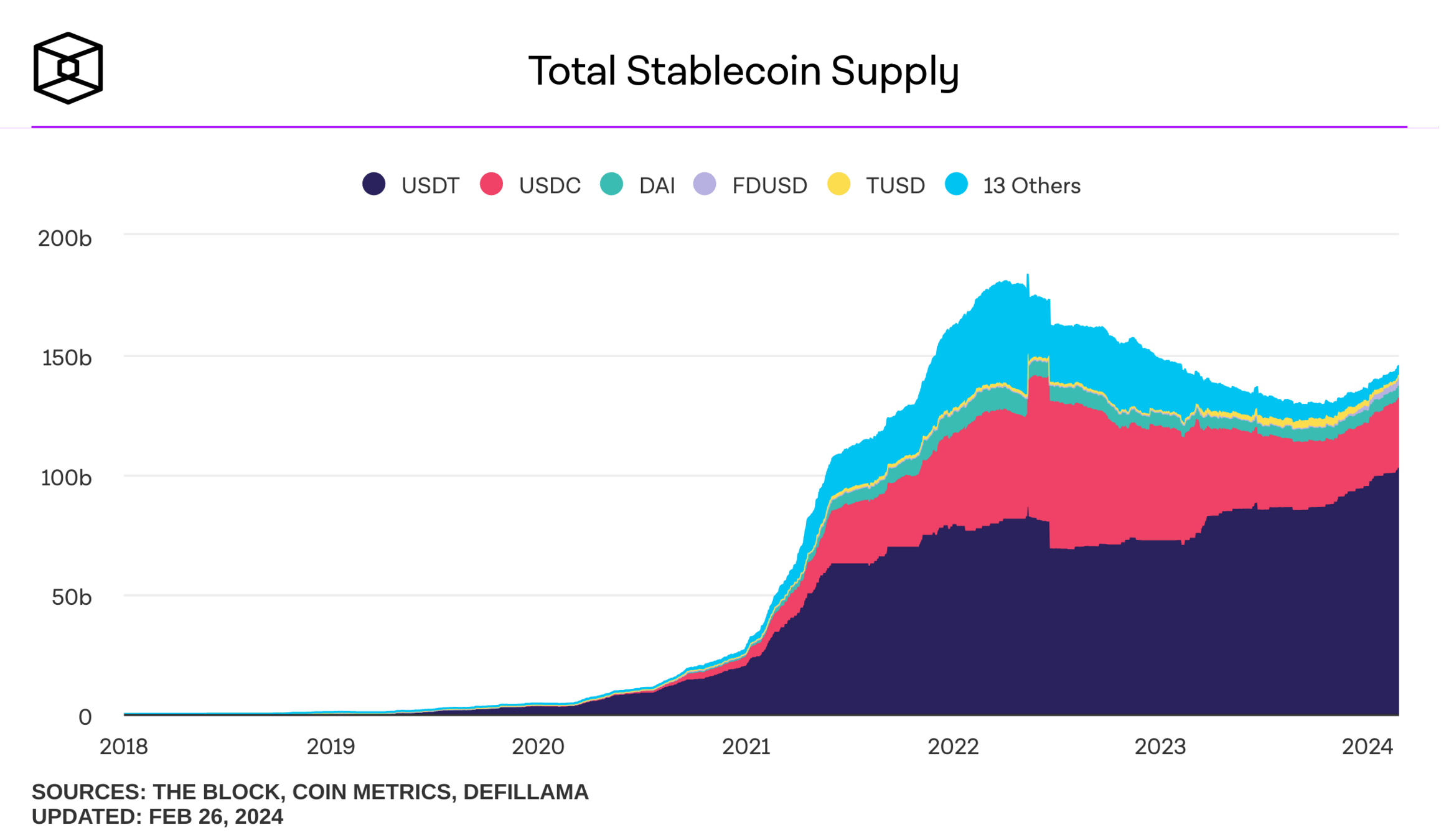
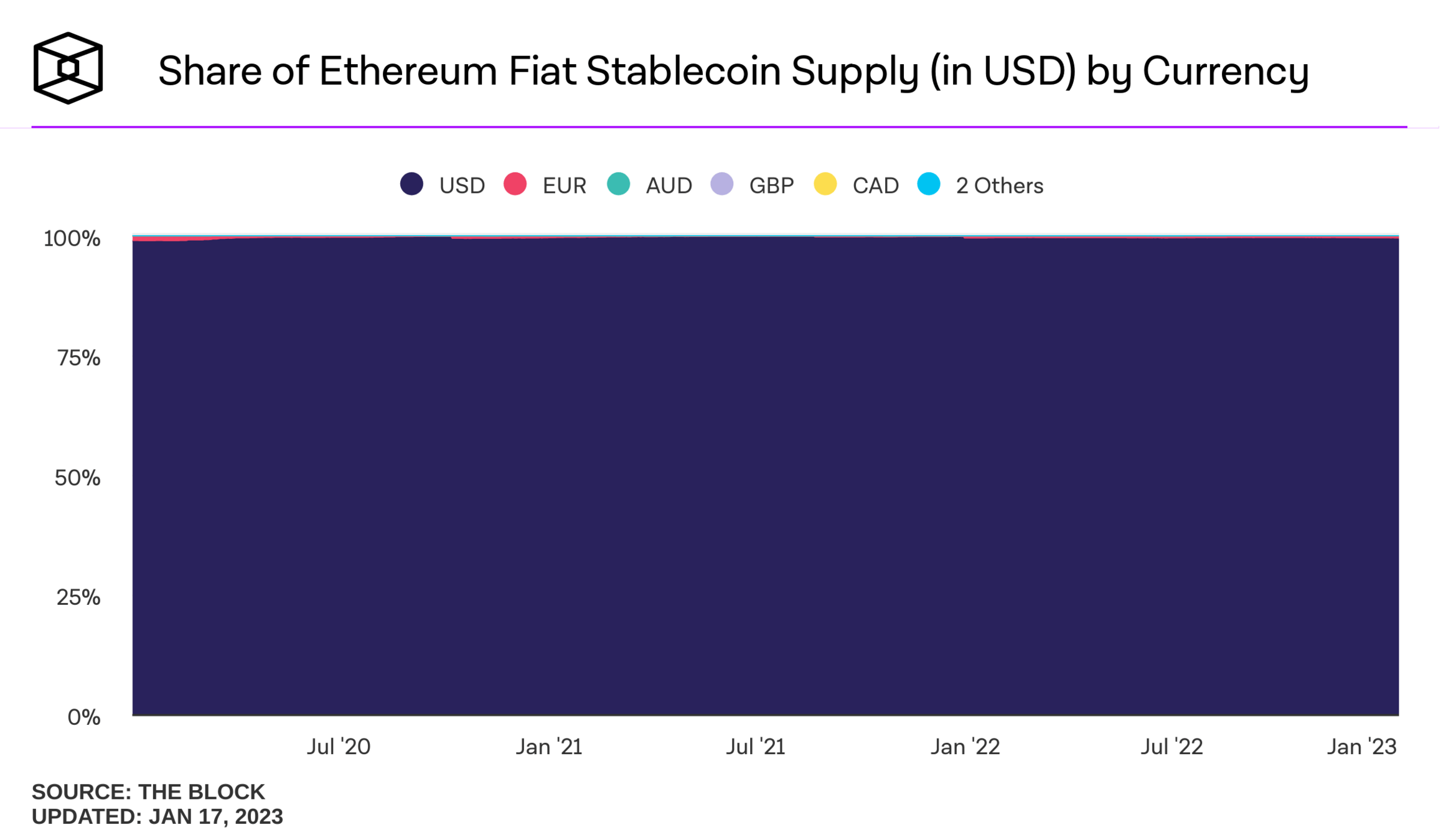
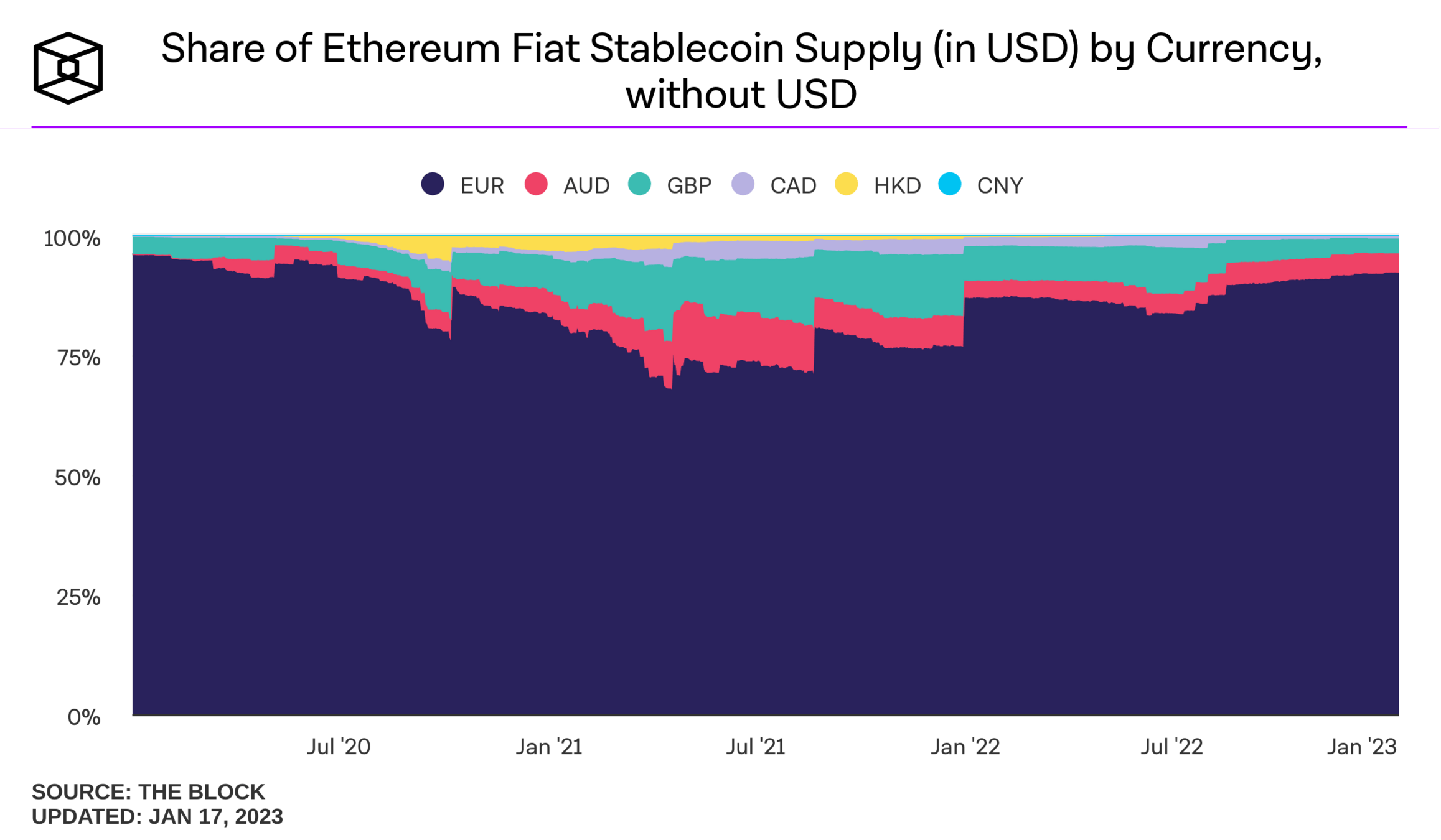
Collateral Backed Stablecoins: USDT & USDC




\(\Rightarrow\) 5% over-collateralized
primary market acces: 6 entities only
Collateral Backed Stablecoins: USDT & USDC

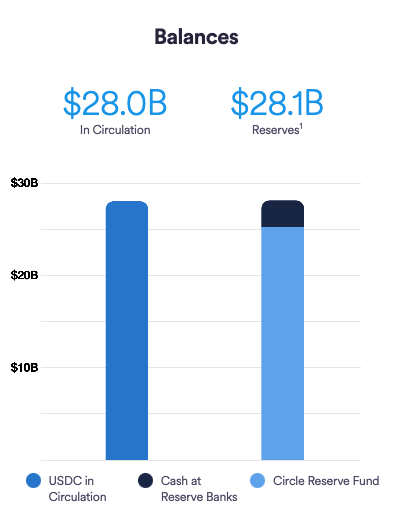
- "Cash at Reserve Banks" once was SVB
- Reserve fund = short-date US treasuries & overnight repos
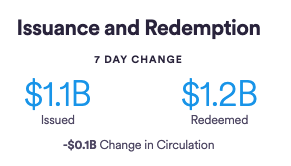
primary market acces: 560+ entities
What makes a Stablecoin stable?
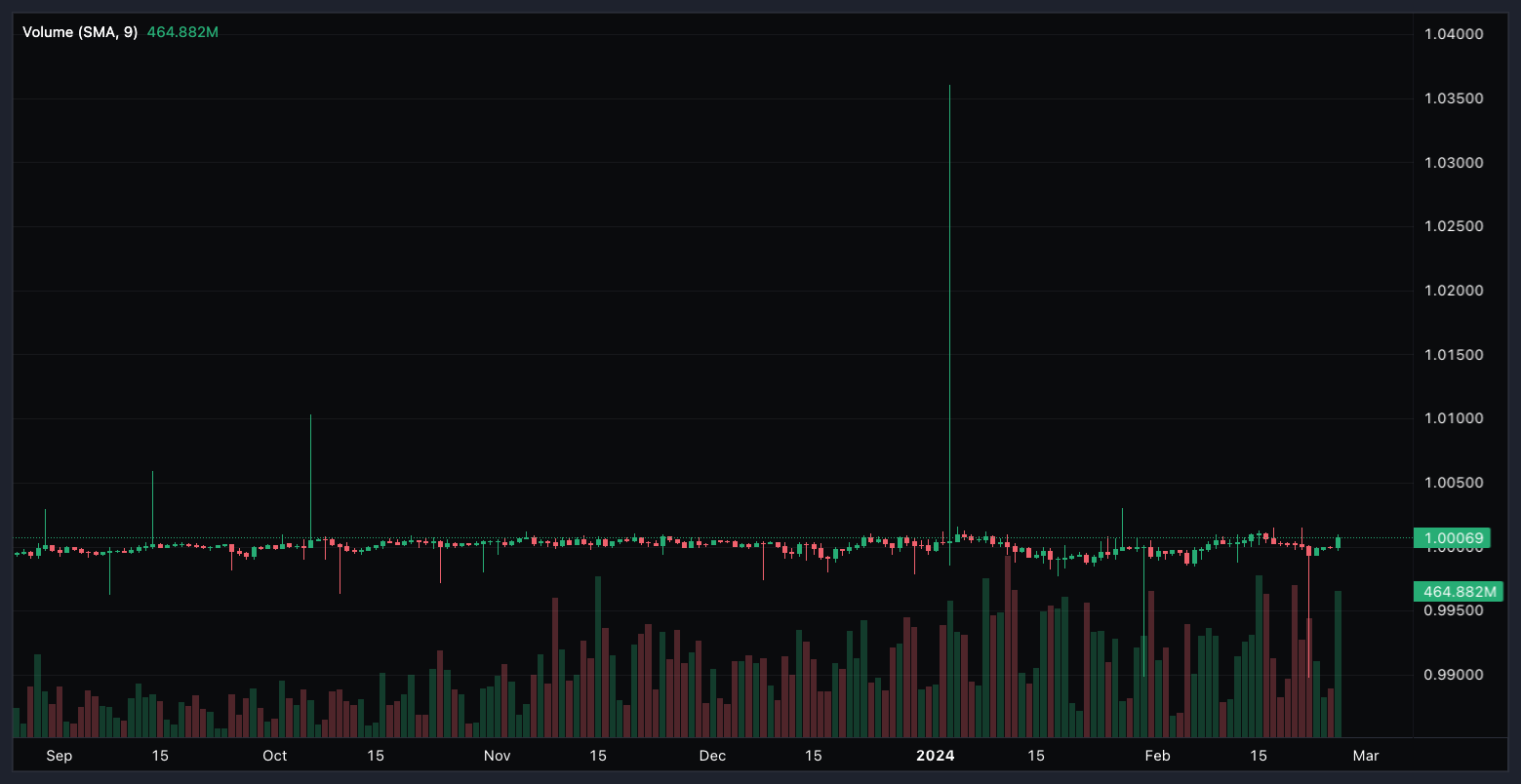
USD-USDT (6 months)
\(\Rightarrow\) need a primary/reference market mechanism to allow for forces of arbitrage to align prices
- stablecoins are issued
- by a single entity or
- a blockchain-based algorithm (smart contract)
- they trade in a secondary market
- on crypto-exchanges against fiat
- on crypto-exchanges against cryptos
- on-chain against other tokens
- \(\Rightarrow\) stablecoin price fluctuates
Stablecoin use cases
What do central bankers think about stablecoins?
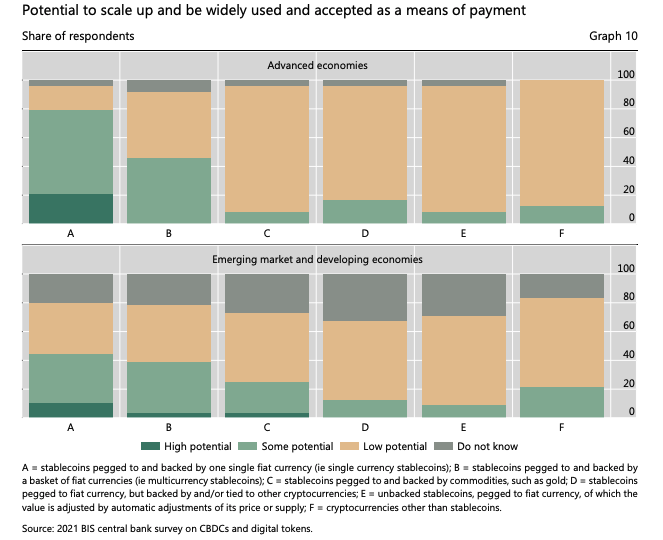
BIS Survey of Central Banks:
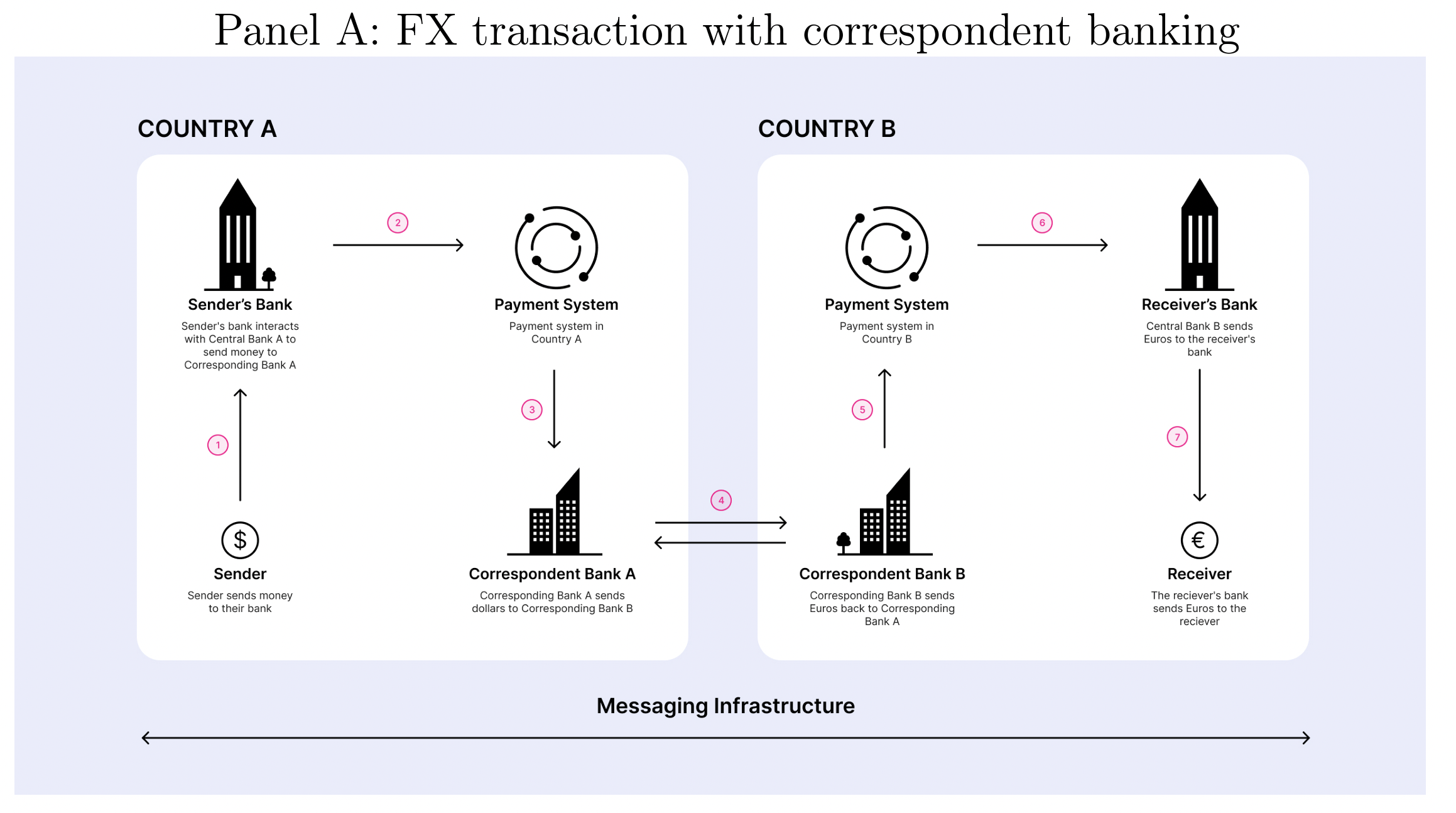
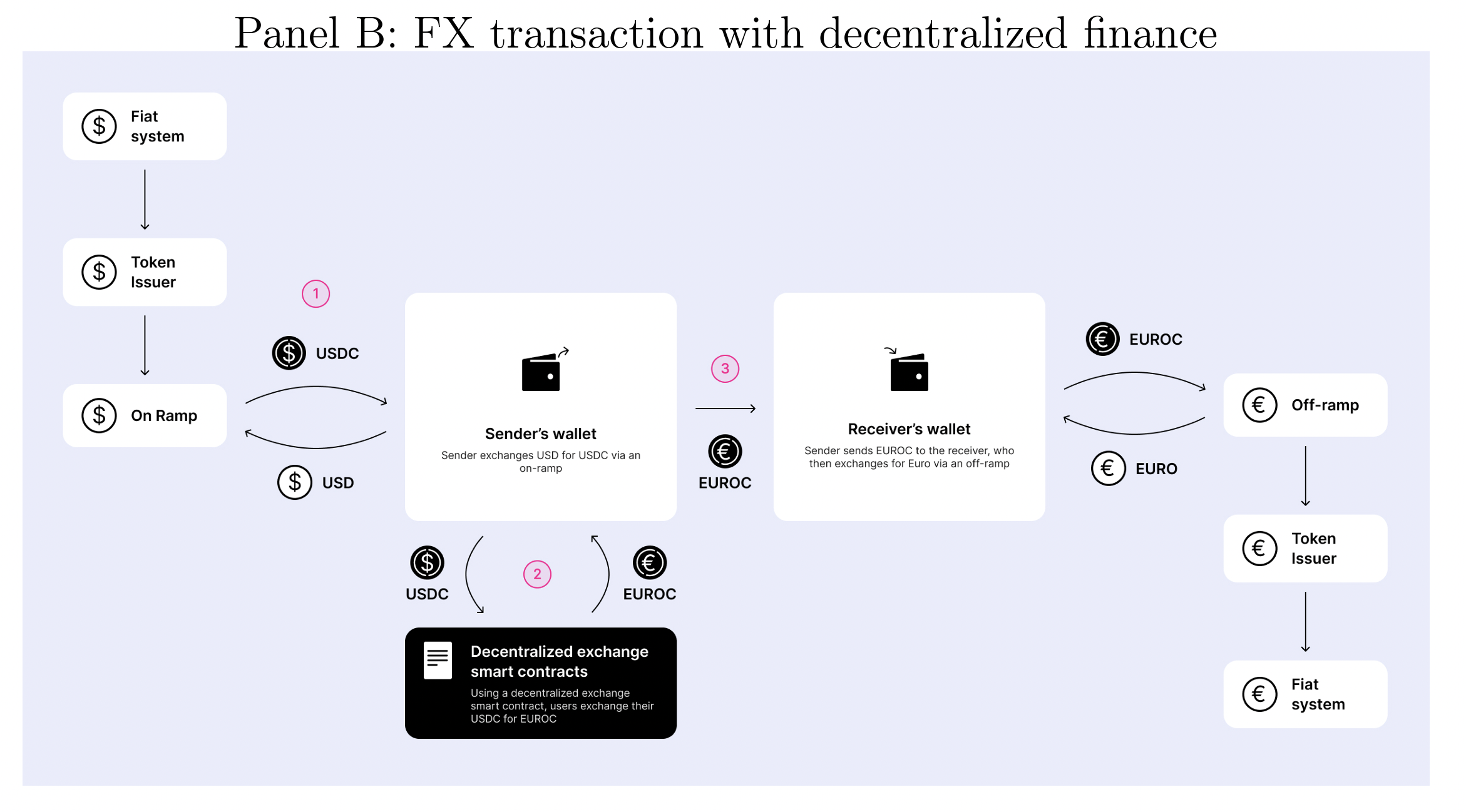
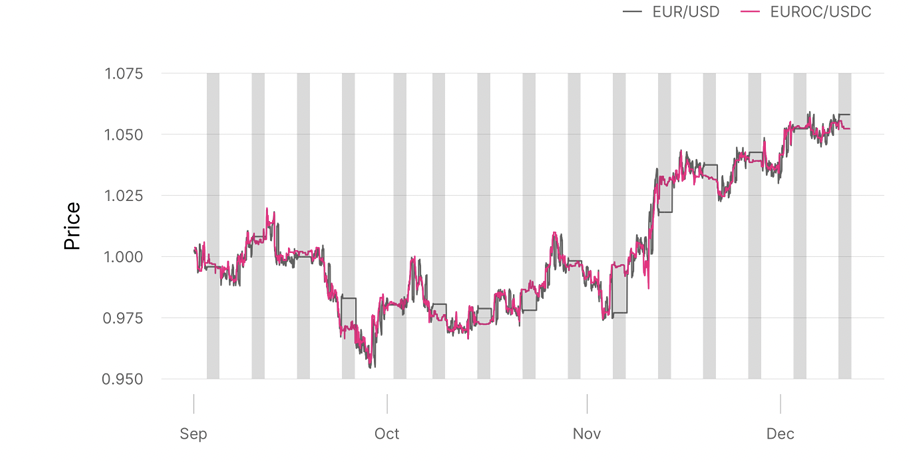
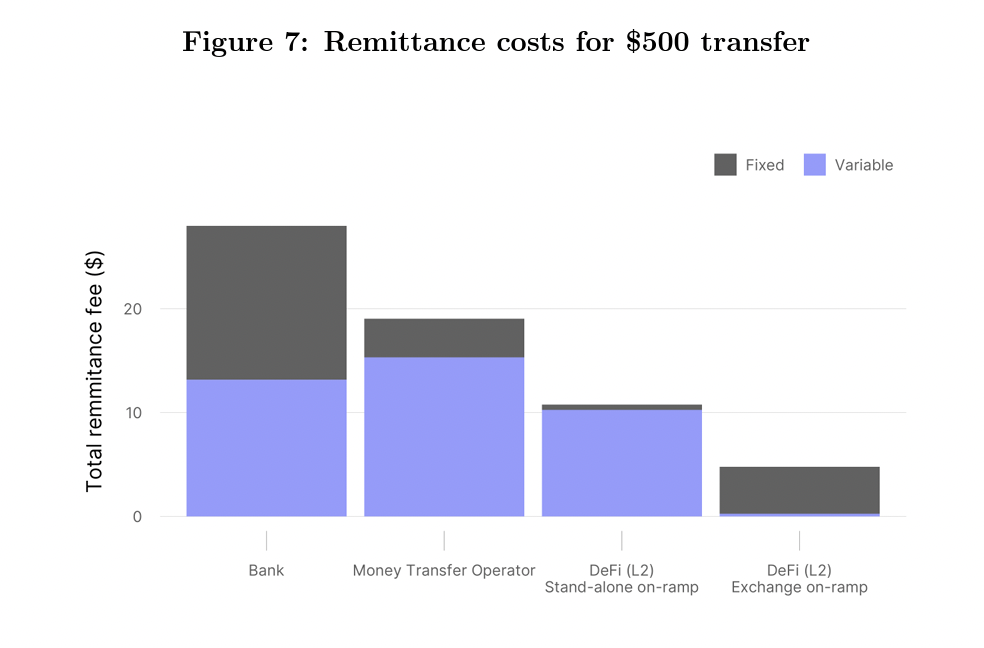
Source: On-chain Foreign Exchange and Cross-border Payments by Austin Adams, Mary-Catherine Lader, Gordon Liao, David Puth, Xin Wan (2023) [team from UniSwap Labs]
DeFi fees:
- fiat to crypto on ramp: 0%-1%
- exchange fees 1-5bps
- network fee: $0.001-5$
- off-ramp fee: 0%-1%
- total: from close to 0 to 2%+$5
Challenges
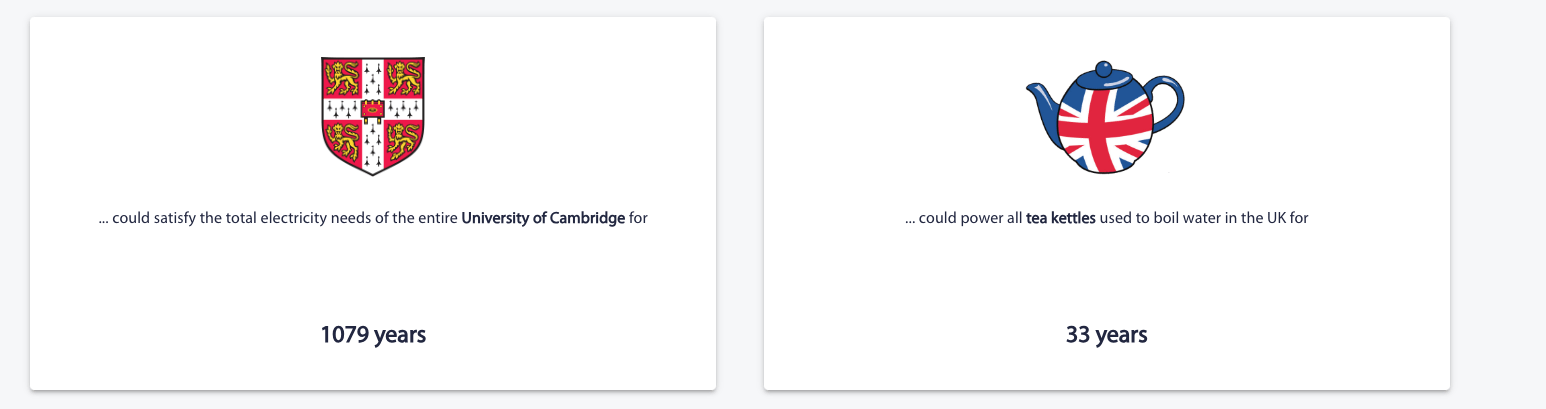
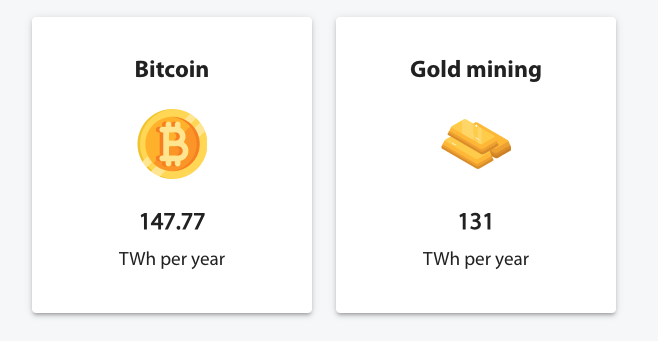
Source: Cambridge Bitcoin Energy Consumption Index https://cbeci.org/
Challenge 1: Energy Consumption

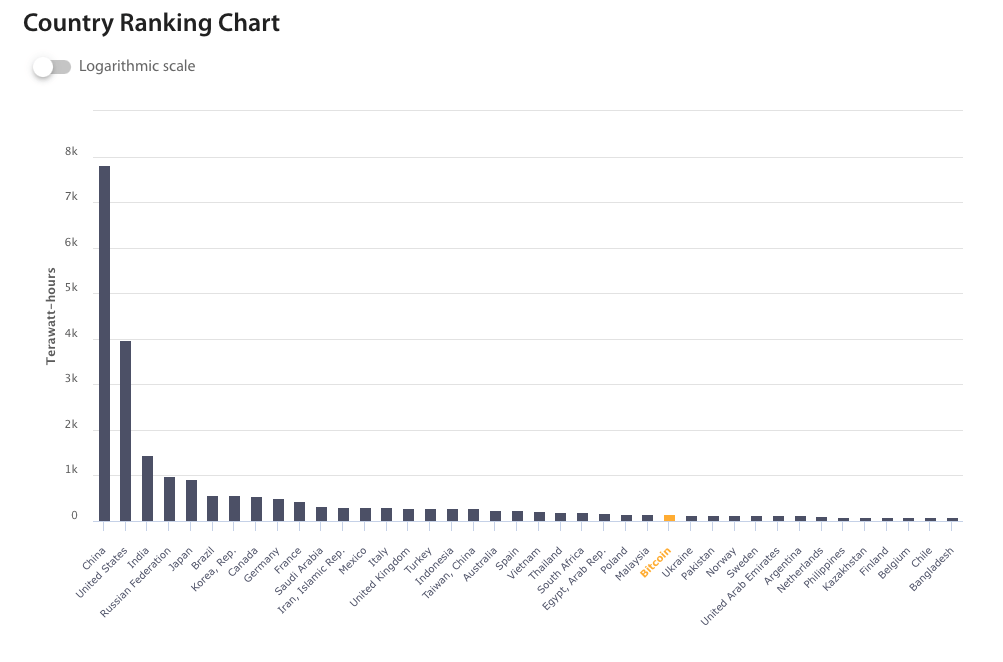
Ethereum Challenge 1: Environment
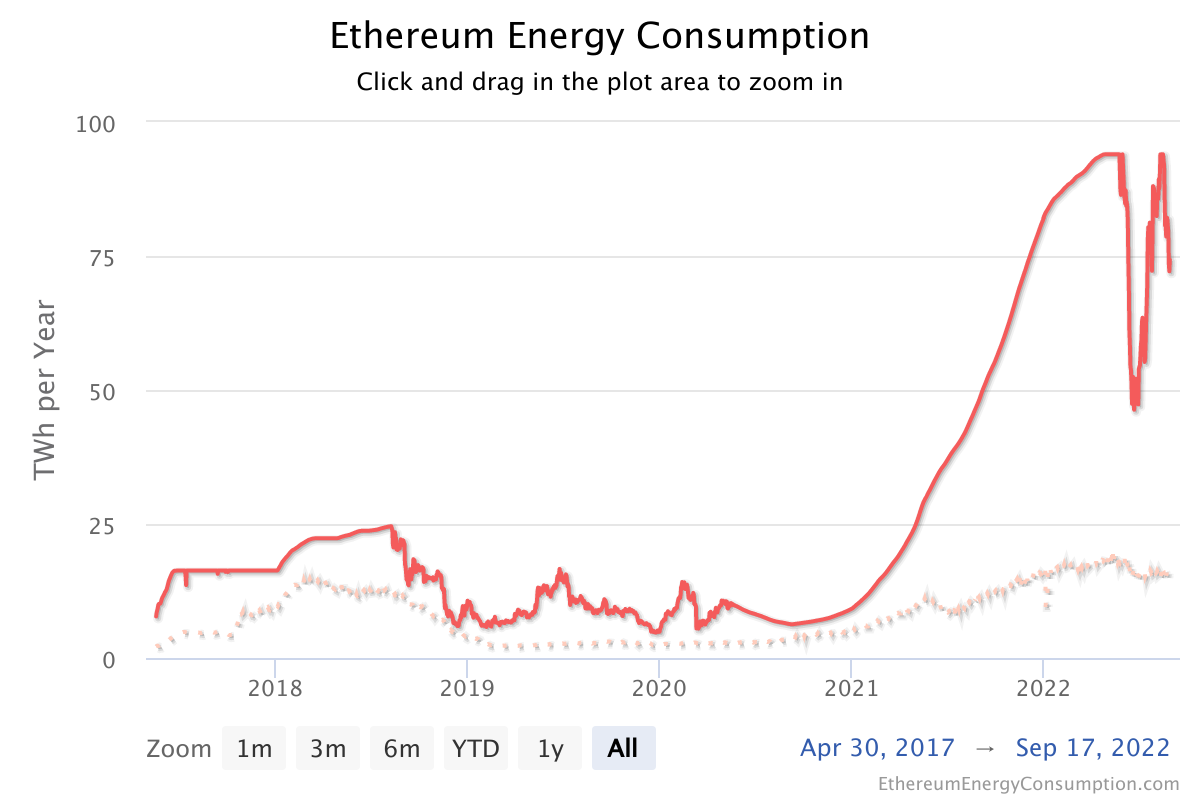
- Carbon footprint of Switzerland
- Power consumption of Austria
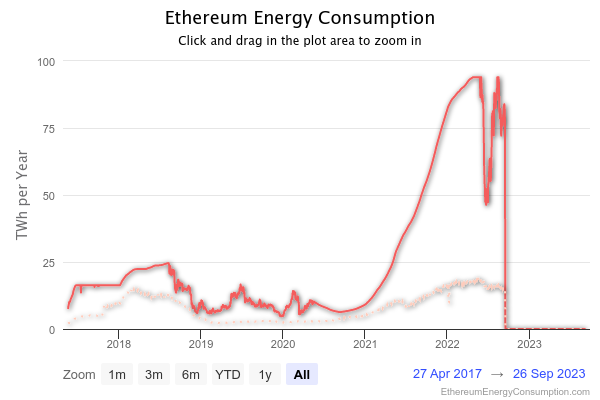
problem solved
| transactions per second | T per 12 hours (business day) | |
|---|---|---|
| Bitcoin | 7 | 302,400 |
| Ethereum | 30 | 1,296,000 |
| Algorand | 2000 | 86,400,000 |
| Conflux | 4000 | 172,800,000 |
| Athereum | 5000 | 216,000,000 |
| Payments Canada ACSS | 648 | 28,000,000 |
| US retail | 7639 | 330,000,000 |
| Canada number of equity trades | 46 | 2,000,000 |
| Orders on Canadian equity markets | 3588 | 155,000,000 |
-
Tweaks: lighting network (BTC) or side chains, SegWit, blocksize possible, but there are limits
-
microtransactions, IoT, and other smart contract use cases place very high demands
Ethereum Challenge 2: Throughput
Ethereum Challenge 2: Throughput
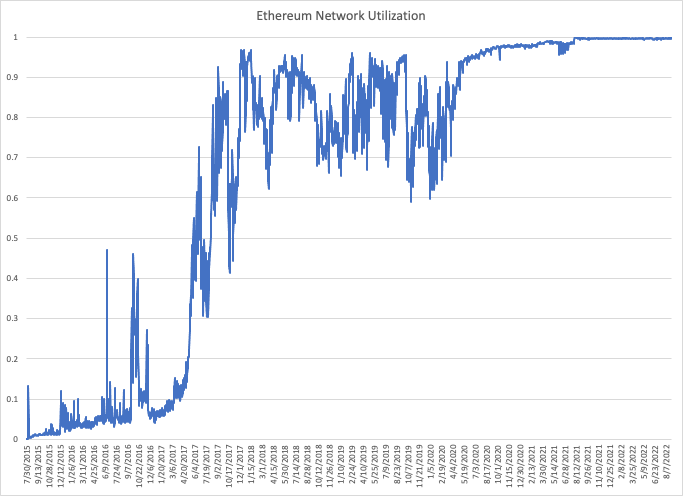
Source: Etherscan w re-scaling
Ethereum Throughput Solution: L2s/Rollups
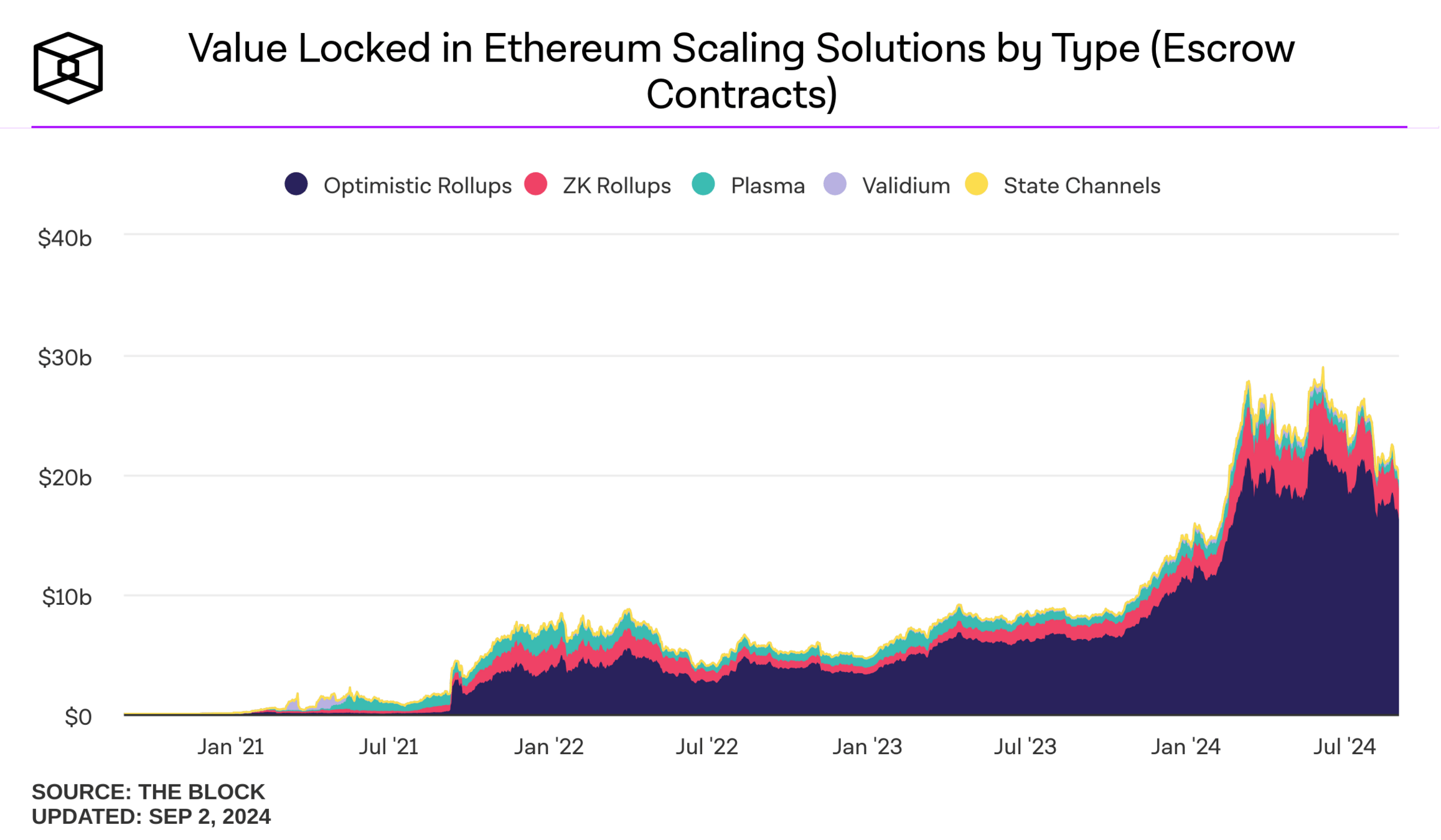
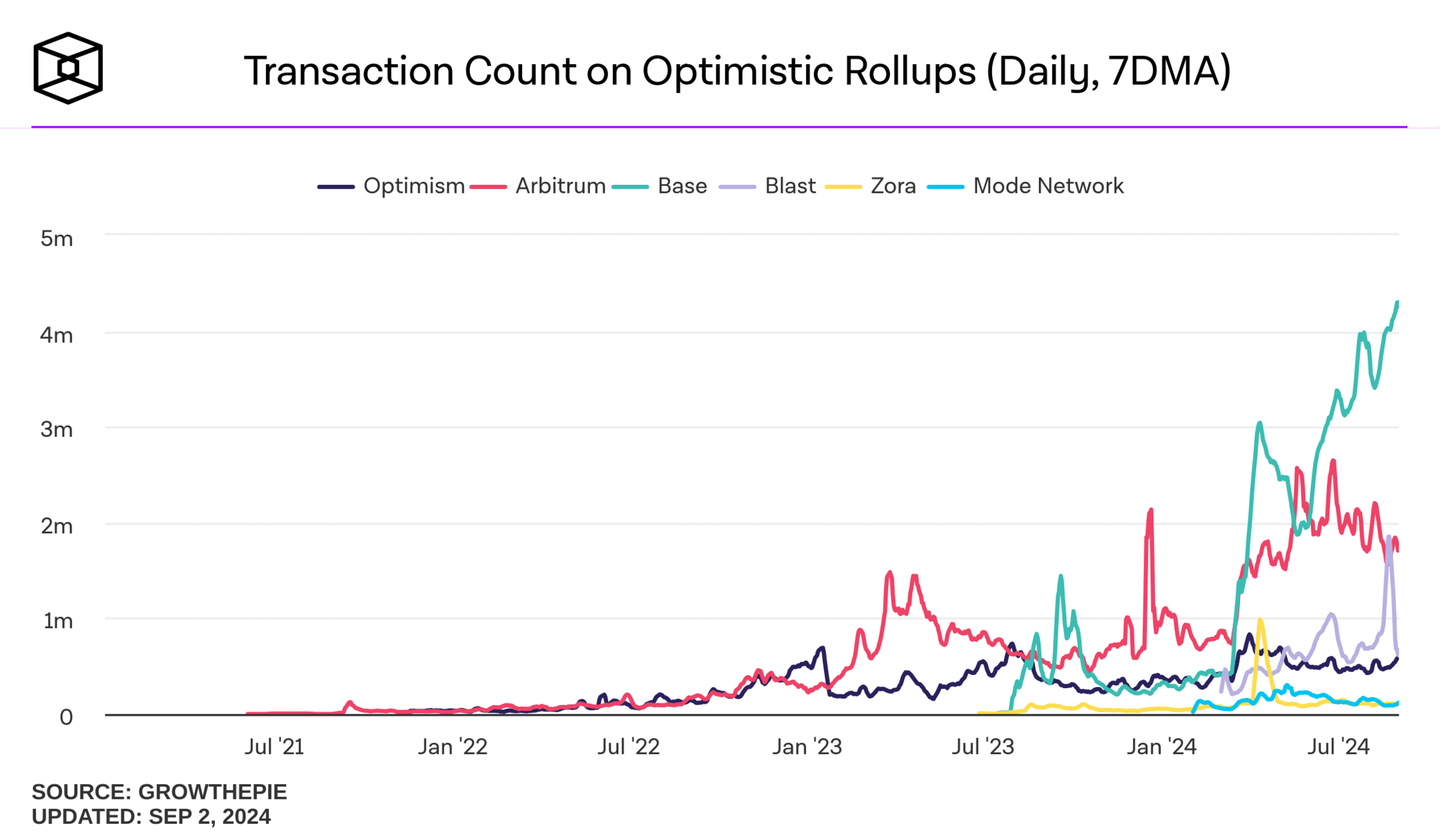
Ethereum Challenge 3: State Size
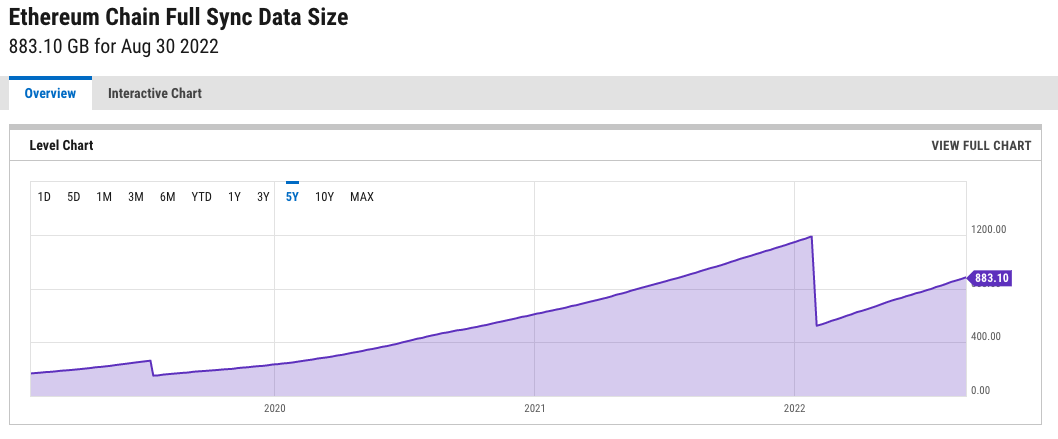
Source: Ycharts
Money Laundering and Crime
- Does it provide scale?
- Does it enable new criminal activity?
- Is there substitution from super-visable means? Is it easier and safer to use for criminals than traditional means?
What's special about crypto-crime?
Chainalysis Crime Report
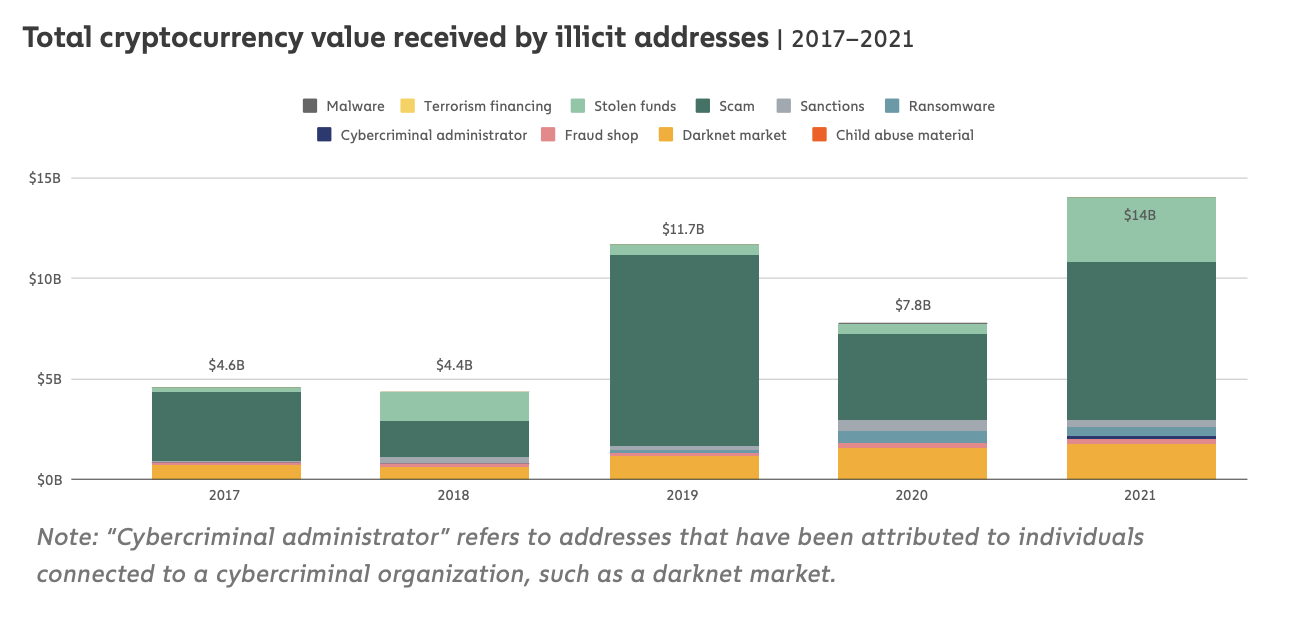
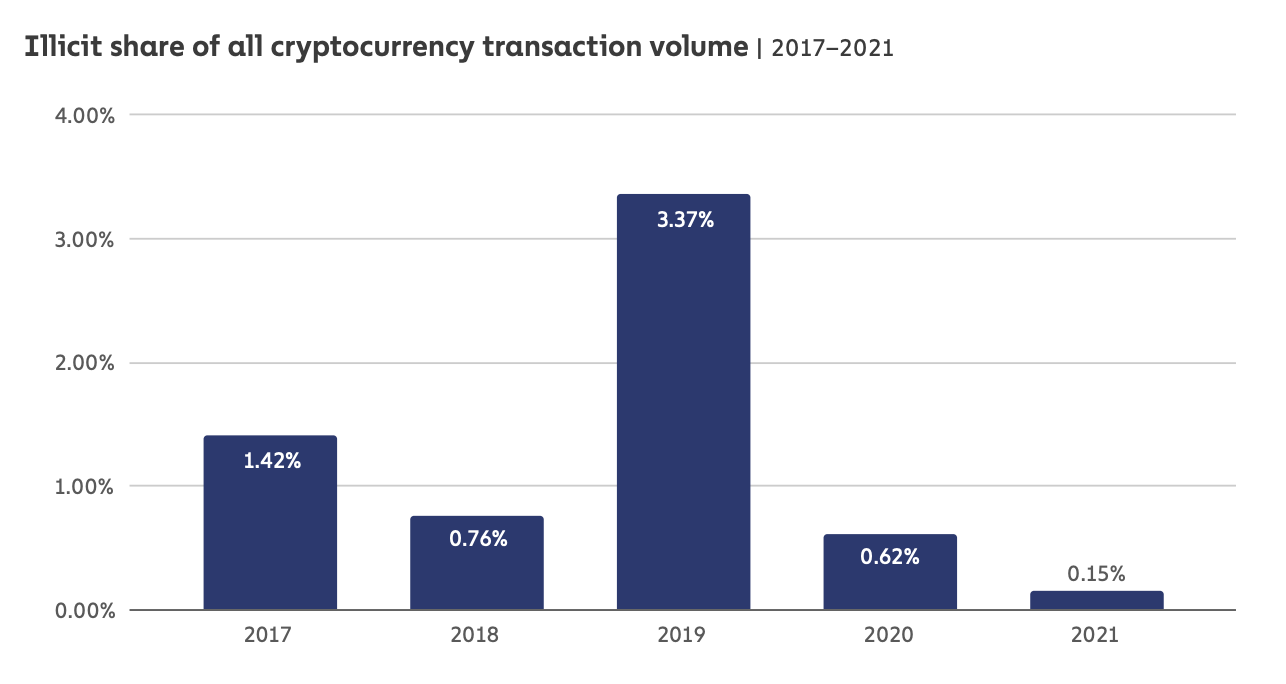
extra info:
- 2019: PlusToken Ponzi scheme
- numbers depend on known addresses, e.g., 2021 report listed ~.3% for 2020 and upped to .65 now
Central Bank-Issued Digital Currencies
Evolution

2008
2014/5
2019
2020
The Year is 2008: what the Toronto a la cart program teaches us about CBDCs
Cautionary tales for central bank innovation
- Finland:
- Avant card failed
- China:
- people are unimpressed with the e-Yuan
- trust AliPay/WeChatPay vs. CCP
- Mexico:
- QR code pay uptake <5%
(not CBDC)
- QR code pay uptake <5%
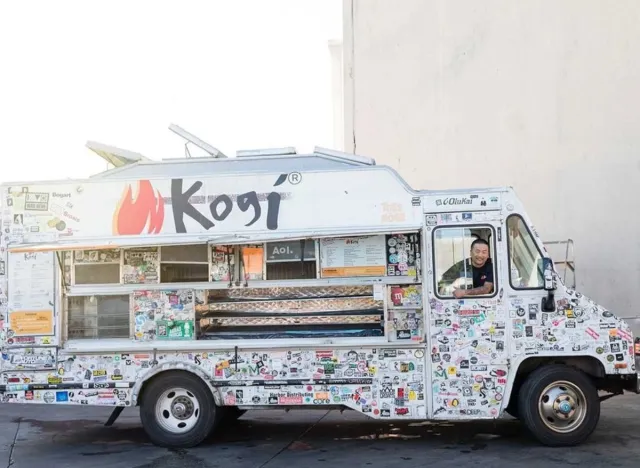

what people want
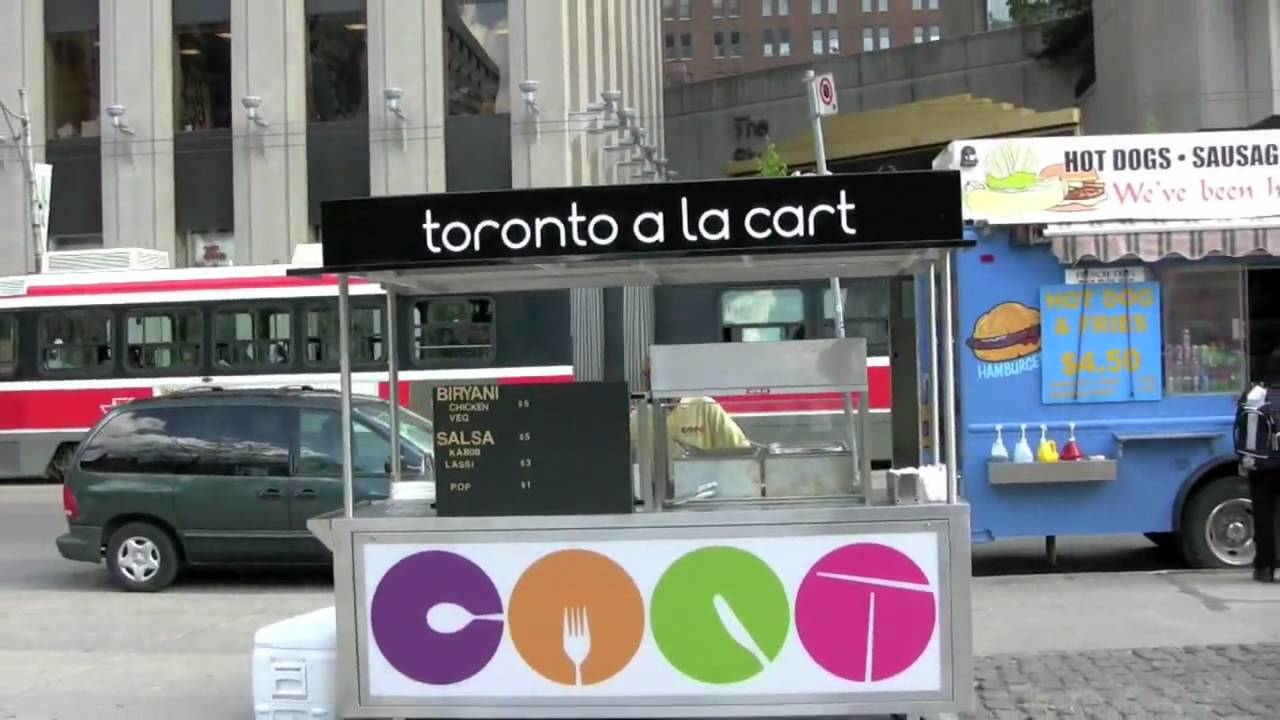
what we got
- a program designed by city departments
- no regard for business owners or customers
- burdensome regulation
- a truck ("cart") designed by committee that did not work
- program essentially died after 2 years
Features of Digital Money
- instantaneous 24/7 payments
- digital = borderless
- money that is compatible with digital applications, digital finance, internet of things etc
- privacy protection
- peer to peer transfers
- transfers of money without the involvement of a commercially interested third party
- non-fee digital payments
fast money
CBDC run by
Central Bank
CBDC on new communually run system
bank-issued stablecoin on public blockchain






|
What? |
||||
|---|---|---|---|---|
| 24/7 instantaneous | ||||
| borderless | ||||
| programmable | ||||
| privacy | ||||
| p2p | ||||
| no commercial 3rd party | ||||
| nominal fee |


Final Thoughts
Some Final Thoughts
- this presentation only scratches at the surface, there are tens of thousands of people working on blockchain ideas
-
this is not (only) garage band work -- university research plays a key role
- blockchain tech won't get uninvented.
- the space is still trying to figure things out, including tech and economic challenges
- great progress has been made, but things will and do still go wrong
- a common resource can have huge economic benefits
- I'd like to see more thinking and discussion about paths to unlock the benefits

@financeUTM

andreas.park@rotman.utoronto.ca

slides.com/ap248

sites.google.com/site/parkandreas/

youtube.com/user/andreaspark2812/
Why are Blockchains challenging for current regulation?

UniSwap Lab supports development

a website app accesses the code

token holders control contact features
don't own the code
operation = decentral
control = decentral
anyone can use the baseline code



core code runs on the blockchain

tokens used as rewards
Illustration of the Challenges: The UniSwap Token
Questions around Regulation & Compliance
- Are regulations as they are because of existing institutional arrangements or
- are institutional arrangements the way they are because of regulations?
- compliance in a borderless world
- efficacy?
- flight to offshore?
- is compliance even possible?
- cost-benefit of compliance for regulators and the regulated
- What is the goal of regulation?
- compliance?
- disappearance?
- investor protection?
- issuer protection?
present vs future
- moving and evolving space: fighting the last war?
- unintended consequences of "future proofing"
Challenge 1: How do you get data onto a blockchain?
The Oracle Problem
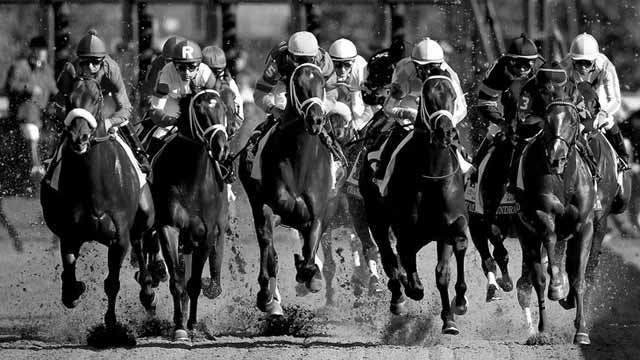

<standings: 7,3,8,4,2,1,6,5> + digital signatures

Disagreement?
Majority Vote
1 ETH = $4780
1 ETH = $4789
1 ETH = $4781

DEXes can be used as on-chain price oracles

Time-Weighted Average Price (TWAP)
The Oracle Problem
- Participation incentives?
- rewards, payments...
Oracle nodes form their own ecosystem
- Incentives for honest reporting?
- penalties, collateral...
- Reputation?
- Uptime, correctness, penalty history, collateral amount....
- Fee collection from dAPPs
- Nodes stake LINK
- More LINK staked more jobs taken
staked LINK can be slashed
Chainlink

Same follow-on challenge for builders: how can you fit staking, rewards, and inevitable speculation into securities law?
Challenge 2: the settlement layer has a mind of its own





















a
b
c
d
e
f
g
Problem: Public Mempools allow Sandwich (MEV) Attacks
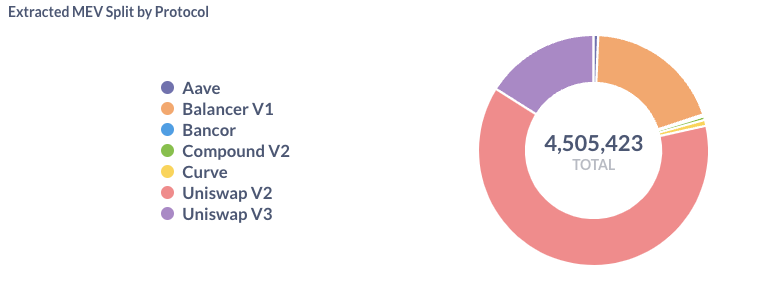
Solutions and Remedies
- Flashbots protocol
- encrypted transactions
- FHE Protocol
A brief look under the hood: the workflow
liquidity pool
blockchain
user
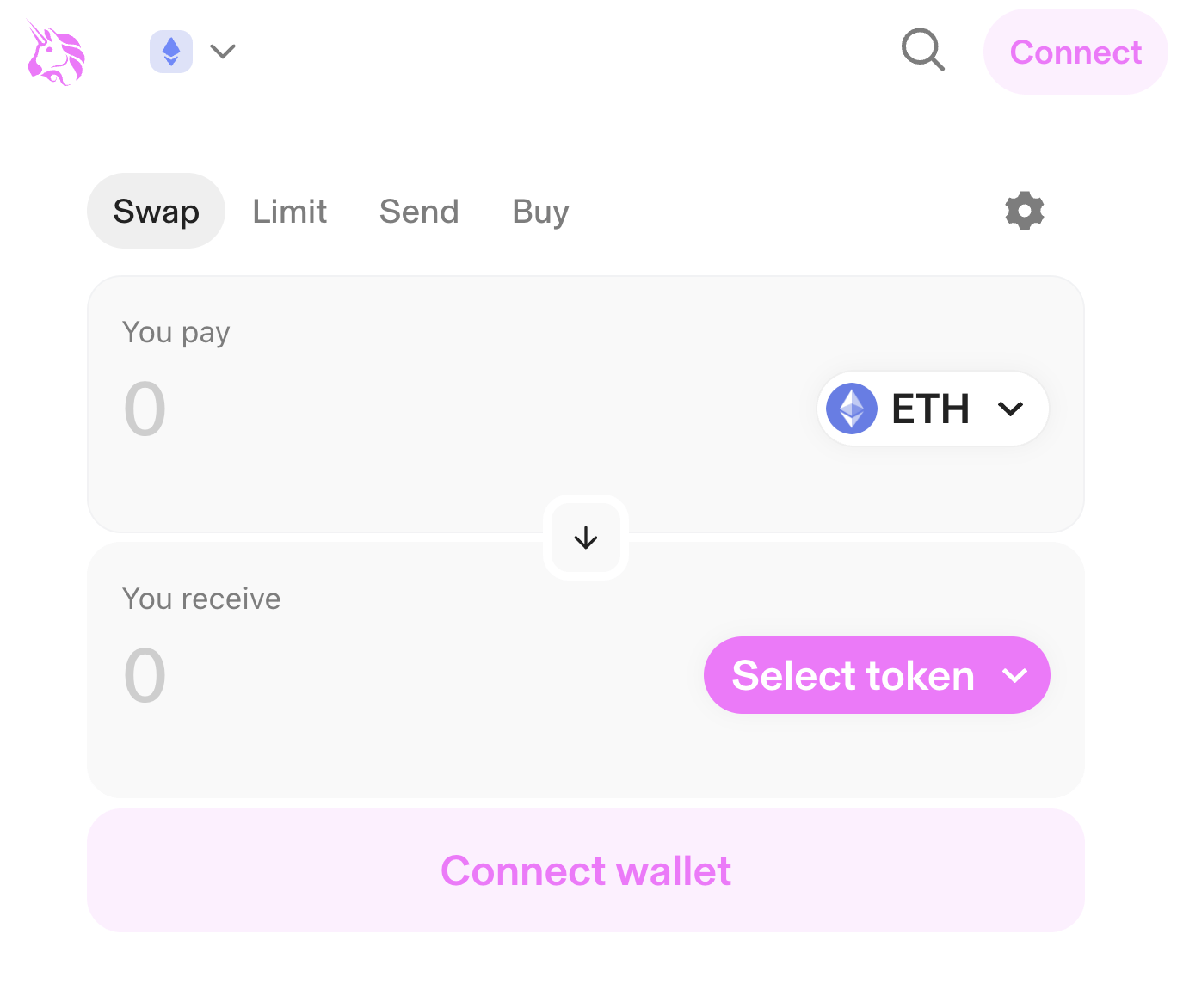
website
router
liquidity pool
blockchain
user
A brief look under the hood: the workflow
aggregator protocol
router
pool 1
blockchain
user

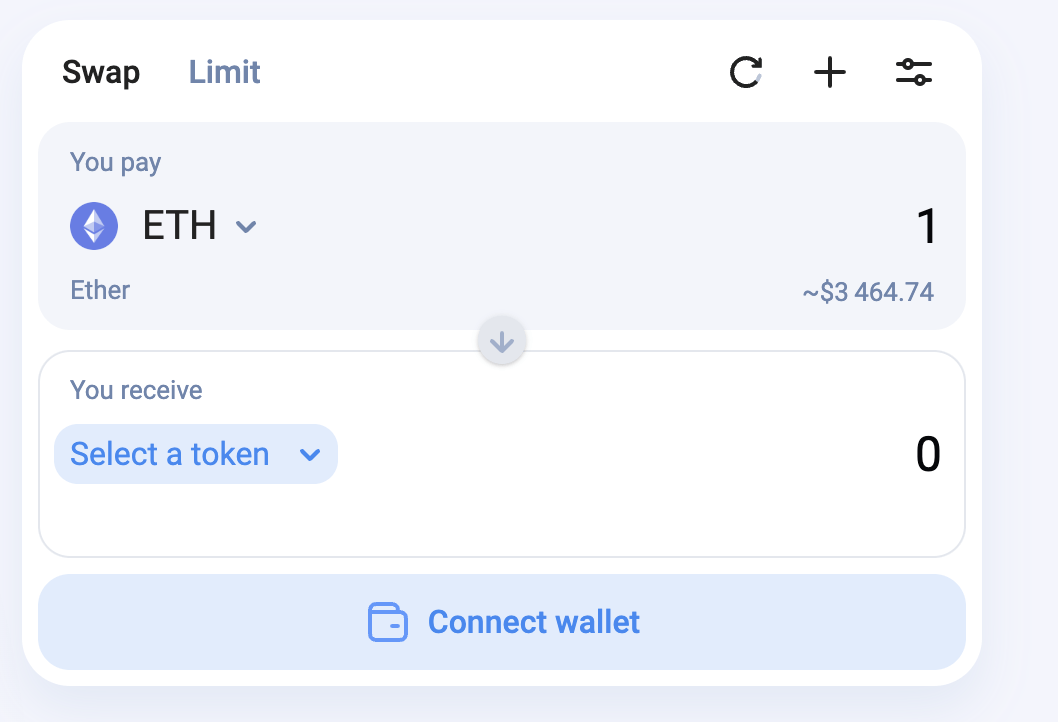

pool 2
multiple
pools
A brief look under the hood: the workflow
back to UniSwap
pool 1
blockchain
user
pool 2
A brief look under the hood: the workflow
back to UniSwap
pool 1
blockchain
user
pool 2
just-in-time
liquidity bots

A brief look under the hood: the workflow
back to UniSwap
pool 1
blockchain
user
pool 2
just-in-time
liquidity bots
in the settlement layer ("MEV")