Stablecoins, Tokenization, and CBDCs
Instructor: Andreas Park


- First (U.S.) Federal framework to guide the legal issuance of digital representation of fiat dollars
-
Only “Permitted Payment Stablecoin Issuers” may issue stablecoins under the GENIUS Act (Greenberg Traurig)
-
Reserve backing: 1:1 backing of issued stablecoins with “permitted” high-quality liquid assets (e.g. U.S. dollars, short-term Treasuries, repos) (Congress.gov)
-
Reserves must be held in segregated accounts; no rehypothecation or reuse (WilmerHale)
-
Monthly disclosure of reserve composition, certified by CEO/CFO and examined by independent public accountant (WilmerHale)
What's in it?
- Annual audits required for issuers over $50 billion in issuance (Congress.gov)
-
Capital, liquidity, and risk-management standards (including stress testing and diversification) (Gibson Dunn)
-
Prohibition on paying interest or yield on the stablecoins themselves (Skadden)
-
AML / Sanctions / BSA compliance (customer due diligence, transaction monitoring, reporting) (Gibson Dunn)
-
Foreign issuers must satisfy (i) comparable regulatory regime, (ii) register with the OCC, (iii) hold U.S. reserves to meet U.S. customer liquidity demands (Morgan Lewis)
-
Holder priority in insolvency: stablecoin holders receive priority claim over reserves ahead of other creditors (Greenberg Traurig)
What's in it?
What is money?
What is money? => THree Key Features
store of value
unit of account
method of exchange









A short history of Money



A short history of Money


A short history of Money
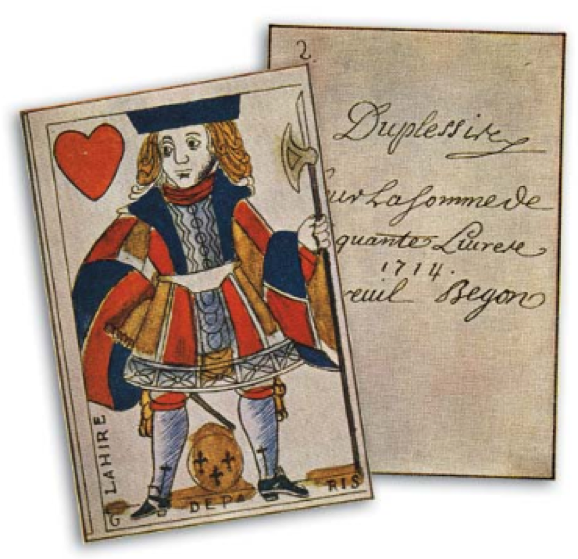
A short history of Money
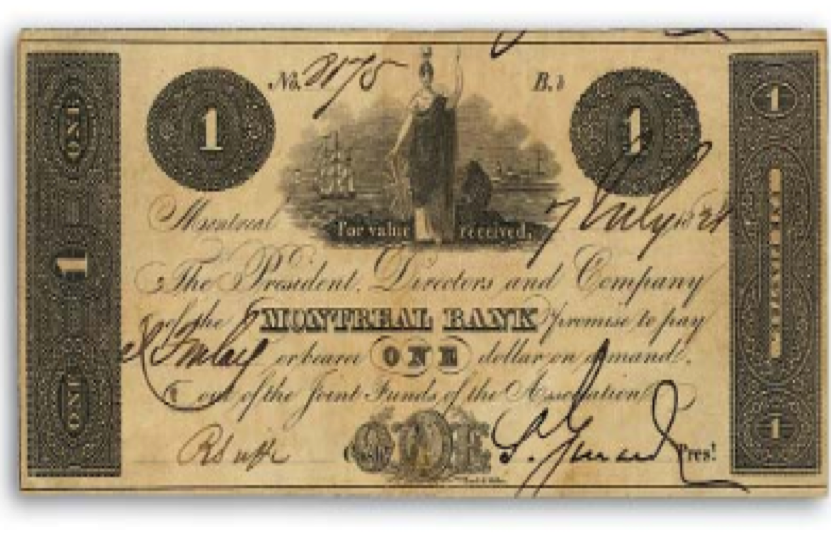
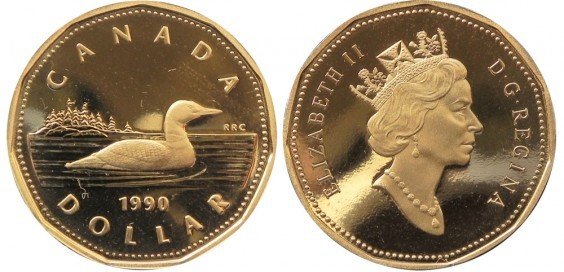

What's the relationship of payments and monetary policy?
Payments and Monetary Policy

A
B

\(-\)
0
+



A
B
0
+
\(-\)
Option 1: borrow from BoC
lending rate:
deposit rate:
target rate
target rate\(+\)25bps
target rate\(-\)25bps
Payments and Monetary Policy
A
B
0
+
\(-\)
Option 2: borrow from another bank
target rate
Payments and Monetary Policy
The Impossible Trinity (macroeconomics)
free flow of capital
Control exchange rate
Control interest rate
Basic macroeconomics: you can have TWO out of THREE
Why? The inconvenience of markets ...
Stablecoins
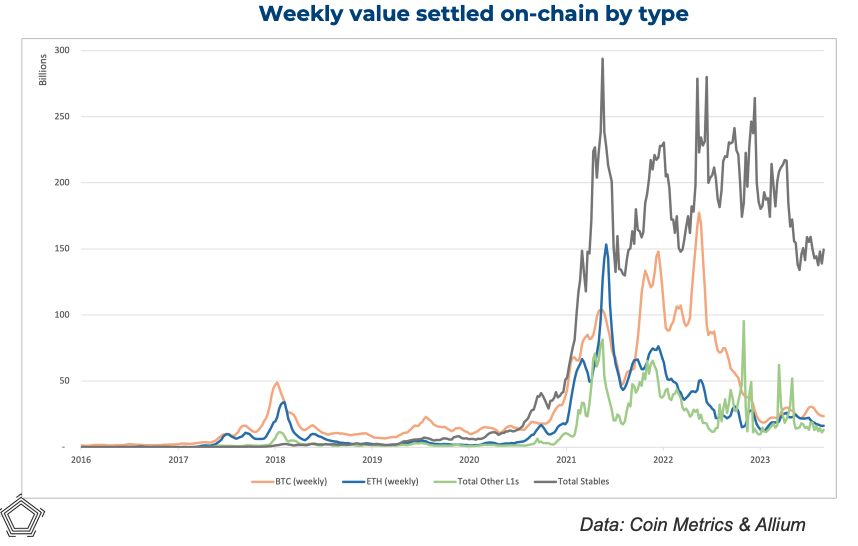
pulled from Nick Carter's talk on "Will stablecoins serve or subvert U.S. interests?"
BTC, ETH
HQLA: USD, EUR
asset (gold)
fee-backed
Seigniorage
Crypto
Traditional
Algorithmic
Collateral-Backed
Taxonomy of Stablecoins
DEPOSITS
other assets
JPM coin
USDC
USDT
TUSD
DAI, FEI
explicitly backed
implicitly backed
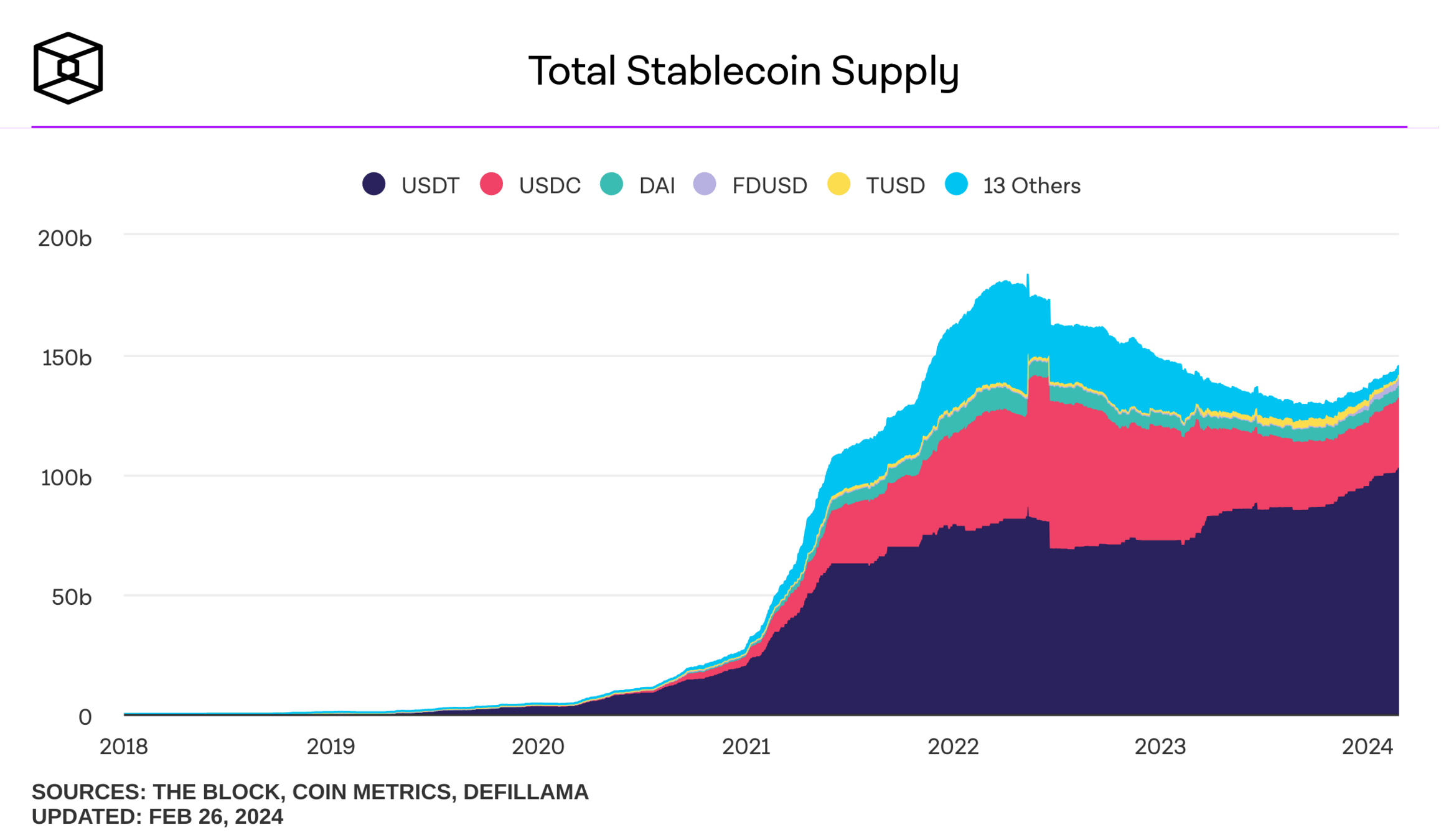
Collateral Backed Stablecoins: USDT & USDC




\(\Rightarrow\) 5% over-collateralized
primary market acces: 6 entities only
Collateral Backed Stablecoins: USDT & USDC

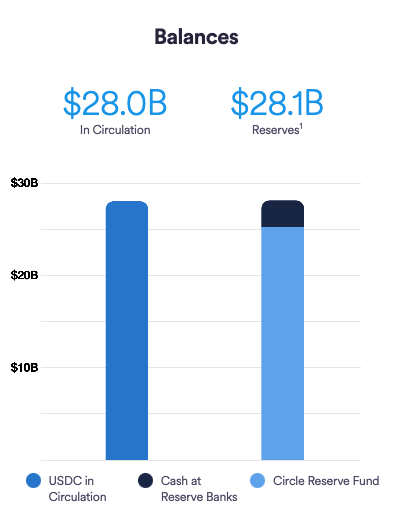
- "Cash at Reserve Banks" once was SVB
- Reserve fund = short-date US treasuries & overnight repos
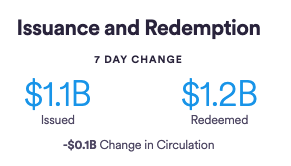
primary market acces: 560+ entities
What makes a Stablecoin stable?
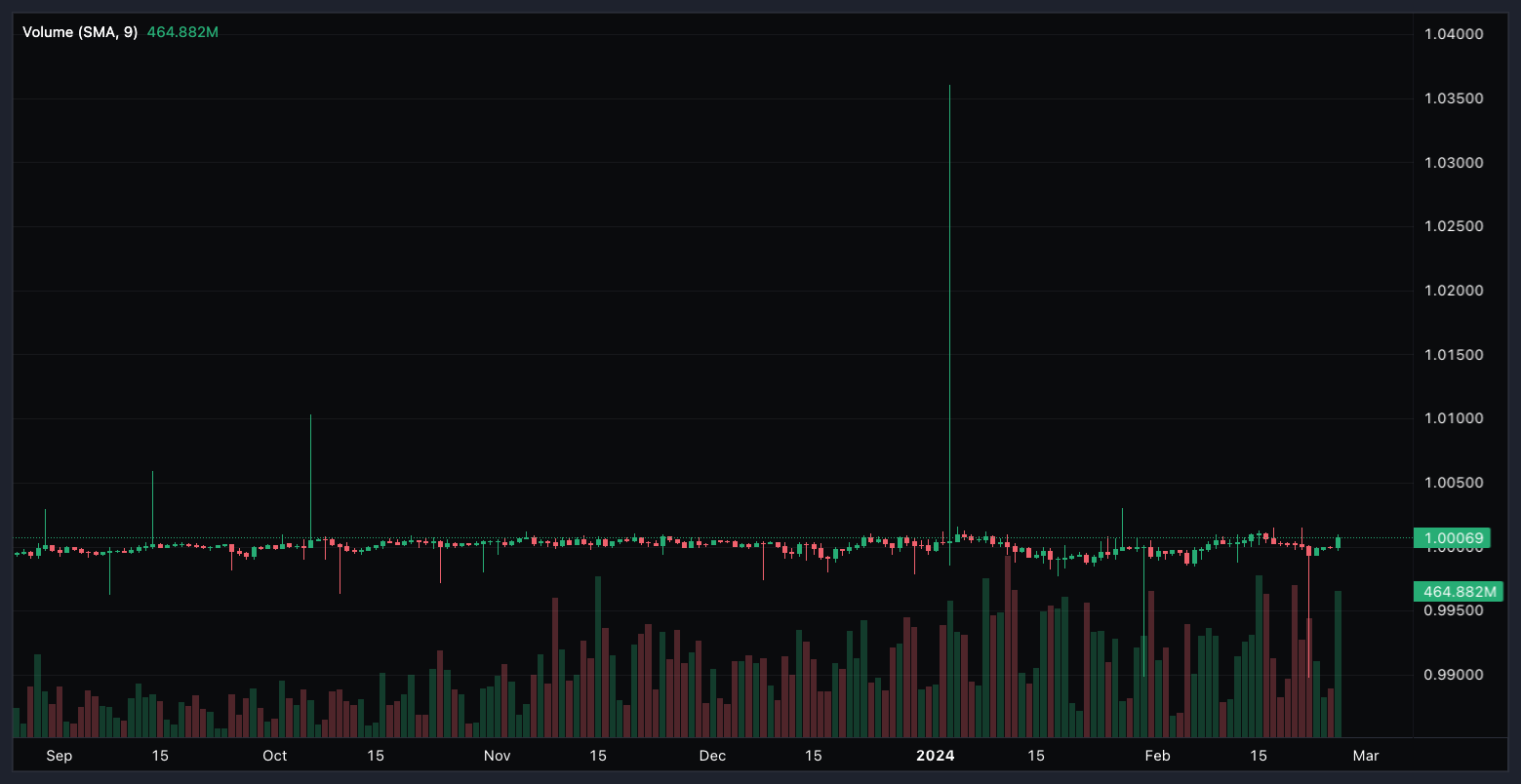
USD-USDT (6 months)
\(\Rightarrow\) need a primary/reference market mechanism to allow for forces of arbitrage to align prices
- stablecoins are issued
- by a single entity or
- a blockchain-based algorithm (smart contract)
- they trade in a secondary market
- on crypto-exchanges against fiat
- on crypto-exchanges against cryptos
- on-chain against other tokens
- \(\Rightarrow\) stablecoin price fluctuates
Arbitrage when price(stablecoin)>$1
collateralized stablecoin




arbitrageur
issuer/ primary market

secondary market
collateralized stablecoin
arbitrageur
Arbitrage when price(stablecoin)<$1
issuer/ primary market
secondary market
A thought experiment for a stablecoin
- balance sheet: $3T
- cash: $>60B
Option 1a (existing cash):
- lock up cash in an escrow
- \(\to\) stablecoin is claim on cash
Option 1b (convert cash to digital):
- issue stablecoin in exchange for new cash
- lock up new cash in an escrow
- \(\to\) stablecoin is claim on cash
Option 2 (overcollateralized):
- lock up existing shares in an escrow
- \(\to\) issue stablecoin as a claim on stocks
- over-collateralize
Option 3 (exotic):
- issue stablecoins in exchange for shares
- guarantee fixed conversion of shares against stables at dollar market price
What are Apple's options?
Thought experiment: Apple Inc. wants to issue a stablecoin
MakerDAO's DAI
(or: Apple's Option 2)
user perspective





4 ETH
(1 ETH = $375)
(Oct 15, 2020)
\(\approx\) $1,500
\(\vdots\)
1,500 DAI
(1 DAI = $1)
formally: this smart contract is a collateralized debt position (CDP)
user perspective
fractional collateral \(\to\) collateralization factor \(=\) 150%
total collateral = $1,500
maximum loan = $1000
overcollateralization = $500
actual loan (example) = $500
buffer = $500
user perspective: what happens if the price of ETH rises?
ETH \(\nearrow\) $500
value of ETH collateral = $2,000
maximum loan = $2,000/150%=$1,333
total collateral = $2,000
maximum loan = $1,333
overcollateralization = $667
actual loan (example) = $500
buffer = $500
overcollateralization = $667
new loan capacity= $333
user perspective: what happens if the price of ETH falls?
ETH \(\searrow\) $187.5
value of ETH collateral = $750
maximum loan = $750/150%=$500
total collateral = $750
maximum loan = $500
overcollateralization = $250
actual loan (example) = $500
buffer = $0
for reference: former value of collateral
user perspective: what happens if the price falls & max loan is exceeded?
Maker DAO
ETH \(\searrow\) $150
value of ETH collateral = $600
maximum loan = $600/150%=$400
total collateral = $600
maximum loan = $400
required overcollateralization = $200
actual loan (example) = $500
buffer = -$100
for reference: former value of collateral
\(\Rightarrow\) triggering of liquidation auction by "keeper"
sell 3.33 ETH=$500=500 DAI
repay $500=500 DAI loan
retain incentive
return remainding ETH to vault owner
Maintaining the Peg: monetary policy
Maker DAO
- stability fee
- DAI savings rate (DSR)
- debt ceiling
borrowers of DAI need to pay interest \(\to\) stability fee
- if too much minting (=too much DAI) then
- \(\to\) interest \(\nearrow\) \(\to\) cost of DAI \(\nearrow\)
- \(\to\) minting \(\searrow\) \(\to\) supply DAI \(\searrow\)
DSR paid on "locked" DAI
- DAI deposited to specific contract (demand \(\nearrow\))
- funded by stability fees
- \(\to\) SF>DSR
total amount of debt (or DAI) outstanding is limited
Sidebar: how is this decided?
\(\to\) special "governance" token MKR
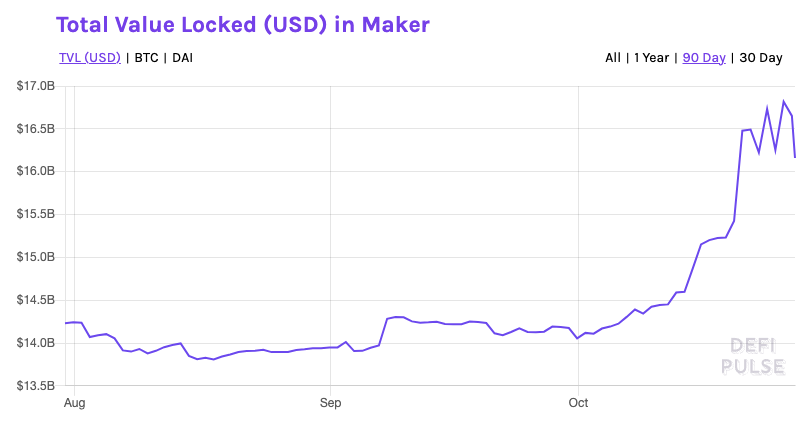
Value locked Oct 27, 2021
Maker DAO
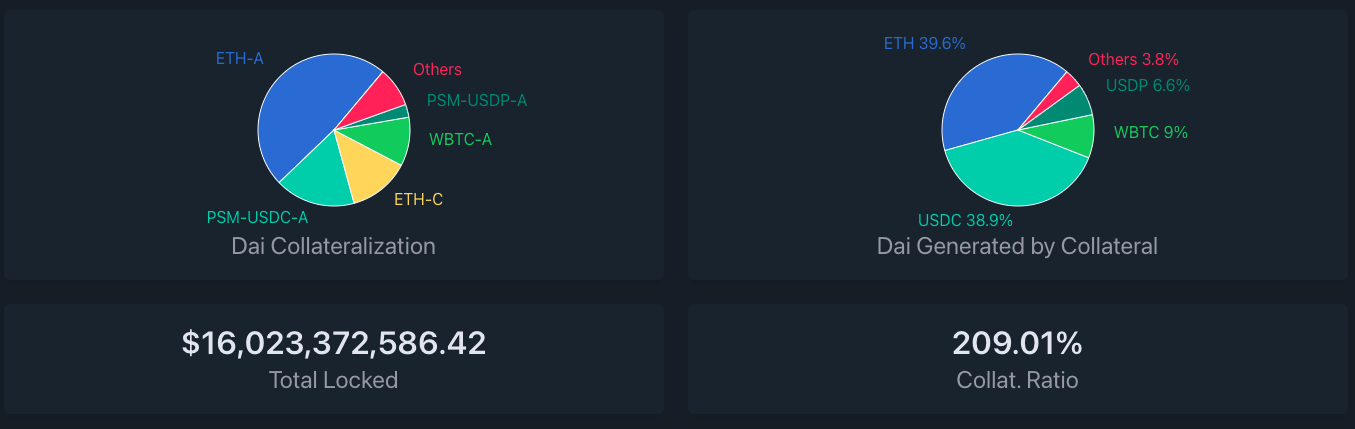
Source: daistats.com (Oct 27, 2021)
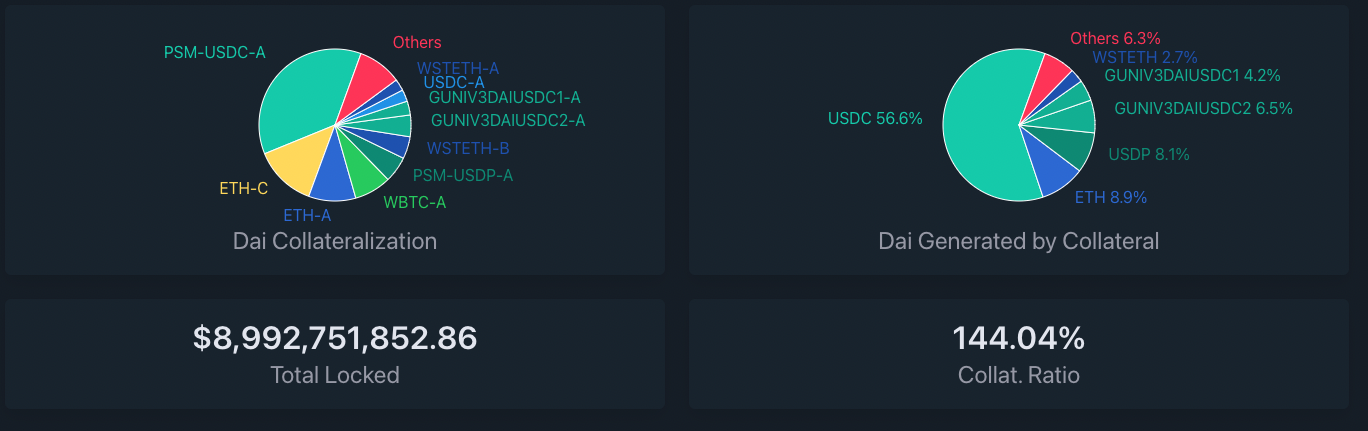
Source: daistats.com (Oct 26, 2022)
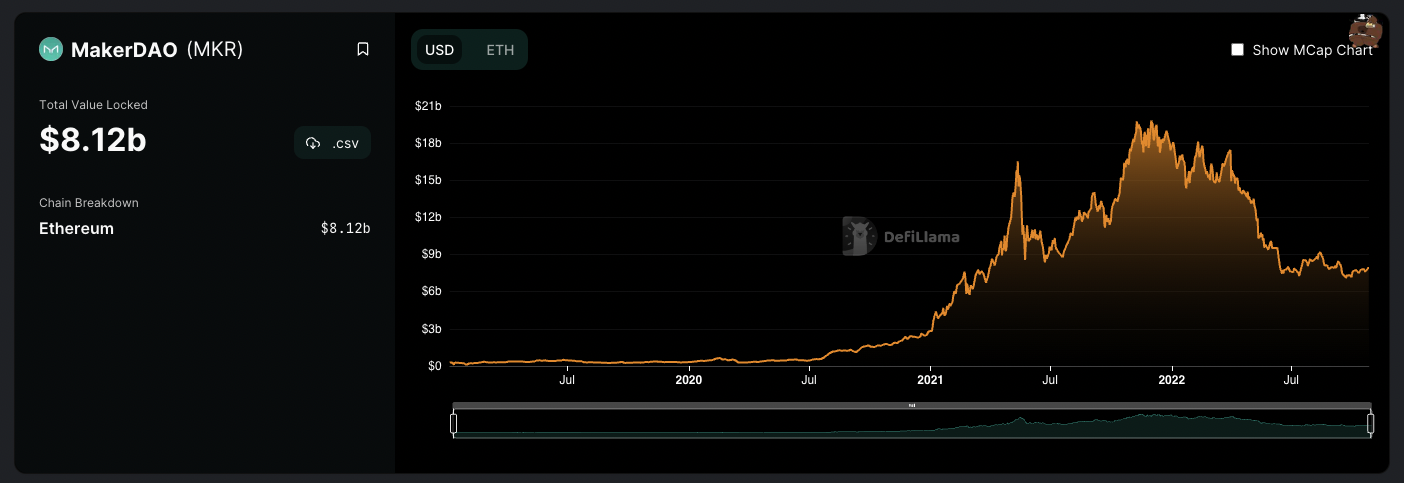
The March 12, 2020 "BlAck Thursday" Drama
Maker DAO
- some crypto prices dropped more than 50%
- cascading liquidations in leveraging platforms
- network congestion: some liquidations done at near-zero prices
- collateral shortfall in DAI
- MakerDAO sold new DAO tokens to collect collateral
- odd: DAI became riskier but high demand for DAI to trigger liquidations!
PEG stability module (PSM)
Maker DAO
The Problem:
- in extreme bull/bear runs, the peg may no longer work
- example: March 2020
- ETH dropped significantly and suddenly
- a rush occurred to (a) get out of ETH into save assets and (b) to collect DAI to get keeper fee
- upward pressure on price of DAI
The Solution:
- Peg stability module
- swap a given collateral type directly for DAI at a fixed rate (no minting/borrowing)
- like regular vault type with a zero stability fee and a liquidation ratio of 100%
- accessed through a user-facing smart contract containing the relevant swap functions (no ownership, just straight swap)
Note: In May 2021, ETH prices dropped again by >30% but no drama in DAI
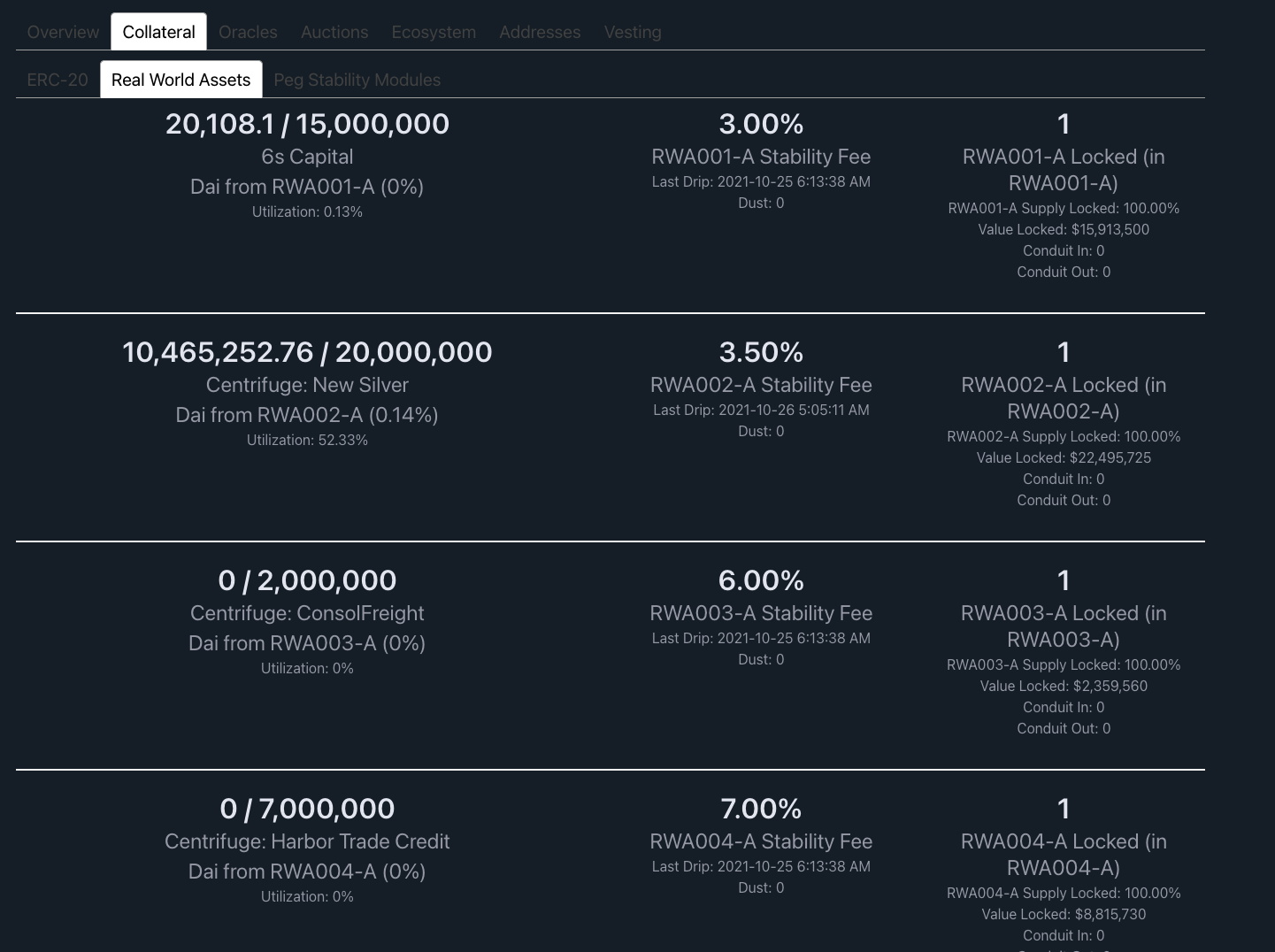
The frontier: DAI loans for real-world assets
Maker DAO
Algorithmic Stablecoin: UST on Terra
(or: Apple's Option 3)
Case 2: price(1 SC) \(<\) 1 FU \(\to\) SC cheap
under-collateralized stablecoin
arbitrageur
issuer
market
- arbitrageur purchases should raise price in market
- BUT:
- will is rise fast enough?
- does the issuer have enough funds or, rather have funds for long enough?
- for fully decentralized algo/smart contract stablecoin: there is no dollar to give!

Case 1: price(1 SC) \(>\) 1 FU \(\to\) SC cheap
arbitrageur
issuer
- for fully decentralized algo/smart contract stablecoin: there is no dollar to give!
The Case of Luna-Terra

exchange LUNA for newly minted UST tokens at the prevailing $ market rate
market
LUNA market

Case 2: price(1 SC) \(<\) 1 FU \(\to\) SC cheap
arbitrageur
issuer
- for fully decentralized algo/smart contract stablecoin: there is no dollar to give!
The Case of Luna-Terra
exchange SC for newly minted LUNA tokens at the prevailing $ market rate
market
LUNA market
Case 2: price(1 SC) \(<\) 1 FU \(\to\) SC cheap
DISCUSSION
- backing/collateral is the value of the LUNA/Terra Network
- \(\to\) must have value(Terra)\(\ge\sum\) SC
- when you issue new LUNA tokens
- shift value from current to new owners
- create inflation\(\to\) price(Luna)\(\searrow\)
POTENTIAL PROBLEMS
- value(Terra)\(<\sum\) SC
- could be pre-drop SC
- when SC<FU, LUNA token holders
- know price(LUNA) will drop
- \(\to\) pre-emptive selling
- more LUNA issued
- \(\to\) more inflation
- \(\to\) more price drops
- \(\to\) DEATH SPIRAL!!!
- So far there has never been an algorithmic stablecoin that did not collapse.
- Disclaimer: I am not aware of a mathematical proof that an algo stableconin cannot work.
Case 2: price(1 SC) \(<\) 1 FU \(\to\) SC cheap
- now let's do the maths carefully:
- price UST: \(p_s\)
- Assume \(p_s<1\)
- Arbitrage mechanism:
- Borrow $
- use $ to buy UST
- Sell UST for LUNA at $ price \(p_l'\)
- sell LUNA token for $$
- Repay $ loan, keep profit
- assumptions
- arbitrageur trades max \(q_s\) so that \(p_s=1\)
- \(q_s\) UST buy for Luna with price \(p_l'\) \[\frac{q_s}{p_l'}~\text{LUNA}\]
- redeemed UST destroyed, LUNA newly minted
- \(\to\) dilution.
- \(\to\) assume MKT anticipated extra quantity of LUNA \(q_s/ p_l'\)
- assume: TERRA network value unaffected
- except: validation costly \(\to\) minimum viable price \(\underline{p}_l\)
- network collapses if \(p_l<\underline{p}_l\)
Case 2: price(1 SC) \(<\) 1 FU \(\to\) SC cheap
- exchanges these \(q_s\) UST for LUNA at dollar-price for LUNA
- network value not affected:
\[Q_lp_l=(Q_l+q_l)p_l'\] - solve this to get\[p_l'=p_l-\frac{q_s}{Q_l}.\]
Stablecoin use cases
What do central bankers think about stablecoins?
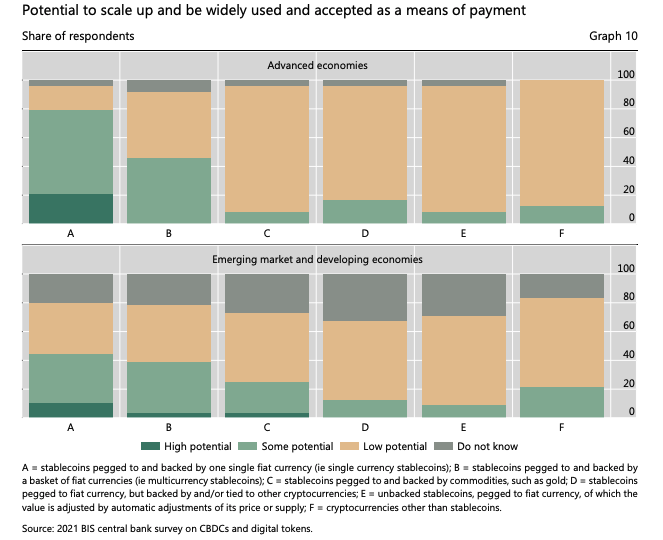
BIS Survey of Central Banks:
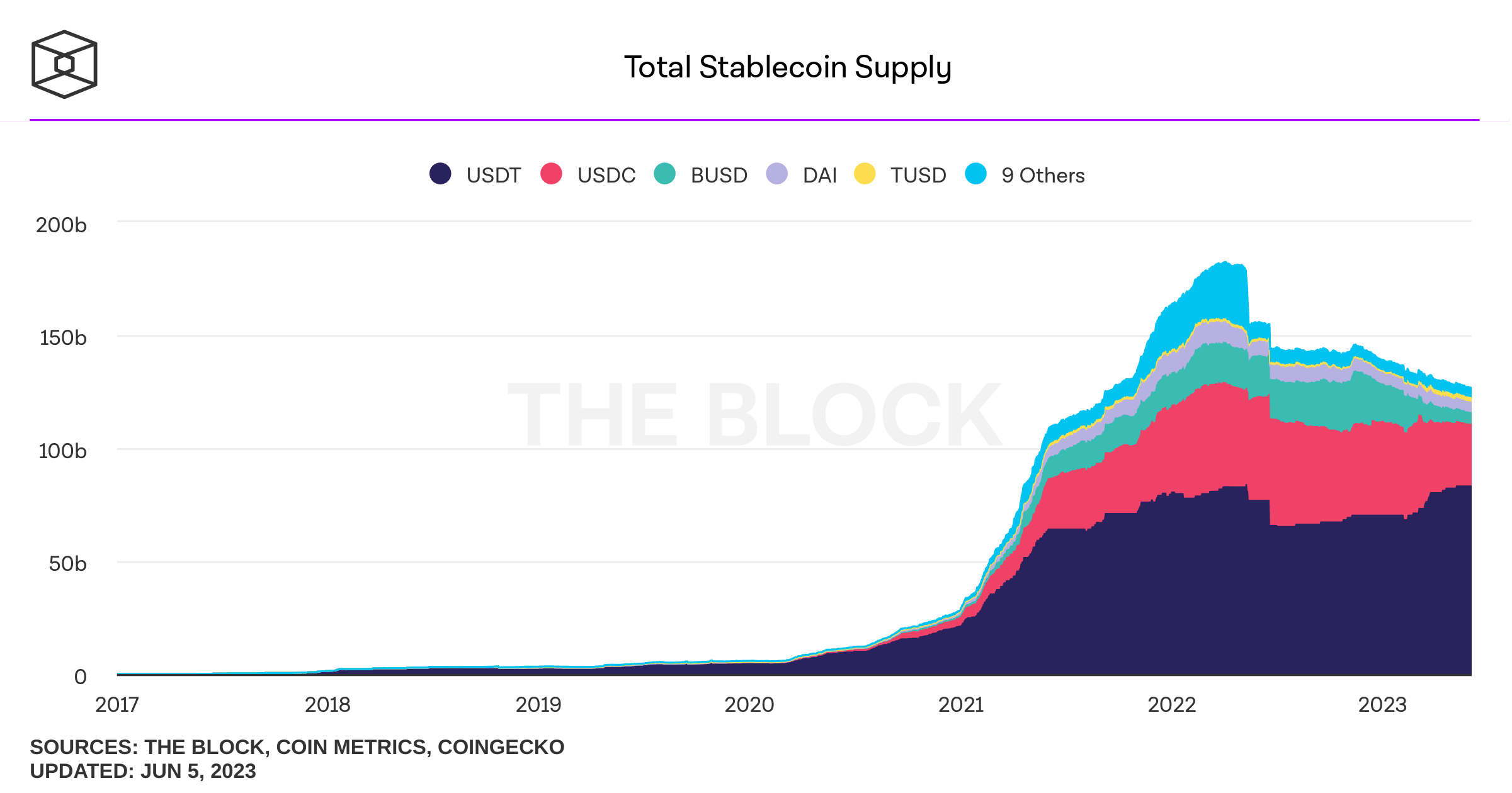
What do central bankers think about stablecoins?
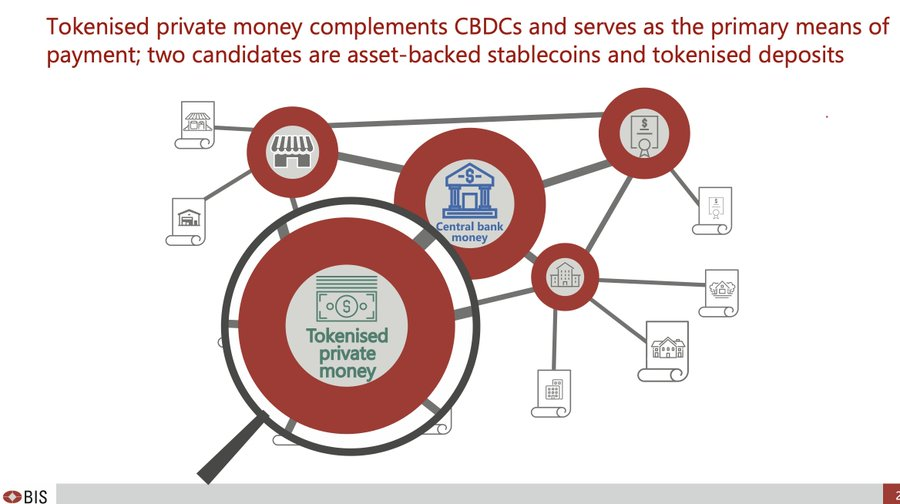
Stablecoin use cases
- Domestic
- developed world: do things you otherwise can't do
- developing world: everything
- stablecoins as payments compete with existing rails
- factors for adoption are
- price
- convenience
- reach/applications
- interoperability (e.g., credit availability, acceptance)
- International
- move assets faster and cheaper
- do things banks can't/won't do
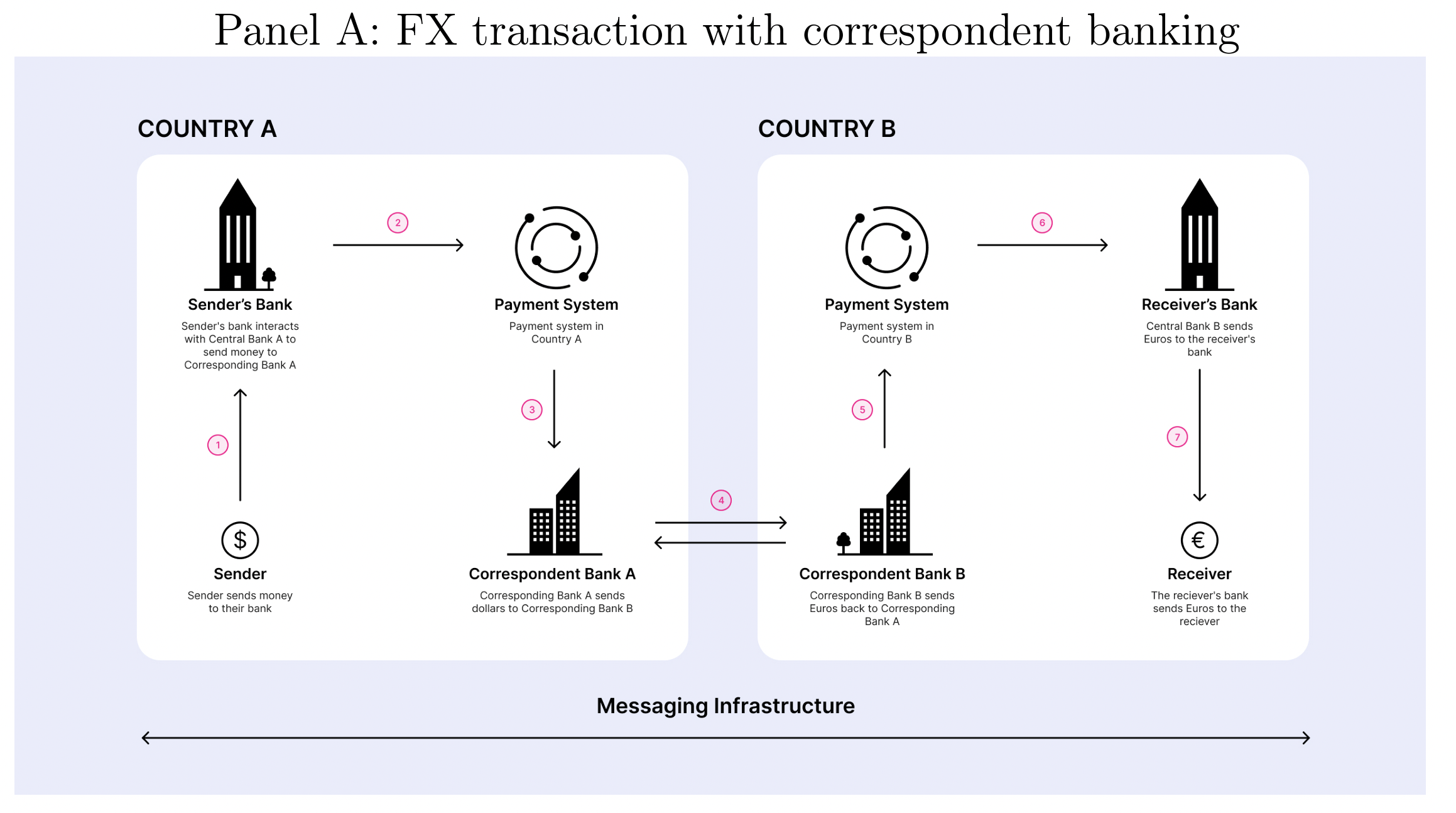
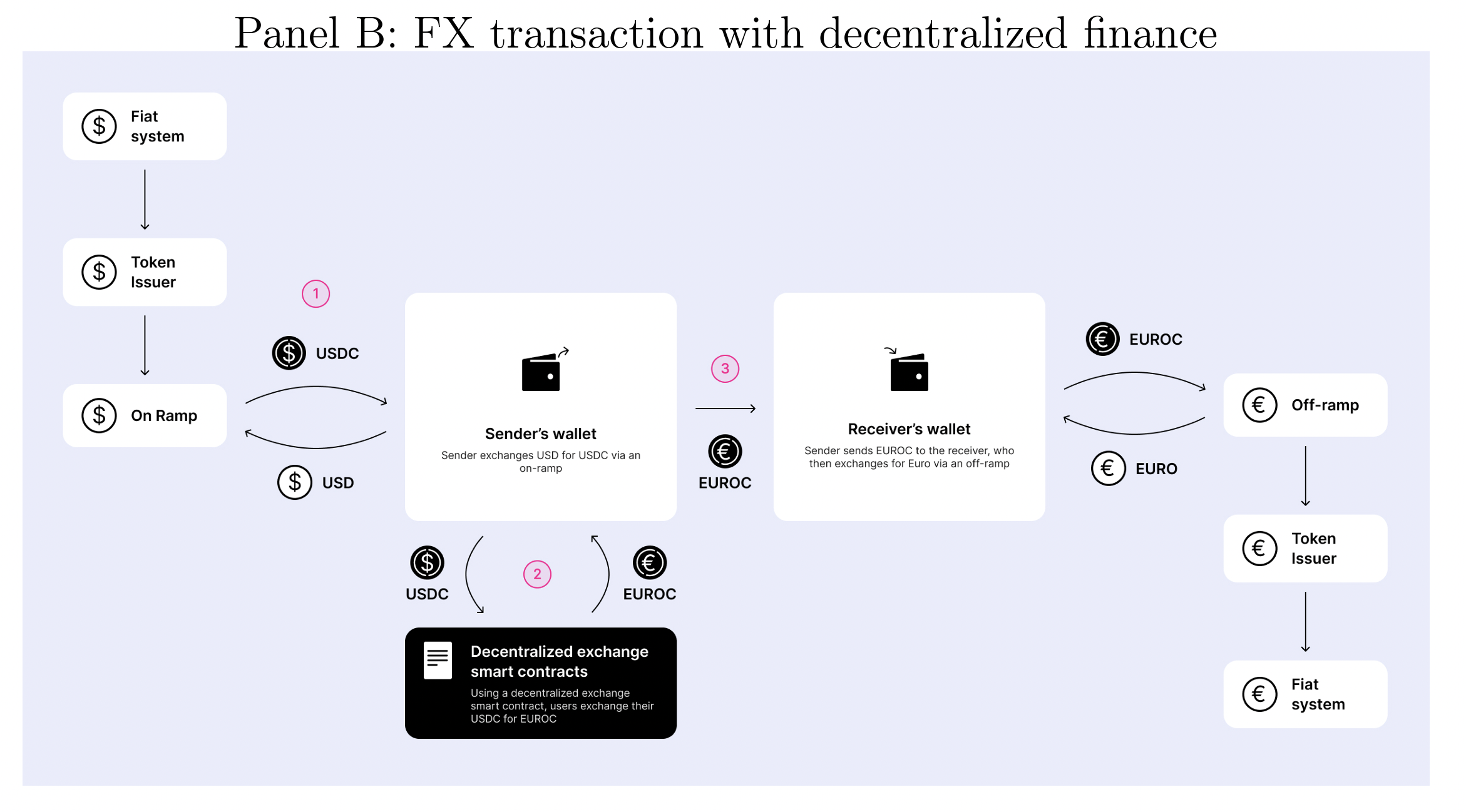
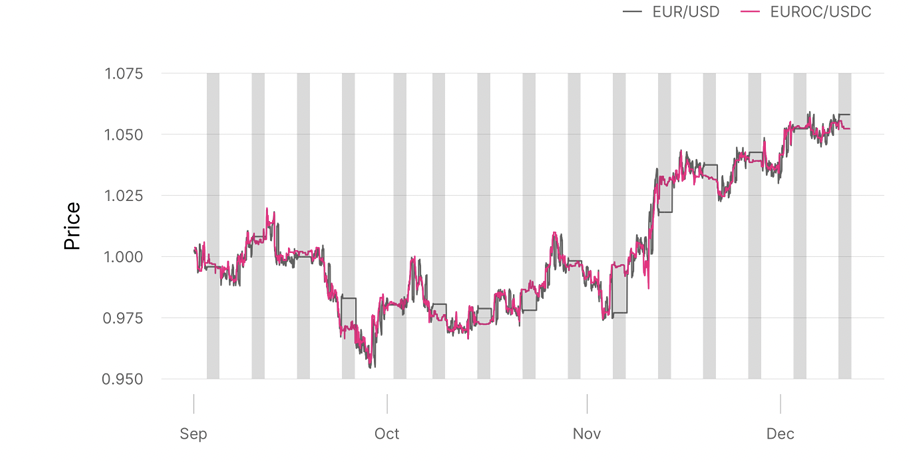
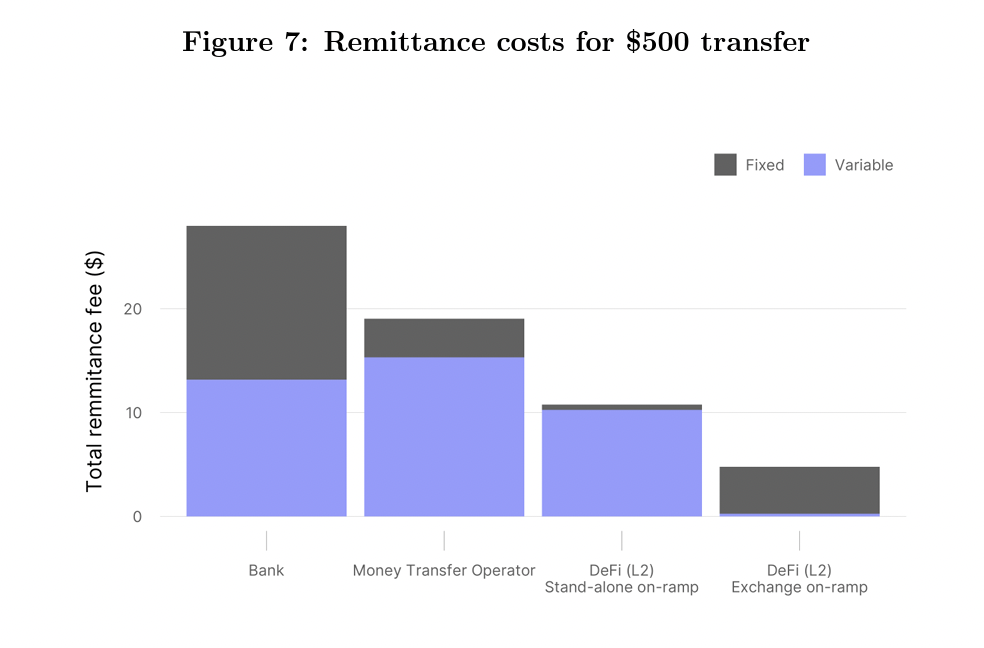
Source: On-chain Foreign Exchange and Cross-border Payments by Austin Adams, Mary-Catherine Lader, Gordon Liao, David Puth, Xin Wan (2023) [team from UniSwap Labs]
DeFi fees:
- fiat to crypto on ramp: 0%-1%
- exchange fees 1-5bps
- network fee: $0.001-5$
- off-ramp fee: 0%-1%
- total: from close to 0 to 2%+$5
- Canada has 800,000 international students
- admits around 300,000-400,000 annually
- Government of Canada: "We estimate that in 2017 and 2018 respectively, international students in Canada spent $18.4 billion and $22.3 billion on tuition, accommodation, and discretionary spending."
- Most of these funds are transferred from foreign countries to Canada in large sums.
- Students regularly get harrassed by tellers/banks about the source of their funds.
Canada is a country of international students
- To get admitted & get a visa you need to
- make a sizeable deposit
- prove that you have funds for tuition and sustaining your life
- How??? \(\to\) expensive brokers and other shady arrangements
Risks to Financial Stability
Broad Blockchain Risks to Financial Stability
Lending capacity & Monetary transmission
Deposit mobility
AML/CFT/Sanction evasion
Dollarization
Failures/runs
New cyber-risks
Asset Tokenization
Key Institutional Features of Equities
- listed equities are
- securities by definition
- restrictions on who can hold them
- exchange and trading rules
- knowledge of ownership
- reporting requirements
- well-established custody and ownership transfer with regulated roles
- difficult for beneficiary owner to "use" asset other than transfer
- securities by definition
- If held on a blockchain, what challenges arise and what would need to change?
Institutional Differences: Crypto Asset Ownership, Accounts, Wallets, and Self Custody

Smart contract accounts
- controlled by code
- decentralized applications
- tokens

Externally owned accounts
controlled by private keys
private
key
public
key
(seed phrase)
public
address
wallet = software to keep and use private keys
Blockchain Ownership Attribution
- for the blockchain, an asset is always owned by
- externally owned account
- smart contract
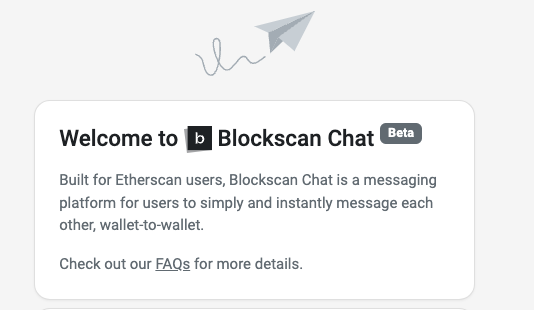
- externally owned accounts can be "reached" by, e.g., blockscan
- smart contract ownership is trickier
Institutional Differences: The Investment Process
issuers
investors
- funding
- record-keeping
- instruments
- custody
- advice
- trading
services
needed & provided
- takes care of custody and allows self-custody
- allows instrument creation
- enables record-keeping
- allows circumvention of existing institutions
A general purpose value management infrastructure:
intermediaries
separate institutions
- asset custodians
- broker-dealers
- trading platforms
The blockchain reality:
new institutions
will emerge
Asset Tokenization or
"The Creation of Asset-Linked Tokens"
Tokenization of stocks is nothing new: American Depository Receipts


foreign investor/
issuer
domestic bank with foreign representation
ADR issuing bank handles
- shareholder communications
- dividend payments
- other recording-keeping
Is this a workable model for blockchain- tokenization of existing assets?
foreign representation of domestic bank/ its custodian
domestic depository bank

S.E.C.
registration with form F-4
domestic broker
issues and cancels ADRs

domestic investor
lets investors own and trade ADRs
domestic
market
deposits shares
Blockchain Tokenization has many options
existing investor/
issuer
token issuance platform
investor
wallet
instruct to create tokens
deposits shares
custodian bank
deposits shares
creates tokens and sells to investors
centralized or decentralized
market
S.E.C.
registration
Token Standards
- ERC-20 = fungible token with minimal features such as
- balanceOf: how much does an address own?
- totalSupply: how many is there?
- approve: (contract owner allows token withdrawal)
- transfer: allows a holder to send a token).
- ERC-721 = non-fungible (has meta-data to describe the token; e.g. website URL or data hash)
- ERC-1155 = limited units of non-fungible
- there are other standards that allow e.g.:
- ERC-1726 dividends
- ERC-4626 interest payments
- ERC-1400/1404
- ERC-3643/ERC-621: restricts initial distributions
Some basic facts
Fact 1: Ownership of tokenized asset can be
- a person/legal entity
- a smart contract
Fact 2: By default issuers do not know who owns their tokens
Fact 3: Investors who hold tokens in DeFi smart contracts have fluctuating holdings.
Fact 4: General ownership restrictions are almost impossible to enforce, and transfer restriction would negate advantages of tokenization
Problems that require solving
ADR issuing bank handles
- shareholder communications
- dividend payments
- other recording-keeping
How are these functions performed with crypto-assets?
Fact 2: By default issuers do not know who owns their tokens
- It is possible to determine block-by-block EOA holders
- \(\to\) can send dividends directly
- but not very economical
- One can reach holders via EOA chat functions and disseminate information (e.g., chat.blockscan.com)
- \(\to\) opt-in for communcation
- good practice from DAOs is to lock tokens in contract and then do voting and dividend payments
- can also administer splits/reverse splits
Some remedies for communication and dividends
All this needs a legal framework that adapts to a decentralized, digital world
Problems that require solving
ADR issuing bank handles
- shareholder communications
- dividend payments
- other recording-keeping
Remaining FIs handle
- trading and transfer rule enforcement of ADRs
Fact 4: General ownership restrictions are almost impossible to enforce, and transfer restriction would negate advantages of tokenization
Legal and regulatory frameworks currently rely on intermediaries and are not prepared for self-custody
Broader Implications for the Financial Industry and the Financial System
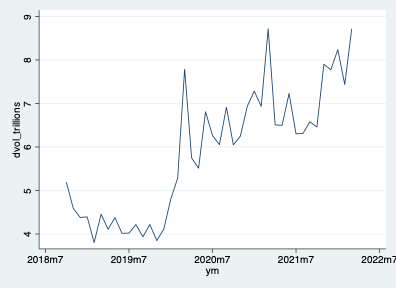
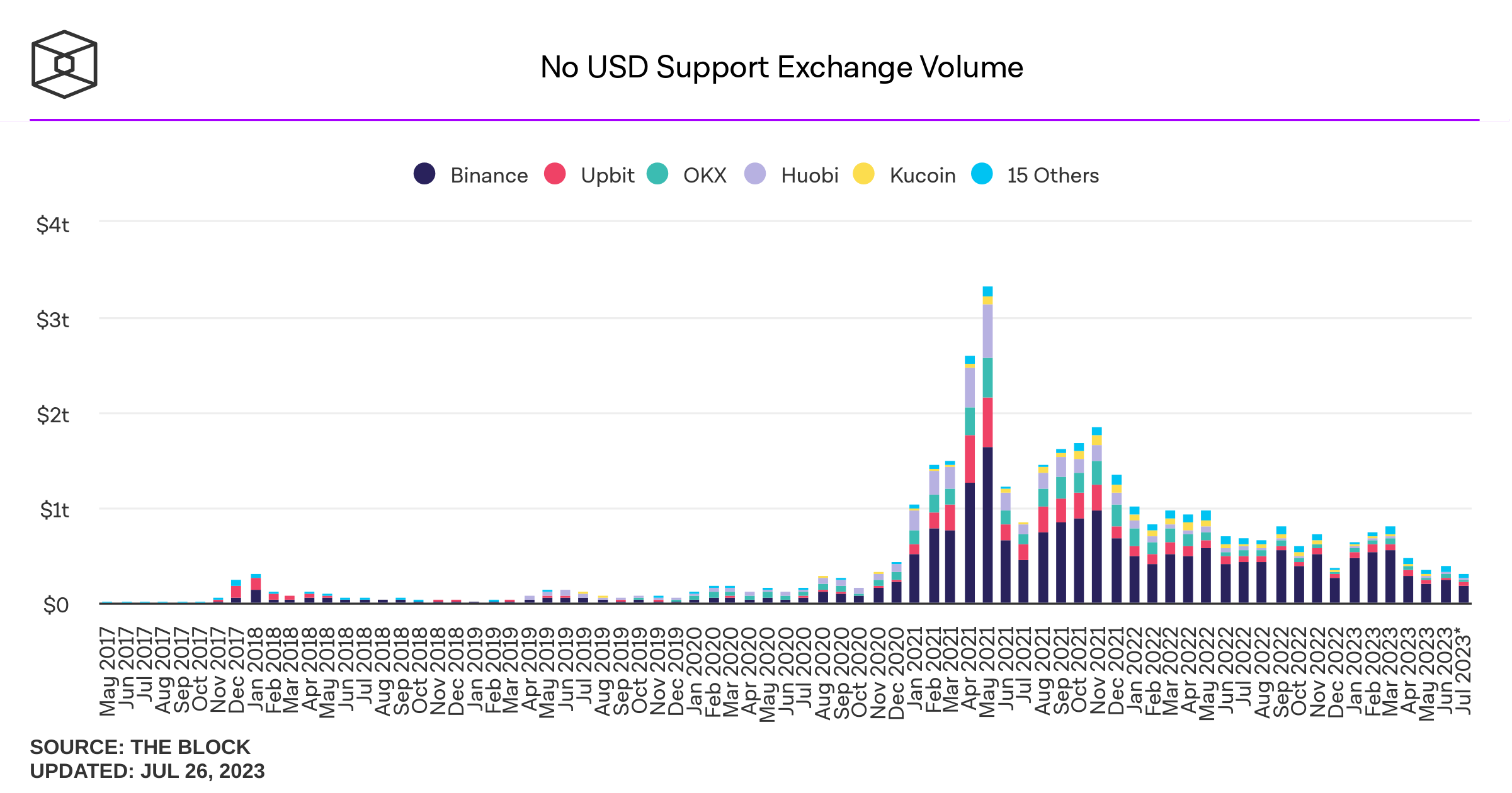
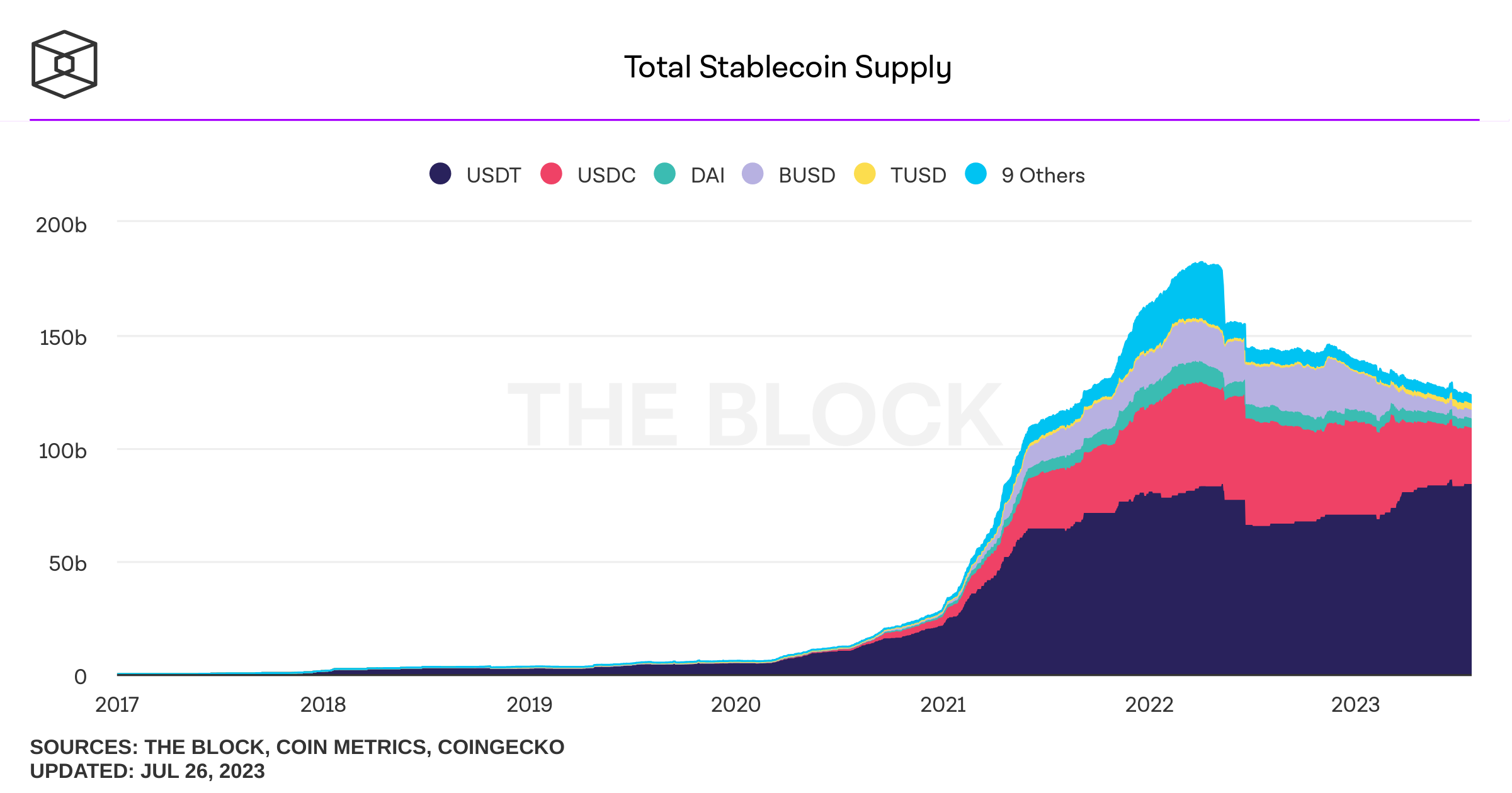
Asset tokenization would likely create a massive expansion in demand for stablecoins
Central Bank-Issued Digital Currencies
Evolution





2008
2014/5
2019
2020 (announced)
2025 (framework

Source: CBDCtracker.org
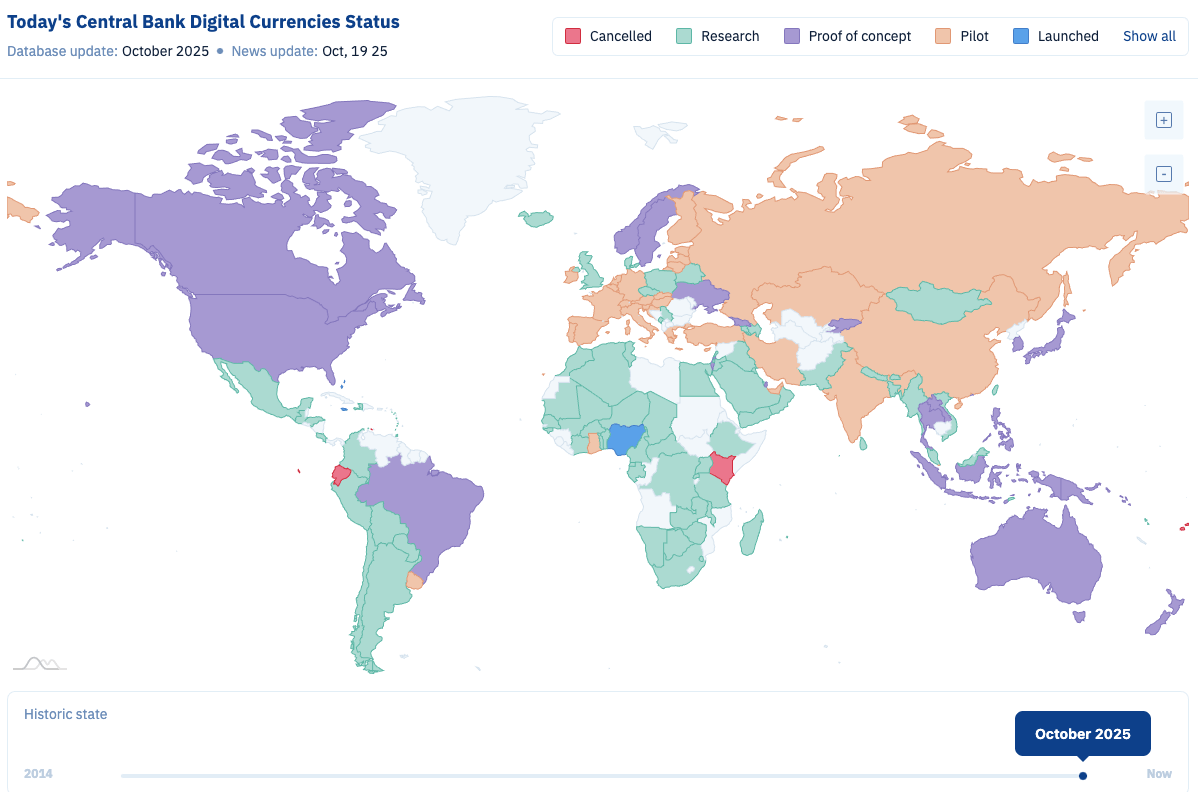
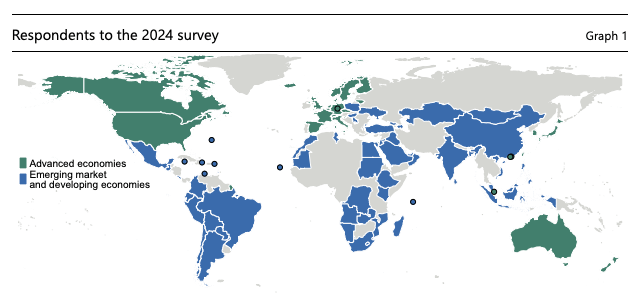
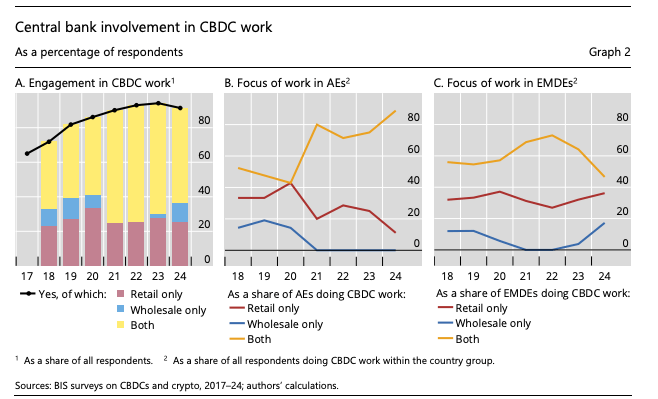
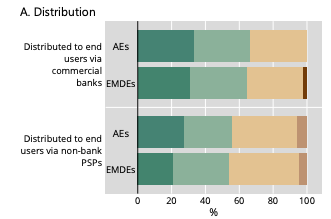
Source: BIS Paper #159, 2024 BIS Survey on CBDCs (published 2025)
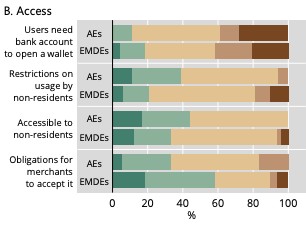
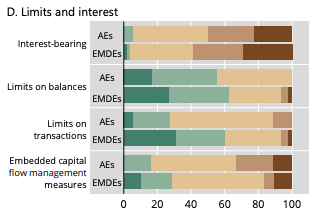
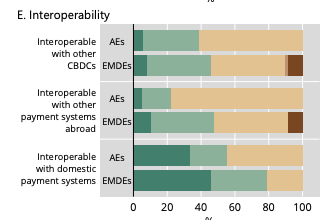
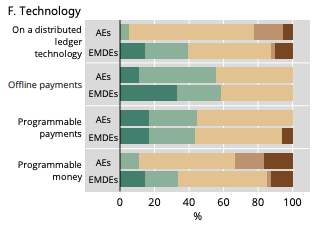
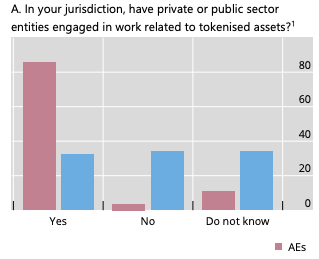
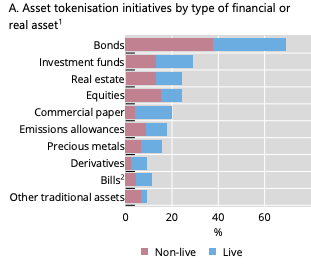
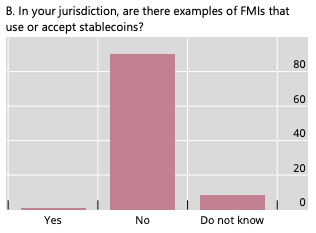
Possible CBDC architectures
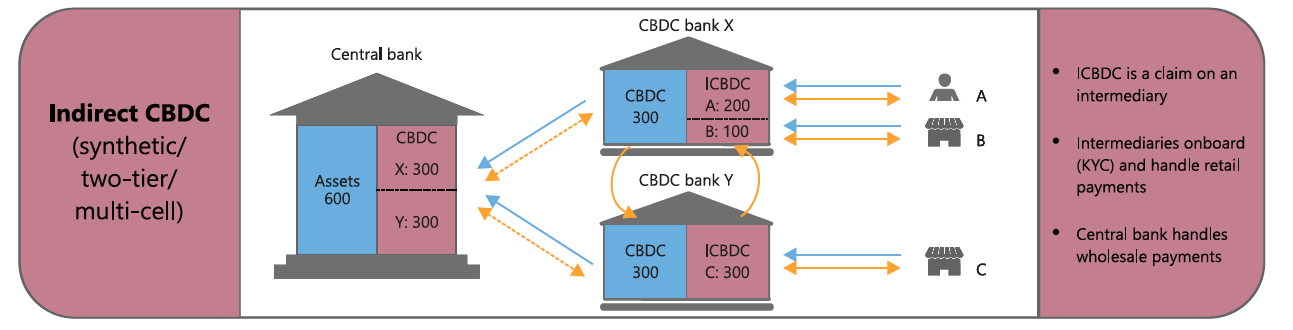
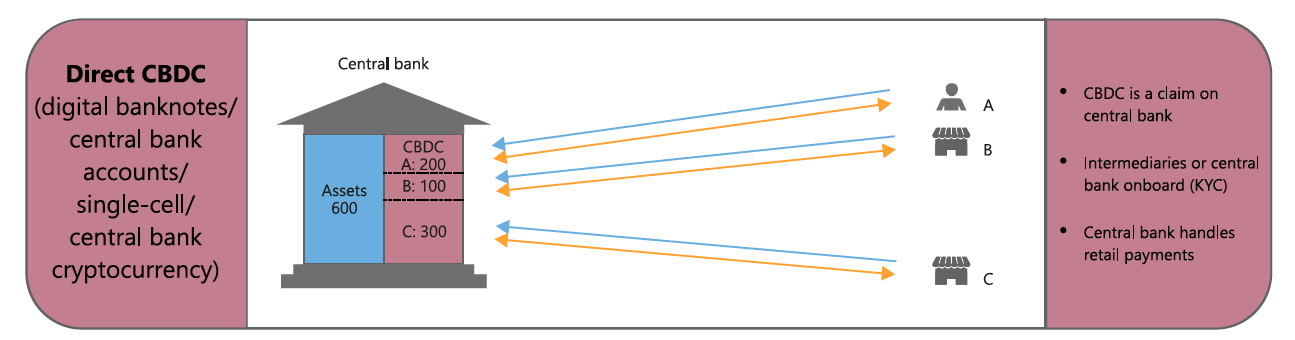
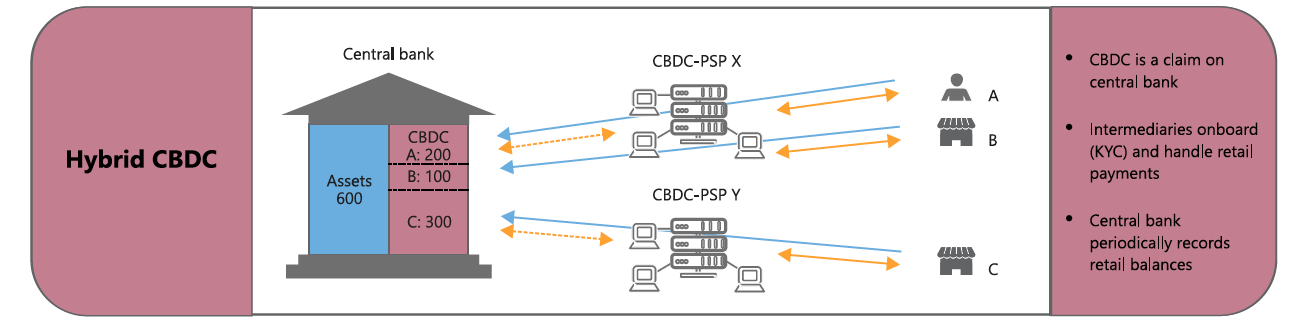
Source: BIS Quarterly Review, March 2020
The Year is 2008: what the Toronto a la cart program teaches us about CBDCs
Cautionary tales for central bank innovation
- Finland:
- Avant card failed
- China:
- people are unimpressed with the e-Yuan
- trust AliPay/WeChatPay vs. CCP
- Mexico:
- QR code pay uptake <5%
(not CBDC)
- QR code pay uptake <5%


what people want
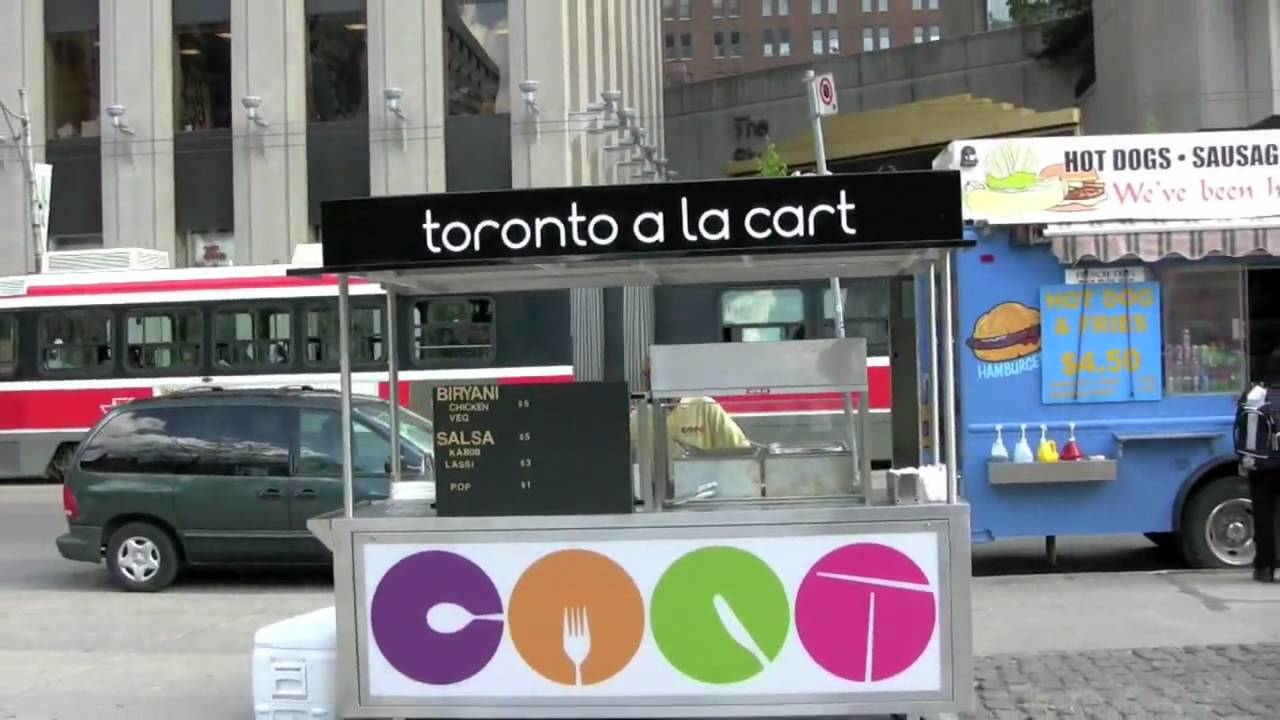
what we got
- a program designed by city departments
- no regard for business owners or customers
- burdensome regulation
- a truck ("cart") designed by committee that did not work
- program essentially died after 2 years
Features of Digital Money
- instantaneous 24/7 payments
- digital = borderless
- money that is compatible with digital applications, digital finance, internet of things etc
- privacy protection
- peer to peer transfers
- transfers of money without the involvement of a commercially interested third party
- non-fee digital payments
fast money
CBDC run by
Central Bank
CBDC on new communually run system
bank-issued stablecoin on public blockchain






|
What? |
||||
|---|---|---|---|---|
| 24/7 instantaneous | ||||
| borderless | ||||
| programmable | ||||
| privacy | ||||
| p2p | ||||
| no commercial 3rd party | ||||
| nominal fee |