DESI DR2: Survey Overview and Cosmological Constraints from the Baryon Acoustic Oscillations
Arnaud de Mattia
on behalf of the DESI collaboration
Nice, March 25th

Thanks to our sponsors and
72 Participating Institutions!


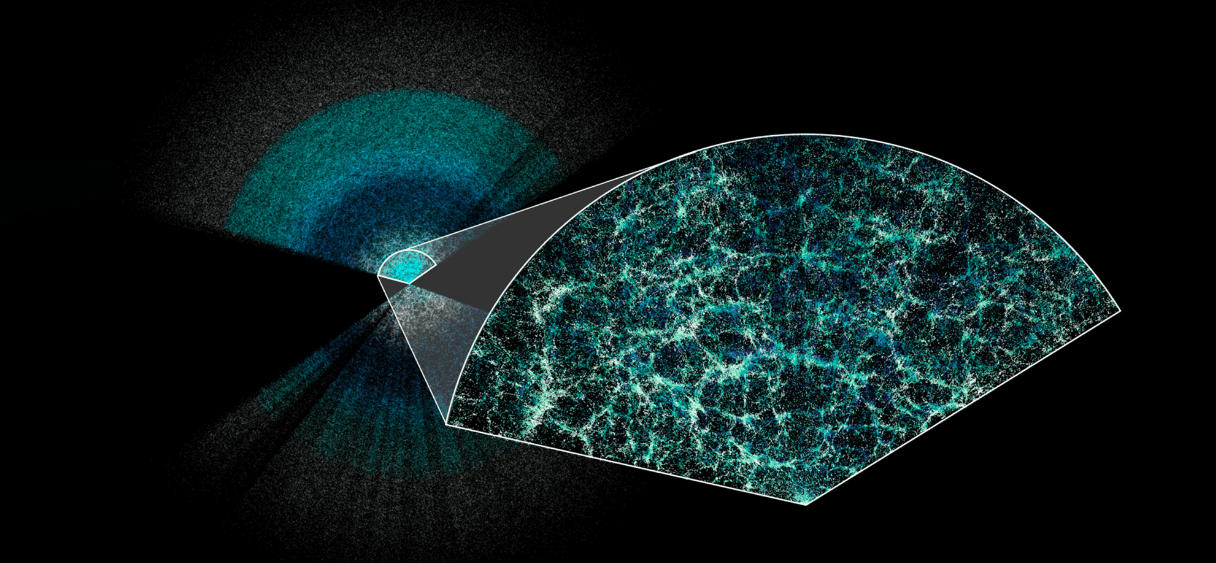
DESI 3D Map
Physics program
- Galaxy and quasar clustering
- Lyman-alpha forest
- Clusters and cross-correlations
- Galaxy and quasar physics
- Milky Way Survey
- Transients and low-z
DESI 3D Map
Physics program
- Galaxy and quasar clustering
- Lyman-alpha forest
- Clusters and cross-correlations
- Galaxy and quasar physics
- Milky Way Survey
- Transients and low-z
DESI: a stage IV survey
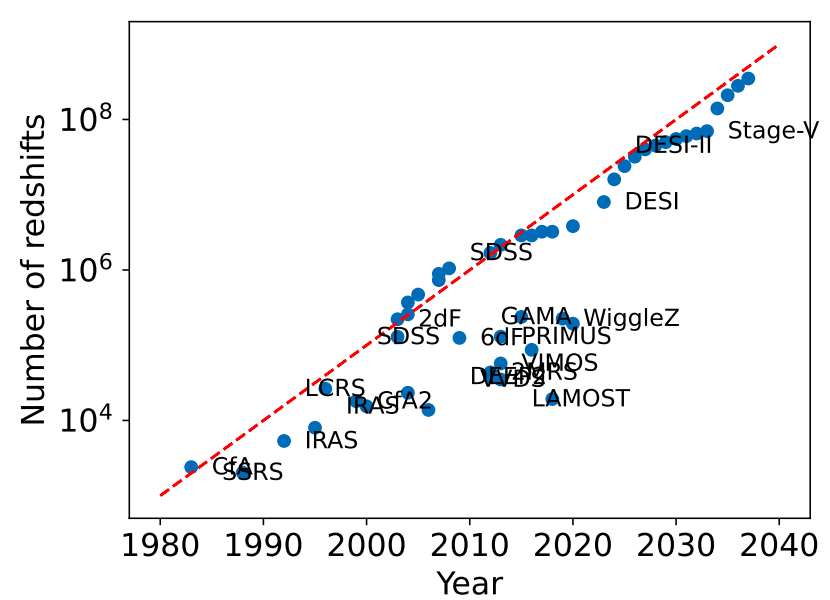
10 years = \(10 \times \)
DESI DR1-5 galaxy samples
8 years
\(\sim 60\)M extra-galactic redshifts over 17k \(\mathrm{deg}^2\)
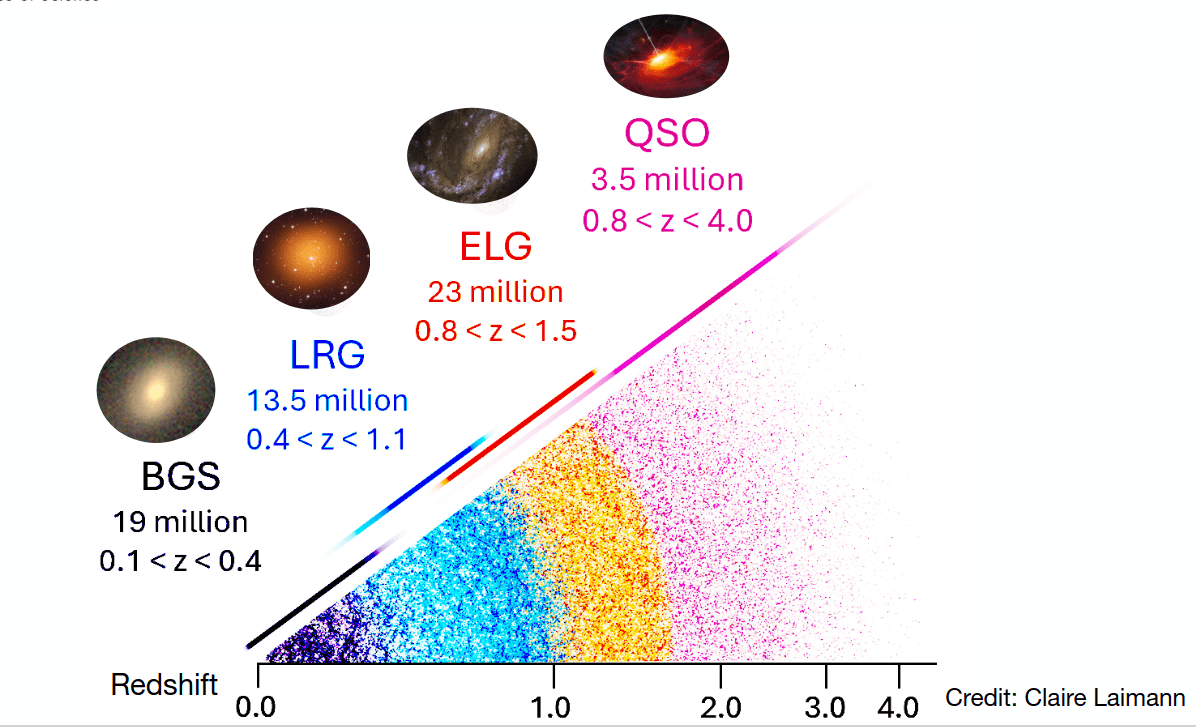
From images to redshifts


imaging surveys (2014 - 2019) + WISE (IR)
target selection
spectroscopic observations
spectra and redshift measurements
Mayall Telescope
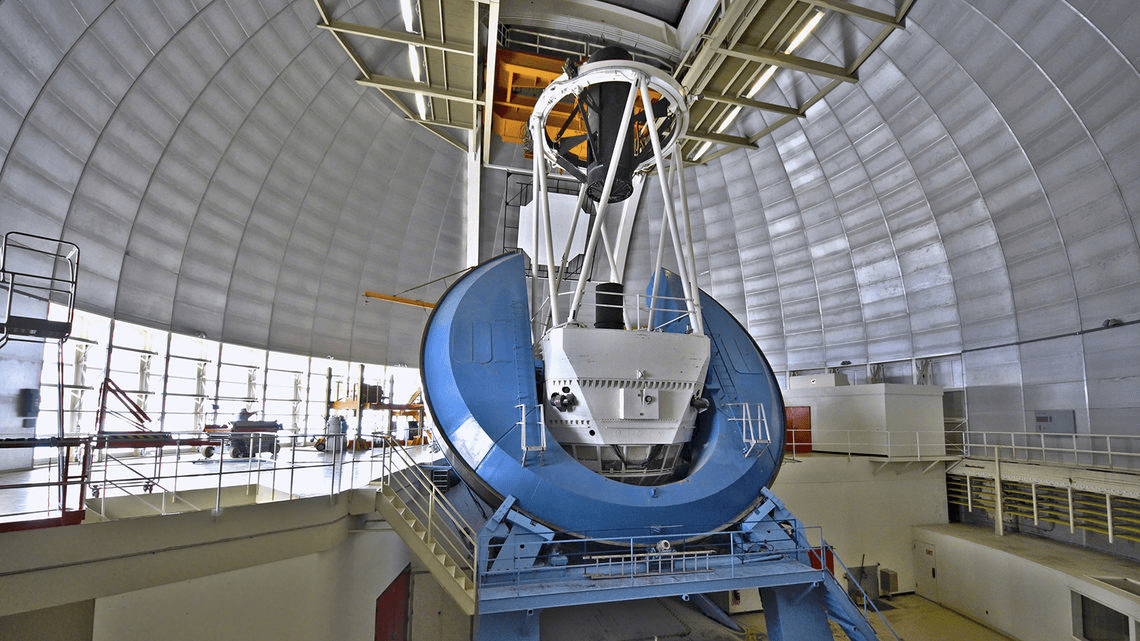
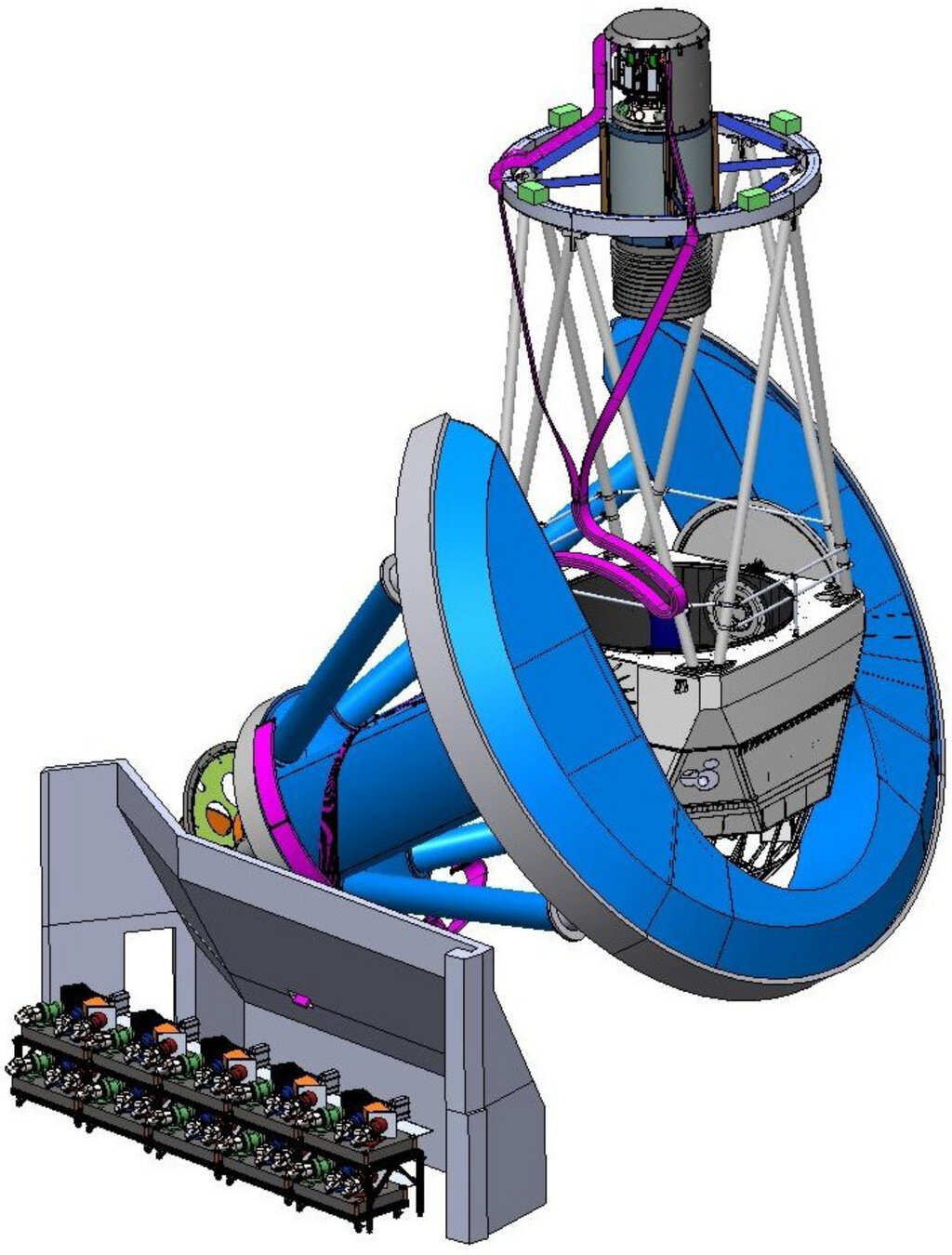
focal plane 5000 fibers
wide-field corrector
6 lenses, FoV \(\sim 8~\mathrm{deg}^{2}\)
Kitt Peak, AZ
4 m mirror
Mayall Telescope
focal plane 5000 fibers
fiber view camera
ten 3-channel spectrographs
49 m, 10-cable fiber run
Kitt Peak, AZ

Focal plane: 5000 robotic positioners
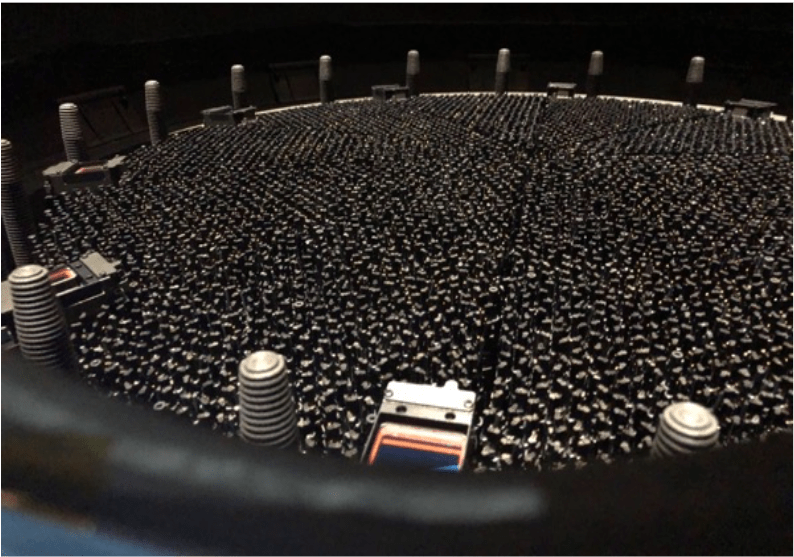

86 cm
Focal plane: 5000 robotic positioners
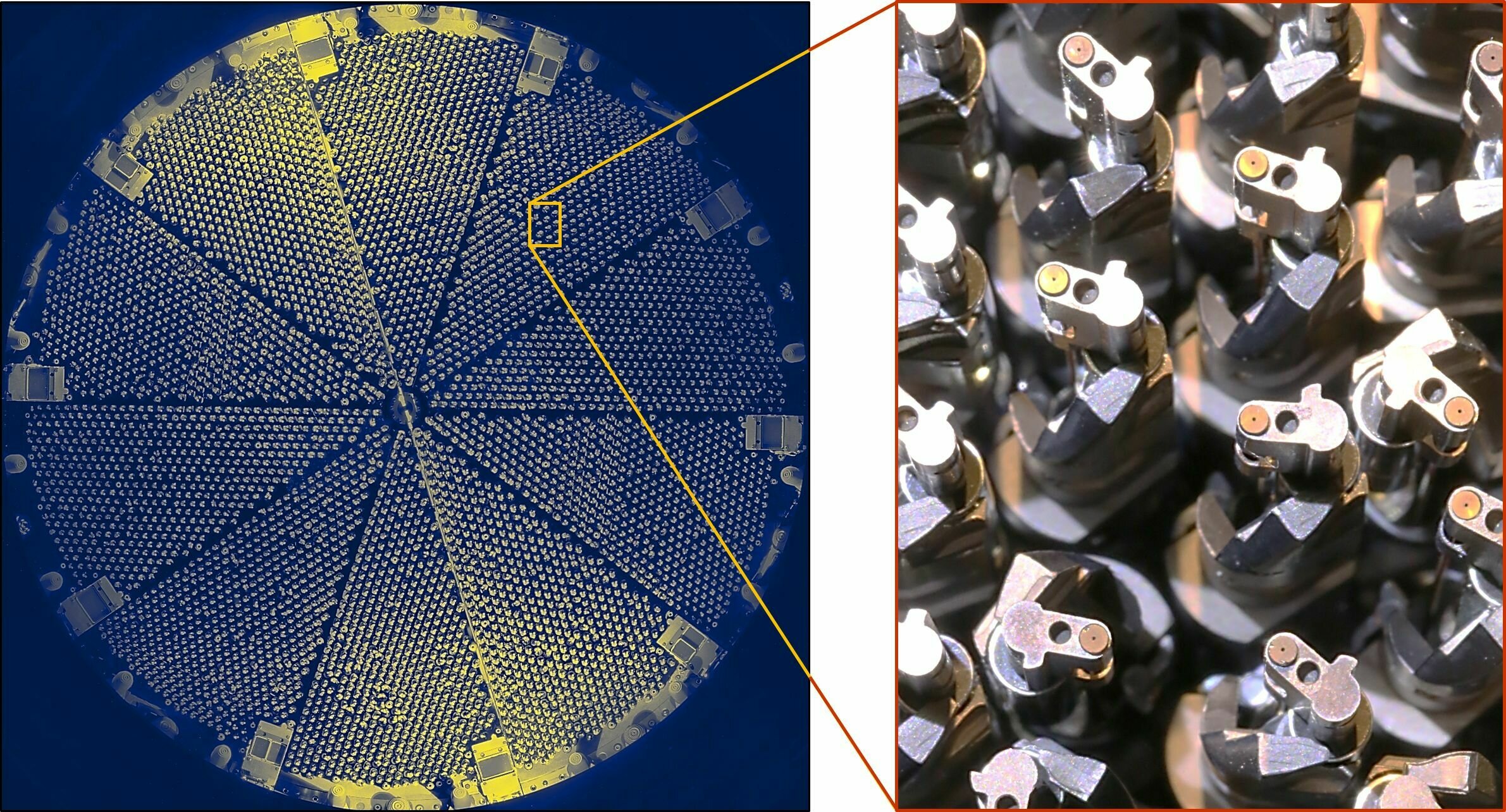
Exposure time (dark): 1000 s
Configuration of the focal plane
CCD readout
Go to next pointing
140 s
0.1 mm
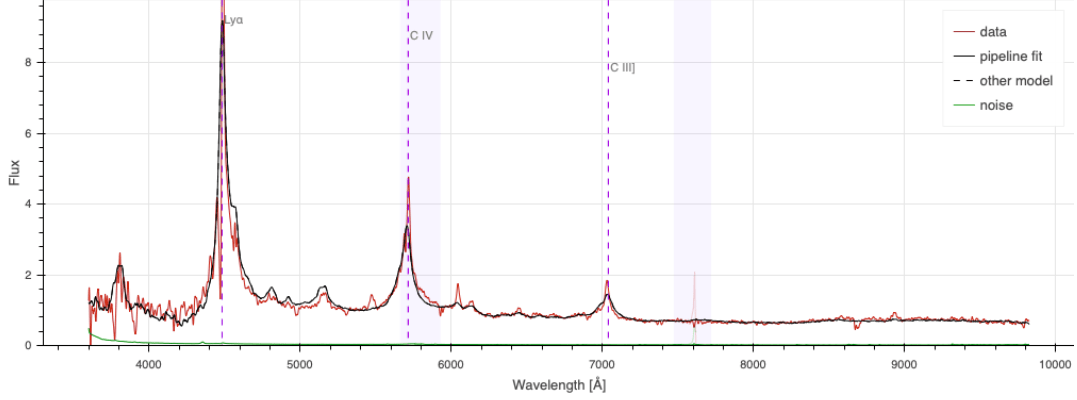
Spectroscopic pipeline
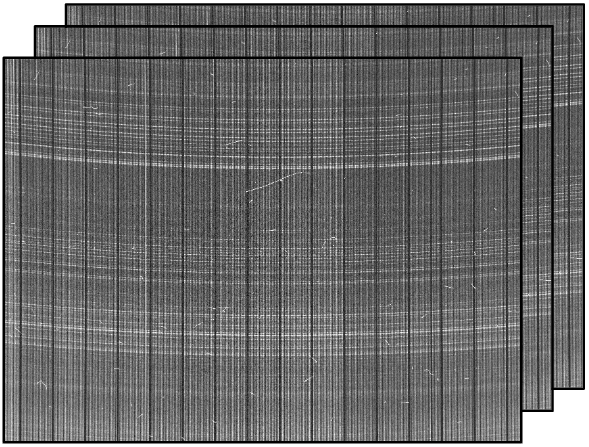
wavelength
fiber number
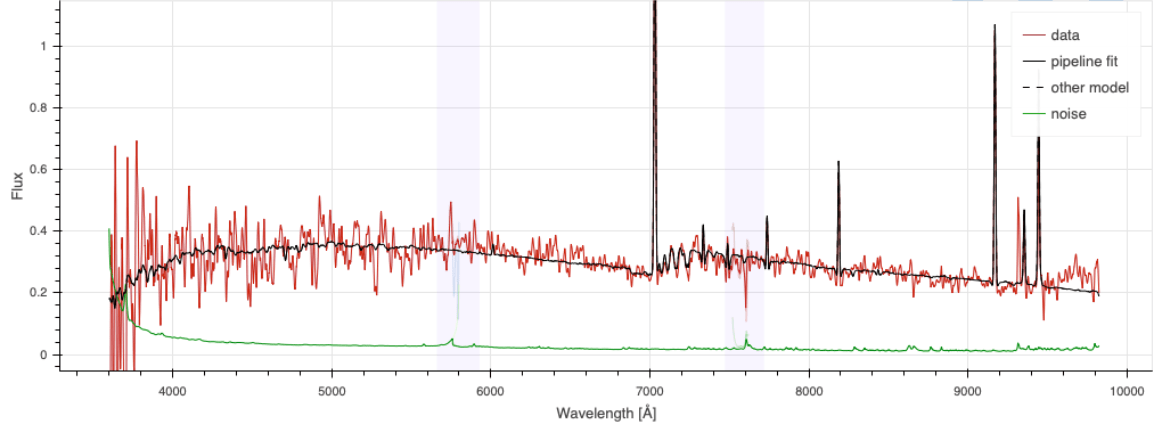
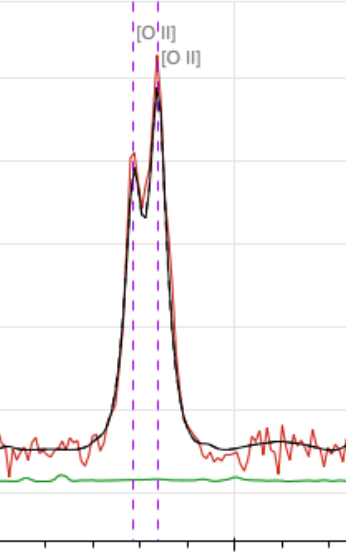
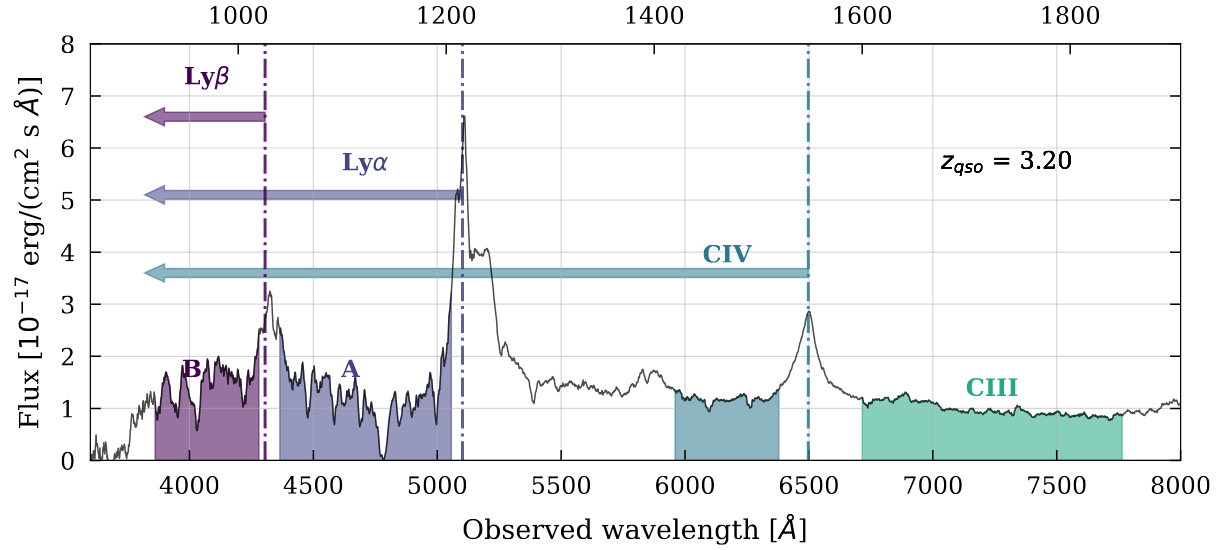
\(z = 2.1\) QSO
\(z = 0.9\) ELG
Ly\(\alpha\)
CIV
CIII
[OII] doublet at \(3727 \AA\) up to \(z = 1.6\)
[OII]
Ly\(\alpha\) at \(1216 \AA\) down to \(z = 2.0\)
DESI data release 2 (DR2)

Observations from May 14th 2021 to April 9th 2024
approved
construction started
first light
survey started
DR1 data sample
DR1 results
DR2 sample secured
DR3
DR2 results
2015
16
17
18
19
20
22
23
24
21
25
26
27
DESI data release 2 (DR2)
- 30M galaxy and QSO redshifts in 3 years of operation
- 14M used in the DR2 analysis (6M in DR1)
- Including 820,000 Ly\(\alpha\) QSO at \(z > 2.09\) (420,000 in DR1)
- \(> 2\times\) increase in number of tracers
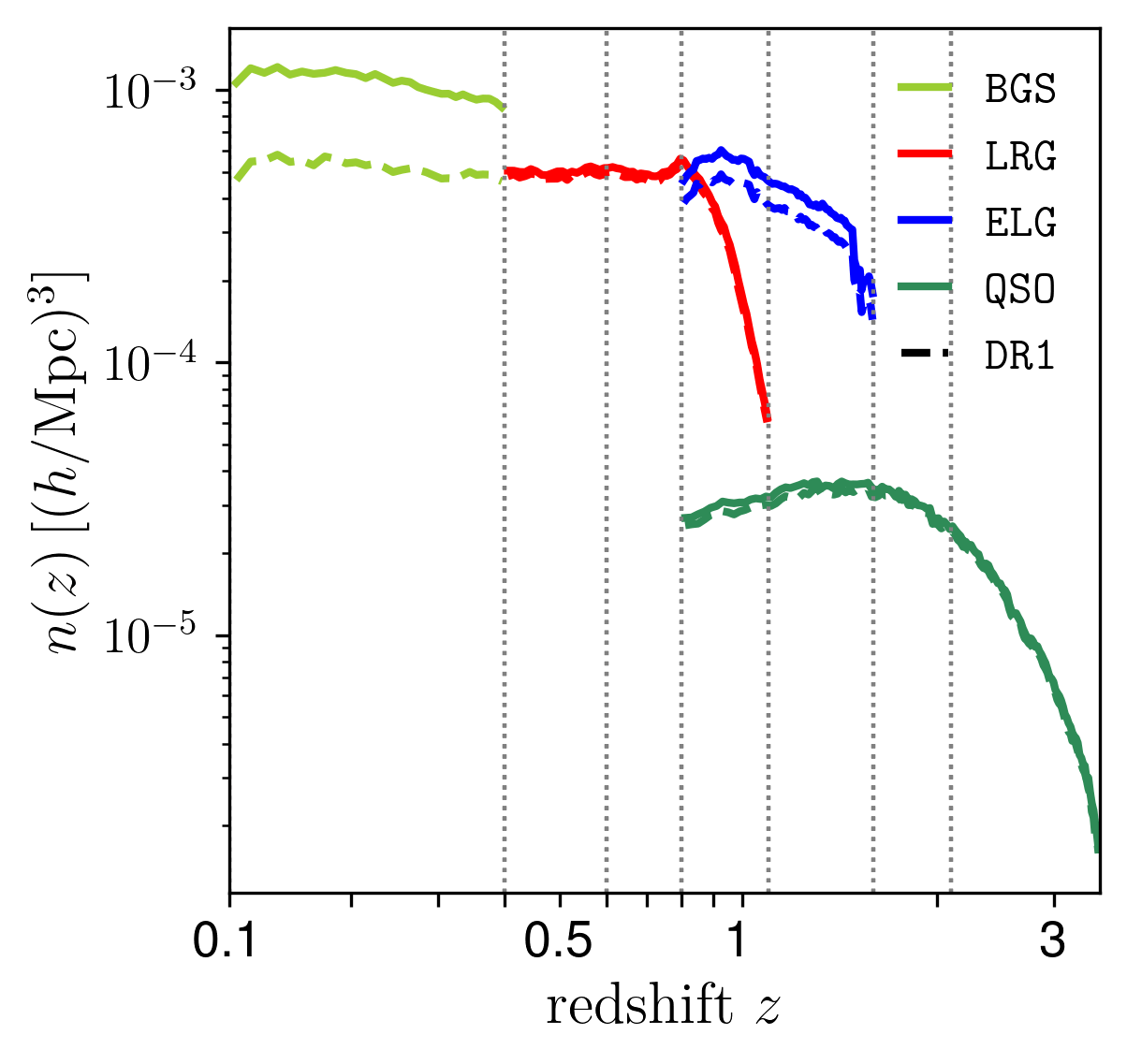
higher completeness (deeper)
extended mag cut
Release of DESI DR2 (BAO) results
March 19th 2025
First batch of DESI DR2 cosmological analyses: https://data.desi.lbl.gov/doc/papers/dr2
• DESI Collaboration et al. (2025), DESI DR2 Results I: Baryon Acoustic Oscillations from the Lyman Alpha Forest
• DESI Collaboration et al. (2025), DESI DR2 Results II: Measurements of Baryon Acoustic Oscillations and Cosmological Constraints
Companion supporting papers:
Lodha et al. (2025), Extended Dark Energy analysis
Elbers et al. (2025), Constraints on Neutrino Physics
Andrade et al. (2025), Validation of the DESI DR2 BAO mesurements
Casas et al. (2025), Validation of the DESI DR2 Lyα BAO analysis using synthetic datasets
Brodzeller et al. (2025), Construction of the Damped Lyα Absorber Catalog for DESI DR2 Lyα BAO
DR1 public!


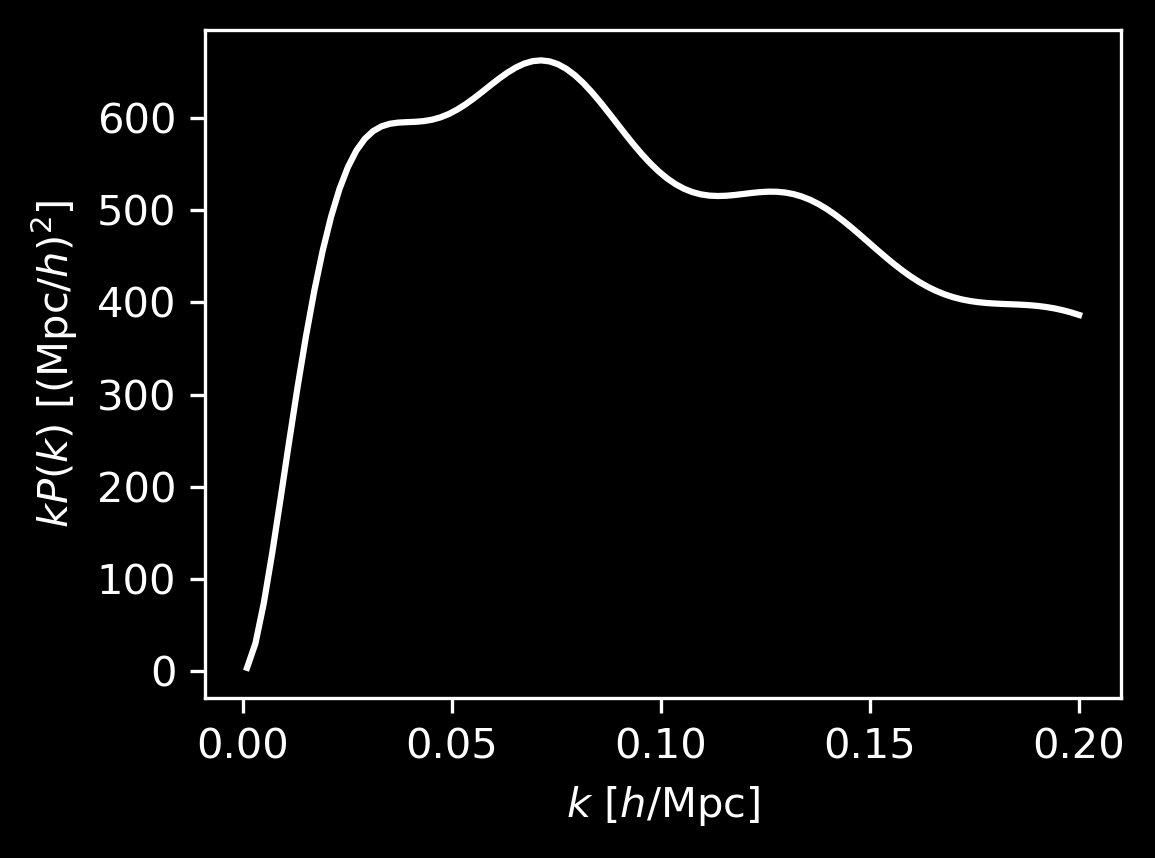
Baryon Acoustic Oscillations
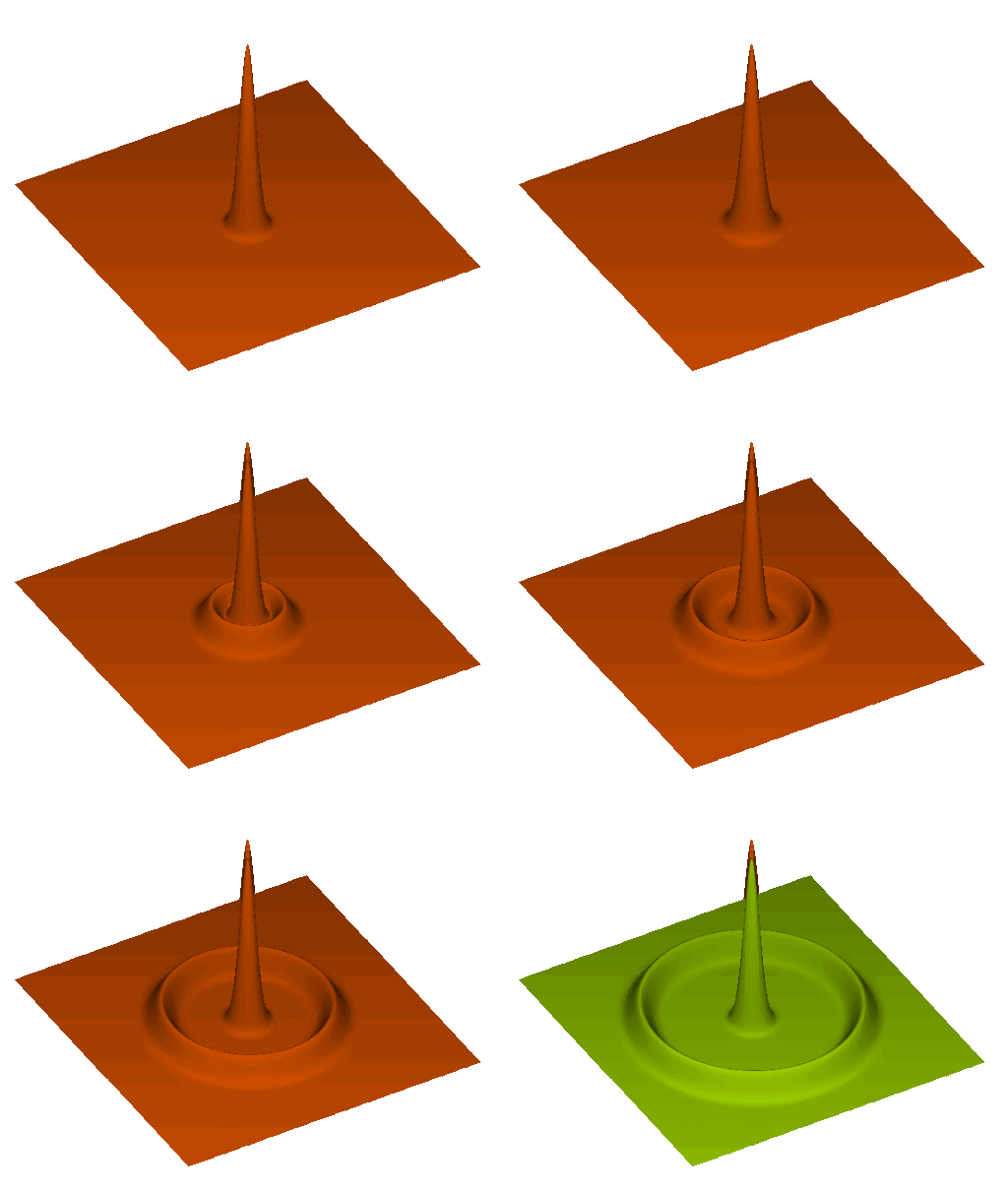
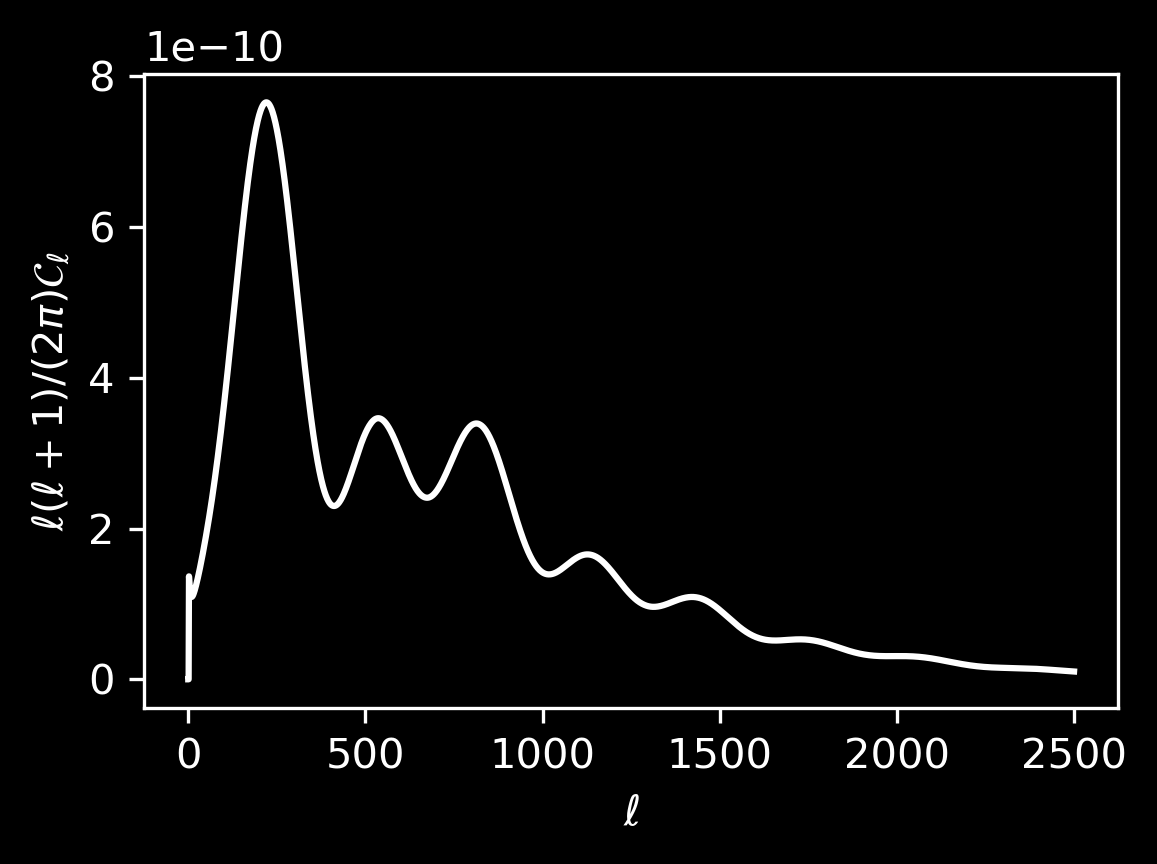
Sound waves in primordial plasma
At recombination (\(z \simeq 1100\))
- plasma changes to optically thin
- baryons decouple from photons
- sound wave stalls after travelling \(r_\mathrm{d}\)
Sound horizon scale at the drag epoch
\(r_\mathrm{d} \simeq 150\; \mathrm{Mpc}\)
standard ruler
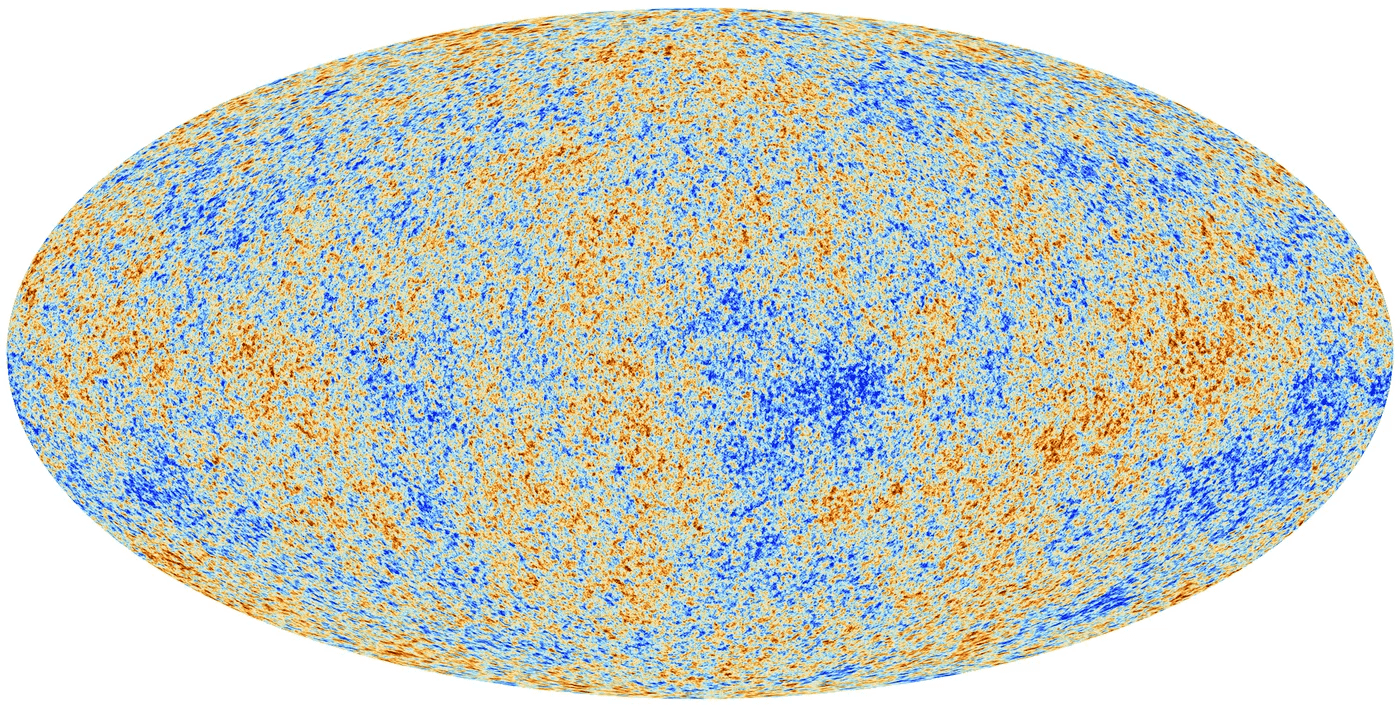
Baryon Acoustic Oscillations
CMB (\(z \simeq 1100\))
Sound waves in primordial plasma
At recombination (\(z \simeq 1100\))
- plasma changes to optically thin
- baryons decouple from photons
- sound wave stalls after travelling \(r_\mathrm{d}\)
Sound horizon scale at the drag epoch
\(r_\mathrm{d} \simeq 150\; \mathrm{Mpc}\)
standard ruler
CMB (\(z \simeq 1100\))
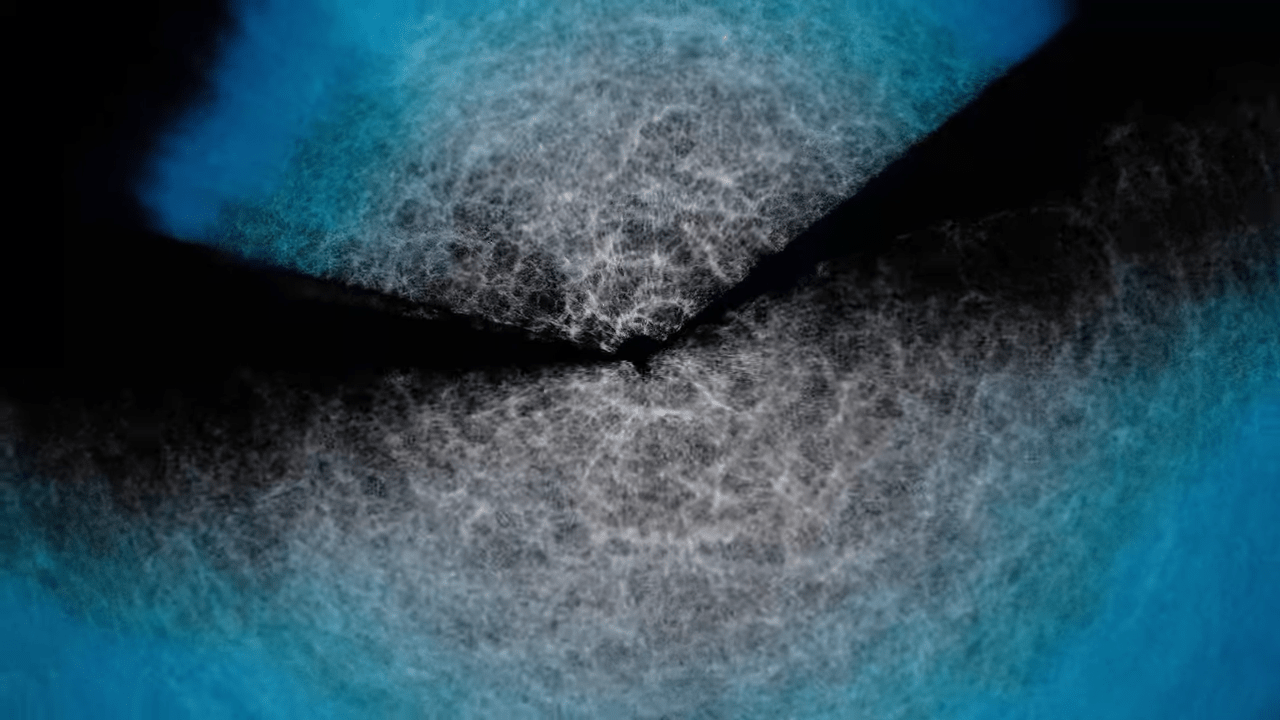
LSS
Baryon Acoustic Oscillations
BAO measurements
distribution of galaxies (cartoonish)
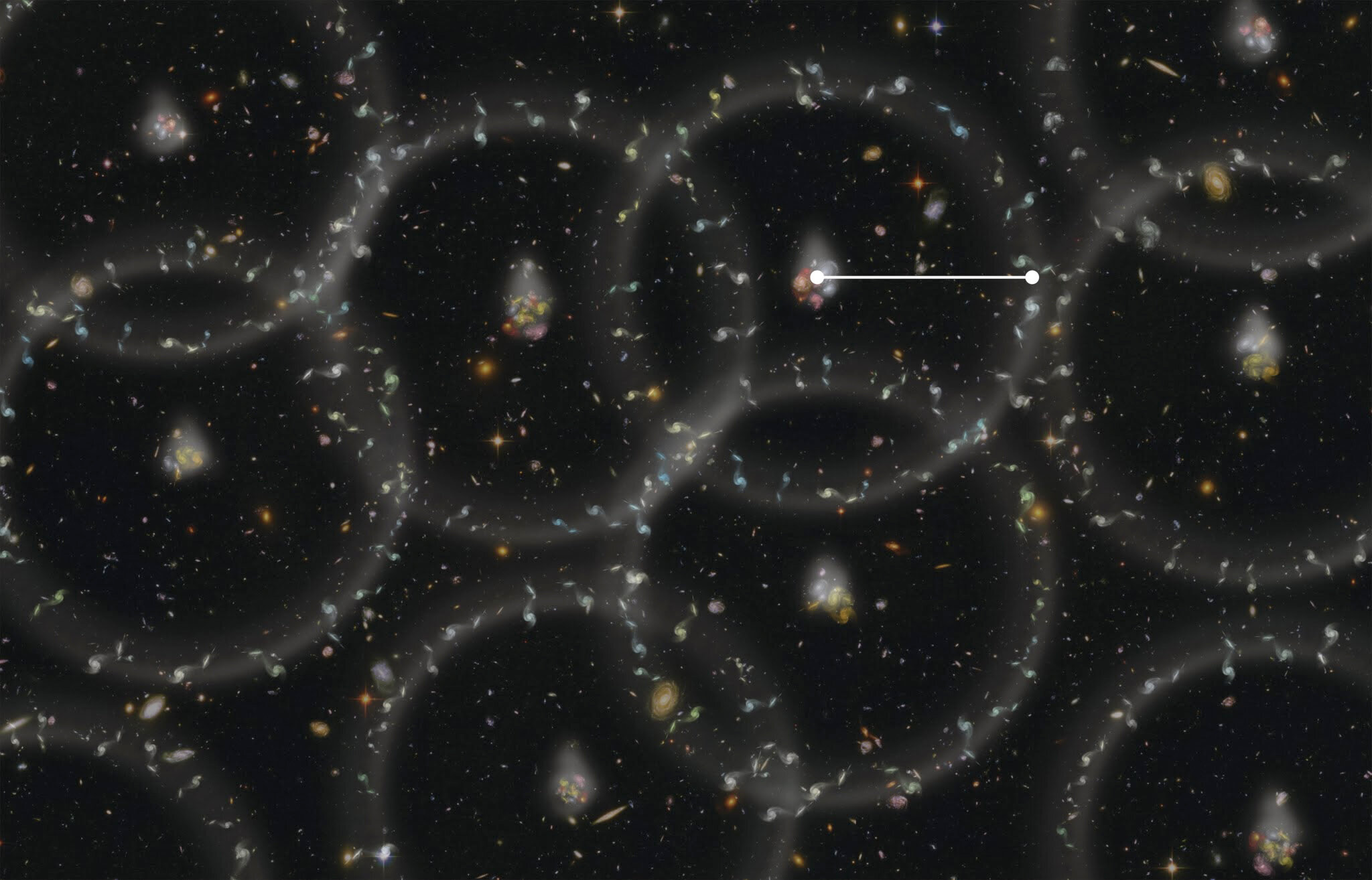
transverse comoving distance
sound horizon \(r_\mathrm{d}\)
- angle on the sky (transverse to the line-of-sight): \(\theta_\mathrm{BAO} = \orange{r_\mathrm{d}}/\green{D_\mathrm{M}(z)}\)
- \(\Delta z\) (along the line-of-sight): \( \Delta z_\mathrm{BAO} = r_\mathrm{d} / D_\mathrm{H}(z) = \green{H(z)} \orange{r_\mathrm{d}} / c \)
BAO measurements
distribution of galaxies (cartoonish)
Hubble distance \(c/H(z)\)
sound horizon \(r_\mathrm{d}\)
- angle on the sky (transverse to the line-of-sight): \(\theta_\mathrm{BAO} = \orange{r_\mathrm{d}}/\green{D_\mathrm{M}(z)}\)
- \(\Delta z\) (along the line-of-sight): \( \Delta z_\mathrm{BAO} = r_\mathrm{d} / D_\mathrm{H}(z) = \green{H(z)} \orange{r_\mathrm{d}} / c \)
BAO measurements
- angle on the sky (transverse to the line-of-sight): \(\theta_\mathrm{BAO} = \orange{r_\mathrm{d}}/\green{D_\mathrm{M}(z)}\)
- \(\Delta z\) (along the line-of-sight): \( \Delta z_\mathrm{BAO} = r_\mathrm{d} / D_\mathrm{H}(z) = \green{H(z)} \orange{r_\mathrm{d}} / c \)
- at multiple redshifts \(z\)
Probes the expansion history (\(\green{D_\mathrm{M}, D_H}\)), hence the energy content (e.g. dark energy)
Absolute size at \(z = 0\): \(H_0 \orange{r_\mathrm{d}}\)
BAO measurements
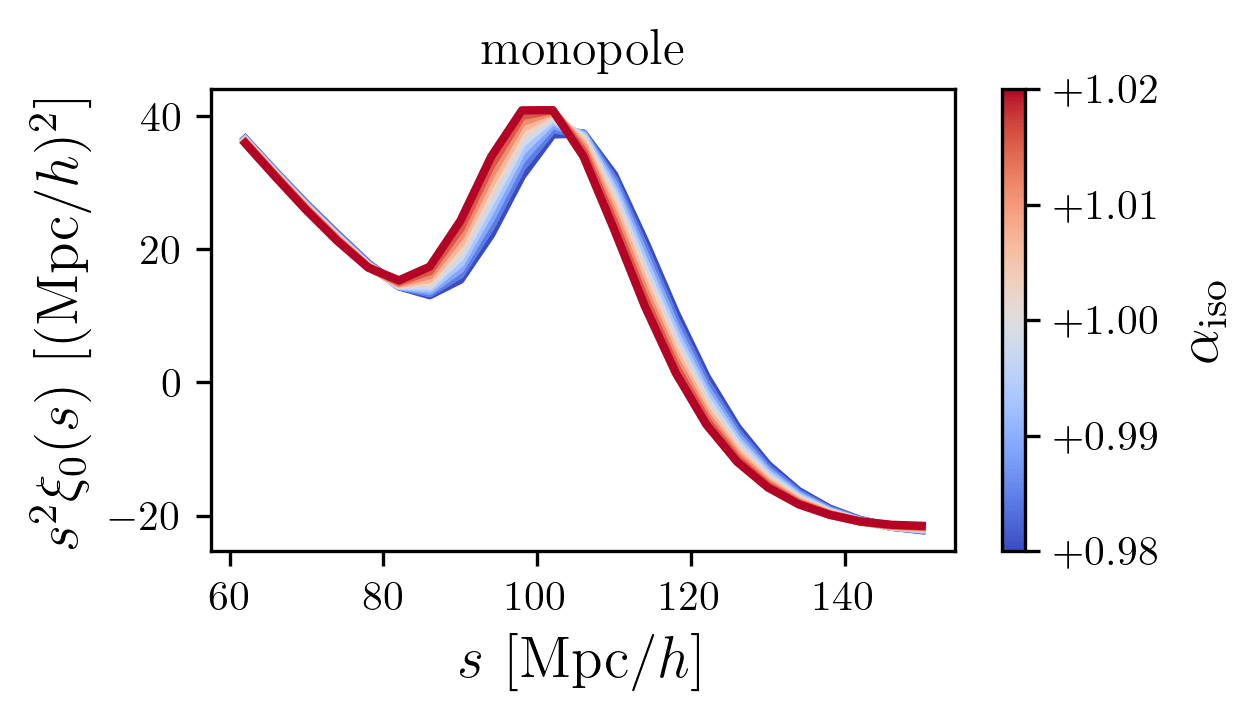
correlation function
BAO peak
line of sight
monopole
BAO measurements
correlation function
BAO peak
line of sight
monopole
isotropic
comoving transverse distance
Hubble distance \(c/H(z)\)
sound horizon (standard ruler)
BAO measurements
isotropic
anisotropic
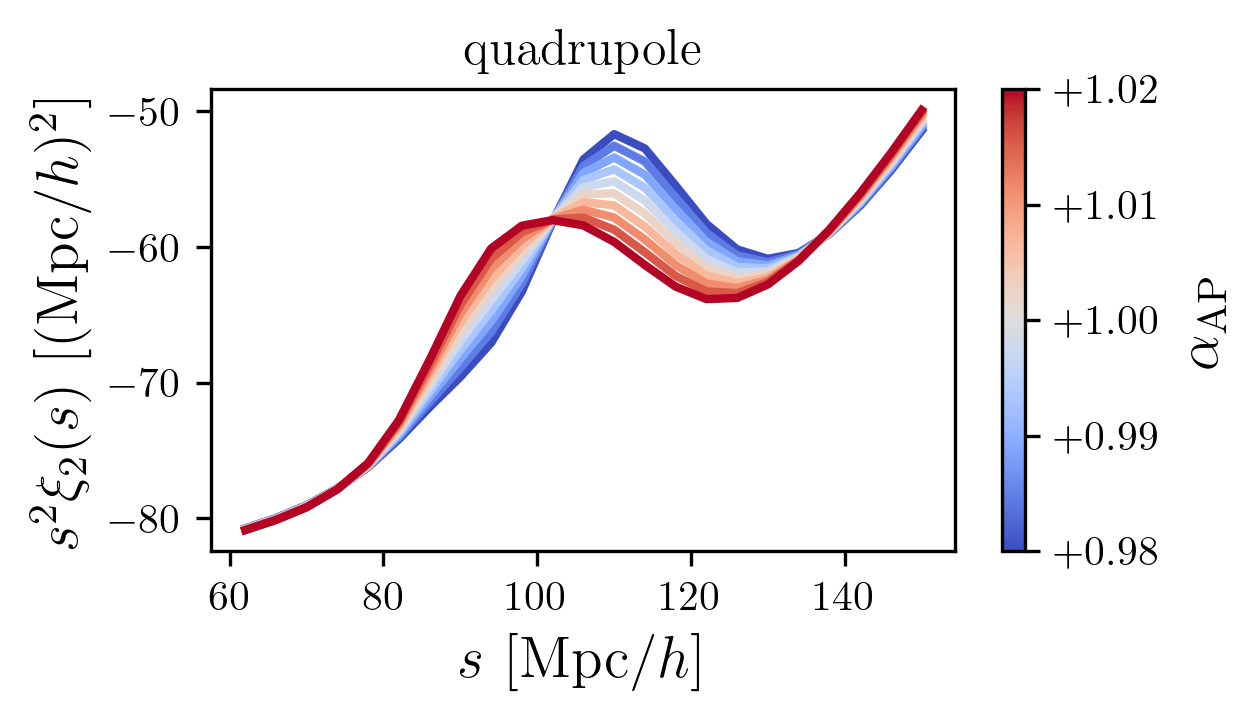
BAO peak
line of sight
line of sight
monopole
quadrupole
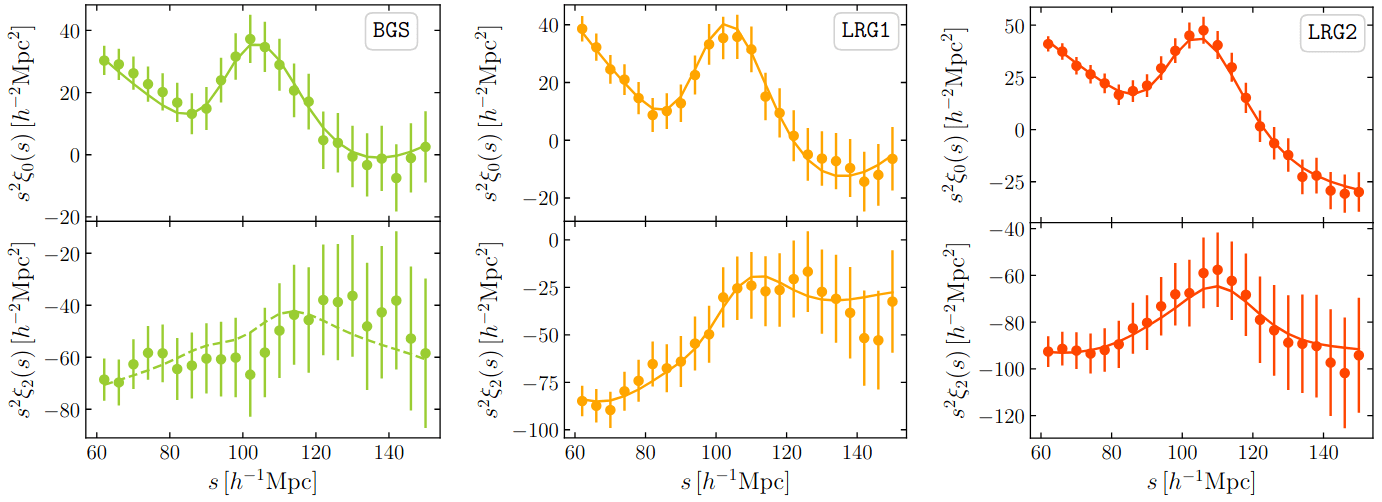
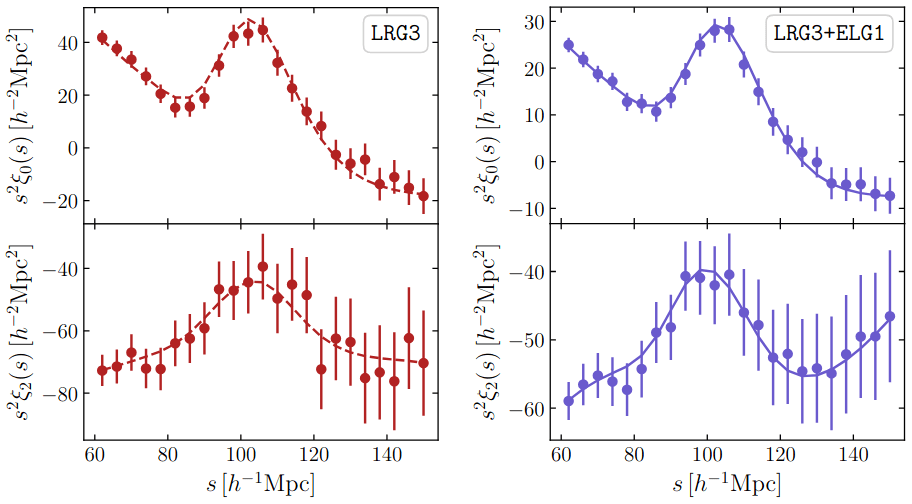
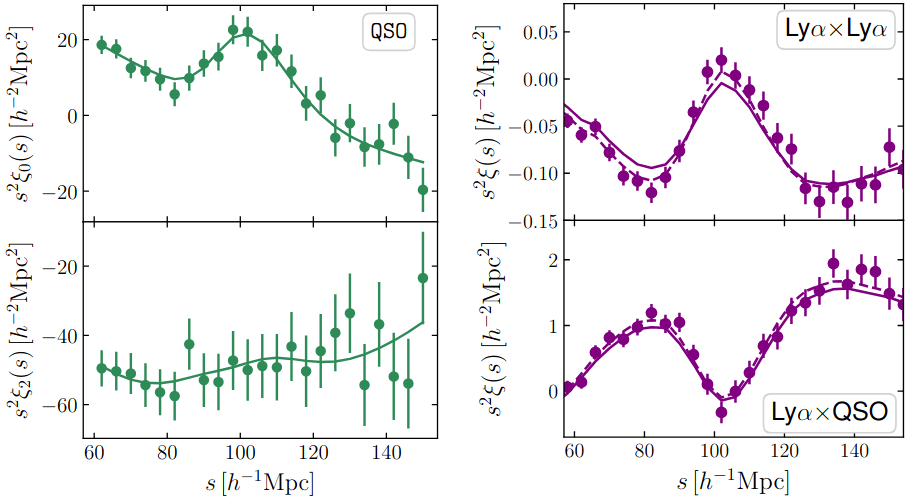
low S/N
BAO detection: \(14.7\sigma\)
0.1 < z < 0.4
0.4 < z < 0.6
0.6 < z < 0.8
0.8 < z < 1.1
1.1 < z < 1.6
Ly\(\alpha\) forest
Ly\(\alpha\) forest
Absorption in QSO spectra by neutral hydrogen in the intergalactic medium: \(\lambda_\mathrm{abs} = (1 + z_\mathrm{HI}) \times 1215.17 \; \AA \)
Transmitted flux fraction \(F = e^{-\tau}\) probes the fluctuation in neutral hydrogen density, \(\tau \propto n_\mathrm{HI} \)
credit: Andrew Pontzen
Correlation functions
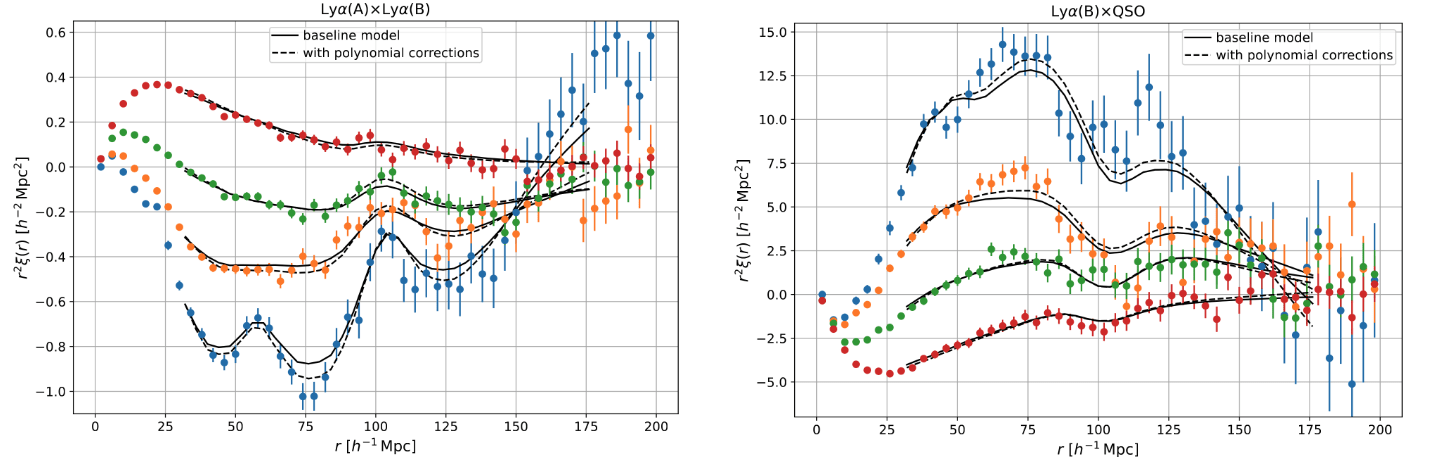
Ly\(\alpha\) forest auto-correlation
\(\langle \delta_F(\mathbf{x}) \delta_F(\mathbf{x + s}) \rangle\)
Ly\(\alpha\) forest - QSO cross-correlation
\(\langle \delta_F(\mathbf{x}) Q(\mathbf{x + s}) \rangle\)
DESI DR2 BAO
DESI DR2 BAO measurements
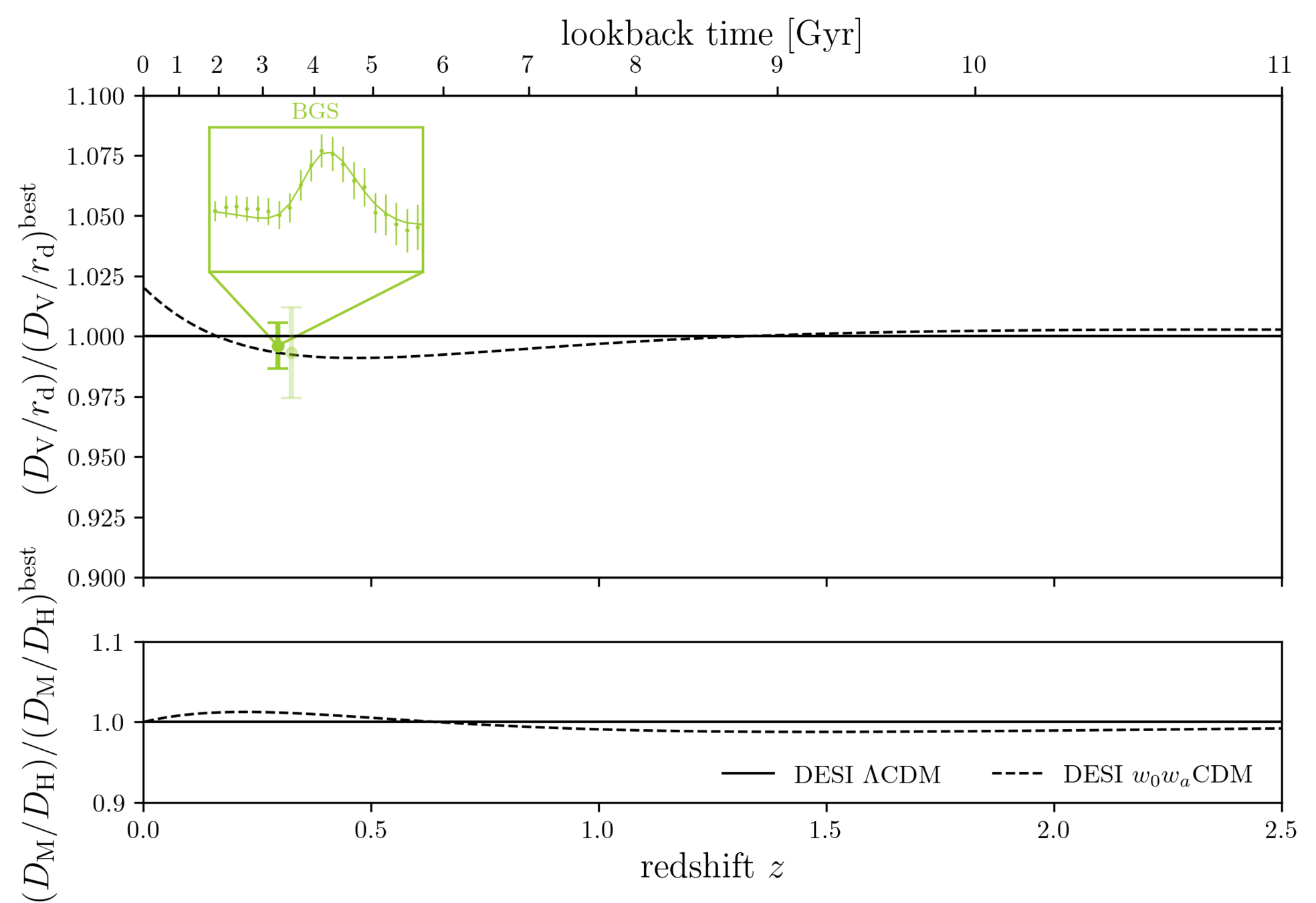
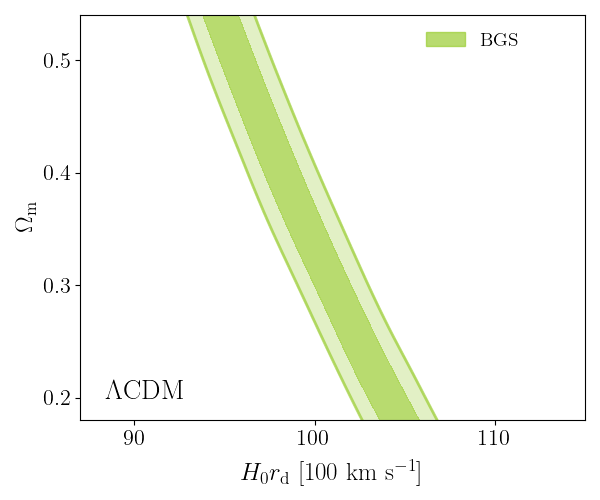
DESI DR2 BAO
DESI DR2 BAO measurements
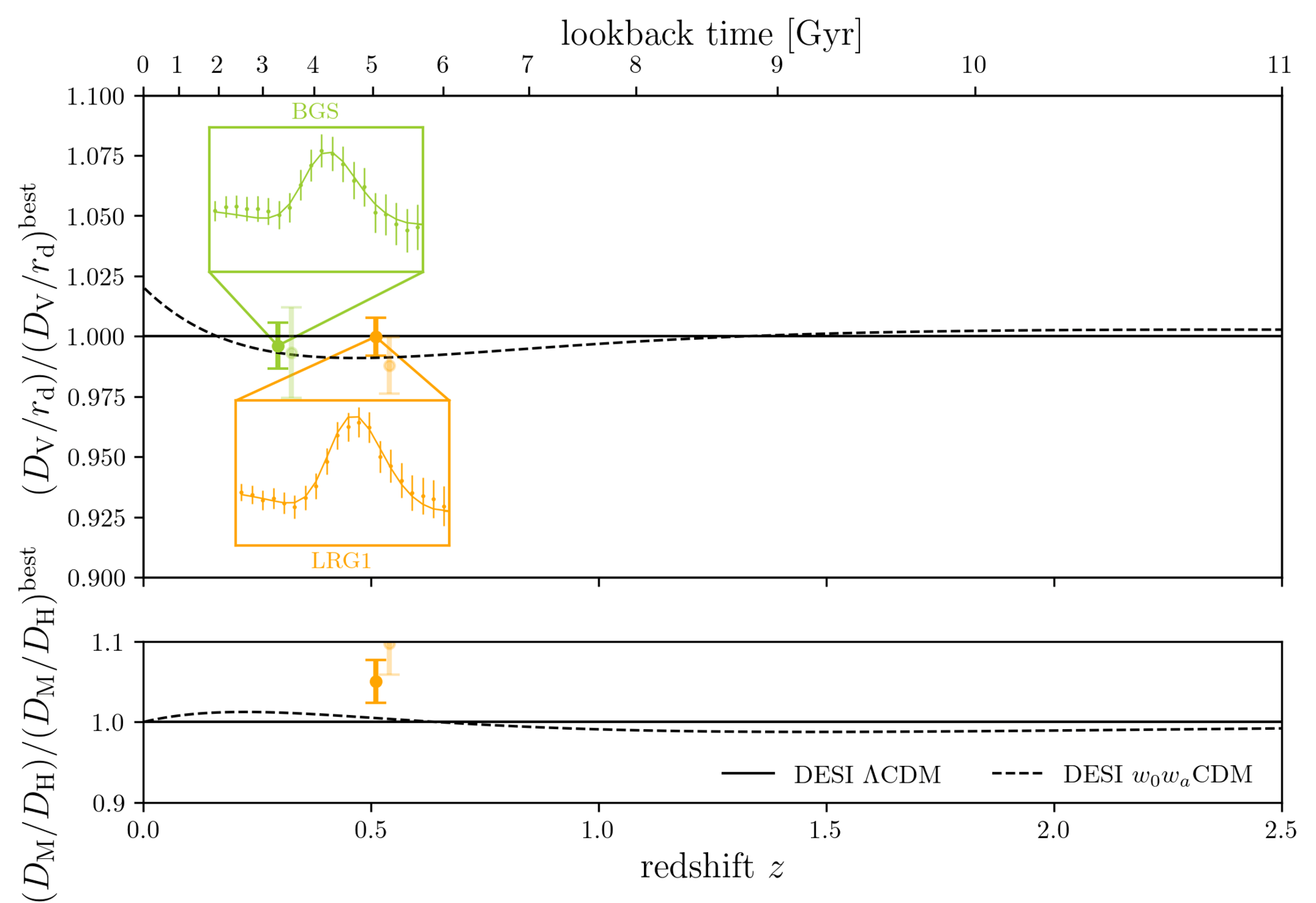
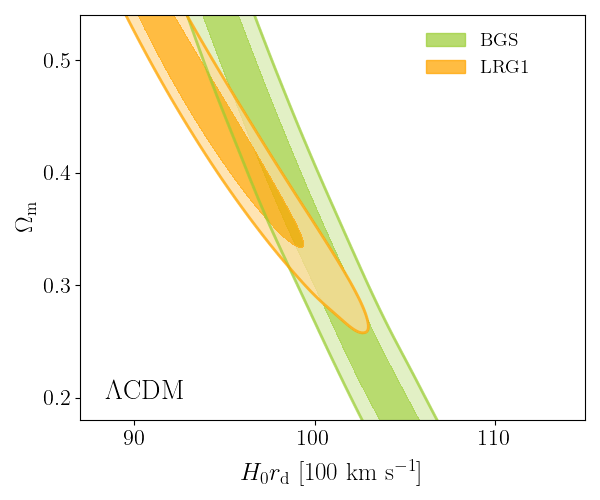
DESI DR2 BAO
DESI DR2 BAO measurements
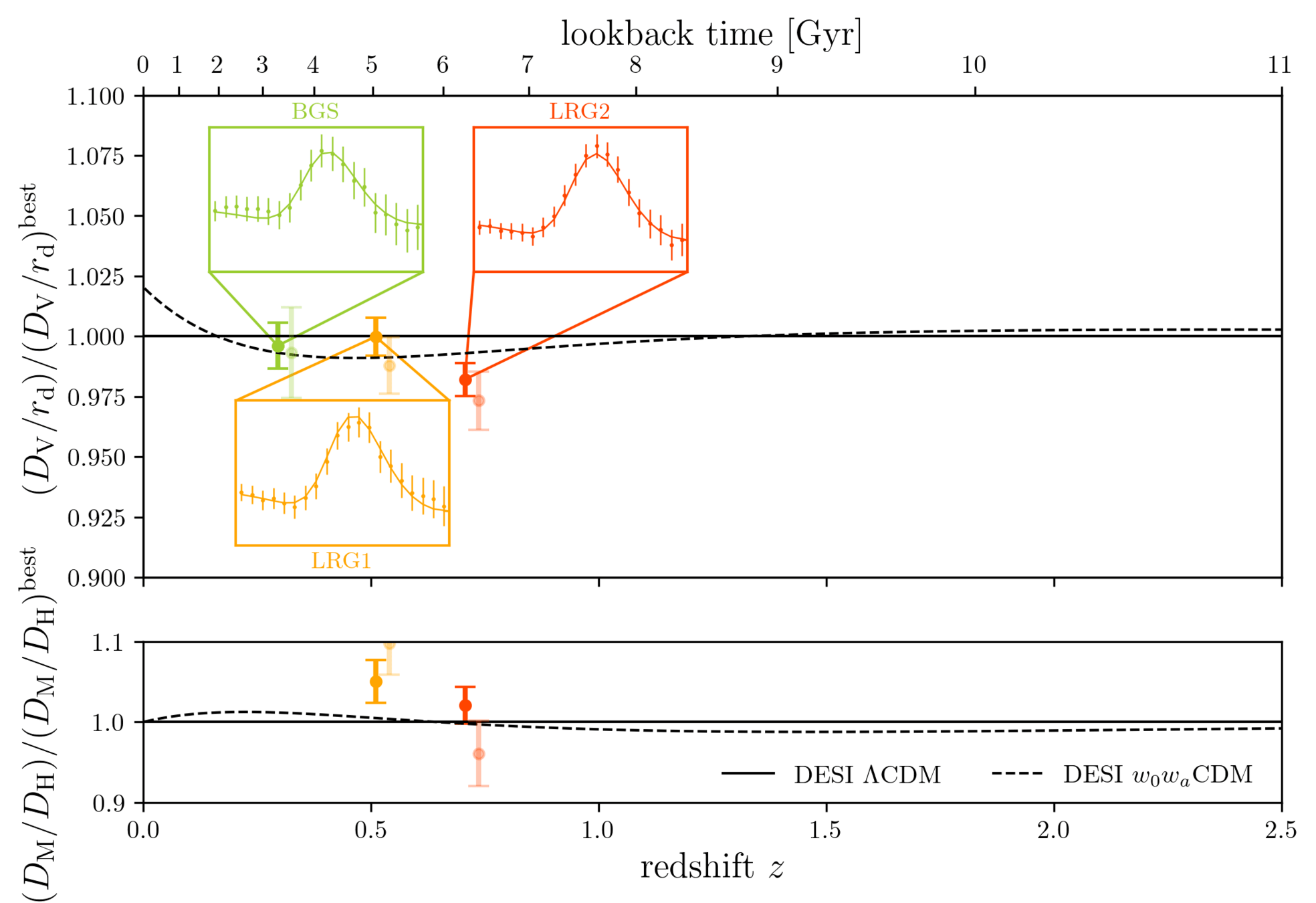
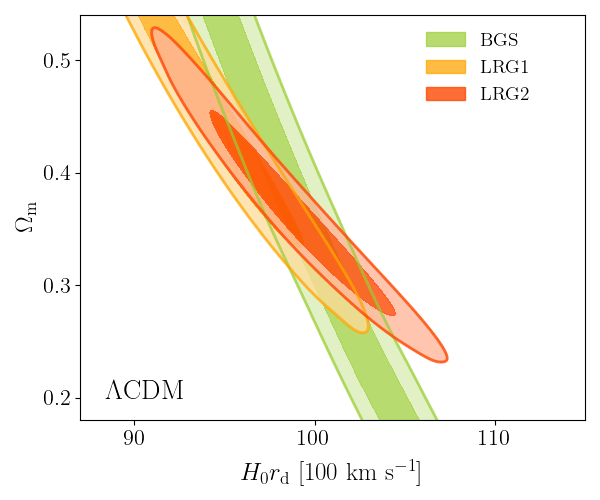
DESI DR2 BAO
DESI DR2 BAO measurements
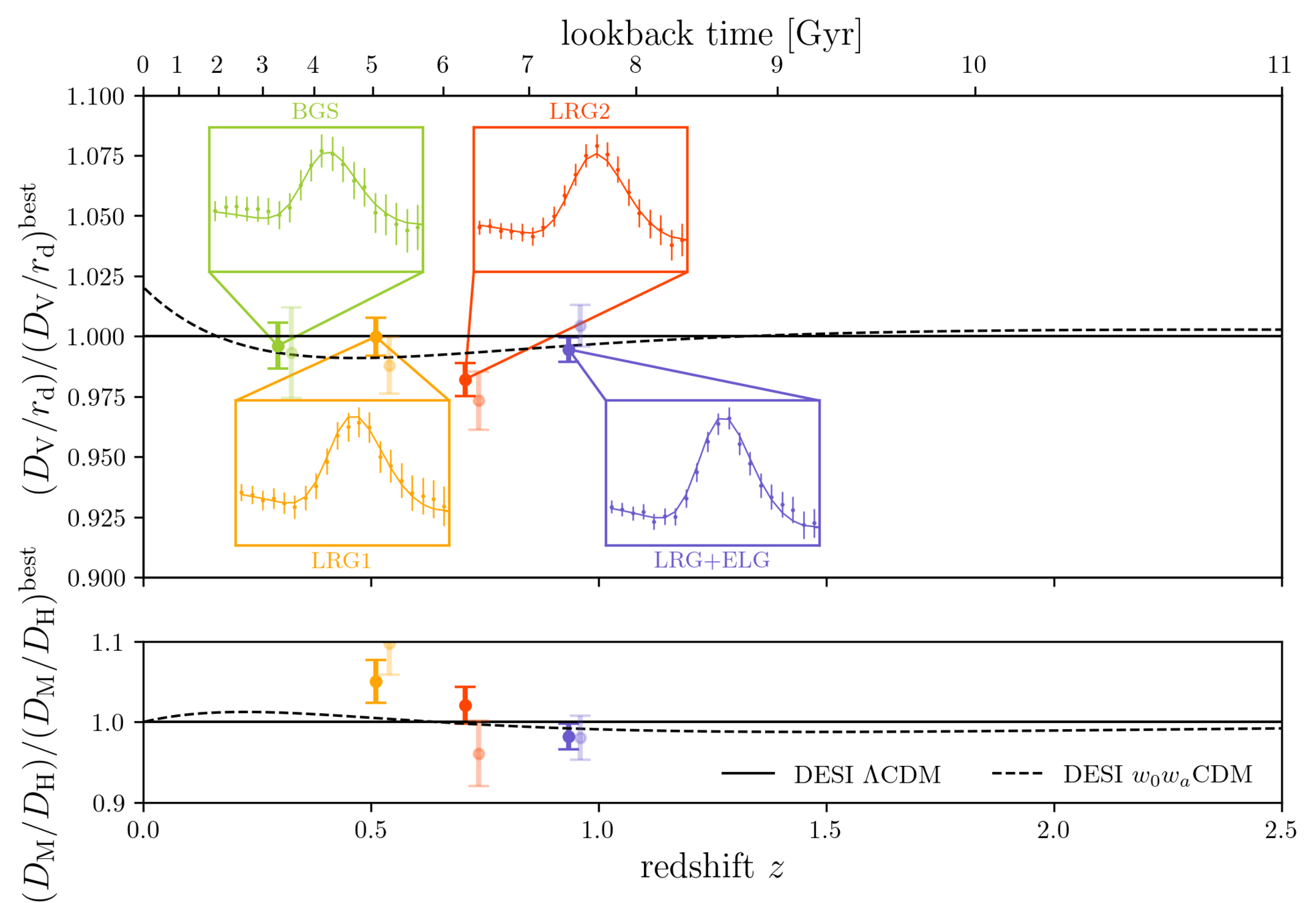
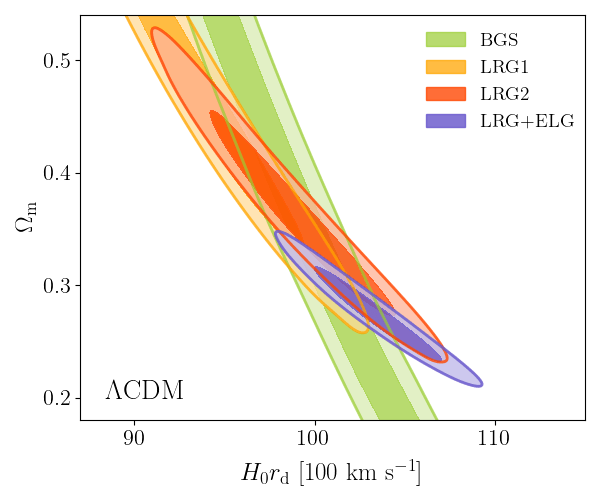
DESI DR2 BAO
DESI DR2 BAO measurements

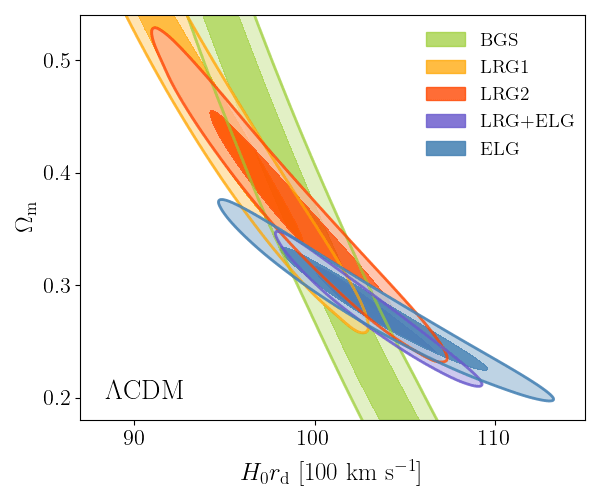
DESI DR2 BAO
DESI DR2 BAO measurements
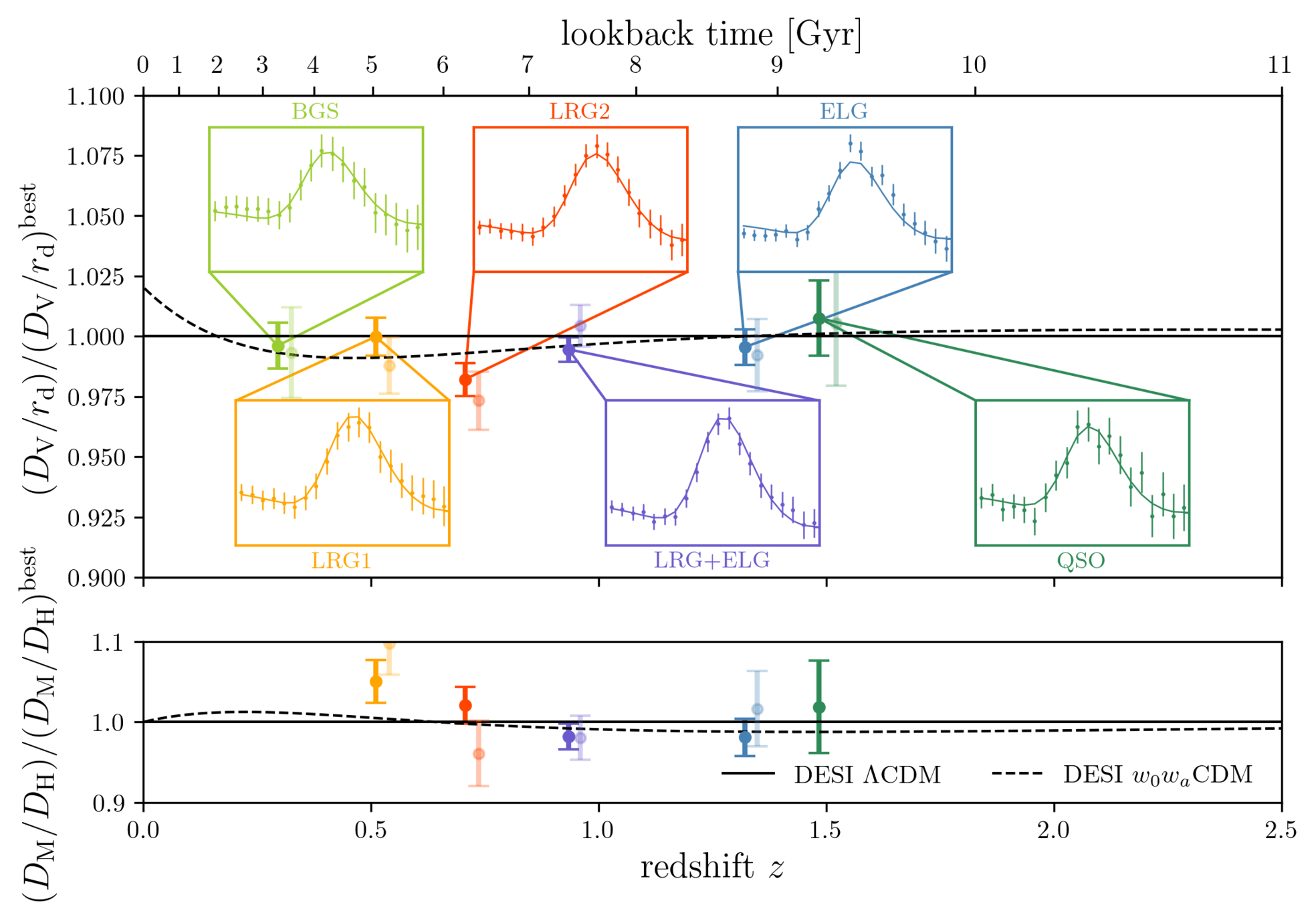
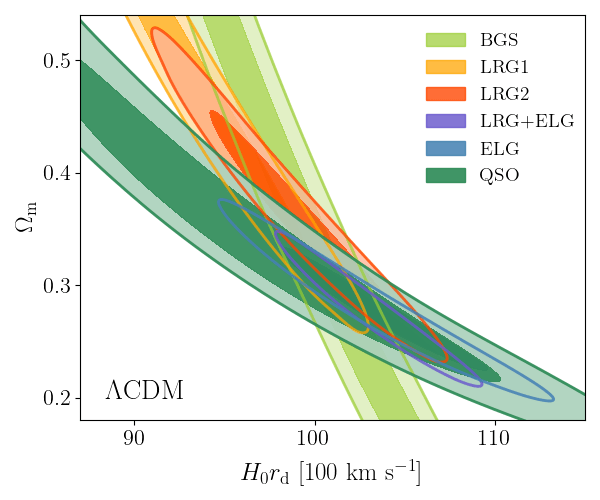
DESI DR2 BAO
DESI DR2 BAO measurements

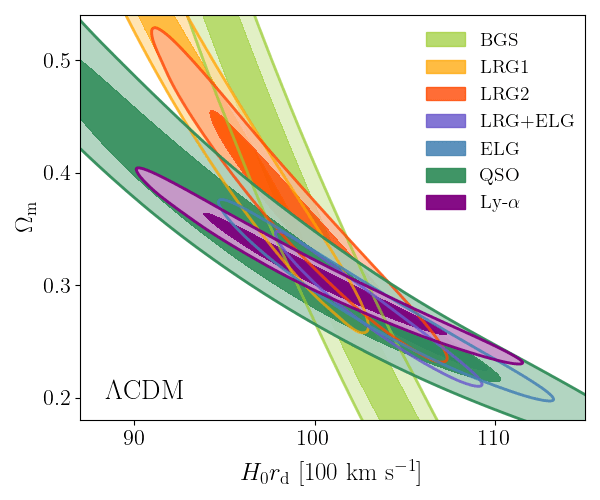
Consistent with each other,
and complementary
DESI DR2 BAO
DESI DR2 BAO measurements
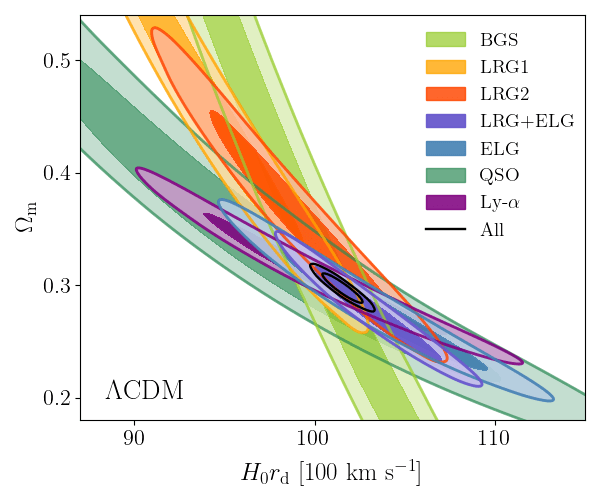
- DESI DR2 BAO fully consistent with DESI DR1
- Improvement of \(\simeq 40\%\)
- \(2.3 \sigma\) discrepancy with primary CMB¹ + CMB lensing²
Consistency with other data
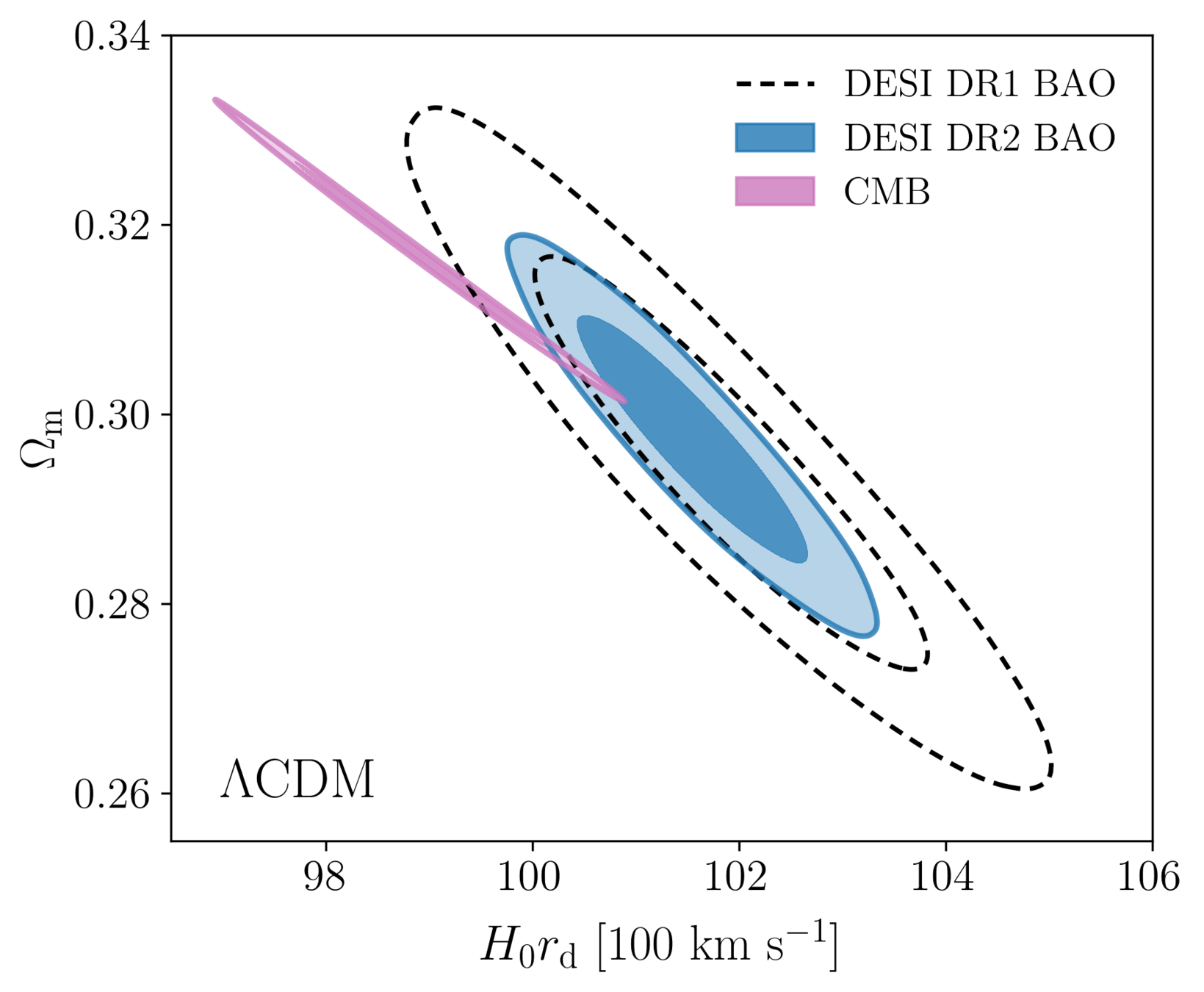
1. Planck PR4 CamSpec
2. Planck PR4 + ACT DR6 lensing
BAO vs CMB
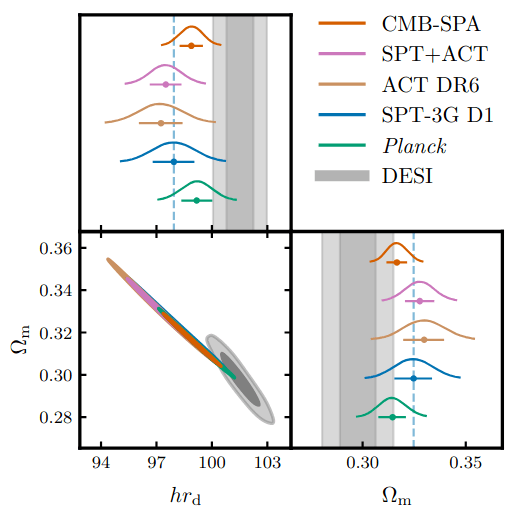
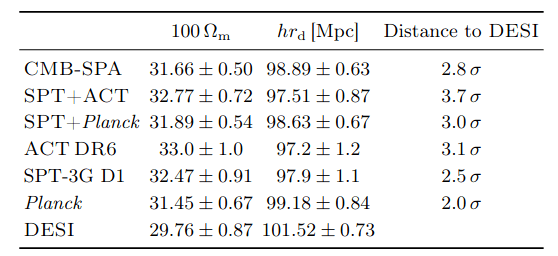
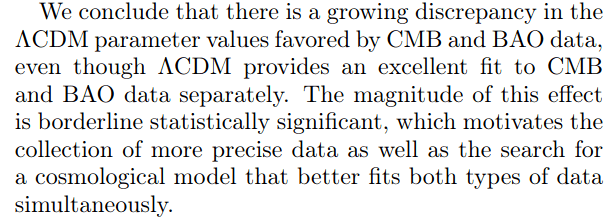
SPA = SPT+Planck+ACT
- BAO constrains \(\Omega_\mathrm{m}\), \(h \times r_d(\Omega_\mathrm{b}h^2, \Omega_\mathrm{m}h^2)\)
- Calibrating BAO relative distance measurements using BBN \(\Omega_\mathrm{b} h^2\)
\(\Lambda\mathrm{CDM}\) constraints
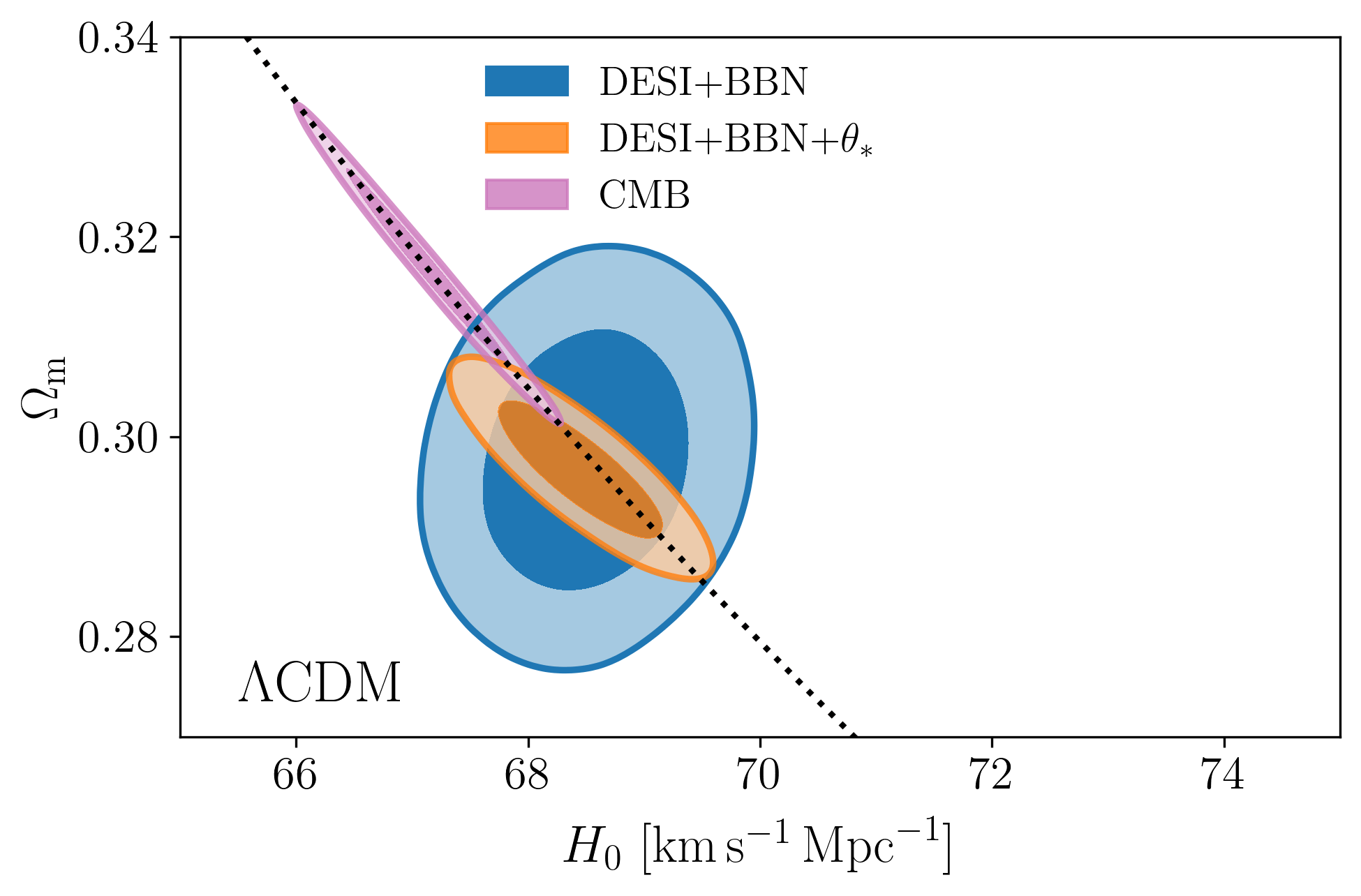
\(\Lambda\mathrm{CDM}\) constraints
- BAO constrains \(\Omega_\mathrm{m}\), \(h \times r_d(\Omega_\mathrm{b}h^2, \Omega_\mathrm{m}h^2)\)
- Calibrating BAO relative distance measurements using BBN \(\Omega_\mathrm{b} h^2\)
- Adding very precise CMB acoustic angular scale
\(\Lambda\mathrm{CDM}\) constraints
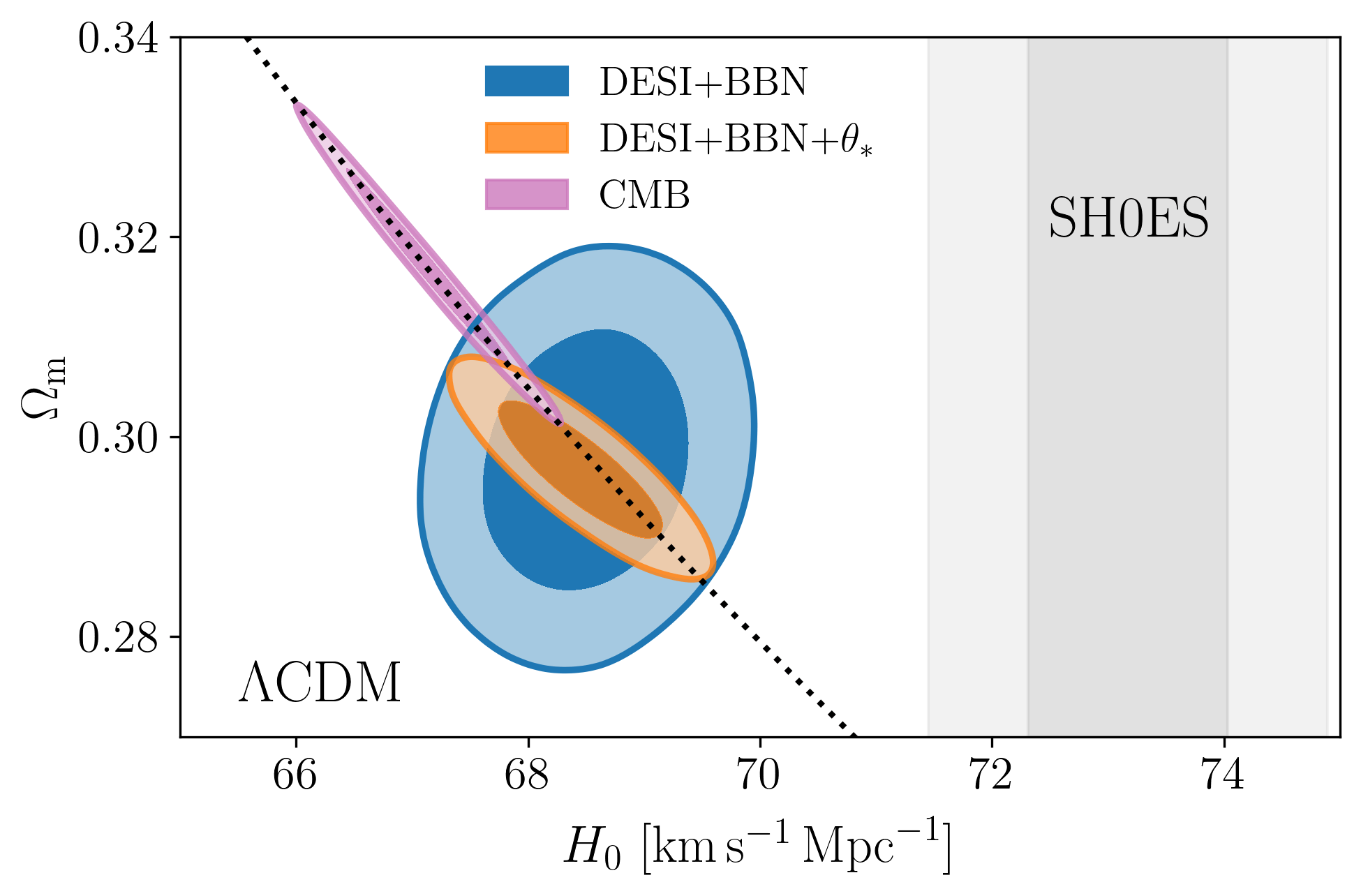
- In \(4.5\sigma\) tension with SH0ES (Breuval et al. 2024) (independently of the CMB)
- BAO constrains \(\Omega_\mathrm{m}\), \(h \times r_d(\Omega_\mathrm{b}h^2, \Omega_\mathrm{m}h^2)\)
- Calibrating BAO relative distance measurements using BBN \(\Omega_\mathrm{b} h^2\)
- Dark energy fluid
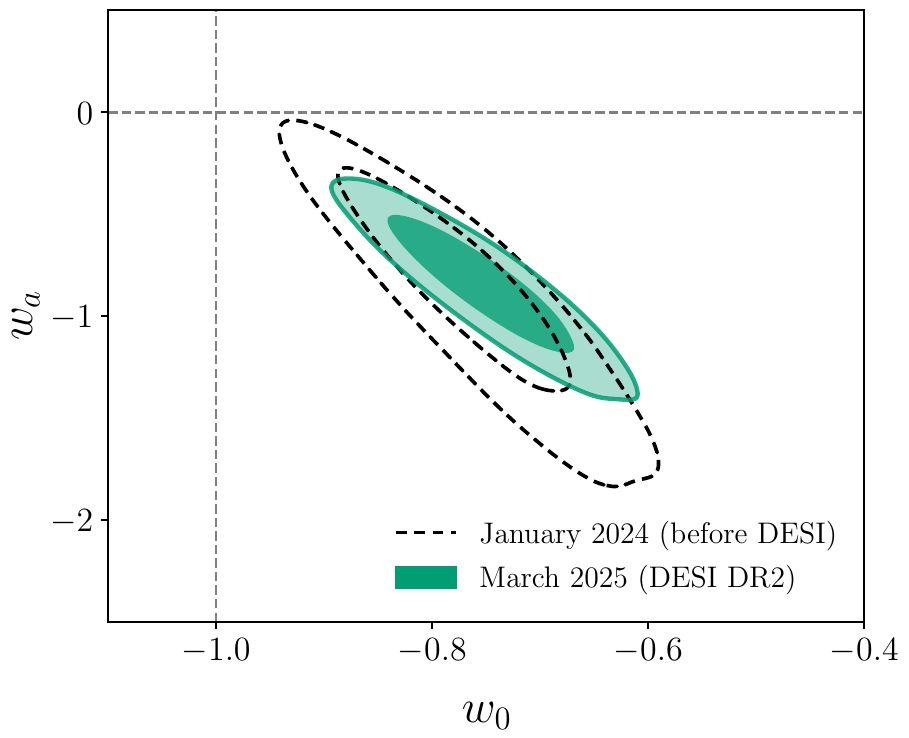
- No strong preference for dark energy evolution: \(1.7\sigma\) from DESI data alone
Dark Energy Equation of State
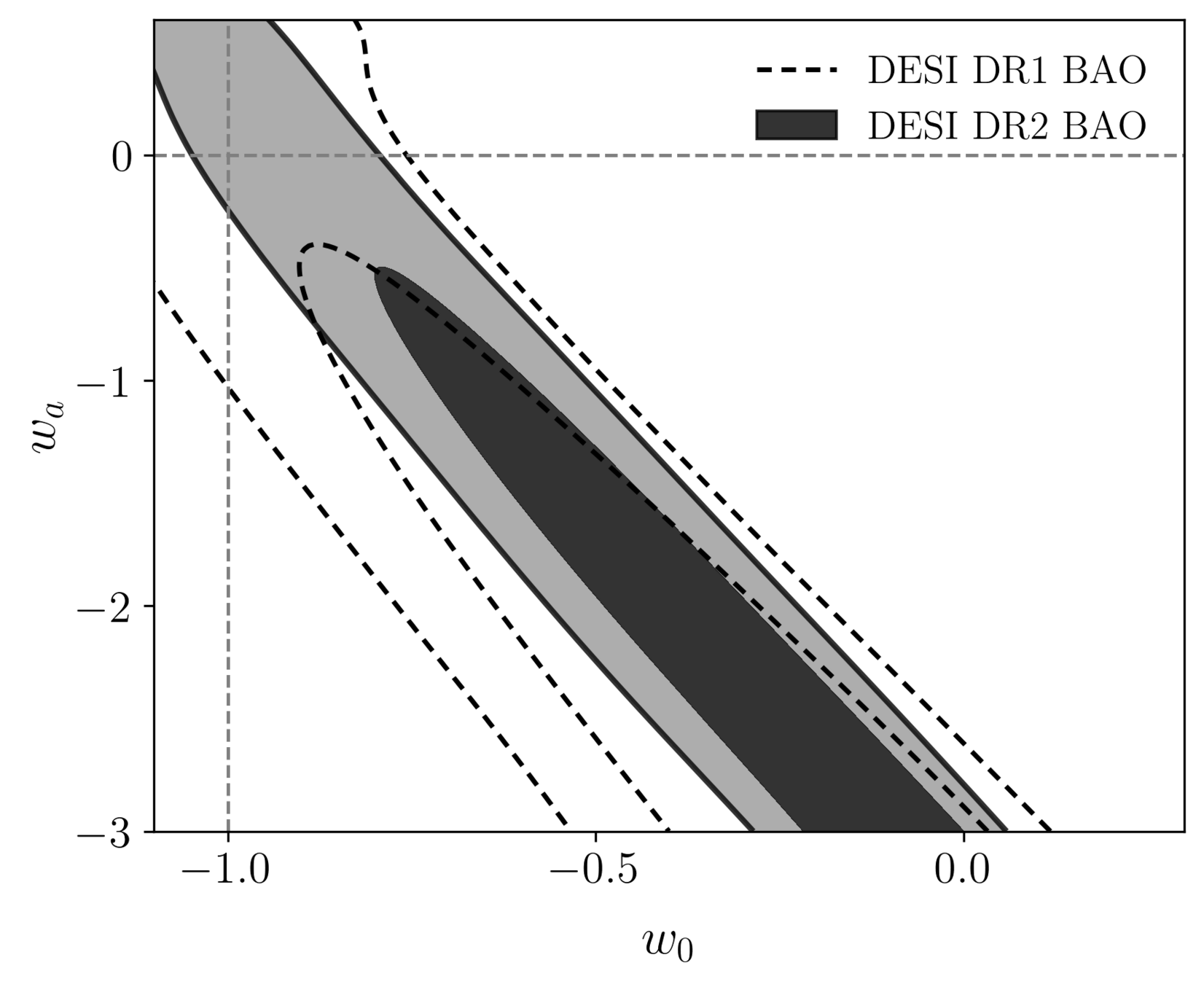
\(\Lambda\)
pressure
density
CPL
- Combining DESI + CMB:
Dark Energy Equation of State
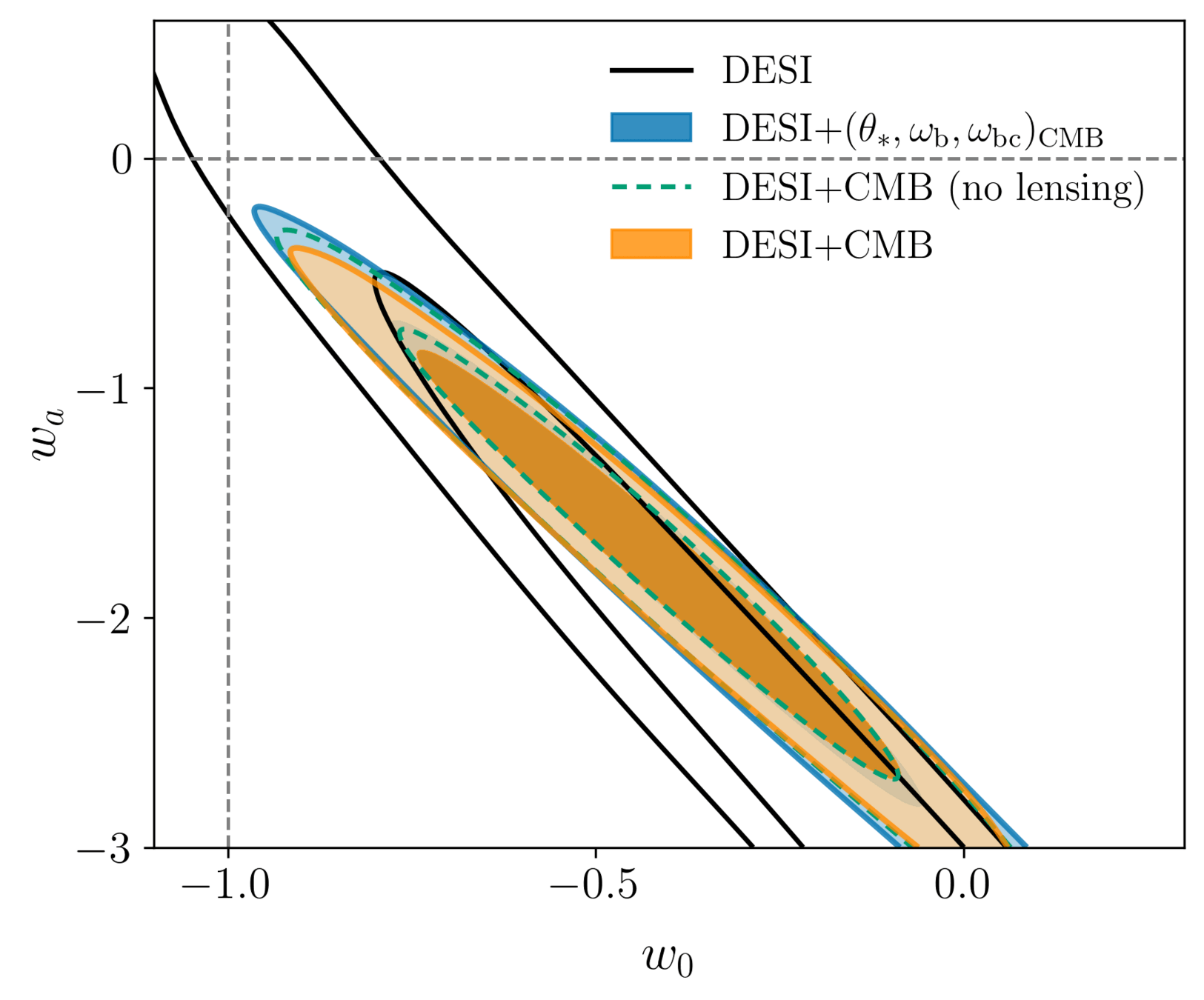
- CMB early-Universe priors: \(2.4\sigma\)
- Without CMB lensing \(2.7\sigma\)
\(+0.5\sigma\) compared to DR1
Dark Energy Equation of State
Combining all DESI + CMB + SN
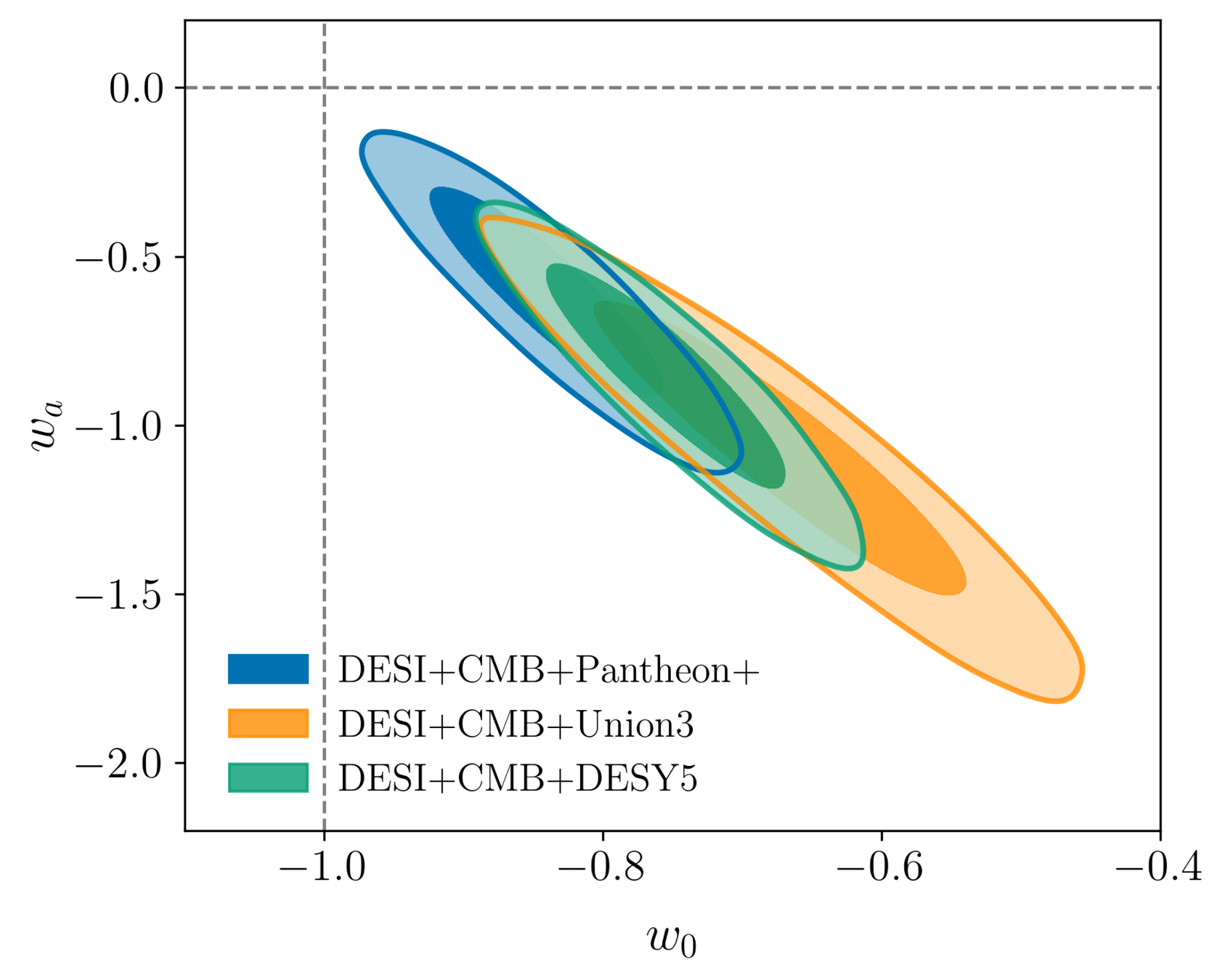
\(+0.3\sigma\) compared to DR1
Dark Energy Equation of State
Combining all DESI + CMB + SN
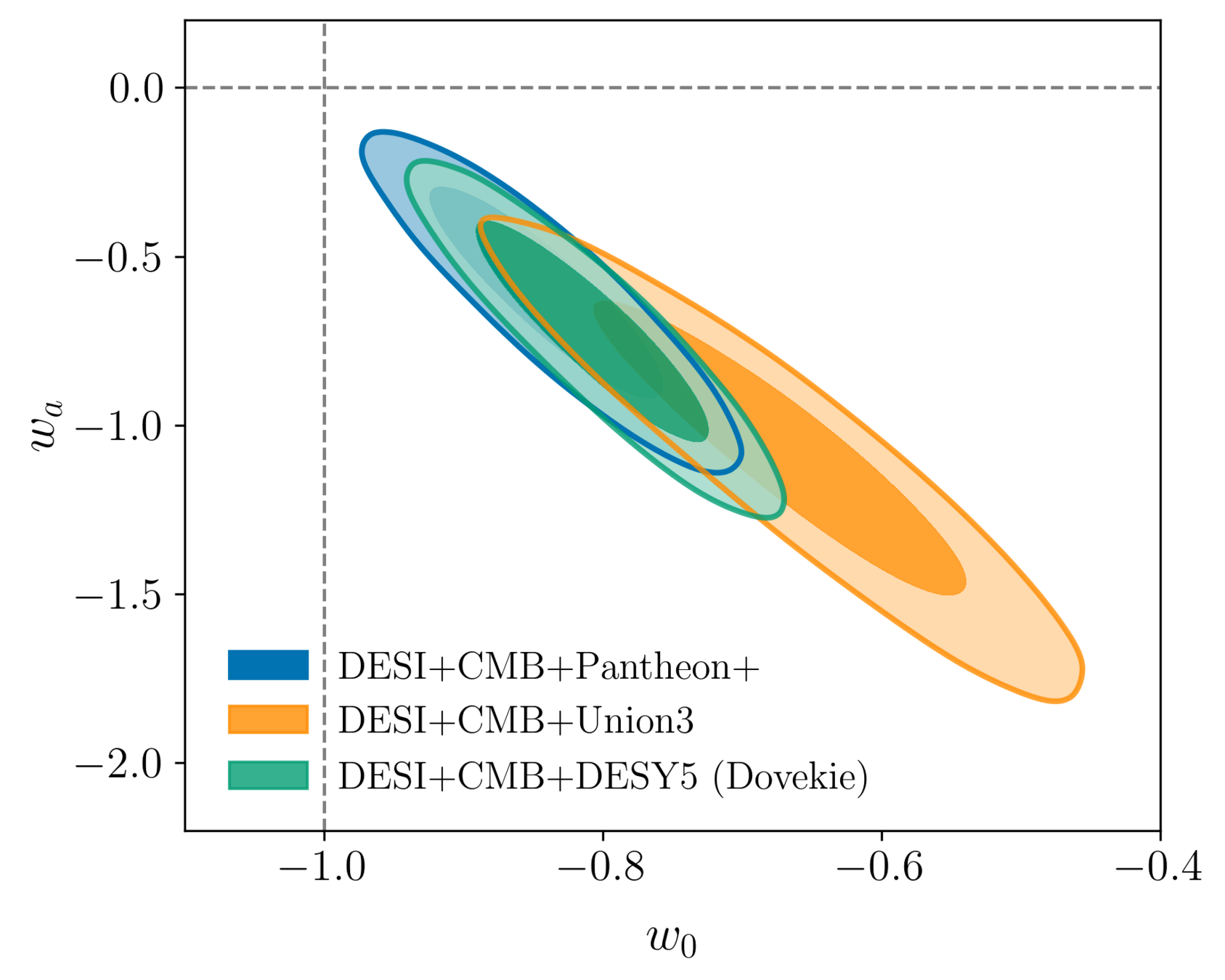
Dovekie \(3.3\sigma\)
Understanding tensions
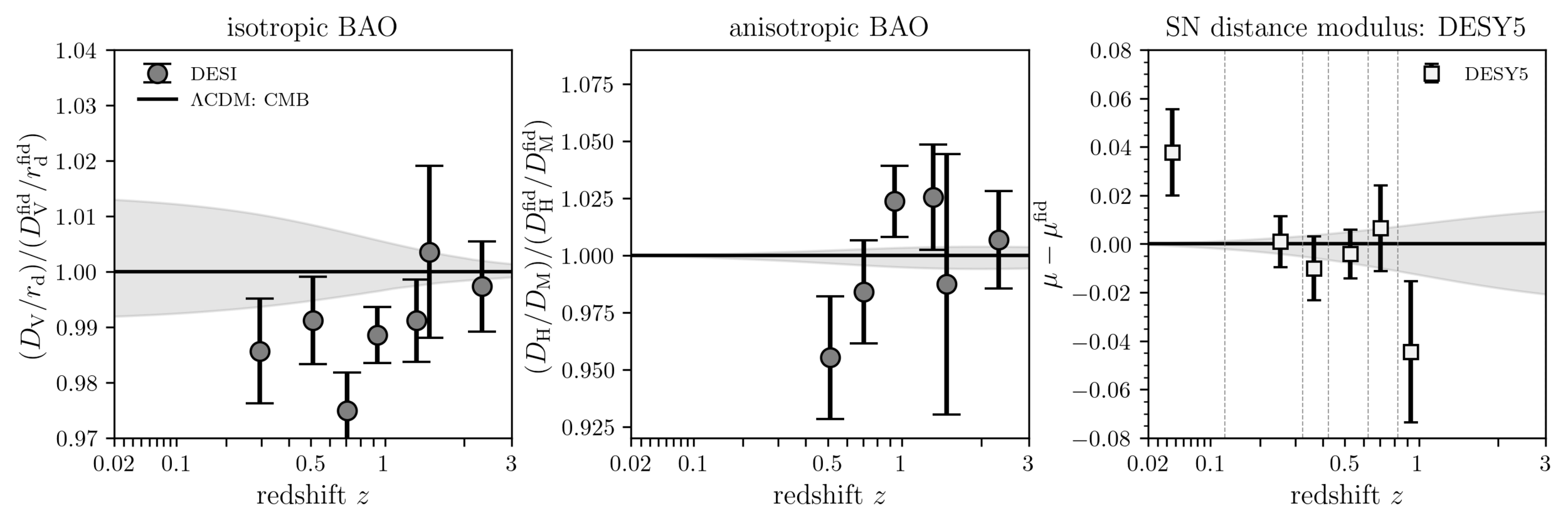
Understanding tensions
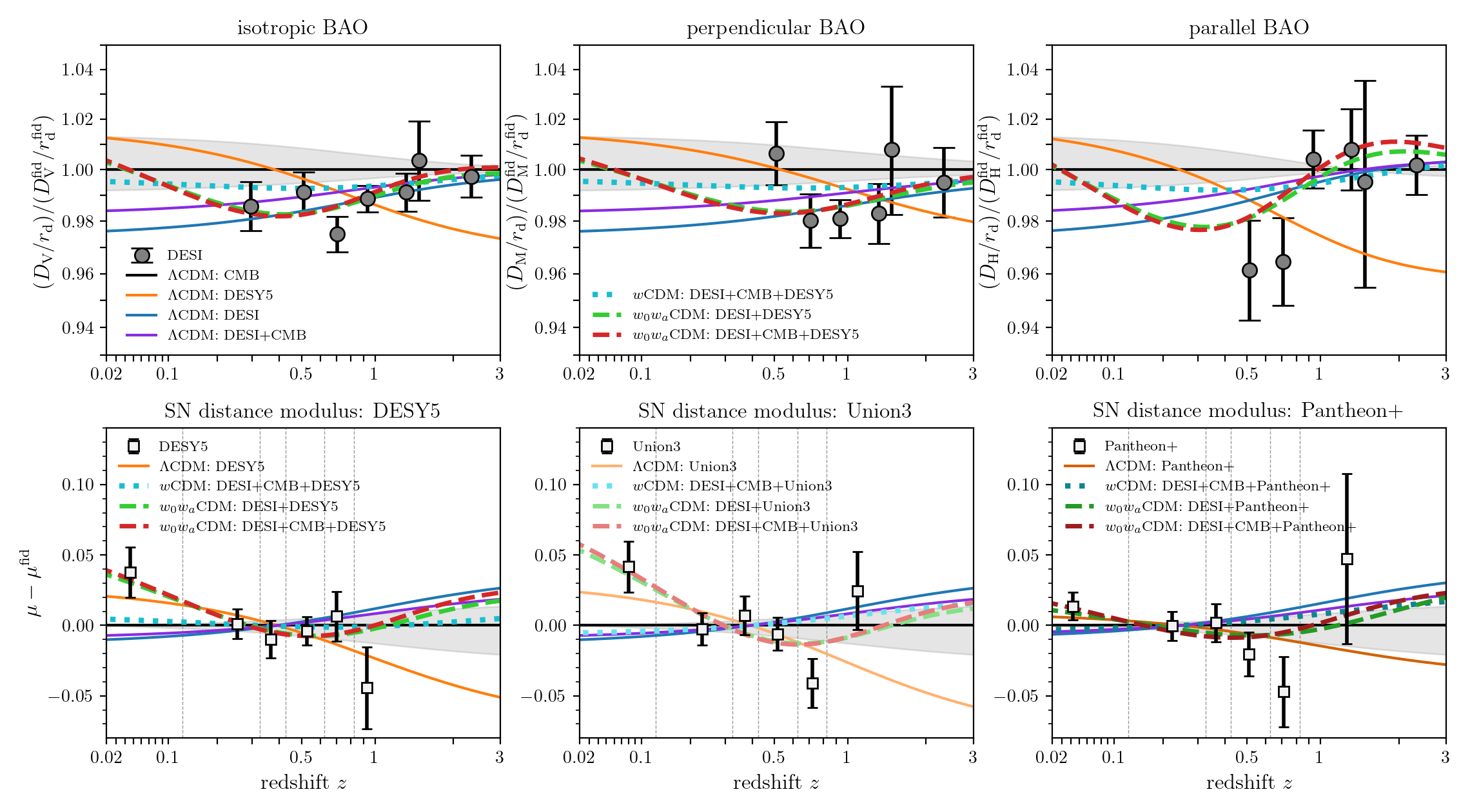
doesn't fit the SN!
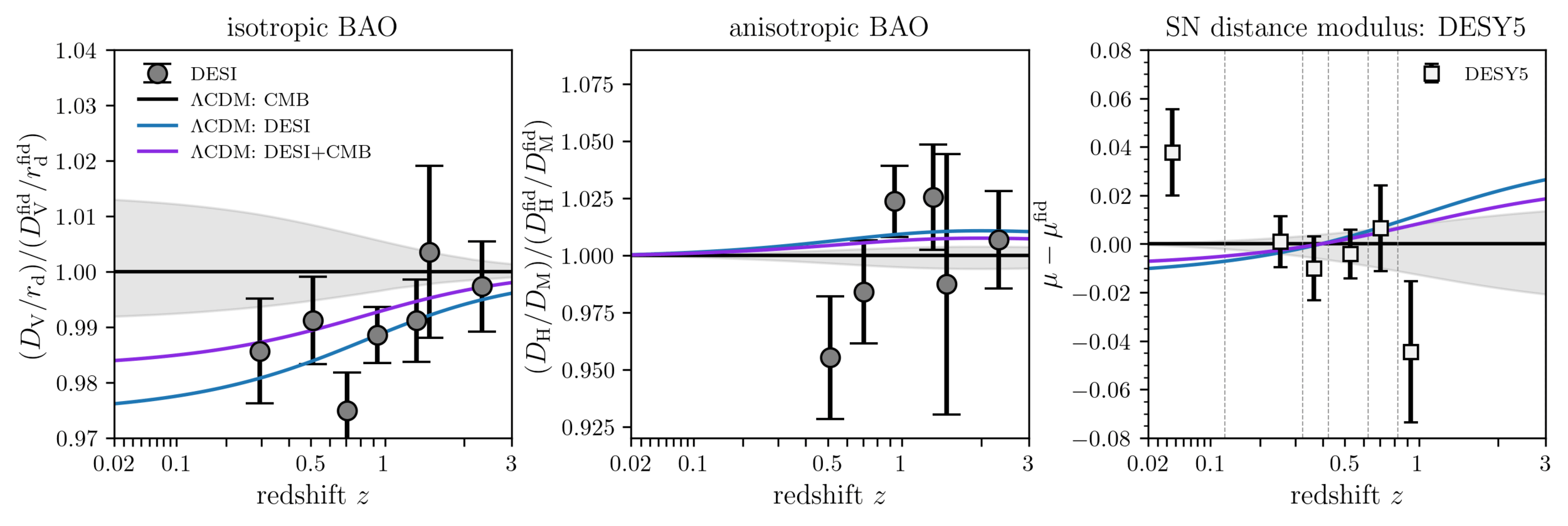
Understanding tensions
doesn't fit the BAO!
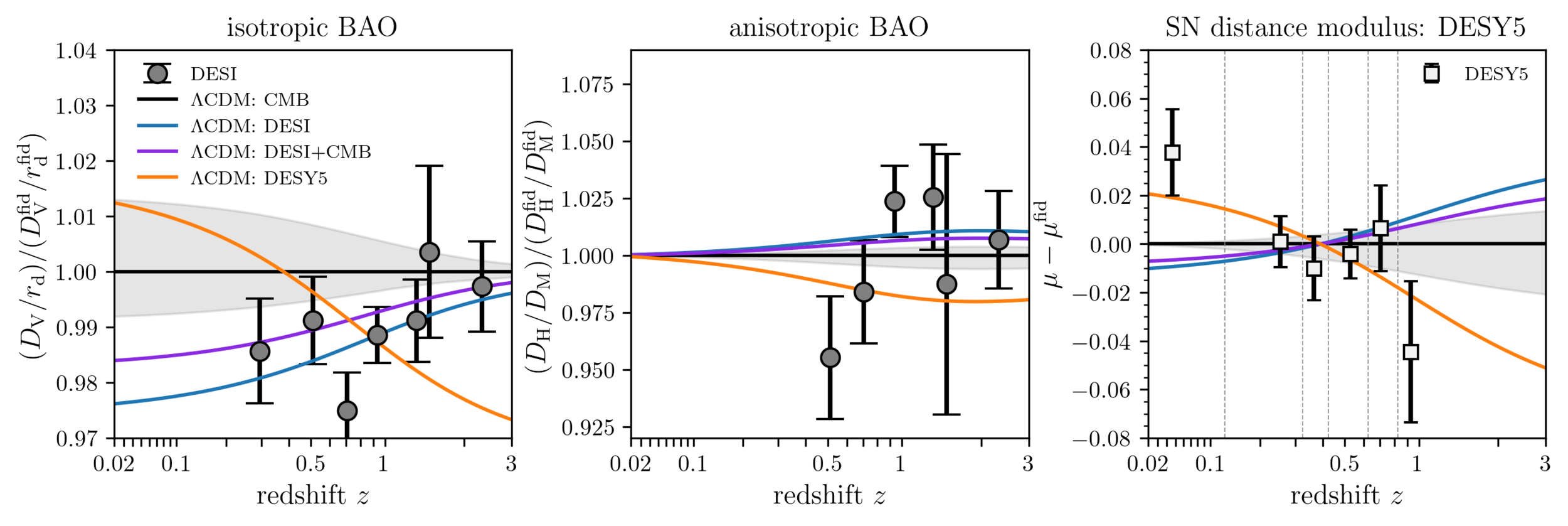
Understanding tensions
\(w\mathrm{CDM}\) not flexible enough to fit all 3 datasets!
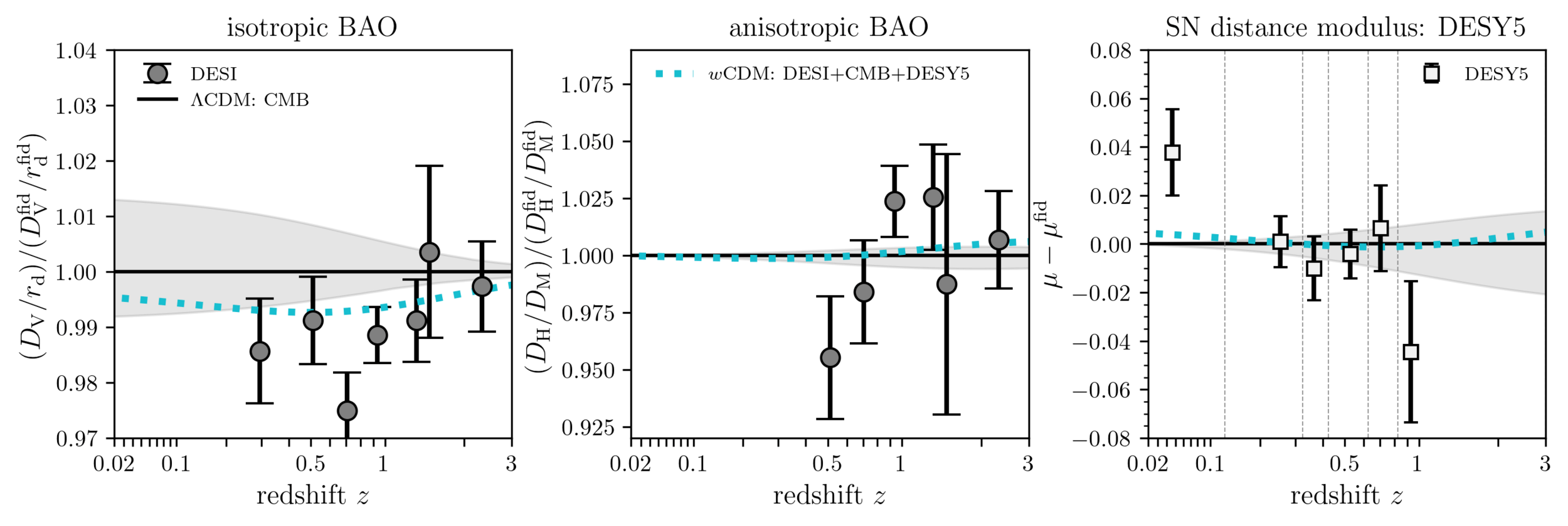
Understanding tensions
\(w_0w_a\mathrm{CDM}\) fits all 3 datasets!
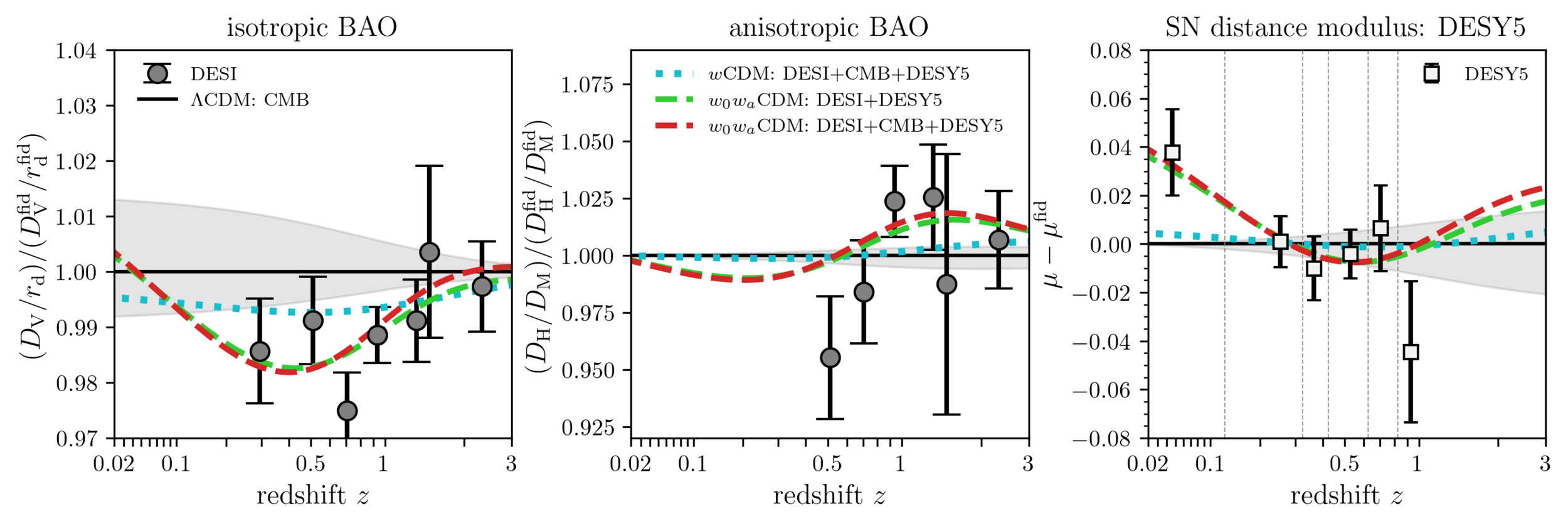
Sum of neutrino masses
Internal CMB degeneracies limiting precision on the sum of neutrino masses
Broken by BAO
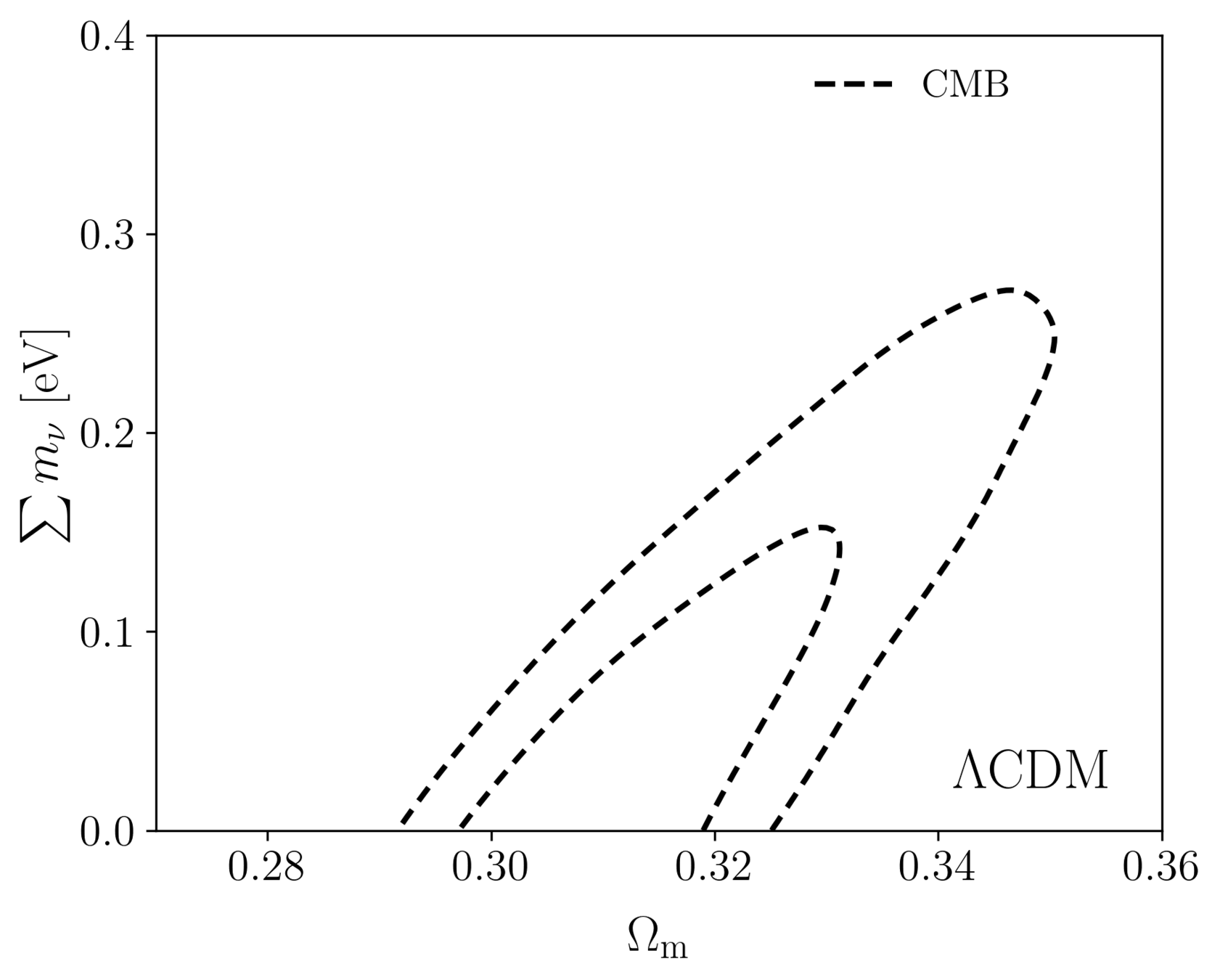
Sum of neutrino masses
Internal CMB degeneracies limiting precision on the sum of neutrino masses
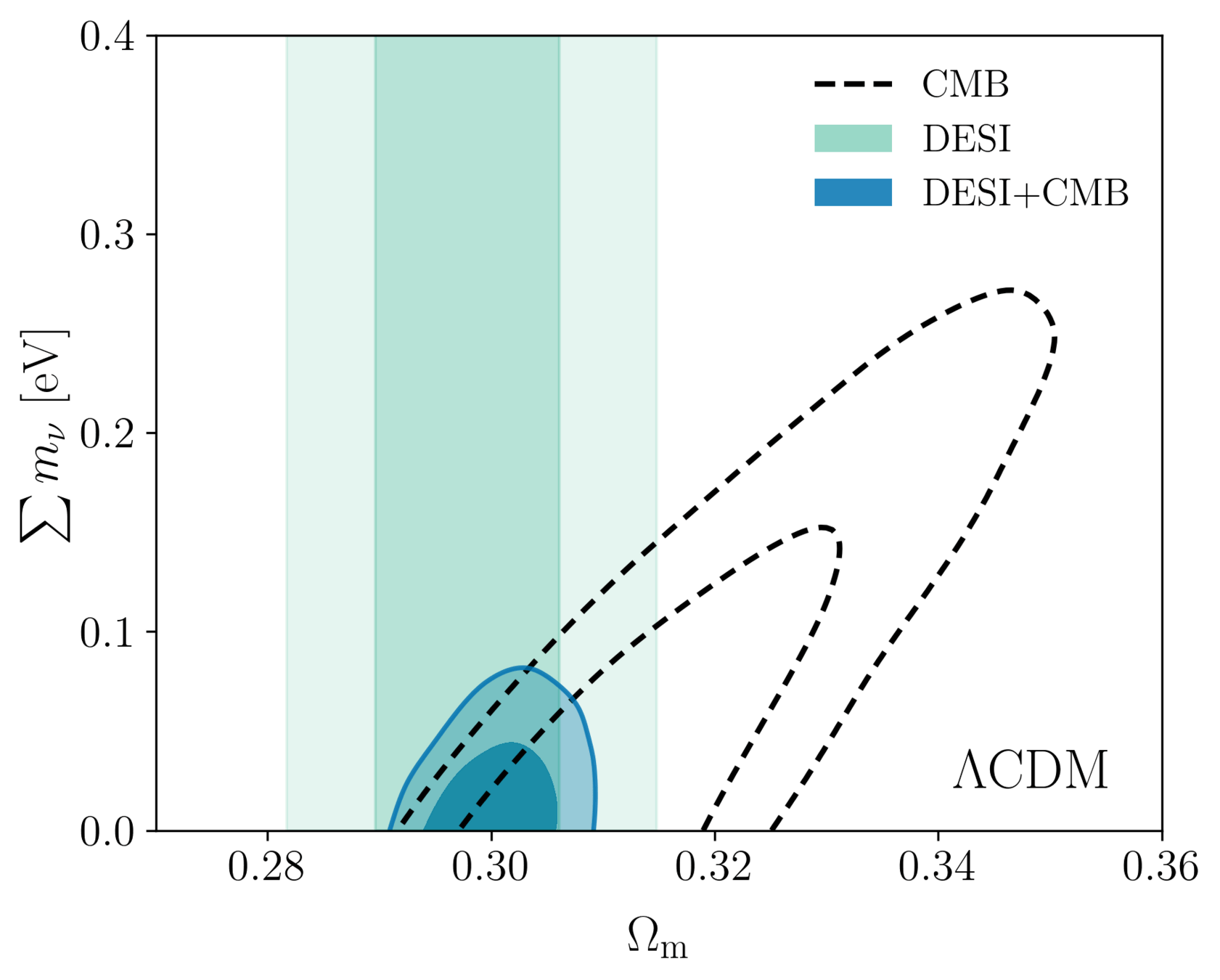
Broken by BAO, which favors low \(\Omega_\mathrm{m}\)
Sum of neutrino masses
Internal CMB degeneracies limiting precision on the sum of neutrino masses
Broken by BAO, which favors low \(\Omega_\mathrm{m}\)
Variations of the CMB likelihood
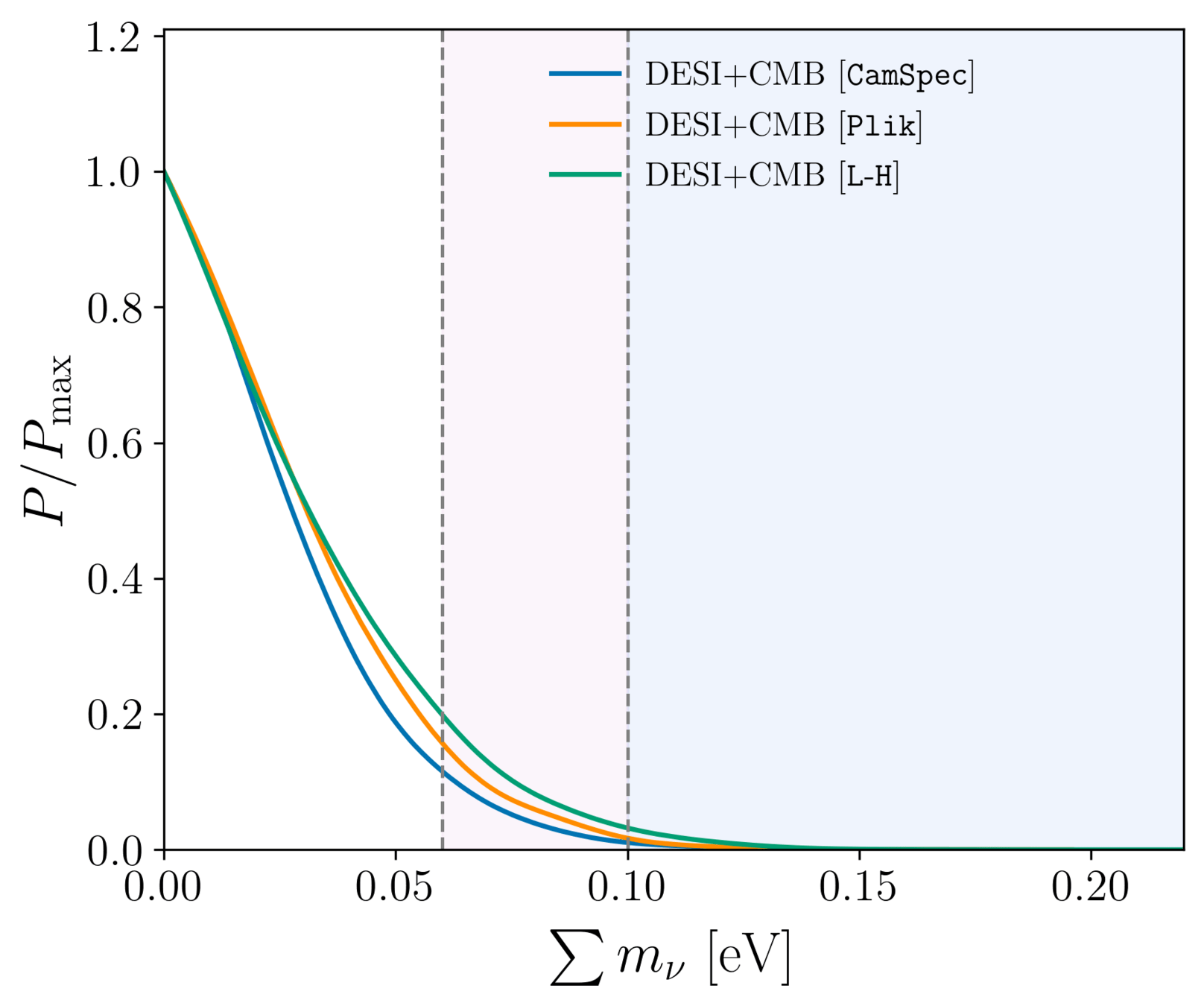
Sum of neutrino masses
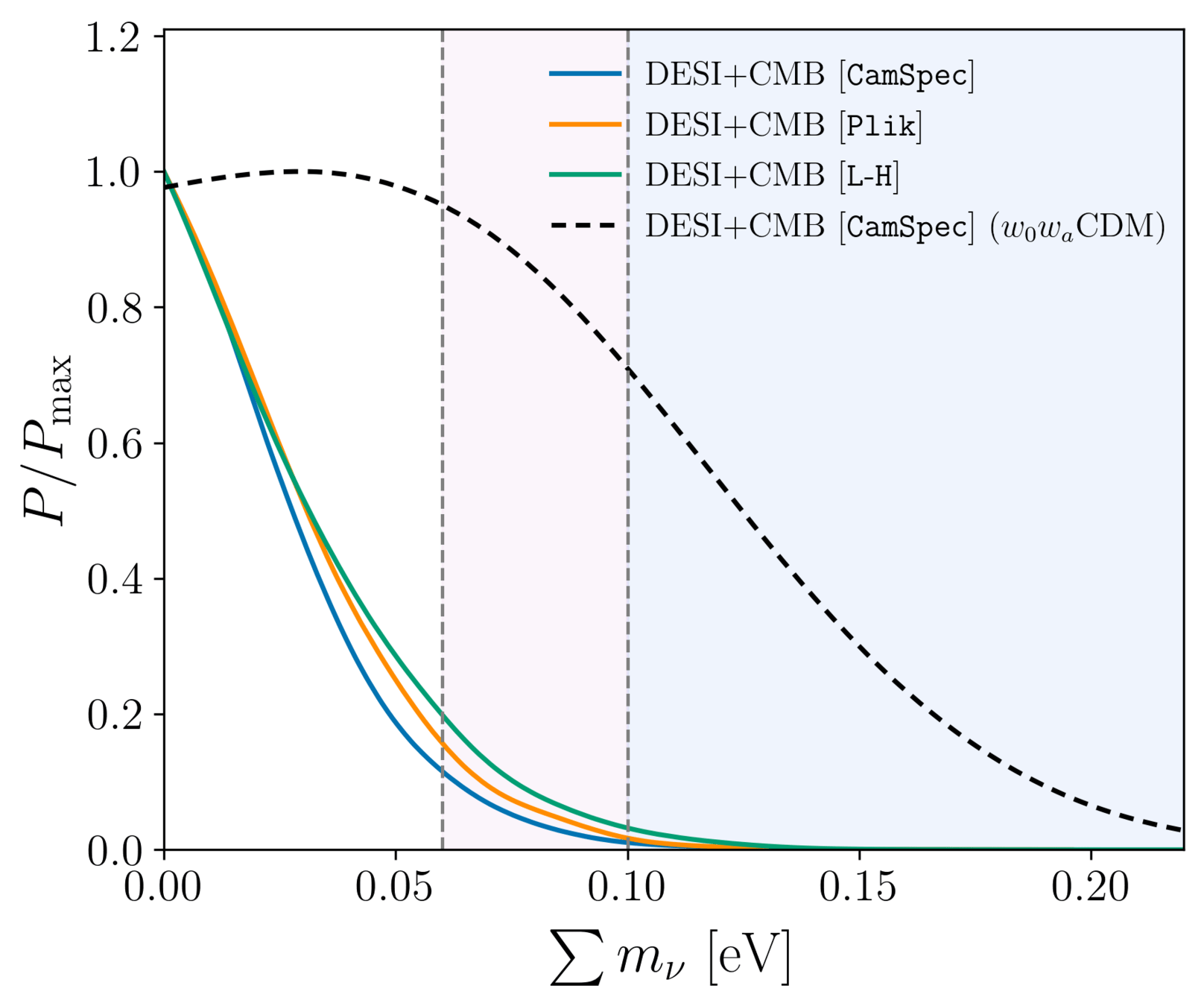
Internal CMB degeneracies limiting precision on the sum of neutrino masses
Broken by BAO, which favors low \(\Omega_\mathrm{m}\)
Limit relaxed for \(w_0w_a\mathrm{CDM}\)
Summary
DESI already has the most precise BAO measurements ever (40% more precise than DR1)
DESI in mild, growing, tension with Planck \((2.3\sigma)\) and SN \((\sim 2\sigma)\) when interpreted in the ΛCDM model
Tightest upper bound on \(\sum m_\nu\), increasing tension with neutrino oscillations
Evidence for time-varying Dark Energy equation of state has increased with the DR2 BAO data by \(0.3\sigma\): CMB: \(3.1\sigma\), SN: \(2.8 - 4.2\sigma\). \(w_0w_a\mathrm{CDM}\) fixes above tensions (not \(H_0\)!).
But it's not the end yet!
In November 2024: DR1 Full-Shape results (probing the growth of structure)
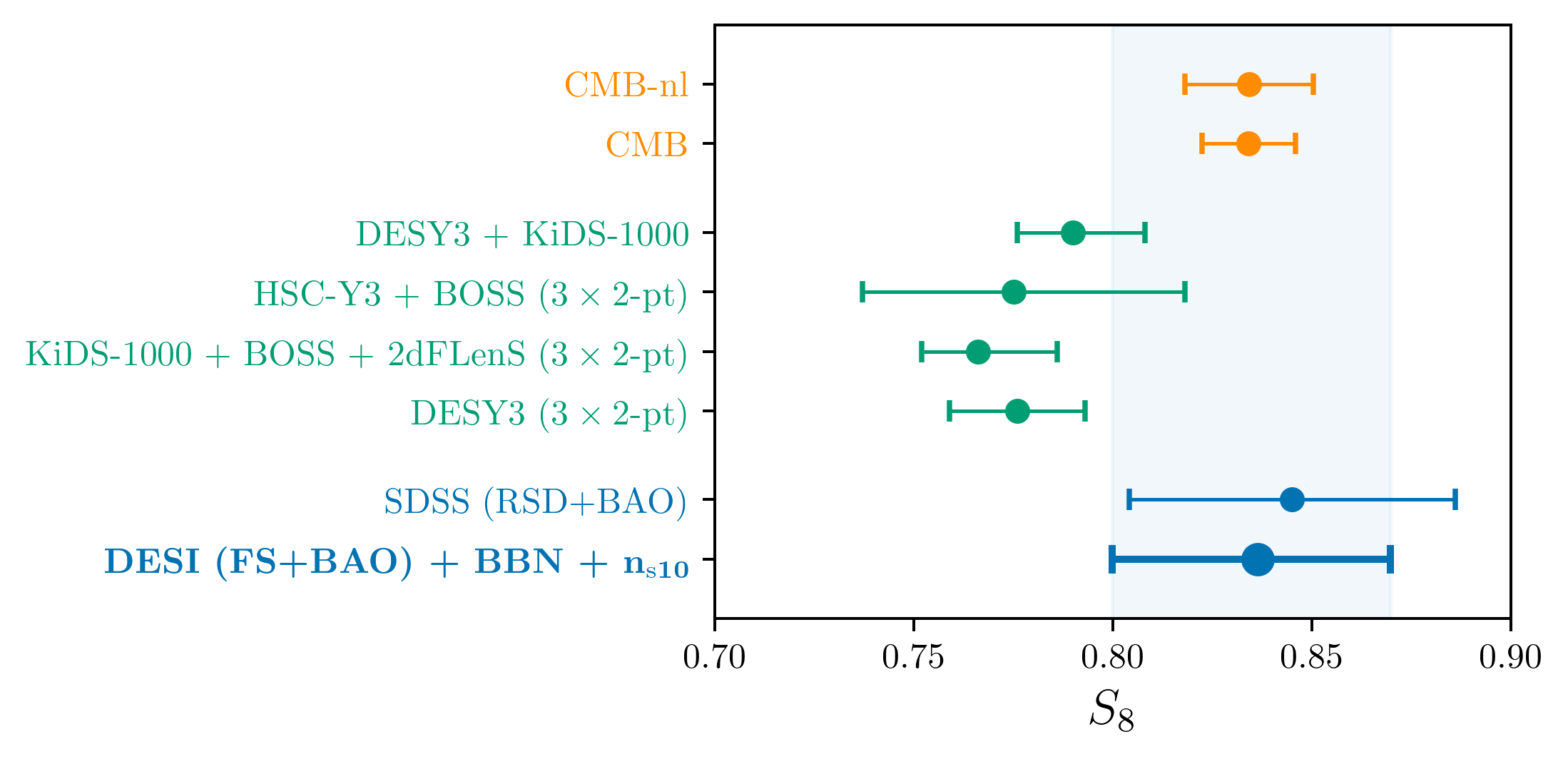
\(S_8 = \sigma_8(\Omega_\mathrm{m} / 0.3)^{0.5}\)
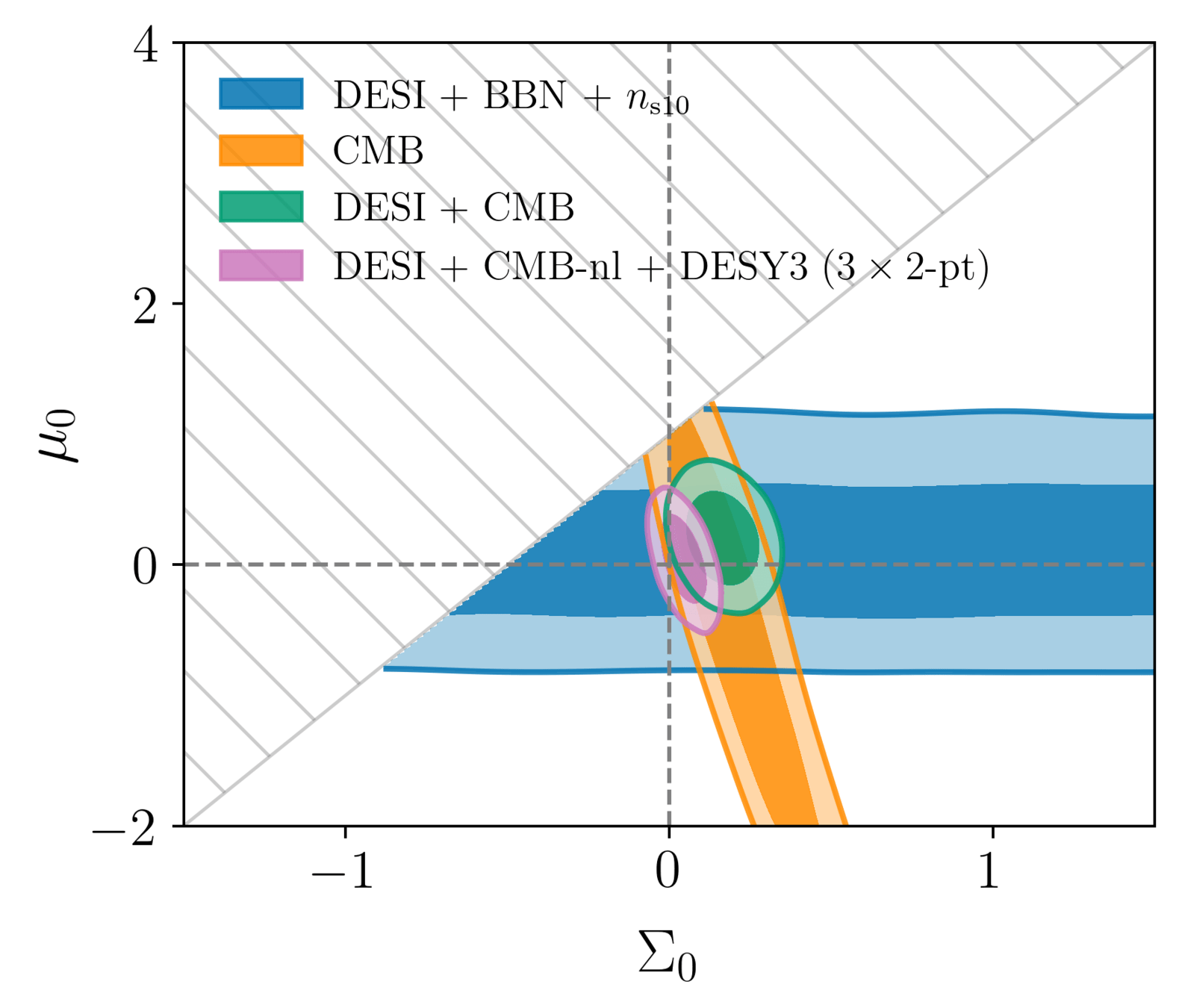
General Relativity
But it's not the end yet!
In November 2024: DR1 Full-Shape results (probing the growth of structure)
With DR2 - stay tuned (\(\sim\) September 2026)!
- Full-Shape from power spectrum & bispectrum
- Primordial non-Gaussianity
- x CMB lensing
- x galaxy weak lensing
- Low-\(z\) growth of structure with peculiar velocities
DR3... Finished! (ahead of schedule)
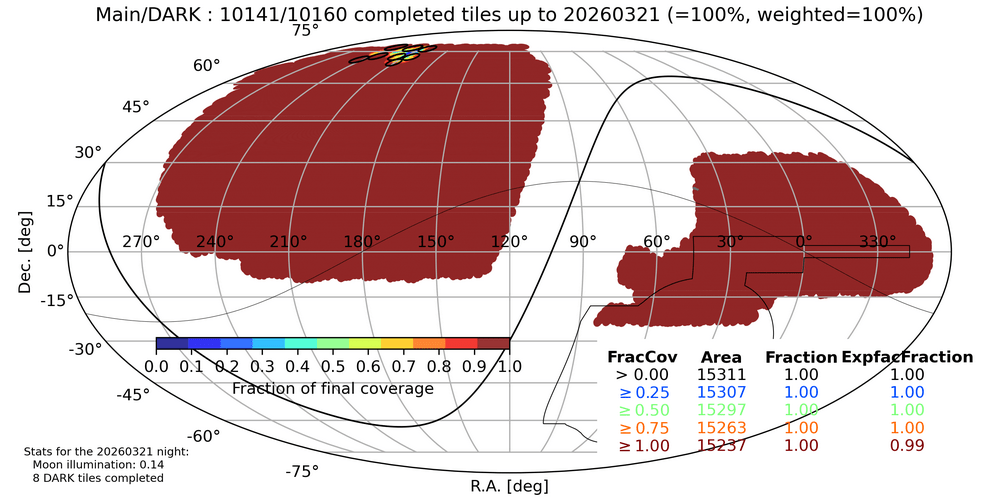
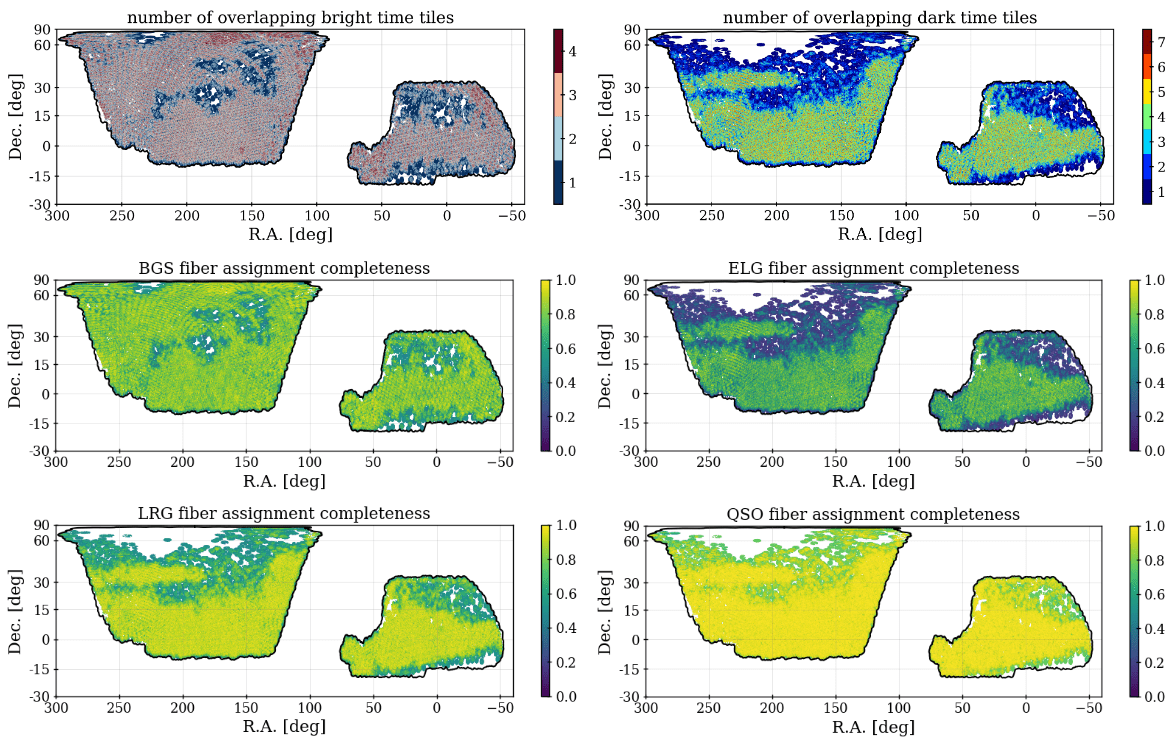
- The original DESI footprint: 14k \(\mathrm{deg}^2\)
- 5 bright time passes, 7 dark time passes
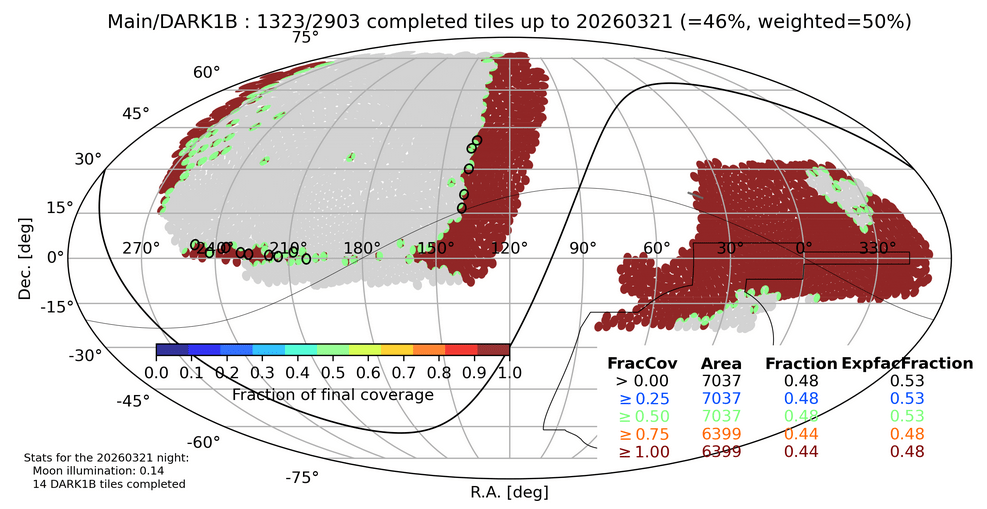
DR3... and beyond (DR5)!
- Footprint extension (south): from 14k to 17k \(\mathrm{deg}^2\)
- 7 + 2 dark time passes, more LRG (new selection), ELG (higher completeness).
At the end of DESI
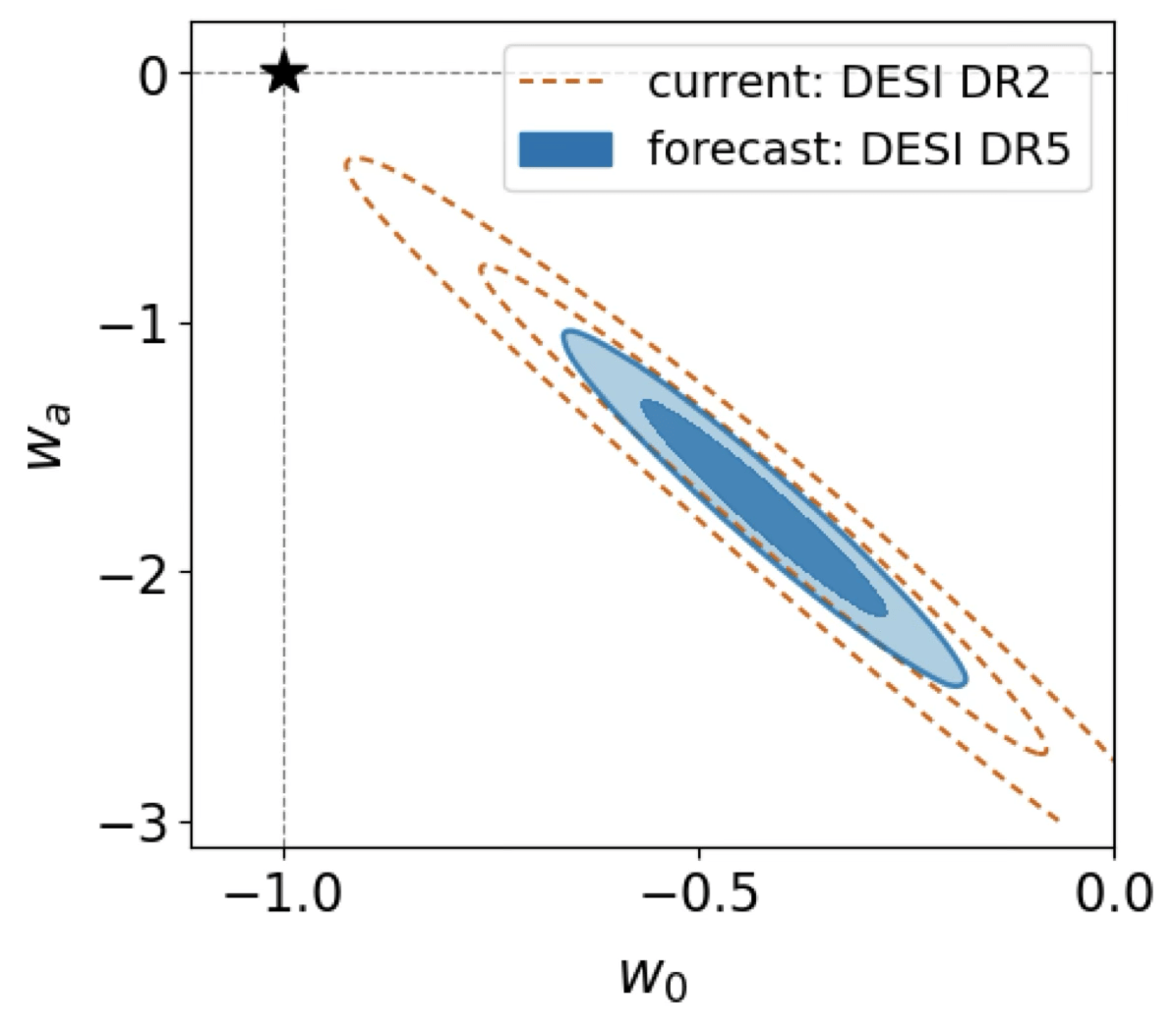
With CMB + BAO alone
We will start DESI-II (2029 - 2035)!
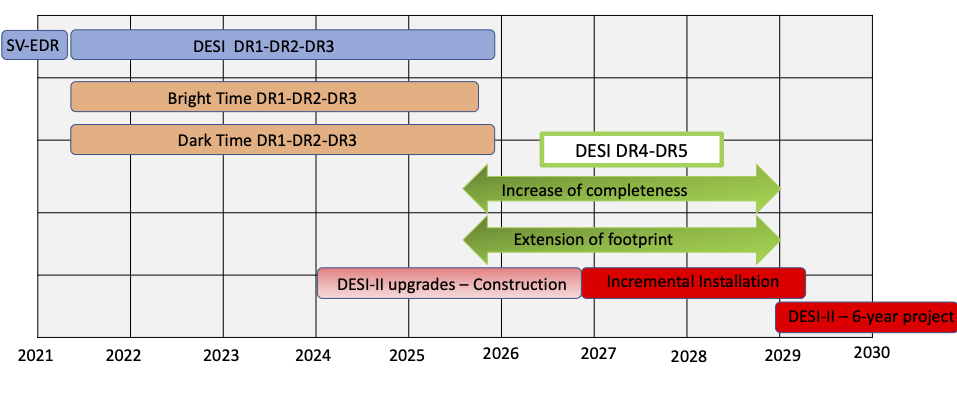
- As powerful as DESI (< % BAO precision), at \(z>2\): dark energy, primordial non-Gaussianity, neutrinos
- High density at \(z \lesssim 1\): Dark Energy, Modified Gravity
- Dark Matter: stellar streams, Andromeda
Back-up
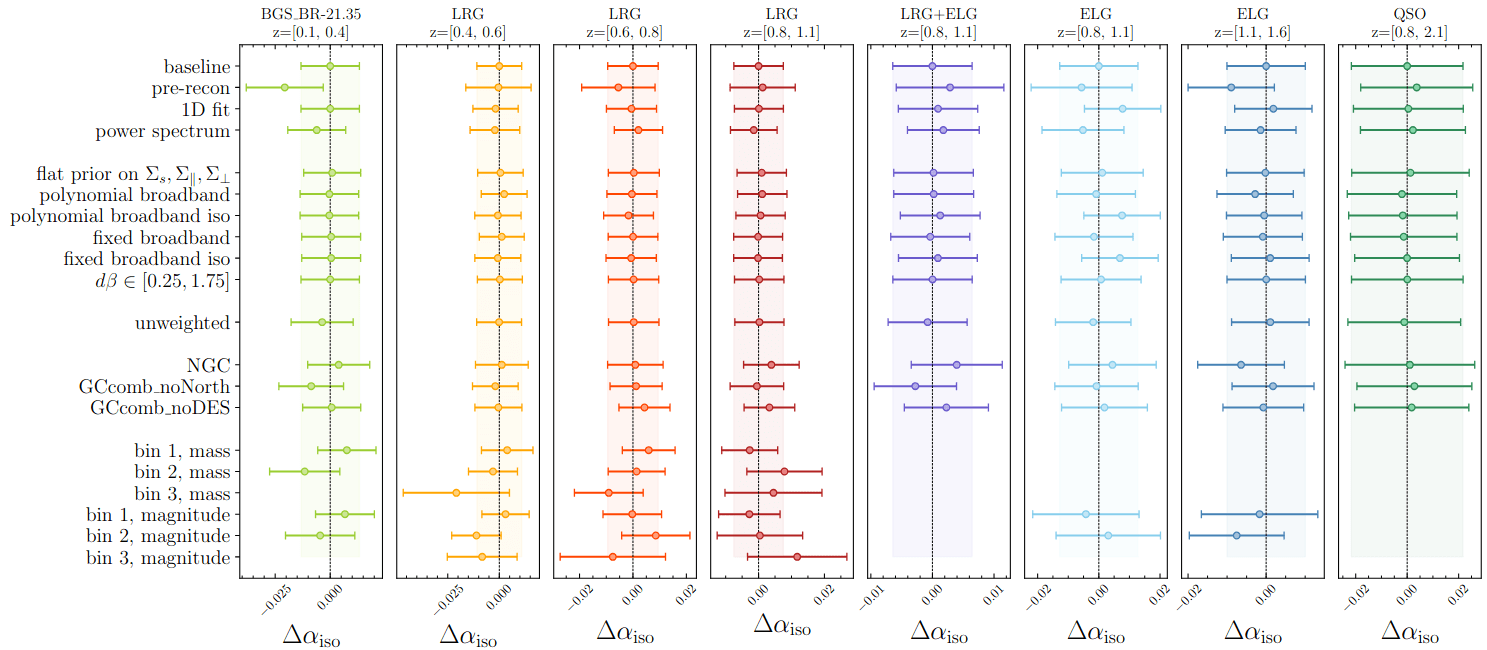
Robustness tests
tracers / redshift bins
data vector
Robustness tests
tracers / redshift bins
BAO modelling
Robustness tests
tracers / redshift bins
imaging systematics
Robustness tests
tracers / redshift bins
data splits
Robustness tests
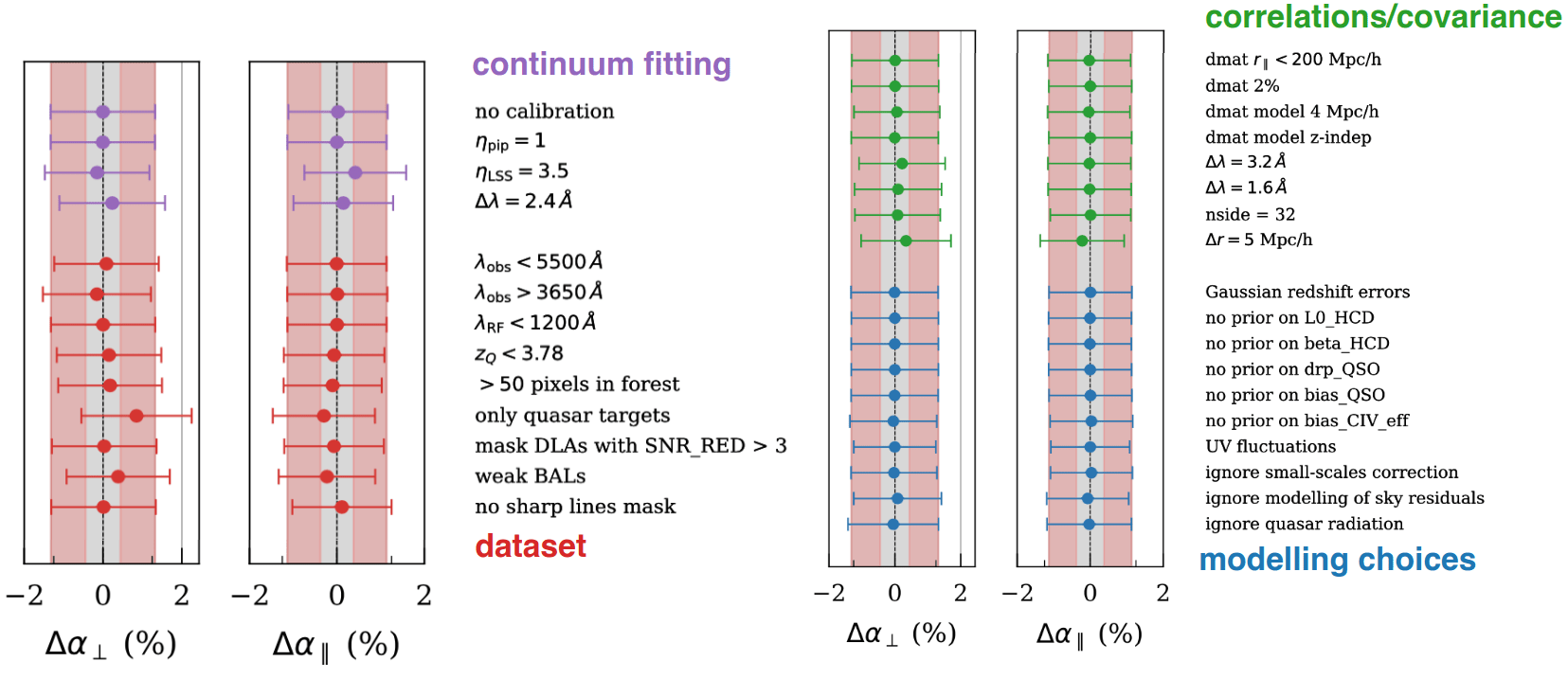
data vector / covariance
Robustness tests
modelling choices
Robustness tests
continuum fitting
Robustness tests
data splits
Robustness tests
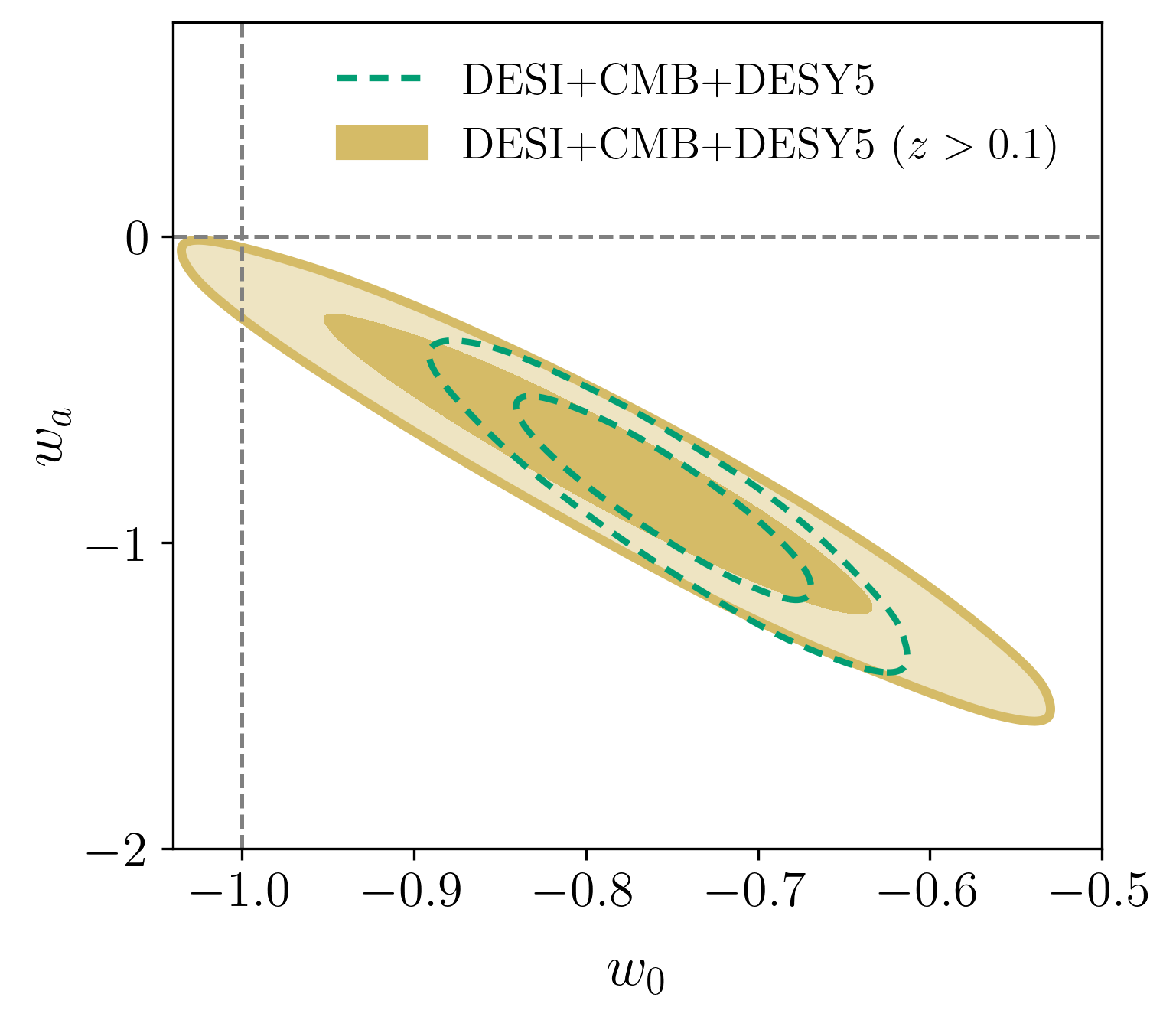
Removing low-\(z\) SN
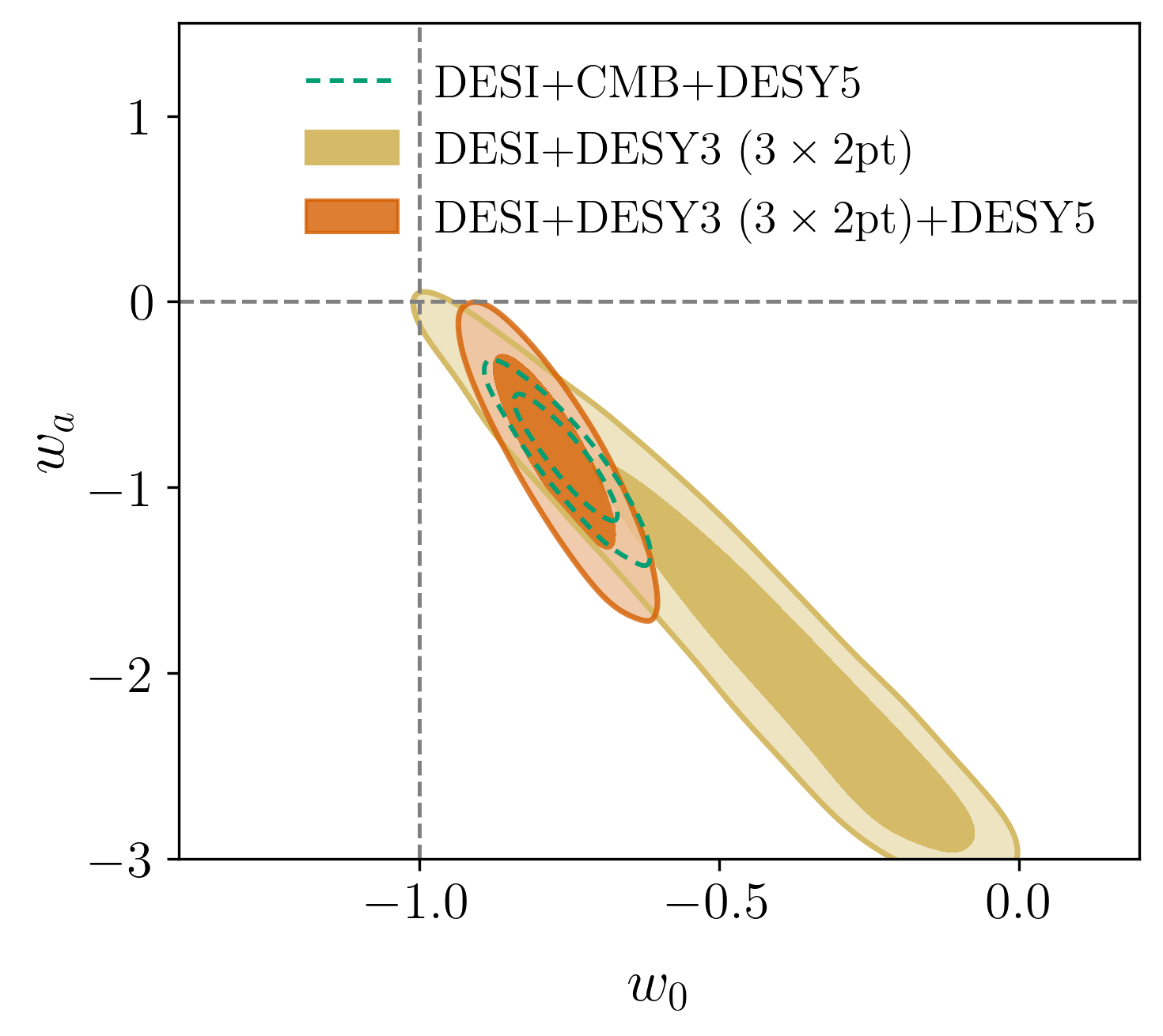
"Replacing CMB": DESY3 \(3\times2\)pt
\(3.3\sigma\)
Other datasets
- SDSS BAO (for comparisons only): eBOSS Collaboration, 2020
- Primary CMB: CamSpec PR4, HiLLiPoP/LoLLiPoP, Planck Collaboration, 2018
- CMB lensing: Planck PR4 + ACT DR6 lensing ACT Collaboration, 2023, Carron, Mirmelstein, Lewis, 2022
- BBN: Schöneberg et al., 2024
- SN: Pantheon+ Brout, Scolnic, Popovic et al., 2022, Union3 Rubin, Aldering, Betoule et al. 2023, DES-SN5YR DES Collaboration
Analysis pipeline mostly the same as DR1
Again, blind analysis to mitigate observer / confirmation biases (catalog-level blinding)
Anisotropic BAO measurements for QSO (and low-\(z\) ELG)
Minor updates:
- revised min fitting range (\(60 < s / [\mathrm{Mpc}/h] < 150\))
- revised systematic budget (theory, fiducial cosmology, HOD): \(\sigma_\mathrm{stat+syst} < 1.09 \sigma_\mathrm{stat}\)
Many more robustness tests
What's new in the BAO analysis?
BAO reconstruction
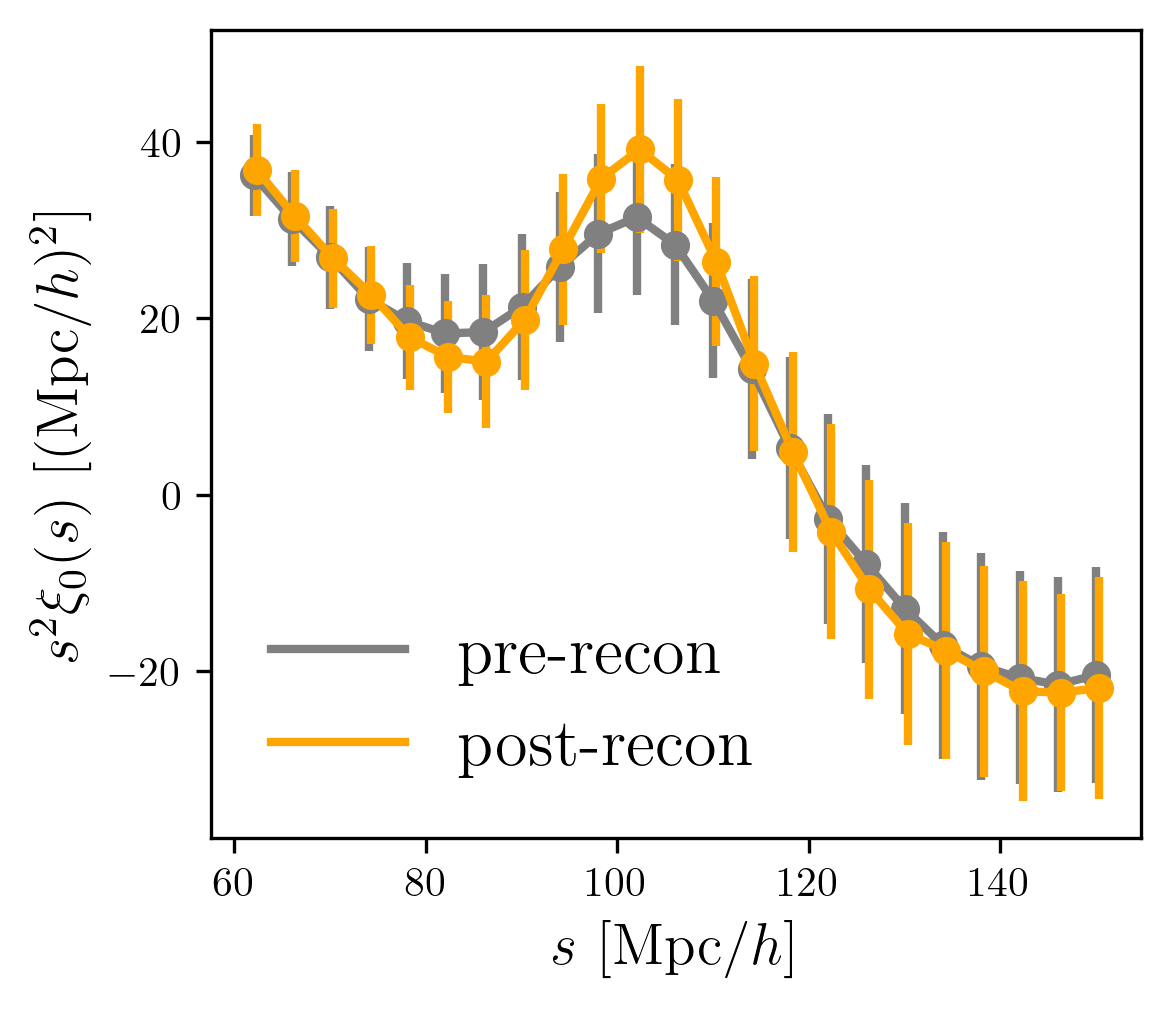
- Non-linear structure growth and peculiar velocities smear (and slightly displace) the BAO peak
- Reconstruction: estimate Zeldovich displacements from observed field and move galaxies back \(\rightarrow\) refurbishes the ruler (improves precision and accuracy)
Analysis pipeline mostly the same as DR1
Again, blind analysis to mitigate observer / confirmation biases (data vector-level blinding)
Improved modelling of metals and continuum-fitting distortions
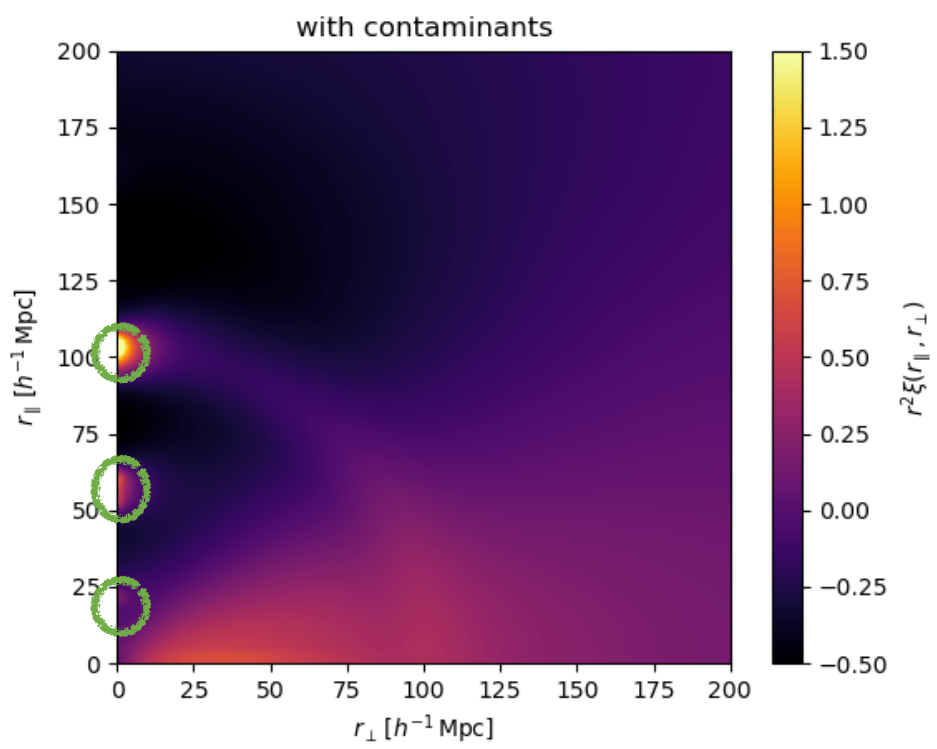
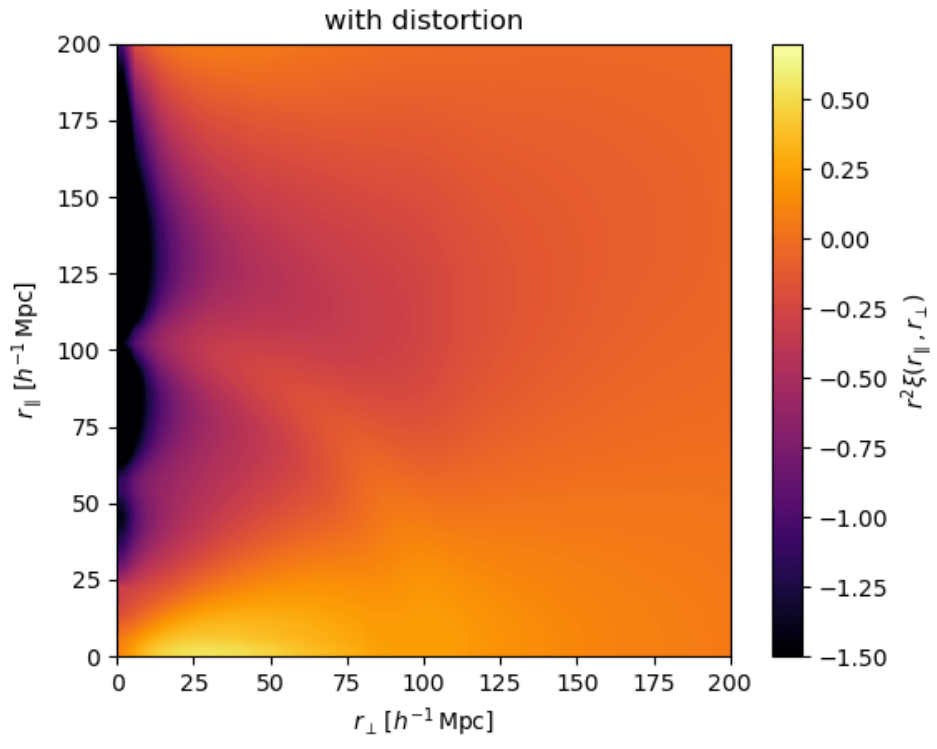
What's new in the Ly\(\alpha\) analysis?
Analysis pipeline mostly the same as DR1
Again, blind analysis to mitigate observer / confirmation biases (data vector-level blinding)
Improved modelling of metals and continuum-fitting distortions
New catalog of Damped Lyman-\(\alpha\) systems (masked)
Improved mocks and associated studies
Revised fitting range and priors on nuisance parameters
Include a small (0.3%) theory systematic uncertainty for non-linear BAO shift, \(\sigma_\mathrm{stat+syst} < 1.06 \sigma_\mathrm{stat}\)
What's new in the Ly\(\alpha\) analysis?
Robustness tests
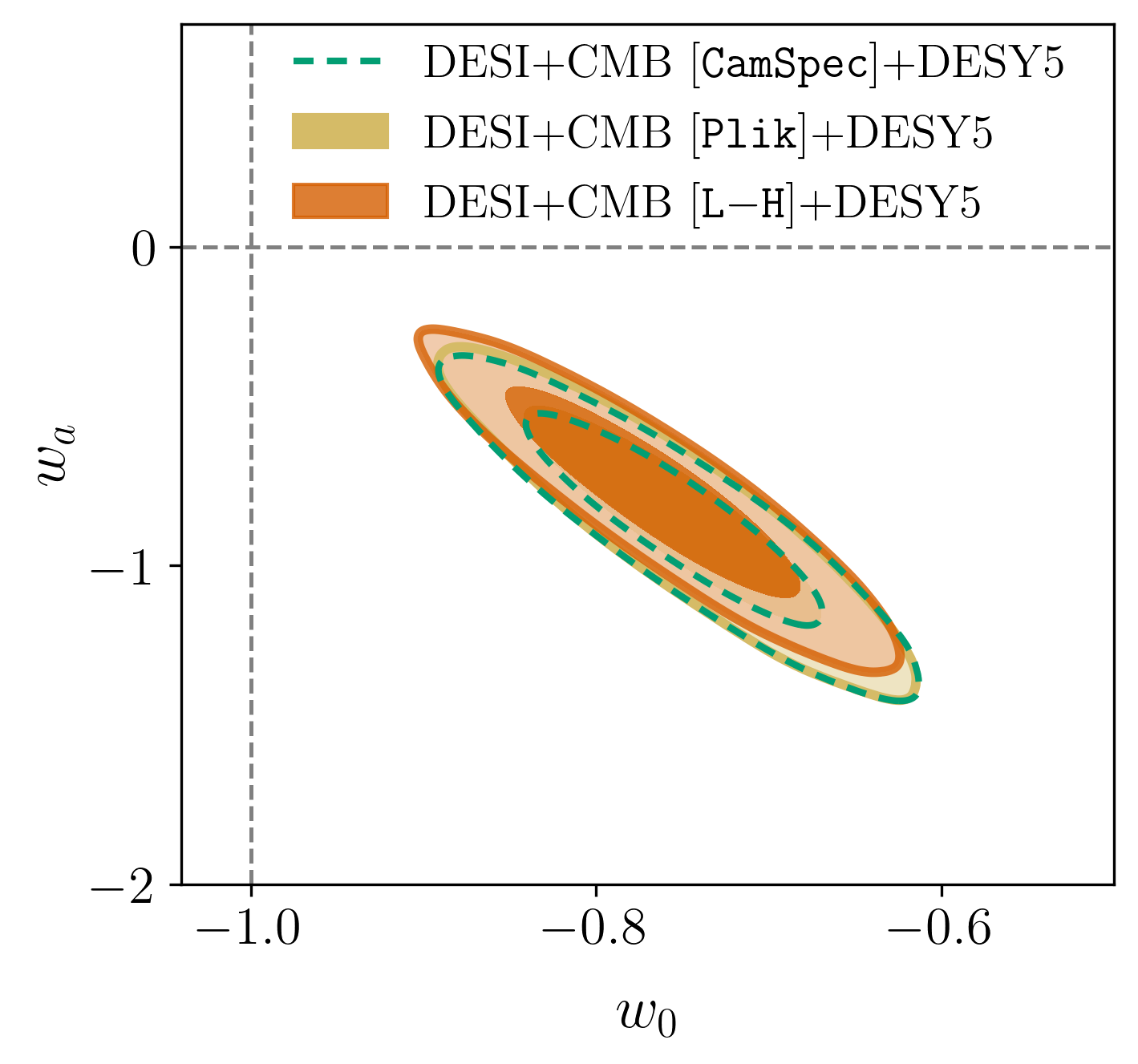
Robust to various Planck likelihoods:
- CamSpec (baseline)
- Plik (PR3)
- LiLLiPoP-LolliPoP (PR4)
\(\Lambda\mathrm{CDM}\) constraints
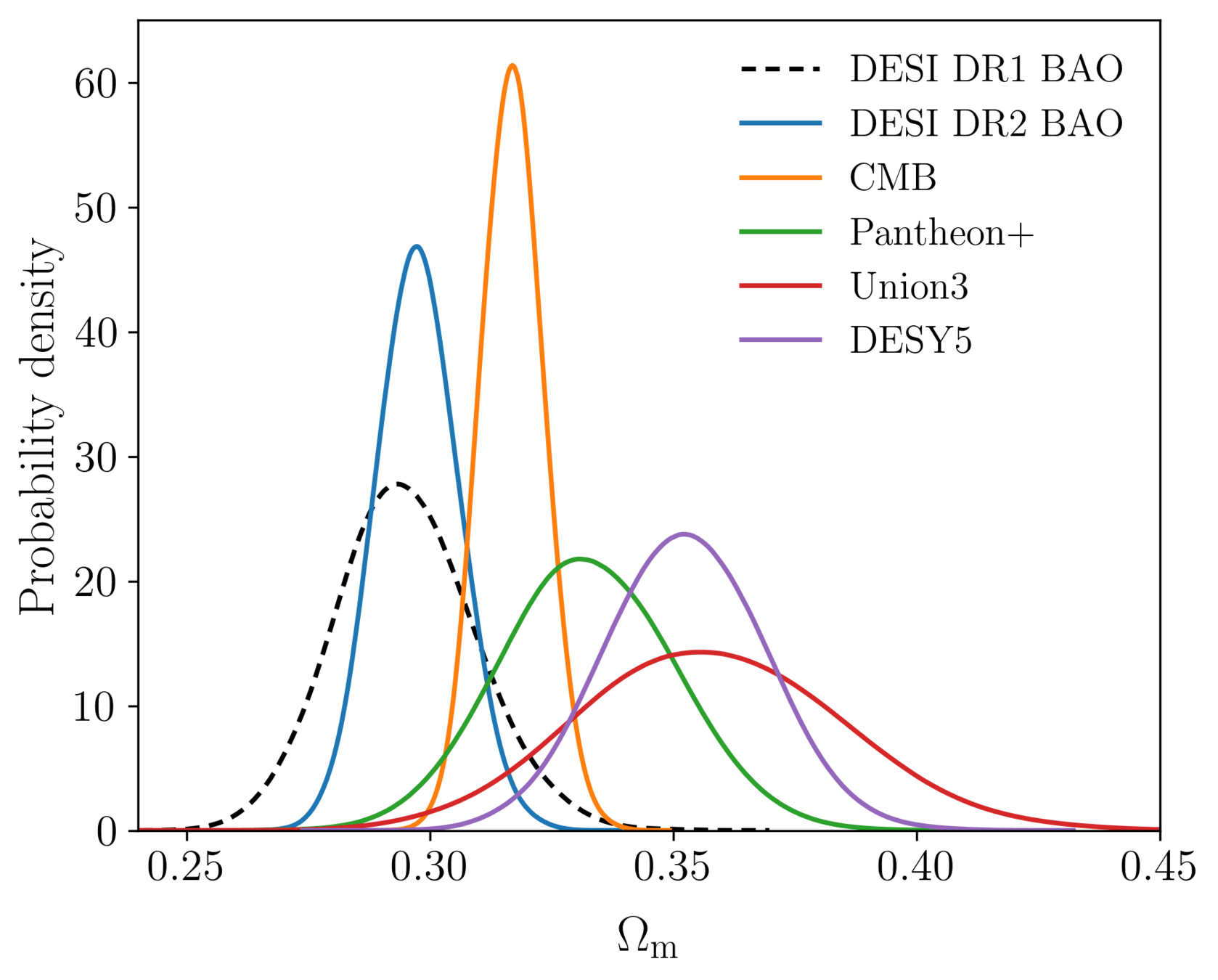
- DESI \(\Omega_\mathrm{m}\) lower than the CMB (\(1.8\sigma\))
-
DESI \(\Omega_\mathrm{m}\) lower than SN:
- Pantheon+: \(1.7\sigma\)
- Union3: \(2.1\sigma\)
- DESY5: \(2.9\sigma\)
Understanding tensions
DESI data release 1 (DR1)
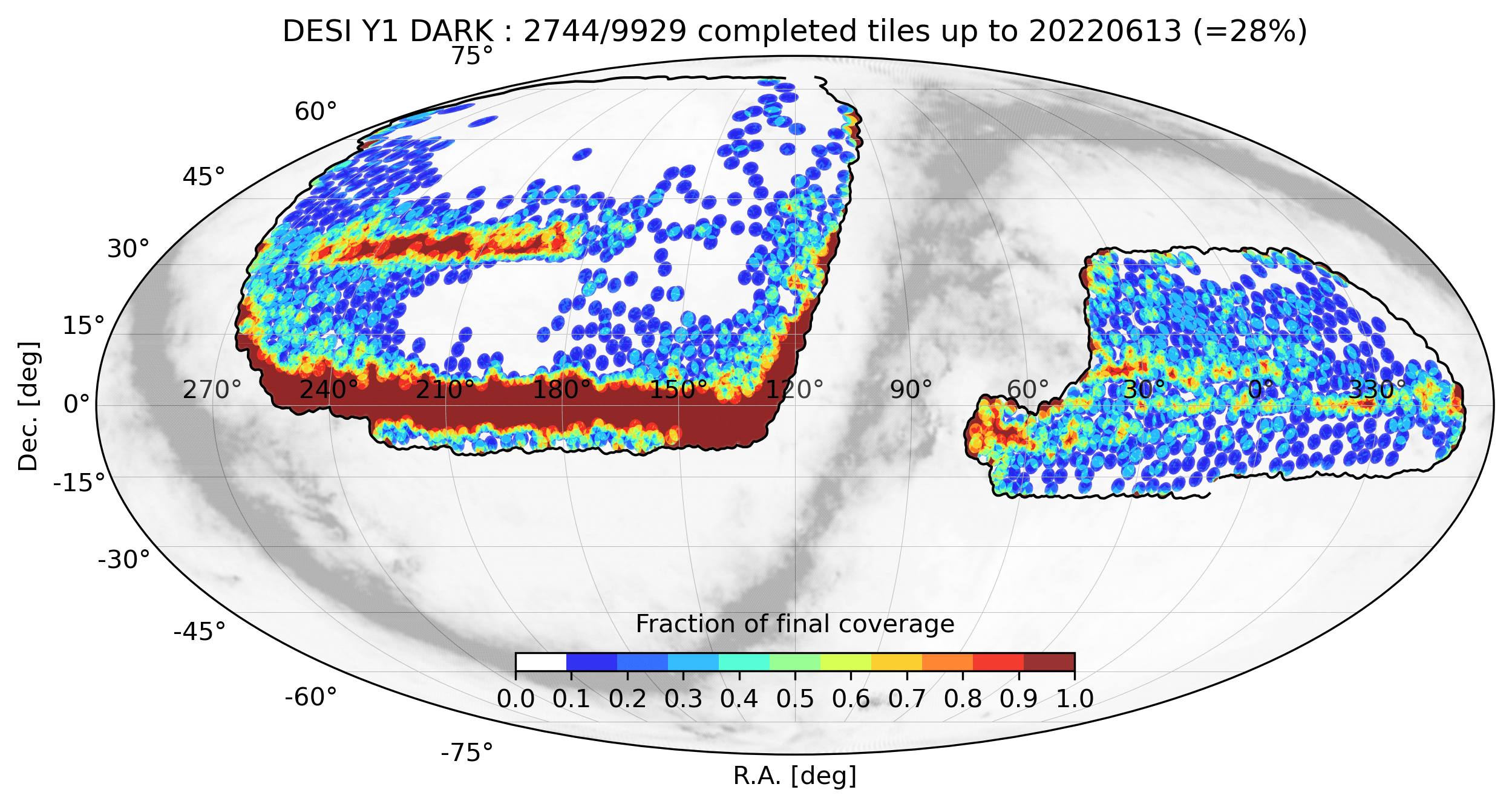
Observations from May 14th 2021 to June 12th 2022
DESI data release 2 (DR2)
| asgn. comp. DR1 | # good z DR1 |
asgn. comp. DR2 | z. comp DR2 |
# of good z DR2 | |
| BGS | 64% | 0.3M | 76% | 99% | 1.2M |
| LRG | 69% | 2.1M | 83% | 99% | 4.5M |
| ELG | 35% | 2.4M | 54% | 74% | 6.5M |
| QSO | 87% | 1.2M | 94% | 68% | 2M |
more observations
Ly\(\alpha\) forest
Binned dark energy

- Binned reconstruction of \(w(z)\)
without assuming a functional form for the EoS - \(\simeq 4\sigma\) preference for \(w > -1\) in the first redshift bin
- Consistent with \(w_0, w_a\) parameterization
Pre/post DESI
DESI vs BOSS/eBOSS
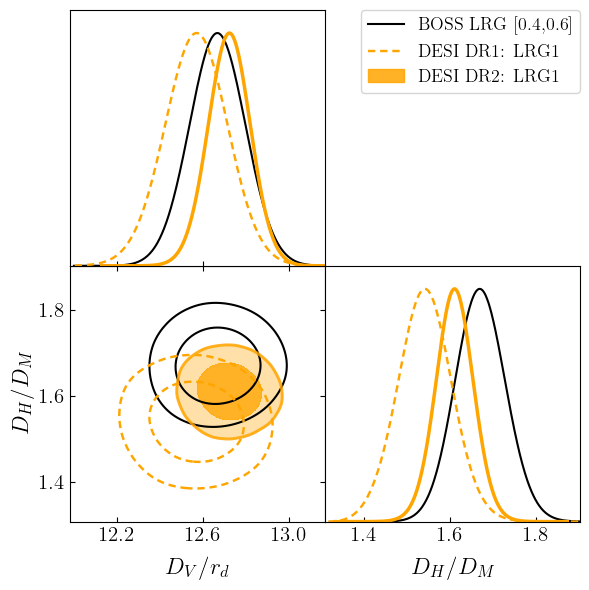
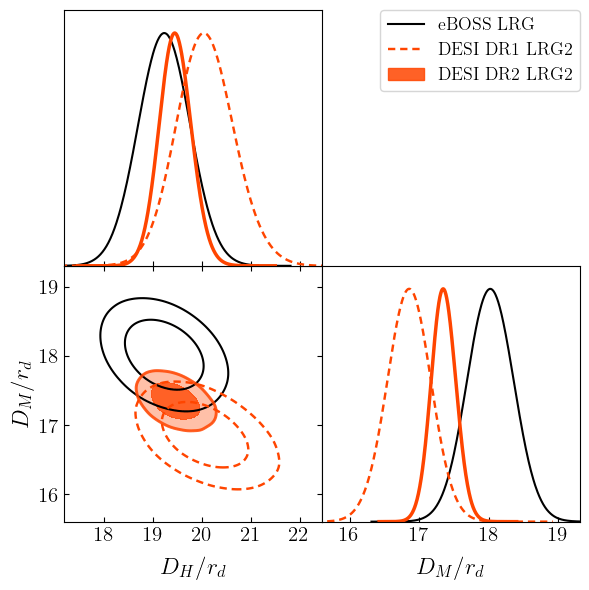
LRG2 (worst case)
\(2.8\sigma \, (\mathrm{DR1}) \Rightarrow 2.3\sigma \, (\mathrm{DR2})\)
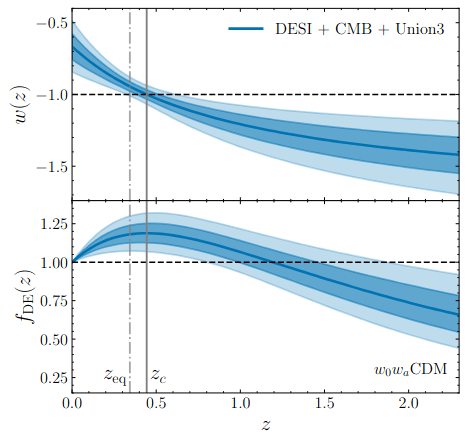
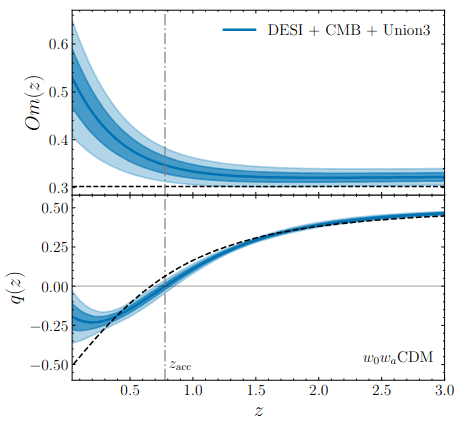
Dark energy
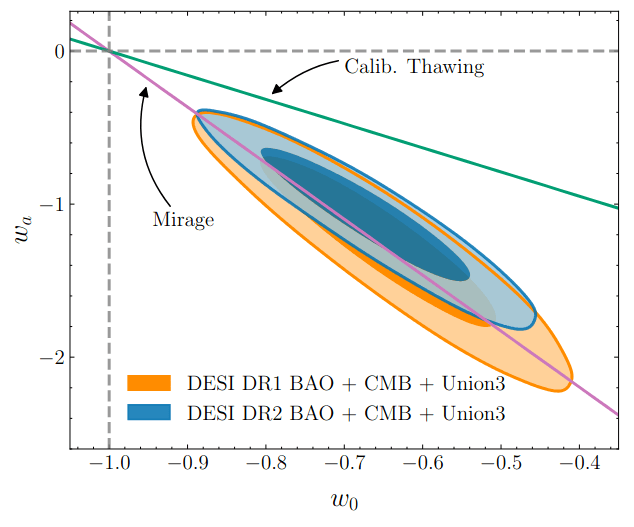
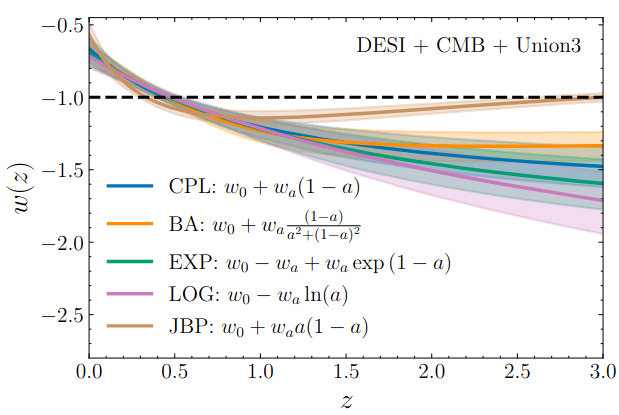
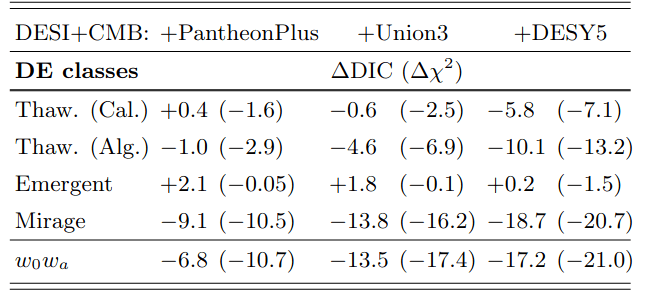
DE parameters
DR2 footprint
Full Shape measurements
clustering

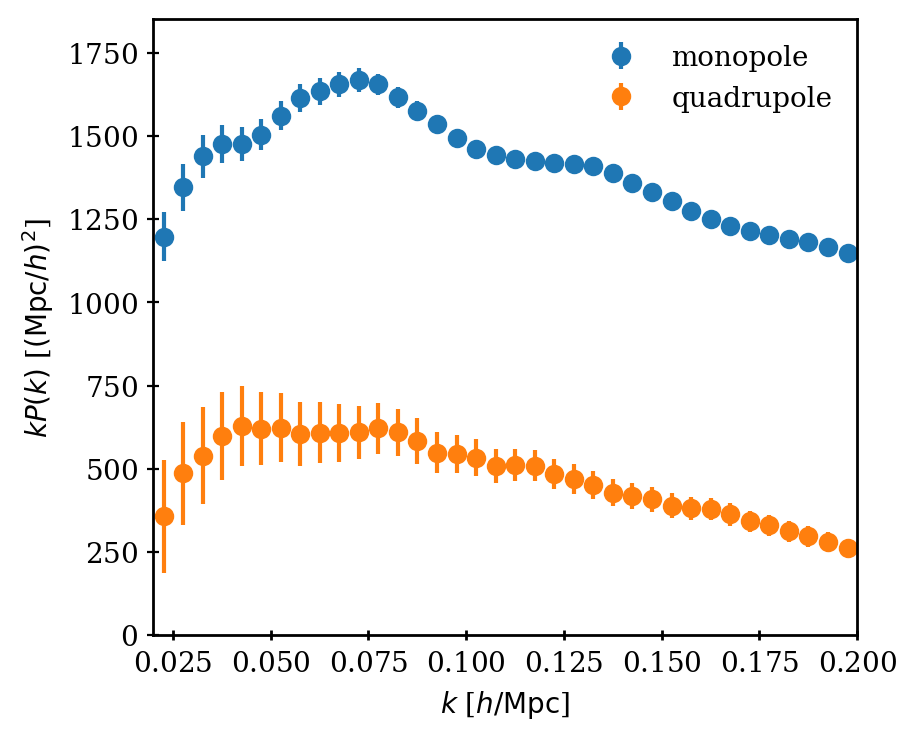
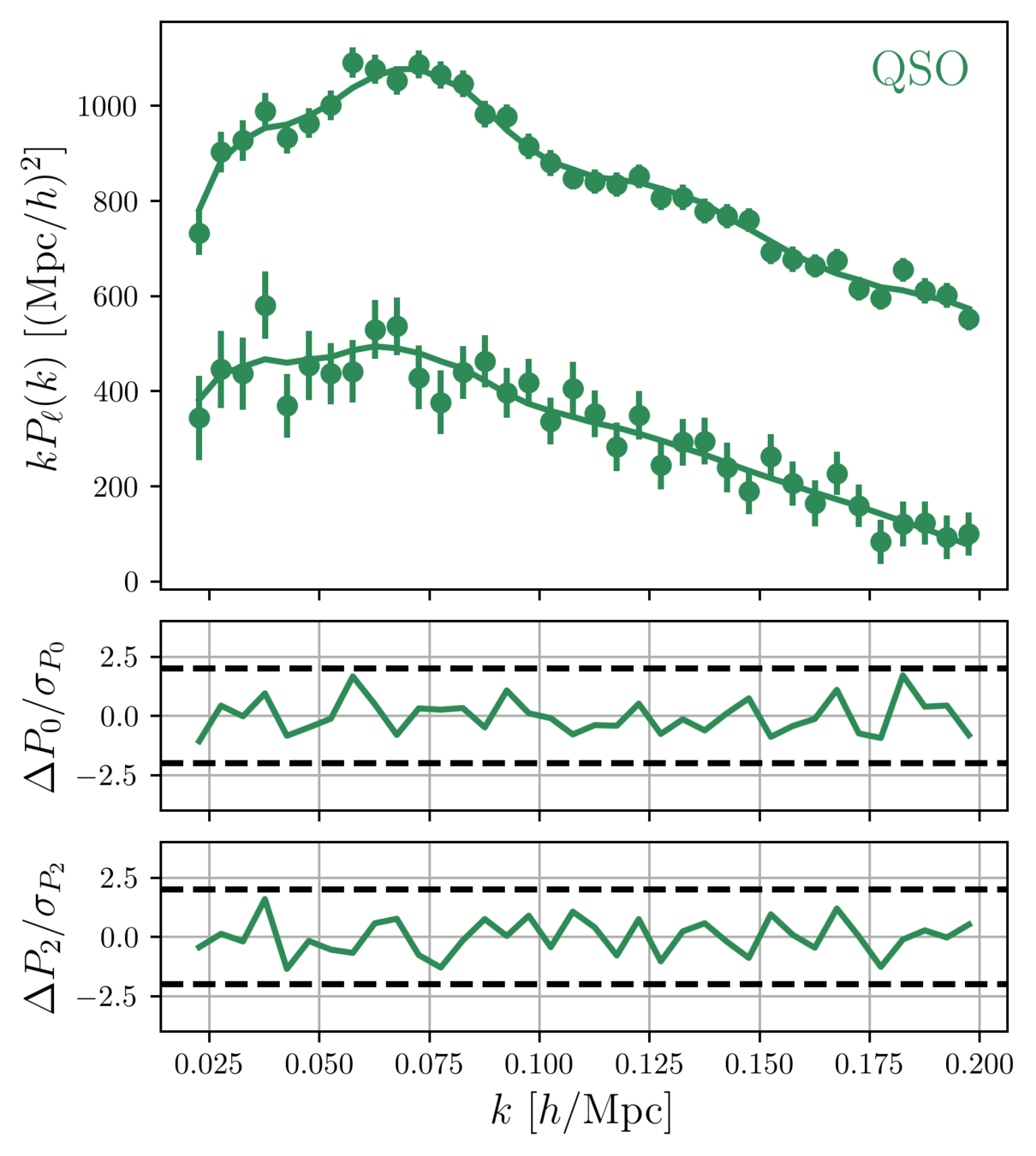
We fit the "full shape" (FS) of the galaxy power spectrum multipoles
Full Shape measurements
RSD
observed redshift = Hubble flow and peculiar velocities (RSD = "redshift space distortions")
shape
(\( \Omega_\mathrm{cdm} h^2, \Omega_\mathrm{b} h^2, n_\mathrm{s}, \sum m_\nu \))
growth of structure \(f\sigma_8\) sensitive to the theory of gravity and dark energy
We fit the "full shape" (FS) of the galaxy power spectrum multipoles
DR1 Full Shape + BAO
\(\omega_\mathrm{b}\): BBN, \(n_\mathrm{s} \sim \mathcal{G}(0.9649, 0.042^2)\)
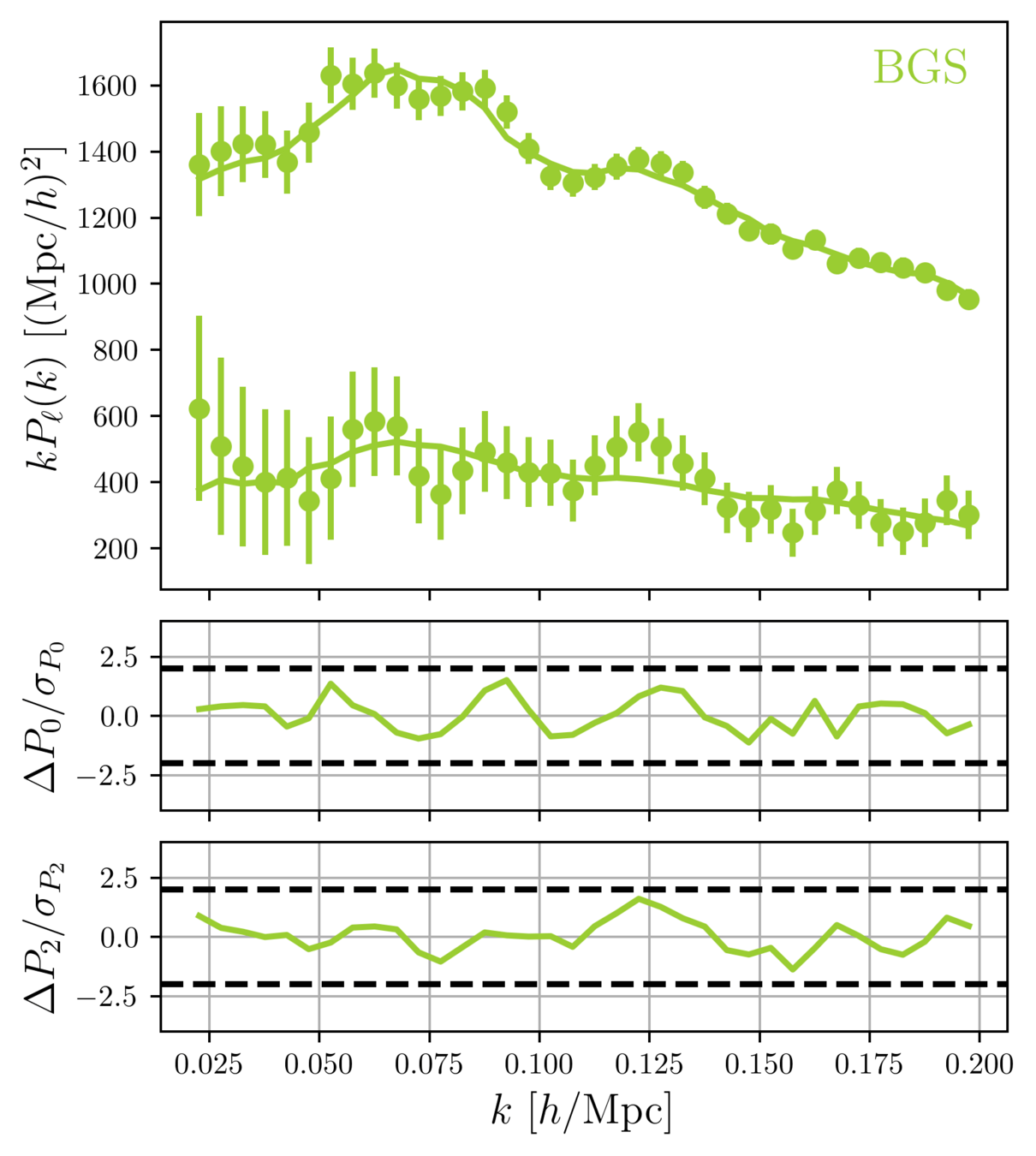
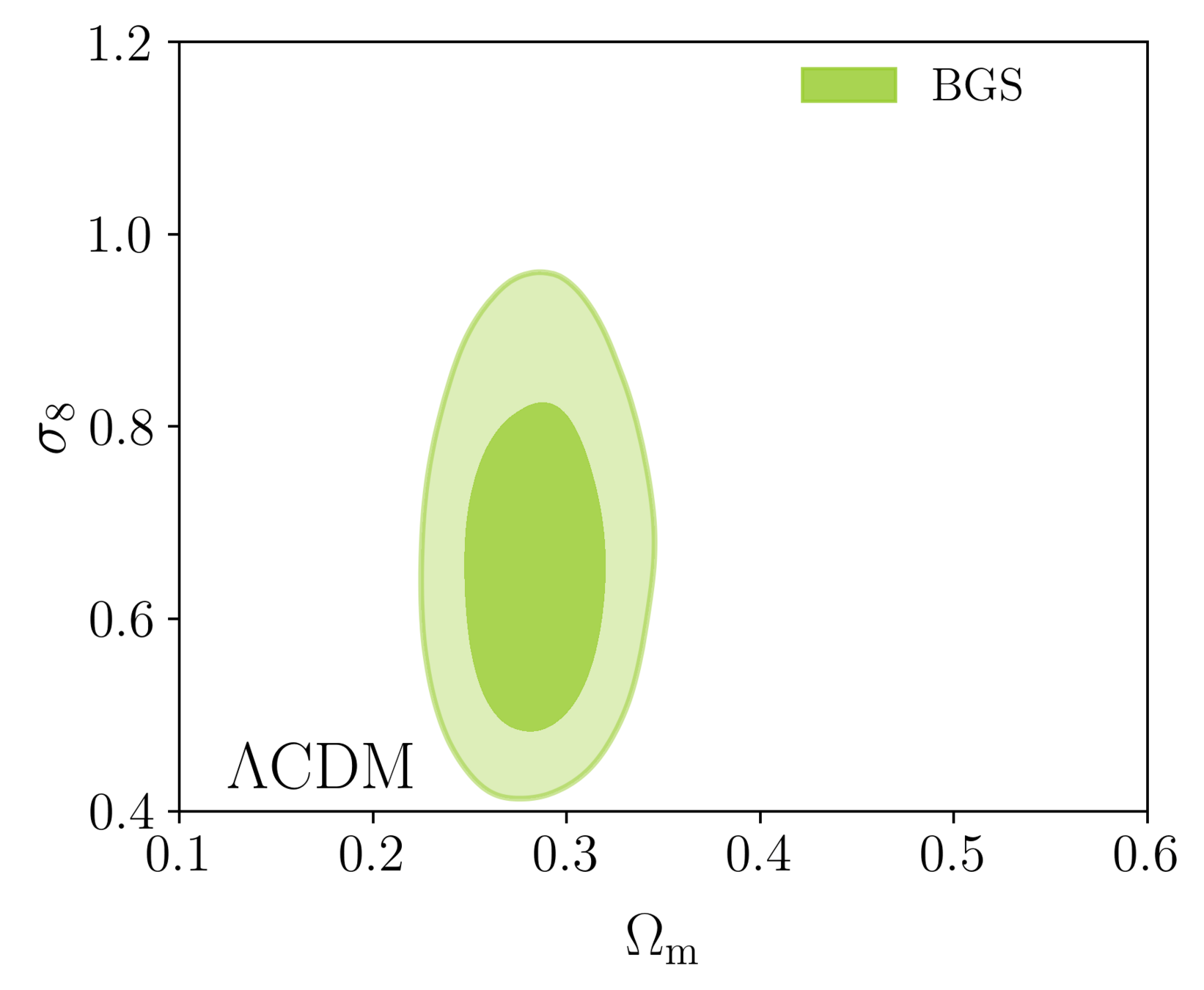

\(\omega_\mathrm{b}\): BBN, \(n_\mathrm{s} \sim \mathcal{G}(0.9649, 0.042^2)\)
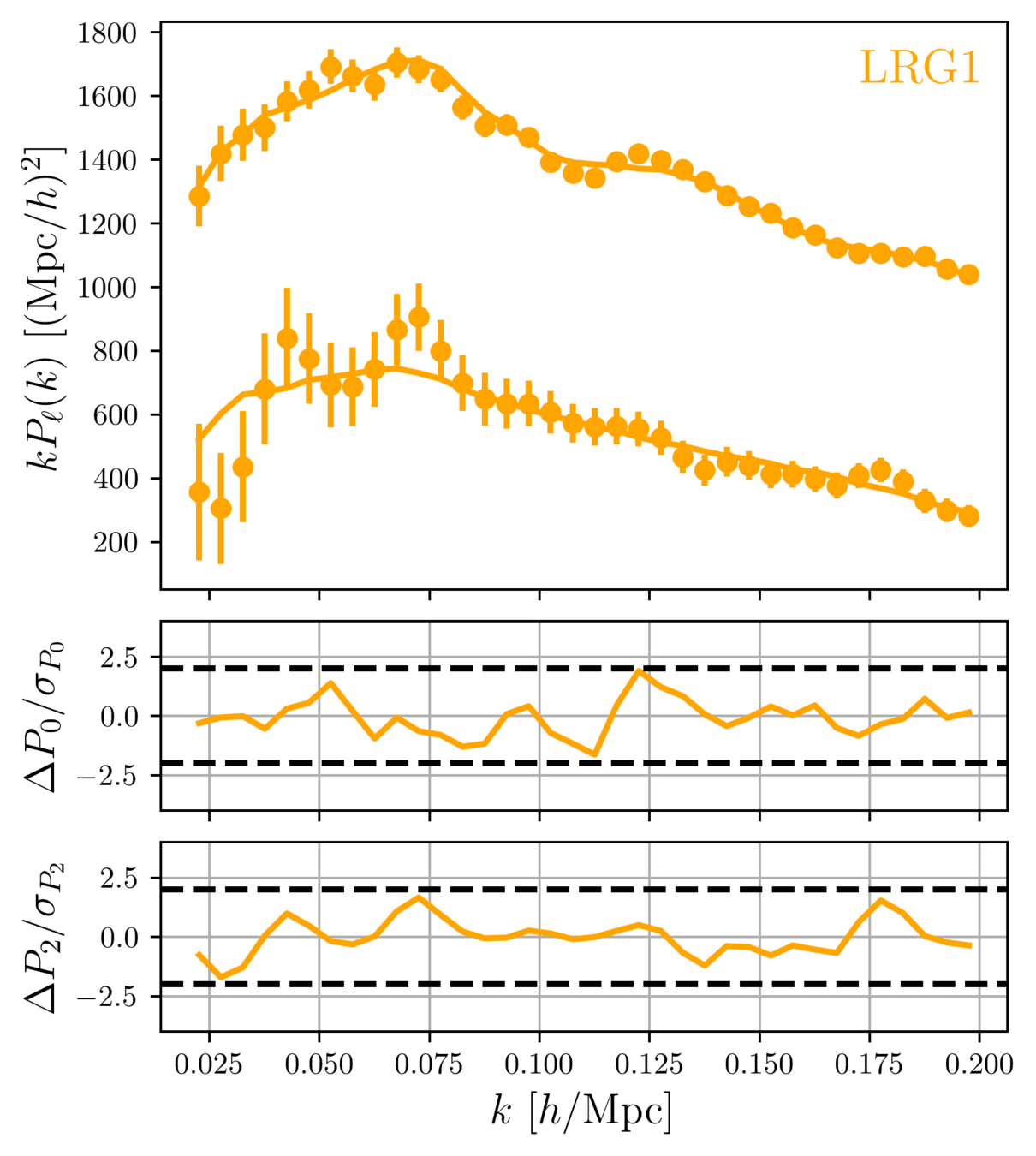

DR1 Full Shape + BAO
\(\omega_\mathrm{b}\): BBN, \(n_\mathrm{s} \sim \mathcal{G}(0.9649, 0.042^2)\)
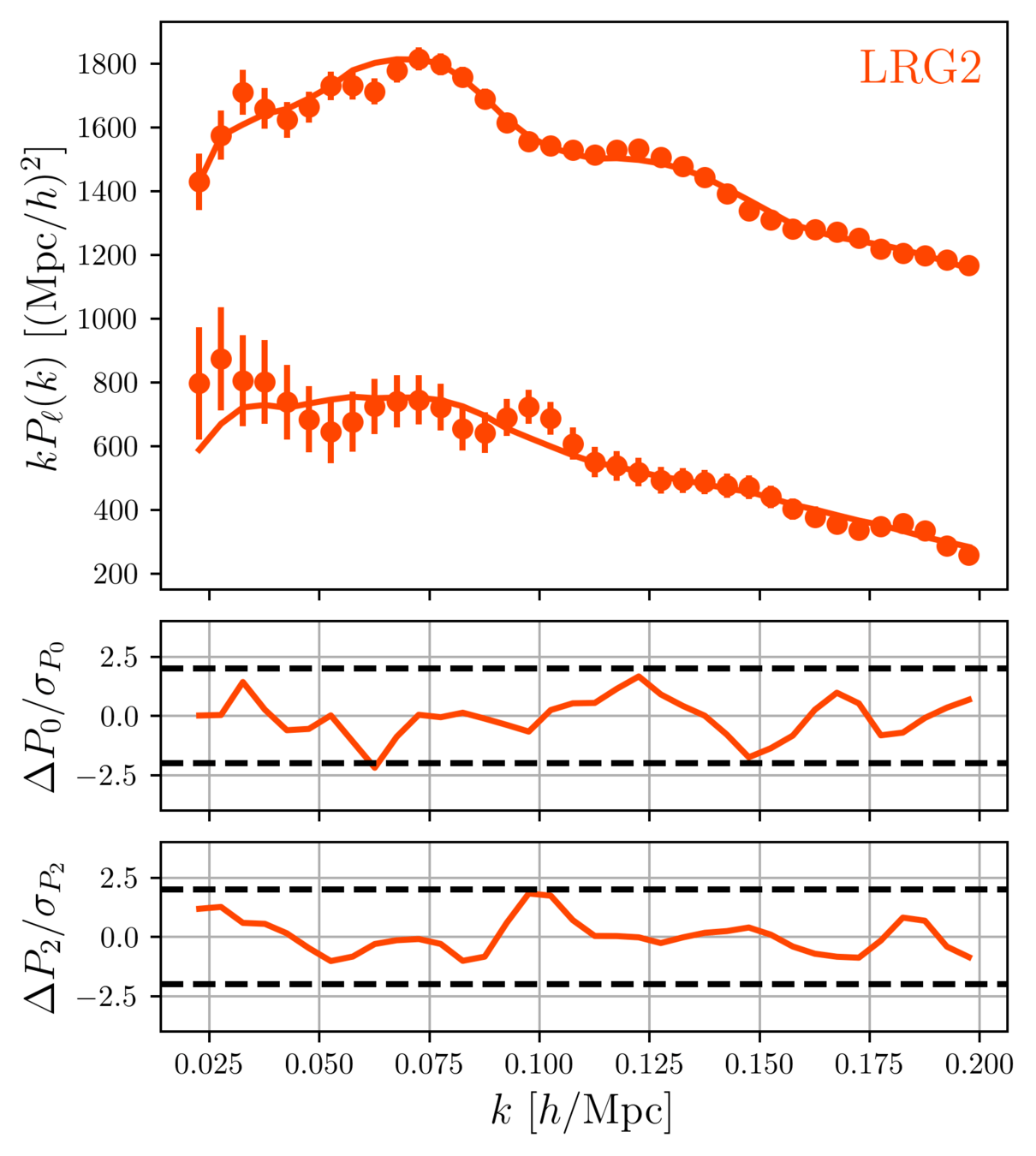
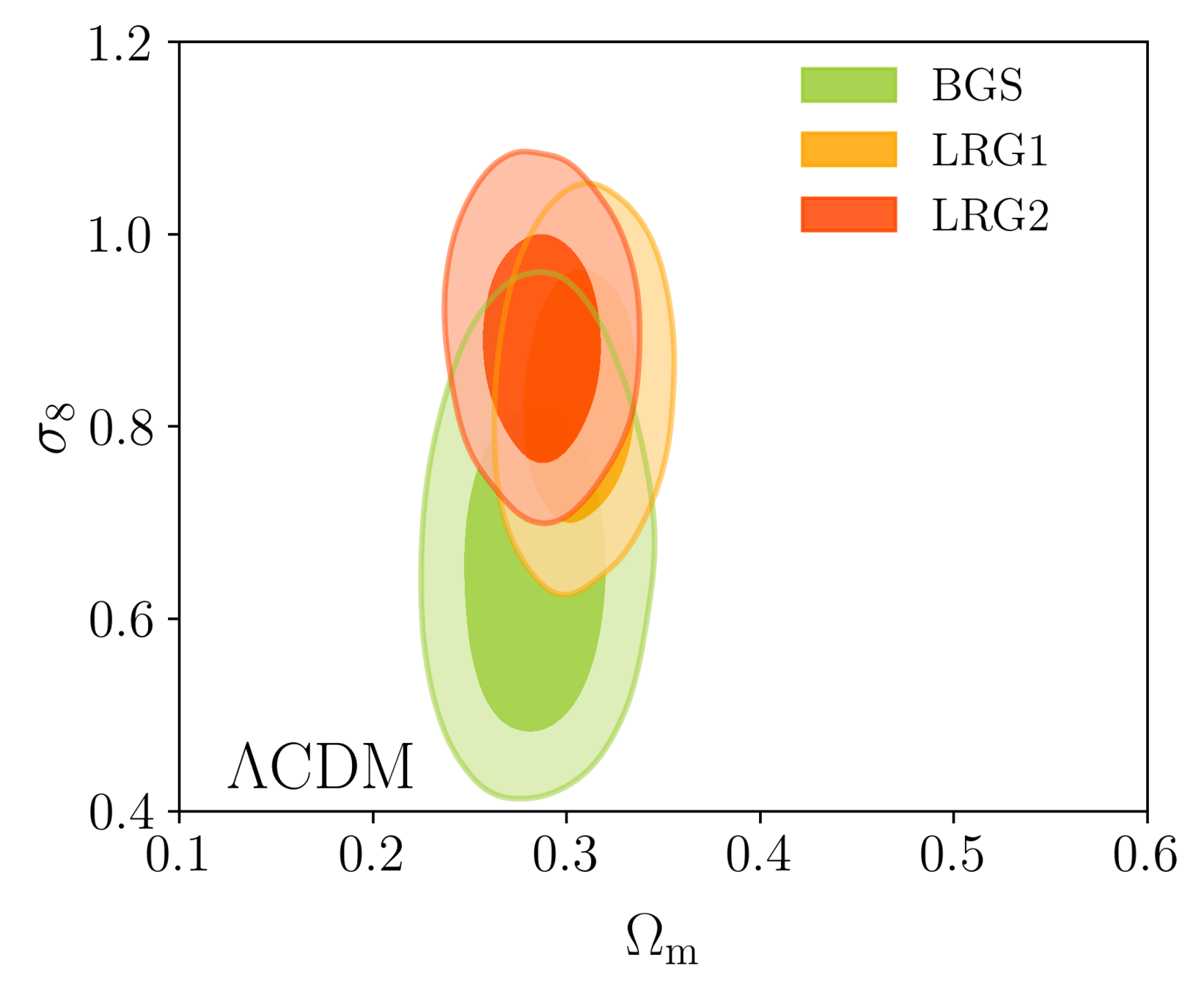

DR1 Full Shape + BAO
\(\omega_\mathrm{b}\): BBN, \(n_\mathrm{s} \sim \mathcal{G}(0.9649, 0.042^2)\)
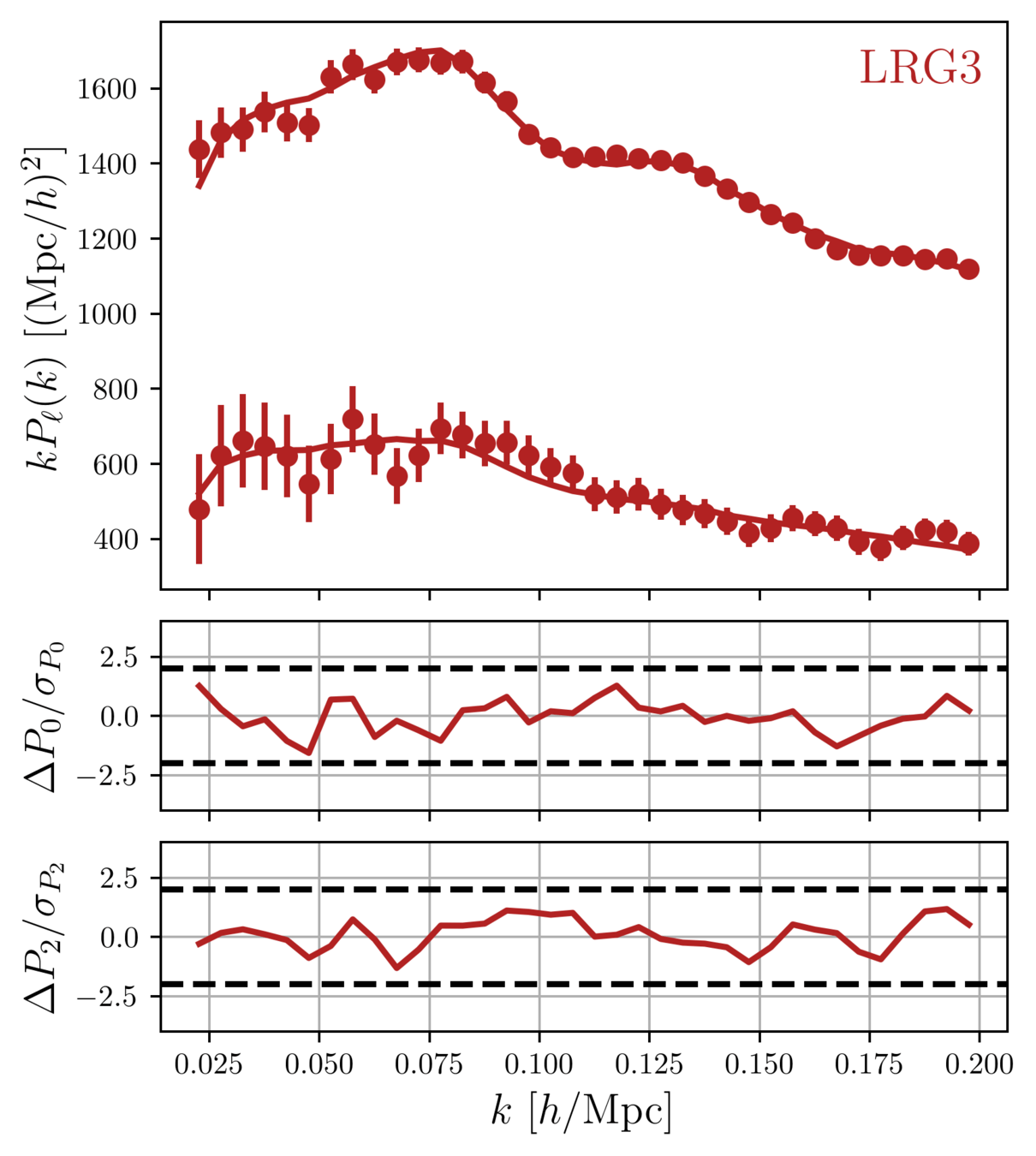
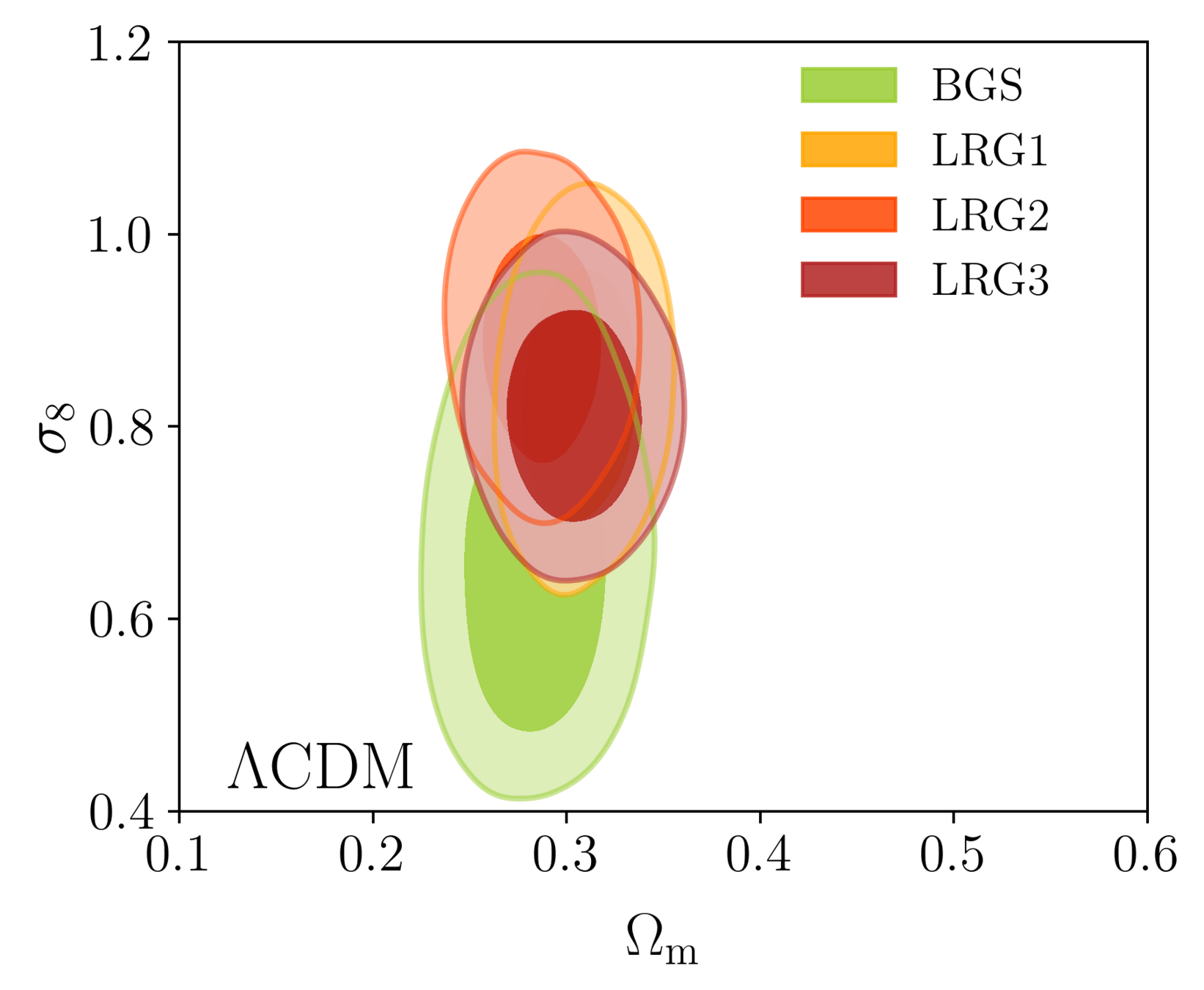

DR1 Full Shape + BAO
\(\omega_\mathrm{b}\): BBN, \(n_\mathrm{s} \sim \mathcal{G}(0.9649, 0.042^2)\)
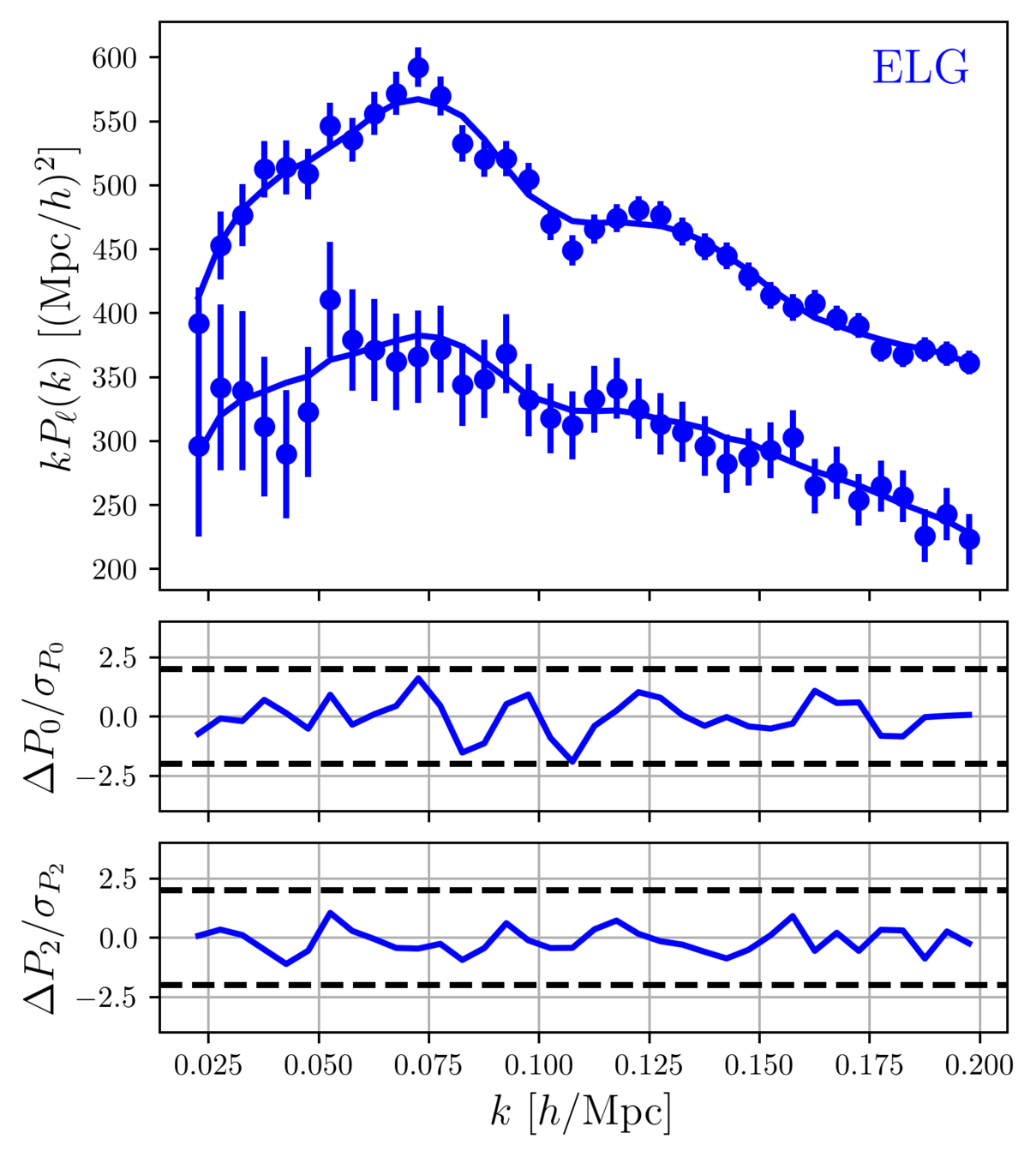

DR1 Full Shape + BAO
\(\omega_\mathrm{b}\): BBN, \(n_\mathrm{s} \sim \mathcal{G}(0.9649, 0.042^2)\)

DR1 Full Shape + BAO
\(\omega_\mathrm{b}\): BBN, \(n_\mathrm{s} \sim \mathcal{G}(0.9649, 0.042^2)\)
DR1 Full Shape + BAO
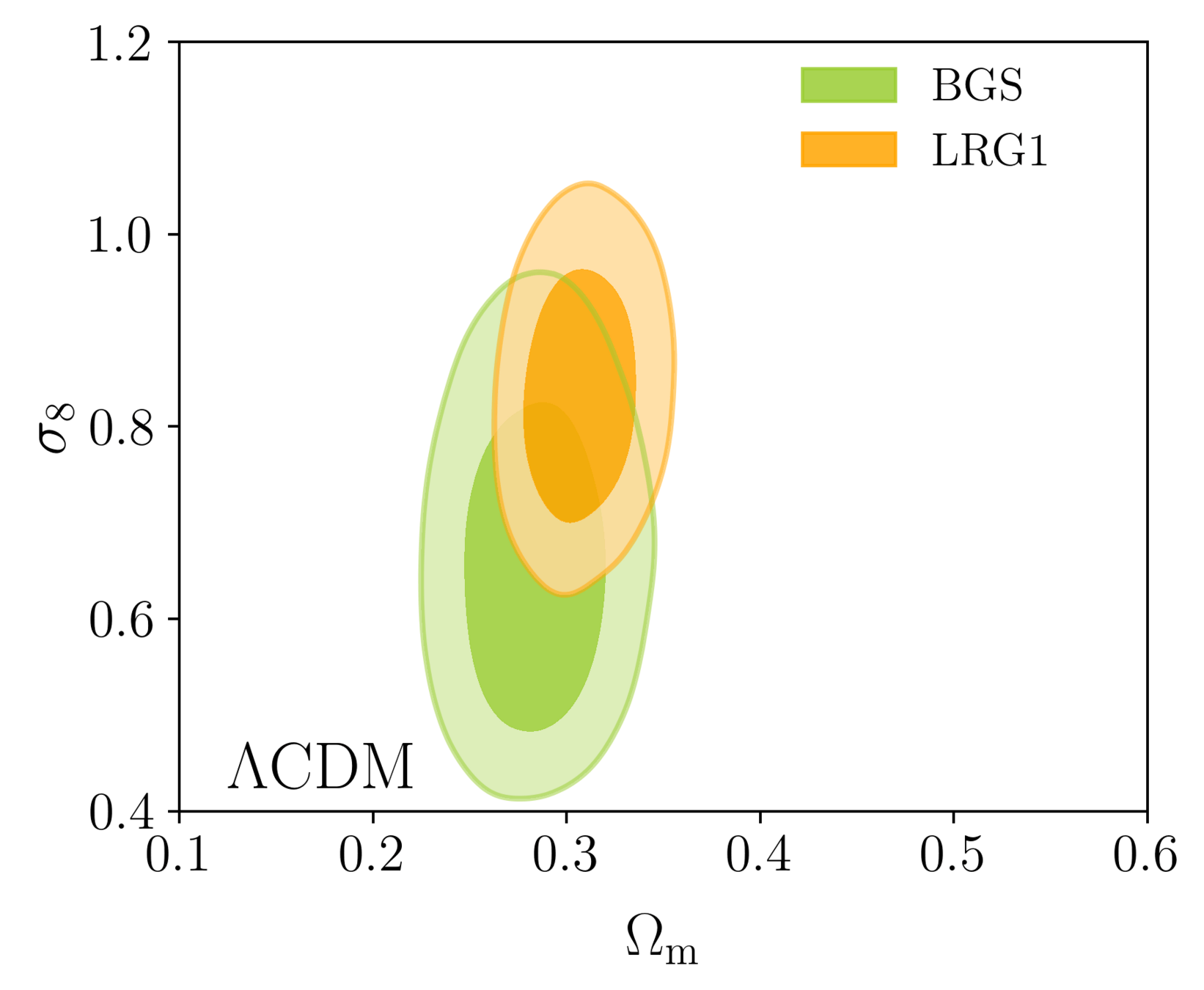
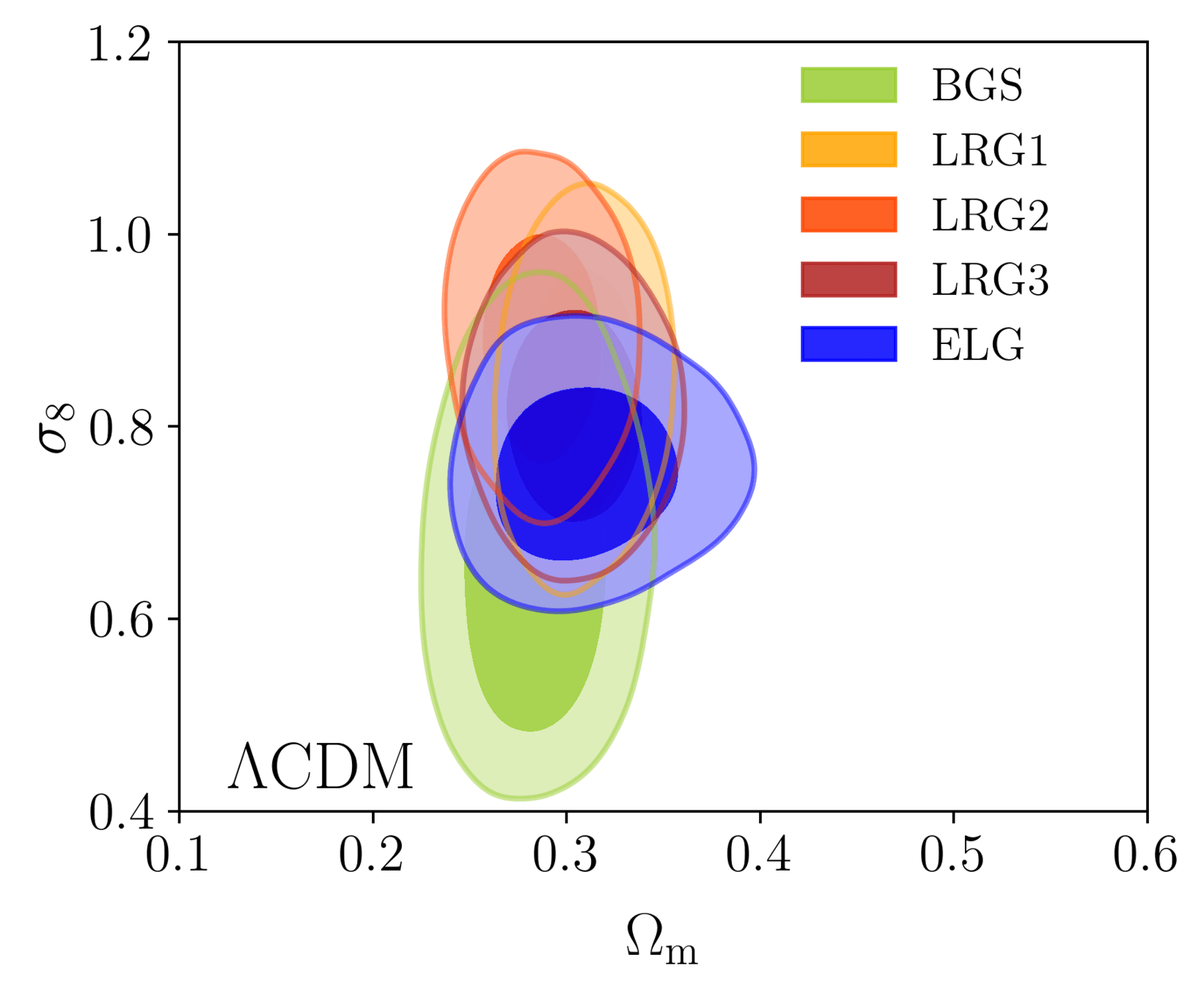
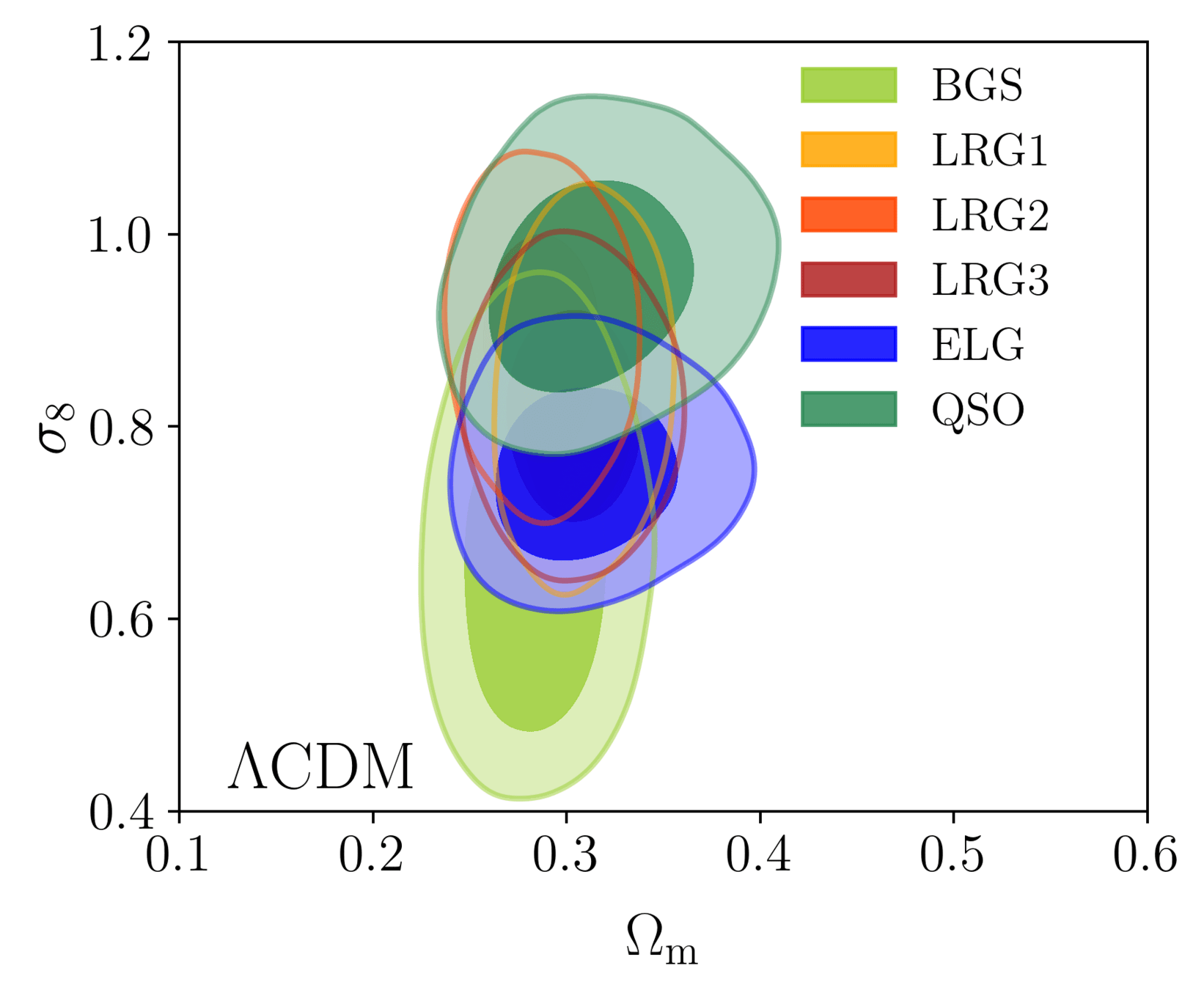
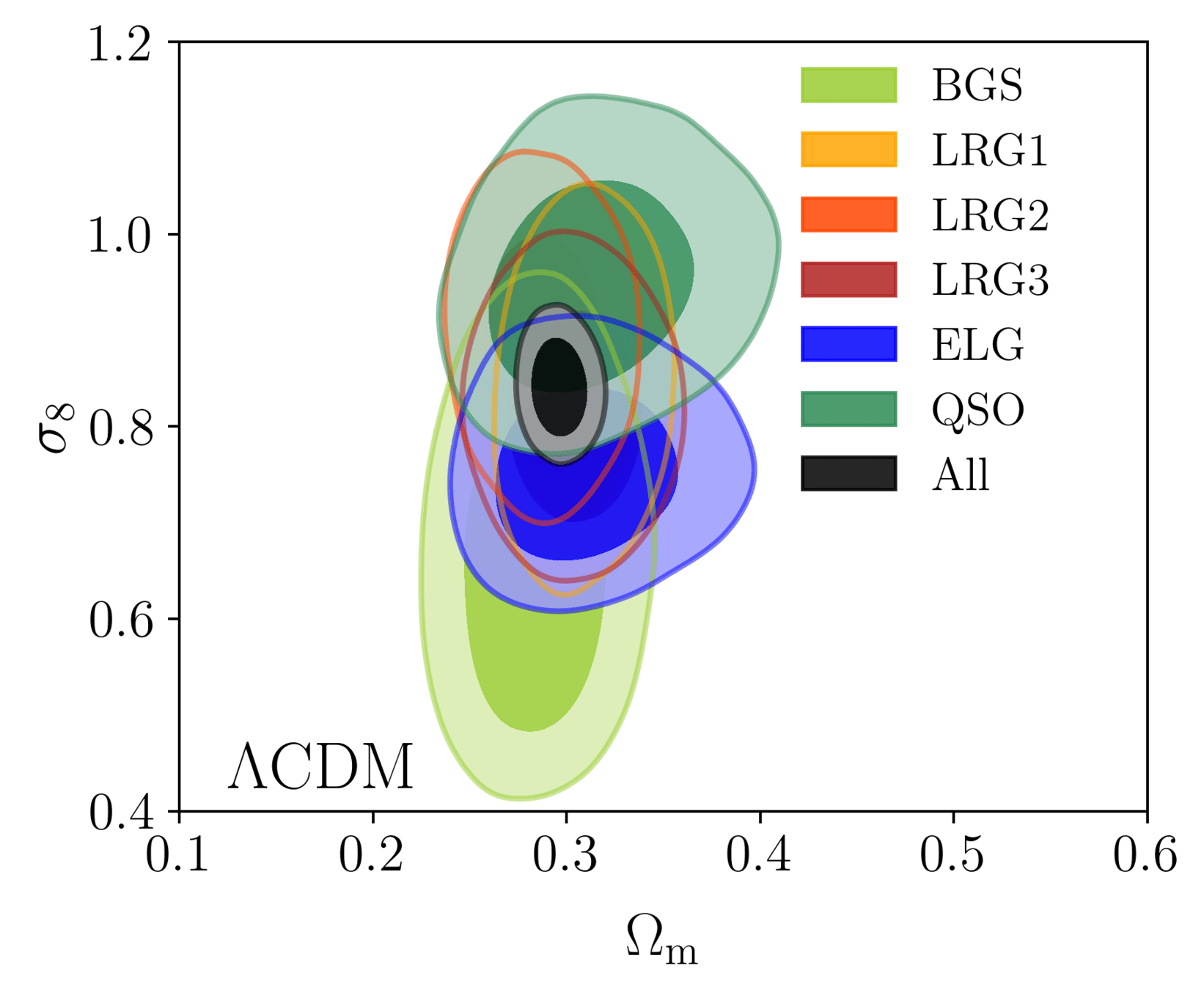
\(S_8\) constraints
- Consistency with SDSS
- In agreement with CMB
- Weak lensing prefers lower \(S_8\), but still consistent
\(S_8 = \sigma_8 (\Omega_\mathrm{m} / 0.3)^{0.5}\) best constrained by weak lensing surveys
Modified gravity constraints
Perturbed FLRW metric
\(ds^2=a(\tau)^2[-(1+2\orange{\Psi})d\tau^2+(1-2\orange{\Phi})\delta_{ij}dx^i dx^j]\)
At late times:
(mass) \(k^2\orange{\Psi} = -4\pi G a^2 \green{\mu(a,k)} \blue{\sum_i\rho_i\Delta_i}\)
(light) \(k^2(\orange{\Phi} + \orange{\Psi})=-8\pi G a^2 \green{\Sigma(a,k)} \blue{\sum_i\rho_i\Delta_i}\)
gravitational potentials
density perturbations
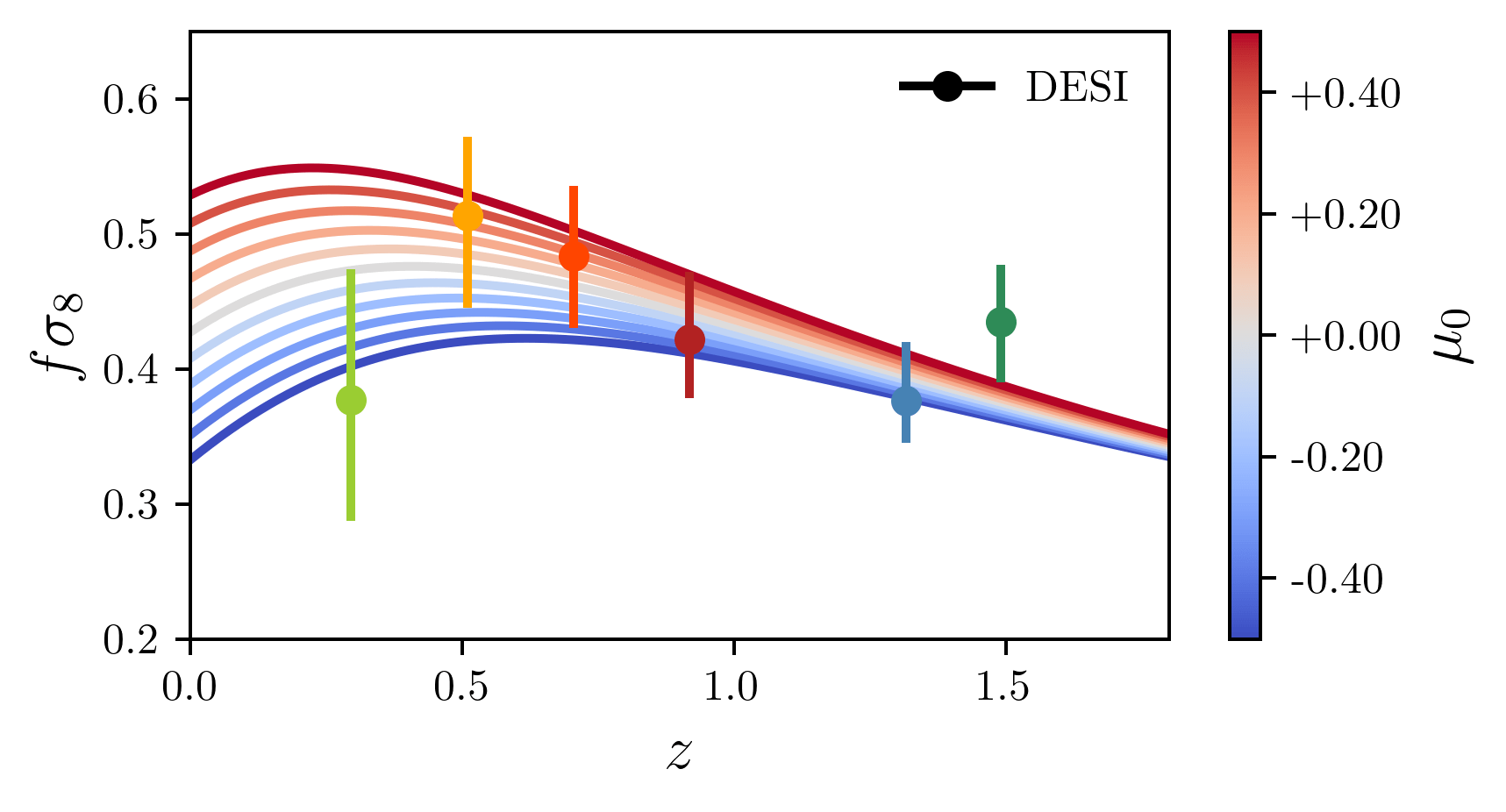
Modified gravity constraints
\(\Sigma_0\) constrained by
- CMB (ISW and lensing)
- galaxy lensing
compared to CMB-nl + DESY3 (3x2pt) only: \(\sigma(\mu_0) / 2.5\), \(\sigma(\Sigma_0) / 2\)
DESI constrains