Learning Data Science
Lecture 9
Deep Learning Techniques
f
Inputs
Outputs
In most cases, we will never be able to determine the exact function
ML: algorithms that approximate these complex, non-linear functions as well as possible, without manual intervention
What is ML?
Supervised
ML Algorithms
Unsupervised
Classification
Regression
Clustering
Dimensionality
⚠️ Overfitting and Underfitting
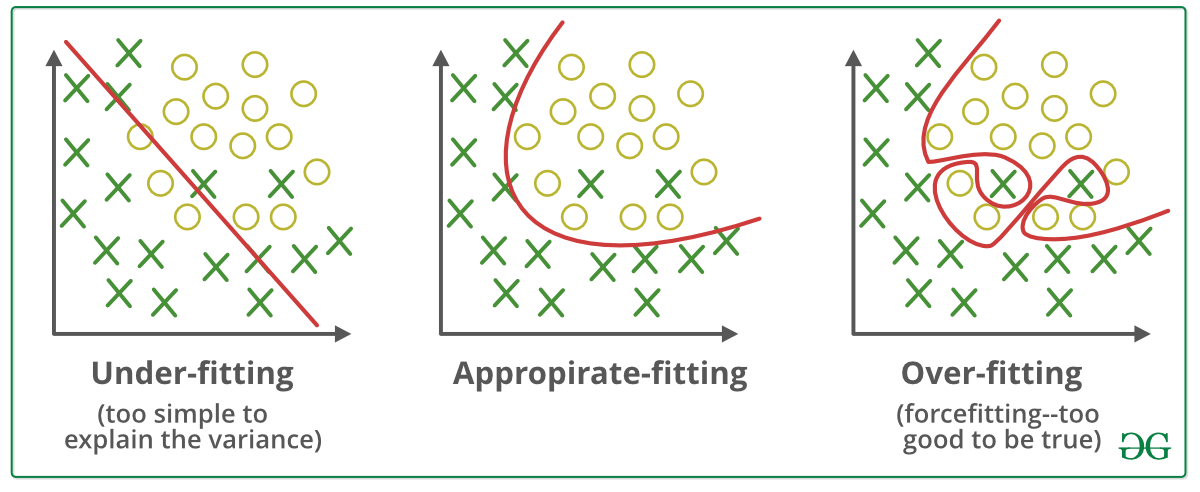
- Overfitting: learning hyper-specific patterns that won't recur in the future
- Underfitting: failing to capture important patterns
The standard pipline
- Gather your data
- Exploratory Data Analysis
- Cleaning and feature scaling
- Train/Test splitting
- Train model
- Evaluate model

Linear Regression
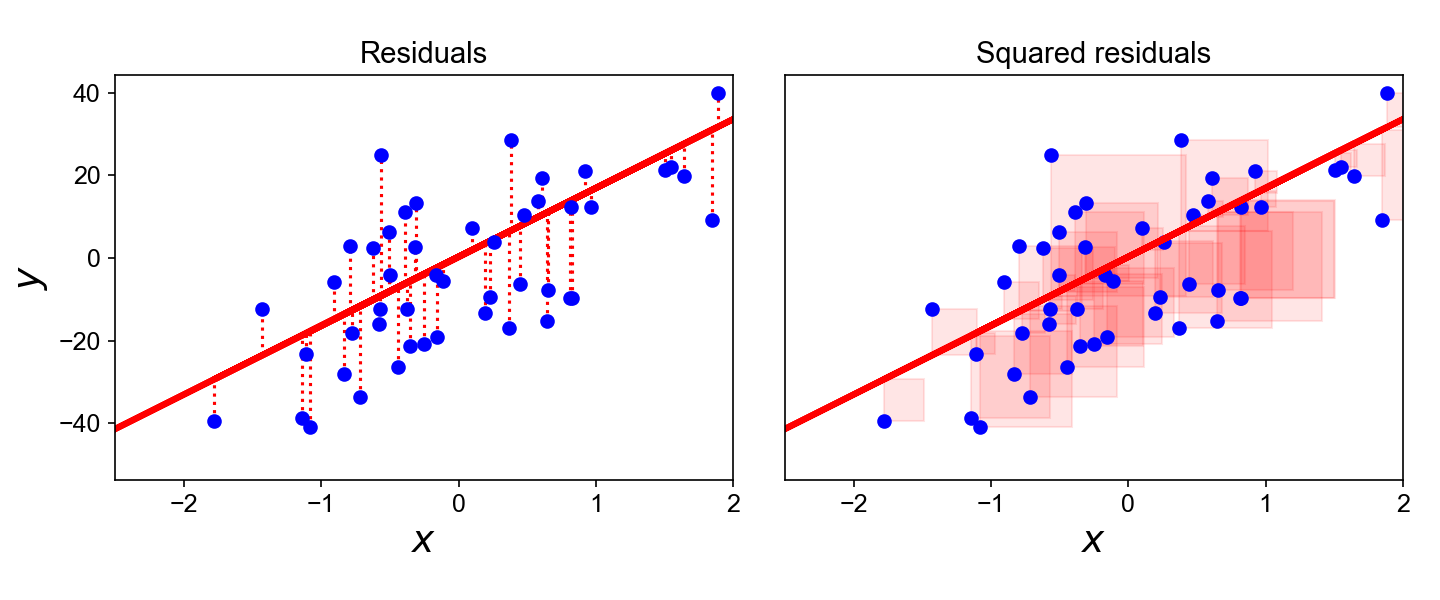
Usually has an analytical solution!
Supervised + Regression
Logistic Regression
Variant of linear regression for binary classification
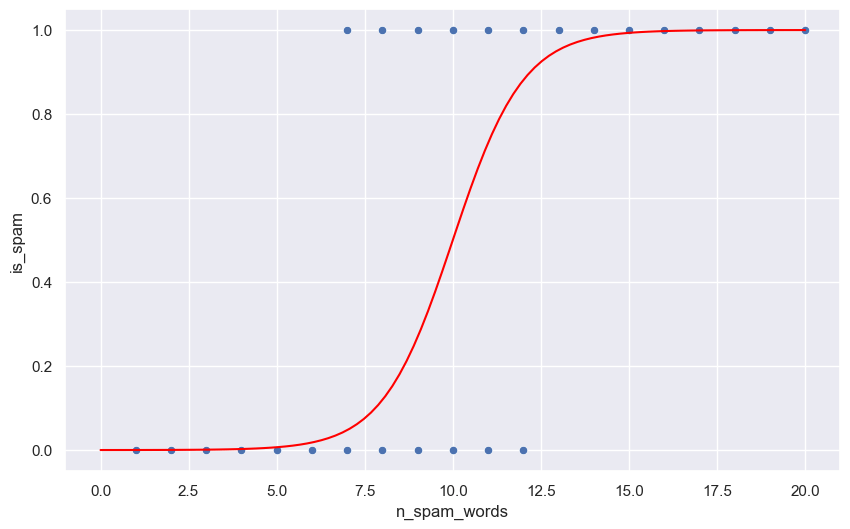
Supervised + Classification
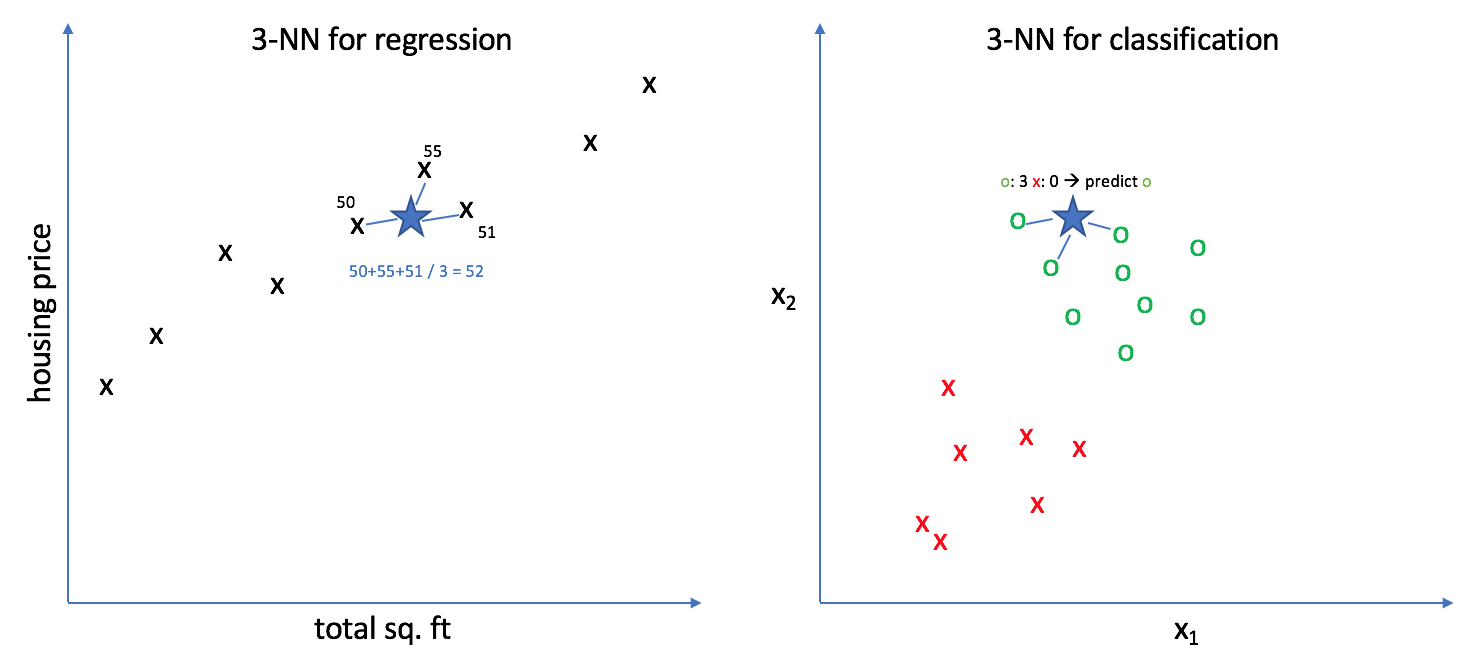
k-nearest neighbors
Supervised + Classification
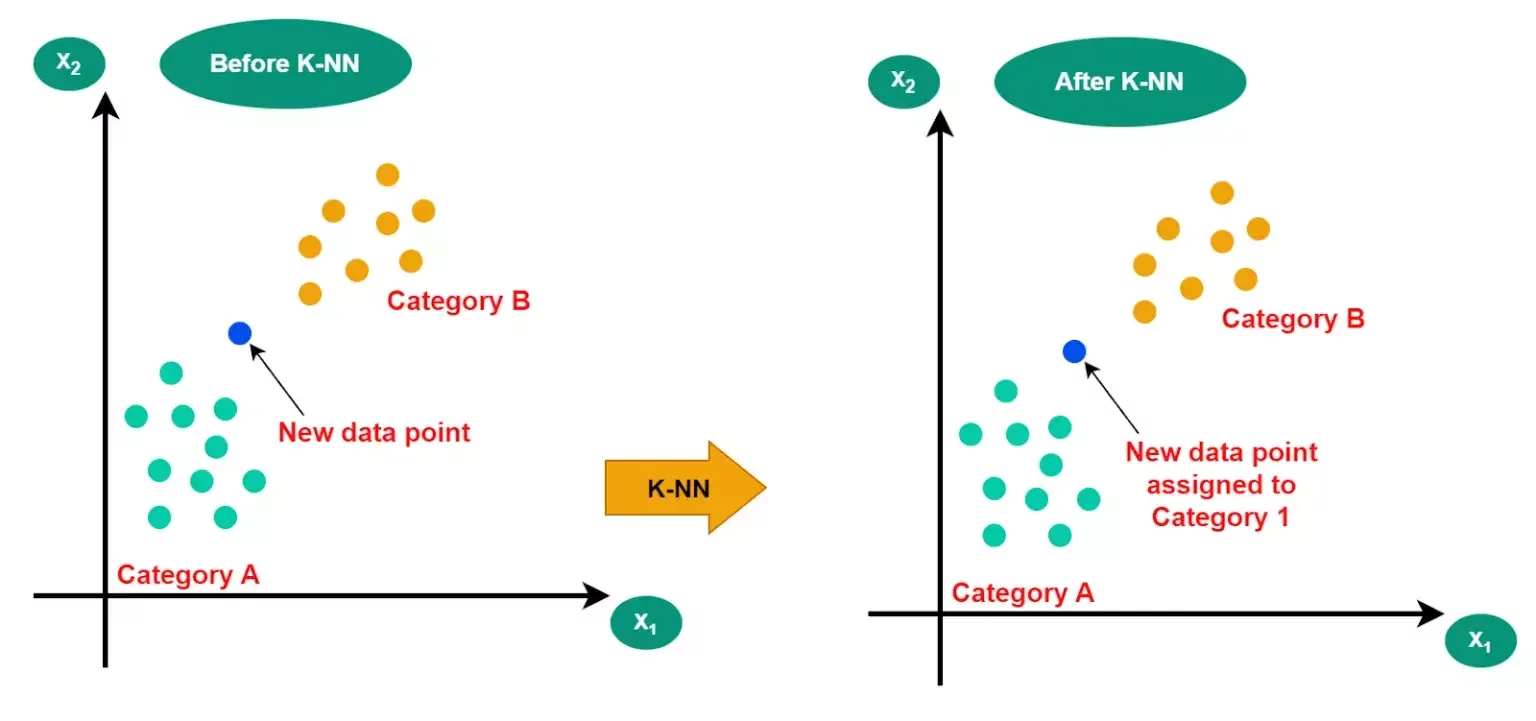
k-nearest neighbors
Supervised + Regression
k-means clustering
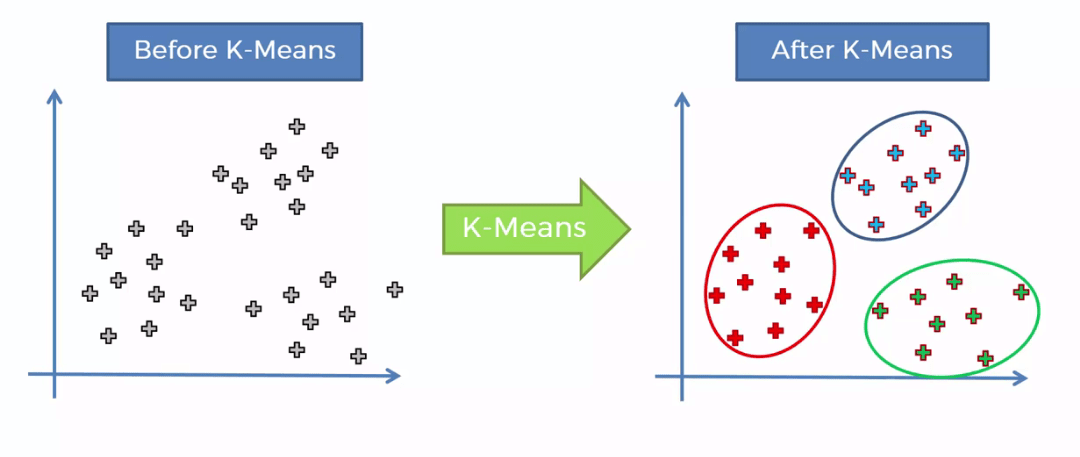
Unsupervised + Classification
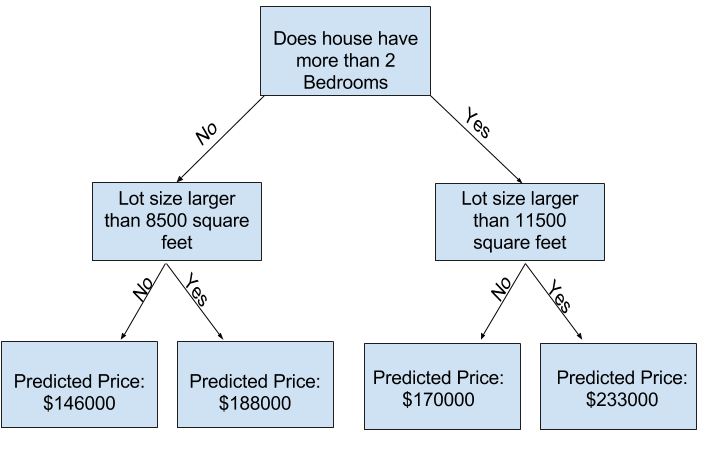
Decision Trees
Supervised + Regression/Classification
Random Forests
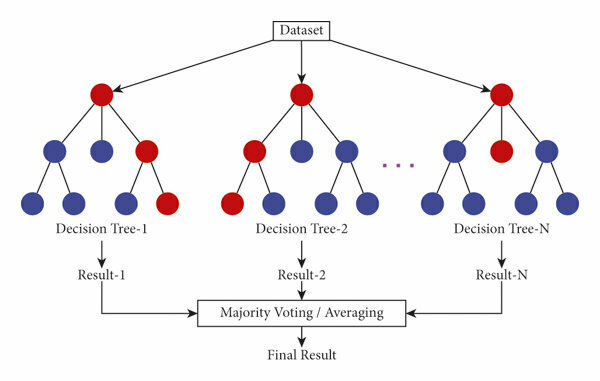
Supervised + Regression/Classification
✨ Ensemble ✨

Lecture 9
- Recap
- Deep Learning Intuition
- How Neural Networks learn
- Neural Nets from scratch
- Computer Vision with PyTorch
Animal


With more data, the more an algorithm can expand its worldview
Animal


The Mother Algorithm
for supervised deep learning
- Gather your labeled data
- Initialize the parameters of your model [randomly]
- Let your algorithm guess something
- Select some metric to tell the algorithm how wrong it is
- Update the parameters to reduce this error
Cost Model Intuition
Animals
Fruits
What is a simple cost model for this algorithm?
Cost Model Intuition
Animals
Fruits
for example:
Cost = N_errors / N_predictions
2/11 ~ 0.18
Cost Model Intuition
Animals
Fruits
ML ➡️ how do we reduce this cost as much as possible
✨optimization✨
f
Inputs
Outputs
Human brains are really good at doing these tasks, mainly due to our O(10^10) neurons
Now imagine a mathematical function with O(10^10) parameters....
671 billion Parameters
f
Inputs
Outputs
Lecture 9
- Recap
- Deep Learning Intuition
- How Neural Networks learn
- Neural Nets from scratch
- Computer Vision with PyTorch
How do Neural Networks Learn?
💫 Calculus
💫 Partial derivatives
The Loss Function
The loss function is some function which tells us how poorly our outputs predicted compared to the true values
Also called the "Cost Function"
f
Inputs
Predicted
Outputs
True
Labels
Partial derivatives allow us to understand one single parameter of our model affects the Loss function
💫 Partial derivatives
671 billion Parameters
pick one
💫 Partial derivatives
- If this derivative is positive, than an increase in w ➡️ increase in L
- If this derivative is negative, than an decrease in w ➡️ decrease in L
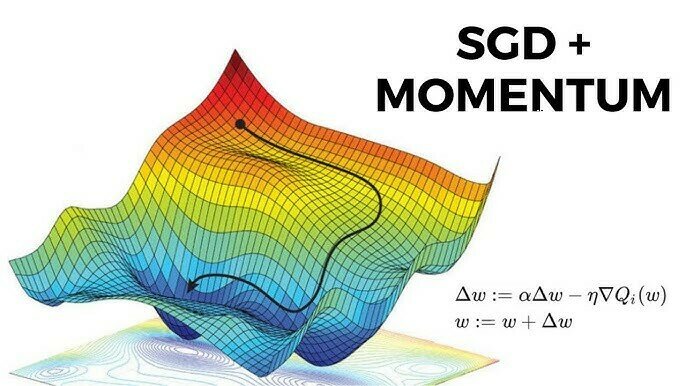
✨ The partial derivative of our Loss function tells us exactly how to fine-tune each parameter
💫 Partial derivatives
✨ The partial derivative of our Loss function tells us exactly how to fine-tune each parameter
This process is called Gradient Descent
🤓 Let's go to the blackboard!
Lecture 9
- Recap
- Deep Learning Intuition
- How Neural Networks learn
- Neural Nets from scratch
- Computer Vision with PyTorch
Time for live coding!
Notebook will appear on the Indico later.
Lecture 9
- Recap
- Deep Learning Intuition
- How Neural Networks learn
- Neural Nets from scratch
- Computer Vision with PyTorch
Pytorch
Open source deep learning framework
✨ Nearly all of the functions we just coded by hand are included

Pytorch
Open source deep learning framework
✨ Nearly all of the functions we just coded by hand are included
- supersets of all numpy functions that can work on GPUs
- activation functions
- loss functions
- automatic differentiation and backprop
- ...and that's just the beginning!
Pytorch
PyTorch Lightning

One layer on top of PyTorch!!

- Automatic training loops
- Checkpointing (ie you can stop and restart training from where you left off)
- Nice Logging
- Easy training on multiple GPUs or computers
uv add lightningValidation Dataset
Train Dataset
model learns patterns from it
Validation Dataset
judge model during training
Test Dataset
model is graded at the very end
Validation Dataset
Validation Dataset
judge model during training
From now on, let's try to also use validation datasets
- extra unseen data that you can keep using during training
- Monitor for over/underfitting
- Use for hyperparameter tuning
- Use for model selection
Let's code with PyTorch!
Convolutional Neural Networks (CNN)
in a nutshell
Convolutional Neural Networks
A type of NN which specializes in computer vision
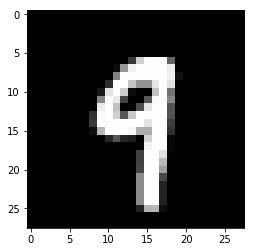
We want to extract new features from the images in a way that encodes spatial information as well
Convolutional Neural Networks
A type of NN which specializes in computer vision
We want to extract new features from the images in a way that encodes spatial information as well
✨ Dimensionality Reduction
Convolutional Neural Networks
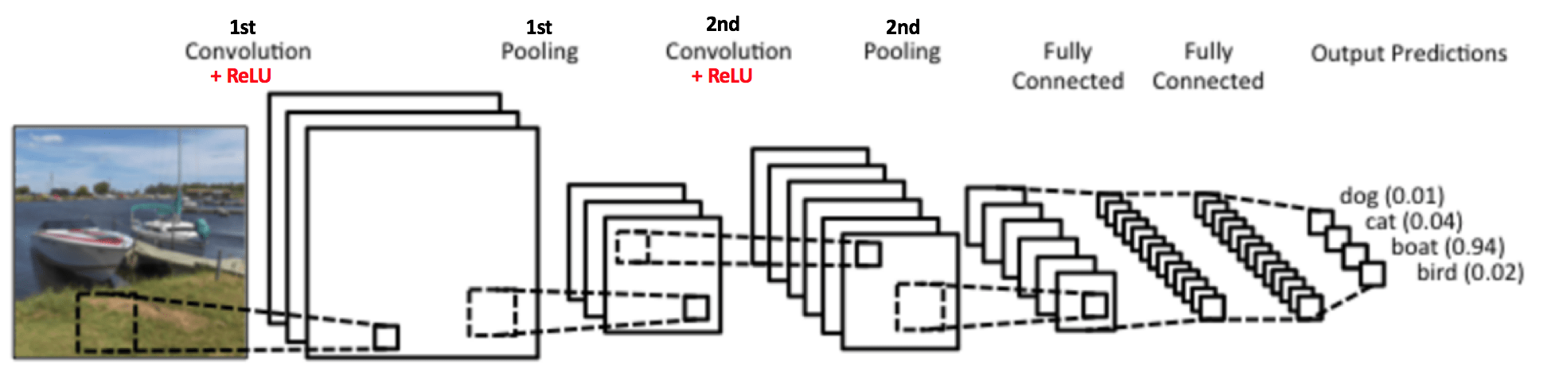
A good recipe:
- Input
- Convolution(s)
- Activation Function
- Pooling
- Repeat one or more times
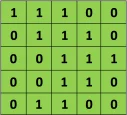
Example image

A cute 3x3 matrix
the convolution of the two
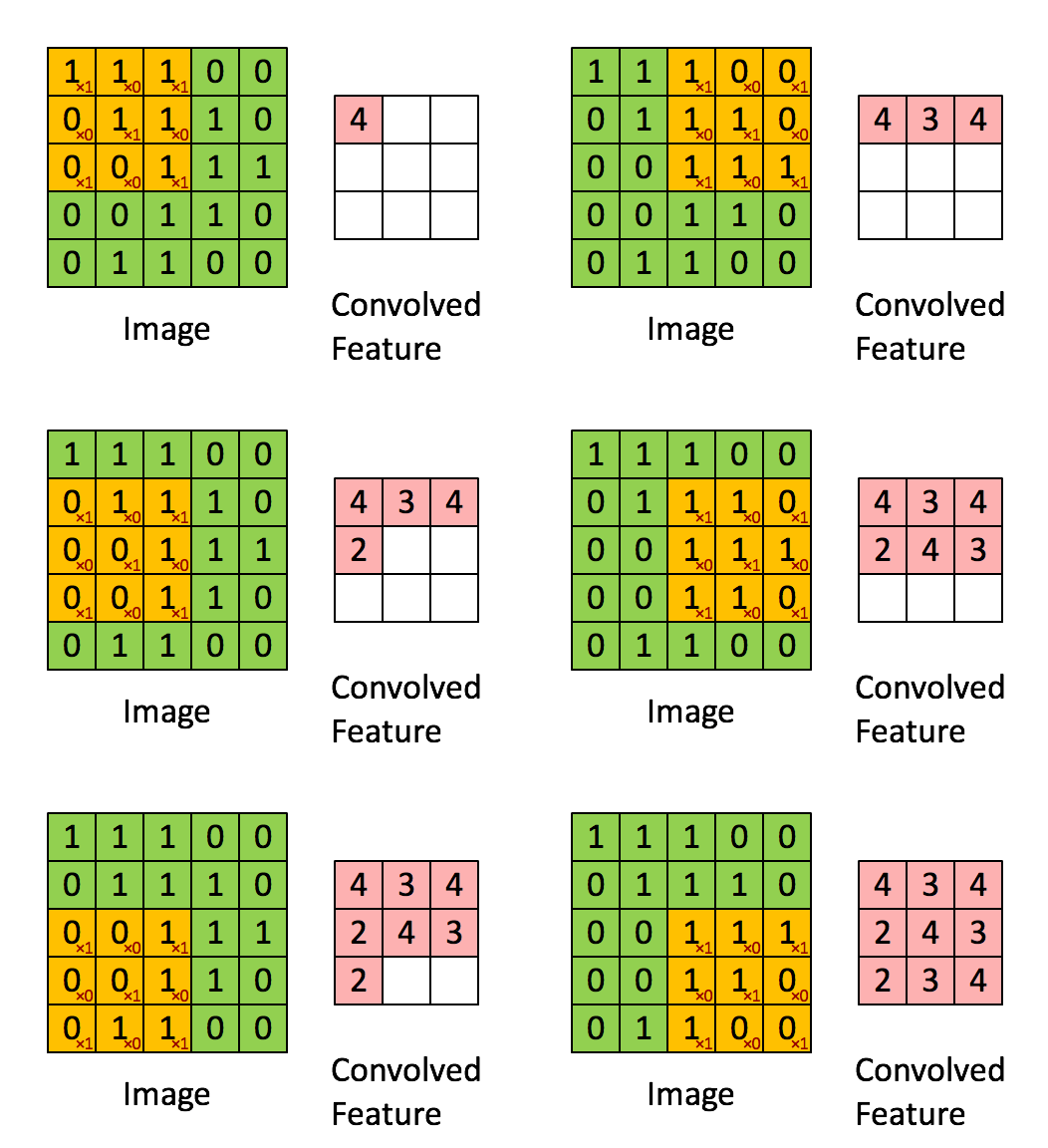
Convolutions
Convolutions
Act like filters on an image!

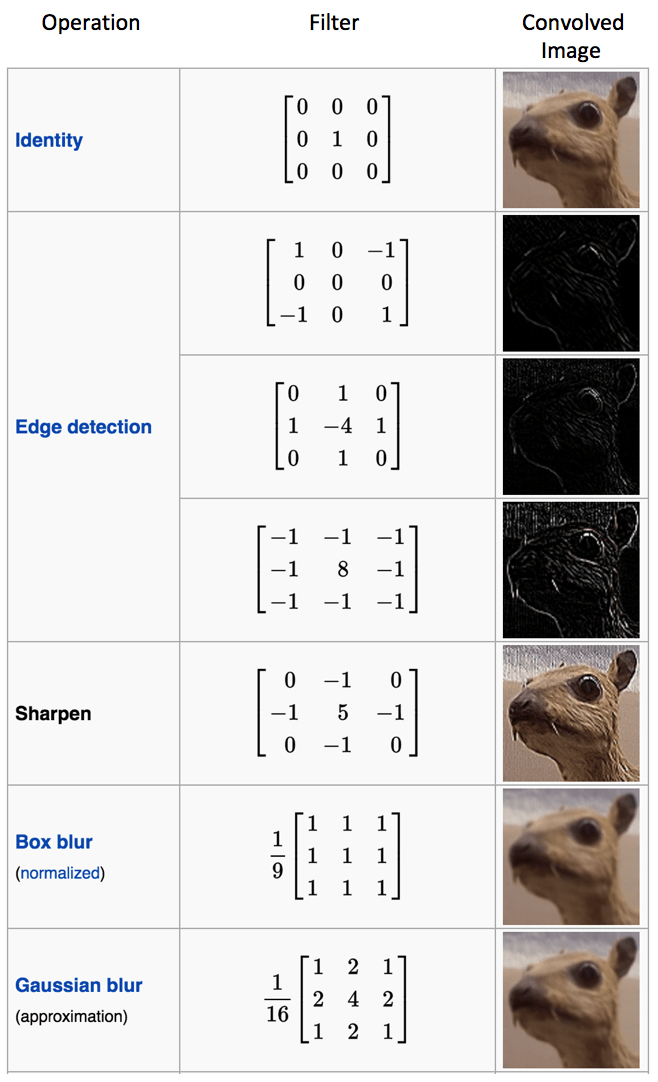
Convolutions
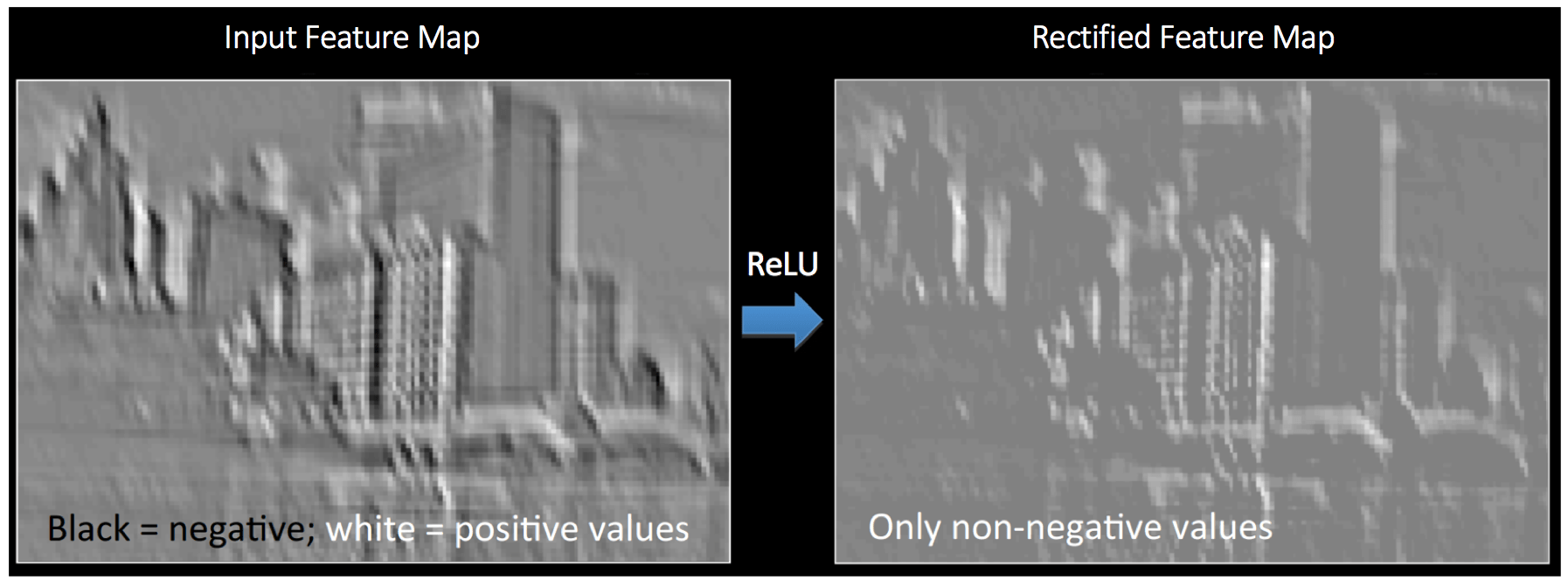
Then apply an activation function
to add non-linearity
Pooling
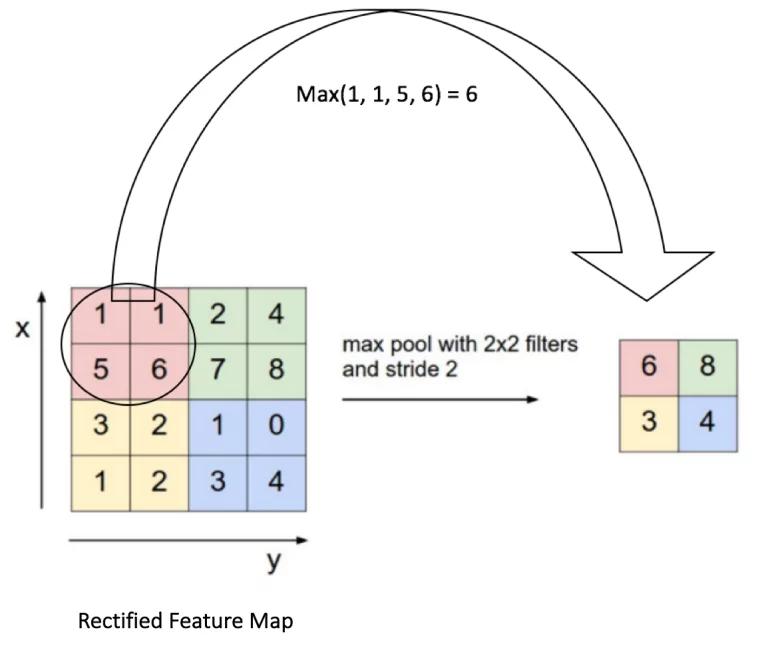
- use some function to combine neighboring groups of pixels
- E.g Max Pooling
- Just take the maximum pixel value from a window
Pooling
Why?
- Reduce the number of input features making training more manageable
- Fewer parameters helps avoid overfitting
- Adds invariance to small local distortions, transformations, or translations
- Can add scale invariance as well
Fully connected layers
- Lastly, use the highly reduced feature sets as inputs to a fully-connected NN.
- Exactly like the one we just created from scratch!
- A cheap way of learning non-linear combinations of our features
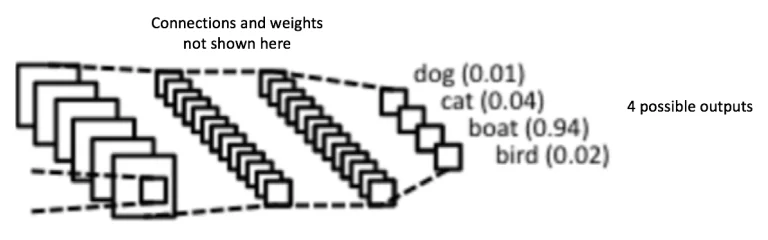
The full picture
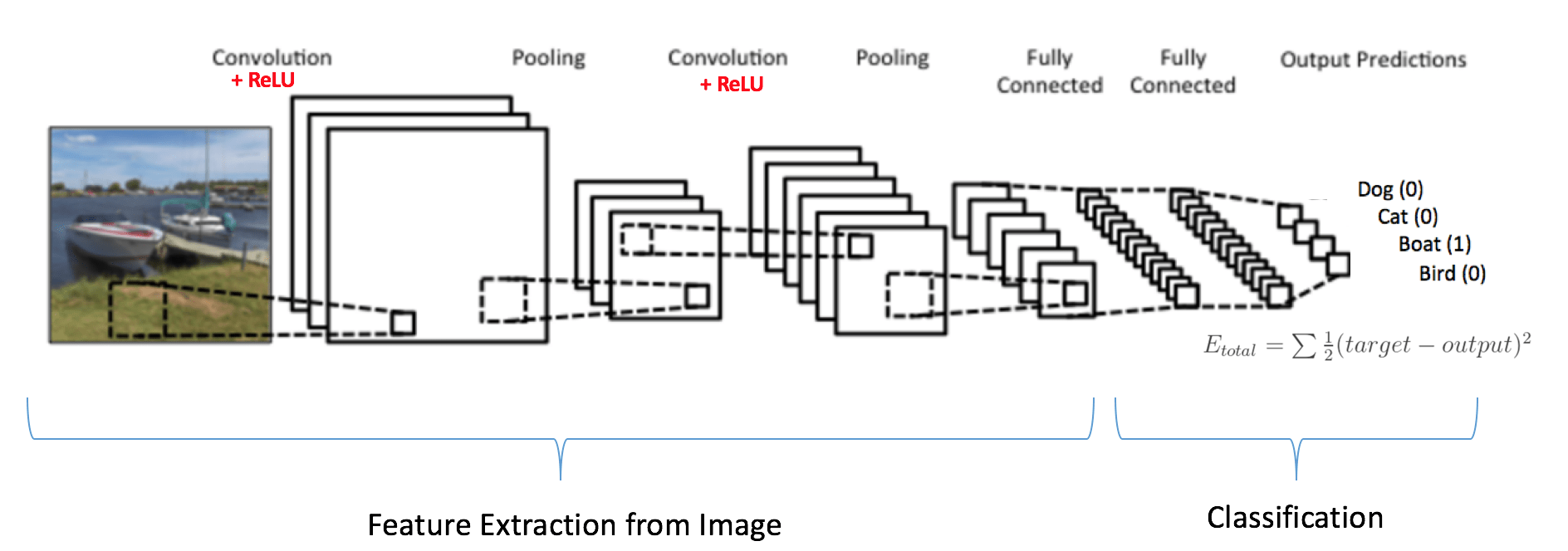
The full picture
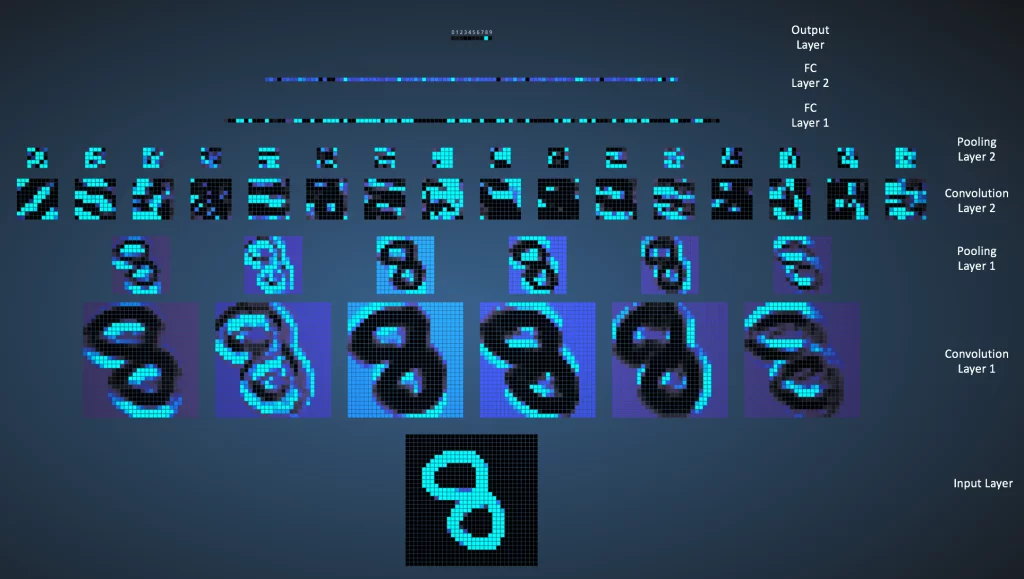
Let's code!
Lecture 9
- Recap
- Deep Learning Intuition
- How Neural Networks learn
- Neural Nets from scratch
- Computer Vision with PyTorch
The End