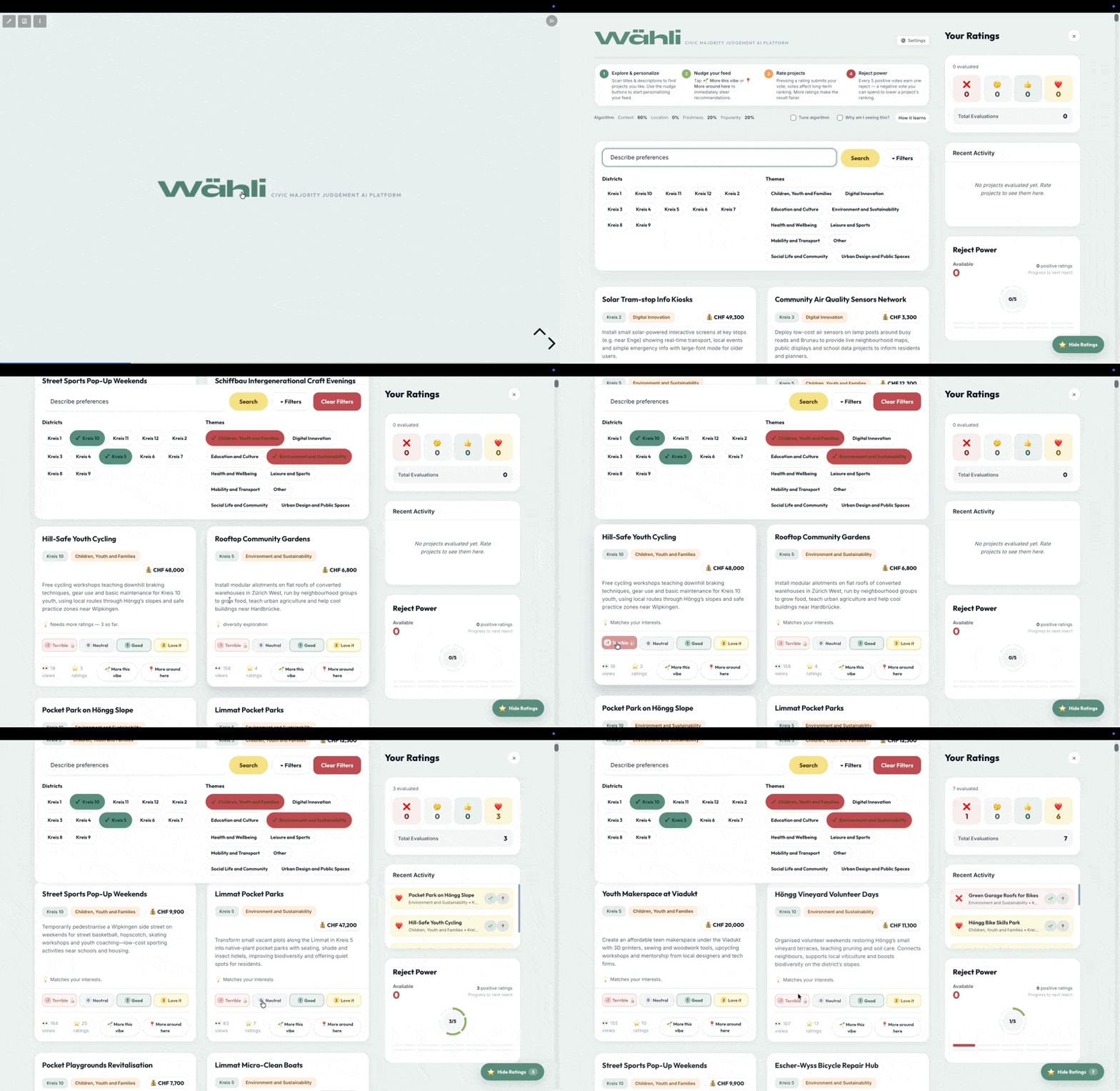
Fair Feed Ranking for Participatory Budgeting
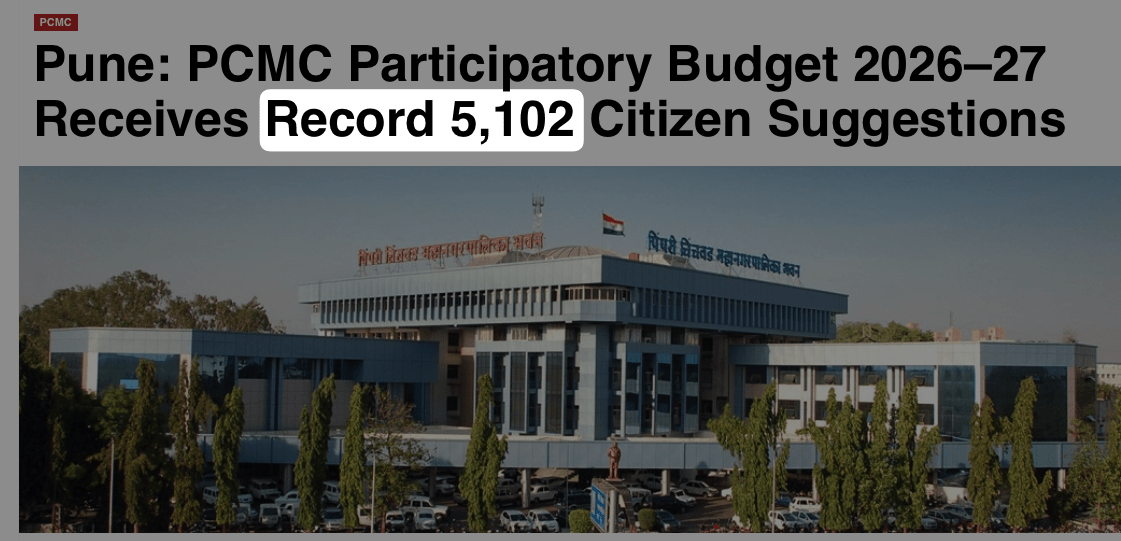
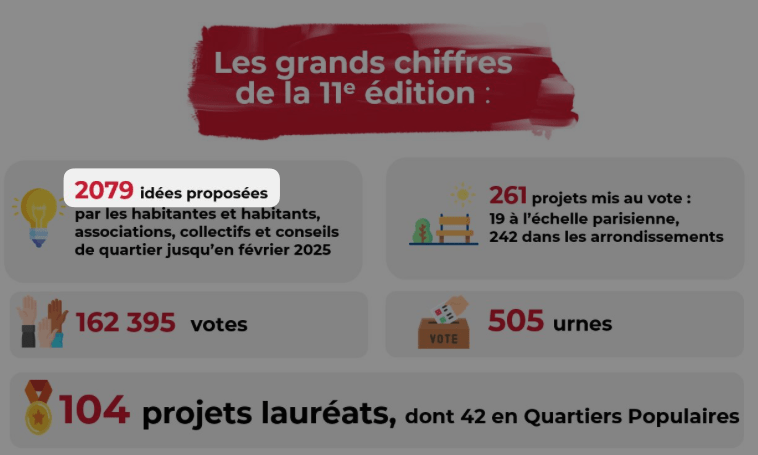

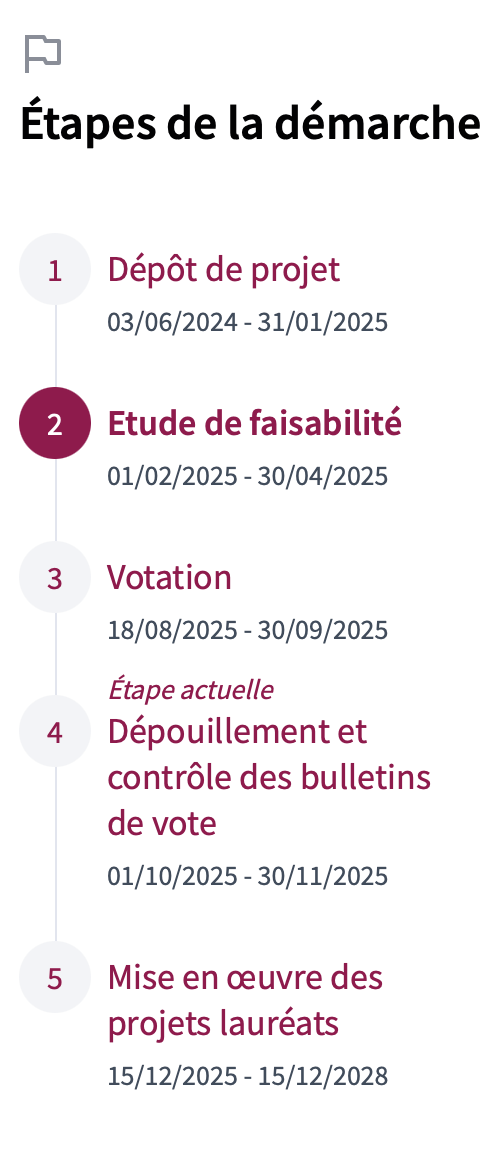
Pour cette édition 2025,
261 idées sont soumises au vote

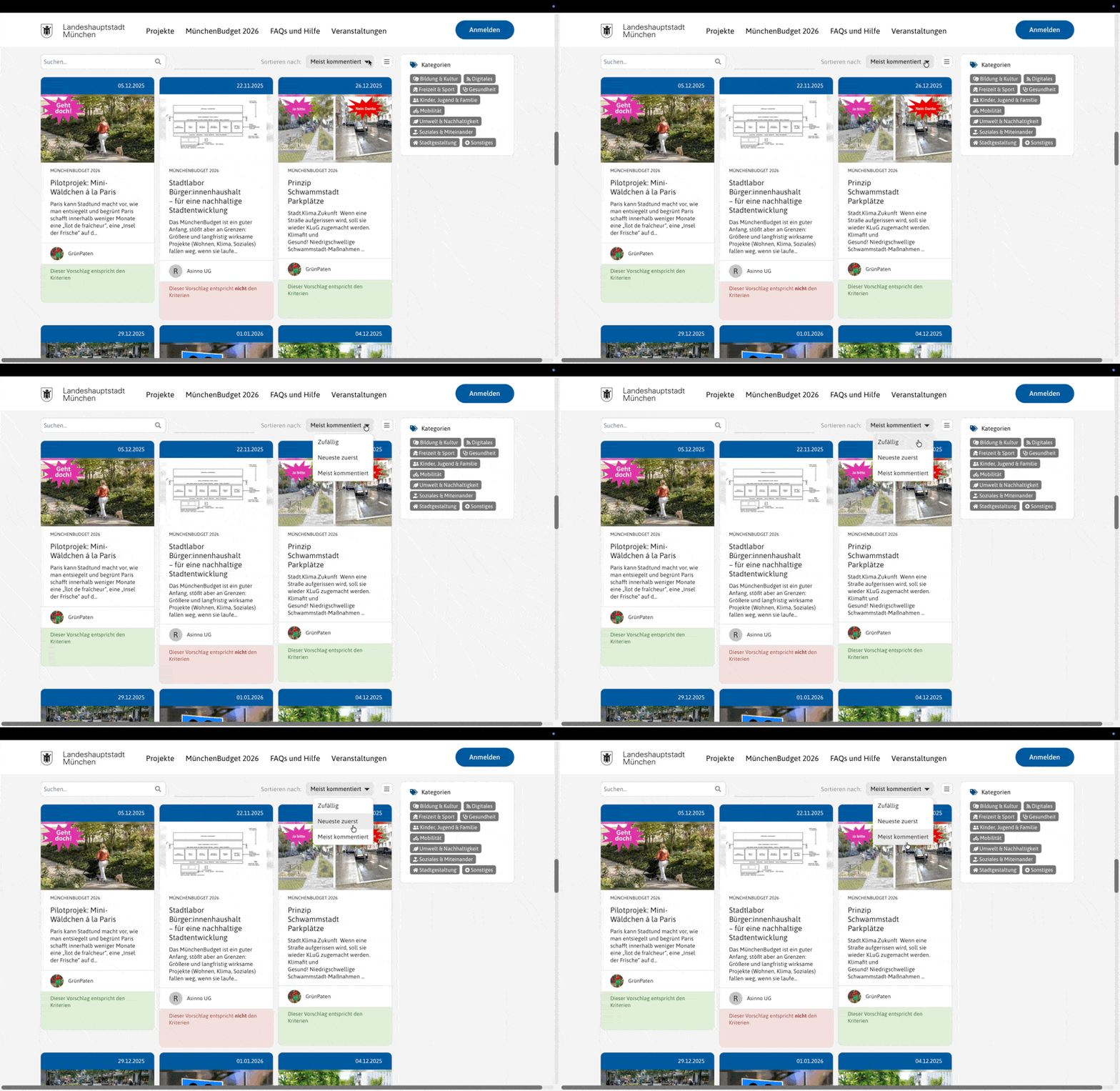
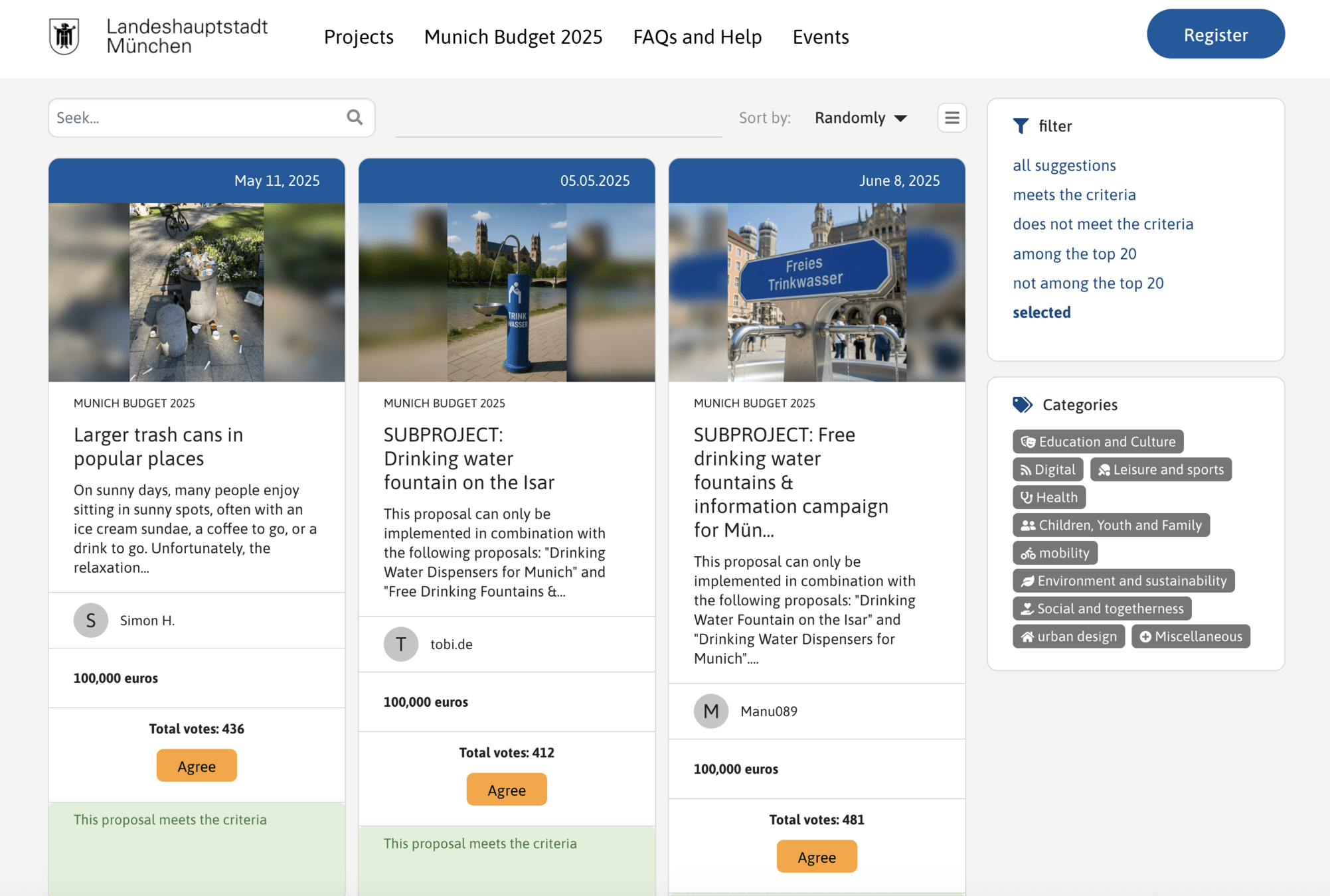
rudimentary sorting capabilities
rudimentary sorting capabilities
= built-in bias
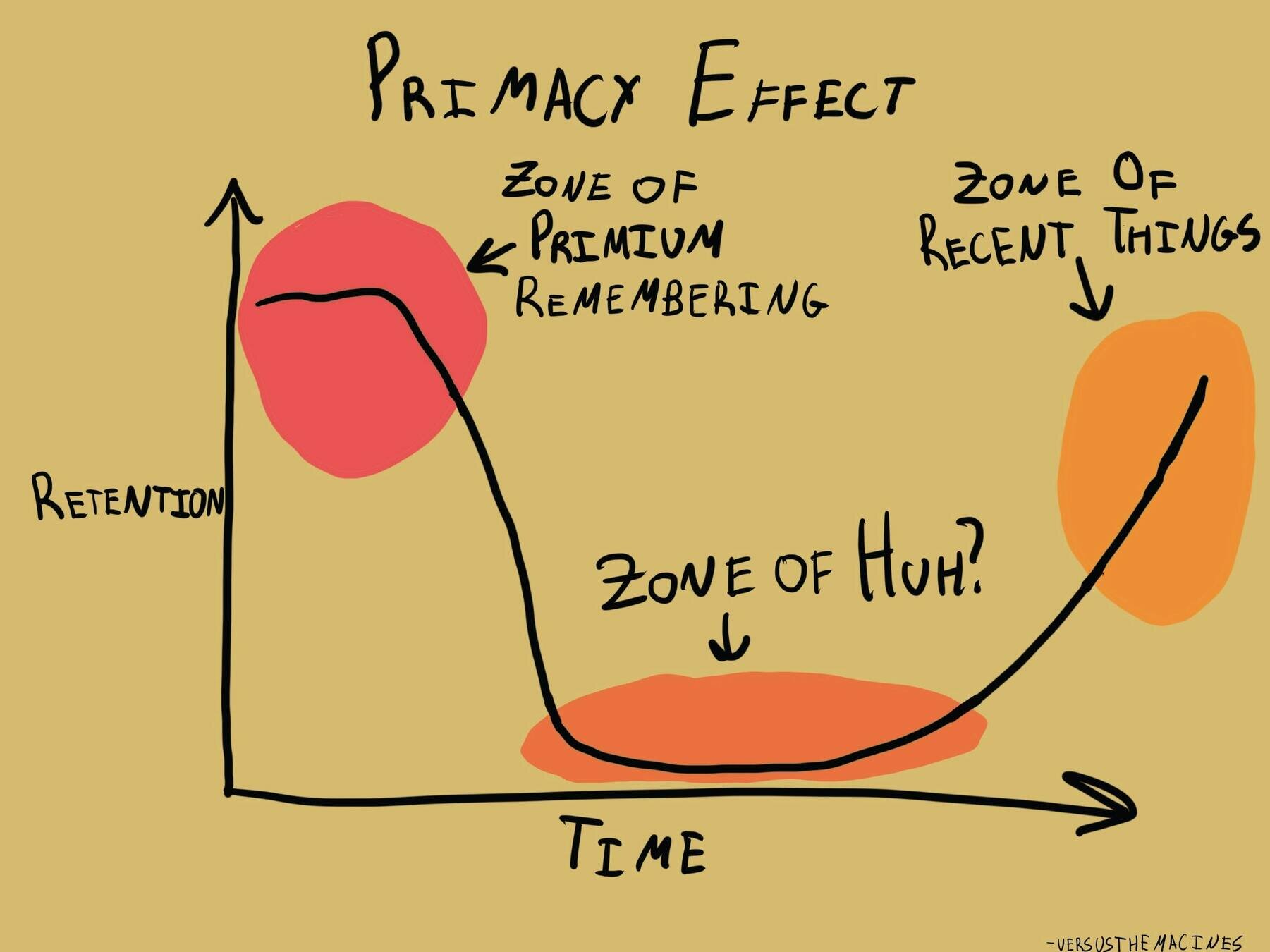
Voters come for their friend's backyard bench idea, vote yes, and leave.
Voters come for their friend's backyard bench idea, vote yes, and leave.
AI recommendations drive 35% of Amazon revenue

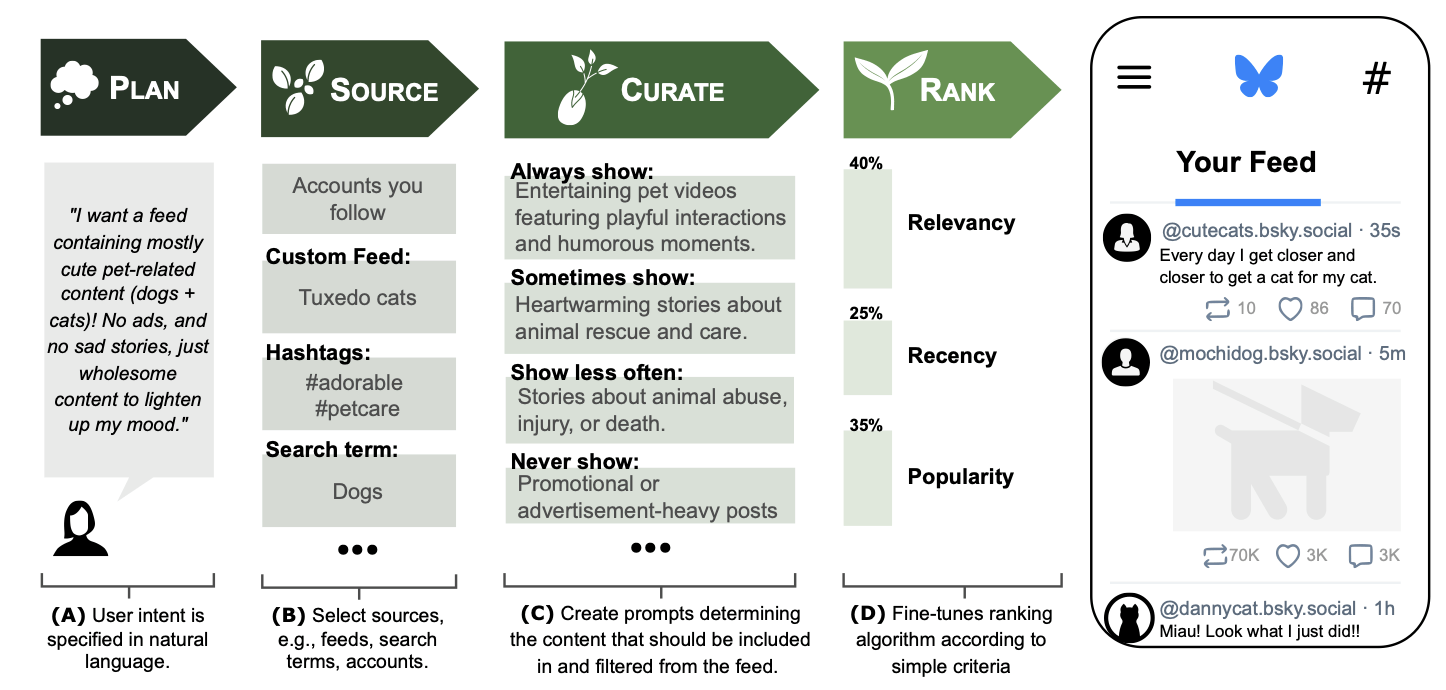
Could recommendation systems help citizens discover projects they care about —
without manipulating their vote?
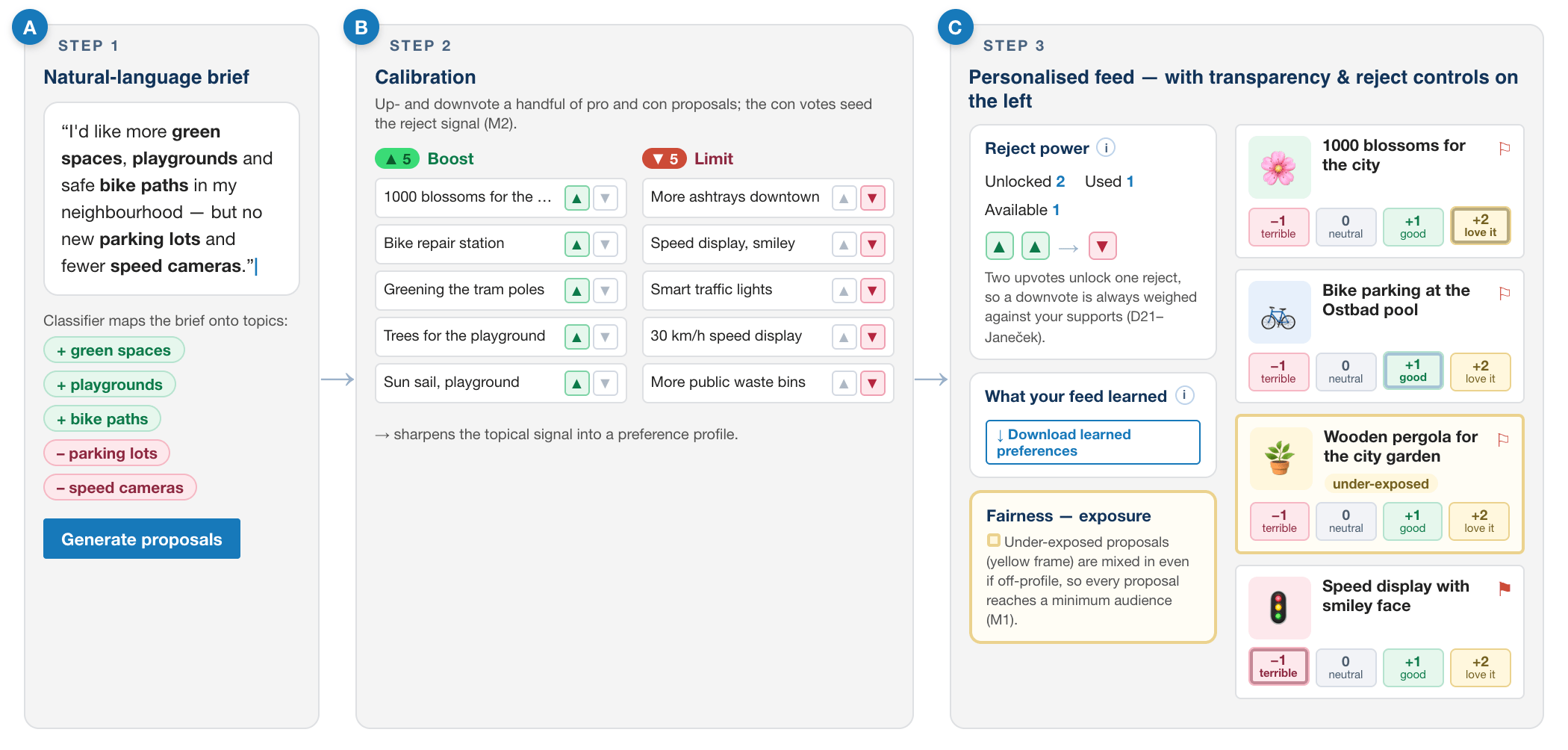
FairFeed
Negative Voting
Negative Voting
is widespread in civic participation.

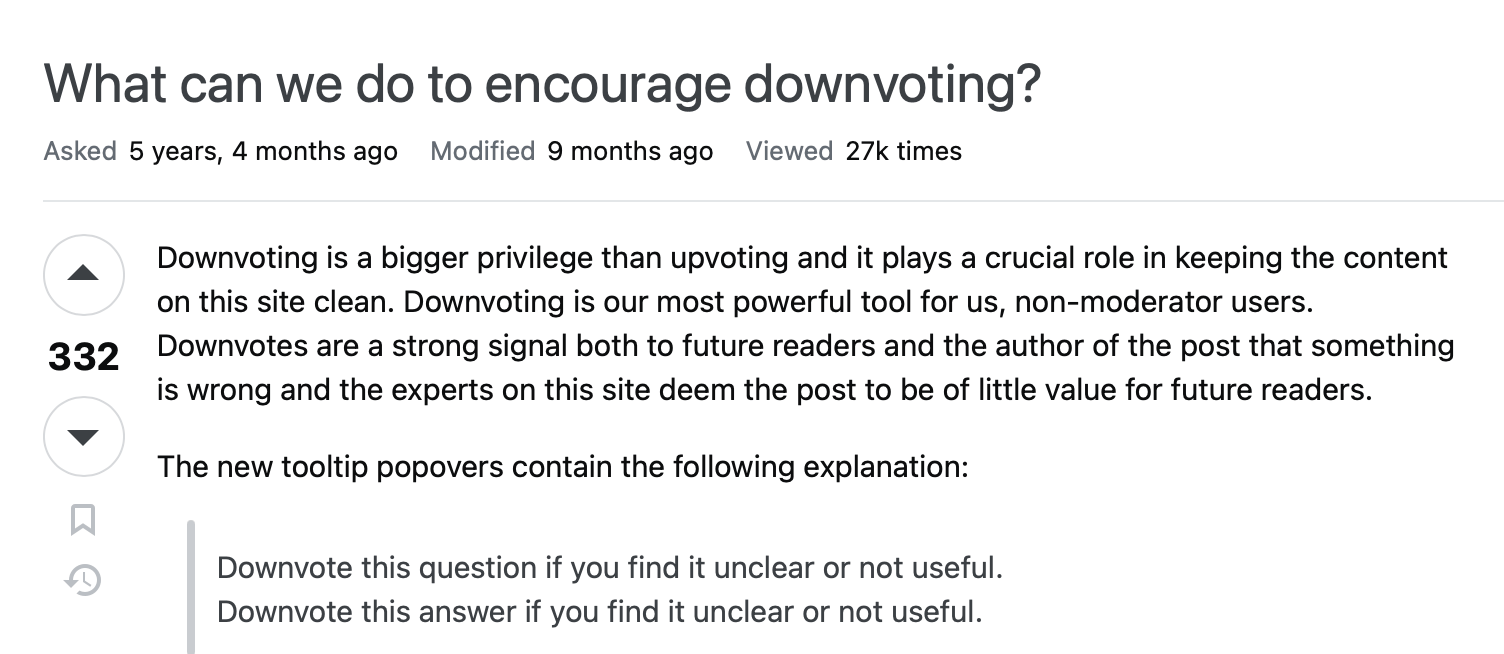
Downvoting on Social Media
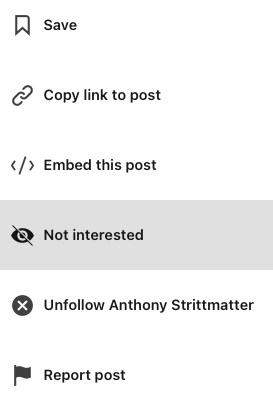
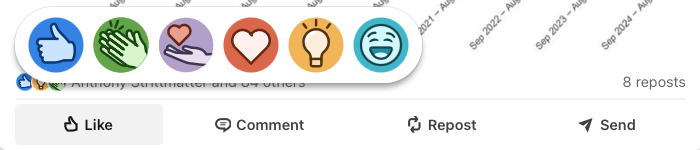

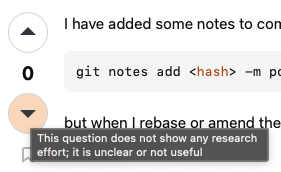



- On Spotify, skips can be interpreted as negative feedback.
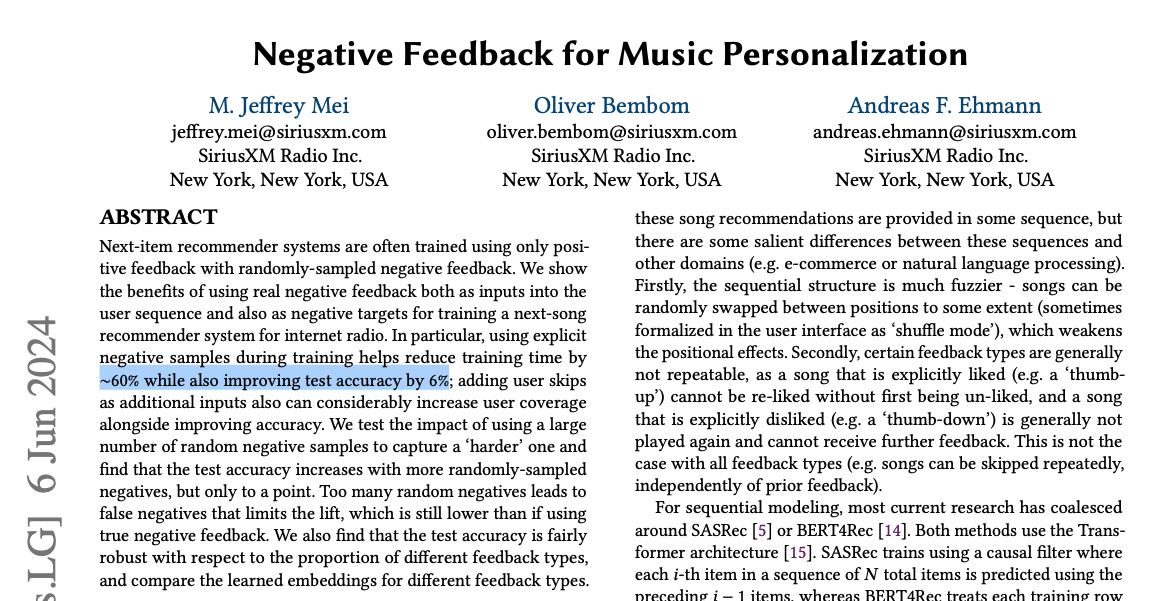
- Using negative feedback during training
- reduced the training time by 60%
- improved accuracy by 6%
Downvoting on Social Media
- Negative voting and flagging are omnipresent.
- They appear to be particularly effective for navigating a vast array of options.
Could this be also usefull for PB?
Project Goals
1. Quantify the extent of harm done through the bad interface/sorting.
2. Properly simulate the effects of FairFeed.
3. Test FairFeed in a controlled online/lab experiment.
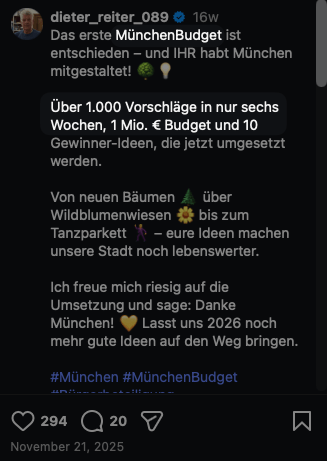
MünchenBudget 2025 and 2026
1. Harm done
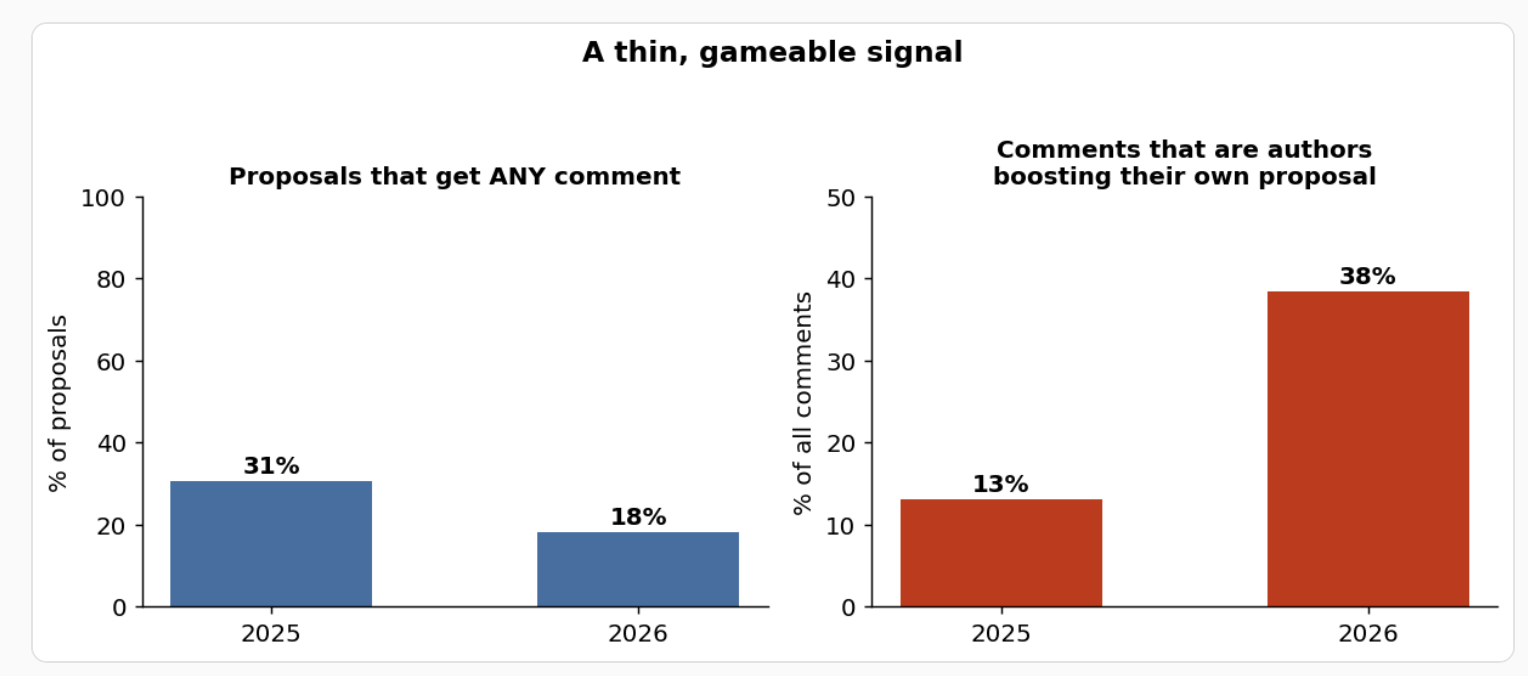
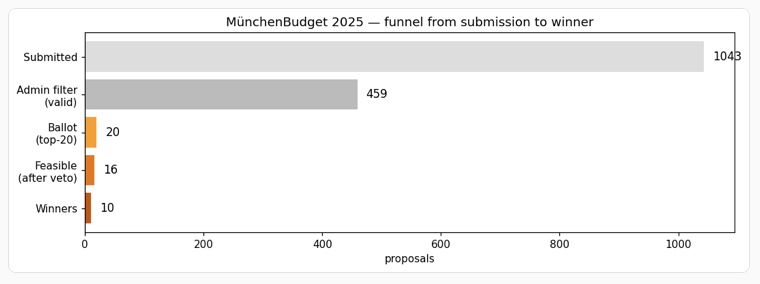
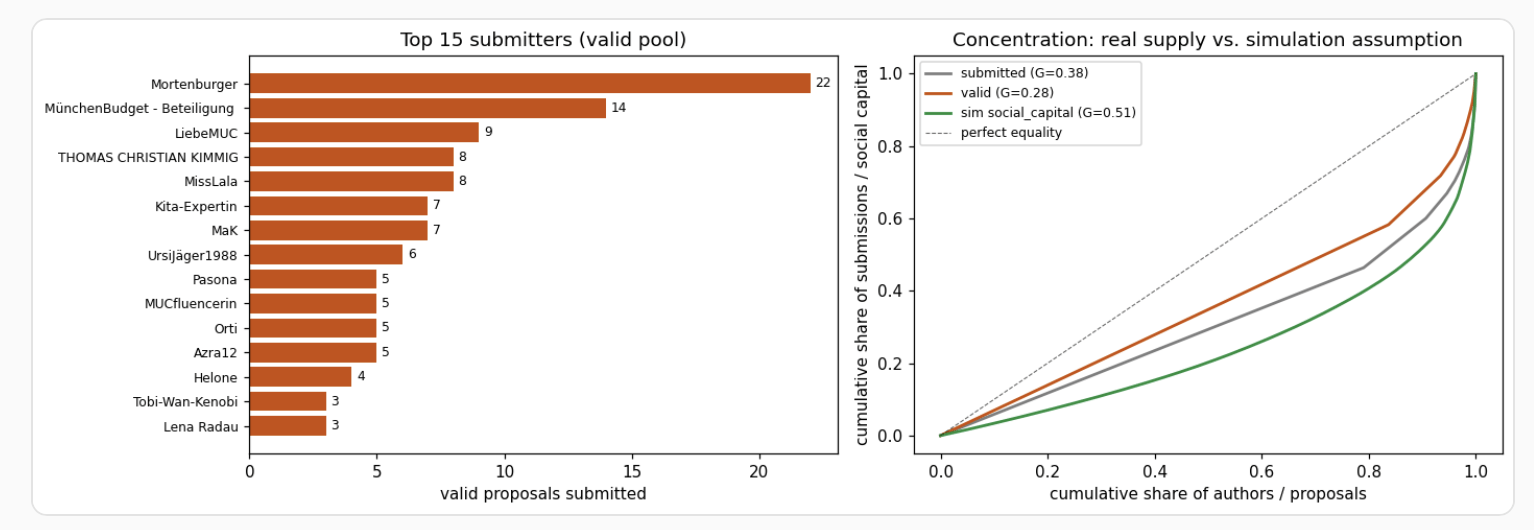
Auditing more cities (Paris, Barcelona, Valencia) would be interesting!
2. Simulation
We used the Munich data (1k proposals, 7k voters etc.) & academic literature (which distributions for attention decay) to calibrate the model.
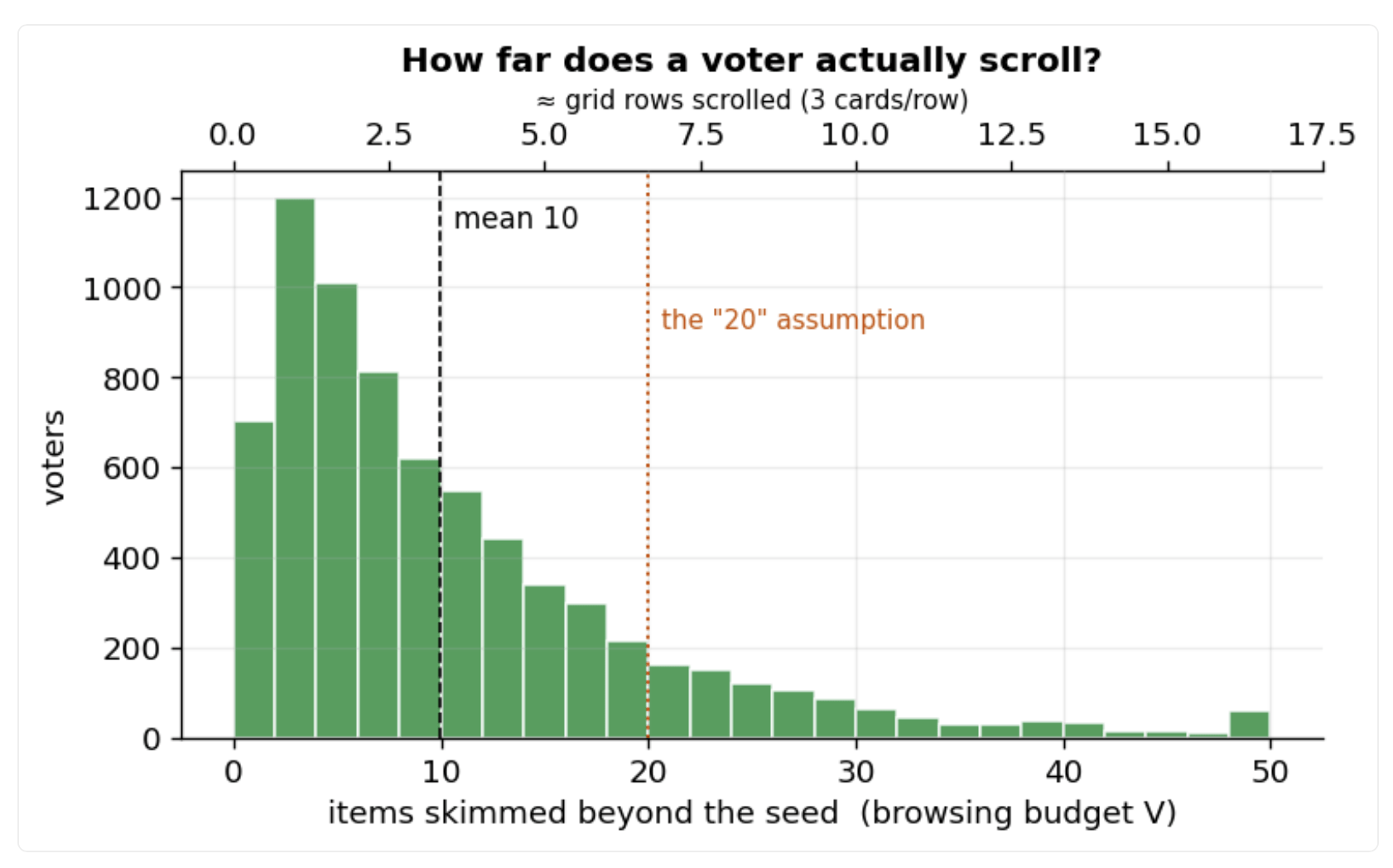
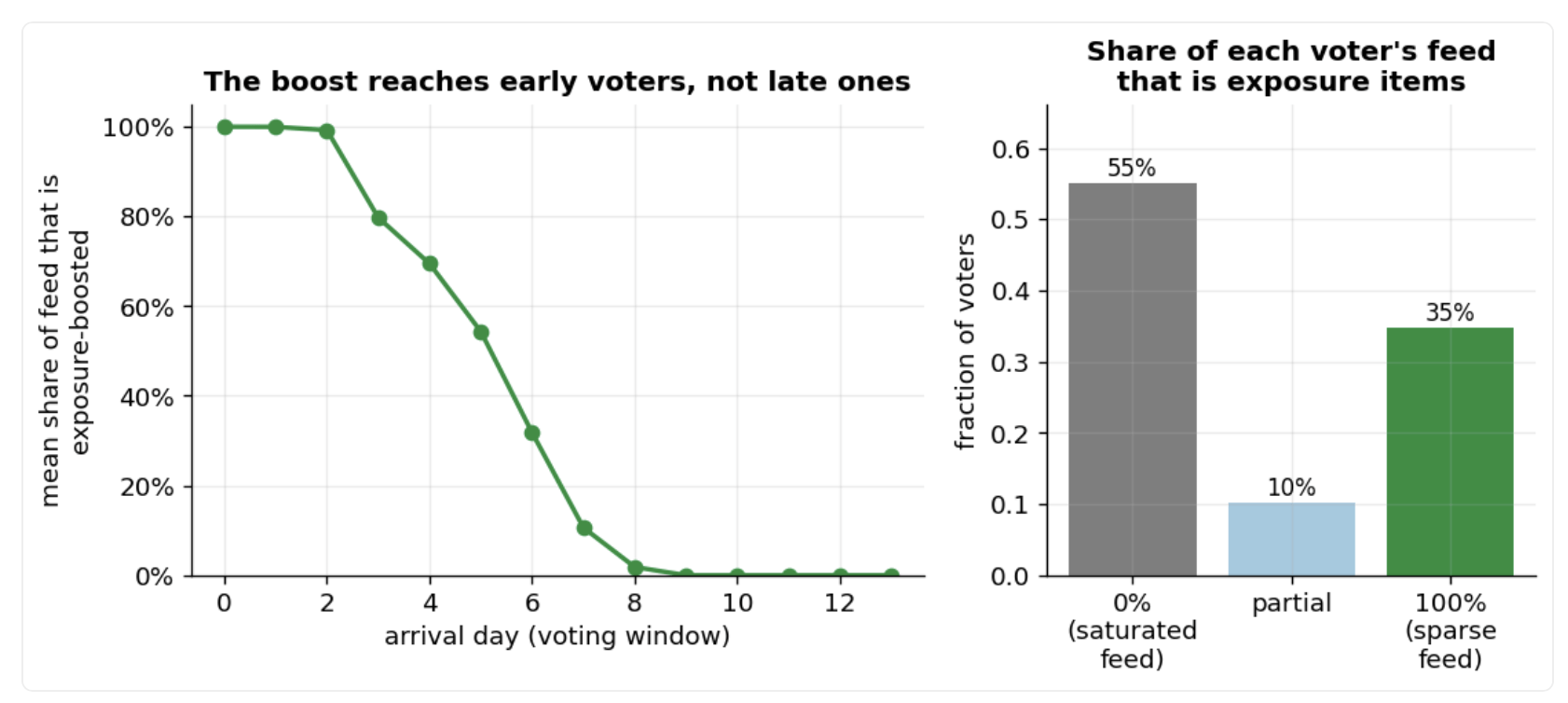
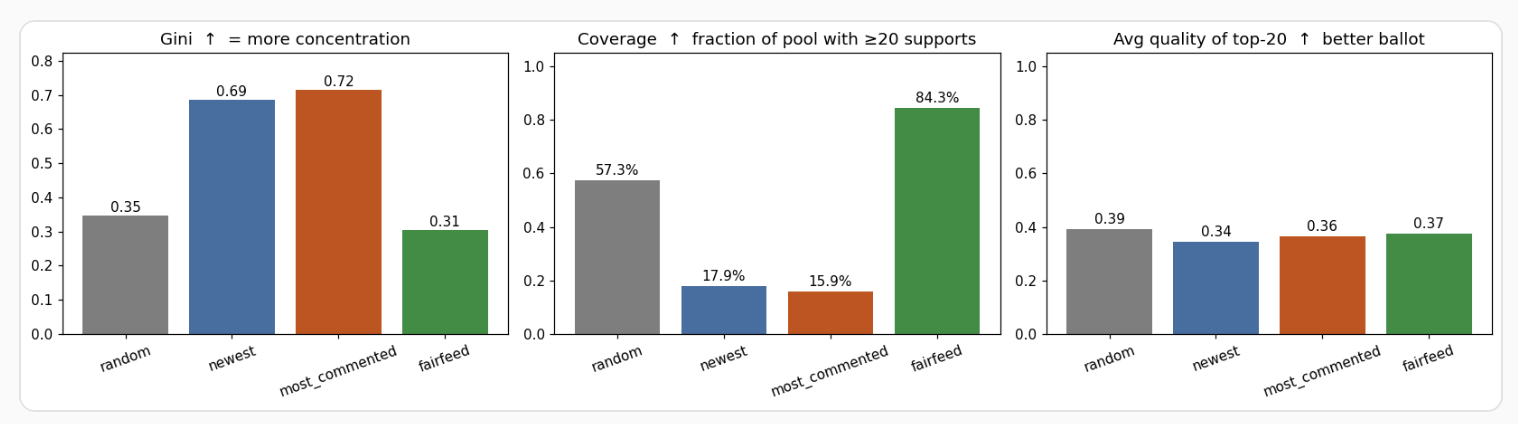
Adding robustness and bounds would be interesting.
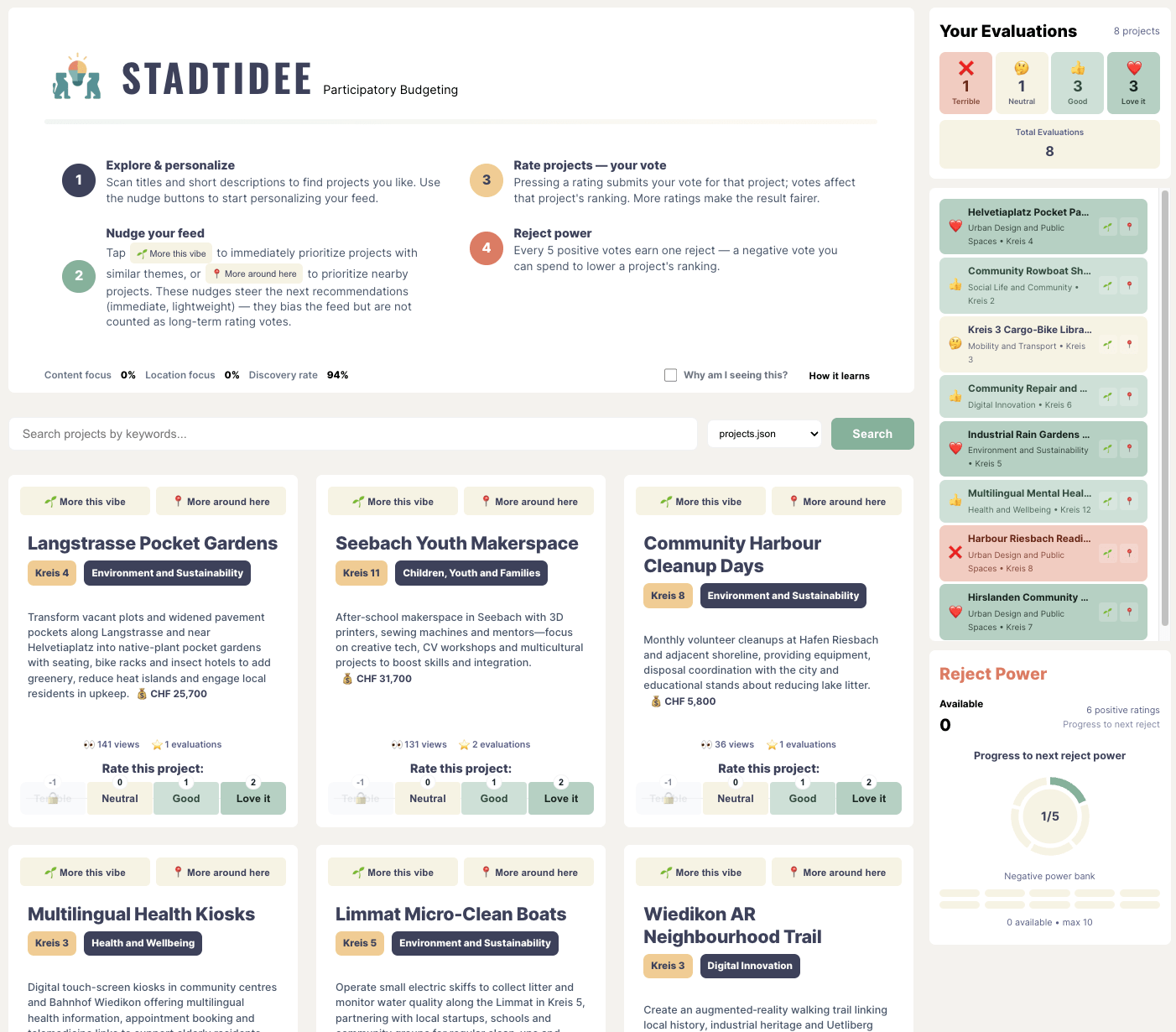
We have a first version....
3. User study
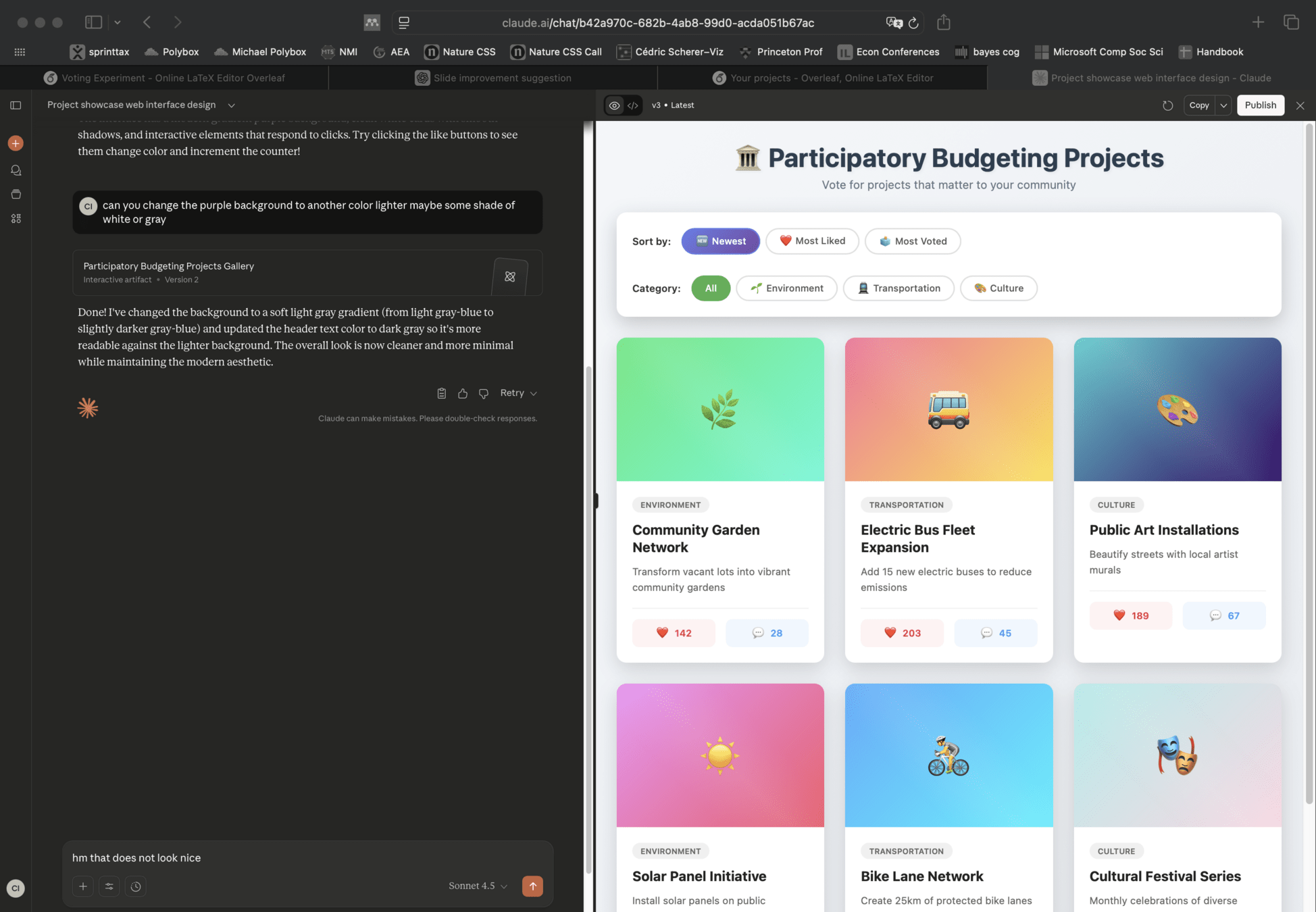
... but the UI looks bad. You could improve it.
Additional interesting questions
- is 2:1 the perfect ration? What does it depend on?
- How to best calibrate the recommender itself?
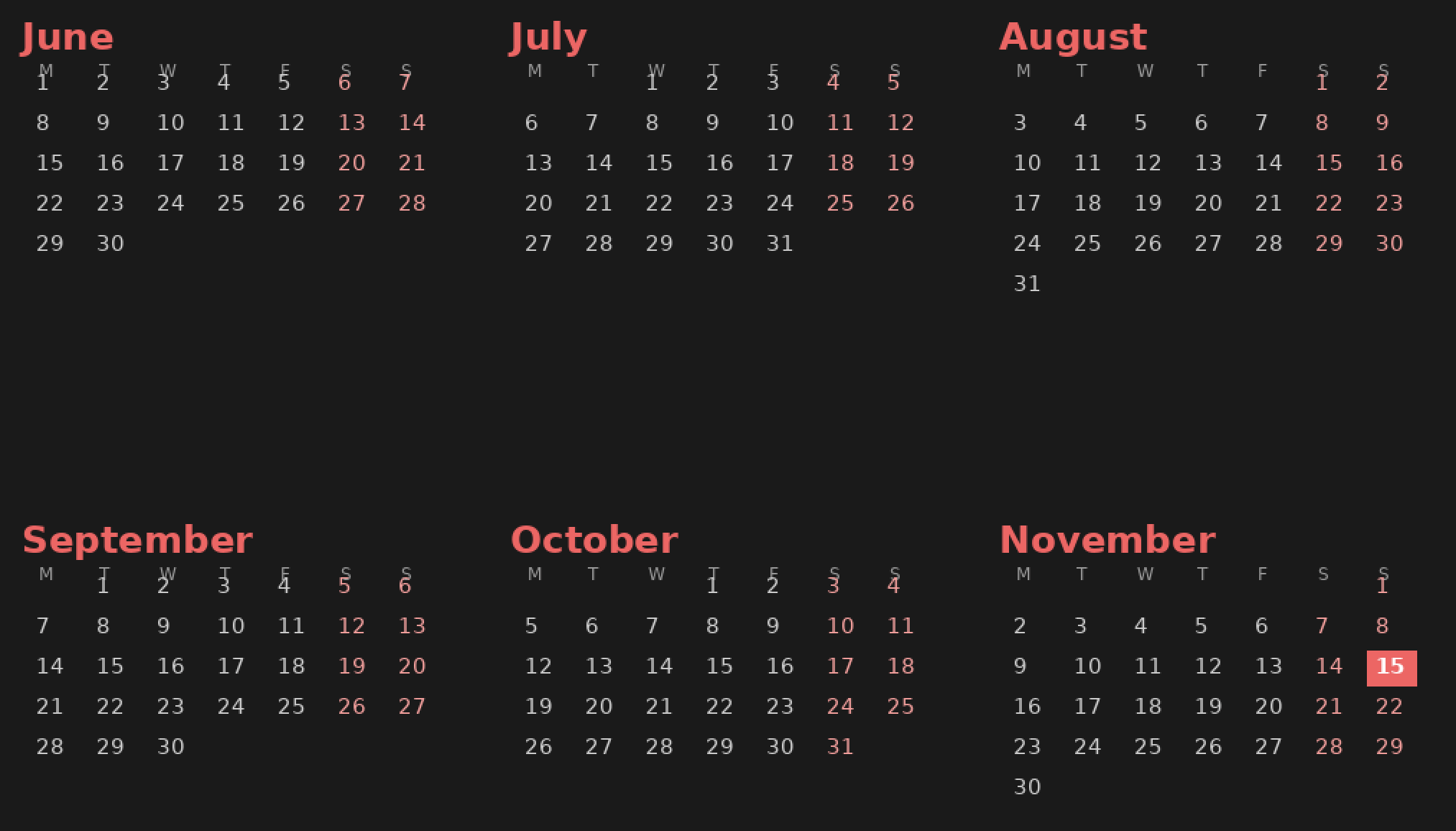
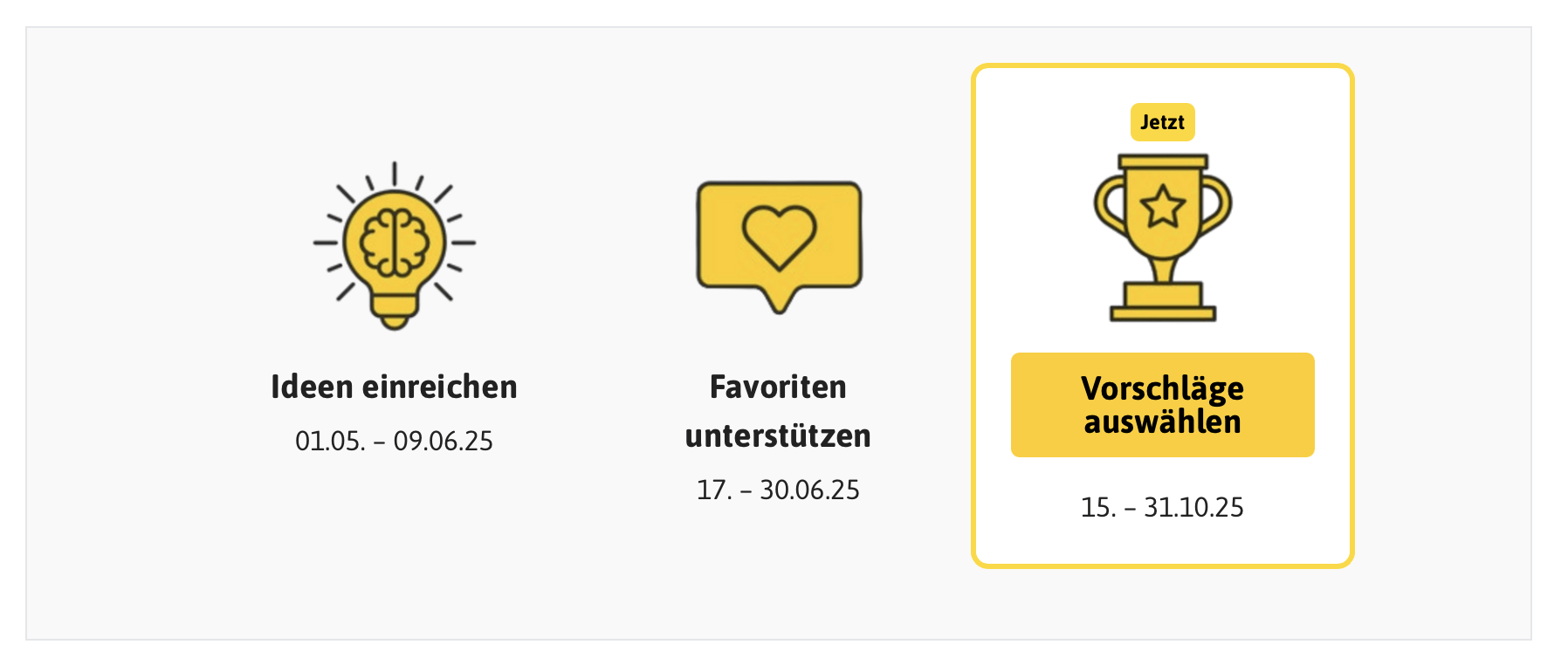
Timeline
Vast range of choices
Ideally,
many citizens browse many projects.

- The same is true for social media, e-commerce platforms, etc.
- Despite well-documented limits of human attention, social media platforms are remarkably effective at keeping users active, encouraging them to view, like, and comment on large volumes of content.
- This success stems largely from recommender systems
- engagement-based

Unviable or poorly planned initiatives must be effectively filtered out.
Ideally,
many citizens browse many projects.

Unviable or poorly planned initiatives must be effectively filtered out.
Ideally,
many citizens browse many projects.
Do current PB platforms address these effectively?
positive feedback only
rudimentary sorting capabilities
positive feedback only
rudimentary sorting capabilities
Can we build recommender systems for second stage PB?
- Can negative feedback improve this recommedner system?
- Would citizens want to steer this recommender system?
Appendix
Downvoting on Social Media
-
😐 Not interested
-
YouTube’s, TikToK's: ``Not interested"
-
Facebook’s, Instagram: ``Show less",``Hide post",
-
Netflix’s Thumbs down
-
Tinder: swipe left
-
-
👎 Bad Content
-
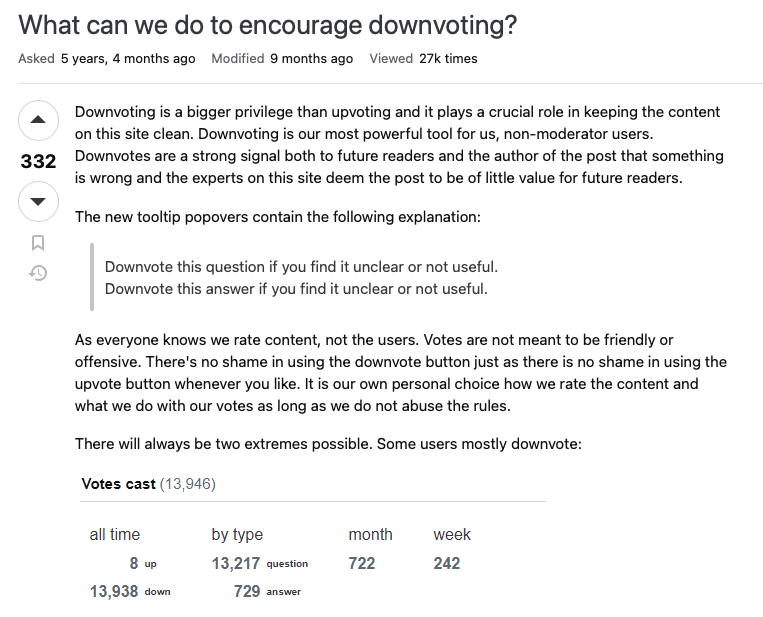
Reddit's, Stack Overflow, Hacker News
-
-
🚩 Policy Violation
-
Facebook: “Hate Speech,” “False Information,”
-

👎 Bad Content
🚩 Policy Violation
- Blocking Power on Social Media
- On Stack Overflow, users with at least 15 reputation points can flag content, and if enough users flag the same post, it can be automatically hidden until a moderator reviews it.
- The United Nations Security Council
- the P5 — can unilaterally veto resolutions, regardless of majority support
Unviable or poorly planned initiatives must be effectively filtered out.
- The same is of concern for information sharing platforms.
- Various mechanisms
- downvotes
- flags
- dislikes
- Strings attached: downvotes must be earned.
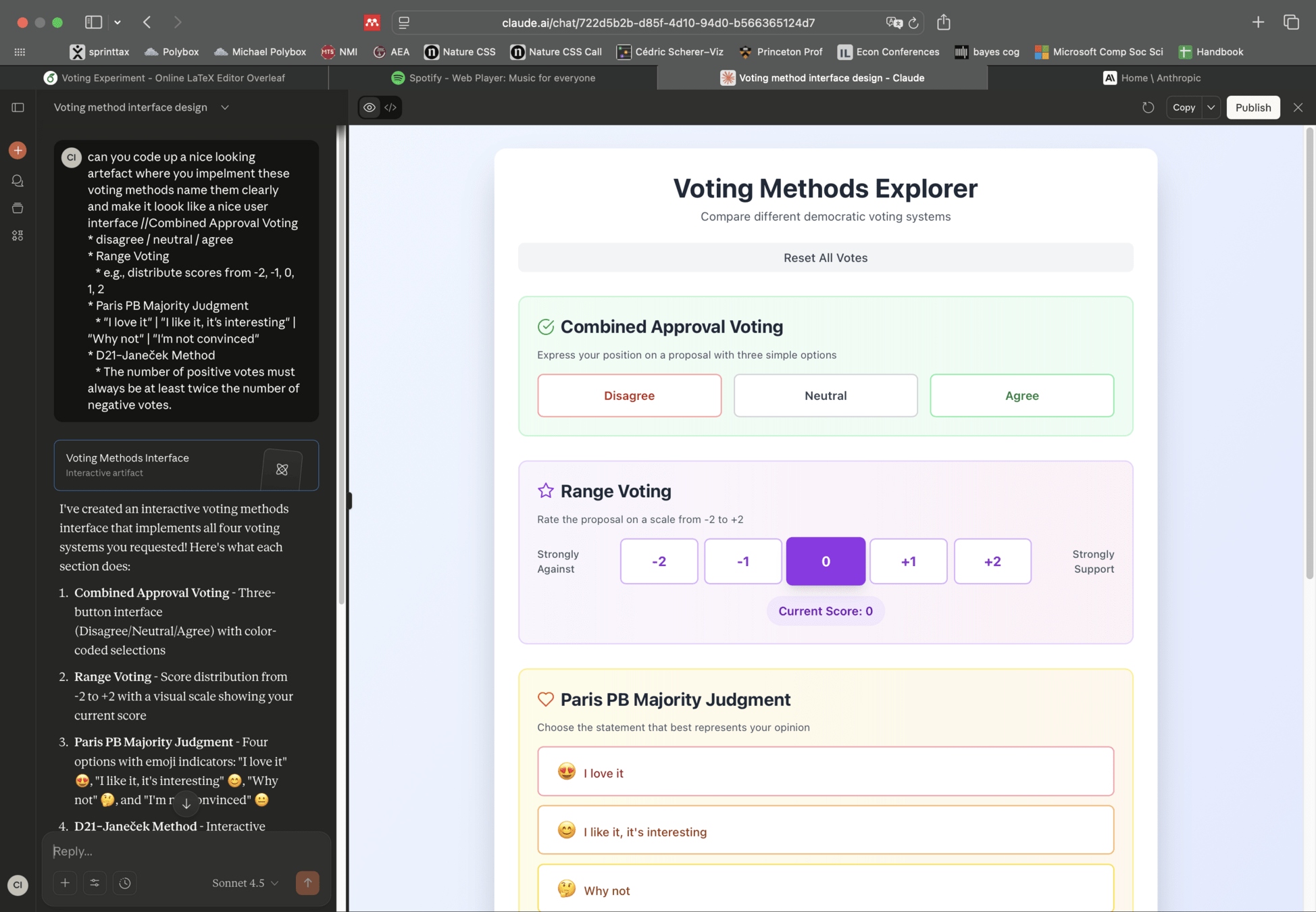
- Combined Approval Voting
- disagree / neutral / agree
- Range Voting
- e.g., distribute scores from -2, -1, 0, 1, 2
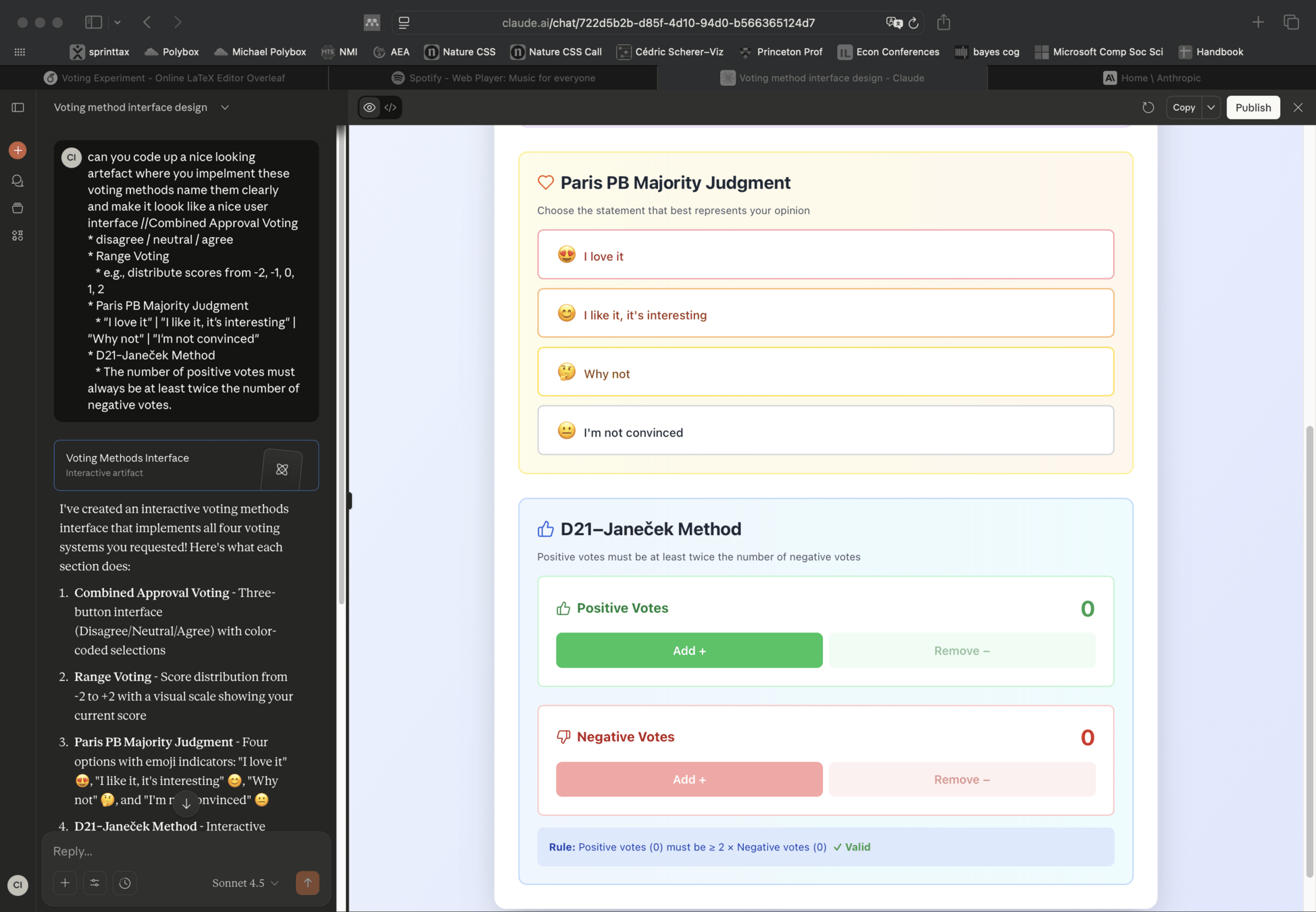
- Paris PB Majority Judgment
- "I love it" | "I like it, it's interesting" | "Why not" | "I'm not convinced"
- D21–Janeček Method
- The number of positive votes must always be at least twice the number of negative votes.
Contested Space
Vast range of choices
Ideally,
many citizens browse many projects.

Could PB platforms be designed more effectively?
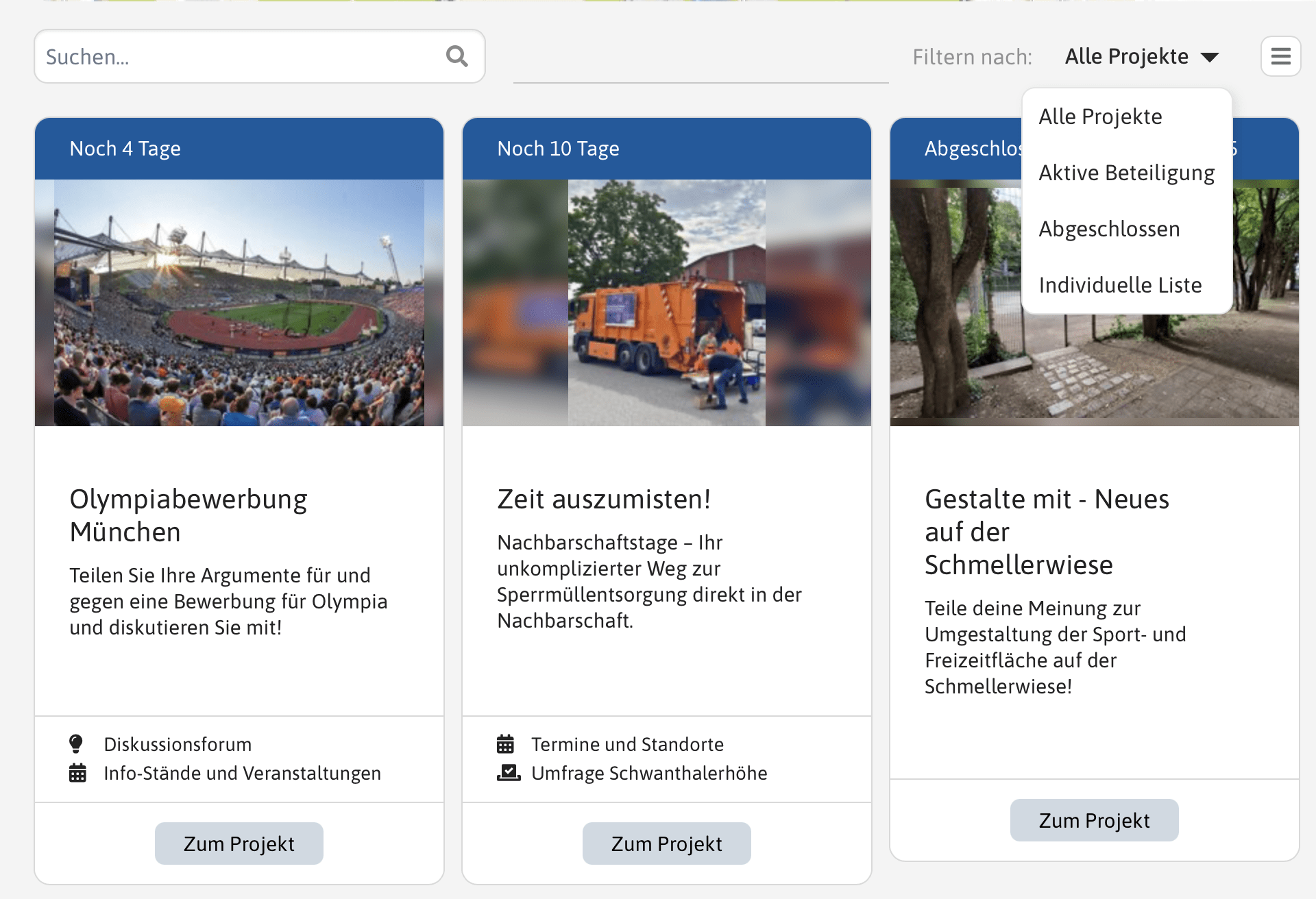
- How are projects sorted?
- Is there data on how citizens utilize sorting options (e.g., sort by least voted, most popular, etc.)?
- How do citizens give feedback?
- Are there mostly likes with fewer dislikes?
- Are the dislikes constructive?
- Correlations between project position and user feedback?
Could PB platforms be designed more effectively?
- Better sorting of project proposals to increase engagment
- Negative feedback mechanisms to effectively sort out proposals
How could a fair recommender system look like?