How Voting Rules Impact Legitimacy
Carina I. Hausladen, Regula Hänggli-Fricker, Dirk Helbing, Renato Kunz, Junling Wang, Evangelos Pournaras



Why US Politics is Broken—and How to Fix it.
1,481,549 views | Andrew Yang | April 2024
How are different voting methods perceived?
Are there differences with respect to legitimacy?
Behavioral Experiment
A voting method
consists of an
input mechansim and
an aggregation rule.
Four voting methods
choose one
approve,
stay neutral,
disapprove
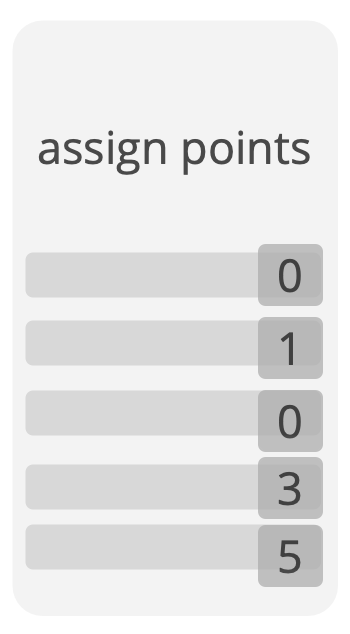
assign points
0
0
1
3
5
choose & rank
1
2
3
majority
voting
combined approval
voting
range
voting
modified Borda
count
Measuring Legitimacy
Scharpf (1999), Schmidt (2013)
- input-legitimacy
- output-legitimacy
- throughput legitimacy
acceptance
influence
trust
fairness
Weil and Hänggli (2021)
- empirically measure those dimensions
-
four clusters of questions
- found that all factors load on PC1 (74% of variance)
- allows us to address them with a single question
acceptance
influence
trust
fairness
Measuring Legitimacy
"I would comply with the result and accept it as fair, reflecting my and others’ opinions."
strongly agree | somewhat disagree | neutral | somehwat agree | strongly agree
Please assess the following statement for each voting method applied.
Context
Context
Polarizing
Context
Polarizing
-
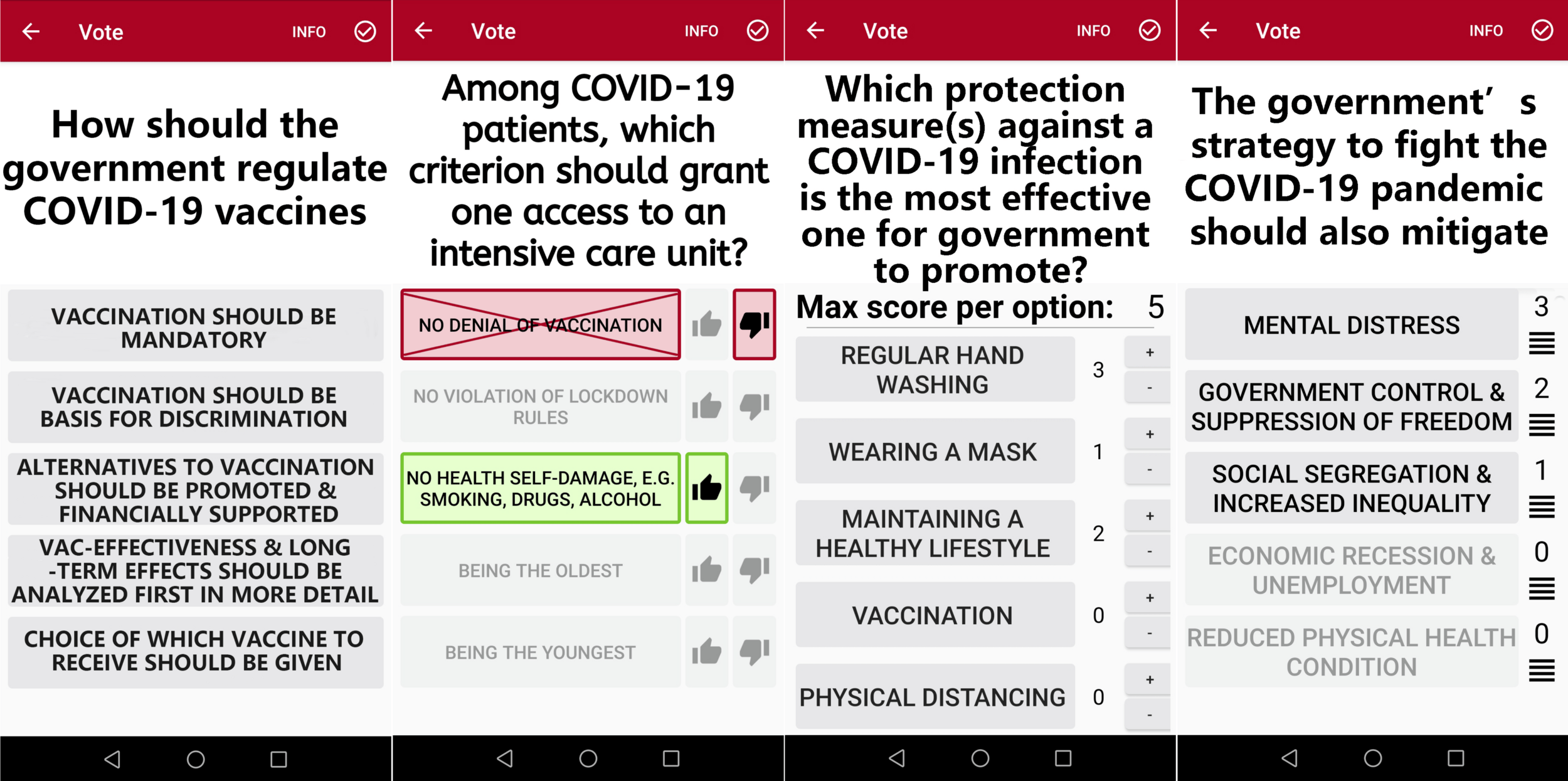
Vaccine regulation
- How should the government regulate COVID-19 vaccines?
-
ICU access
- Among COVID-19 patients, which criteria should grant access to an intensive care unit?
-
Infection protection
- Which protection measure(s) against a COVID-19 infection is the most effective one?
-
Government strategy
- Which strategy should the government adopt to fight the COVID-19 pandemic?
- Vaccine regulation
- ICU access
- Infection protection
- Government strategy
Control question
What is your favorite color?
Control question
Legitimacy rating
- Vaccine regulation
- ICU access
- Infection protection
- Government strategy
Legitimacy rating
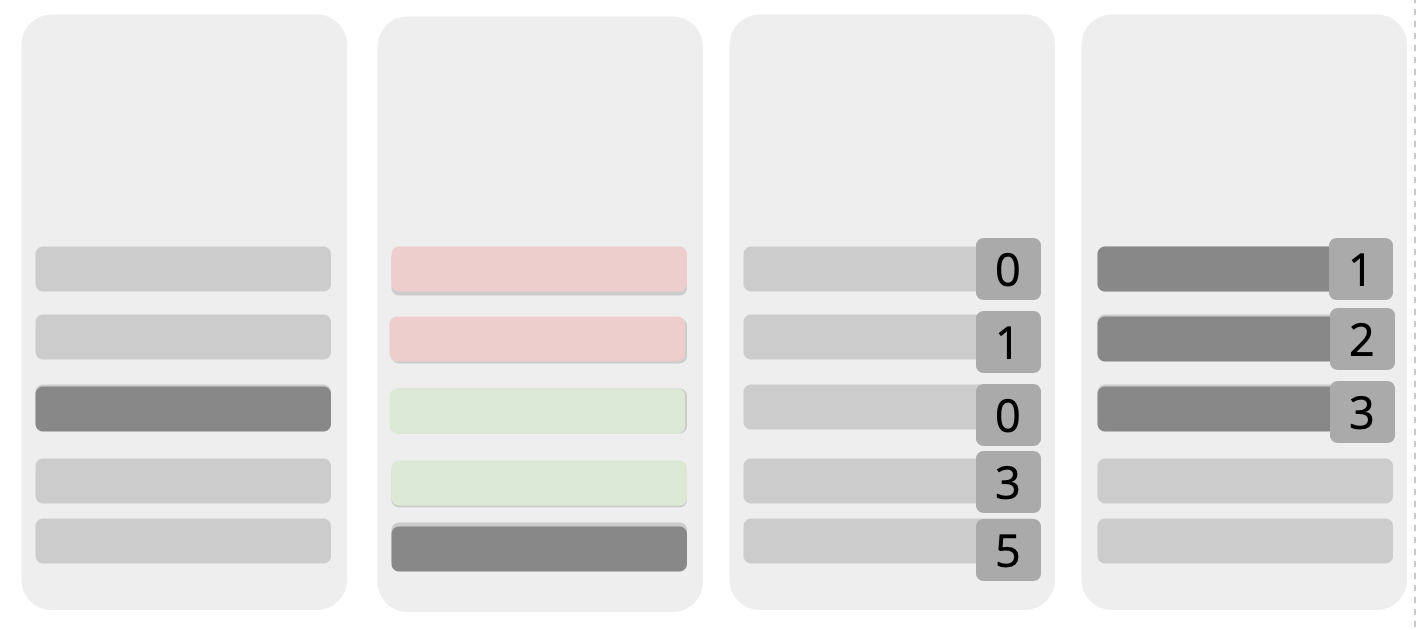
choose one
approve,
stay neutral,
disapprove
assign points
0
0
1
3
5
choose & rank
1
2
3
Results
- n=120
- 36% female
- Mean age: μ=25.47μ=25.47
- 37% with Bachelor's degree
- 22 countries
vaccination
vaccination
vaccination
vaccination
Vaccine regulation
ICU access
Infection protection
Government strategy
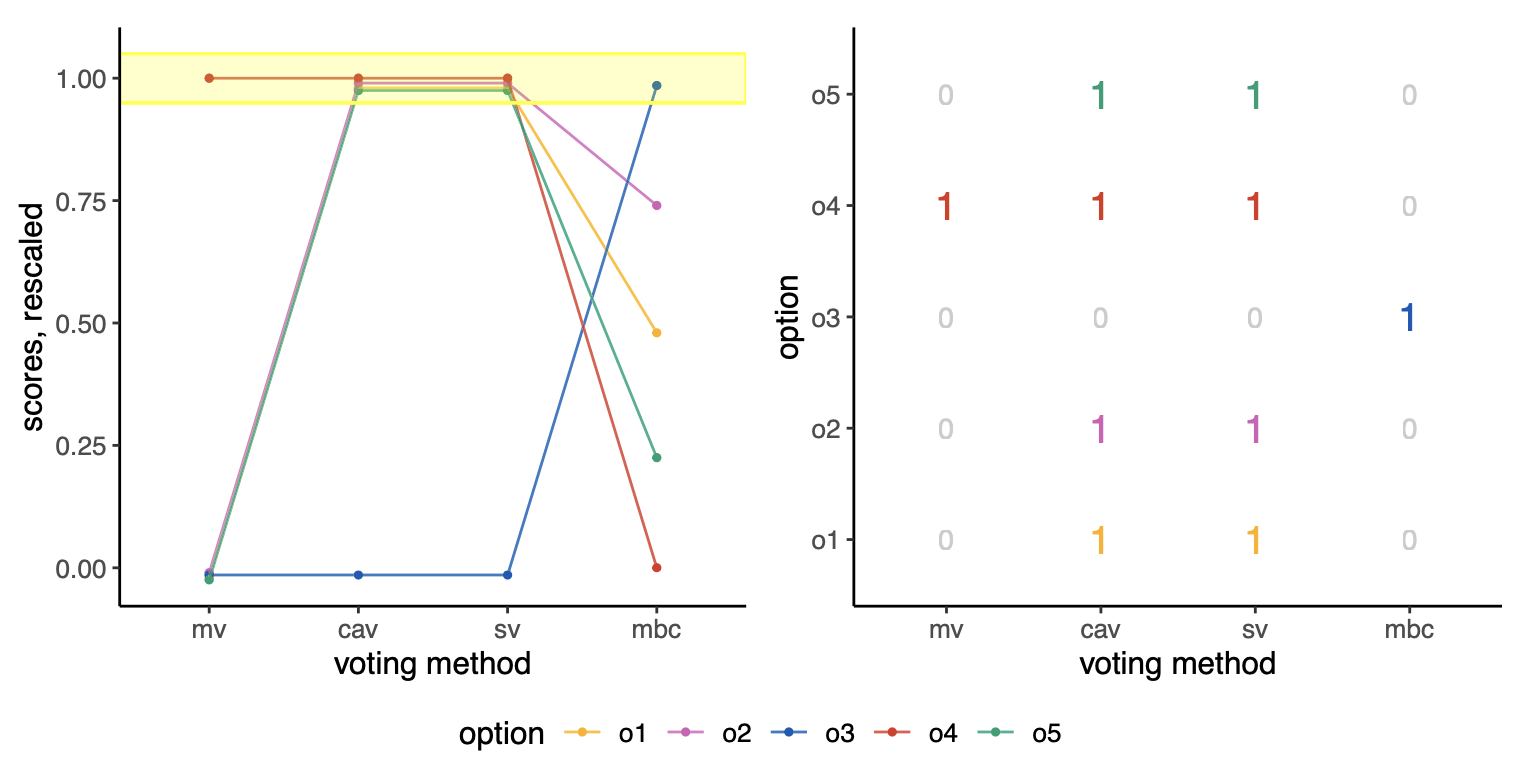
Winning options vary by input method.
Why?
Vaccine regulation
ICU access
Infection protection
Government strategy
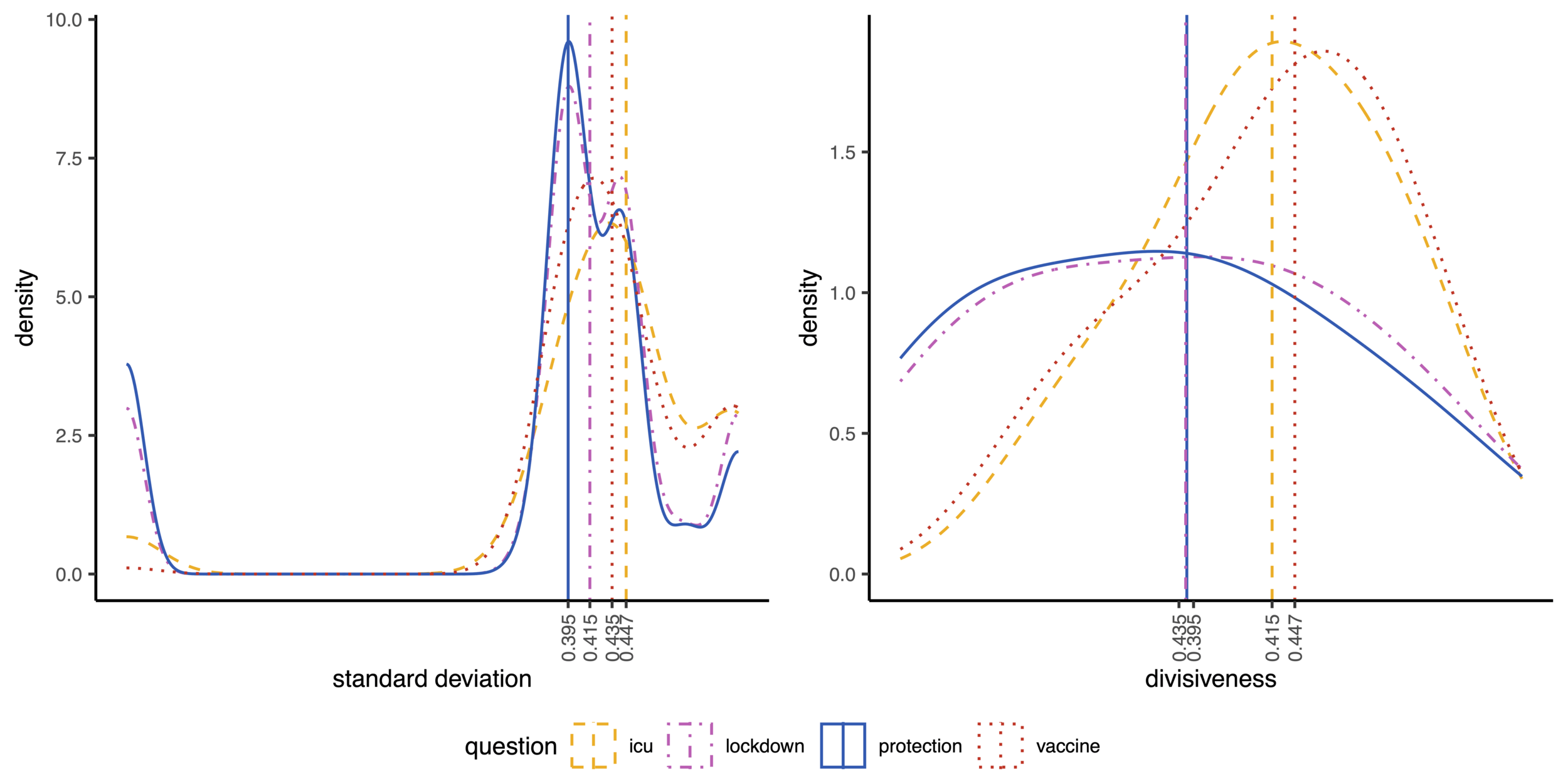
Standard deviation
(Schmitt, 2016)
Divisiveness
(Navarrete et al., 2022)
\[ s_{mv} \in \{0,1\} \]
\[s_{cav} \in\{-1, 0, 1\}\]
\[s_{sv} \in\{0,1,2,3,4\}\]
\[s_{mbc} \in\{0,1,2,3,4\}\]
Vaccine regulation
ICU access
Infection protection
Government strategy
Standard deviation
(Schmitt, 2016)
Divisiveness
(Navarrete et al., 2022)
Infection protection
Government strategy
Vaccine regulation
ICU access
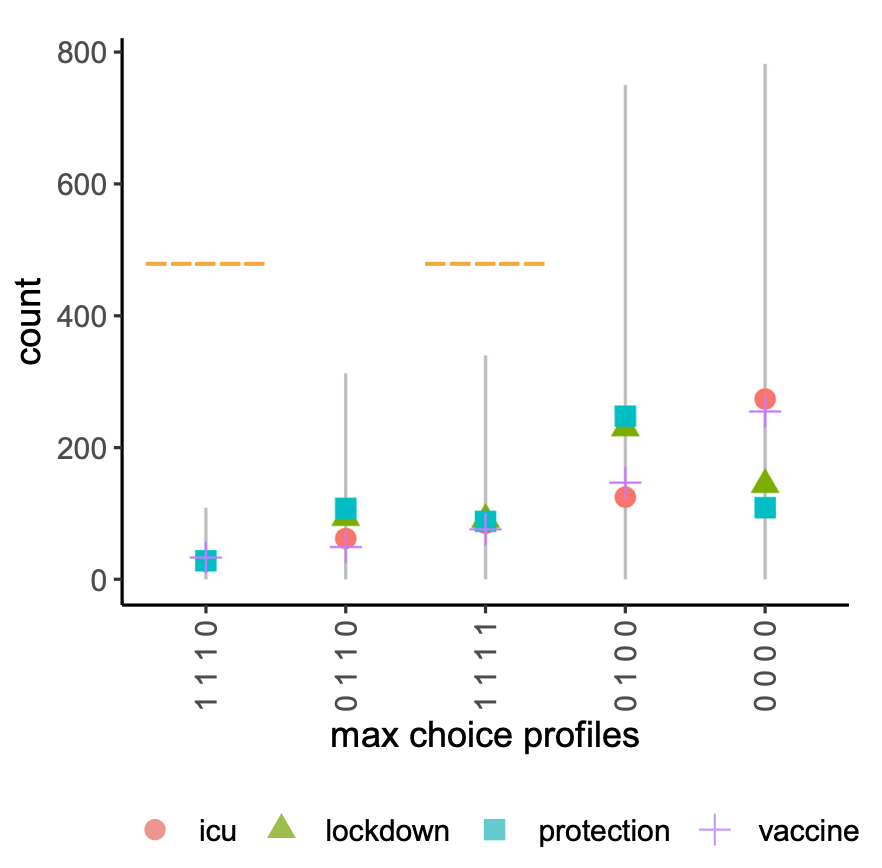
The choice of voting method is especially crucial when preferences are highly polarized.
For each pair of options \(o_m\) and \(o_n\), let:
- \(s(o_m, o_n)\) be the rating when o_m is preferred over \(o_n\)
- \(s(o_n, o_m)\) be the rating when o_n is preferred over \(o_m\)
Then, divisiveness for each voting method \(vm\) for each question \(q\) is defined as:
\(D_{v}^q = \frac{1}{n(n-1)} \sum_{m=1}^{n} \sum_{n=1}^{n} \|s(o_m,o_n) - s(o_n,o_m)\| \)
Divisiveness
"I would comply with the result and accept it as fair, reflecting my and others’ opinions."
strongly agree | somewhat disagree | neutral | somehwat agree | strongly agree
How do participants evaluate the perceived legitimacy of various voting methods?
Color
COVID
Vaccine regulation
ICU access
Infection protection
Government strategy
4—
3—
2—
1—
0—
legitimacy rating
range
voting
modified
Borda
count
combined
approval
voting
majority
voting
declining nuance
COVID
4—
3—
2—
1—
0—
legitimacy rating
range
voting
modified
Borda
count
combined
approval
voting
majority
voting
Color
4—
3—
2—
1—
0—
legitimacy rating
range
voting
modified
Borda
count
combined
approval
voting
majority
voting
Color
COVID
7.02e^-06***
0.04*
Flexibility in voting methods is perceived as more legitimate in a political context.
Is range voting always the best choice in a political context?
It depends on the voter.
0
0
1
3
5
1
2
Measuring consistency
Among COVID-19 patients, which criteria should grant access to an intensive care unit?
no vaccine denial
no lockdown violation
no health self-damage
youngest
oldest
majority
voting
combined approval
voting
range
voting
modified Borda
voting
Consistent Voter
0
0
1
3
5
1
2
Measuring consistency
Among COVID-19 patients, which criteria should grant access to an intensive care unit?
no vaccine denial
no lockdown violation
no health self-damage
youngest
oldest
majority
voting
combined approval
voting
range
voting
modified Borda
voting
Inconsistent Voter
The Inconsistent Voter.
0
0
1
3
5
1
2
no vaccine denial
no lockdown violation
no health self-damage
youngest
oldest
Preference Reversal is well documented since the 1970s.
Lottery A: 90% chance to win $10
Lottery B: 10% chance to win $100
Which lottery would you prefer to play?
How much would you be willing to pay for each lottery?
Lichtenstein and Slovic (1971)
A > B
B > A
How much would you be willing to pay for each lottery?
A > B
B > A
Choice focuses on probability.
Pricing focuses on potential payout.
Cognitive & Behavioral Factors.
Comparability Bias.
Framing Effect.
Cognitive Limitations.
Which lottery would you prefer to play?
increasing nuance
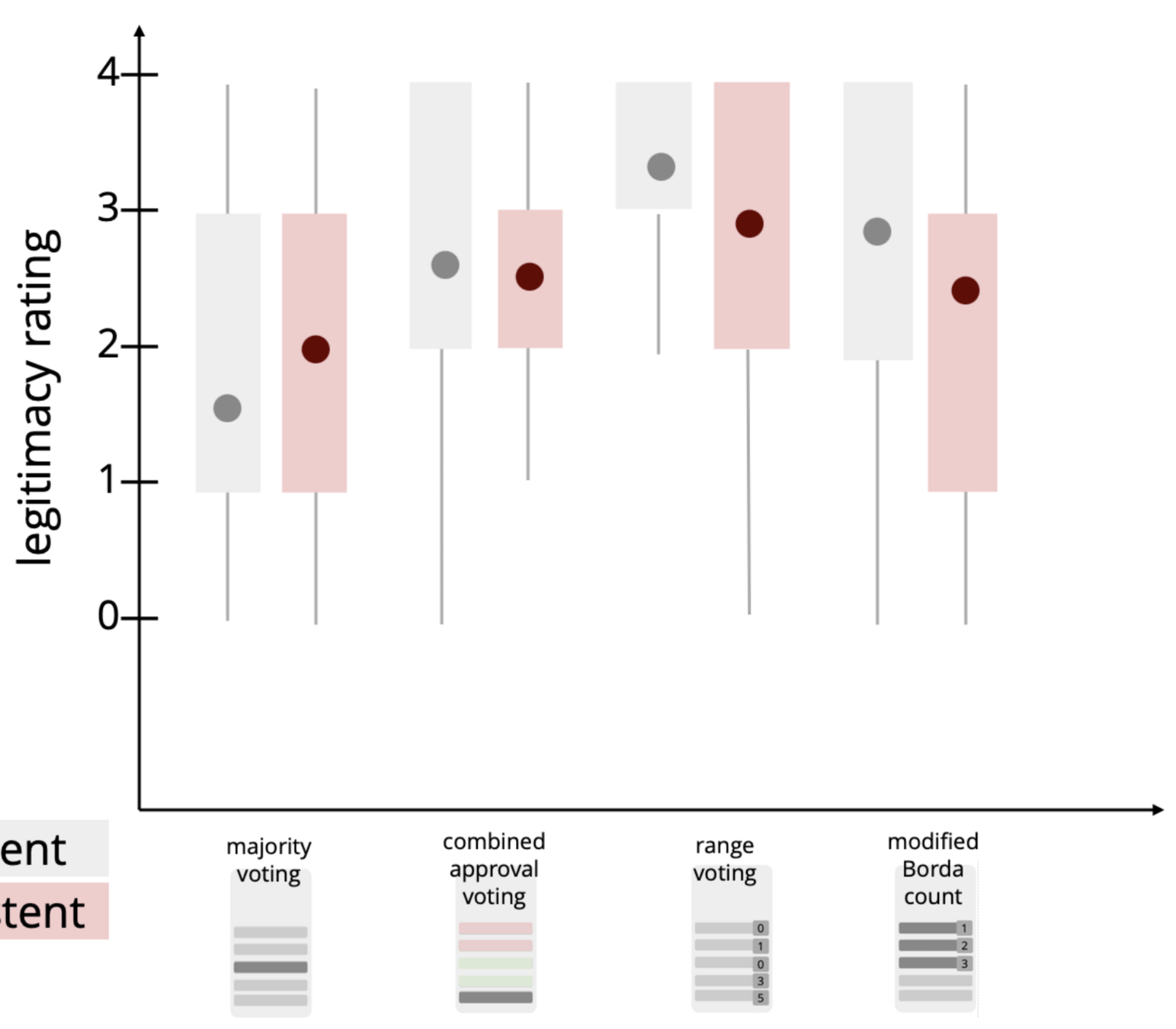
Voters who consistently express their preferences
rate voting methods that allow for detailed preference expression
as more legitimate than those
who vote inconsistently.
range
voting
modified
Borda
count
combined
approval
voting
majority
voting
4—
3—
2—
1—
0—
legitimacy rating
consistent
inconsistent
0.02*
0.04*
Conclusion
Different voting methods lead to different outcomes.
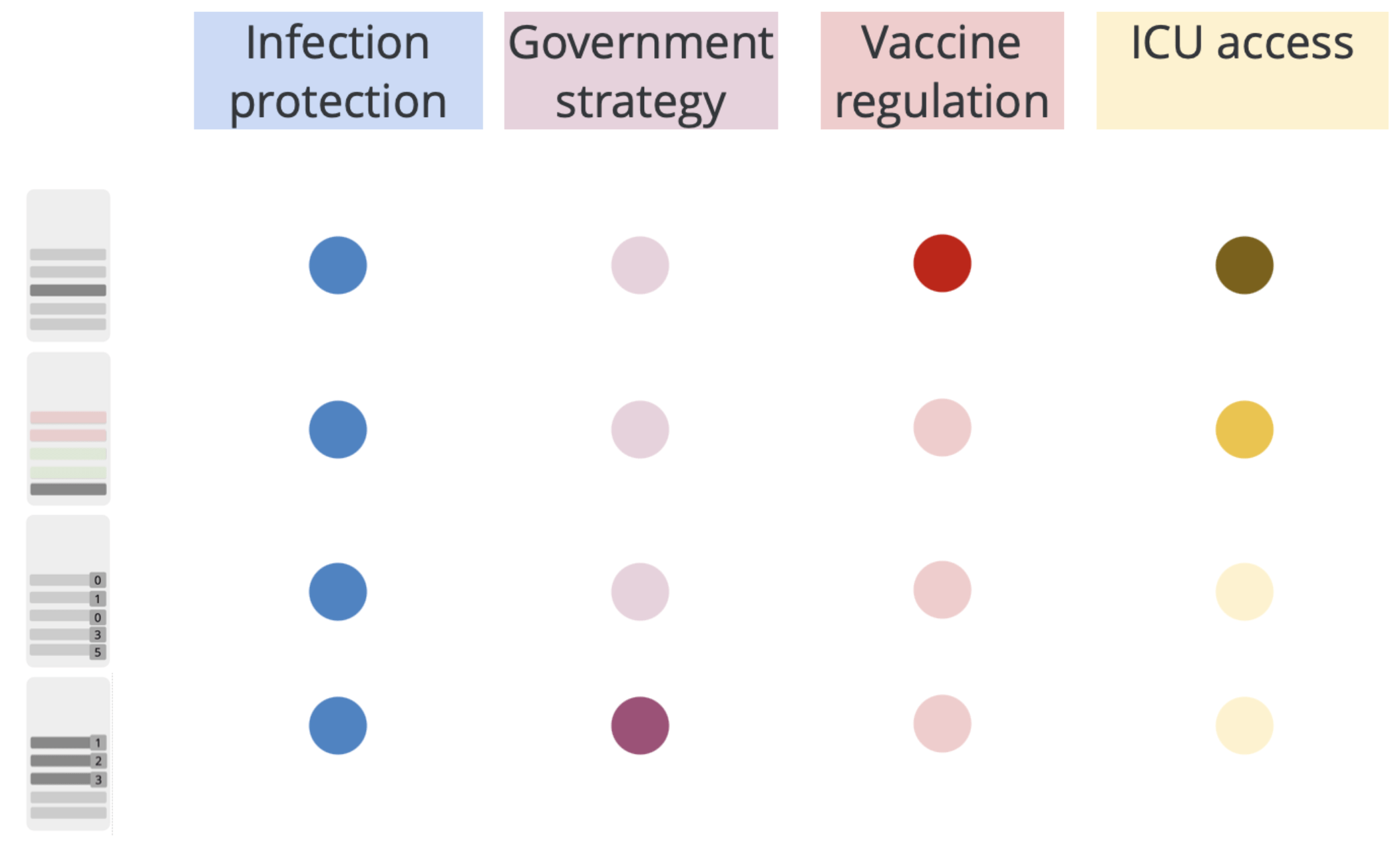
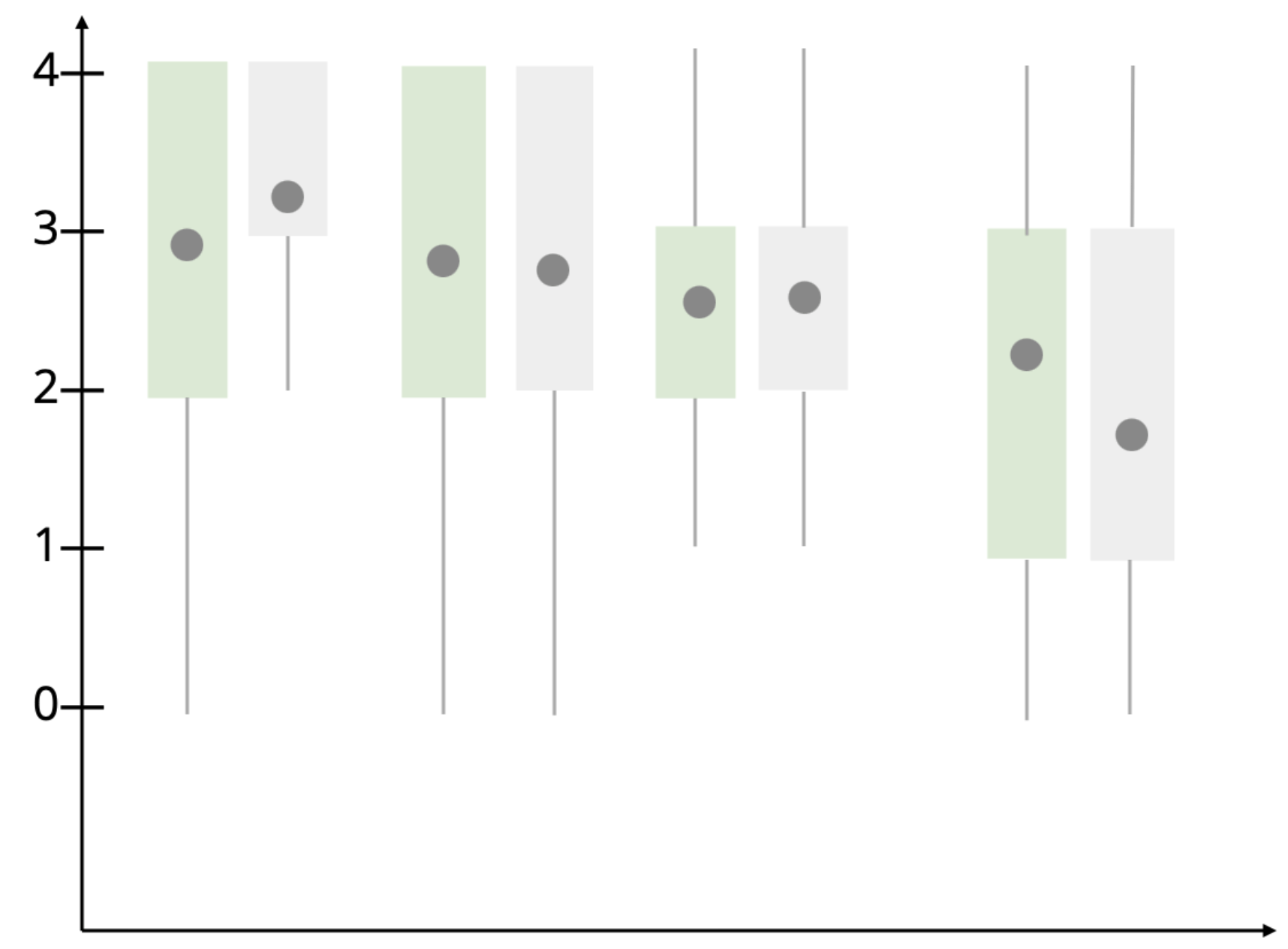
The choice of voting method is particularly important in highly polarized contexts.
The legitimacy of a voting method is context-dependent.
Consistent voters value detailed preference expression more than inconsistent voters.
Range voting received the highest legitimacy ratings.

carinah@ethz.ch

slides.com/carinah

S
Can we transfer these insights to AI Alignment?

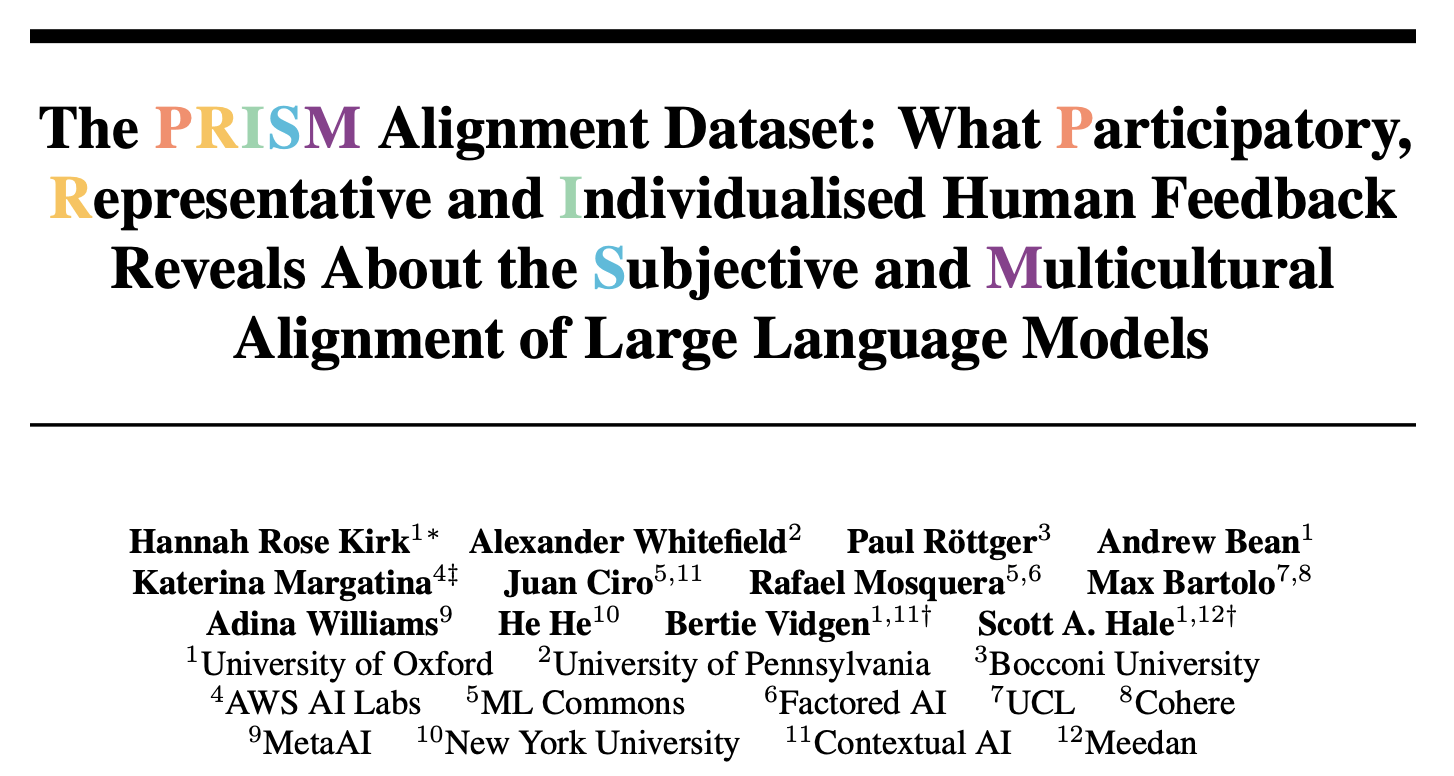
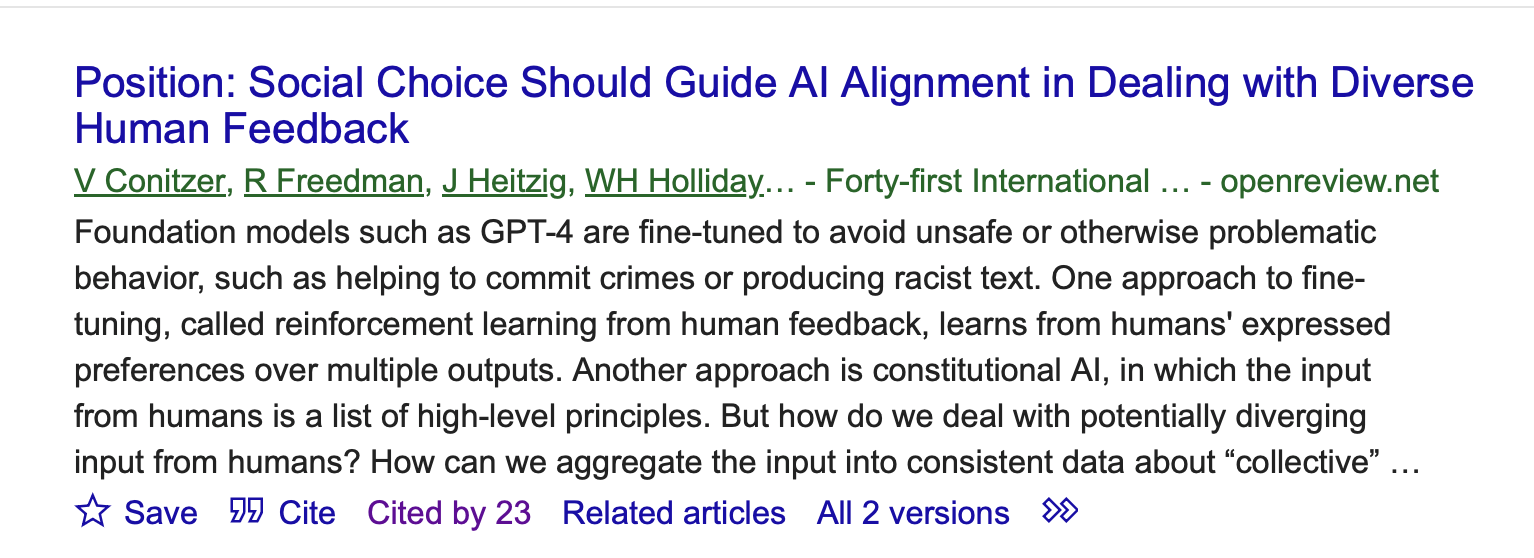
Three important questions.
-
What to ask?
-
How to ask?
-
How to aggregate?
What to ask?
Revealed preferences
fail to serve
individual or
societal well-being.
Reinforcement Learning from Human Feedback
.
.
.
.
.
.
Initial Language Model
.
.
.
.
.
.
Reward Preference Model
.
.
.
.
.
.
Tuned Language Model
Reinforcement Learning Update
Majority Voting
Combined Approval Voting?
Range Voting?
How to ask?
.
.
.
.
.
.
Reward Preference Model
How to aggregate?
Bradley Terry
Proportional
Aggregation
PRISM
- Who provides feedback matters.
- Sampling decisions affect collective welfare.
- Cross-cultural perspectives and disagreements.

Appendix
Perception of legitimacy is linked to appreciating flexibility in range voting.
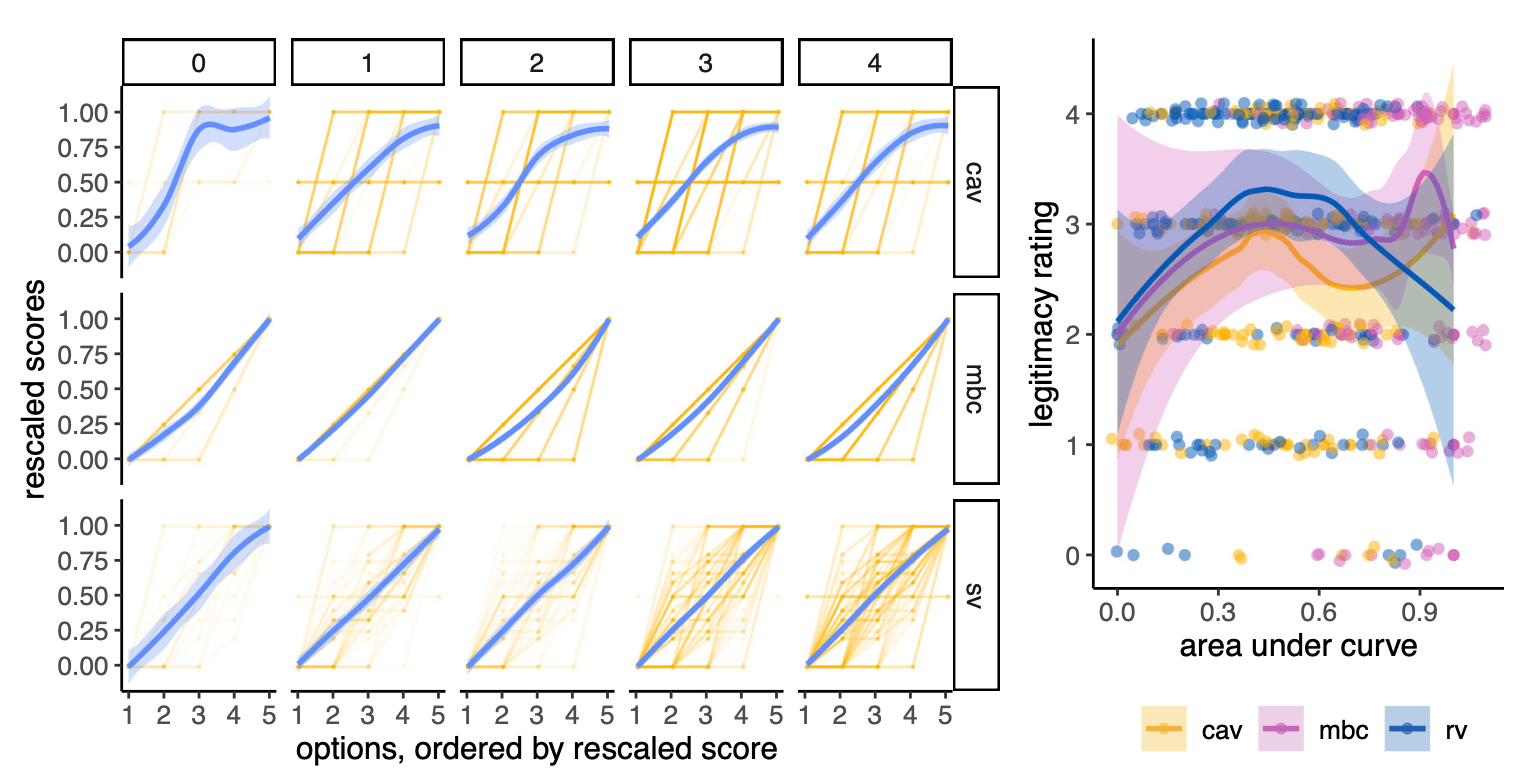
The independence of the perceived legitimacy from COVID- 19-related topics confirms the validity of our legitimacy framework.
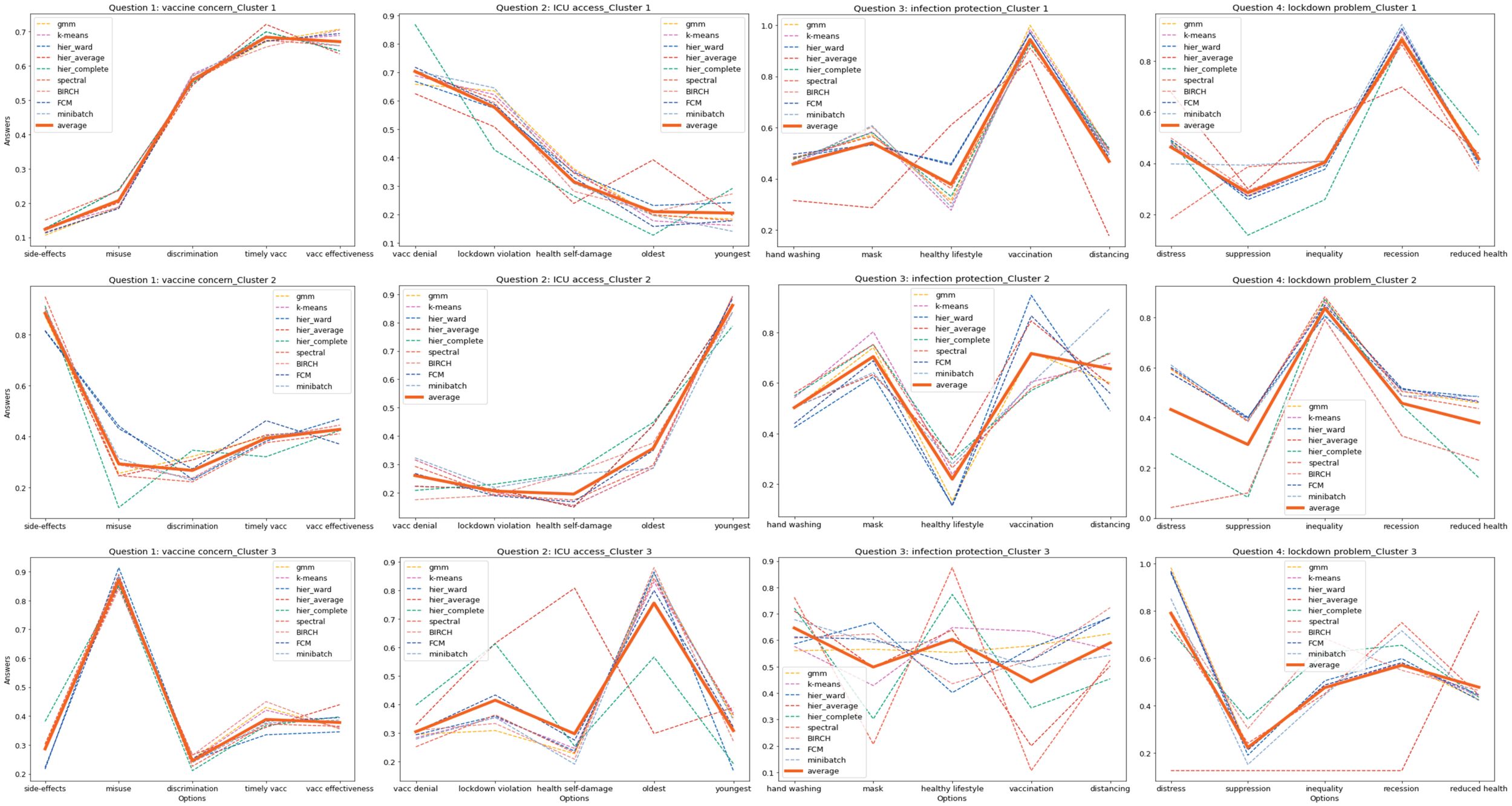
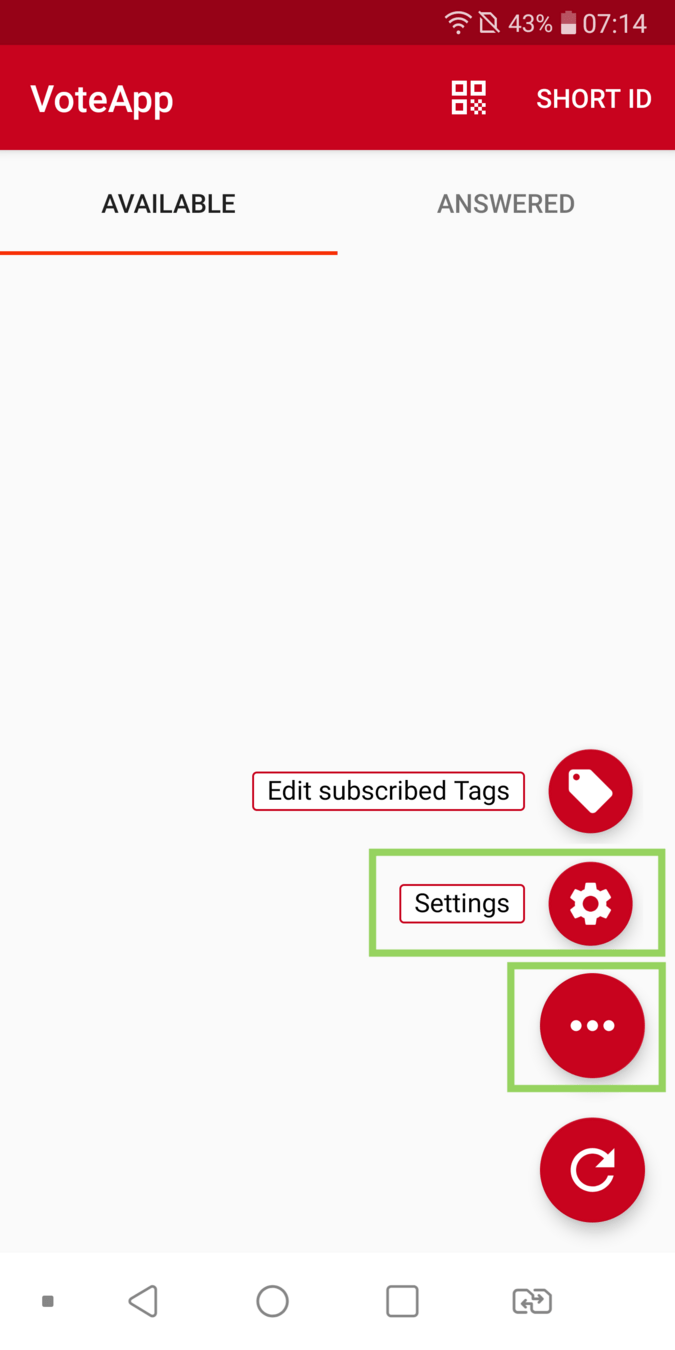
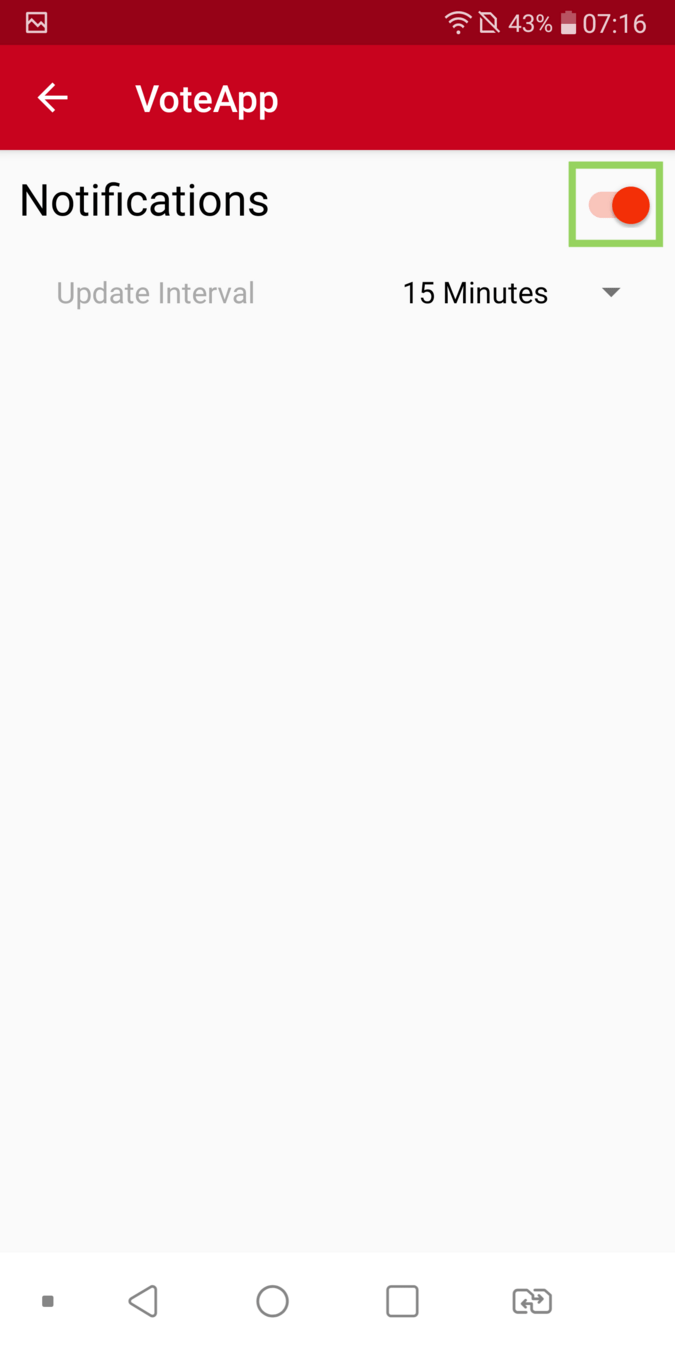
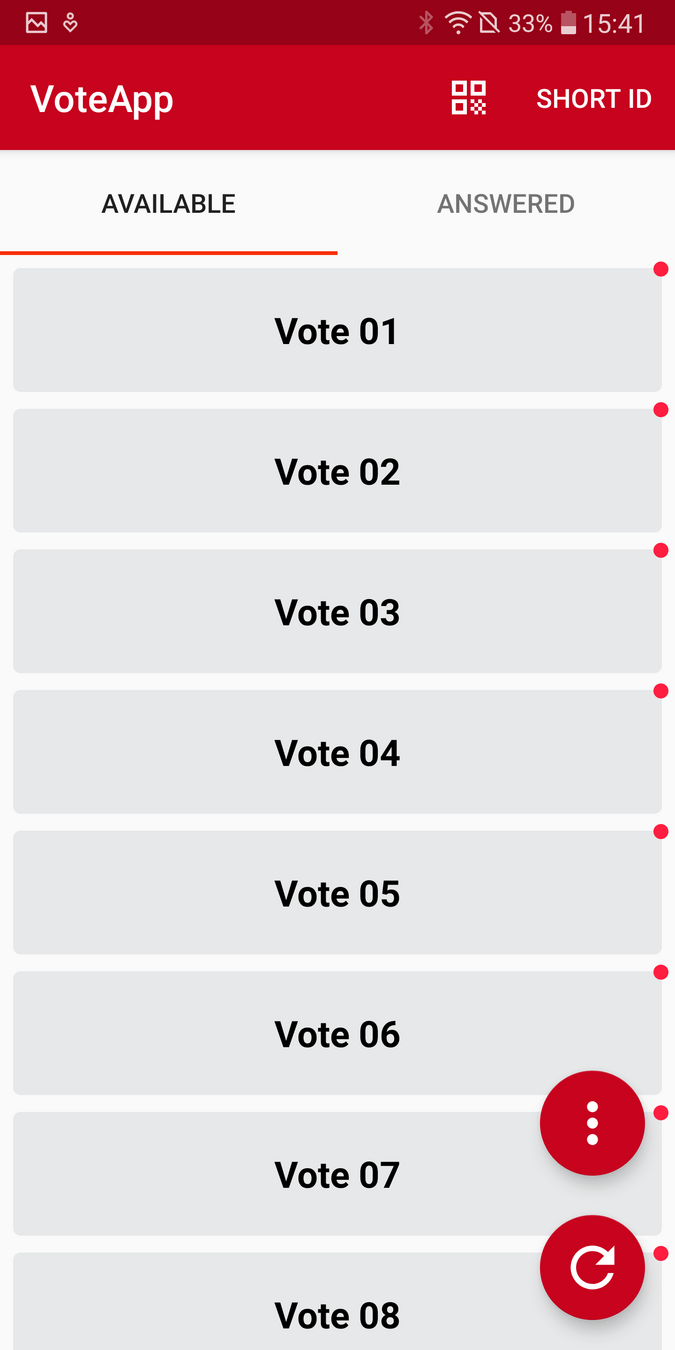
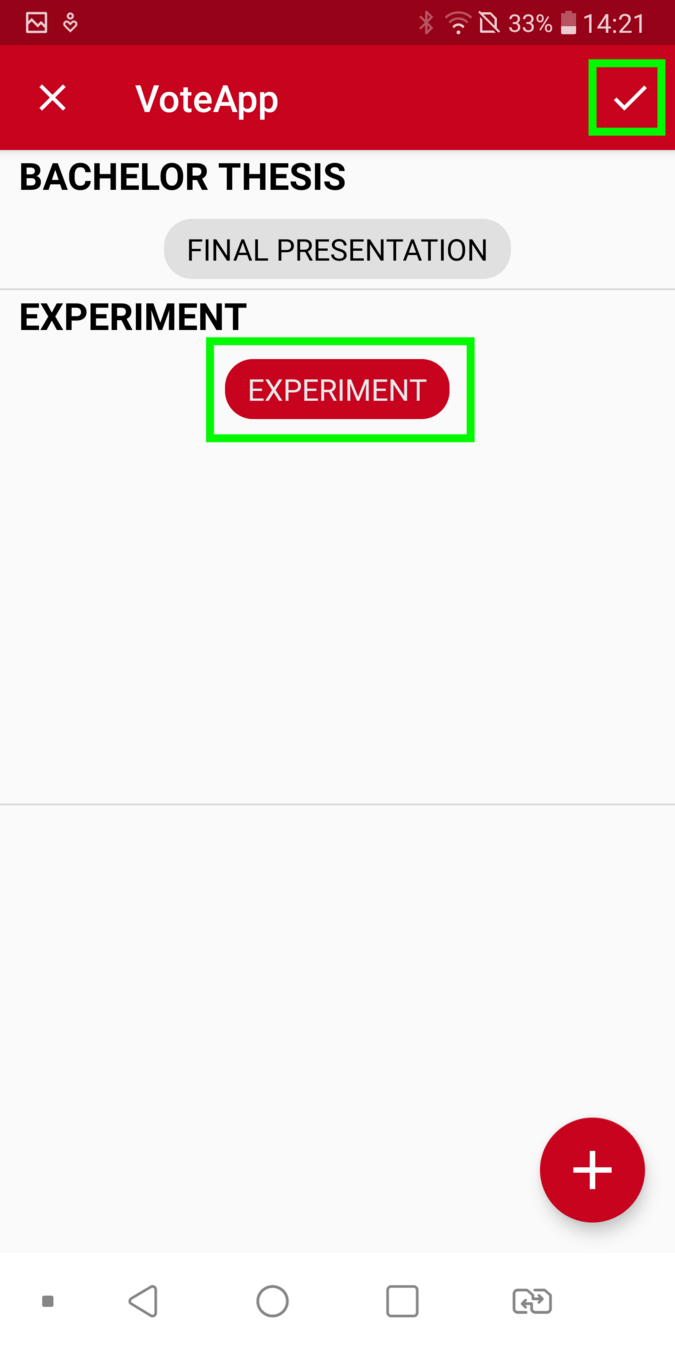
VoteLab:
A Modular and Adaptive Experimentation Platform for Online Collective Decision Making
Renato Kunz, Fatemeh Banaie, Abhinav Sharma,
Carina I. Hausladen, Dirk Helbing and Evangelos Pournaras
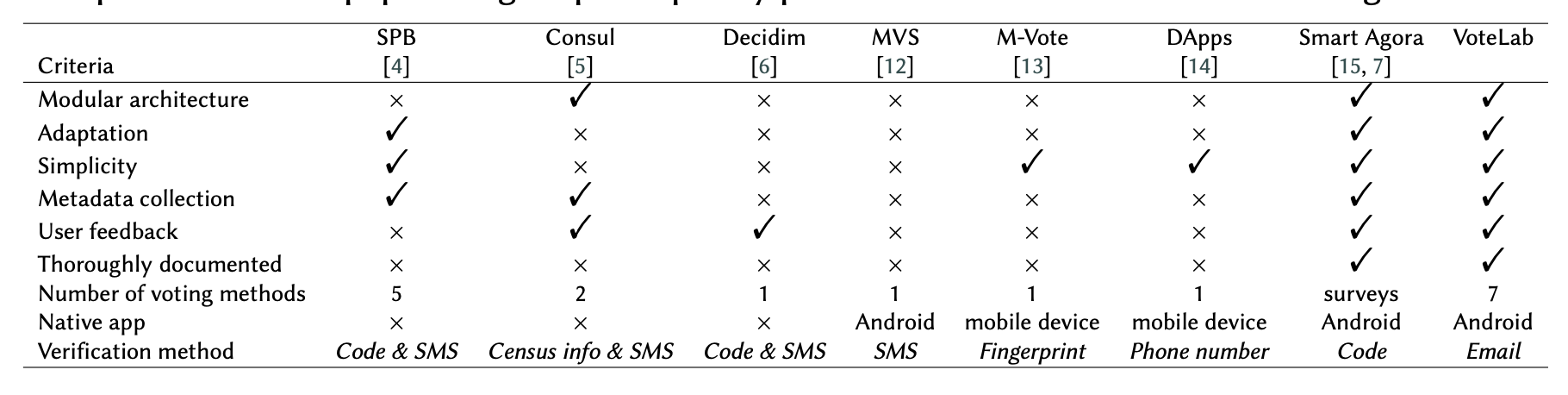
Which software allows us to test our hypothesis?
Digital voting platforms
limited number of voting methods
lack of meta-data collection for understanding voting behavior


Interested in VoteLab?

Policy Implications
- If facing a new or polarizing context:
- First, select and communicate the deciding voting method
- then progressively engage voters with the issue through multiple rounds
- from simple majority voting to more complex methods like range voting.



Can we empower citizens to be less susceptible to these effects?
Cognitive & Behavioral Factors.
Comparability Bias.
Framing Effect.
Cognitive Limitations.
A virtual reality experiment to study pedestrian perception of future street scenarios
J Argota Sánchez-Vaquerizo, CI Hausladen, et al., Scientific Reports, 2024.
Citizens’ assemblies, and discussion groups can reduce the effects of framing and other cognitive biases on preferences.

In Switzerland, these processes are traditionally conducted offline and are not easily scalable.

Instead, preferences are often formed online and based on resources that are deliberately designed to polarize.
How can deliberative processes in urban planning be scaled while maintaining constructive discussion and fostering stable preferences?
An exciting new possibility:
VR + LLM-powered avatars
Voice-to-voice capabilities make discussions natural and immersive.

Status quo: VR environment of Lausanne's old town.

Design concepts from an ongoing renovation project.
Future scenario
Activate meta-cognition, avoid persuasion
- Democratic backsliding (Braley, NHB, 2023)
- Perspective taking (Lukošiūnaitė, Scientific Reports, 2024)
- Reputation in a nested group structure (Schnell, PNAS, 2024)
- Highlighting Social Perception (Fiske 2008, Hausladen 2024)