How to be Insufferable at Thanksgiving, 2026 Edition: Hot Takes on AI
Christopher Makler
(not representing the) Stanford University Department of Economics
Far out in the uncharted backwaters of the unfashionable end of the western spiral arm of the Galaxy lies a small unregarded yellow sun.

SCIEPRO/GETTY IMAGES
Orbiting this at a distance of roughly ninety-two million miles is an utterly insignificant little blue green planet whose ape-descended life forms are so amazingly primitive that they still think digital watches are a pretty neat idea.
This planet has — or rather had —
a problem, which was this:
😢
most of the people on it were unhappy for pretty much of the time.
Many solutions were proposed
for this problem...
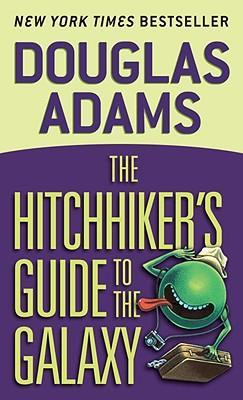
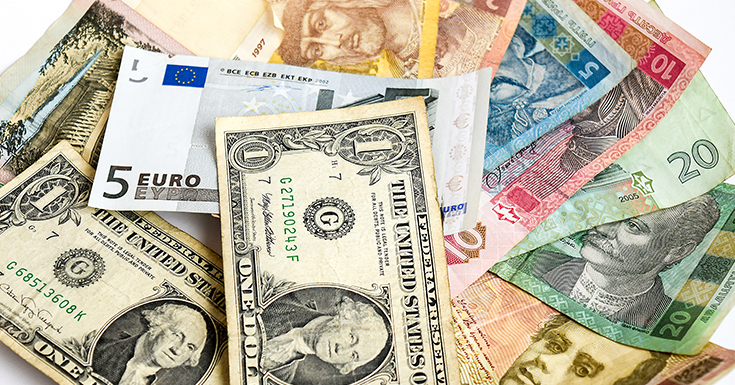
...but most of these were largely concerned with the movements
of small green pieces of paper,
which is odd because on the whole
it wasn't the small green pieces of paper that were unhappy.
Resources
Technology
Stuff
Happiness
🌎
🏭
⌚️
🤓
The Real Economy
Fundamental Economic Questions
What, as a society, do we produce?
Who gets what?
How do we decide?
If you were an omniscient
"social planner" in charge of everything, how would you
make these decisions?
What does an omniscient "social planner" do?
Productive Efficiency:
Allocate production so that each firm has the same marginal cost of making the last unit.
Don't overproduce or underproduce.
Allocative Efficiency:
Allocate consumption so that each person gets the same marginal utility from the last unit.
Ensure that the last unit consumed brings the same
marginal benefit to each consumer as the marginal cost it requires to produce.
What occurs in market equilibrium?
Firm Optimization:
Every firm produces up until the point where their marginal cost equals the market price (MC = P)
Market clearing: supply equals demand.
Consumer Optimization:
Every consumer buys up until the point where their marginal benefit equals the market price (MB = P)
Consumers and producers all face the same market price
"Individual ambition serves the common good." - Adam Smith
If there is a single price in the market that all consumers pay, and all producers receive, and all consumers and producers are “price takers,” then:
Every consumer sets MB = P:
- Everyone’s MB from the last unit bought is the same.
- Cannot increase total benefit by reallocating the good from one consumer to another
Every firm set MC = P:
-
Every firm’s MC from the last unit produced is the same.
-
Cannot reduce total costs by reallocating production from one firm to another
The MB of the last unit consumed by some person
equals the MC of the last unit produced by some firm
My Take:
The price of AI is far too low.
Why is the price of AI too low?
- Consumer theory: AI makes things cheap that shouldn't be cheap
- Producer theory: AI will destroy the job market, and people don't like poetry
- Markets: All the money going to AI has other uses which are being devalued
- Externalities: Data centers are environmental nightmares
Why is this problem hard to solve?
A preview of Econ 51
Consumer Theory
Theory of the Firm
Market Equilibrium
Better to produce
more good 1
and less good 2.
Better to produce
less good 1
and more good 2.
Externalities
Preview of Econ 51
Prisoners' Dilemma
(D,D) pareto dominates (C,C)
(C,C) is a dominant strategy equilibrium
The First Strategic Dilemma:
Everyone doing what's best for themselves can lead to a group loss.
1
2
Confess
Deny
Confess
Deny
-5
-5
,
-10
0
,
-1
-1
,
0
-10
,