

*chto@uchicago.edu
Clusters as cosmological and astrophysical probes
Chun-Hao To*


I also work on...
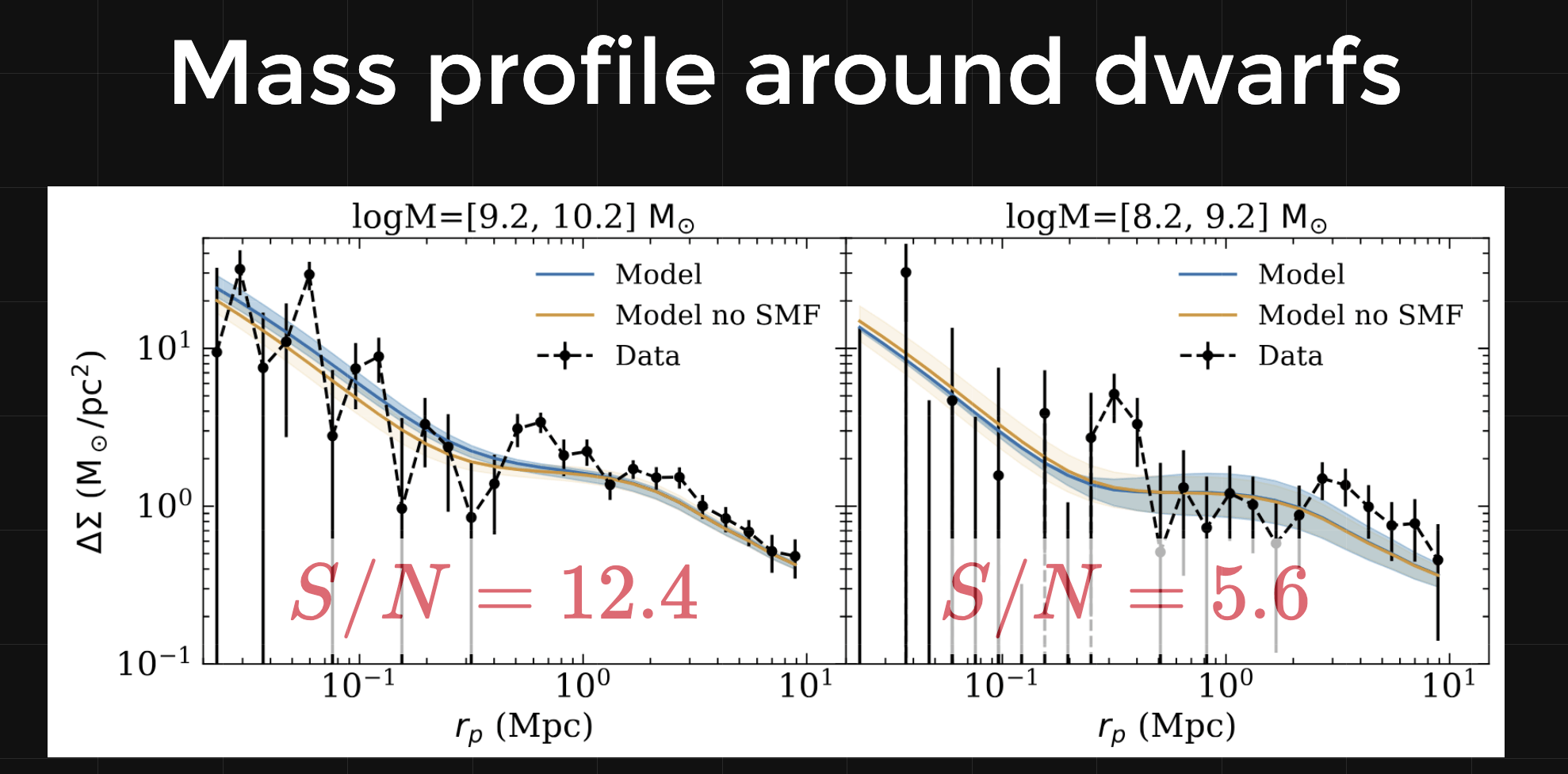
Lensing around dwarf galaxies
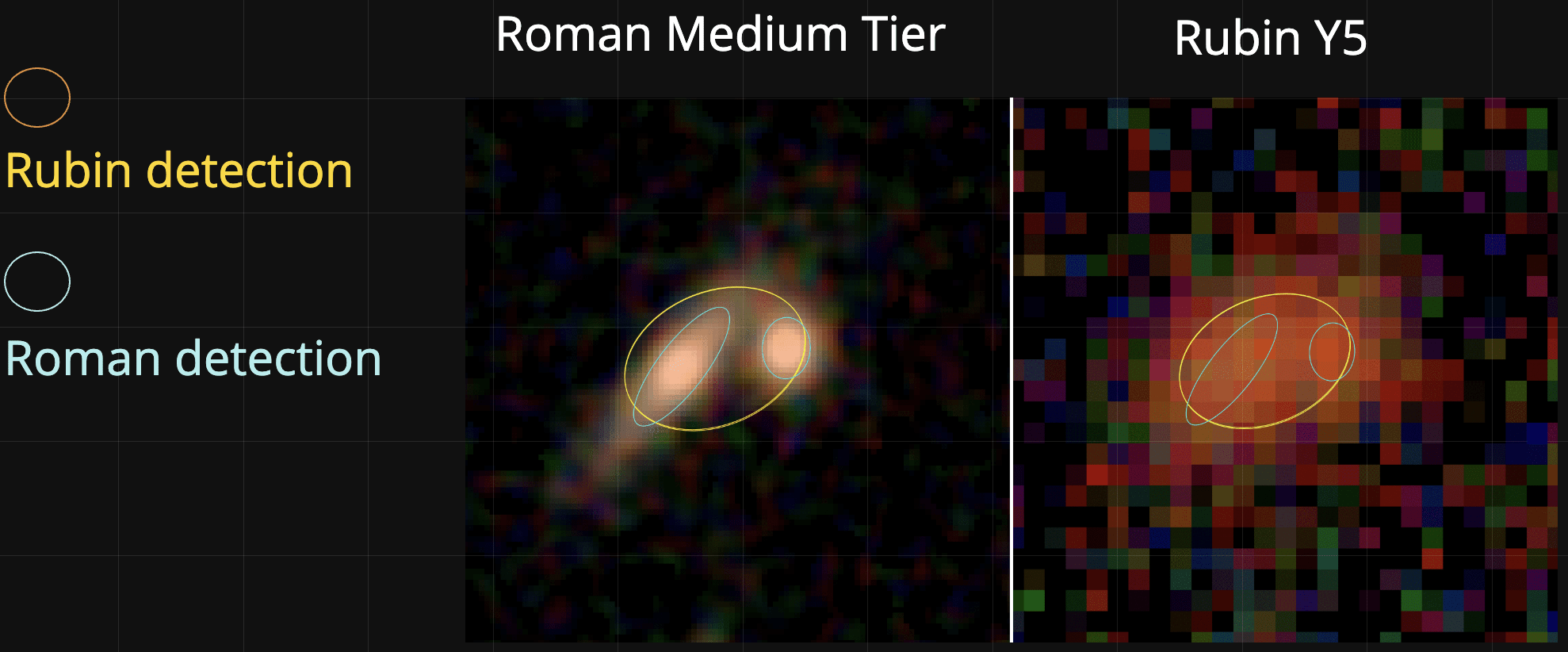
Pixel-level Synergies between Roman and Rubin
Galaxy Cluster physics
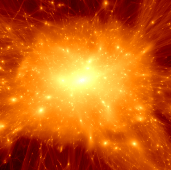

Dark Matter Halo
~
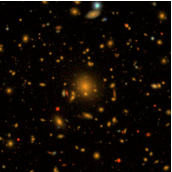
Red galaxies
~ 2% of the mass
Hot gas
~ 10% of the mass
Cosmology
Galaxy physics
Baryonic feedback
Yang+03, Lin&Mohr04, More+16,
Kravstov+18, Shin+19, To+20 (APJ 897,15), ... many more
Vikhlinin+06, Eckert+16,
To+24 (JCAP 2024, 037), Dalal+26, Kovac+25, Siegel+25, ...many more
Clusters
Dark Matter Halo:
Rare peaks in the density field.
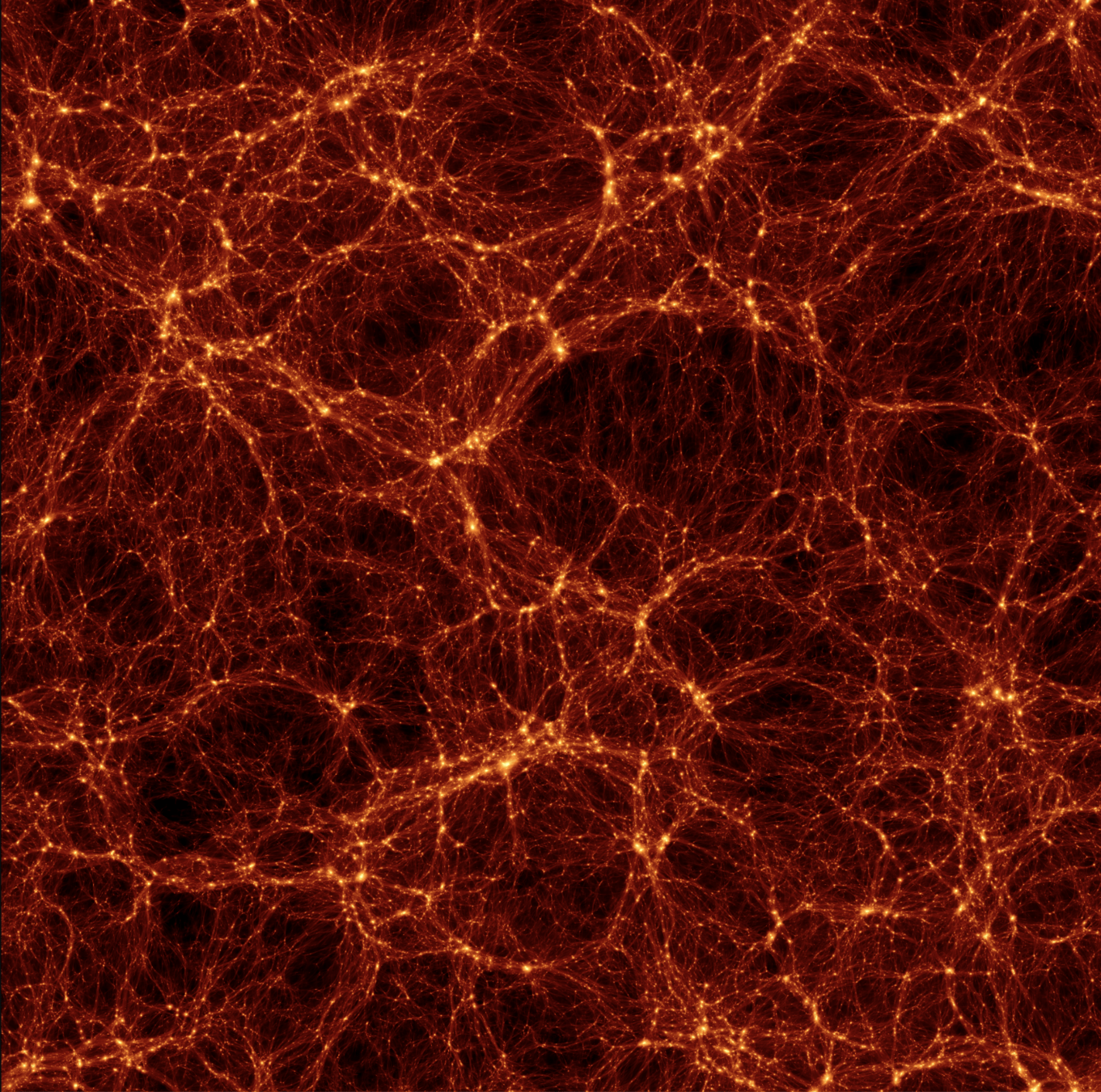
250 Mpc/h
Cluster Cosmology
Dark Matter Halo:
Rare peaks in the density field.
Abundances are exponentially sensitive to the amount of structure.
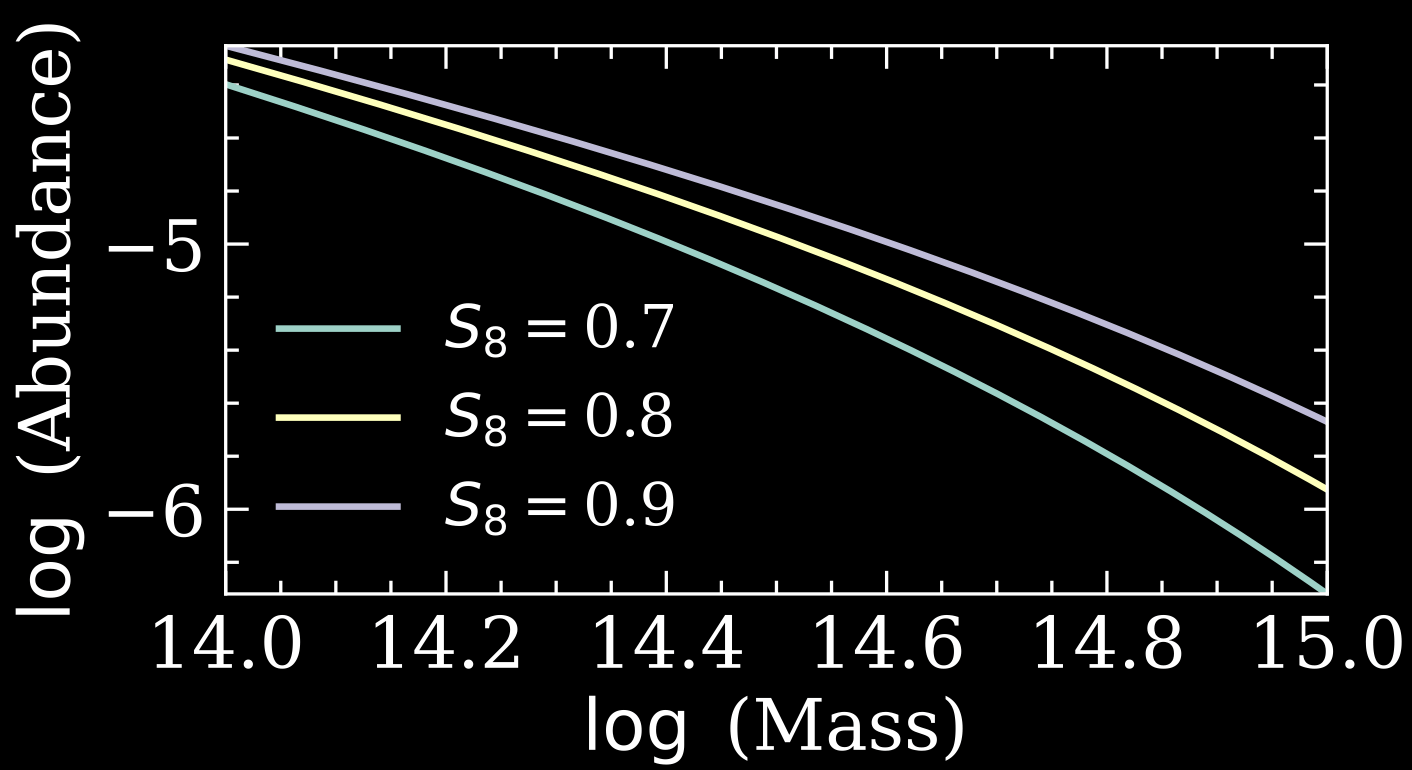
More structures
Bahcall 95, Wang&Steinhardt 98, Borgani+ 01, Allen+ 03, Vikhlinin+ 09, DeHann+16, To+ 21, Bocquet+24,... many more
Cluster Cosmology
Text
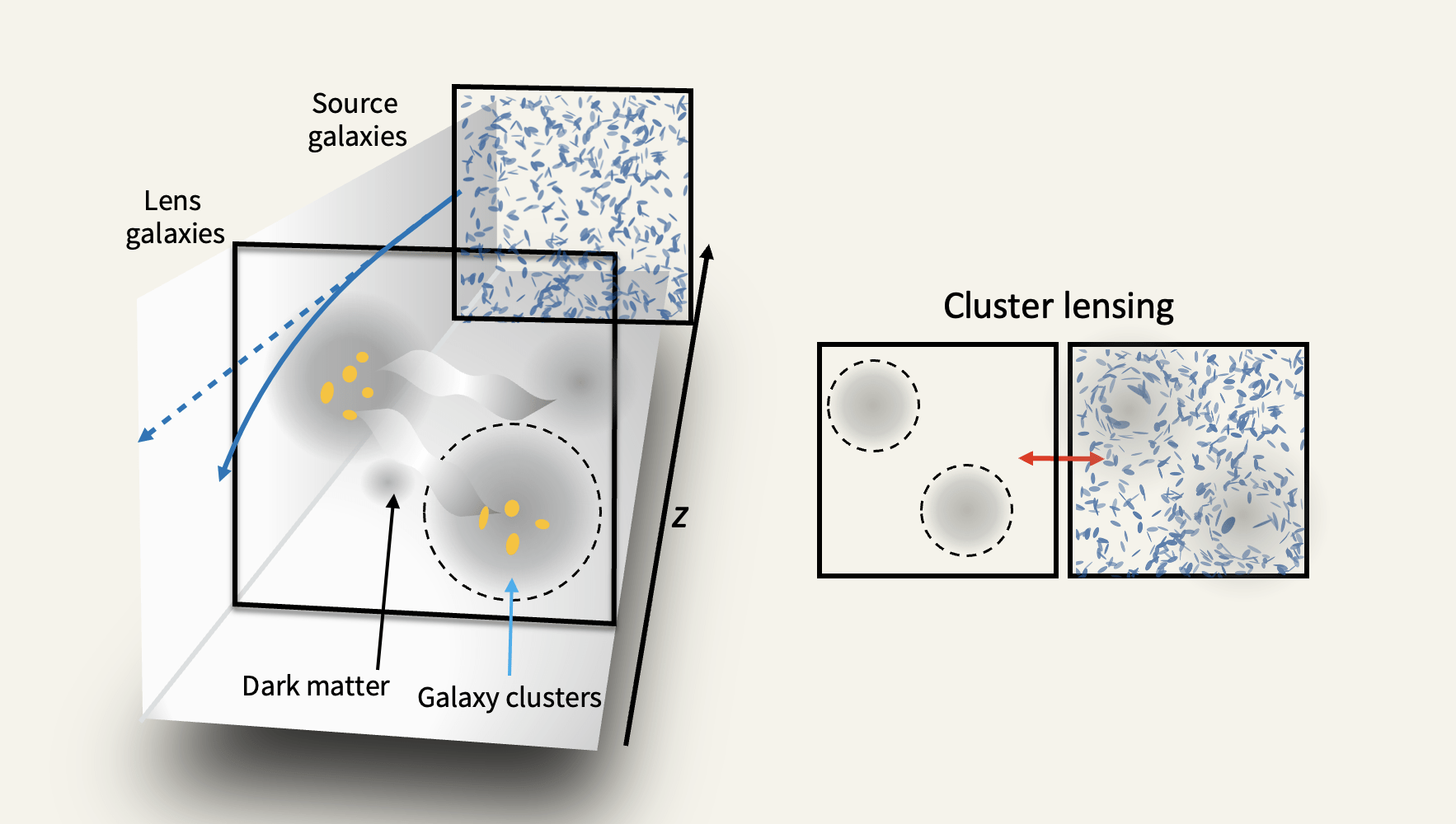
Cluster mass
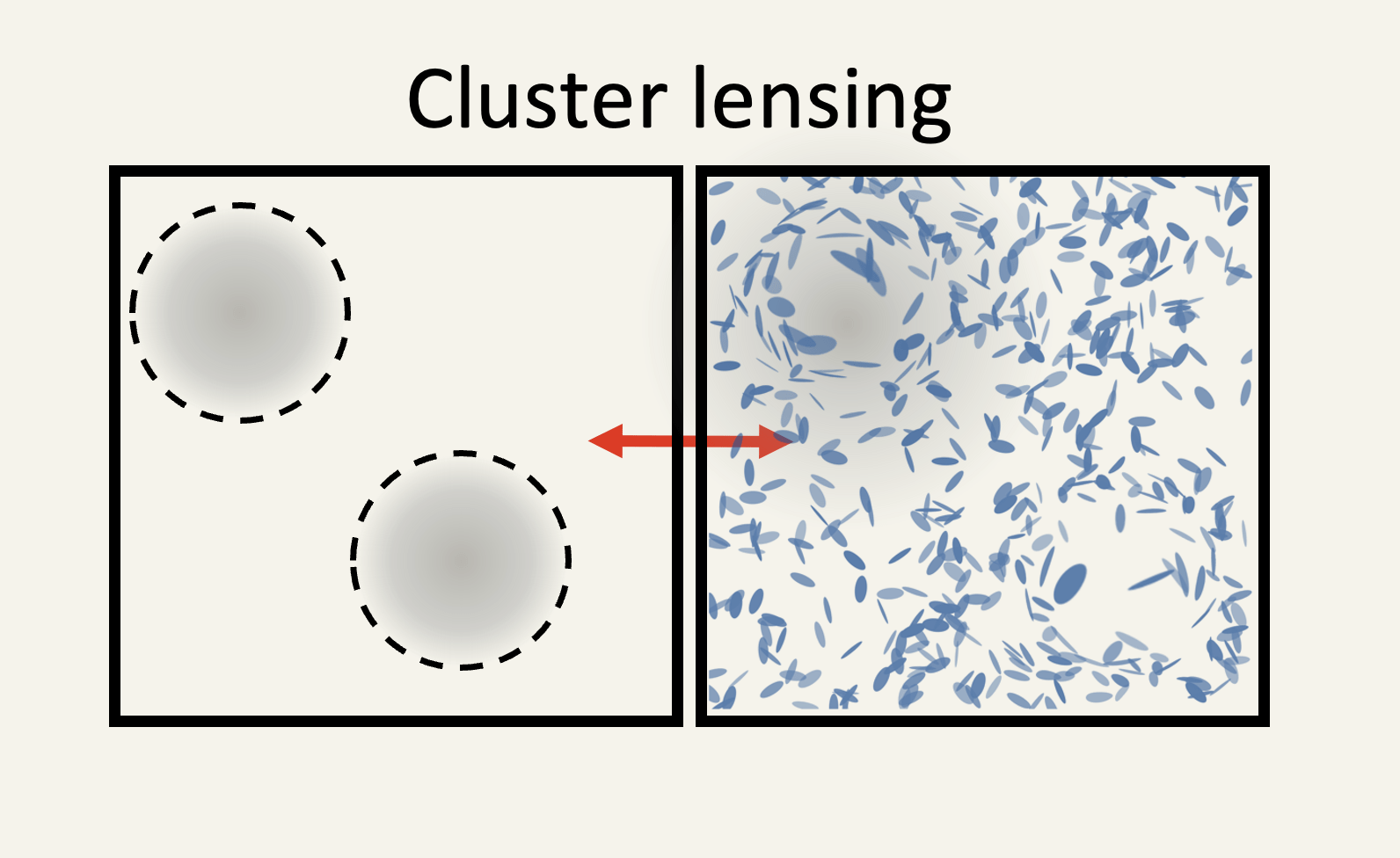
Cluster Cosmology
Bocquet+24 (SPT), Ghirardina+24 (eROSITA), Mantz+14 (WtG),... many many more
Cluster Cosmology
~6500 clusters found in DES Y1
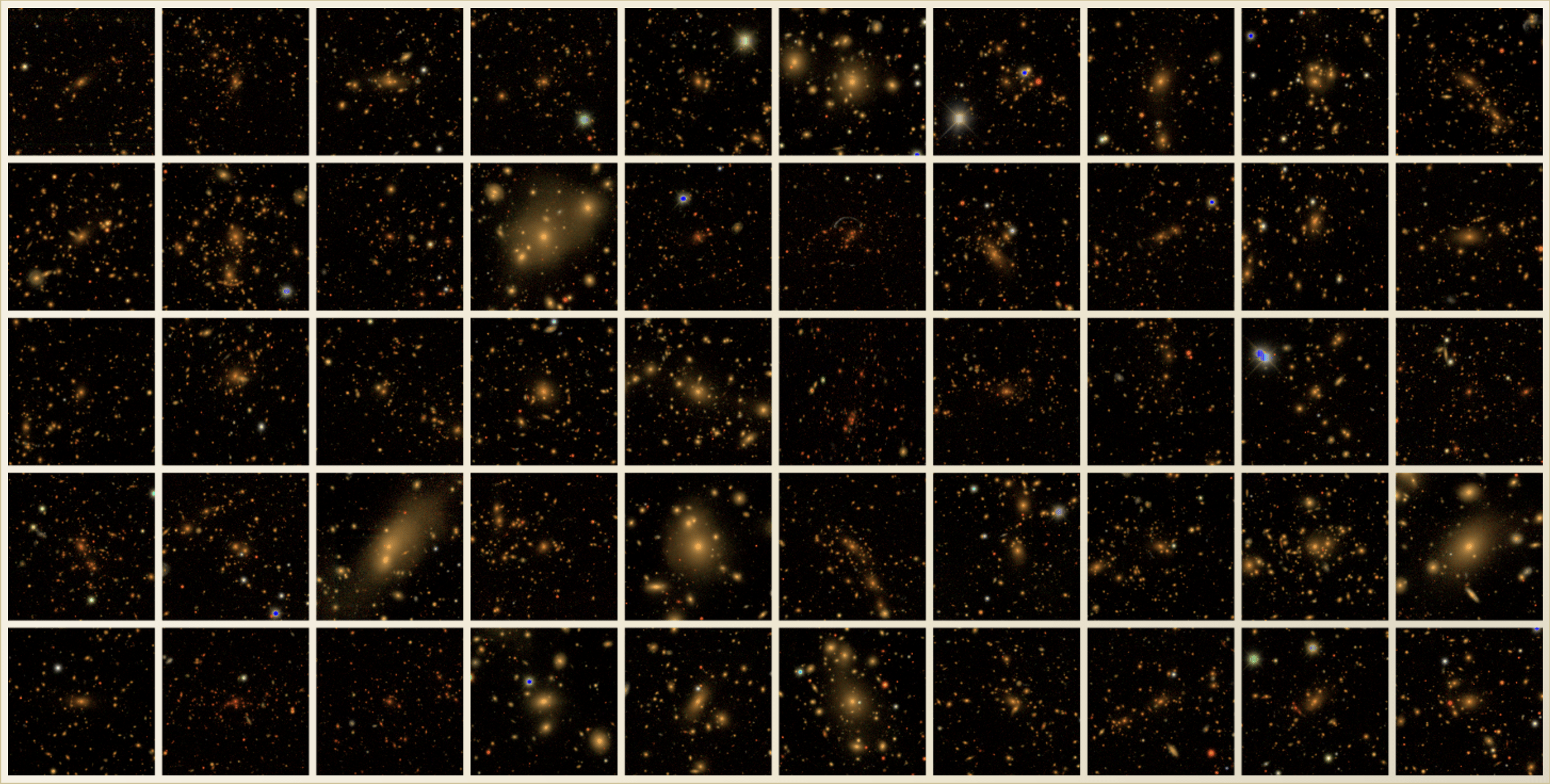
Cluster Cosmology
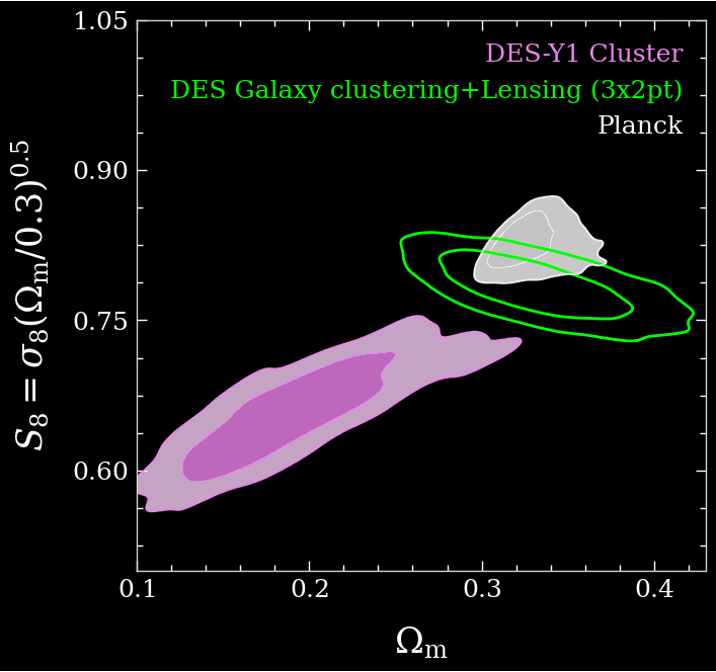
DES+20

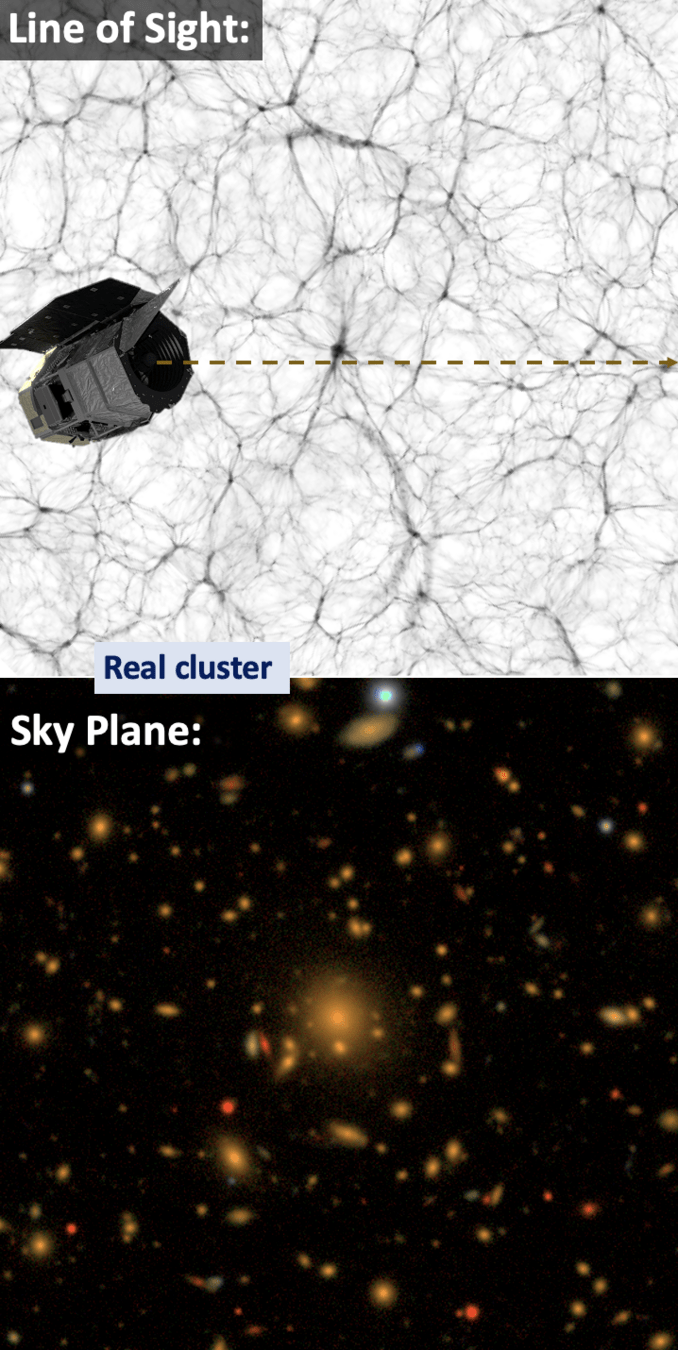
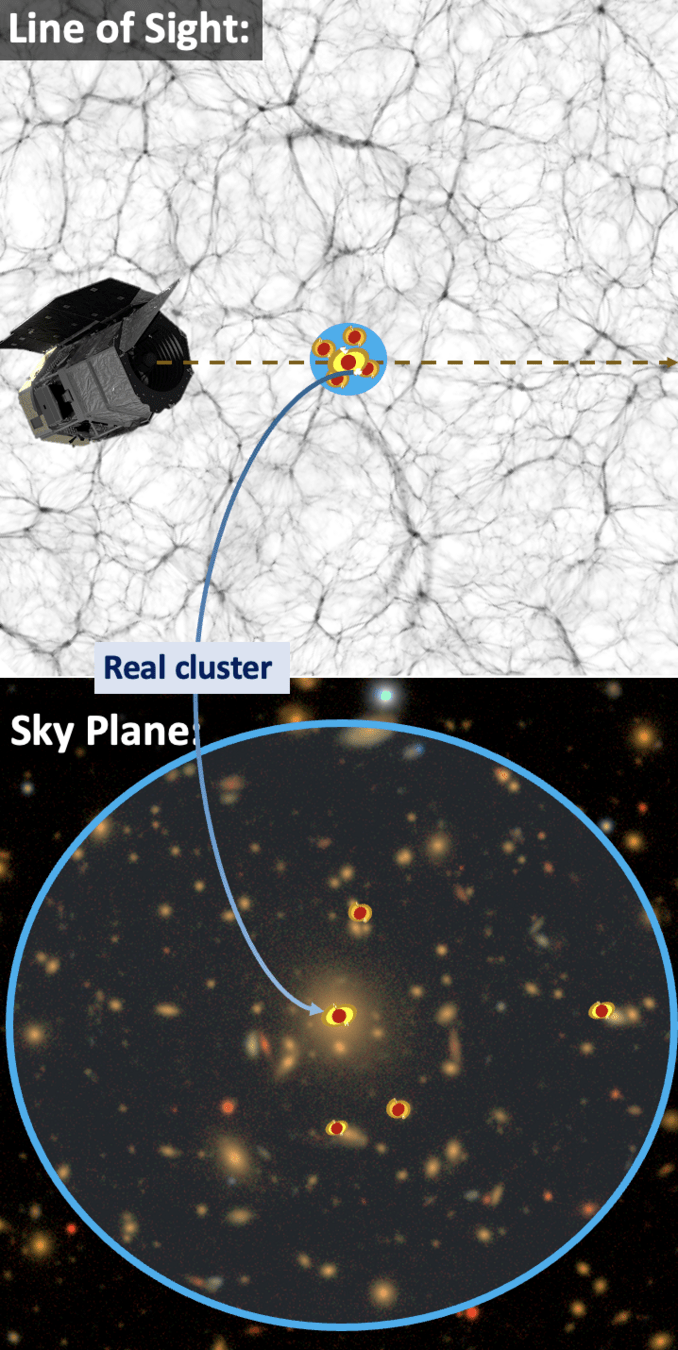
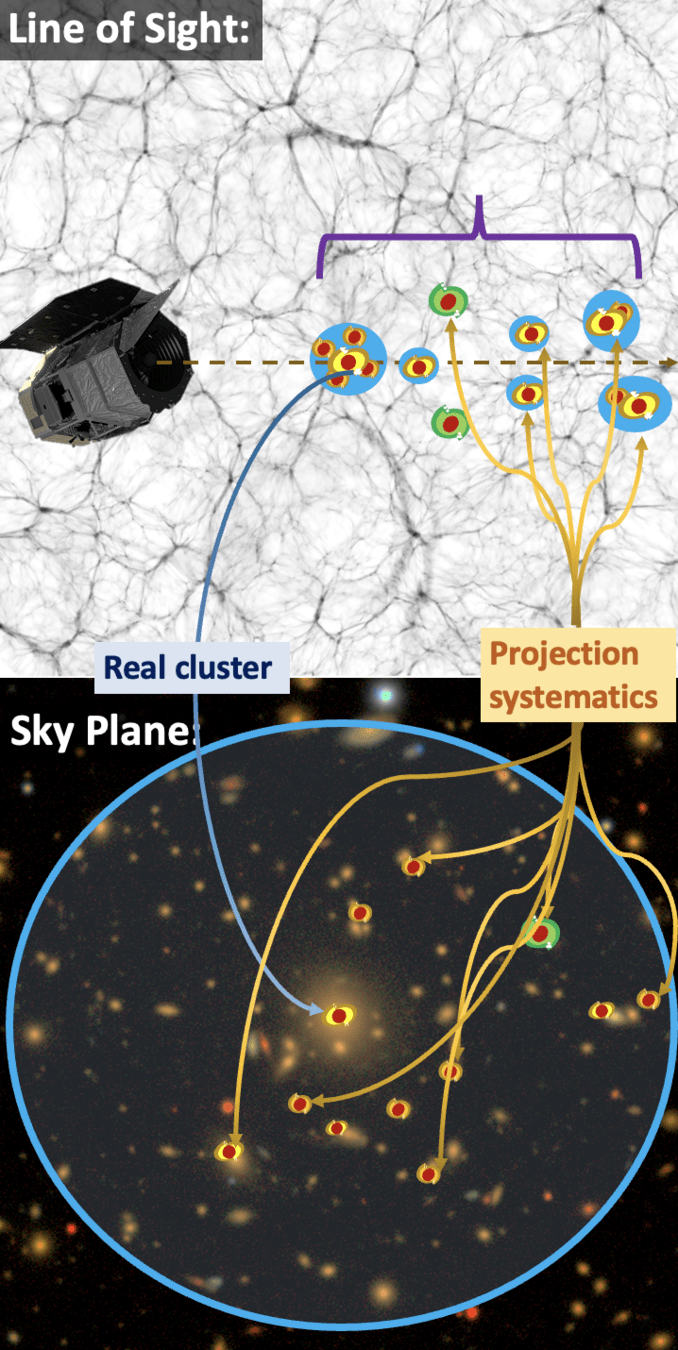
Photo-z uncertainty at z=0.2 ~= 100 Mpc/h
- Optical clusters have 20-30 % contributions from line-of-sight galaxies.
- Modeling these components (and their impact on the weak lensing profile) is essential for unbiased cluster cosmology.
To+21 (MNRAS 502,4093), Lee+22, Wu+ (incl. CT)22, Zhang+ (incl. CT)23, Costanzi+ (incl. CT)26, and many more
How should we proceed?
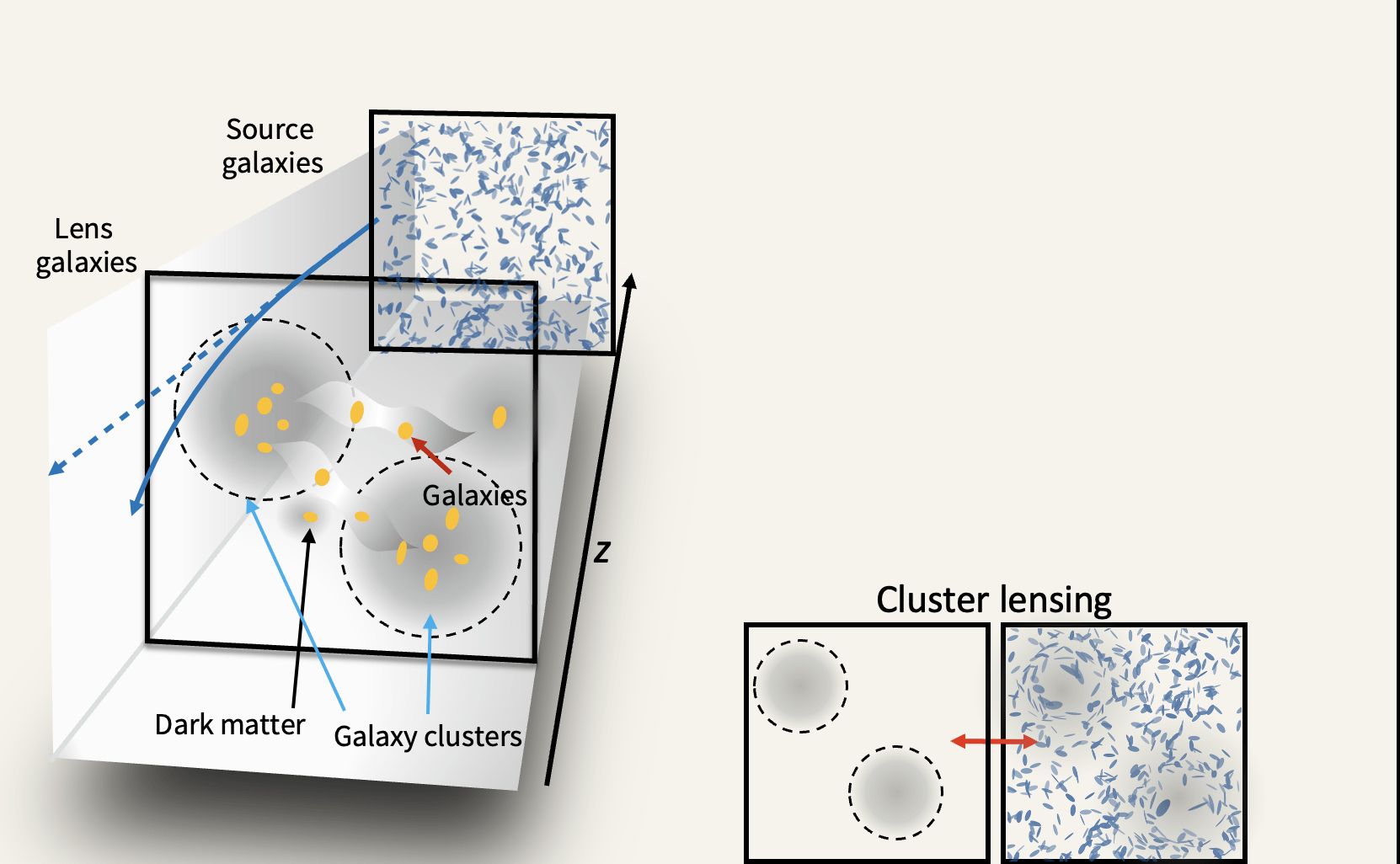
How should we proceed?
- Clusters are really part of the large-scale structure.
How should we proceed?
-
Clusters are really part of the large-scale structure.
- Analyze clusters in the same way as galaxies.
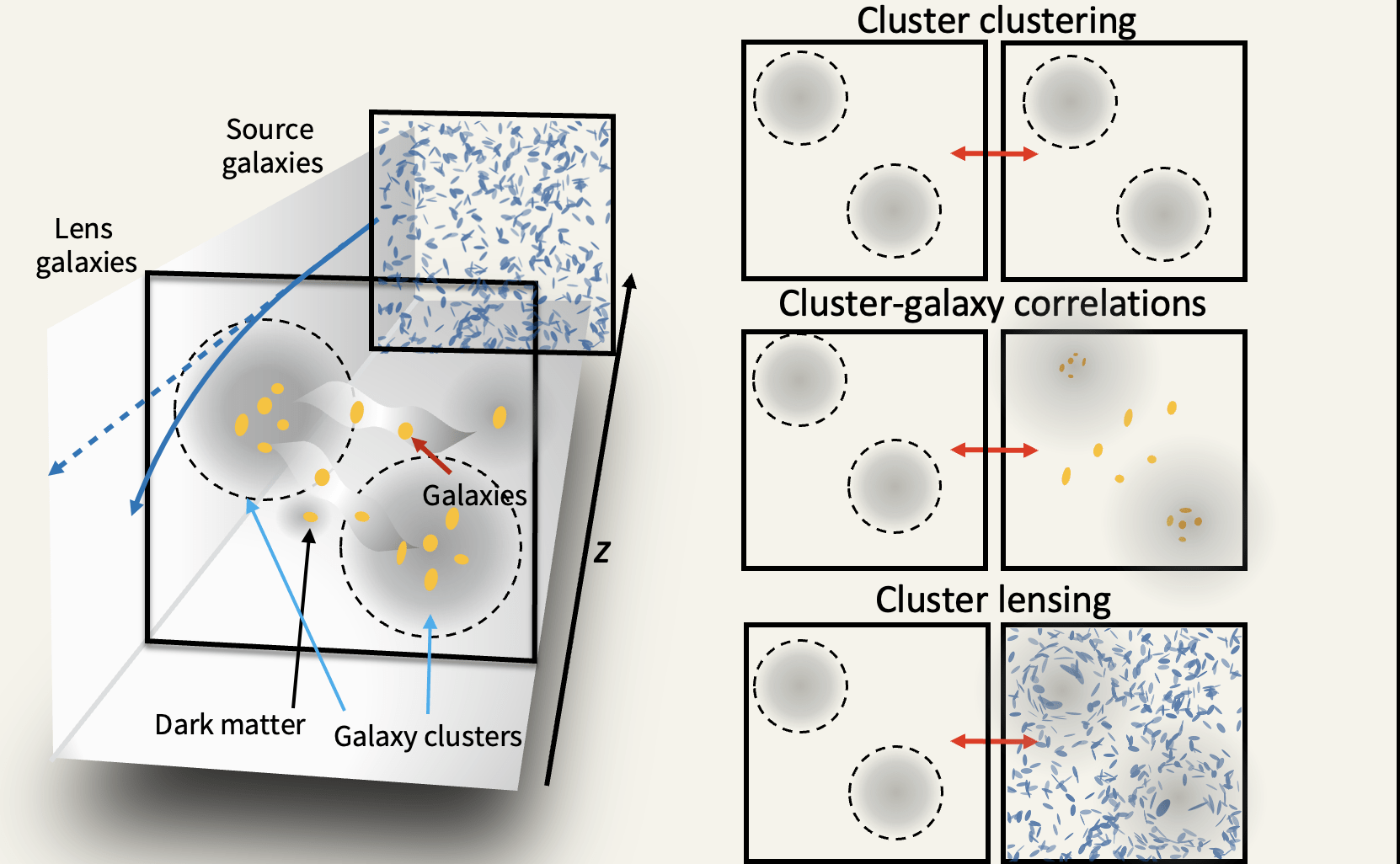
Why do we want to make it even more complicated?
Why do we want to make it even more complicated?
Adding more data makes modeling simpler:
- Focusing on large scales where we can model the data perturbatively (>0.2 Mpc/h vs >8 Mpc/h).
- Self-calibrating projection effects.
- Easily integrated into joint analyses.
Reanalysis of DES-Y1 data
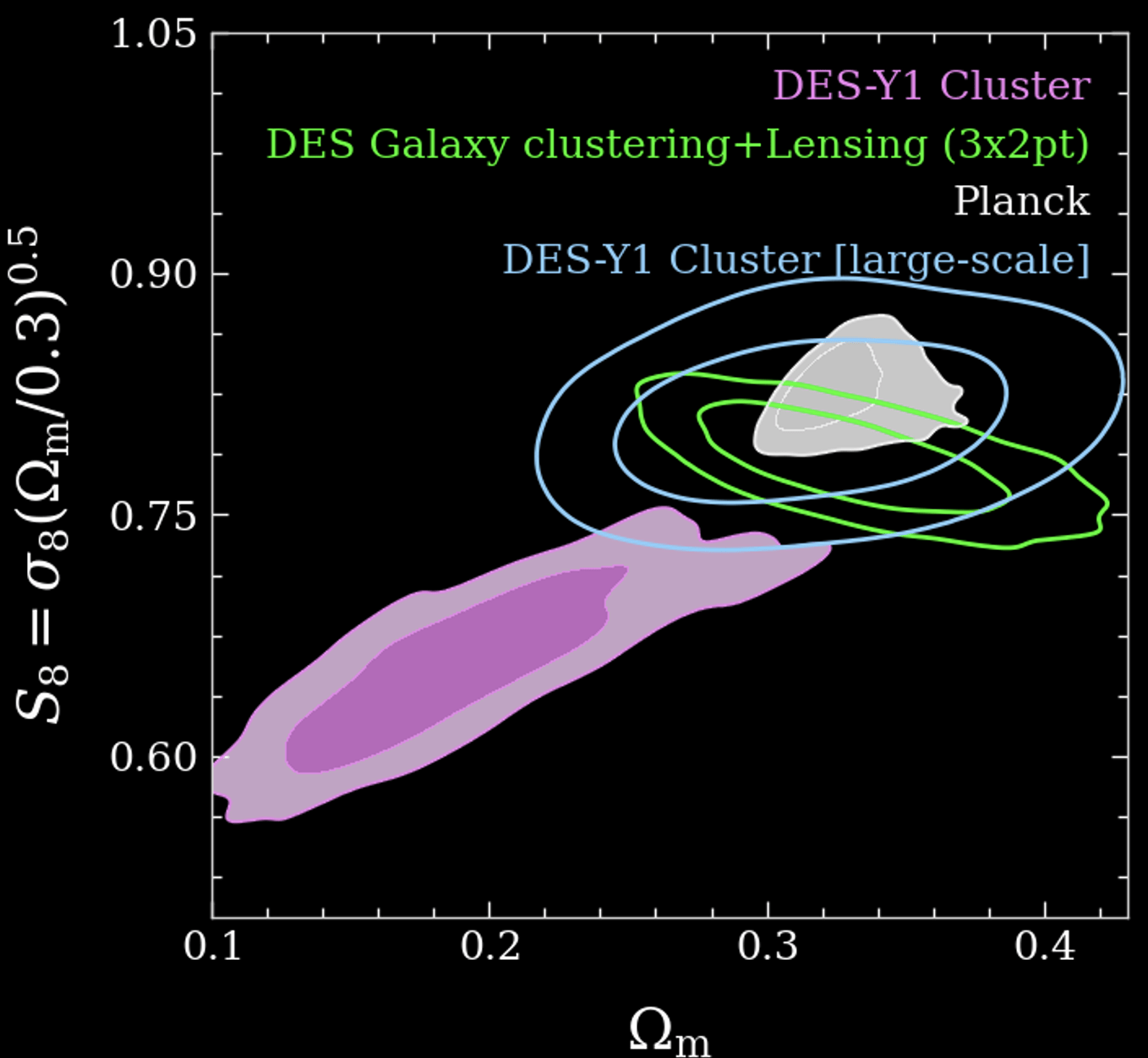
Large-scale only reanalysis
DES-Y1 clusters
To&Krause+ 21 (PRL, 126, 141301)
DES Y1
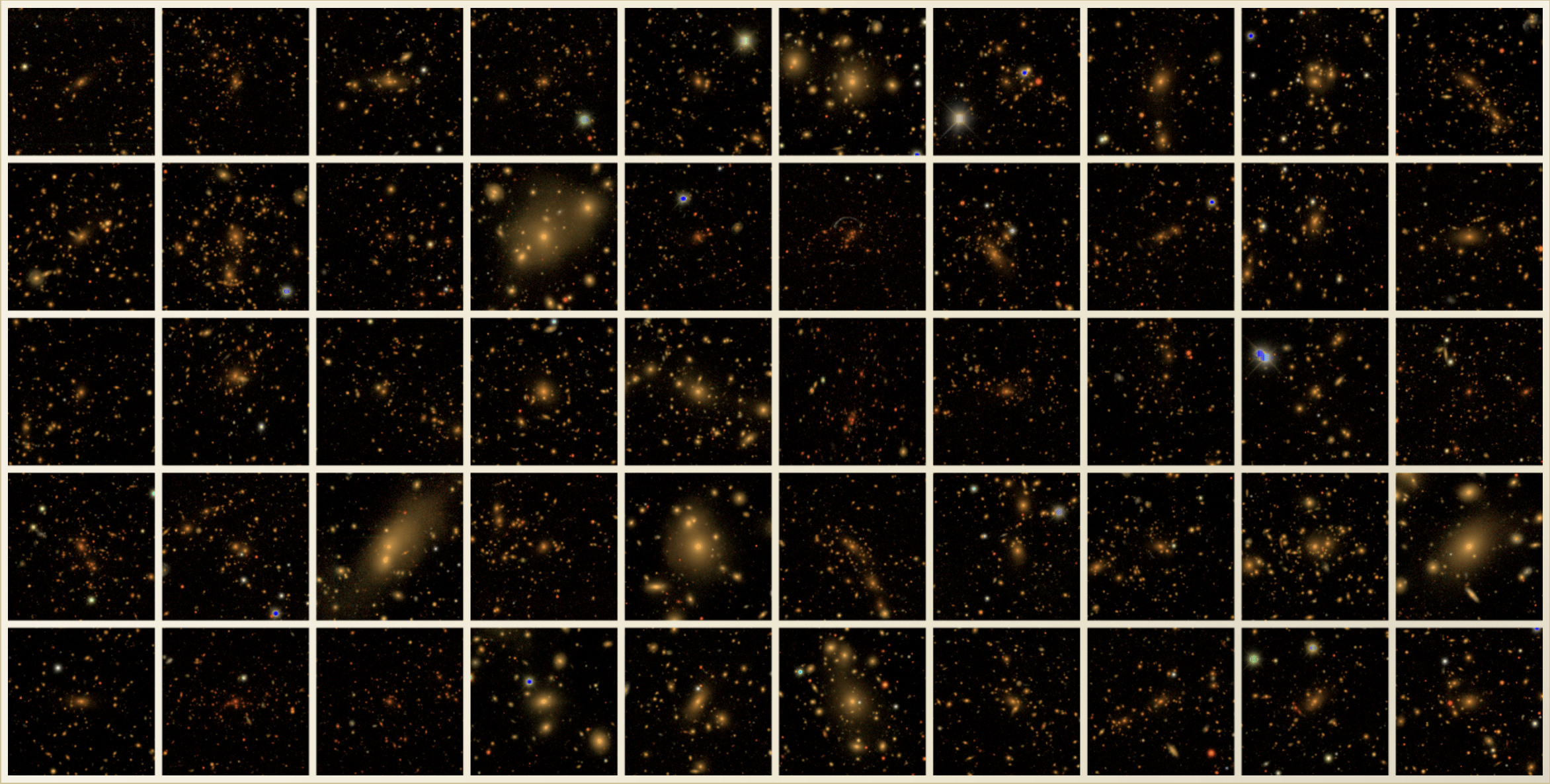
DES Y3 (>16k clusters)
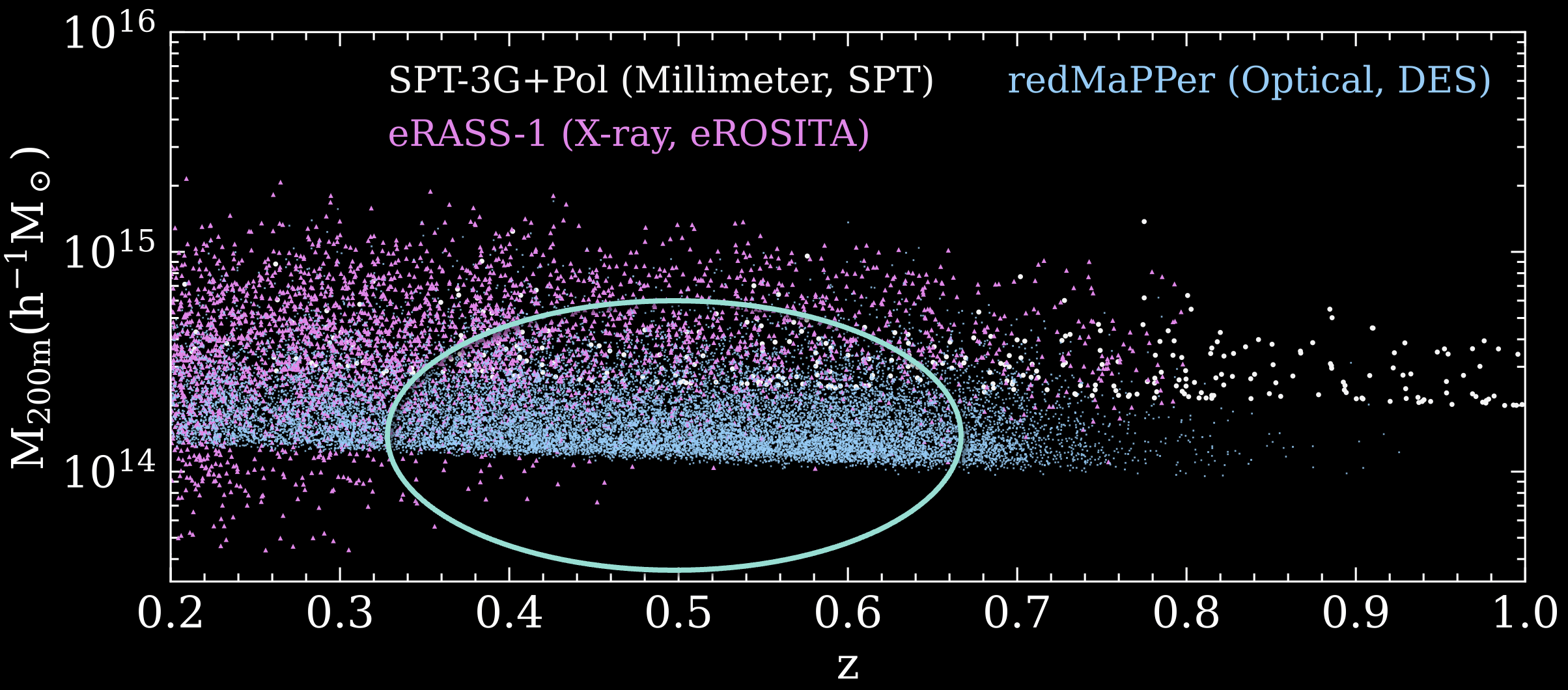
Unique redshift and mass range
Merloni+24, Kornoelje+25, DES+25, see also ACTDESHSC Collaboration+25 (ACT DR6)
[SPT deep]
Y3 cluster cosmology are challenging due to high S/N
- 19 astrophysical parameters describing the connection of measurements and matter fluctuations (linear galaxy bias, intrinsic alignments, mass—observable relations, and projection effects)
- 12 observational parameters describing observational systematics (photometric redshift and shear measurement)
DES standard!
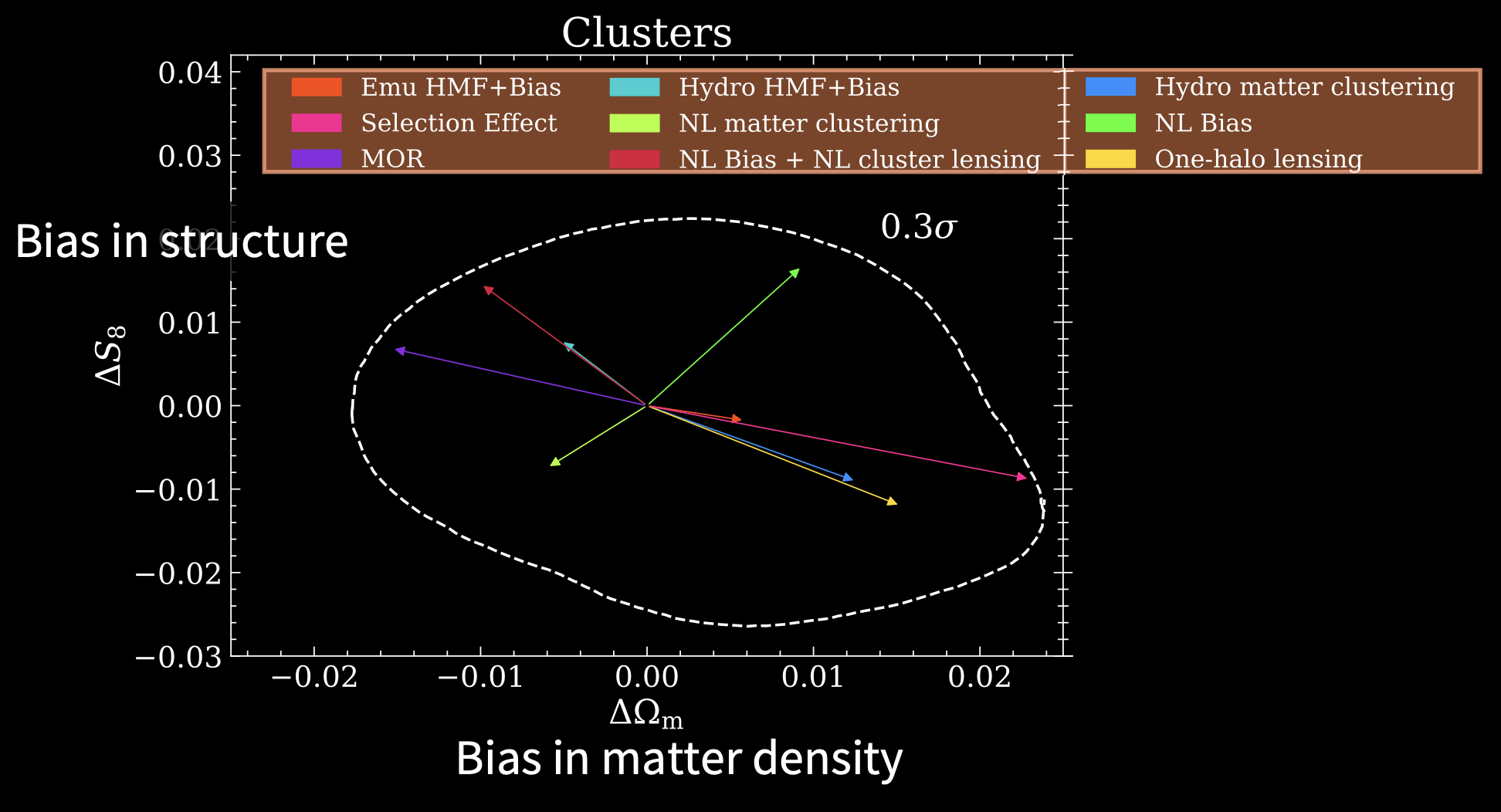
To+25 (PRD, 112, 063537)
Exhaustively test possible systematics
Several systematics are worrisome:
- Nonlinear bias of tracers
- Modeling of the projection effect
- Mass-observable relation
Some are not bad:
Halo Mass Function/ Halo Bias
New simulation to test the model
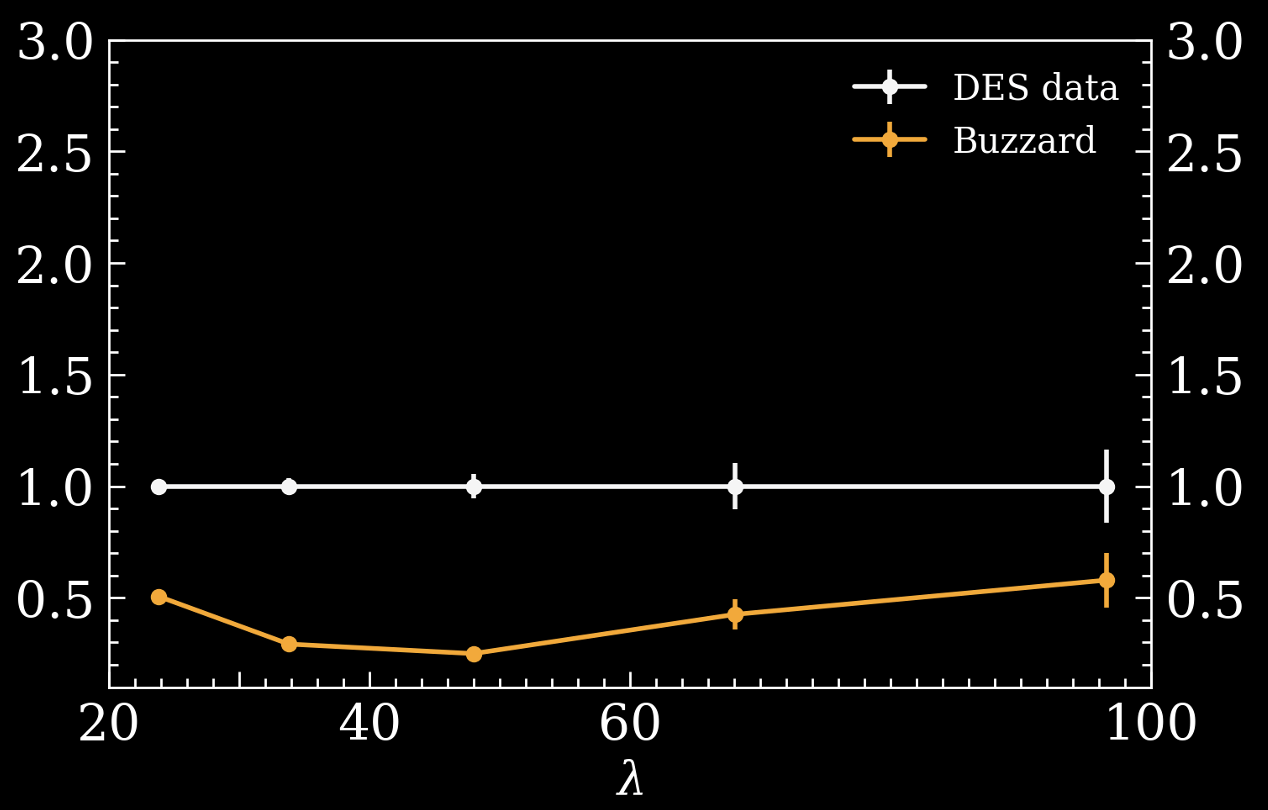
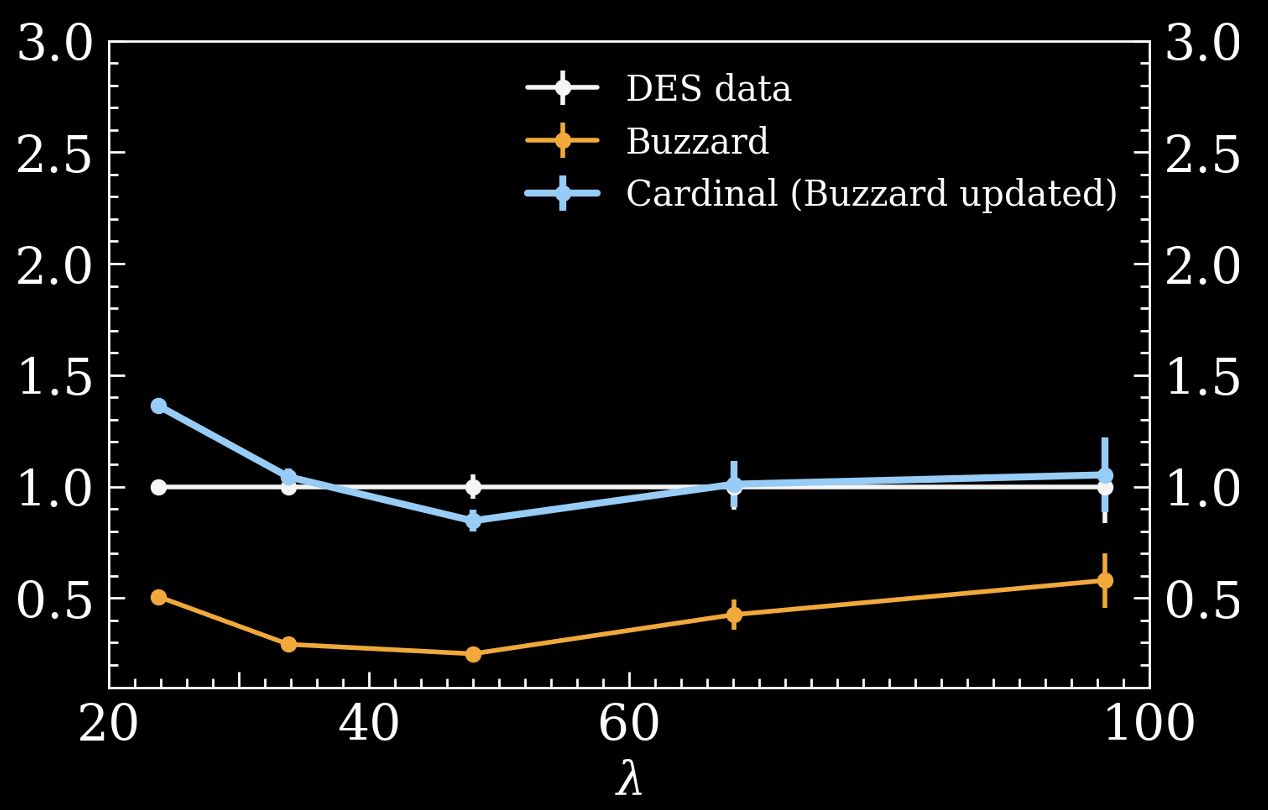


# Cluster ratios
To+24, APJ,961,59
Title Text
Subtitle
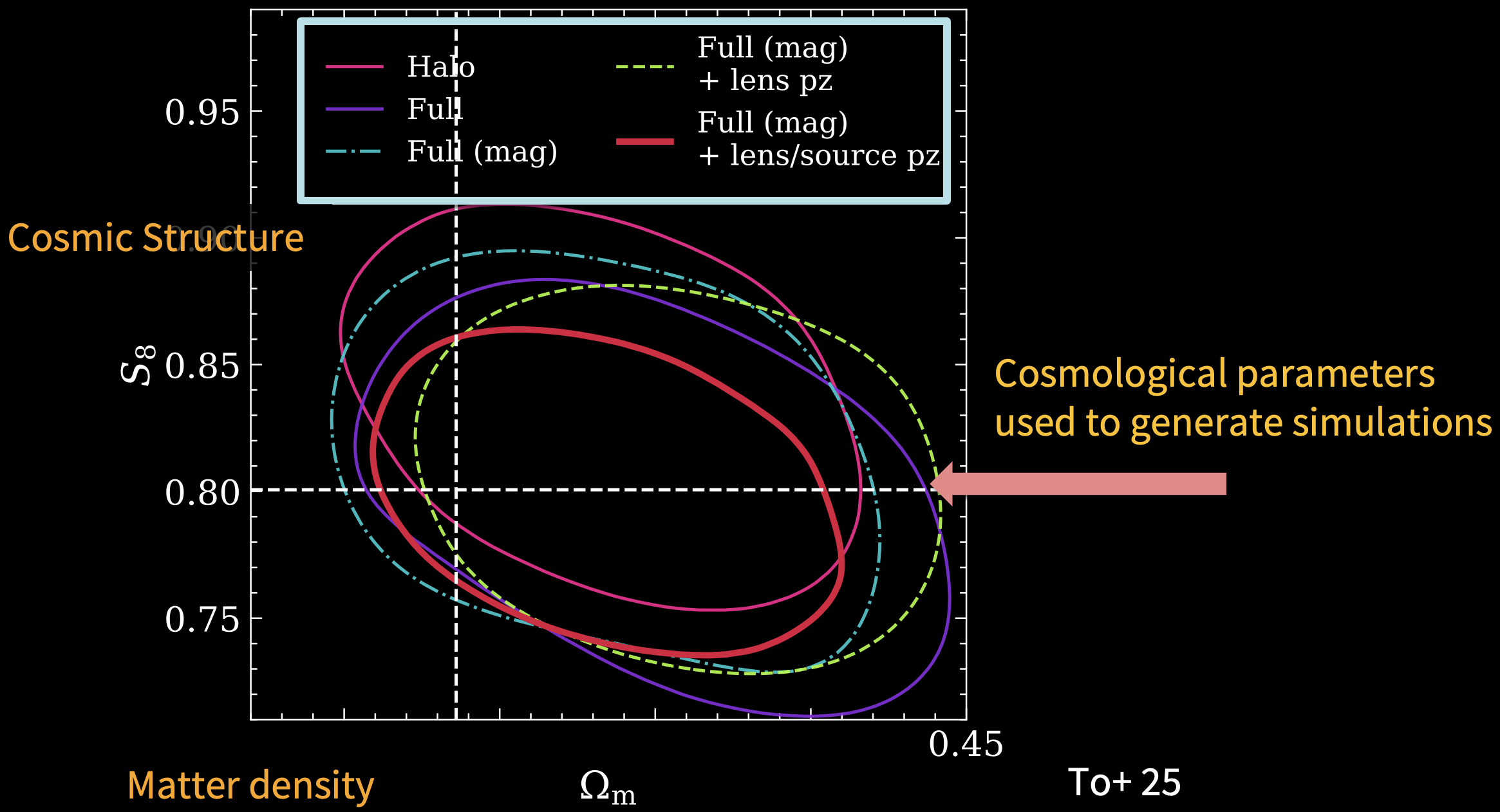

Simulations (Cardinal, To+24, APJ,961,59) to test cluster finding algorithm.
To+25 (PRD, 112, 063537)
DES cluster
Cosmology constraints (50% improvements relative to DES-Y1):
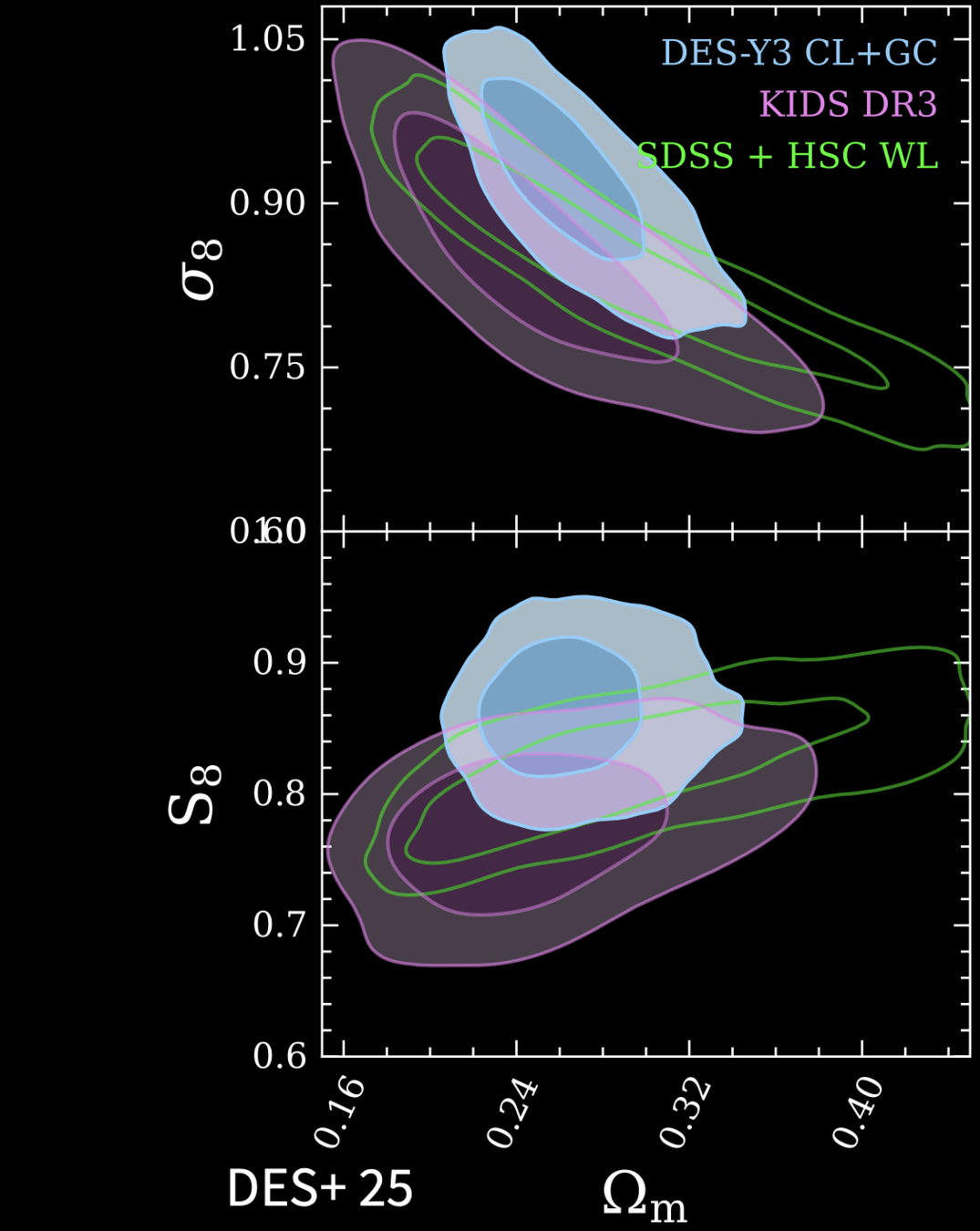
DES+25
DES internal consistency
Posterior Predictive Distribution (PPD) with a criteria PPD (d1|d2)>0.01.
P(cosmic shear | CL+GC, ΛCDM) = 0.04> 0.01
P(cosmic shear + galaxy-galaxy lensing| CL+GC) = 0.07>0.01
DES+25
DES+25
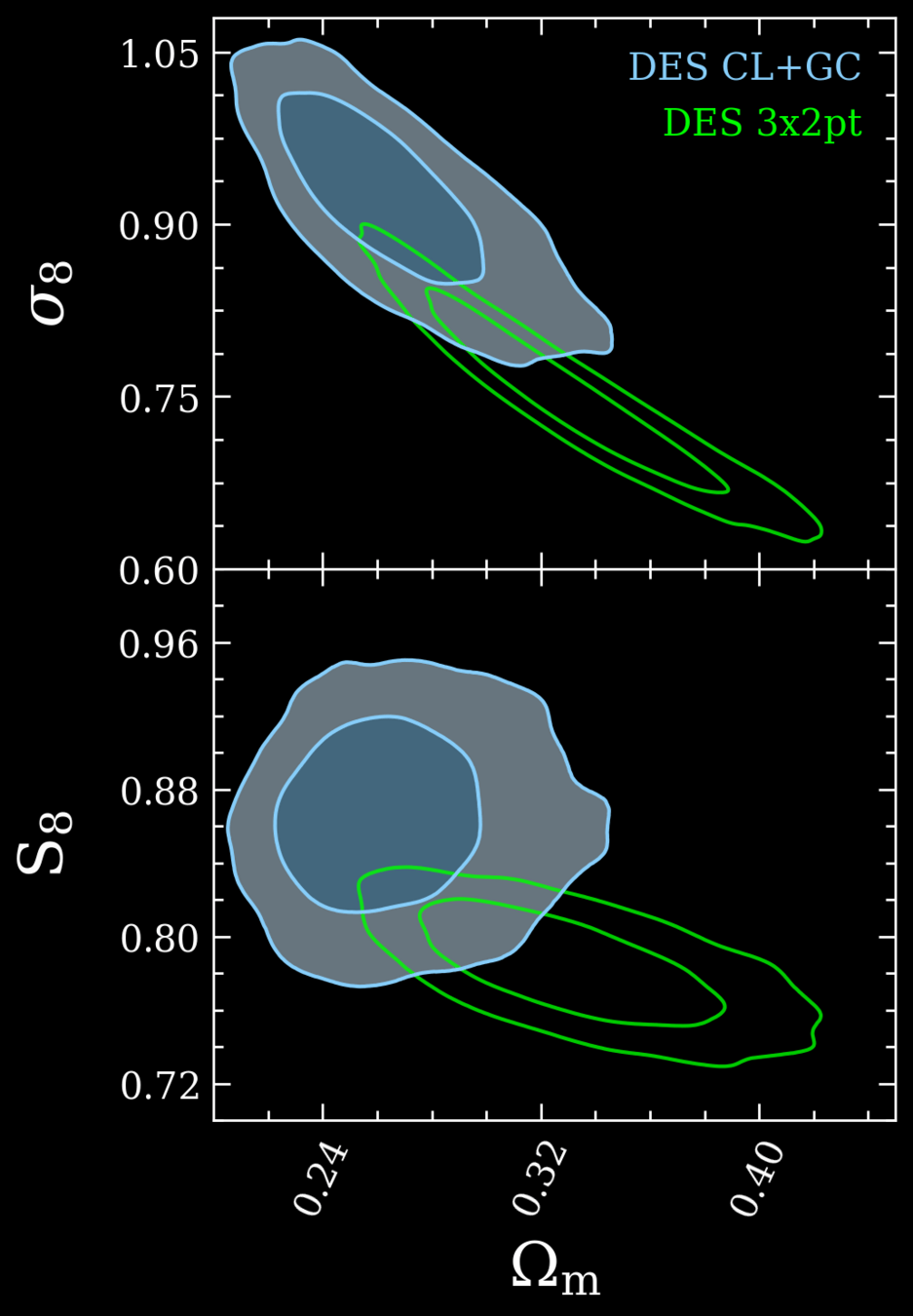
All probes combined
DES joint analyses of clusters, galaxies, and weak lensing (CL+3x2pt):
24% improvements compared to 3x2pt.
DES+25
DES+25
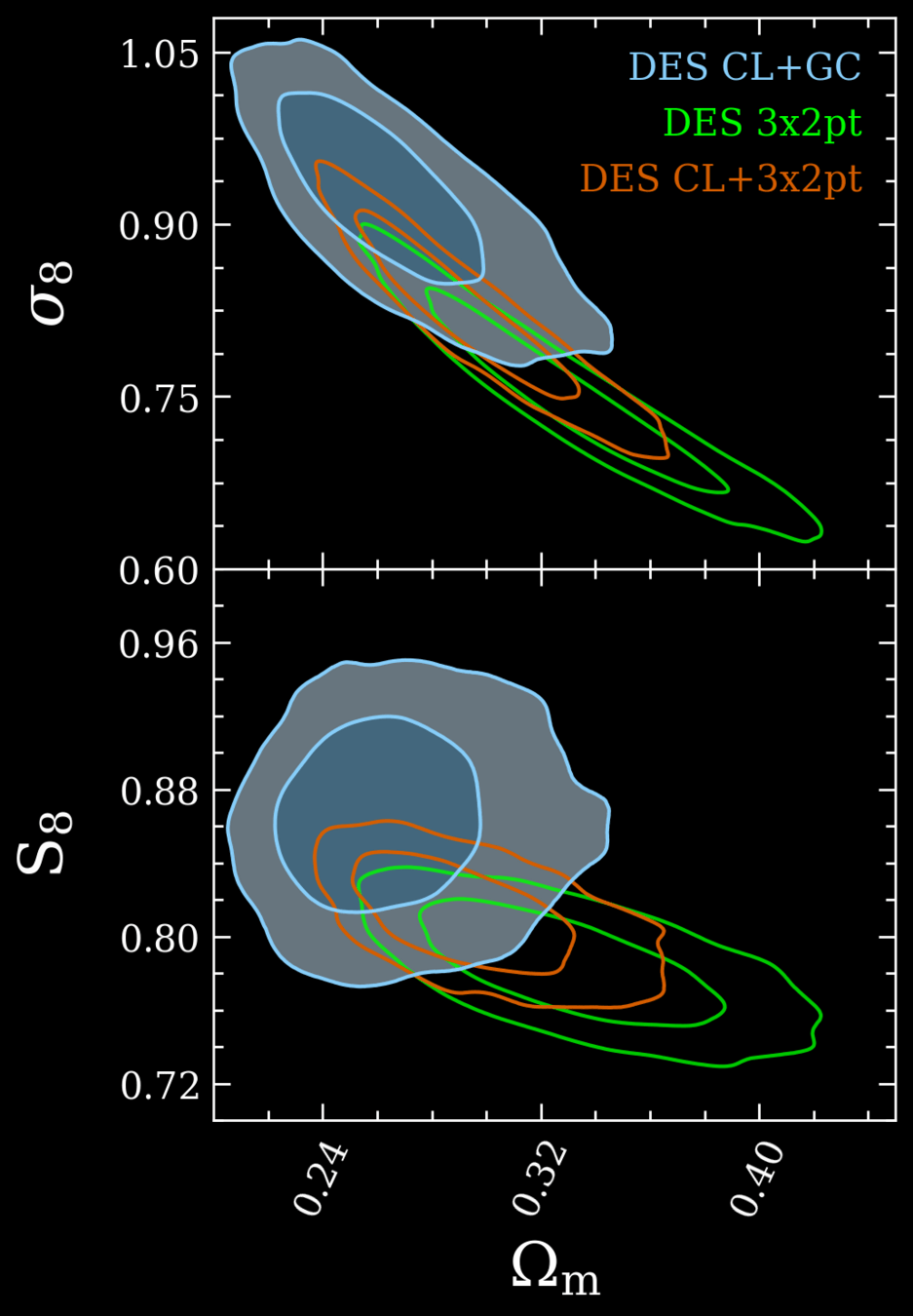
All probes combined
DES+25
Bocquet+ (Include CT) 25
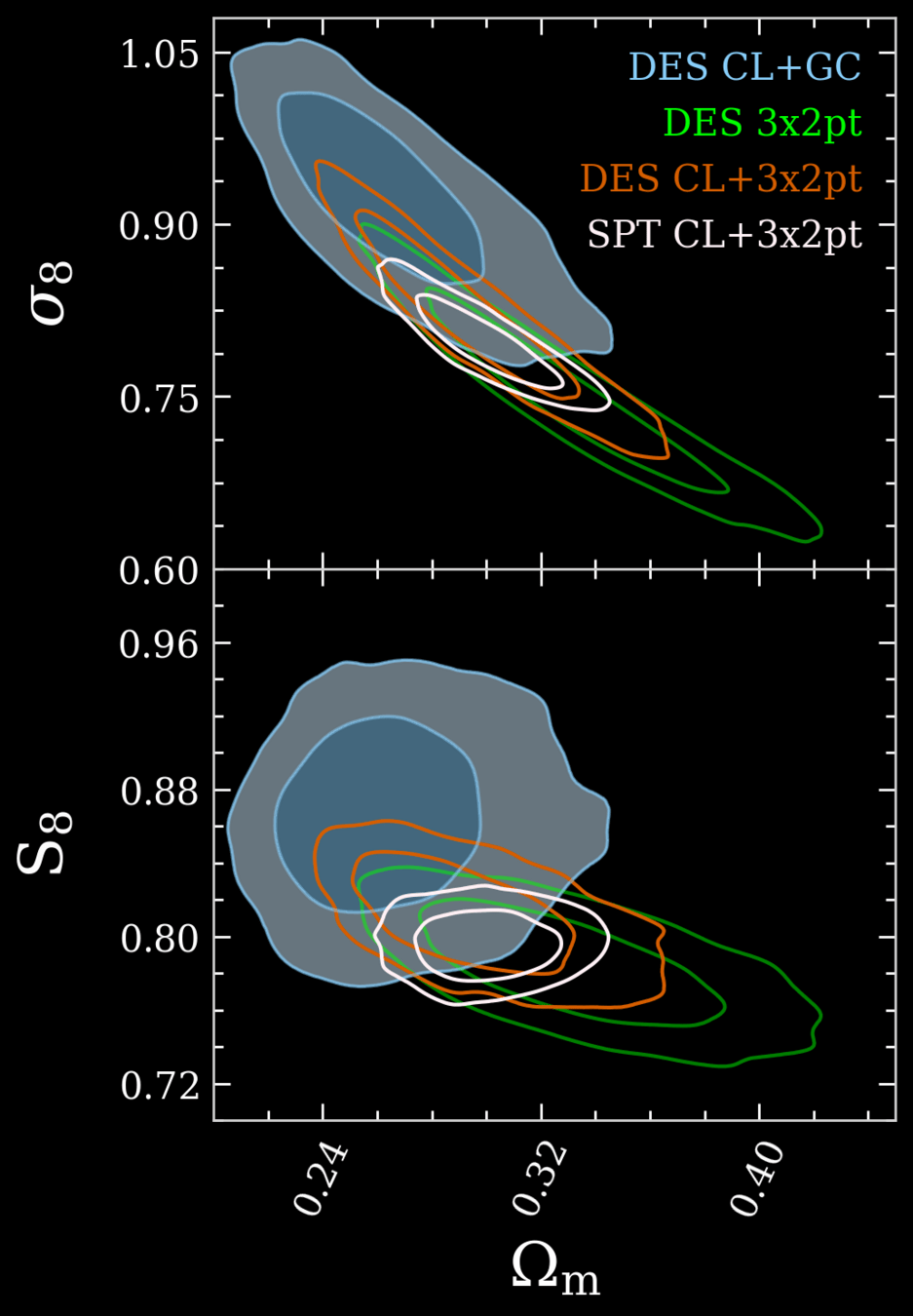
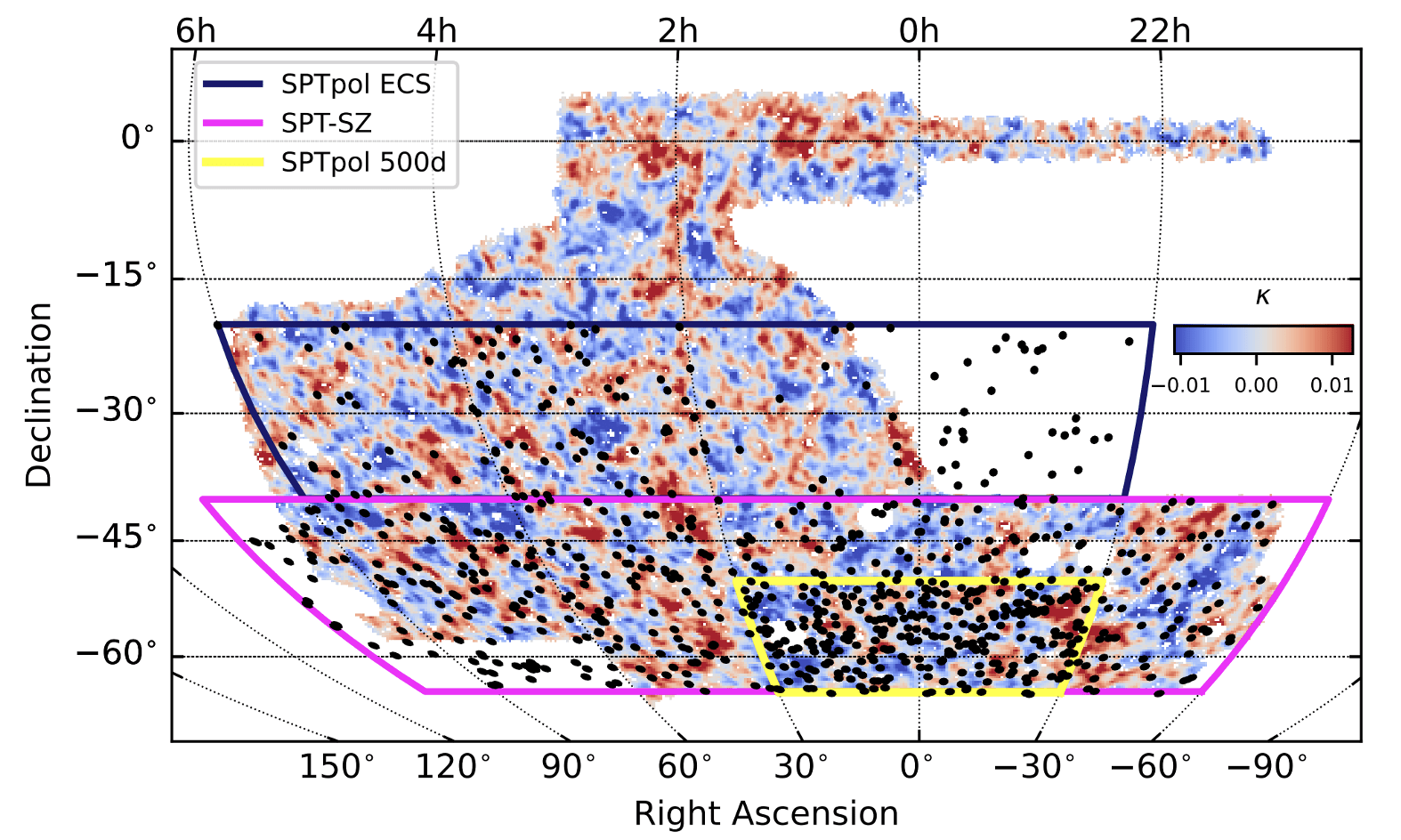
SPT clusters + DES 3x2pt
Galaxy Cluster physics
Dark Matter Halo
~
Red galaxies
~ 2% of the mass
Hot gas
~ 10% of the mass
Cosmology
Galaxy physics
Baryonic feedback
Yang+03, Lin&Mohr04, More+16,
Kravstov+18, Shin+19, To+20 (APJ 897,15), ... many more
Vikhlinin+06, Eckert+16,
To+24 (JCAP 2024, 037), Dalal+25, Kovac+25, Siegel+25, ...many more
Galaxy Cluster physics
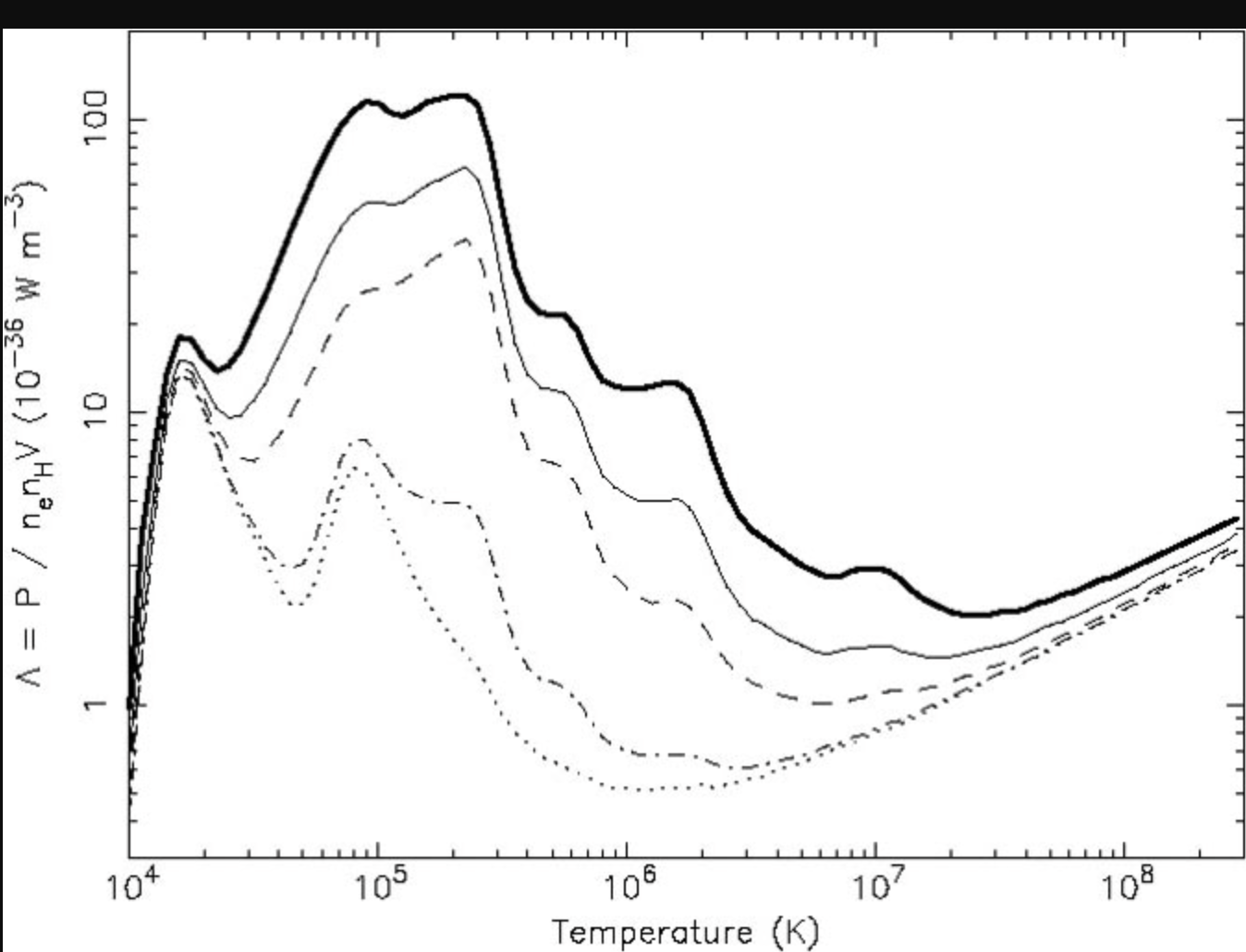
Hot gas
~ 10% of the mass
- Millimeter wave (Thermal Sunyaev-Zel'dovich effect)
- X-ray
Line of sight
Cooling function
Why should we care?
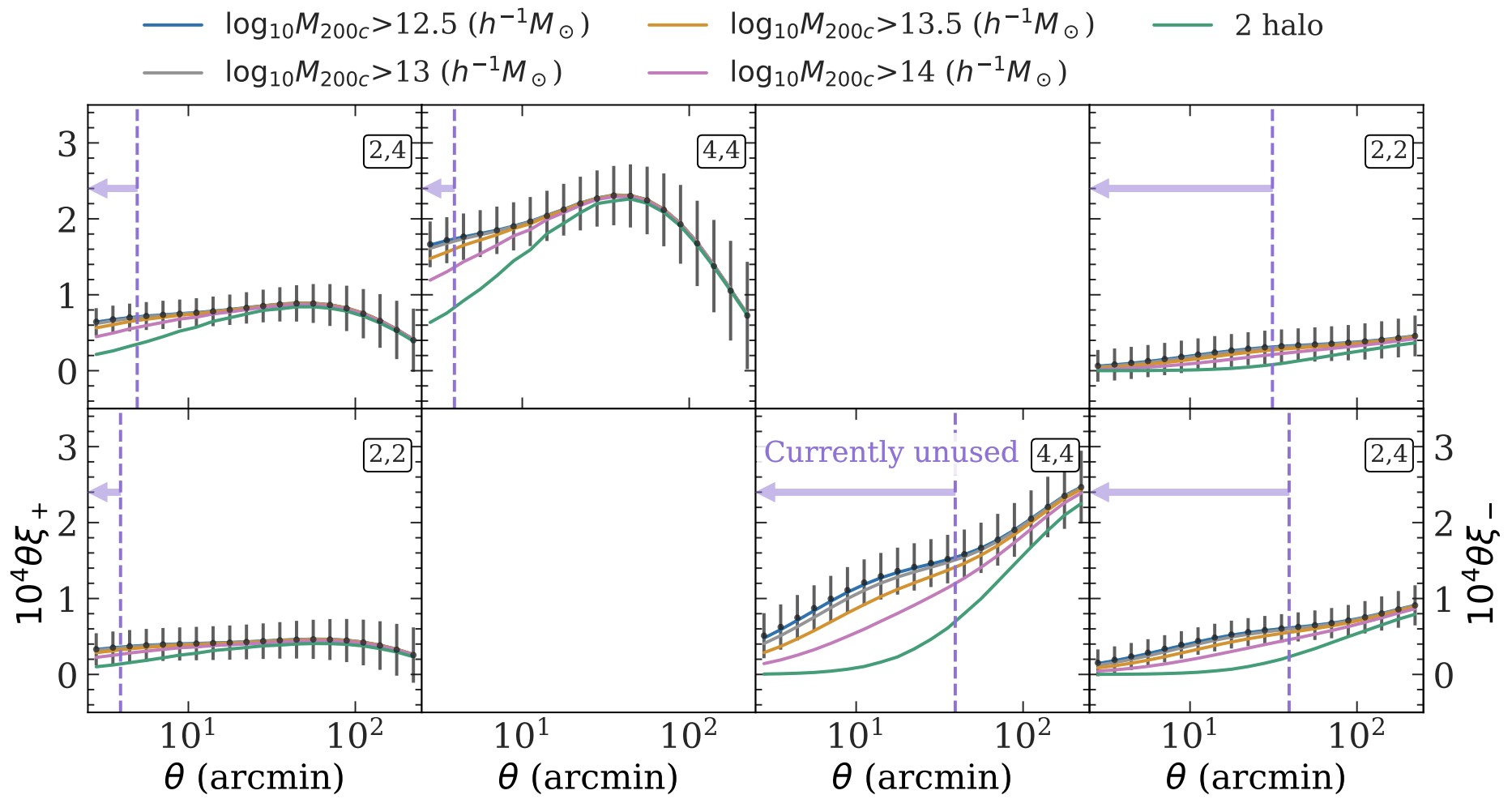
To+24, see also Lucie-Smith+ 25
A significant amount of information in cosmic shear below or near the scale cut comes from galaxy clusters.
What are the observables
Weak lensing
CMB

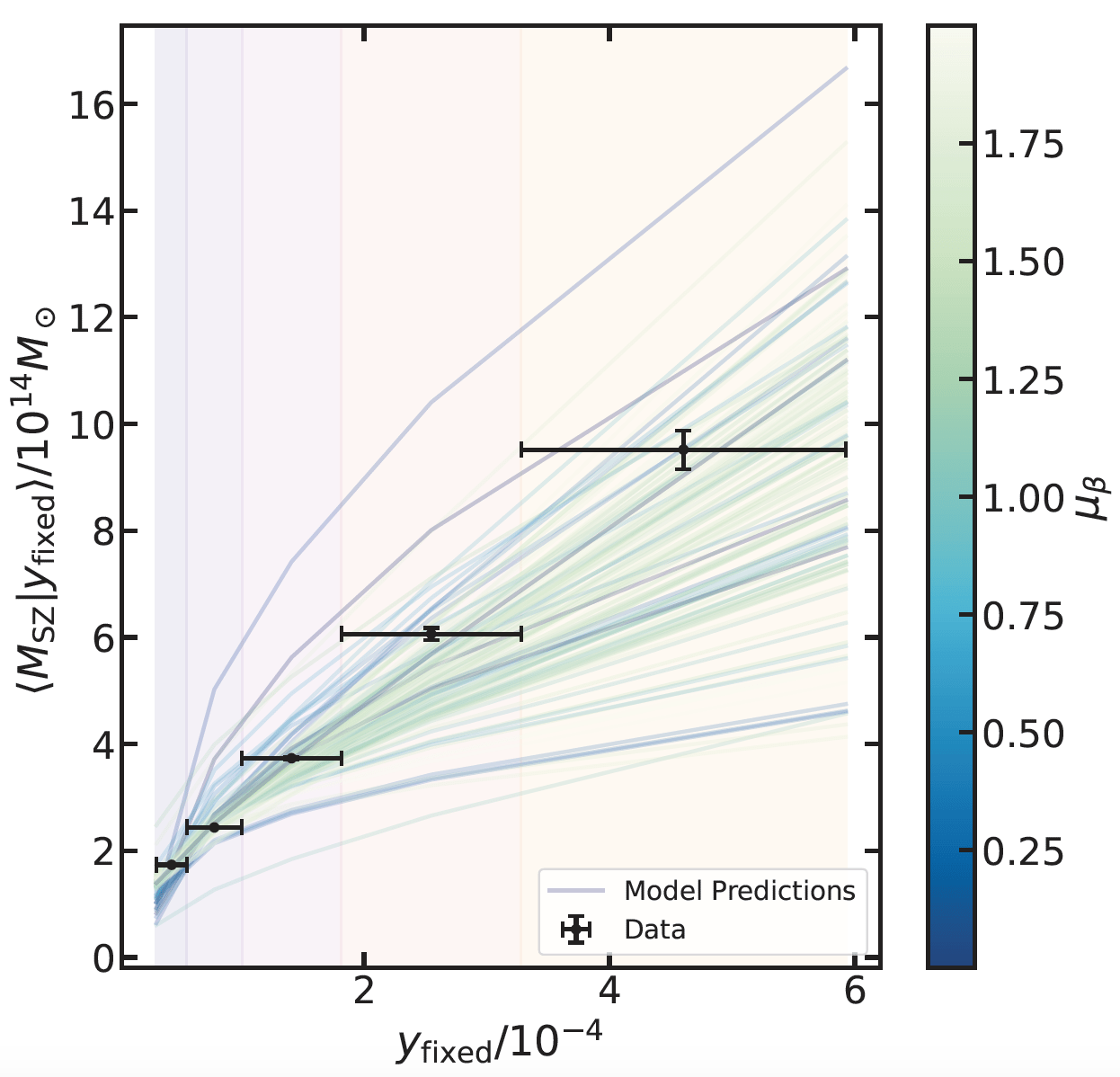
What are the observables
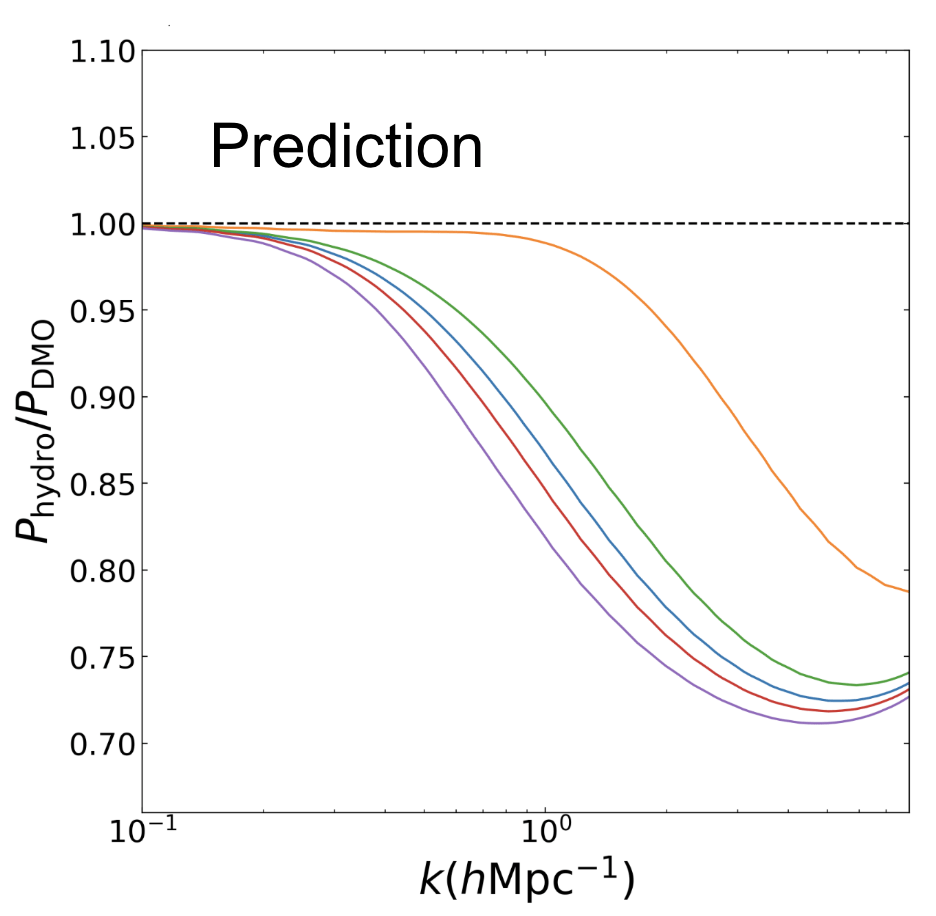
Change of Matter clustering
Model
Godmax:
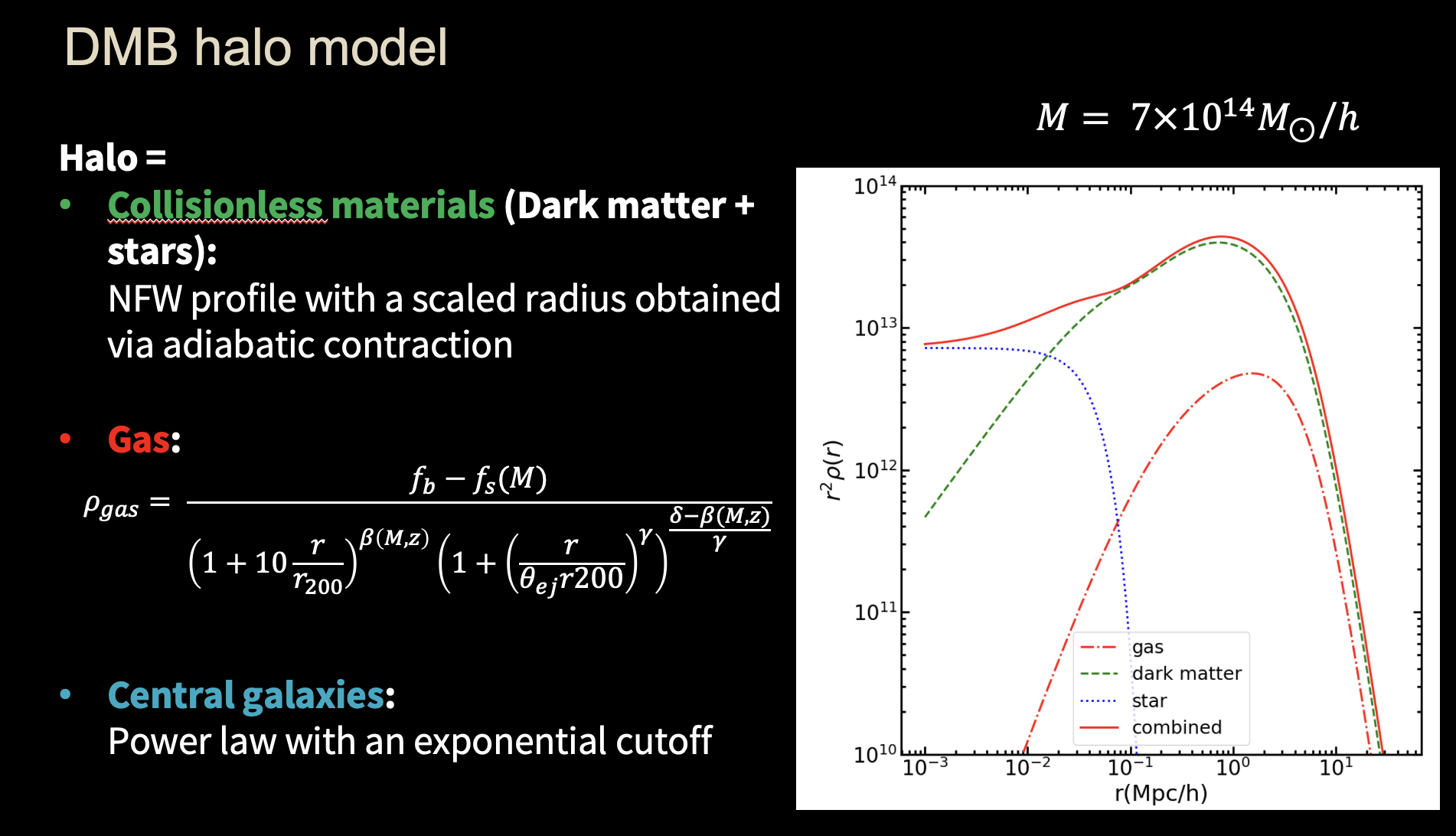
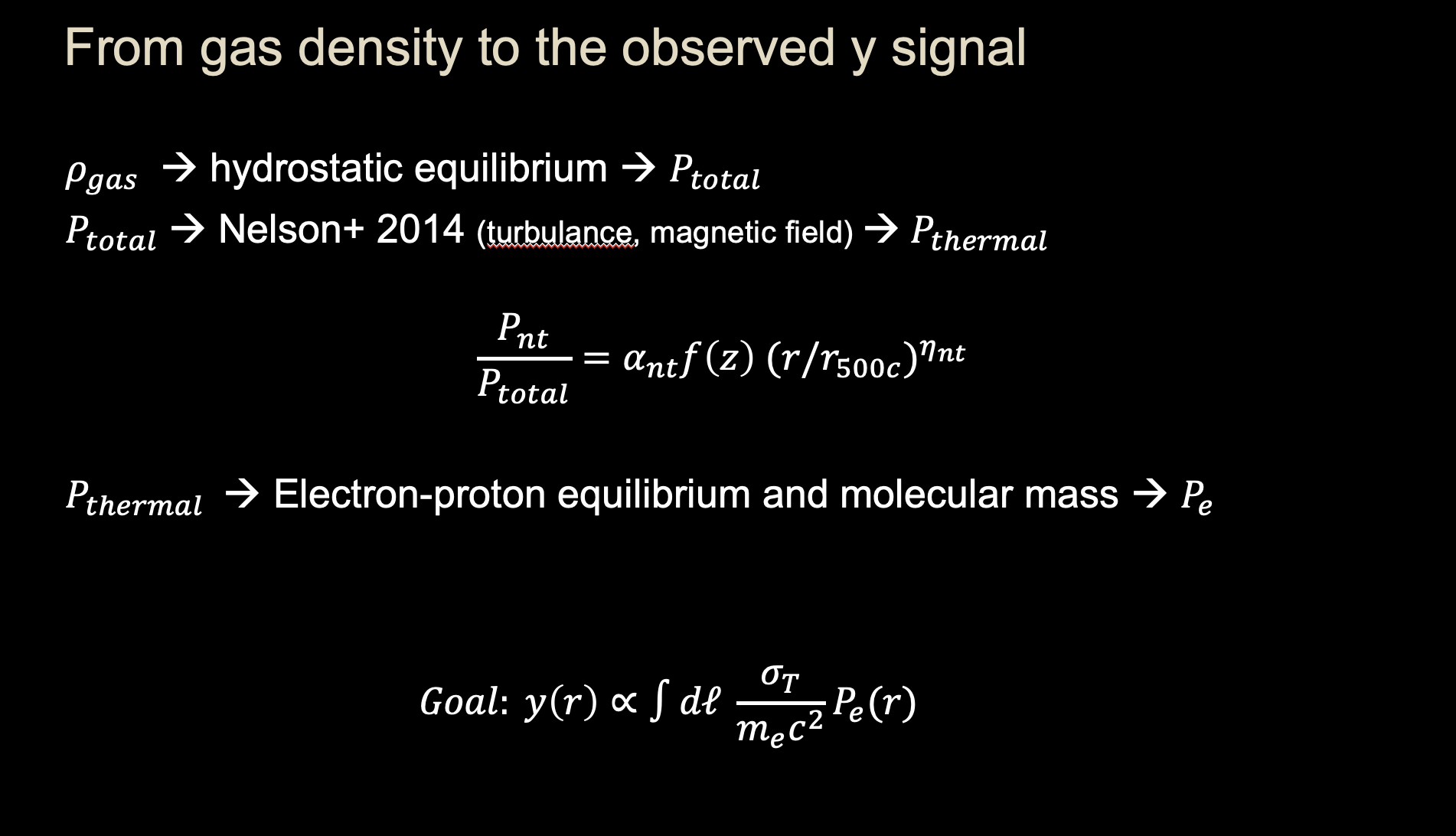
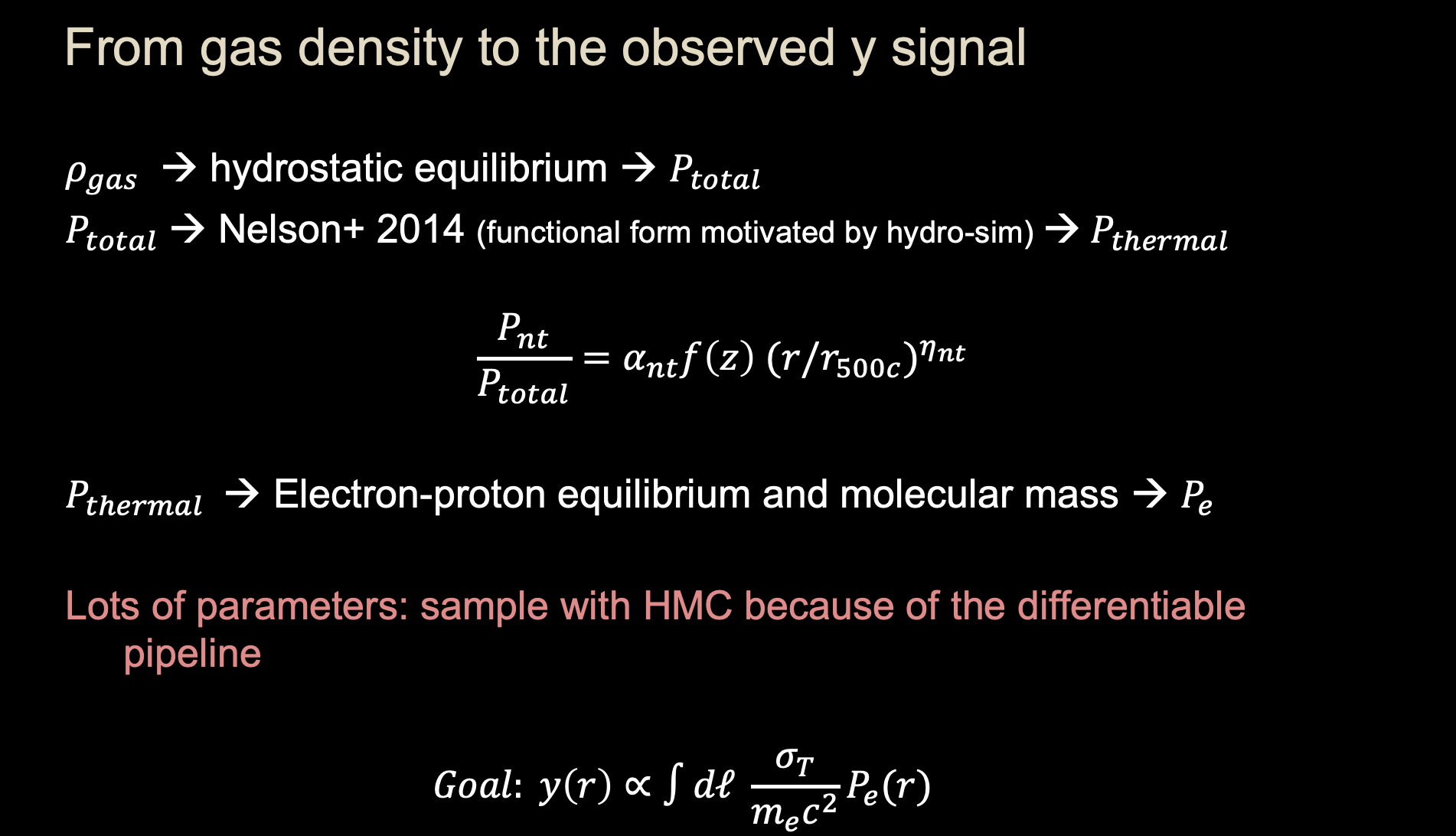
A Schneider-Teyssier-type model with parametrized gas distribution implemented in Jax
(Pandey+ (incl. CT) 24)
See also Schneider&Teyssier 15, Giri+ 21, Schneider+ 25, and many more
Simulation validation
Text
Measurement
Prediction
+ Godmax model
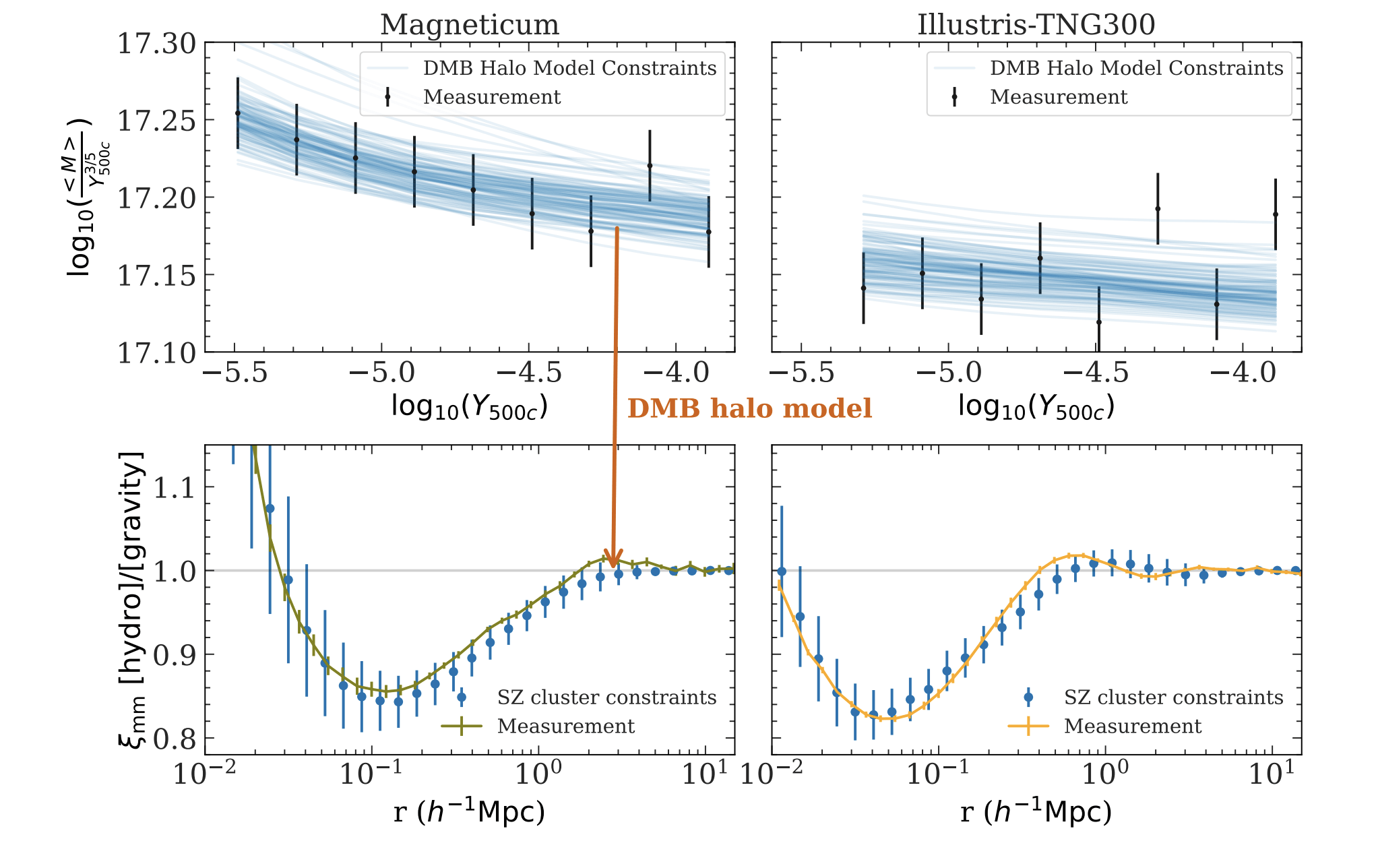
To+ 24
Simulations validation
Text
To+ 24
Pathfinder study
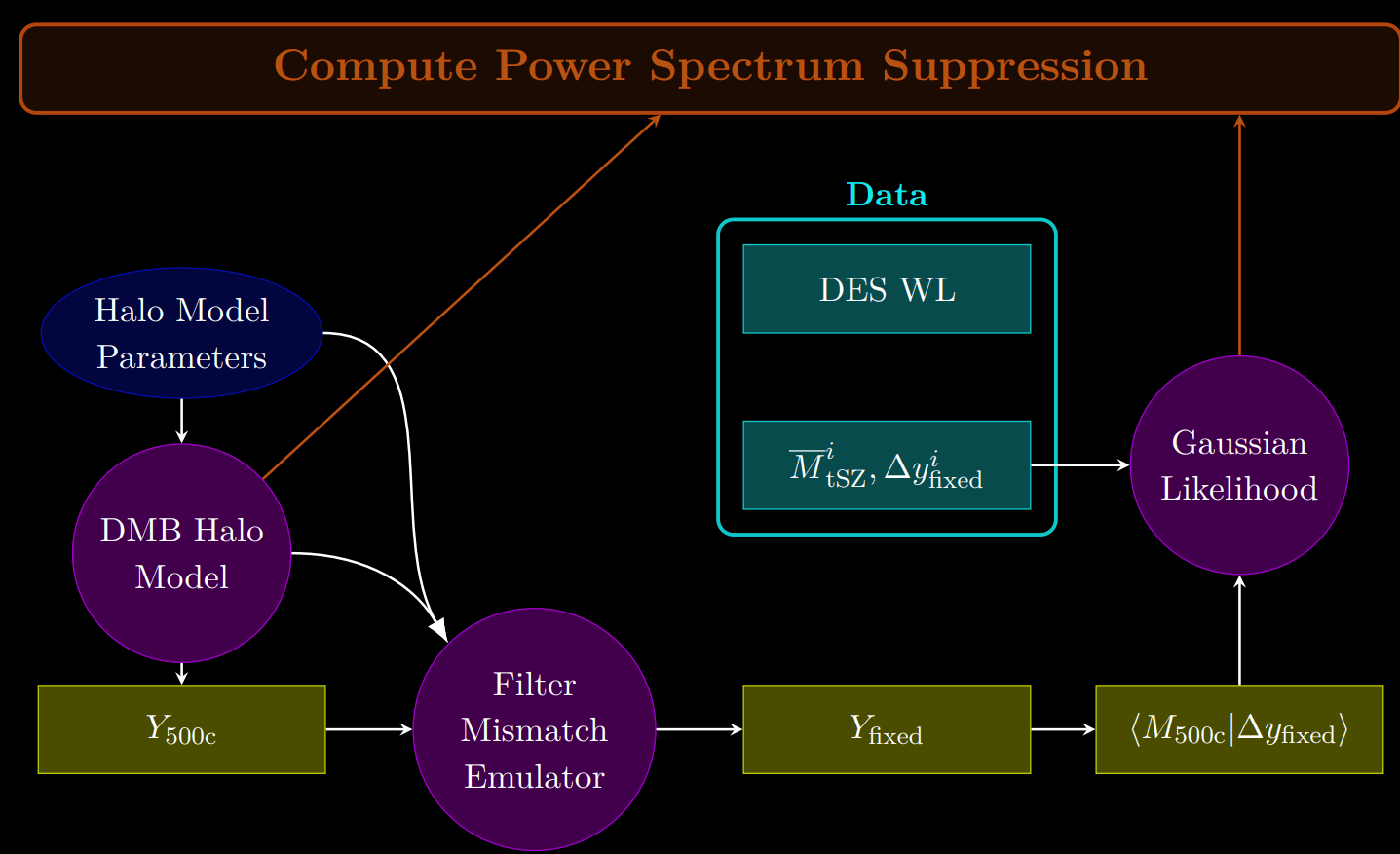

Dalal+ (incl. CT) 26
ACT cluster finder
Nemo
Shin+25
Godmax
Model
Pathfinder study
Dalal+ (incl. CT) 26
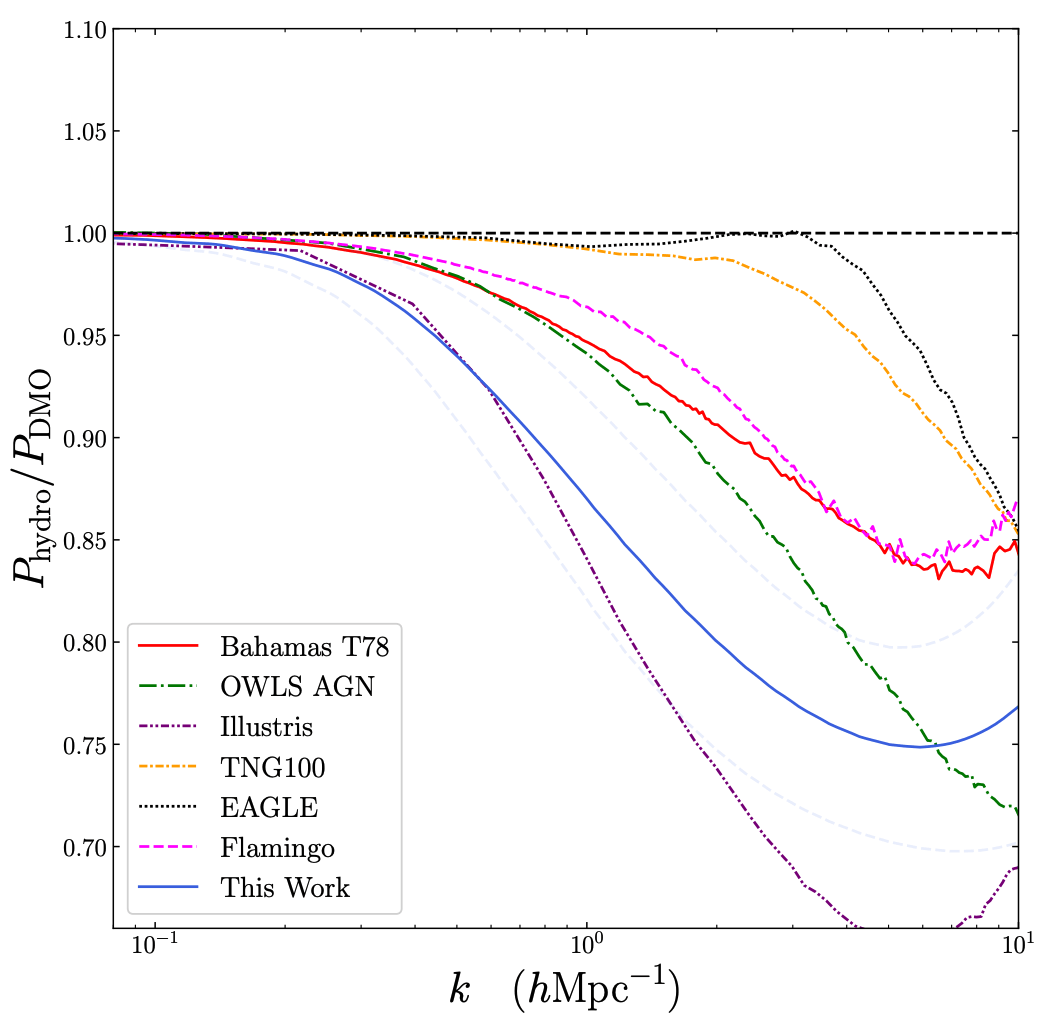
Pathfinder study
Dalal+ (incl. CT) 26
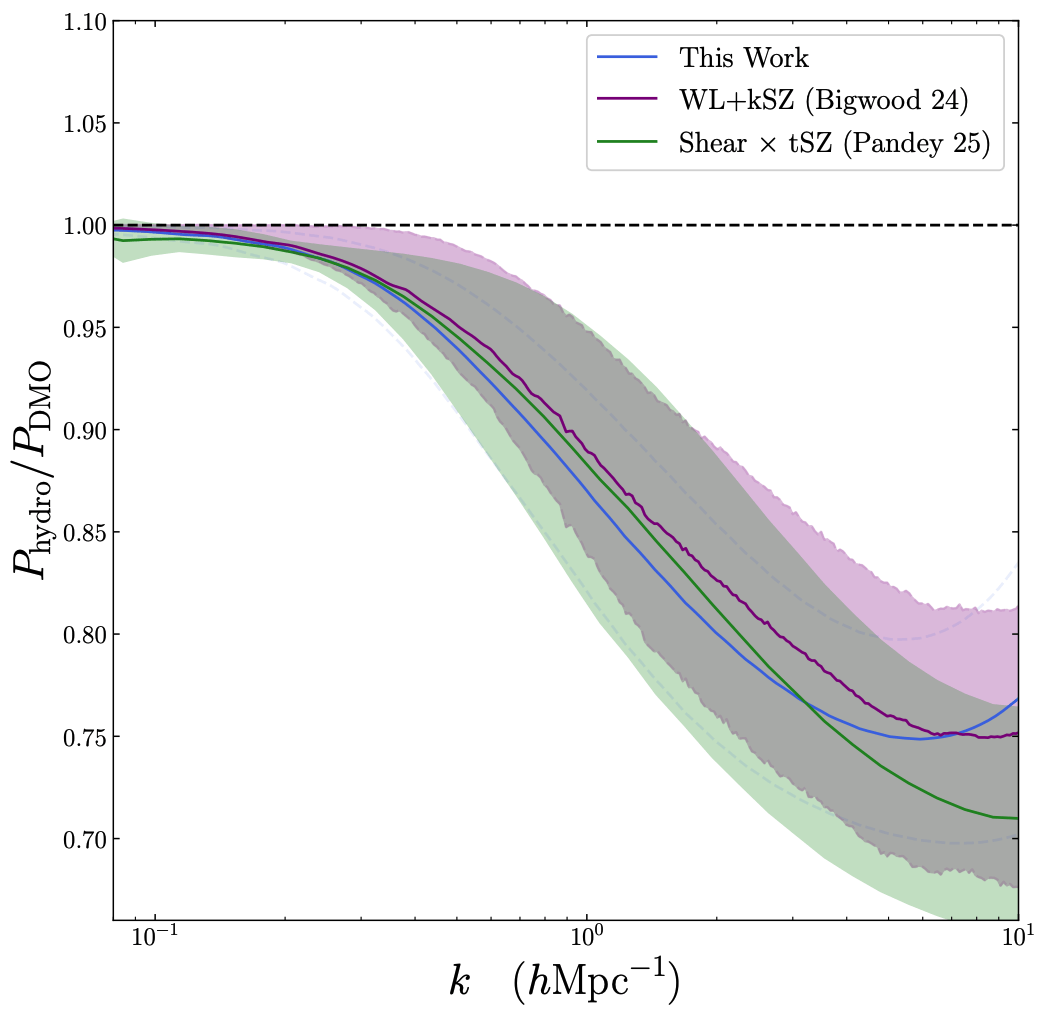
We find remarkably consistent results compared to other probes.
What is next?
-
Lots of data exist and have been used to constrain feedback. Here are a very incomplete list:
-
WL: Ario+22, Anbajagane+25, DES+26, Xu+25
-
tSZxtSZ: Raghunathan+26, Chaubai+26, Efstathiou&McCarthy25
-
tSZxothers: Sanchez+22, Dalal+25, Pandey+25
-
kSZ x others: Hadzhiyska+24, Bigwood+25, Ropper+25, Hotinli, Smith, Ferraro 25.
-
X-ray: Kovac+25, Eckert+25, Siegel+25, Zhang+26.
-
FRB: Reischke & Hazstotz25, Wang+25.
-
QSO absorption: Chen & Zahedy26, Qu+23, 24, Zahedy+19.
-
What is next?
- Most of the baryon probes involve galaxies.
- Clusters rely on galaxies for redshift and selections.
- kSZ stacks on galaxy samples.
- FRB needs to be cross-correlated with galaxies if DM (host) is unknown.
- Weak lensing is sensitive to a broad redshift range.
- Future weak lensing surveys (such as Roman) will be sensitive to z=0-3.
What is next?
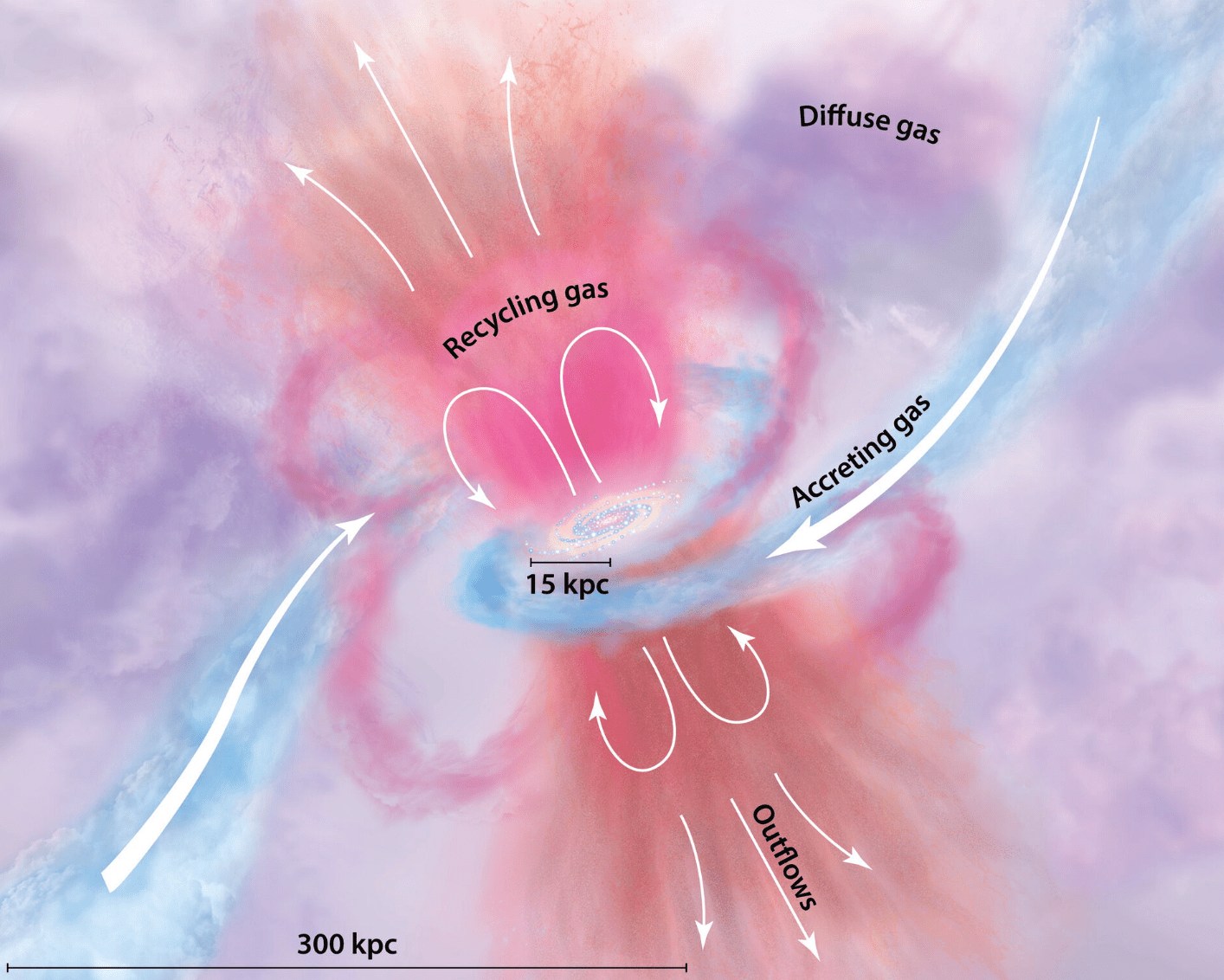
Tumlinson+17
Cold gas around galaxies is the fuel of star formation.
Galaxy properties and gas content should be correlated.
What is next?
We need a model that self-consistently describes galaxy evolution and gas properties across z=0-3.
Diffsky model
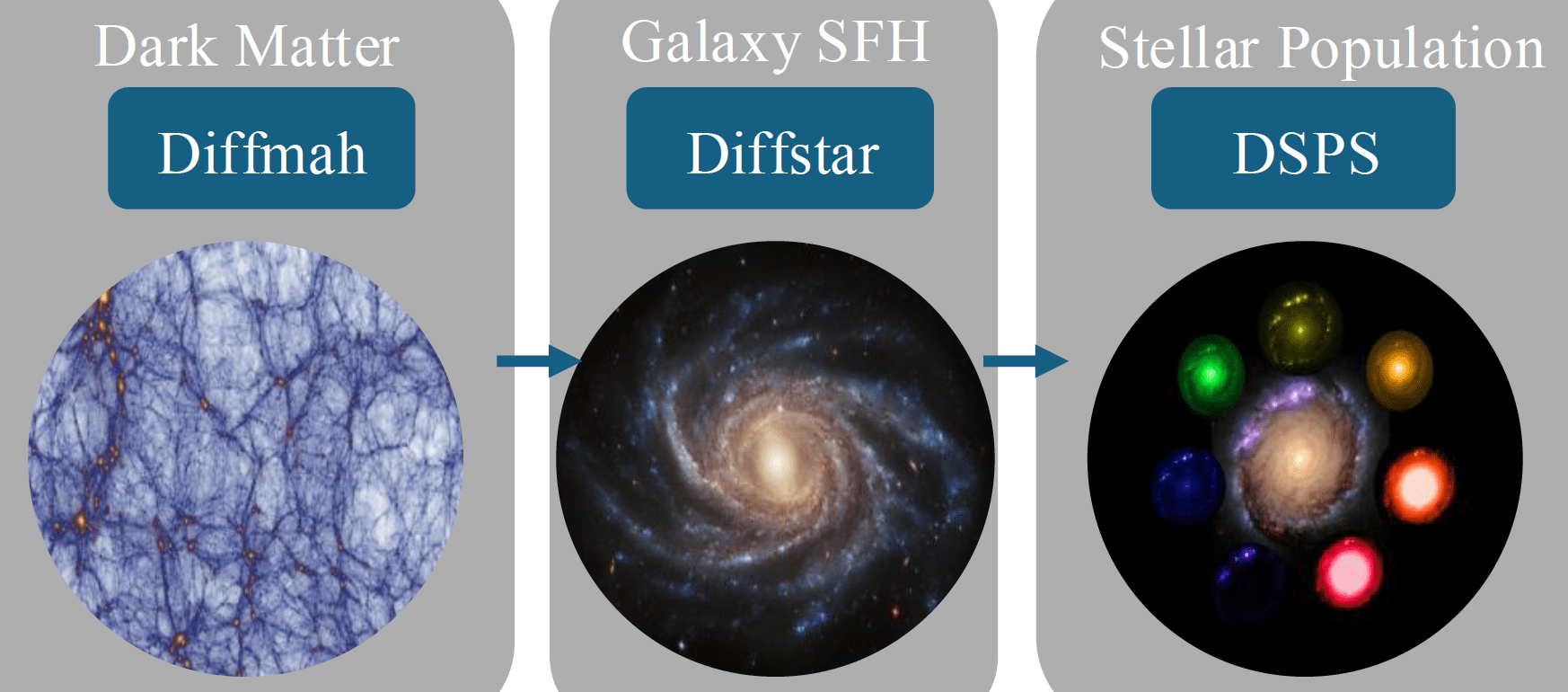
To+ in prep (with diffsky team)
Galaxies:
Jax-based galaxy model
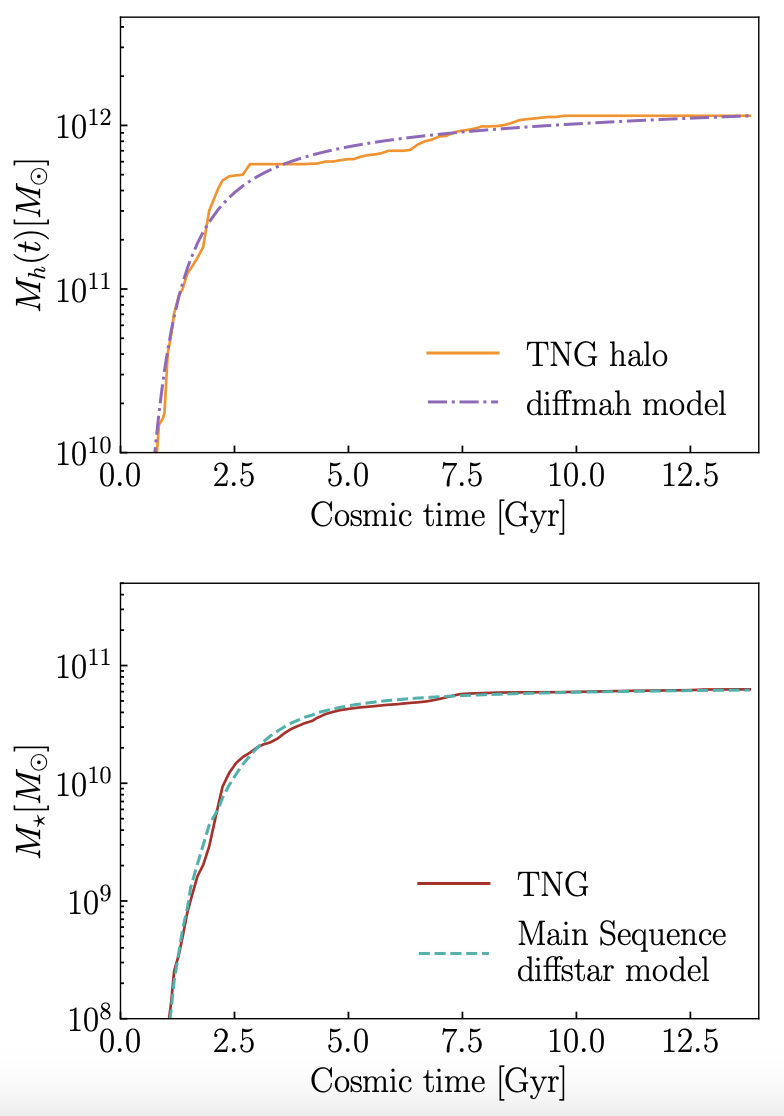
Alarcon+23, Hearin+21
Diffsky model
To+ in prep (with diffsky team)
Galaxies:
Jax-based galaxy model
Godmax:
Jax-based gas model
Diffbaryon
Diffbaryon model
To+ in prep (with diffsky team)
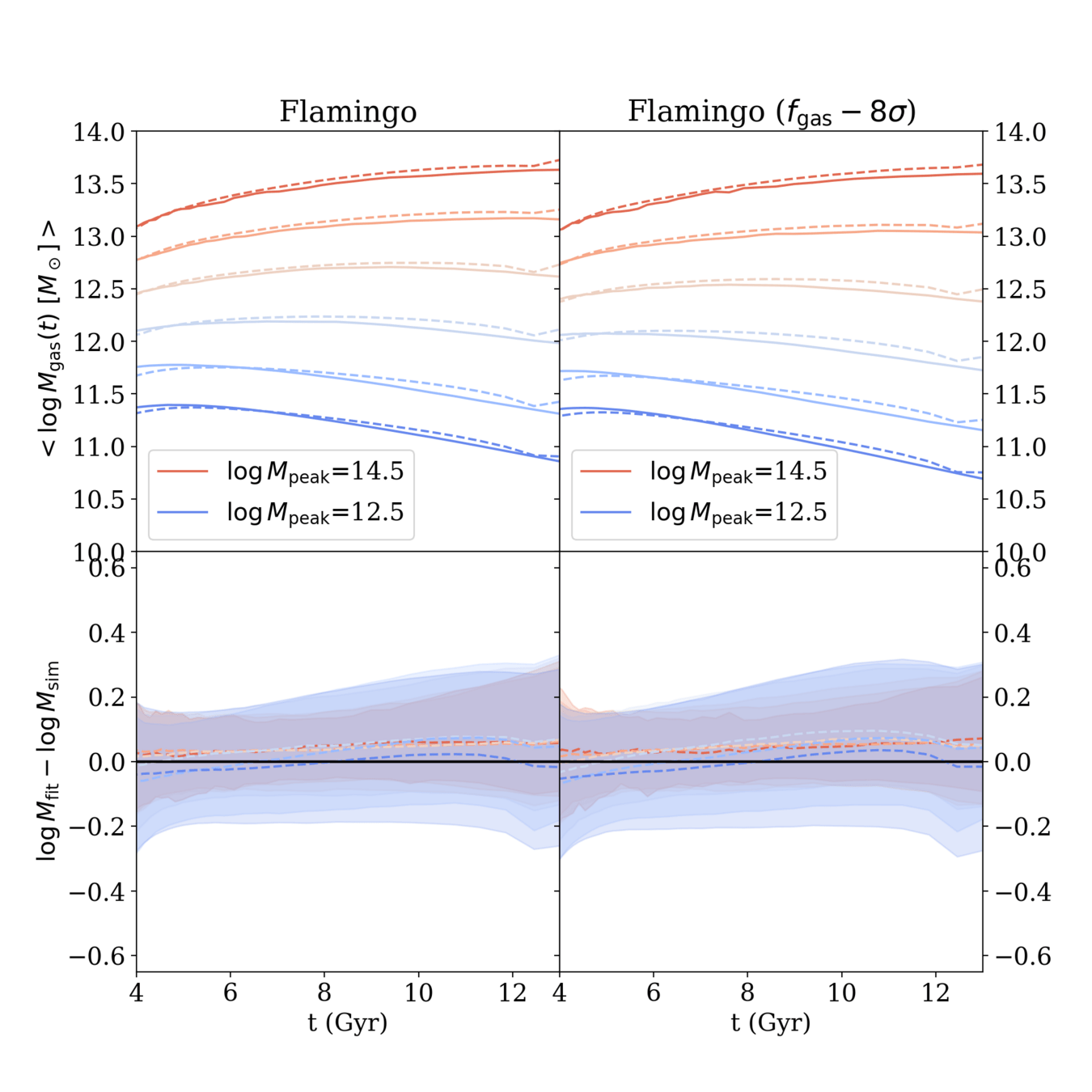
Preliminary
Hydro simulation
Diffbaryon
Diffbaryon model
To+ in prep (with diffsky team)
Preliminary
Hydro simulation
Diffbaryon
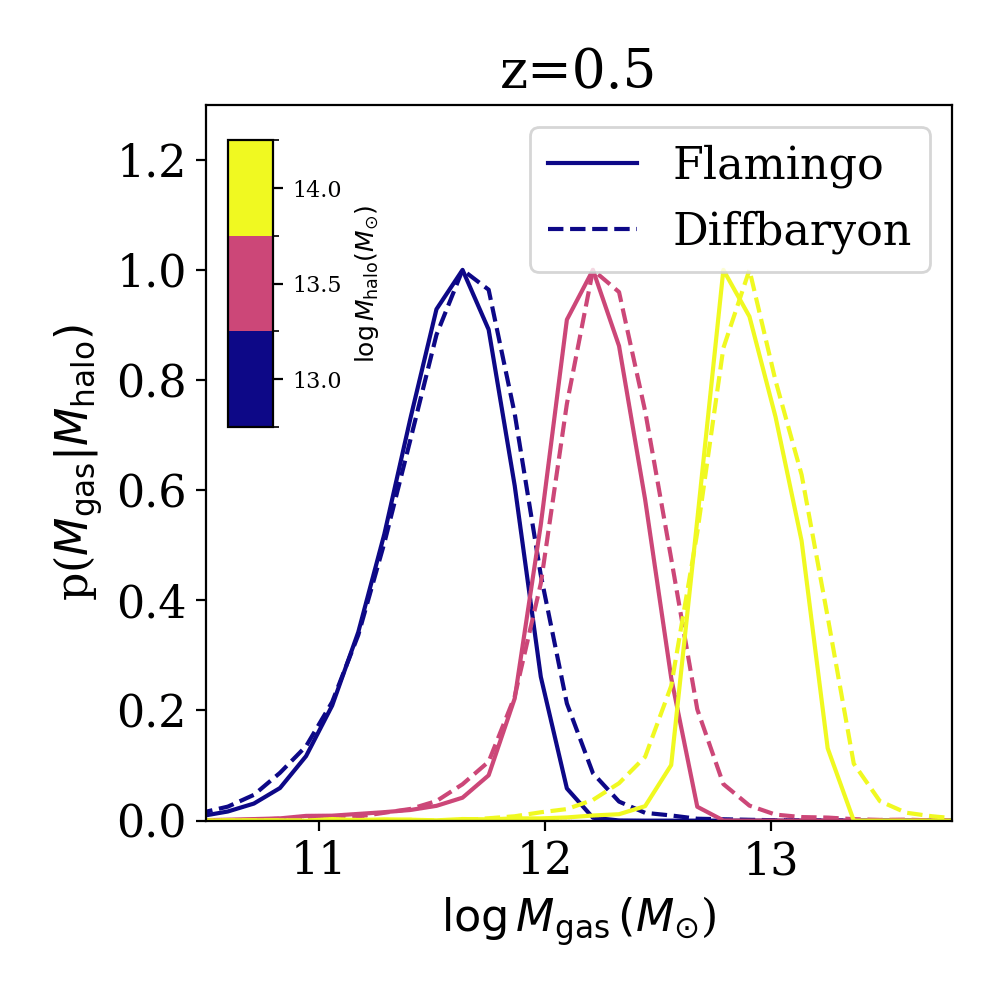
Preliminary
- Diffbaryon captures
- Godmax model underestimates the intrinsic scatter.
Central
- Diffbaryon captures
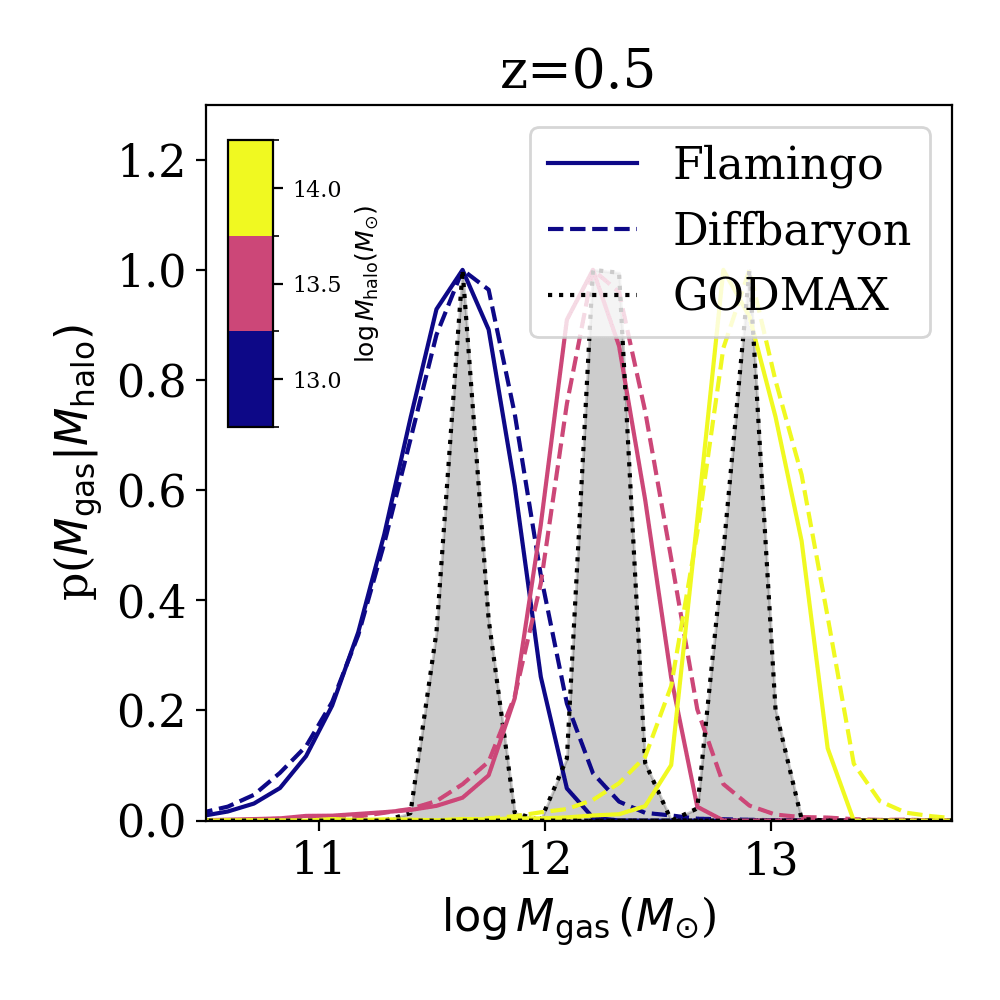
z= 1, 0.3, 0.1, 0.01