Prompt Evaluation


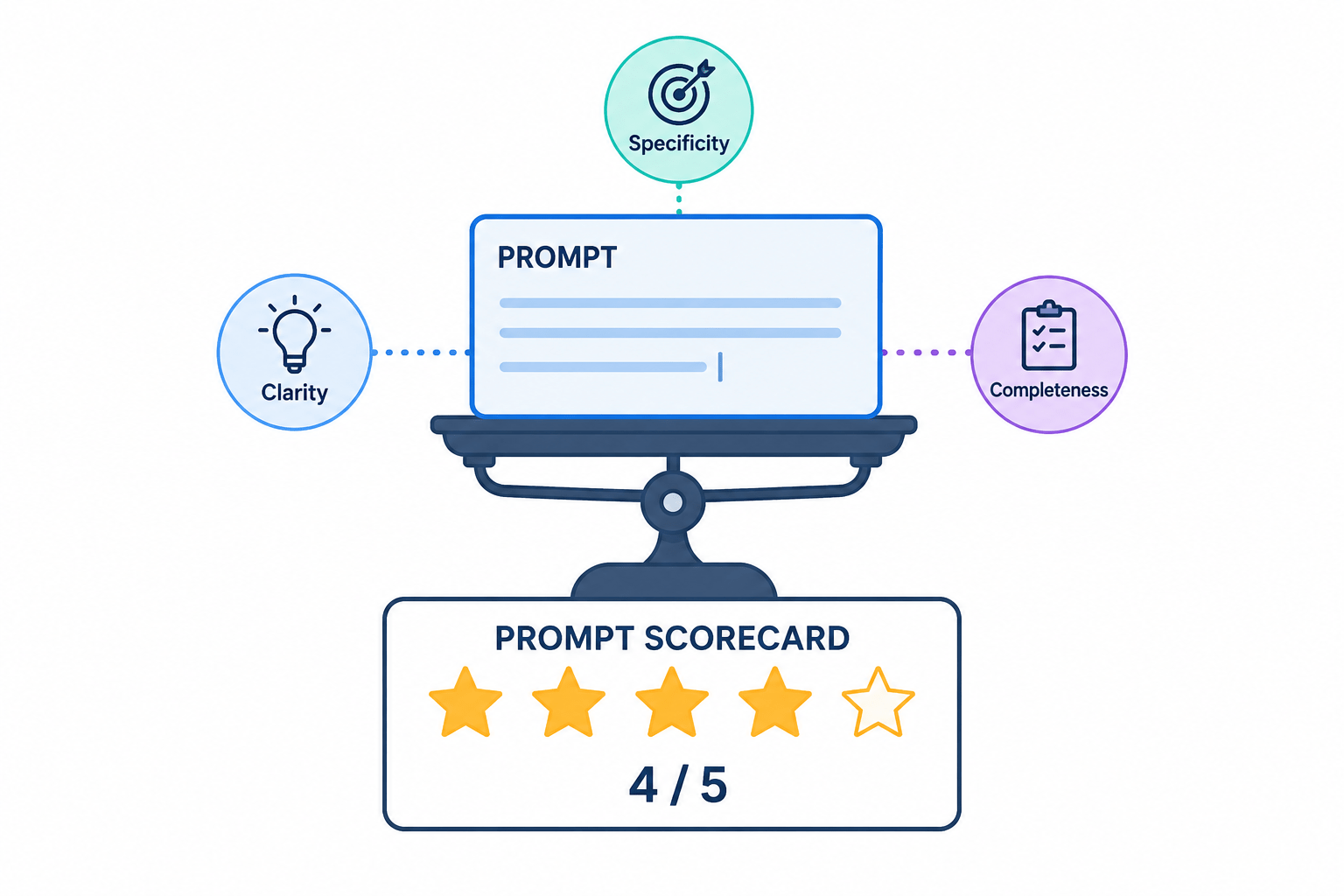

Learning Outcome
4
Prevent weak outputs through prompt evaluation first.
3
Apply a prompt checklist before running prompts.
2
Identify key criteria for evaluating prompt quality.
1
Understand prompt evaluation versus AI output evaluation.
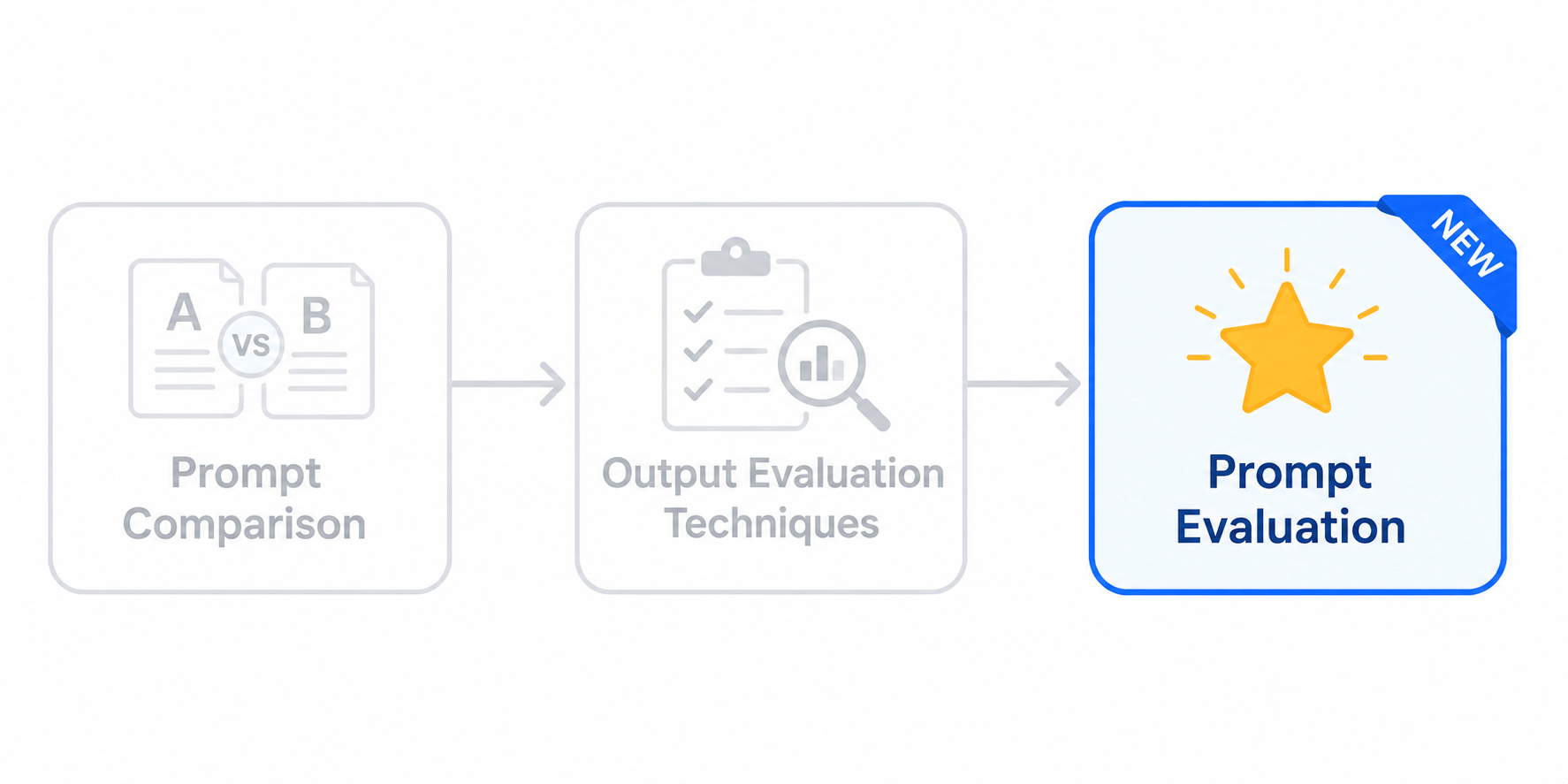
Before learning Prompt Evaluation, let's quickly recall:

-
Prompt Comparison – testing two prompt versions side-by-side on the same input to see which performs better.
-
Output Evaluation Techniques – checking an AI's output for accuracy, relevance, and consistency after it's generated.
Imagine you've written an important letter before sealing the envelope.
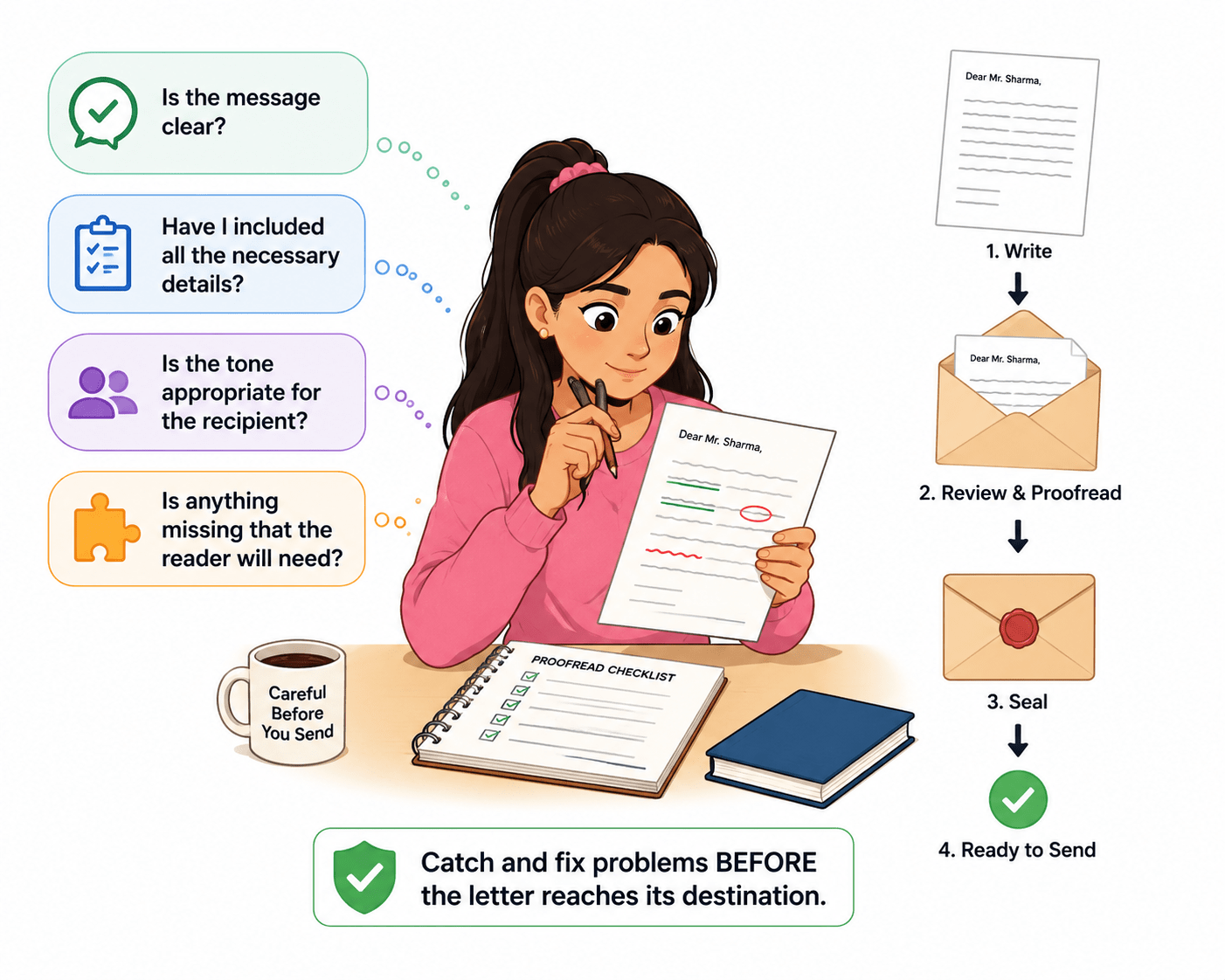
You don't just seal it and send it blindly. You proofread it first:
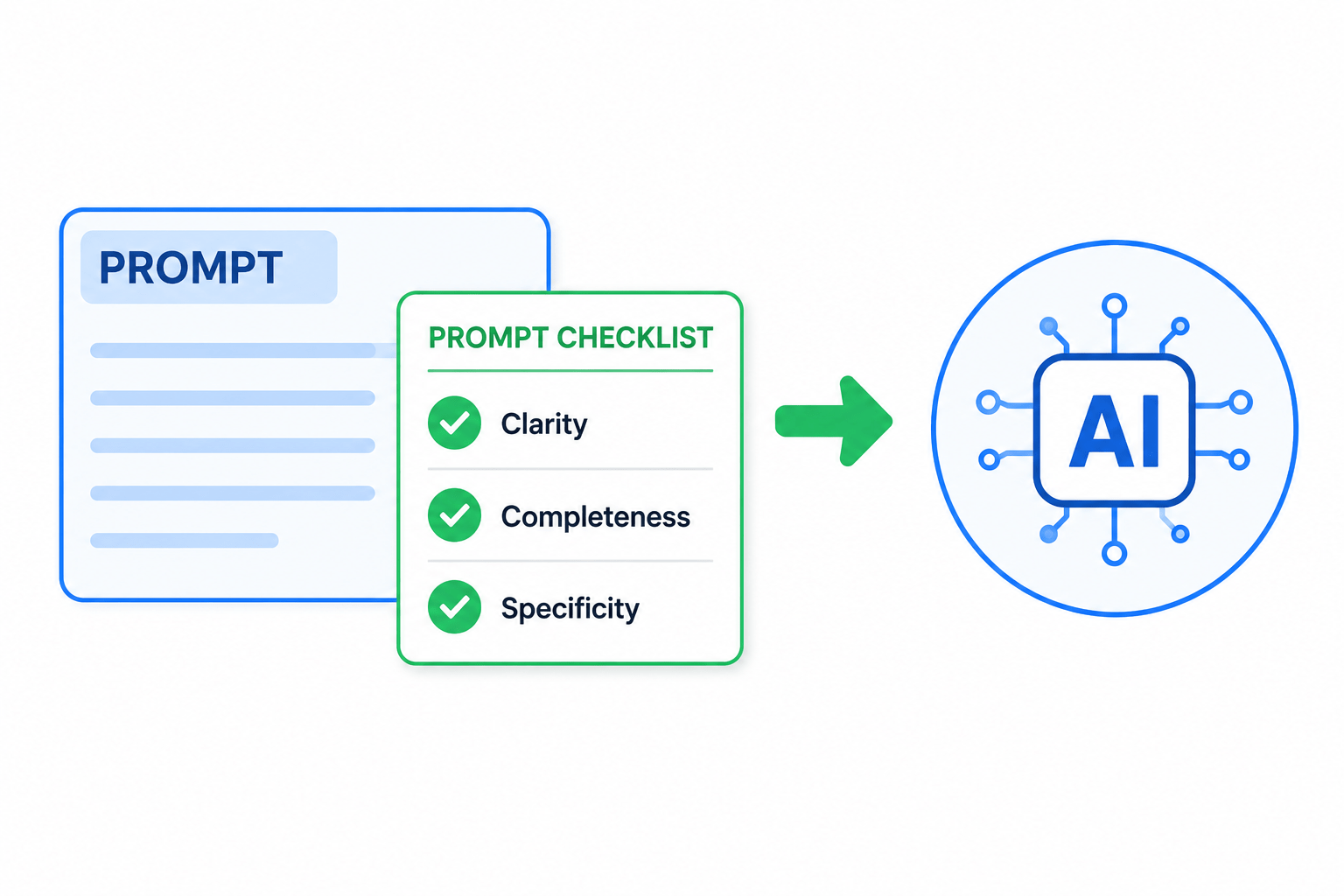
Before you even send a prompt to AI, you review it against a checklist — checking if it's clear, complete, and well-structured — catching weaknesses before they turn into a poor-quality output.
Prompt Evaluation works the same way.
Think About It
Previously, we imagined proofreading a letter before sealing it — catching issues in the message itself, before it's ever sent.

Should you only judge whether a prompt is good after seeing a poor AI response, or can you judge the prompt's quality beforehand?
A small thought before we go technical
Expected Answer
You can judge it beforehand too.
Exactly! Just like proofreading a letter, you can evaluate the prompt itself before running it — checking whether it's clear, complete, and well-structured — to catch likely issues in advance.
Now let's understand Prompt Evaluation in detail.
What is Prompt Evaluation?
Definition
Prompt Evaluation is the practice of assessing the quality of a prompt itself — before or independent of running it — by checking whether it is clear, complete, specific, and well-structured enough to likely produce a good result.
This is different from Output Evaluation, which judges the AI's response; Prompt Evaluation judges the instruction you're about to give.
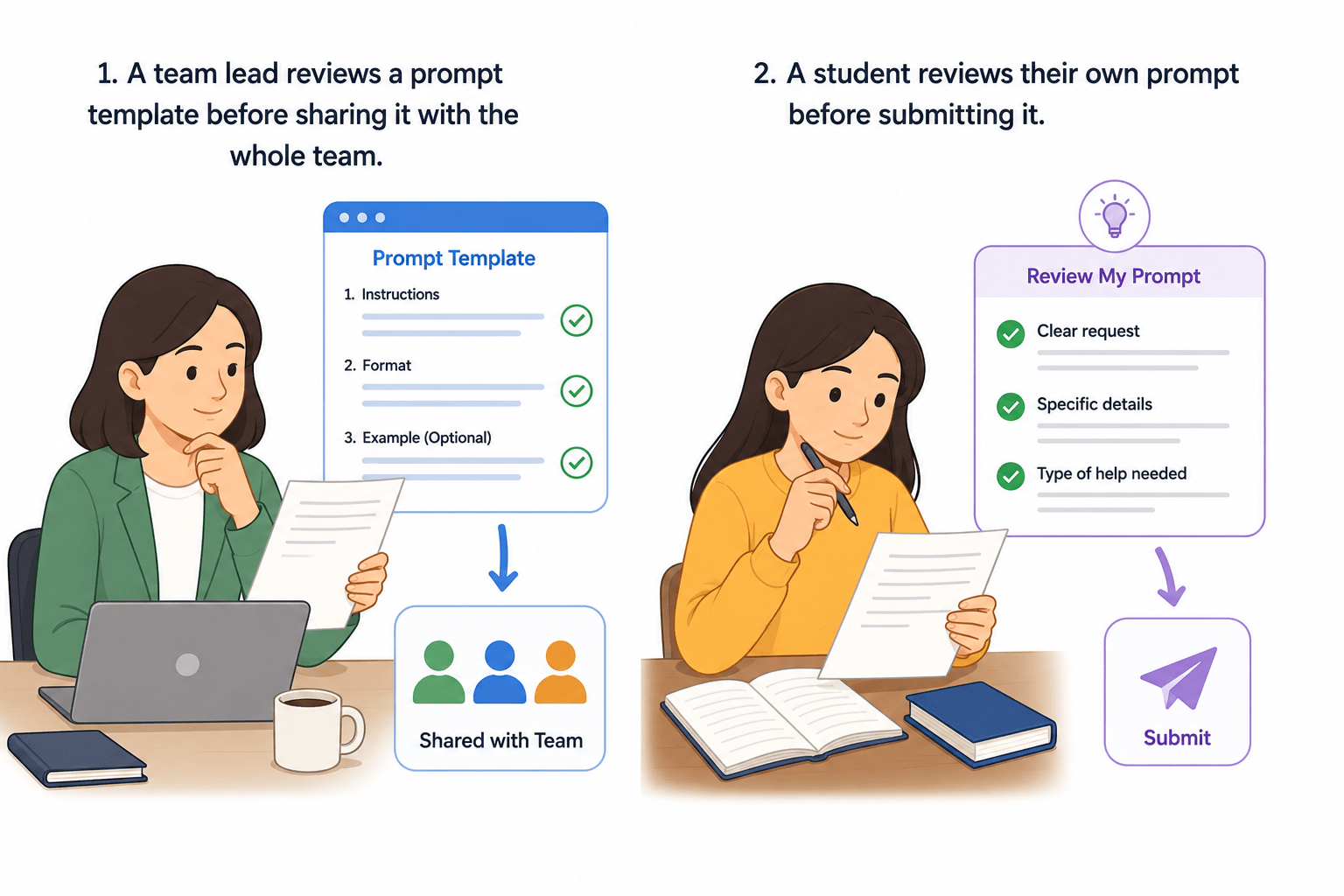
Real-Life Examples
1. A team lead reviews a prompt template before sharing it with the whole team, checking that it has clear instructions and defined format.
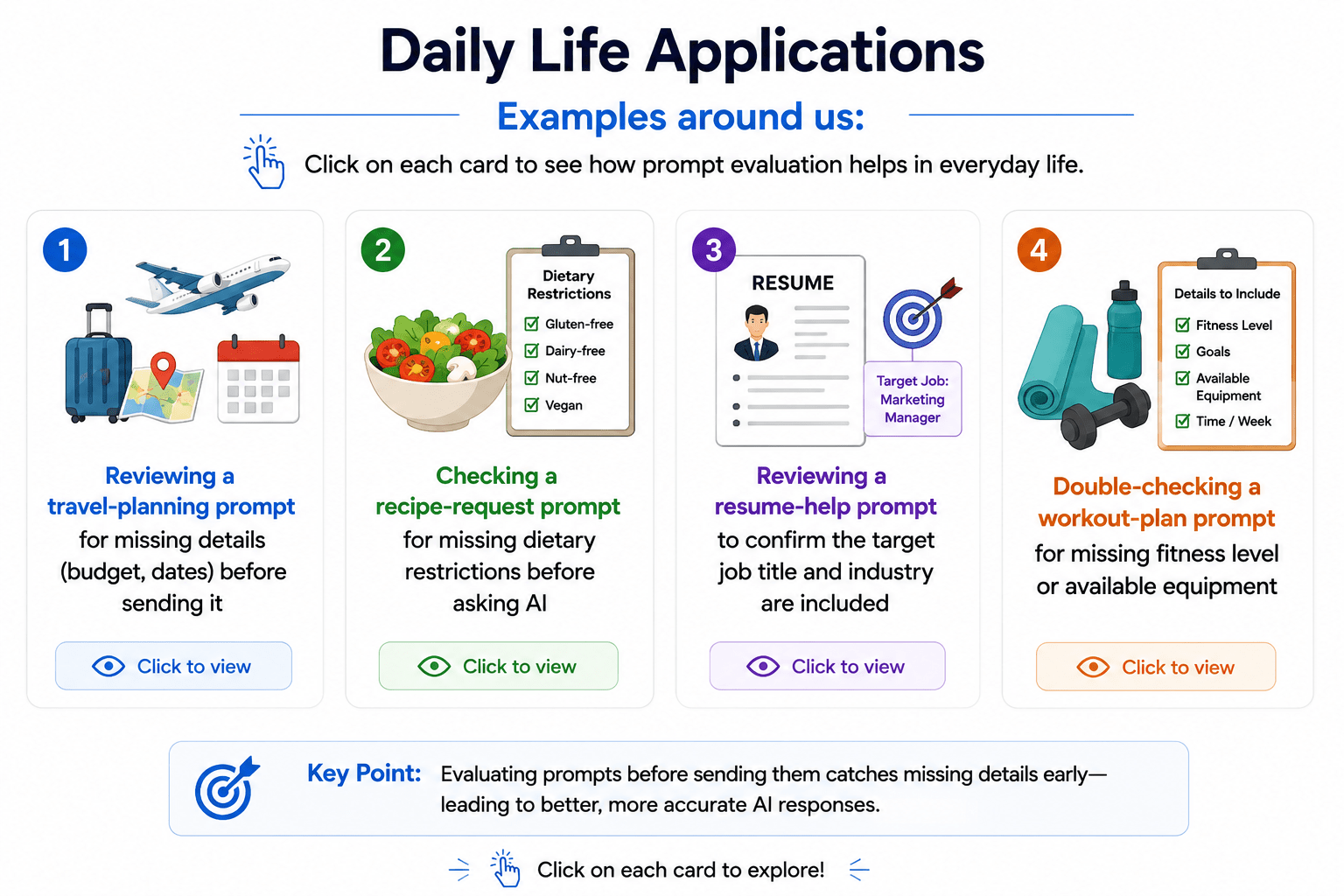
2.A student reviews their own prompt before submitting it, checking that it clearly states what kind of help they need.
Evaluation Criterion 1: Accuracy
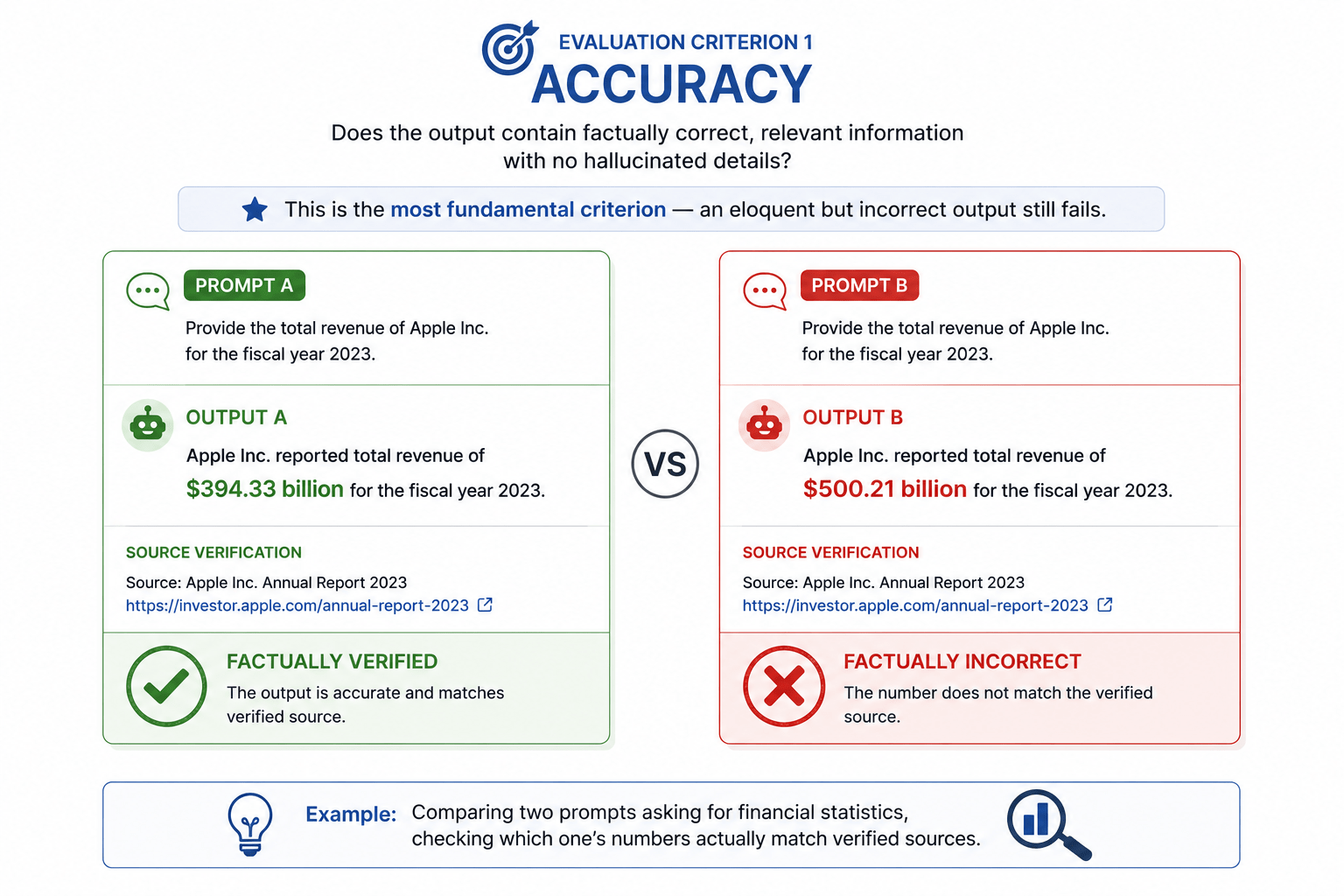
Does the output contain factually correct, relevant information with no hallucinated details?
Evaluation Criterion 2: Relevance
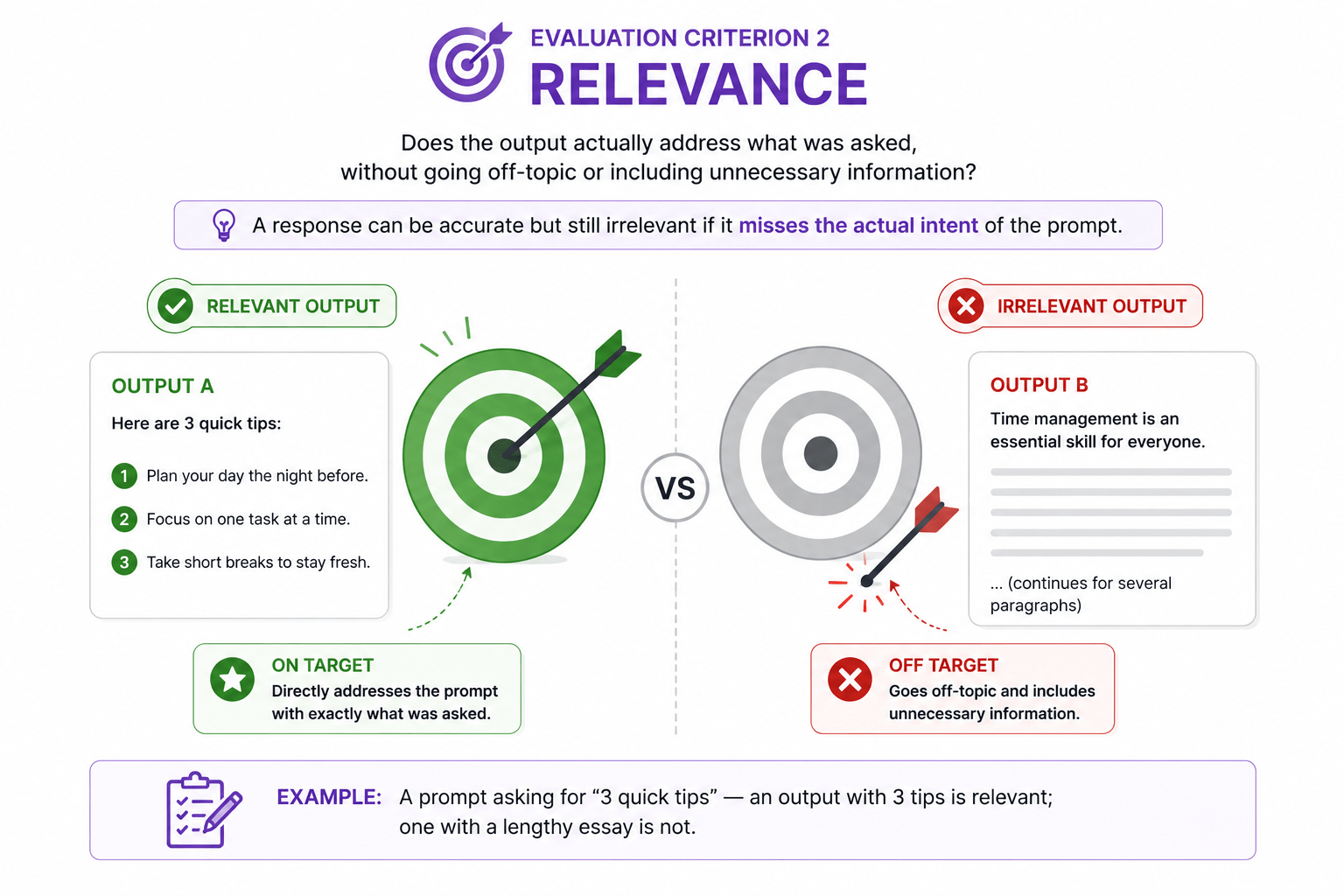
Does the output actually address what was asked, without going off-topic or including unnecessary information?
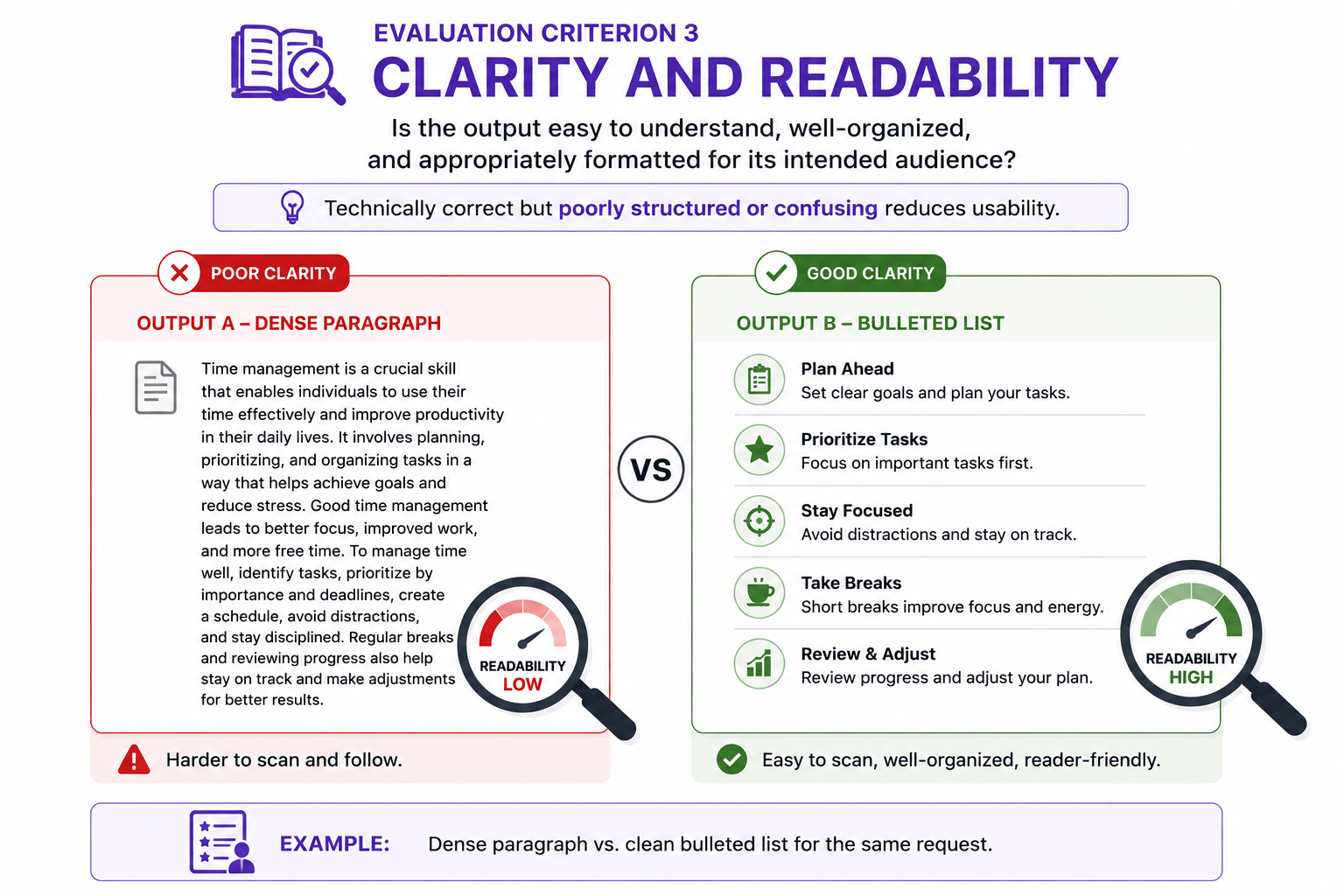
Evaluation Criterion 3: Clarity and Readability
Is the output easy to understand, well-organized, and appropriately formatted for its intended audience?
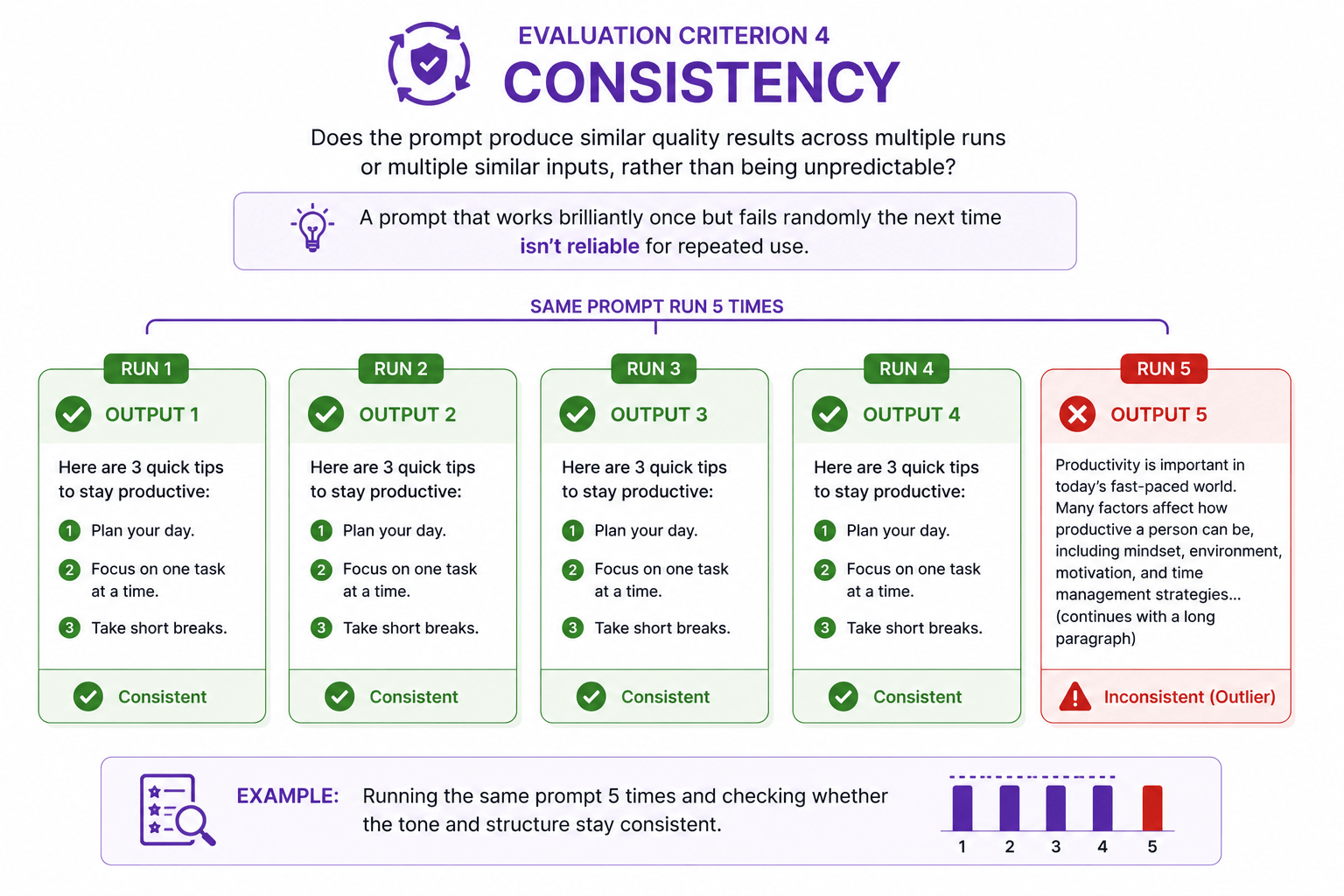
Evaluation Criterion 4: Consistency
Does the prompt produce similar quality results across multiple runs or multiple similar inputs, rather than being unpredictable?
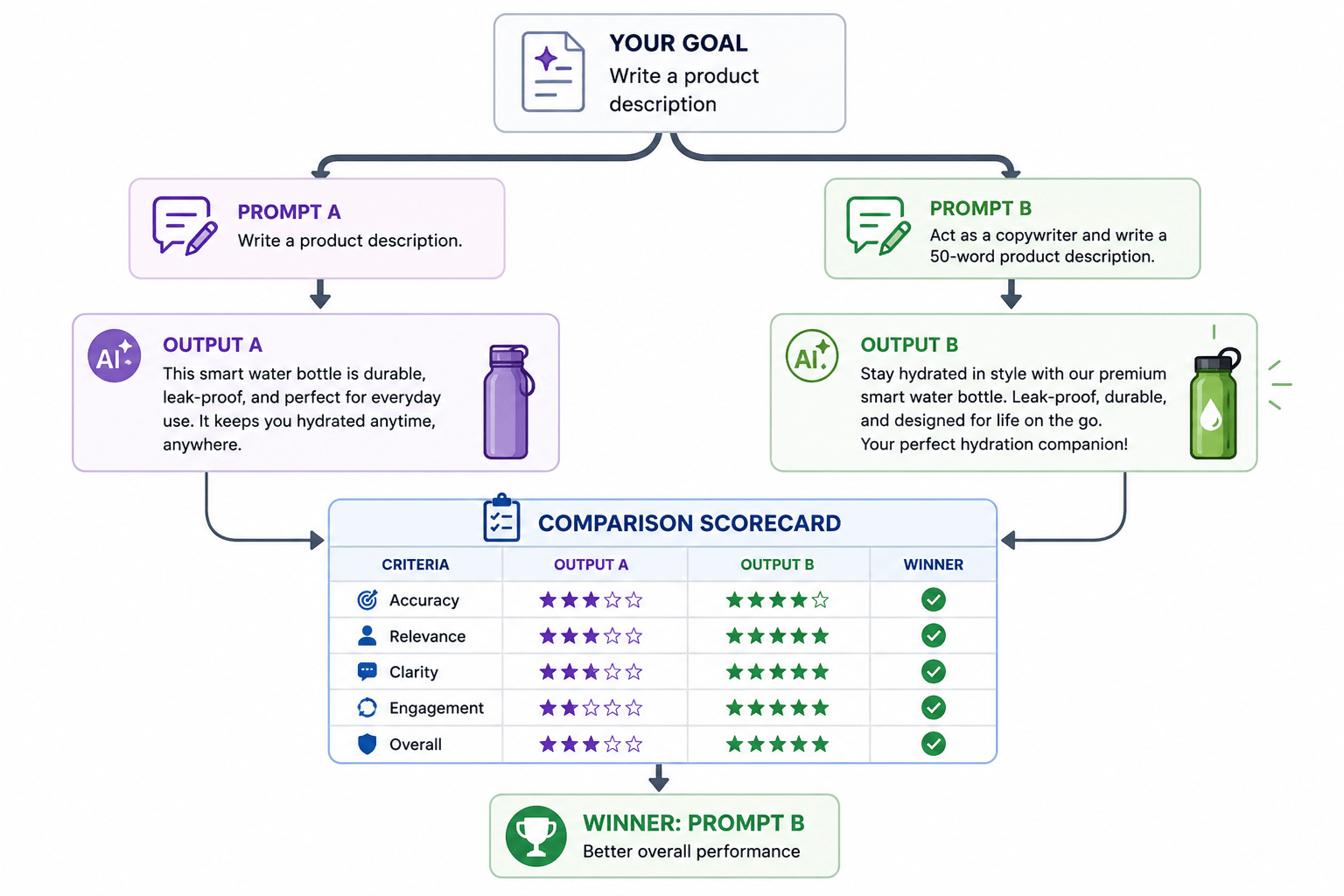
Method: A/B Testing Prompts
Create two or more variations of a prompt, run them under the same conditions, and compare their outputs side-by-side against your criteria.
This is the most direct way to determine which prompt design performs better in practice.

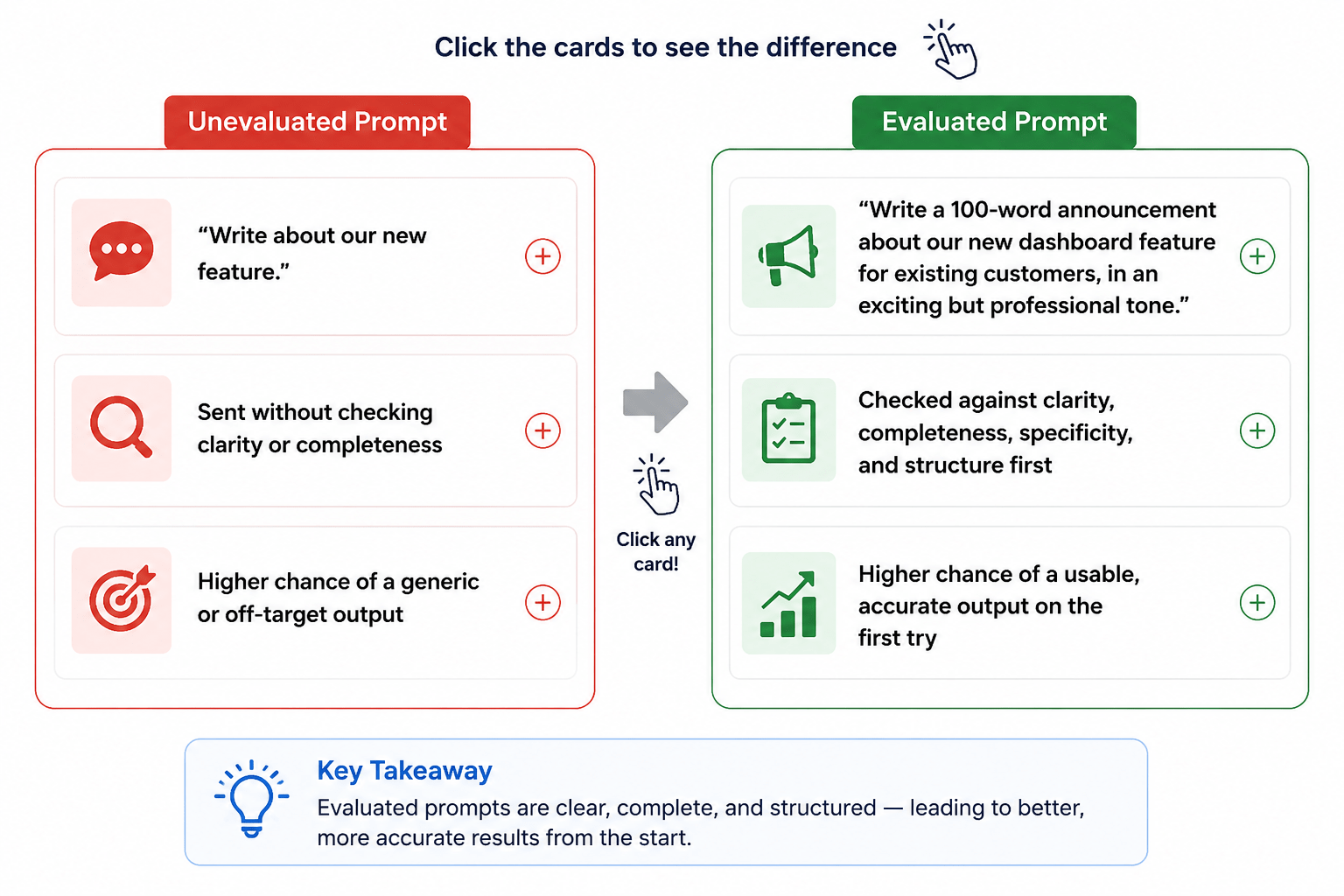
Unevaluated Prompt vs. Evaluated Prompt (Comparison)
How Prompt Evaluation Works (Core Mechanism)
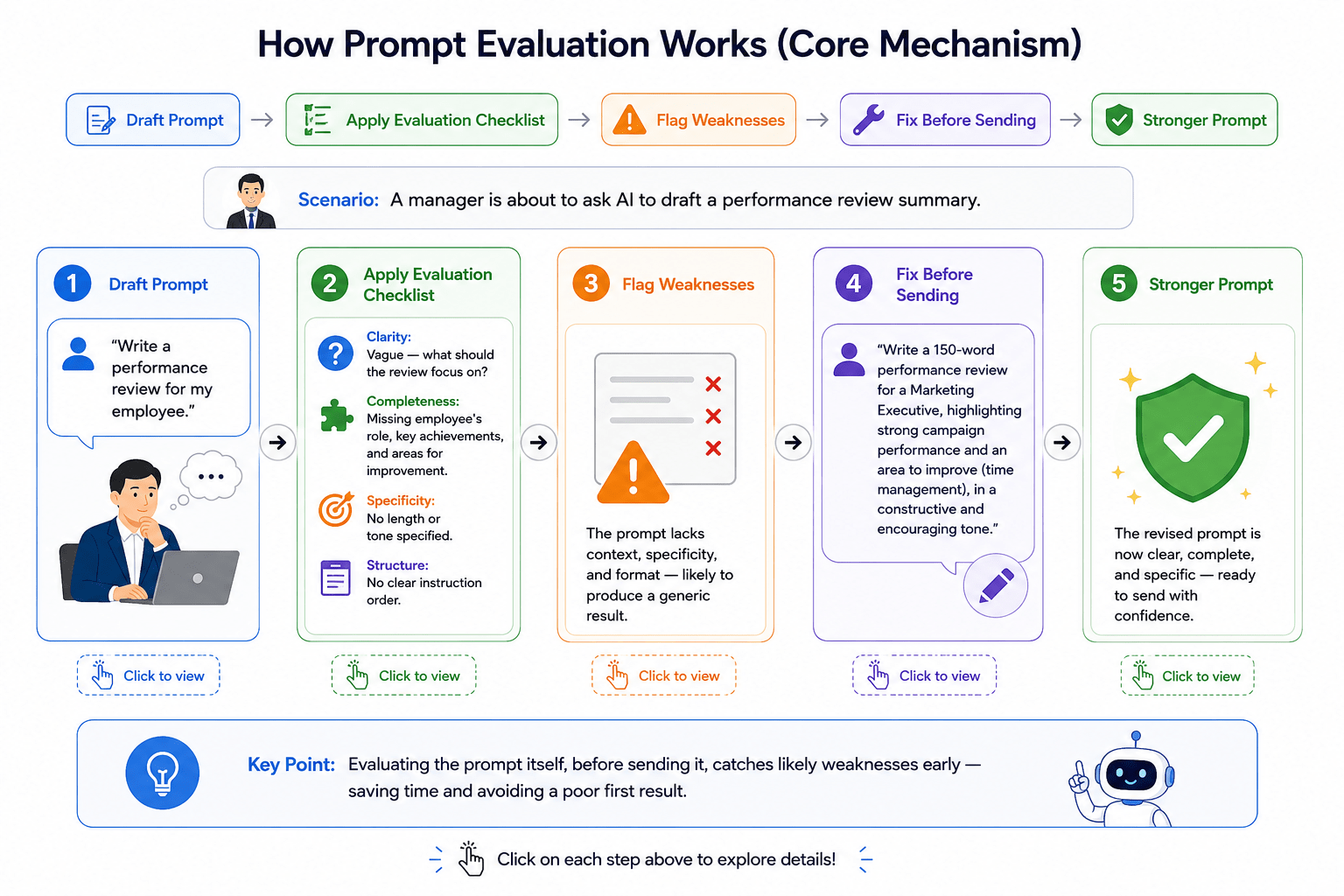
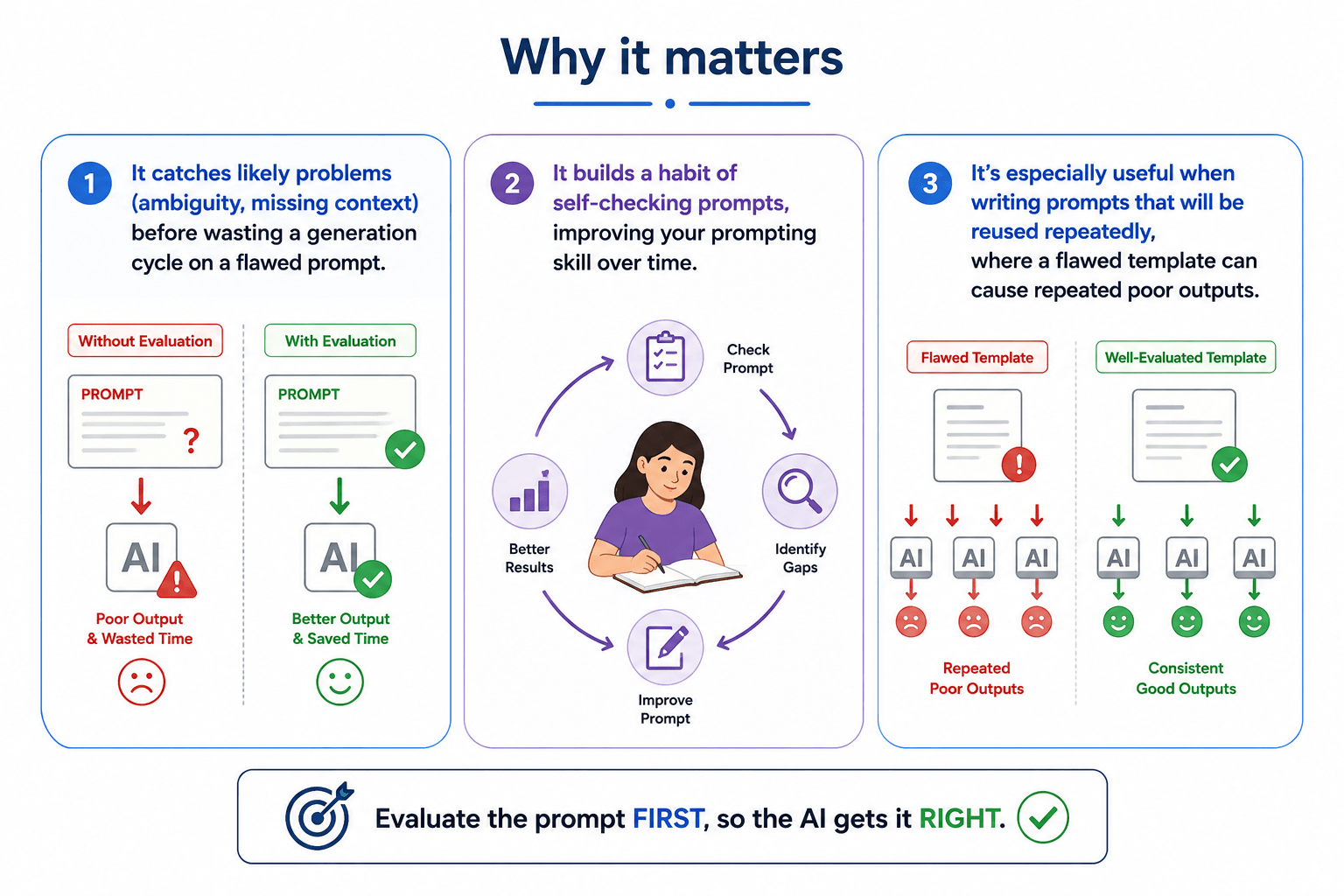
Key Point: Evaluating the prompt itself, before sending it, catches likely weaknesses early — saving time and avoiding a poor first result.
Applications of Prompt Comparison and Evaluation
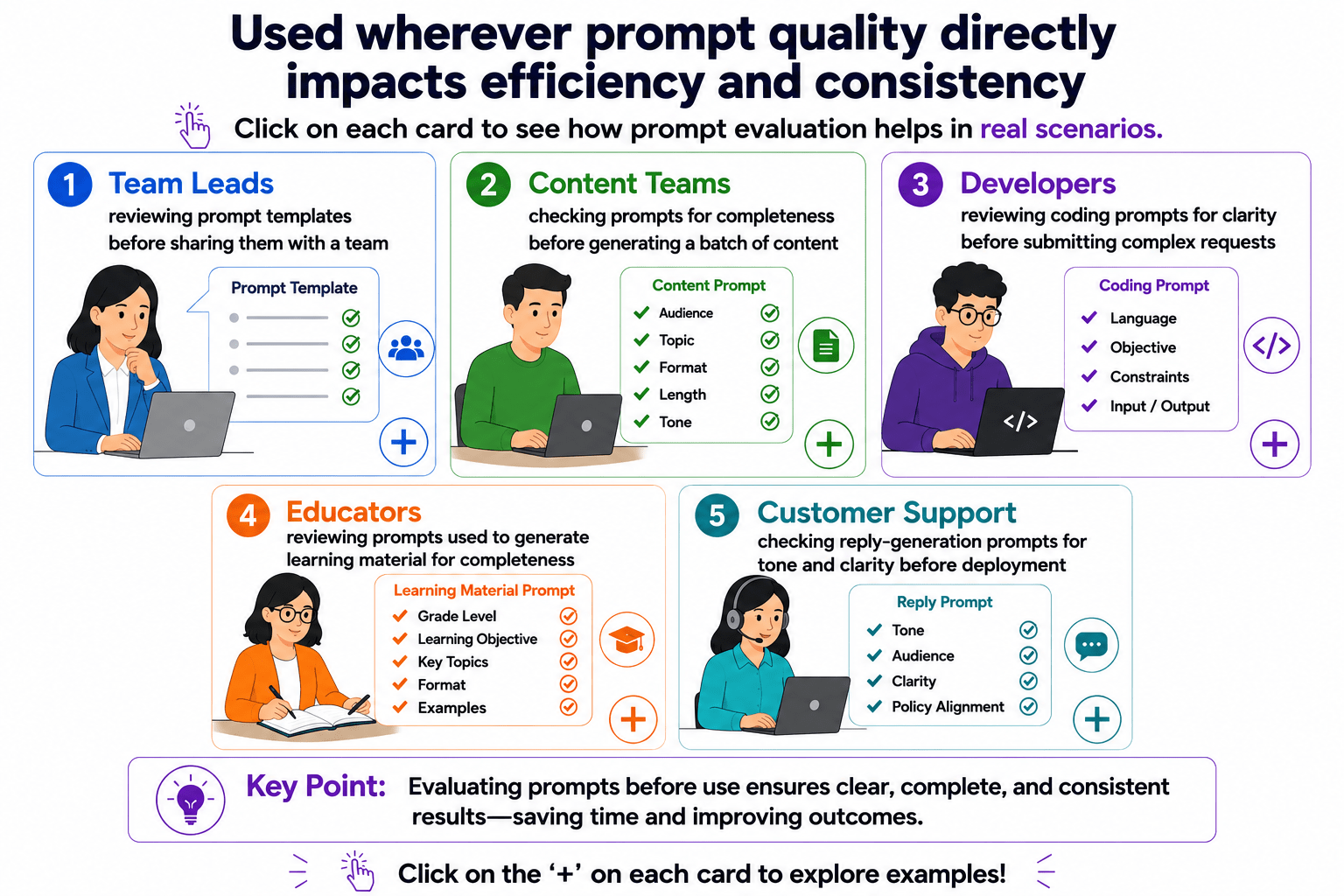
Daily Life Applications
Summary
4
Better prompt evaluation leads to better AI results.
3
Use a pre-send checklist to catch weaknesses.
2
Focus on Clarity, Completeness, Specificity, and Structure.
1
Evaluate prompts before generating AI outputs.
Quiz
What is the key difference between Prompt and Output Evaluation?
A. Prompt Evaluation checks AI output.
B. Prompt Evaluation checks the prompt; Output Evaluation checks the AI response.
C. Both are the same.
D. Prompt Evaluation is only for coding.

Quiz-Answer
What is the key difference between Prompt and Output Evaluation?
A. Prompt Evaluation checks AI output.
B. Prompt Evaluation checks the prompt; Output Evaluation checks the AI response.
C. Both are the same.
D. Prompt Evaluation is only for coding.