Context Management


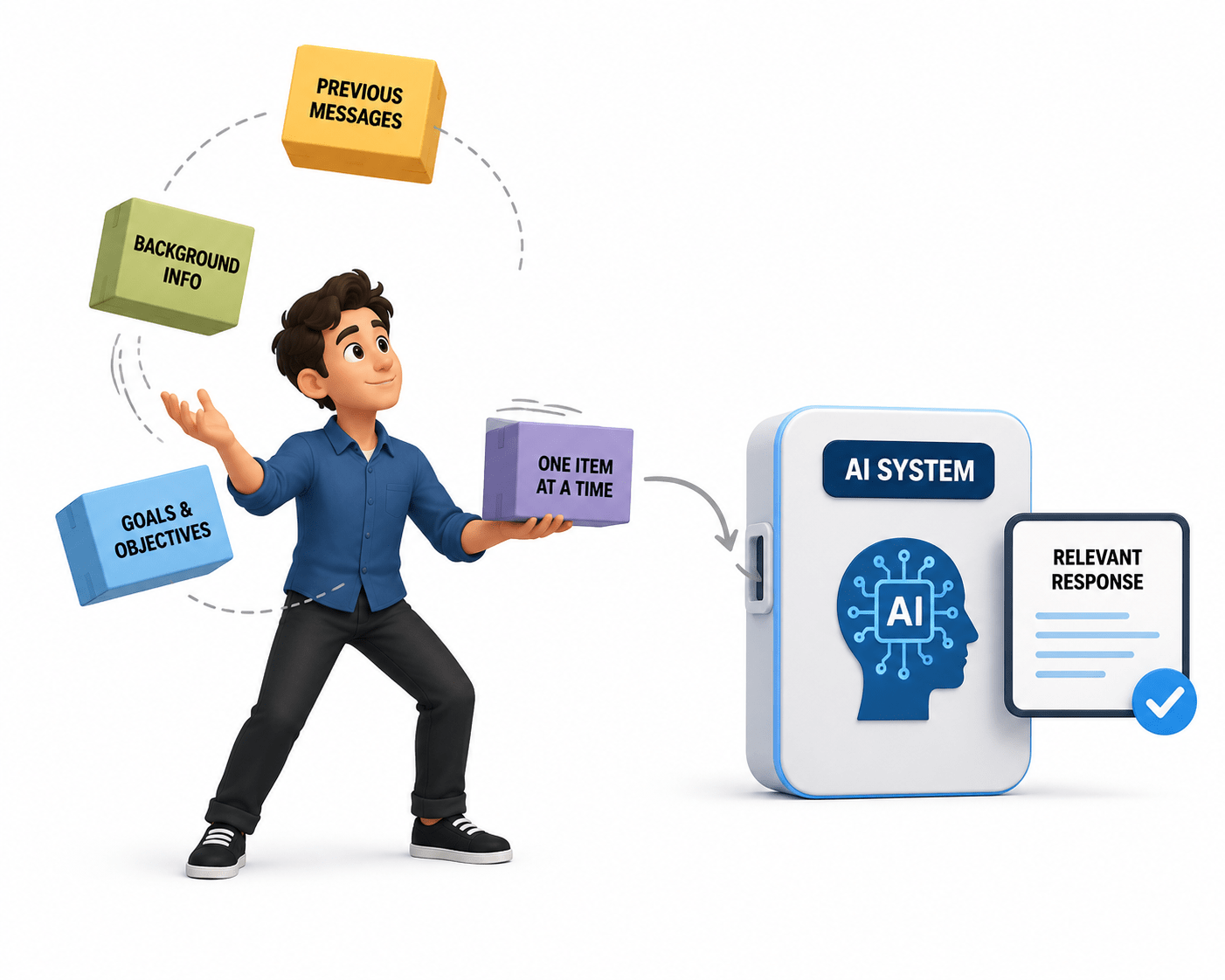

Learning Outcome
4
Recognize context windows and context loss.
3
Maintain relevant context in multi-turn conversations.
2
Identify risks of too little or too much context.
1
Understand AI context management.
Before learning Context Management, let's quickly recall:
-
Prompt Components – Context is one of the core building blocks of a prompt.
-
Prompt Refinement – making targeted edits based on what's missing, including missing context.
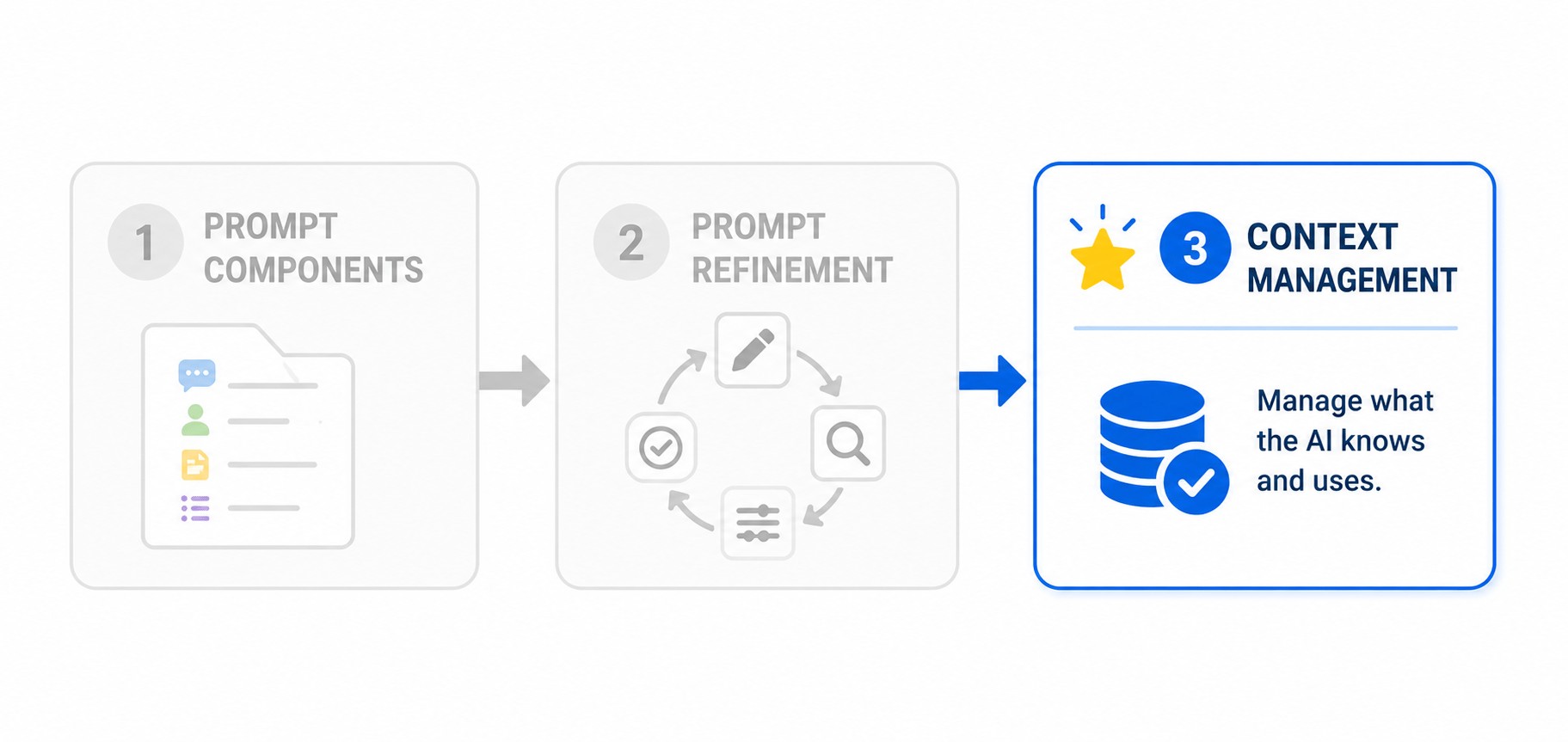
We've learned that context matters within a single prompt. But in real conversations, you're often talking to AI across many messages
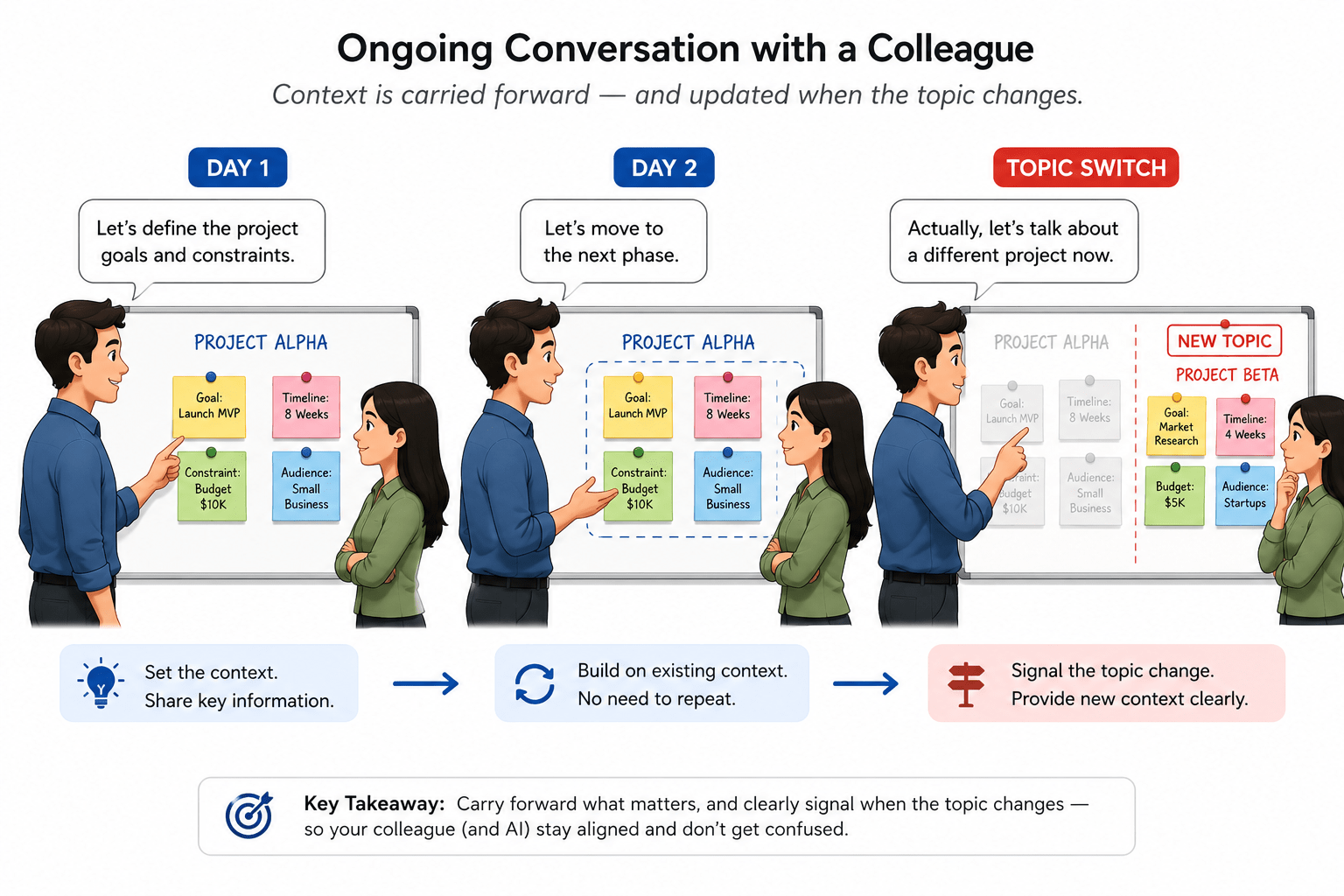
Imagine you're working with a colleague on a project over several days.
You explain the project goals and constraints.
Your colleague remembers, so you continue without repeating everything.
If you switch to a different project, clearly mention the change to avoid confusion.
Context Management works the same with AI: Carry forward relevant context and clearly signal topic changes to keep the AI on track.
Think About It
Previously, we imagined working with a colleague across several days — carrying forward relevant background, while clearly signaling when the topic changes.

Can an AI conversation stay accurate and coherent if you never manage what information carries forward or gets left behind?
A small thought before we go technical
Expected Answer
No
Exactly! AI conversations work best when you carry forward relevant context and clearly indicate when the topic changes, keeping responses accurate and focused.
Now let's understand Context Management in detail.
What is Context Management?
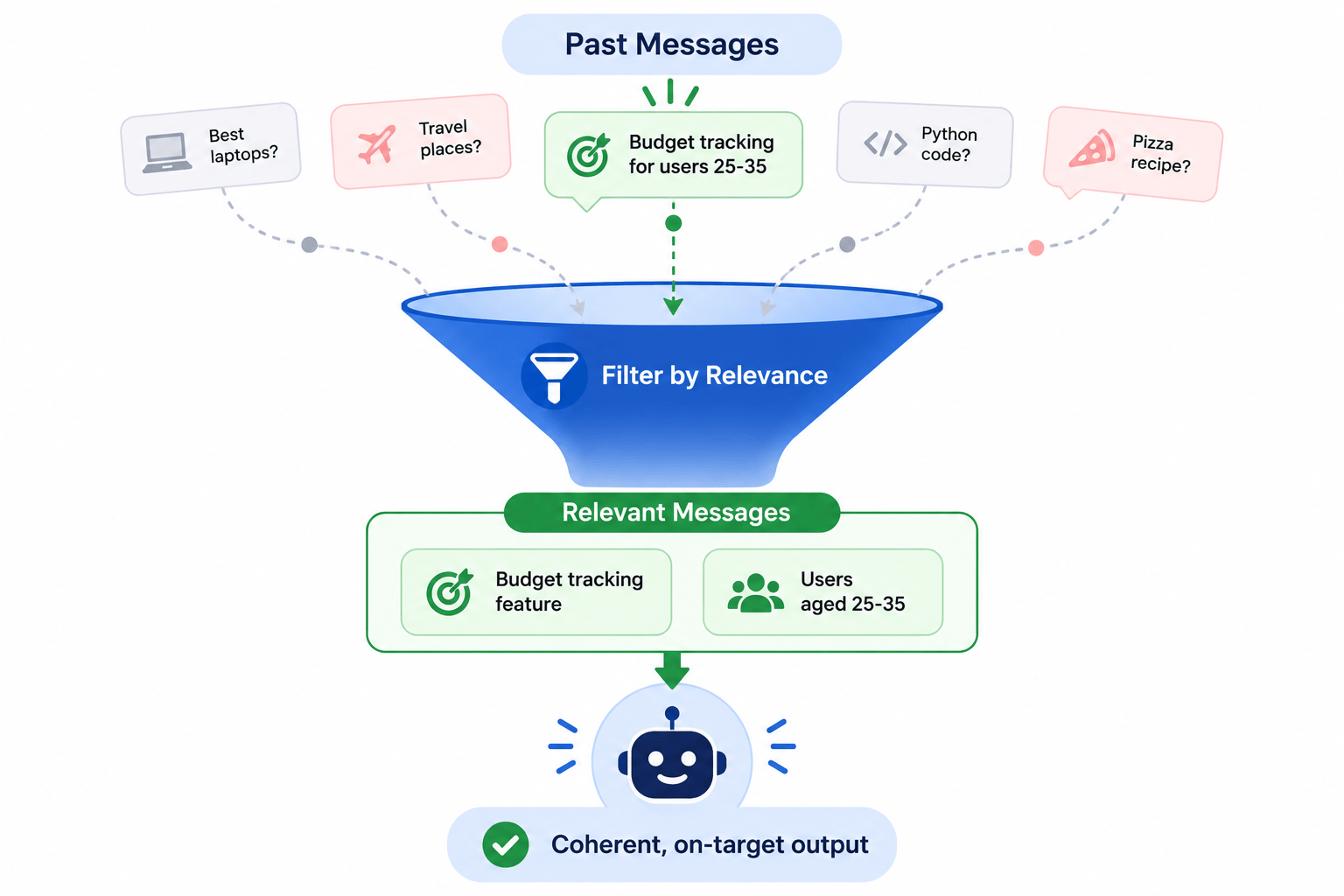
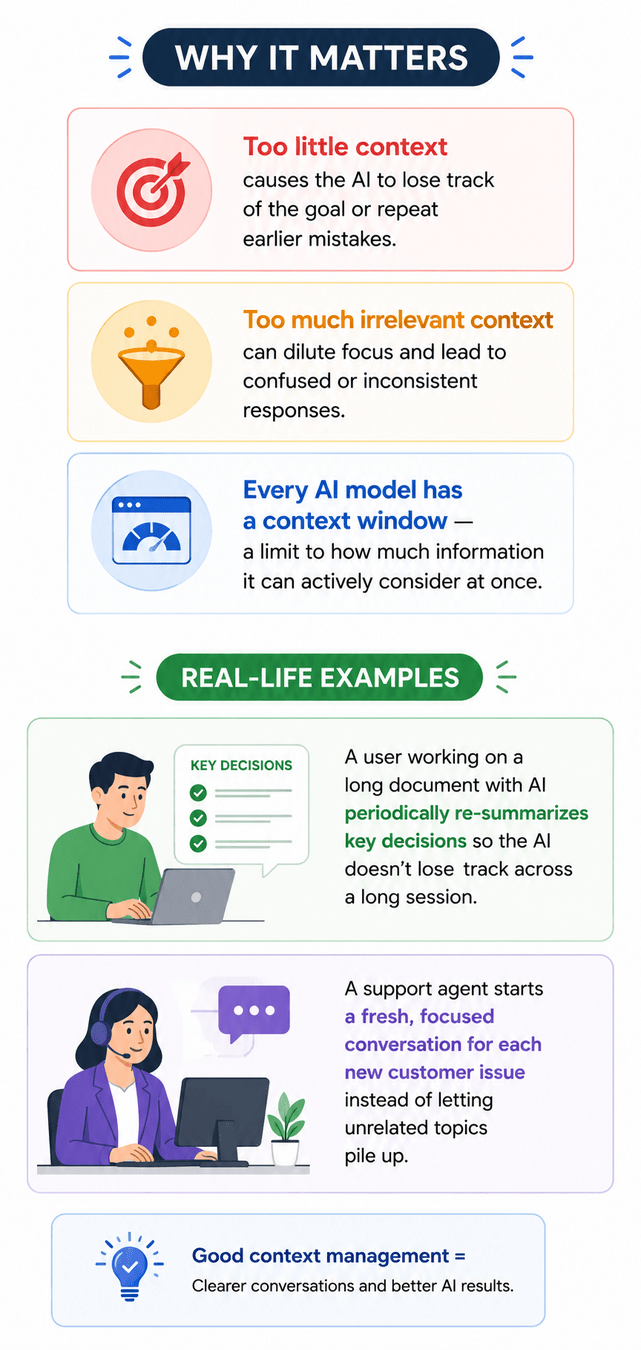
Context Management is the practice of deliberately controlling what background information, prior messages, and goals are carried forward in an AI conversation — ensuring the AI has what it needs, without being overwhelmed or confused by irrelevant information.
This becomes especially important in multi-turn conversations, where earlier messages shape how the AI interprets later ones.
Definition
Concept 1
The Context Window
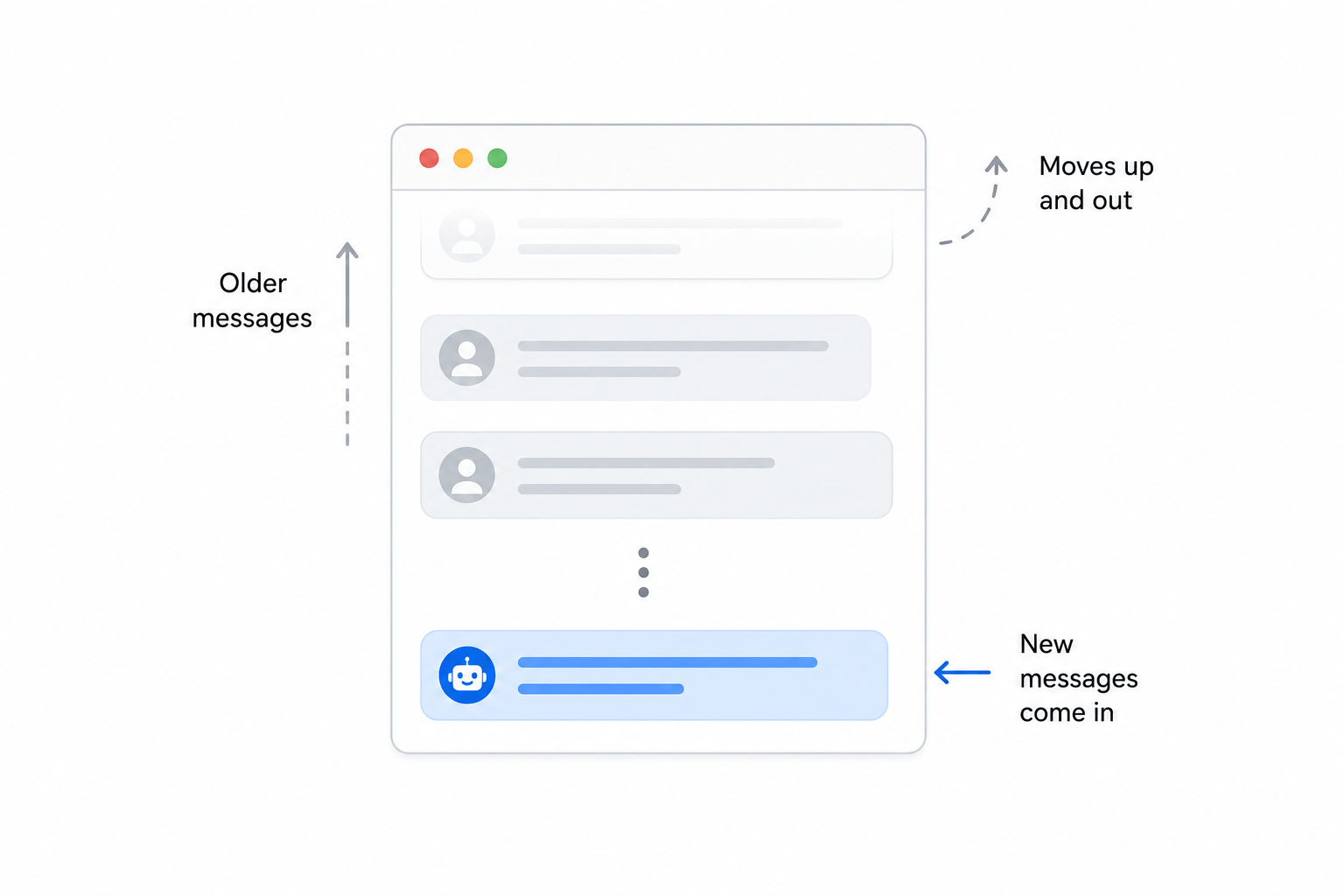
The context window is the maximum amount of text (measured in tokens) an AI model can consider at one time — including the conversation history and the current prompt.
Once this limit is reached, older information may be dropped or "forgotten."
Example: In a very long chat session, the AI may no longer recall details mentioned dozens of messages earlier.
Concept 2
Context Overload
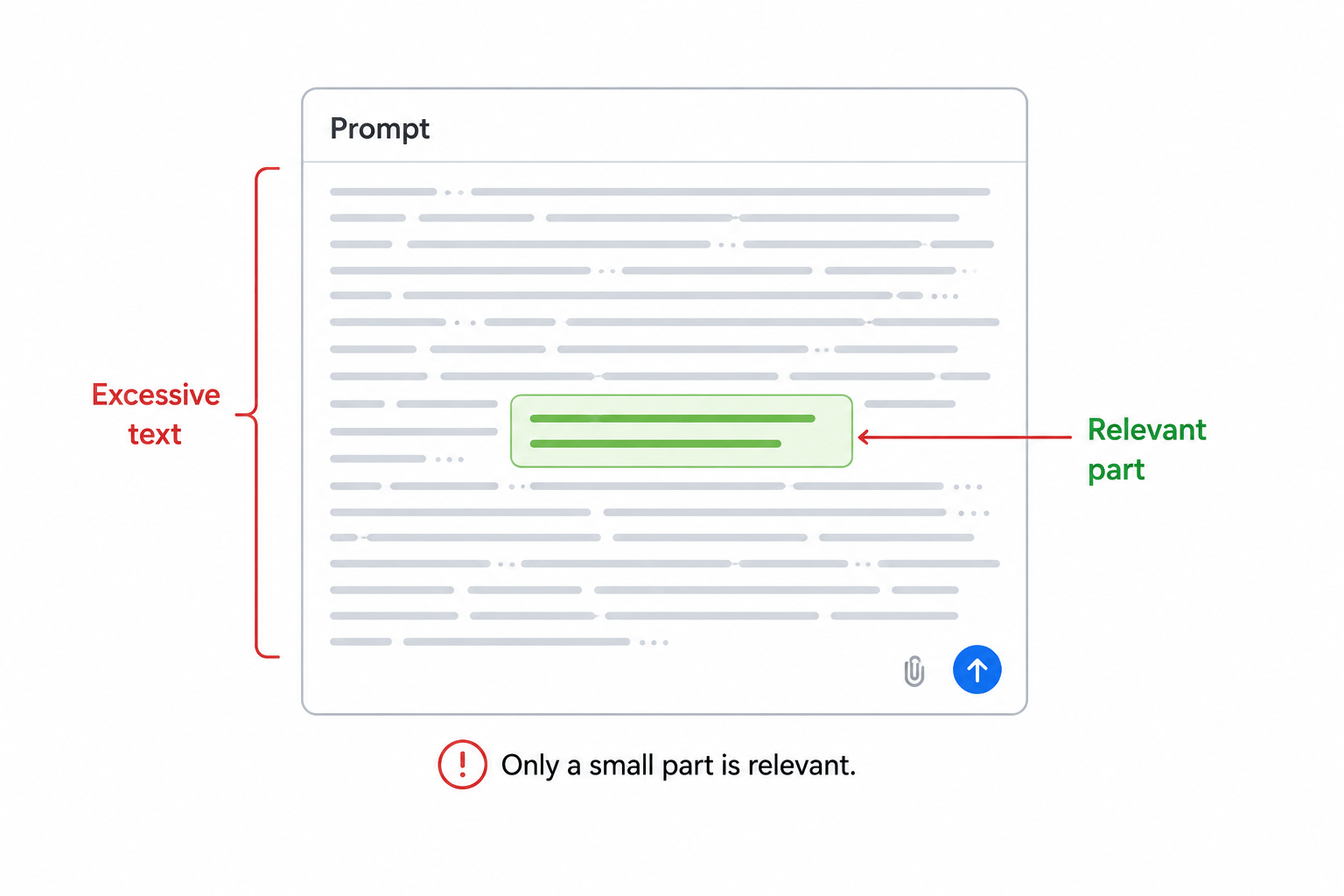
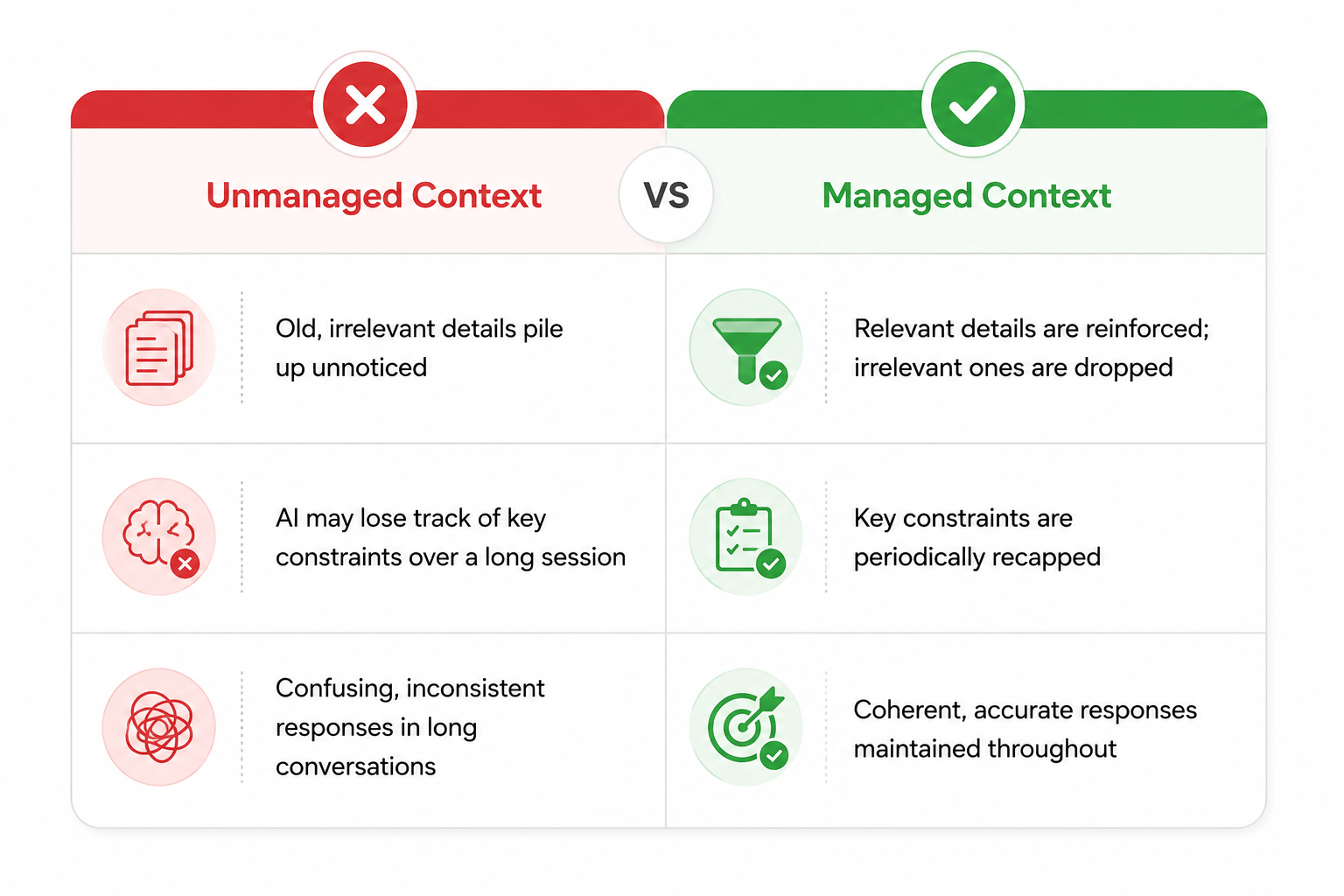
Providing too much unnecessary information can dilute the AI's focus, making it harder to identify what's actually relevant to the current request.
Example: Pasting an entire 50-page document when only one paragraph is relevant to the question being asked.
Concept 3
Context Loss
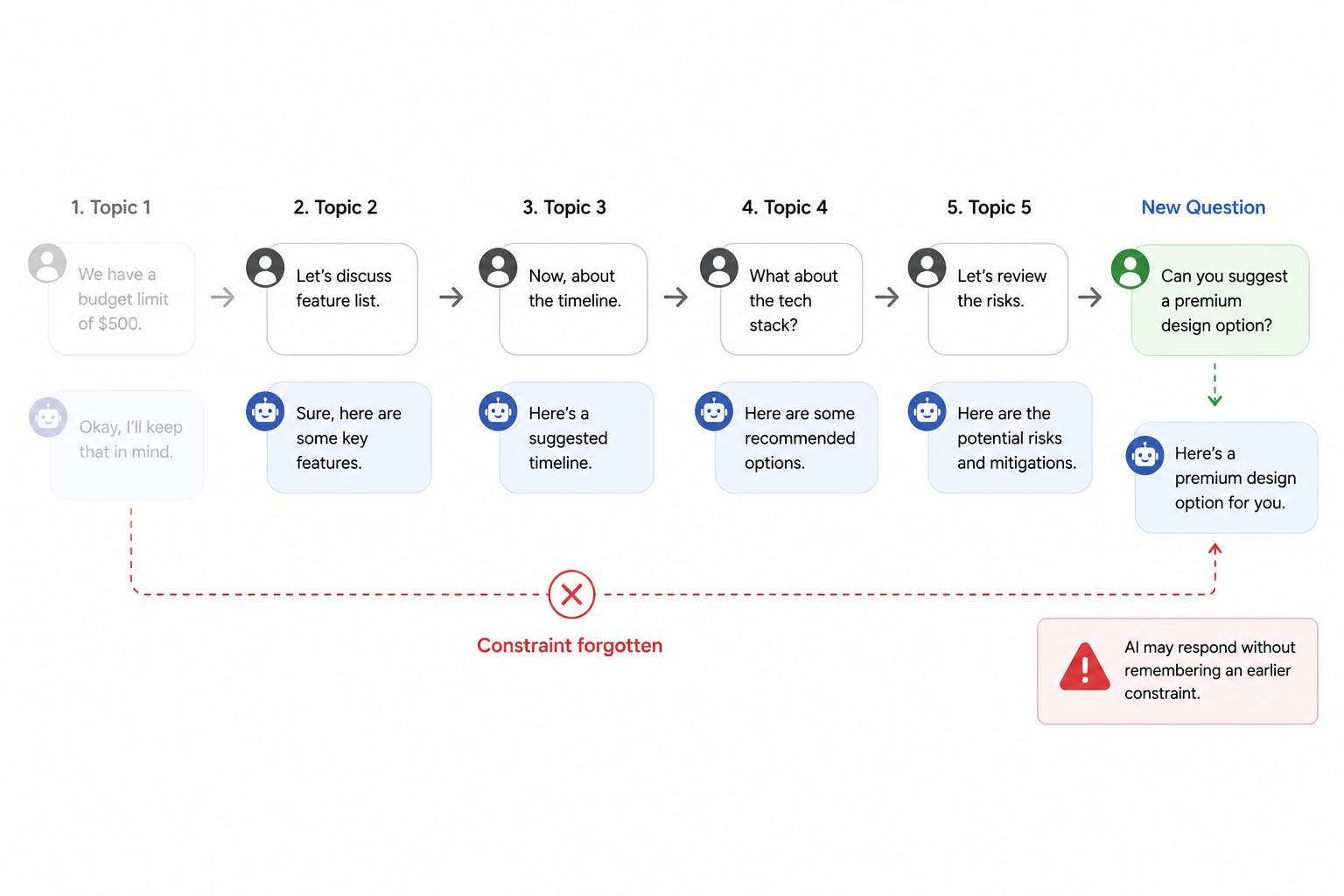
Context loss happens when important earlier information is dropped, either because the context window limit was reached or because the conversation drifted without reinforcing key details.
Example: After discussing 5 different topics, the AI may respond to a new question without remembering a constraint mentioned early on.
Technique 1
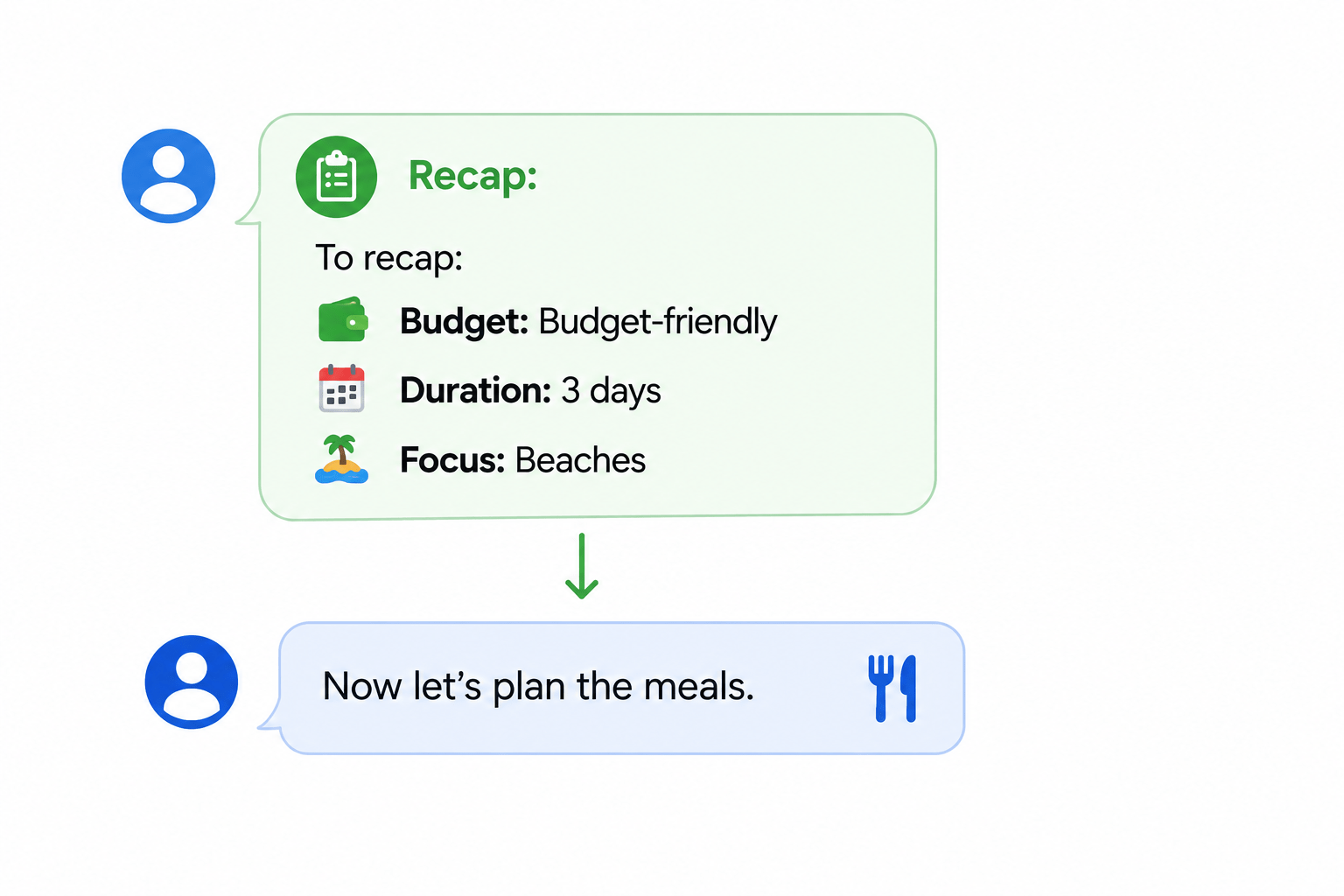
Summarizing Key Points
Periodically re-summarize important decisions, constraints, or goals within the conversation to reinforce them, especially in long sessions.
Example: "To recap: we're targeting a budget-friendly, 3-day itinerary focused on beaches — now let's plan the meals."
Technique 2
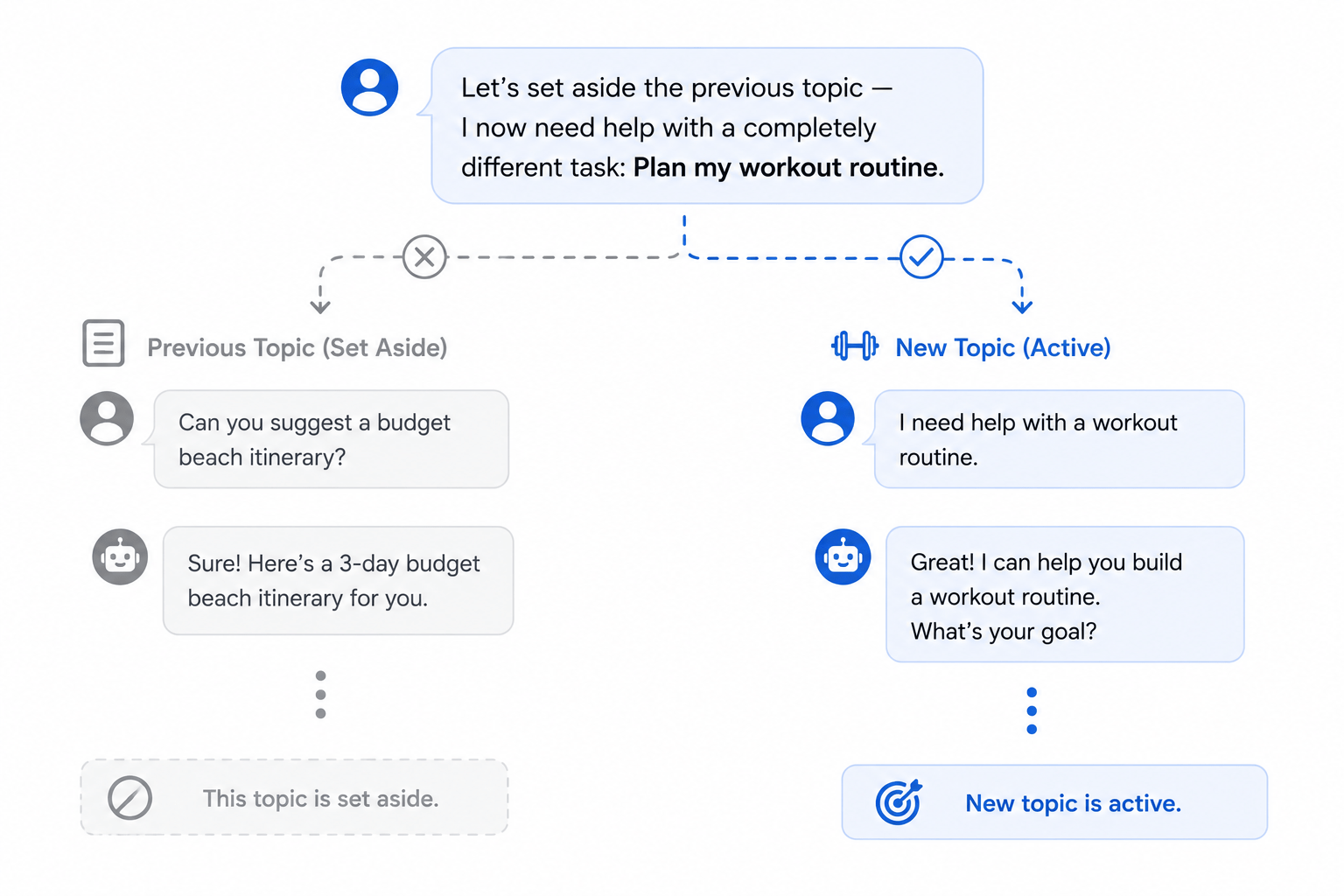
Starting Fresh When Topics Change
When switching to an unrelated topic, start a new conversation or clearly signal the shift, rather than letting old, irrelevant context influence the new task.
Example: "Let's set aside the previous topic — I now need help with a completely different task: [new task]."
Managed vs. Unmanaged Context (Comparison)
How Context Management Works (Core Mechanism)
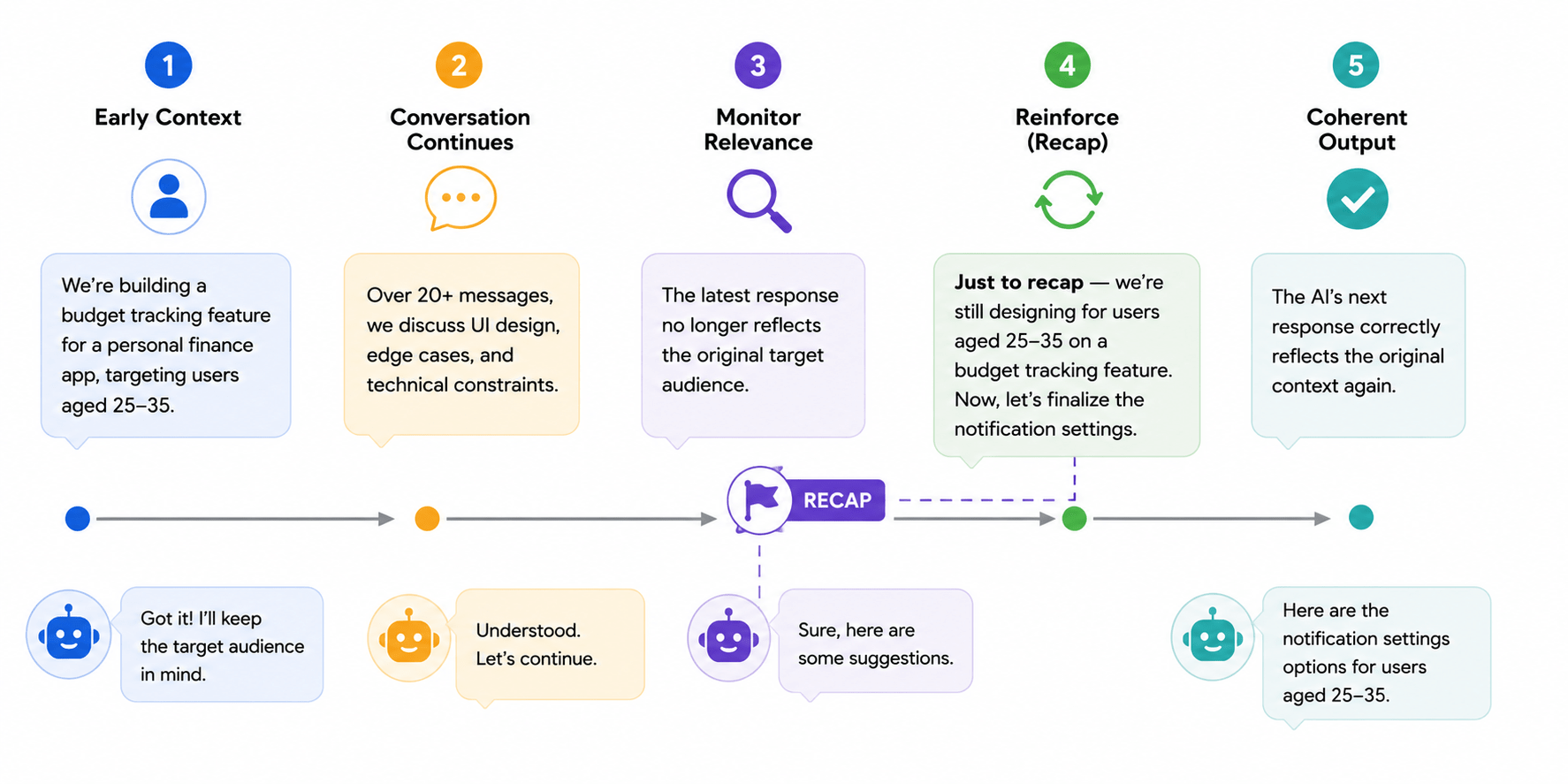
Scenario: A product manager is working with AI across a long session to draft a feature spec.
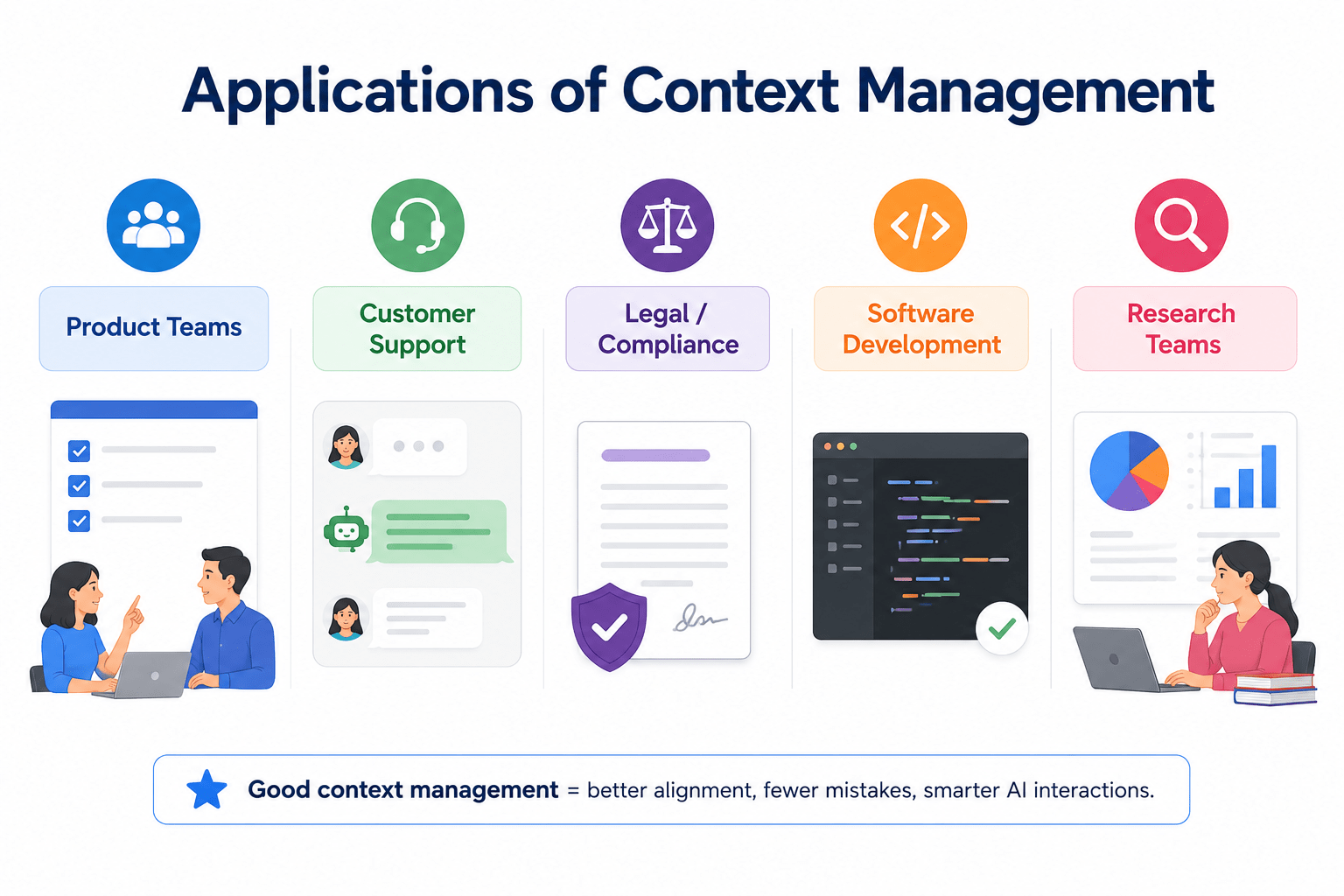
Applications of Context Management
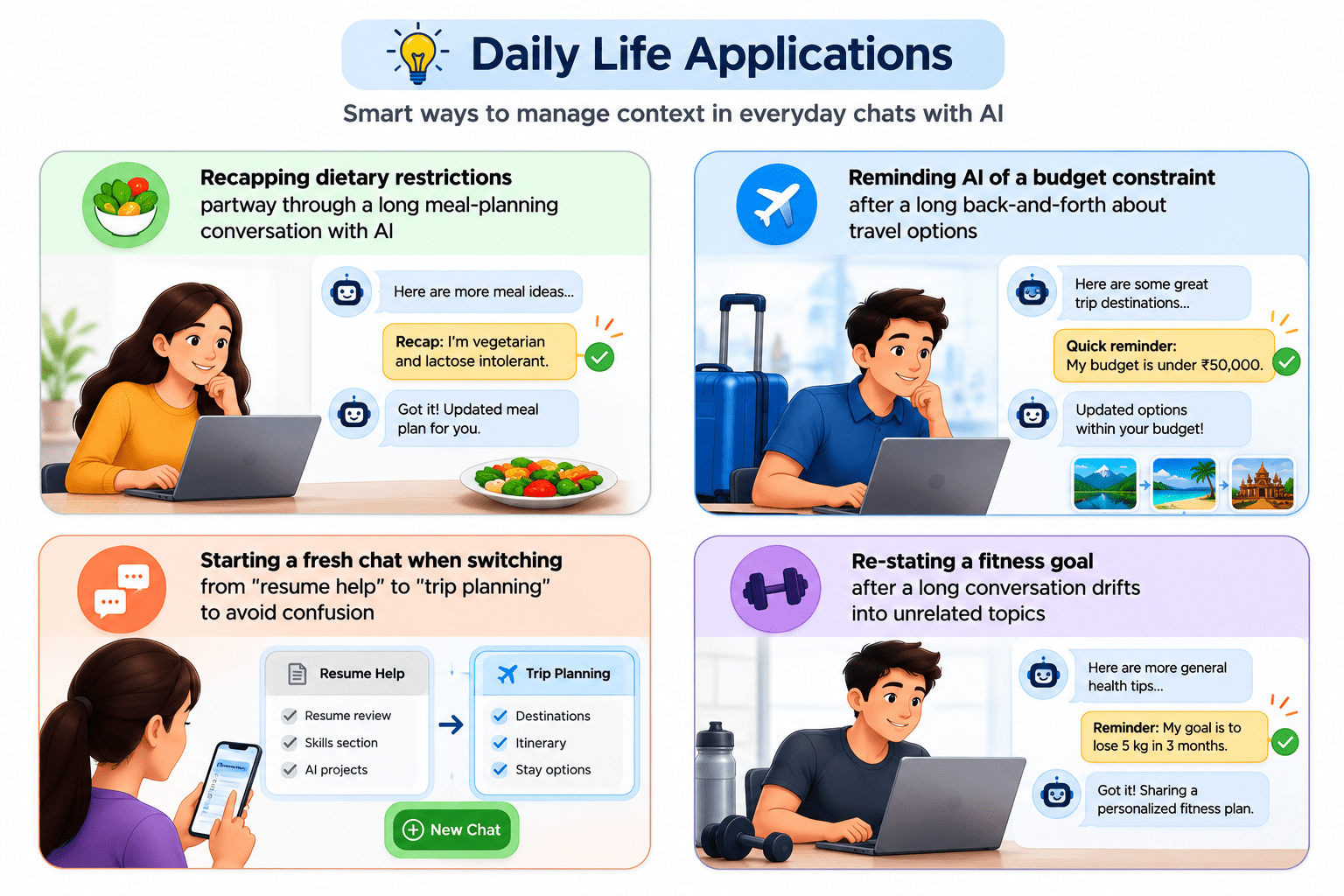
Daily Life Applications
Summary
4
Summarize key points and start fresh for new topics.
3
Too much or too little context reduces output quality.
2
AI has a limited context window.
1
Context Management controls what information carries forward.
Quiz
What is the maximum amount of text an AI model can actively consider at one time called?
A. Prompt Component
B. Context Window
C. Reasoning Chain
D. Output Format

Quiz-Answer
What is the maximum amount of text an AI model can actively consider at one time called?
A. Prompt Component
B. Context Window
C. Reasoning Chain
D. Output Format