Forensic Tools and Investigation Workflow


Basic forensic investigation workflow
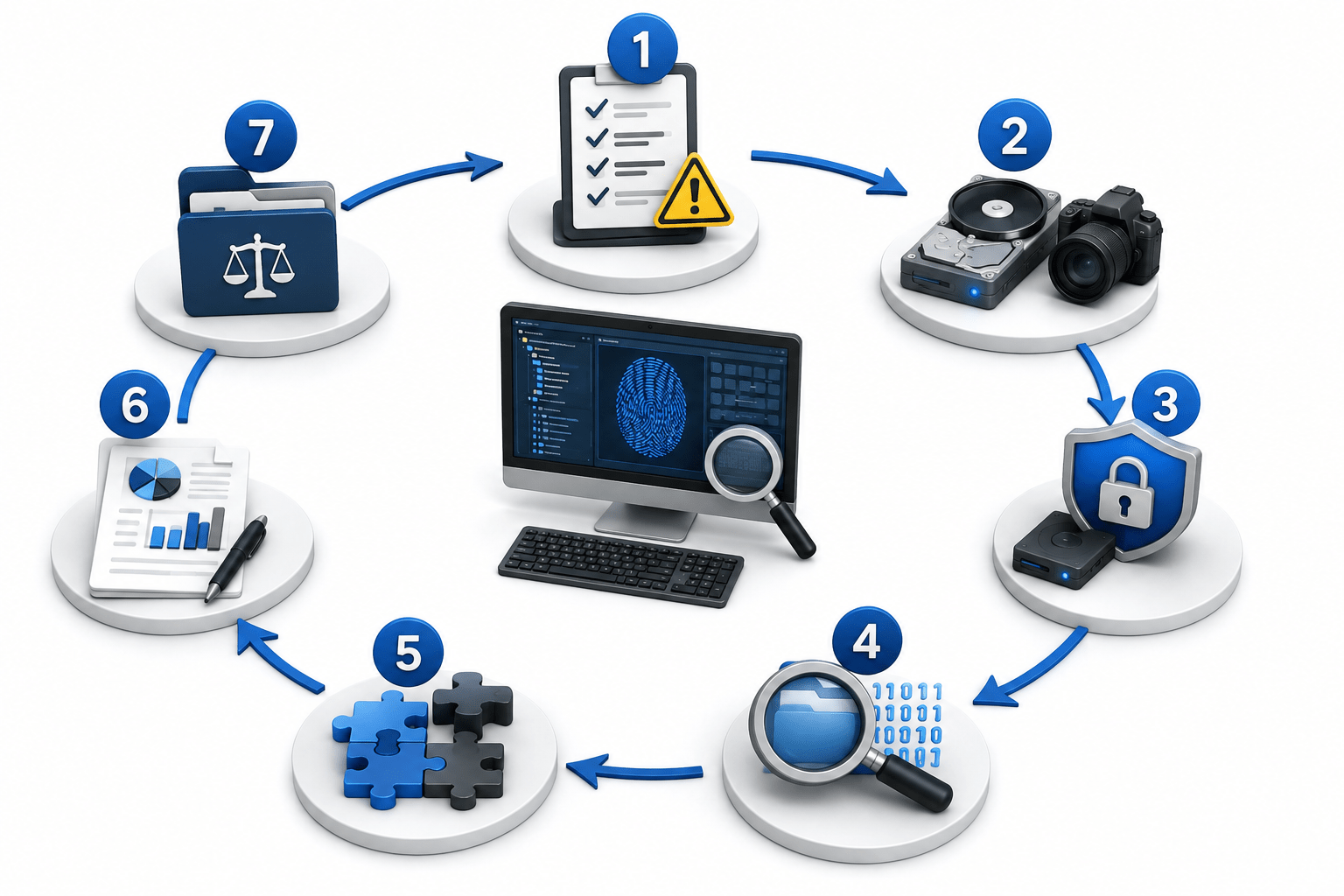

Learning Outcome(Slide2)
6
Present evidence using legal forensic practices.
5
Document investigations and prepare forensic reports.
4
Validate findings and identify the root cause
3
Analyze artifacts and reconstruct incident timelines
2
Identify, acquire, and verify digital evidence
1
Understand the digital forensic investigation workflow
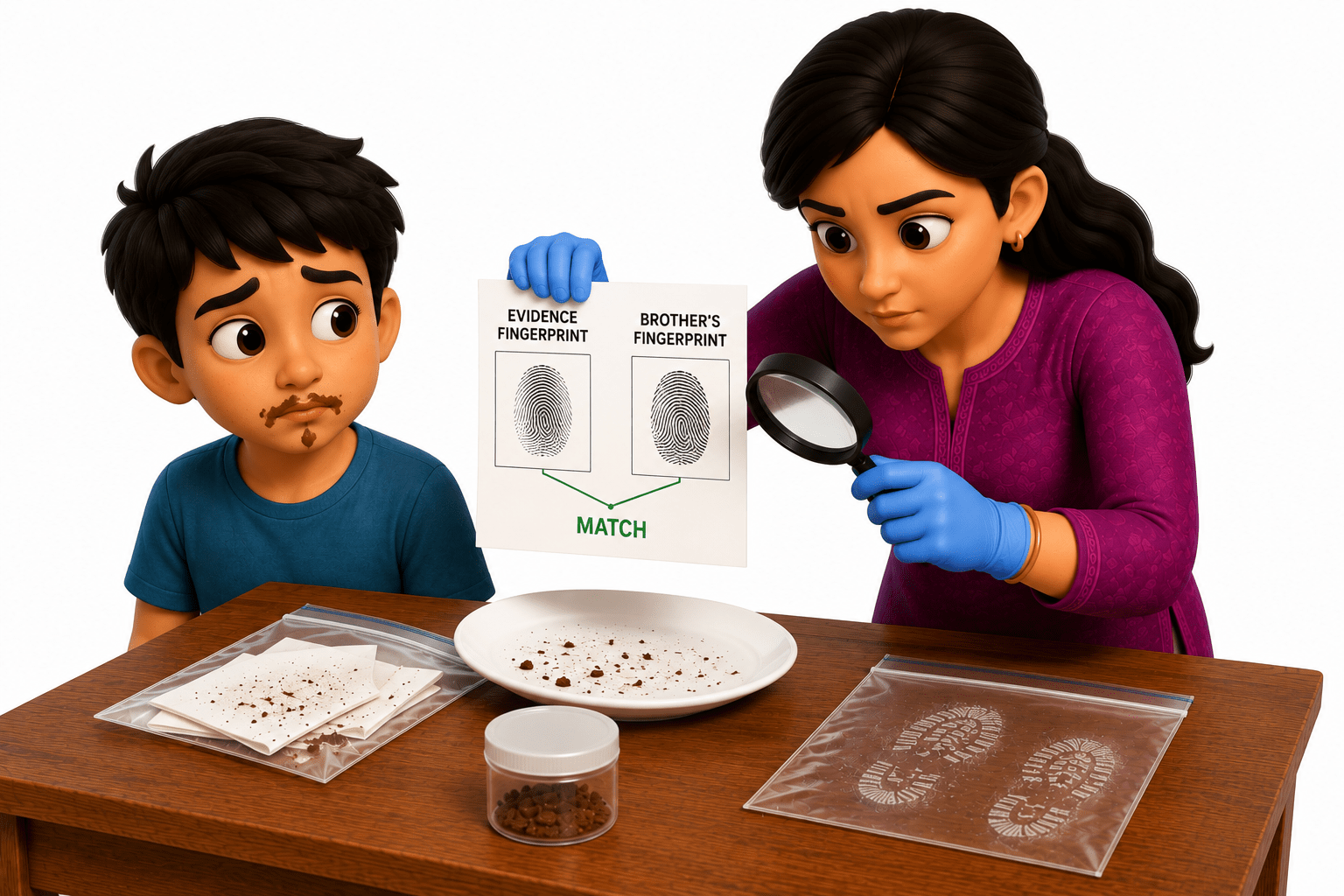
Imagine your family baked a chocolate cake and left it on the kitchen table
Later, the cake is gone
everyone wants to know who ate it without accusing the wrong person.



Here's how the investigation works, just like a digital forensic investigation
Identify the Incident – You notice the cake is missing
Preserve the Evidence – Before anyone cleans the table, you take photos of the crumbs and fingerprints.
Collect the Evidence – You gather the plate, napkins, and any footprints near the table
Examine the Evidence – You look closely at the fingerprints, crumbs, and footprints.




Analyze the Findings – You compare the fingerprints with family members and realize they match your little brother's. You also find chocolate around his mouth.
Report the Results – You explain what happened, show the evidence, and conclude who ate the cake and how you figured it out.

Incident Identification
What is Incident Identification?
investigators determine whether a security event or suspicious activity has actually occurred. An incident may involve unauthorized access, malware infection, data theft, system misuse, or any activity that threatens the confidentiality, integrity, or availability of digital systems. During this stage, investigators collect initial information to understand the nature of the incident and decide whether a formal investigation is required

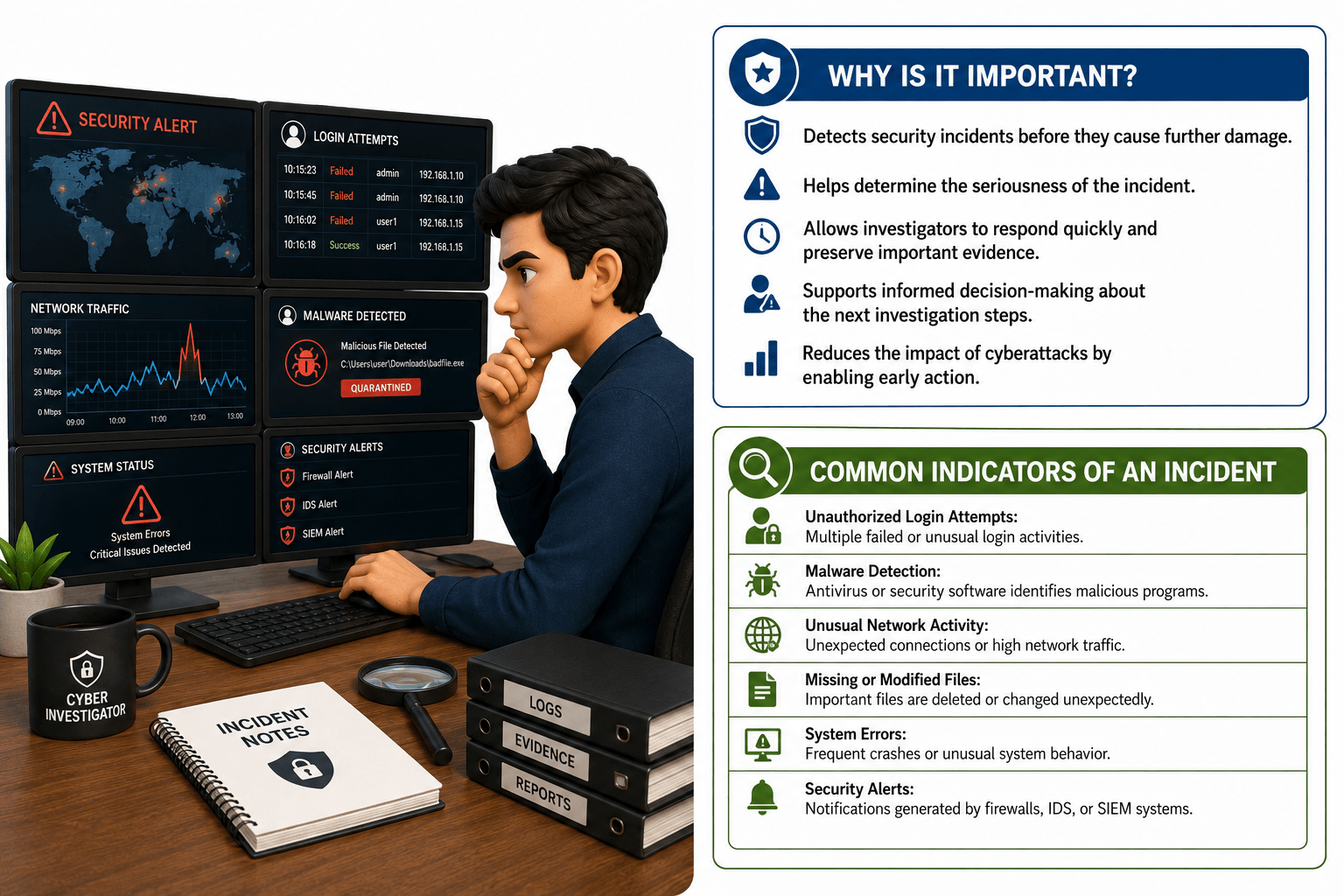
Why is it Important?
Common Indicators of an Incident
Investigation Planning
What is Investigation Planning?
Investigation Planning is the process of preparing a structured approach before starting a digital forensic investigation. During this stage, investigators define the investigation objectives, identify available resources, assign responsibilities, and determine the methods that will be used to collect and analyze evidence. Proper planning helps ensure that the investigation is organized, efficient, and legally compliant

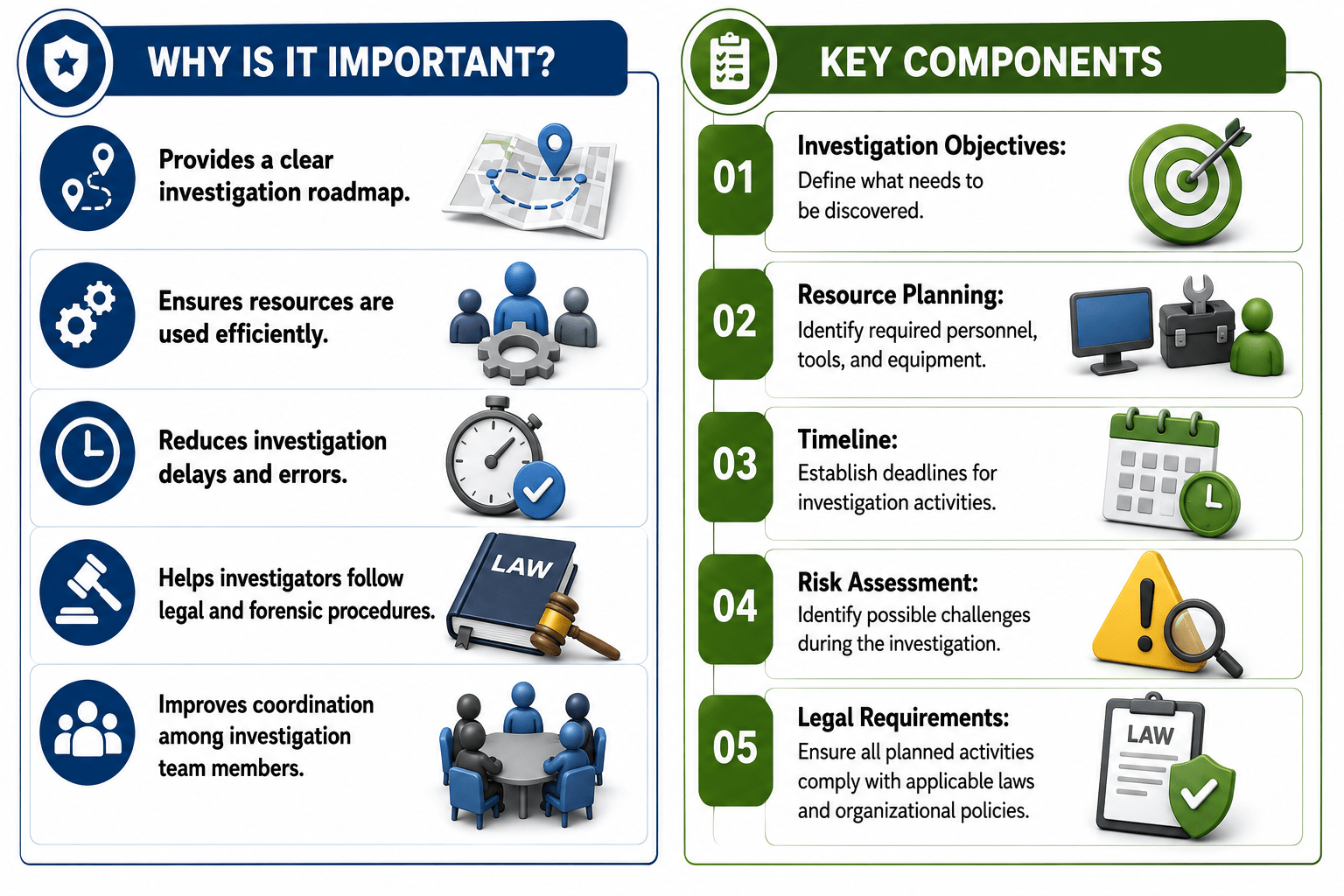
Why is it Important?
Key Components
Scope Definition
What is Scope Definition?
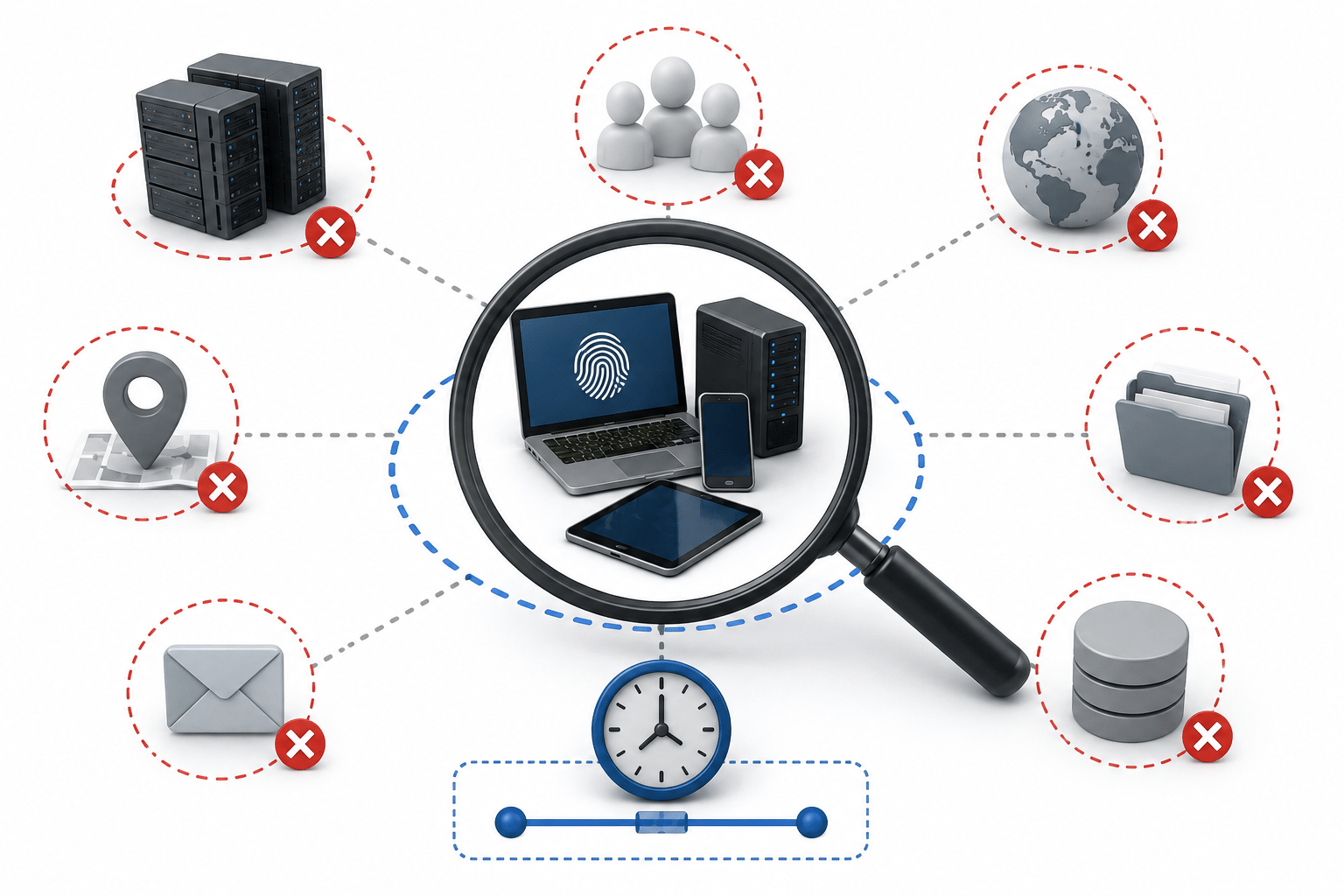
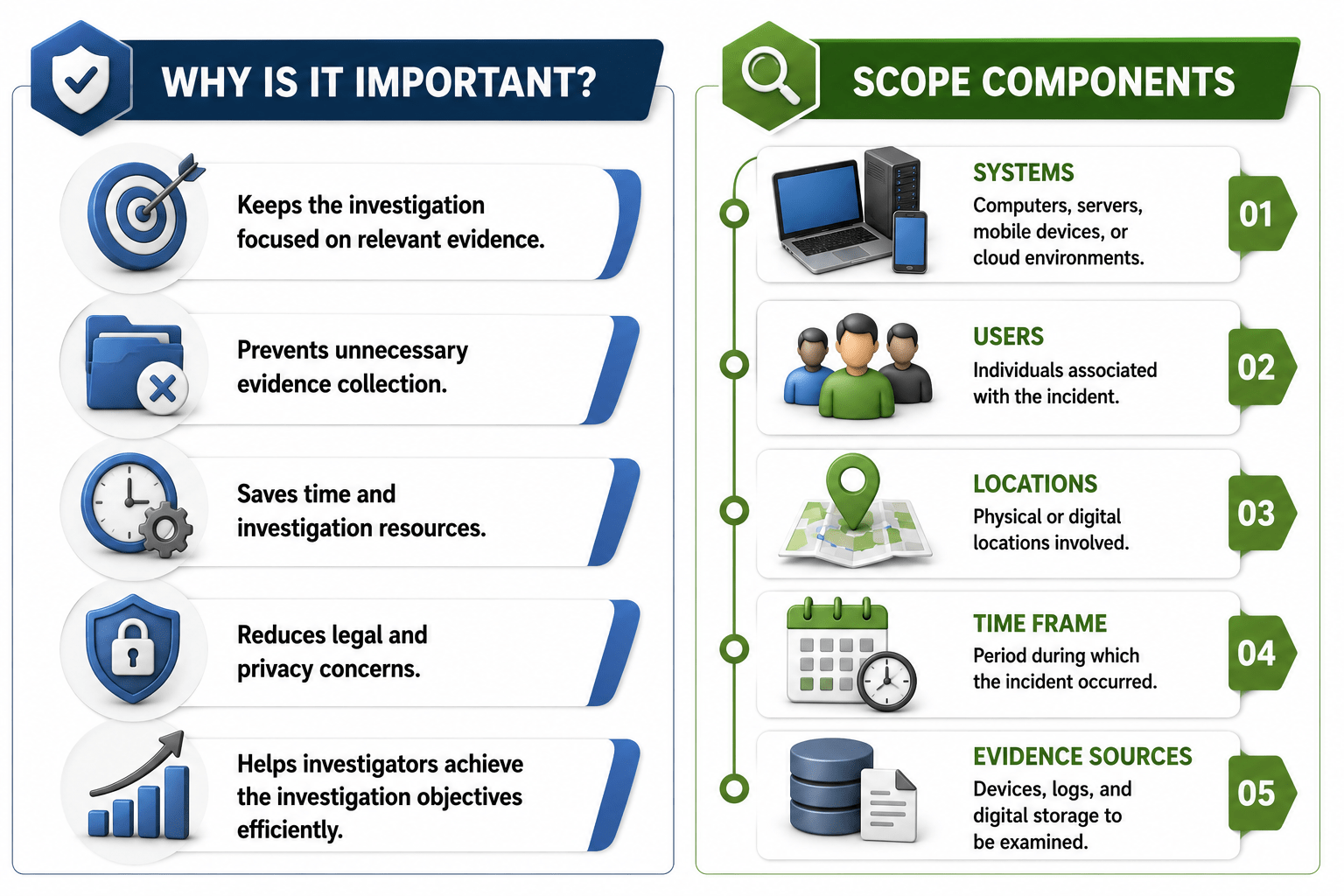
Scope Definition is the process of determining the boundaries of a digital forensic investigation. It identifies what systems, devices, users, locations, and time periods will be included in the investigation. Defining the scope prevents investigators from collecting unnecessary information and ensures that the investigation remains focused on the incident being examined.
Why is it Important?
Scope Components
Evidence Source Identification
What is Evidence Source Identification?
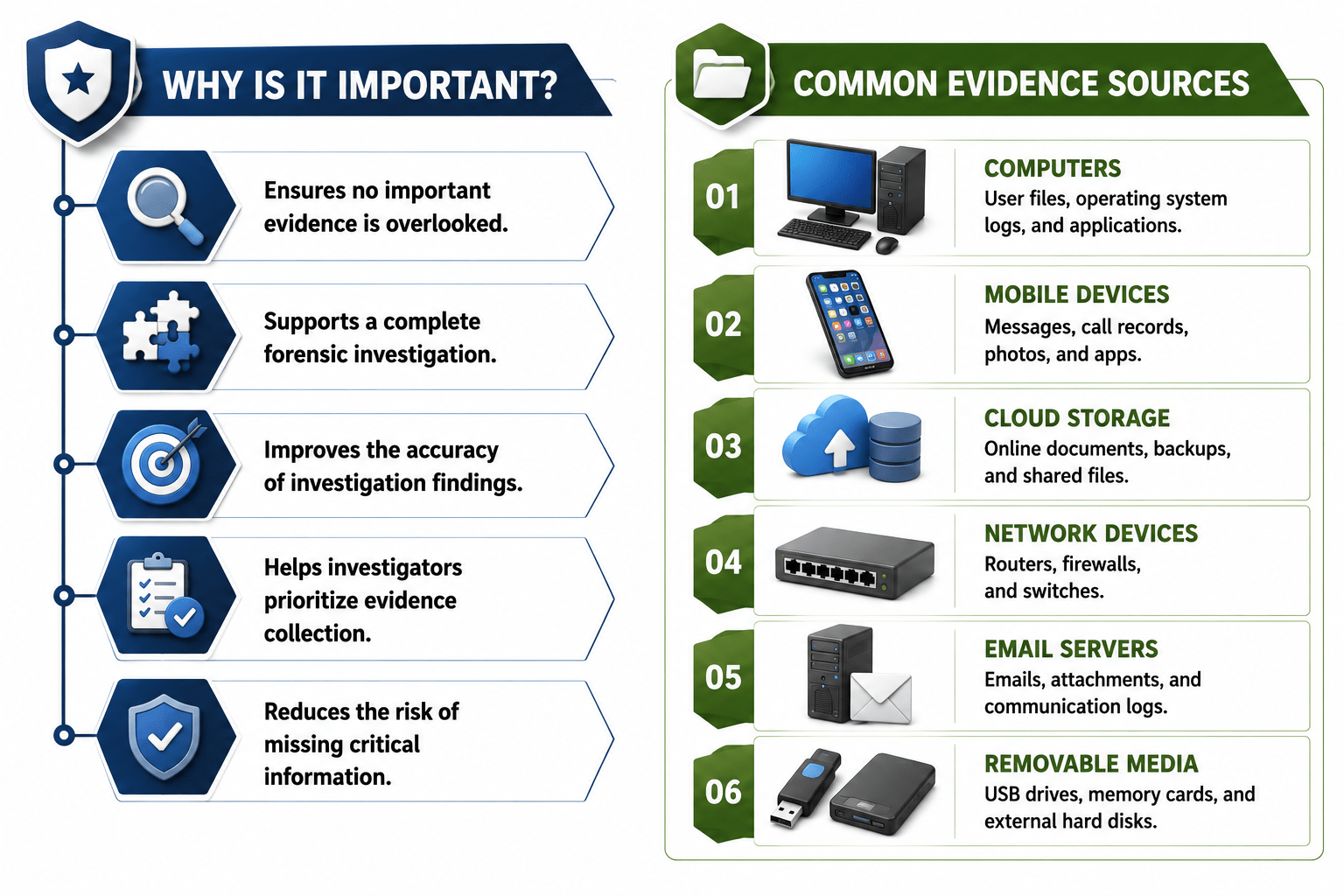
Evidence Source Identification is the process of locating all possible sources of digital evidence related to an investigation. Digital evidence can be stored on computers, mobile devices, cloud services, network equipment, removable media, or online accounts. Identifying every relevant evidence source helps investigators collect complete and reliable information for analysis

Why is it Important?
Common Evidence Sources
Initial Assessment Procedures
What are Initial Assessment Procedures?
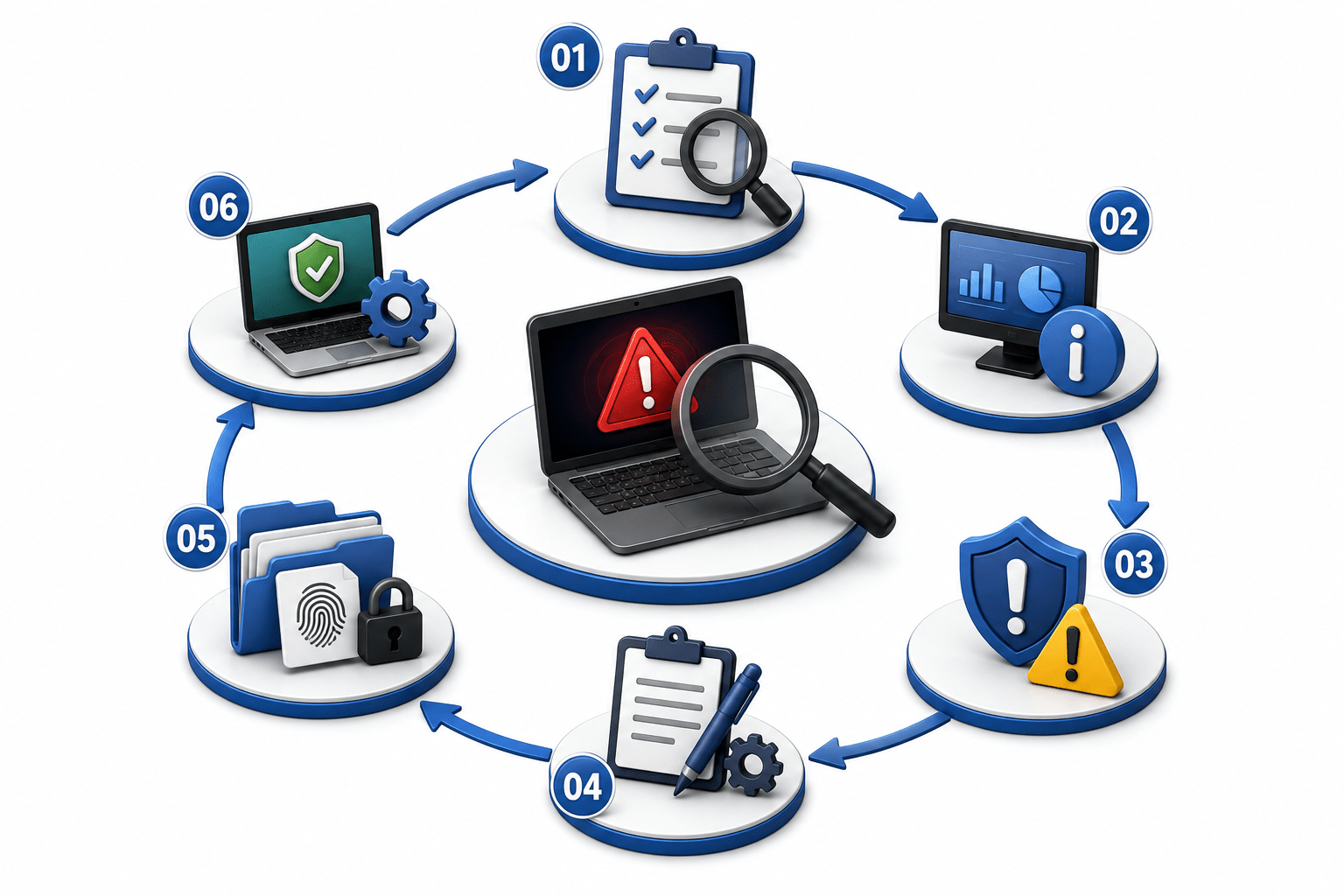
Initial Assessment Procedures are the first activities performed after identifying a digital security incident. During this stage, investigators collect preliminary information, evaluate the situation, identify potential risks, and determine the immediate actions required. The purpose of the assessment is to understand the incident without modifying or damaging the evidence
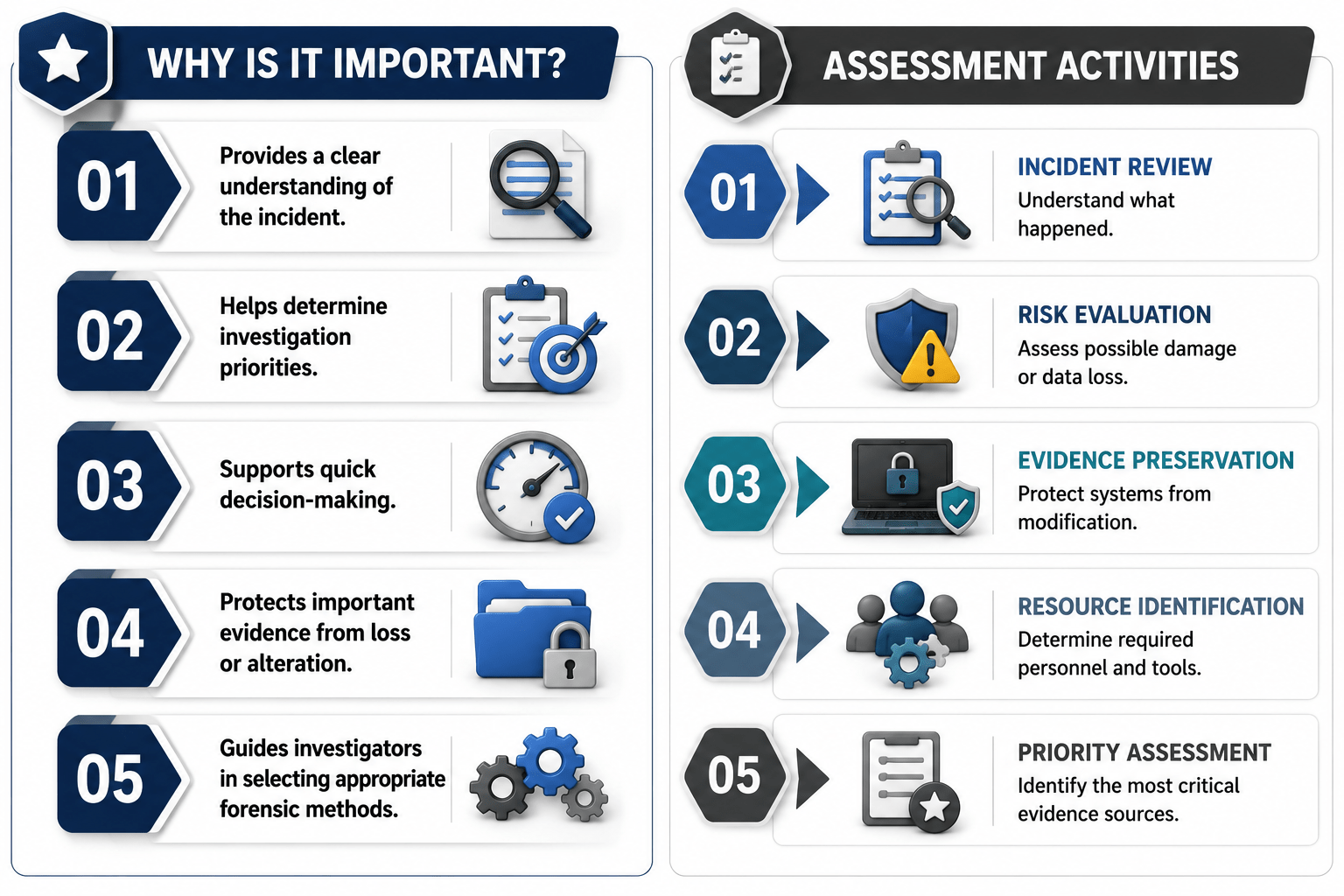
Why is it Important?
Why is it Important?
Evidence Acquisition Process
What is Evidence Acquisition?
Evidence Acquisition is the process of collecting digital evidence from computers, mobile devices, storage media, cloud services, and other digital sources without altering the original data. Investigators create forensic copies of digital evidence so that analysis can be performed safely while preserving the original evidence. Proper acquisition is one of the most important steps in digital forensics because all later analysis depends on the quality and integrity of the collected evidence
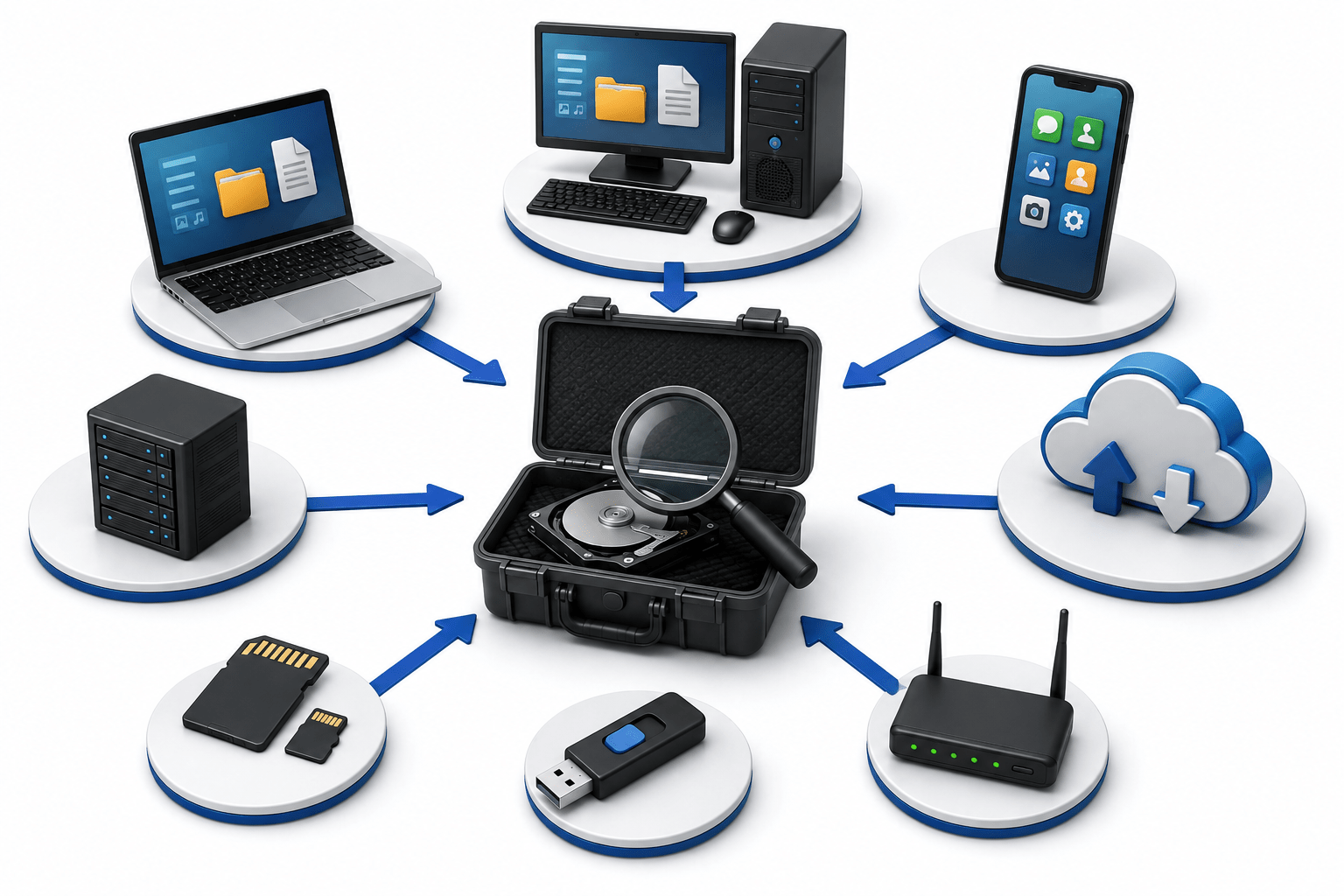
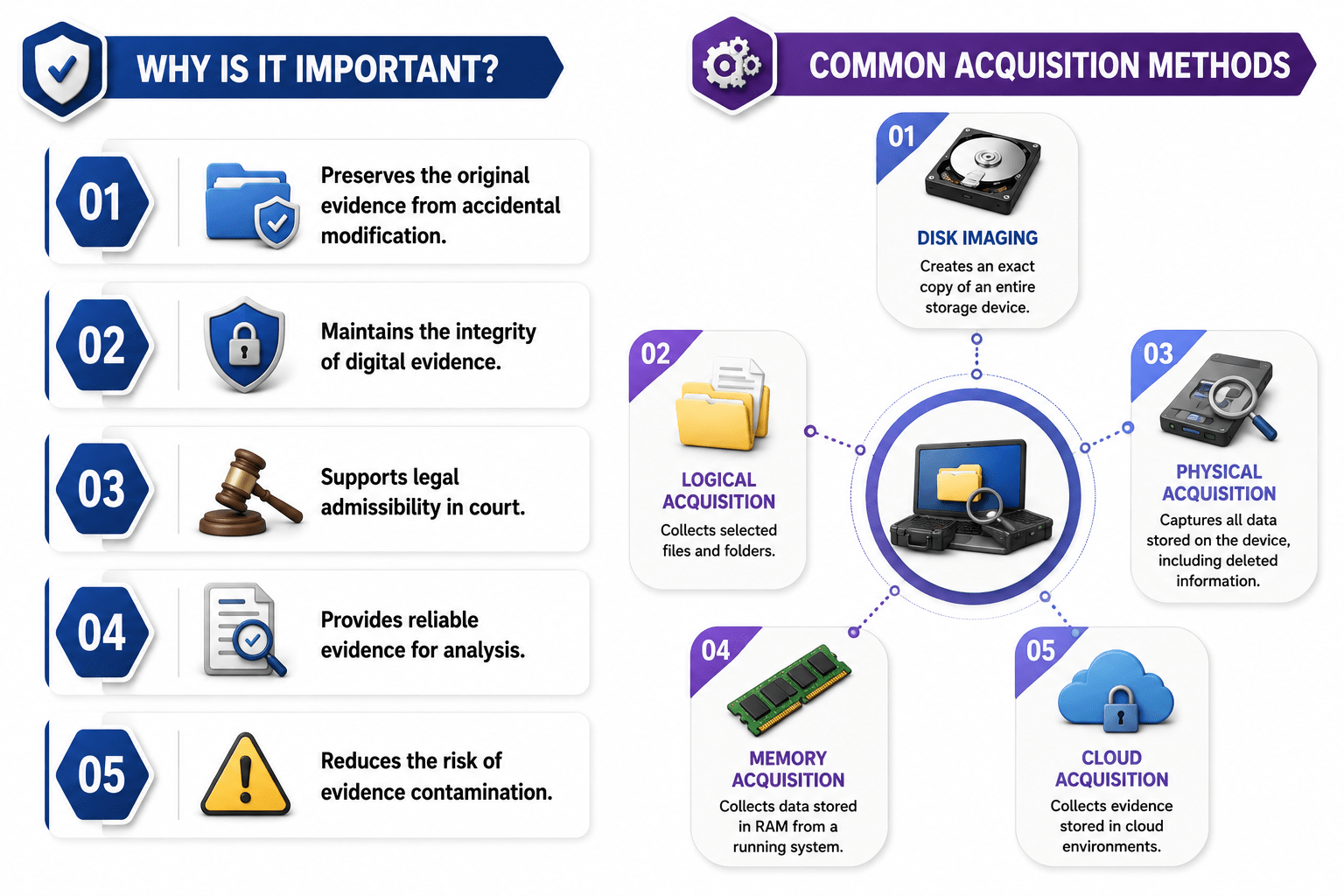
Why is it Important?
Common Acquisition Methods
Evidence Verification Methods
What are Evidence Verification Methods?
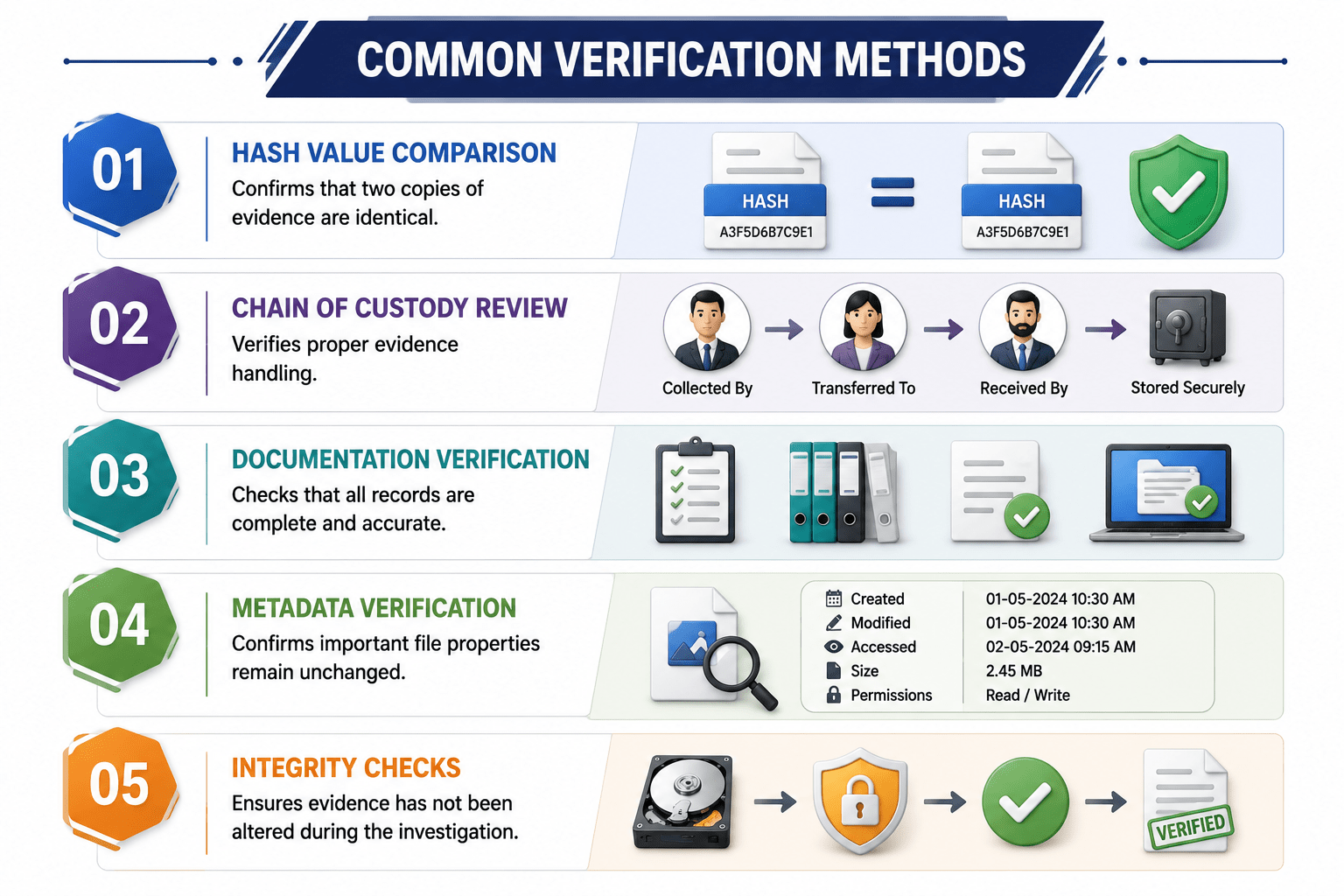
Evidence Verification Methods are techniques used to confirm that digital evidence remains complete, accurate, and unchanged after collection. Verification ensures that the evidence collected by investigators is identical to the original source and has not been modified during acquisition, storage, or analysis. These methods help maintain the authenticity and reliability of digital evidence throughout the investigation
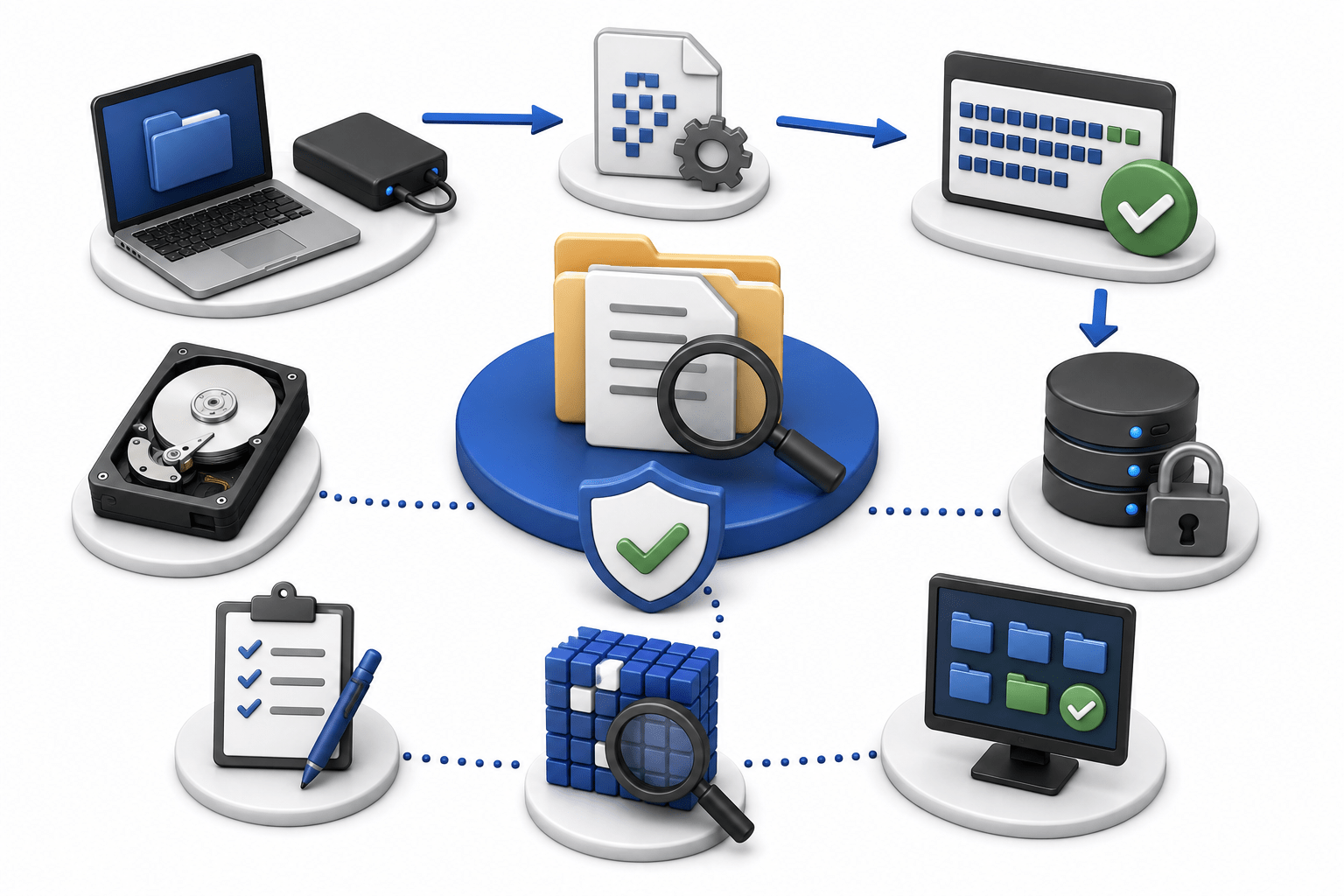
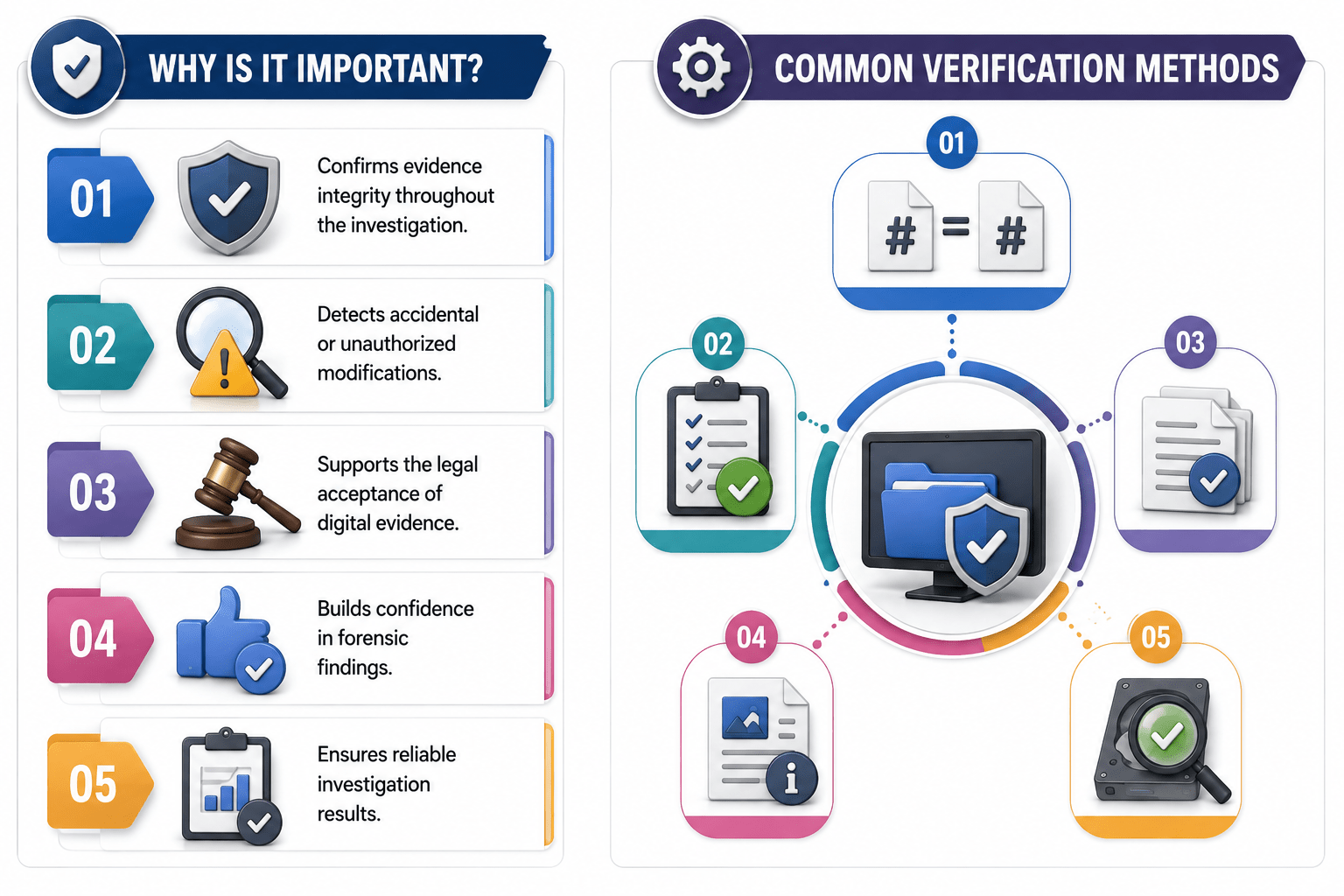
Why is it Important?
Common Verification Methods
Data Examination Procedures
What are Data Examination Procedures?
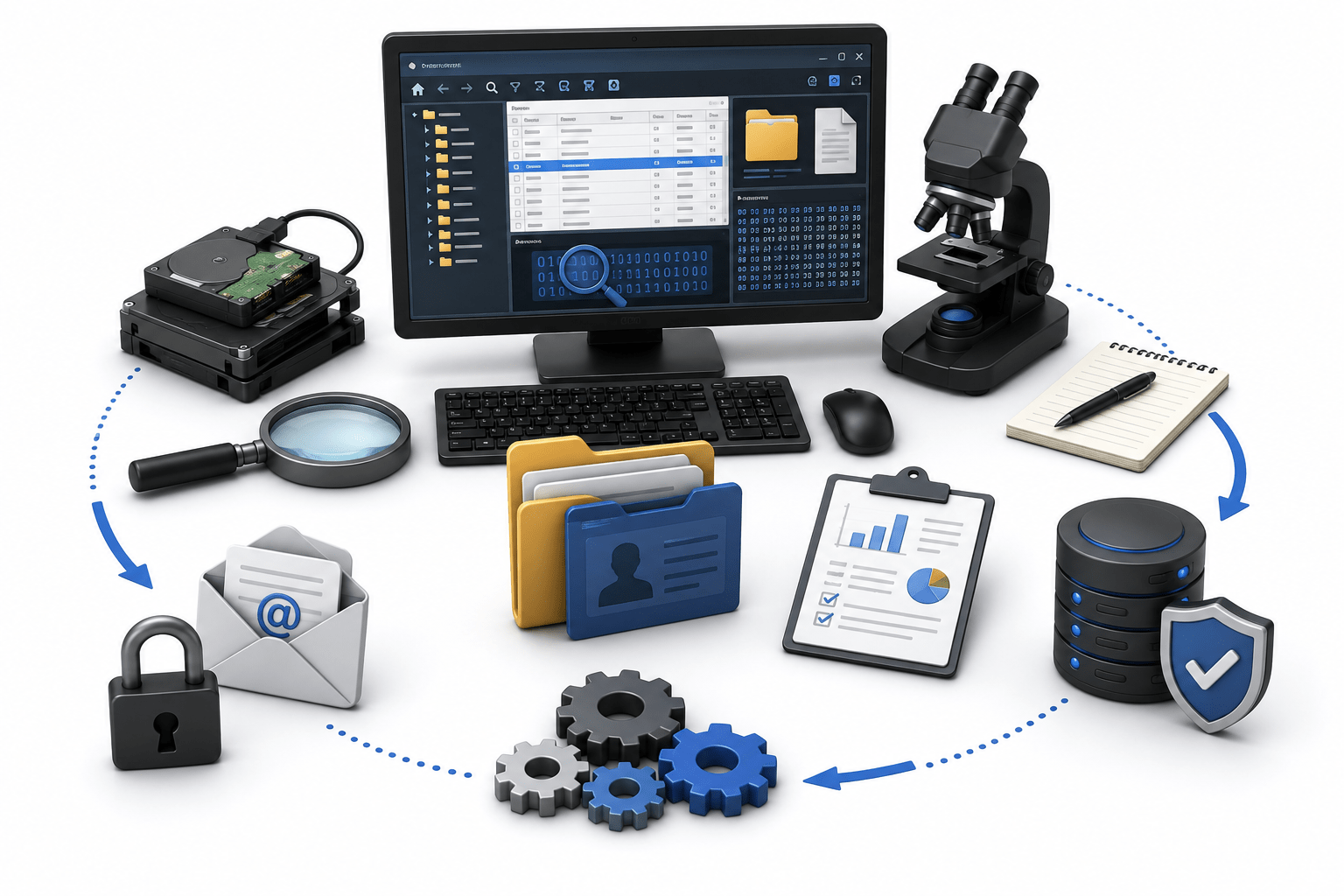
Data Examination Procedures are the systematic steps used to inspect and analyze collected digital evidence to identify information relevant to an investigation. After evidence has been acquired and verified, investigators examine files, logs, emails, system records, and other digital artifacts to discover facts related to the incident. The examination process focuses on identifying useful evidence while preserving the integrity of the original data. A structured examination helps investigators understand what happened and supports accurate forensic findings
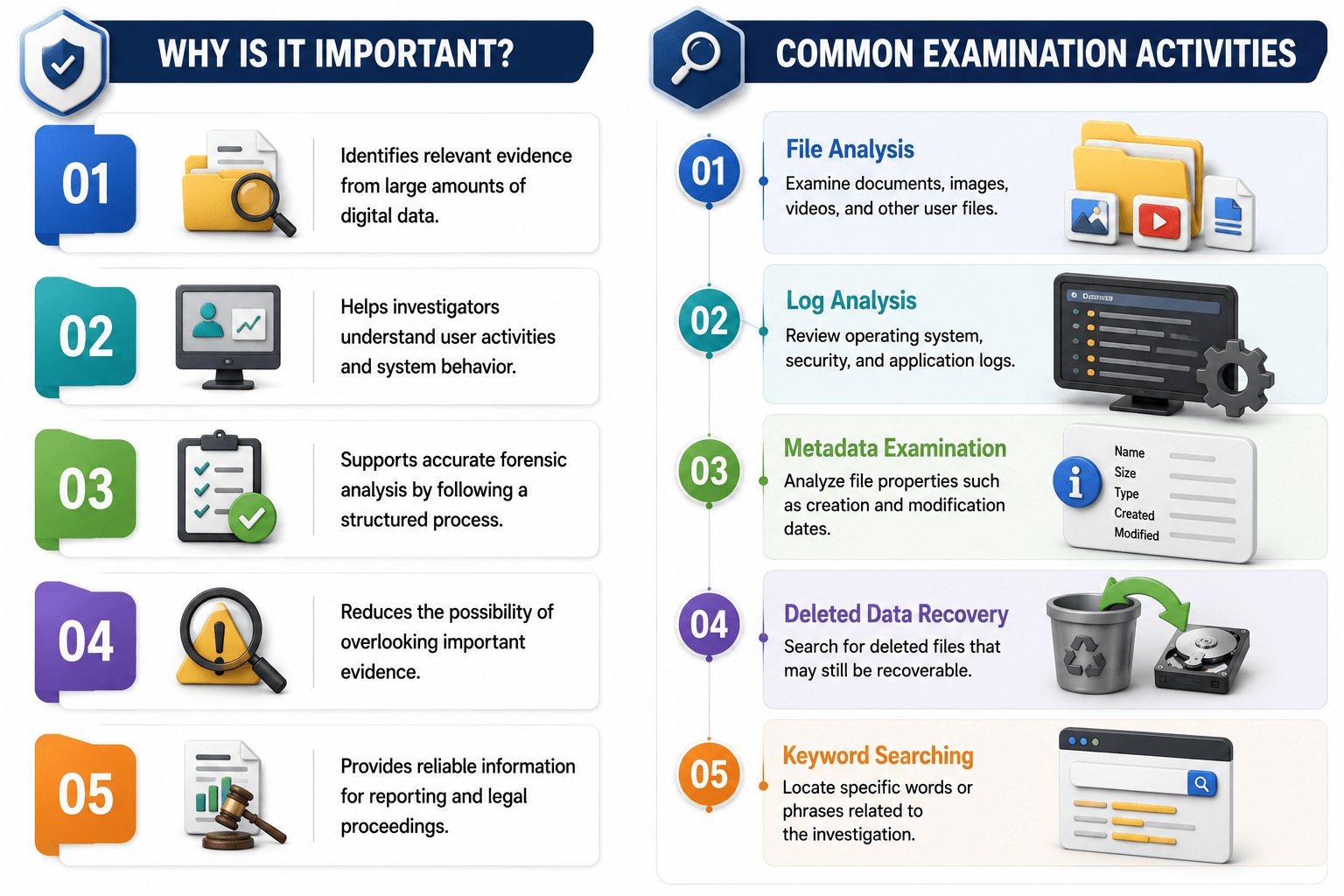
Why is it Important?
Common Examination Activities
Artifact Identification
What is Artifact Identification?
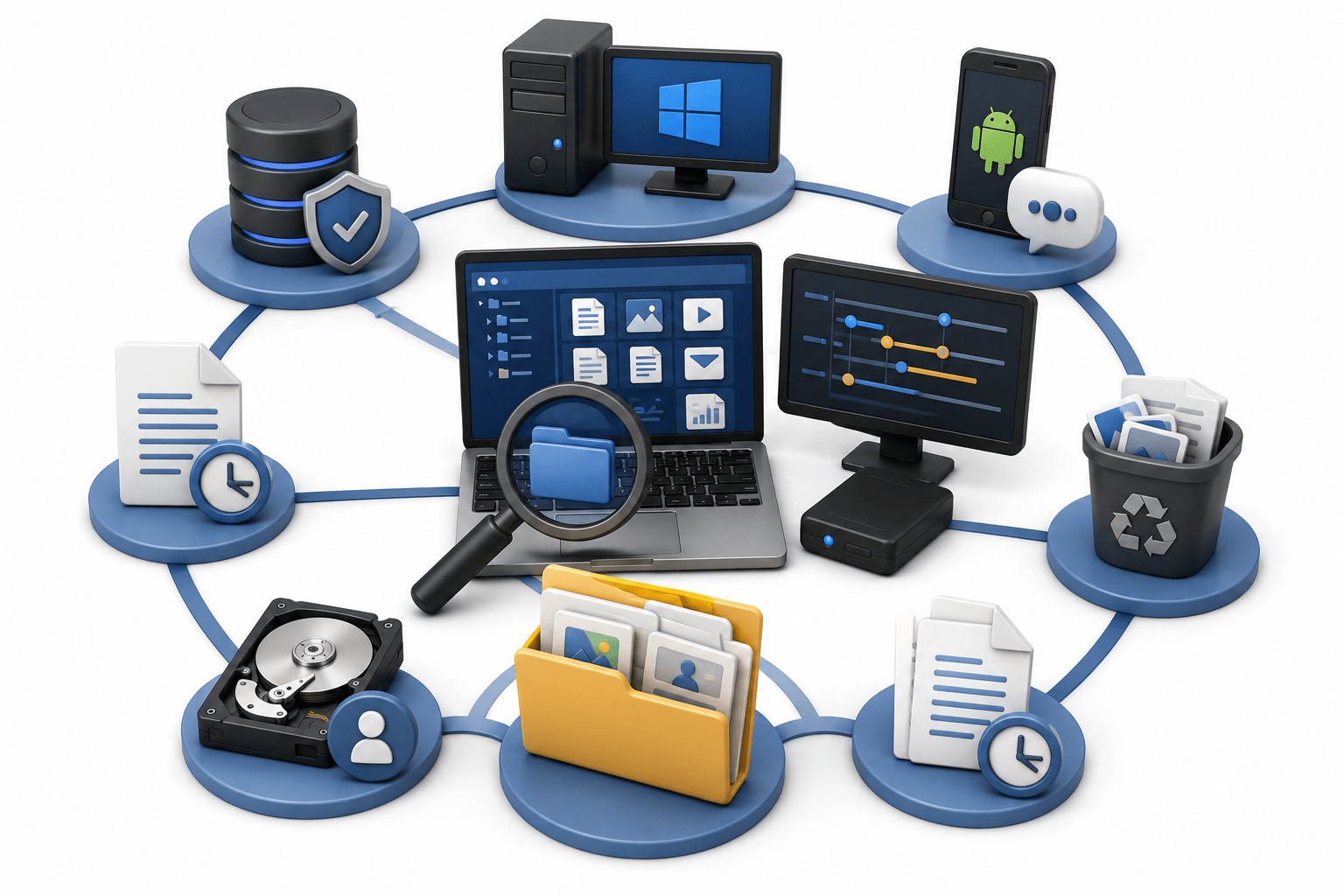
Artifact Identification is the process of locating and recognizing digital artifacts that provide evidence of user activities or system events. Digital artifacts are pieces of information automatically created by operating systems, applications, and devices during normal usage. These artifacts help investigators understand what actions were performed, when they occurred, and who performed them. Identifying the correct artifacts is essential for reconstructing events and supporting forensic conclusions.
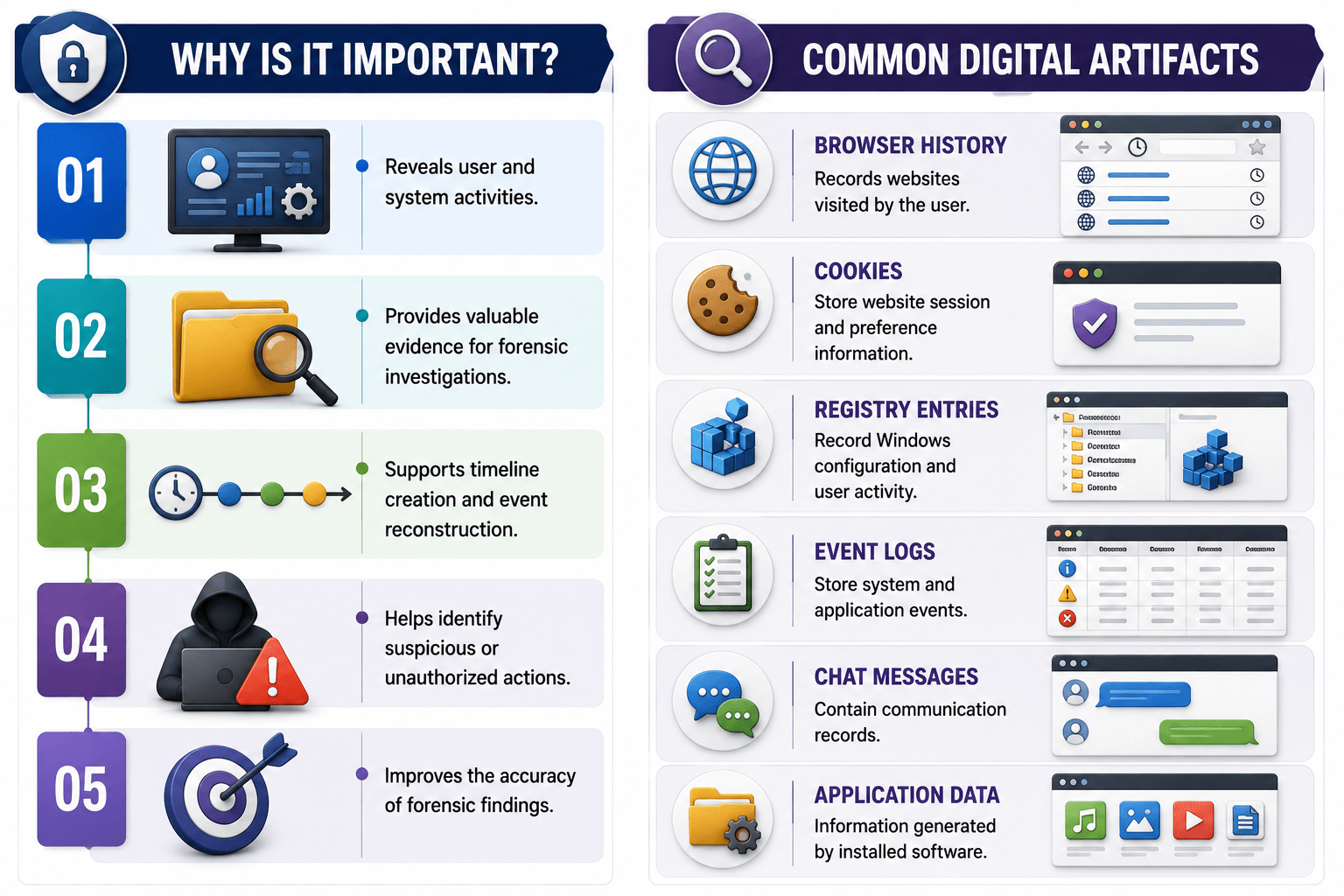
Why is it Important?
Common Digital Artifacts
Evidence Correlation Process
What is Evidence Correlation?
Evidence Correlation is the process of comparing and connecting evidence collected from multiple sources to identify relationships and verify investigation findings. Rather than examining each piece of evidence independently, investigators analyze how different evidence items support or explain each other. Correlating evidence provides a more complete understanding of the incident and reduces the possibility of incorrect conclusions.

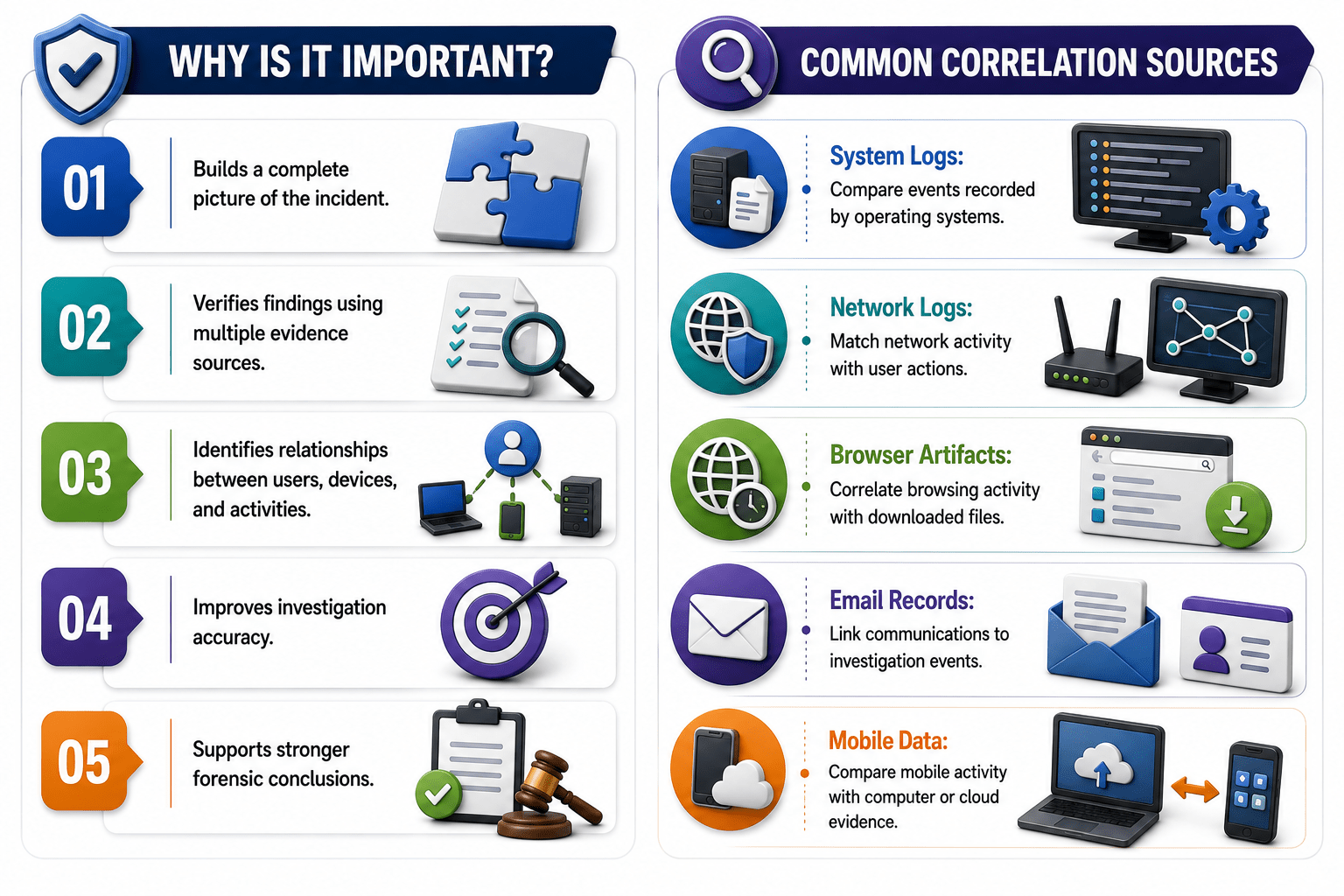
Why is it Important?
Why is it Important?
Timeline Development
What is Timeline Development?
Timeline Development is the process of arranging digital events in chronological order to understand the sequence of activities during an investigation. Investigators collect timestamps from files, logs, emails, browser history, and other digital artifacts to create a timeline of events. A well-developed timeline helps investigators identify what happened before, during, and after a security incident.
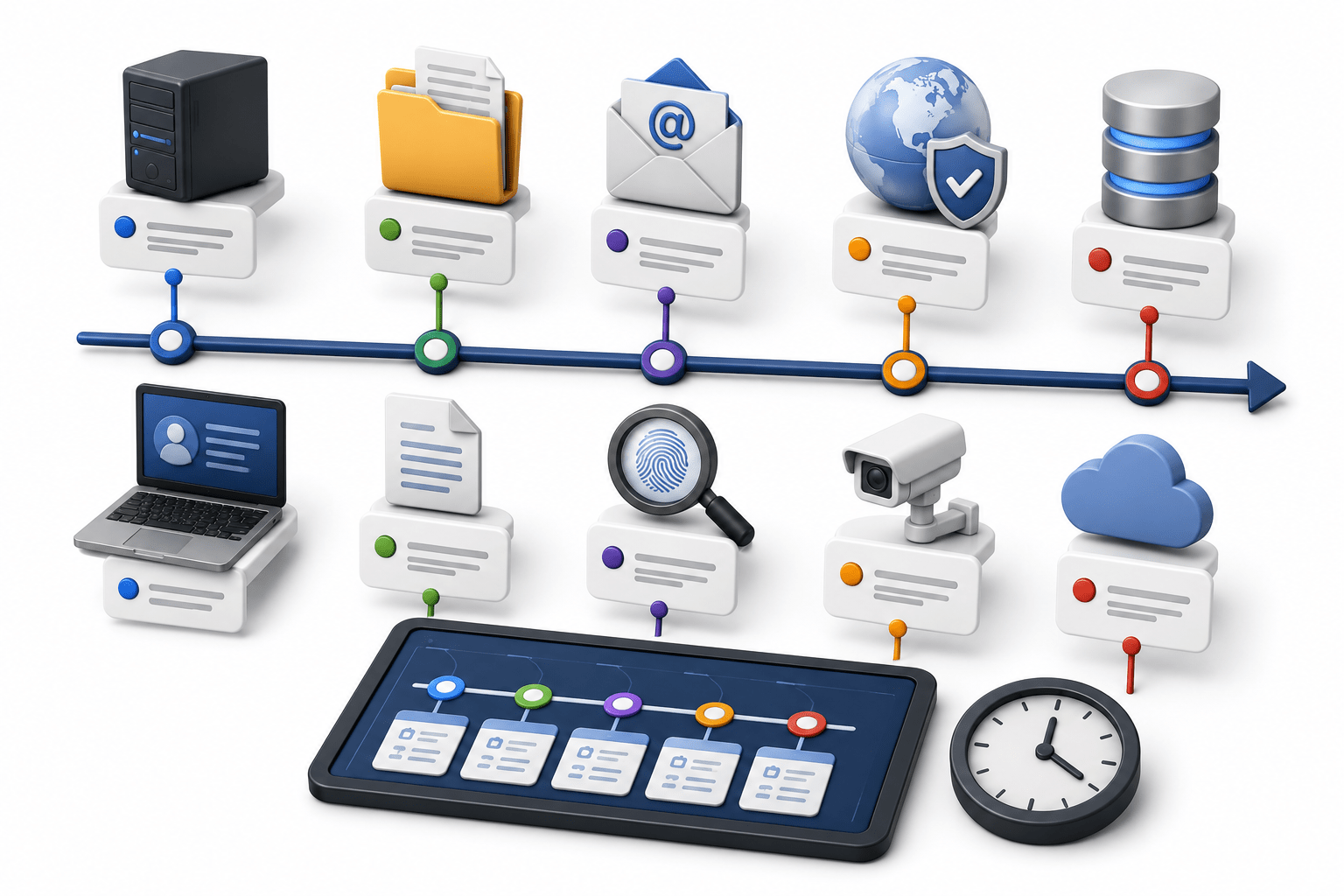
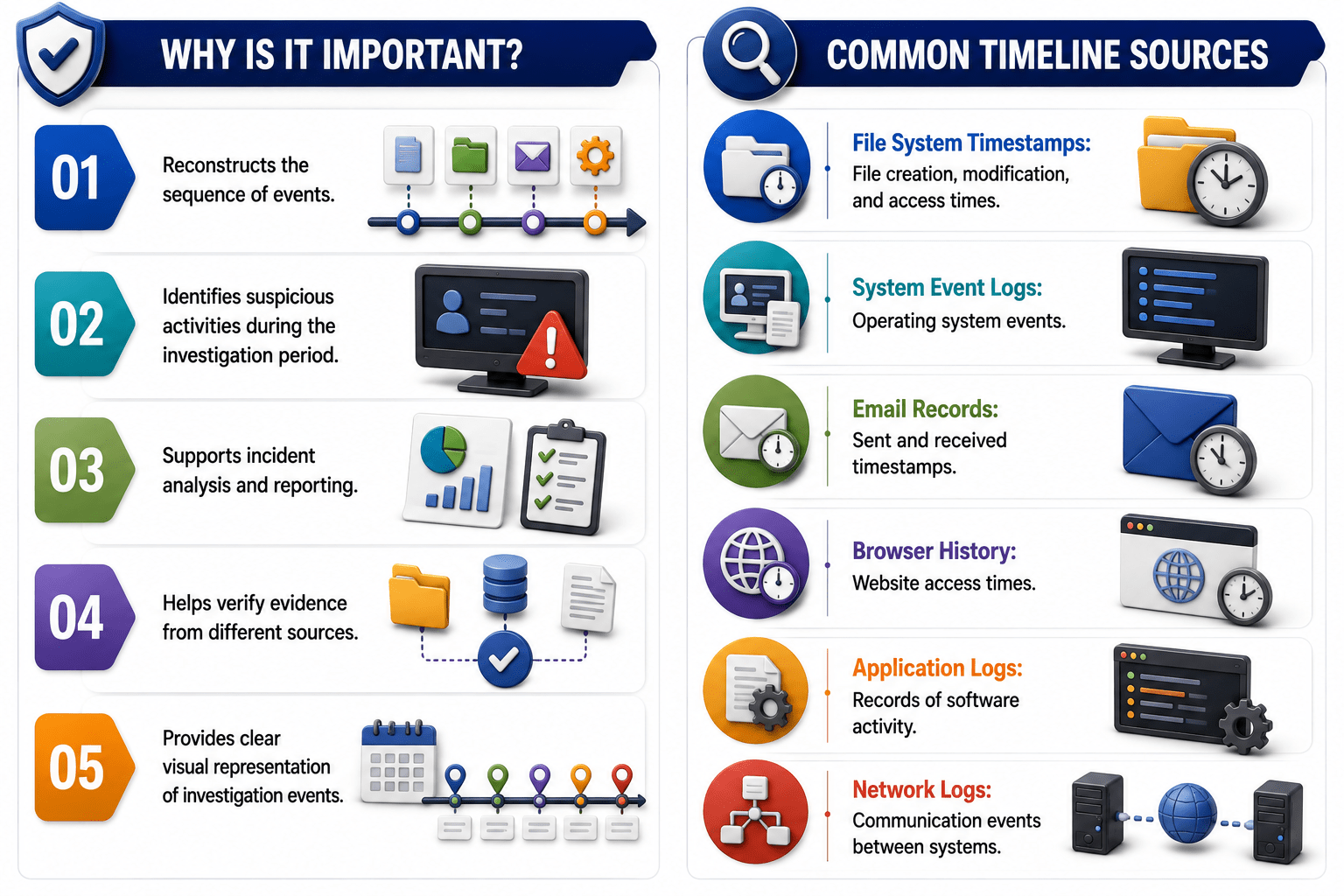
Why is it Important?
Common Timeline Sources
Event Reconstruction
What is Event Reconstruction?
Event Reconstruction is the process of recreating the sequence of actions that occurred during a digital incident using the collected evidence. Investigators combine information from timelines, logs, artifacts, emails, and other evidence sources to determine how the incident happened. This process helps explain the attack or user activity in a logical order and supports accurate investigation findings.
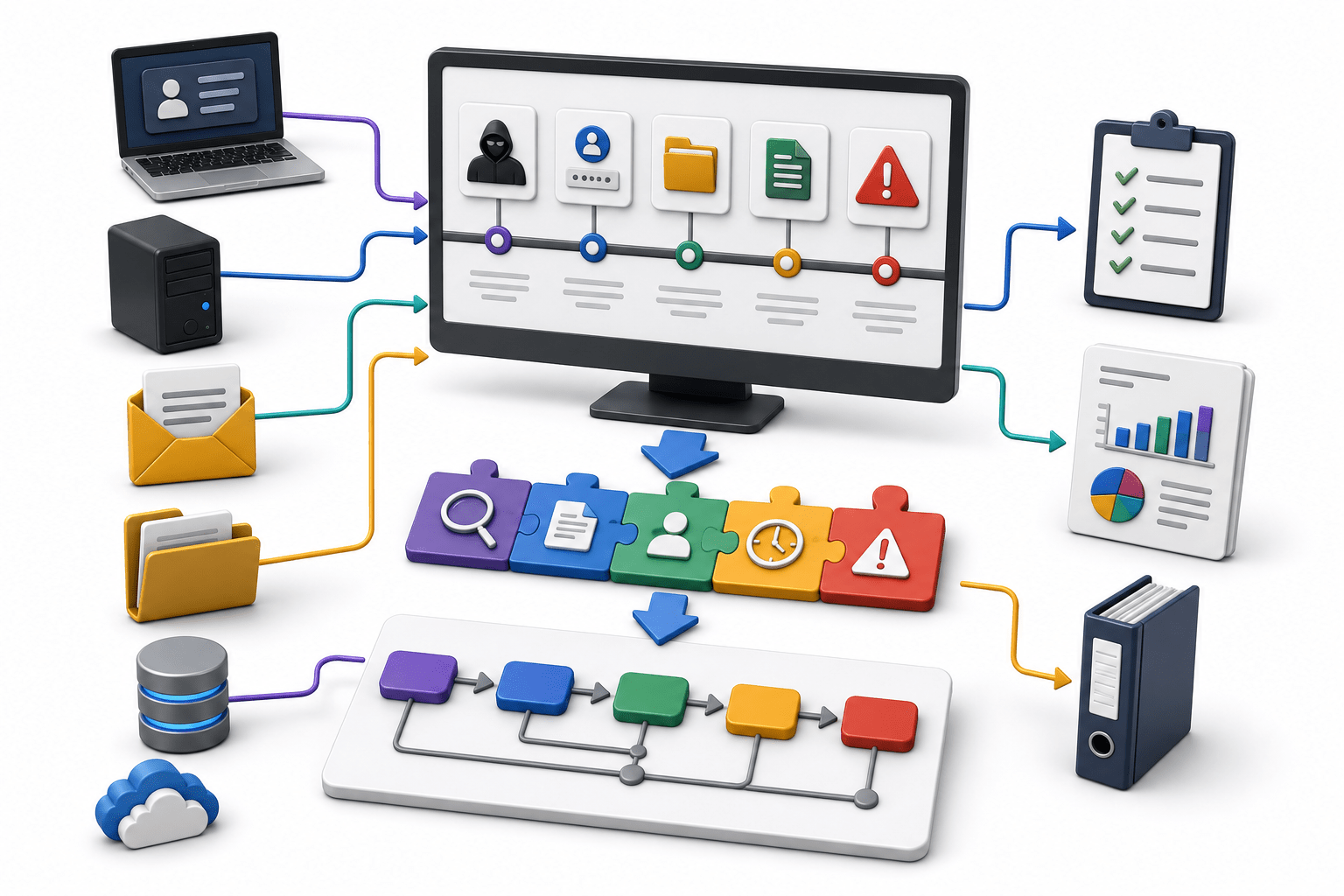
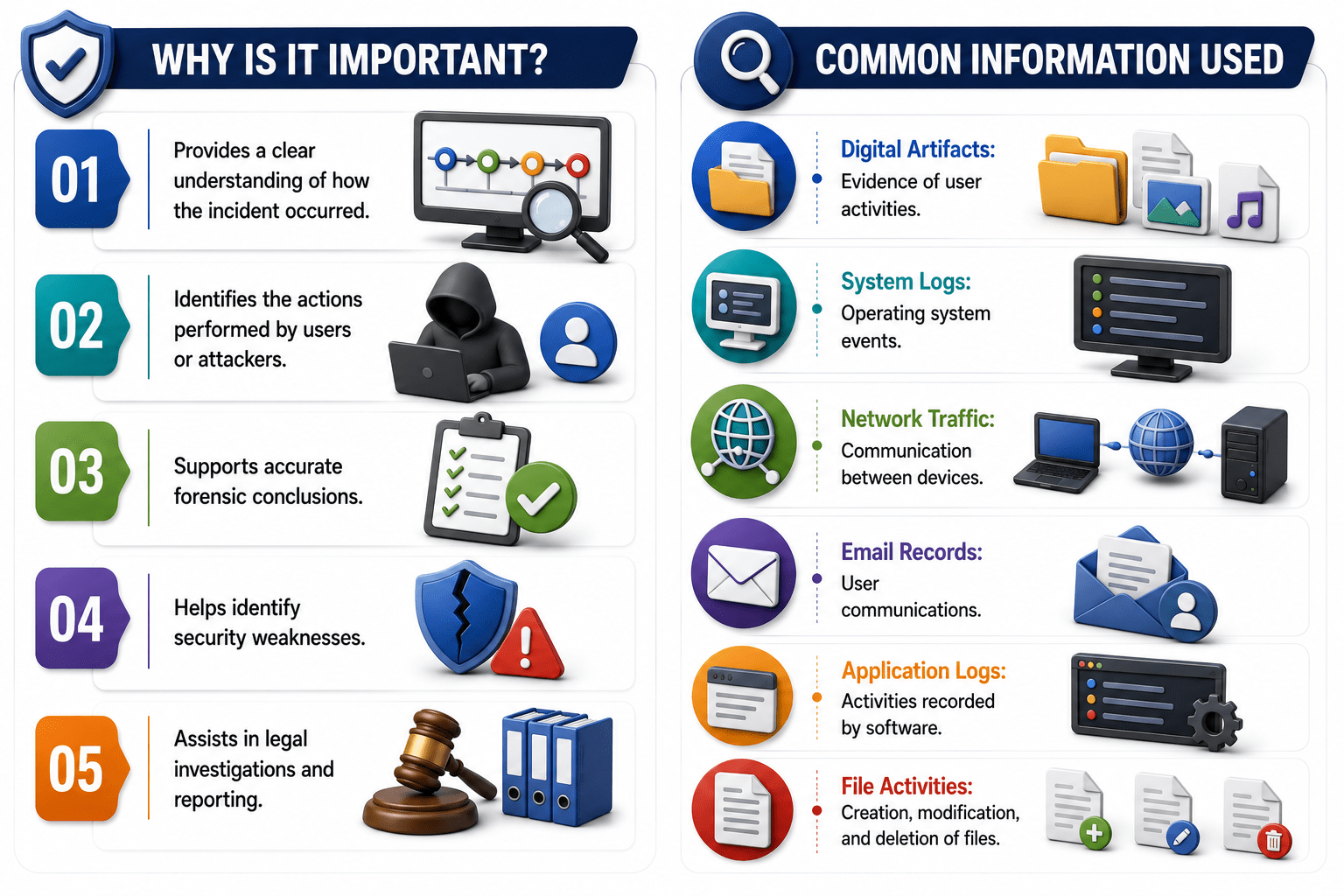
Why is it Important?
Common Information Used
Finding Validation
What is Finding Validation?
Finding Validation is the process of confirming that the conclusions reached during a digital forensic investigation are accurate, reliable, and supported by evidence. Before presenting investigation results, investigators review the evidence, repeat important analysis when necessary, and verify that all findings are based on factual information. Validation helps prevent incorrect conclusions and strengthens the credibility of the investigation.
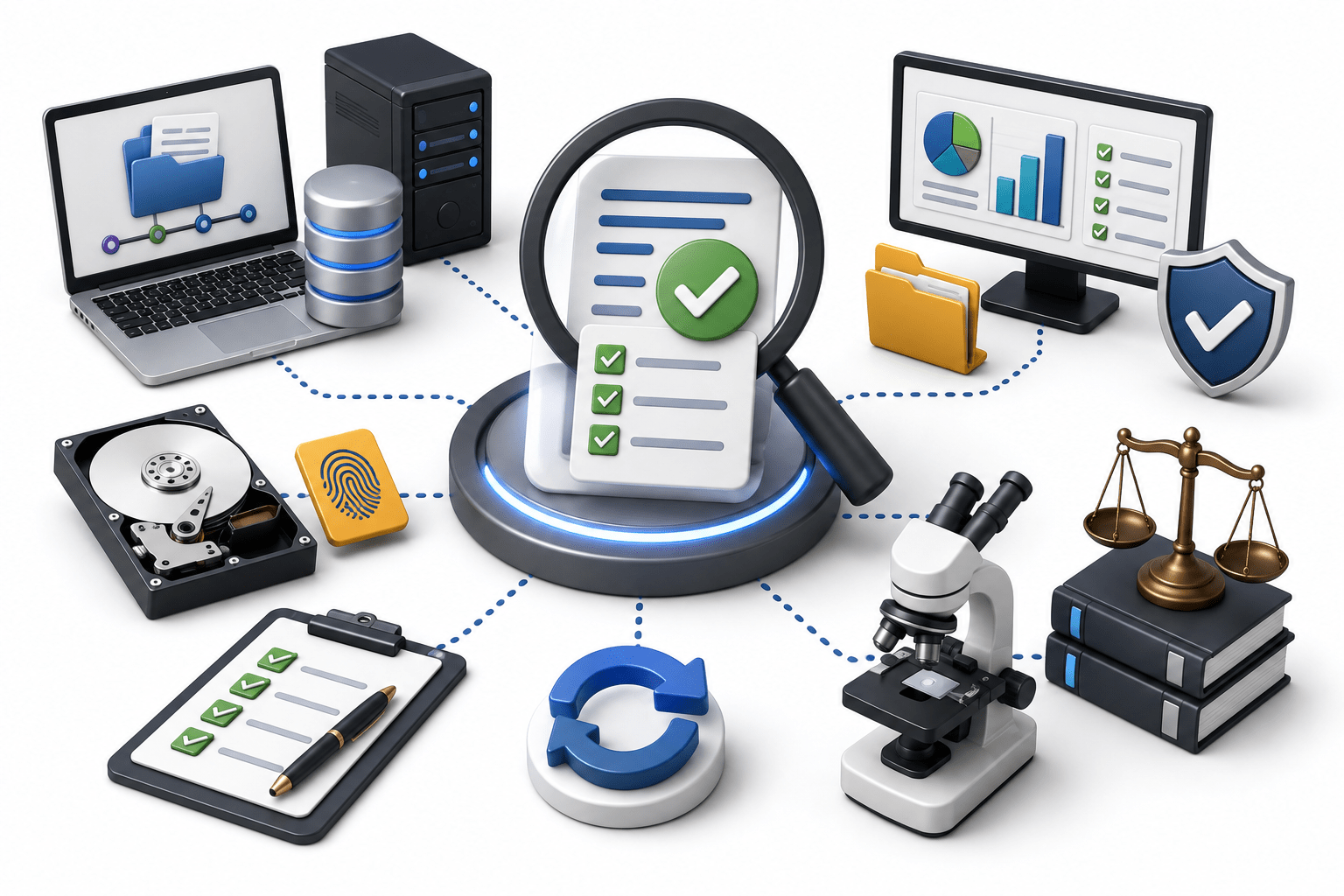
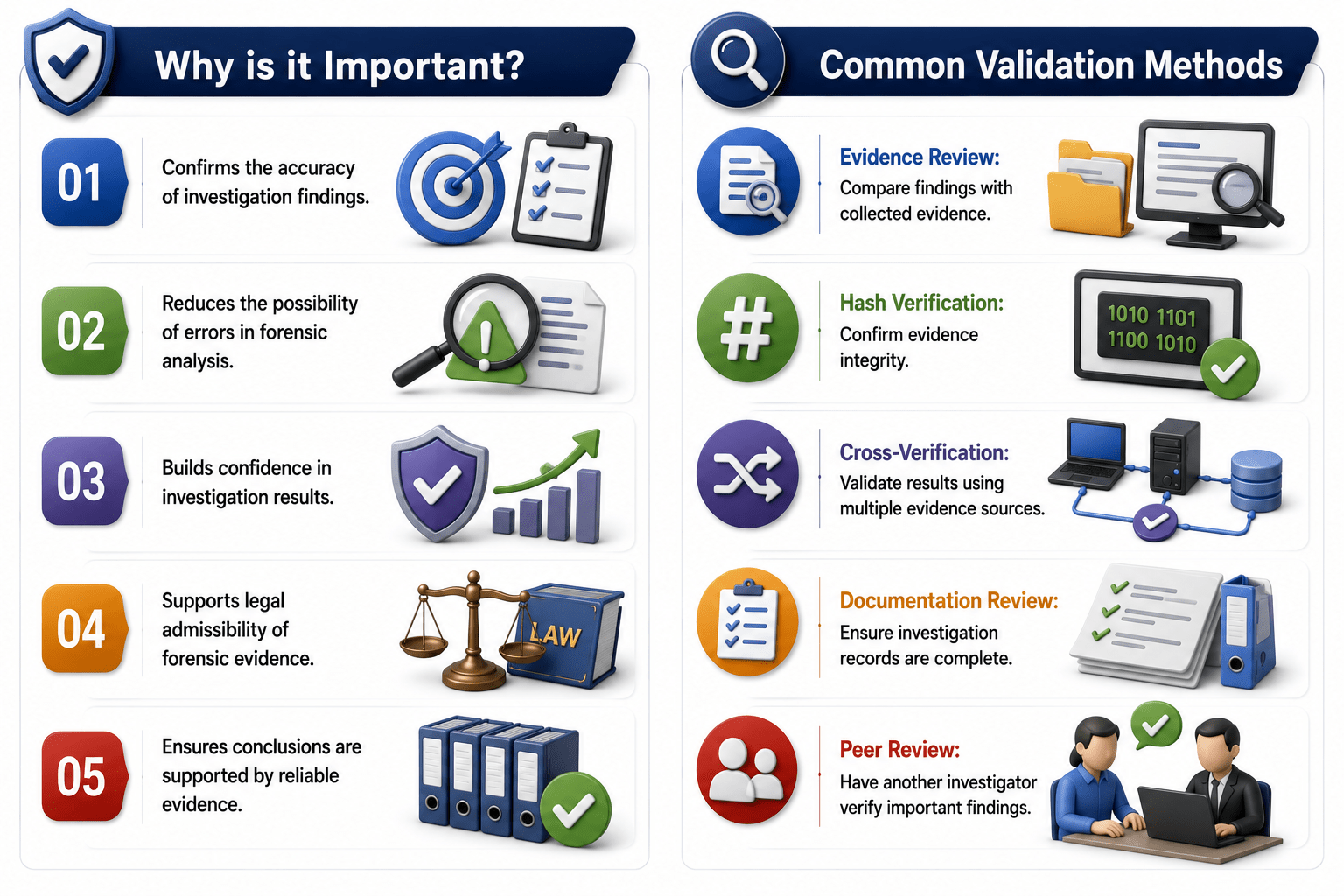
Why is it Important?
Common Validation Methods
Root Cause Identification
What is Root Cause Identification?
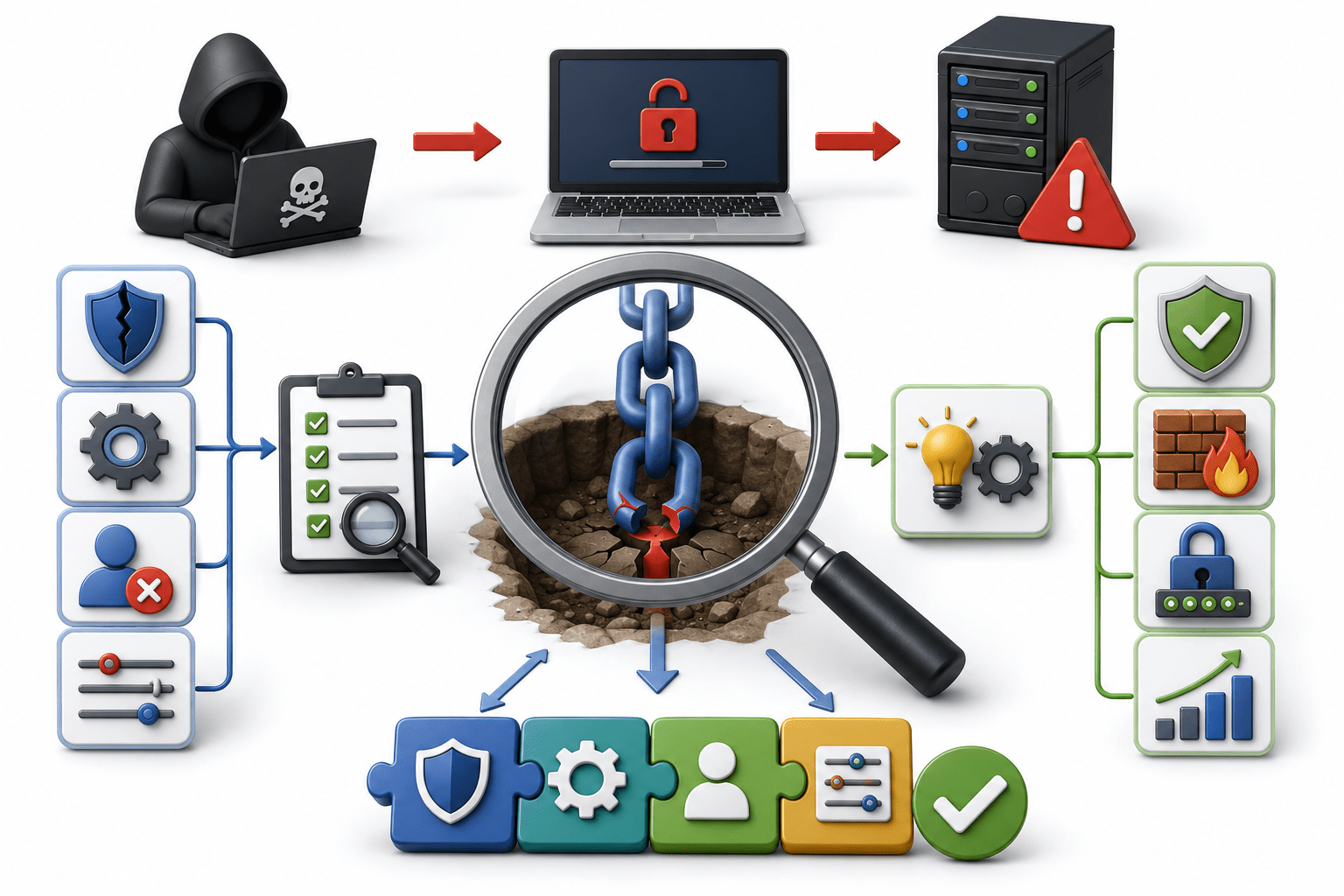
Root Cause Identification is the process of determining the original reason why a security incident or digital crime occurred. Instead of focusing only on the visible effects, investigators identify the underlying weakness, vulnerability, misconfiguration, or human error that allowed the incident to happen. Understanding the root cause helps organizations prevent similar incidents in the future and improve their overall security.
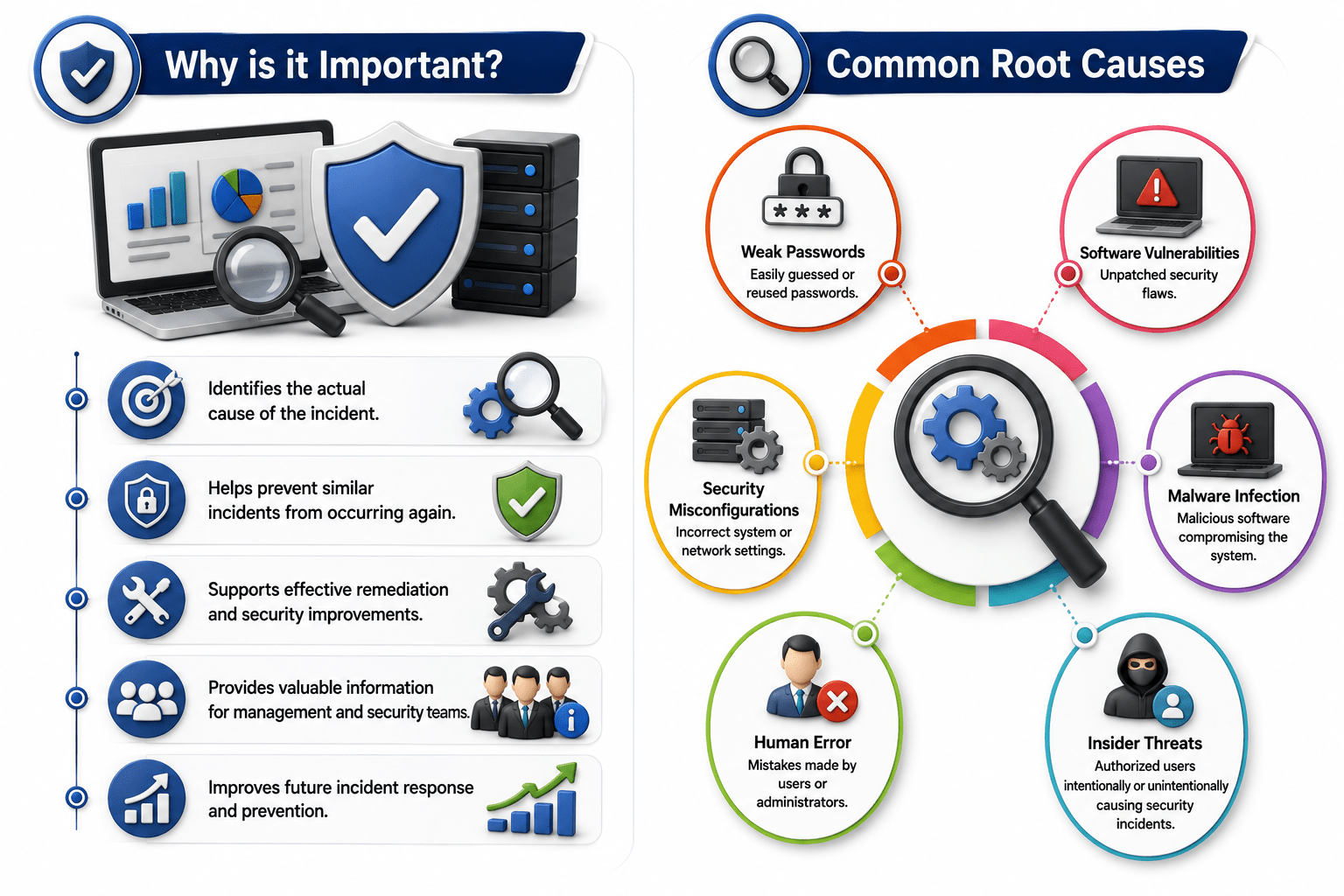
Why is it Important?
Common Root Causes
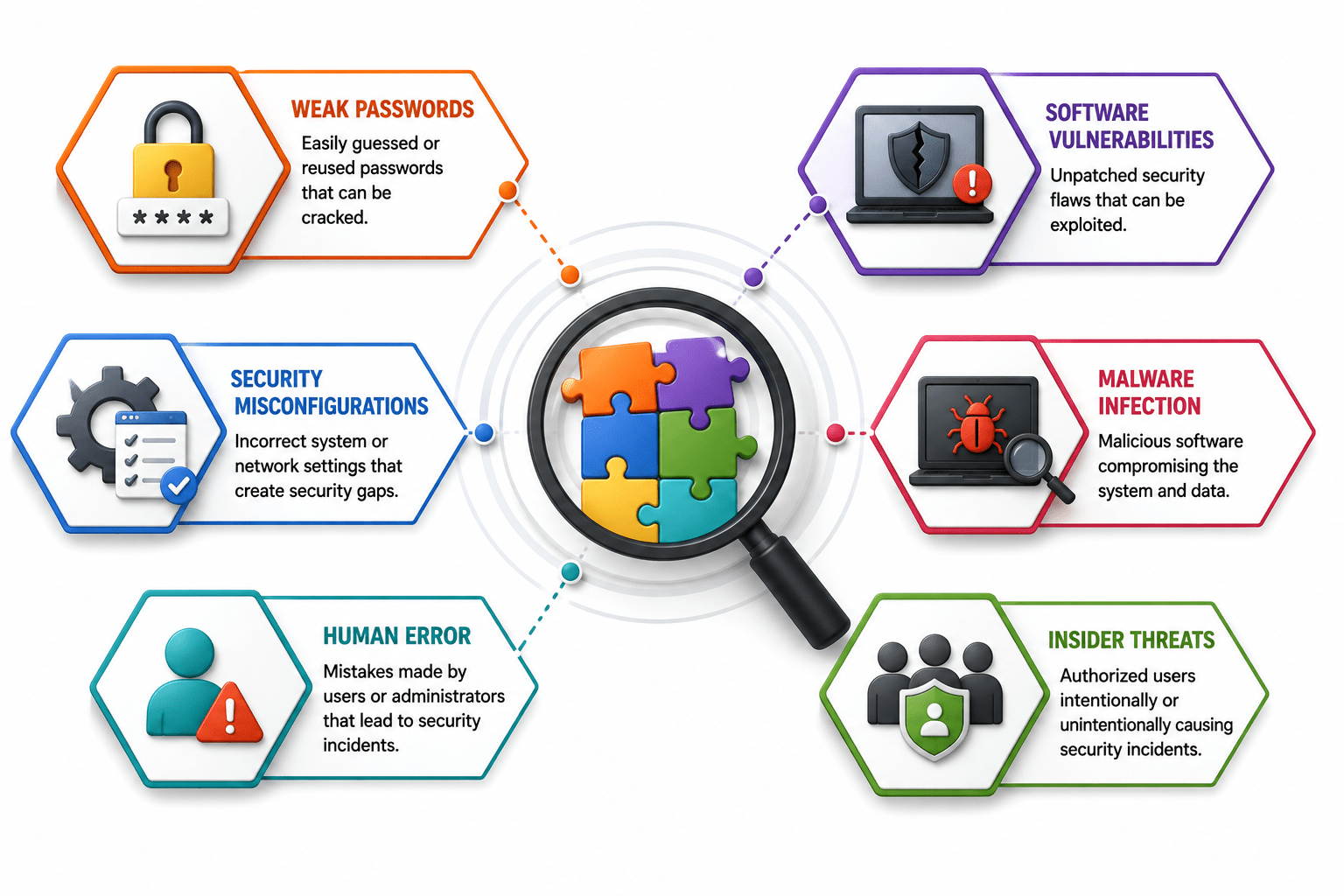
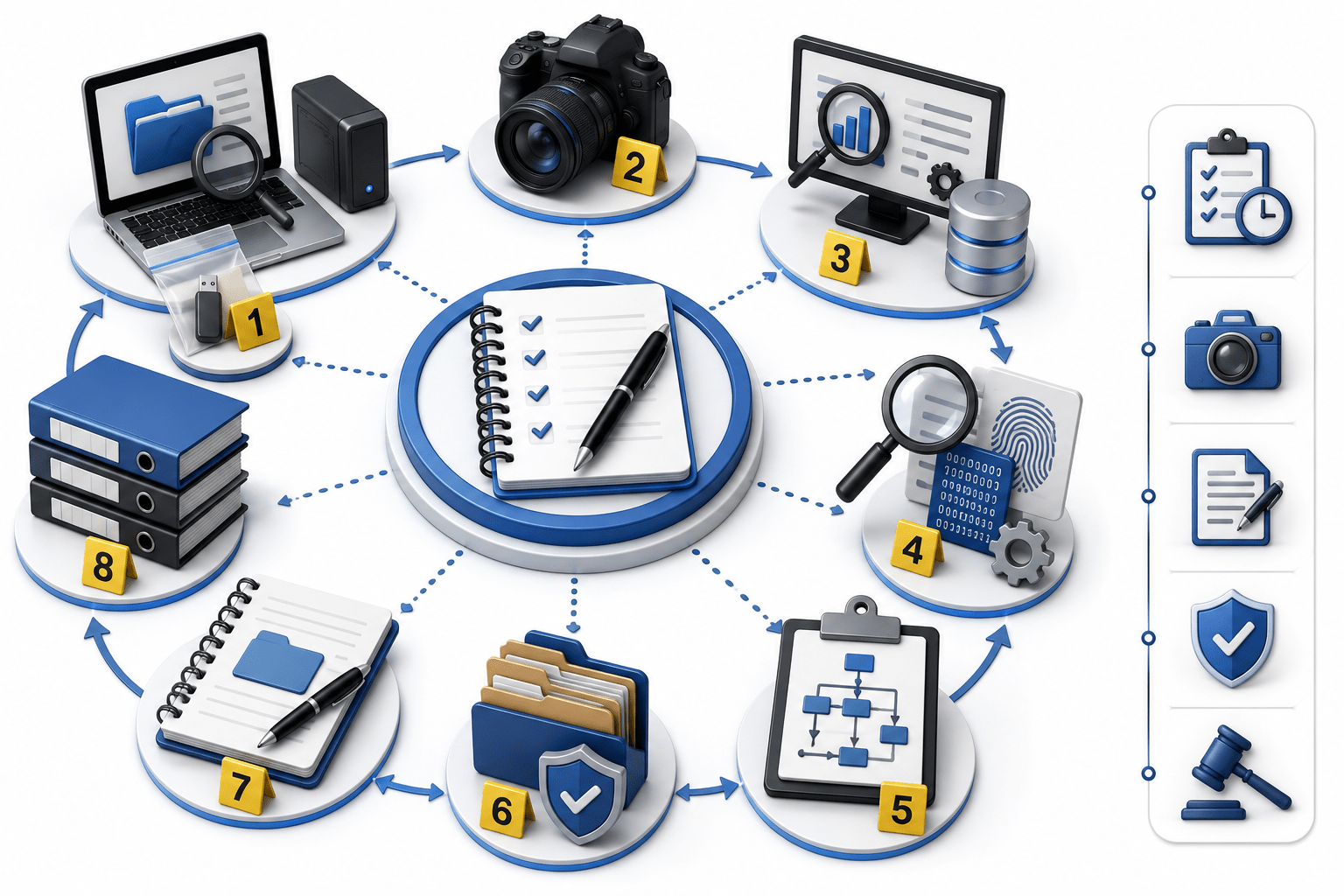
Documentation Procedures
What are Documentation Procedures?
Documentation Procedures are the systematic methods used to record every activity performed during a digital forensic investigation. Proper documentation includes details about evidence collection, examination, analysis, findings, and conclusions. These records provide a complete history of the investigation and ensure that all activities can be reviewed or verified later. Accurate documentation is essential for maintaining transparency, supporting legal proceedings, and preserving the credibility of the investigation.
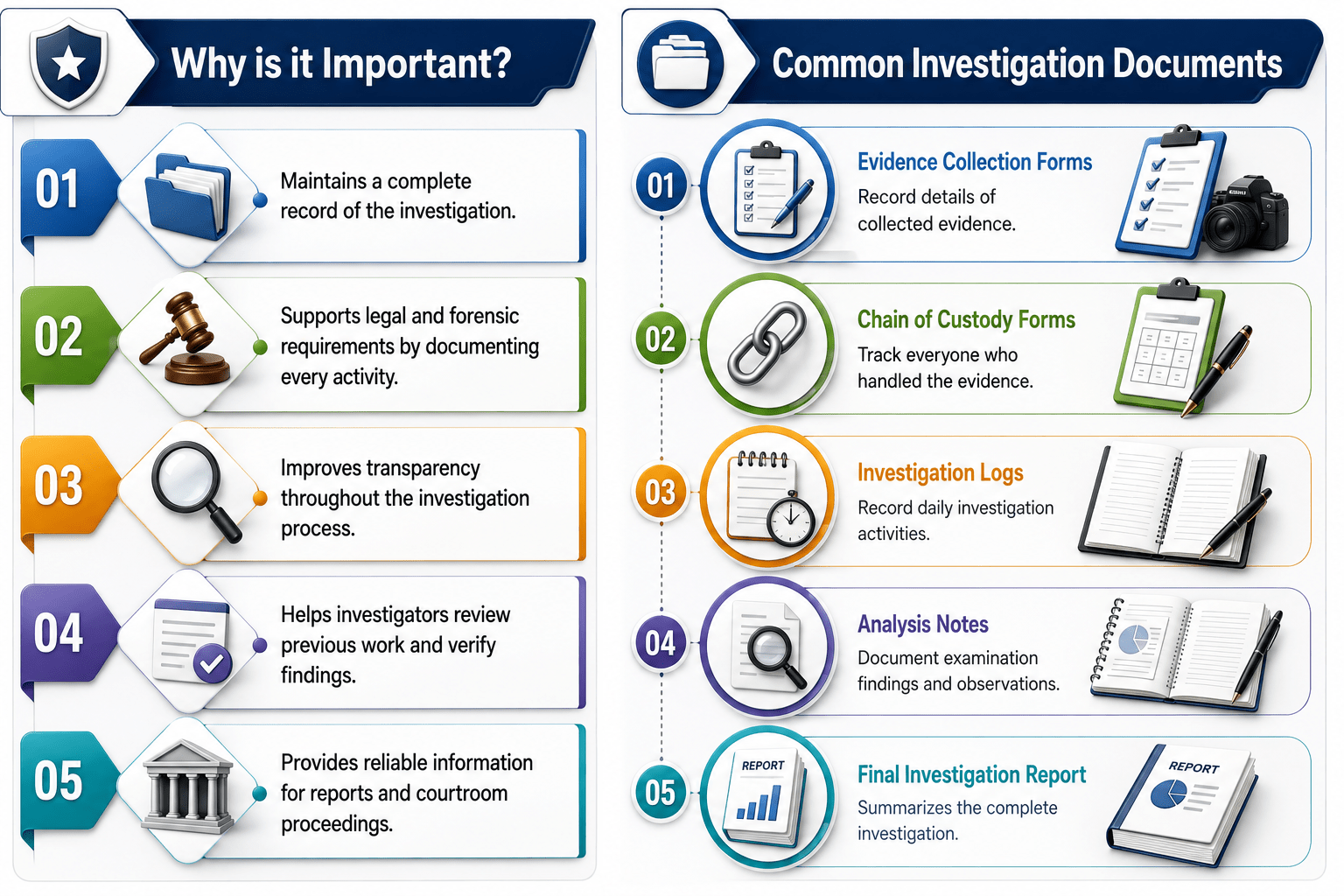
Why is it Important?
Common Investigation Documents
Investigation Notes Management
What is Investigation Notes Management?
Investigation Notes Management is the process of organizing, maintaining, and protecting the notes created during a digital forensic investigation. Investigators record observations, analysis results, decisions, and important findings while examining evidence. Well-organized notes help investigators remember important details, support report preparation, and provide additional information during legal proceedings.

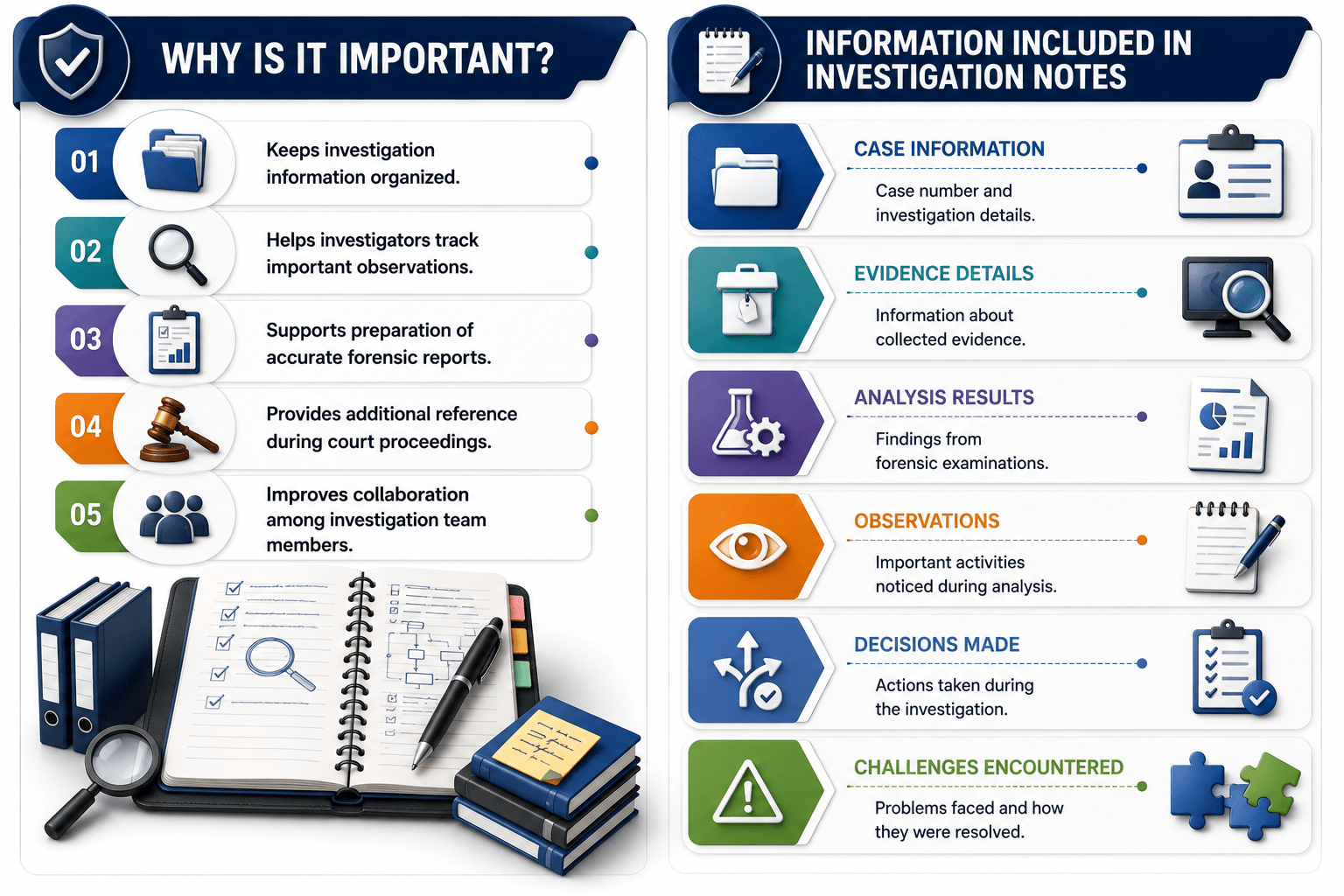
Why is it Important?
Information Included in Investigation Notes
Report Preparation
What is Report Preparation?
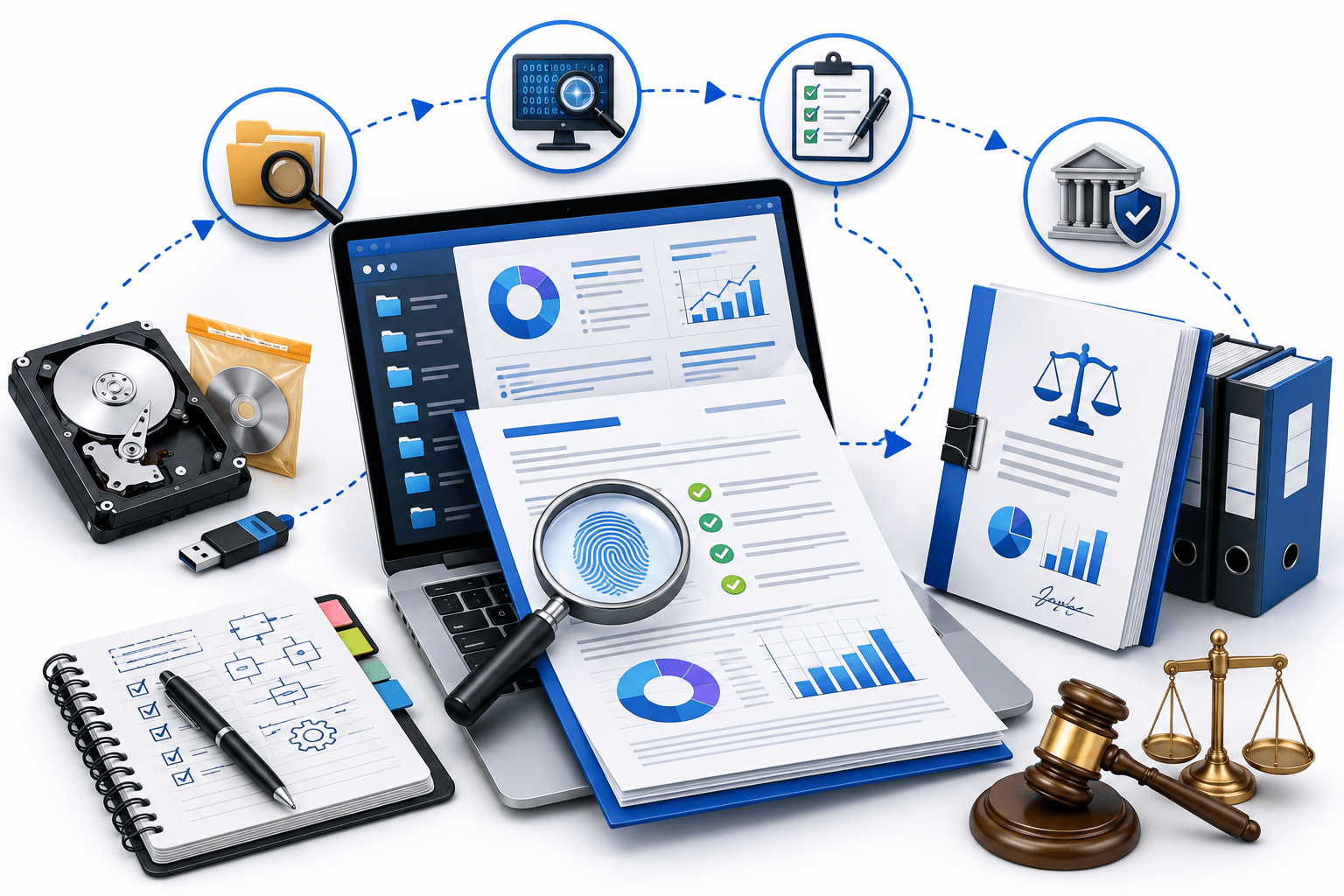
Report Preparation is the process of creating a clear, accurate, and professional document that summarizes the entire digital forensic investigation. The report explains the investigation objectives, evidence collected, forensic methods used, findings, conclusions, and recommendations. A well-prepared report allows investigators, management, legal professionals, and courts to understand the results of the investigation without needing technical expertise.
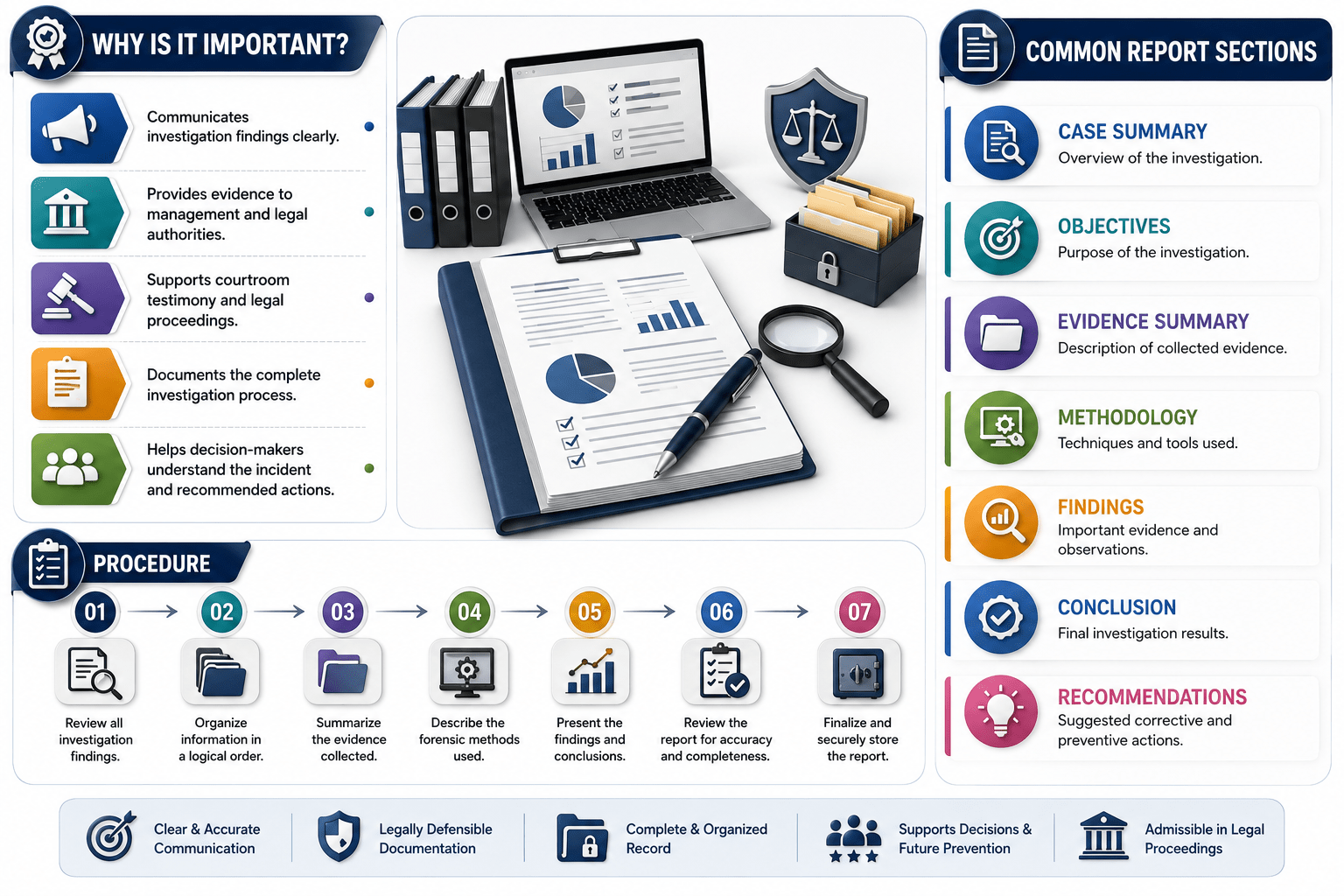
Why is it Important?
Common Report Sections
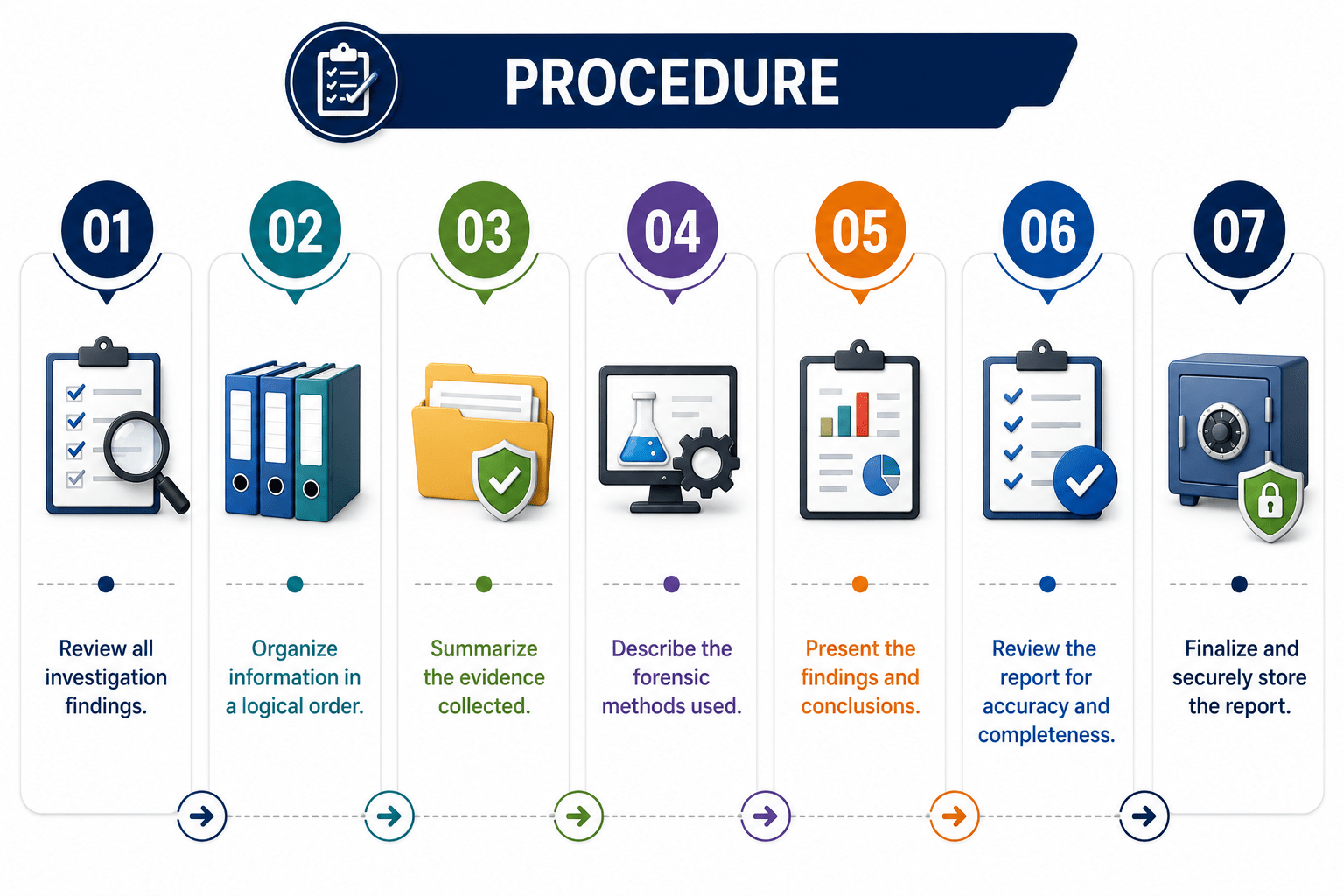
Procedure
Evidence Presentation Process
What is the Evidence Presentation Process?
The Evidence Presentation Process is the method of presenting digital evidence in a clear, organized, and understandable manner during legal proceedings or internal investigations. Investigators explain how the evidence was collected, preserved, analyzed, and verified while demonstrating that proper forensic procedures were followed. The objective is to present reliable evidence that can be easily understood by judges, lawyers, management, or other stakeholders

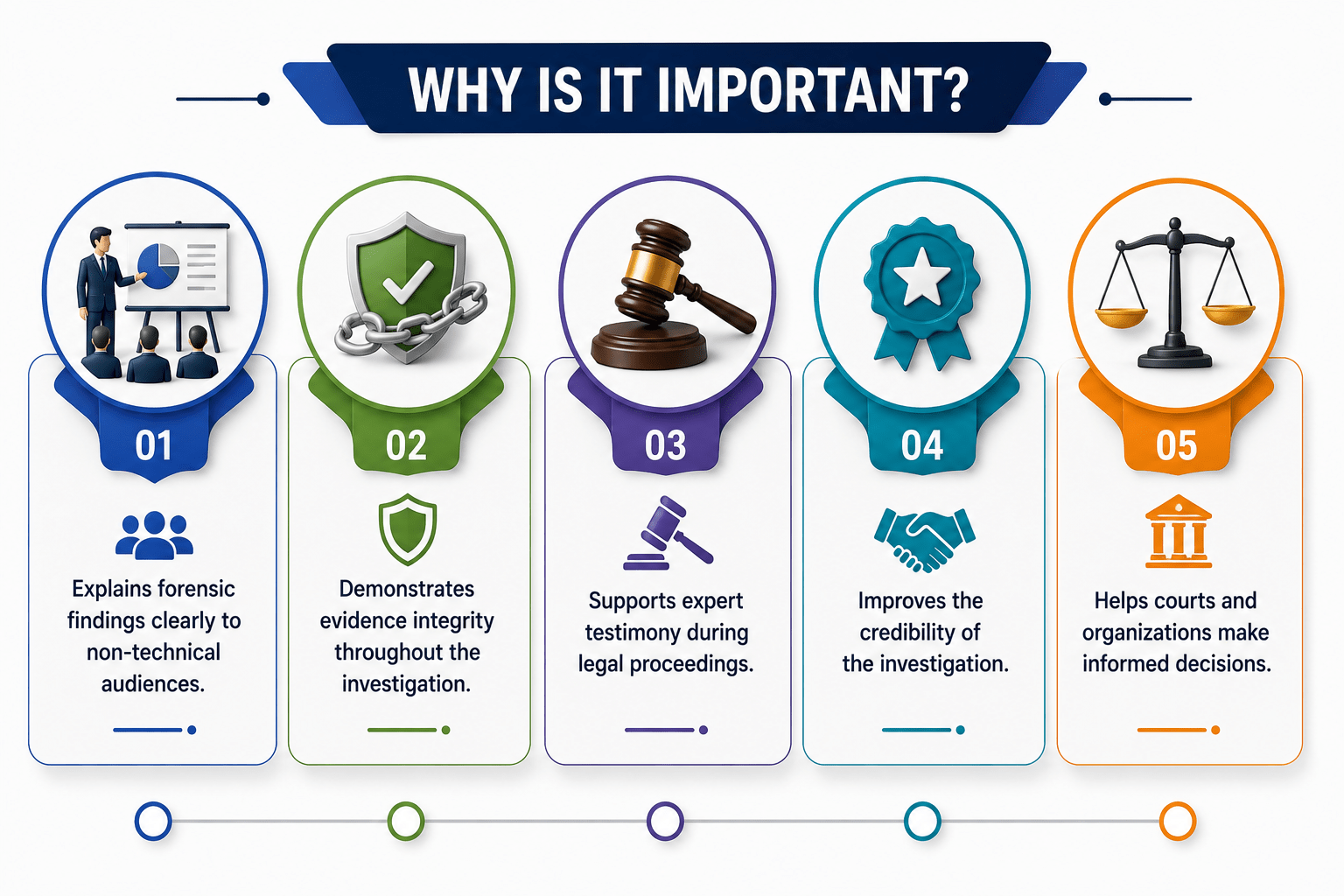
Why is it Important?
Procedure
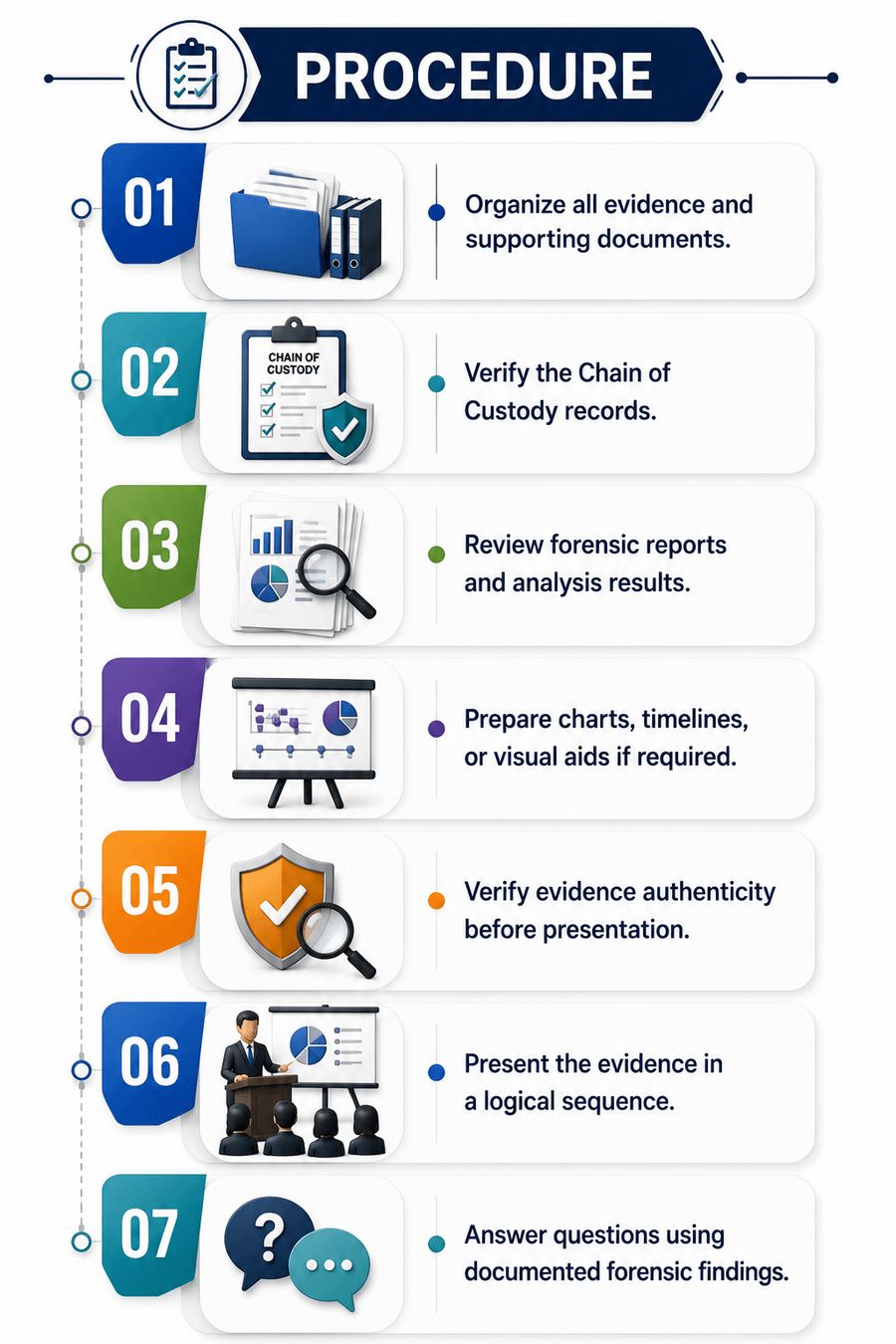
Procedure
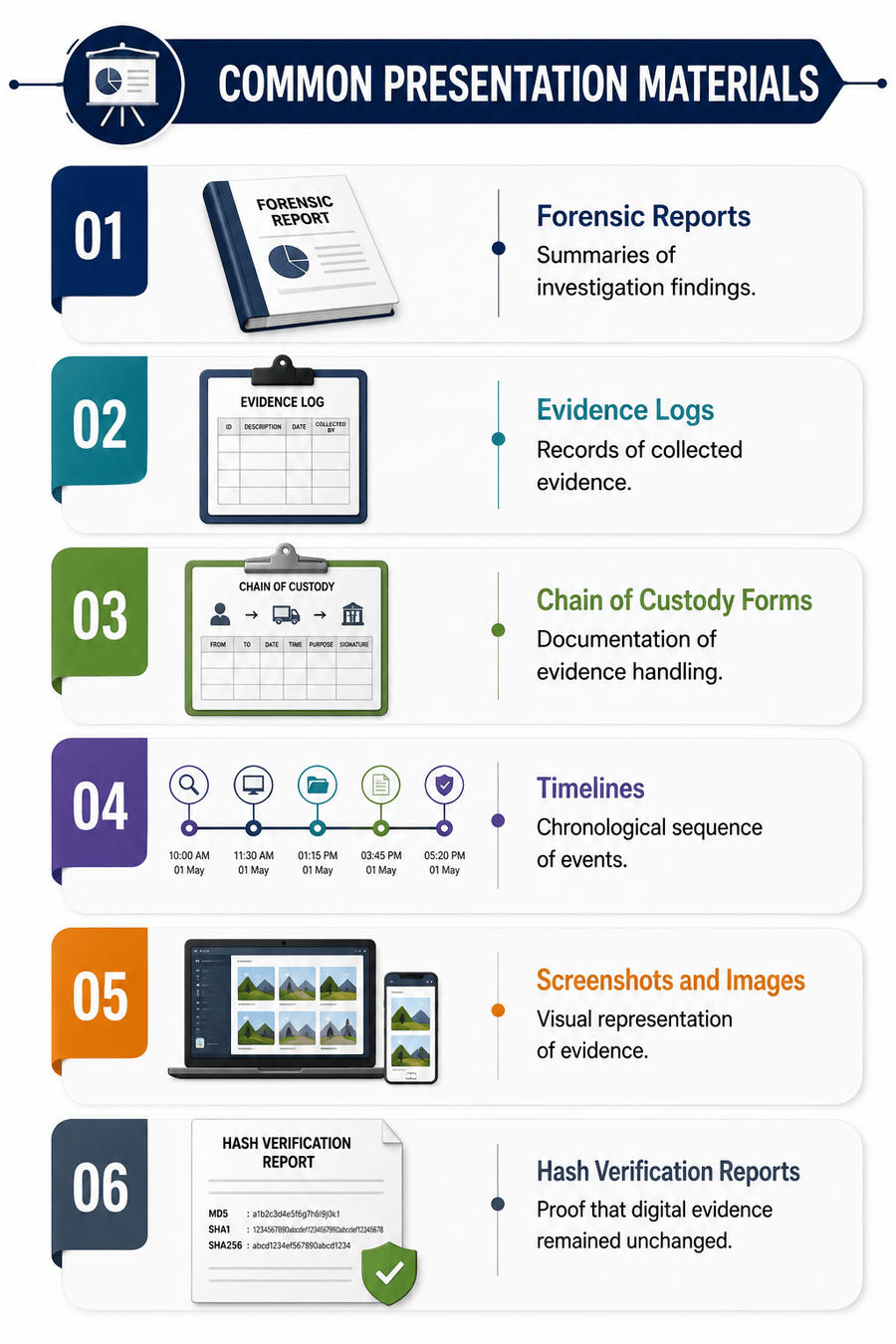
Common Presentation Materials
Common Presentation Materials
Case Review Procedures
What are Case Review Procedures?
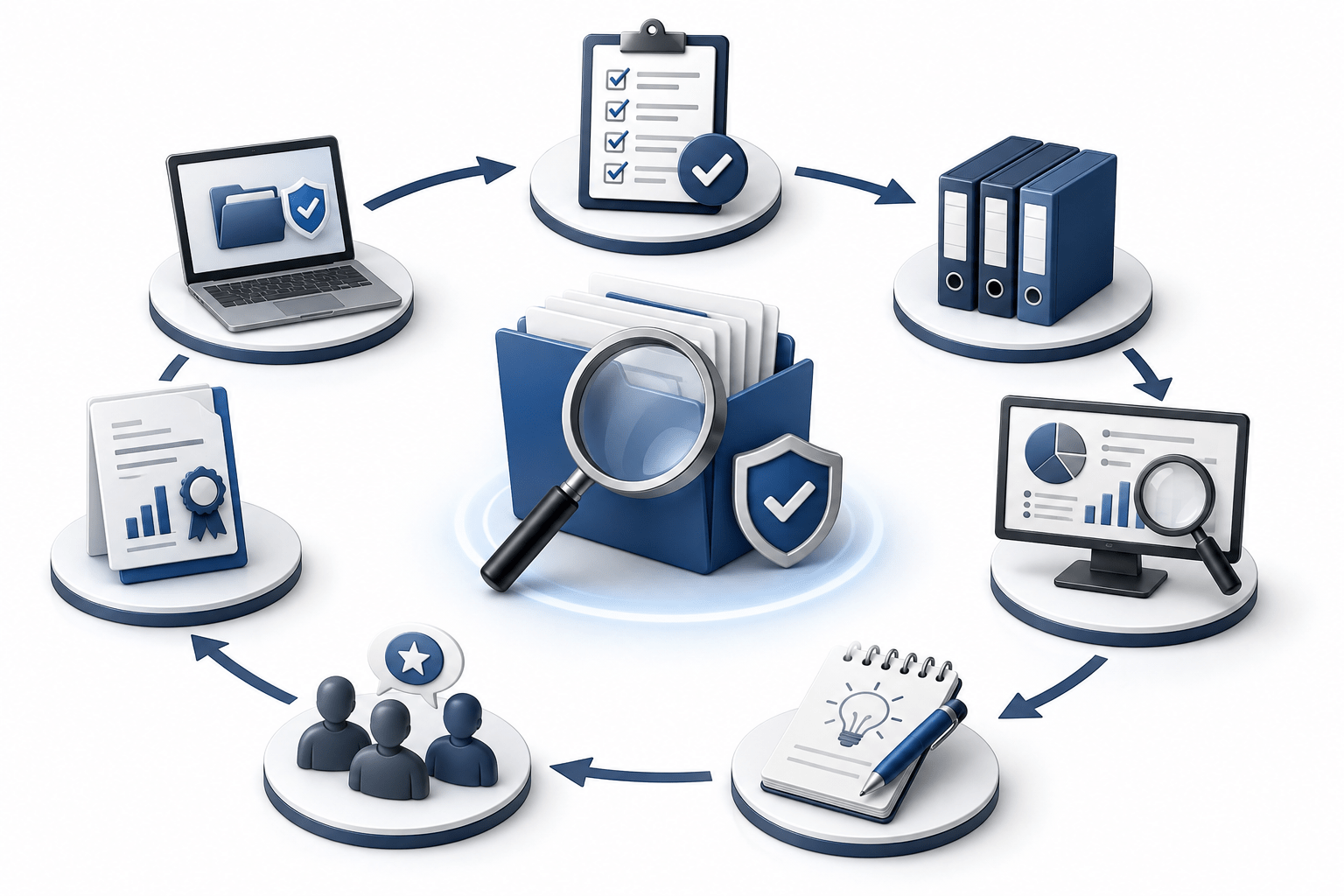
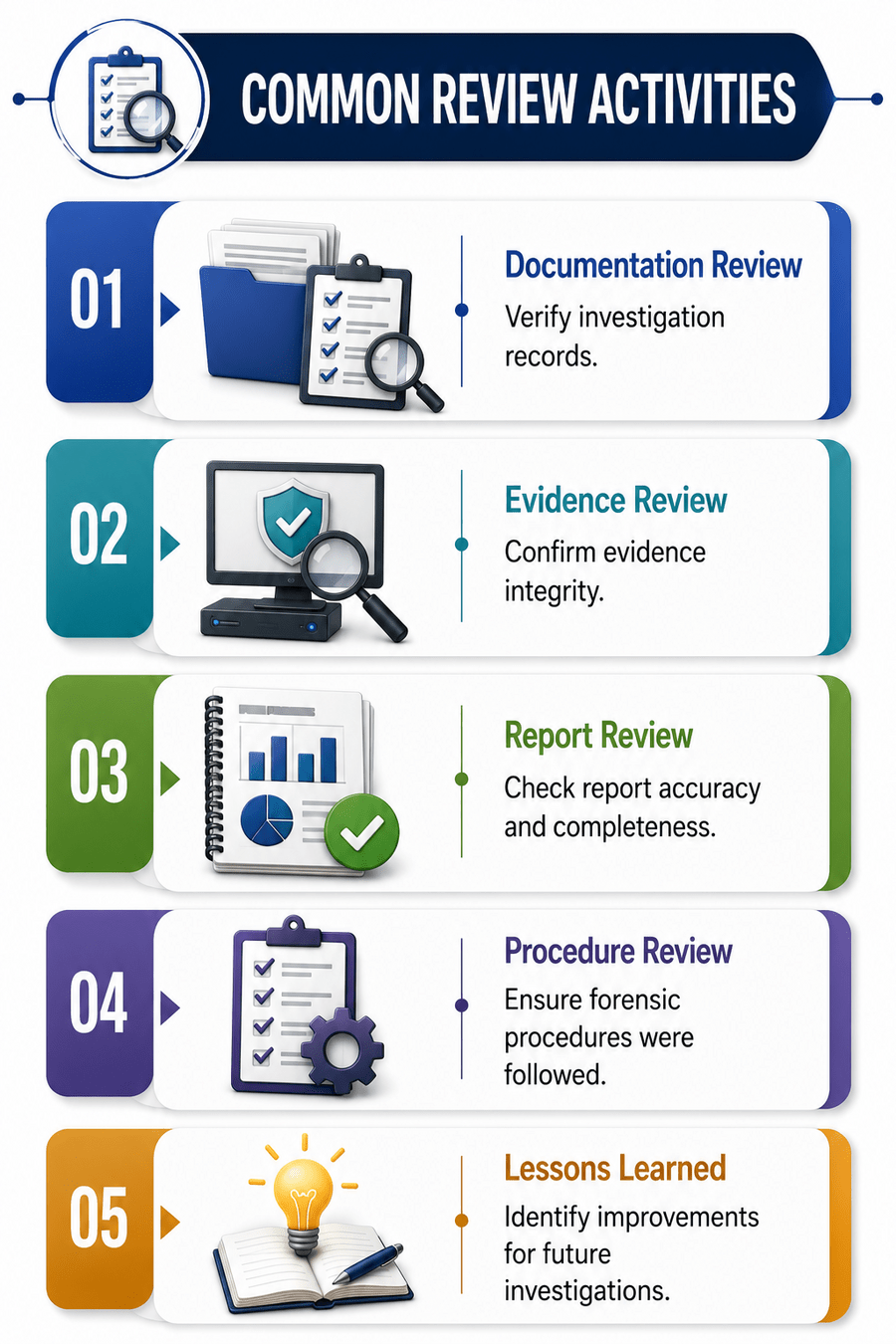
Case Review Procedures are the activities performed after completing a digital forensic investigation to evaluate the quality, accuracy, and completeness of the investigation. During the review, investigators verify that all objectives have been achieved, documentation is complete, and forensic procedures have been followed correctly. A case review also helps identify opportunities to improve future investigations
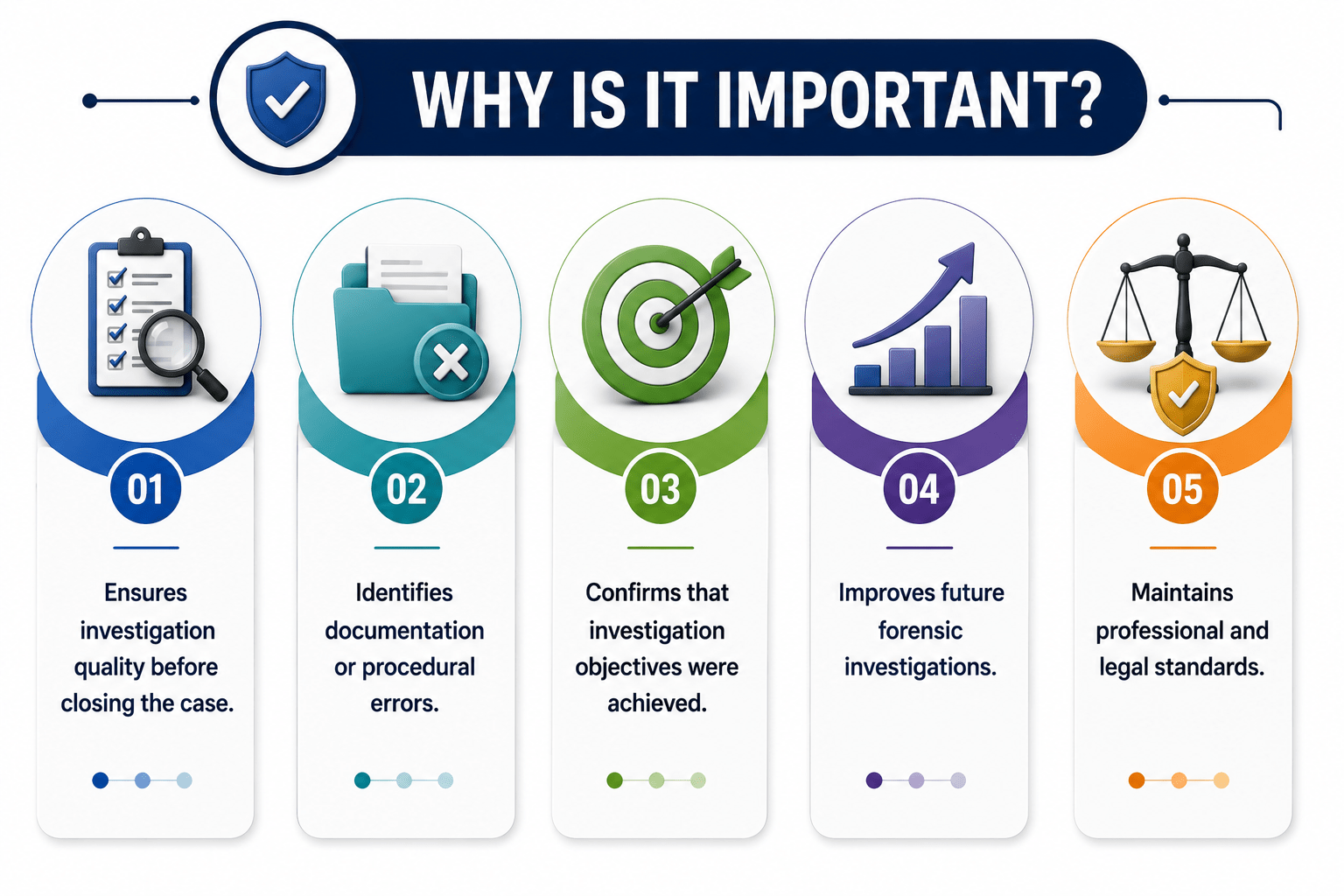
Why is it Important?
Procedure
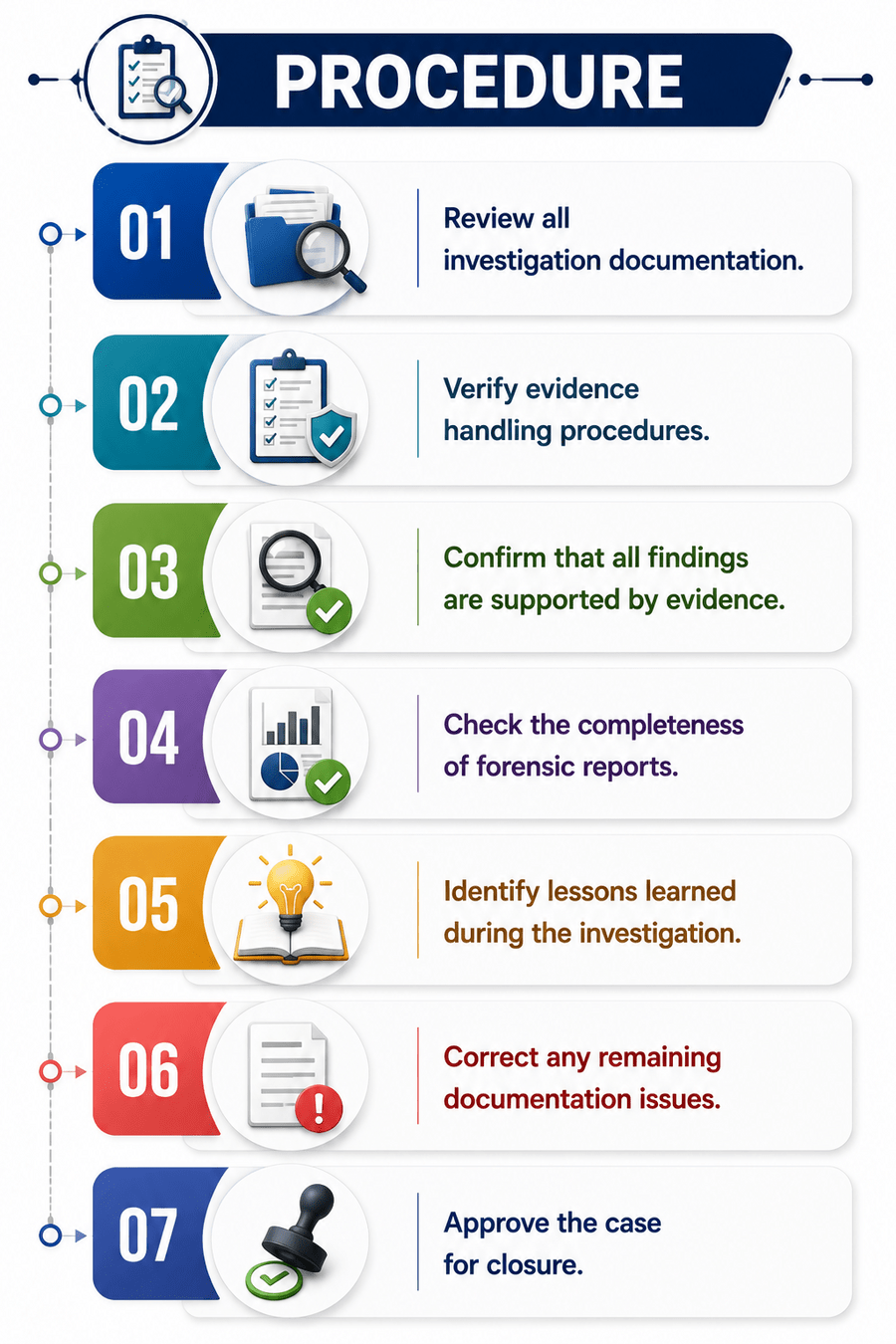
Procedure
Common Review Activities
Investigation Closure Activities
What are Investigation Closure Activities?
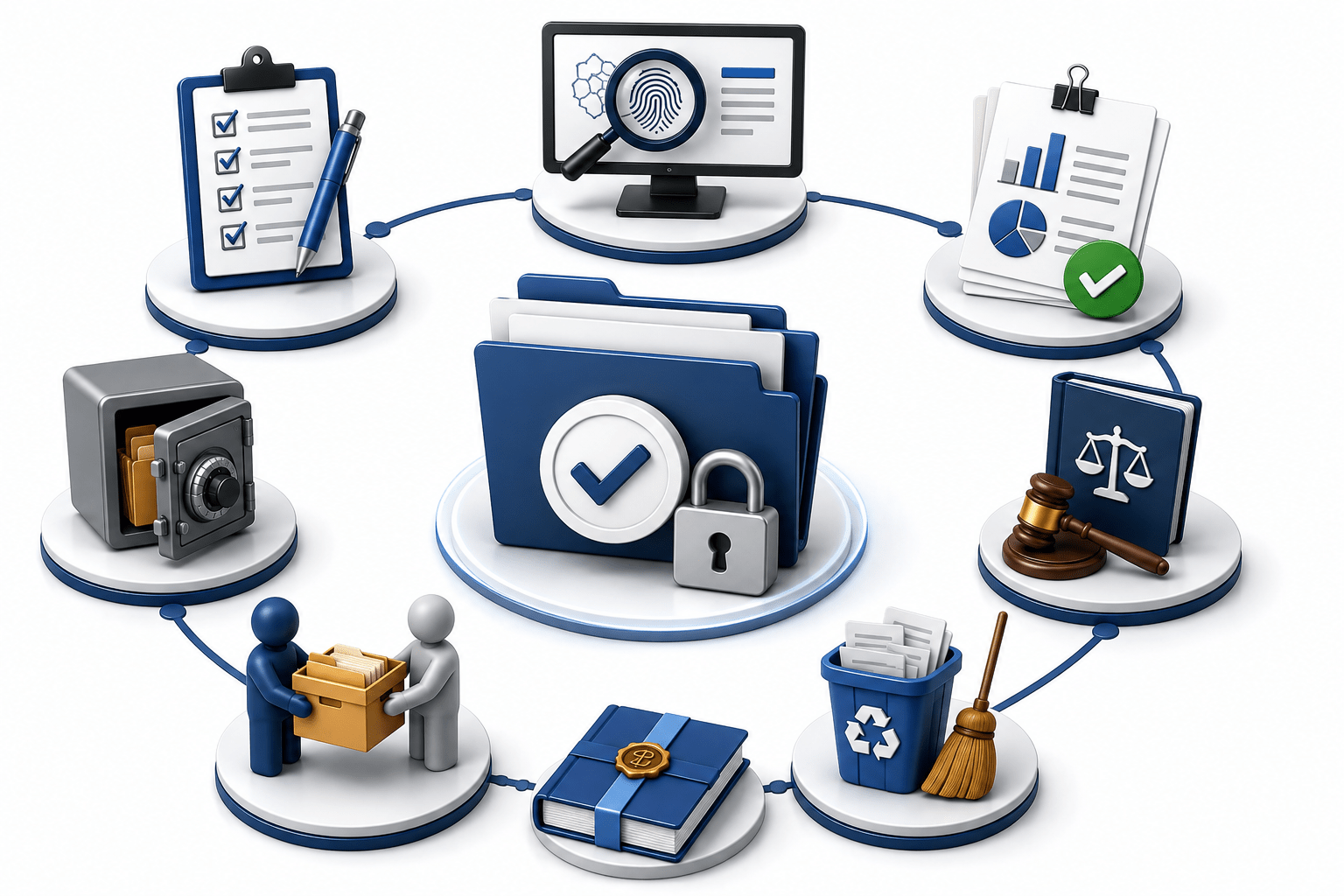
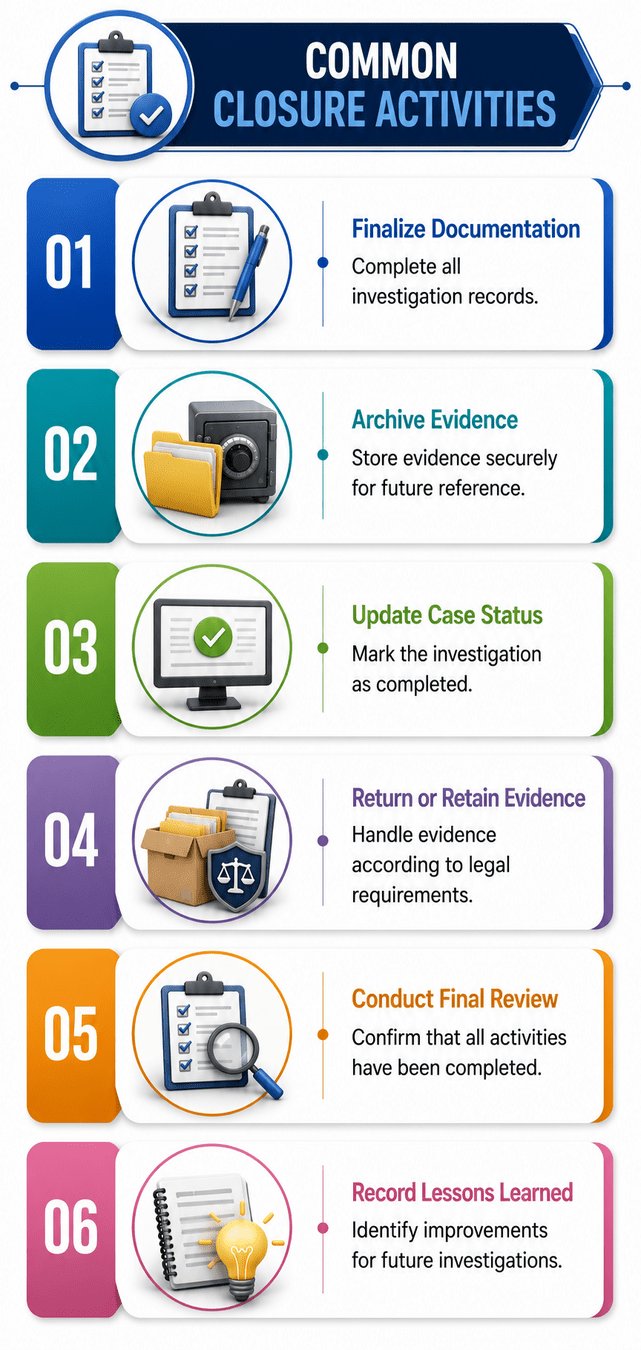
Investigation Closure Activities are the final tasks performed after completing a digital forensic investigation. These activities ensure that all evidence has been properly documented, reports have been finalized, legal requirements have been met, and the case is officially closed. Before closing the investigation, investigators verify that no important tasks remain and that all evidence is securely stored or returned according to organizational policies
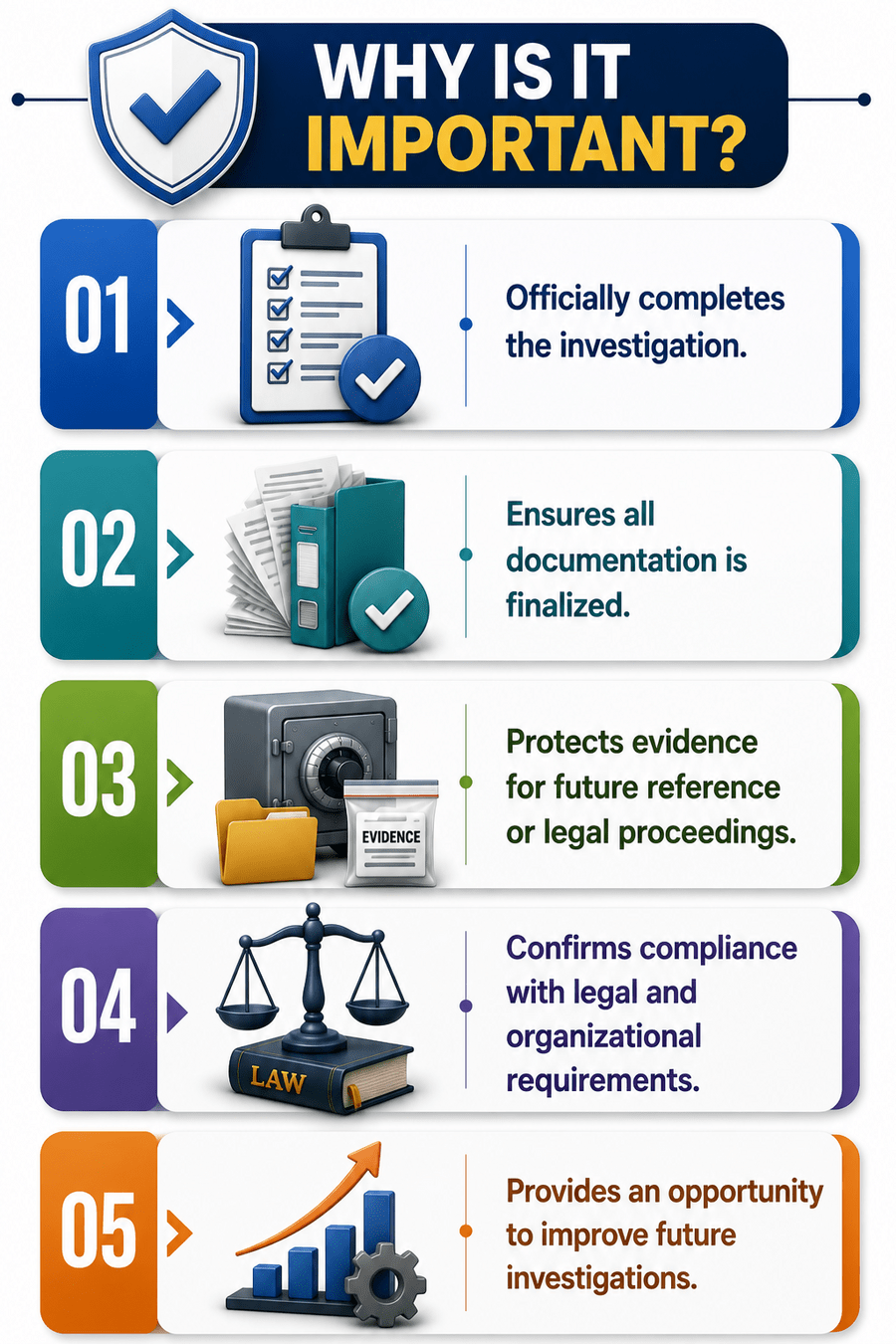
Why is it Important?
Common Closure Activities
Summary
5
Validate findings and identify the root cause.
4
Analyze artifacts, logs, and timestamps to build timelines
3
Preserve and verify evidence using imaging and hashing
2
Define the scope and collect relevant evidence.
1
Identify the incident and plan the investigation
6
Document, report, present evidence, and close the case.
Quiz
What is the first step in a digital forensic investigation?
A. Evidence Acquisition
B. Incident Identification
C. Report Preparation
D. Investigation Closure

Quiz-Answer
What is the first step in a digital forensic investigation?
A. Evidence Acquisition
B. Incident Identification
C. Report Preparation
D. Investigation Closure