Introduction to Ansible
& it's basic

Concepts: Playbooks, Inventory, Modules


Learning Outcome
5
Recognize the basic structure of Ansible automation
4
Understand how these components work together in Ansible
3
Explain how Modules perform automation tasks
2
Identify the role of Inventory in managing hosts
1
Understand what Playbooks are in Ansible
Previously, we learned about
Ansible, why it is used, and its agentless architecture
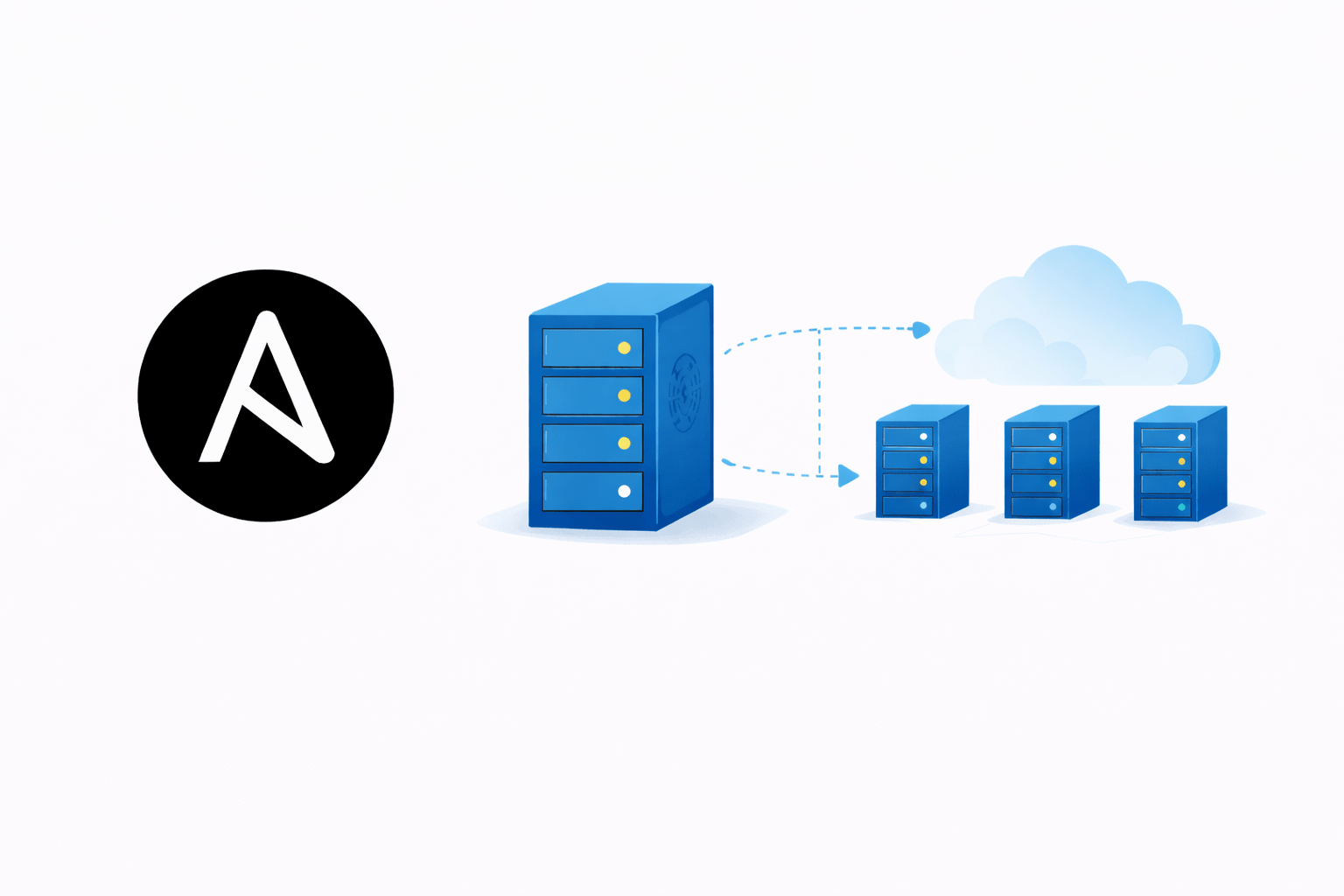
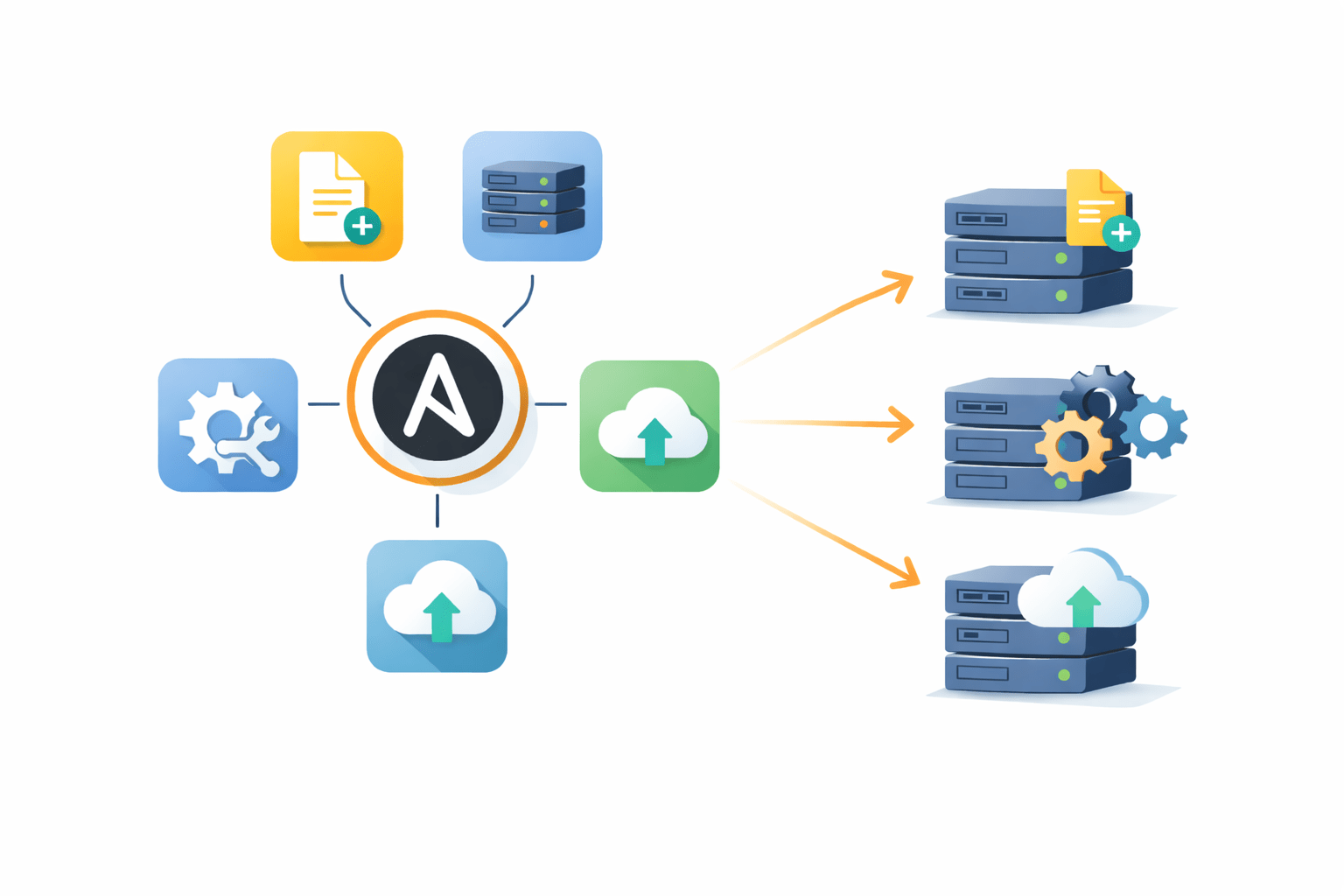
We also discussed how Ansible manages servers from a control node
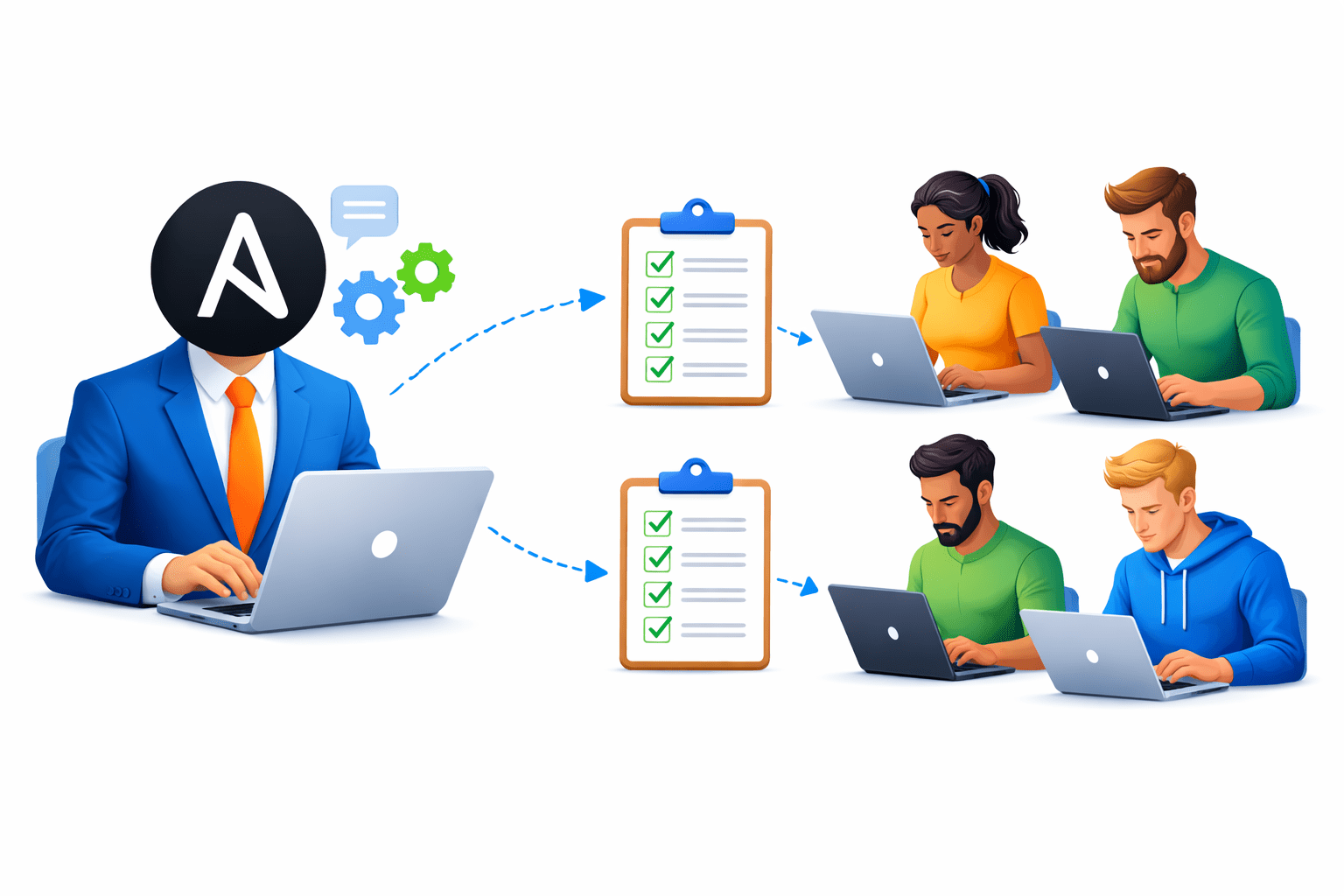
Think of Ansible as a manager assigning tasks to employees
The task list is the Playbook, the employee list is the Inventory, and the actions performed are Modules
Understanding the Concept
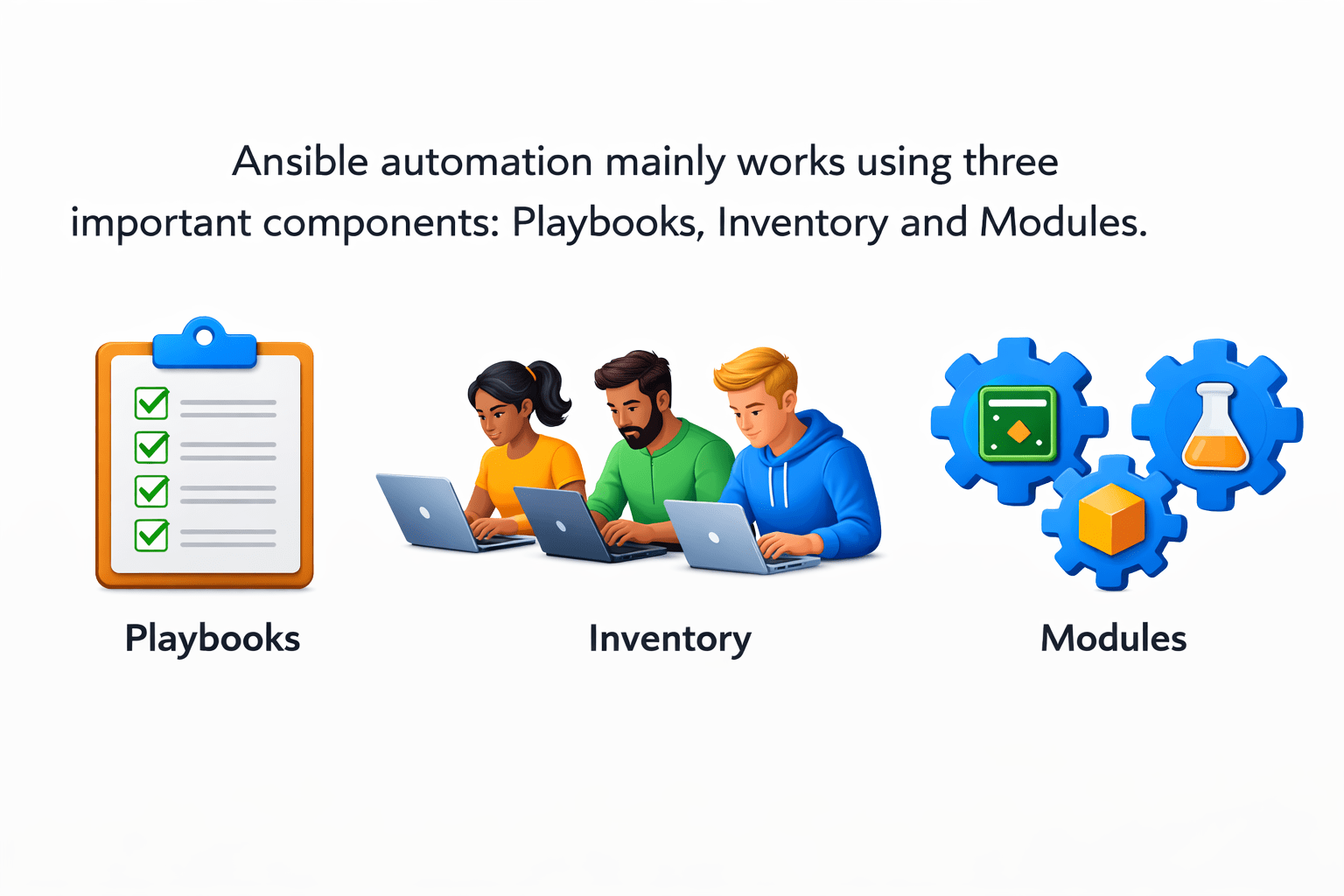
Ansible automation mainly works using three important components: Playbooks, Inventory, and Modules
What are Playbooks?
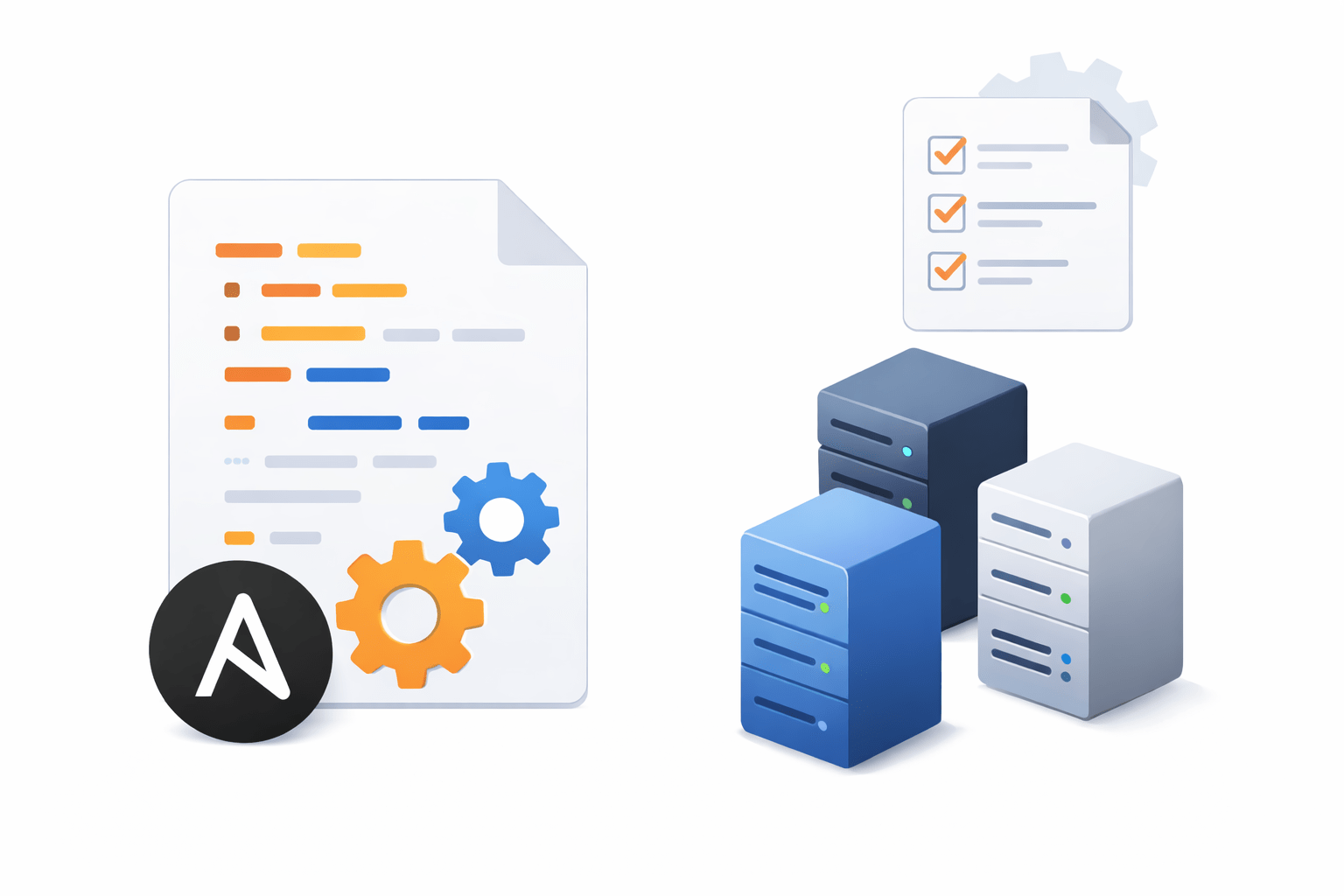
Playbooks are YAML files that define automation tasks in Ansible
They describe what actions should be performed on which systems
Playbooks allow administrators to automate tasks such as
Installing
software
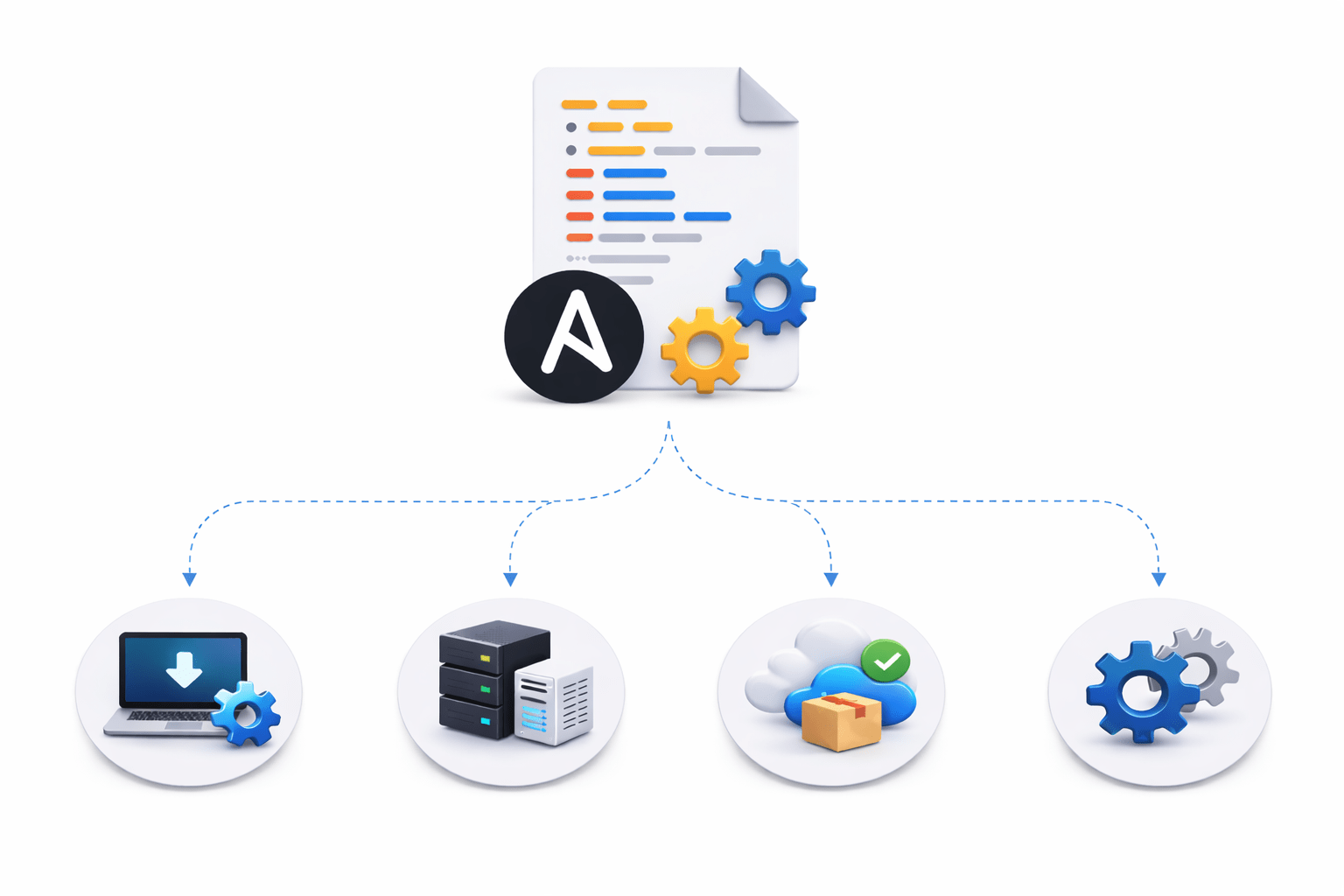
Managing
services
Deploying
applications
Configuring
servers
Playbooks are YAML files that define automation tasks in Ansible
Example Playbook
Explanation:
-
hosts → Target systems where tasks run
-
tasks → List of actions to perform
-
apt → Module used to install software
- name: Install nginx

 hosts: webservers

 tasks:

   - name: Install nginx package

     apt:

       name: nginx

       state: present
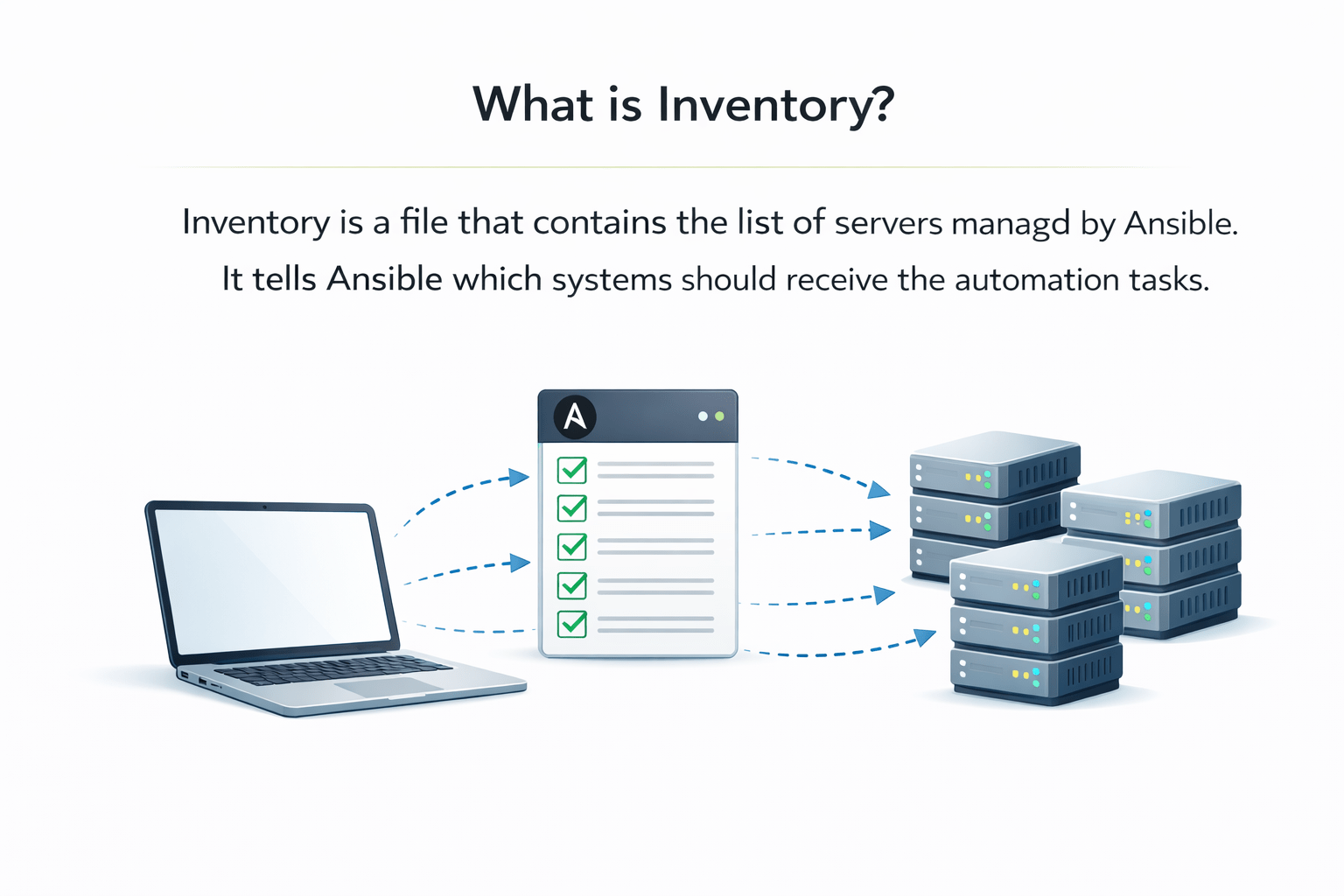
What is Inventory?
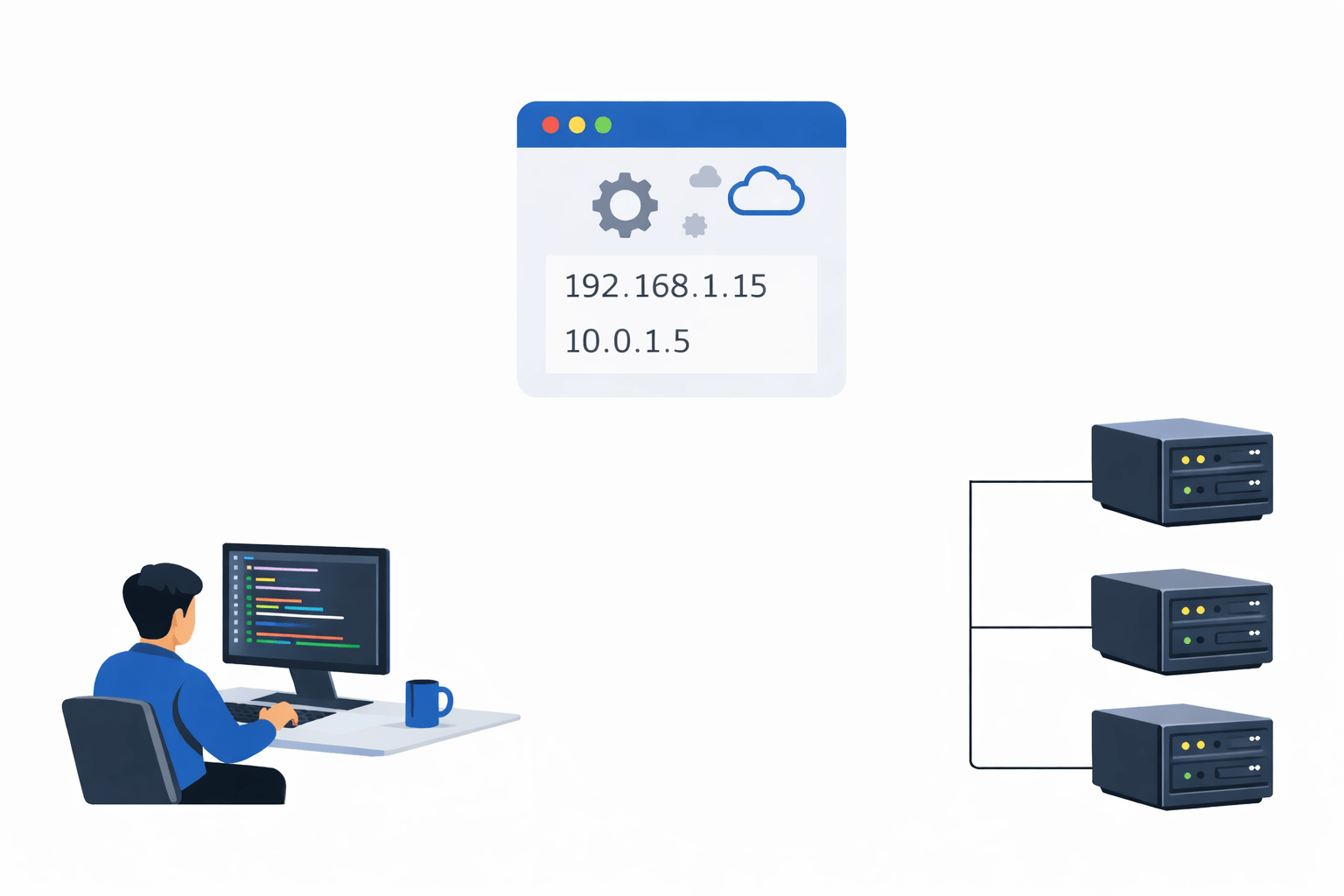
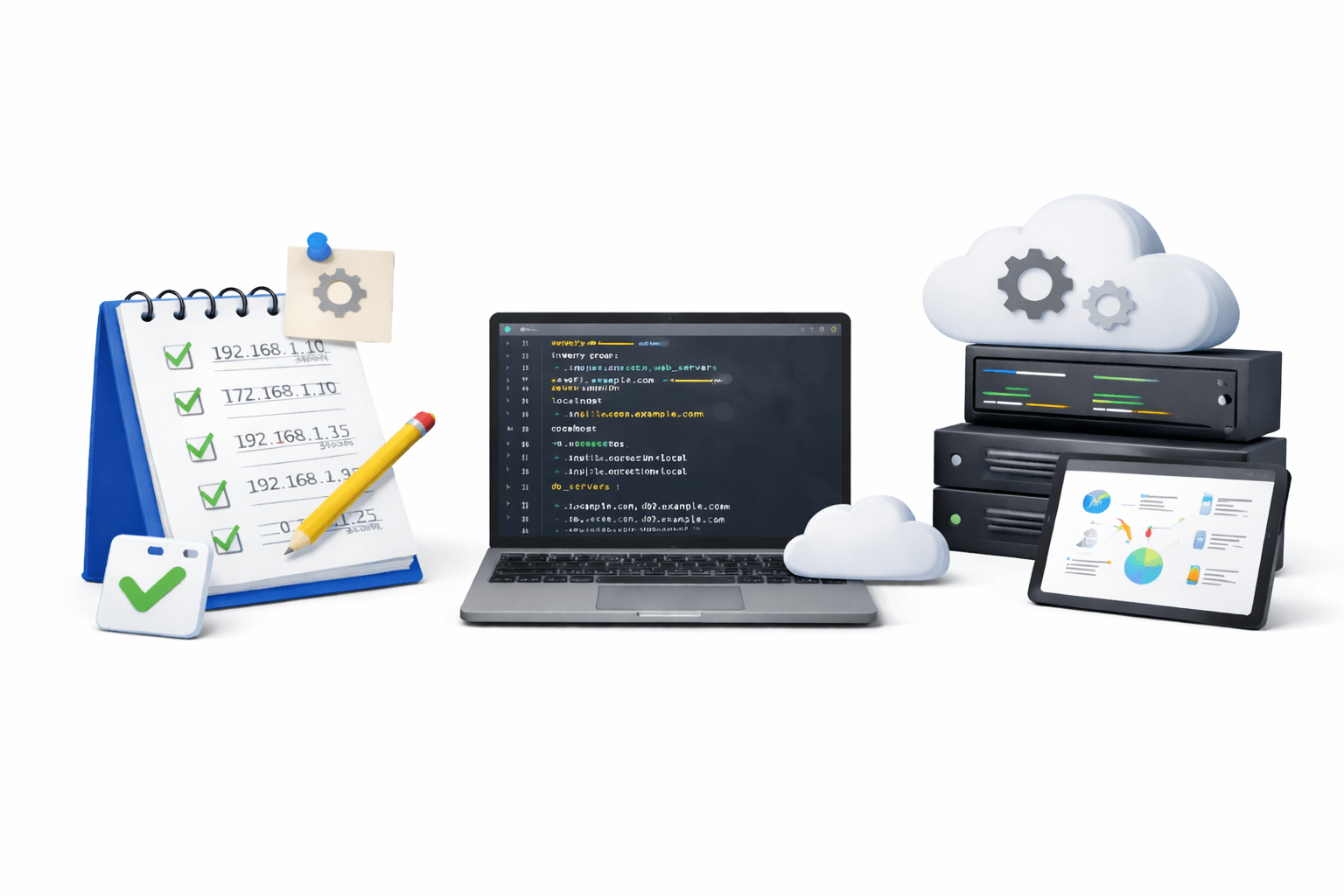
Inventory is a file that contains the list of servers managed by Ansible
It tells Ansible which systems should receive
the automation tasks
Types of Inventory
1. Static Inventory
A manually created file containing server details
2. Dynamic Inventory
Inventory that automatically retrieves server information from
cloud platforms or external systems
Used commonly with cloud environments
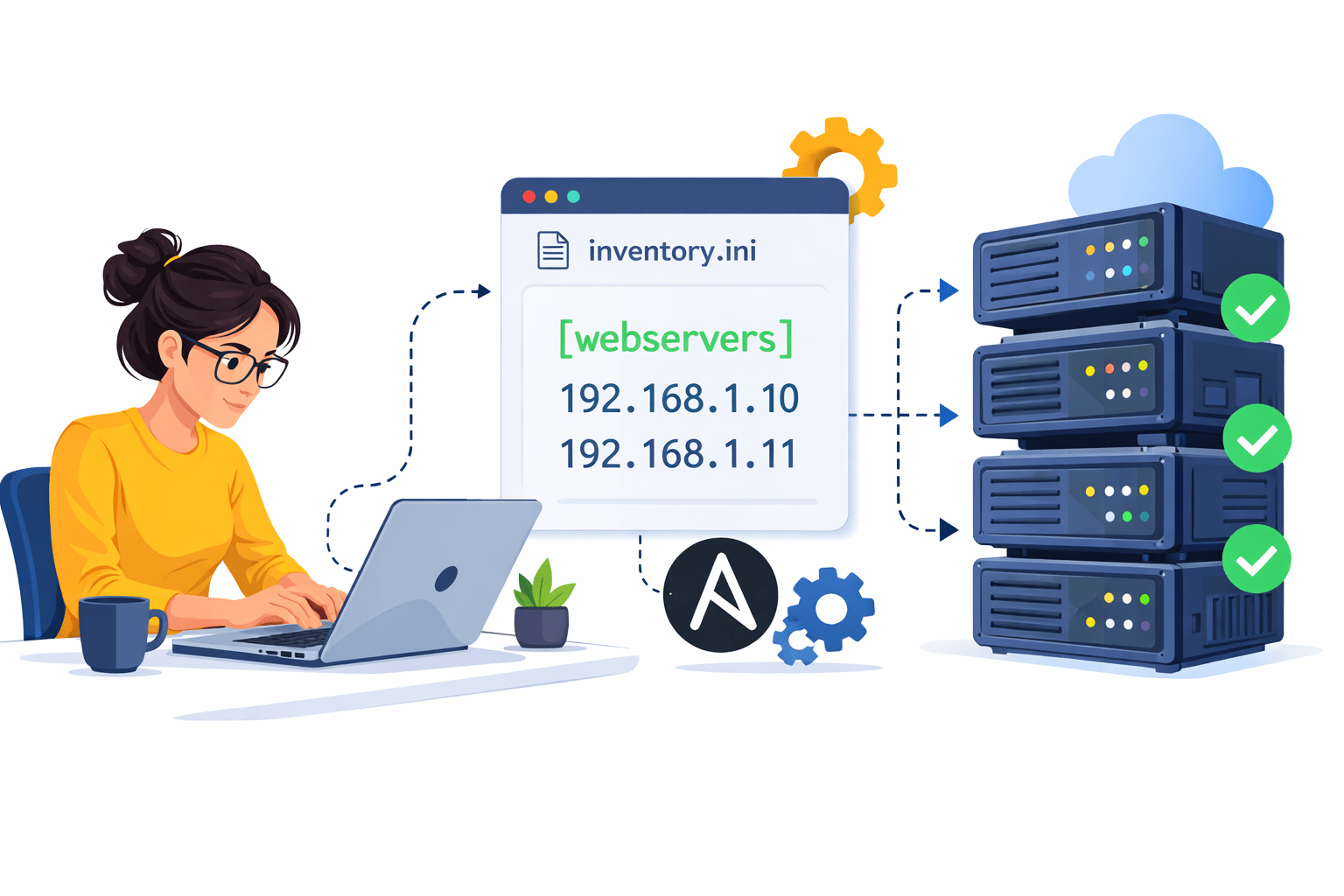
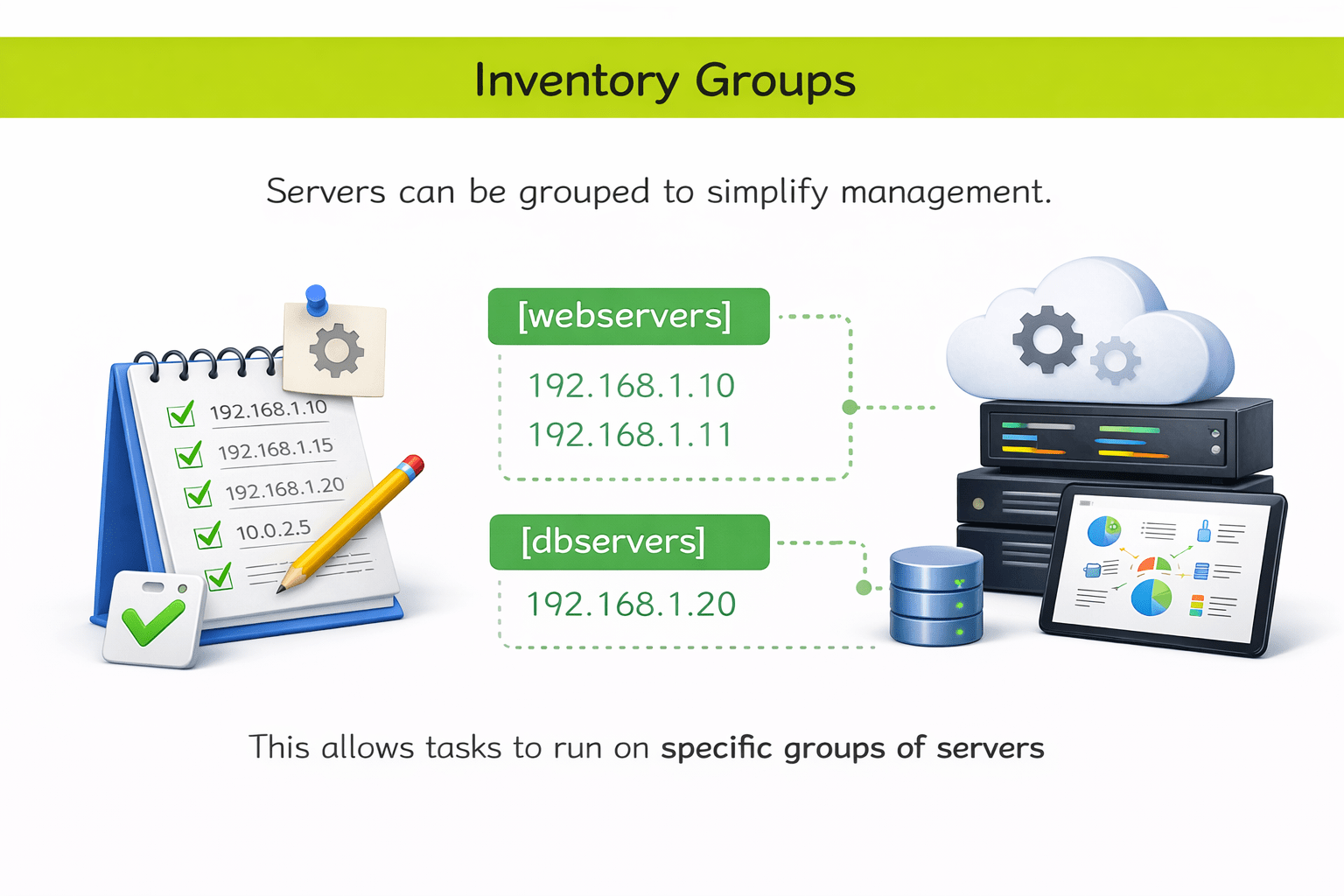
Inventory Groups
Servers can be grouped to simplify management
This allows tasks to run on specific groups of servers
What are Modules?
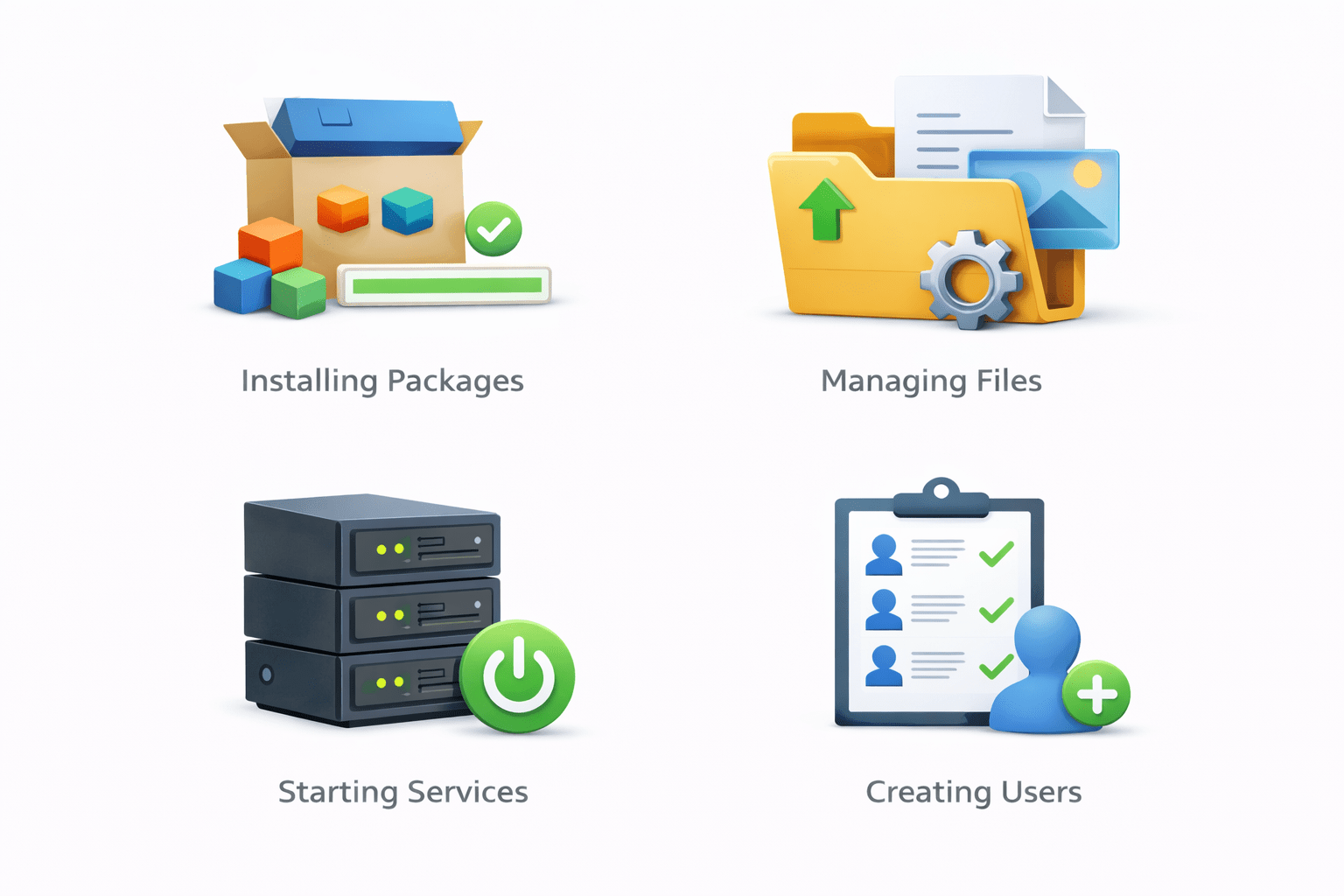
Modules are pre-built programs that perform specific tasks in Ansible
They are the actual actions executed on managed nodes
Installing packages
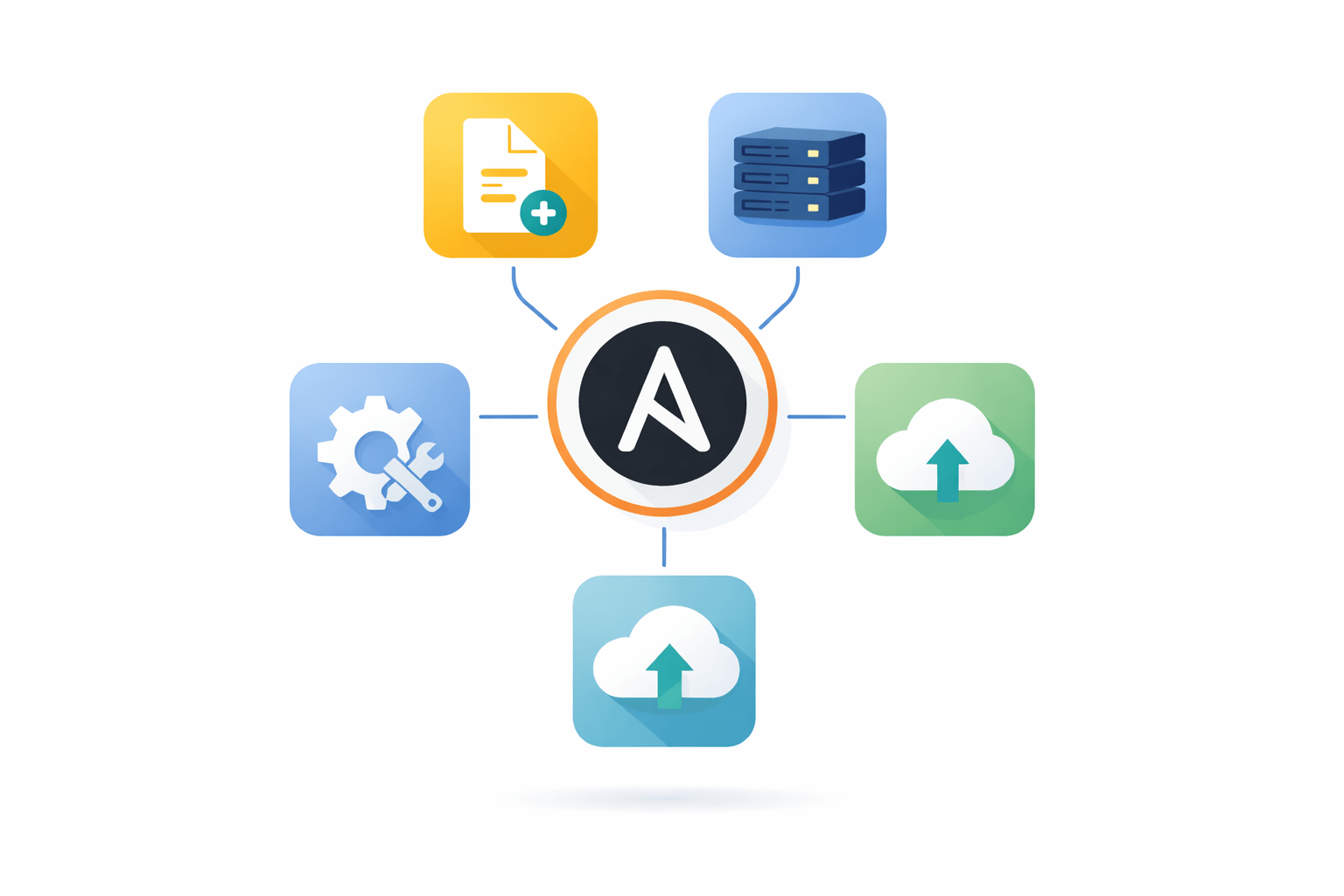
Modules handle operations like
Creating users
Starting services
Managing files
Examples of Common Modules
apt → Install packages on Ubuntu/Debian systems
yum → Install packages on Red Hat systems
service → Manage system services
copy → Copy files to servers
user → Manage system users


Example Module Usage
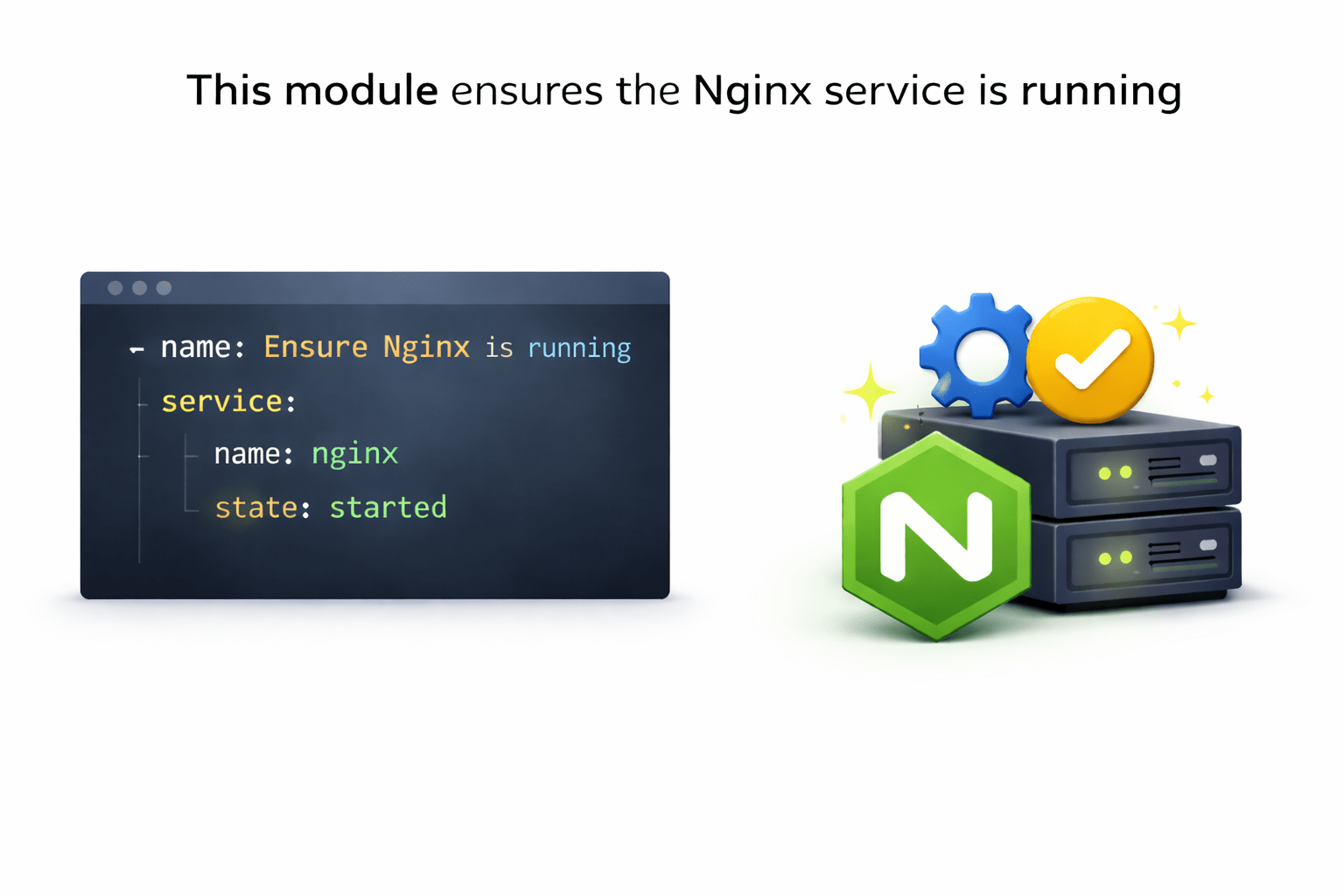
This module ensures the nginx service is running
- name: Start nginx service

 service:

   name: nginx

   state: started
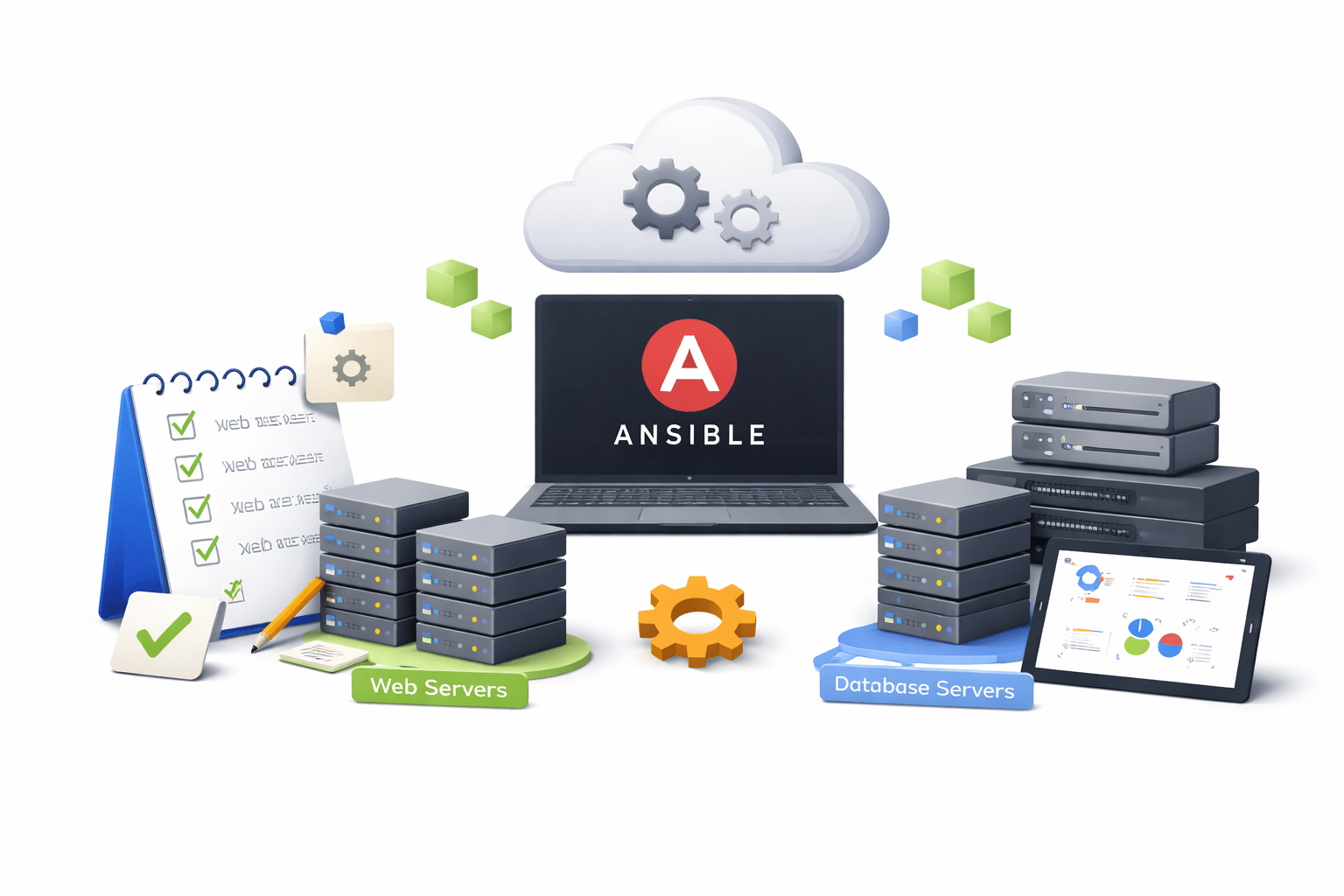
How These Components Work Together
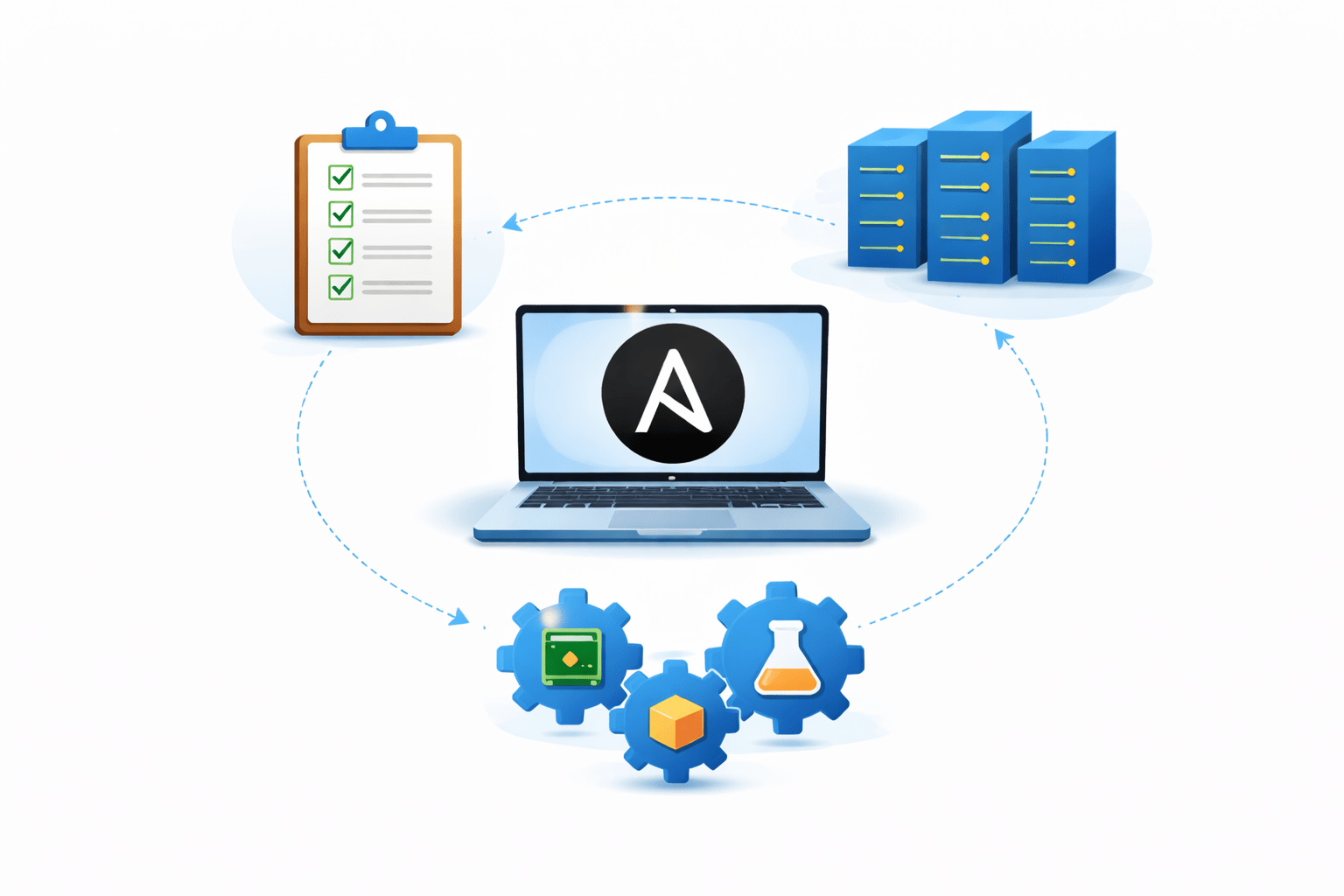
Ansible automation works in the following way
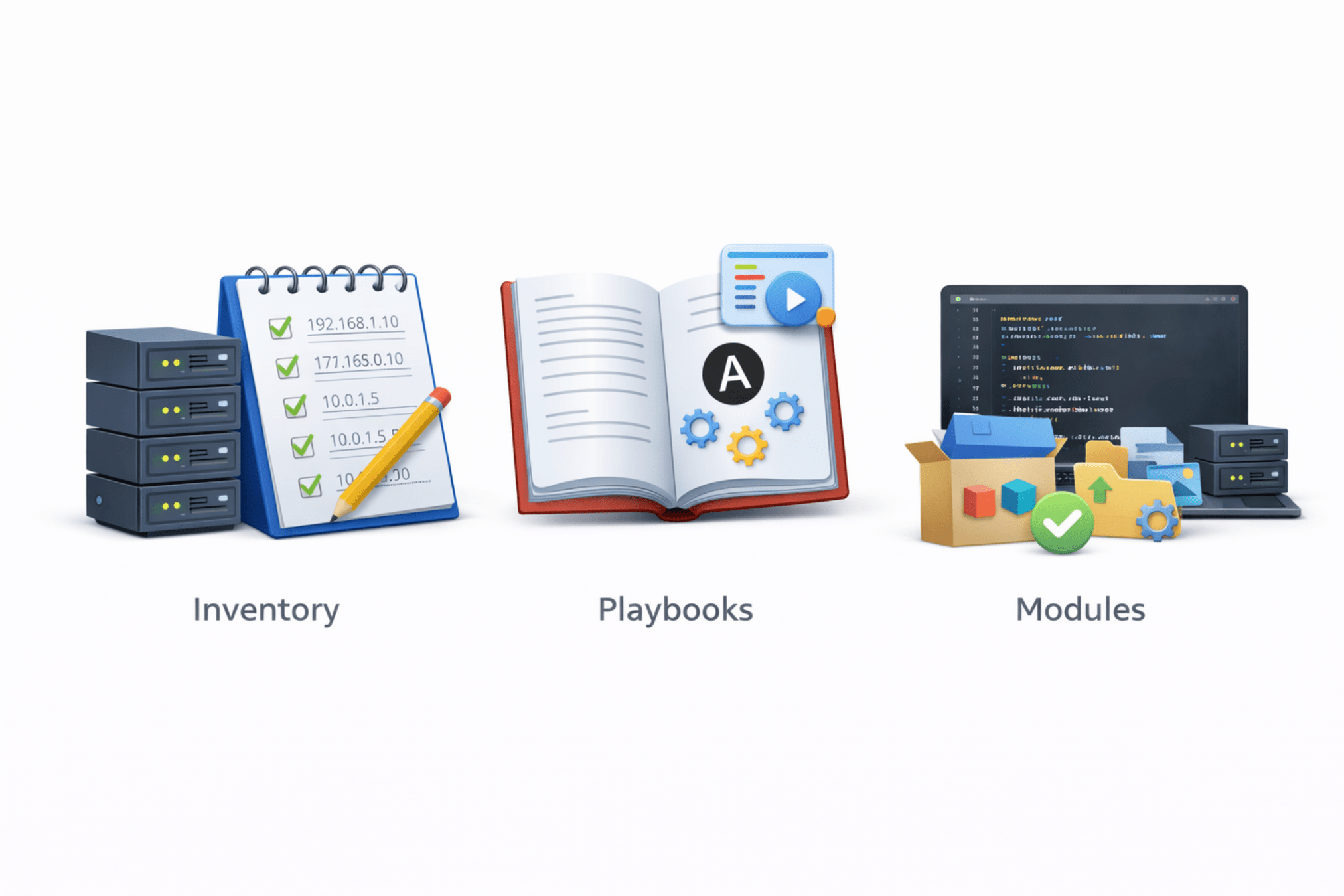
Inventory defines the list of servers
Playbooks define the automation tasks
Modules perform the actual operations on the servers
This structure makes Ansible simple, organized, and scalable

Summary
5
These components form the core foundation of Ansible automation
4
Playbooks use modules to execute tasks on hosts defined in the inventory
3
Modules perform specific actions such as installing packages or managing services
2
Inventory contains the list of servers that Ansible manages
1
Playbooks are YAML files used to define automation tasks in Ansible
Quiz
What is the main purpose of Ansible modules?
A. Store server IP addresses
B. Define infrastructure architecture
C. Perform automation tasks on managed nodes
D. Manage playbook files

Answer
What is the main purpose of Ansible modules?
A. Store server IP addresses
B. Define infrastructure architecture
C. Perform automation tasks on managed nodes
D. Manage playbook files
