

Advanced Exception Handling - finally, Multiple Exceptions and Custom Exceptions
File Handling and Exception Handling


Learning Outcome
5
Connect raise with custom exceptions.
4
Apply else vs finally to real scenarios.
3
Recognize when finally runs and why.
2
Identify ways to handle multiple exceptions.
1
Understand the complete try structure.
The Restaurant Kitchen
A kitchen matches each problem to a fix:
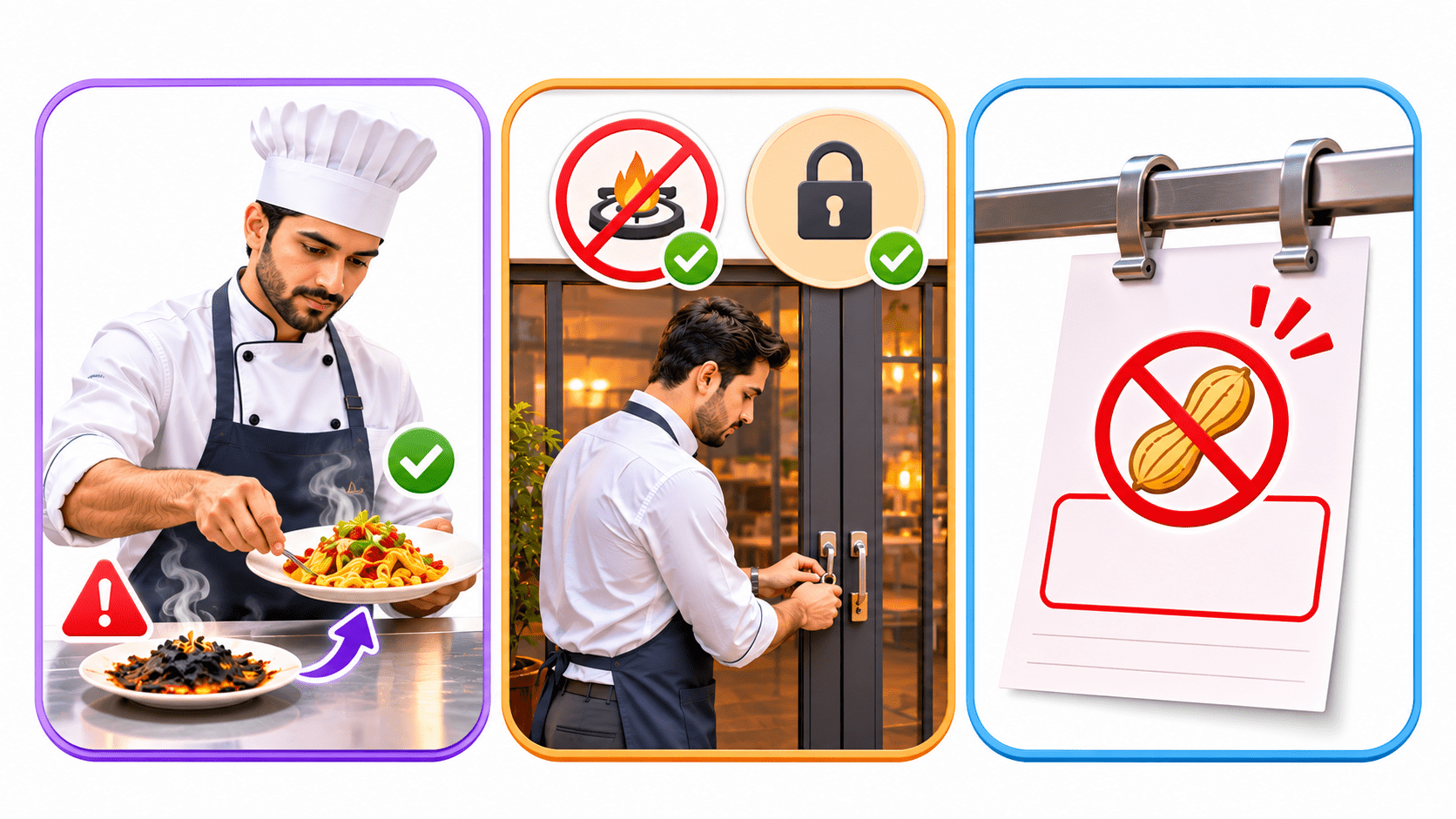
burnt dish remade,
gas leak evacuated.
Every night, gas off,
doors locked, no matter what.
A peanut allergy gets
its own named alert.
Core idea: matched fixes = multiple exceptions;
closing routine = finally;
named alert = custom exception.
Transition to Technical Concept: Think About It
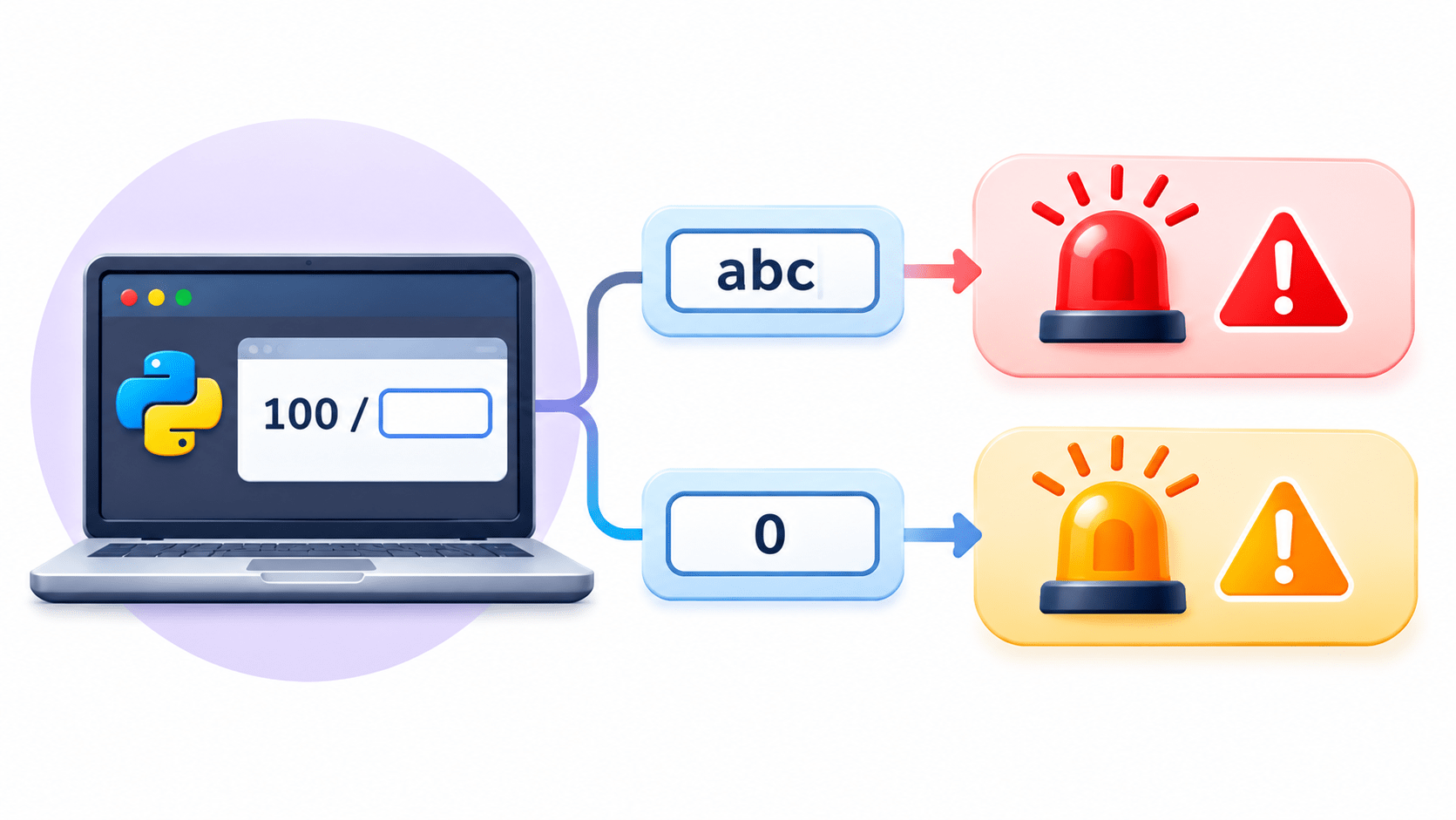
A program divides 100 by user input. Typing “abc” and typing 0 both fail. Same response for both?
Expected Answer: No. Like a burnt dish vs a gas leak, ValueError and ZeroDivisionError need different responses.
Exactly! First, let’s see the full structure that makes this possible.
The Complete try Structure
Key Point: Order is always try → except → else → finally. try needs at least one except or finally.
Why it matters: Keep only the risky line in try, and catch errors only where you can actually respond.

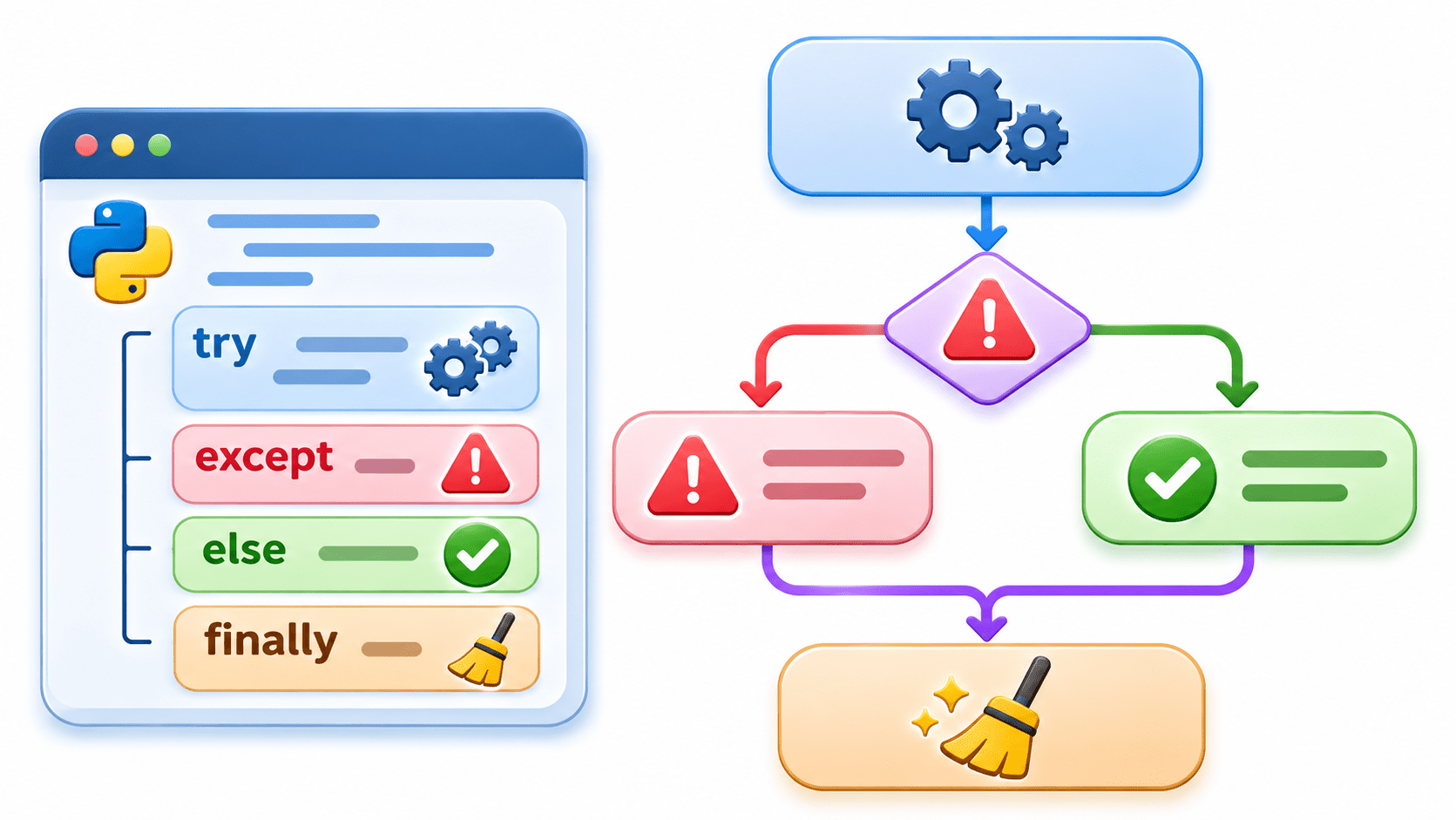
- try holds the code that might fail.
- except runs only if an error occurs.
- else runs only if no error occurred.
- finally runs every time.
Handling Multiple Exceptions
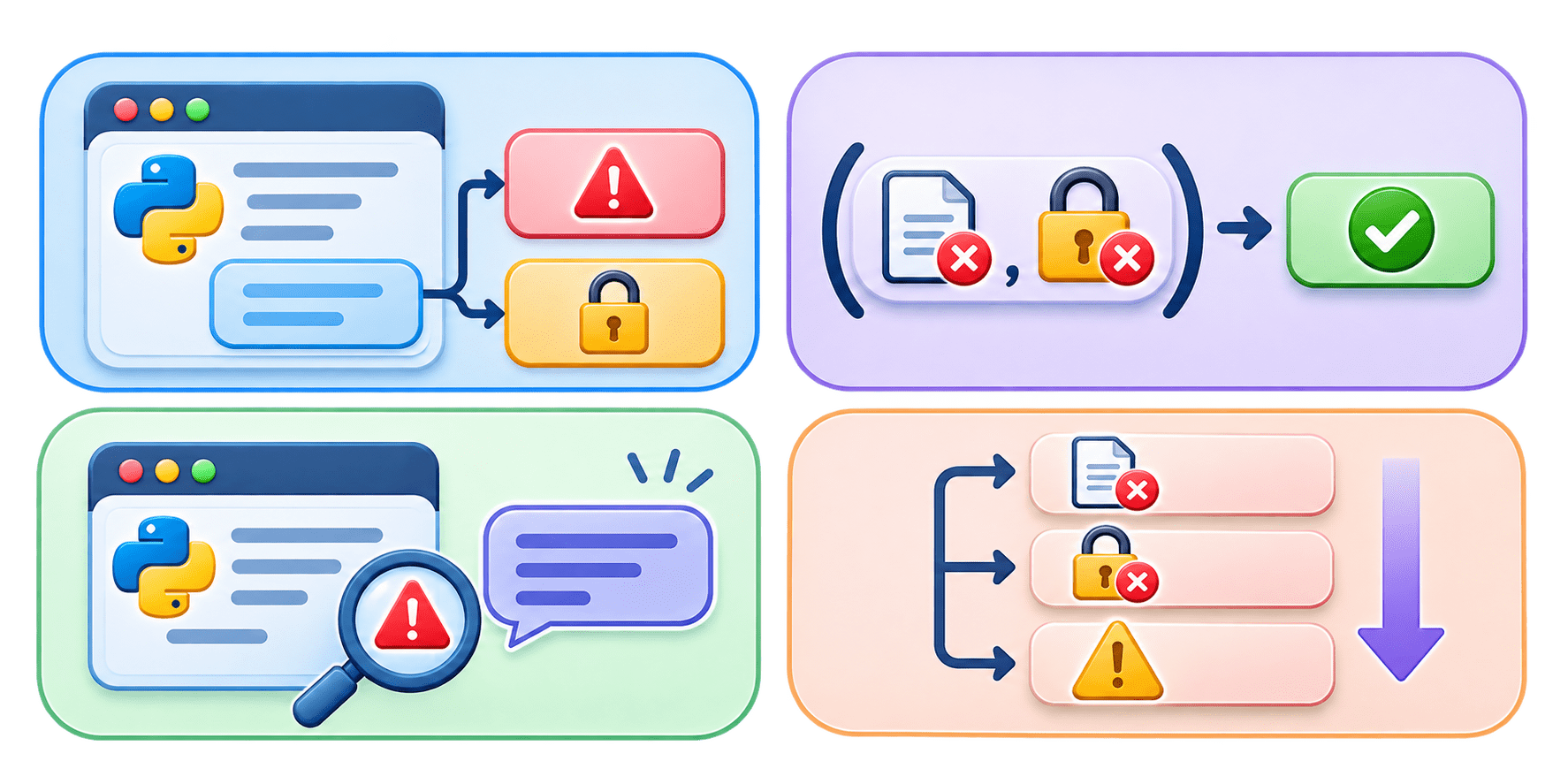
Separate blocks give a
different response per error.
Grouped in brackets give the same
response for several errors.
as e captures the exact error
message for debugging.
Order matters: Python runs only the first match,
so put specific errors before general ones.
Code: except (ValueError, ZeroDivisionError):
The finally Block
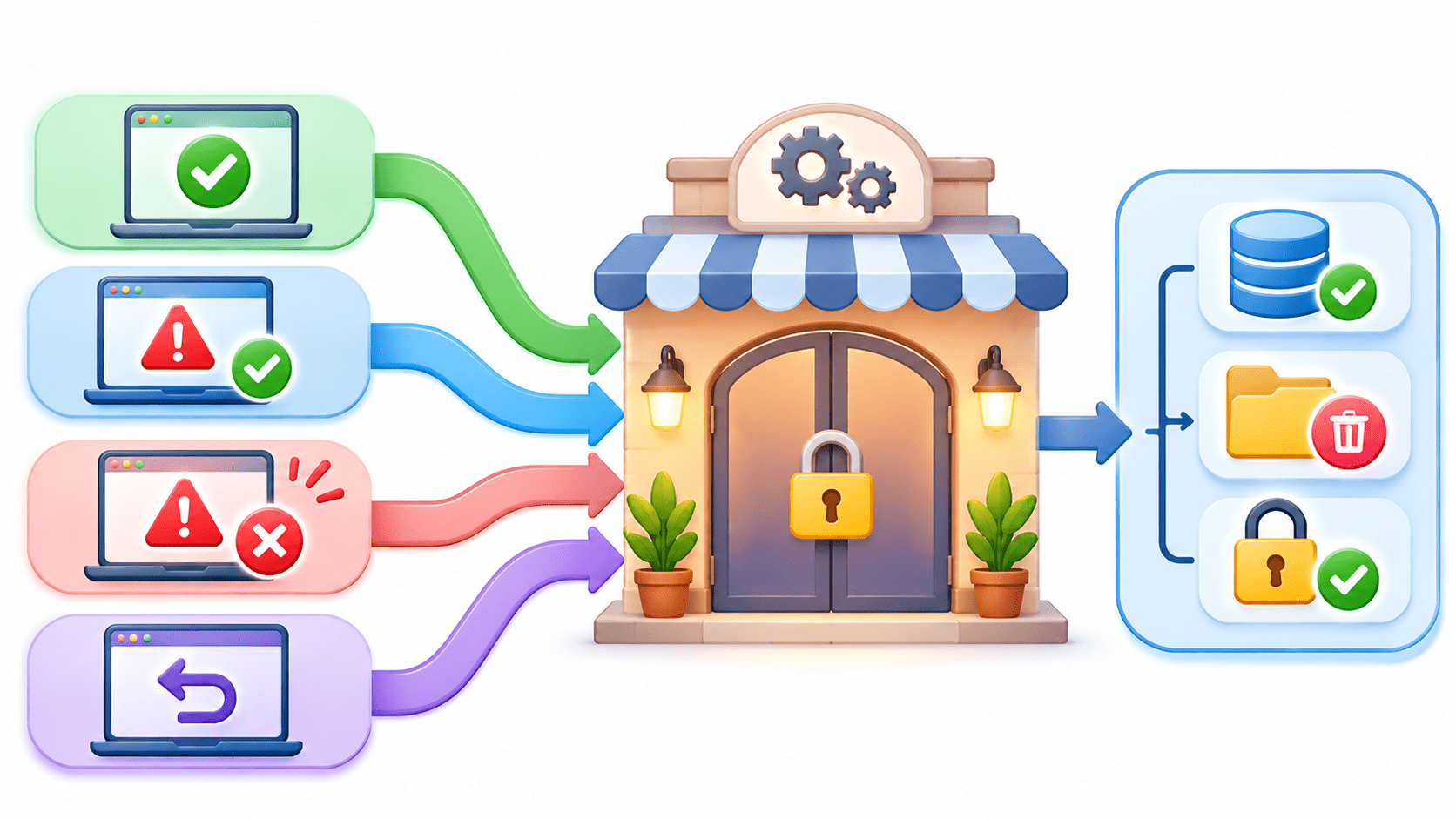
finally runs when:
- try succeeds
- an error is handled
- an error is unhandled (finally runs, then the crash happens)
- try hits a return
Uses: Closing DB connections, releasing locks, deleting temp files.
finally vs with: with closes files; finally handles any cleanup.
Raising Exceptions Yourself
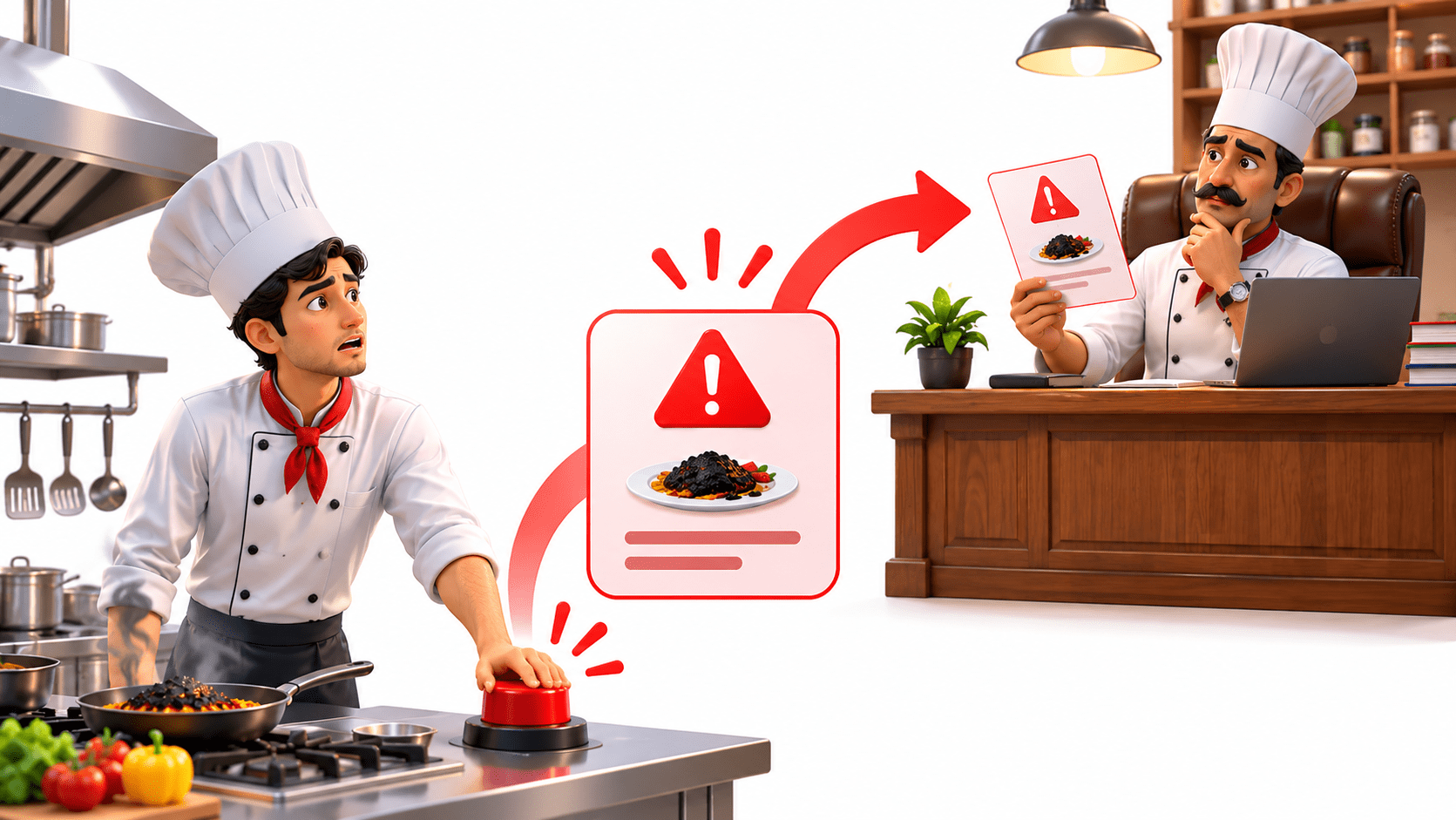
- raise stops execution when input shouldn’t continue.
- It signals “I can’t continue” instead of returning a wrong result.
- A bare raise inside except re-raises the error after logging.
Code: raise ValueError
("Marks cannot be negative")
Custom Exceptions
Define: class
InsufficientBalanceError(Exception):
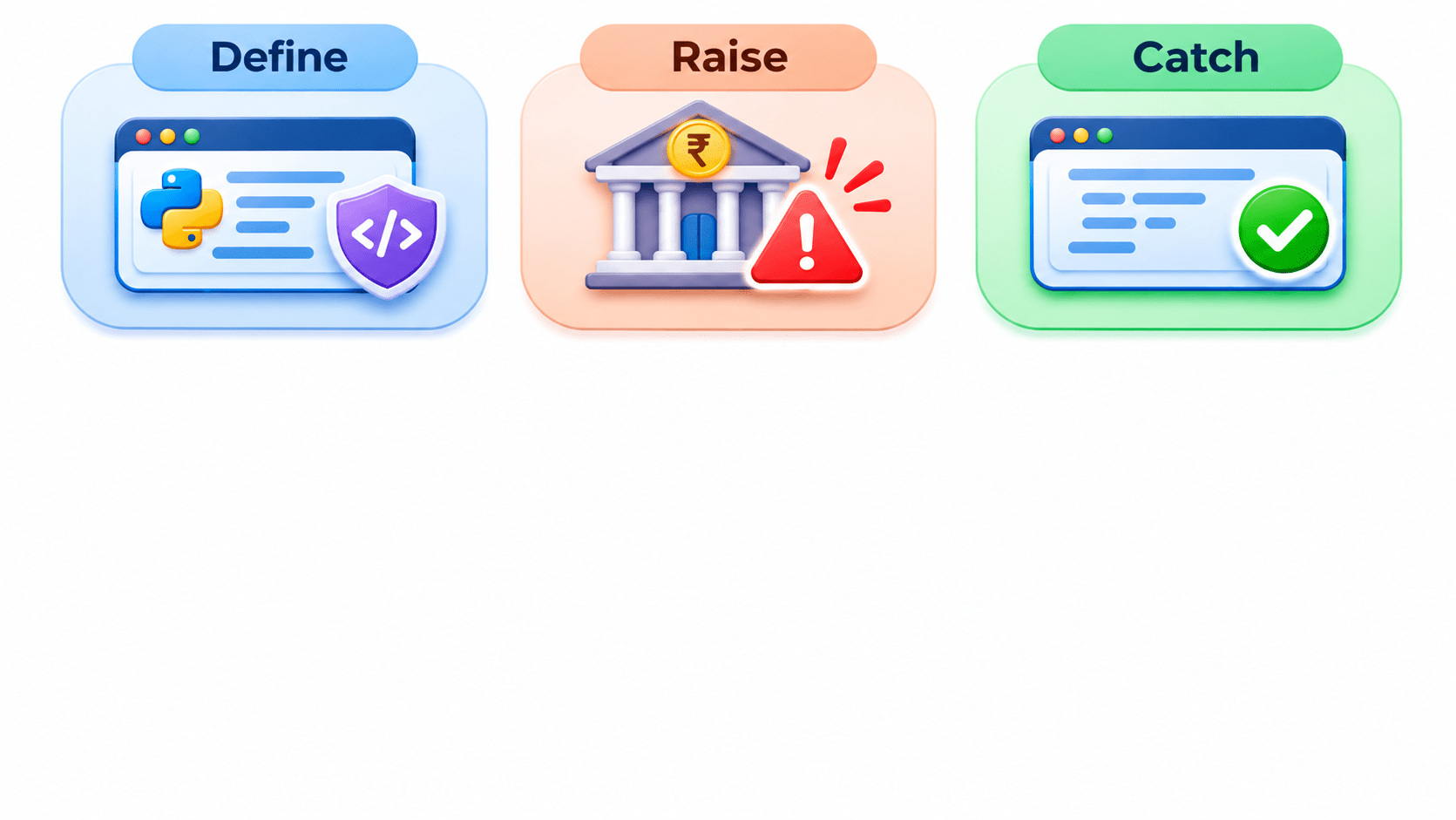
Raise it where the rule breaks.
Catch it like any exception.
Why it matters: The meaning lives in the error type, not in fragile message text.
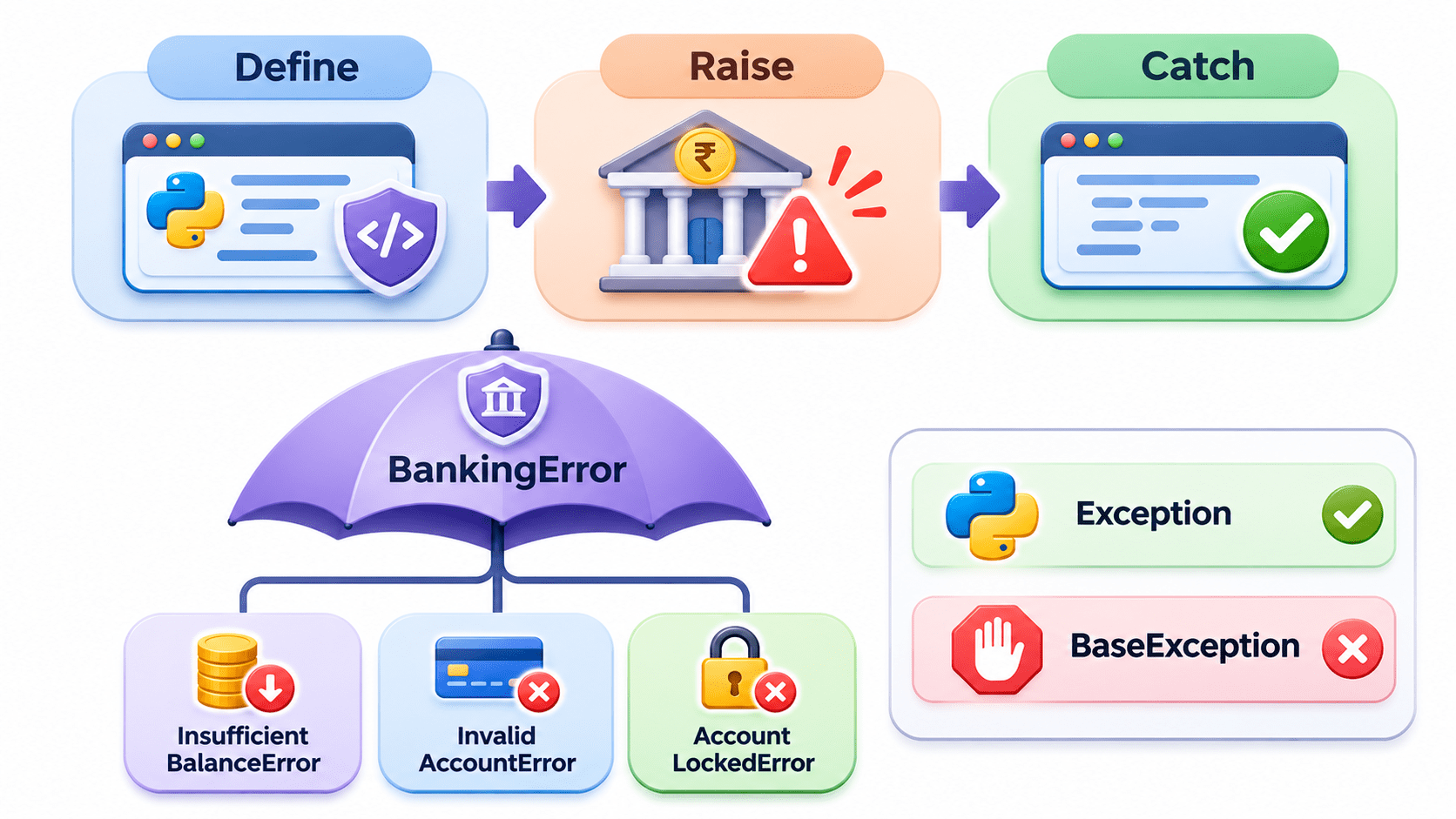
- Names end in “Error”. A base like BankingError catches all related errors.
- Inherit from Exception, not BaseException, which covers Ctrl+C and exits.
Custom Exceptions
Summary
5
Build strong branding
4
Use different marketing channels
3
Target the right audience
2
Create and communicate value
1
Understand customer needs
Choose cool, soft colors instead of vibrant colors
Max 5 Points for Summary & Min 2
Quiz
Which platform is mainly used for professional networking and B2B marketing ?
A. Facebook
B. Instagram
C. LinkedIn
D. Snapchat

Quiz-Answer
Which platform is mainly used for professional networking and B2B marketing ?
A. Facebook
B. Instagram
C. LinkedIn
D. Snapchat