Securities & Cash Settlement


Settlement cycles


Learning Outcome
5
Understand T+1 equity settlement in India.
4
Identify key settlement participants.
3
Explain the settlement timeline.
2
Differentiate Trade Date and Settlement Date.
1
Define settlement cycle and T+1.
T+1 Settlement
A Settlement Cycle is the time between the Trade Date (T), when a trade is executed, and the Settlement Date, when the shares and money are actually exchanged.
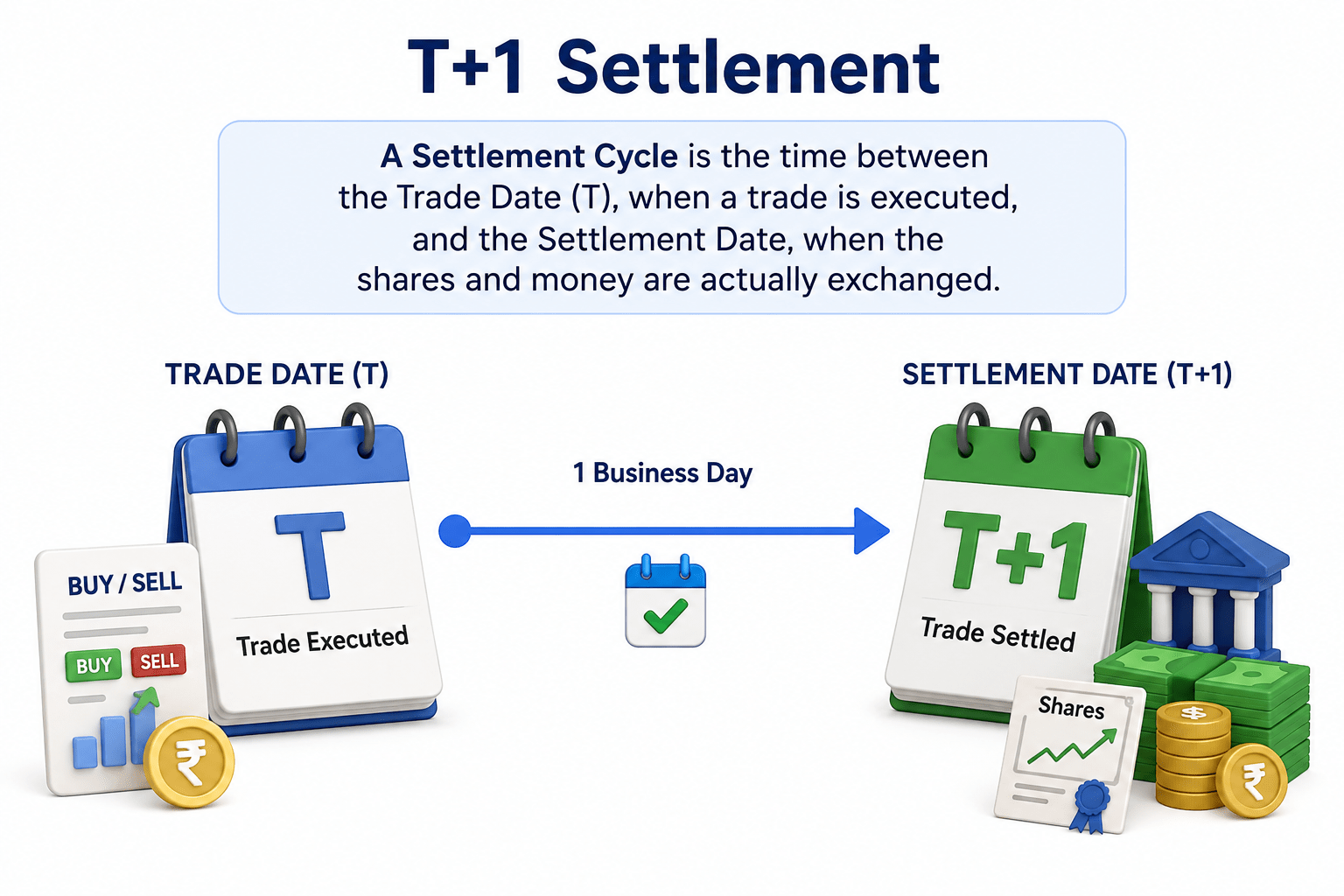
In the T+1 settlement cycle, the settlement takes place one working day after the trade date.
-
T = Trade Date (the day the trade is executed)
-
+1 = One working day later (the settlement date)
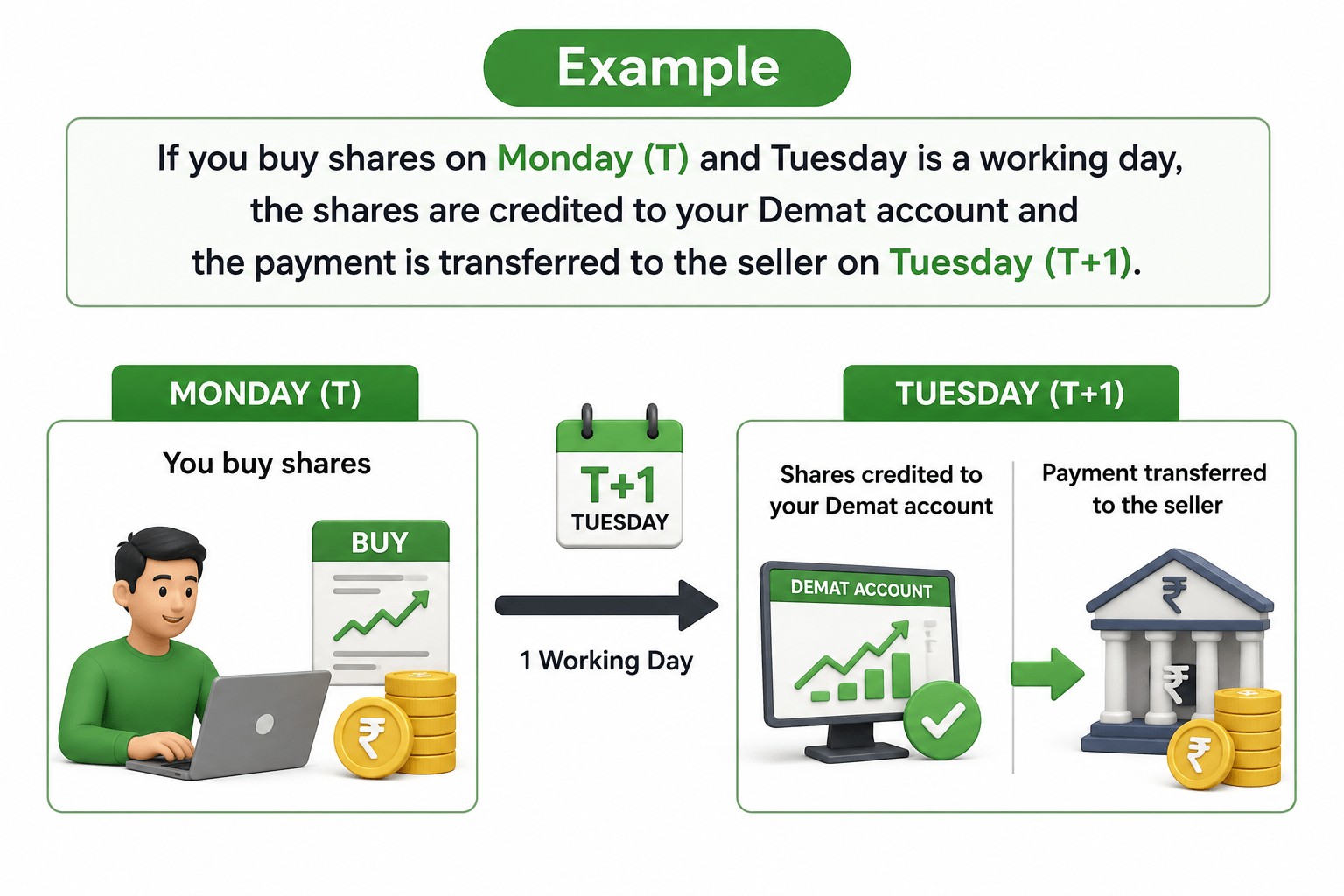
Example
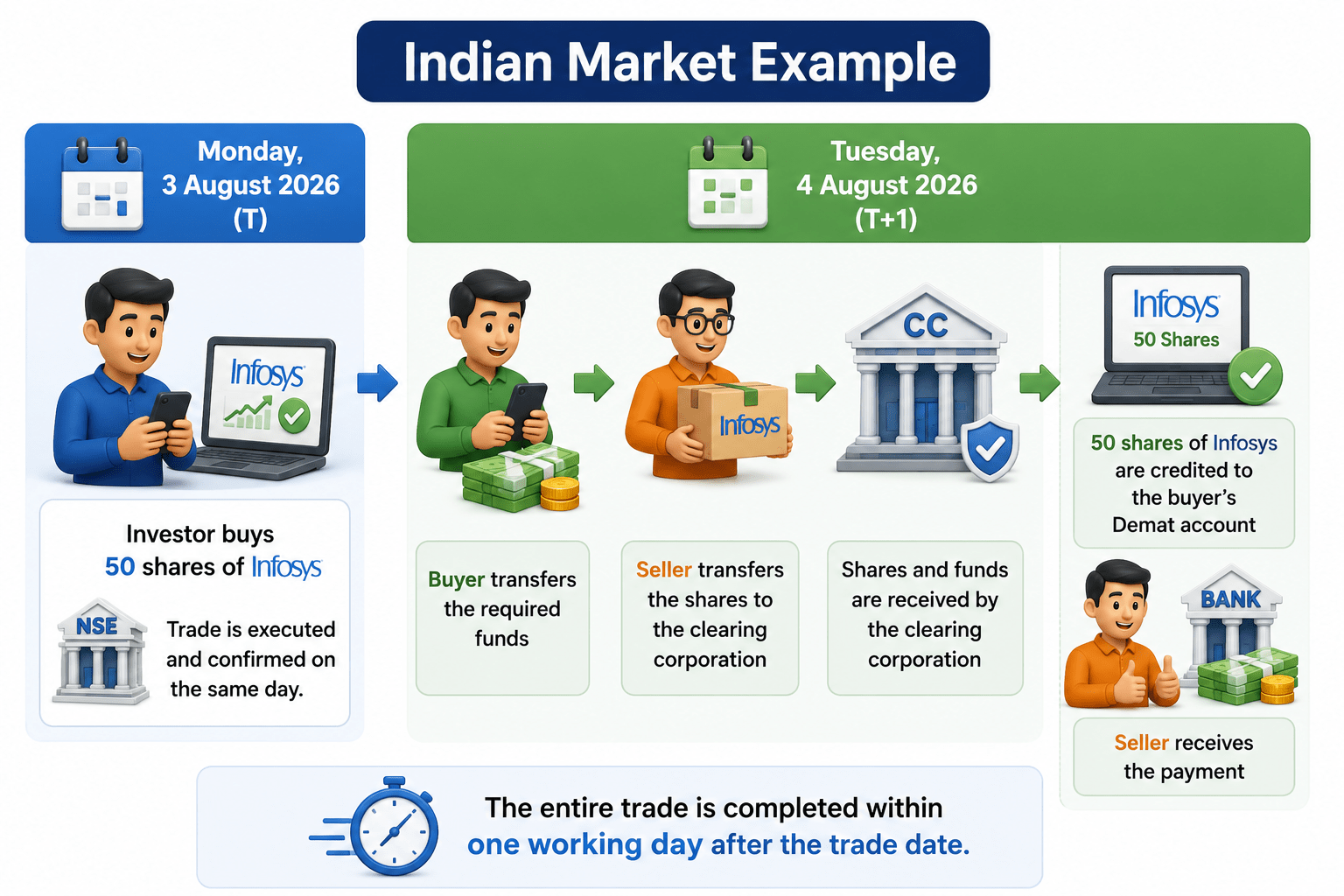
If you buy shares on Monday (T) and Tuesday is a working day, the shares are credited to your Demat account and the payment is transferred to the seller on Tuesday (T+1).
Settlement Timeline
In a T+1 settlement cycle, different activities take place on different days. Understanding what happens on each day helps explain why shares and money are not exchanged immediately after a trade, even though the settlement is completed quickly.

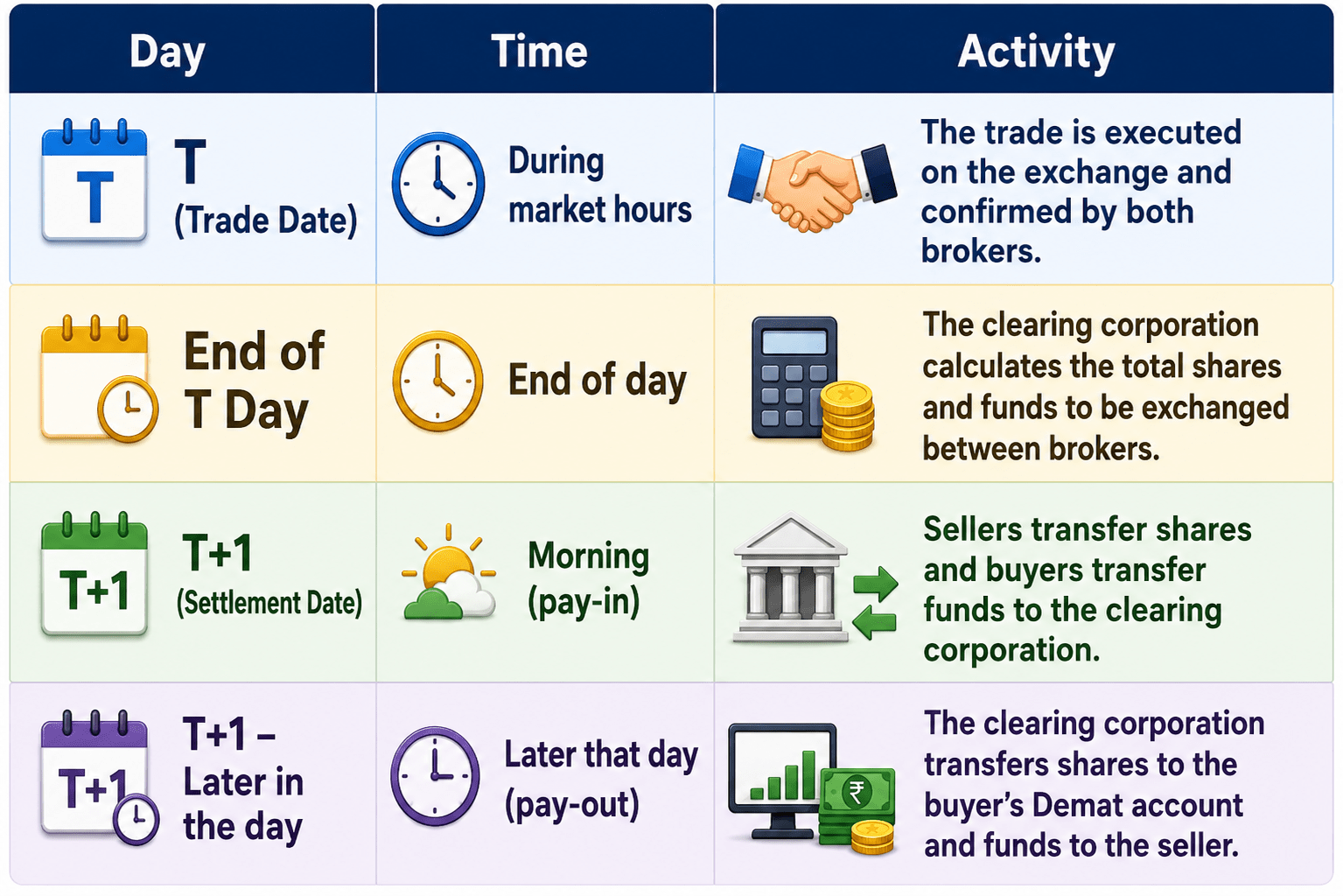
If the day after the trade date is a market holiday or a weekend, settlement simply moves to the next working day — T+1 always counts working days, not calendar days.
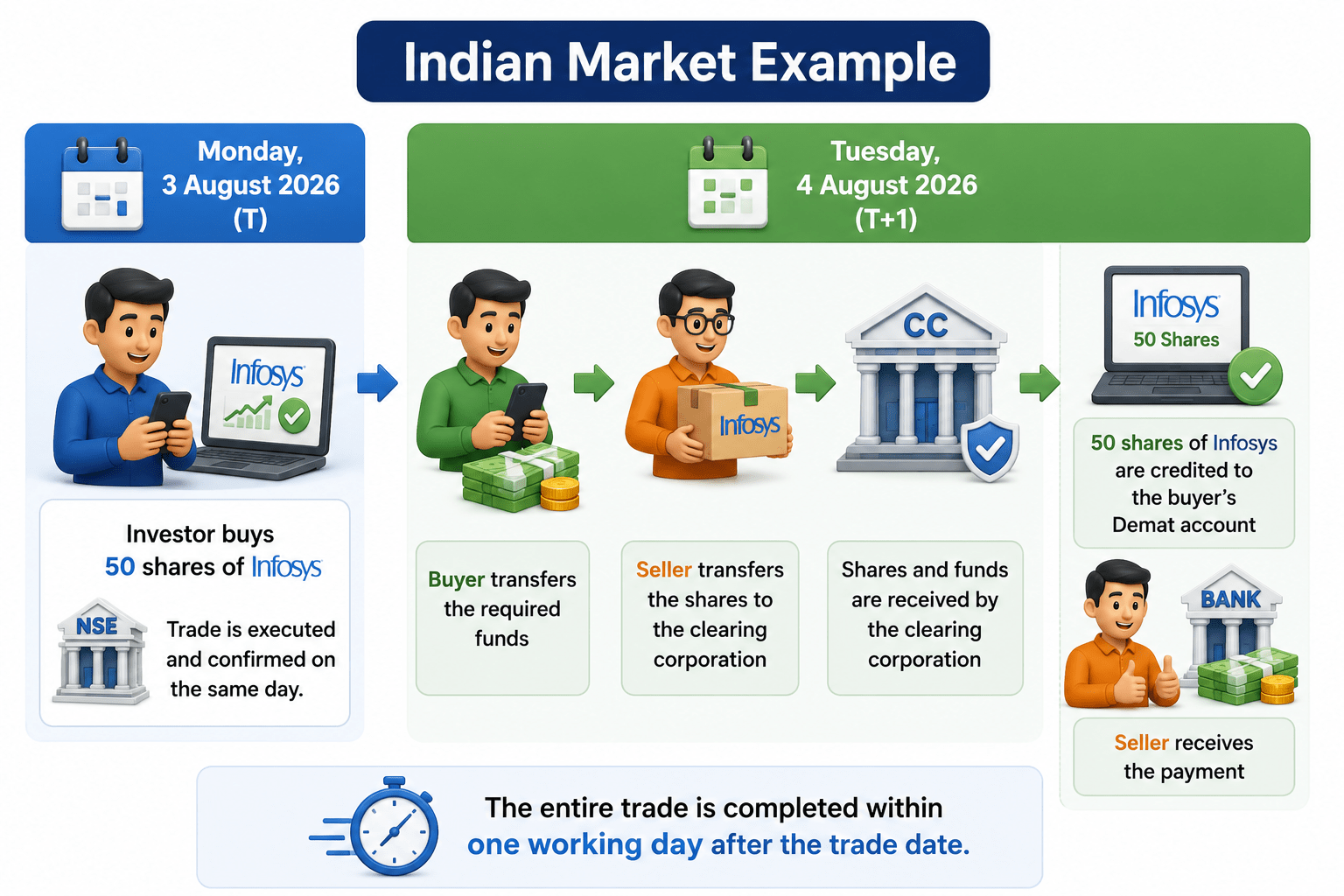
Indian Market Example
Summary
5
T+1 enables faster, timely settlement.
4
Shares and funds transfer on T+1.
3
Trade and clearing occur on T.
2
T+1 settles on the next working day.
1
Settlement cycle = trade to final exchange.
Quiz
Which entity helps complete the transfer of securities and funds during settlement?
A. Stock Analyst
B. Clearing Corporation
C. Investor only
D. Company Secretary

Quiz-Answer
Which entity helps complete the transfer of securities and funds during settlement?
A. Stock Analyst
B. Clearing Corporation
C. Investor only
D. Company Secretary