Corporate Action


Preference Shares


Learning Outcome
5
Evaluate advantages and disadvantages of preference shares.
4
Understand shareholder rights and limitations.
3
Compare preference shares with equity shares and debentures.
2
1
Explain why Agile was introduced
Understand preference shares and their role in capital structure.
Learn different types of preference shares.
A Wedding Banquet Analogy


Ordinary guests = Equity shareholders.
They enjoy the full celebration, but must wait their turn for food and seating.
VIP guests = Preference shareholders.
They get priority service first access to food, reserved seats, and guaranteed attention.

Hosts = The company
Ensuring everyone is served but giving special treatment to VIPs.
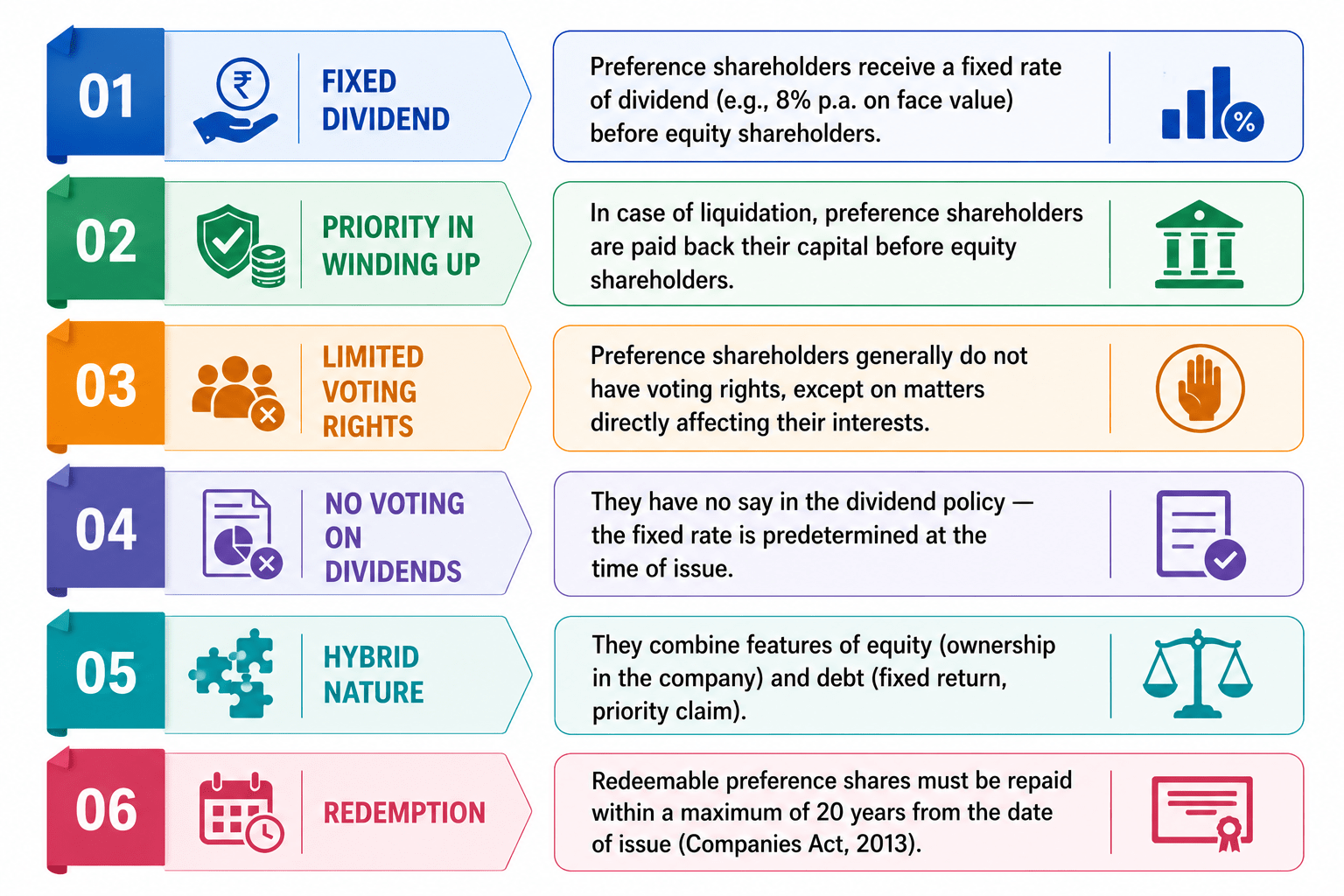
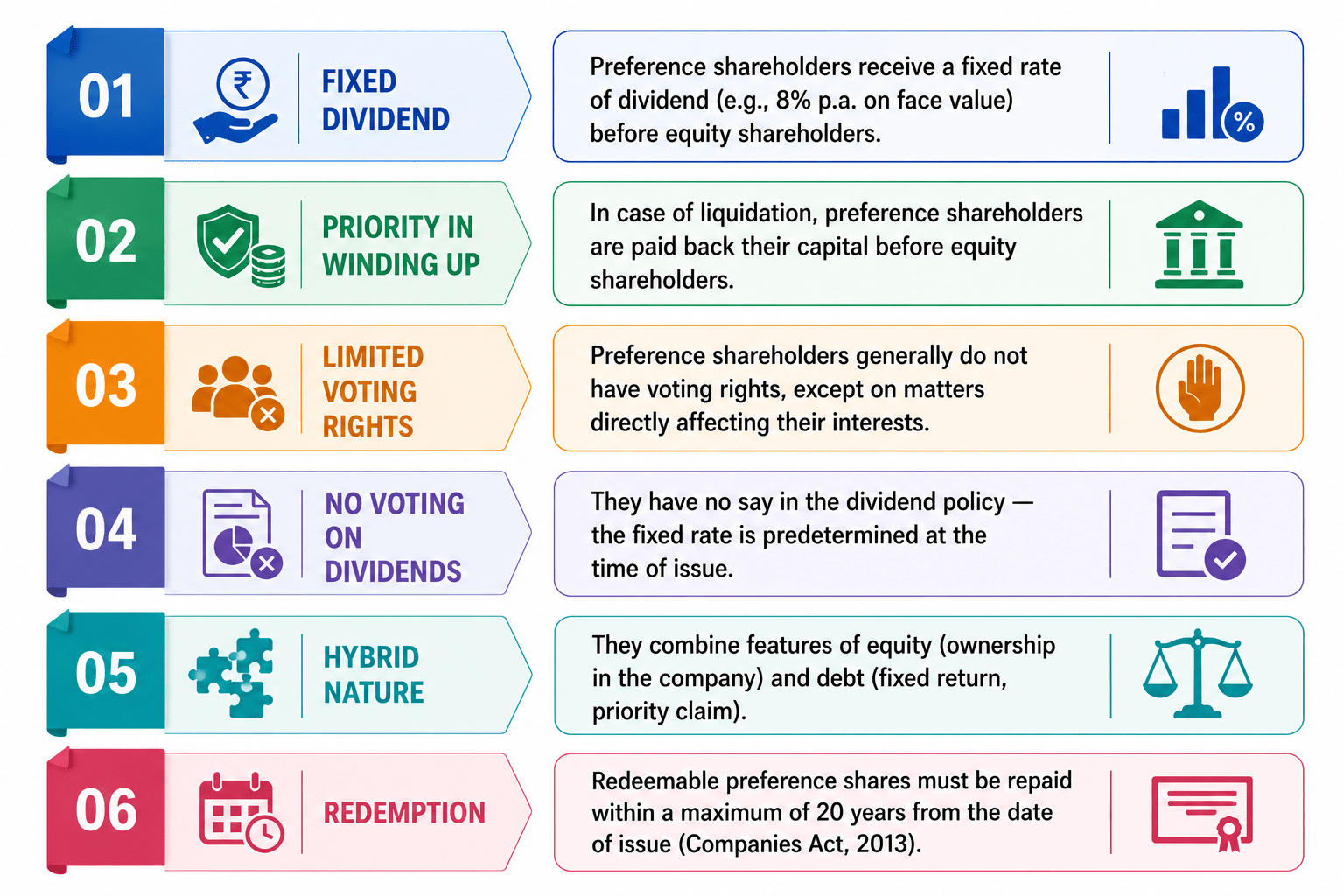
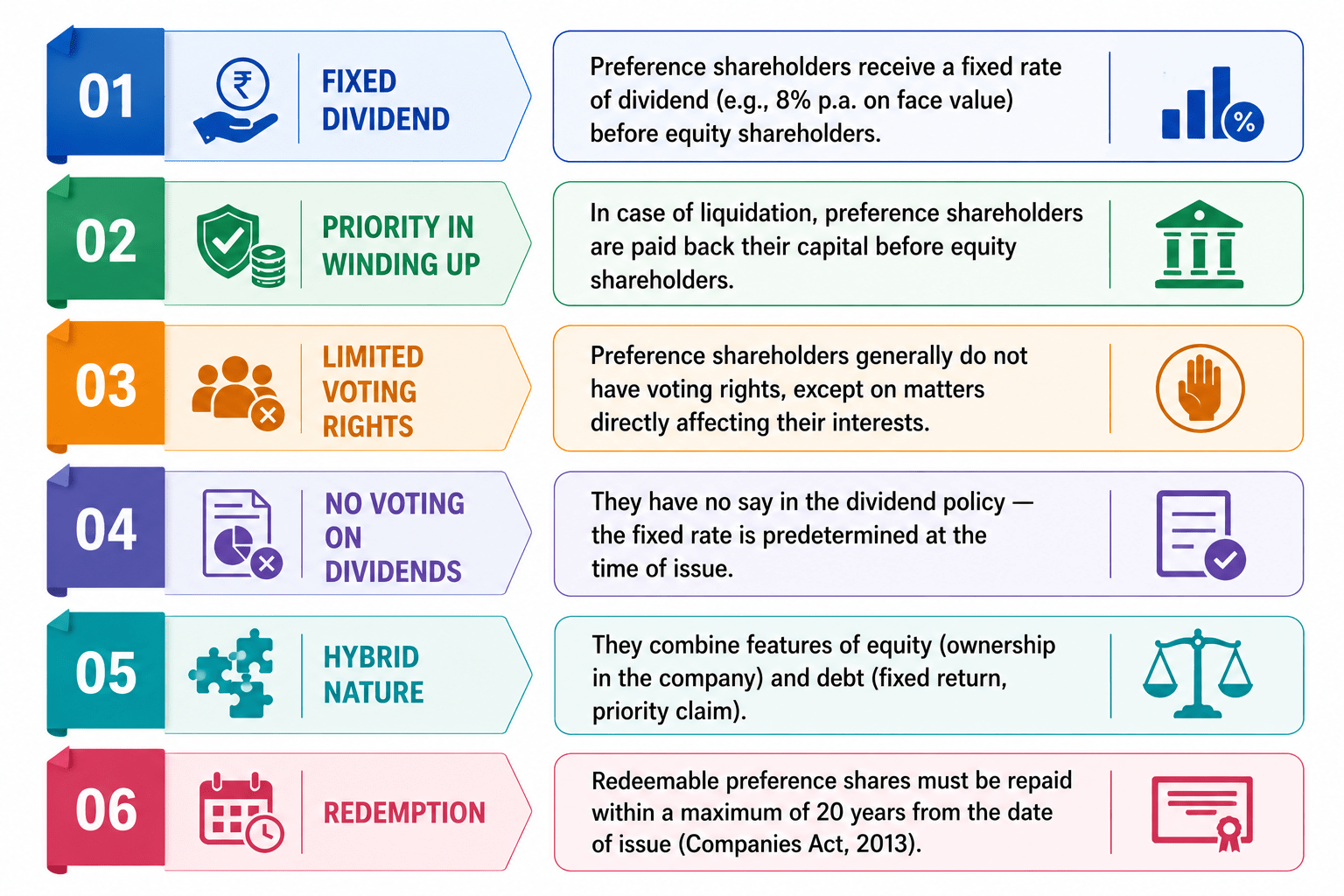
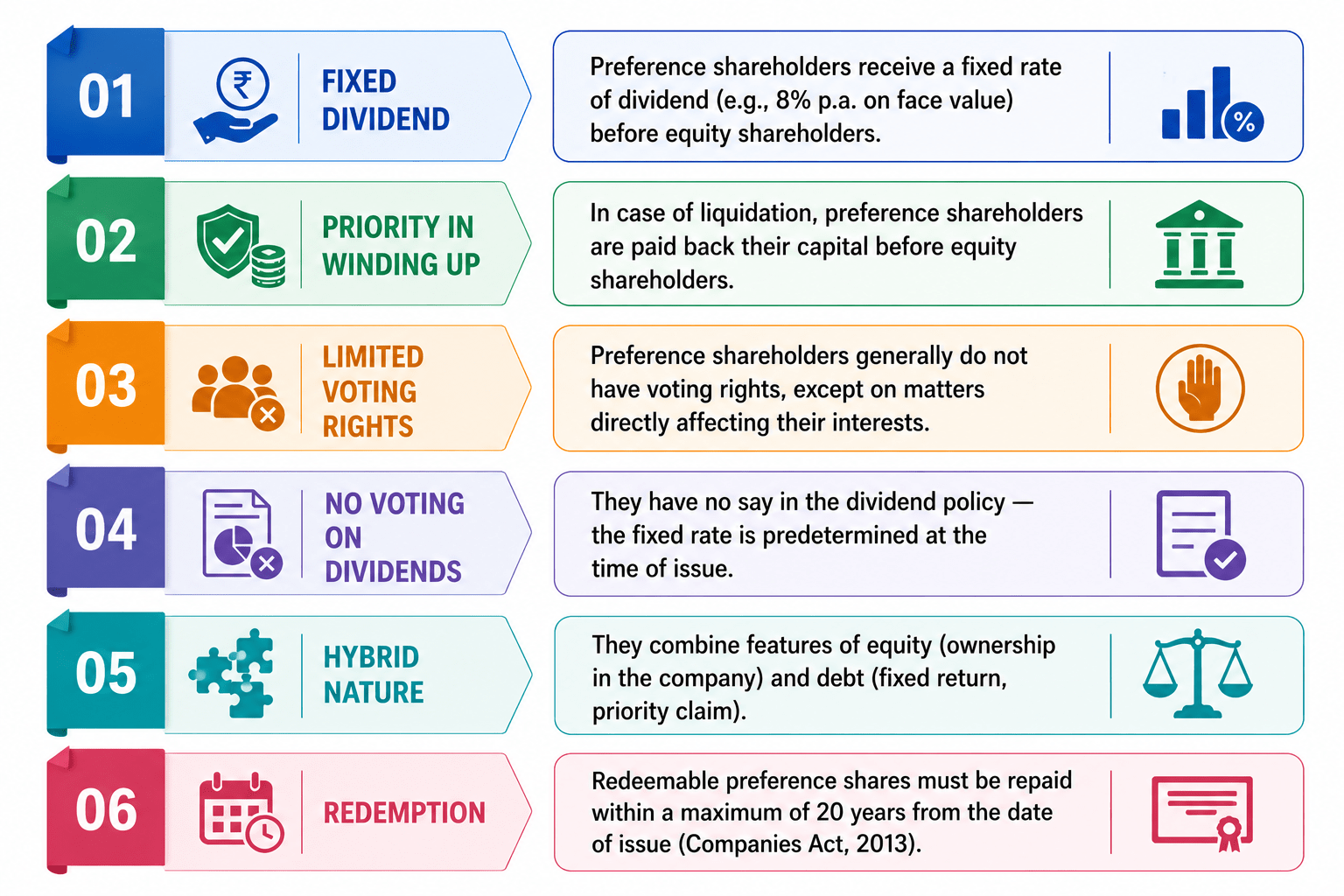
Preference shareholders receive priority dividends and repayment before ordinary shareholders.However, they usually do not have voting rights in company decisions.
Transition to Concept
In a wedding banquet, VIP guests are served first and get special priority, just like preference shareholders receive dividends and repayment before equity shareholders. However, like VIPs who don’t control the wedding decisions, preference shareholders usually have limited voting rights.

What are Preference Shares?
Preference shares are a class of share capital that carries preferential rights over equity shares in two respects


payment of dividend at a fixed rate before any dividend is declared on equity shares
repayment of capital in the event of winding up of the company, before equity shareholders are paid.


As per Section 43 of the Companies Act, 2013, a company may issue two types of share capital

Equity Share Capital — carries voting rights.


Preference Share Capital — carries preferential rights

Key Characteristics
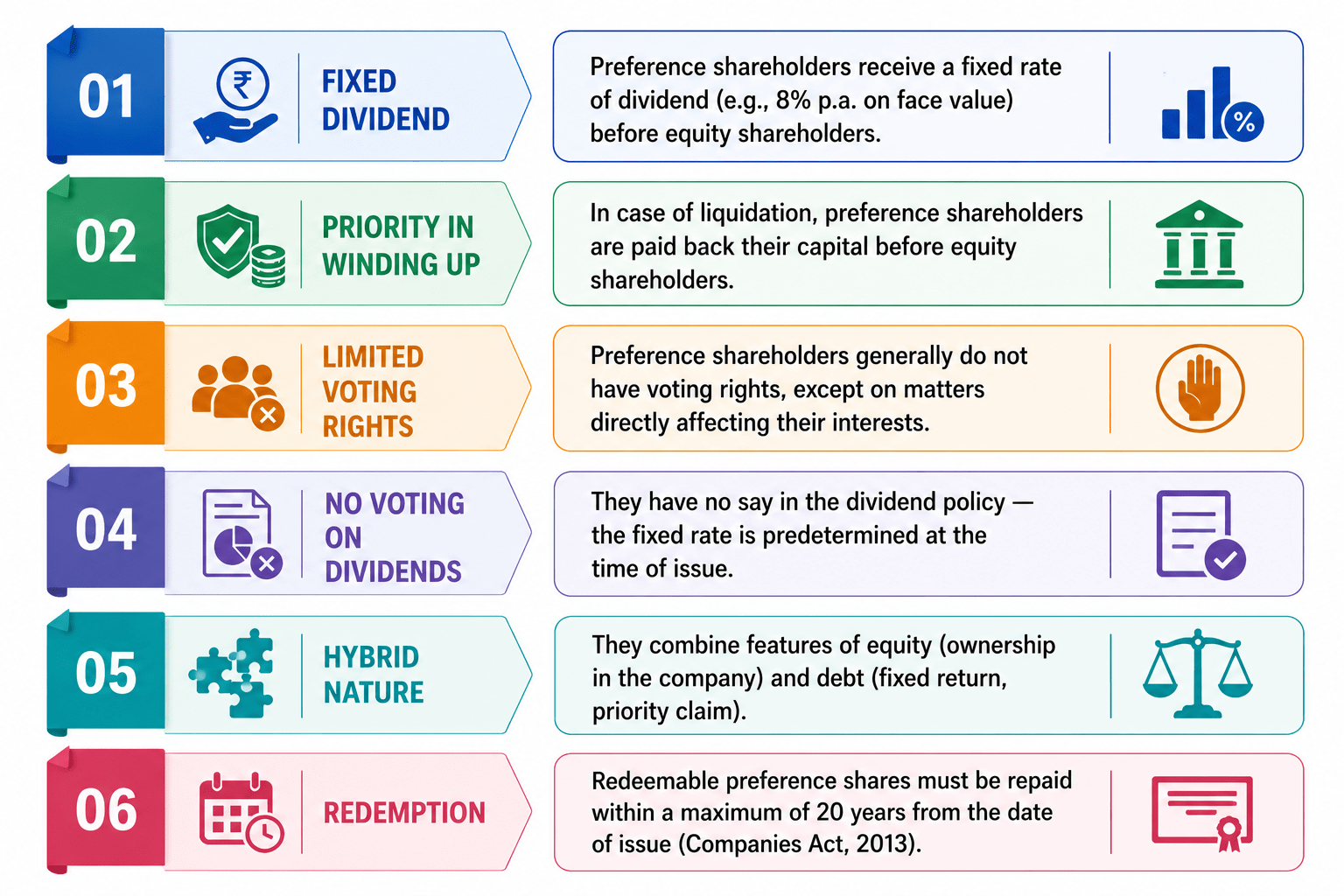
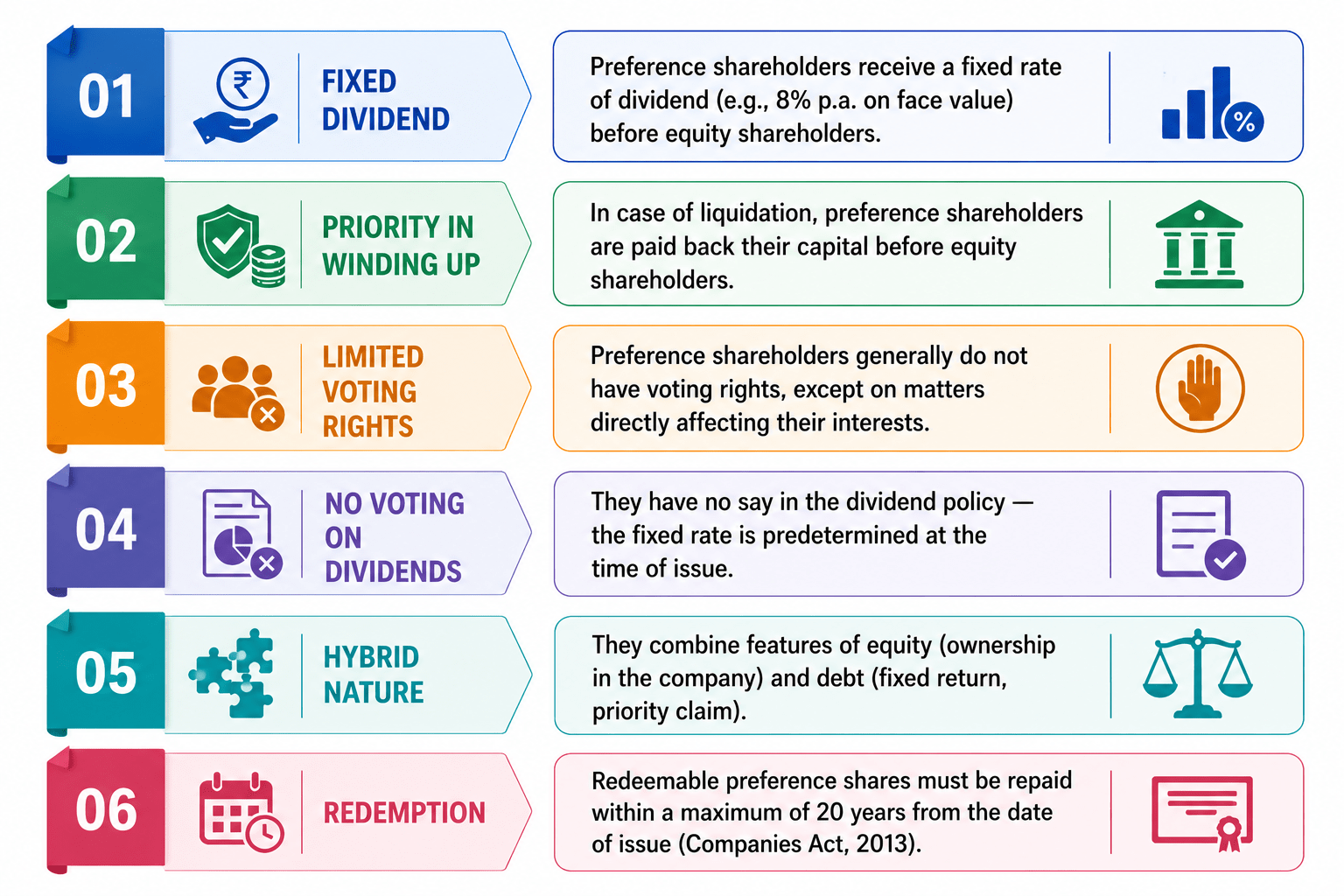
| Type | Meaning | Key Feature |
|---|---|---|
| Cumulative | Unpaid dividends accumulate and are carried forward to future years. | Arrears of dividend are paid before any equity dividend. |
| Non-Cumulative | Unpaid dividend in a year lapses — it does not accumulate | No arrears; dividend right extinguishes if not declared. |
| Redeemable | The company repays the capital to shareholders after a fixed period. | Maximum redemption period: 20 years (Companies Act). |
| Irredeemable | Capital is not repaid during the lifetime of the company. | Banned in India for companies under Companies Act, 2013. |
Types of Preference Shares
| Type | Meaning | Key Feature |
|---|---|---|
| Participating | Shareholders get fixed dividend + share in surplus profits after equity. | Rare; gives additional upside beyond the fixed rate. |
| Non-Participating | Shareholders receive only the fixed dividend; no share in surplus profits. | Most common type issued in practice. |
| Convertible | Can be converted into equity shares after a specified period. | Investor benefits if the company grows strongly. |
| Non-Convertible | Cannot be converted into equity shares. | Pure preference instrument — no equity upside. |
Preference Shares vs Equity Shares
Summary
5
Build strong branding
4
Use different marketing channels
3
Target the right audience
2
Create and communicate value
1
Understand customer needs
Quiz
Which platform is mainly used for professional networking and B2B marketing ?
A. Facebook
B. Instagram
C. LinkedIn
D. Snapchat

Quiz-Answer
Which platform is mainly used for professional networking and B2B marketing ?
A. Facebook
B. Instagram
C. LinkedIn
D. Snapchat