

Matching Workflow
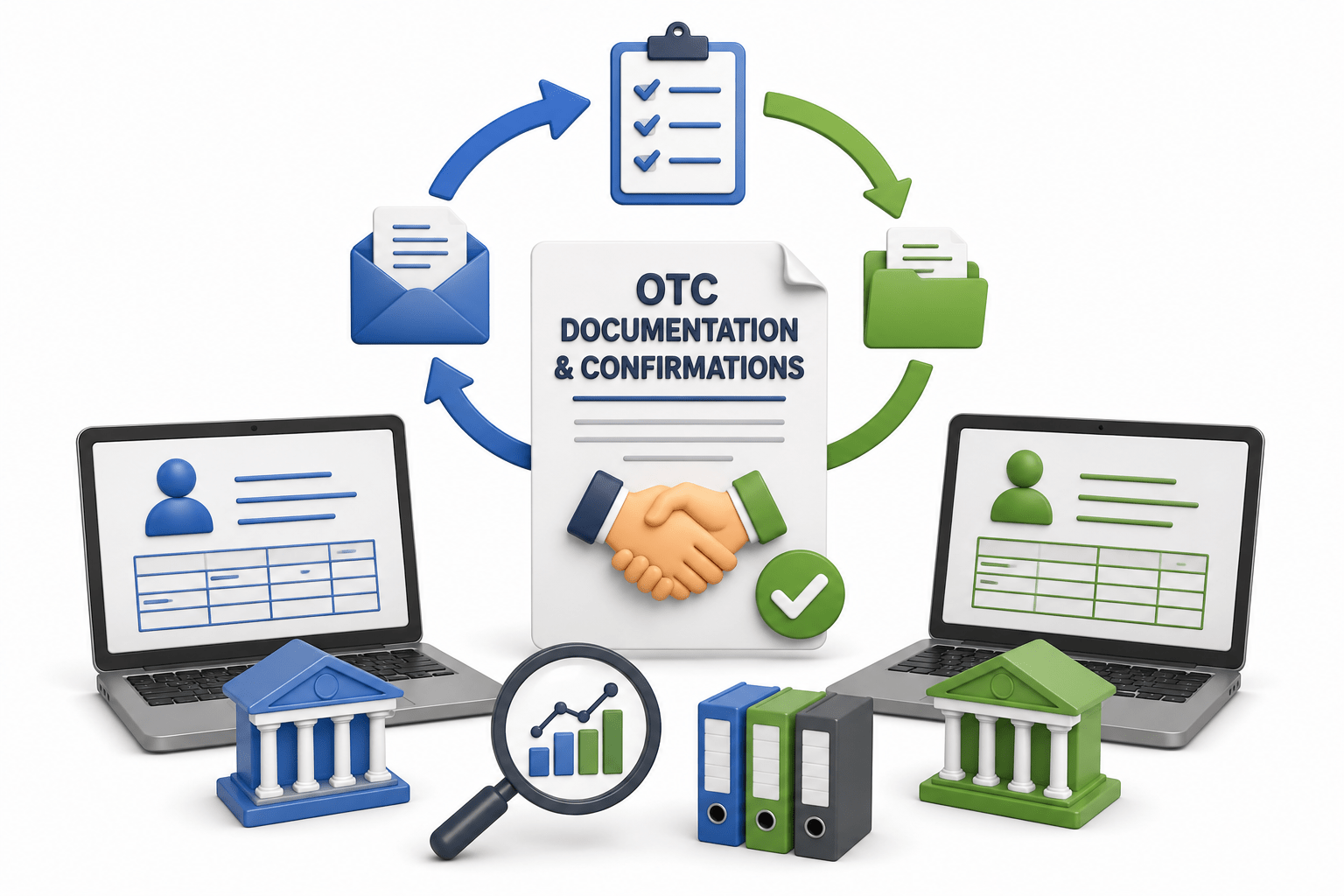
OTC Documentation & Confirmation

Learning Outcome
5
Understand the importance of timely matching.
4
Identify matched and unmatched trades.
3
Verify trade details between parties.
2
Describe the matching workflow stages.
1
Explain the purpose of trade matching.
Trade Execution

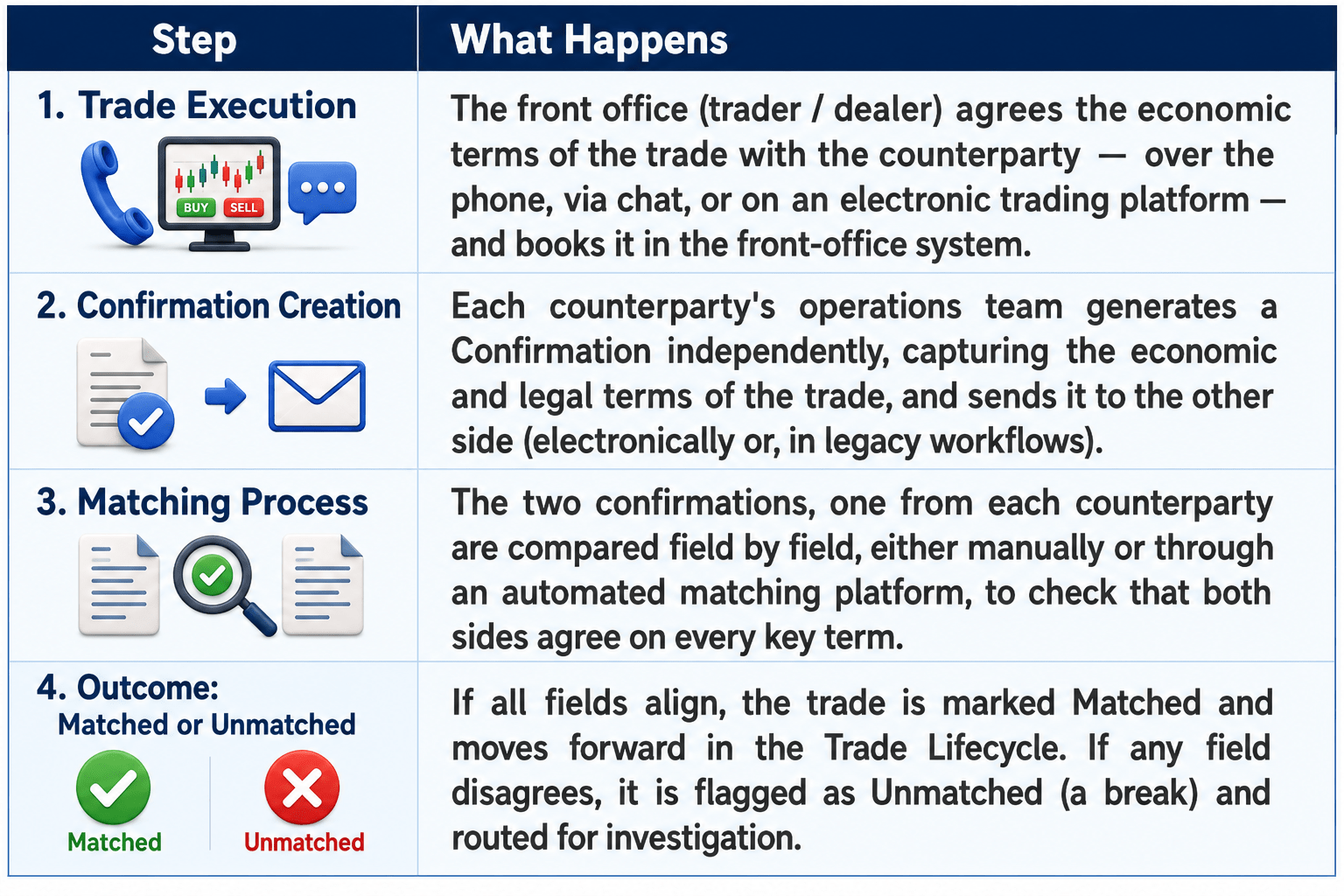
Trade Execution The process begins when the front office agrees the economic terms of a trade with the counterparty — whether by phone, electronic chat, or an execution platform. This is the moment the trade legally comes into existence in economic terms, even though the formal paperwork is still to follow .
Confirmation Creation
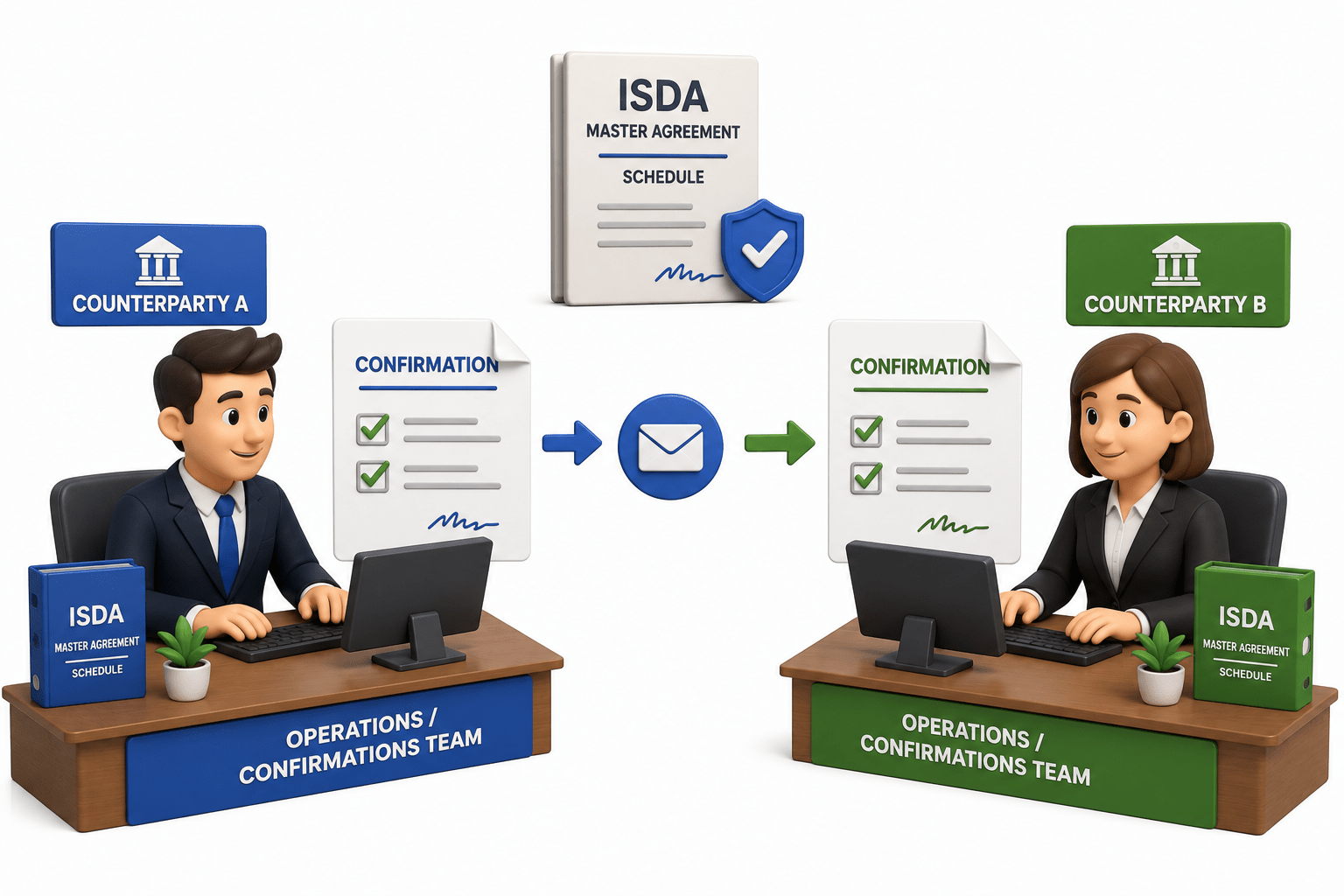
Confirmation Creation After execution, each counterparty's operations or confirmations team independently drafts a Confirmation capturing both the economic and legal terms of the trade, referencing the ISDA Master Agreement and Schedule already in place between them. This Confirmation is then sent to the other side — increasingly through electronic platforms, though some relationships still rely on SWIFT messages or in legacy cases.
Matching Process
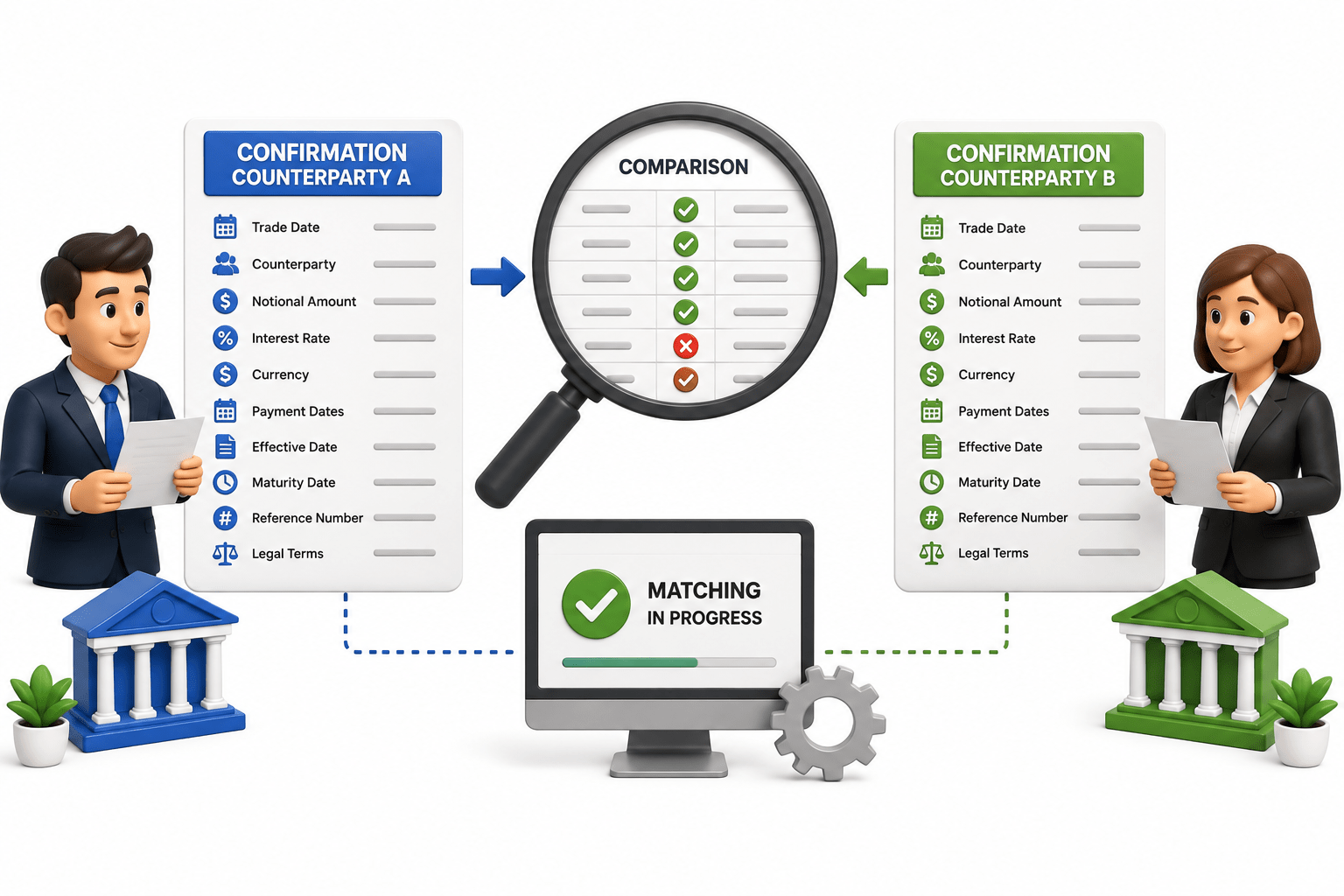
Matching Process Once both sides have generated their Confirmations, the two versions are compared, field by field, to check that they agree on every economic and legal term. This comparison can be performed manually by operations staff or, more commonly today, through an automated matching platform that flags any field where the two Confirmations disagree.
Matched vs Unmatched Trades
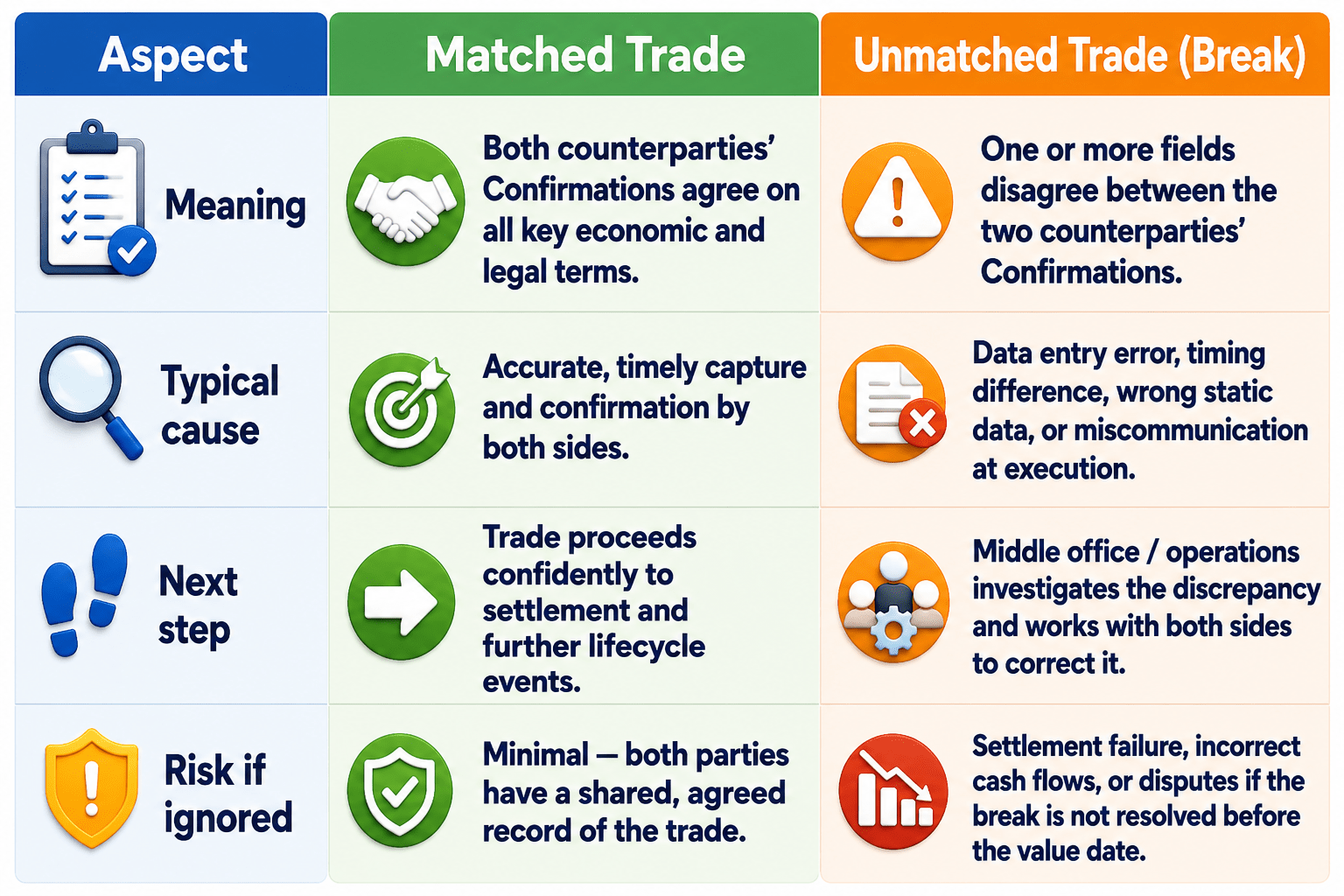
The full sequence, from execution through to a matched or unmatched outcome, is summarised below:
Summary
5
Accurate matching reduces risk.
4
Matched trades settle; breaks are corrected.
3
Matching compares both parties’ details.
2
Confirmation records trade details.
1
Matching starts after trade execution.
Quiz
What is the first step in the matching workflow?
A. Settlement
B. Trade execution
C. Margin calculation
D. Reconciliation

Quiz-Answer
What is the first step in the matching workflow?
A. Settlement
B. Trade execution
C. Margin calculation
D. Reconciliation
