

Standing Settlement Instructions

Security & Static Data


Learning Outcome
5
Ensure secure and accurate settlements.
4
Understand audit trail importance.
3
Describe the SSI approval process.
2
Understand Maker-Checker roles.
1
Explain the purpose of SSIs.
What are Standing Settlement Instructions?
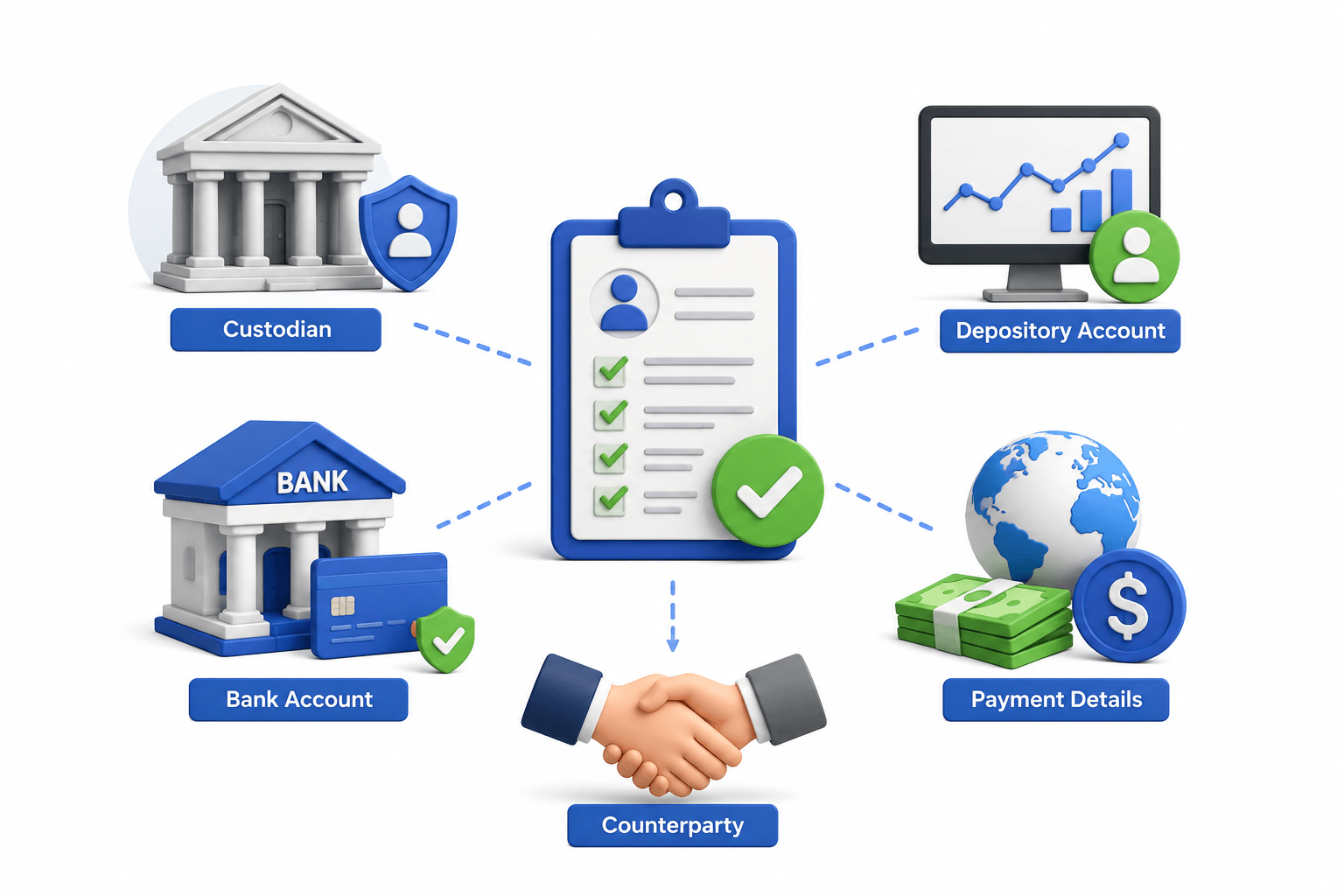
A Standing Settlement Instruction (SSI) is a standing (pre-approved and reusable) record that specifies the custodian, depository account, bank account, and payment details a counterparty uses to receive securities and cash in a particular currency and market. Once set up and approved, it is used automatically for every future trade with that counterparty in that market, instead of being re-keyed trade by trade.
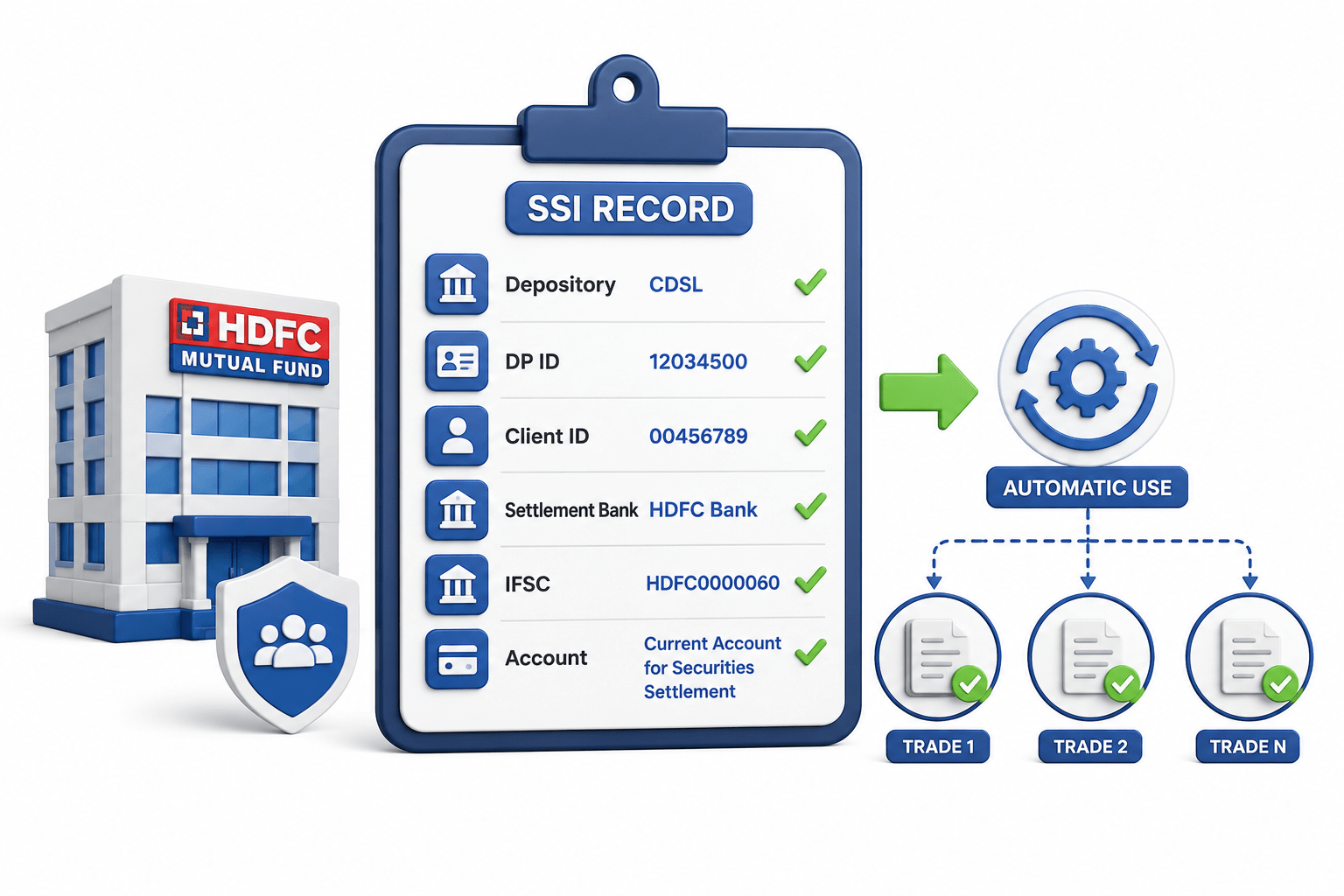
Example: HDFC Mutual Fund's SSI record for INR government bond trades settling through CDSL might read: Depository – CDSL, DP ID – 12034500, Client ID – 00456789, Settlement Bank – HDFC Bank, IFSC – HDFC0000060, Account – Current Account for Securities Settlement. Every future government bond trade with HDFC Mutual Fund automatically picks up these details — the operations team does not retype them each time.
Maker and Checker Roles
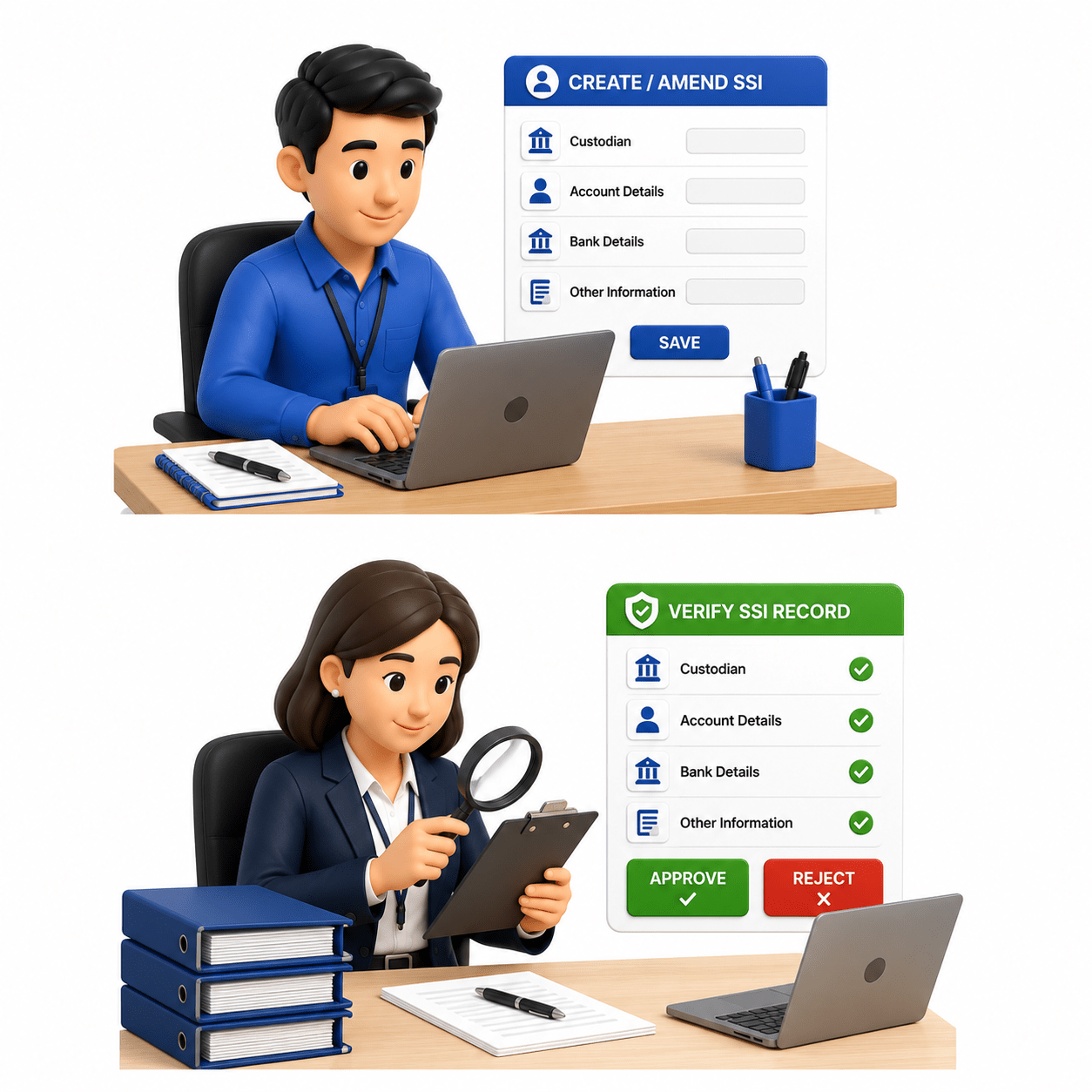
The Maker is the person who creates or amends an SSI record, entering the custodian, account, and bank details based on documentation received from the counterparty.
The Checker is a different, authorised person who independently verifies those details against the source documents and either approves or rejects the entry — the Checker cannot be the same person as the Maker.

Example: At a custodian bank in Mumbai, a Middle Office associate (called the Maker) enters the Standing Settlement Instructions (SSI) for a foreign portfolio investor using the details given in the account opening form from the client’s global custodian.
Then a senior officer (called the Checker) reviews the same form separately to confirm that the DP ID, bank account, and SWIFT code are all correct. Only after this double‑check is the SSI approved and ready to be used for future trades, ensuring accuracy and avoiding mistakes.
Approval Workflow
An approval workflow is the structured, sequential process — typically request, data entry, independent verification, sign-off, and activation — through which a proposed SSI moves before it becomes available for trade settlement.
The approval workflow is the defined sequence of steps an SSI record passes through from creation to activation.

Request:
The client or relationship manager sends the SSI details along with documents like a custodian letter, cancelled cheque, and SWIFT confirmation.
Maker entry:
The operations maker enters these details into the SSI system.
Approval Workflow

Activation:
Once approved, the SSI becomes active and ready to use for future settlements.
Checker verification:
The checker reviews each field carefully and matches it with the original documents.
Sign-off:
The checker either approves the SSI or sends it back for correction.
Audit Trail
An audit trail is a time‑stamped log that automatically records every action on an SSI record like creation, change, approval, rejection, or deactivation — along with the user’s identity, so the complete history can be reviewed anytime later.


Example: During a SEBI inspection, a custodian is asked to demonstrate that a client's SSI was not altered without authorisation before a large settlement. The operations team pulls the audit trail, which shows the Maker's entry timestamp, the Checker's approval timestamp, and confirms no changes were made between approval and the settlement date.
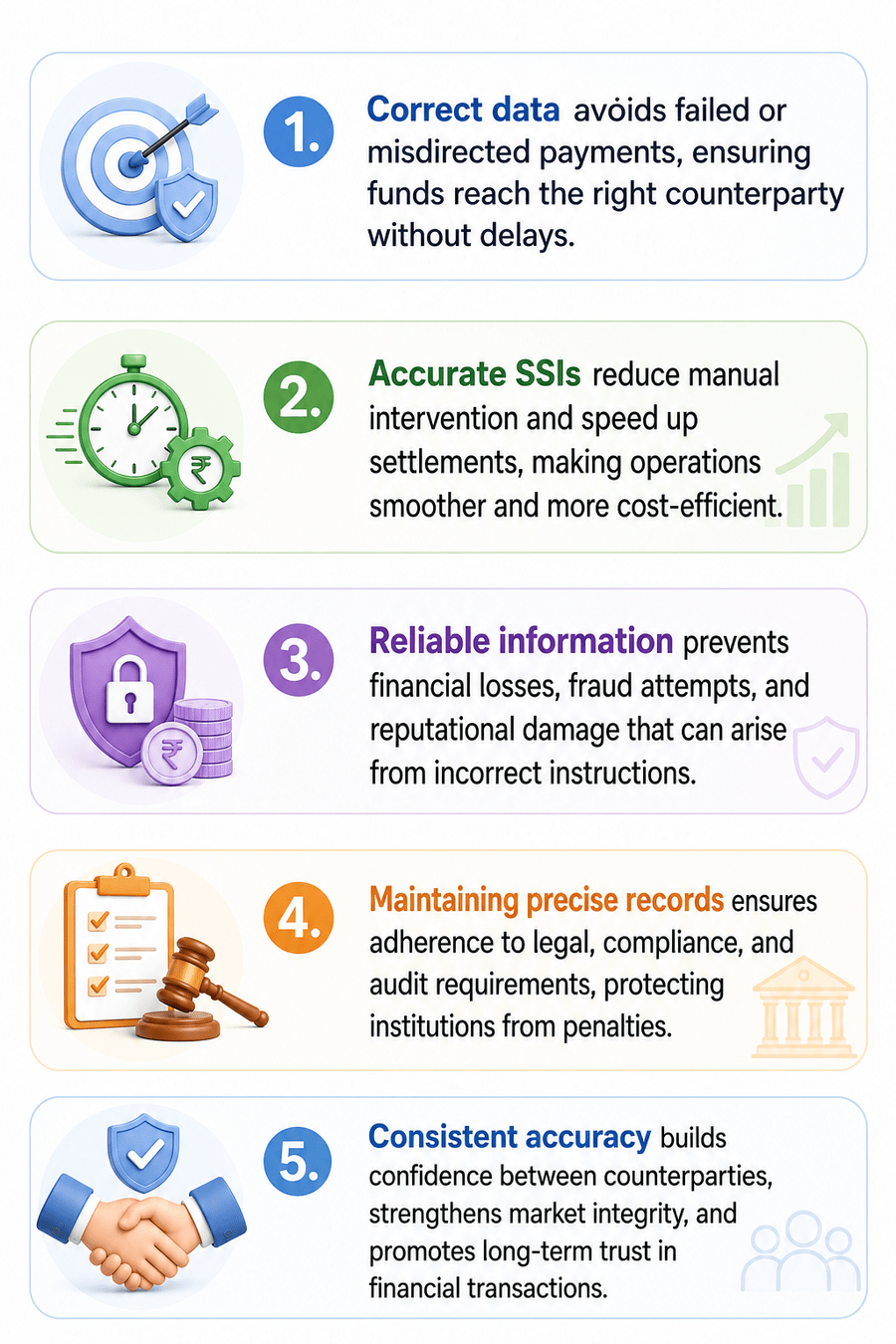
Importance of Accurate Data
Importance of Accurate Data
Summary
5
Accurate SSIs ensure secure settlements.
4
Audit trails track all SSI actions.
3
Approval validates SSIs before activation.
2
Maker-Checker ensures independent verification.
1
SSIs provide pre-approved settlement details.
Quiz
Who is responsible for independently verifying and approving an SSI record?
A. The Maker
B. The Trader
C. The Checker
D. The Client

Quiz-Answer
Who is responsible for independently verifying and approving an SSI record?
A. The Maker
B. The Trader
C. The Checker
D. The Client