Reasoning Prompt



Learning Outcome
4
Recognize when reasoning prompts are necessary versus when a direct instruction is enough.
3
Apply reasoning prompts to solve multi-step or logic-based problems.
2
Identify the structure of a Chain-of-Thought prompt.
1
Understand what Reasoning Prompts are and why they improve AI accuracy.
Before we go further
Let's recall where we left off.

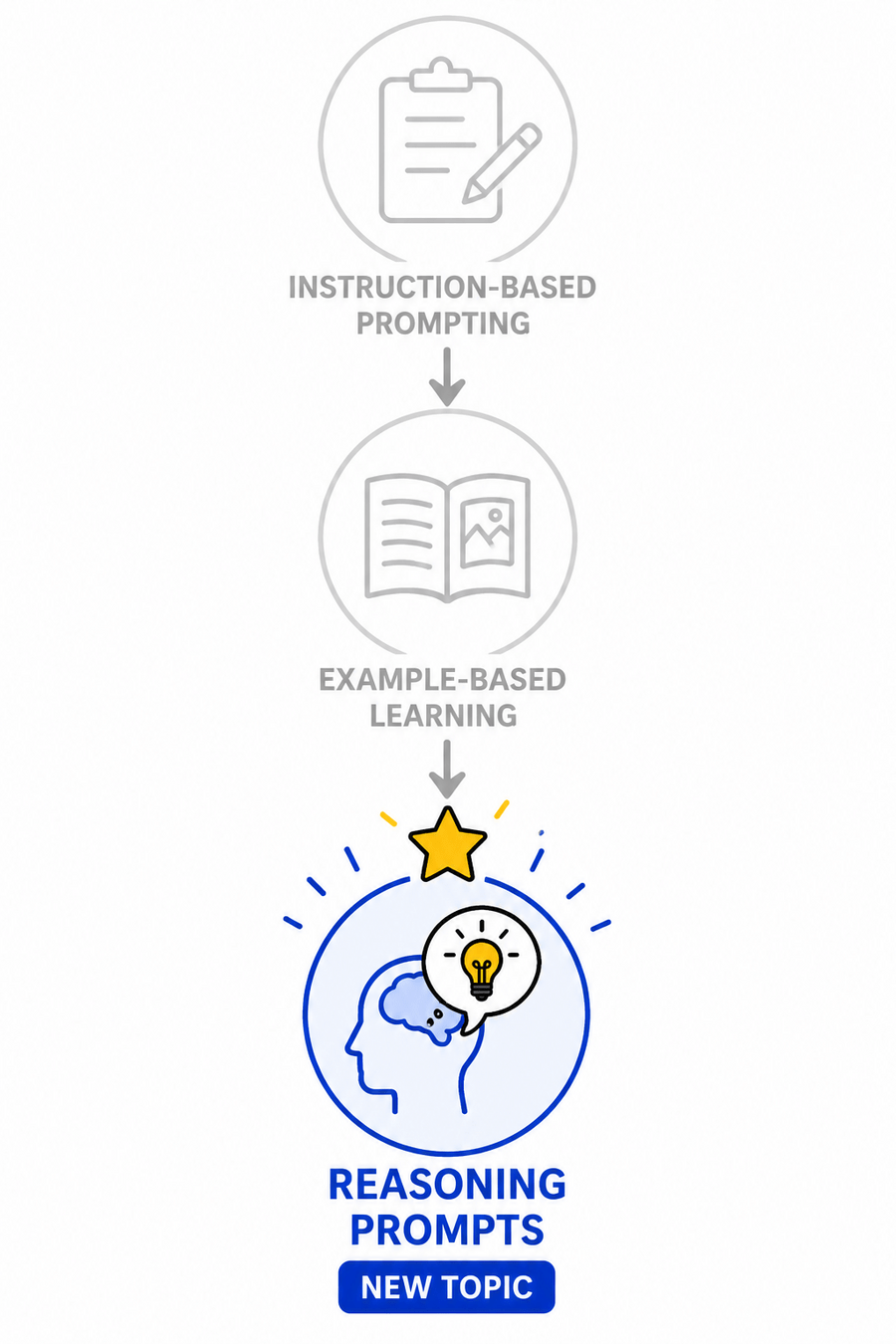
Instruction-Based Prompting – direct commands work well for simple, single-step tasks.

Example-Based Learning – showing examples helps AI match a specific style or pattern.
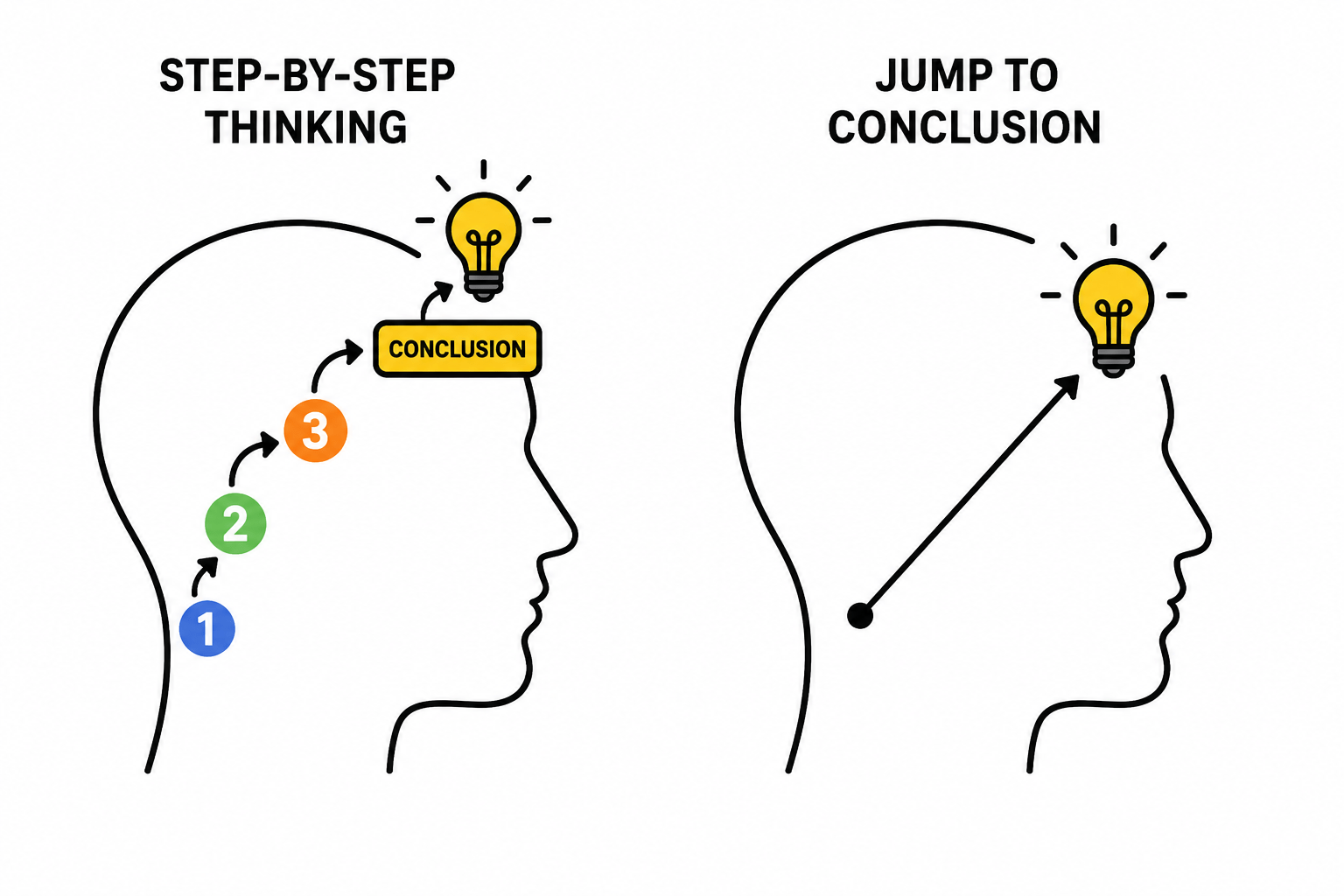
But some tasks aren't simple or stylistic — they involve logic, math, or multi-step decisions, where jumping straight to an answer often leads to mistakes.
Think About It
Previously, we imagined two students — one jumping straight to an answer, one showing step-by-step working. The one who showed their steps got it right far more often.

Can AI reliably solve a complex, multi-step problem by jumping straight to a final answer, without reasoning through it?
A small thought before we go technical
Expected Answer
No, not always.
Just like a student shows their work, AI solves complex tasks better when guided step by step.
Now, let's explore Reasoning Prompts.
What Are Reasoning Prompts?
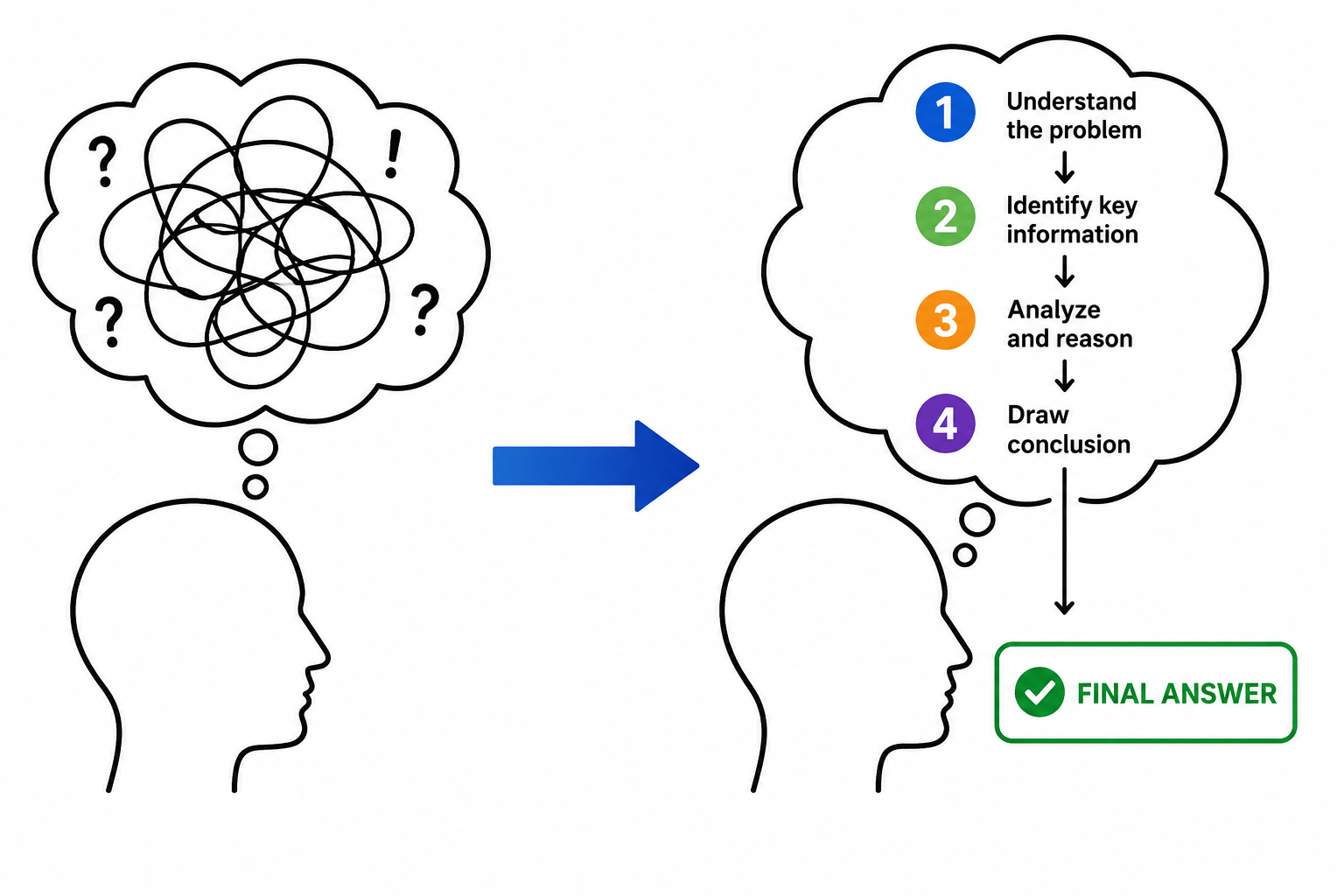
This is typically done by asking the AI to "think step-by-step" or by explicitly structuring the problem into sequential parts.

Definition
Reasoning Prompts (also called Chain-of-Thought Prompting) are prompts that guide the AI to break down its thinking into intermediate steps before arriving at a final answer, rather than generating the answer directly.
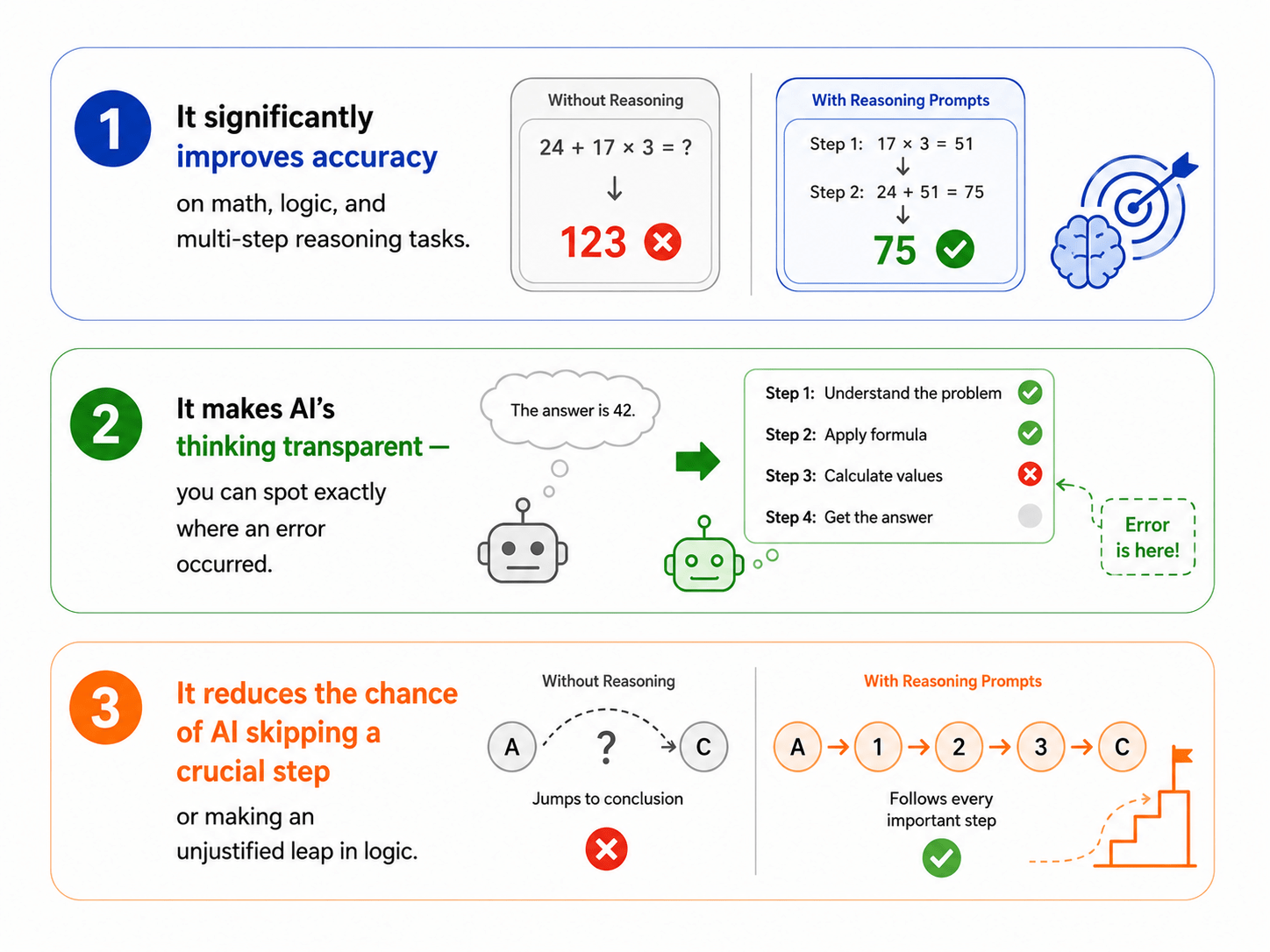
Why it matters:
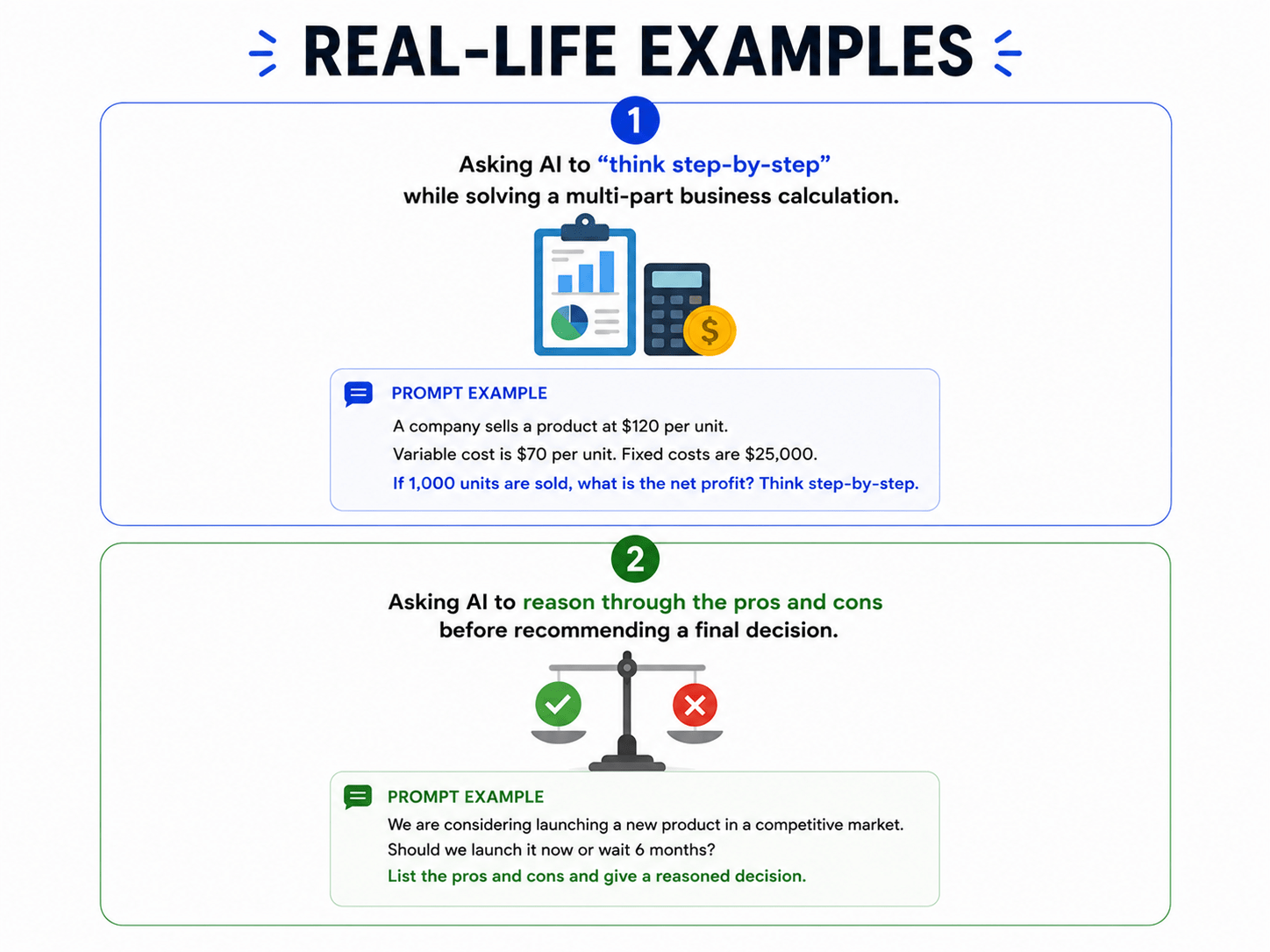
Technique 1: Chain-of-Thought (CoT) Prompting
Explicitly instruct the AI to "think step-by-step" or "explain your reasoning before answering."
This simple phrase alone often dramatically improves accuracy on complex problems.

Example: "A store sells shirts at $20 each with a 15% discount on orders of 5+. What's the total cost for 6 shirts? Think step-by-step."
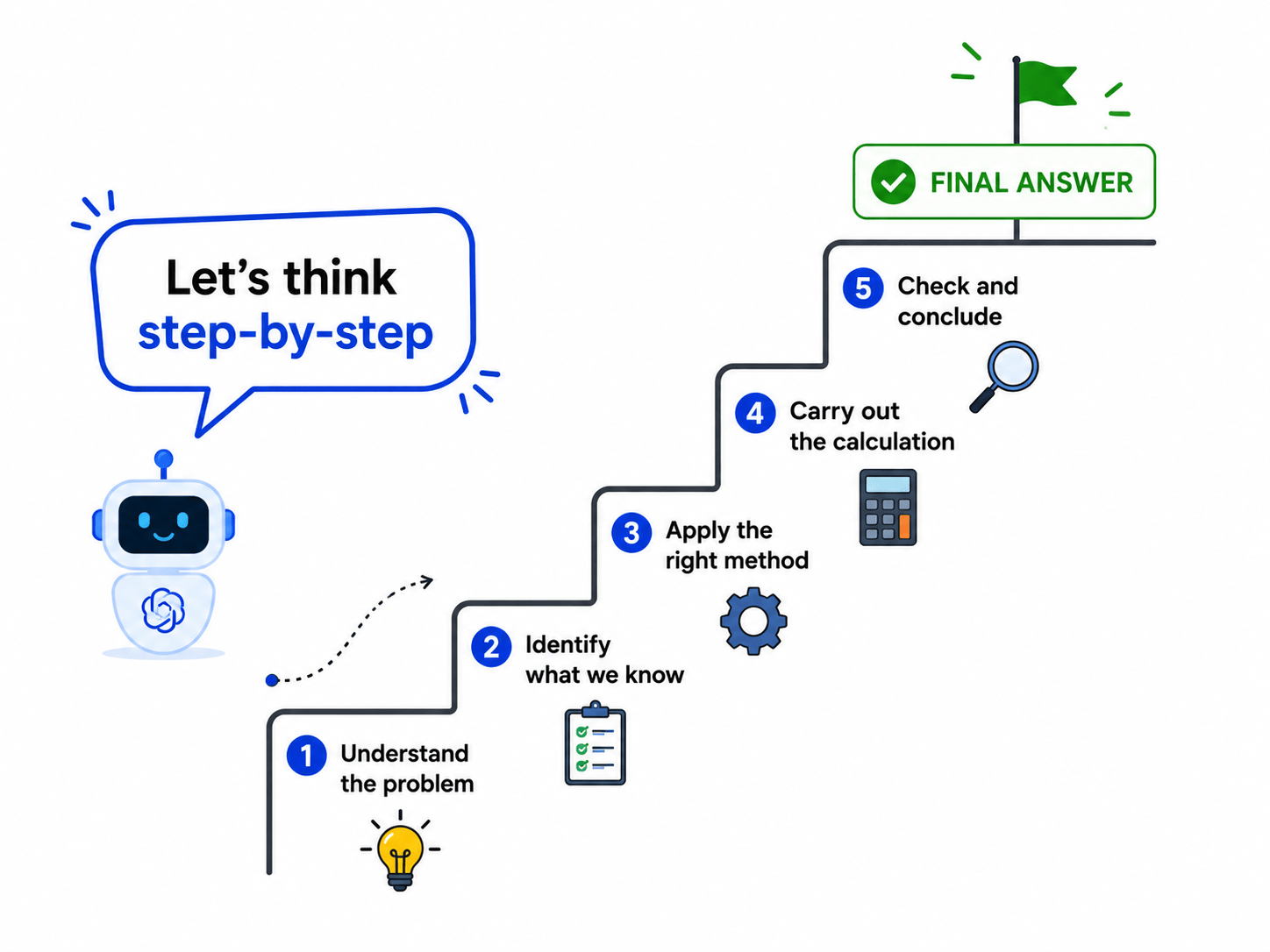
Technique 2: Step-by-Step Instructions
Explicitly break the task into numbered steps within the prompt itself, guiding the AI through each part of the process.
This is useful when the task naturally has clear stages.
Example: "Step 1: Identify the total revenue. Step 2: Subtract expenses. Step 3: Calculate the profit margin."
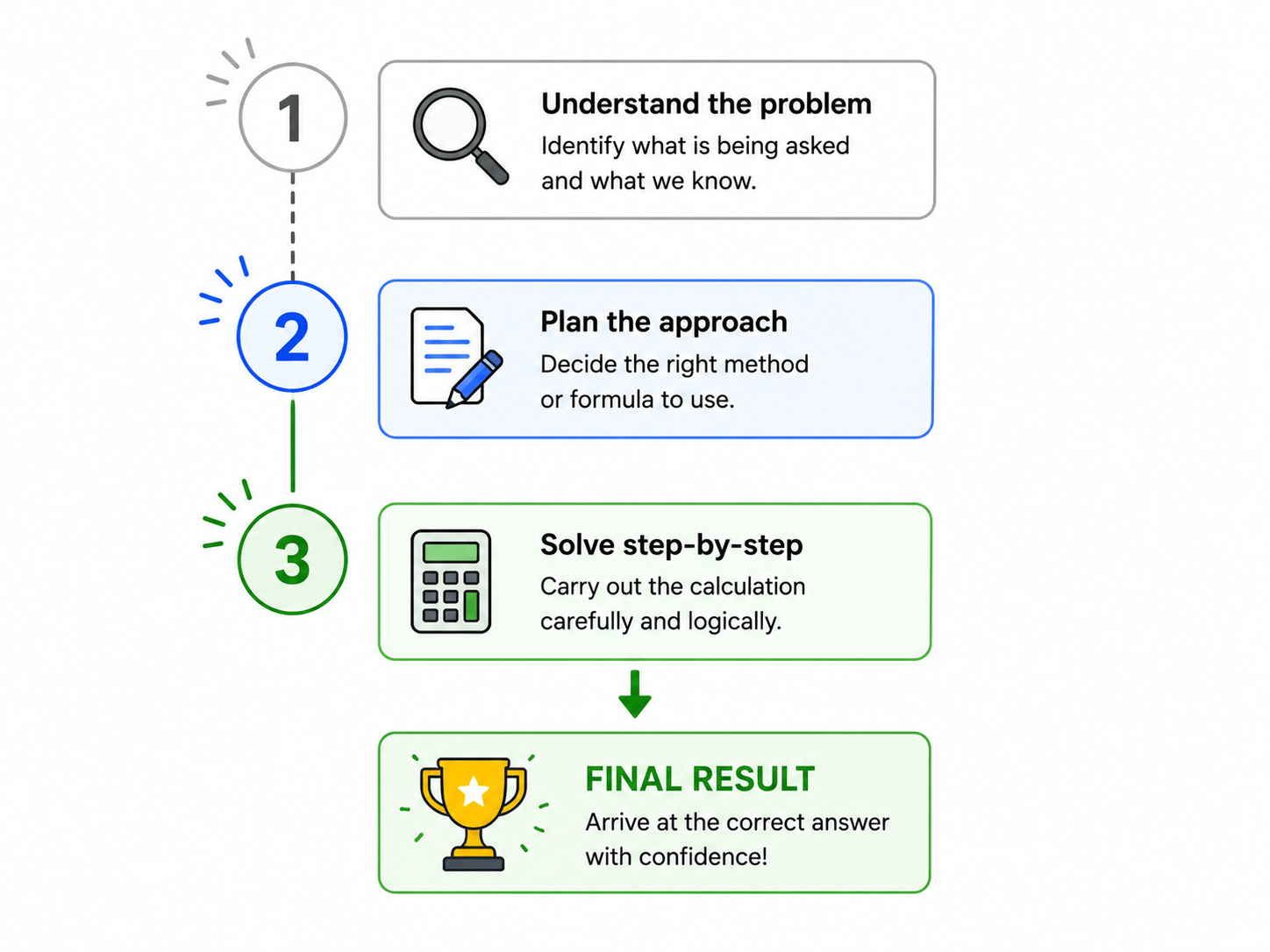
Technique 3: Self-Verification
Ask the AI to check its own answer after reasoning through the problem, catching potential errors before finalizing.
Example: "Solve this problem step-by-step, then double-check your final answer for accuracy."
When Reasoning Prompts Are Necessary
Direct Prompt vs. Reasoning Prompt (Comparison)
How Reasoning Prompts Work (Core Mechanism)
Applications of Reasoning Prompts
Daily Life Applications
Summary
4
Ward’s method keeps clusters compact.
3
Cut the tree to find optimal clusters.
2
Dendrogram shows merge history and distances.
1
Bottom-up clustering (each point → one cluster → merge).
Quiz
What does dendrogram height represent?
A. Number of data points
B. Distance between clusters
C. Processing time
D. Accuracy

Quiz-Answer
What does dendrogram height represent?
A. Number of data points
B. Distance between clusters
C. Processing time
D. Accuracy