Instruction-Based Promptin


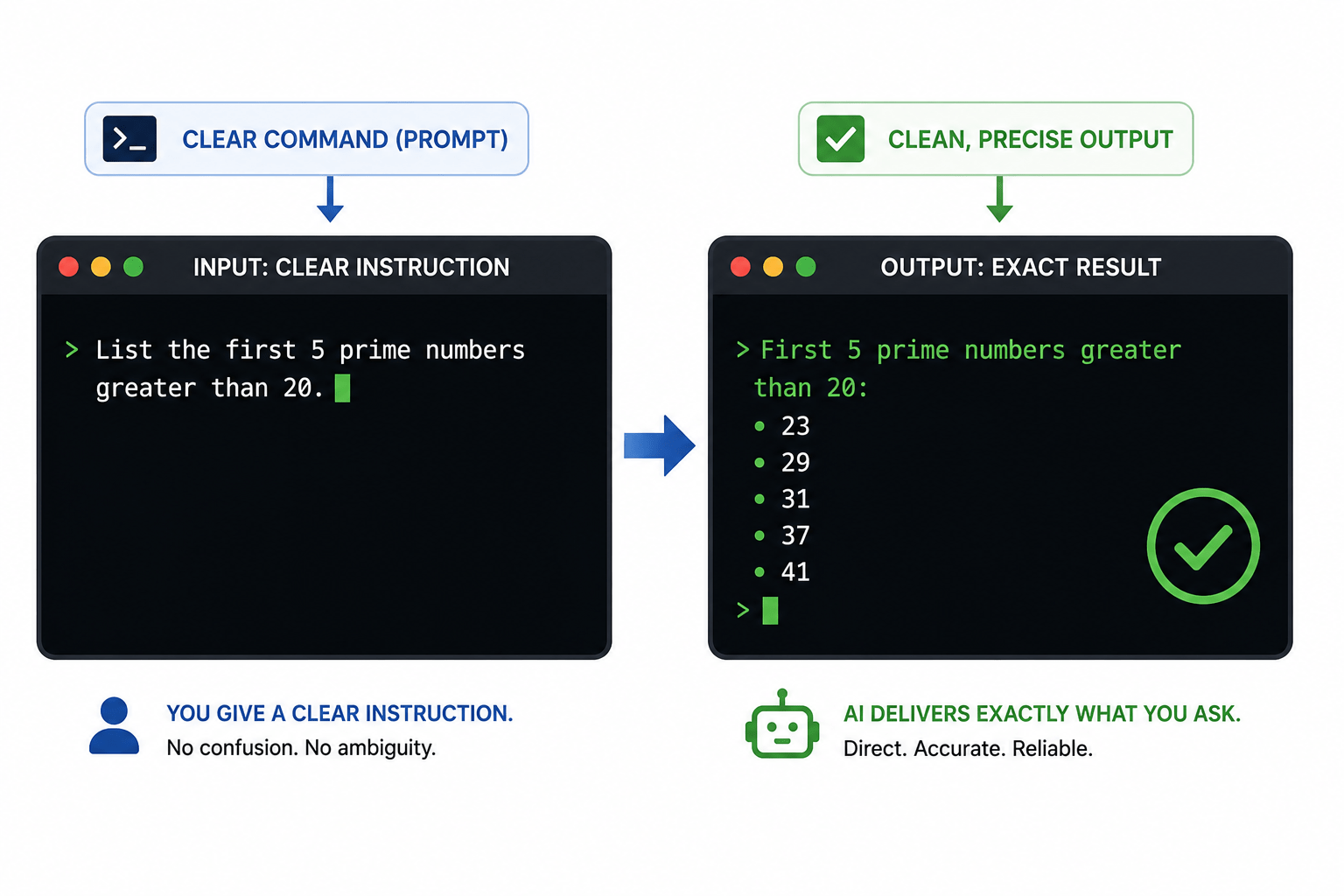

Learning Outcome
4
Know when to use it.
3
Apply instruction-based prompting for direct, task-oriented outputs.
2
Identify the structure of an effective instruction-based prompt.
1
Understand Instruction-Based Prompting.
Let's quickly recall what we've built so far.
Prompt Components
Instruction, Context, Role, Format, Constraints, and Examples.
Prompt Design Principles
Clarity, Specificity, Structure & Order, Iteration, and Sufficient Context.
We've learned the building blocks and the design rules.
Now let's look at one of the most common and powerful prompting techniques built entirely around one component: the Instruction itself.
Imagine a drill sergeant giving orders to new recruits.
The sergeant doesn't say "maybe try to move a bit faster if you feel like it." The sergeant says:
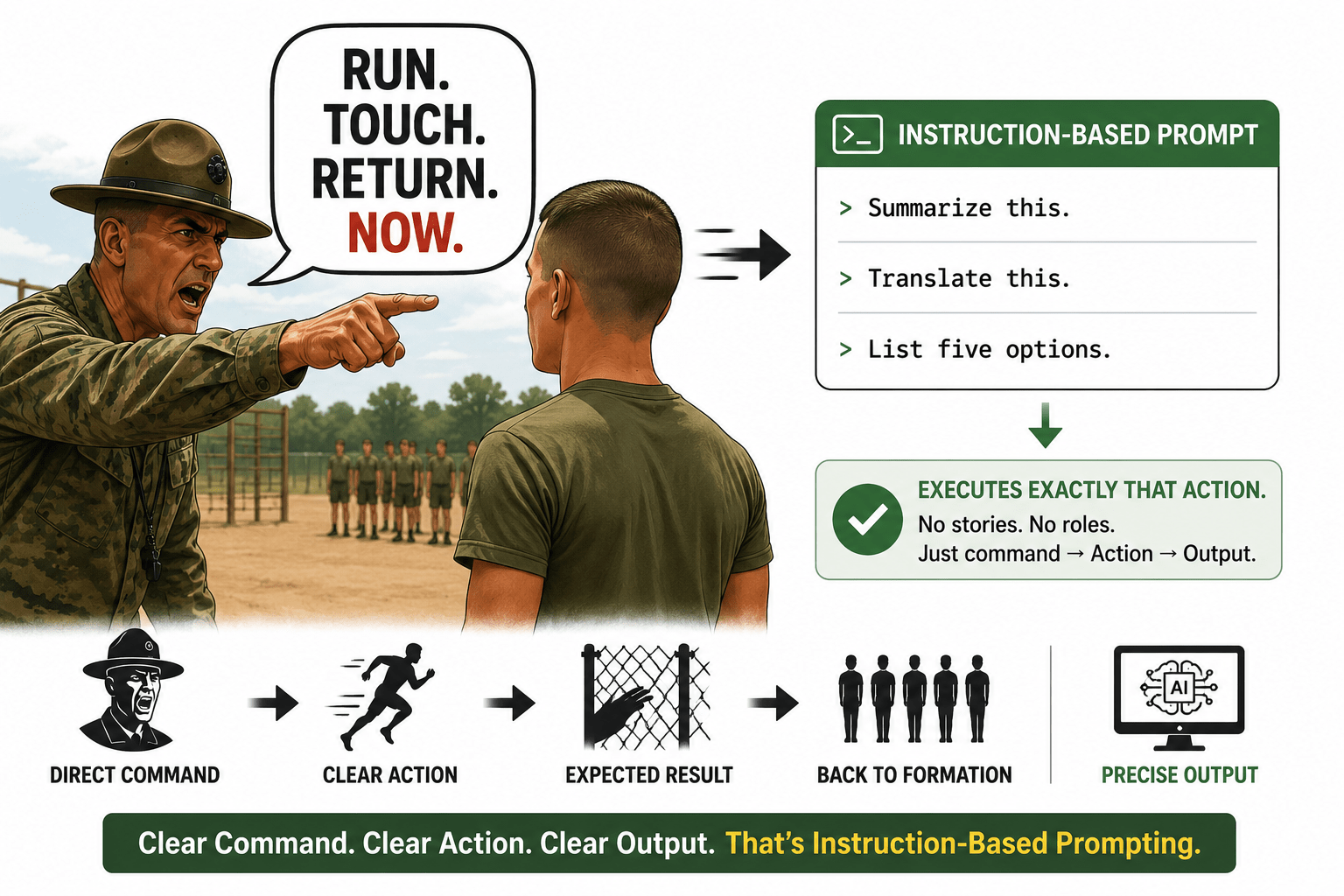
Direct. Clear. Action-first. No ambiguity, no room for interpretation — just a command and an expected action.
Instruction-Based Prompting works the same way. You give the AI a direct command — "Summarize this," "Translate this," "List five options" — and it executes exactly that action, without needing a story, a role, or a long explanation.
Think About It
Previously, we imagined a drill sergeant — giving short, direct commands with no room for misinterpretation, and getting an exact action in return.

Does every prompt need a long story, a role, or extensive context to get a useful response from AI?
A small thought before we go technical
Expected Answer
NO
Just like a sergeant's command, instruction-based prompts are clear, direct, and action-focused.
Now, let's explore how they work and when to use them.
What is Instruction-Based Prompting?
Definition
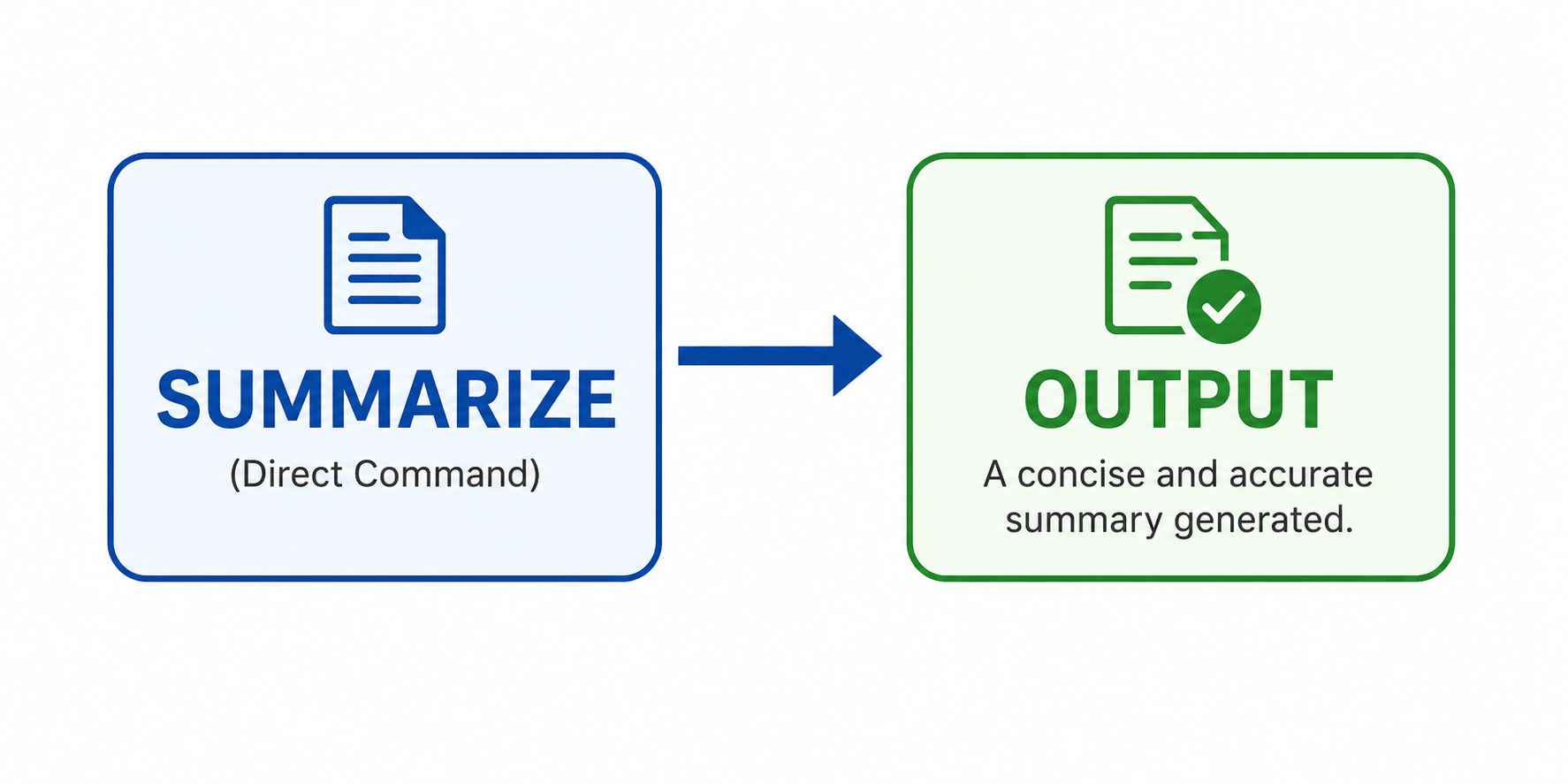
Instruction-Based Prompting is a prompting technique where the prompt is written as a direct command or action — telling the AI exactly what task to perform, without necessarily including a role, story, or extended context.
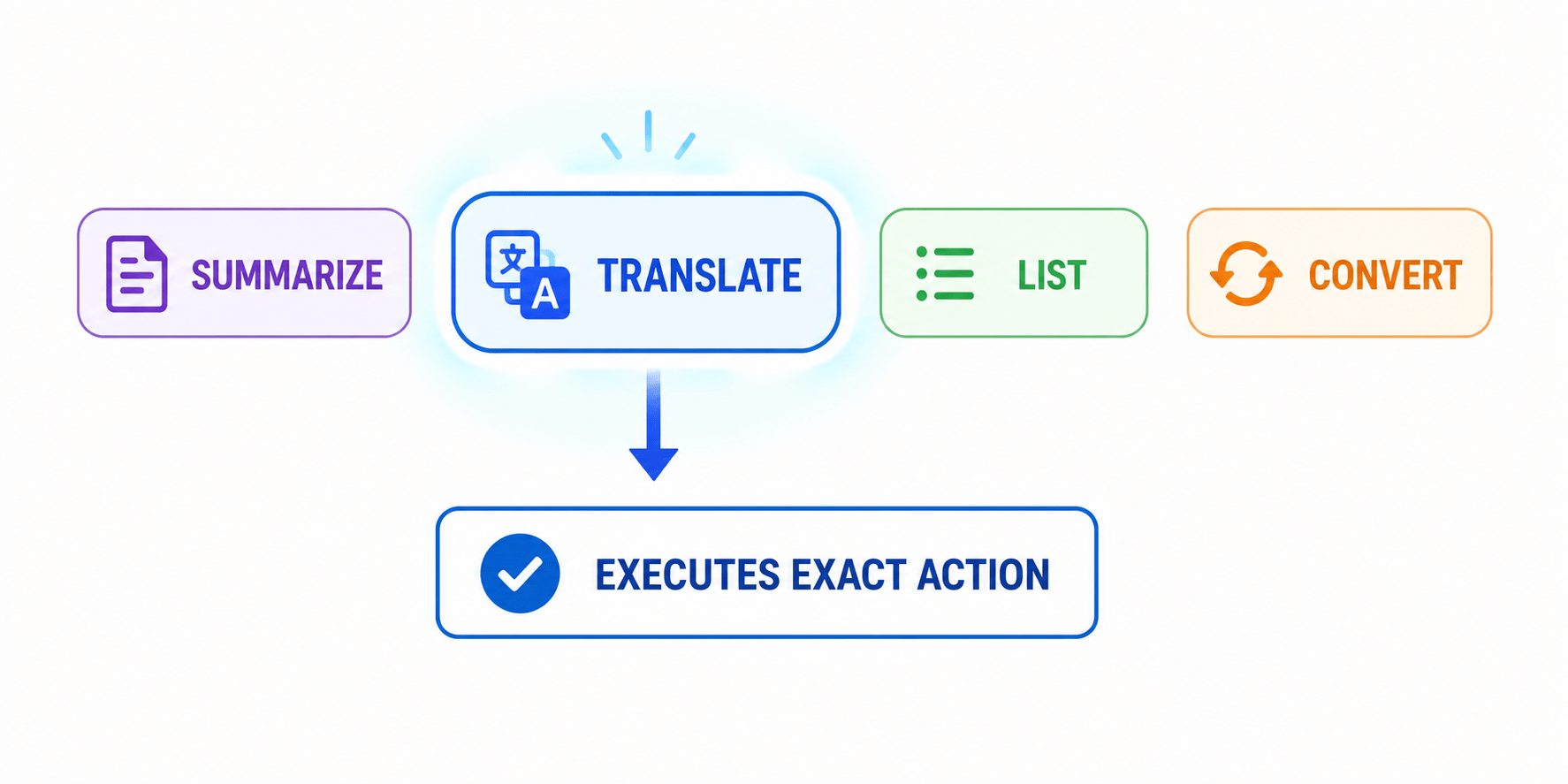
It relies heavily on the Instruction component, using strong action verbs (Summarize, Translate, List, Explain, Convert) to drive the task.
Why it matters:
Real-Life Examples
- It's the fastest, most efficient way to get straightforward tasks done.
- It reduces prompt length while still producing accurate results for simple, well-defined tasks.
- It forms the foundation most other prompting techniques (role-based, few-shot, etc.) are built on top of.
- "Translate this paragraph into Spanish."
- "List 5 pros and cons of remote work."
Key Feature 1: Action-Verb Driven
Instruction-based prompts almost always begin with a strong, specific action verb — Summarize, Translate, List, Convert, Explain, Compare.
The verb tells the AI exactly what type of operation to perform.
Example :
"Convert this paragraph into bullet points."
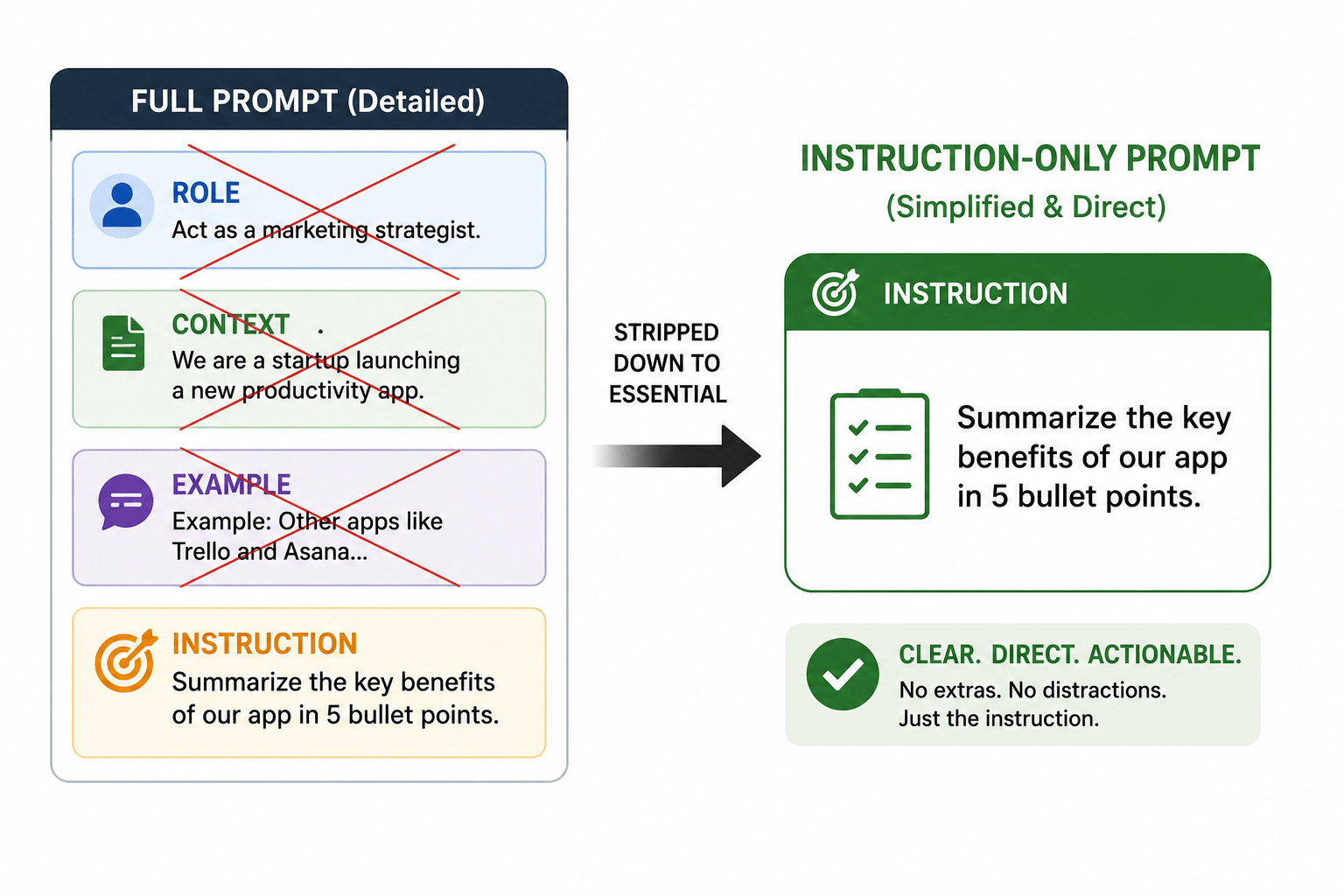
Key Feature 2: Minimal Extra Framing
Example :
Unlike role-based or narrative prompts, instruction-based prompts usually skip persona, backstory, or elaborate context — they get straight to the task.
This makes them fast to write and fast to execute.
"List the capital cities of 5 European countries." (No role or story needed.)
Key Feature 3: Best for Well-Defined, Single-Step Tasks
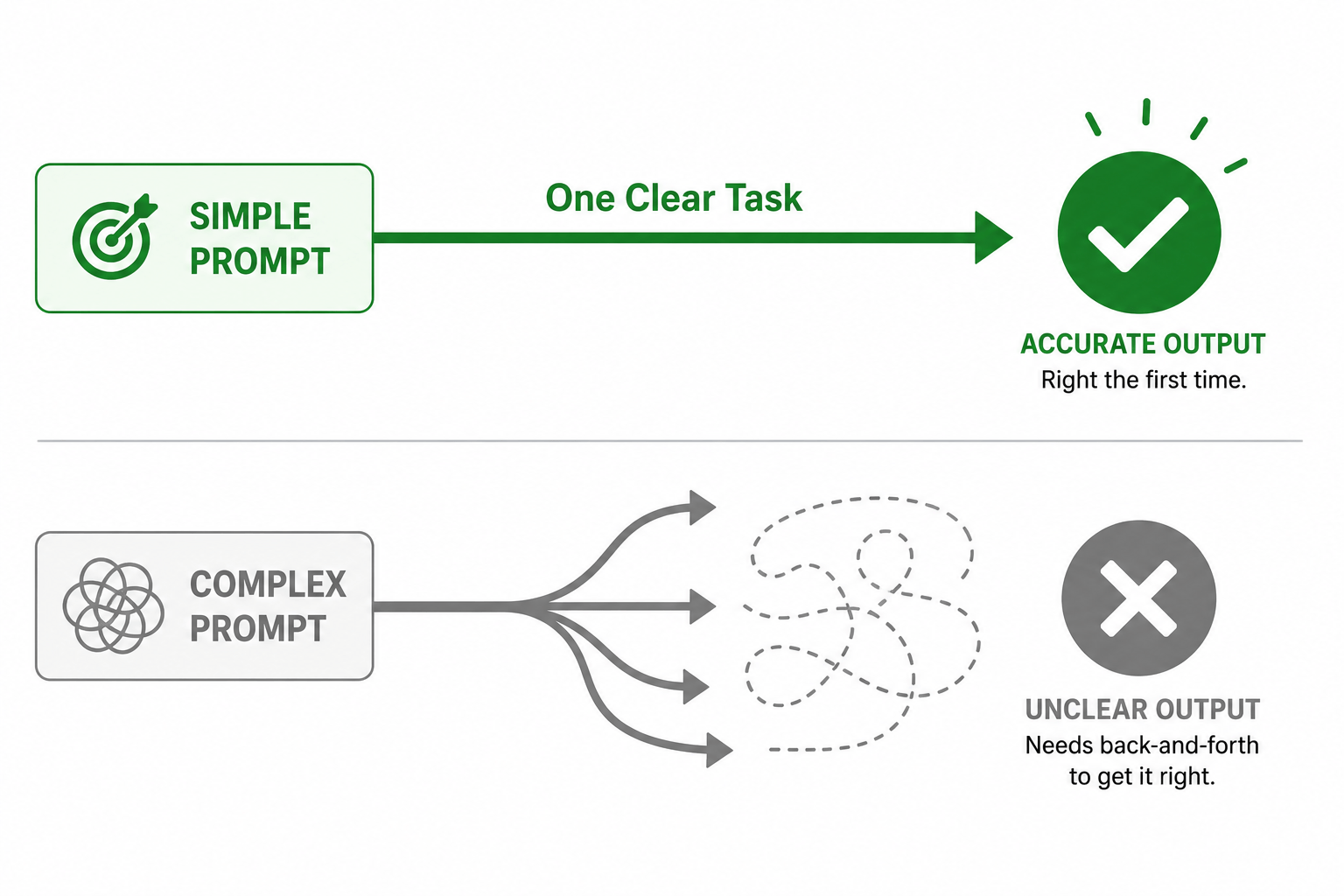
Instruction-based prompting works best when the task is clear, singular, and doesn't require creative interpretation or multi-step reasoning.
Example :
"Sort this list alphabetically" — a single, well-defined task, not a complex creative brief.
When Instruction-Based Prompting Falls Short
For complex, creative, or highly specific tasks, instruction-only prompts often produce generic results, because they lack context, role, or examples to guide tone and depth.
Example :
"Write a marketing email" (instruction-only, generic) vs. adding role, audience, and tone for a tailored result.
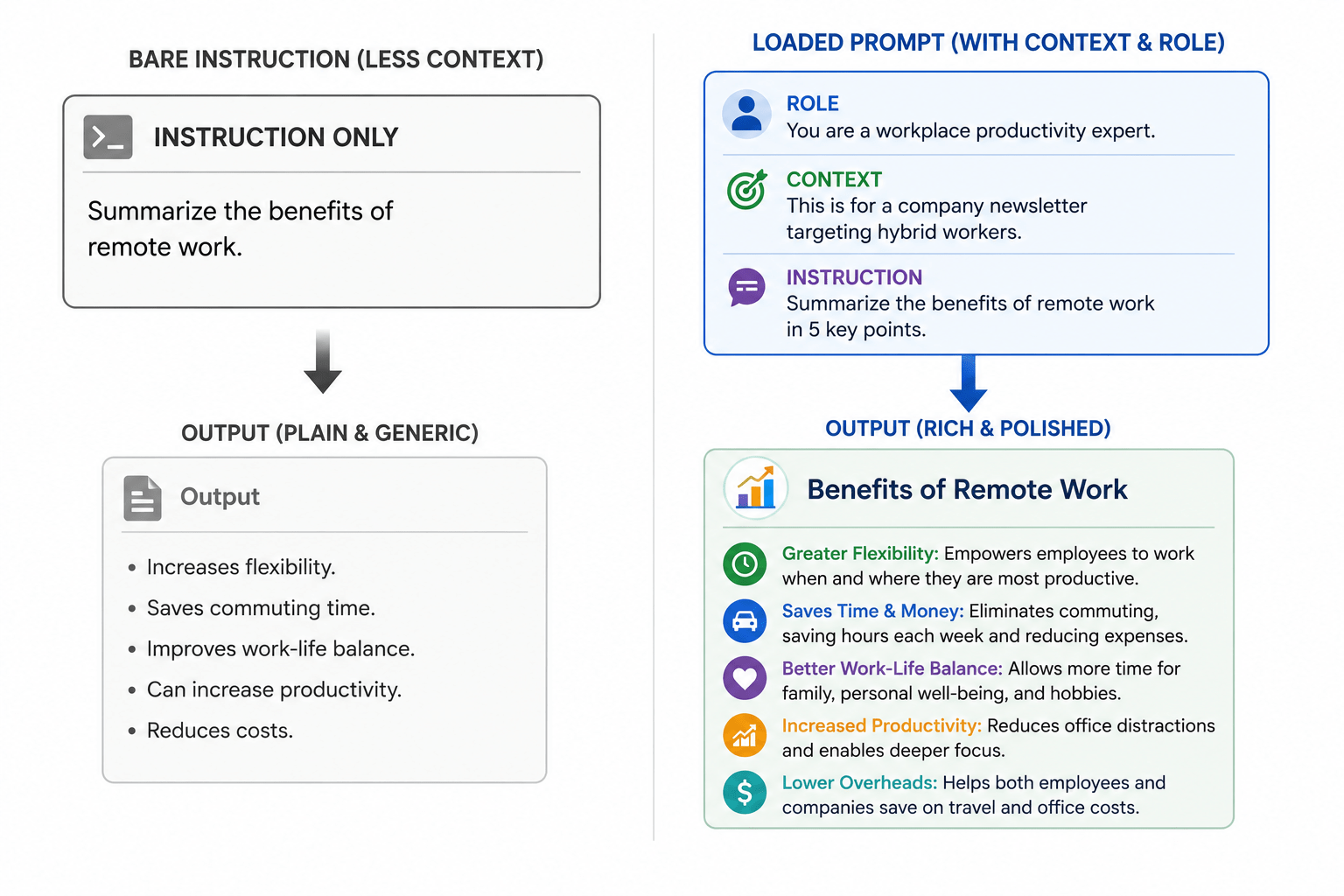
Instruction-Based vs. Fully-Loaded Prompt (Comparison)
How Instruction-Based Prompting Works (Core Mechanism)
Applications of Instruction-Based Prompting
Daily Life Applications
Summary
4
Ward’s method keeps clusters compact.
3
Cut the tree to find optimal clusters.
2
Dendrogram shows merge history and distances.
1
Bottom-up clustering (each point → one cluster → merge).
Quiz
What does dendrogram height represent?
A. Number of data points
B. Distance between clusters
C. Processing time
D. Accuracy

Quiz-Answer
What does dendrogram height represent?
A. Number of data points
B. Distance between clusters
C. Processing time
D. Accuracy