What is Prompt Engineering ?



Learning Outcome
5
Recognize real-world use cases of Prompt Engineering across roles.
4
Explain how prompt quality directly affects AI output quality.
3
Differentiate between a vague prompt and a well-engineered one.
2
Identify the key components of a well-structured prompt.
1
Define Prompt Engineering and explain why it matters.
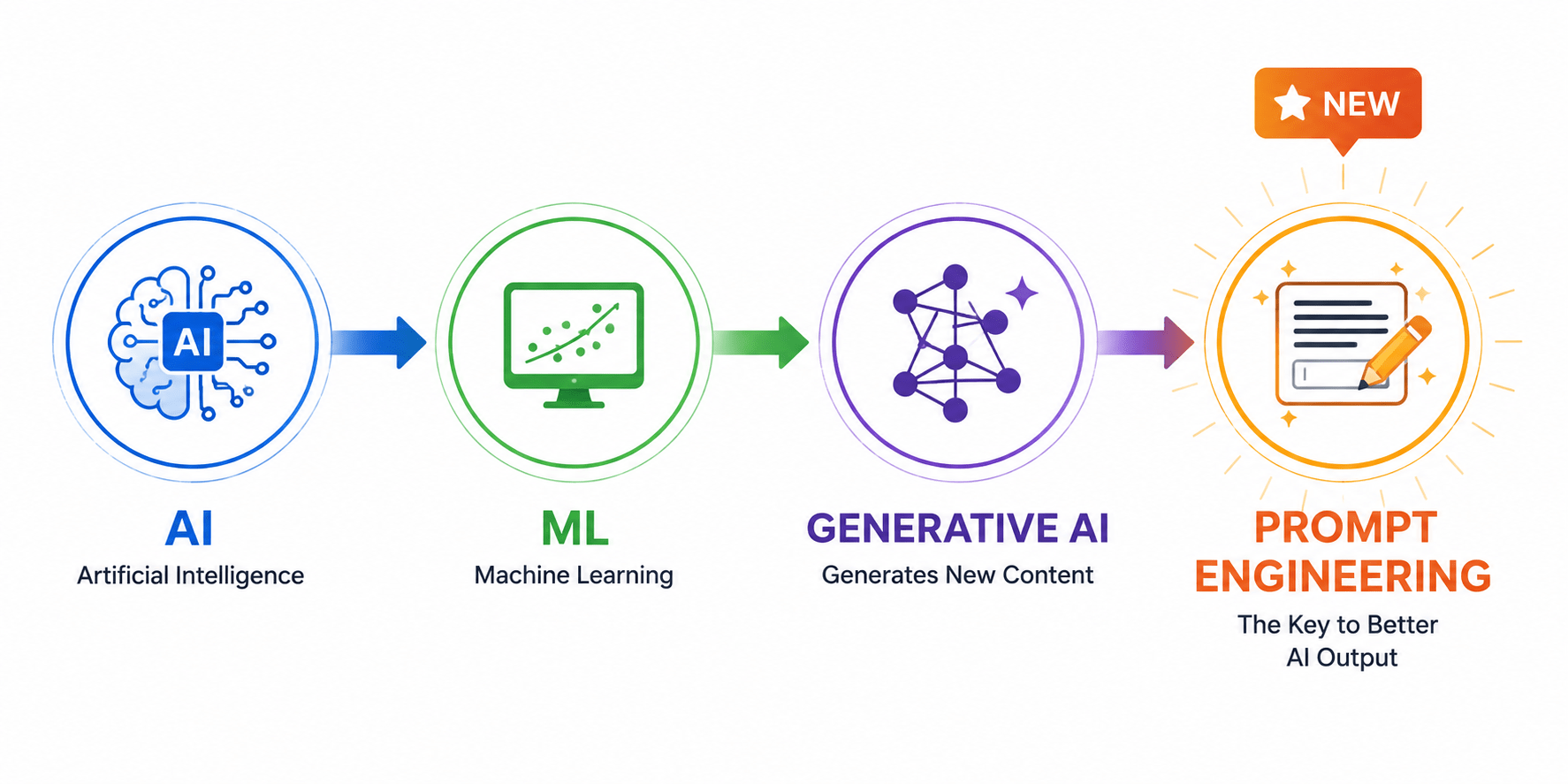
Before learning Prompt Engineering, let's quickly recall:
AI – systems that perform tasks requiring human intelligence.
Machine Learning – systems that learn patterns from data to predict outcomes.
Generative AI – a branch of ML that creates new content (text, images, code) based on learned patterns.
Generative AI can create almost anything — but it needs clear human instructions to know what to create.

Imagine you're at a restaurant.
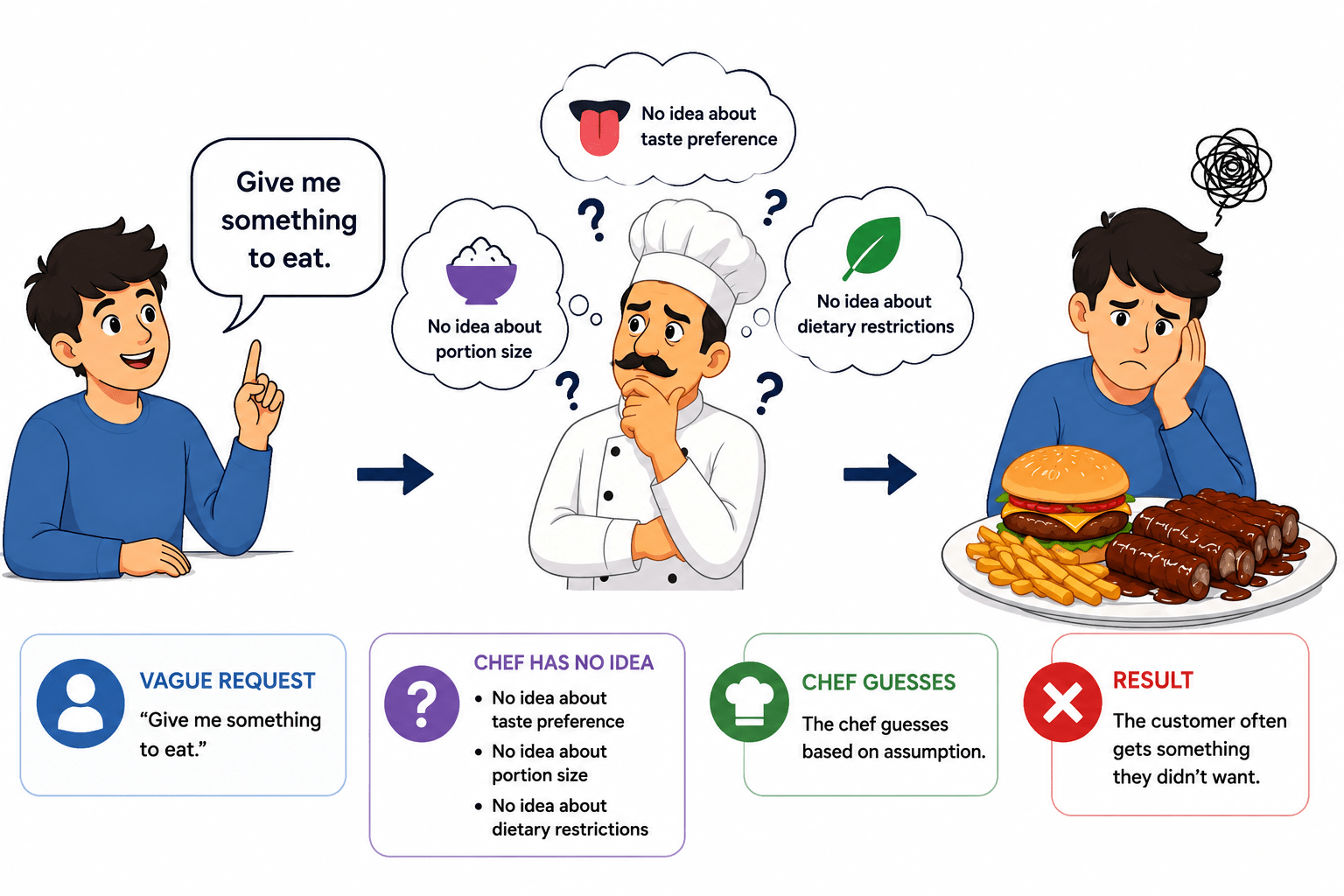
The customer just says
Vague Customer = Bad Prompt
Scenario 1
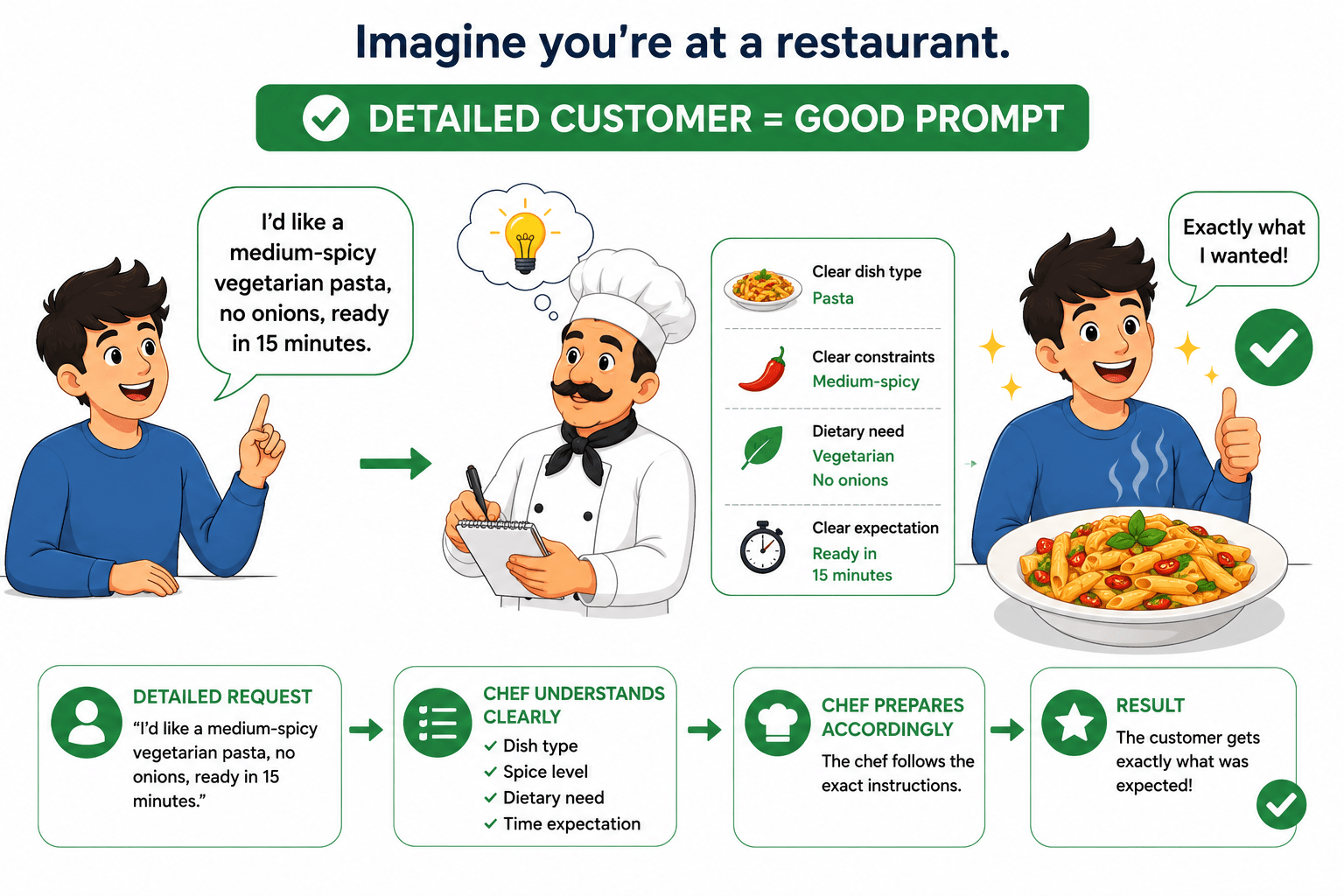
Scenario 2
The customer just says
Detailed Customer = Good Prompt
Similarly, Prompt Engineering is the skill of asking the AI clearly and specifically — like the detailed customer — so it "cooks" exactly the output you want, instead of guessing.
Think About It

A vague order left the chef guessing, while a detailed order got you exactly what you wanted.
Can AI read your mind and know exactly what you want, without you specifying it?
Expected Answer: No


Exactly! This is where Prompt Engineering comes in. It's not a one-time trick — it's a repeatable skill for "ordering" from AI, just like a skilled customer knows exactly how to order every time, for any dish.
But... How does simply changing the way we phrase a request completely change the quality of AI's output?
The restaurant was just an easy example to help us understand the idea.

Now let's understand what Prompt Engineering really is, in the world of AI.
What is Prompt Engineering?
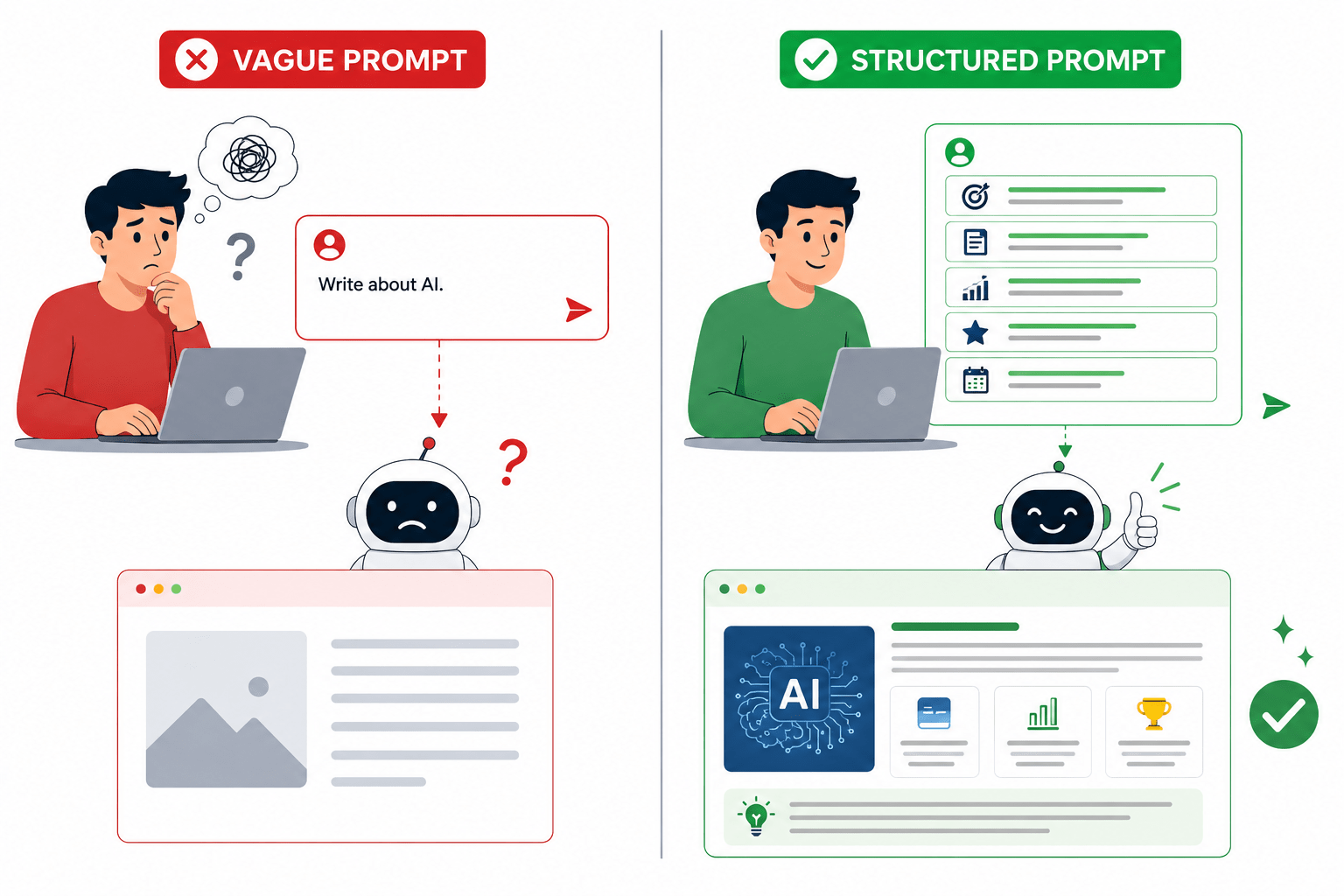
Prompt Engineering is the practice of designing clear, specific, and structured instructions (prompts) to guide AI models toward producing accurate, relevant, and high-quality outputs.
It involves understanding how AI interprets language, and using that understanding to phrase requests in a way that reduces ambiguity and increases accuracy.
Why it matters:
-
The same AI model can give a poor answer or an excellent answer — the only difference is how the prompt is written.
-
It saves time by reducing the number of retries needed to get a usable output.
-
It works across every AI tool — ChatGPT, Claude, Gemini, Midjourney — the skill transfers.
Real-Life Examples
A marketer crafting a detailed prompt to generate a product description in a specific brand tone
A developer writing a precise prompt to get AI-generated code that follows a specific coding style
A student writing a structured prompt to get step-by-step exam revision notes instead of a vague summary



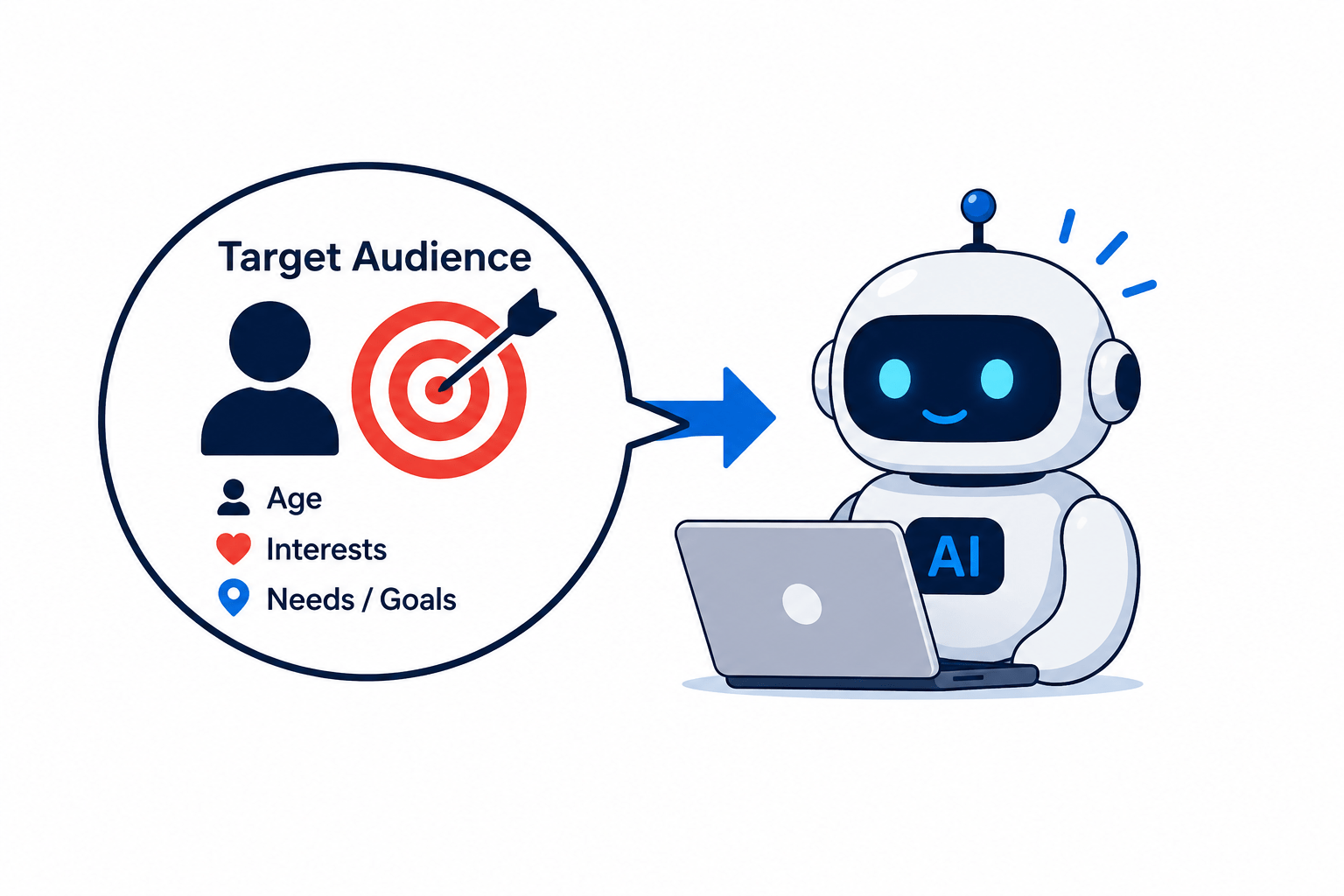
Context
- Context tells the AI who it's writing for and why.
- Without context, AI guesses the audience and purpose.
Example:
Write a product description for a smartwatch targeted at busy fitness professionals aged 25-40.
Task
- Task clearly states what the AI must do — write, summarize, translate, code, etc.
- A vague task ("help me with this") leaves AI guessing the action itself.
Example:
Summarize this article in 3 bullet points" vs. just "look at this article.

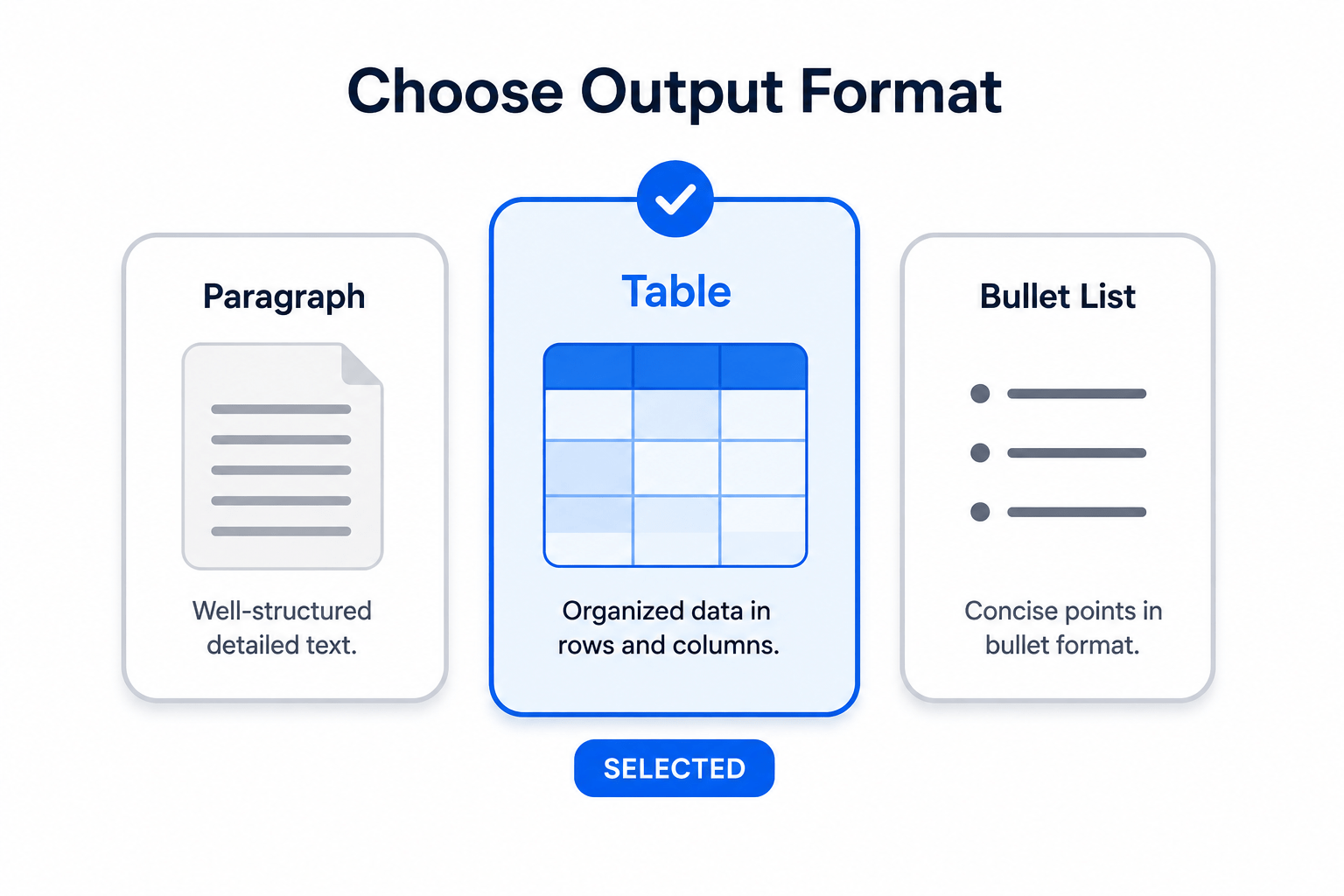
Format
- Format specifies how the output should look — bullet points, table, email, code block, word count.
Example:
Present the comparison as a table with 3 columns: Feature, Pros, Cons.
Tone & Constraints
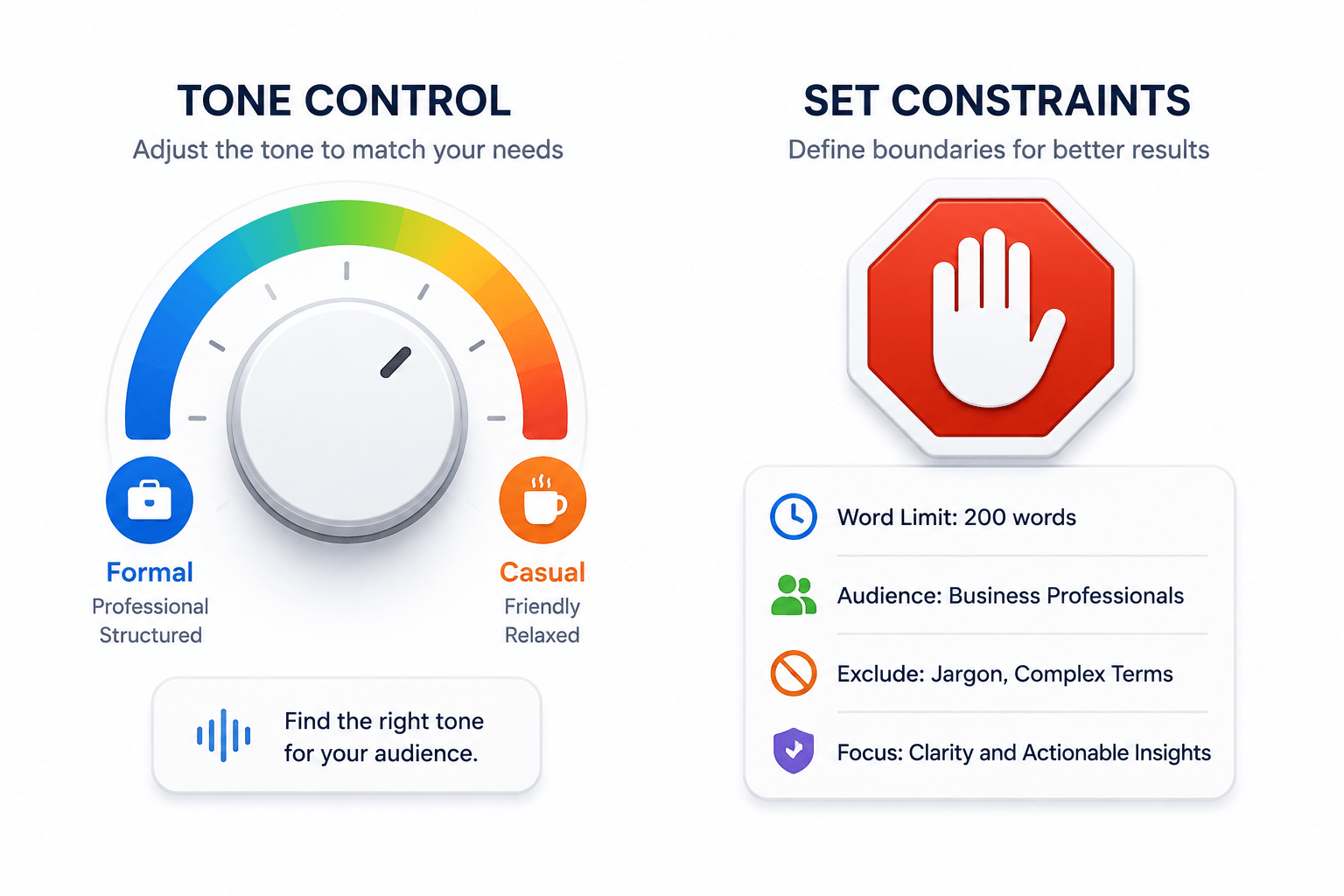
- Tone defines the style (formal, casual, persuasive) and Constraints define limits (length, things to avoid, must-includes).
Example:
Write in a friendly, conversational tone, under 100 words, without using technical jargon.
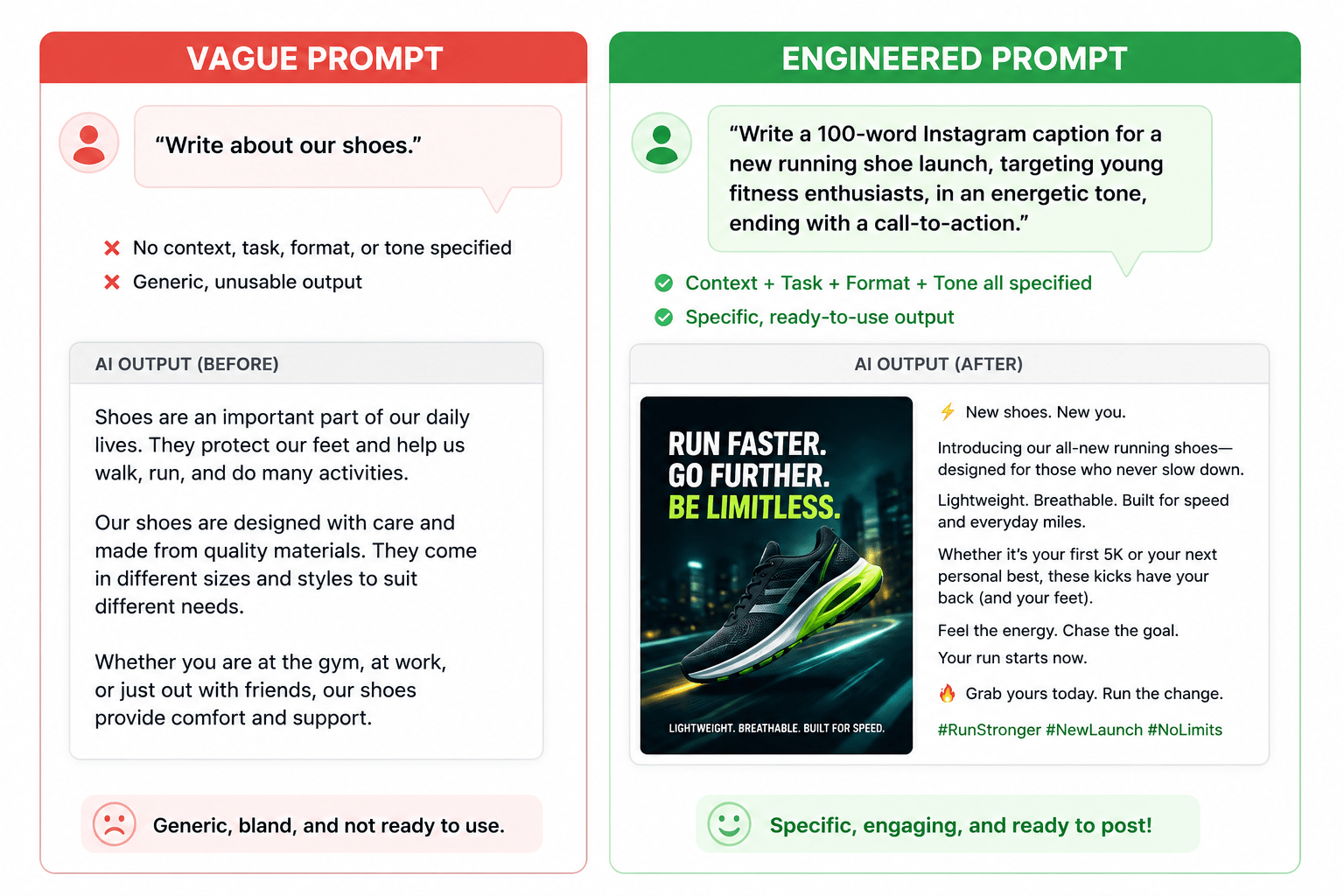
Vague Prompt vs. Engineered Prompt (Comparison)
How a Prompt Works (Core Mechanism)
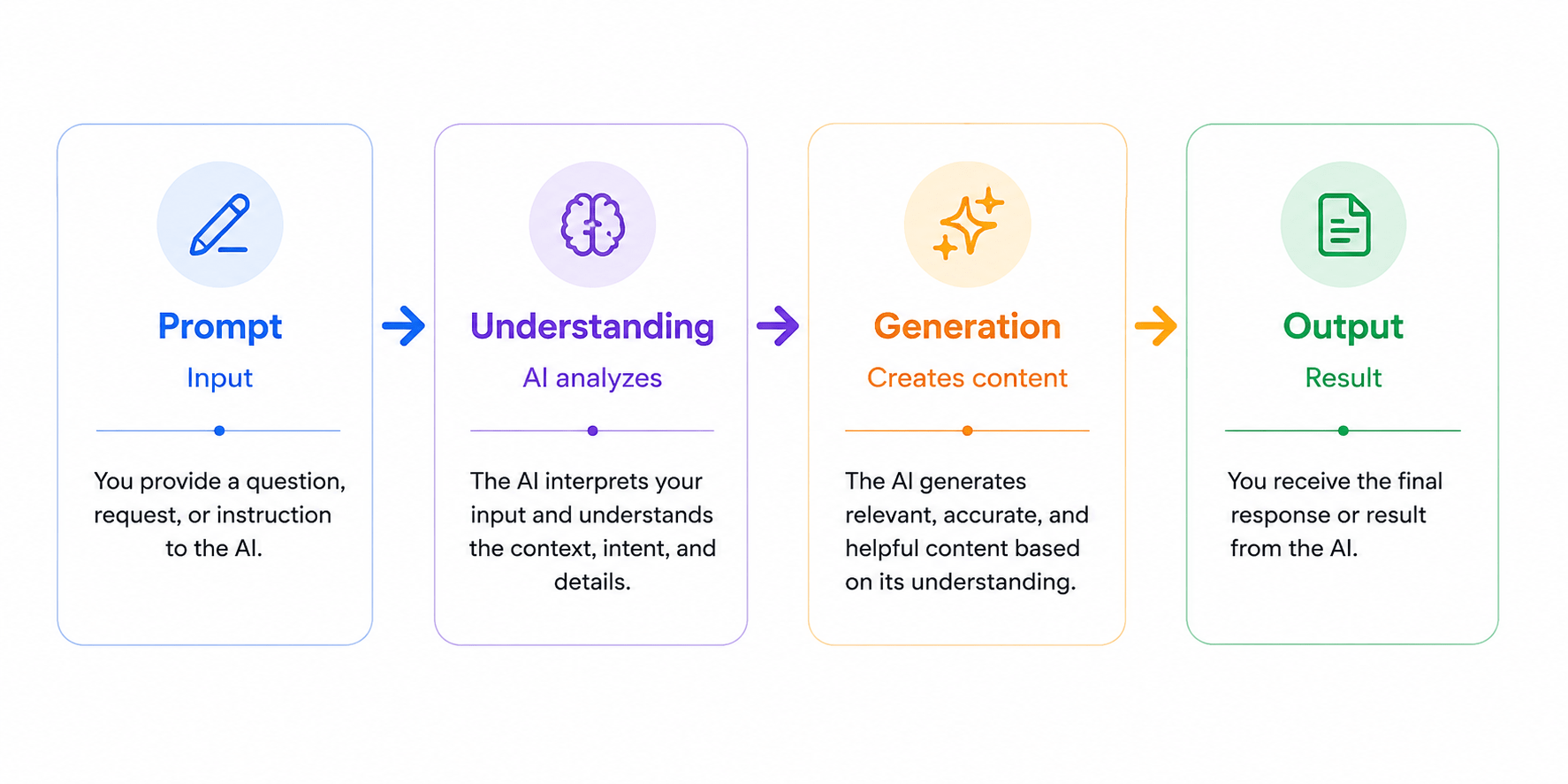
Step 2: AI Understanding
AI analyzes role, tone, and required sections.
Step 3: Generation
AI drafts content using patterns learned from similar postings.
Step 4: Output
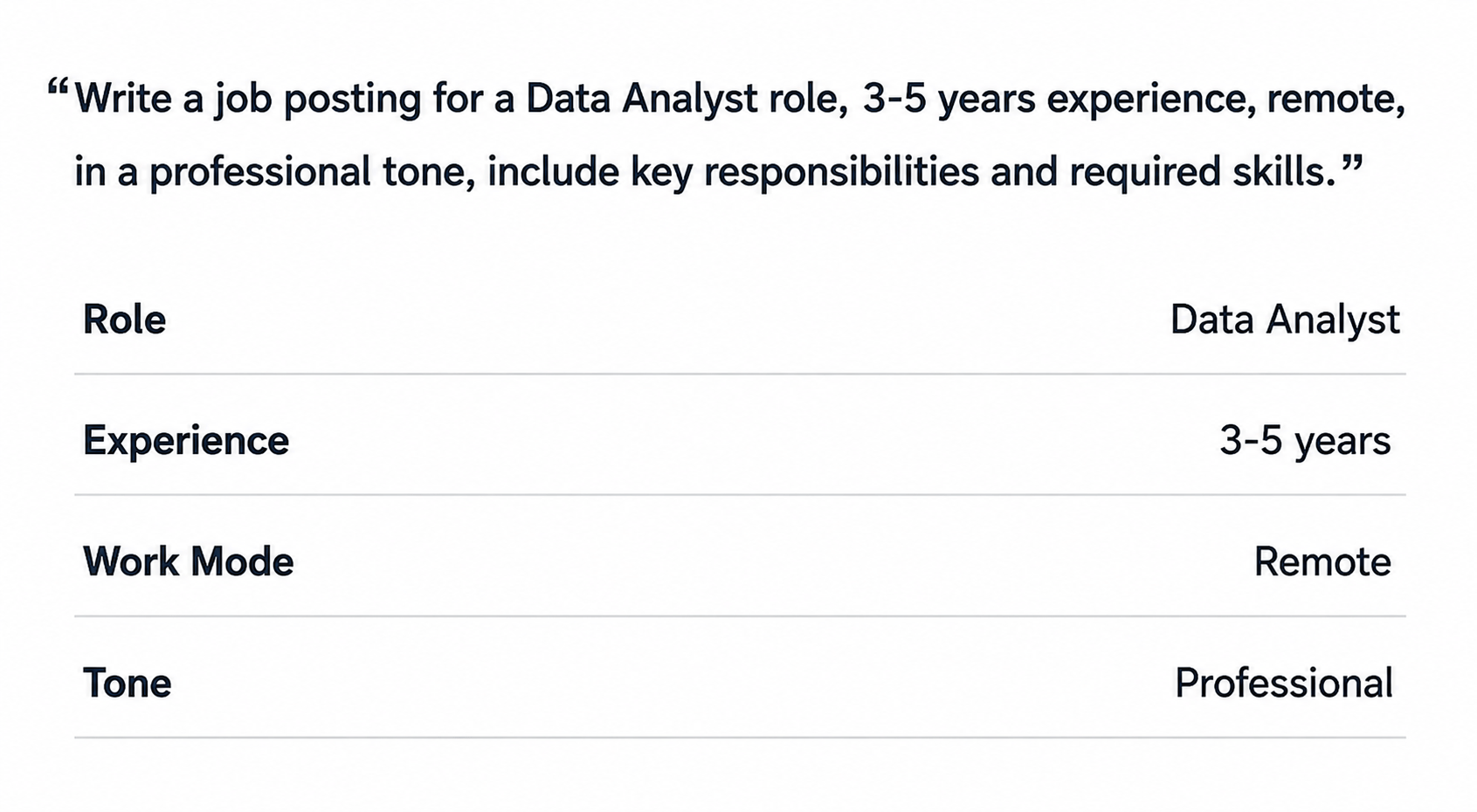
Scenario: An HR manager wants to draft a job posting using AI
Step 1: Prompt (Input)
We are hiring a Data Analyst (3-5 years experience) for a remote position. You will be responsible for analyzing datasets, building dashboards, and presenting insights to stakeholders...
Summary
4
Ward’s method keeps clusters compact.
3
Cut the tree to find optimal clusters.
2
Dendrogram shows merge history and distances.
1
Bottom-up clustering (each point → one cluster → merge).
Quiz
What does dendrogram height represent?
A. Number of data points
B. Distance between clusters
C. Processing time
D. Accuracy

Quiz-Answer
What does dendrogram height represent?
A. Number of data points
B. Distance between clusters
C. Processing time
D. Accuracy