Prompt Comparison and Evaluation



Learning Outcome
4
Recognize how iterative evaluation leads to consistently better AI outputs.
3
Apply a structured approach to test and compare multiple prompt versions.
2
Identify the key criteria used to judge prompt quality and output quality.
1
Understand why comparing and evaluating prompts is essential for effective AI use.
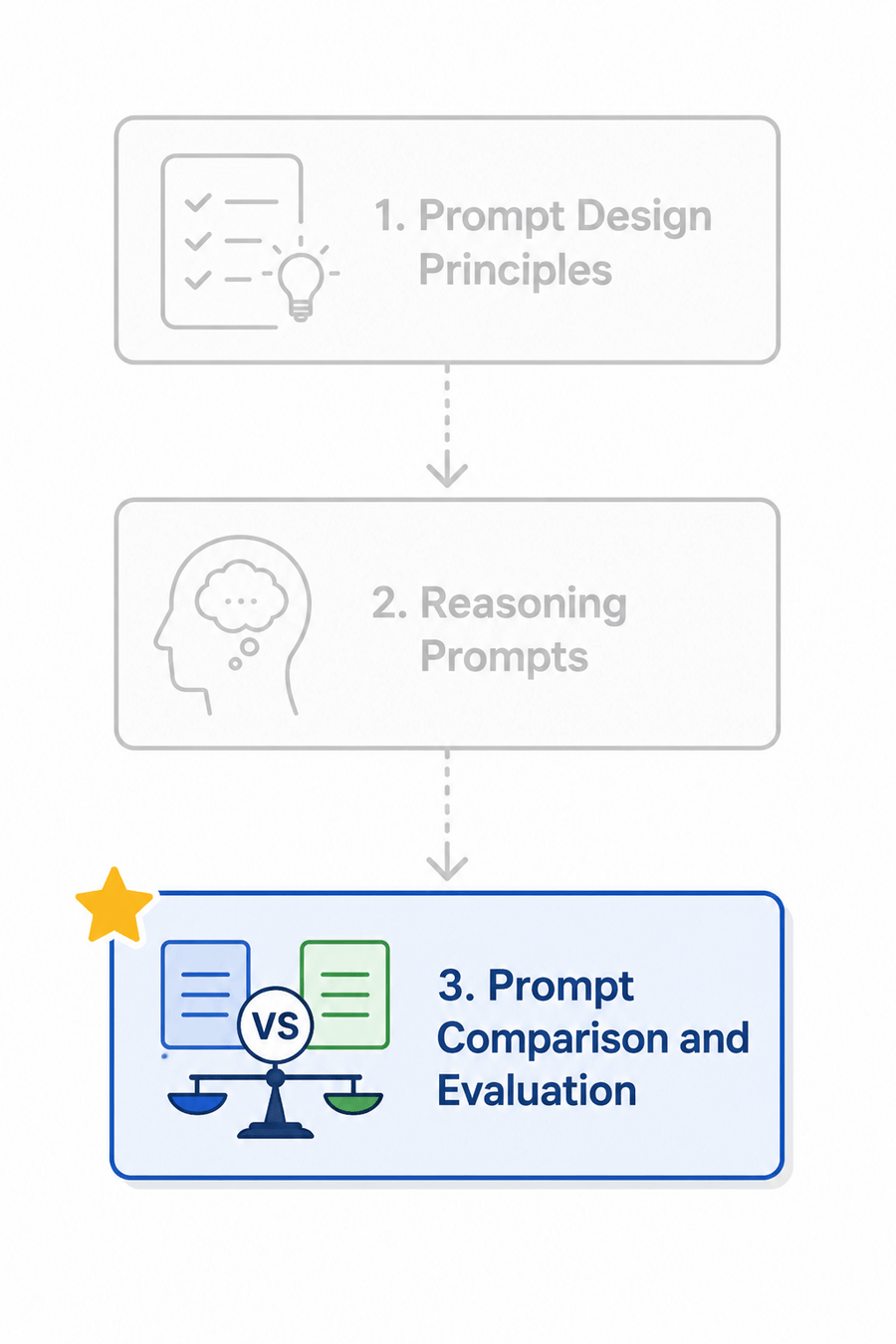
Before learning Prompt Comparison and Evaluation, let's quickly recall:

- Prompt Design Principles – Clarity, Specificity, Structure, Iteration, and Sufficient Context.
-
Reasoning Prompts – guiding AI step-by-step improves accuracy on complex tasks.
Imagine a company is hiring for one position, and three candidates apply.

The hiring manager doesn't just pick the first resume that arrives. Instead, they:
- Compare candidates using the same criteria.
- Score each candidate fairly.
- Select the best overall candidate.
Prompt Comparison and Evaluation works the same way. Instead of settling for the first prompt that produces a result, you test multiple prompt versions against clear criteria, score their outputs, and choose the one that performs best.
Think About It
Previously, we imagined a hiring manager comparing three candidates against the same criteria, rather than just picking the first resume that arrived.

Should you settle for the first AI output you get, even if you never tested whether a different prompt would work better?
A small thought before we go technical
Expected Answer
No
Just like comparing job candidates, comparing multiple prompts helps identify the best one.
Now, let's explore Prompt Comparison and Evaluation.
What is Prompt Comparison and Evaluation?
Definition
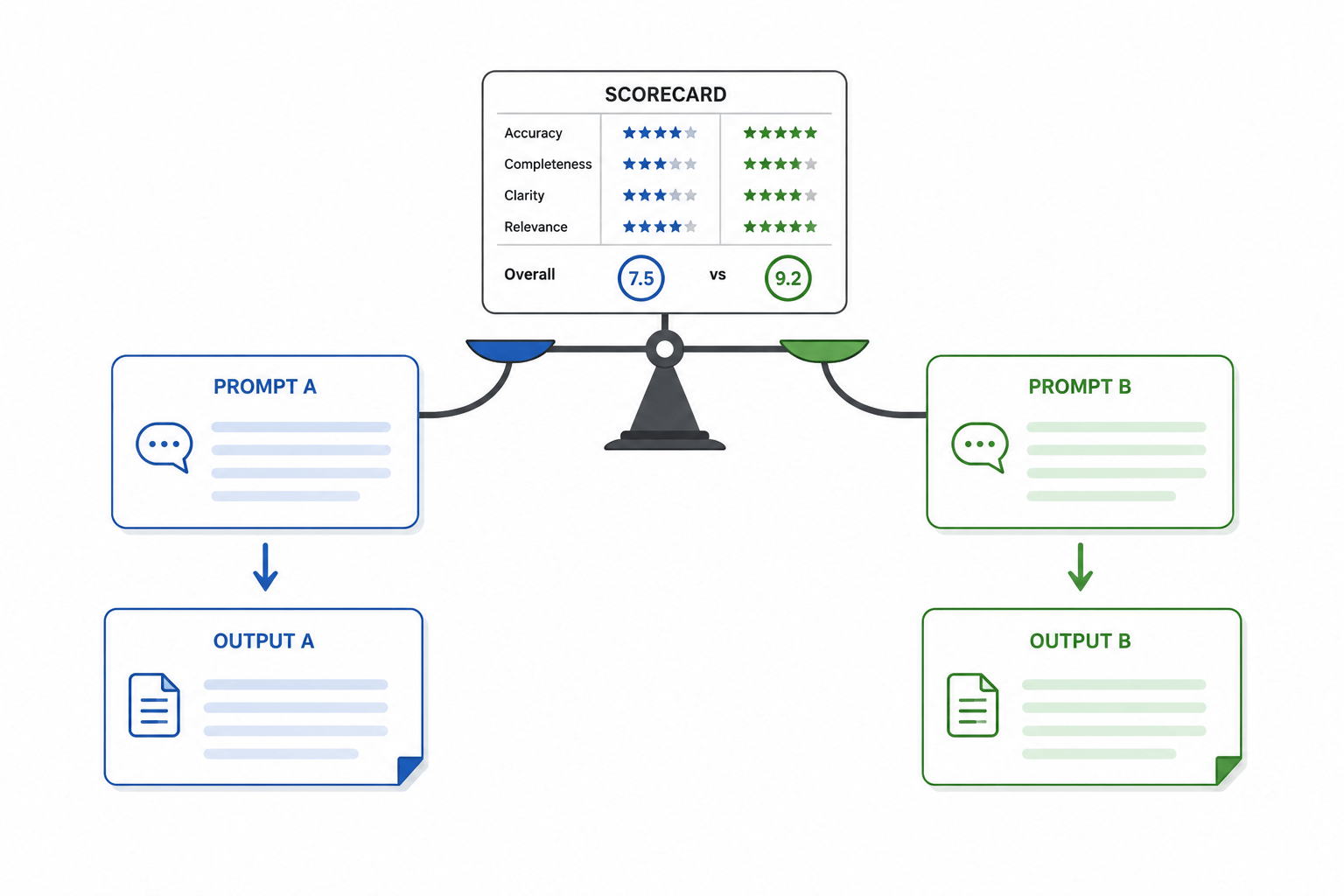
Prompt Comparison and Evaluation is the practice of testing multiple versions of a prompt, assessing their outputs against defined criteria, and selecting or refining the version that produces the most accurate, relevant, and high-quality result.
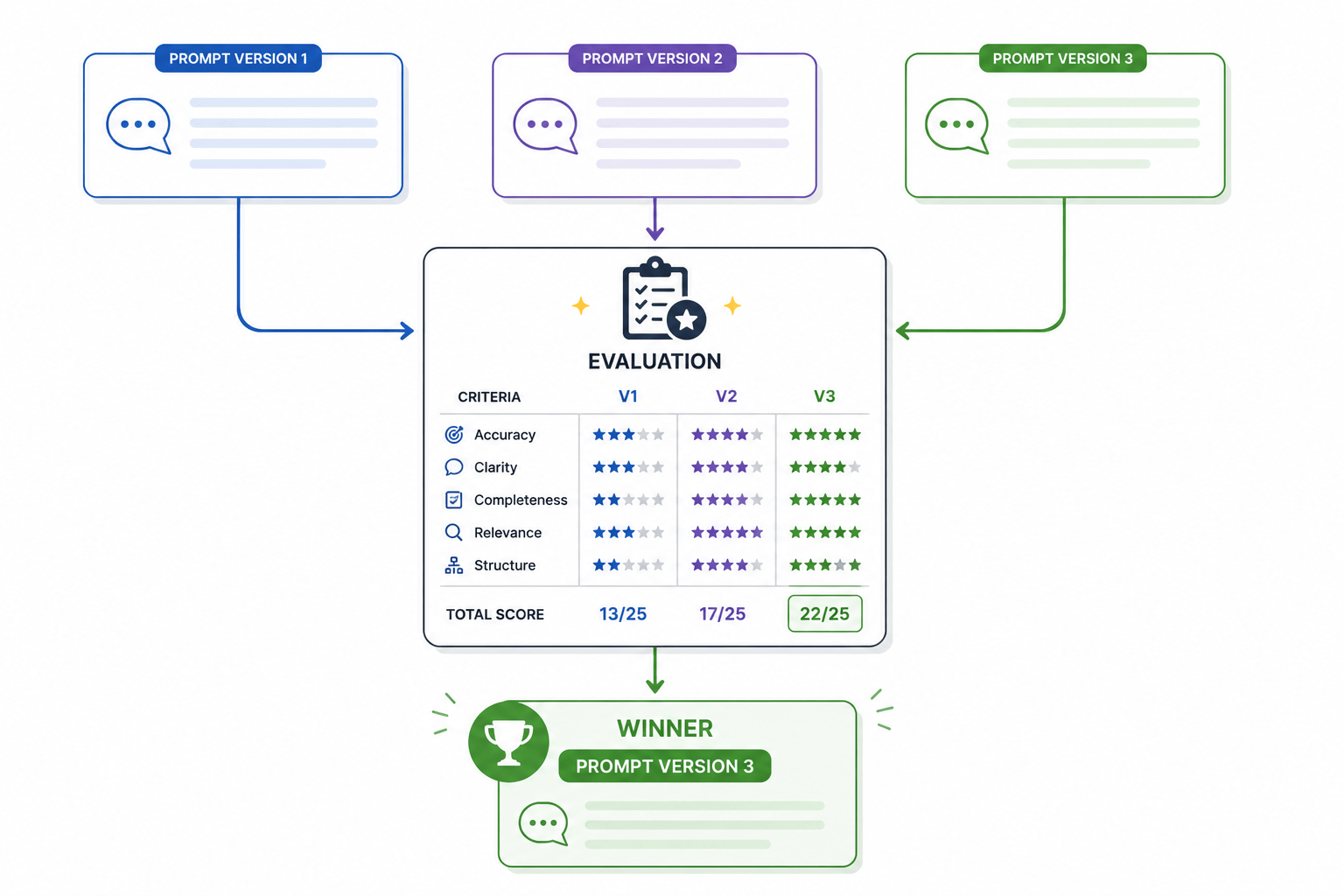
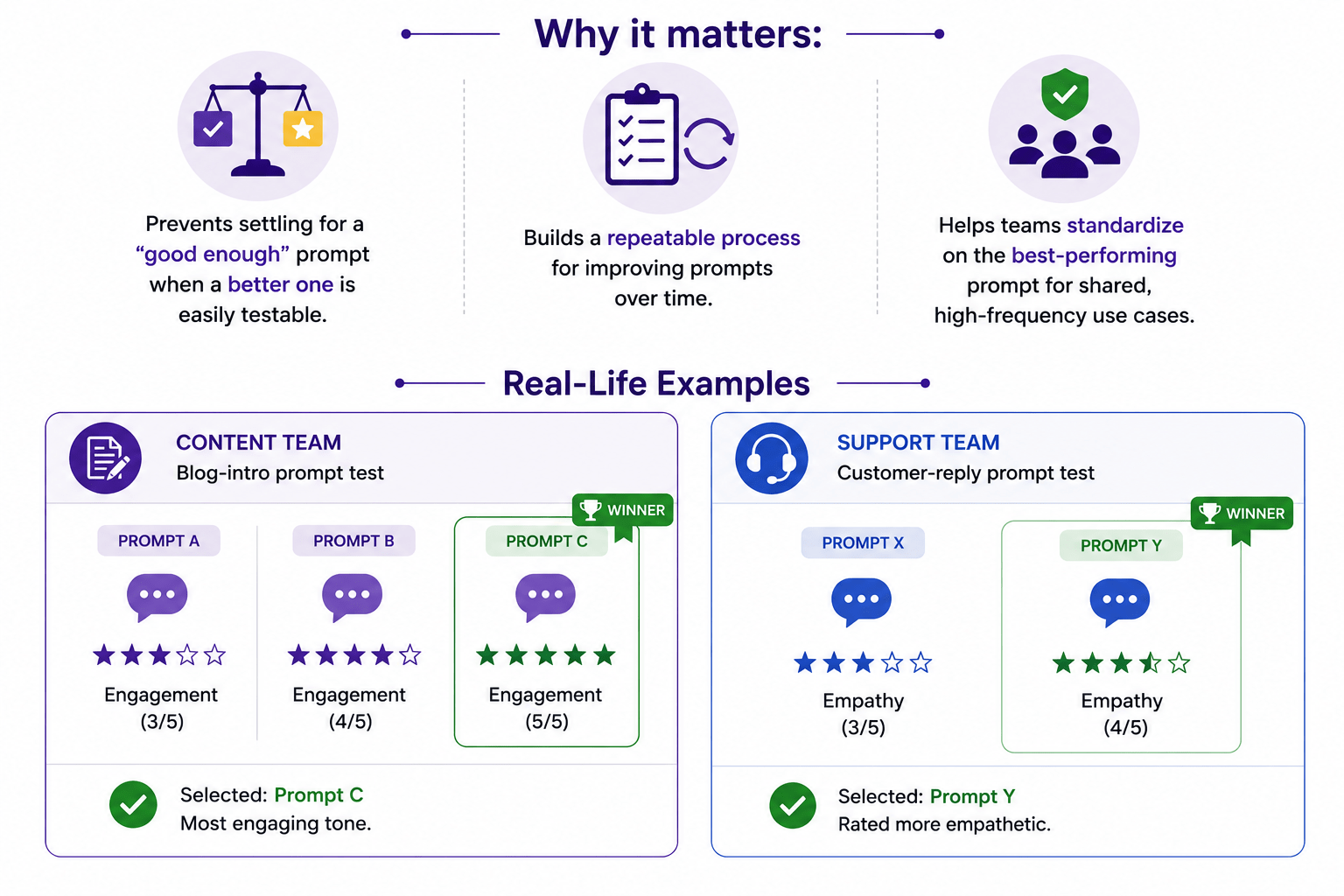
It turns prompt writing from a one-shot guess into a measurable, improvable process.
Evaluation Criterion 1: Accuracy
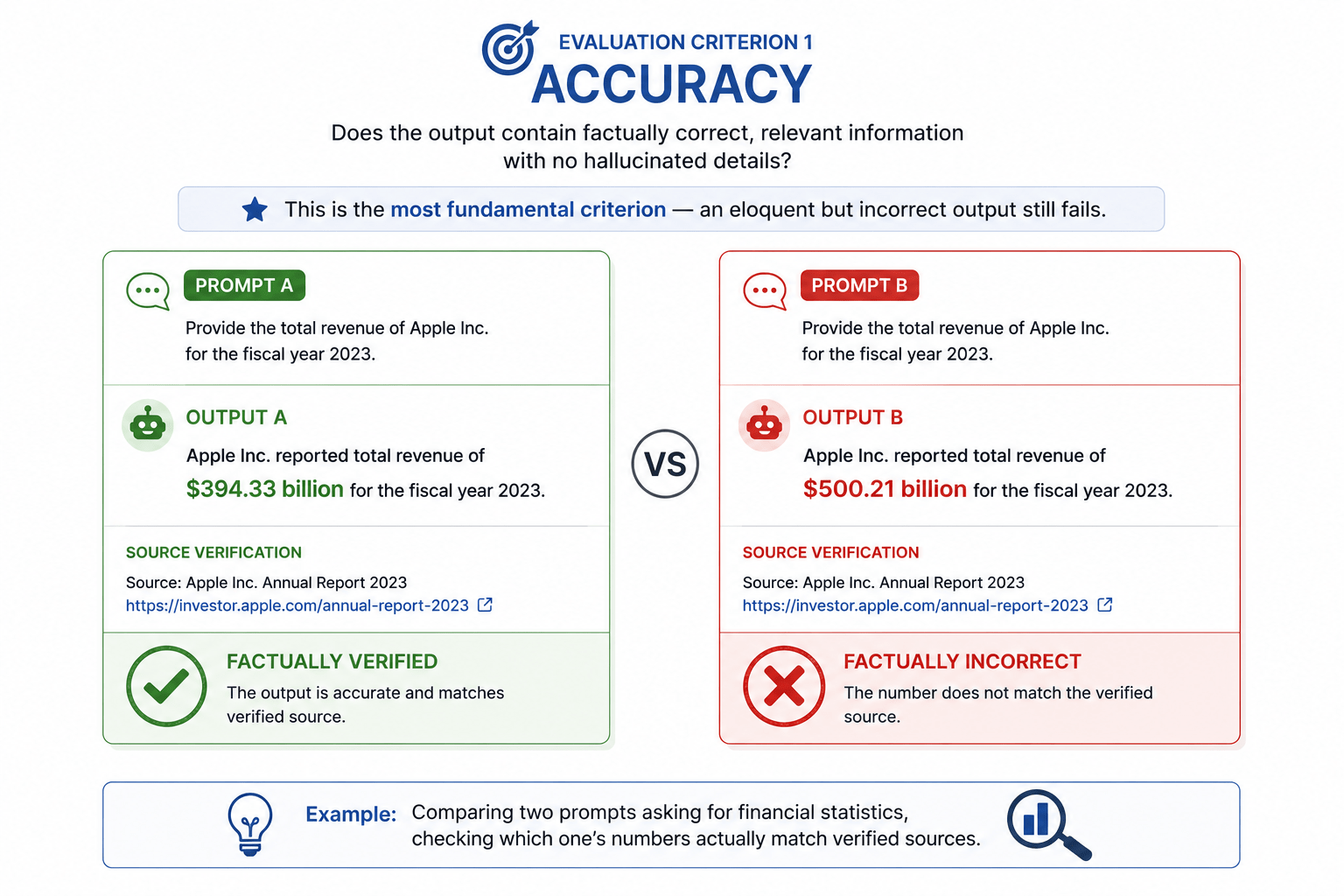
Does the output contain factually correct, relevant information with no hallucinated details?
Evaluation Criterion 2: Relevance
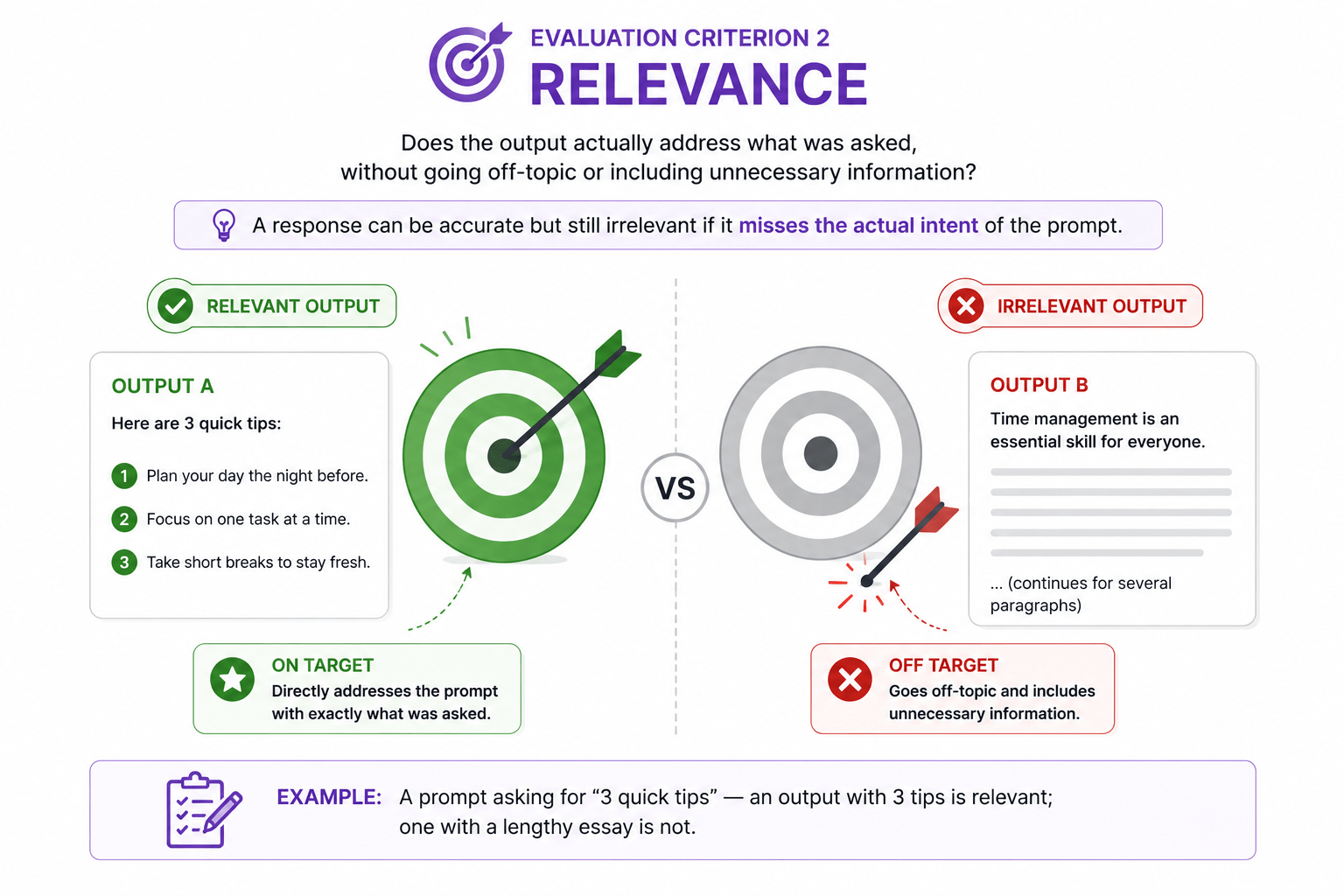
Does the output actually address what was asked, without going off-topic or including unnecessary information?
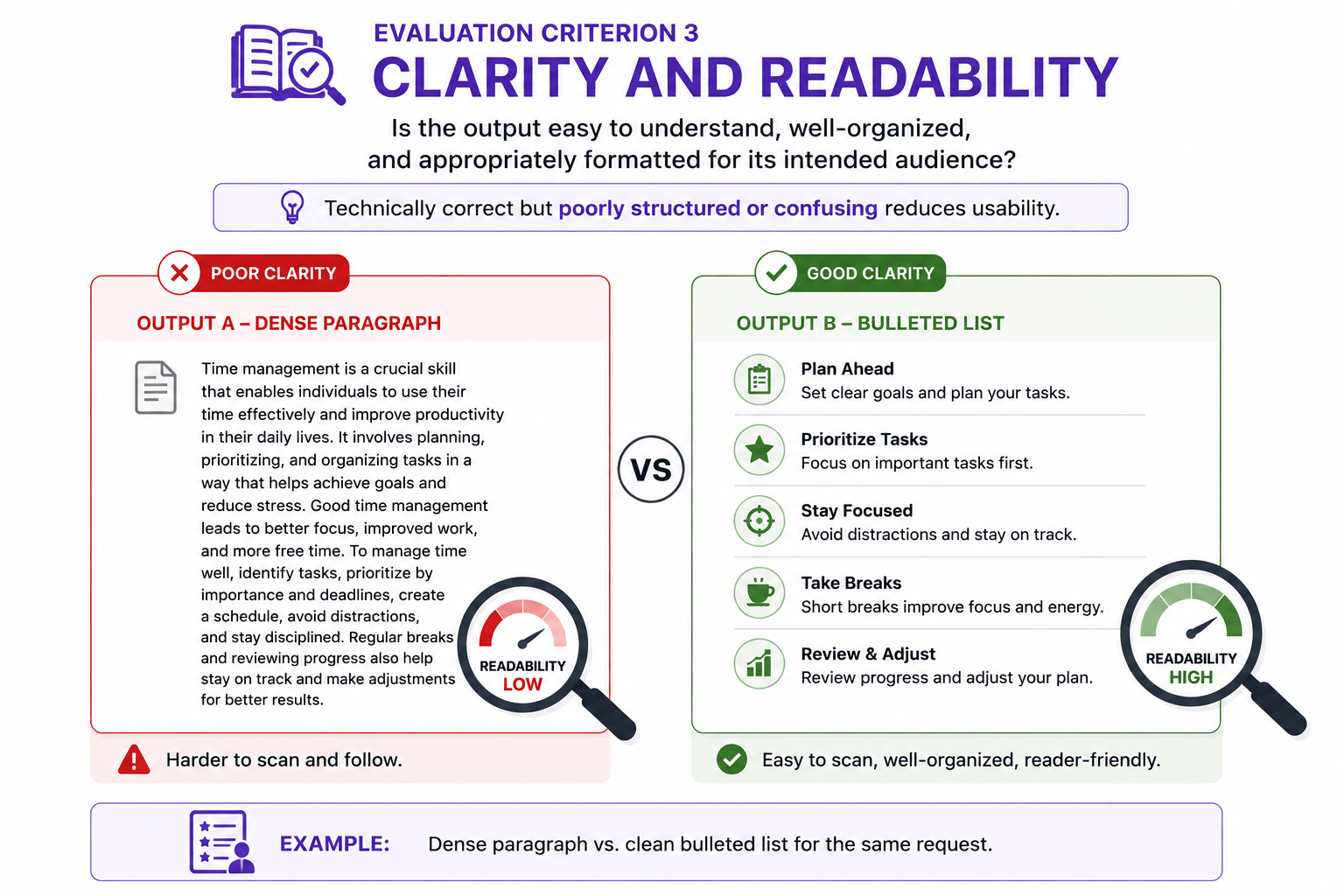
Evaluation Criterion 3: Clarity and Readability
Is the output easy to understand, well-organized, and appropriately formatted for its intended audience?
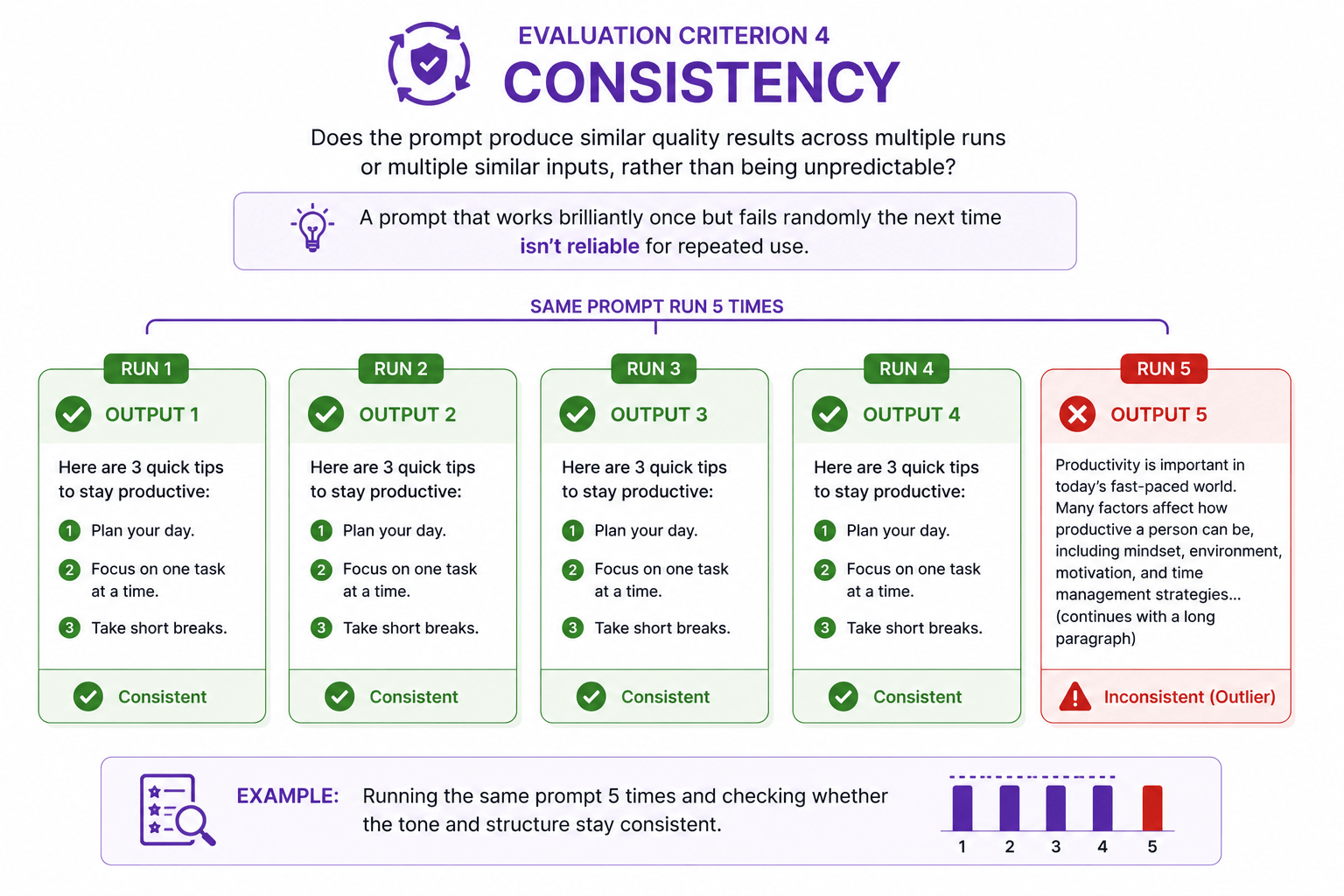
Evaluation Criterion 4: Consistency
Does the prompt produce similar quality results across multiple runs or multiple similar inputs, rather than being unpredictable?
Method: A/B Testing Prompts
Direct Selection vs. Structured Evaluation (Comparison)
How Prompt Evaluation Works (Core Mechanism)
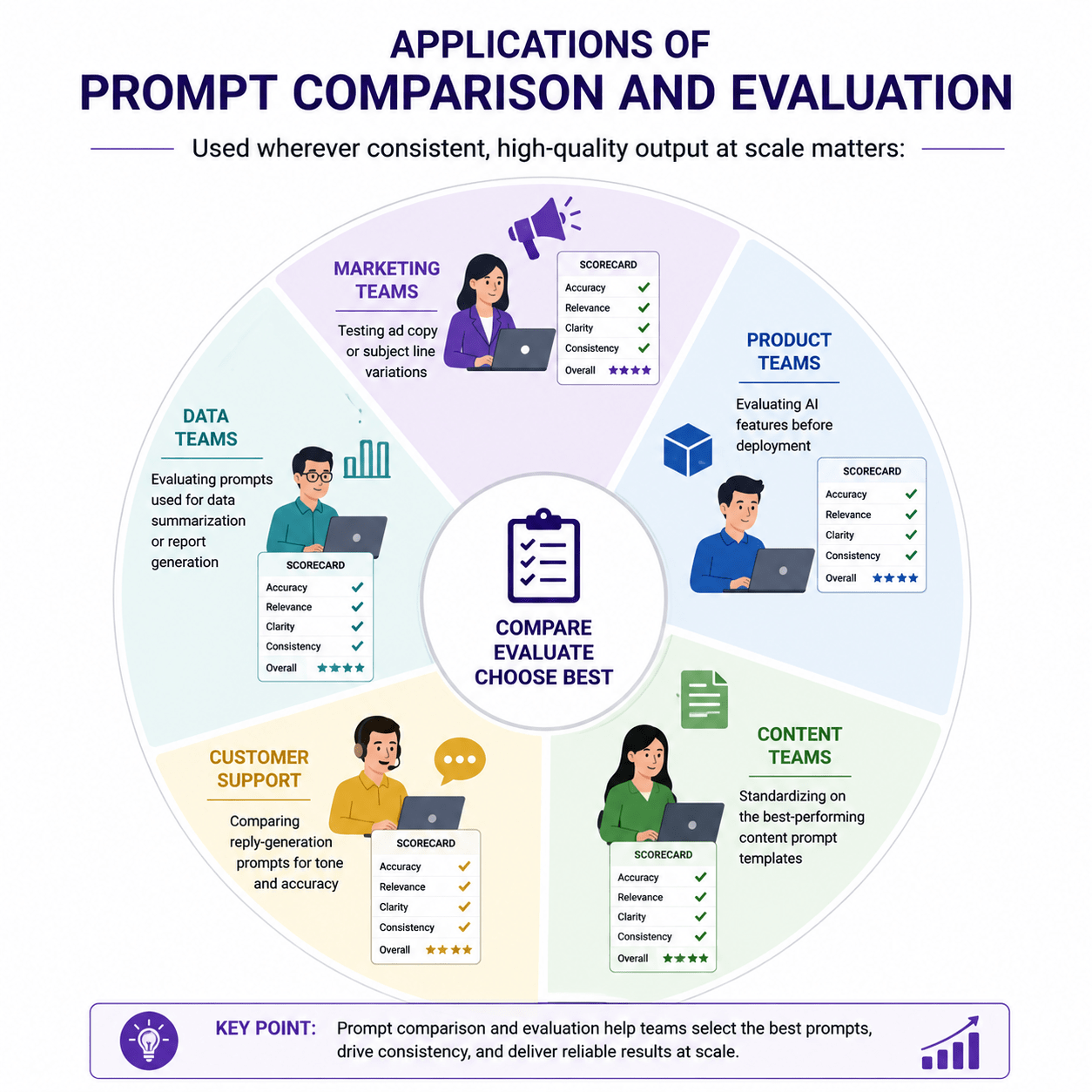
Applications of Prompt Comparison and Evaluation
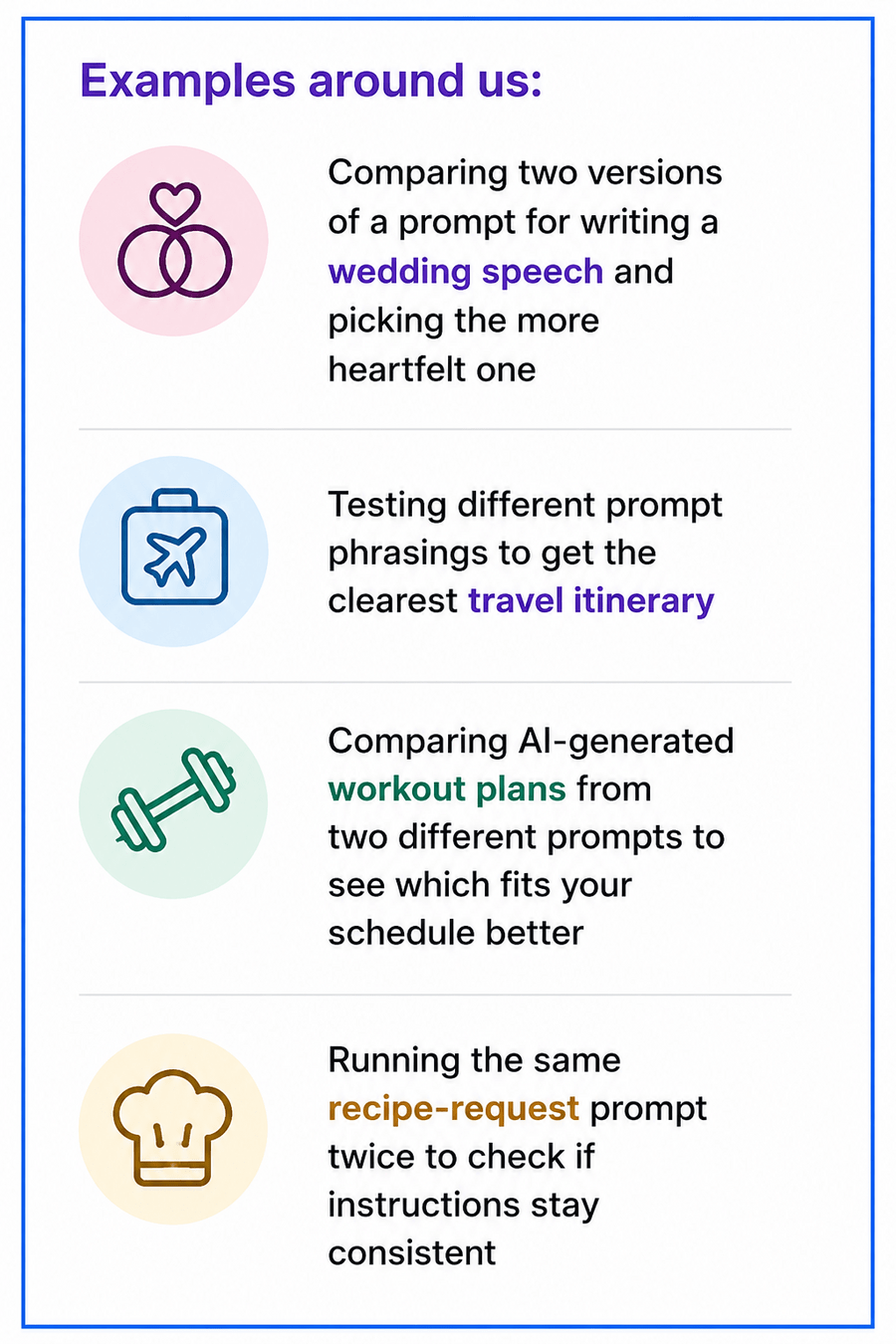
Daily Life Applications
Summary
4
Ward’s method keeps clusters compact.
3
Cut the tree to find optimal clusters.
2
Dendrogram shows merge history and distances.
1
Bottom-up clustering (each point → one cluster → merge).
Quiz
What does dendrogram height represent?
A. Number of data points
B. Distance between clusters
C. Processing time
D. Accuracy

Quiz-Answer
What does dendrogram height represent?
A. Number of data points
B. Distance between clusters
C. Processing time
D. Accuracy
