




Content ITV PRO
This is Itvedant Content department
The V-Model evolved from the traditional Waterfall model in the late 1970s and 1980s.
Waterfall had a problem: testing was done only at the end.
Many defects were found very late.
Fixing them became expensive and risky.
So experts introduced the V-Model to integrate testing early in development.
It became popular in:
Defence Project
Health Project
Bank Project
Areospace Project
There is no single inventor officially credited.
However:
It was developed as an improvement over the Waterfall Model.
It was heavily used and standardized in German government projects.
So, it is considered an evolutionary model, not a model invented by one single person.
Many software engineering researchers contributed to shaping it.
The main problems in Waterfall were:
❌ Testing started very late
❌ High defect cost
❌ Risk in critical systems
❌ No clear mapping between
development & testing
To solve these issues, the V-Model introduced:
✅ Early test planning
✅ Reduced project risk
✅ Better quality control
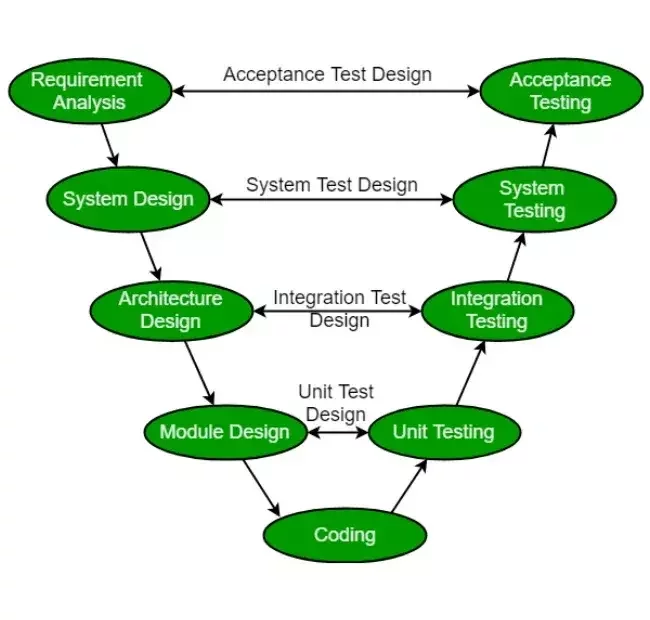
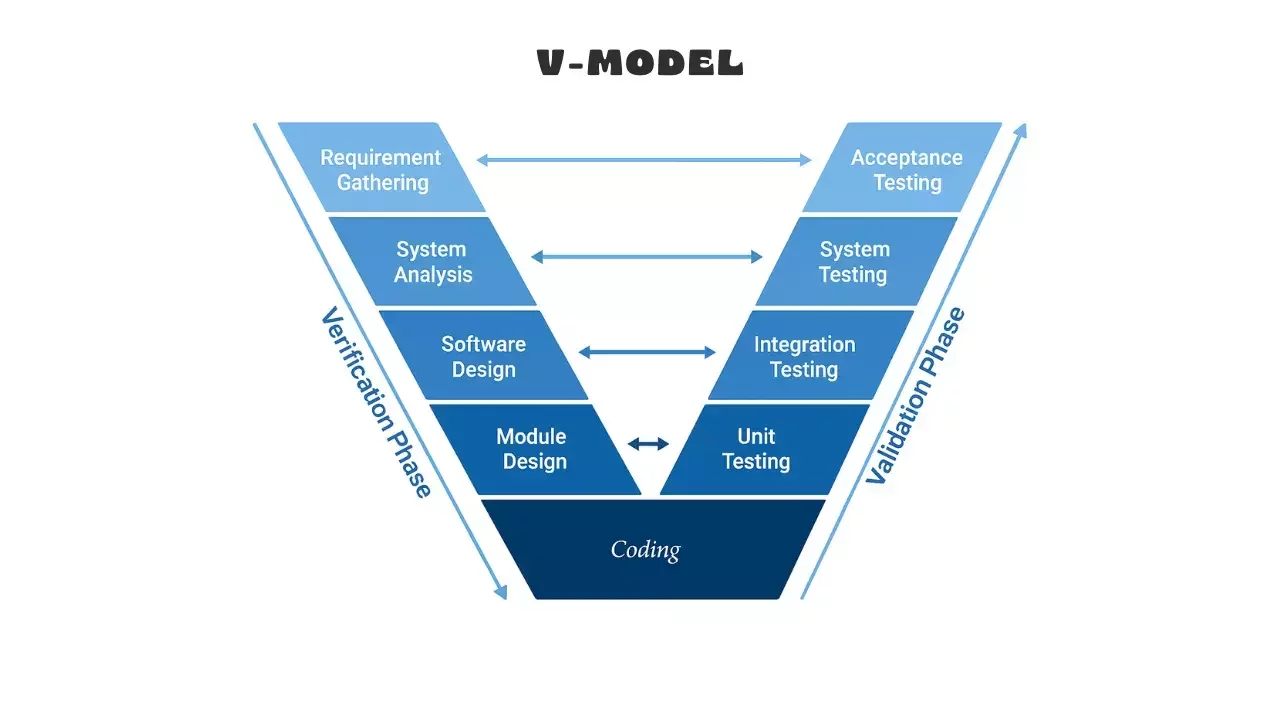
✅ Each development phase has a corresponding testing phase
The main purpose is:
Testing is planned from the beginning.
Clear Traceability
Every requirement has a related test case.
Better Quality Assurance
Verification + Validation at every stage.
Suitable for Critical Projects
Used in:
Banking software
Hospital systems
Aircraft systems
Government applications
Imagine building hospital management software:
Requirement: “System should store patient records securely.”
During requirement phase → Acceptance test cases are written.
So testing is not an afterthought — it is planned from Day 1
During design phase → System test cases are prepared.
During coding → Unit tests are executed.
We use the V-Model when:
✔ Requirements are clear and stable
✔ Project is high-risk
✔ Documentation is important
✔ Safety is critical
By Content ITV