Alternative Investment Funds (AIF) and hedge funds


Fund administrator function


Learning Outcome
5
Assess their role in transparency and investor protection.
4
Learn the regulatory framework for portfolio and wealth managers.
3
Differentiate fund, portfolio, and wealth managers.
2
Understand core fund administration functions.
1
Define the role of a fund administrator.
Who is a fund administrator?
A fund administrator is an independent service provider that handles fund accounting, NAV calculation, investor records, reporting, and compliance support.
Simple Analogy
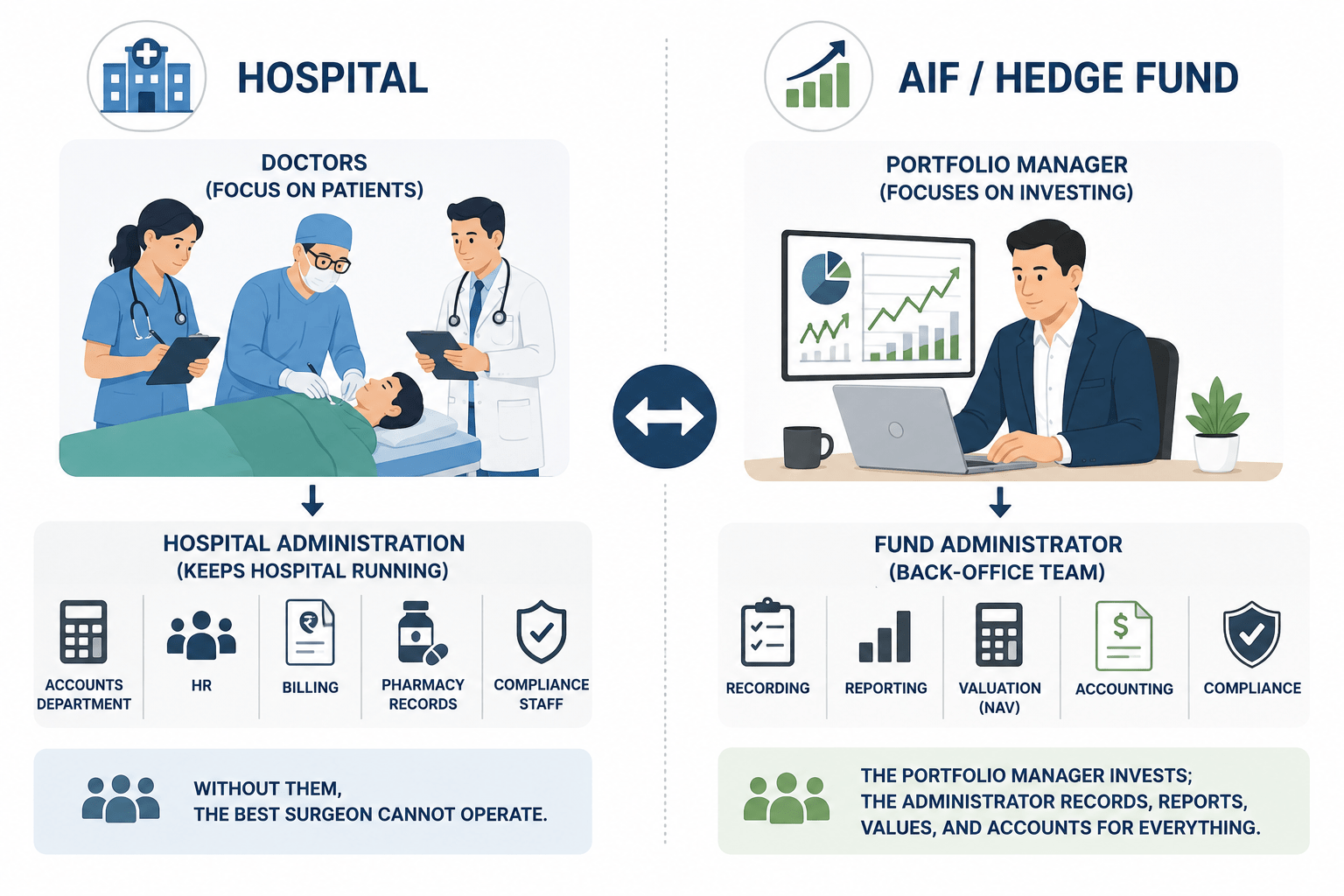
- Doctors (Fund Managers) focus on treating patients (making investment decisions).
-
The hospital administration handles billing, records, compliance, and operations.
-
Doctors cannot function efficiently without this support team.
-
Similarly, fund administrators handle accounting, NAV, reporting, and records.
-
Fund managers invest, while administrators record, report, and ensure compliance.
Responsibility of a Fund Administrator (Supporting role)

Records each trade in the fund's books on trade date

Ensures the strategy is reflected correctly in portfolio reports

Reconciles trades with broker confirmations and custodian records

Tracks cash positions, calls, and distributions per investor

Produces daily / monthly portfolio exposure and P&L reports

Computes realised gains, carry entitlement, and distributions
Functions of Fund Administrator in AIFs and Hedge funds
The fund administrator's responsibilities can be grouped into six core functions that support fund operations, reporting, and compliance.
Fund Accounting and Bookkeeping
Maintains fund accounts, records transactions, and prepares financial statements.


NAV Computation and Valuation
Computes NAV by valuing portfolio assets as per regulatory guidelines.
Fee and Carry Computation
Calculates management and performance fees as per fund agreements.


Regulatory Reporting and Compliance Support
Prepares regulatory reports and ensures compliance with SEBI and other authorities.
Cash Management and Reconciliation
Tracks fund cash flows and performs daily reconciliation of accounts, custody records, and broker transactions.


Investor Services and Recordkeeping
Maintains investor records, capital activity, and NAV entitlements.
Who is a Portfolio Manager?
A portfolio manager is a SEBI-registered professional who manages investments and makes buy, sell, and hold decisions to achieve fund objectives.

Role of Portfolio Manager in an AIF / Hedge Fund
-
Portfolio managers make investment decisions.
-
Fund administrators handle operations and reporting.
-
Administrators do not influence investment choices.
Responsibility of a Portfolio Manager:
-
Decides which securities to buy or sell
-
Sets the investment strategy and mandate
-
Executes trades through brokers
-
Manages cash deployment and allocation
-
Monitors portfolio risk and exposure
-
Determines exit from investments
SEBI Registration and Regulations for Portfolio Managers
Portfolio managers operating in India must be registered with SEBI under the SEBI (Portfolio Managers) Regulations, 2020.
Key requirements include:
-
Minimum net worth: Rs.5 crore for a portfolio manager (increased from Rs.2 crore under 2020 regulations).
-
Minimum investment per client: Rs.50 lakh per client under PMS (revised 2020).
-
Disclosure: Investment approach, fees, risks, and conflicts of interest must be disclosed in a detailed Disclosure Document.
-
Reporting: Monthly portfolio statement and audited annual account must be furnished to each client.
Who is a wealth manager?
A wealth manager provides investment, tax, estate, and financial planning services for HNIs and often invests client funds in AIFs, PMS, and hedge funds.
Role of Wealth Manager in AIF / Hedge Fund Context
Wealth managers act as the distribution and advisory interface between the fund and its investors.
They perform the following functions in the AIF / hedge fund ecosystem:
Investor Onboarding: Conduct KYC, due diligence, suitability assessment, and onboarding for AIF investors (minimum commitment Rs.1 crore for Cat I & II, Rs.1 crore for Cat III).


Fund Selection: Advise clients on which AIF strategy — long-short equity, structured credit, real estate, venture capital — fits their risk profile and tax situation.
Capital Call Management: Inform clients of capital calls from the fund and facilitate timely drawdown payments.

Performance Reporting: Translate the fund administrator's technical reports into client-friendly statements showing IRR, MOIC, and absolute returns.
Tax Advisory: Guide clients on pass-through tax treatment in Cat I & II AIFs vs fund-level taxation in Cat III AIFs.


SEBI Registration and Regulations for Wealth Managers
Wealth managers operating in India are regulated under multiple SEBI frameworks depending on the nature of services provided.
There is no single "Wealth Manager" licence — a professional may hold one or more.
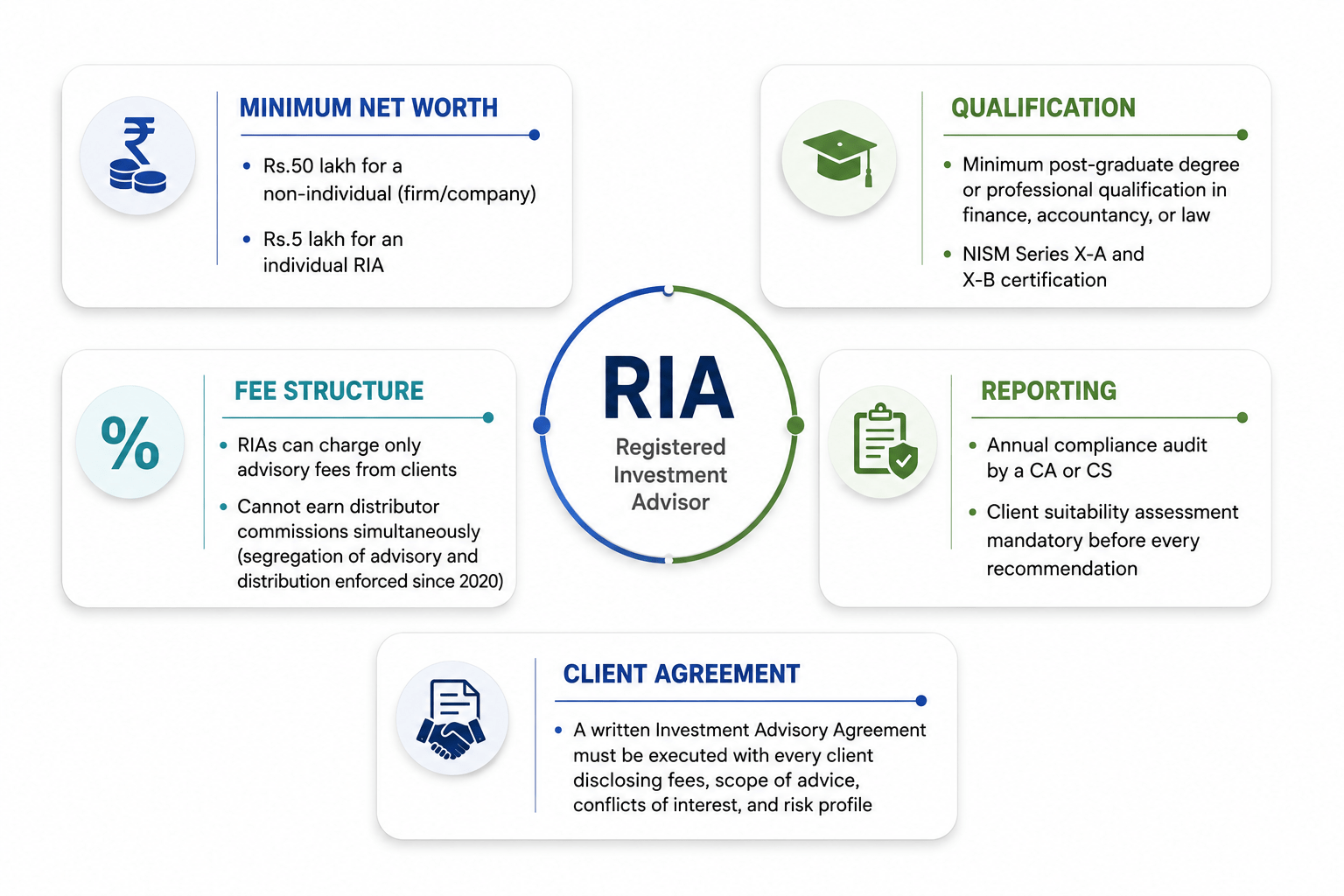
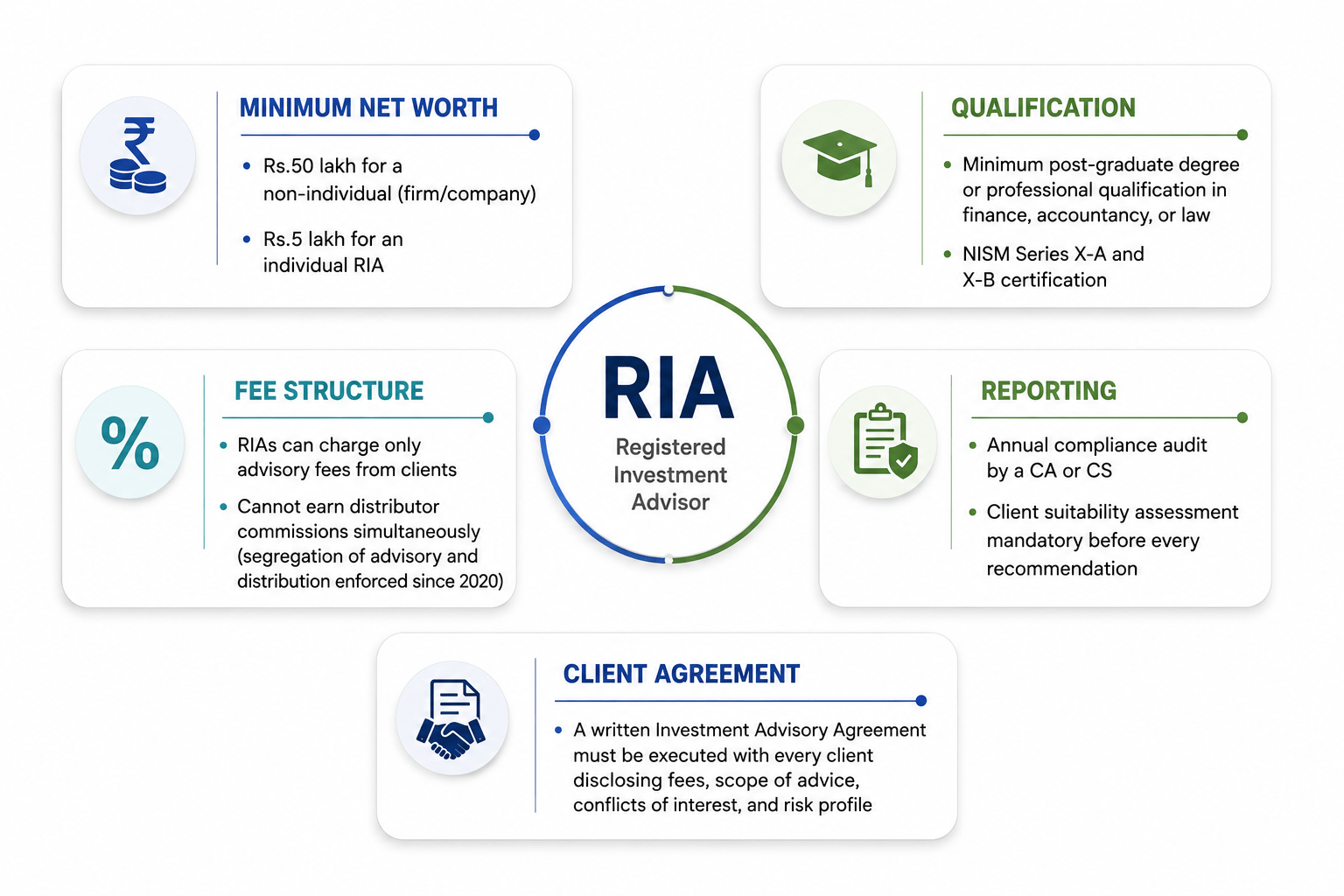
As a Registered Investment Adviser (RIA) — SEBI (Investment Advisers) Regulations, 2013:
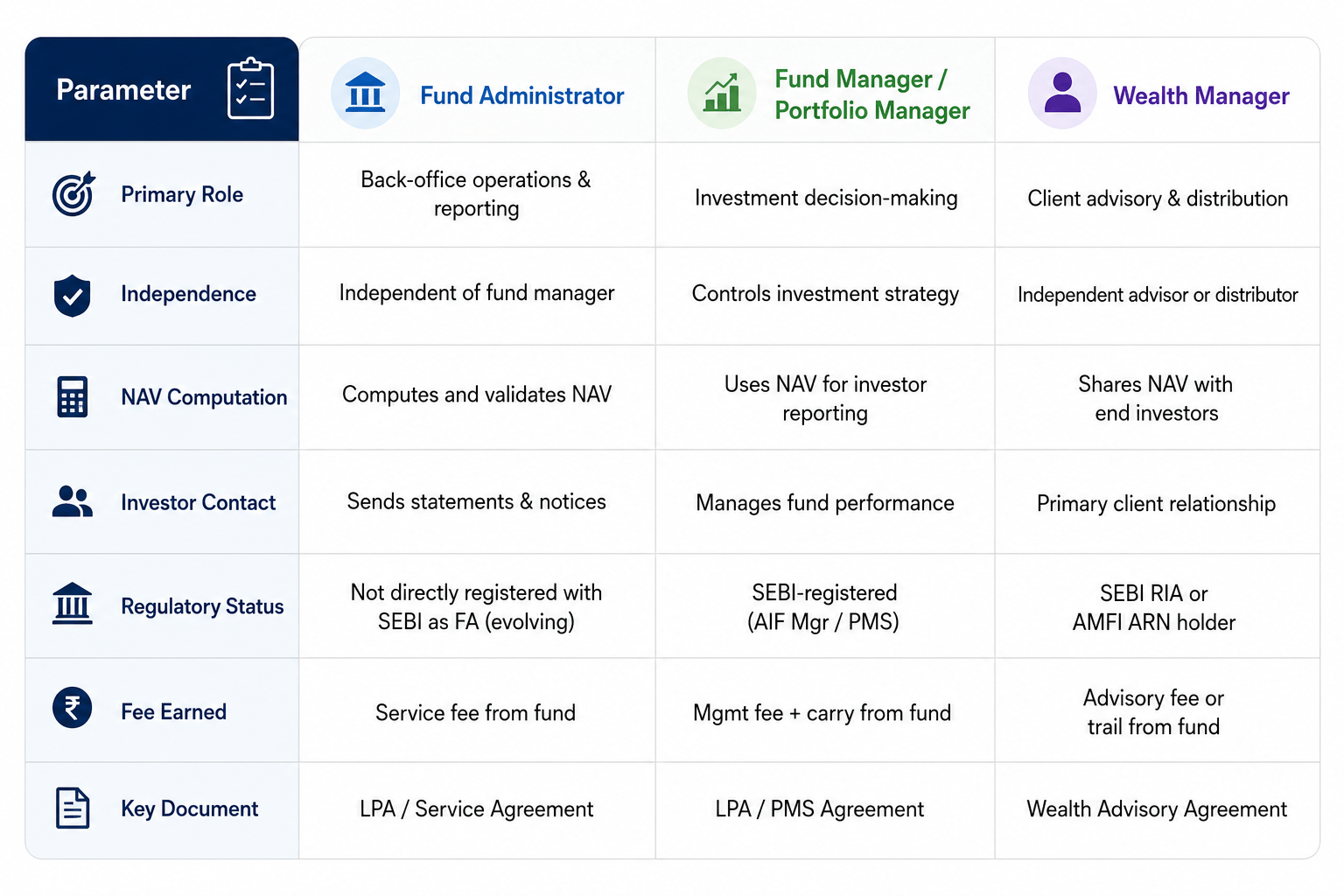
Fund Administrator vs Fund/Portfolio Manager vs Wealth Manager
Summary
5
Role separation ensures transparency.
4
Wealth managers advise clients and manage investments.
3
Portfolio managers invest; administrators support.
2
They handle NAV, compliance, and investor servicing.
1
Fund administrators manage fund operations and reporting.
Quiz
What is the primary role of a wealth manager in the AIF ecosystem?
A. Trade execution and settlement
B. Client advisory and investment planning
C. Fund accounting and bookkeeping
D. Regulatory inspection

Quiz-Answer
What is the primary role of a wealth manager in the AIF ecosystem?
A. Trade execution and settlement
B. Client advisory and investment planning
C. Fund accounting and bookkeeping
D. Regulatory inspection