Swaps & NDF


Fixing and reset process


Learning Outcome
5
Apply fixing and reset in swaps and NDFs.
4
Explain their impact on cash flows.
3
Understand reset dates and timing.
2
Identify key reference rates.
1
Define fixing and reset in derivatives.
What is the fixing and reset process?
In short: Fixing captures the number, and Reset puts that number to work in the contract.

Fixing: The official, recorded determination of a reference rate (for swaps) or a reference exchange rate (for NDFs) on a specific, pre-agreed date, sourced from a recognised benchmark administrator.
Reset: The process of applying the fixed value to the contract — updating the floating rate for the next accrual period in a swap, or determining the final settlement amount in an NDF.
Reference Rate Determination
The rate used in a swap is never picked randomly. It comes from a trusted body that follows a clear, fixed method. Some common reference rates used in the Indian market are:
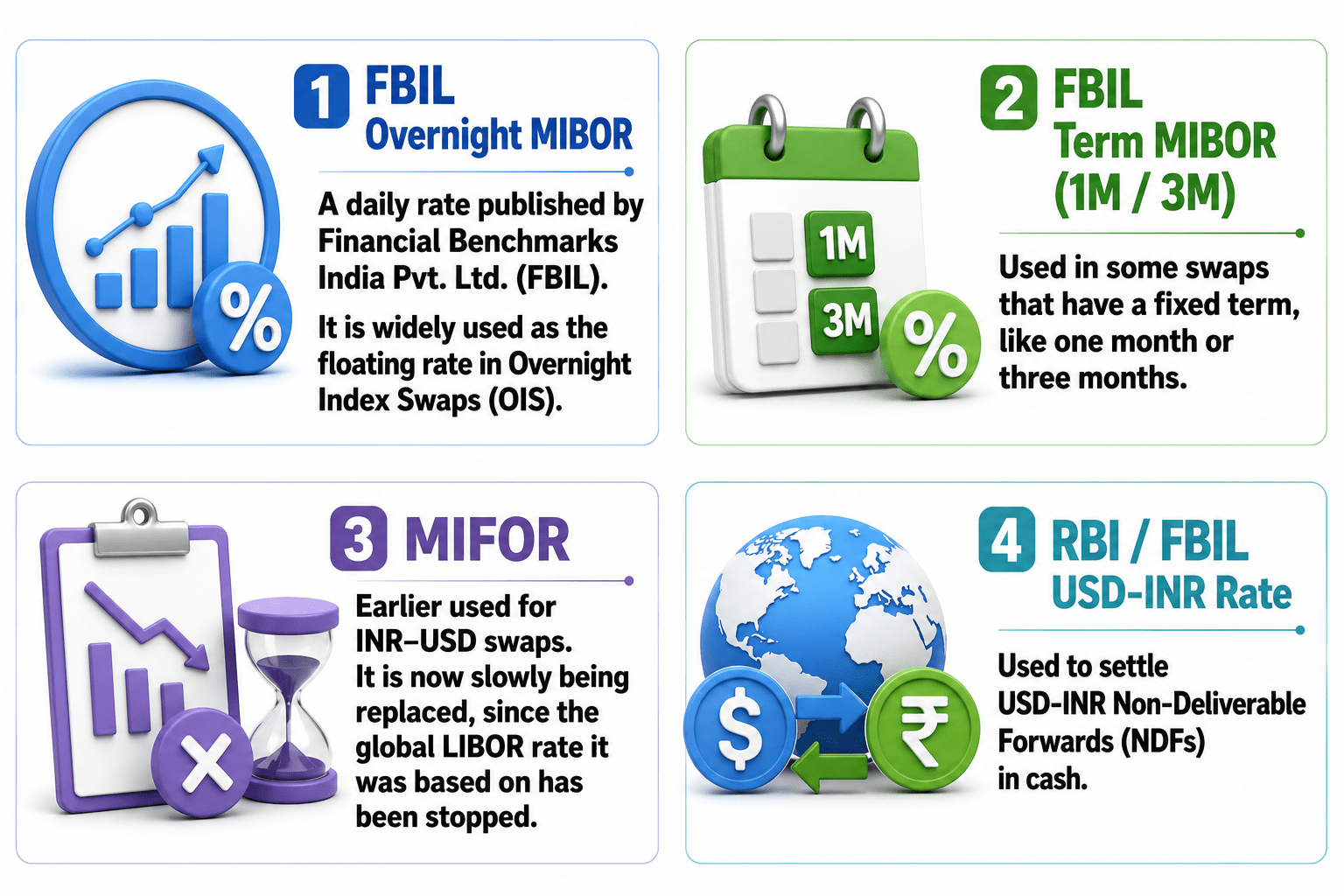
These rates are worked out either by asking a group of banks what rate they are using, or by looking at the actual trades done that day. The rate is then published at the same fixed time every working day, so that every market participant is using the same number.
Reset Dates
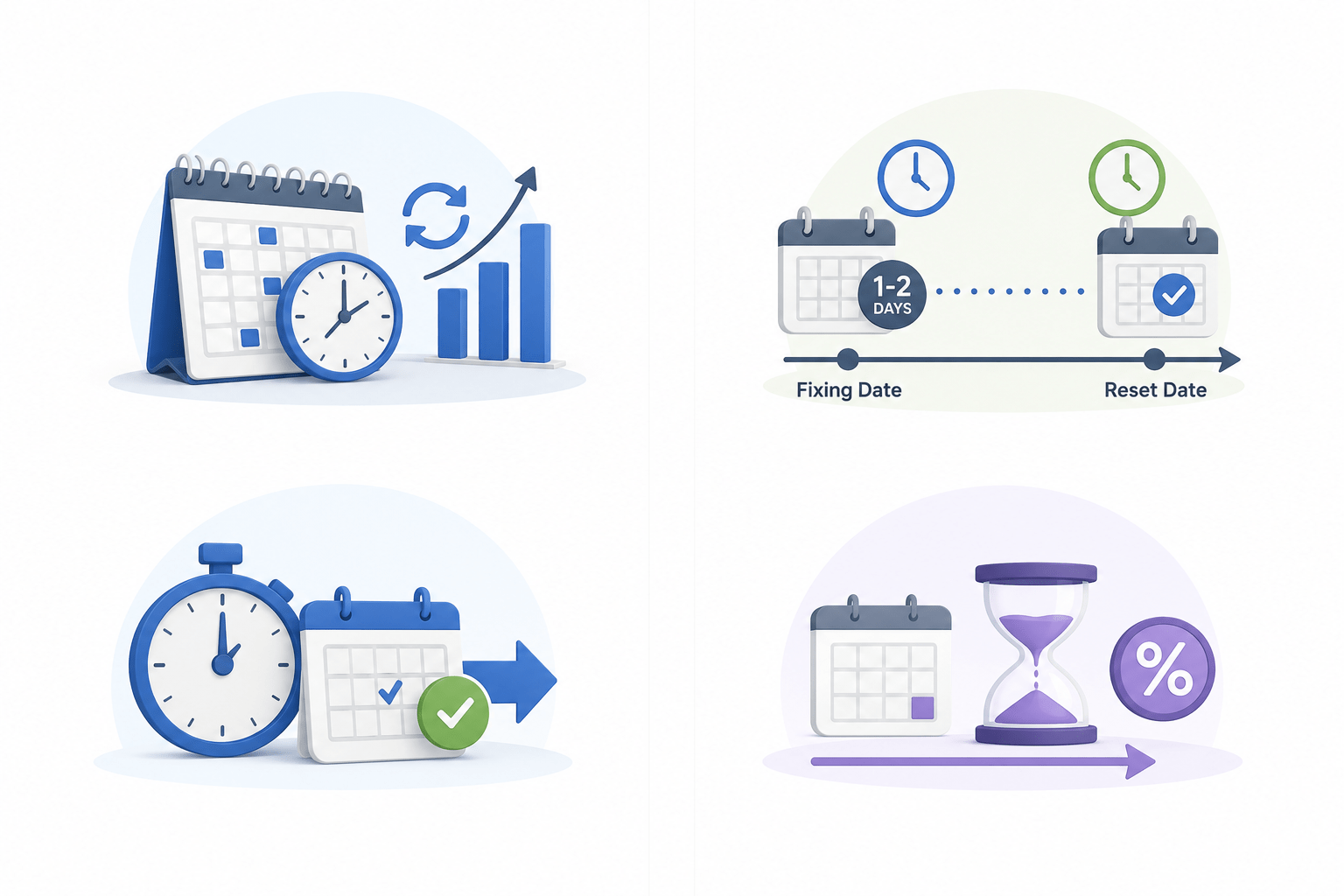
Frequency- It depends on the type of rate. For example, a swap based on 3-month MIBOR usually resets once every three months. An OIS, based on the overnight rate, resets every day and the rate is compounded over the period.
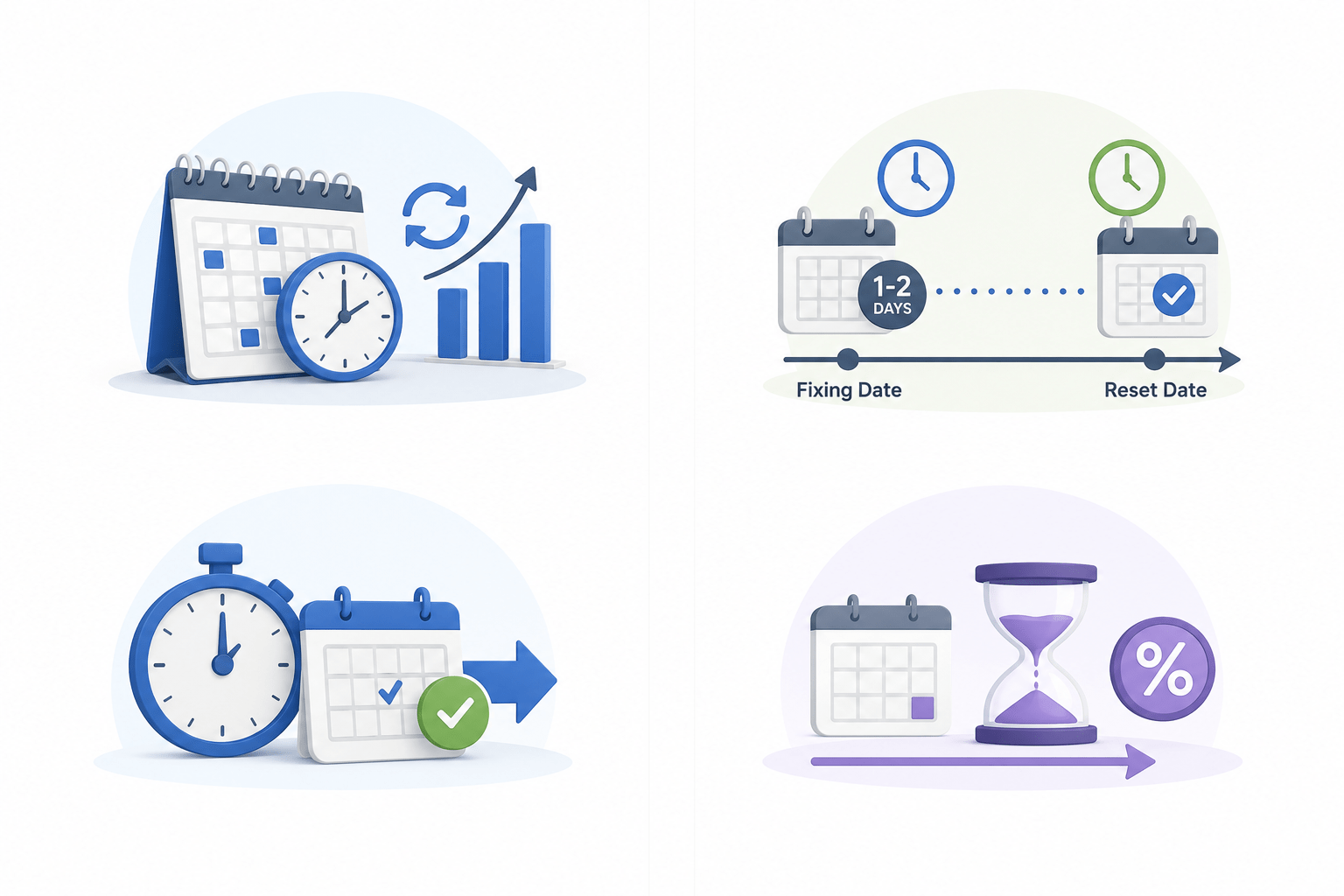
Fixing date vs. reset date — the fixing date (when the rate is checked) usually comes one or two working days before the reset date (when the new rate actually starts being used). This gap gives time to check and confirm the number.
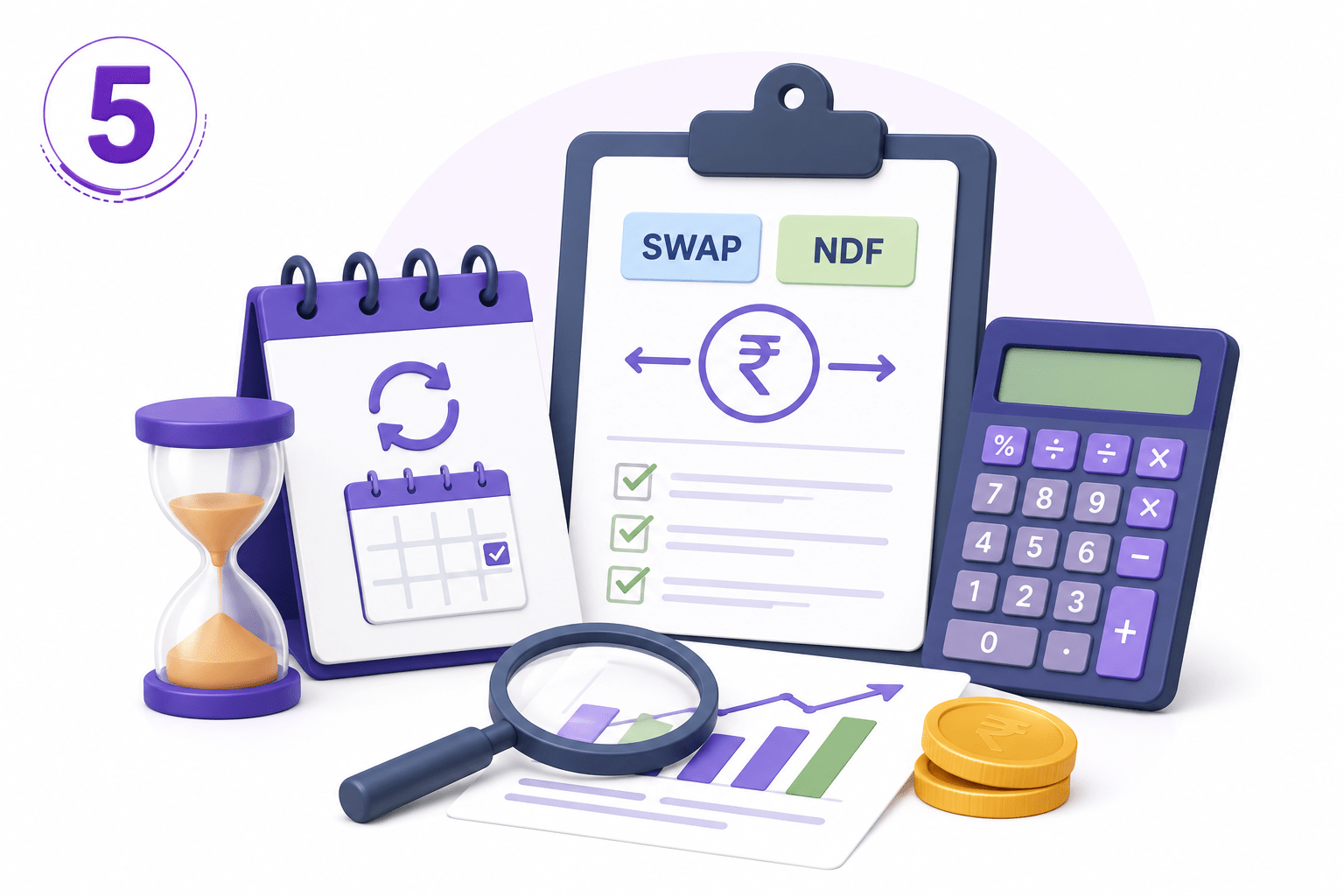
Reset “in advance” — the rate is checked at the start of the period. This is how most INR floating-rate swaps work.
Reset “in arrears” — the rate is checked at, or just before, the end of the period. This is the usual method for overnight-rate swaps (OIS), since the average rate for the period is only known once the period has actually ended.
Effect on Contracts

Cash flow uncertainty:
Until the fixing date arrives, the exact floating payment (or NDF settlement amount) stays unknown, even though all other contract terms are already fixed.
The contract's value keeps moving:
Between two reset dates, the market value of the contract changes, based on what people expect the next fixing to be. Once the rate is actually fixed, that uncertainty goes away for that period.
Effect on Contracts
A change in the rate itself causes risk:
If the reference rate is stopped or replaced (as happened with LIBOR worldwide), old contracts must be moved to a new rate. This can change how much money is actually involved.
Mistakes in the published rate cause risk too:
If the published fixing rate is wrong, or unfairly set, it affects every single contract that uses it. This is why fixings are published by trusted, regulated bodies such as FBIL.
Effect on Contracts
It also matters for valuation:
When working out the value of a swap or NDF, the correct reset frequency and timing method must be used, since this decides what cash flows are expected.
Examples Illustration 1: Quarterly reset on an INR floating-rate swap
Consider a 1-year Interest Rate Swap with quarterly resets, where Party A pays a fixed rate and Party B pays a floating rate linked to 3-month MIBOR.
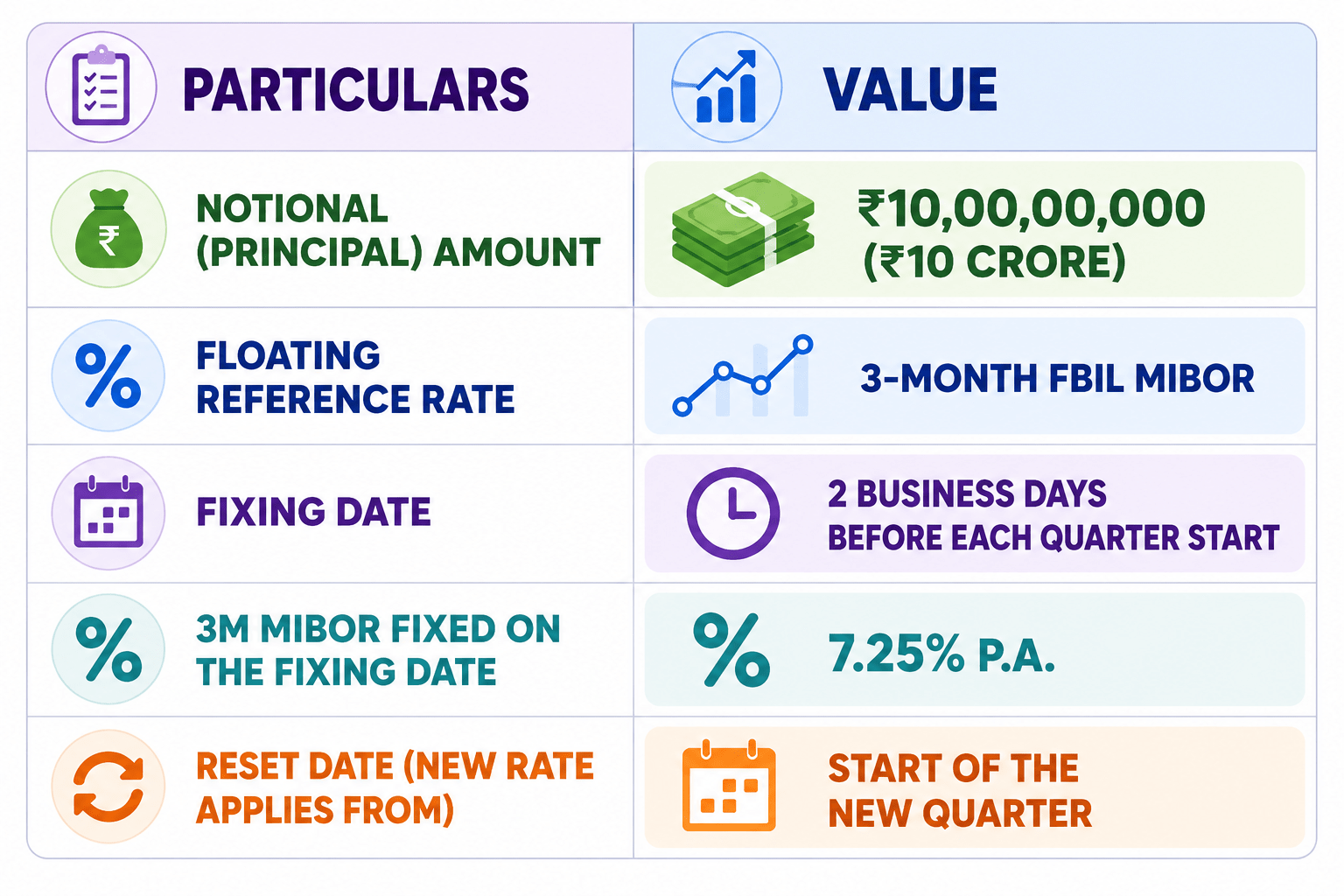
Floating interest for the quarter=
₹10,00,00,000 × 7.25% × (91/365) ≈ ₹ 18,07,397
This amount is payable only for that quarter. On the next fixing date, 3M MIBOR is observed again — it may be higher, lower, or unchanged — and the floating payment for the following quarter is recalculated accordingly.
Examples Illustration 2: Fixing for NDF cash settlement
Consider a USD/INR Non-Deliverable Forward where an Indian importer has contracted to buy USD 10,00,000 at a forward rate of ₹83.50, maturing in 3 months
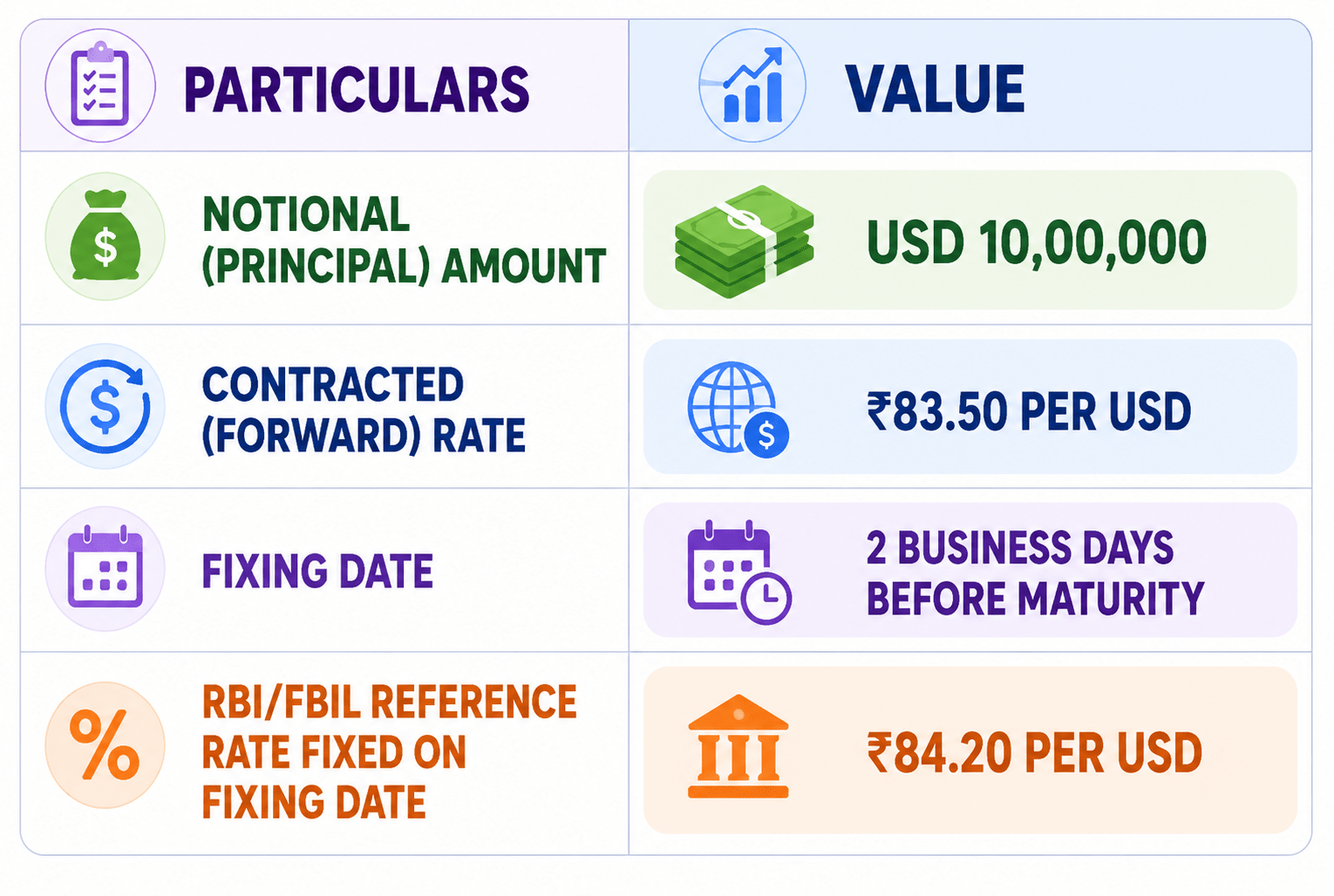
Net settlement (cash, no USD delivered)=
(84.20 − 83.50) × 10,00,000 = ₹7,00,000 received by the importer
Notice that no actual dollars change hands — only the cash difference between the contracted rate and the fixed reference rate is settled, which is the defining feature of an NDF.
Summary
5
Build strong branding
4
Use different marketing channels
3
Target the right audience
2
Create and communicate value
1
Understand customer needs
Choose cool, soft colors instead of vibrant colors
Max 5 Points for Summary & Min 2
Quiz
Which platform is mainly used for professional networking and B2B marketing ?
A. Facebook
B. Instagram
C. LinkedIn
D. Snapchat

Quiz-Answer
Which platform is mainly used for professional networking and B2B marketing ?
A. Facebook
B. Instagram
C. LinkedIn
D. Snapchat
