Fixed Income Technicals


Coupon, Frequency, Maturity

Learning Outcome
6
Basics of branding and messaging
5
Identify short-, medium-, and long-term bonds.
4
Explain maturity’s impact on risk and return.
3
Compare payment frequencies.
2
Understand bond income through coupons.
1
Define coupon, frequency, and maturity.
Coupon
|
Formula: Annual Coupon = Face Value × Coupon Rate Example: Face Value = ₹1,000, Coupon Rate = 8% Annual Coupon = ₹1,000 × 8% = ₹80 per year |
A few things worth knowing about coupons:
1.The coupon rate never changes — it stays the same from day one to maturity
2.It is always calculated on the face value, not on the current market price
3.Some bonds pay no coupon at all — these are called zero-coupon bonds, and they are sold at a discount
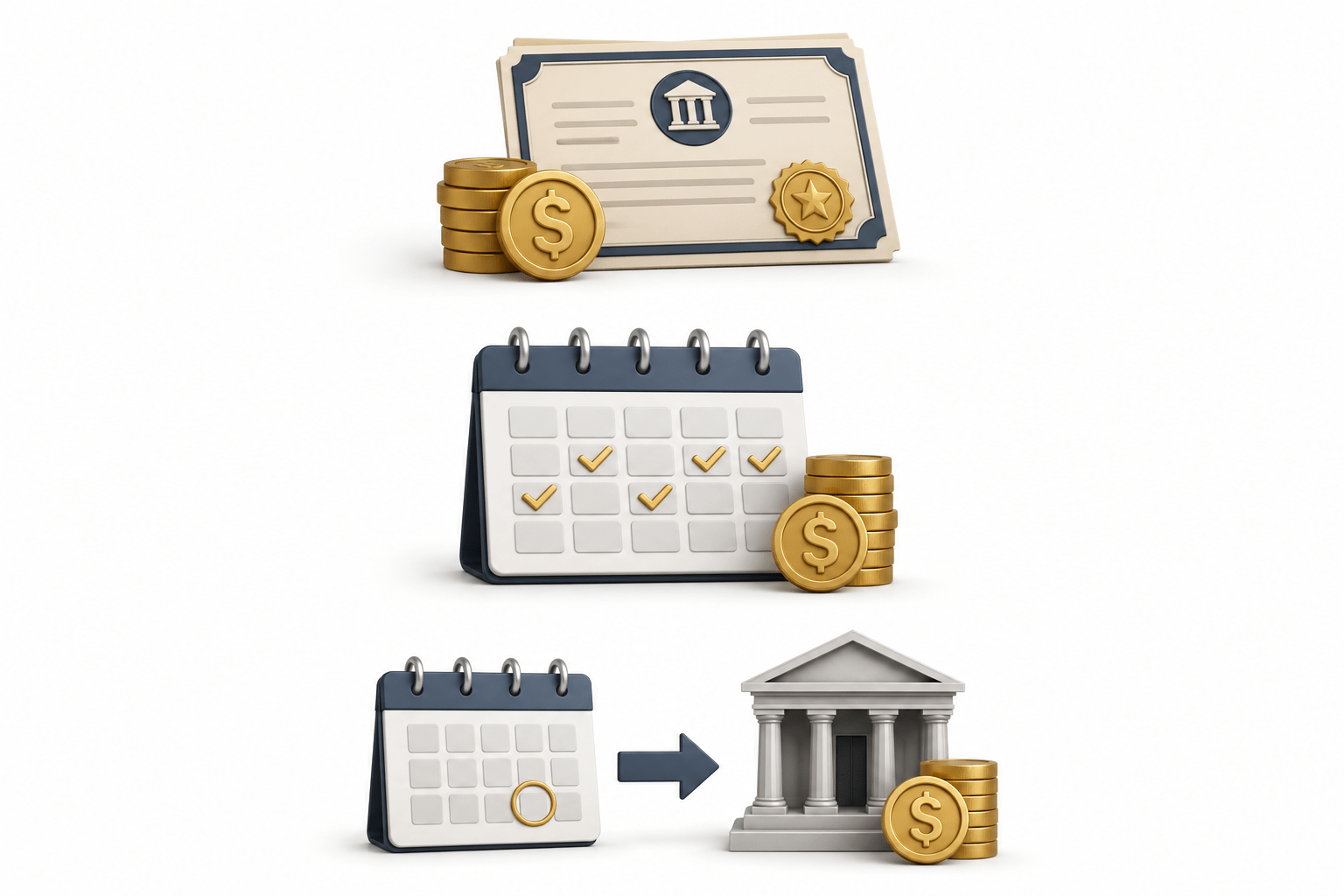
A coupon is the interest a bond pays you. It is a fixed percentage of the bond's face value (the original amount). You receive this interest on a regular schedule throughout the bond's life.
Frequency
Frequency tells you how many times in a year the bond pays you interest. The most common options are:
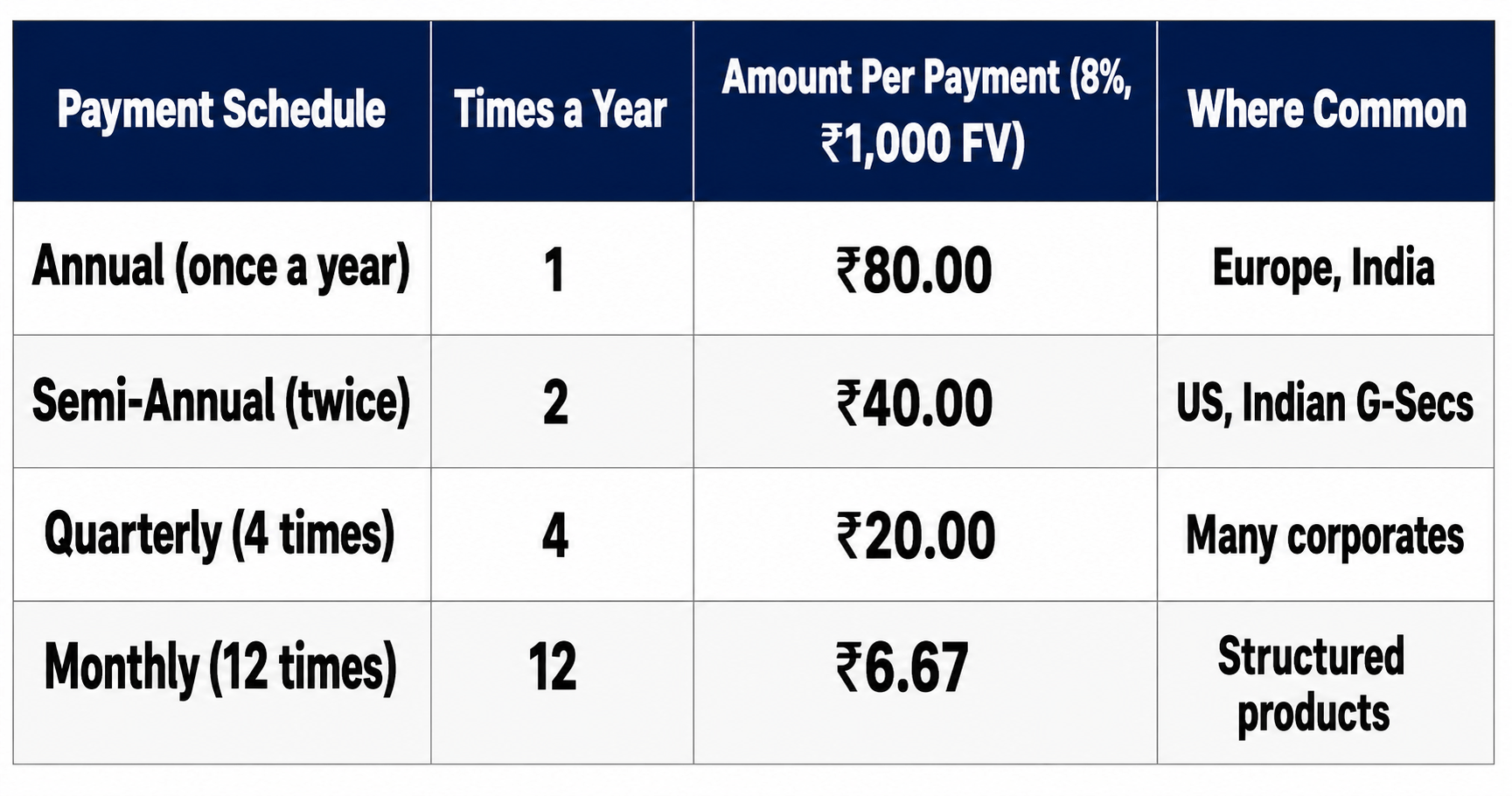
More frequent payments mean you get your money sooner. This lets you reinvest it, which slightly improves your real return. Even if the coupon rate stays the same.
Maturity
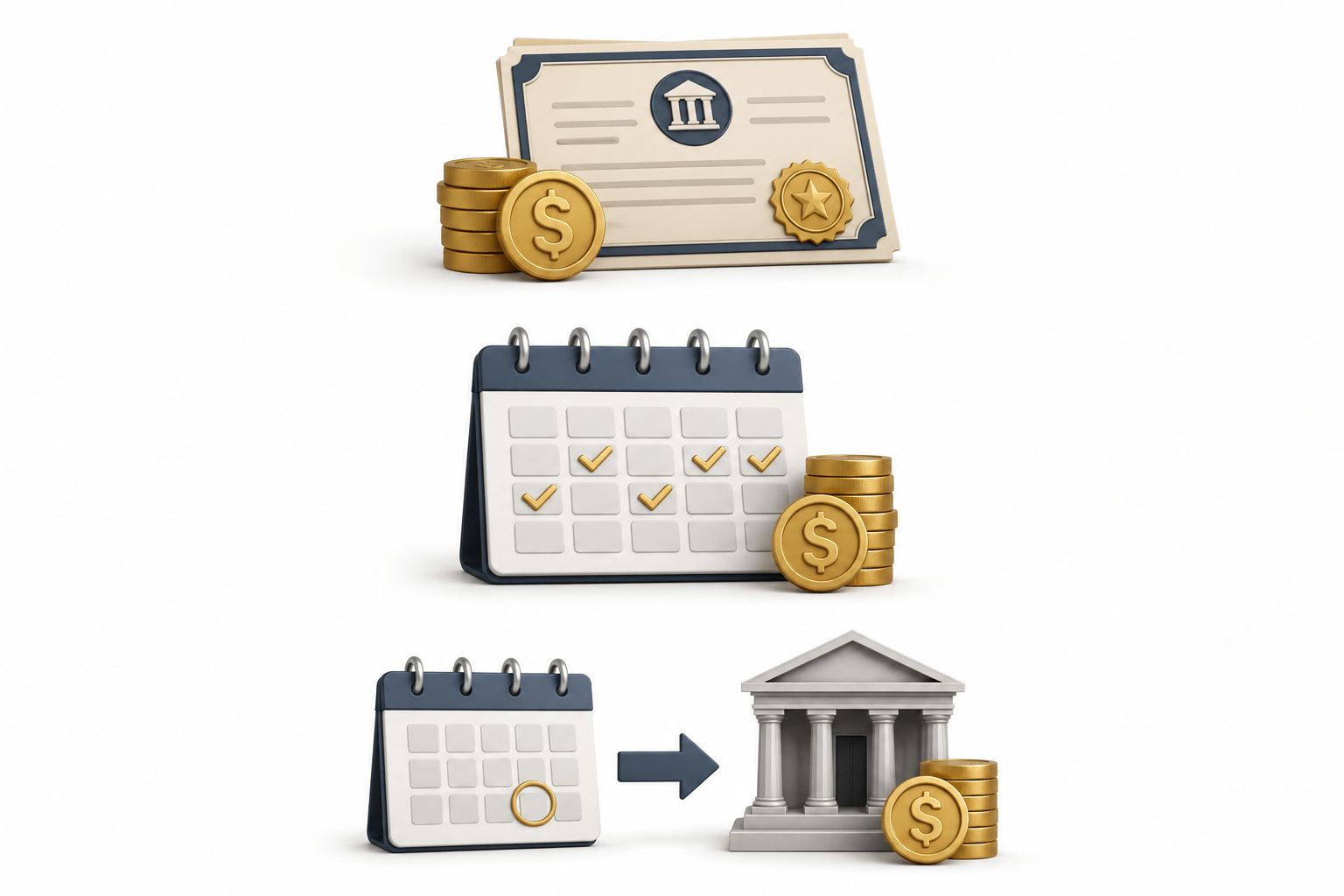
The maturity date is the day the borrower pays back your full original amount (the face value). Until that day, you keep receiving coupon payments. On the maturity date, you receive the last coupon payment plus your principal.
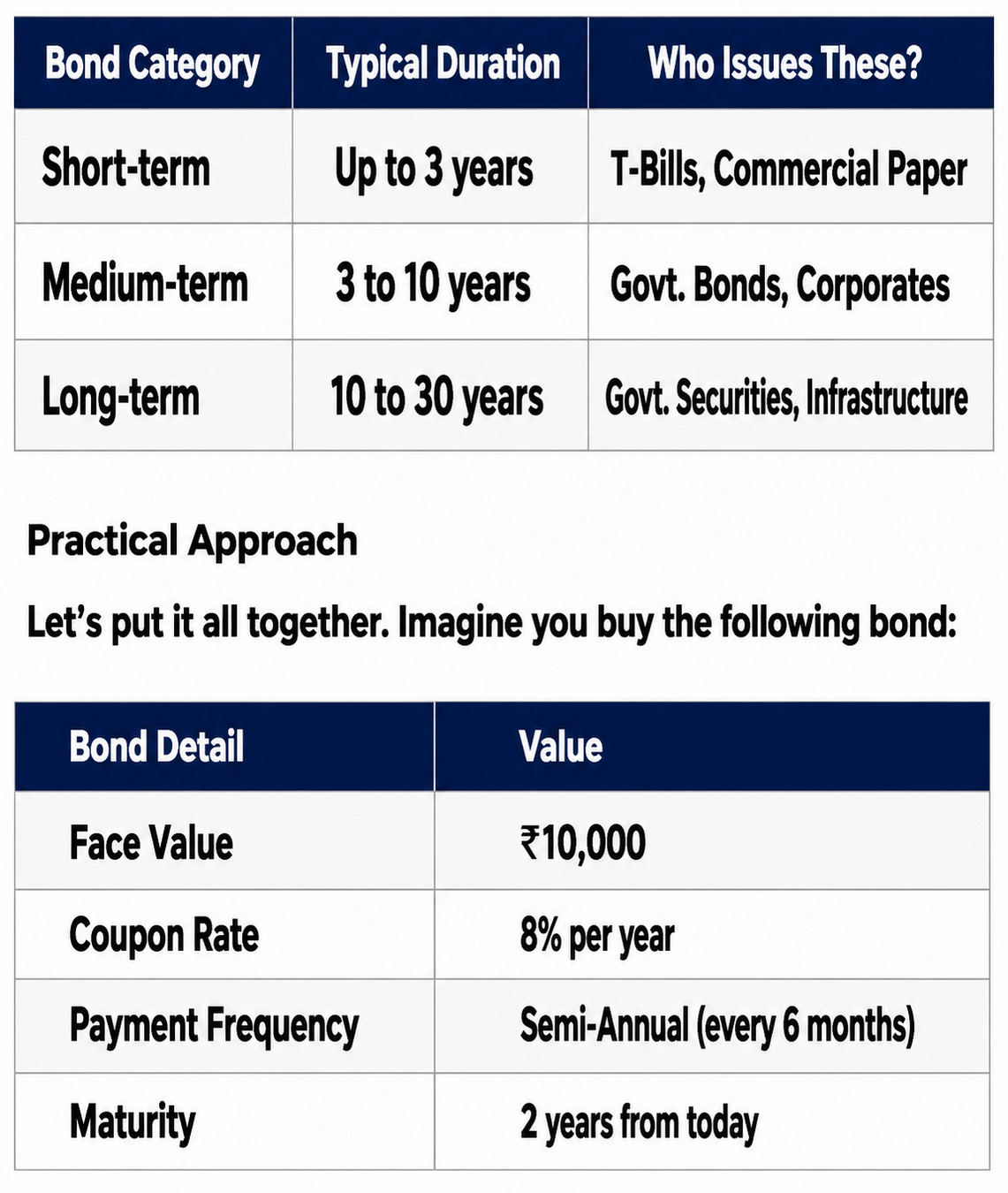
Practical Approach
Let's put it all together. Imagine you buy the following bond:
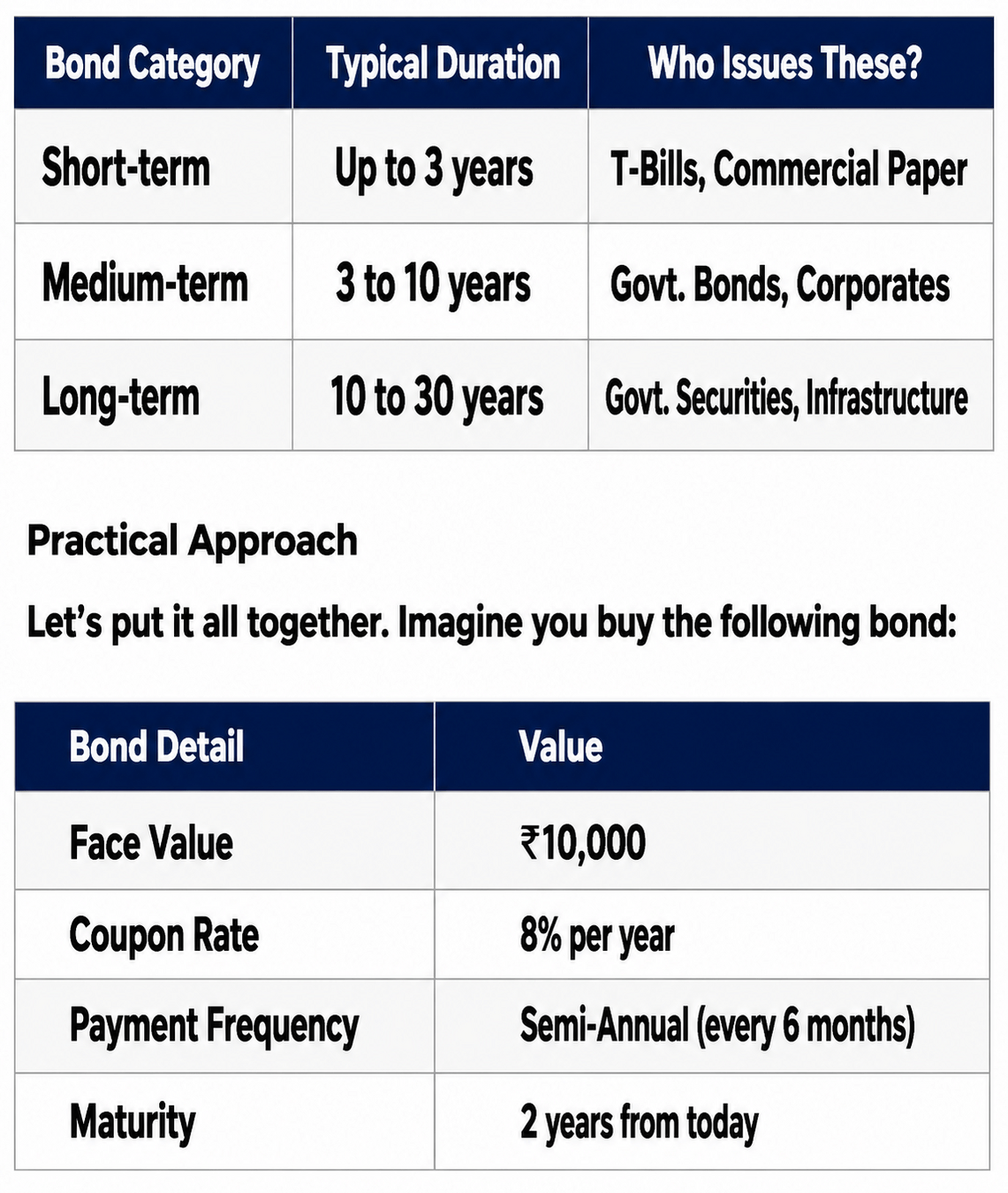
Now let's walk through what actually happens:
Step 1:
Calculate the coupon payment per period
Annual coupon = ₹10,000 × 8% = ₹800
Since it's paid semi-annually → ₹800 ÷ 2 = ₹400 every 6 months
Step 2:
Map out every payment you will receive
Month 6 → ₹400
Month 12 → ₹400
Month 18 → ₹400
Month 24 → ₹400 (last coupon) + ₹10,000 (face value returned)
Step 3:
Add up your total income
Total coupon received = ₹400 × 4 payments = ₹1,600
Principal returned at maturity = ₹10,000
Grand total received = ₹11,600
Summary
5
Investors earn coupons and receive principal at maturity.
4
Frequent payments enable earlier reinvestment.
3
Maturity is when principal is repaid.
2
Frequency determines payment timing.
1
Coupon is the bond’s fixed interest payment.
Quiz
What does the coupon represent in a bond?
A. Principal repayment
B. Interest payment
C. Market price
D. Maturity date

Quiz-Answer
What does the coupon represent in a bond?
A. Principal repayment
B. Interest payment
C. Market price
D. Maturity date
