Introduction to Terraform & it's basics


History of Terraform? Why Terraform? Declarative vs Imperative

Learning Outcome
5
Justify why Terraform uses a Declarative model
4
Differentiate Declarative vs Imperative approaches
3
Define Terraform in technical and practical terms
2
Describe why Infrastructure as Code became necessary
1
Explain the historical problem Terraform was created to solve
6
Relate Terraform's design to modern DevOps practices
Hook/Story/Analogy(Slide 4)
Imagine a company managing 500 servers across AWS, Azure and on-prem
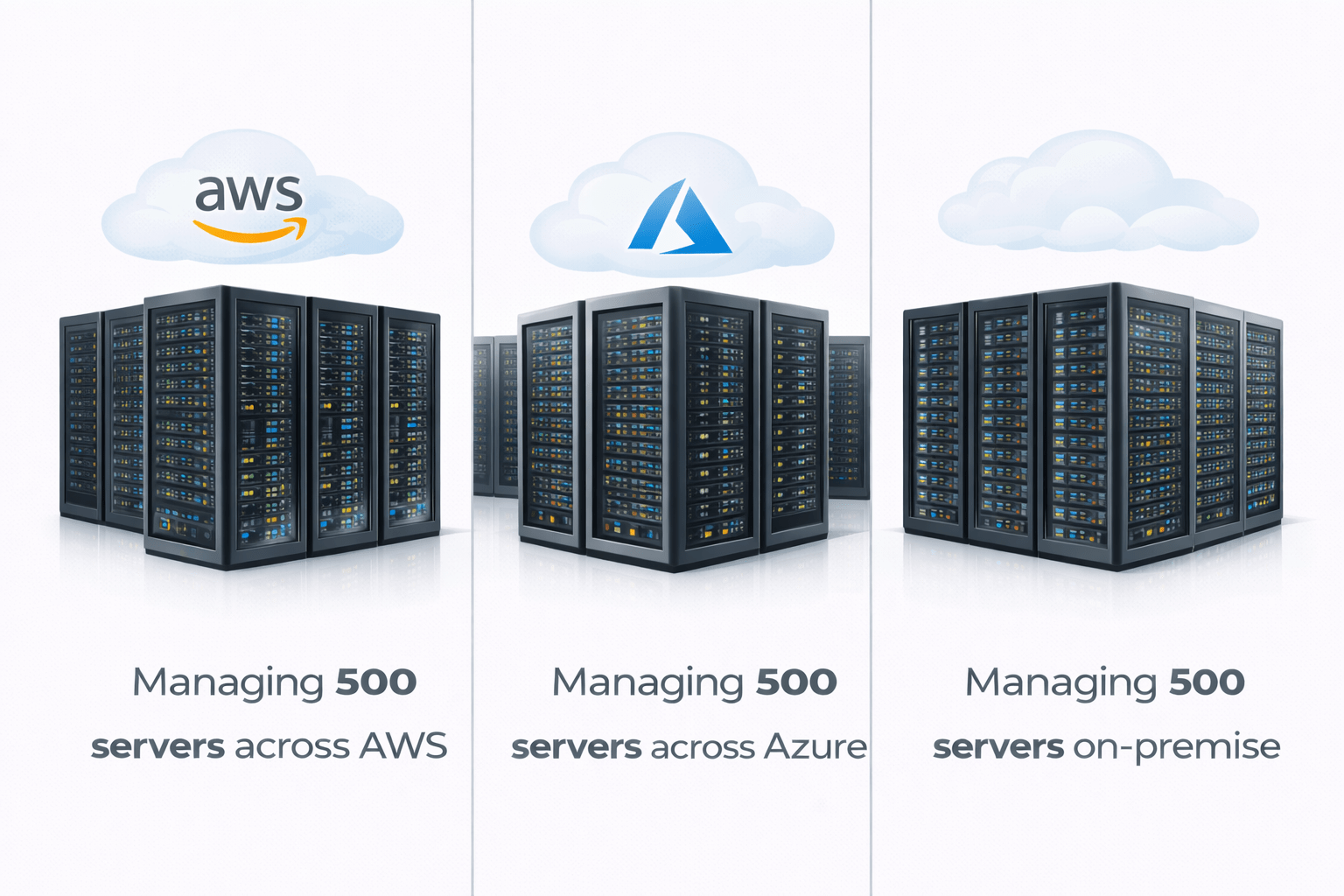
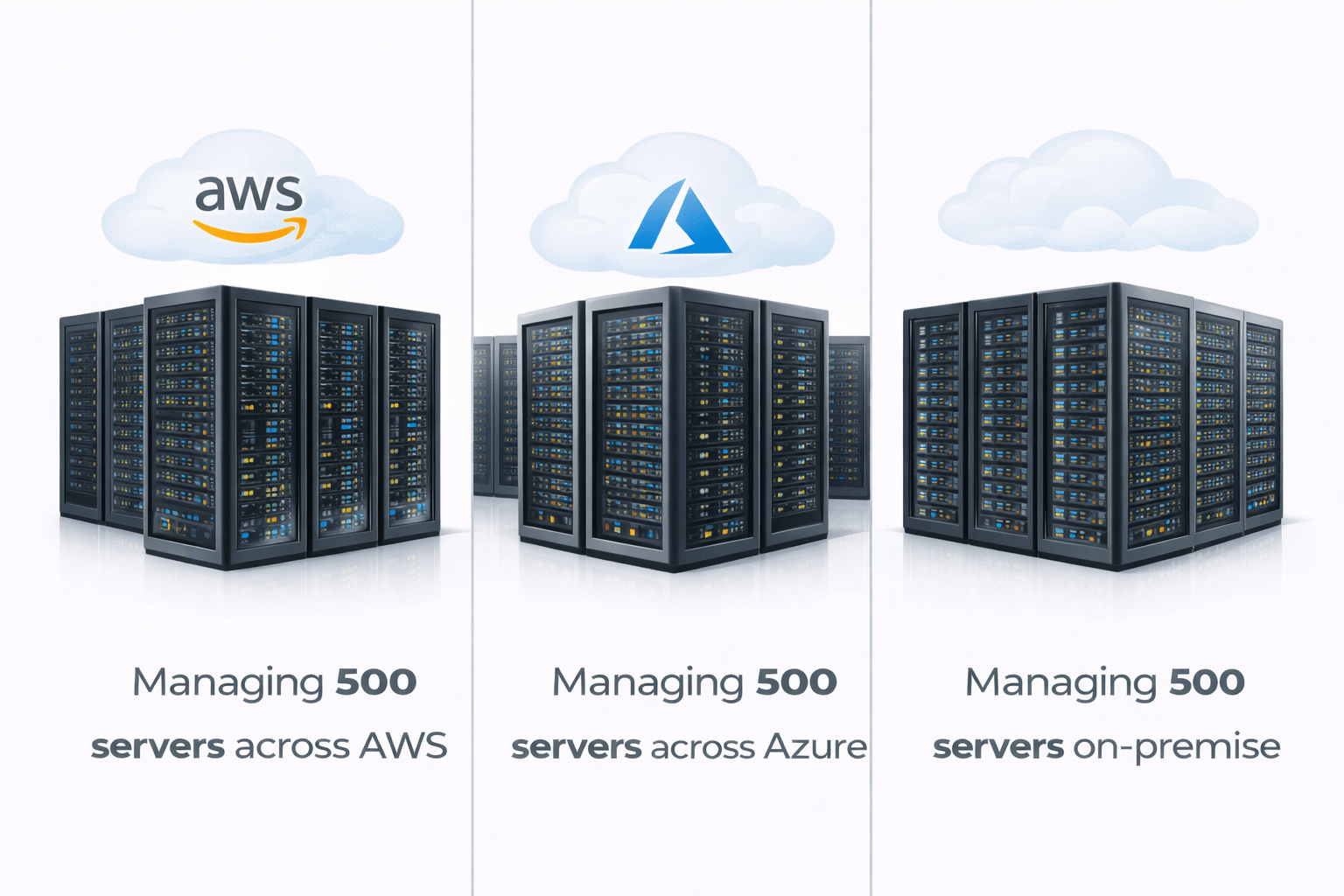

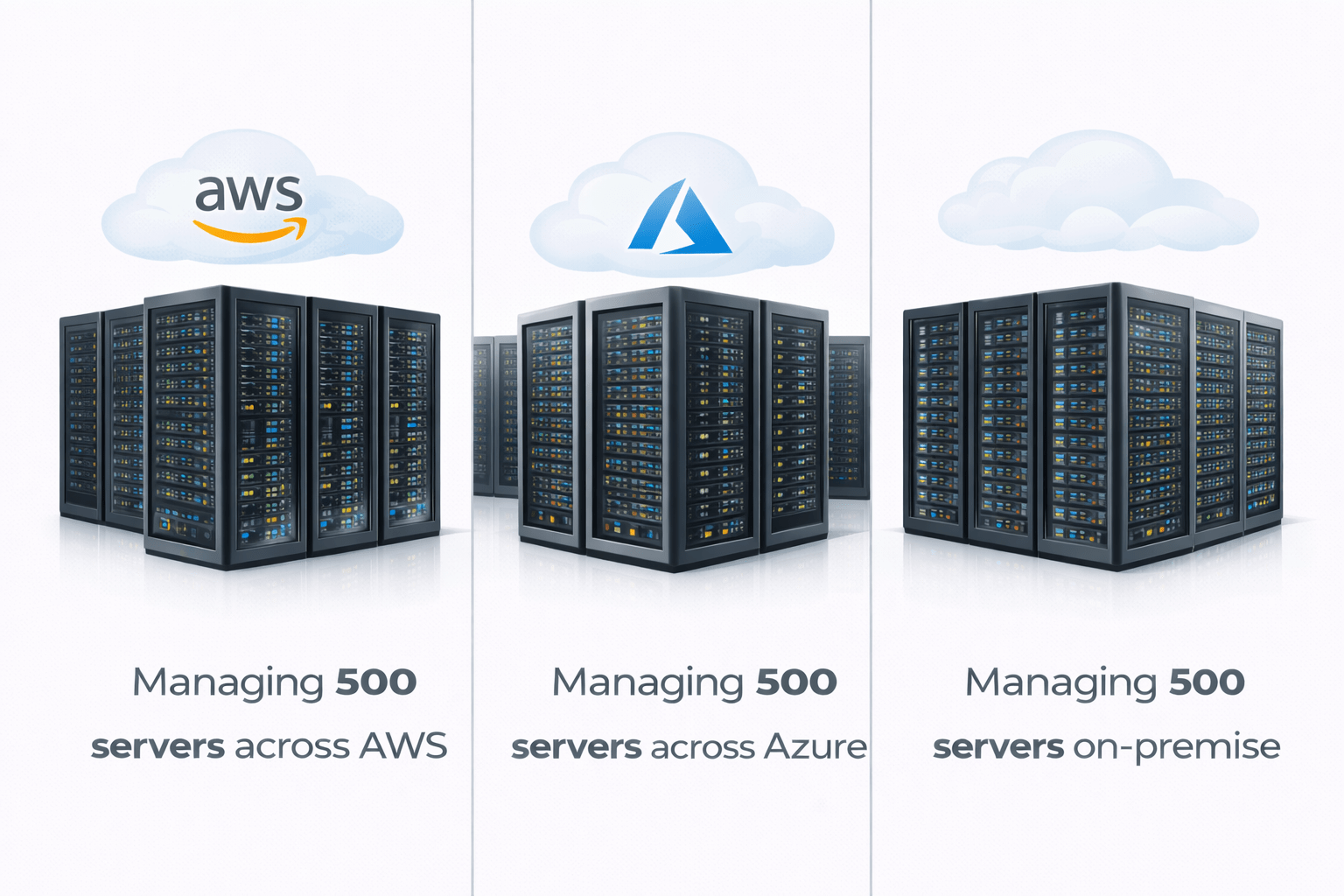

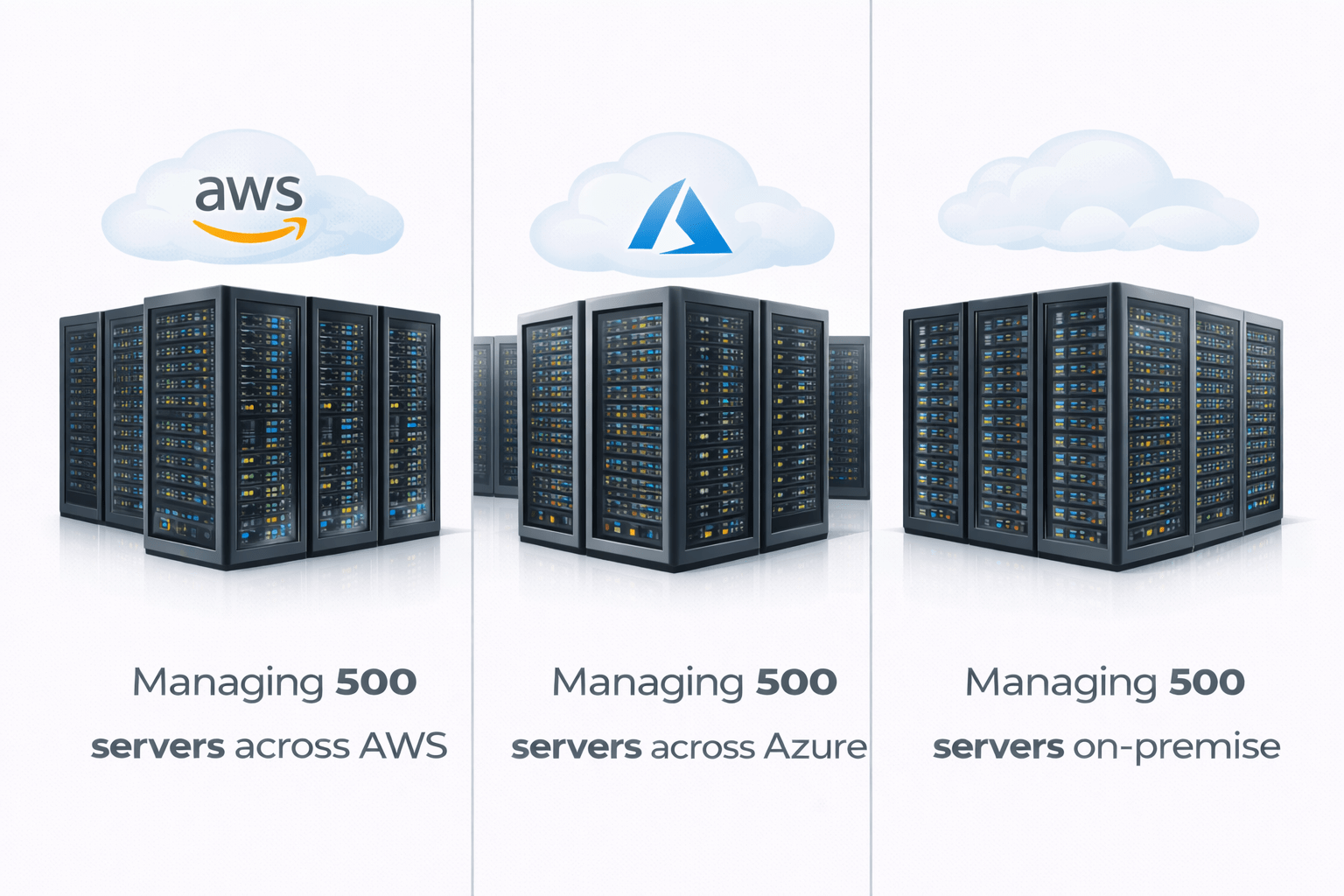
On-Premises
Hook/Story/Analogy(Slide 4)
Earlier method:
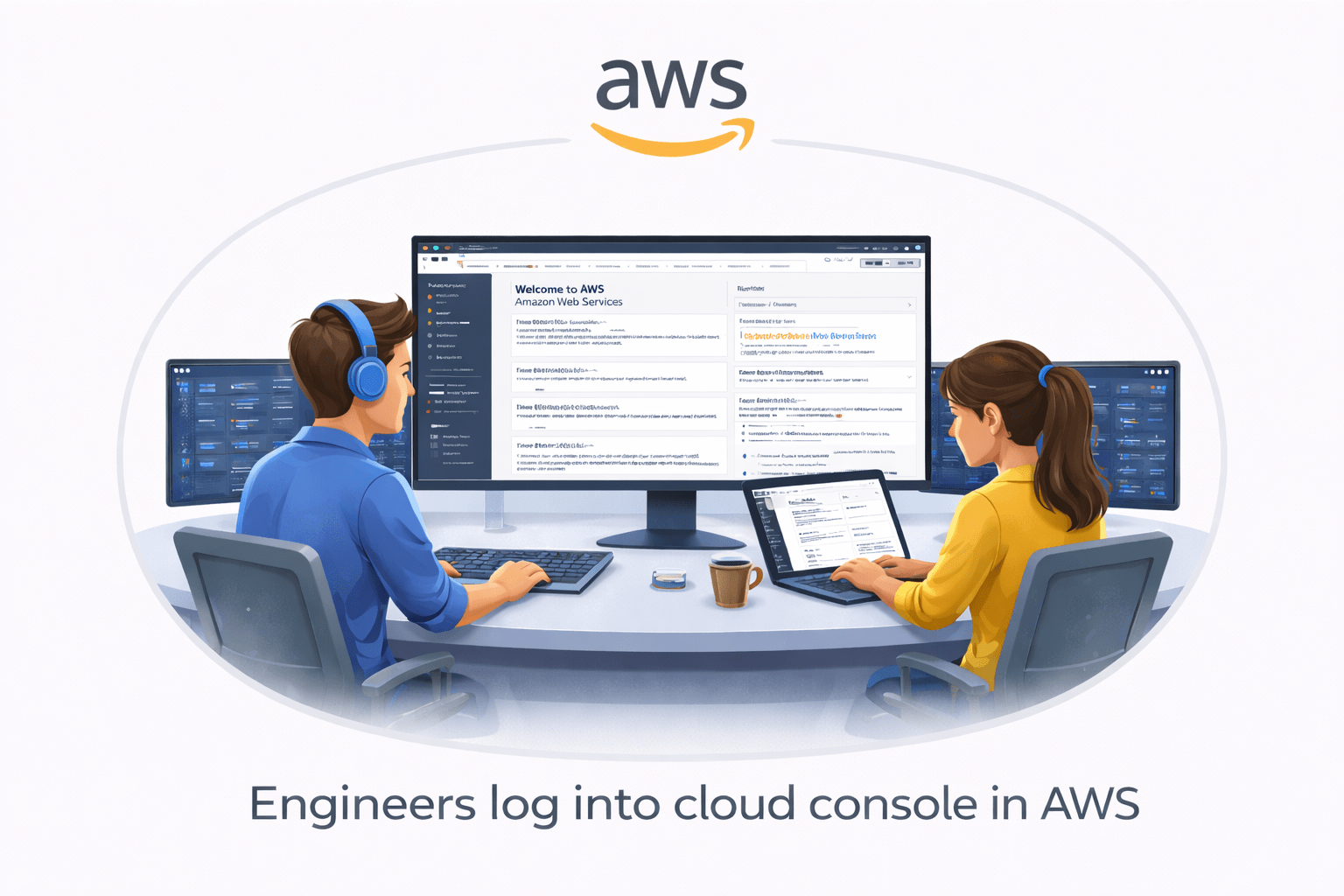
Engineers log into cloud console
Click to create servers
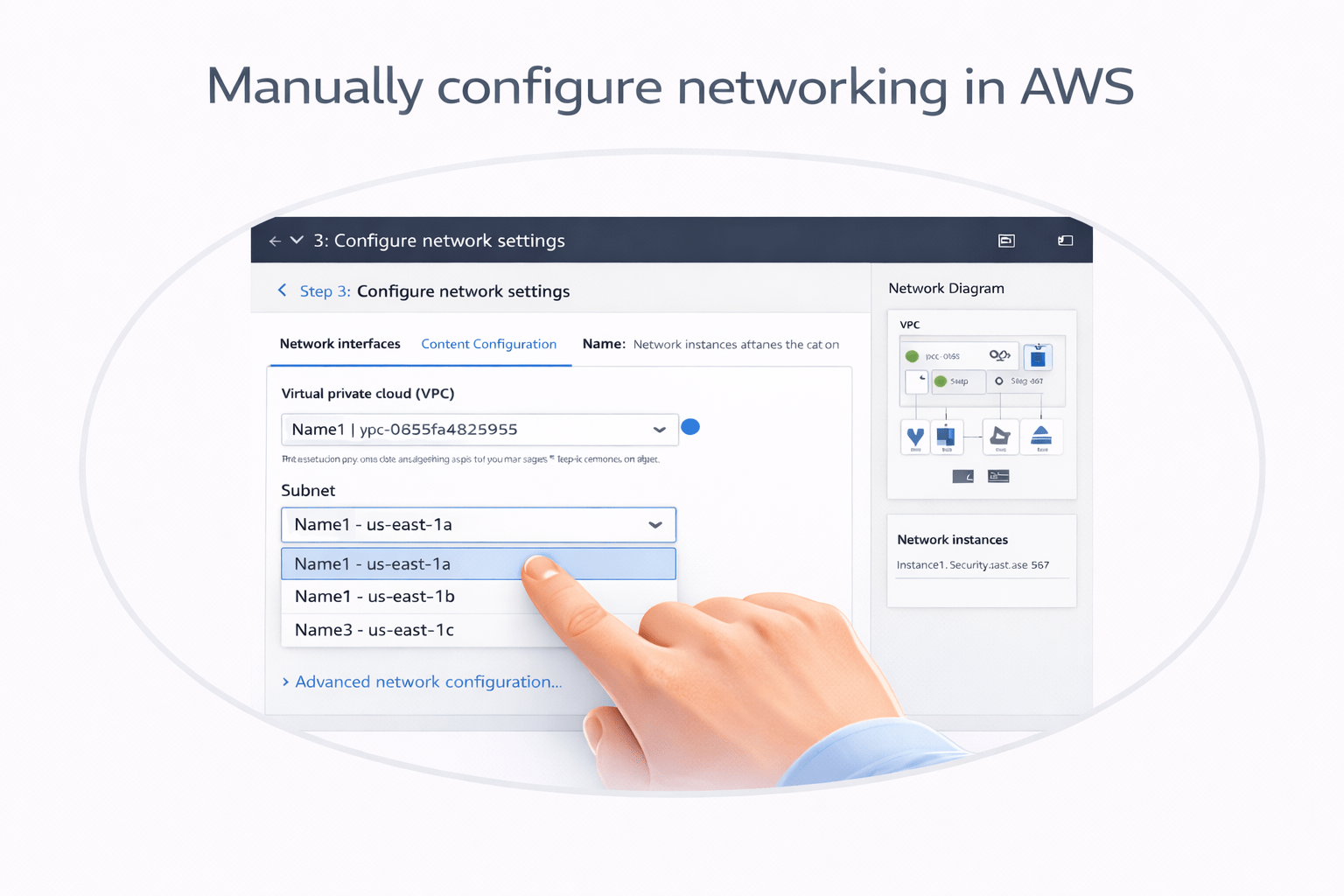
Manually configure networking
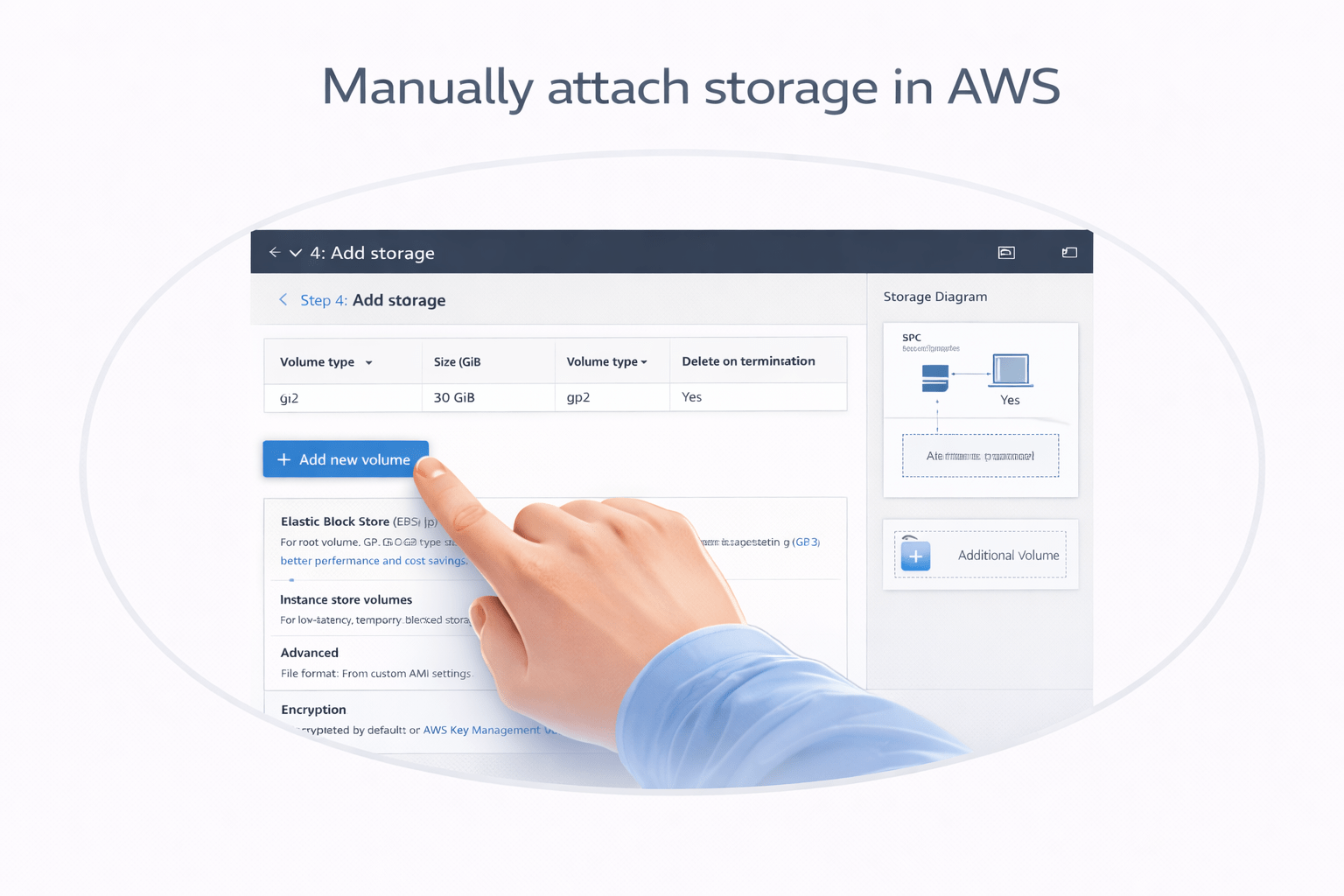
Manually attach storage

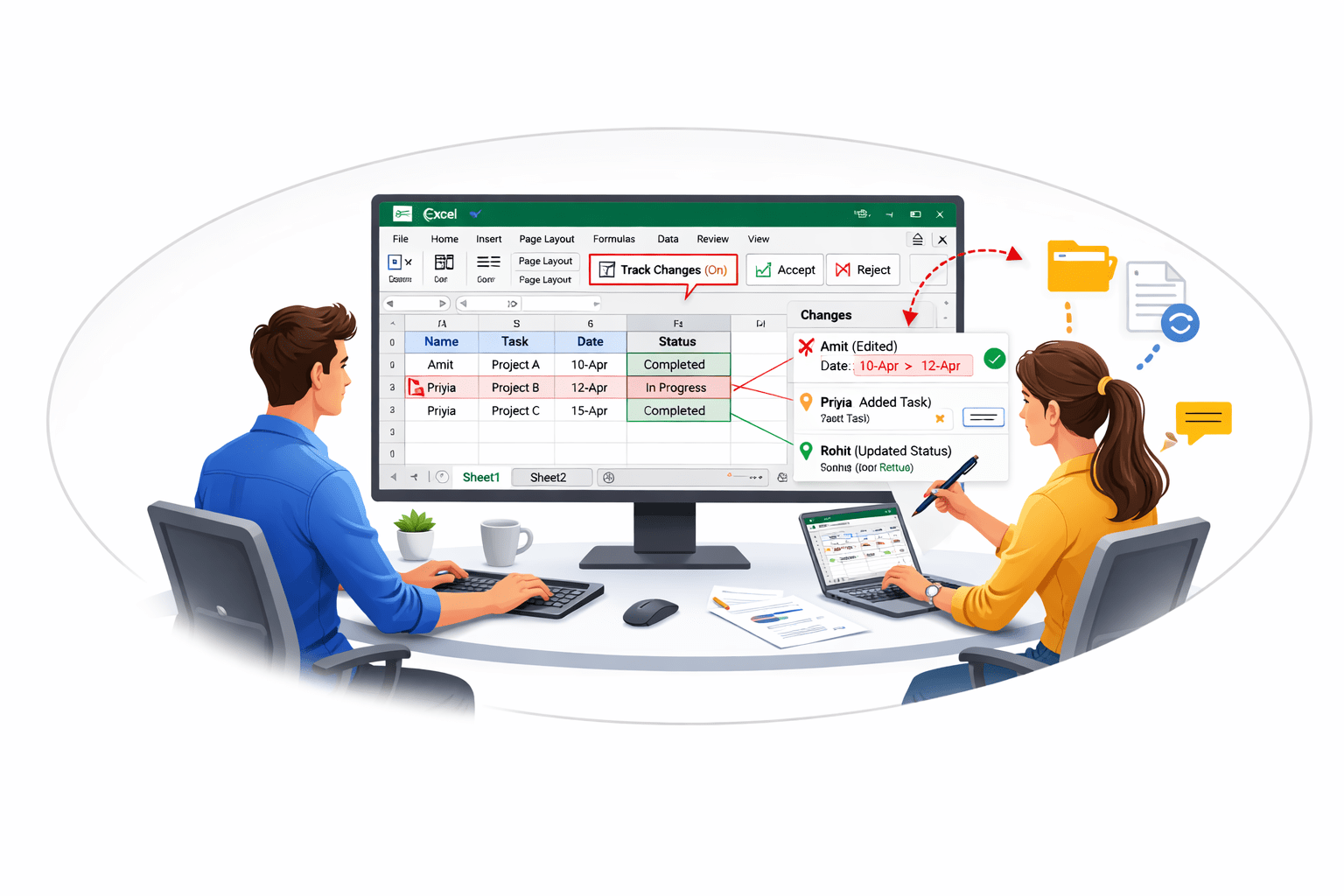
Document changes in Excel
No version control
No rollback
No consistency guarantee



Hook/Story/Analogy(Slide 4)
Now imagine:
Same infrastructure needed in 3 environments (dev, staging, prod) & Manual process repeated every time
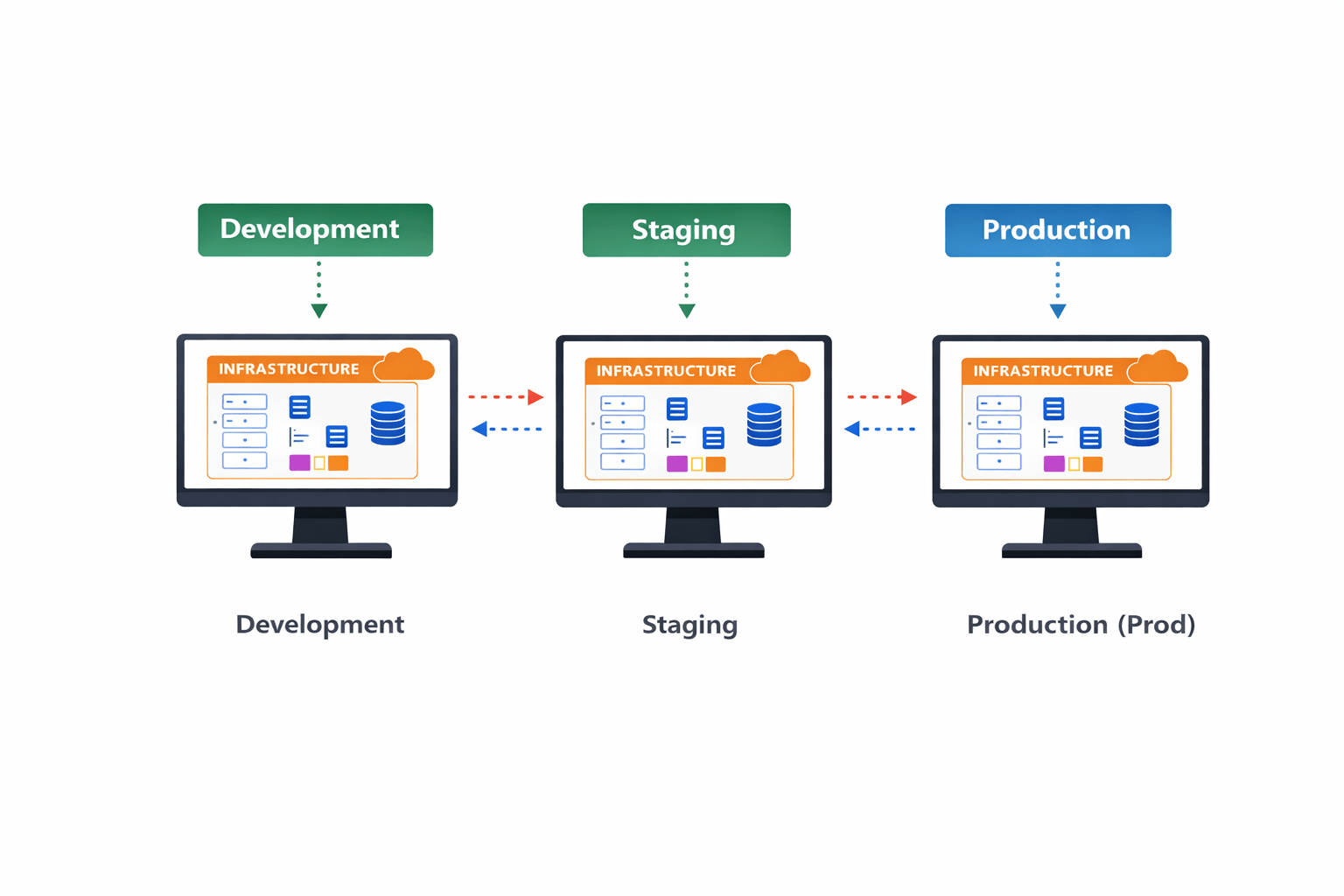
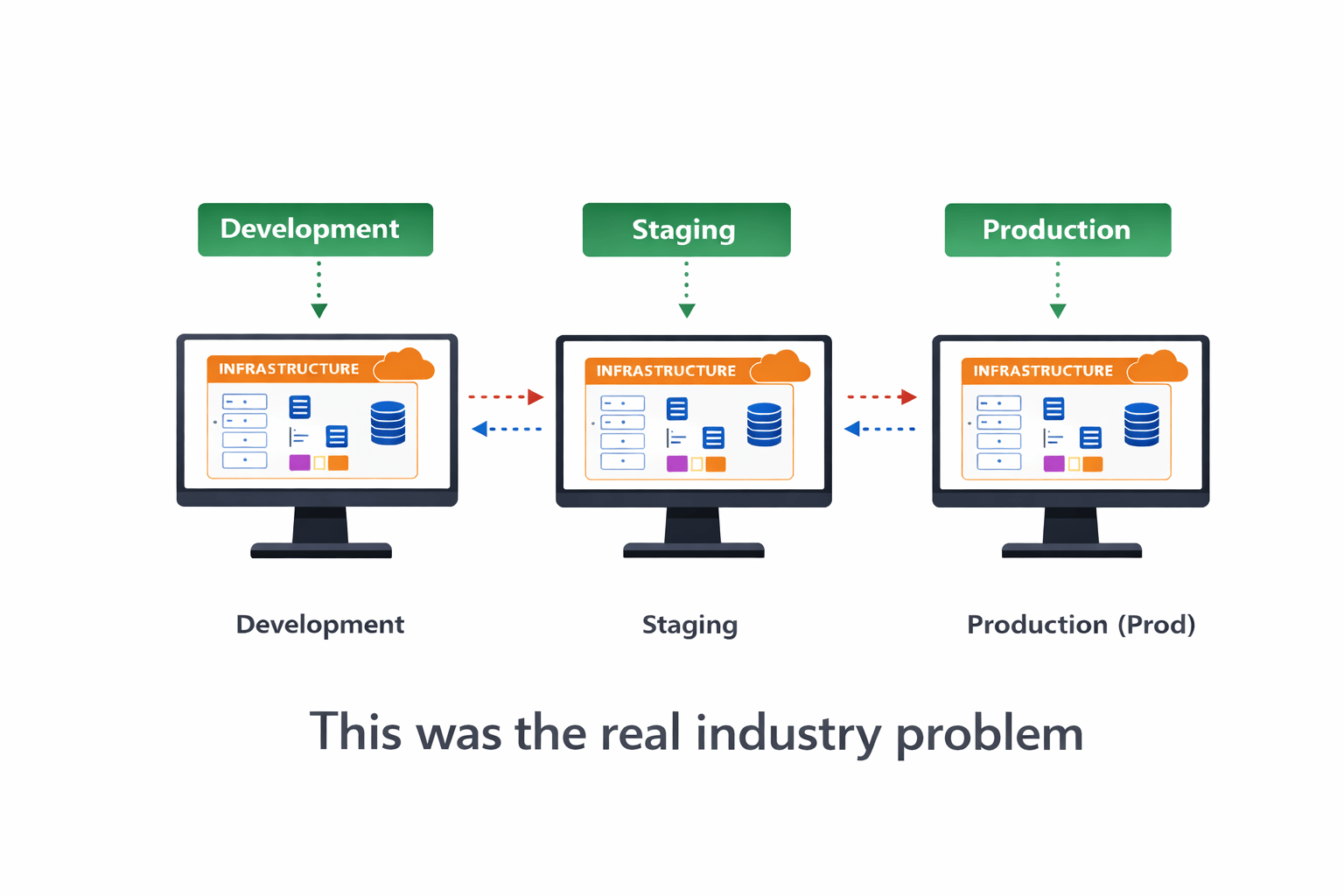
Hook/Story/Analogy(Slide 4)
Now imagine:
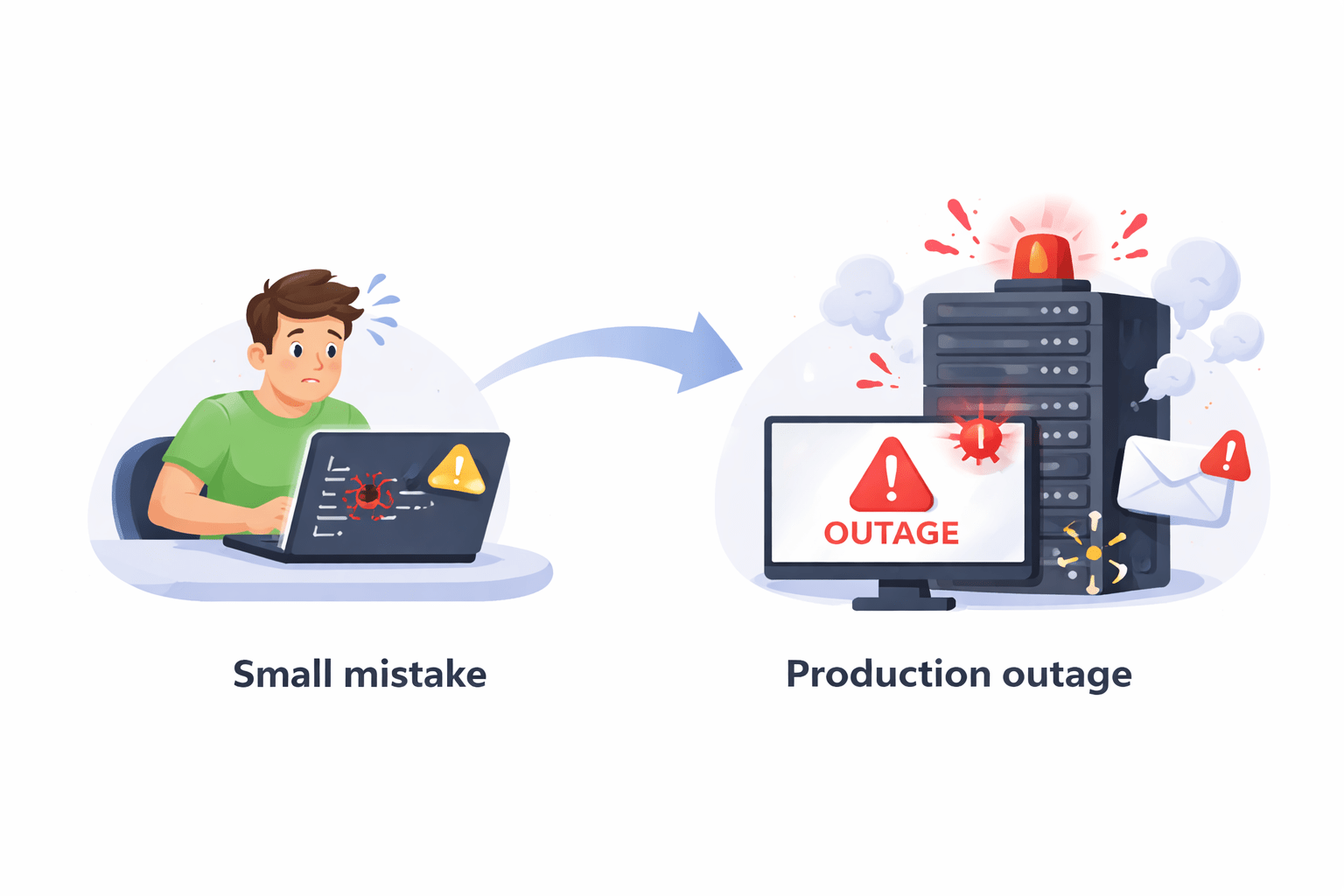
Small mistake = Production outage
This was real industry problem
Hook/Story/Analogy(Slide 4)
Infrastructure complexity increased faster than human capacity to manage it manually
Just like software moved from manual coding to version-controlled pipelines, infrastructure also needed the same rigor
This need gave birth to Infrastructure as Code tools and Terraform became one of the most powerful among them
Transition from Analogy to Technical Concept(Slide 5)
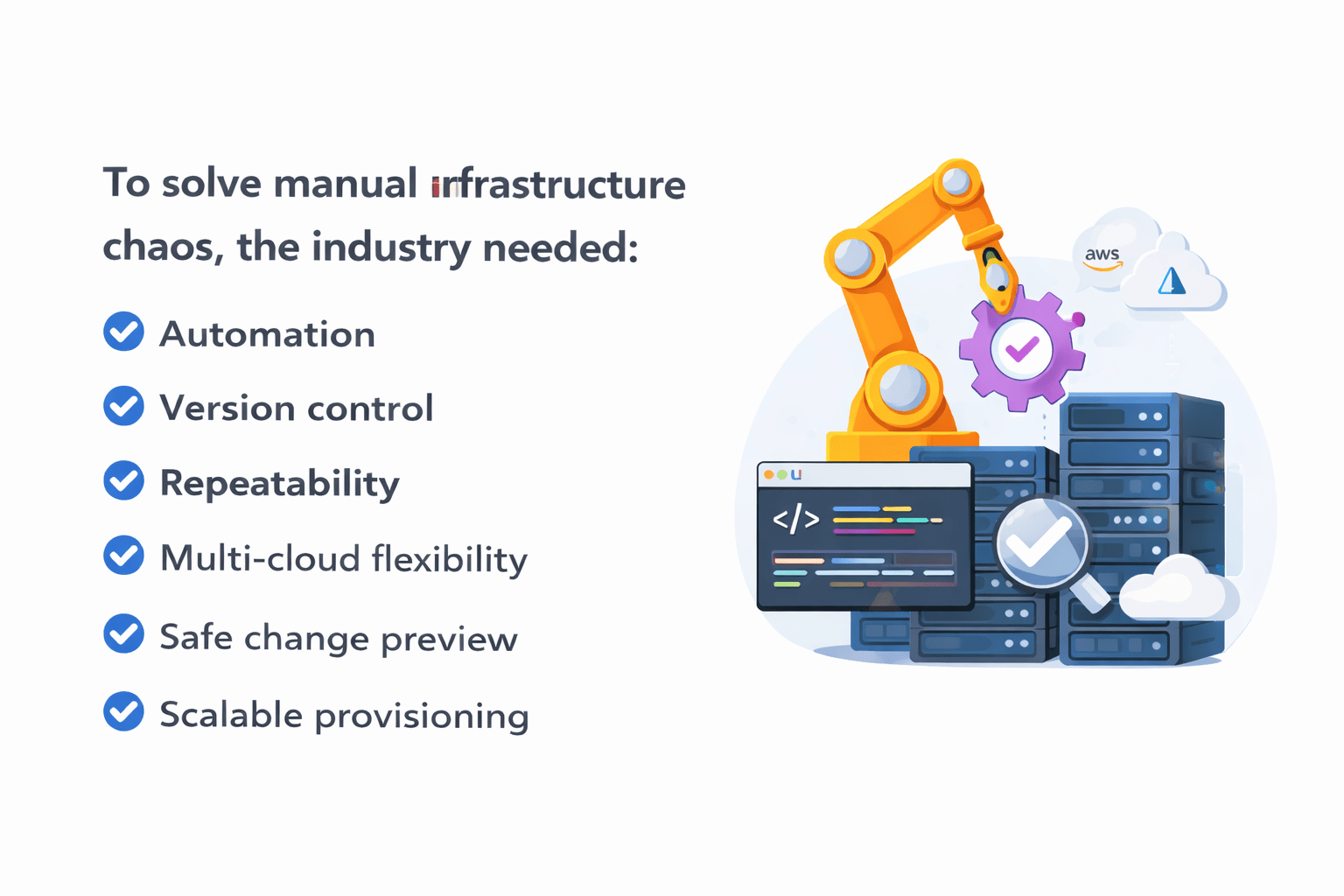
Automation
Version control
Repeatability
Multi-cloud flexibility
Safe change preview
Scalable provisioning
To solve manual infrastructure chaos, the industry needed:
Transition from Analogy to Technical Concept(Slide 5)
HashiCorp introduced Terraform in 2014 as an Infrastructure as Code tool to address these exact needs
Now let us understand the journey

History of Terraform
Pre-IaC Era (Manual Infrastructure)
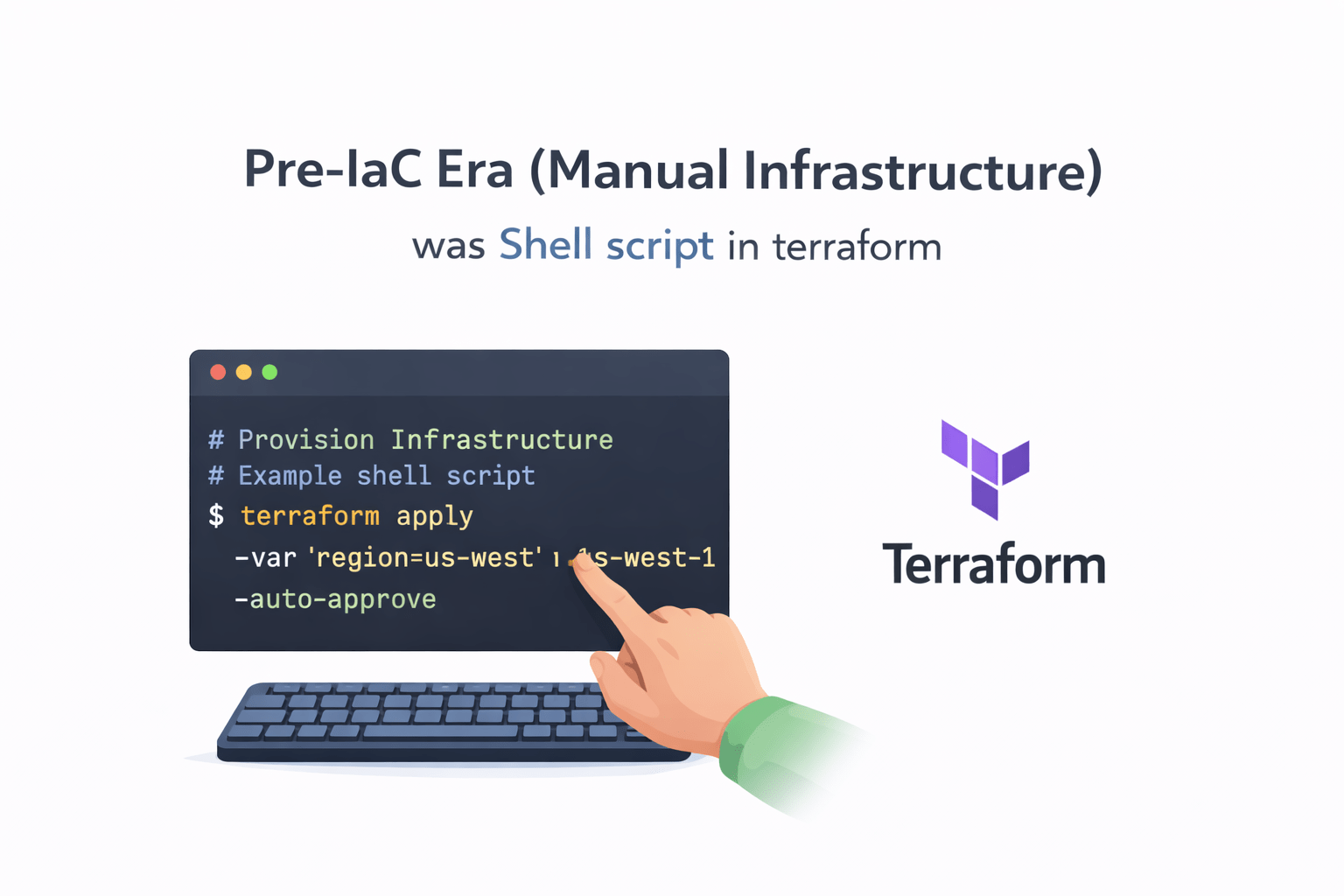
- Shell scripts
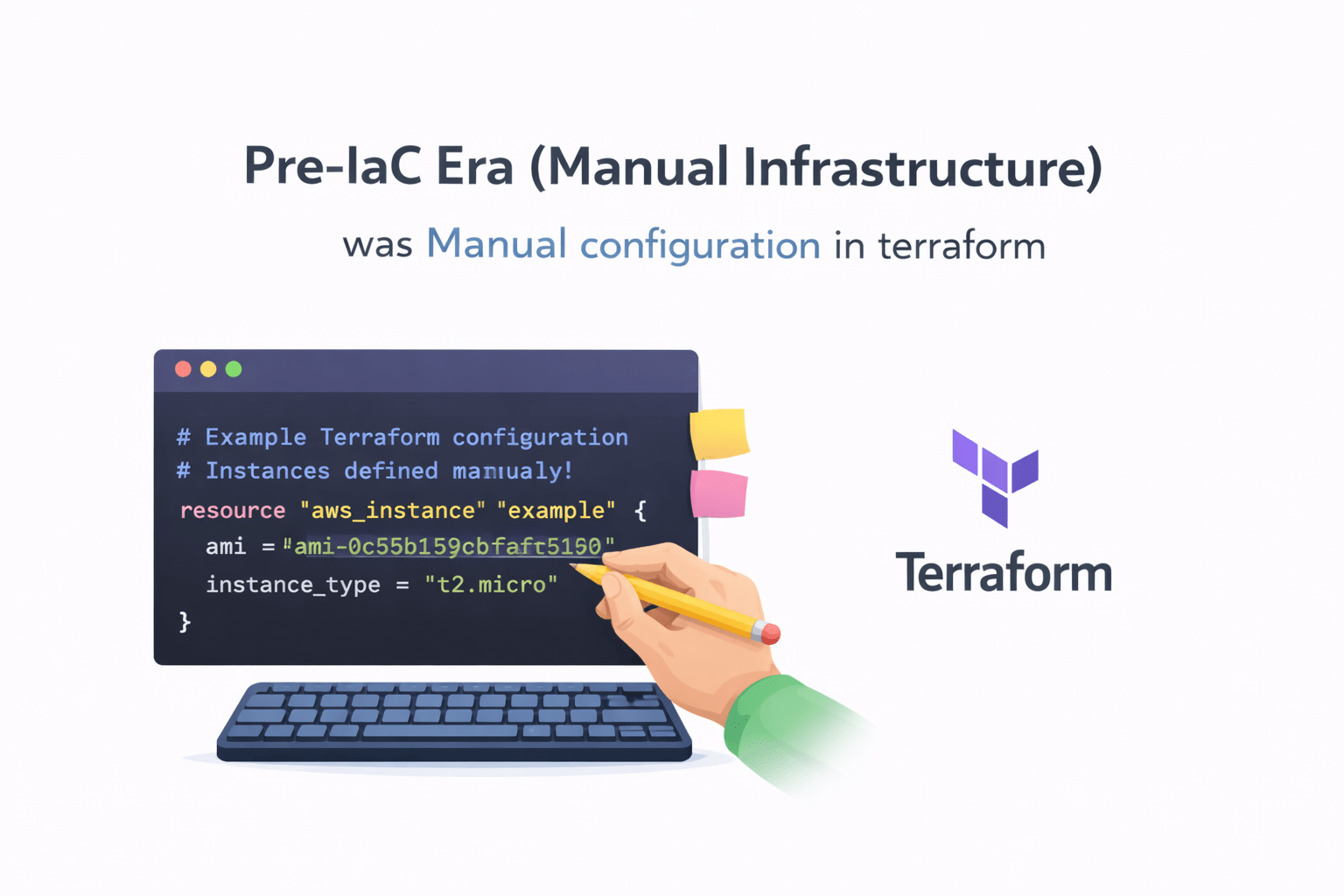
- Manual configuration
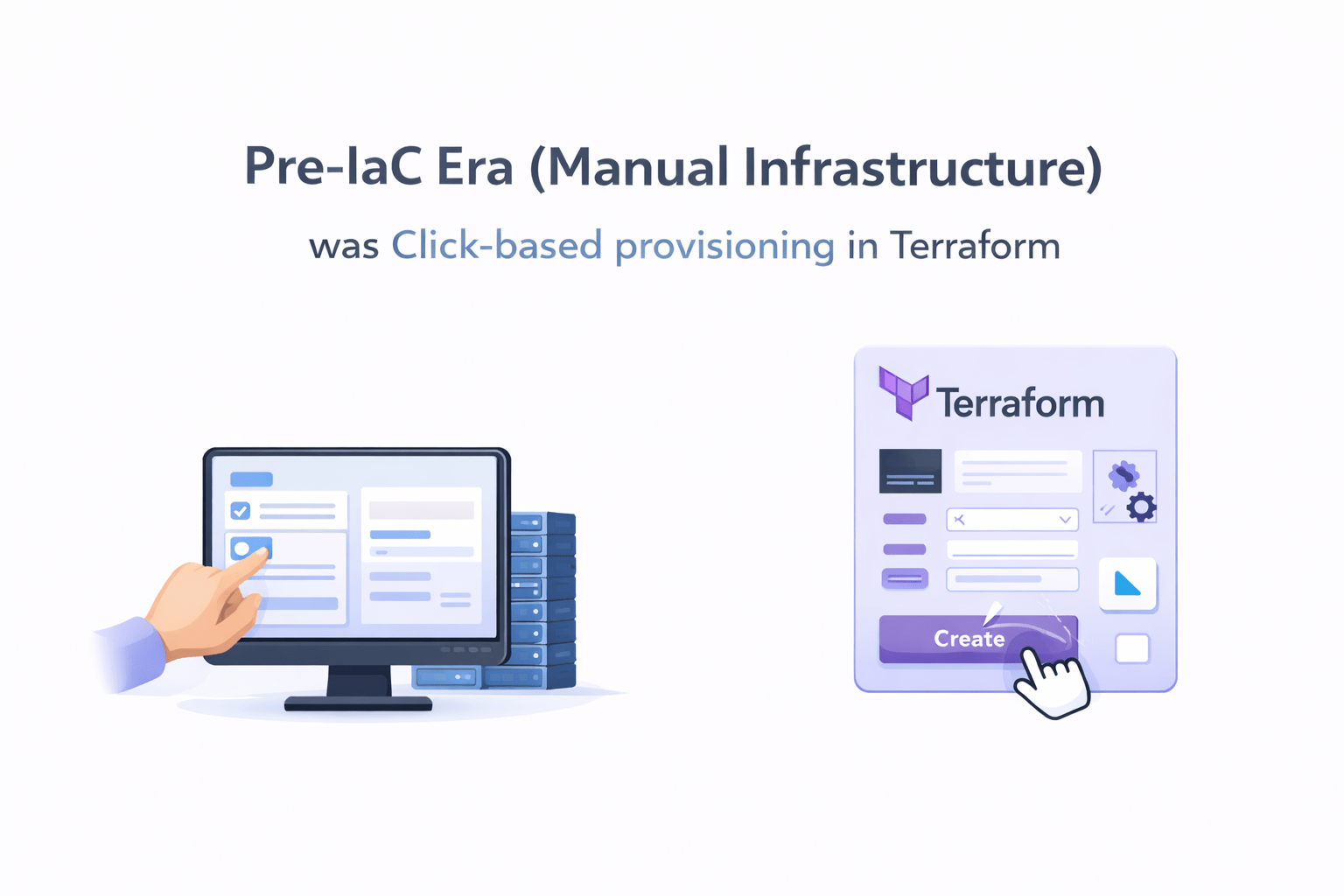
- Click-based provisioning
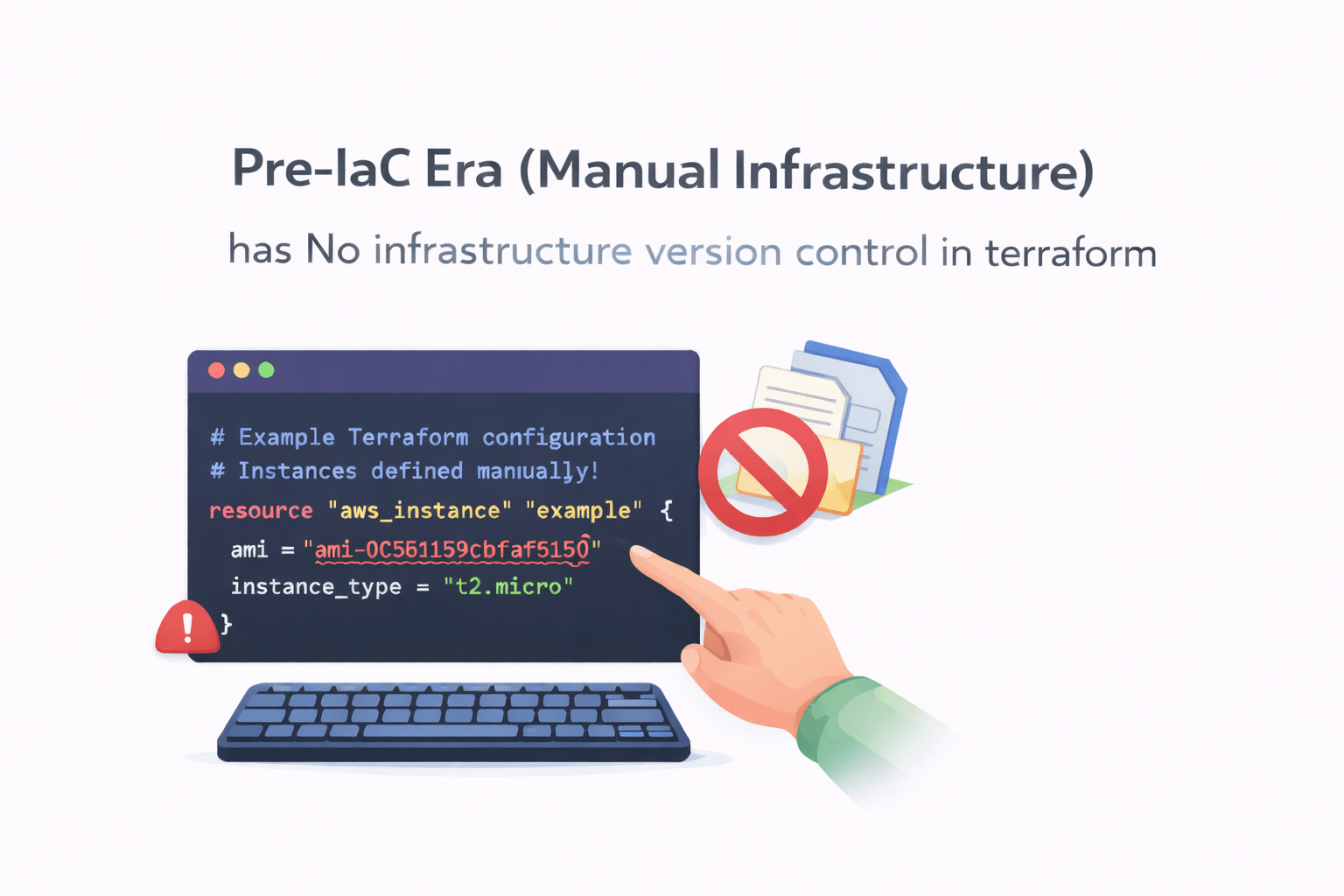
- No infrastructure version control
- Error-prone changes
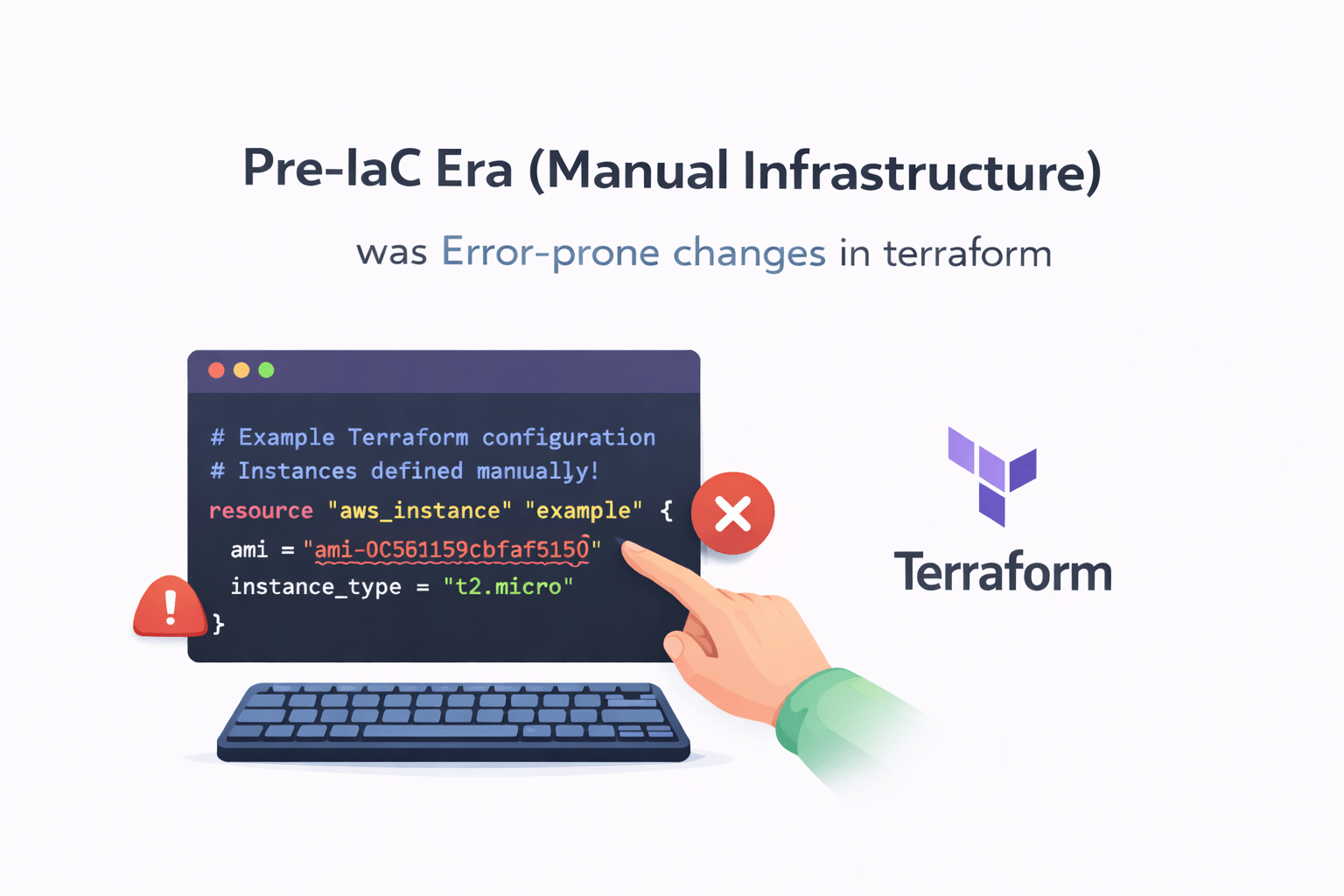
History of Terraform
Pre-IaC Era (Manual Infrastructure)
Problems:
- High risk in production
- No consistent audit trail
- Hard to replicate environments
Rise of Cloud & DevOps
As cloud adoption increased:
Faster release cycles
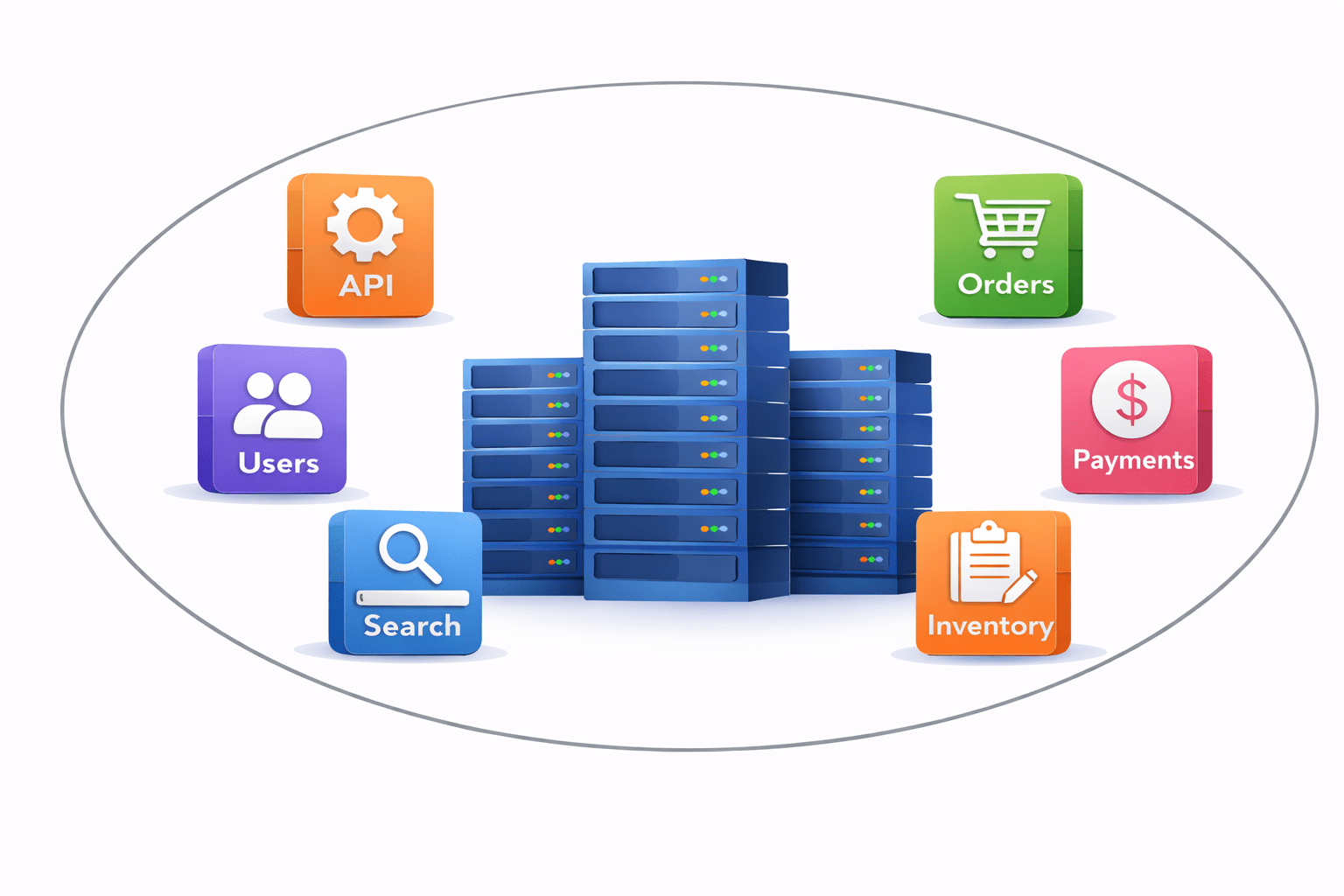
Microservices architecture
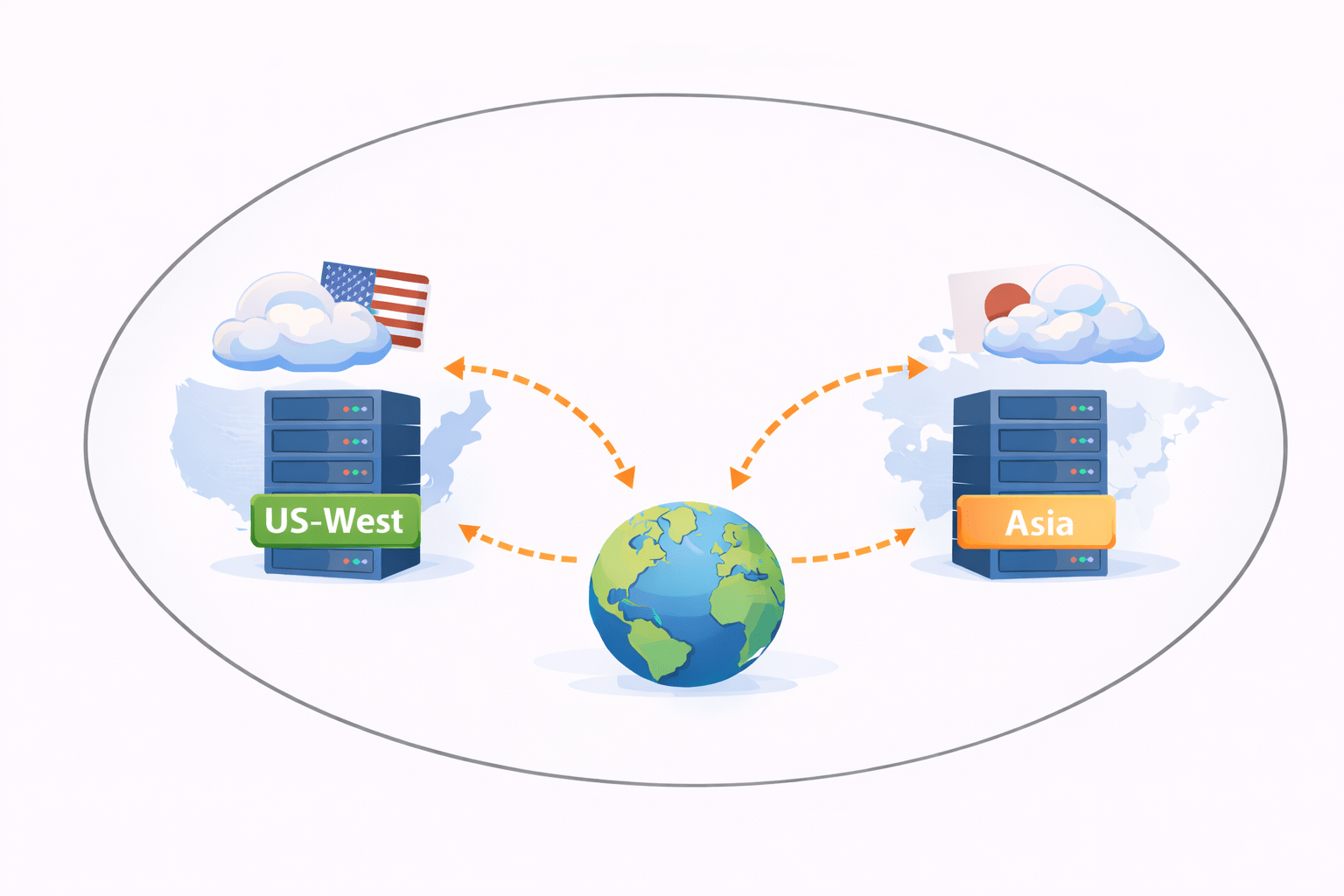
Multi-region deployments
Auto-scaling systems
Core Concepts (.....Slide N-3)
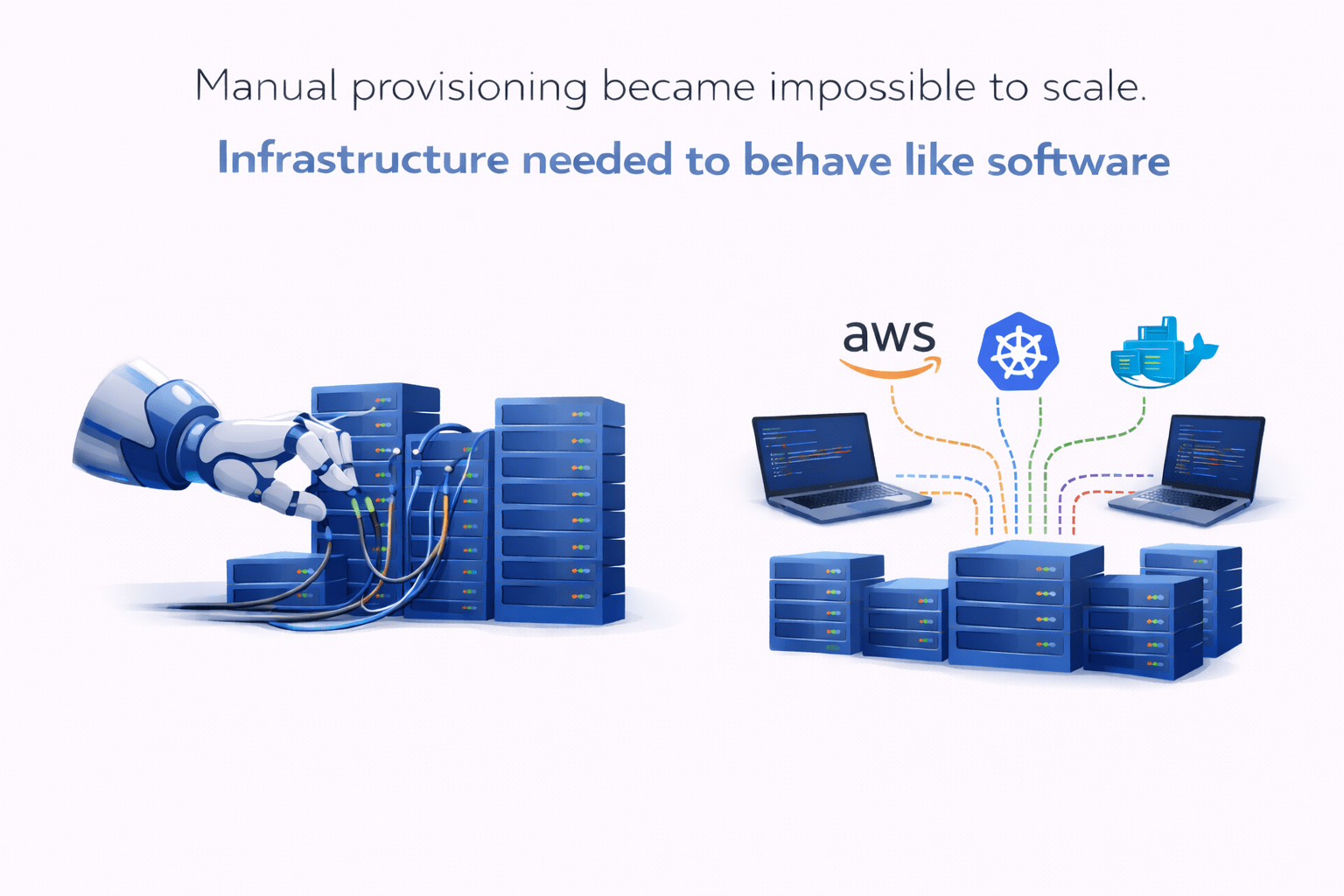
Manual provisioning became impossible to scale
Infrastructure needed to behave like software
Birth of Terraform
Terraform was created by HashiCorp
Key design goals:
-
Reusable modular design


-
Declarative Infrastructure
-
Cloud-agnostic approach
-
API-driven provisioning
- State-based tracking
Birth of Terraform
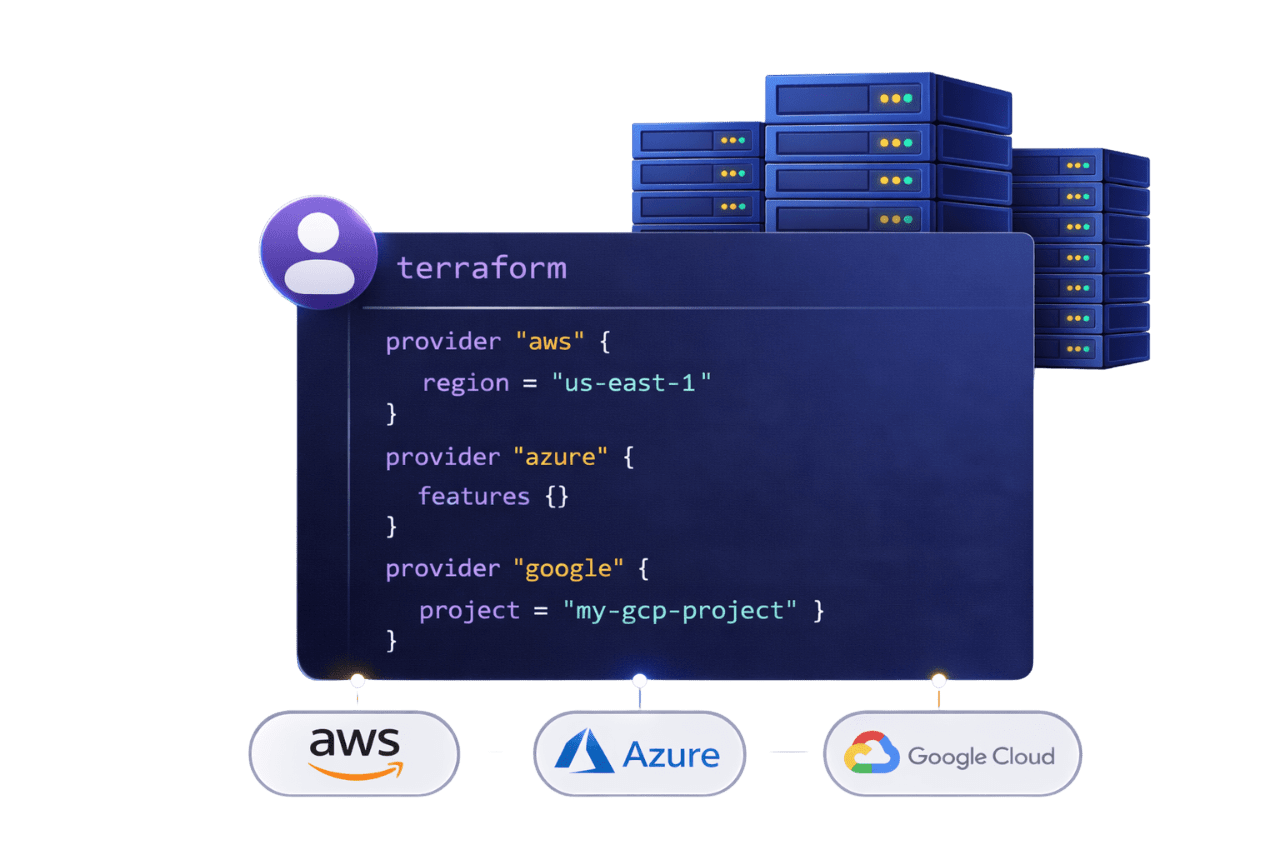
Unlike cloud-specific tools (e.g. AWS-only tools), Terraform was built to support multiple providers
This was a major architectural advantage
Growth & Ecosystem Expansion
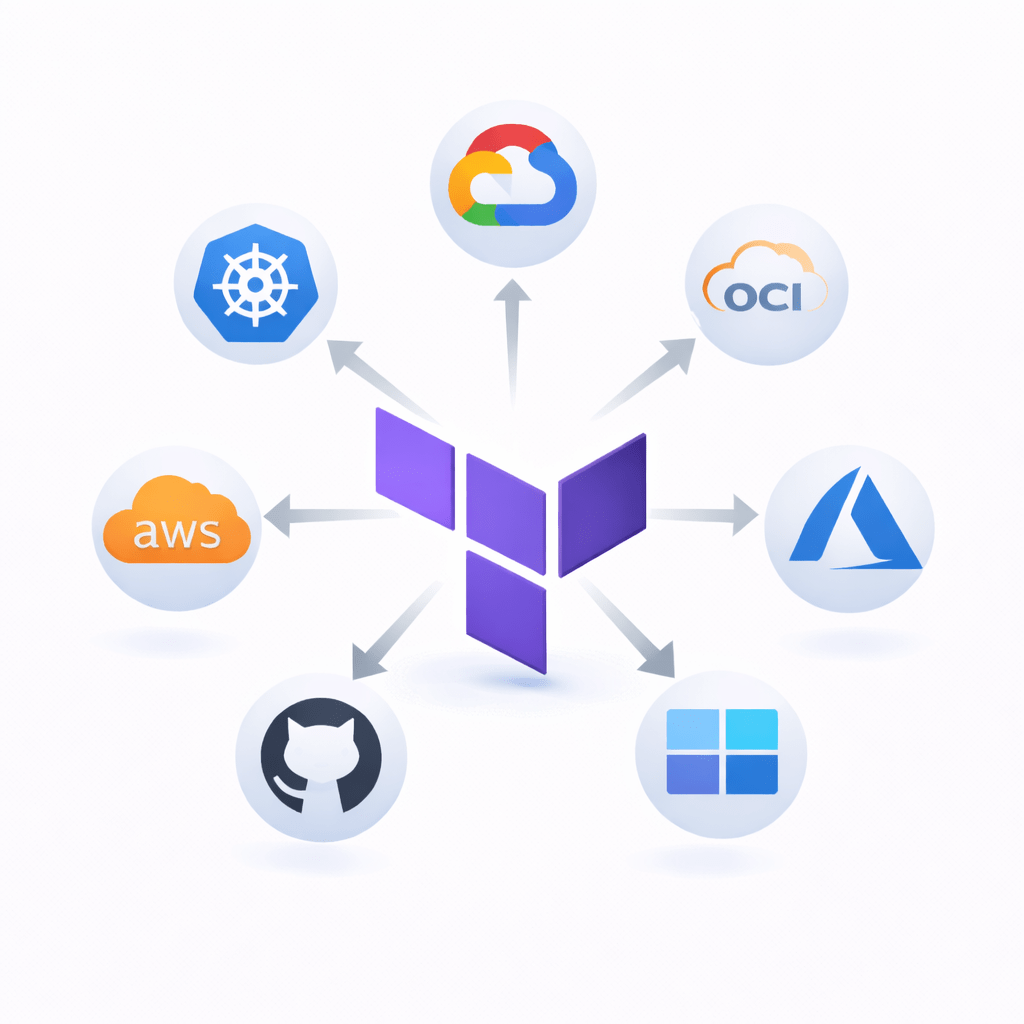
Terraform gained adoption because:
-
Community modules
-
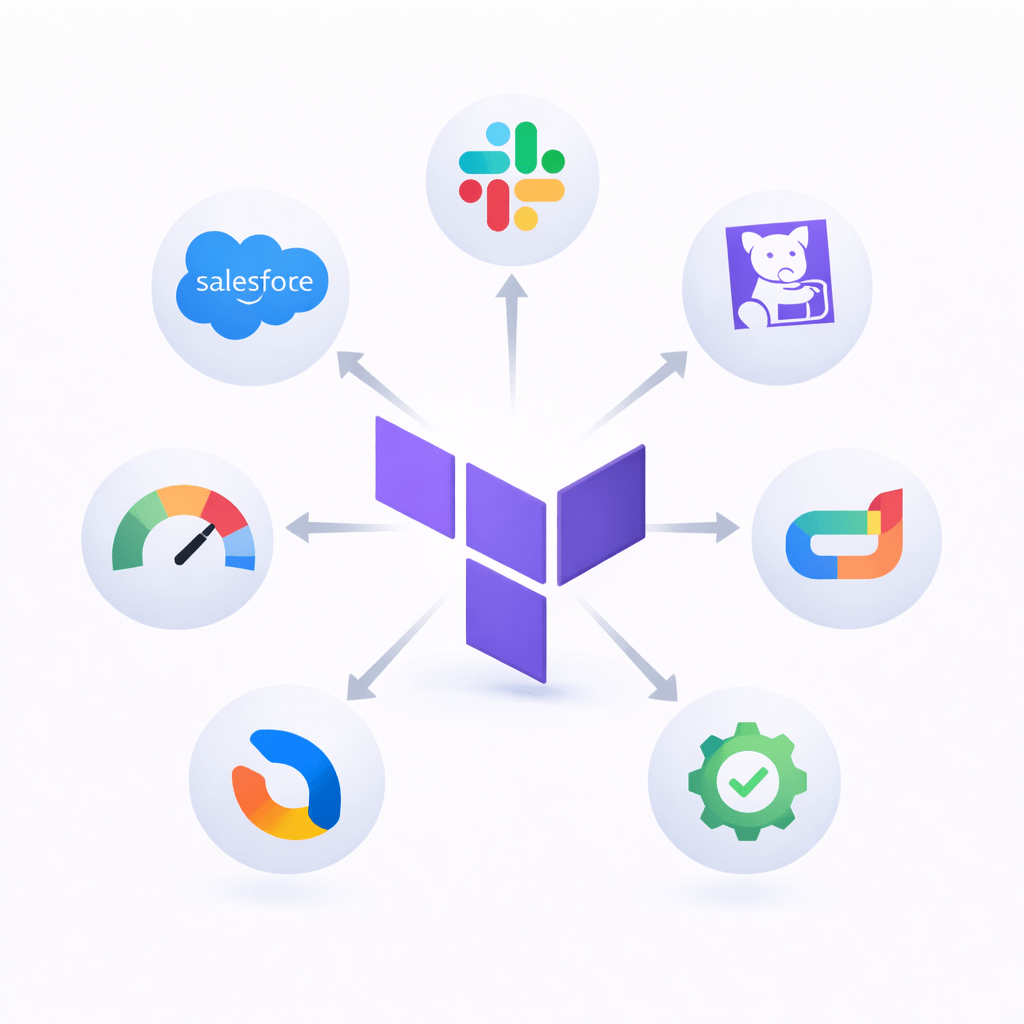
Huge provider ecosystem
-
Support for SaaS tools
-
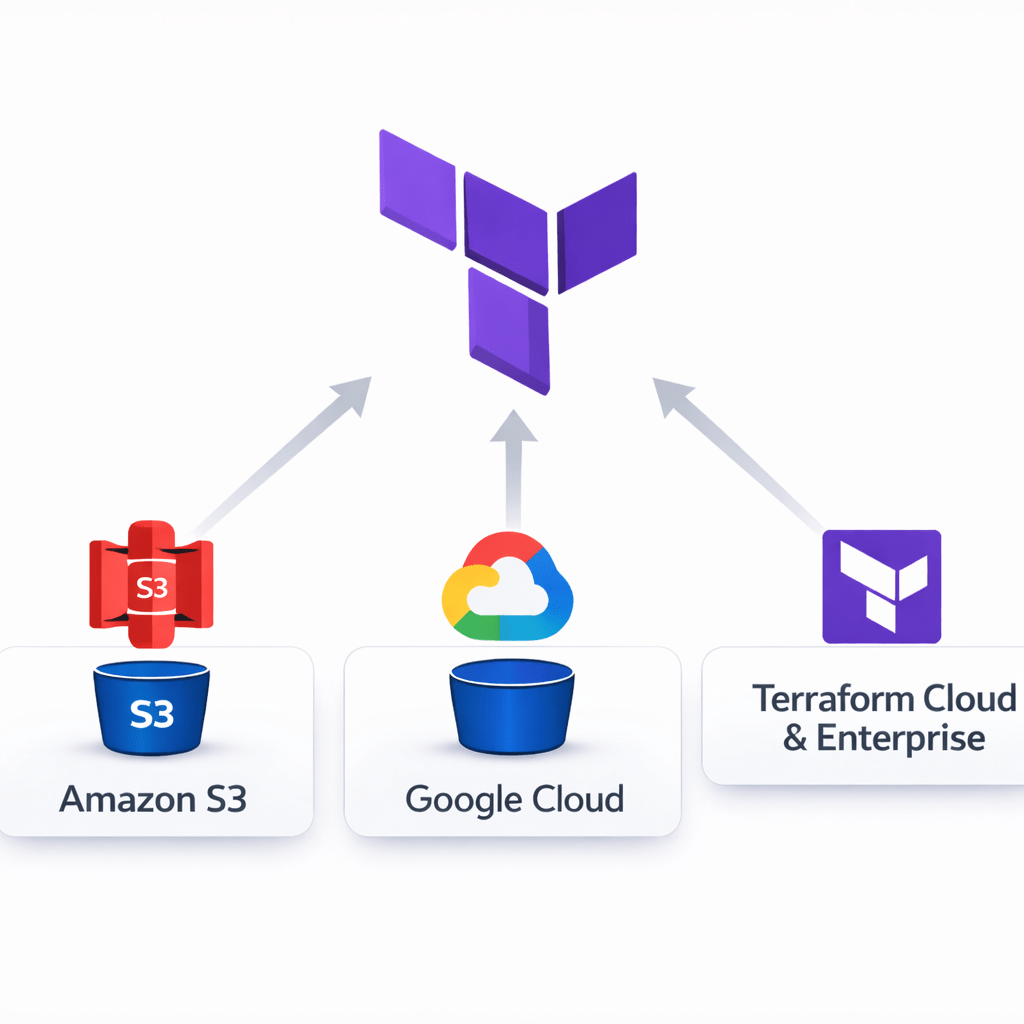
Remote backends
-
State locking

Summary
5
Terraform brings software engineering discipline to infrastructure
4
Execution plan ensures safe changes
3
Terraform is declarative and state-driven
2
Terraform was introduced in 2014 to solve multi-cloud provisioning
1
Infrastructure complexity created need for IaC
Quiz
Declarative model focuses on
A. Writing loops
B. Step-by-step commands
C. Desired end state
D. Shell scripting

Quiz
Declarative model focuses on
A. Writing loops
B. Step-by-step commands
C. Desired end state
D. Shell scripting