RxJS & Calling API


RxJS Operators & Subjects: Managing Subscriptions and Async Data
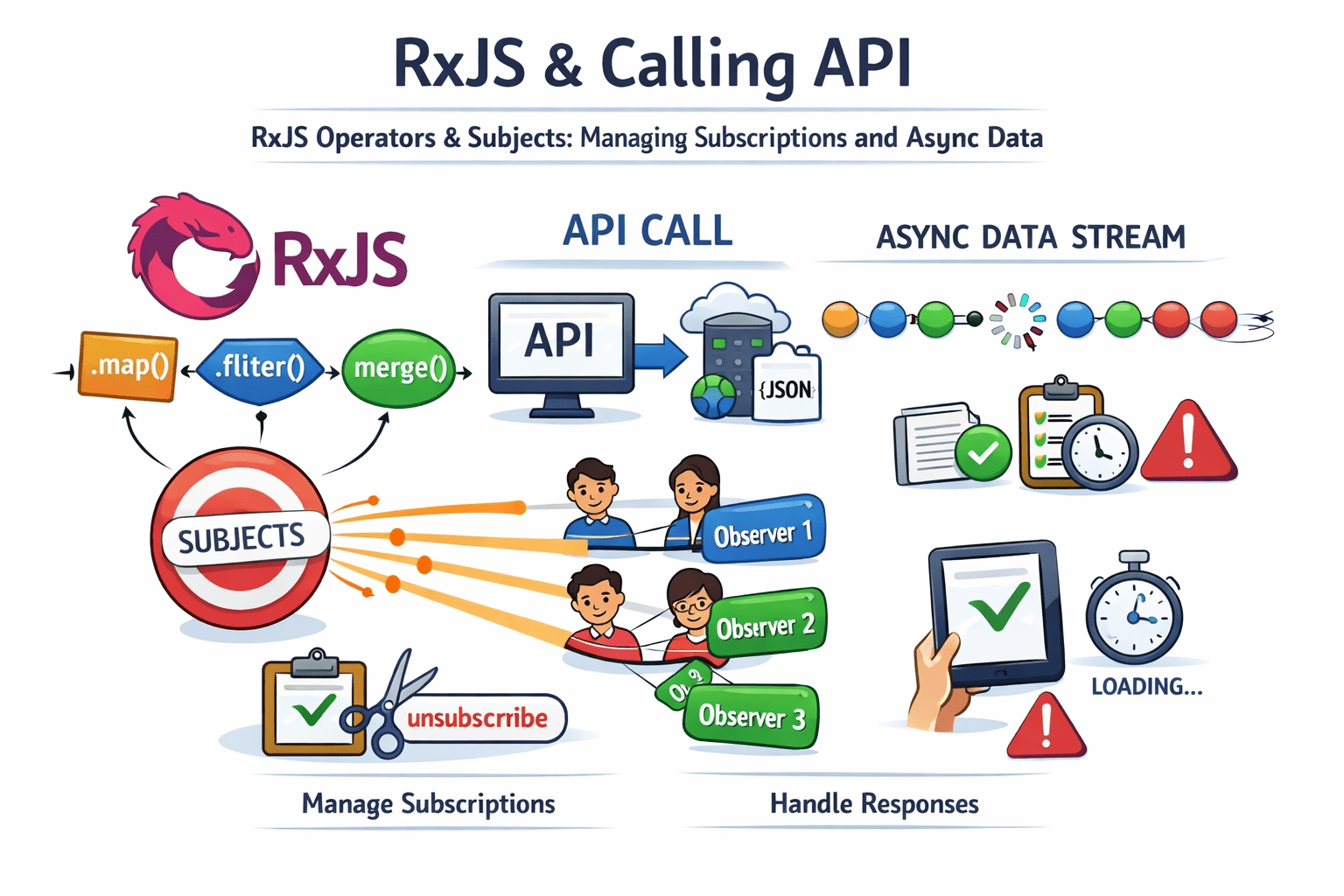

Learning Outcome
5
Understand Subject and BehaviorSubject
4
Use Async Pipe in Angular templates
3
Manage subscriptions and avoid memory leaks
2
Learn commonly used operators
1
Understand RxJS Operators and their usage
Analogy
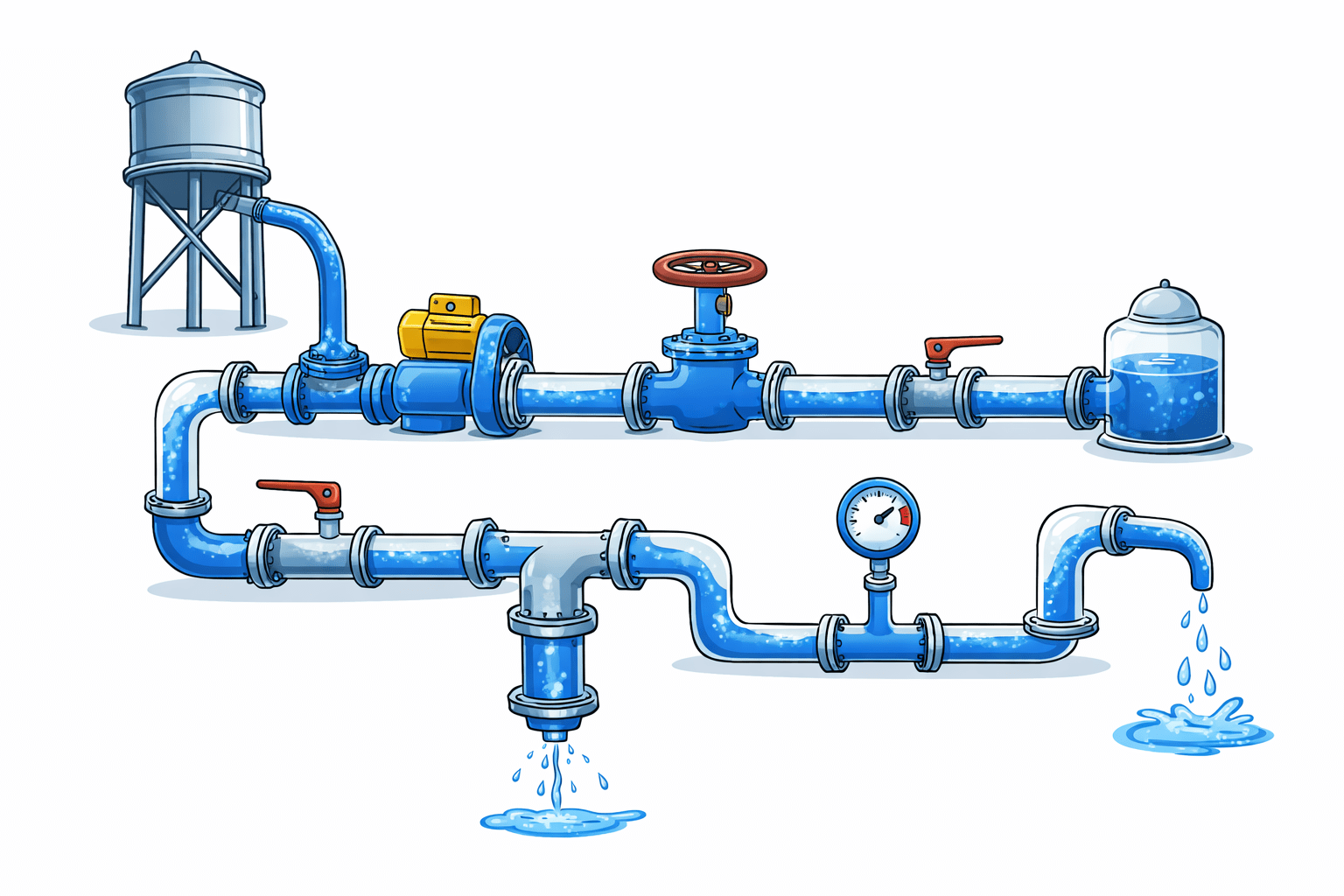
Imagine a water pipeline system.
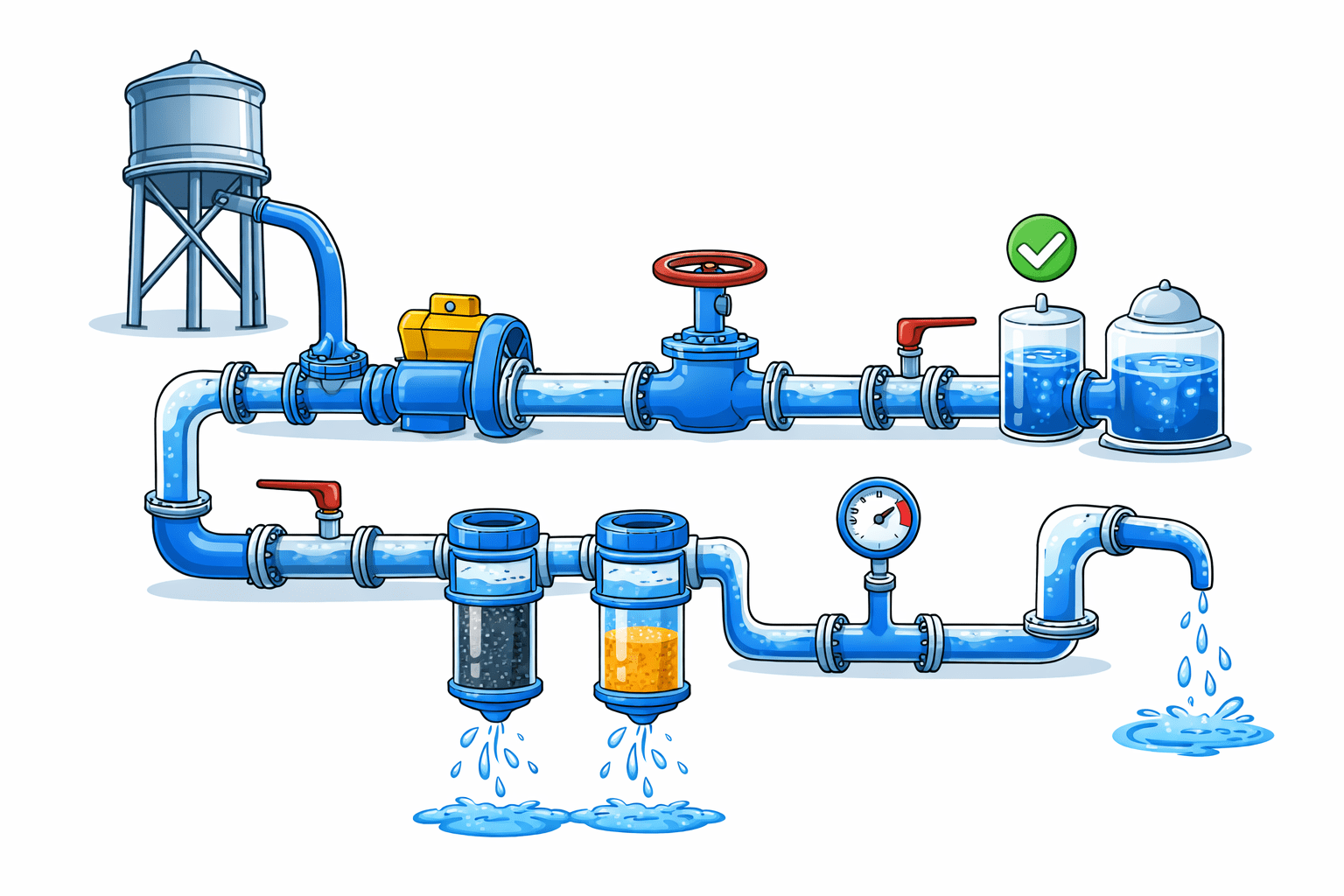
Water flows continuously and Filters can be added to clean or modify water
Analogy
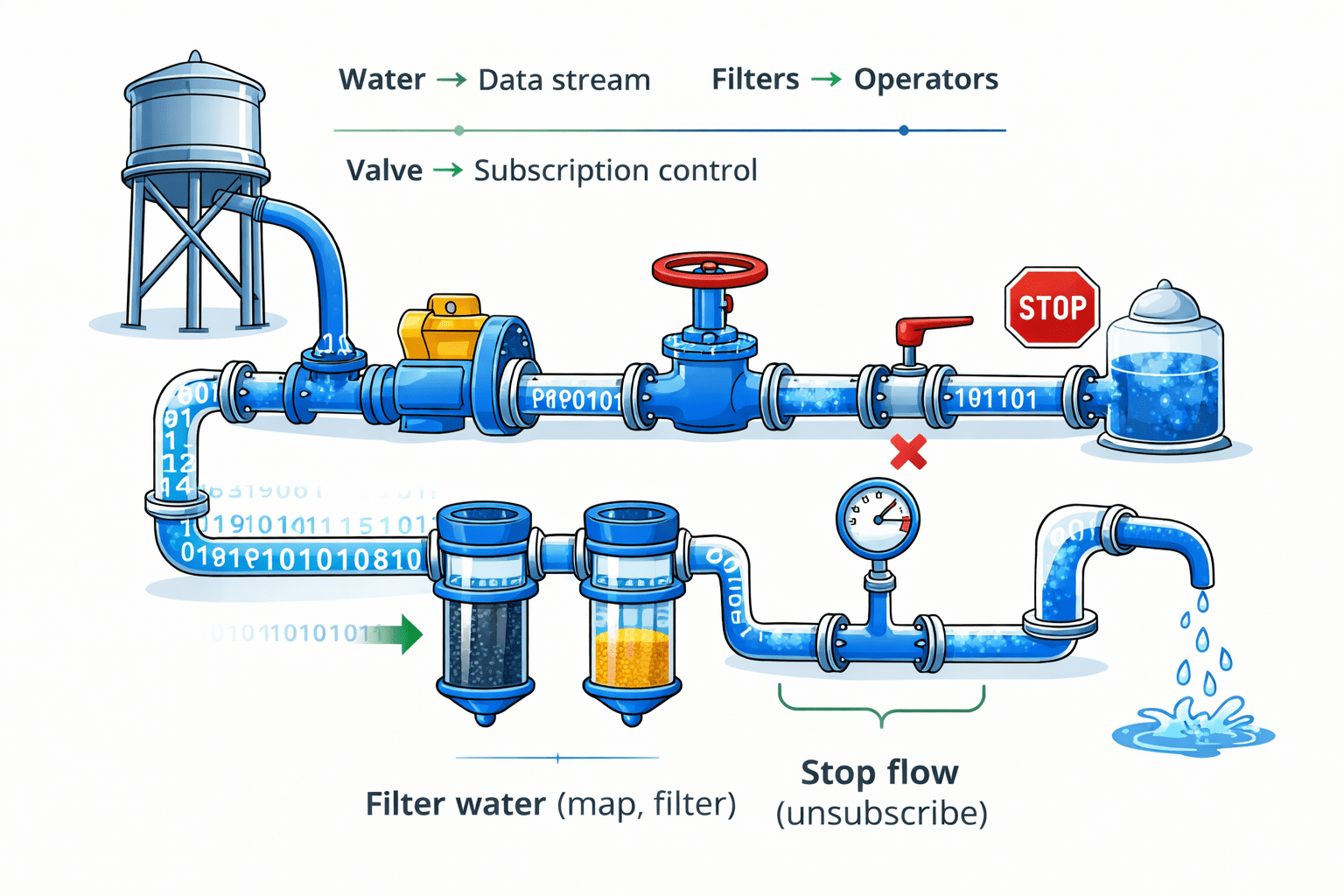
Similarly in RxJS:
- Operators transform data
- Subscriptions control data flow
Why Operators & Subscription Management Matter
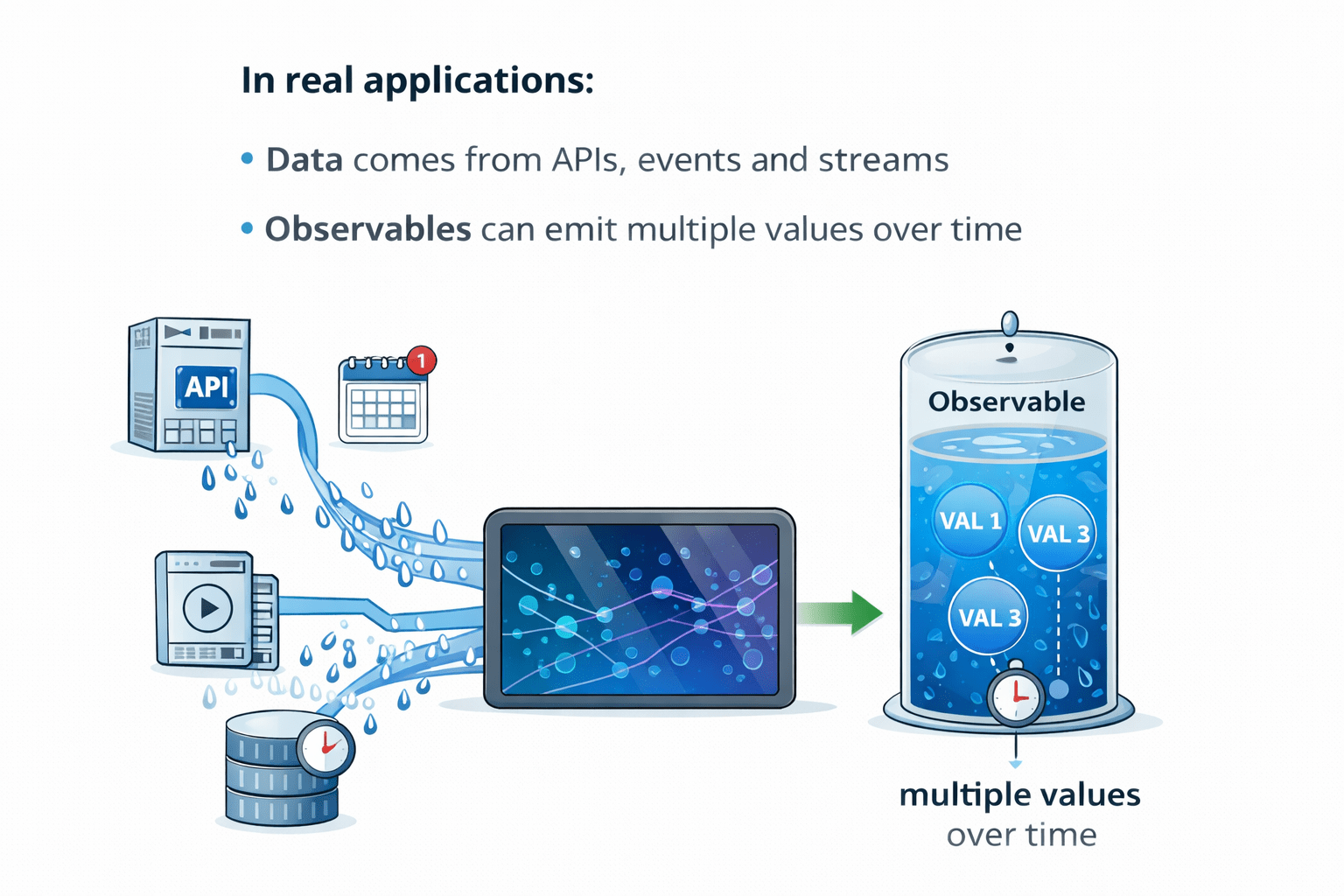
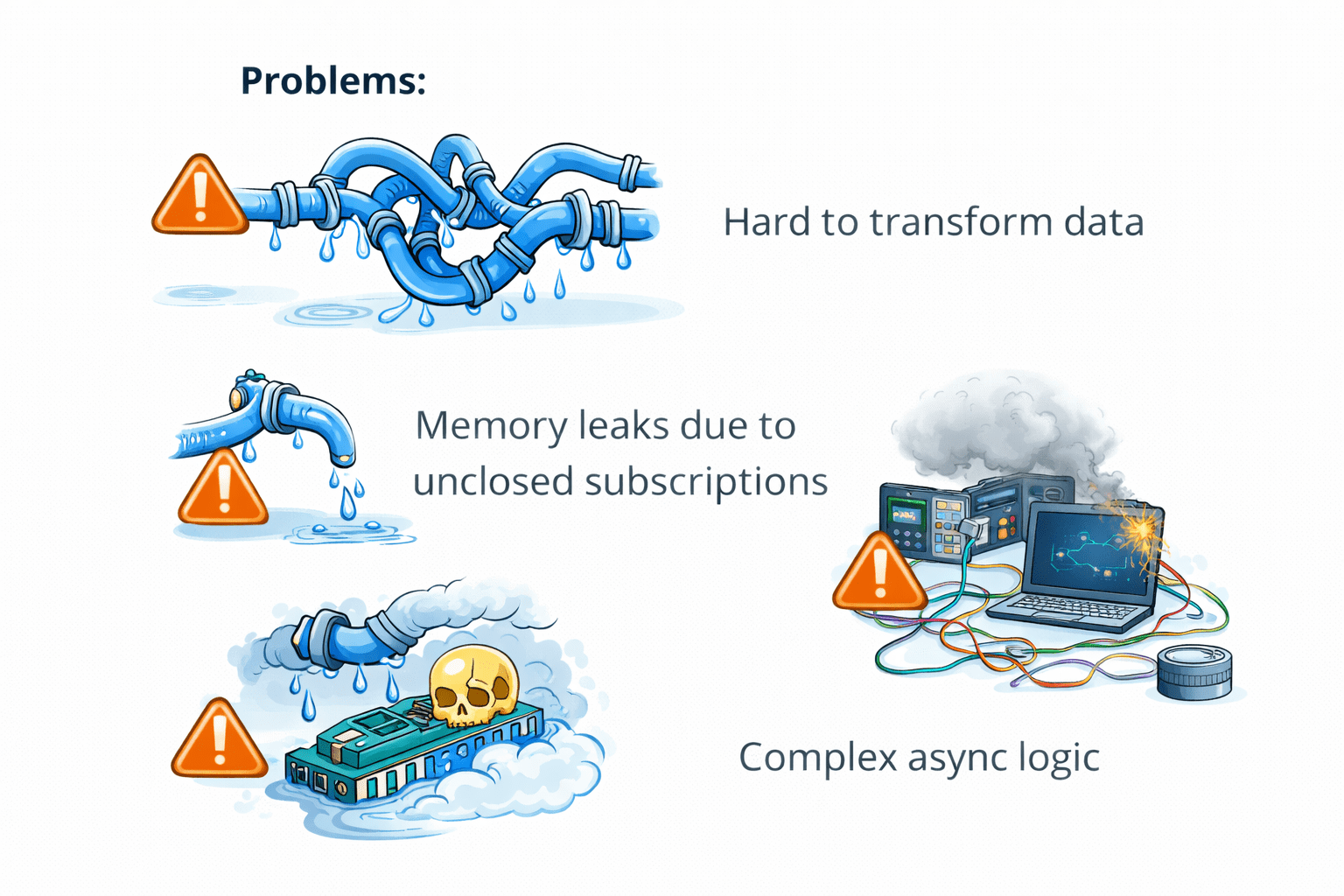
Data comes from APIs, events, and streams
Observables can emit multiple values over time
Why Operators & Subscription Management Matter
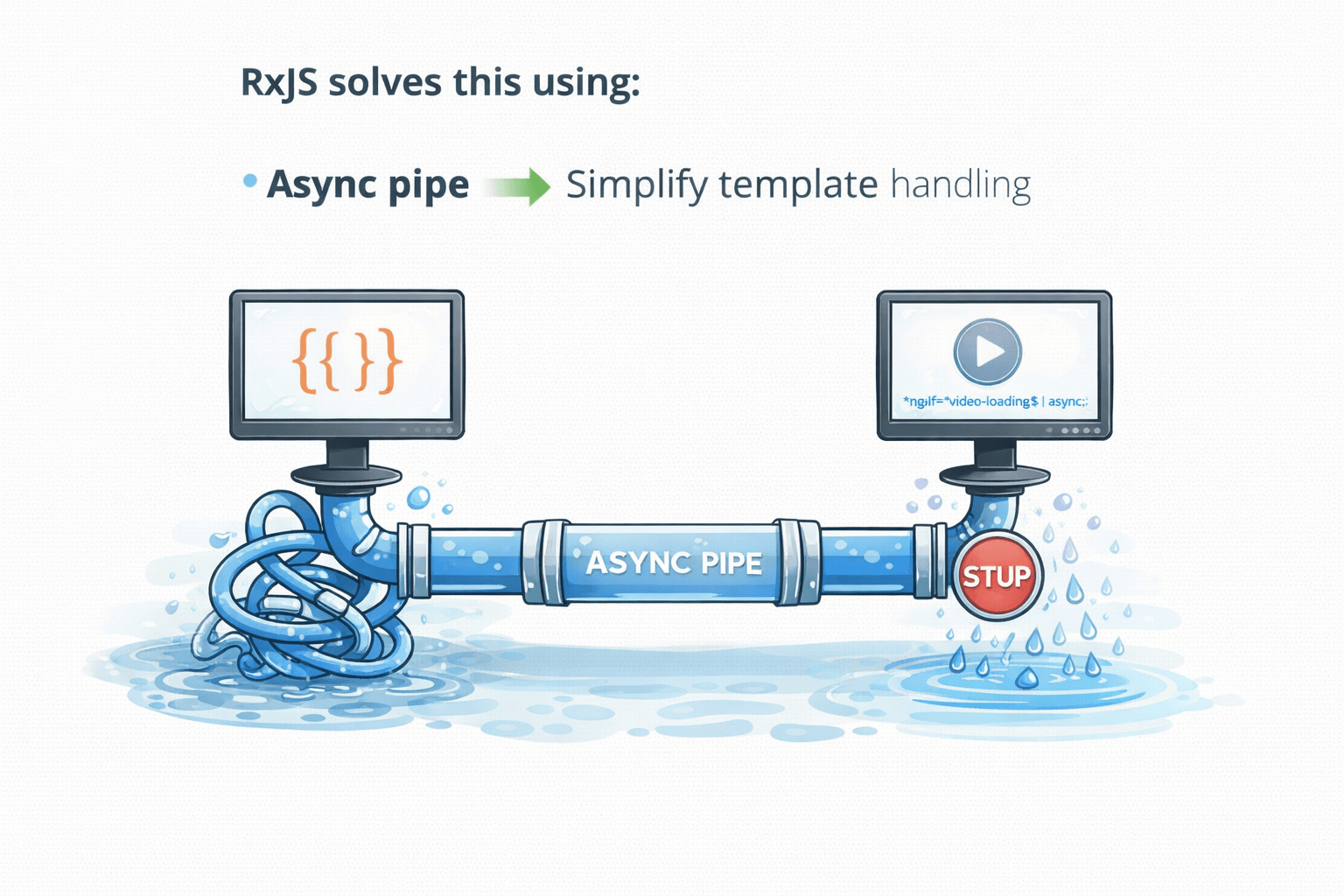
RxJS solves this using:
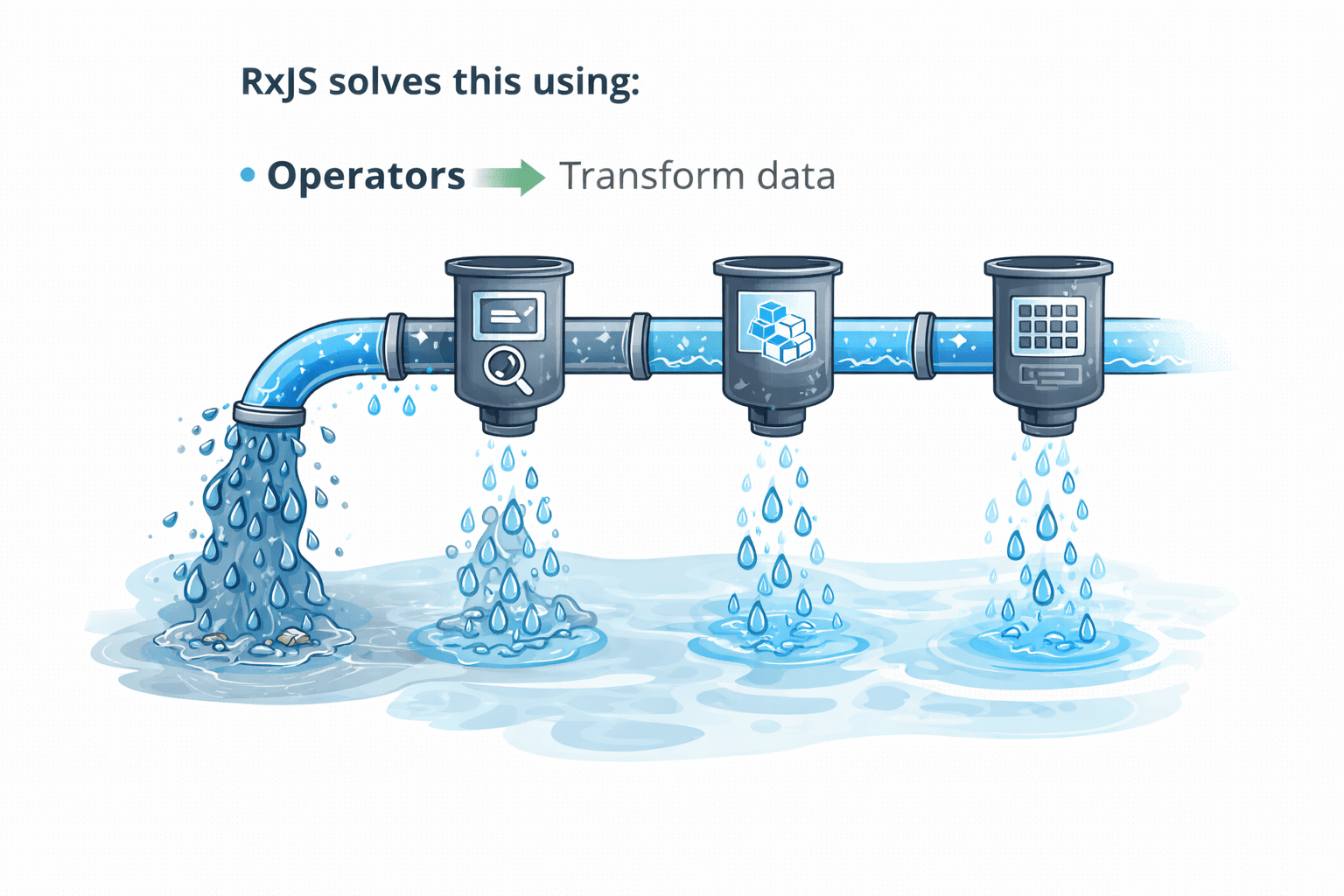
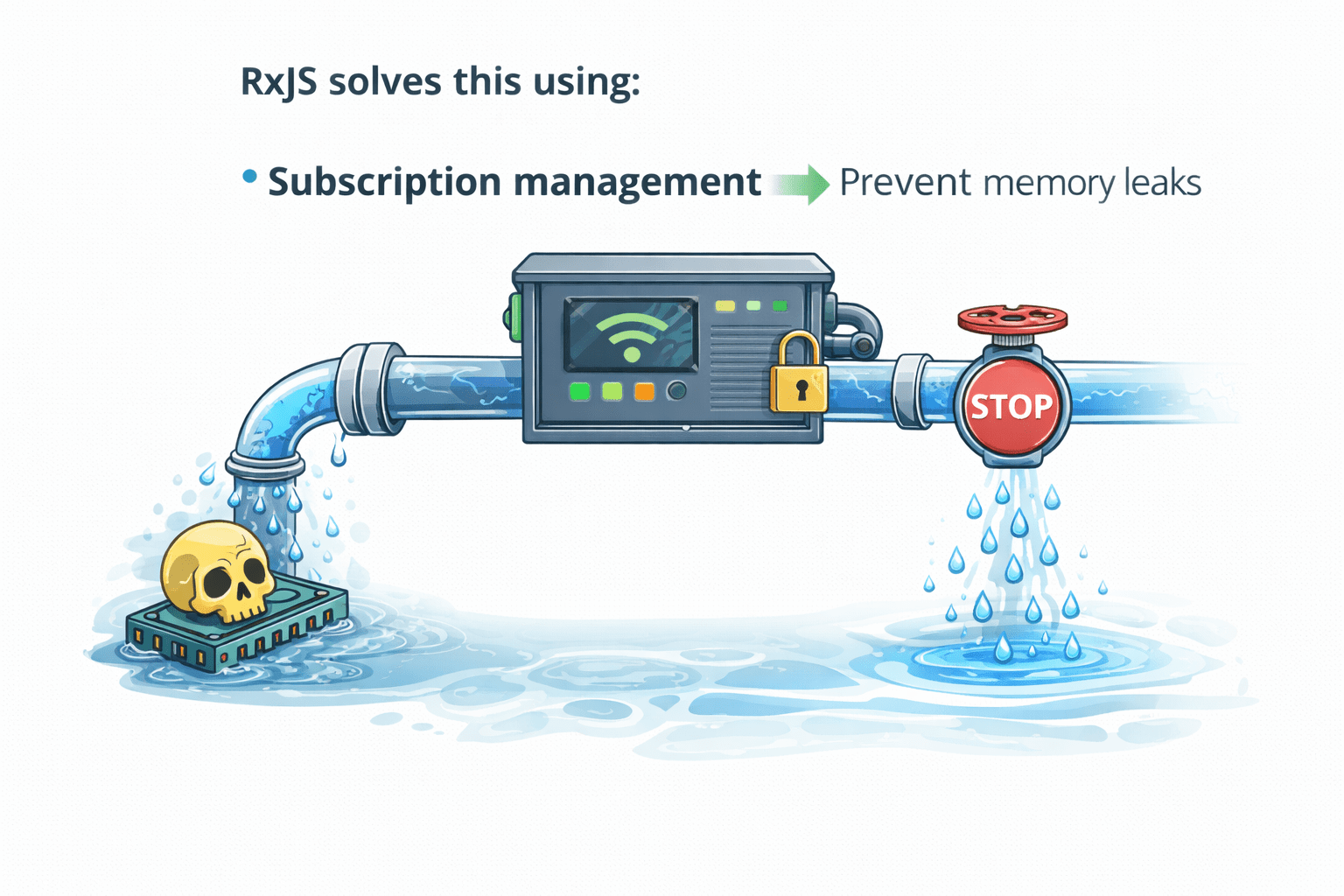
Overview of Operators
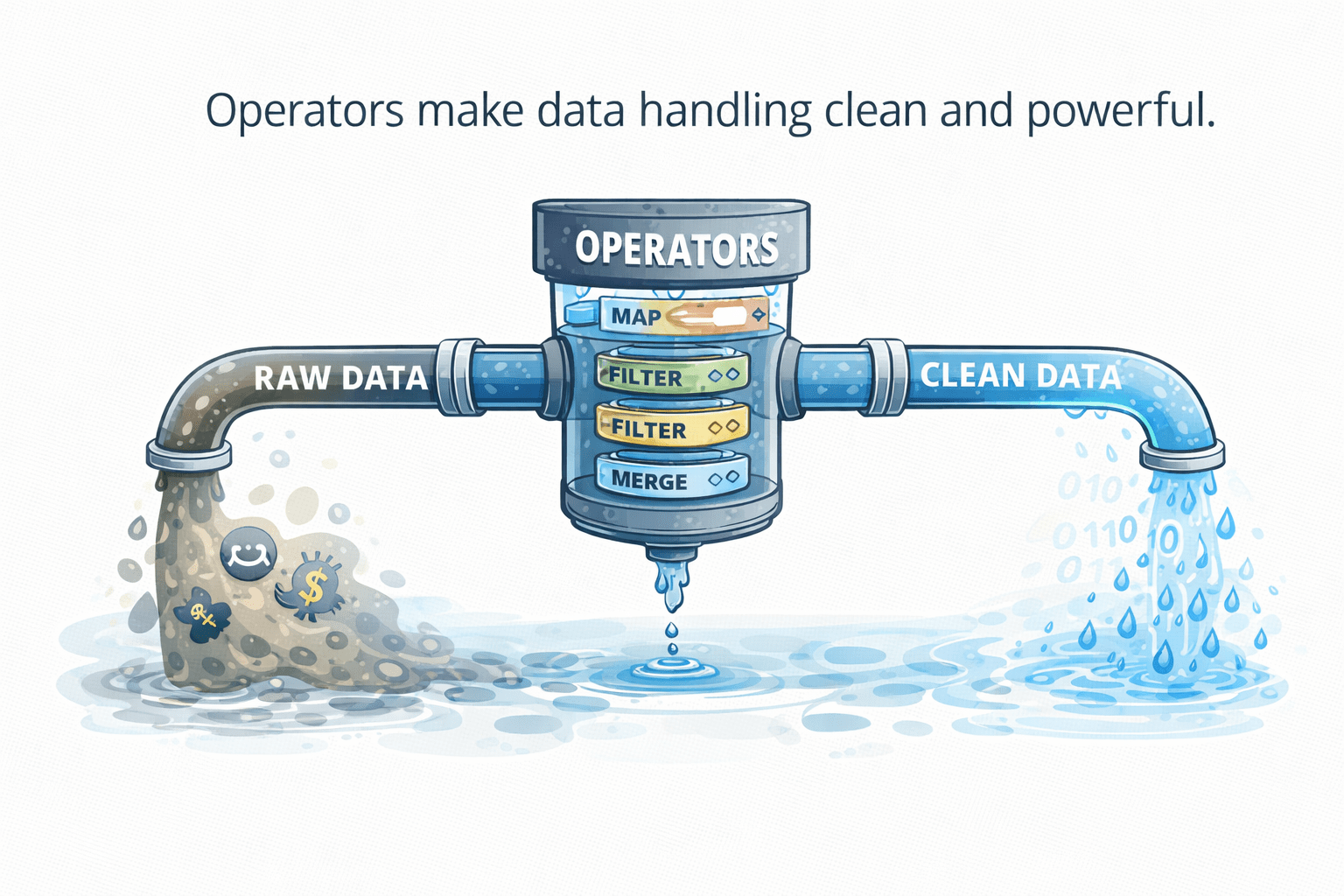
Operators are functions used to transform, filter, or modify data streams.

observable$
 .pipe(
 // operators here
 )
 .subscribe();
Operators make data handling clean and powerful.
Key Concepts of Operators
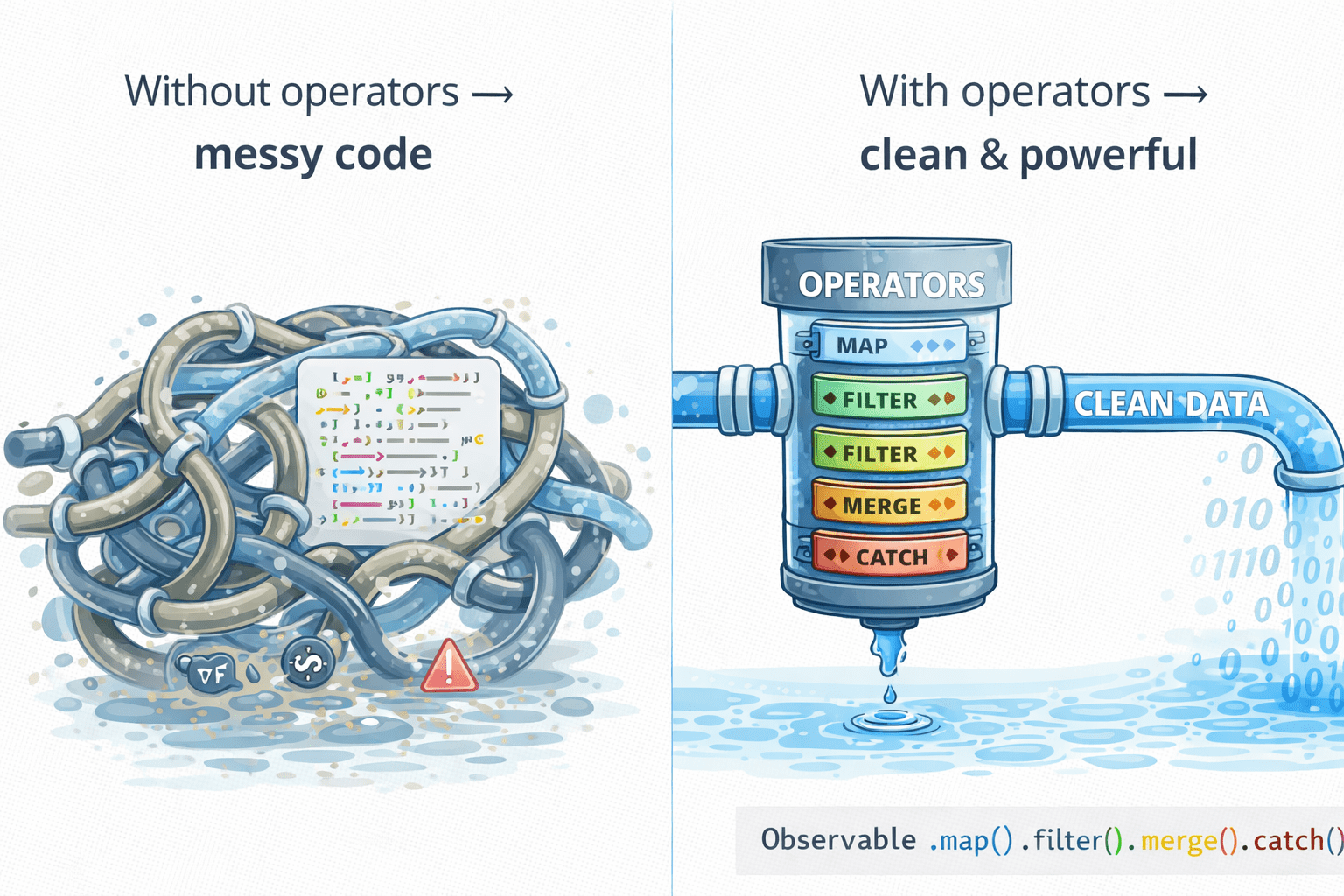
Operators work on observable streams.
Operators
Transform data
Filter values
Combine streams
Handle errors
Commonly Used Operators

map → transform data
filter → filter values
tap → side effects
switchMap → handle API calls
import { map } from 'rxjs';
of(1, 2, 3)
.pipe(
  map(x => x * 2)
)
.subscribe(console.log);
Importance of Managing Subscriptions
Subscriptions must be handled properly.
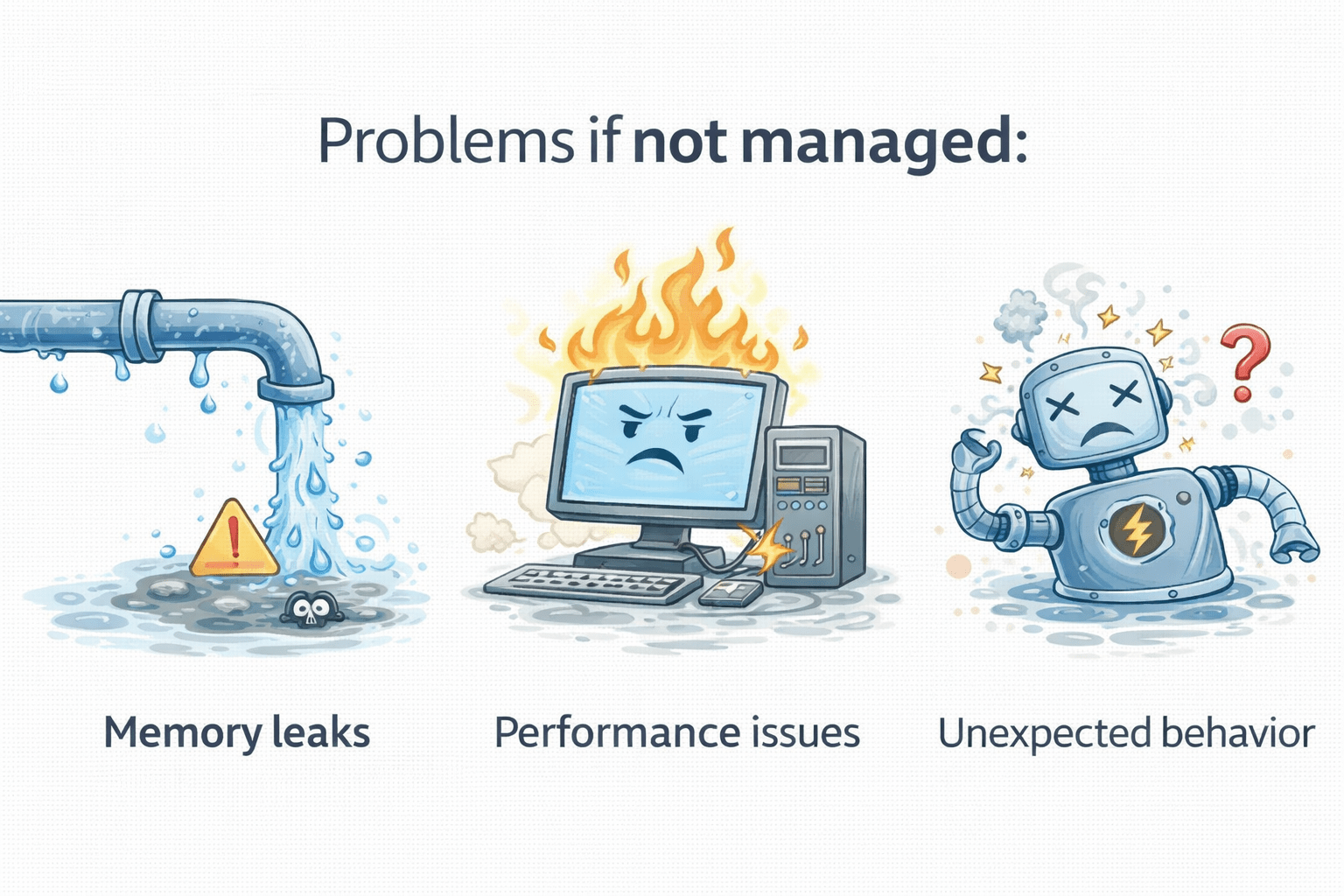
Angular apps can slow down if subscriptions are not cleaned up.
Methods to Unsubscribe
1. Manual Unsubscribe
subscription.unsubscribe();2. ngOnDestroy Lifecycle
ngOnDestroy() {
 this.subscription.unsubscribe();
}
3. takeUntil Operator
Used for automatic cleanup.
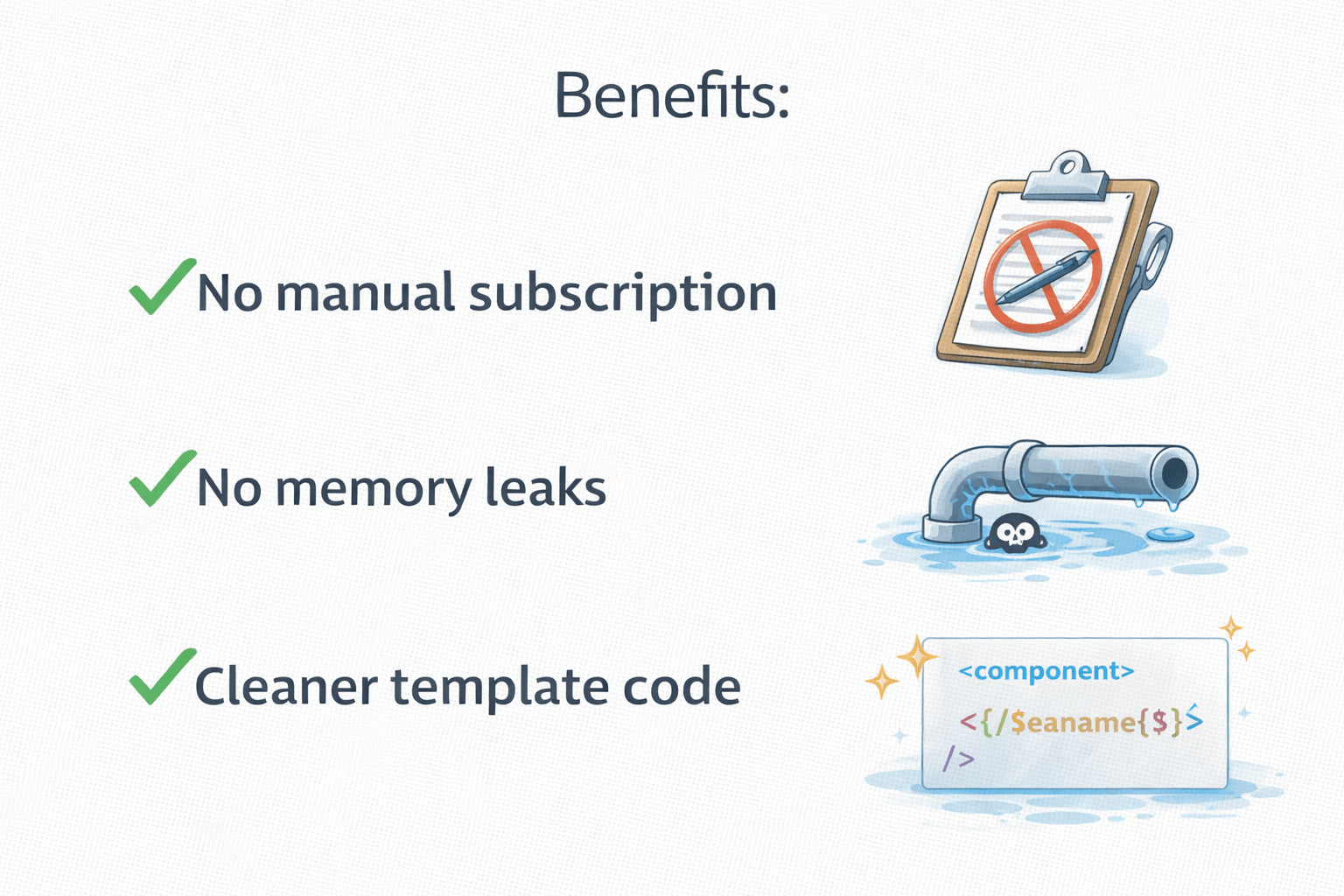
<p>{{ data$ | async }}</p>4. Async Pipe
Async Pipe automatically subscribes and unsubscribes.
Subject in RxJS
- Observable
- Observer
A Subject is both:
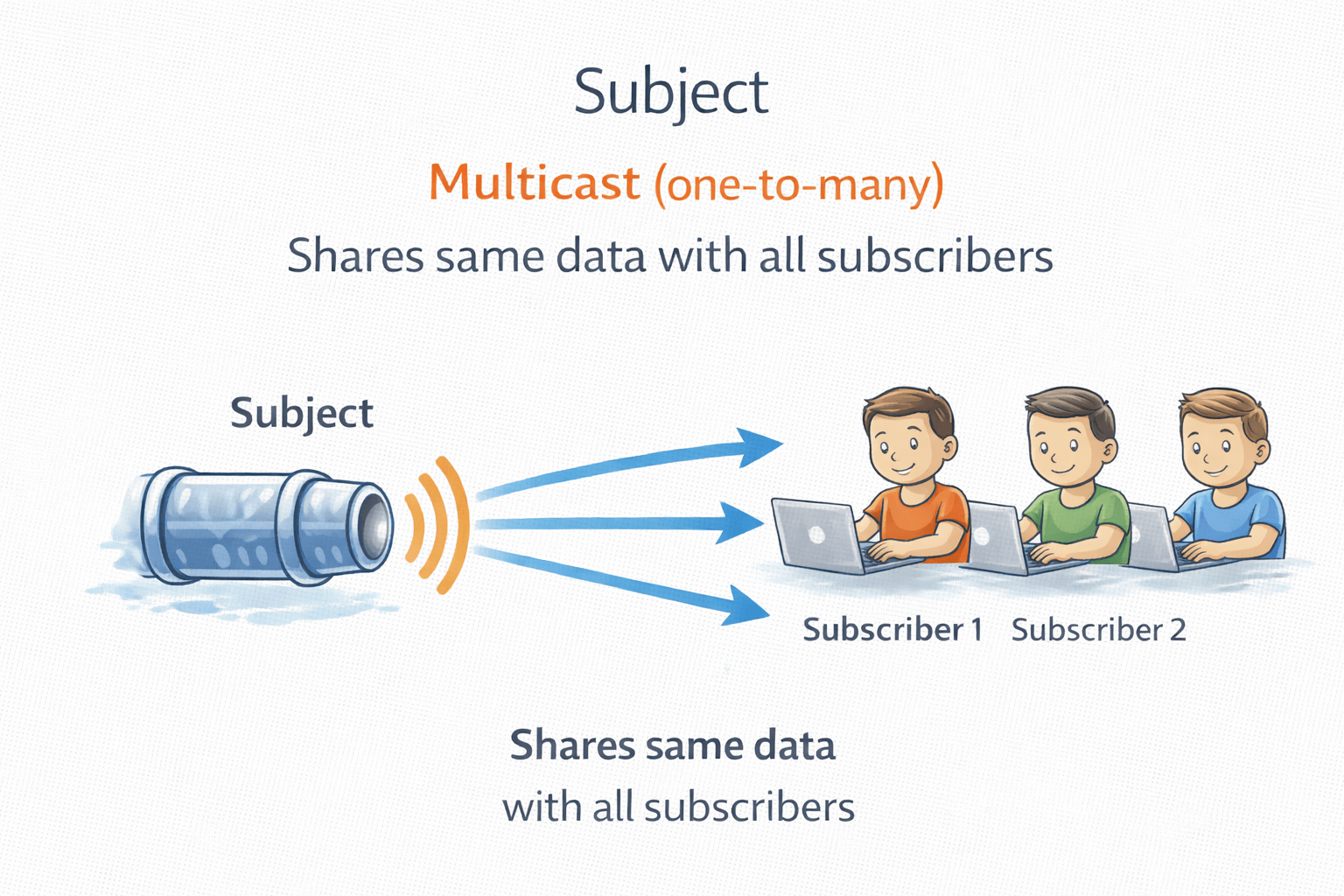
It allows multiple subscribers.
import { Subject } from 'rxjs';
const subject = new Subject();
subject.subscribe(data => console.log("A:", data));
subject.subscribe(data => console.log("B:", data));
subject.next("Hello");
BehaviorSubject
BehaviorSubject stores the latest value.
New subscribers always get the last emitted value.
import { BehaviorSubject } from 'rxjs';
const subject = new BehaviorSubject("Initial");
subject.subscribe(data => console.log(data));
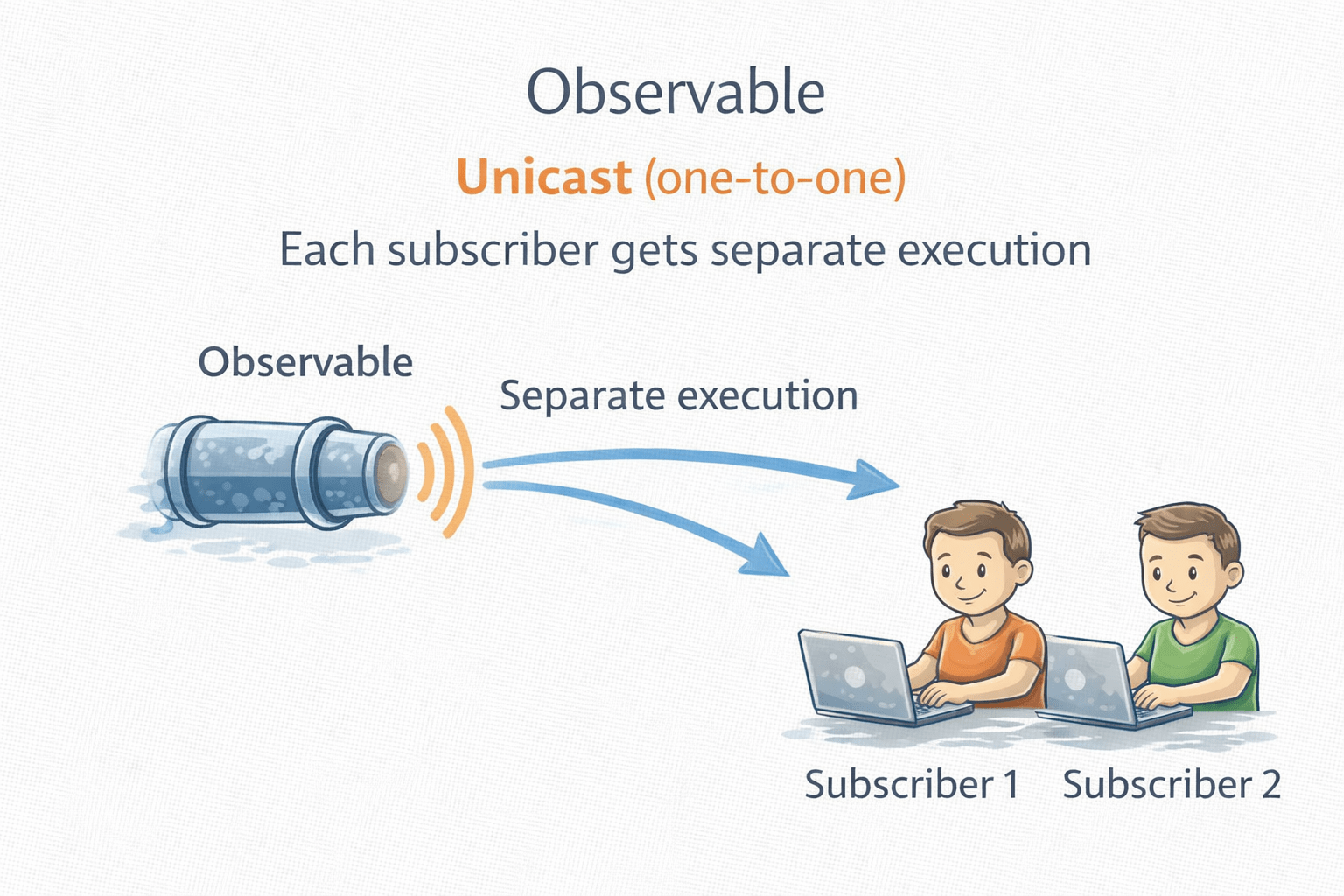
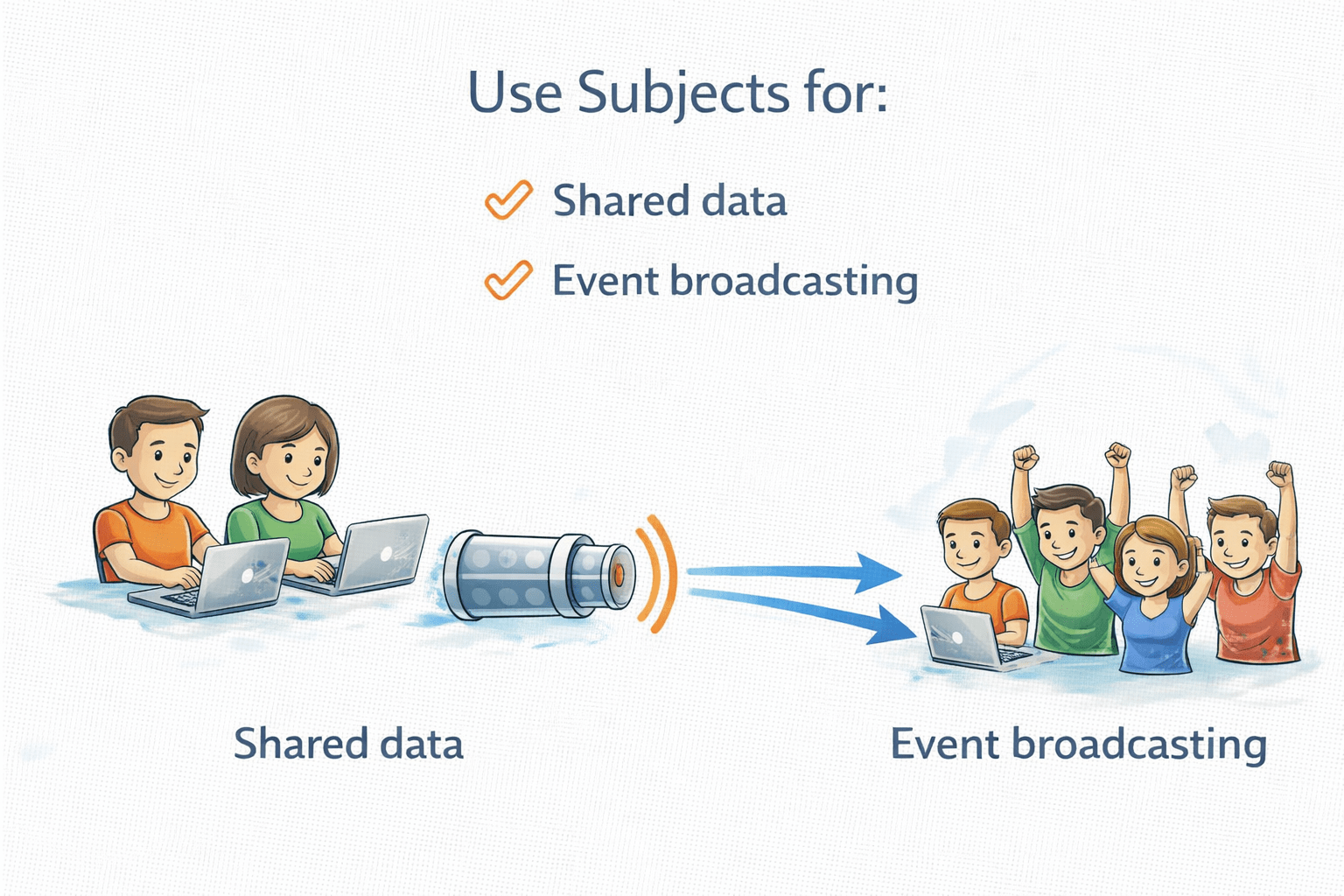
Subject vs Observable
Summary
5
BehaviorSubject keeps the latest emitted value
4
Subjects allow multi-casting of data
3
Async pipe simplifies subscription management
2
Subscriptions must be handled to avoid memory leaks
1
Operators help transform and manage observable data
Quiz
What happens if subscriptions are not unsubscribed?
A. Faster app
B. Memory leaks
C. Better performance
D. No effect

Quiz-Answer
What happens if subscriptions are not unsubscribed?
A. Faster app
B. Memory leaks
C. Better performance
D. No effect