Swaps & NDF


Equity swaps


Learning Outcome
5
Explain its uses in exposure and hedging.
4
Understand cash flow settlement.
3
Calculate total equity returns.
2
Identify the payer and receiver.
1
Define an Equity Swap.
What is Equity Swap?
An Equity Swap is an OTC contract where one party pays the total return on an equity and the other pays a fixed or floating interest rate on a notional amount. No shares are exchanged—only cash flows.

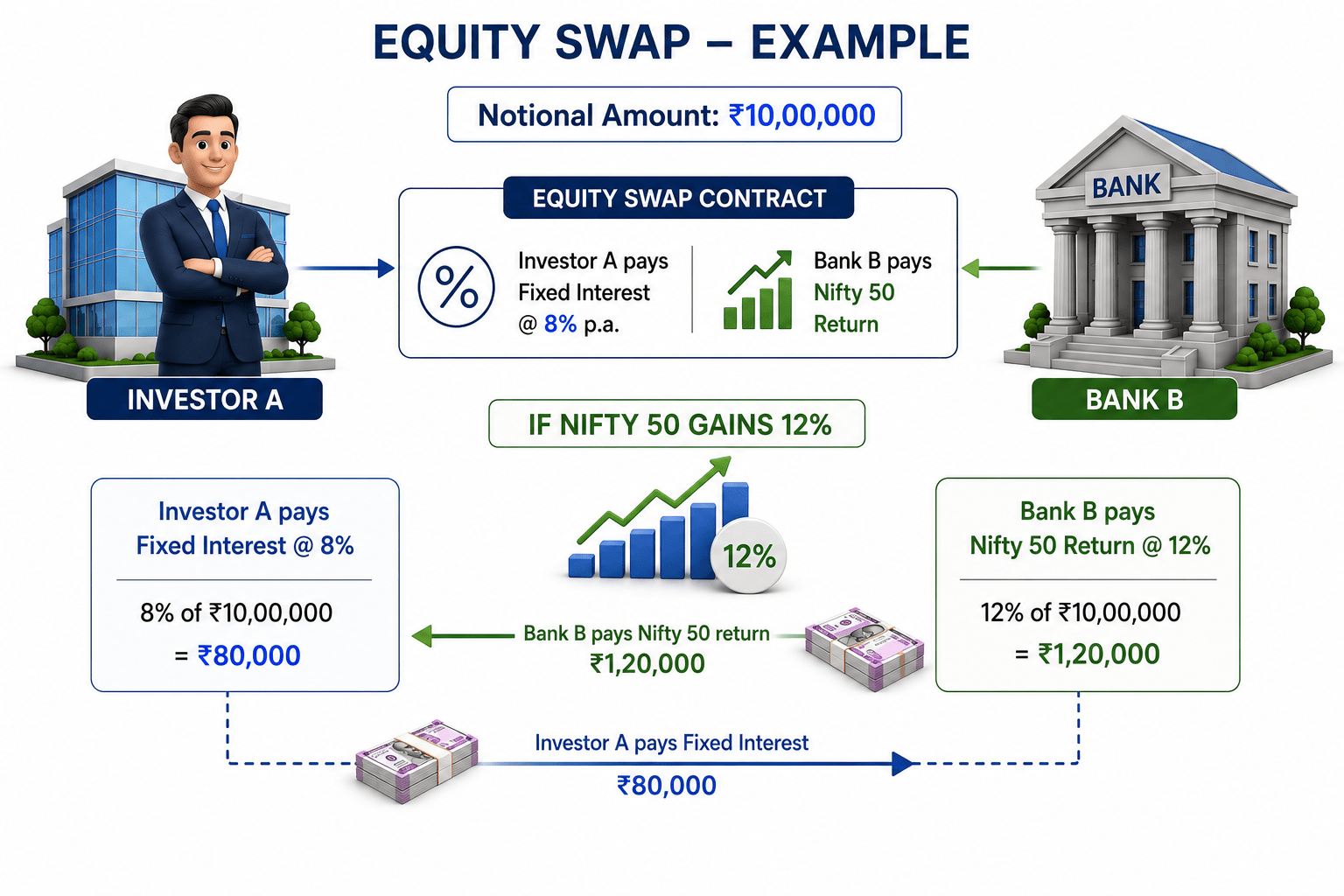
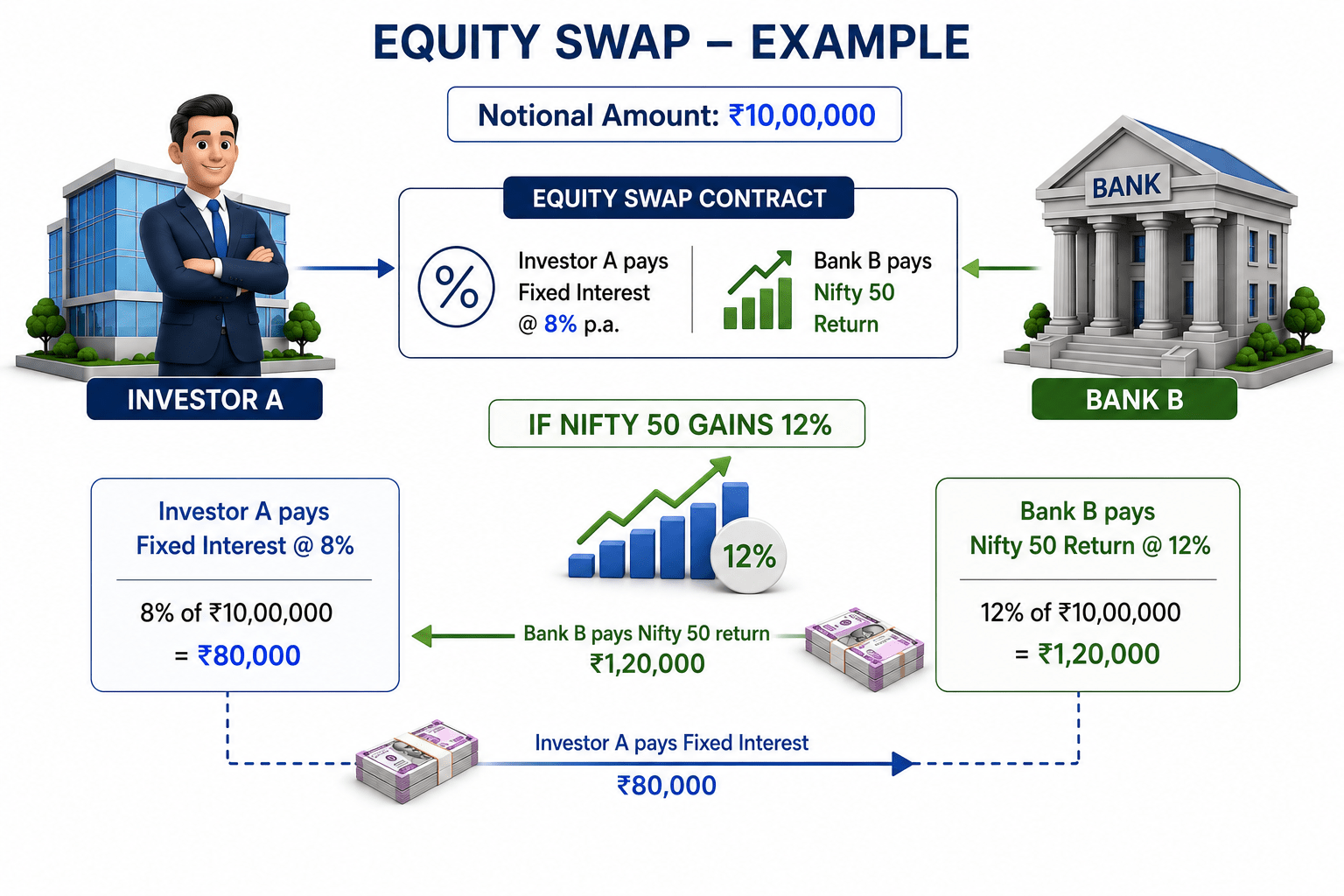
Example
The Two Counterparties
| Party | Pays | Receives | Real-World Example |
|---|
Total Return Payer (usually a bank)
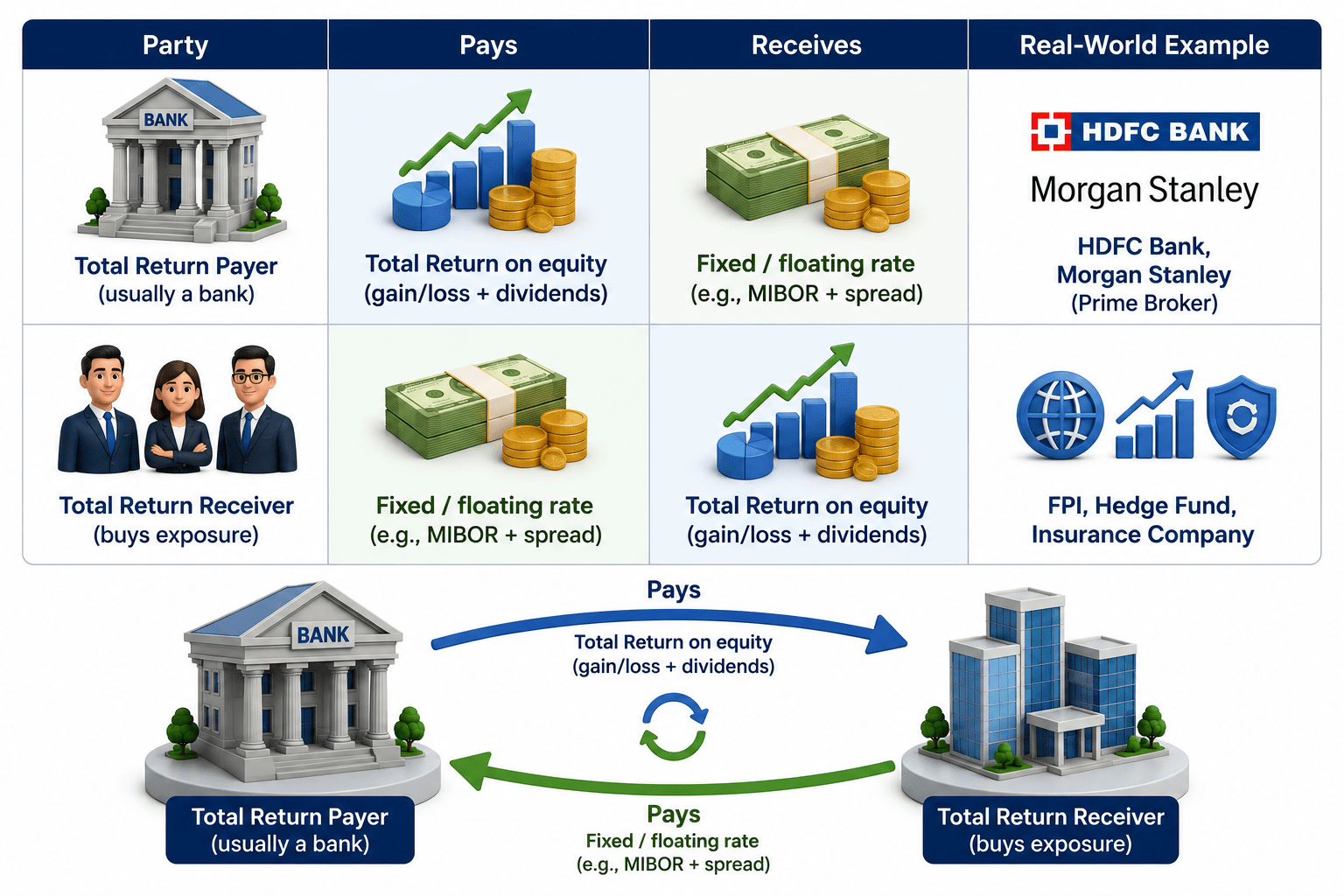
Total Return Receiver (buys exposure)
Fixed / floating rate (e.g., MIBOR + spread)
Total Return on equity (gain/loss + dividends)
Fixed / floating rate (e.g., MIBOR + spread)
Total Return on equity (gain/loss + dividends)
FPI, Hedge Fund, Insurance Company
HDFC Bank, Morgan Stanley (Prime Broker)
Total Return Concept
In direct equity ownership, your return = price change + dividends.

Think of it this way: If you own a Nifty 50 stock, your return isn't just the price going up. It also includes any dividends the company paid you. That combined return is the "total return."
In an equity swap, the Total Return Payer passes both to the Receiver
Example — Infosys stock, 90-day swap, Notional ₹1 crore
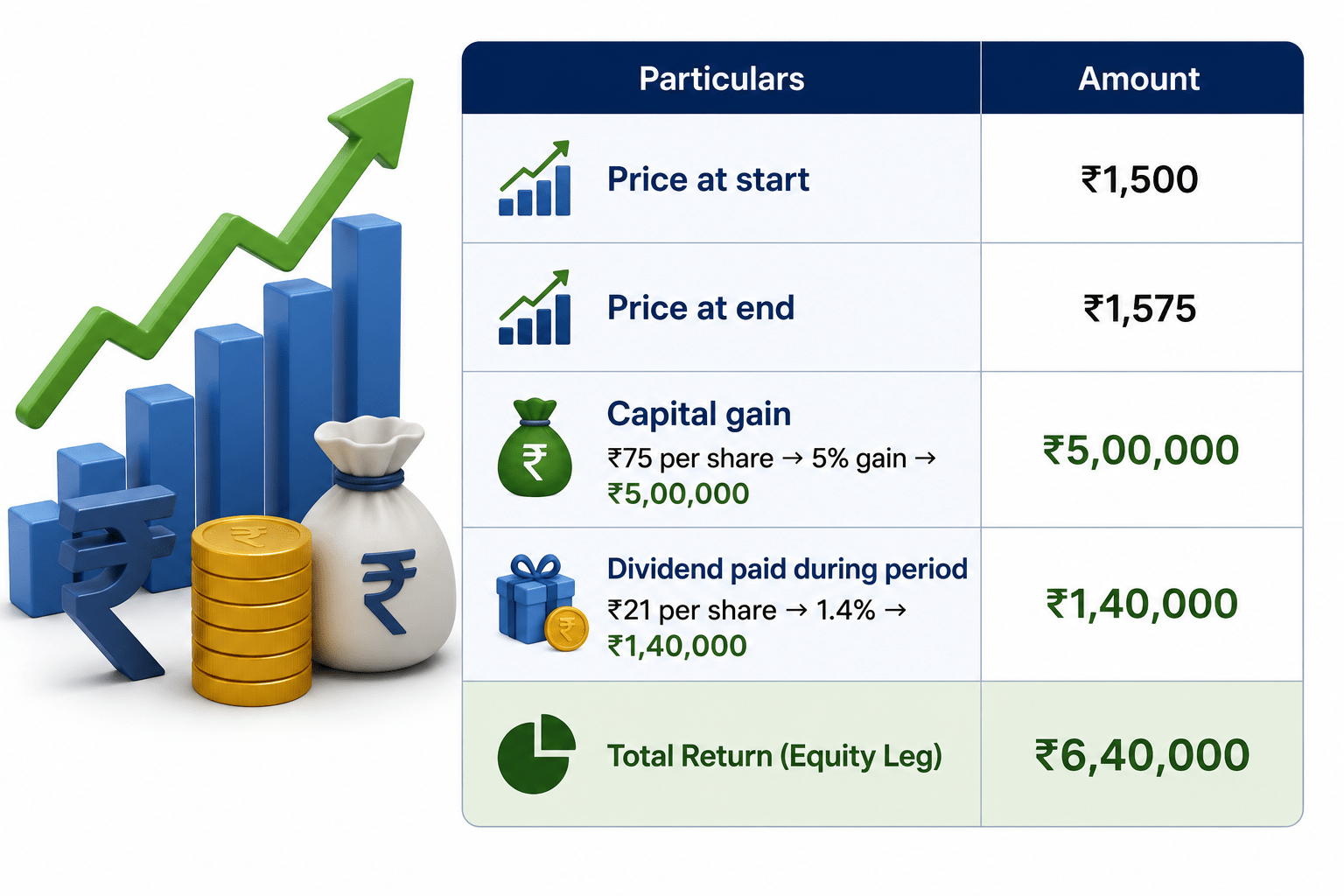
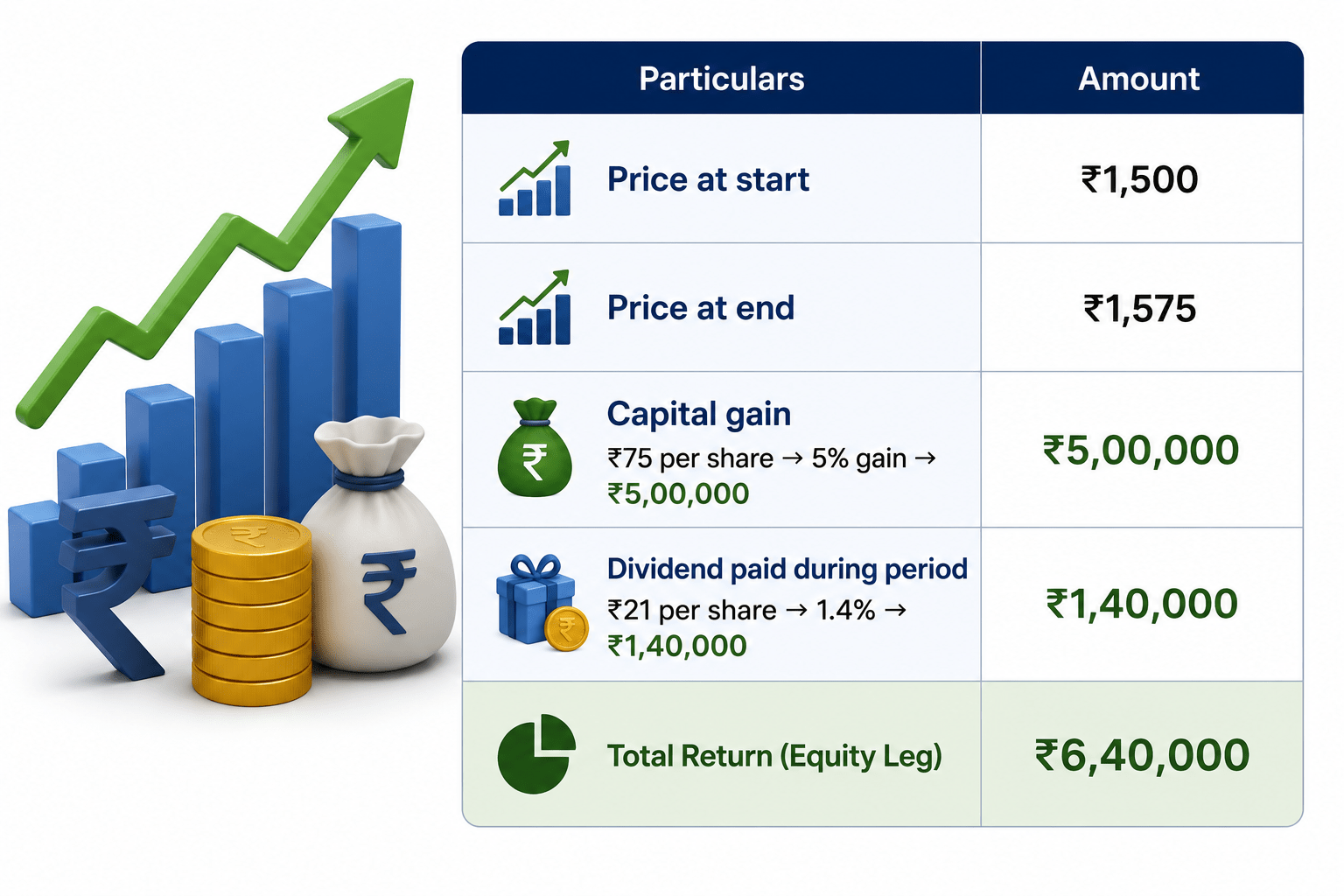
The Receiver gets ₹6,40,000 — not just ₹5,00,000.
What if the price fell?
If Infosys dropped to ₹1,425 (−5%), the capital gain becomes −₹5,00,000. Add the ₹1,40,000 dividend.
Total Return = −₹3,60,000 → the Receiver now pays this to the Payer.
Payment Structure
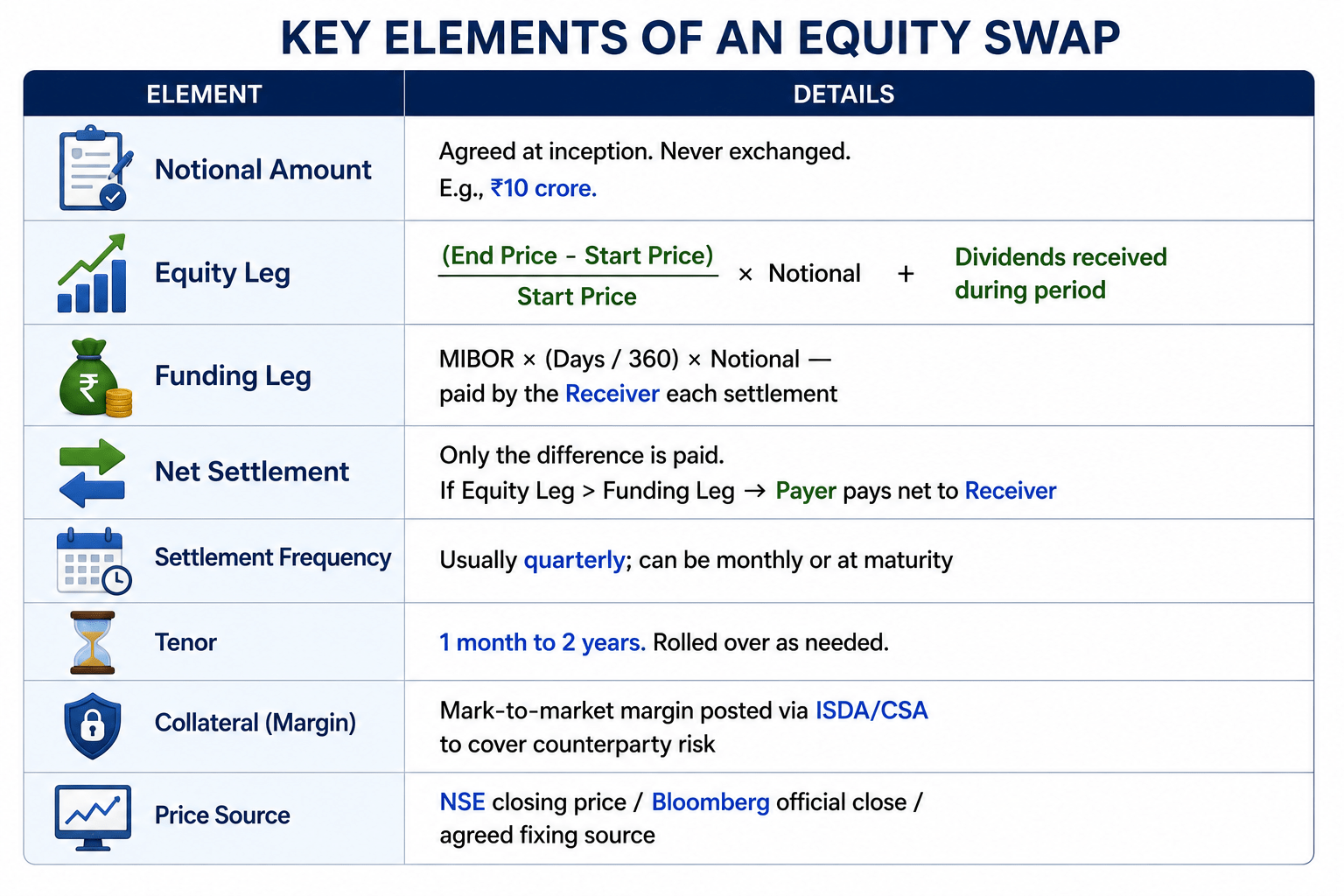
Equity swaps settle periodically (monthly, quarterly) on a net cash basis. Here is how the structure works:
Real world example
📰 FINANCIAL EXPRESS
November 2023 | Business Standard
LIC Uses Equity Swap to Hedge Portfolio Without Selling Shares
To reduce equity market exposure before Q3 uncertainty, LIC structured a 3-month total return swap as Payer on its bluechip basket — effectively going short synthetically. If markets fell, the swap gains offset portfolio losses. No shares were sold.
Meaning
Application: Portfolio Hedging
An institution can hedge its shares by paying the stock return and receiving a fixed interest rate. If share prices fall, swap gains help offset losses without selling the shares.
Summary
5
Used for market exposure and hedging.
4
Only the net payment is settled.
3
Total return includes price changes and dividends.
2
Only cash flows are exchanged.
1
Equity swaps exchange equity returns for interest payments.
Quiz
In an equity swap, the total return includes:
A. Only dividends
B. Only capital gains
C. Capital gains/losses plus dividends
D. Interest payments only

Quiz-Answer
In an equity swap, the total return includes:
A. Only dividends
B. Only capital gains
C. Capital gains/losses plus dividends
D. Interest payments only