Understanding Infrastructure as Code for ContentSphere Platform

Business Scenario
Manager:
We have successfully deployed the ContentSphere platform on AWS. However, manually creating and managing cloud resources is time-consuming and can lead to configuration errors.


DevOps Engineer:
To solve this, we can use Infrastructure as Code (IaC). IaC allows us to define and provision infrastructure using code instead of manual configuration.

Manager:
How will this benefit our platform?

DevOps Engineer:
It ensures consistency, automation, faster deployments, and easy replication of environments across development, testing, and production.
Manager:
What will be our approach?


DevOps Engineer:
We will define infrastructure resources such as networks, compute services, storage, and security settings using IaC templates and deploy them automatically.
DevOps Engineer to Team:
Team, we will learn the fundamentals of Infrastructure as Code, create reusable infrastructure definitions for ContentSphere, and automate the provisioning of cloud resources to ensure reliable and consistent deployments.


Team:
Understood. We will use Infrastructure as Code to automate infrastructure provisioning and improve the scalability, reliability, and maintainability of the ContentSphere platform.
Pre-Lab Preparation
-
Why ContentSphere requires Infrastructure as Code (IaC)
-
The benefits of infrastructure automation using Terraform
-
Infrastructure requirements for deploying ContentSphere on AWS
-
Terraform fundamentals and architecture
-
Core Terraform concepts such as Providers, Resources, Variables, and Outputs
-
Declarative and Imperative approaches to infrastructure management

ContentSphere Platform Scenario
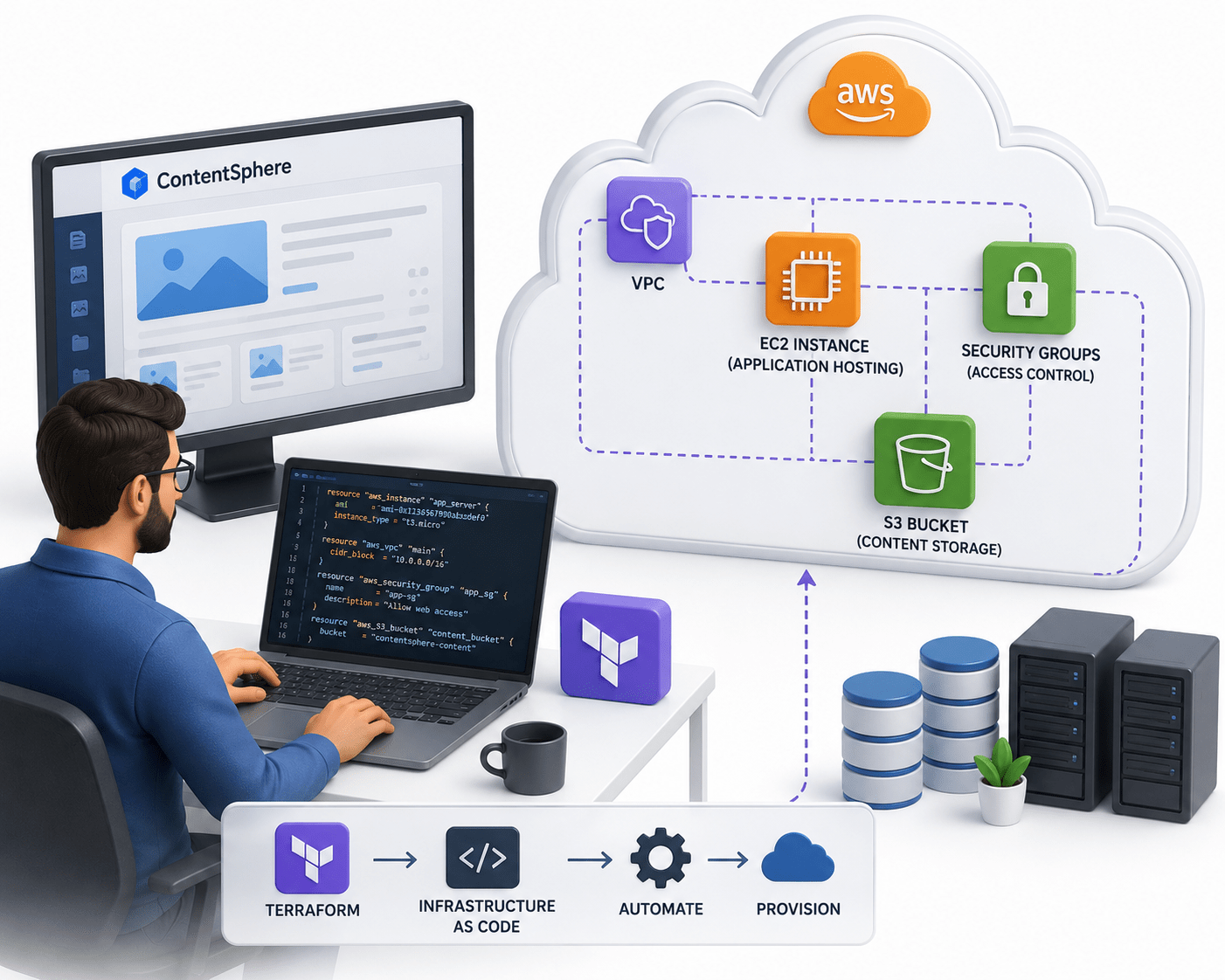
ContentSphere is a content management platform that requires cloud infrastructure to host applications and store content.
The platform requires:
-
EC2 Instance for application hosting
-
VPC for networking
-
Security Groups for access control
-
S3 Bucket for content storage
Managing these resources manually becomes difficult as the environment grows. Terraform helps automate infrastructure provisioning and management using code.
What is Infrastructure as Code (IaC)?
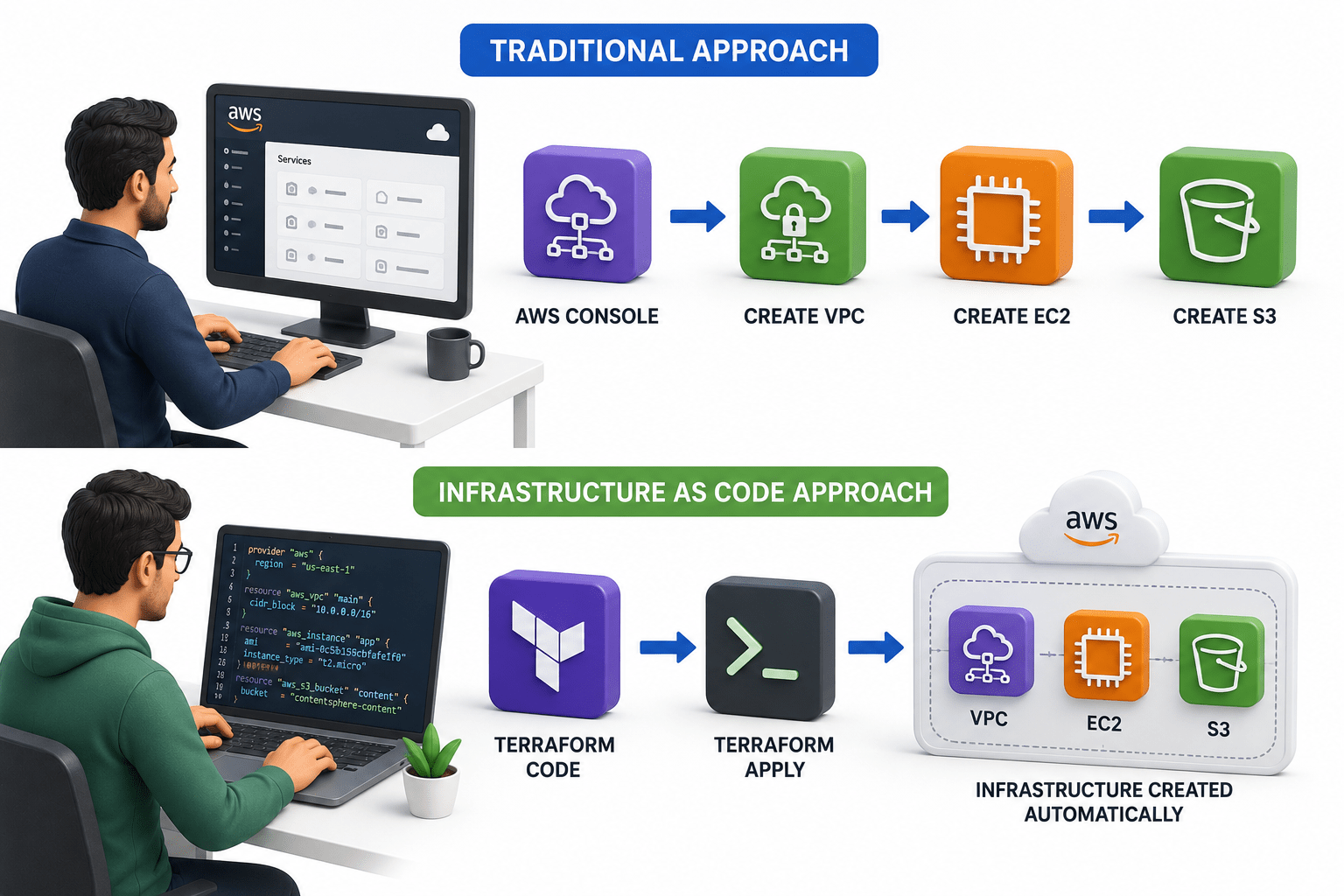
Infrastructure as Code (IaC) is the process of managing and provisioning infrastructure using code instead of manually creating resources through a cloud console.
Traditional Approach
AWS Console → Create VPC → Create EC2 → Create S3
Infrastructure as Code Approach
Terraform Code → terraform apply → Infrastructure Created Automatically
Benefits of IaC:
-
Automation
-
Consistency
-
Faster Deployments
-
Version Control
-
Reduced Human Errors
What is Terraform?
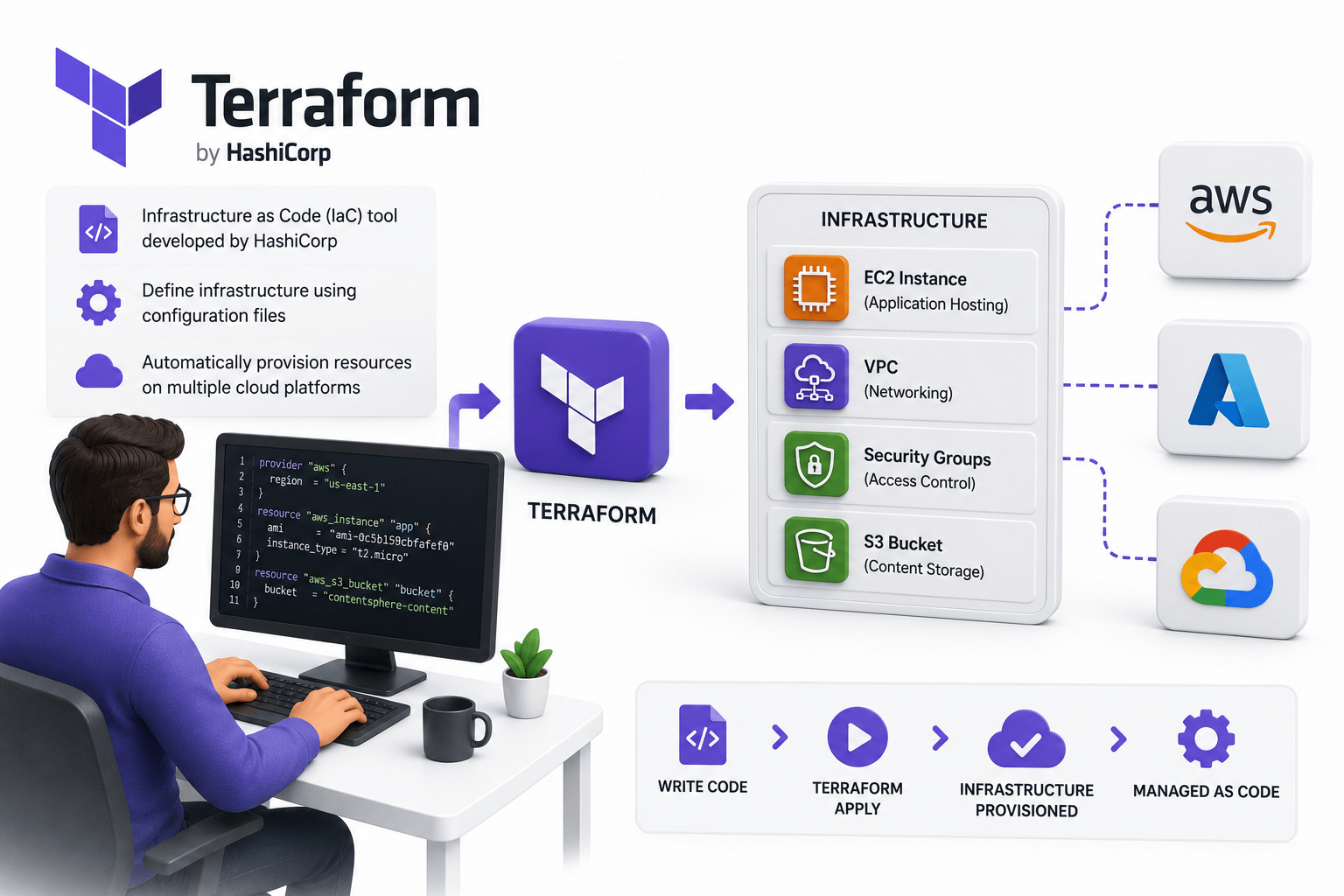
Terraform is an Infrastructure as Code (IaC) tool developed by HashiCorp.
Terraform allows users to define infrastructure using configuration files and automatically provision resources on cloud platforms such as AWS, Azure, and GCP.
Terraform can create:
-
EC2 Instances
-
VPCs
-
S3 Buckets
-
Databases
-
Load Balancers
-
Kubernetes Clusters
Why Terraform?
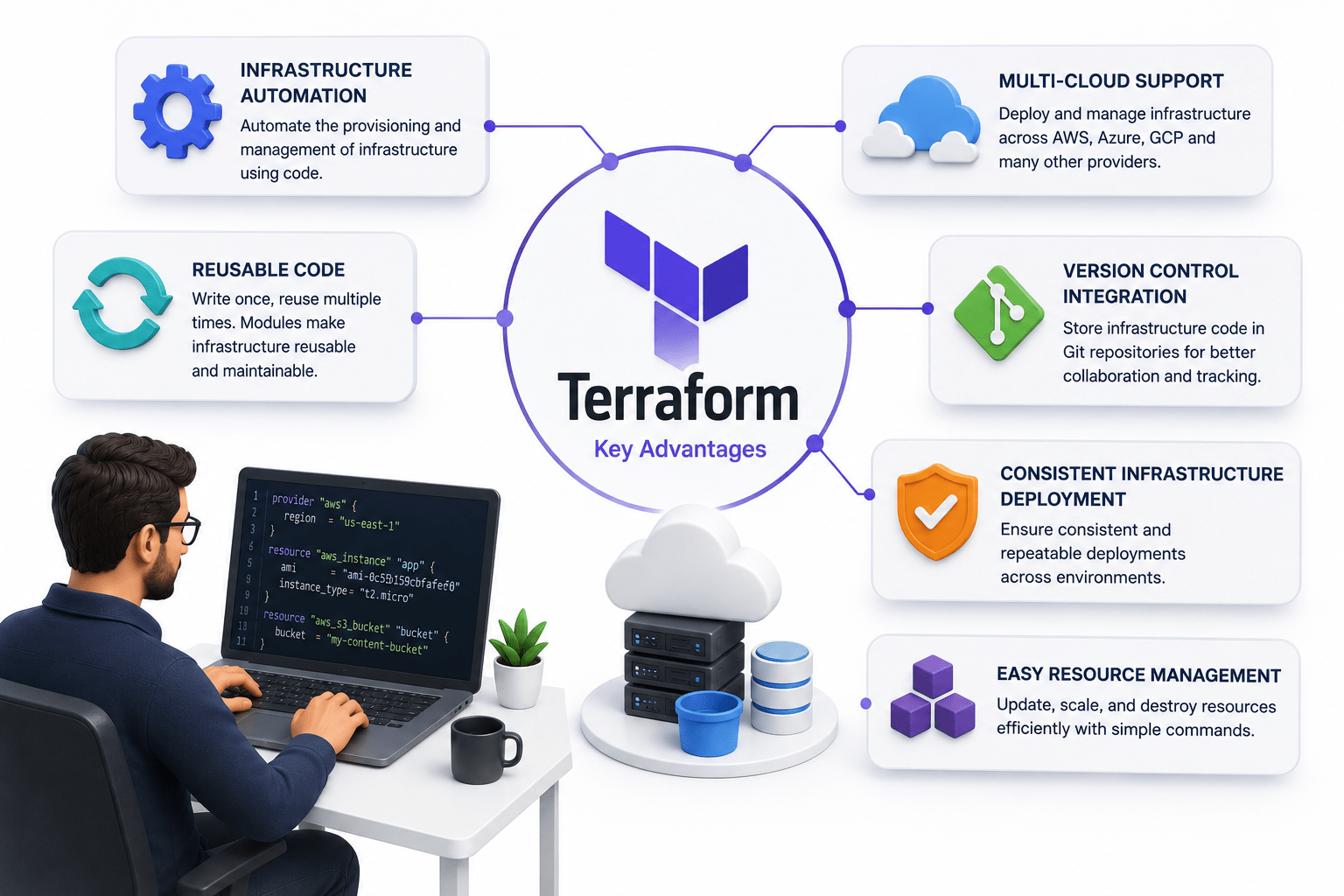
Terraform provides several advantages:
-
Infrastructure Automation
-
Reusable Code
-
Multi-Cloud Support
-
Version Control Integration
-
Consistent Infrastructure Deployment
-
Easy Resource Management
Terraform Workflow
Terraform follows a simple workflow:
Write Configuration
↓
terraform init
↓
terraform plan
↓
terraform apply
↓
Infrastructure Created
Declarative vs Imperative Approach
Imperative Approach
In an imperative approach, you specify each step required to create infrastructure.
Example:
Create VPC
Create Subnet
Create EC2
The focus is on "How to create".
Declarative Approach
In a declarative approach, you define the desired end state.
Example:
"I need one EC2 instance and one S3 bucket."
Terraform automatically determines how to create them.
The focus is on "What should be created".
Terraform follows the Declarative approach.
Core Terraform Concepts
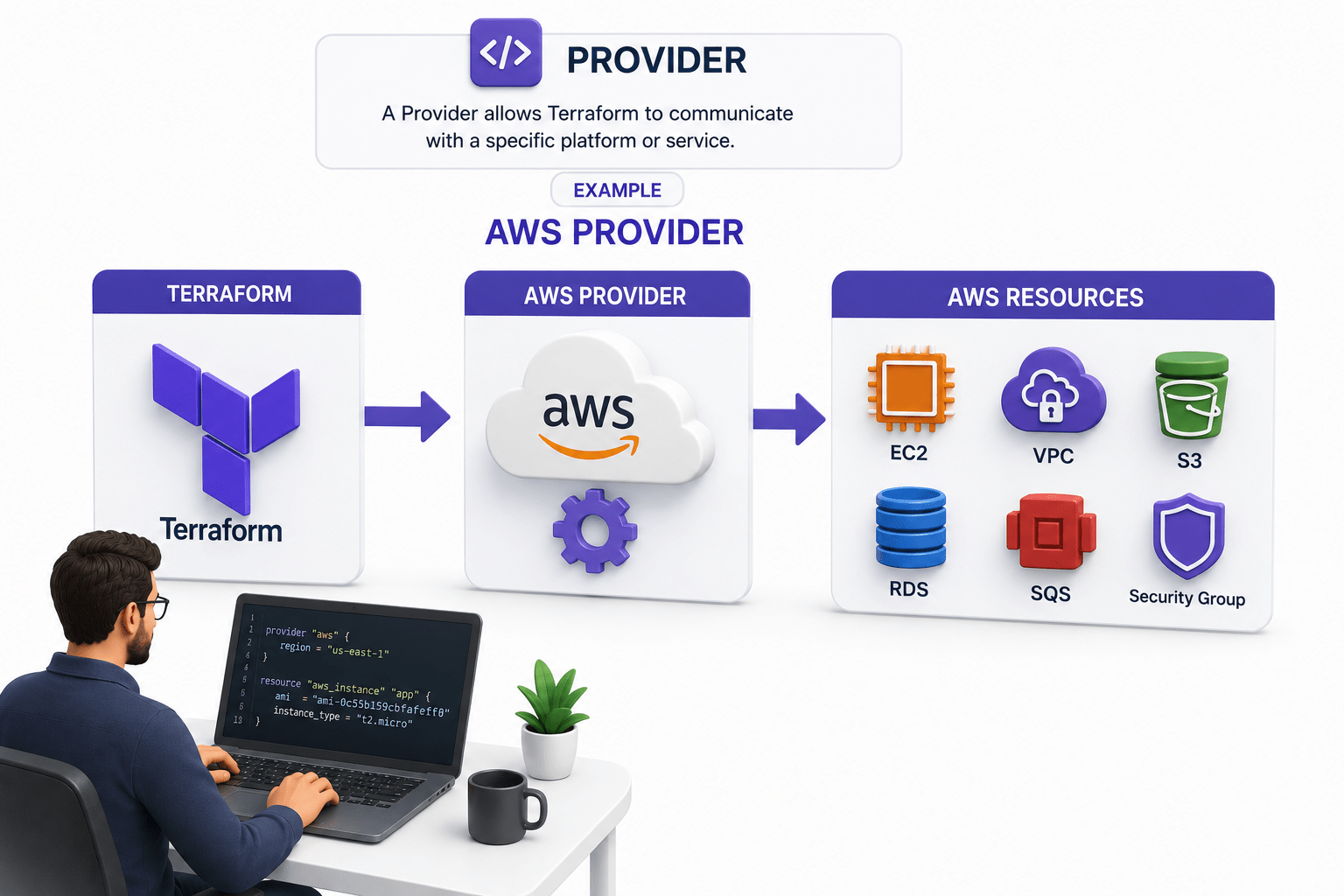
Provider
A Provider allows Terraform to communicate with a specific platform or service.
Example:
AWS Provider
Terraform → AWS Provider → AWS Resources
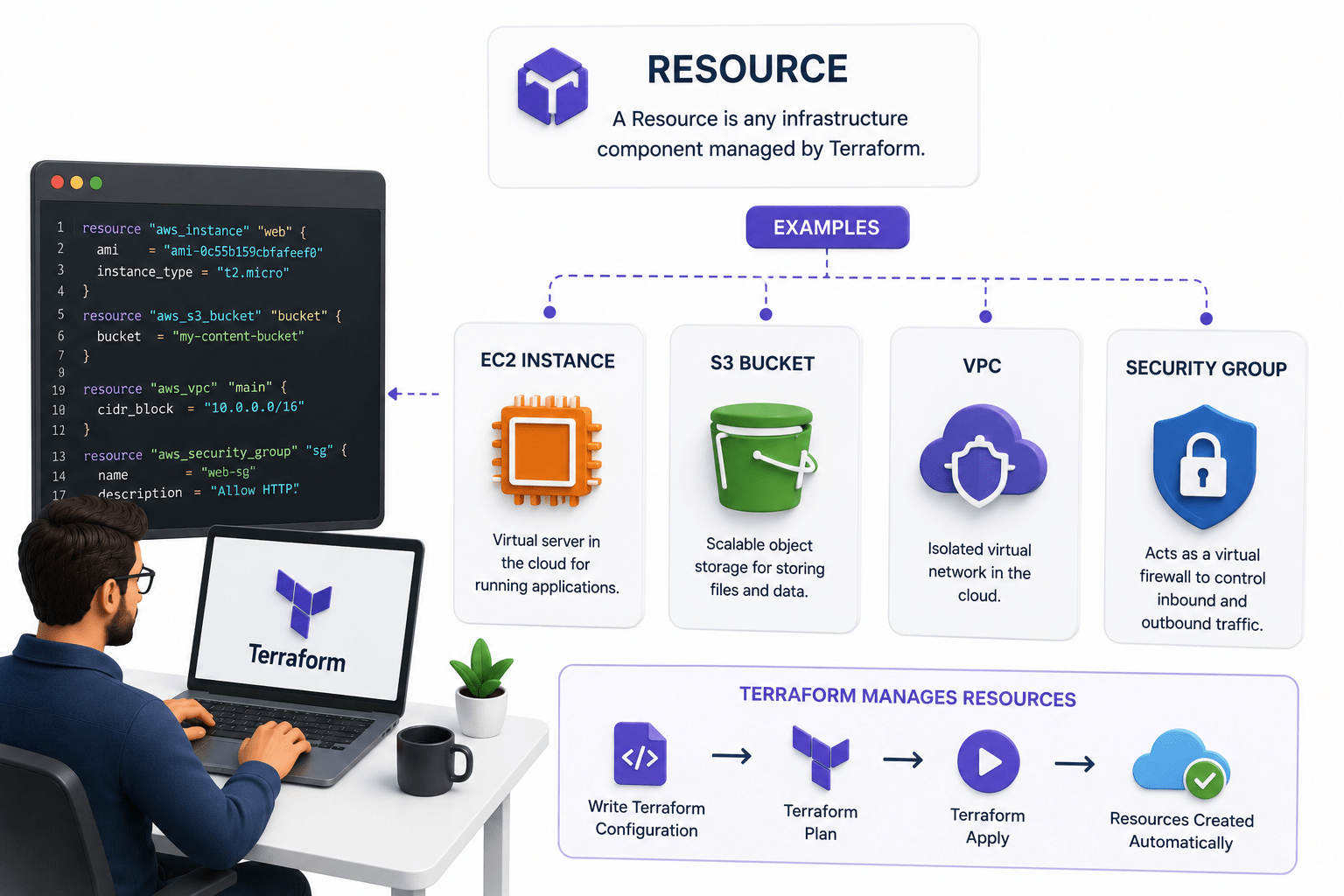
Resource
A Resource is any infrastructure component managed by Terraform.Examples:
-
EC2 Instance
-
S3 Bucket
-
VPC
-
Security Group
Variable
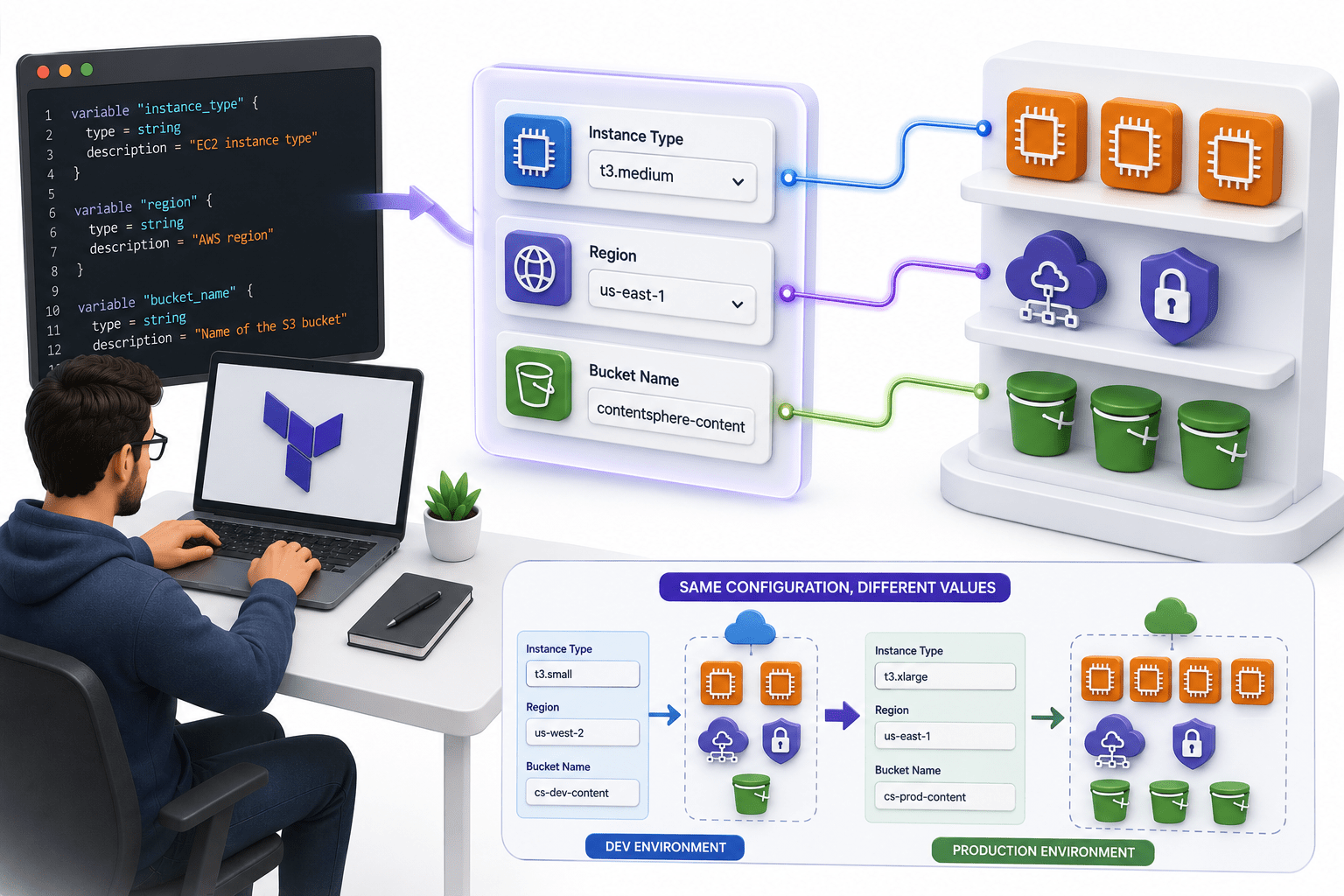
Variables allow users to provide dynamic values to Terraform configurations.
Examples:
-
Instance Type
-
Region
-
Bucket Name
Variables improve reusability and flexibility.
Output
Outputs display important information after infrastructure deployment.
Examples:
-
EC2 Public IP
-
Instance ID
-
Bucket Name
Great job!
-
Explain Infrastructure as Code (IaC)
-
Understand the purpose of Terraform
-
Differentiate between Declarative and Imperative approaches
-
Explain Terraform Providers, Resources, Variables, and Outputs
-
Understand how Terraform automates AWS infrastructure provisioning
-
Prepare for creating AWS resources using Terraform in the next lab
Checkpoint