Case Study on Yield To Maturity (YTM)

Business Scenario
You are working as a Fixed Income Analyst at an investment advisory firm. A client is looking to invest in debt instruments and wants to understand which bonds can provide the best return for their investment while maintaining an acceptable level of risk.
As part of your analysis, you have been assigned to evaluate different bond instruments available in the market. Your first responsibility is to understand how bond prices influence investor returns and why yields change when bond prices fluctuate. Next, you will calculate the Yield to Maturity (YTM) of selected bond instruments to determine the actual return an investor can expect if the bond is held until maturity.
Using bond market data and real bond instruments listed on the NSE Debt Market, you will analyze bond returns, compare investment opportunities, and develop insights that can help investors make informed fixed-income investment decisions.

investor can expect if the bond is held until maturity.
Using bond market data and real bond instruments listed on the NSE Debt Market, you will analyze bond returns, compare investment opportunities, and develop insights that can help investors make informed fixed-income investment decisions.
Pre-Lab Preparation
Topic : Debt Instruments
1) What is a bond
2) Government and corporate bonds
3) Zero coupon and floating rate bonds.
4) Equity vs debt financing
5) Basic bond pricing intuition
Task 1: Understanding Yield and Bond Price Relationship
One of the most important concepts in fixed income markets is:
When Bond Prices Increase → Yields Decrease
When Bond Prices Decrease → Yields Increase
This relationship drives trading decisions in bond markets worldwide.
Assume a Government Bond:
| Particular | Value |
|---|---|
| Face Value | ₹100 |
| Coupon Rate | 8% |
| Annual Coupon | ₹8 |
Case 1: Bond Trading at ₹100
Yield = 8/100 = 8%
Case 2: Bond Trading at ₹120
Yield = 8/120 = 6.67%
Case 3: Bond Trading at ₹80
Yield = 8/80 = 10%
Yield = 8/80 = 10%
Activity
Calculate Yield for the following bonds:
Formula
Current Yield = Annual Coupon ÷ Market Price
| Face Value | Coupon | Market Price | Current Yield |
|---|---|---|---|
| 100 | 7 | 95 | |
| 100 | 7 | 105 | |
| 100 | 9 | 120 | |
| 100 | 9 | 80 | |
| 100 | 6 | 90 |
Task 2: Calculating and Analyzing Yield to Maturity (YTM)
In the previous lab, you calculated the coupon income generated by a bond using its coupon rate and face value.
However, coupon income alone does not represent the actual return earned by an investor because bonds may be purchased at prices different from their face value.
The actual return from a bond depends on:
-
Coupon Payments
-
Current Market Price
-
Face Value
-
Remaining Years to Maturity
This comprehensive measure of return is known as Yield to Maturity (YTM).
Go to the visual studio code official website
1
Use the following formula to estimate Yield to Maturity:
YTM≈Annual Coupon Payment+Face Value - Market PriceYears to MaturityFace Value + Market Price2YTM≈2Face Value + Market PriceAnnual Coupon Payment+Years to MaturityFace Value - Market Price
Where:
| Parameter | Meaning |
|---|---|
| Annual Coupon Payment | Interest received annually |
| Face Value | Principal repaid at maturity |
| Market Price | Current purchase price of the bond |
| Years to Maturity | Remaining life of the bond |
Analyze a Real Bond Instrument
2
Using a bond selected from the NSE Debt Market, consider the following example:
| Parameter | Meaning |
|---|---|
| Issuer | REC Limited |
| Face Value | ₹1,000 |
| Coupon Rate | 8.71% |
| Parameter | Meaning |
|---|---|
| Annual Coupon Payment | Interest received annually |
| Market Price | ₹950 |
| Years to Maturity | 2 Years |
Calculate Annual Coupon Payment
3
Annual Coupon Payment
= Face Value × Coupon Rate
= ₹1,000 × 8.71%
= ₹87.10
(Face Value−Market Price)/Years to Maturity
= (1000−950)/2
= Rs.25
Calculate Annual Capital Gain Component
4
=(Face Value+Market Price)/2
=(1000+950)/2
= Rs. 975
Calculate Average Investment
5
YTM=(87.10+25)/975
YTM=11.50%
Calculate Approximate YTM
6
=(Face Value+Market Price)/2
=(1000+950)/2
= Rs. 975
Although the bond pays a coupon rate of only 8.71%, the investor earns an approximate YTM of 11.50% because the bond was purchased below its face value.
Activity
Using the NSE Debt Market, identify:
-
1 Government Security (G-Sec)
-
1 Private Corporate Bond
Collect the required information and calculate the approximate Yield to Maturity (YTM).
Complete the table below.
| Security Name | Issuer Category | Face Value (Rs) | Market Price (Rs) | Coupon Rate (%) | Annual Coupon Payment (Rs) | Years to Maturity | ApproxYTM (%) |
|---|---|---|---|---|---|---|---|
| REC Bond | PSU / Government-Backed | 1,000 | 950 | 8.71 | 87.10 | 2 | 11.50 |
| G-Sec | |||||||
| Private Corporate |
Task 3: Calculating and Analyzing Yield to Maturity (YTM)
In the previous lab, you calculated the coupon income generated by a bond using its coupon rate and face value.
Task 1: Understanding BRD
Before you start building anything, you need to clearly understand what the client actually wants.So, let’s begin by understanding the BRD (Business Requirement Document) shared by the client.
BRD Full Form is Business Requirement Details.BRD like a plan for building a house. This plan helps the builder understand what to build.In the same way,BRD tells developers what the client wants to build
Click to download BRD : BiteBox_BRD.pdf
Activity
After going through BRD list down the Core Features and Web Pages in the tabulated Format as shown Below.
| Col 1 | Col 2 | Col 3 |
|---|---|---|
| Row 1 | ||
| Row 2 | ||
| Row 3 |
Formula
Profit = Revenue - Cost
Task 2: Create WireFrame
Now that you understand the requirements, don’t jump into coding yet. Before development, we always visualize the layout.
Now lets create a simple wireframe for the homepage.
A wireframe is like a layout plan of a house. Before building, you decide where rooms, doors, and windows will be placed.Similarly, a wireframe helps you plan where elements like headers, images, and buttons will appear on a webpage—before adding design or colours.
Task 3: Code Editor Installation
Good work on completing the planning phase.
Now we will start development. Before that, make sure your system is ready with the required tools.
In this step we will install the VS code editor that will help to Write code efficiently,Organize files , Run and test your application
Go to the visual studio code official website
1
Click to download Homepage Wireframe : Homepage Wireframe
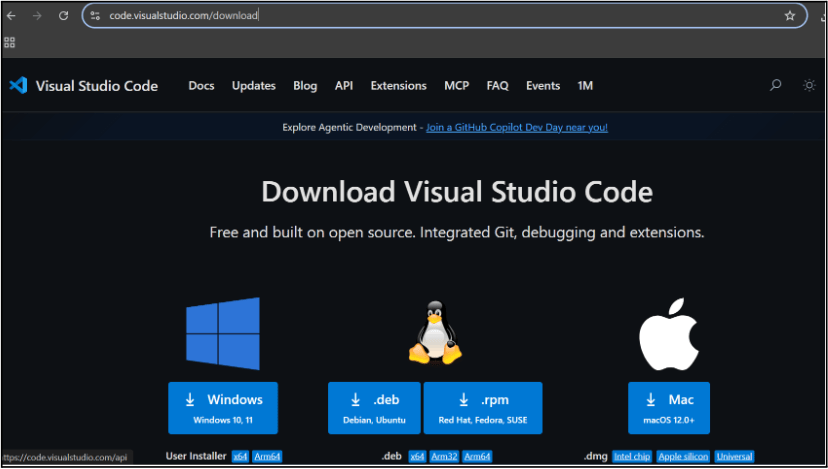
Choose your operating system(windows / Mac) and download the installation file.
Double click on the download app and Accept the agreement and click next
2
It is a long established fact that a reader will be distracted
b
Sub Steps
a
Double click on the download app and Accept the agreement and click next
public class MathSample {
    public static void main(String[] args) {
        int x = 10;
        int y = 20;
        int sum = x + y;

        System.out.println("The sum is: " + sum);
    }
}
public class MathSample {
public static void main(String[] args) {
int x = 10;
int y = 20;
int sum = x + y;
System.out.println("The sum is: " + sum);
}
}
public class MathSample {
public static void main(String[] args) {
int x = 10;
int y = 20;
int sum = x + y;
System.out.println("The sum is: " + sum);
}
}
Great job!
You have successfully completed your first lab on BiteBox Project Onboarding.
In this lab, you have: Understood the BRD, Created a wireframe, Set up your development environment, Organised your project structure, Run your first program
You are now ready to move to the next stage of development
Checkpoint

Next-Lab Preparation
Git Push
git push origin branchNameTopic : Working with a Text and Listin HTML
1) Power of HTML text tags
2) Customizing your style with CSS
3) Listing it right using HTML
4) HTML Link up , attributes of tag, block vs inline elements
Text box Width : 887
Business Scenario, Pre-lab Preparation, Next-lab Preparation, Task, Activity, Checkpoint : 90%.
Steps : 1,2,3 [Sub Steps - a,b,c]
Normal Text, Topic Name : 80%
Subtopic : 70%
Code Box font Size : 16px