Thanks, But No Thanks: Attitudes On Refugee Policy in the European Union
IPE colloquium
University of Groningen
15 June 2022
Dawid Walentek
University of Warsaw
About us
- Natalia Letki Principal Investigator (University of Warsaw)
- Ulf Liebe (University of Warwick)
- Peter Thisted Dinesen (University College London)
- Artem Graban (University of Warsaw)
-
Dawid Walentek (University of Warsaw)
- Funding: NCN (National Science Centre Poland) grant no 2019/33/B/HS6/00841
- Our website is here

Background
- 2015 Refugee Crisis
- Budapest's, Prague's and Warsaw's refusal to join the relocation scheme
- Refugee policy in the EU is a patchwork
- Ongoing relevance

Literature
- Preferred refugee profiles and sentiments towards out-group members (e.g. Adida, Lo, and Platas 2019)
- Effects of exposure on acceptance of out-group members (e.g. Schaub, Gereke, and Baldassarri 2020)
-
Behavioural and attitudinal changes in relation to out-group members (e.g. Alesina, Miano, and Stancheva 2018)
-
Limited research on refugee policy:
- Only interested in allocation (Bansak, Hainmueller, and Hangartner 2017)
- Asks about policy solutions the EU cannot deliver (Jeannet, Heidland, Ruhs 2021)
Our project
- Set out to identify what refugee policy Europeans want
-
We study attitudes in respect to:
- allocational regime
- level of border control
- right to work
- freedom of movement
- cost of the policy
- We test the overlap between attitudes and behaviours
Data & Methods
Data
- Online survey experiment in early 2022
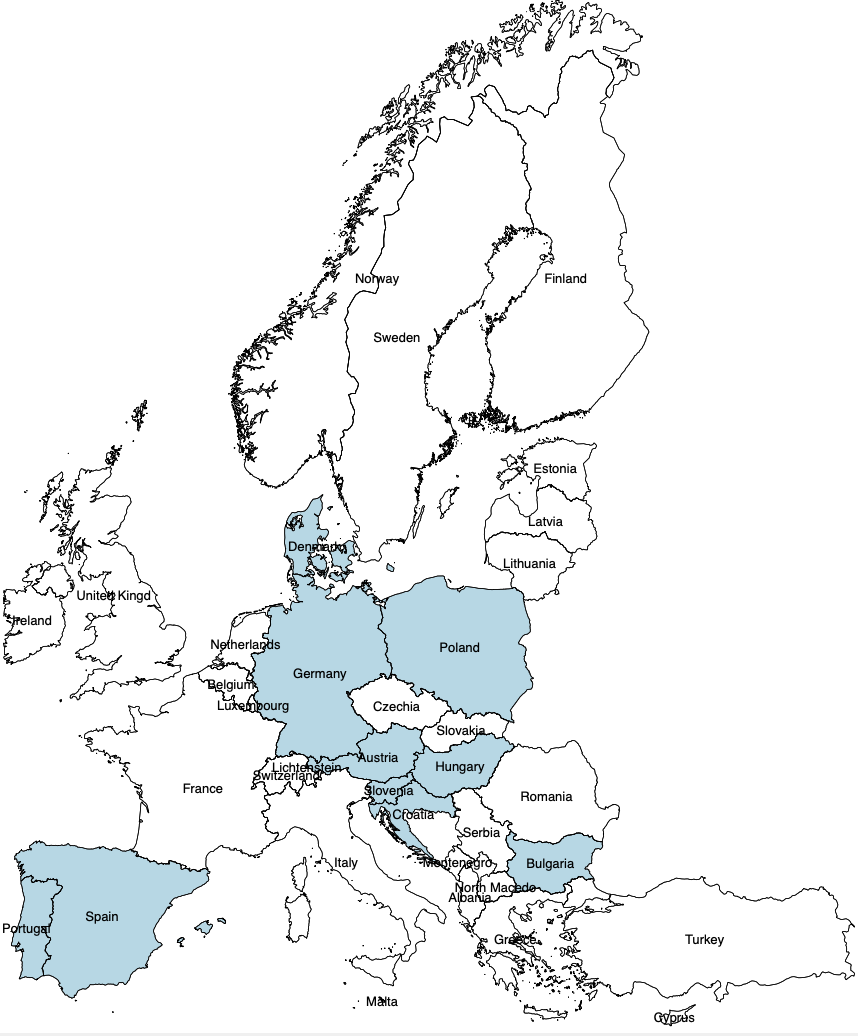
- 10 Member States
- 16,976 respondents
- 4 treatment groups
- 3 components
- conjoint
- real-effort
- questionnaire
- Follow up study (DE, PL & HU) in spring 2022
- Preregistration with EGAP
Treatments
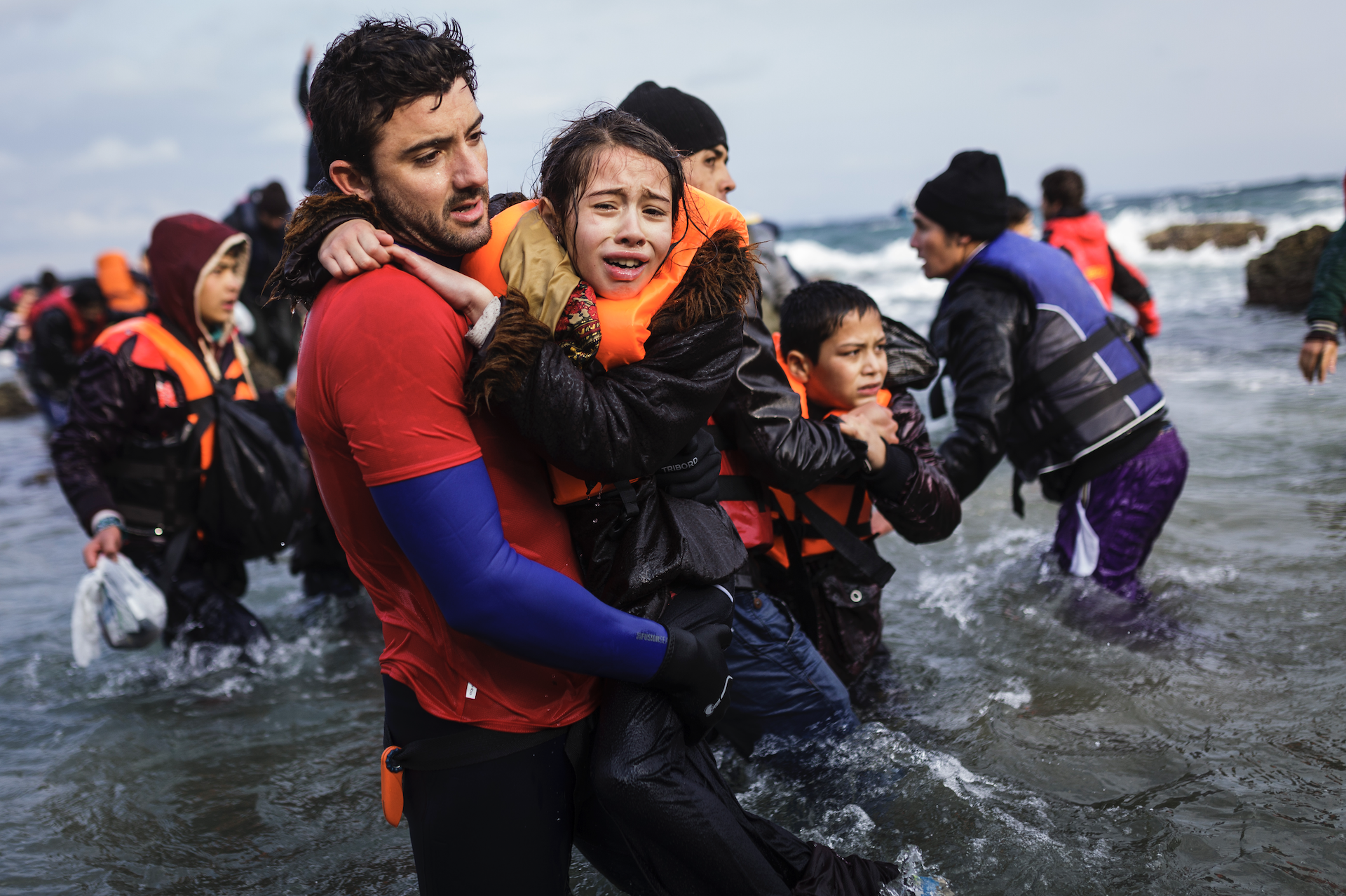
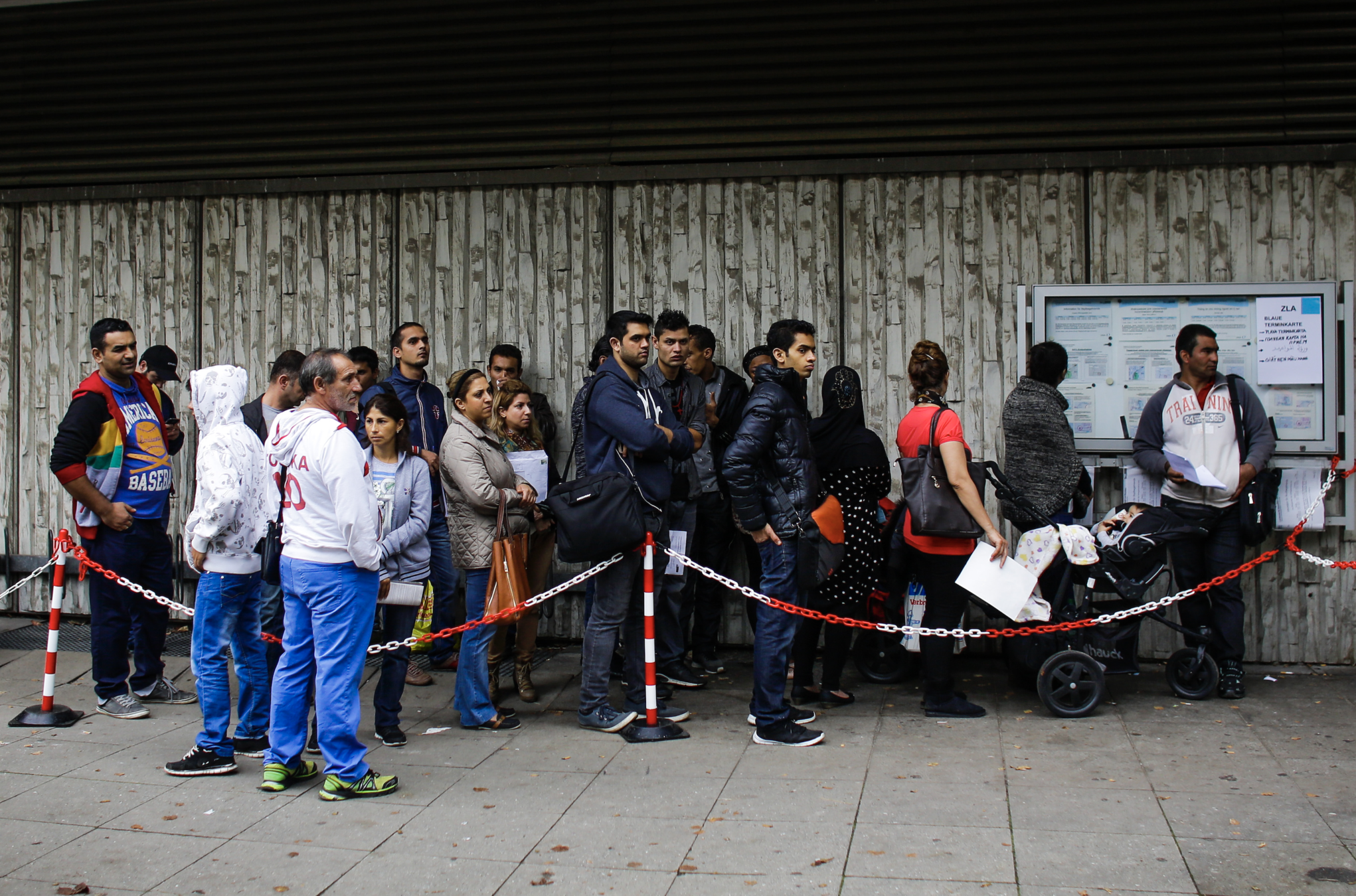
- Three visual primes
- Welfare
- Security
- Humanitarian
- Images accompanied by a short caption
- Widely circulated in media in relation to the relevant primes
- Text-based Status Quo prime on current refugee policy

Methods: Conjoint
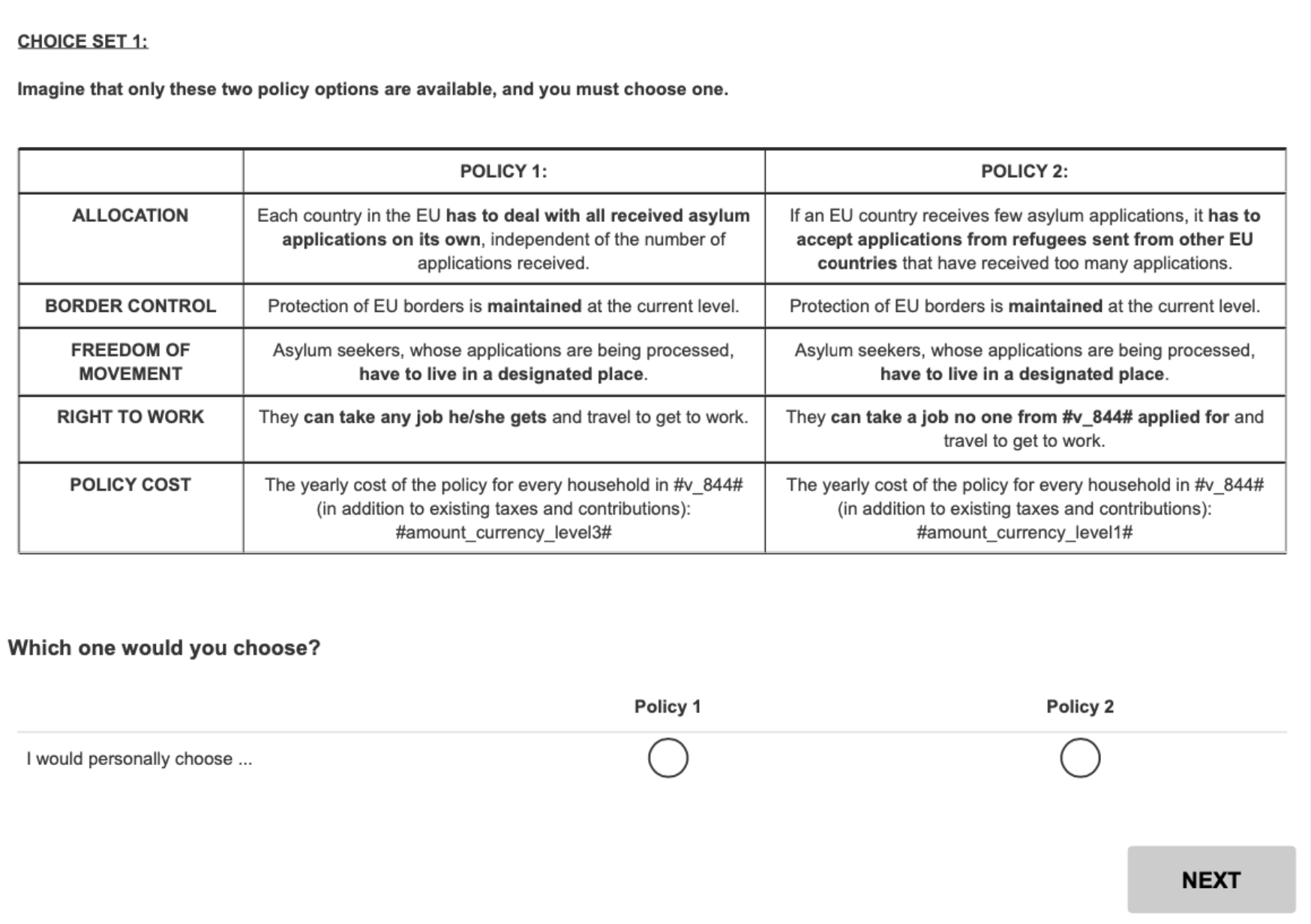
- Full randomisation
- Five attributes over twelve levels resulting in 72 policy profiles
- Respondents make six choices over a pair of profiles
- Over 101,856 (force)choices made and 203,712 profile ratings assigned
- Each profile appears on average 2829 times
Methods: Real effort
- Final part of the survey
- Respondents receive first general information about the International Rescue Committee
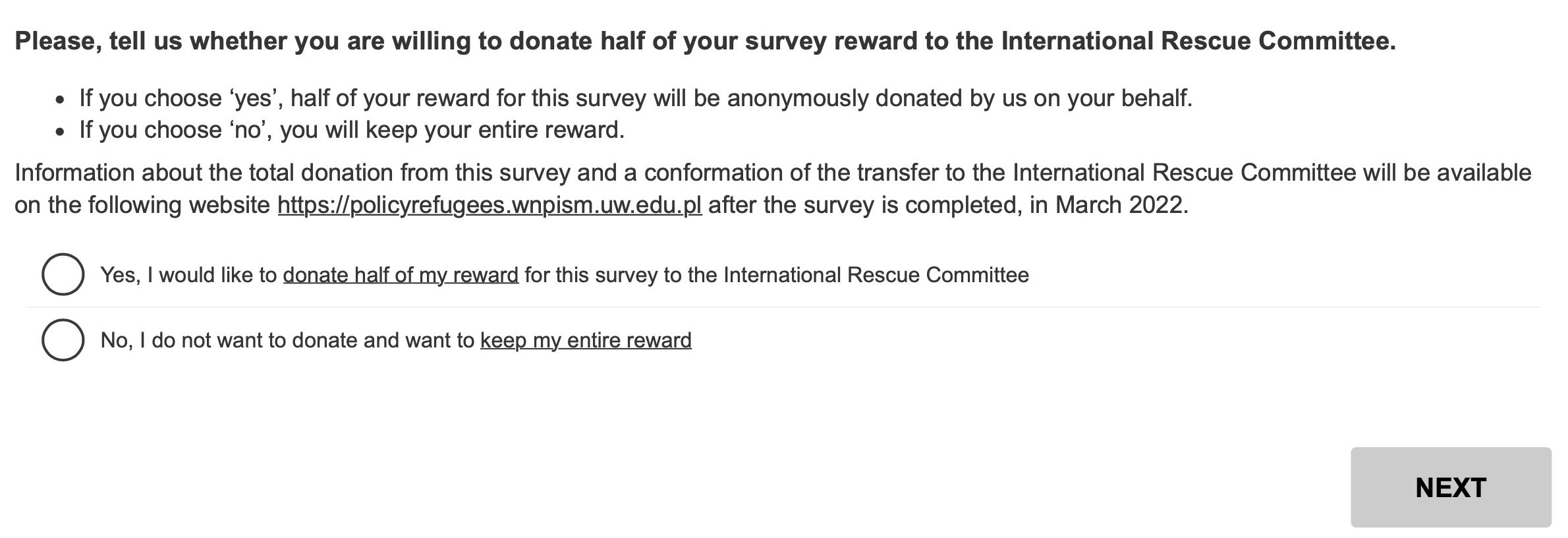
- Then respondents are presented with the real-effort task, where they must decide whether to donate half of the survey remuneration to the IRC

Results
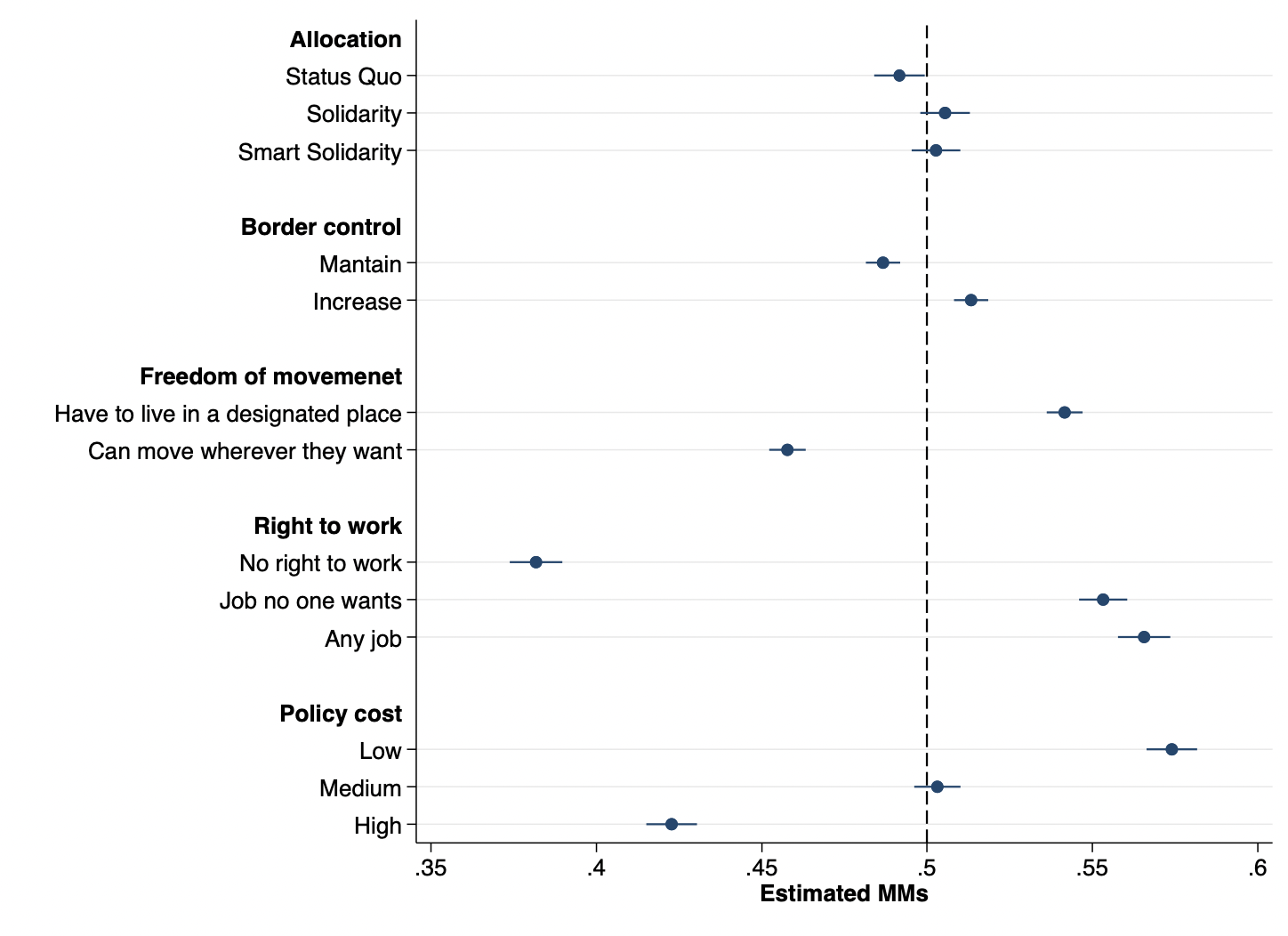
Conjoint: control
- No meaningful role of the allocation regime
- Preference for increased border control
- Preference for limited freedom of movement
- Preference for the right to work (and dislike of the alternative)
- Dislike of the pricey policy and preference for the low costs
Conjoint: control
- Strong variation between countries in respect to the allocation regimes
- DE, ES, AU & DEN dislike the Status Quo while HU & SL prefer it
- DE, ES, AU & PT support relocation while HU opposes
- All indifferent on fiscal solidarity bar supportive DEN & negative PT
- Note: DE, ES & AU receive the most and HU the least asylum applications
- Hardly any meaningful variation between the Member States in respect to other attributes than allocation regimes
Real effort
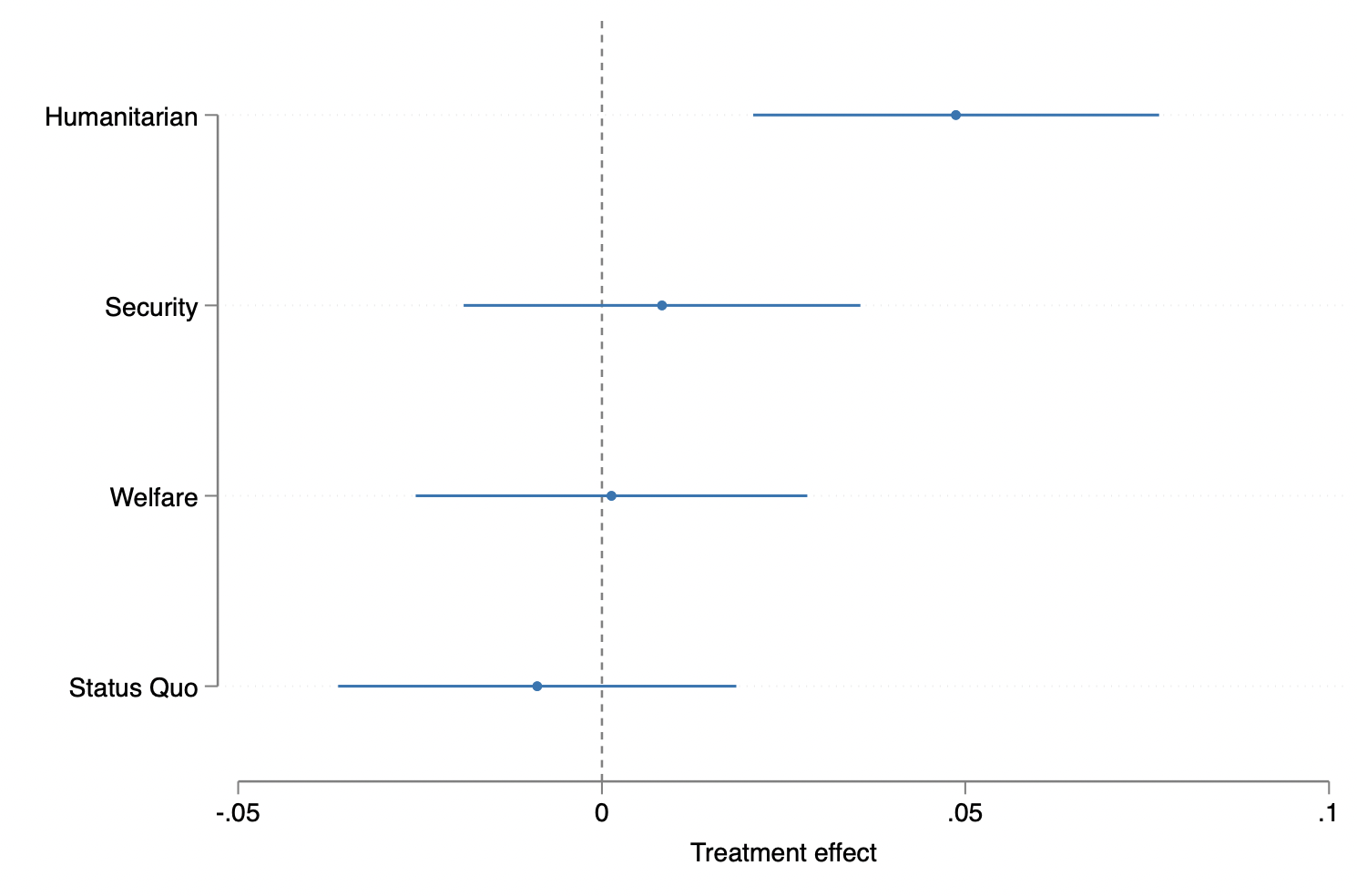
- Control group:
- PL, DE & BG ~ 25%
- HU & SL ~ 30%
- AU & HR ~ 35%
- Treatments:
- Humanitarian only
- ATE = .05
5% higher donation - Bonferroni
correction - Region FE (NUTS 2)
Real effort: heterogeneity
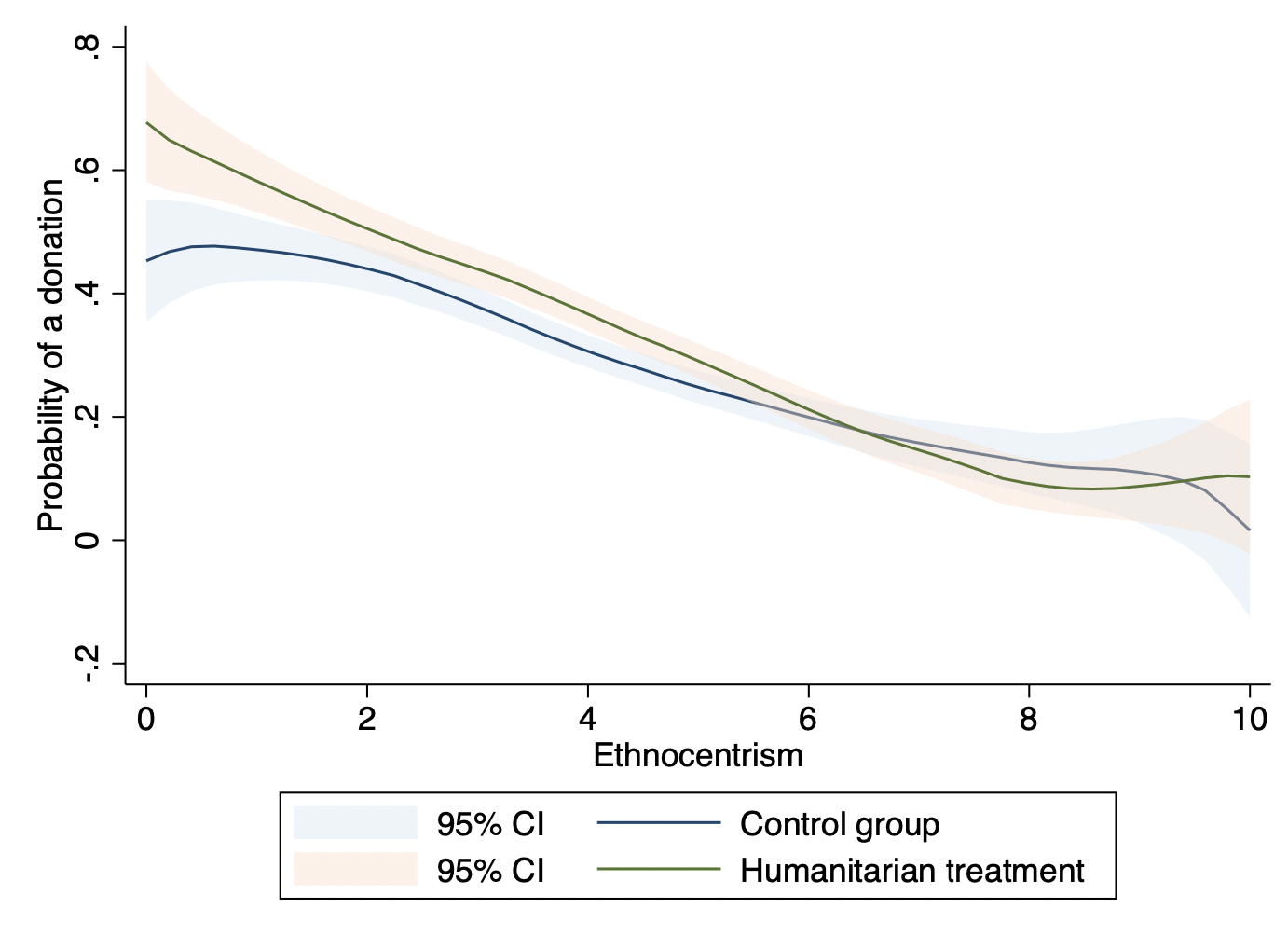
- Meaningful heterogeneity in the treatment effect for different levels of ethnocentrism
- Treatment effect does not set-in any more for higher levels of ethnocentrism
- Ethnocentrism based on a set of survey questions
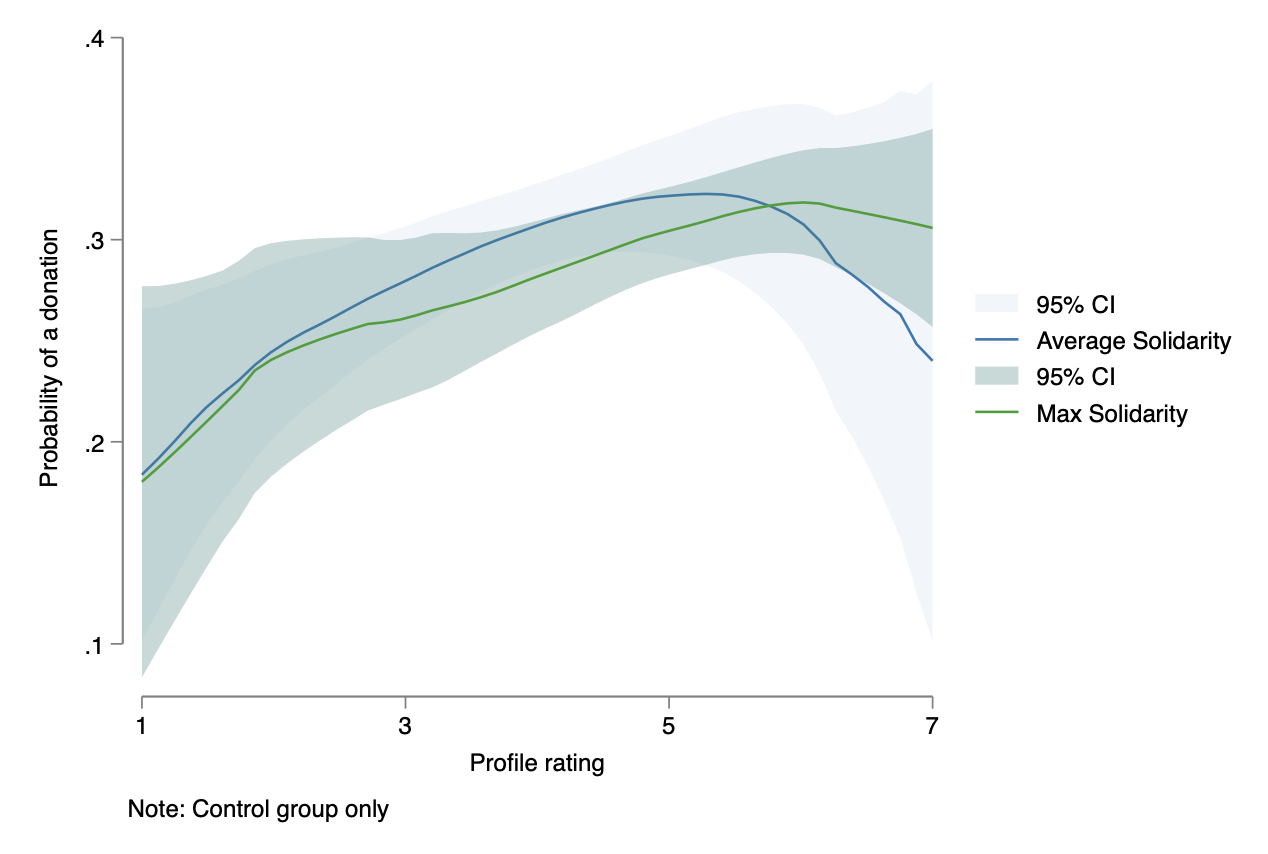
Real effort: attitudes and behaviours
- We see a correspondence between attitudes and behaviours
- Average rating assigned to profiles with a relocation attribute level
Follow up
- Three countries in April & May
- Germany, Poland and Hungary
- Two samples
- recontact with January & February round (problematic)
- fresh sample
- Motivated by the onset of the war in Ukraine
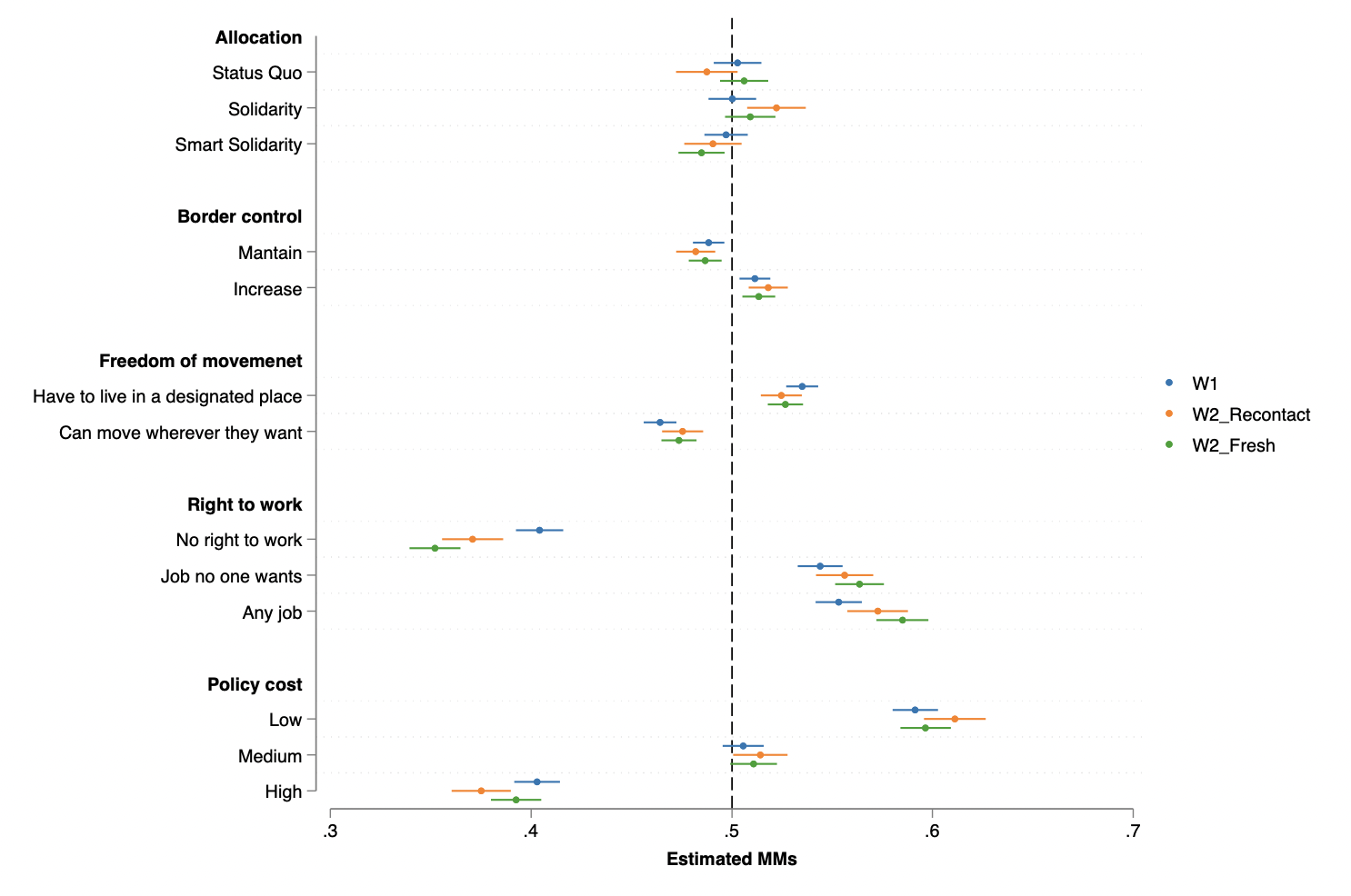
Follow up: MM
- Consistent preferences & ratings of profiles
- Stronger sentiments about refugees joining the labour market
- Change in attitudes towards freedom of movement
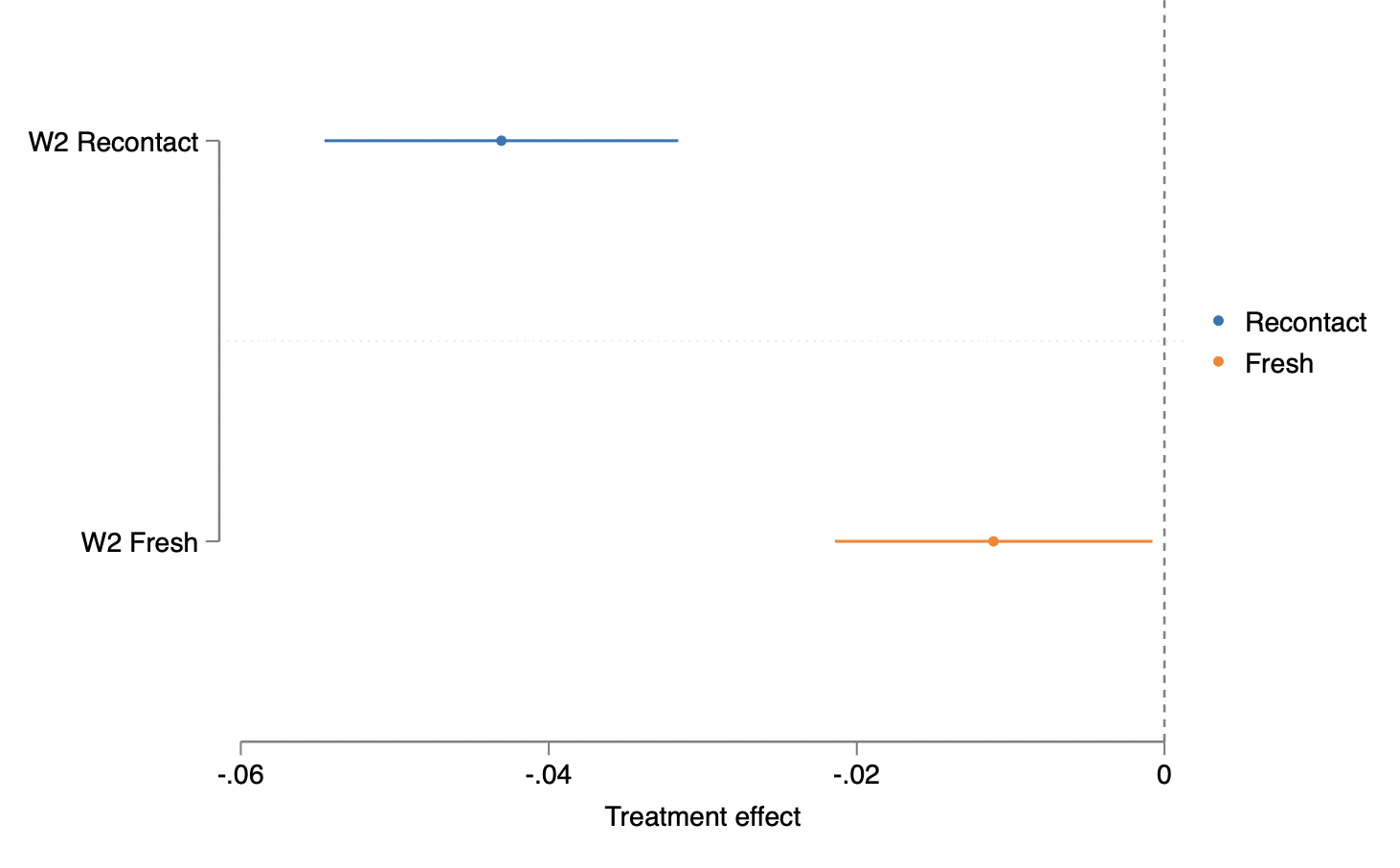
Follow up: Effort
- Lower level of donation
- Greater effect size in the recontact group
Conjoint: treatments
- Still in the process
- Sorry!
Discussion
What do we learn?
- Smart Solidarity may turn out to be a disappointment, while dissatisfaction in DE, ES & AU may grow
- Welcoming on the labour market, but not on the streets
- Concerned about costs and borders
- Responsive to humanitarian media frame, but not across the (ethnocentric) board
- Attitudes and behaviours do seem to overlap
- Preferences stable, despite the war in Ukraine
- Status Quo bias on movement & right to work
- Crowding out effect on donations
How to proceed?
- What is the core message
- How to organise it
- Which community to target
- And how to reach beyond academia