Part One: Systems That Get Stuff Done
Part Three: How Do Systems Learn to Get Stuff Done?
Part Two: How Do Systems Do Stuff?
Part One: Systems That Get Stuff Done
Part Three: How Do Systems Learn to Get Stuff Done?
Part Two: How Do Systems Do Stuff?
A just so story about how intellectual work gets done.
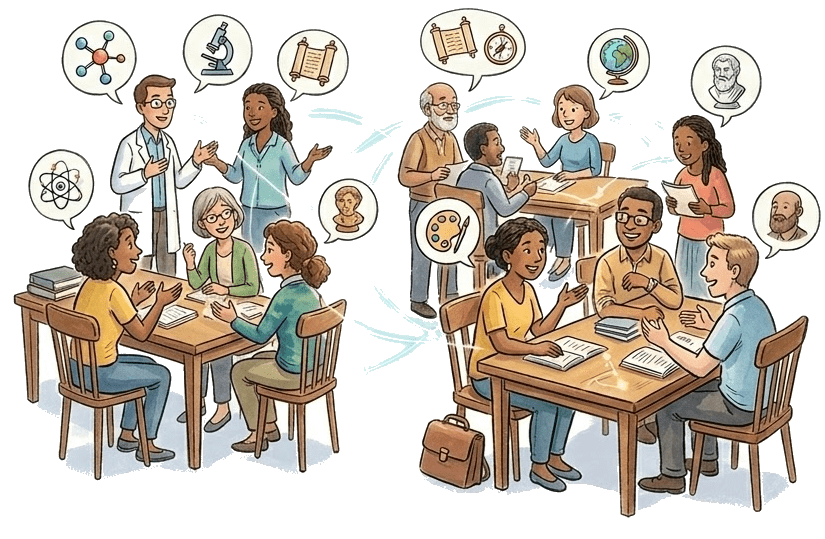
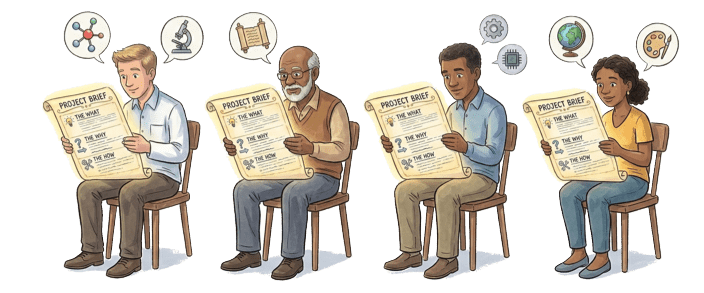
Let's imagine there is a community of collaborative scholars,
each with their own specialty and expertise.
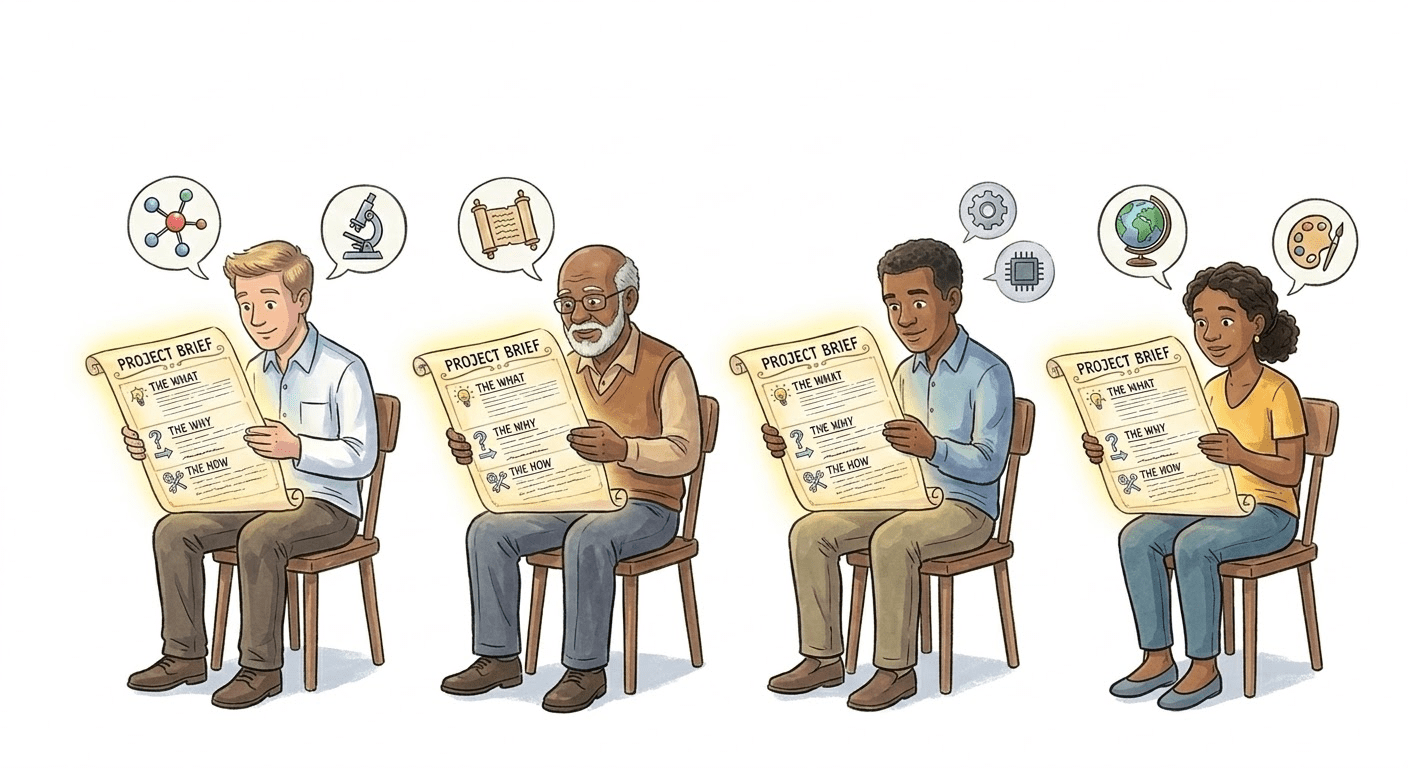
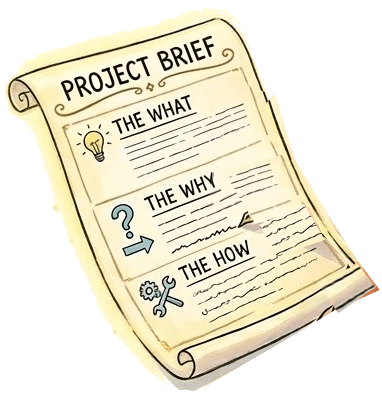
One member, the principal investigator (PI), conjures up
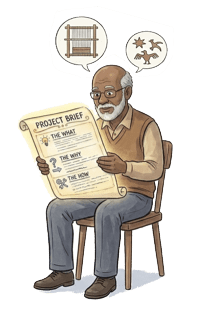
a project and writes a brief document describing the
what and the why and the how.

Part One: Systems That Get Stuff Done
The PI solicits four member
The Calculus of Blame
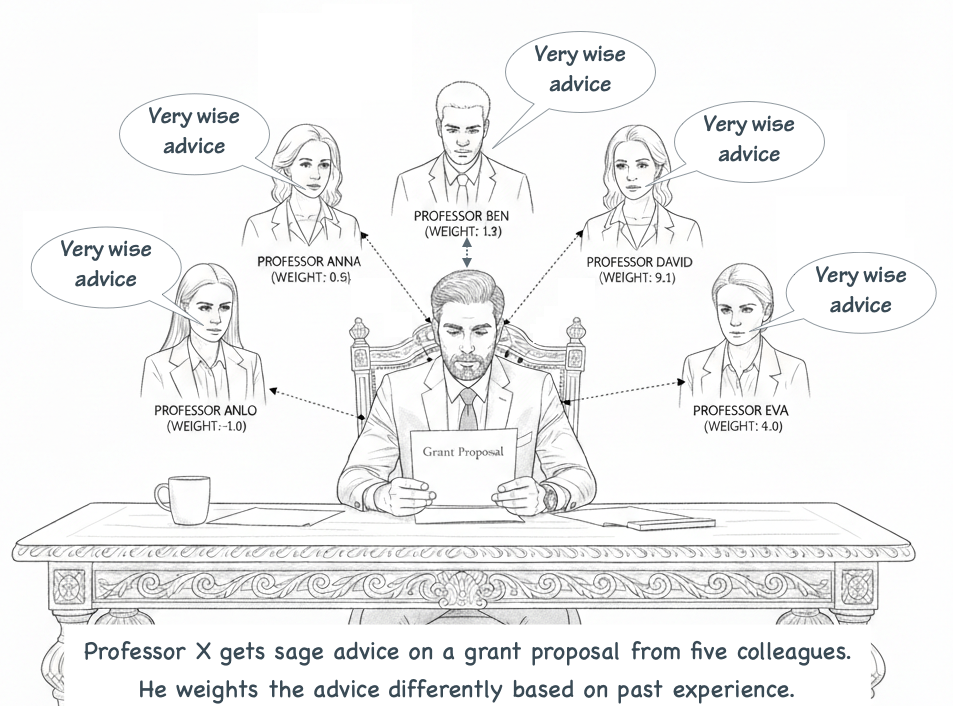
As our acknowledgements always say, a researcher depends on colleagues. I share my draft grant proposal with trusted colleagues. They offer advice. I value the advice of some colleagues more than others.
The grant I submit is a sort of weighted average of the advice I got.
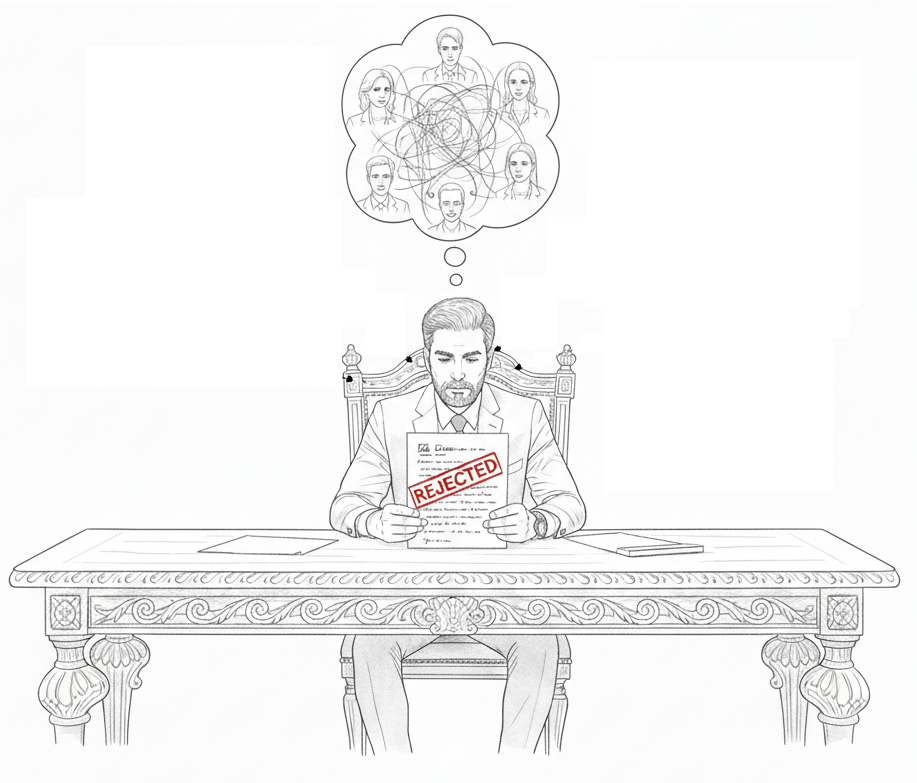
The Calculus of Blame. When the grant is rejected I read the referees' evaluation and scores and think about the advice I got. I ask myself how the score might be different if I'd taken Eva's advice a bit more to heart? Or if I had relied less on Ben's suggestions? I intuitively compute how much the outcome might have changed with small changes in how I weighed the advice of each of my colleagues.
And I make a mental note to adjust my weights next time.
The Derivative of Blame
The Concept: Determining who contributed most to the mistake.
-
The Scenario: You look back at the committee. You ask: "If I had listened to Professor Smith just a tiny bit less, would our total error have gone down?"
-
The Calculus: This is the Partial Derivative ($$). It tells you the sensitivity of the total error to that specific person's weight.
-
The Wisdom of Crowds: You aren't "teaching" the friends; you are calculating the "gradient" (the direction of steepest improvement) for the entire group's organization.
Coding Compliance vs Coding Learning
The Concept: Determining who contributed most to the mistake.
-
The Scenario: You look back at the committee. You ask: "If I had listened to Professor Smith just a tiny bit less, would our total error have gone down?"
-
The Calculus: This is the Partial Derivative ($\frac{\partial Loss}{\partial \omega}$). It tells you the sensitivity of the total error to that specific person's weight.
-
The Wisdom of Crowds: You aren't "teaching" the friends; you are calculating the "gradient" (the direction of steepest improvement) for the entire group's organization.
def evaluate_grant(impact_score, feasibility_score, budget_alignment):
    # The human defines the rules and the logic flow
    if impact_score > 0.8:
        if feasibility_score > 0.7:
            return "Approved"
        elif budget_alignment == "High":
            return "Waitlist"
        else:
            return "Rejected"
    else:
        return "Rejected"

# Logic is rigid; if the world changes, the code must be manually rewritten.
import keras # or torch
# The human defines the architecture (the "committee")
model = Sequential([
Input(shape=(3,)), # 3 inputs: Impact, Feasibility, Budget
Dense(50, activation='relu'), # 50 "colleagues" processing the data
Dense(20, activation='relu'), # A sub-committee refining the views
Dense(1, activation='sigmoid') # The final decision (0 to 1)
])
# The human defines the learning process
model.compile(
optimizer='adam', # The strategy for adjusting weights
loss='binary_crossentropy', # How we measure the "error" or "blame"
metrics=['accuracy']
)
# The human provides data, not rules
model.fit(past_grant_data, outcomes, epochs=100)Interpretability = What's Going On Inside
or
How is the LLM doing that?!
I
Absolutely, I'd love to be your conceptual tutor...
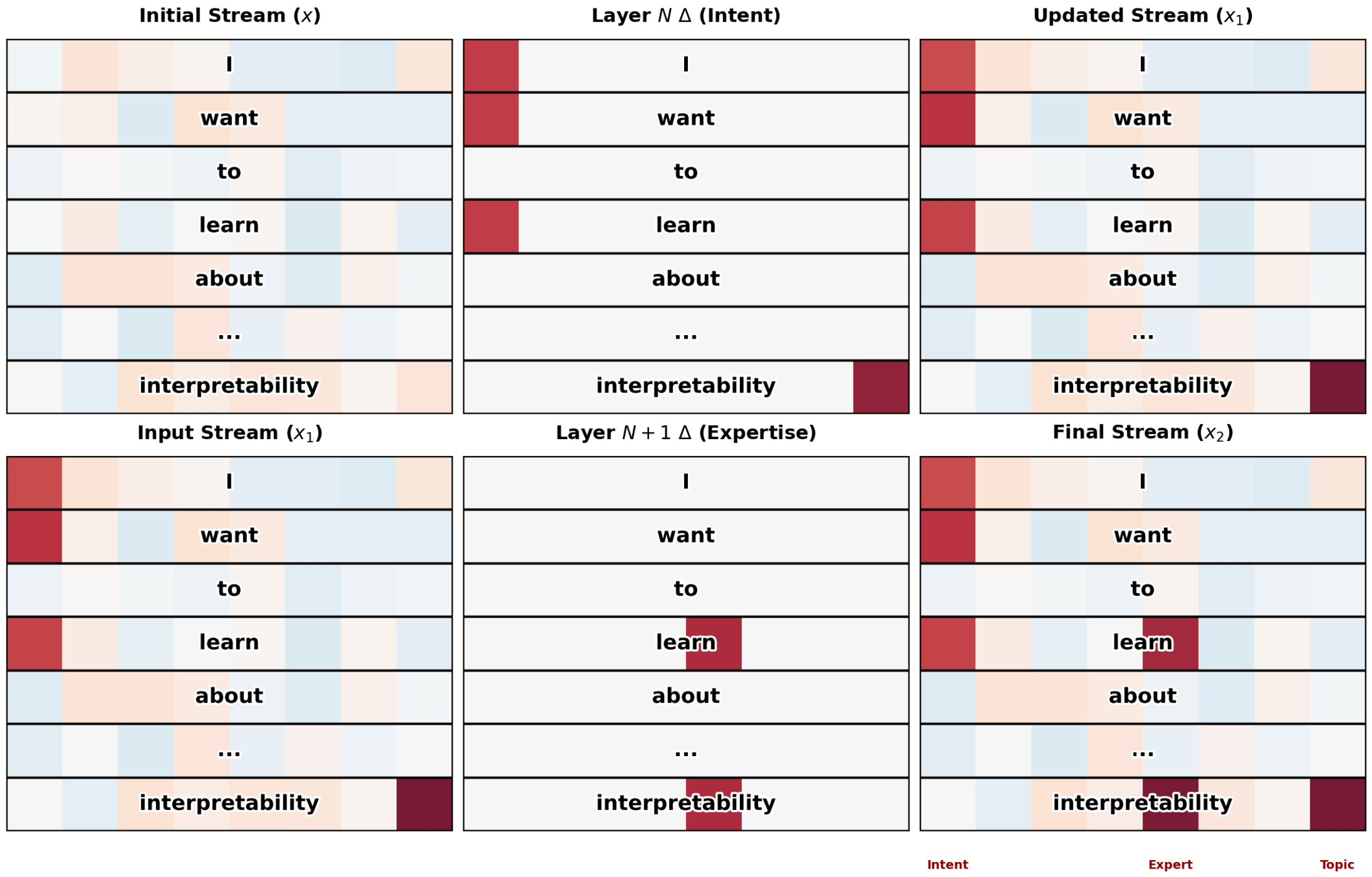
want
to
learn
about
...
intrepretability

Specialist Annotations
X1
X0
Specialist Annotations
...
Xn
BEST NEXT WORD
BEST NEXT WORD
APPEND
=<STOP>?
RESPOND
=<STOP>?
YES
NO
BEST NEXT WORD
"I want to investigate whether ancient agricultural practices contain embedded knowledge about soil ecology that modern science has overlooked."
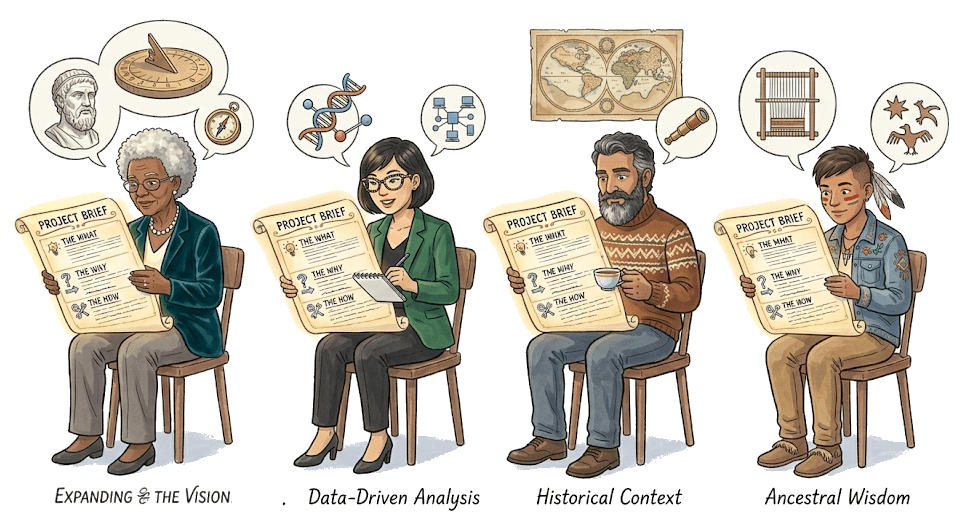
Physicist notes "complexity, emergence; distributed knowledge over generations"
Legal expert: not much to say
Historian notes "revisionist approach to history of science; methodological debates"
Humanist notes "tension in the framing; overlooked suggests deficit narrative; ancient/modern binary"
"I want to investigate* whether ancient* agricultural practices* contain embedded* knowledge* about soil ecology* that modern* science has overlooked*."
Physicist notes "complexity, emergence; distributed knowledge over generations"
BEST NEXT WORD
ETC.
Philosopher of science notes "emergence" and "revisionism" and thinks "Kuhn, Polyani"
Historian: "revisionist" plus "binary" suggests "post-colonial studies"
Biologist likes "distributed knowledge" and "soil networks" and thinks "mycorrihizal networks!"
Ancestral wisdom expert thinks "embedded knowledge needs unpacking"
"I want to investigate* whether ancient* agricultural practices* contain embedded* knowledge* about soil ecology* that modern* science has overlooked*."
BEST NEXT WORD
"I want to investigate whether ancient agricultural practices contain embedded knowledge about soil ecology that modern science has overlooked."
Biologist likes "distributed knowledge" and "soil networks" and adds hints of "mycorrihizal networks!"
"I want to investigate* whether ancient* agricultural practices* contain embedded* knowledge* about soil ecology* that modern* science has overlooked*."
Physicist adds accents of "complexity, emergence; distributed knowledge over generations"
The two specialists
form a circuit
abstract claim
→
concrete grounding
Interpretability = What's Going On Inside
or
How is the LLM doing that?!
Absolutely, I'd love to be your conceptual tutor...