Testing Semantic Importance
via Betting
Jeremias Sulam


Interpretability in Modern AI
Foundations, Methods,
and Emerging Directions
UCSD 2026

"The biggest lesson that can be read from 70 years of AI research is that general methods that leverage computation are ultimately the most effective, and by a large margin. [...] Seeking an improvement that makes a difference in the shorter term, researchers seek to leverage their human knowledge of the domain, but the only thing that matters in the long run is the leveraging of computation. [...]
We want AI agents that can discover like we can, not which contain what we have discovered."
The Bitter Lesson, Rich Sutton 2019

-
Sensitivity or Gradient-based perturbations
-
Shapley coefficients
-
Variational formulations
-
Counterfactual & causal explanations
LIME [Ribeiro et al, '16], CAM [Zhou et al, '16], Grad-CAM [Selvaraju et al, '17]
Shap [Lundberg & Lee, '17], ...
RDE [Macdonald et al, '19], ...
[Sani et al, 2020] [Singla et al '19],..

Interpretability in Image Classification
-
Sensitivity or Gradient-based perturbations
-
Shapley coefficients
-
Variational formulations
-
Counterfactual & causal explanations
LIME [Ribeiro et al, '16], CAM [Zhou et al, '16], Grad-CAM [Selvaraju et al, '17]
Shap [Lundberg & Lee, '17], ...
RDE [Macdonald et al, '19], ...
[Sani et al, 2020] [Singla et al '19],..
-
Adebayo et al, Sanity checks for saliency maps, 2018
-
Ghorbani et al, Interpretation of neural networks is fragile, 2019
-
Shah et al, Do input gradients highlight discriminative features? 2021
Interpretability in Image Classification
-
Sensitivity or Gradient-based perturbations
-
Shapley coefficients
-
Variational formulations
-
Counterfactual & causal explanations
LIME [Ribeiro et al, '16], CAM [Zhou et al, '16], Grad-CAM [Selvaraju et al, '17]
Shap [Lundberg & Lee, '17], ...
RDE [Macdonald et al, '19], ...
[Sani et al, 2020] [Singla et al '19],..
Post-hoc Interpretability Methods
Interpretable by
construction
-
Adebayo et al, Sanity checks for saliency maps, 2018
-
Ghorbani et al, Interpretation of neural networks is fragile, 2019
-
Shah et al, Do input gradients highlight discriminative features? 2021
Interpretability in Image Classification
-
Sensitivity or Gradient-based perturbations
-
Shapley coefficients
-
Variational formulations
-
Counterfactual & causal explanations
LIME [Ribeiro et al, '16], CAM [Zhou et al, '16], Grad-CAM [Selvaraju et al, '17]
Shap [Lundberg & Lee, '17], ...
RDE [Macdonald et al, '19], ...
[Sani et al, 2020] [Singla et al '19],..
Post-hoc Interpretability Methods
Interpretable by
construction
-
Adebayo et al, Sanity checks for saliency maps, 2018
-
Ghorbani et al, Interpretation of neural networks is fragile, 2019
-
Shah et al, Do input gradients highlight discriminative features? 2021
Interpretability in Image Classification
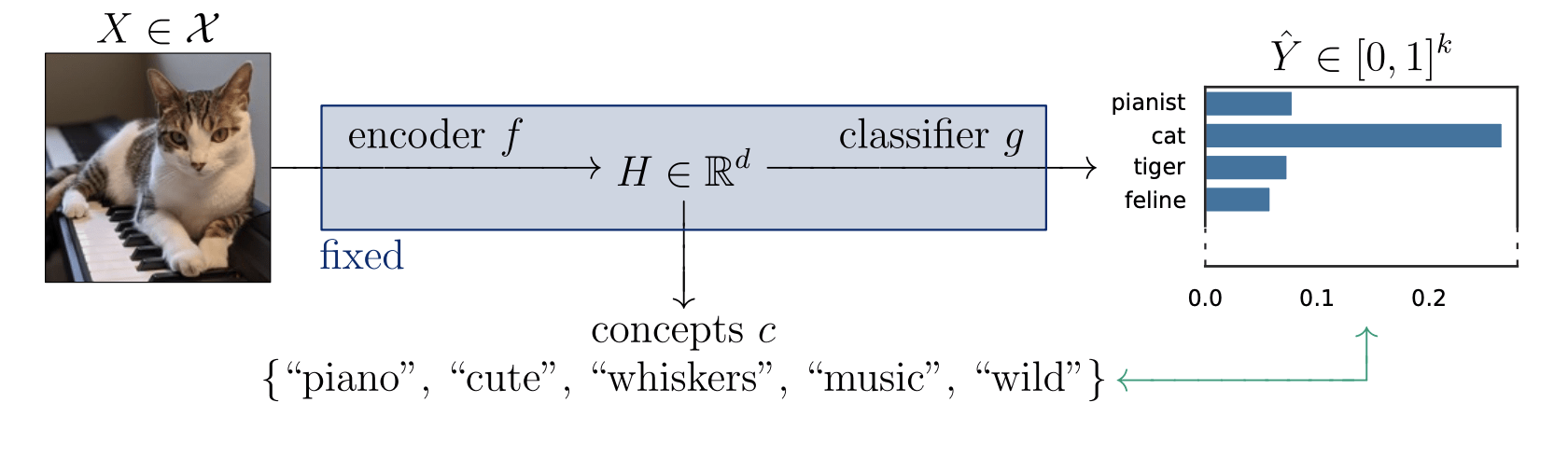

Is the piano important for \(\hat Y = \text{cat}\)?
How can we explain black-box predictors with semantic features?
Is the piano important for \(\hat Y = \text{cat}\), given that there is a cute mammal in the image?
Semantic Interpretability of classifiers
Is the presence of \(\color{Blue}\texttt{edema}\) important for \(\hat Y = \text{lung opacity}\)?
How can we explain black-box predictors with semantic features?
Is the presence of \(\color{magenta}\texttt{devices}\) important for \(\hat Y = \texttt{lung opacity}\), given that there is \(\color{blue}\texttt{edema}\) in the image?
lung opacity
cardiomegaly
fracture
no findding
Semantic Interpretability of classifiers
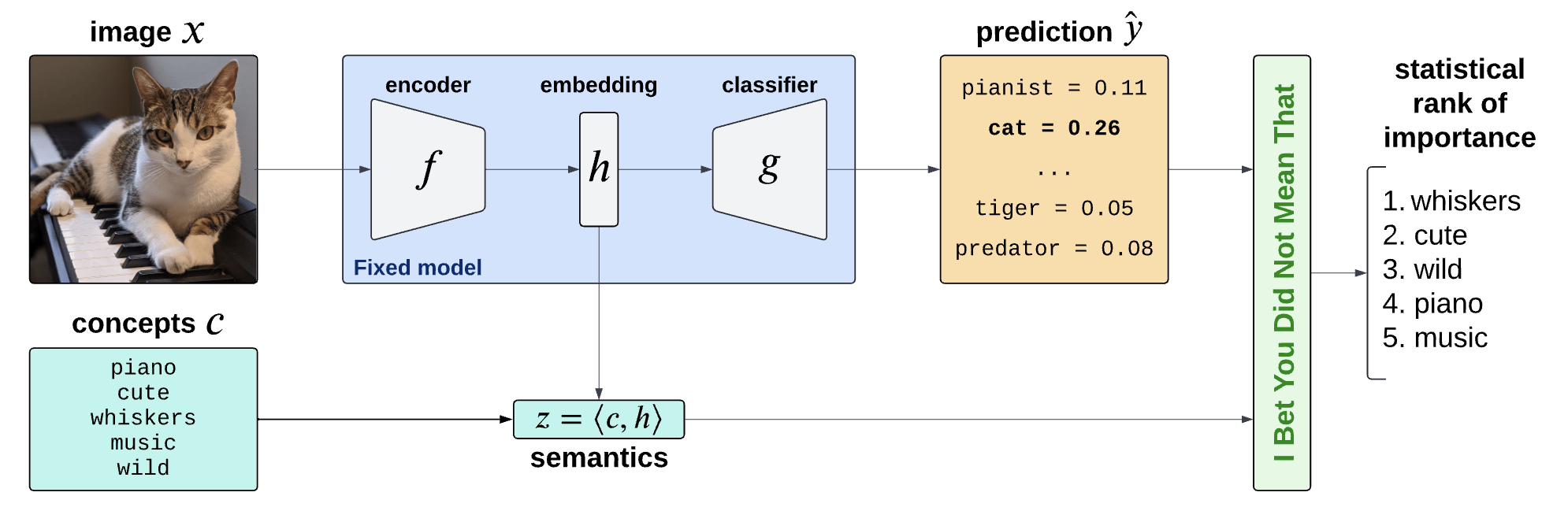
Semantic Interpretability of classifiers
Embeddings
\(H = f(X) \in \mathbb R^d\)
Concept Bank:
\(C = [c_1, c_2, \dots, c_m] \in \mathbb R^{d\times m}\)
Semantic Interpretability of classifiers
Embeddings
\(H = f(X) \in \mathbb R^d\)
Concept Bank:
\(C = [c_1, c_2, \dots, c_m] \in \mathbb R^{d\times m}\)
Semantic Interpretability of classifiers
Embeddings
\(H = f(X) \in \mathbb R^d\)
Semantics
\(Z = C^\top H \in \mathbb R^m\)
Concept Activation Vectors
(Kim et al, 2018)
\(c_\text{cute}\)
Semantic Interpretability of classifiers
Vision-language models
(CLIP, BLIP, etc... )
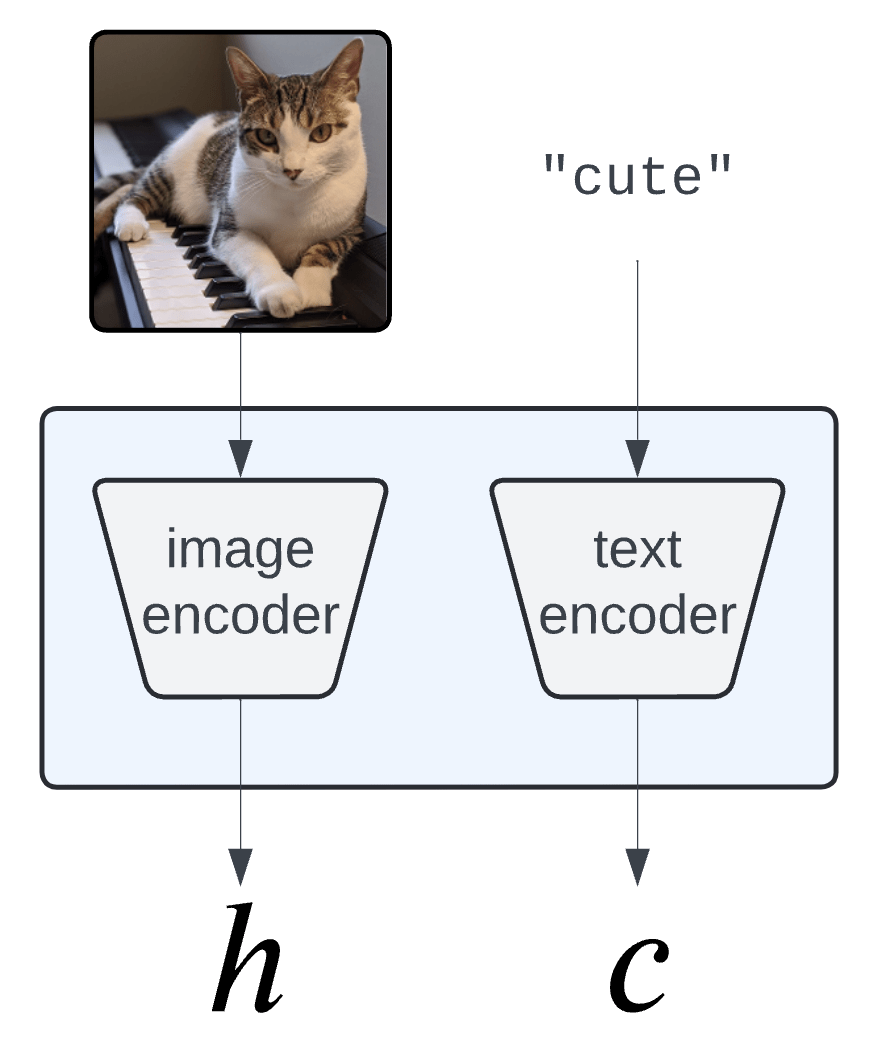
Concept Bank:
\(C = [c_1, c_2, \dots, c_m] \in \mathbb R^{d\times m}\)
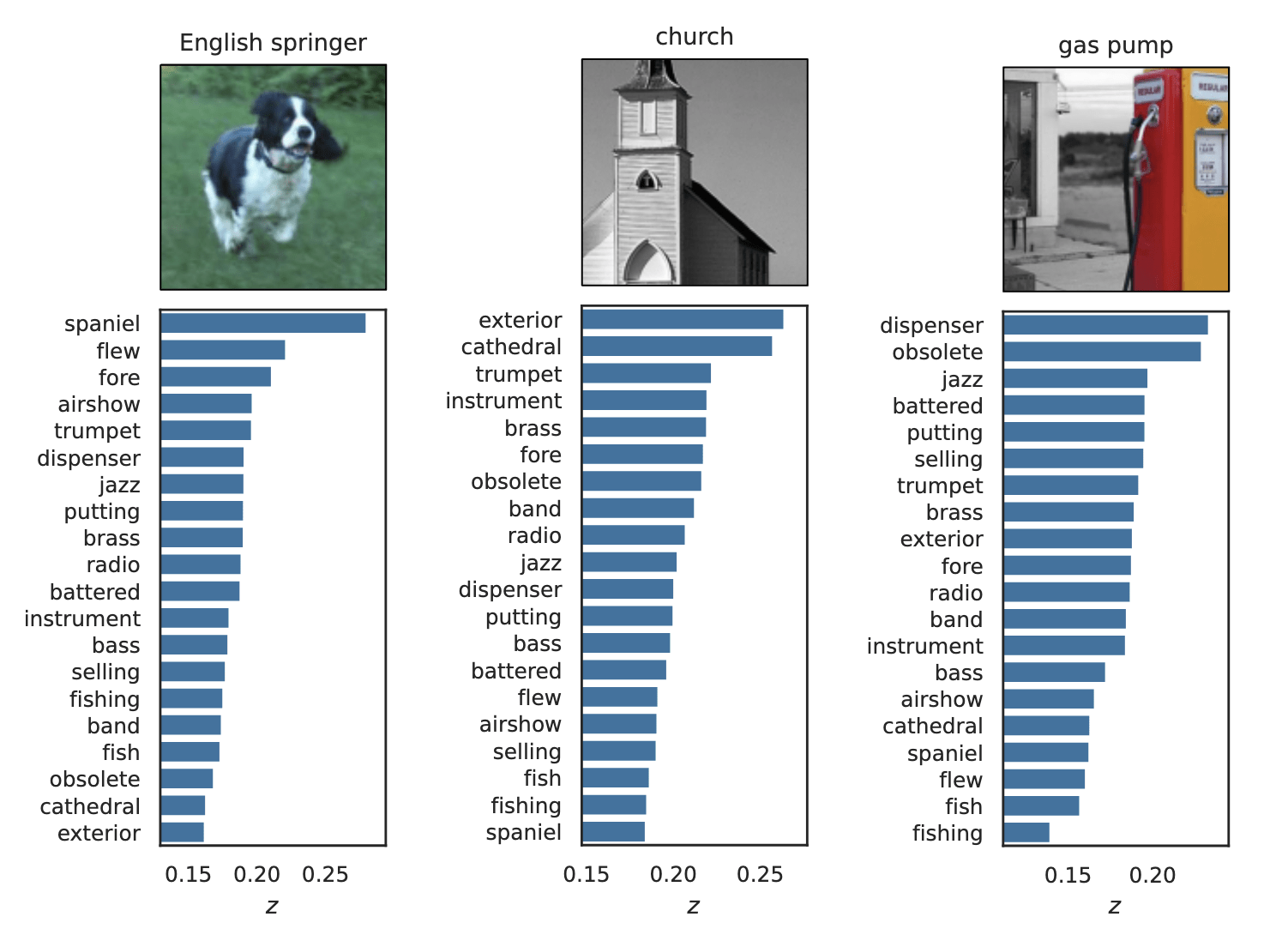
Semantic Interpretability of classifiers
[Bhalla et al, "Splice", 2024]
Concept Bottleneck Models (CMBs)
[Koh et al '20, Yang et al '23, Yuan et al '22 ]
Need to engineer a (large) concept bank
Performance hit w.r.t. original predictor
\(\tilde{Y} = \hat w^\top Z\)
\(\hat w_j\) is the importance of the \(j^{th}\) concept
Desiderata: Semantic explanations with
-
Fixed original predictor (post-hoc)
-
Global and local importance notions
-
Testing for any concepts (no need for large concept banks)
-
Precise testing with guarantees (Type 1 error/FDR control)
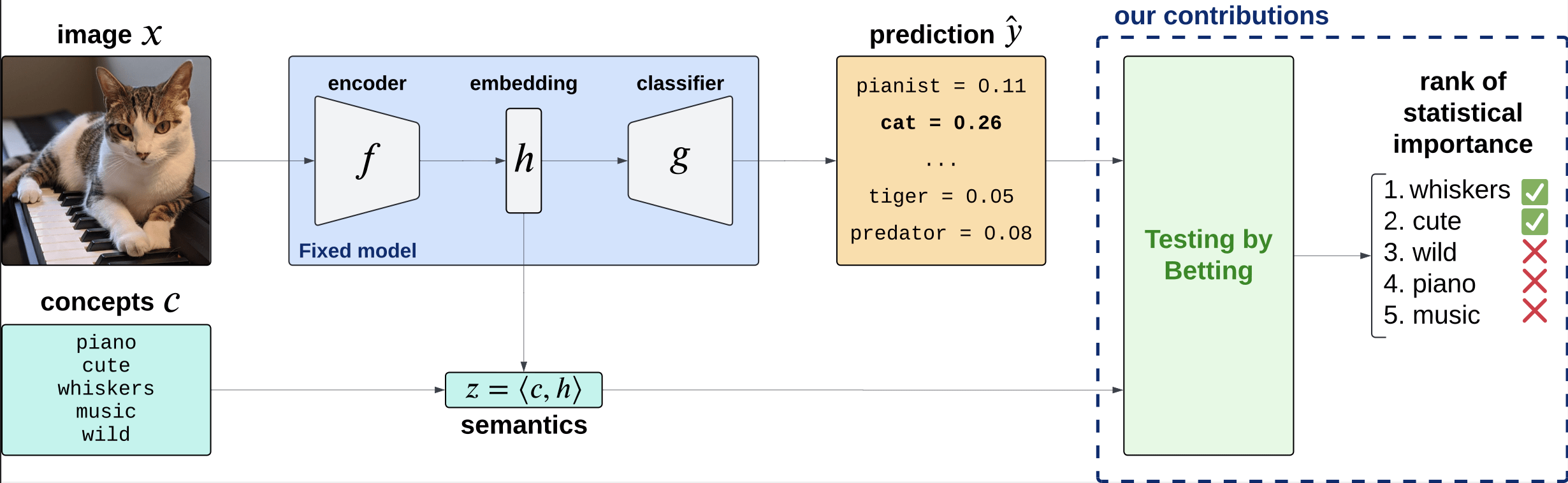
Precise notions of importance
Global Feature Importance
\(H_{0,j} : \hat{Y} \perp\!\!\!\perp Z_j \)
cuteness
cat
Precise notions of importance
mammal, piano, whiskers, ...
Global Feature Importance
\(H_{0,j} : \hat{Y} \perp\!\!\!\perp Z_j \)
cuteness
Global Conditional Importance
\(H_{0,j} : \hat{Y} \perp\!\!\!\perp Z_j | Z_{-j}\)
cuteness
cat
cat
Precise notions of importance
Global Conditional Importance
\(H_{0,j} : \hat{Y} \perp\!\!\!\perp Z_j | Z_{-j}\)
Testing
Procedure
(at level \(\alpha\))
Reject
Fail to Reject
( \(Z_j:\) important )
Precise notions of importance
Global Conditional Importance
\(H_{0,j} : \hat{Y} \perp\!\!\!\perp Z_j | Z_{-j}\)
Testing
Procedure
(at level \(\alpha\))
[Candes et al, 2018]
\(\rightarrow\) Conditional Randomization Test (CRT)
requiring \(Z_j \sim P_{Z_j|Z_{-j}}\)
Correct testing: \(\mathbb P [\text{rejecting} | H_{0,j}:\text{true}]\leq \alpha\)
Reject
Fail to Reject
( \(Z_j:\) important )
Precise notions of importance
Global Conditional Importance
\(H_{0,j} : \hat{Y} \perp\!\!\!\perp Z_j | Z_{-j}\)
Reject
Fail to Reject
Testing
Procedure
(at level \(\alpha\))
[Candes et al, 2018]
\(\rightarrow\) Conditional Randomization Test (CRT)
requiring \(Z_j \sim P_{Z_j|Z_{-j}}\)
\(\quad \hat{Y}|(Z_j,Z_{-j}) \overset{d}{=} \hat{Y}|Z_{-j}\)
Correct testing: \(\mathbb P [\text{rejecting} | H_{0,j}:\text{true}]\leq \alpha\)
( \(Z_j:\) important )
Local Conditional Importance
"\(\hat{Y}(x) \perp\!\!\!\perp {Z_j}(x) | Z_{-j}(x)\)"
semantic \(j\) in \(x\)
all other semantics \(\{-j\}\) in \(x\)
Precise notions of importance
Local Conditional Importance
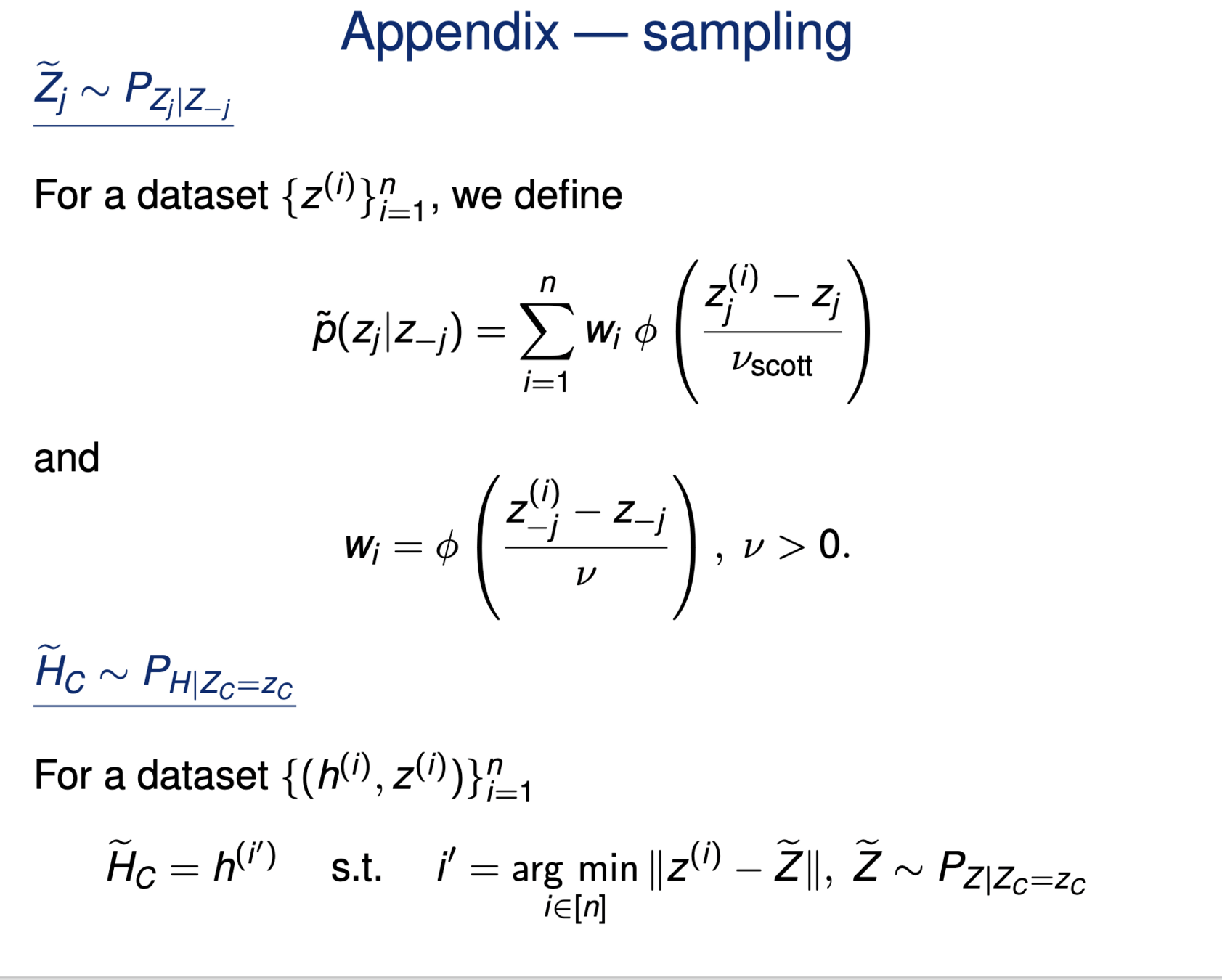
Semantically-conditioned features: \(\tilde H_S \sim P_{H|Z_S = z_S} \)
\[H^{j,S}_0:~ \text{classifier}({\tilde H_{S \cup \{j\}}}) \overset{d}{=} \text{classifier}(\tilde H_S)\]
features with semantic \(j\) in \(x\)
features with semantics \(\{-j\}\) in \(x\)
we can sample from these

Precise notions of importance
"The classifier (its distribution) does not change if we condition
on concepts \(S\) vs on concepts \(S\cup\{j\} \)"
eXplanation Randomization
Test (XRT)
[Teneggi et al, 2023]
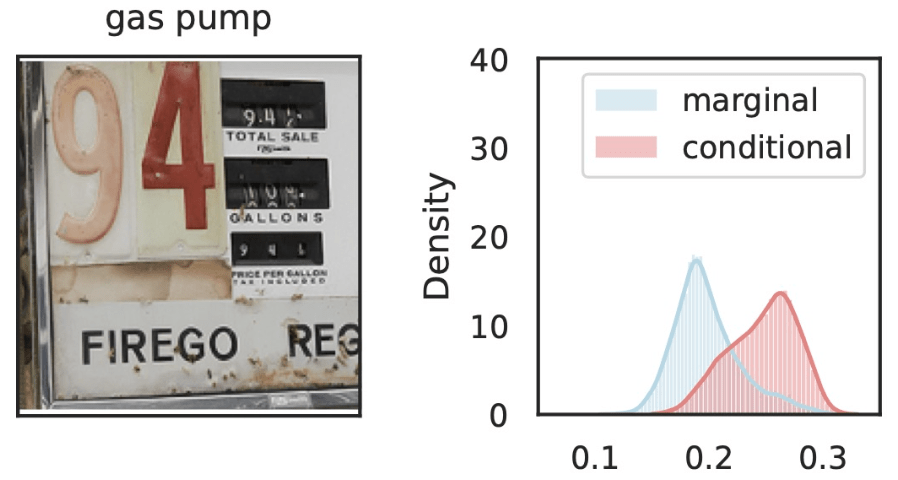
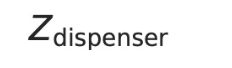
\(\hat{Y}_\text{gas pump}\)
\(Z_S\cup Z_{j}\)
\(Z_{S}\)
\(Z_j=\)
Local Conditional Importance
\(\tilde{Z}_S = [z_\text{text}, z_\text{old}, Z_\text{dispenser}, Z_\text{trumpet}, Z_\text{fire}, \dots ] \)
\(S\)

\(\tilde{Z}_{S\cup j} = [z_\text{text}, z_\text{old}, z_\text{dispenser}, Z_\text{trumpet}, Z_\text{Fire}, \dots ] \)
\(S\)
\(j\)
Precise notions of semantic importance
\[H^{j,S}_0:~ \text{classifier}({\tilde H_{S \cup \{j\}}}) \overset{d}{=} \text{classifier}(\tilde H_S)\]
\(\tilde H_S \sim P_{H|Z_S = z_S} \)
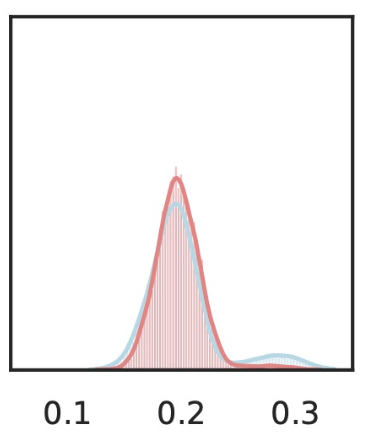

\(\hat{Y}_\text{gas pump}\)
\(\hat{Y}_\text{gas pump}\)
\(Z_S\cup Z_{j}\)
\(Z_{S}\)
\(Z_S\cup Z_{j}\)
\(Z_{S}\)
Local Conditional Importance
\(Z_j=\)
\(Z_j=\)
\(\tilde{Z}_S = [z_\text{text}, z_\text{old}, Z_\text{dispenser}, Z_\text{trumpet}, Z_\text{fire}, \dots ] \)
\(\tilde{Z}_{S\cup j} = [z_\text{text}, z_\text{old}, Z_\text{dispenser}, z_\text{trumpet}, Z_\text{Fire}, \dots ] \)
\(S\)
\(S\)
\(j\)
Precise notions of semantic importance
\[H^{j,S}_0:~ \text{classifier}({\tilde H_{S \cup \{j\}}}) \overset{d}{=} \text{classifier}(\tilde H_S)\]
\(\tilde H_S \sim P_{H|Z_S = z_S} \)
Testing by betting
\(H^G_{0,j} : \hat{Y} \perp\!\!\!\perp Z_j \iff P_{\hat{Y},Z_j} = P_{\hat{Y}} \times P_{Z_j}\)
Testing importance via two-sample tests
\(H^{GC}_{0,j} : \hat{Y} \perp\!\!\!\perp Z_j | Z_{-j} \iff P_{\hat{Y}Z_jZ_{-j}} = P_{\hat{Y}\tilde{Z}_j{Z_{-j}}}\)
\(\tilde{Z_j} \sim P_{Z_j|Z_{-j}}\)
[Candes et al, 2018; Shaer et al, 2023]
[Teneggi et al, 2023]
\[H^{j,S}_0:~ \text{classifier}({\tilde H_{S \cup \{j\}}}) \overset{d}{=} \text{classifier}(\tilde H_S), \qquad \tilde H_S \sim P_{H|Z_S = z_S} \]
Testing by betting
Goal: Test a null hypothesis \(H_0\) at significance level \(\alpha\)
Standard testing by p-values
Collect data, then test, and reject if \(p \leq \alpha\)
Online testing by e-values
Any-time valid inference, monitor online and reject when \(e\geq 1/\alpha\)
[Shaer et al. 2023, Shekhar and Ramdas 2023, Podkopaev et al 2023]
Testing by betting via SKIT (Podkopaev et al., 2023)
Online testing by e-values
Any-time valid inference, track and reject when \(e\geq 1/\alpha\)
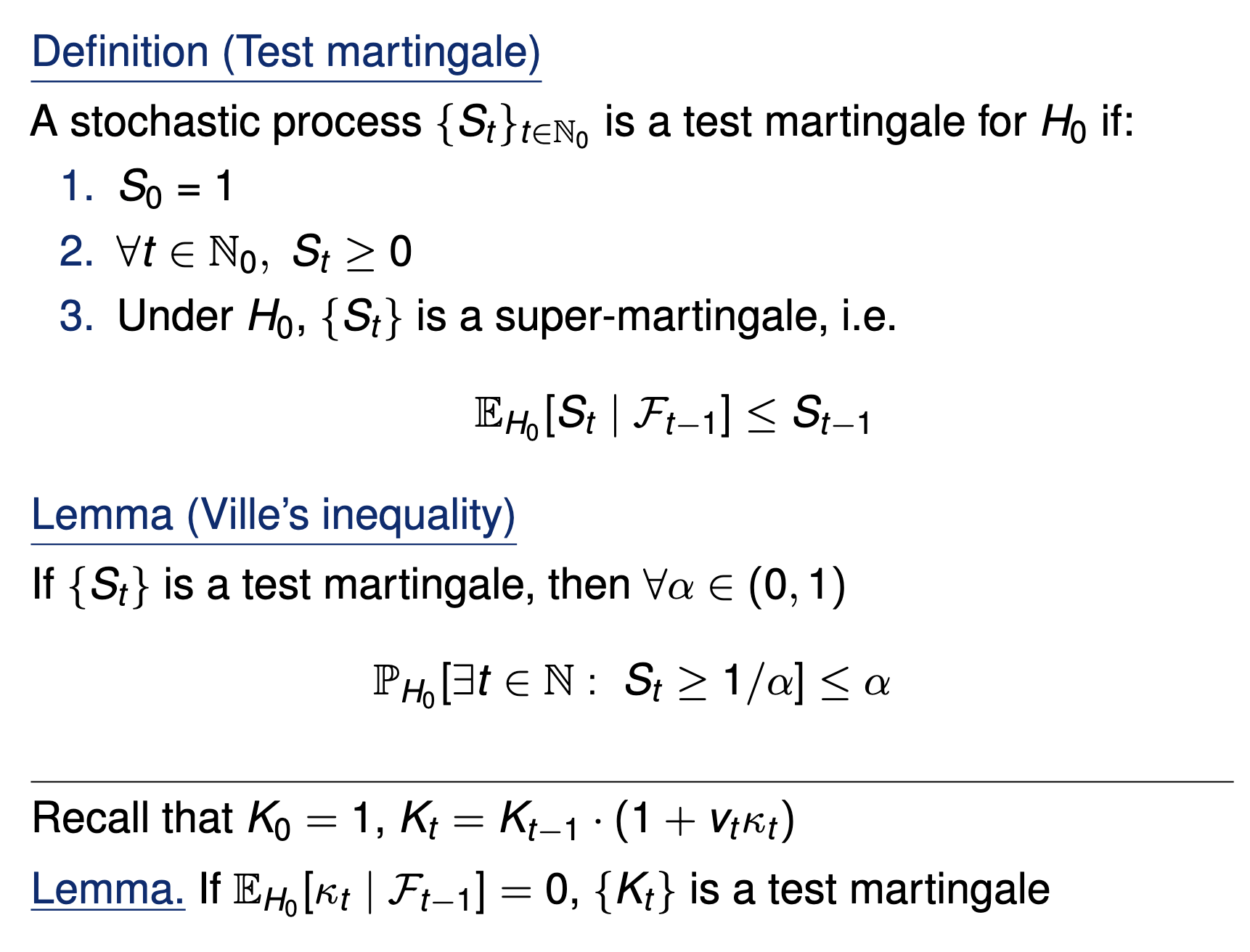
Consider a wealth process
\(K_0 = 1;\)
\(\text{for}~ t = 1, \dots \\ \quad K_t = K_{t-1}(1+\kappa_t v_t)\)
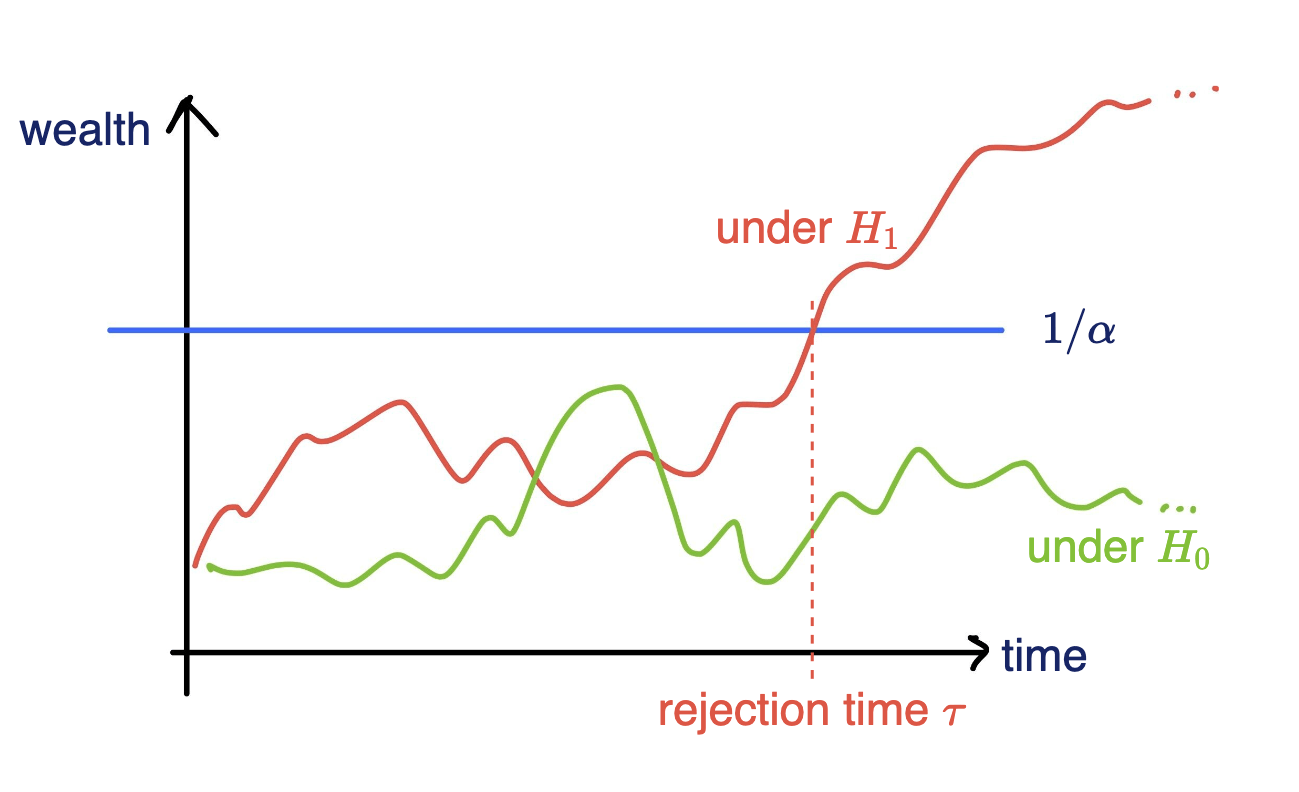
Fair game (test martingale): \(~~\mathbb E_{H_0}[\kappa_t | \text{Everything seen}_{t-1}] = 0\)
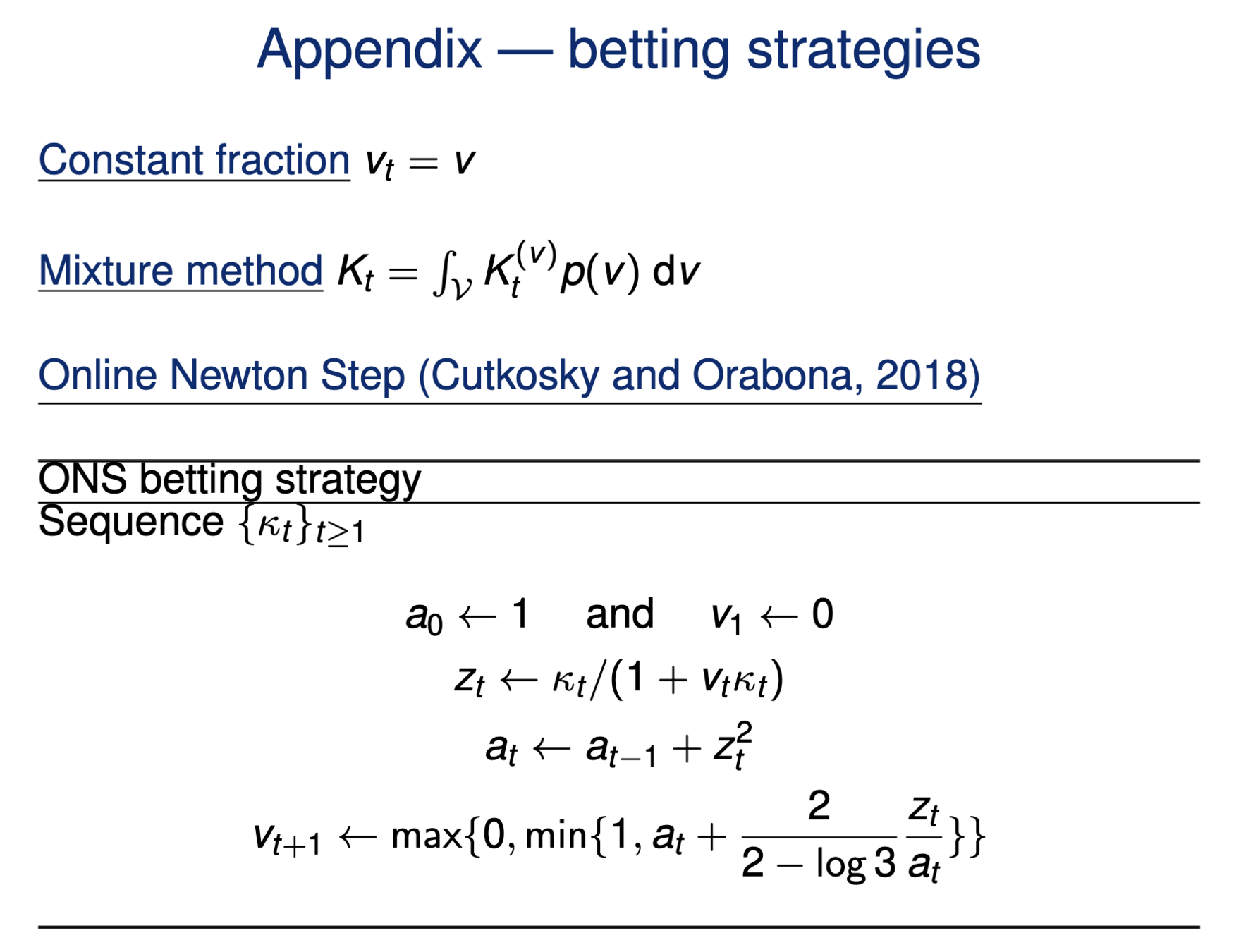
\(v_t \in (0,1):\) betting fraction
\(\kappa_t \in [-1,1]\) payoff
[Grünwald 2019, Shafer 2021, Shaer et al. 2023, Shekhar and Ramdas 2023. Podkopaev et al., 2023]
\(\mathbb P_{H_0}[\exists t \in \mathbb N: K_t \leq 1/\alpha]\leq \alpha\)
Goal: Test a null hypothesis \(H_0\) at significance level \(\alpha\)
Testing by betting via SKIT (Podkopaev et al., 2023)
Online testing by e-values
Any-time valid inference, track and reject when \(e\geq 1/\alpha\)
Consider a wealth process
\(K_0 = 1;\)
\(\text{for}~ t = 1, \dots \\ \quad K_t = K_{t-1}(1+\kappa_t v_t)\)
Fair game (test martingale): \(~~\mathbb E_{H_0}[\kappa_t | \text{Everything seen}_{t-1}] = 0\)
\(v_t \in (0,1):\) betting fraction
\(\kappa_t \in [-1,1]\) payoff
[Grünwald 2019, Shafer 2021, Shaer et al. 2023, Shekhar and Ramdas 2023. Podkopaev et al., 2023]
\(\mathbb P_{H_0}[\exists t \in \mathbb N: K_t \leq 1/\alpha]\leq \alpha\)
Goal: Test a null hypothesis \(H_0\) at significance level \(\alpha\)
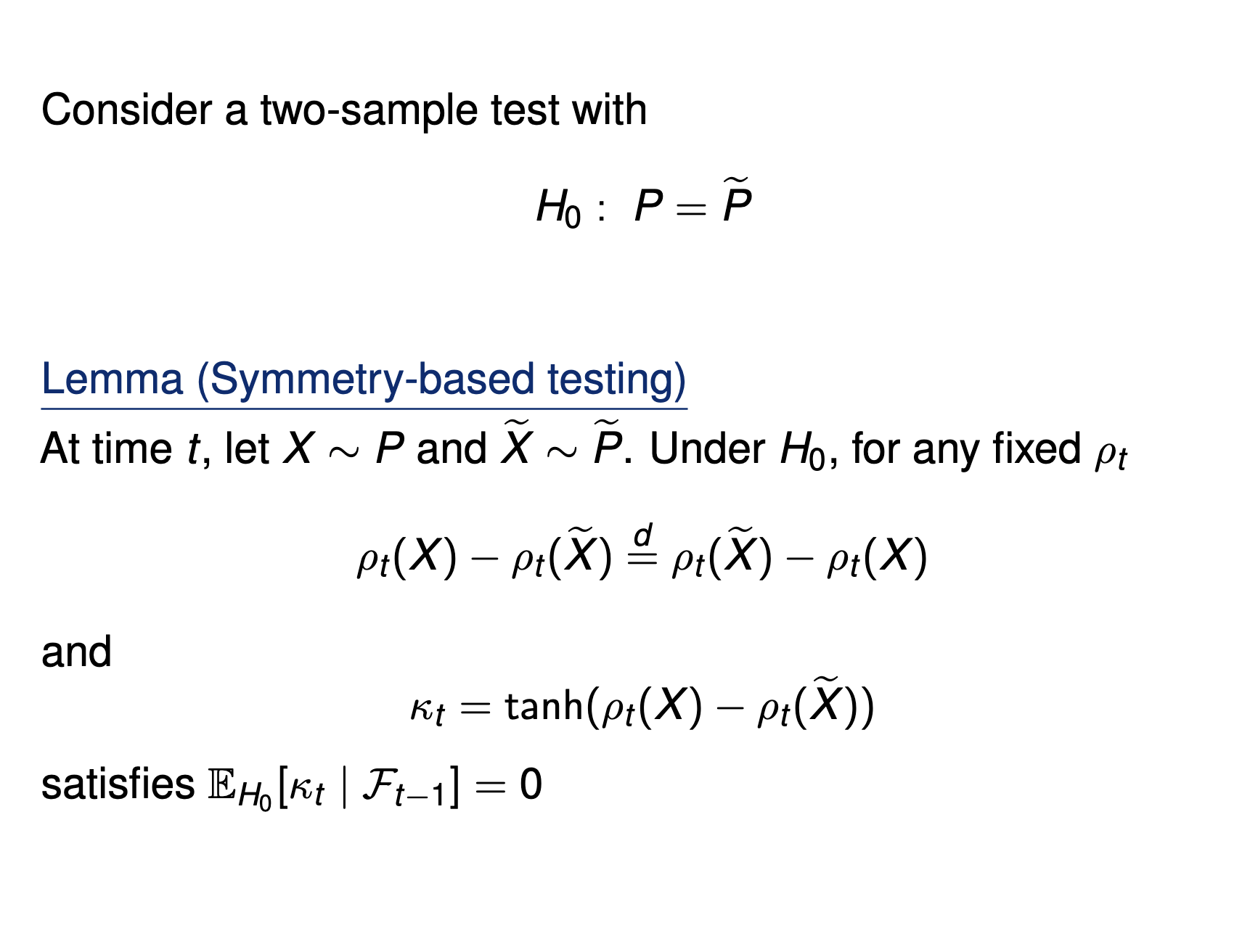
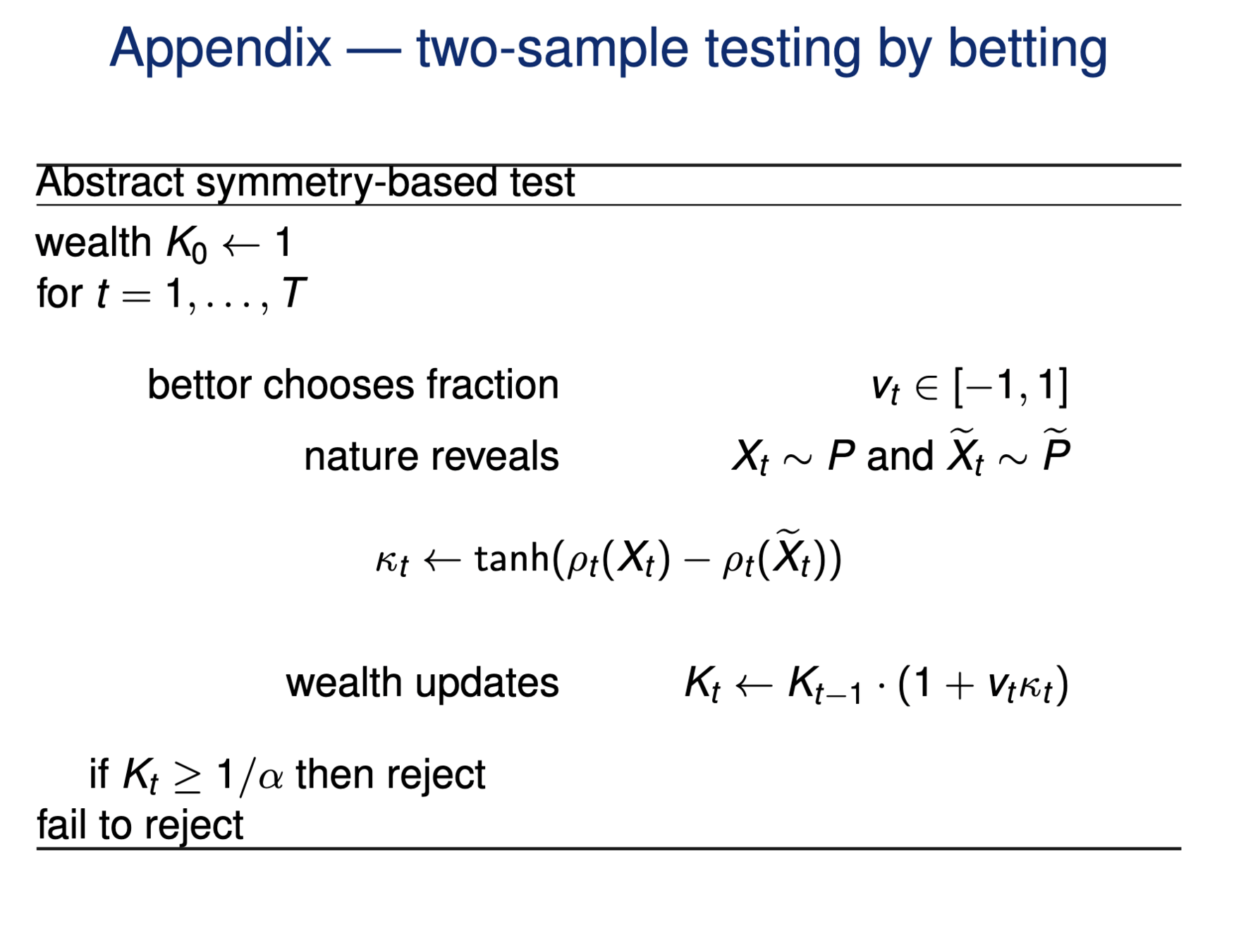
\(H_0: ~ P = Q\)
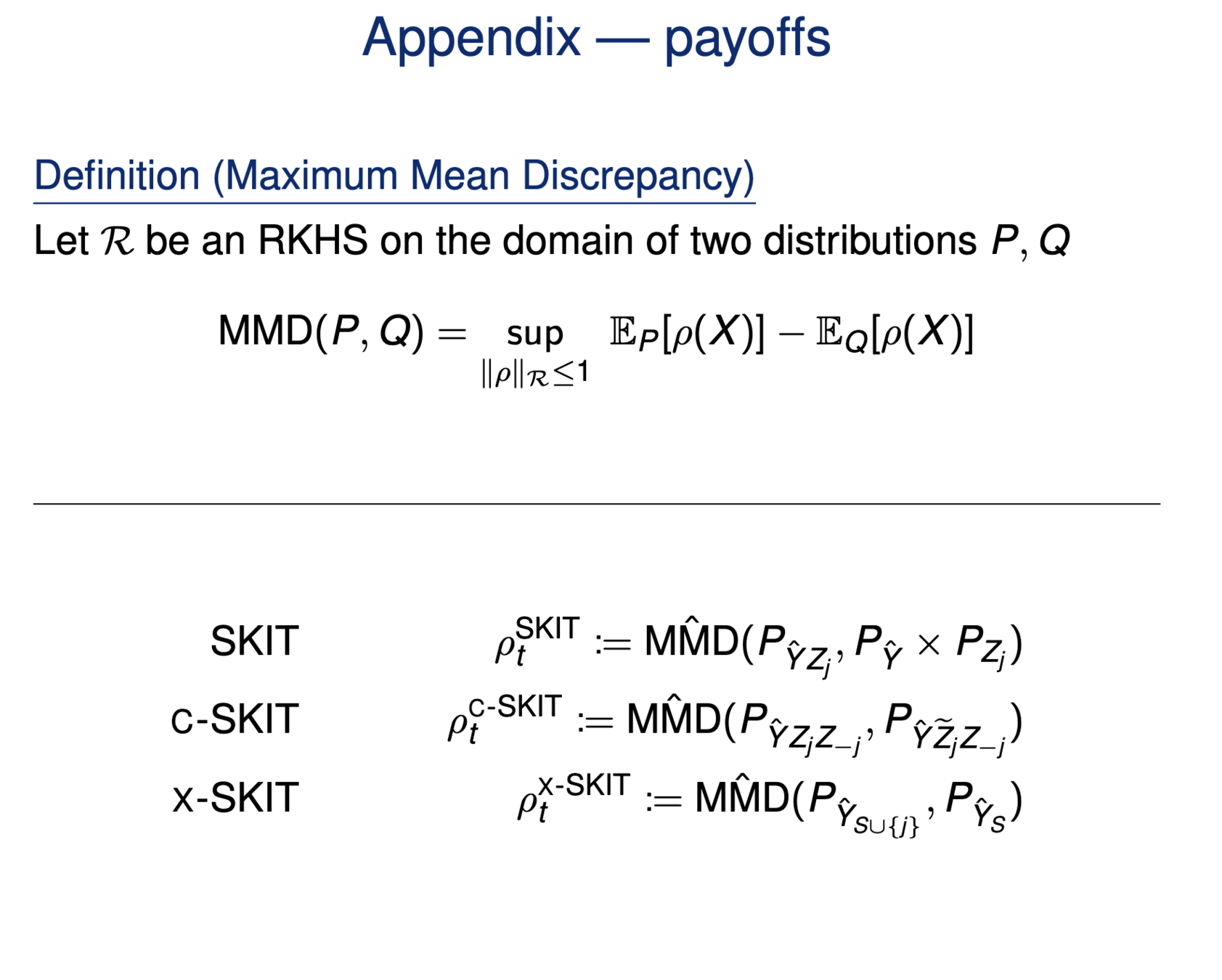
\(\kappa_t = \text{tahn}({\color{teal}\rho(X_t)} - {\color{teal}\rho(Y_t)})\)
Iteratively:
\( K_t = K_{t-1}(1+\kappa_t v_t)\)
\(\color{teal}{X_t \sim P; ~ Y_t\sim Q}\)
Example:
Data efficient
Rank induced by rejection time
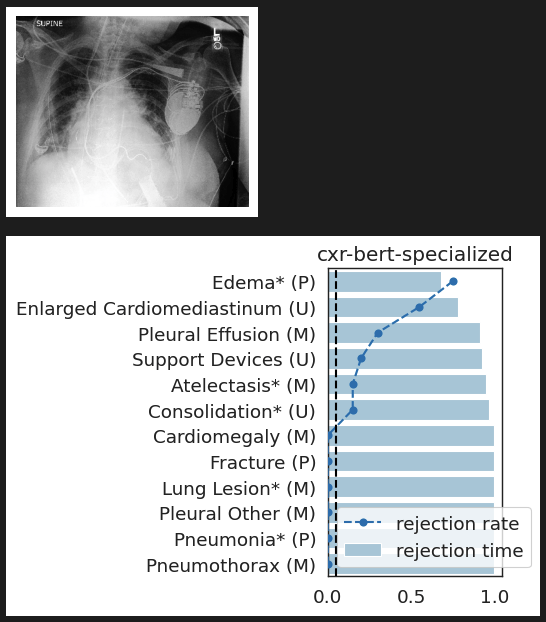
rejection time
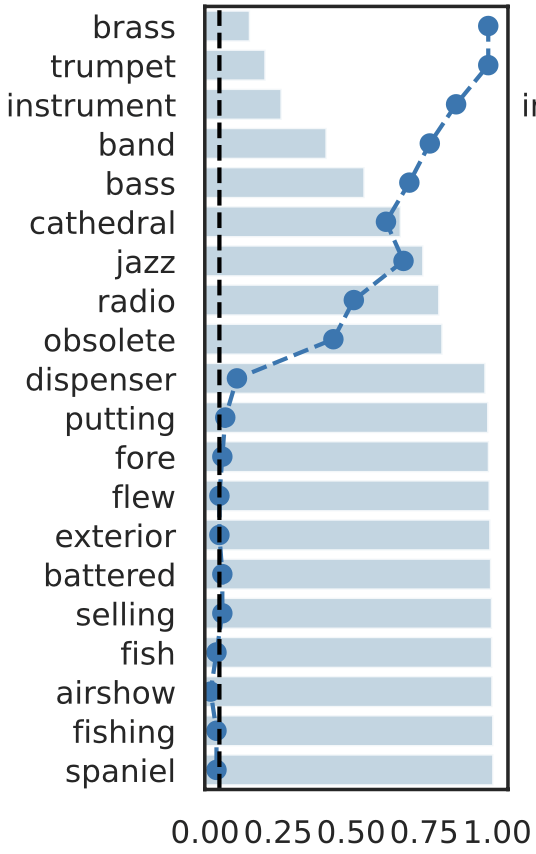

rejection rate
Important Semantic Concepts
(Reject \(H_0\))

Unimportant Semantic Concepts
(fail to reject \(H_0\))
Results: Imagenette
Type 1 error control
False discovery rate control
\(\alpha = 0.05\)
Results: Imagenette
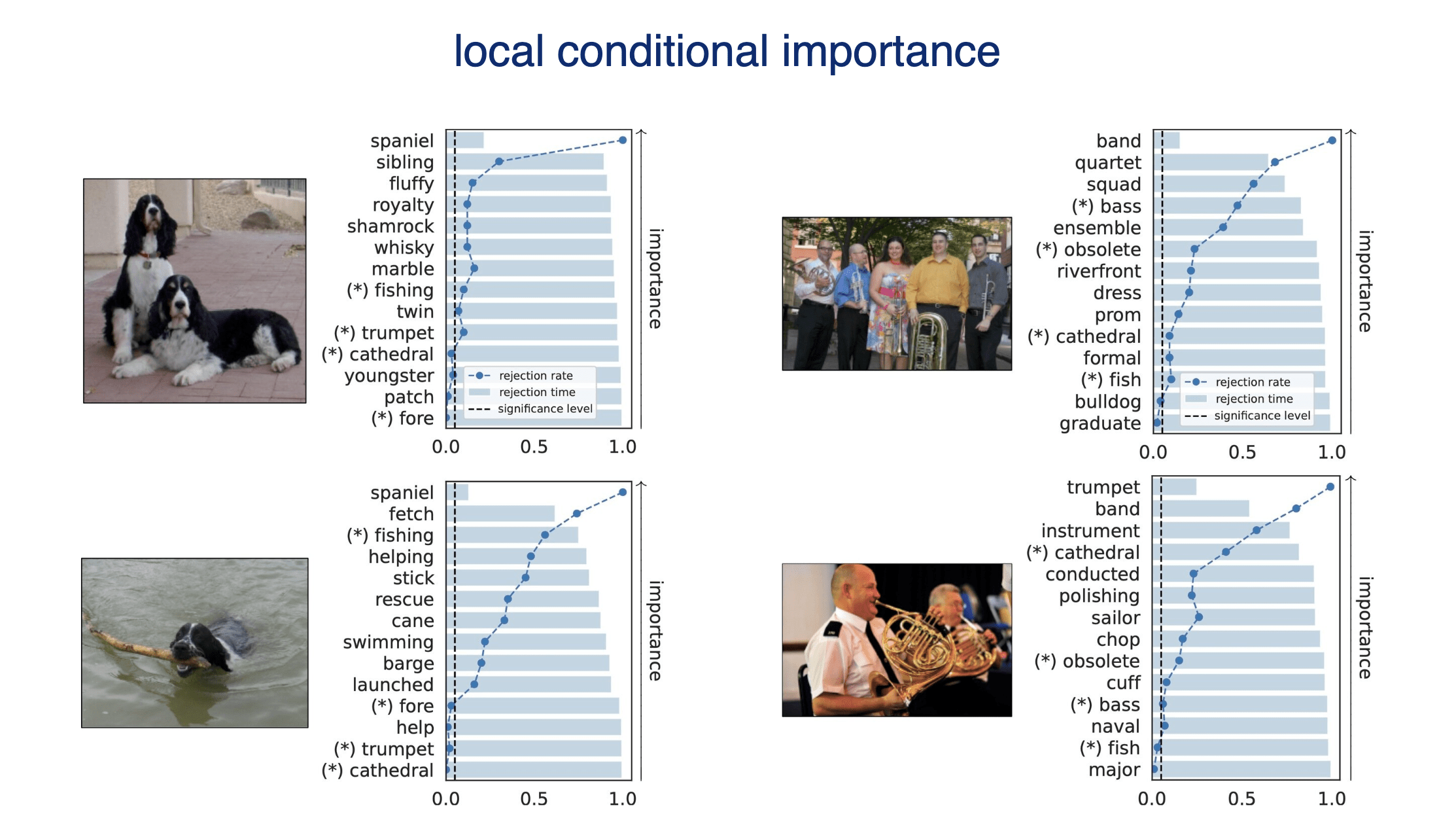
Results: Imagenette
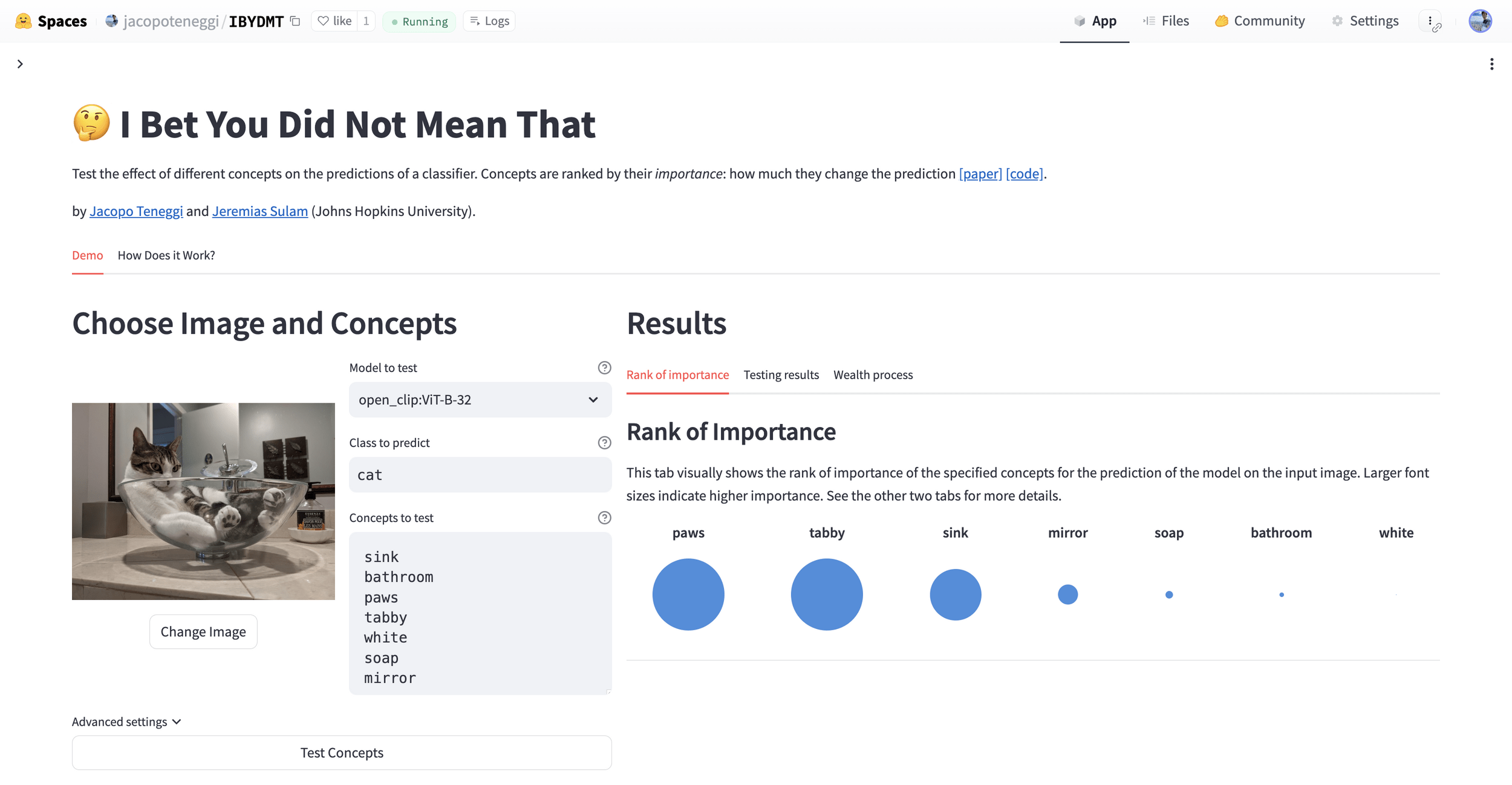
Results: CUB dataset
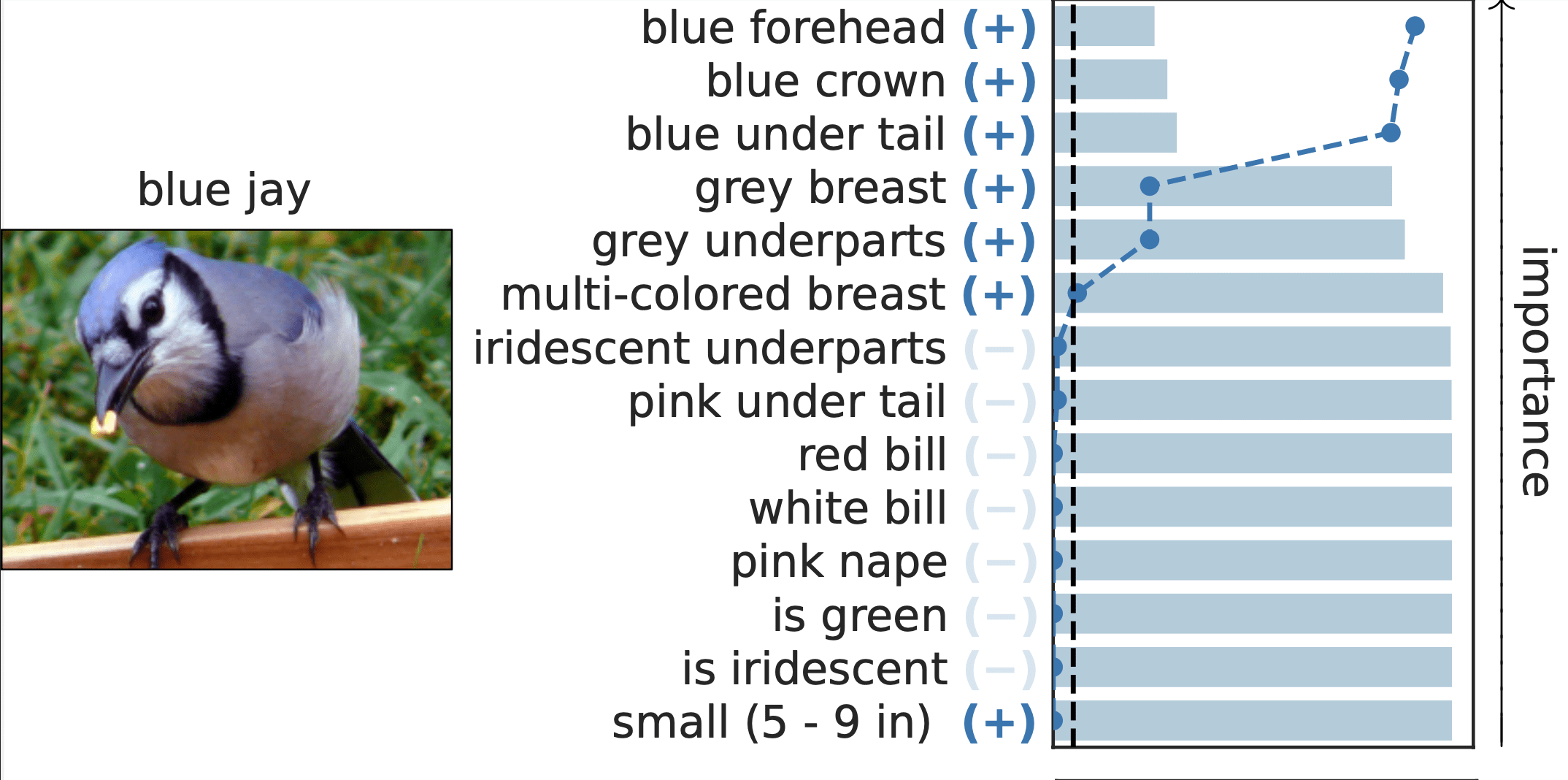
Important Semantic Concepts
(Reject \(H_0\))
Unimportant Semantic Concepts
(Fail to reject)
rejection time
rejection rate
0.0
1.0
CheXpert: validating BiomedVLP
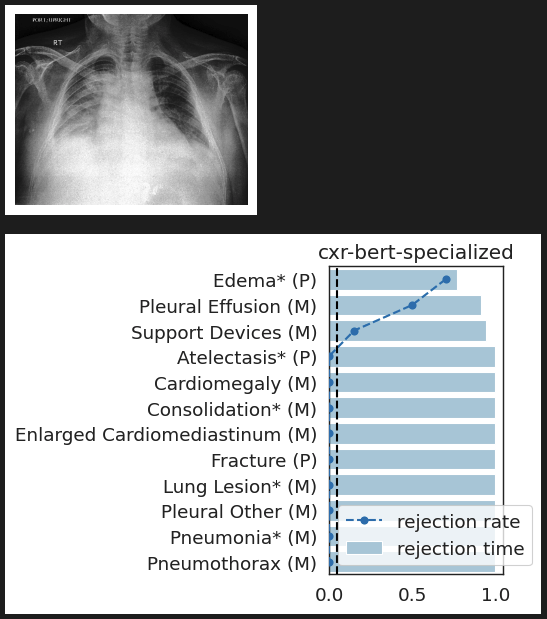
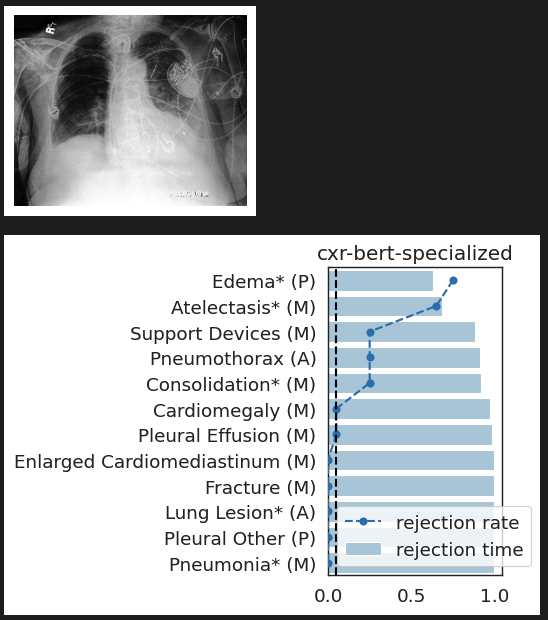

What concepts does BiomedVLP find important to predict ?
lung opacity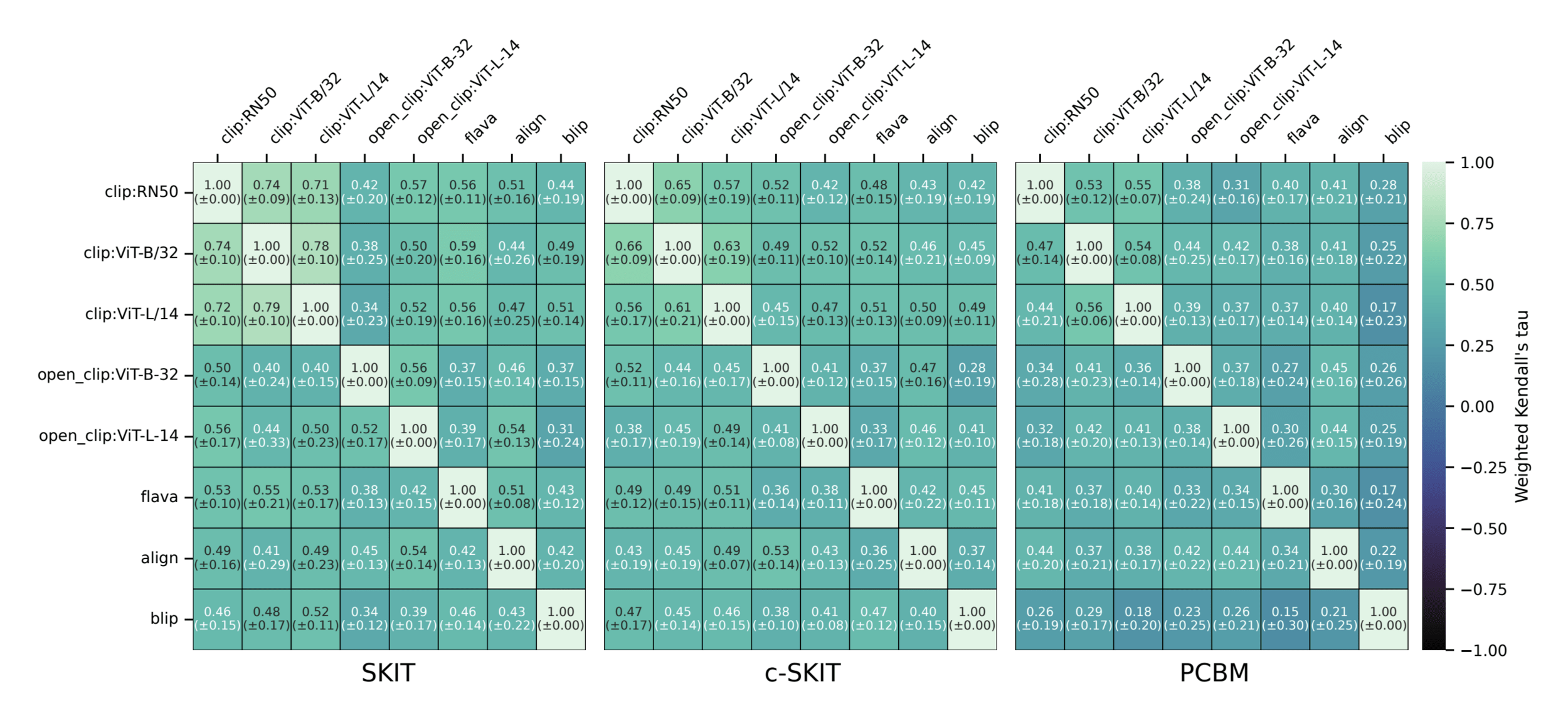
Results: Imagenette
Semantic comparison of vision-language models
Summary
- Notions of importance that are rigorously testable
- Local conditional tests for semantic importance
- Any-time-valid inference for efficient testing and ranking


Jacopo Teneggi
JHU
Teneggi & S., Testing Semantic Importance via Betting, Neurips (2024).
Appendix
Semantic Interpretability of classifiers
Concept Bank: \(C = [c_1, c_2, \dots, c_m] \in \mathbb R^{d\times m}\)
Vision-language models
(training)
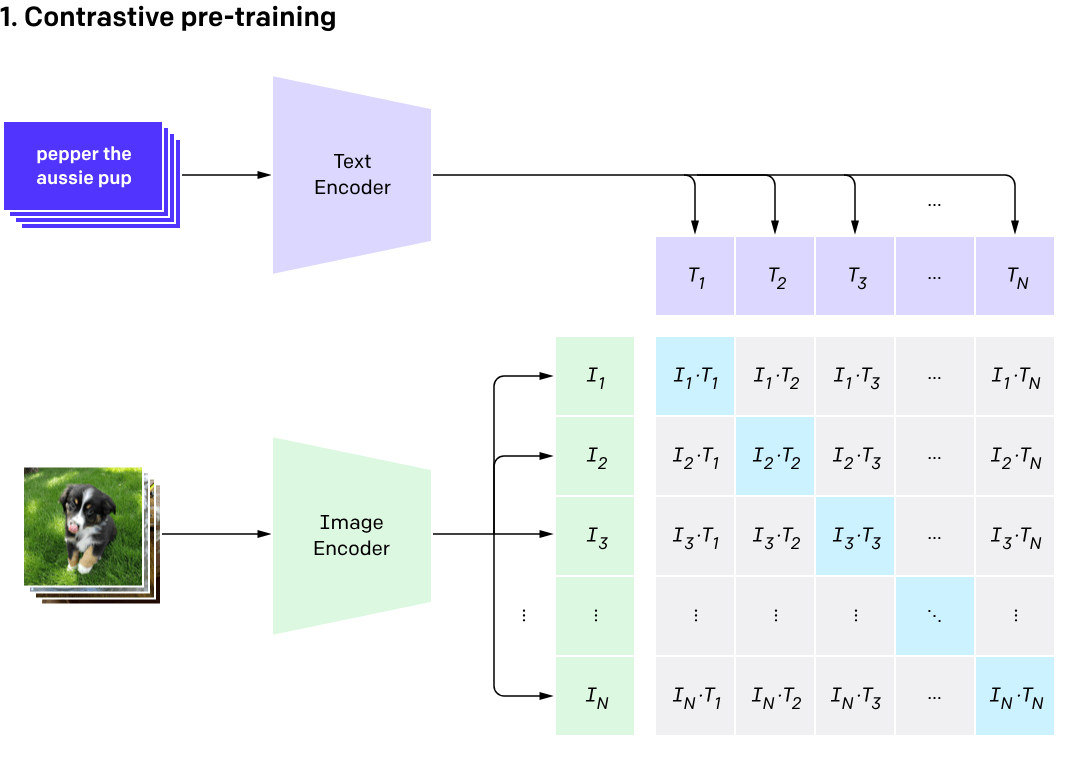
[Radford et al, 2021]