Snakemake in 2026
Johannes Köster
University of Duisburg-Essen
2025
- check computational validity
- apply same analysis to new data
- check methodological validity
- understand analysis
Data analysis
Reproducibility
Transparency
- modify analysis
- extend analysis
Adaptability
>1.6 million downloads since 2015
>3000 citations
>14 citations per week in 2024



dataset
results
dataset
dataset
dataset
dataset
dataset
Define workflows
in terms of rules
Define workflows
in terms of rules
rule mytask:
    input:
        "path/to/{dataset}.txt"
    output:
        "result/{dataset}.txt"
    script:
        "scripts/myscript.R"


rule myfiltration:
     input:
        "result/{dataset}.txt"
     output:
        "result/{dataset}.filtered.txt"
     shell:
        "mycommand {input} > {output}"


rule aggregate:
    input:
        "results/dataset1.filtered.txt",
        "results/dataset2.filtered.txt"
    output:
        "plots/myplot.pdf"
    script:
        "scripts/myplot.R"
Define workflows
in terms of rules
Define workflows
in terms of rules
rule mytask:
    input:
        "data/{sample}.txt"
    output:
        "result/{sample}.txt"
    shell:
        "some-tool {input} > {output}"
rule name
how to create output from input
define
- input
- output
- log files
- parameters
- resources
rule mytask:
    input:
        "path/to/{dataset}.txt"
    output:
        "result/{dataset}.txt"
    script:
        "scripts/myscript.R"


rule myfiltration:
     input:
        "result/{dataset}.txt"
     output:
        "result/{dataset}.filtered.txt"
     shell:
        "mycommand {input} > {output}"


rule aggregate:
    input:
        "results/dataset1.filtered.txt",
        "results/dataset2.filtered.txt"
    output:
        "plots/myplot.pdf"
    script:
        "scripts/myplot.R"
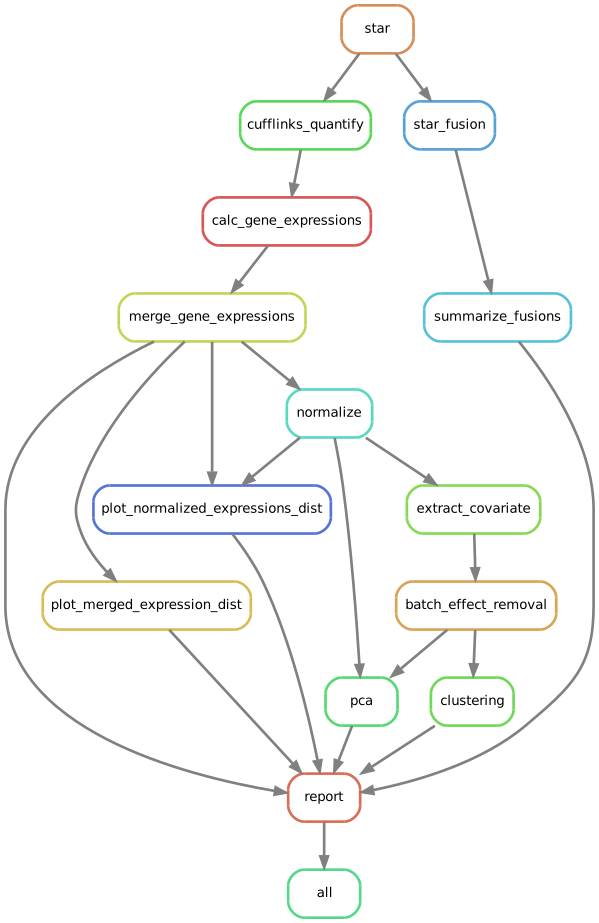
Automatic inference of DAG of jobs
Boilerplate-free integration of scripts
rule mytask:
    input:
        "data/{sample}.txt"
    output:
        "result/{sample}.txt"
    script:
        "scripts/myscript.py"
reusable scripts:
- Python
- R
- Julia
- Rust
- Bash
- Xonsh
- Hy
import pandas as pd

data = pd.read_table(snakemake.input[0])
data = data.sort_values("id")
data.to_csv(snakemake.output[0], sep="\t")
Python:
data <- read.table(snakemake@input[[1]])
data <- data[order(data$id),]
write.table(data, file = snakemake@output[[1]])
Boilerplate-free integration of scripts
R:
import polar as pl

pl.read_csv(&snakemake.input[0])
  .sort()
  .to_csv(&snakemake.output[0])
Rust:
$XONSH_TRACEBACK_LOGFILE = snakemake.log[0]

xsv sort -s id @(snakemake.input[0]) > @(snakemake.output[0])
Xonsh:
(import pandas :as pd)

(setv data (pd.read_table (get snakemake.input 0)))
(setv data (.sort_values data "id"))
(.to_csv data (get snakemake.output 0) :sep "\t")
Hy:
#!/usr/bin/env bash
exec 2> "${snakemake_log[0]}"

xsv sort -s id ${snakemake_input[0]} > ${snakemake_output[0]}
Bash:
new!
new!
Reusable wrappers
rule map_reads:
    input:
        "{sample}.bam"
    output:
        "{sample}.sorted.bam"
    wrapper:
        "0.22.0/bio/samtools/sort"
reuseable wrappers from central repository
Reusable wrappers
job selection
job resource usage
free resources
job temp file consumption
temp file lifetime fraction
job priority
job thread usage
Scheduling
temp file size
temp file deletion
DAG partitioning
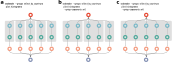
--groups a=g1 b=g1
--groups a=g1 b=g1
--group-components g1=2
--groups a=g1 b=g1
--group-components g1=5
Resource handling
snakemake --default-resources --jobs 100mem_mb="min(max(2*input.size_mb, 1000), 8000)"
disk_mb="max(2*input.size_mb, 1000) if input else 50000"snakemake --default-resources mem_mb=... --jobs 100Specifiy defaults:
Use builtin defaults:
Store in profile:
# /etc/xdg/snakemake/default/config.yaml:
default-resources:
  mem_mb: "min(max(2*input.size_mb, 1000), 8000)"
  ...
Define per rule:
# profiles/default/config.yaml:
set-resources:
  mytask:
    mem_mb: 16000
  ...
Scalable to any platform


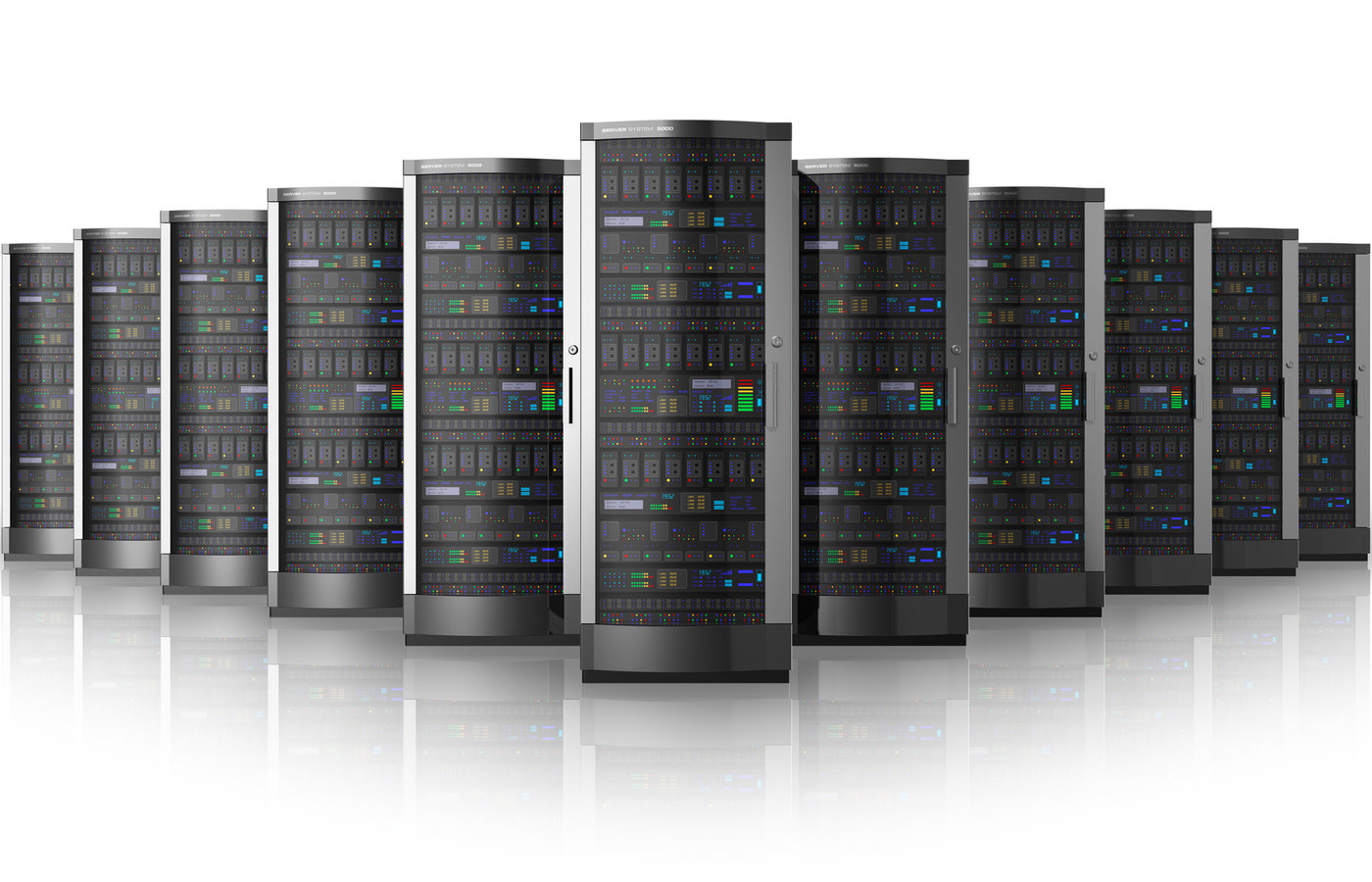
workstation
compute server
cluster
grid computing
cloud computing



rule mytask:
    input:
        "path/to/{dataset}.txt"
    output:
        "result/{dataset}.txt"
    conda:
        "envs/some-tool.yaml"
    shell:
        "some-tool {input} > {output}"
Conda integration
channels:
 - conda-forge
dependencies:
  - some-tool =2.3.1
  - some-lib =1.1.2
Container integration
rule mytask:
    input:
        "path/to/{dataset}.txt"
    output:
        "result/{dataset}.txt"
    container:
        "docker://biocontainers/some-tool:2.3.1"
    shell:
        "some-tool {input} > {output}"
Self-contained HTML reports
Interoperability with other WMS
rule chipseq_pipeline:
    input:
        input="design.csv",
        fasta="data/genome.fasta",
        gtf="data/genome.gtf",
        # any --<argname> pipeline file arguments can be given here as <argname>=<path>
    output:
        report="results/multiqc/broadPeak/multiqc_report.html",
    params:
        pipeline="nf-core/chipseq",
        revision="2.0.0",
        profile=["test", "docker"],
        outdir=subpath(output.report, ancestor=2),
        # any --<argname> pipeline arguments can be given here as <argname>=<value>
    handover: True
    wrapper:
        "v7.2.0/utils/nextflow"
Lookup in config
rule mytask:
    input:
        "path/to/{dataset}.txt"
    output:
        "result/{dataset}.txt"
    params:
        some_threshold=lookup(
            dpath="some_tool/thresholds/{dataset}",
            within=config,
            default=0.1
        )
    shell:
        "some-tool {input} > {output}"
new!
Lookup in sheet
rule mytask:
    input:
        "path/to/{dataset}.txt"
    output:
        "result/{dataset}.txt"
    params:
        some_threshold=lookup(
            query="dataset == '{dataset}'",
            cols="threshold",
            within=sheet
        )
    shell:
        "some-tool {input} > {output}"
new!
Branching
rule mytask:
    input:
        branch(
            lookup(dpath="prefilter/activate", within=config),
            then="results/preprocessed/{dataset}",
            otherwise="path/to/{dataset}"
        )
    output:
        "result/{dataset}.txt"
    shell:
        "some-tool {input} > {output}"
new!
Rule item access and subpaths
rule mytask:
    input:
        branch(
            lookup(dpath="prefilter/activate", within=config),
            then="results/preprocessed/{dataset}",
            otherwise="path/to/{dataset}"
        )
    output:
        foo="result/{dataset}.txt"
    params:
        outdir=subpath(output.foo, parent=True)
    shell:
        "some-tool {input} -o {params.outdir}"
new!
Rule item access and subpaths
rule mytask:
    input:
        branch(
            lookup(dpath="prefilter/activate", within=config),
            then="results/preprocessed/{dataset}",
            otherwise="path/to/{dataset}"
        )
    output:
        foo="result/{dataset}.txt"
    params:
        prefix=subpath(output.foo, strip_suffix=".txt")
    shell:
        "some-tool {input} -o {params.prefix}"
new!
Pathvars
rule mytask:
    input:
        "<resources>/{dataset}.txt"
    output:
        "<results>/{dataset}.txt"
    shell:
        "some-tool {input} > {output}"
new!
# config.yaml

pathvars:
  results: some/custom/path/results
  resources: some/custom/path/resources
Pathvars
module star_arriba:
    meta_wrapper: "v9.0.1/meta/bio/star_arriba"
    pathvars:
        results="...", # Path to results directory
        resources="...", # Path to resources directory
        logs="...", # Path to logs directory
        genome_sequence="...", # Path to FASTA file with genome sequence
        genome_annotation="...", # Path to GTF file with genome annotation
        reads_r1="...", # Path/pattern for FASTQ files with R1 reads
        reads_r2="...", # Path/pattern for FASTQ files with R2 reads
        per="...", # Pattern for sample identifiers, e.g. ``"{sample}"``


use rule * from star_arriba as star_arriba_*
new!
Access pattern annotation
inputflags:
    access.sequential


rule mytask:
    input:
        access.random("<resources>/{dataset}.txt")
    output:
        "<results>/{dataset}.txt"
    shell:
        "some-tool {input} > {output}"
new!
Many more features
- dynamic DAG rewiring
- service jobs (providing sockets, loading databases, or ramdisks)
- semantic helper functions for minimizing boilerplate code
- fallible rules
- caching of shared results across workflows
- transparent handling of remote storage
Extensible architecture

from dataclasses import dataclass, field

from snakemake_interface_common.exceptions import WorkflowError
from snakemake_interface_report_plugins.reporter import ReporterBase
from snakemake_interface_report_plugins.settings import ReportSettingsBase


# Optional:
# Define additional settings for your reporter.
# They will occur in the Snakemake CLI as --report-<reporter-name>-<param-name>
# Omit this class if you don't need any.
# Make sure that all defined fields are Optional (or bool) and specify a default value
# of None (or False) or anything else that makes sense in your case.
@dataclass
class ReportSettings(ReportSettingsBase):
    myparam: Optional[int] = field(
        default=None,
        metadata={
            "help": "Some help text",
            # Optionally request that setting is also available for specification
            # via an environment variable. The variable will be named automatically as
            # SNAKEMAKE_REPORT_<reporter-name>_<param-name>, all upper case.
            # This mechanism should ONLY be used for passwords and usernames.
            # For other items, we rather recommend to let people use a profile
            # for setting defaults
            # (https://snakemake.readthedocs.io/en/stable/executing/cli.html#profiles).
            "env_var": False,
            # Optionally specify a function that parses the value given by the user.
            # This is useful to create complex types from the user input.
            "parse_func": ...,
            # If a parse_func is specified, you also have to specify an unparse_func
            # that converts the parsed value back to a string.
            "unparse_func": ...,
            # Optionally specify that setting is required when the reporter is in use.
            "required": True,
            # Optionally specify multiple args with "nargs": True
        },
    )


# Required:
# Implementation of your reporter
class Reporter(ReporterBase):
    def __post_init__(self):
        # initialize additional attributes
        # Do not overwrite the __init__ method as this is kept in control of the base
        # class in order to simplify the update process.
        # In particular, the settings of above ReportSettings class are accessible via
        # self.settings.

    def render(self):
        # Render the report, using attributes of the base class.
        ...
Extensible architecture
Extensible architecture
Conclusion
Snakemake covers all aspects of fully reproducible, transparent, and adaptable data analysis, offering
- maximum readability
- ad-hoc integration with scripting and high performance languages
- an extensible architecture
- a plethora of advanced features
https://snakemake.github.io

Notes
- filenames: use directory hierarchies, not everything has to be encoded into the filename
- https://snakemake.readthedocs.io/en/stable/snakefiles/rules.html#parameter-space-exploration
- dashboard (WIP): https://github.com/cademirch/snkmt
Outlook
- structured wildcards (dataclasses as wildcard values, auto-encoded into directory hierarchy)
- development of Rust-based core has started
- interactive TUI
- more plugins
- minimize metadata footprint
- rattler-based conda plugin:
- smart caching
- admin-provided hardware-optimized local builds