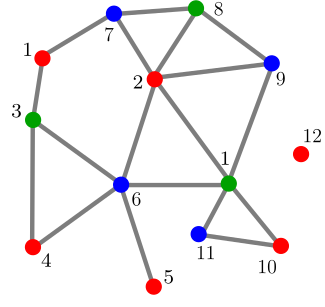
Graph theory
It's just dots and lines
An example
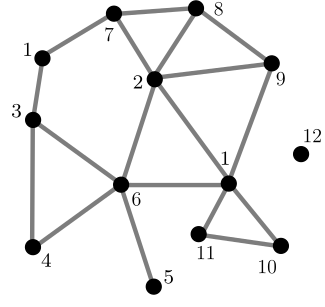
Consider the following graph:
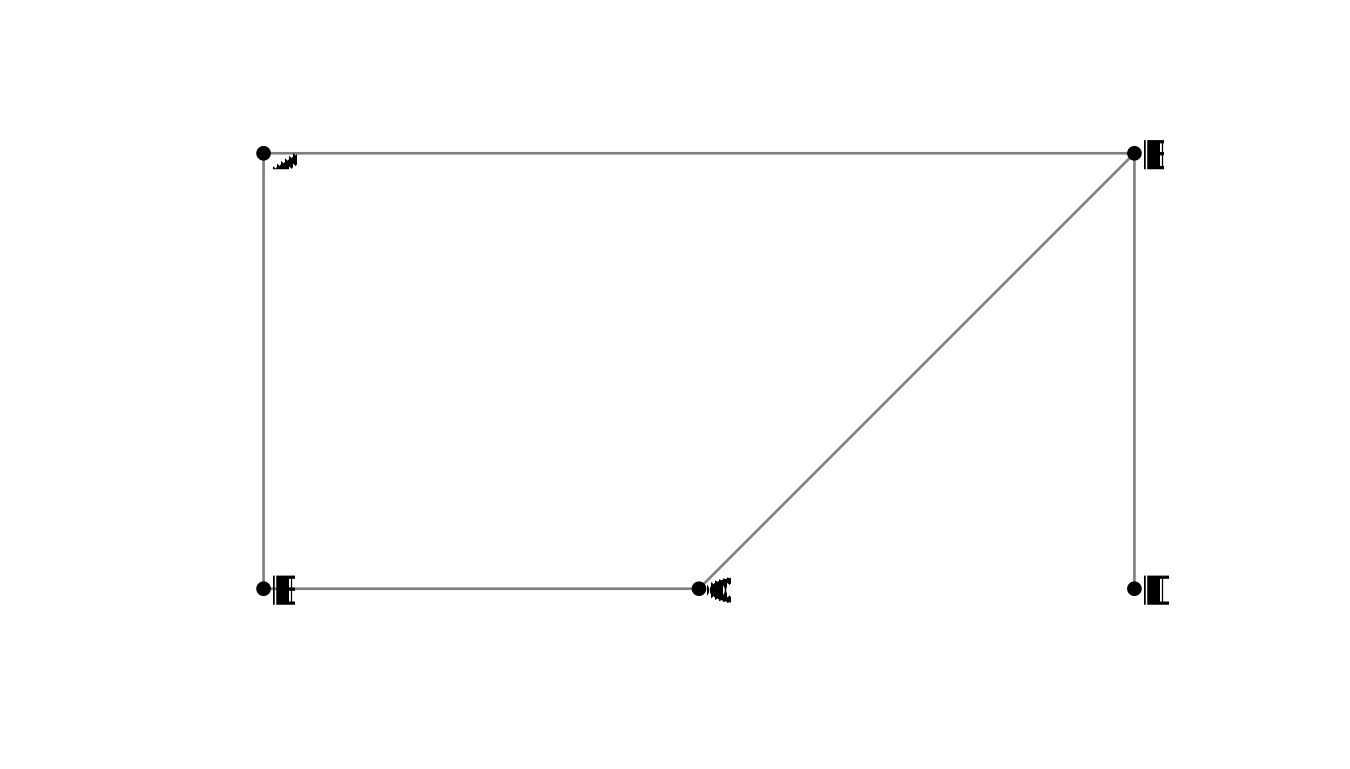
The vertex set is
The edge set is
Yes! A graph is connected if for any two vertices and , there is a list of vertices such that each consecutive pair in the list is adjacent in the graph.
What does connected mean? Is this graph connected?
An example
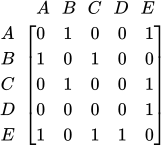
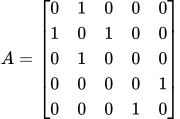
An extremely useful way to represent a graph is called the adjacency matrix. This is the matrix with rows and columns labeled by the vertices (in the same order). The matrix has a if the row and column indices are adjacent, and zero otherwise.
An example
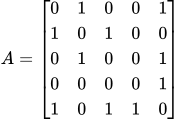
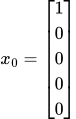
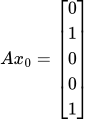
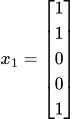
An example
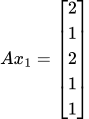
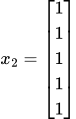
An example
A Disconnected example
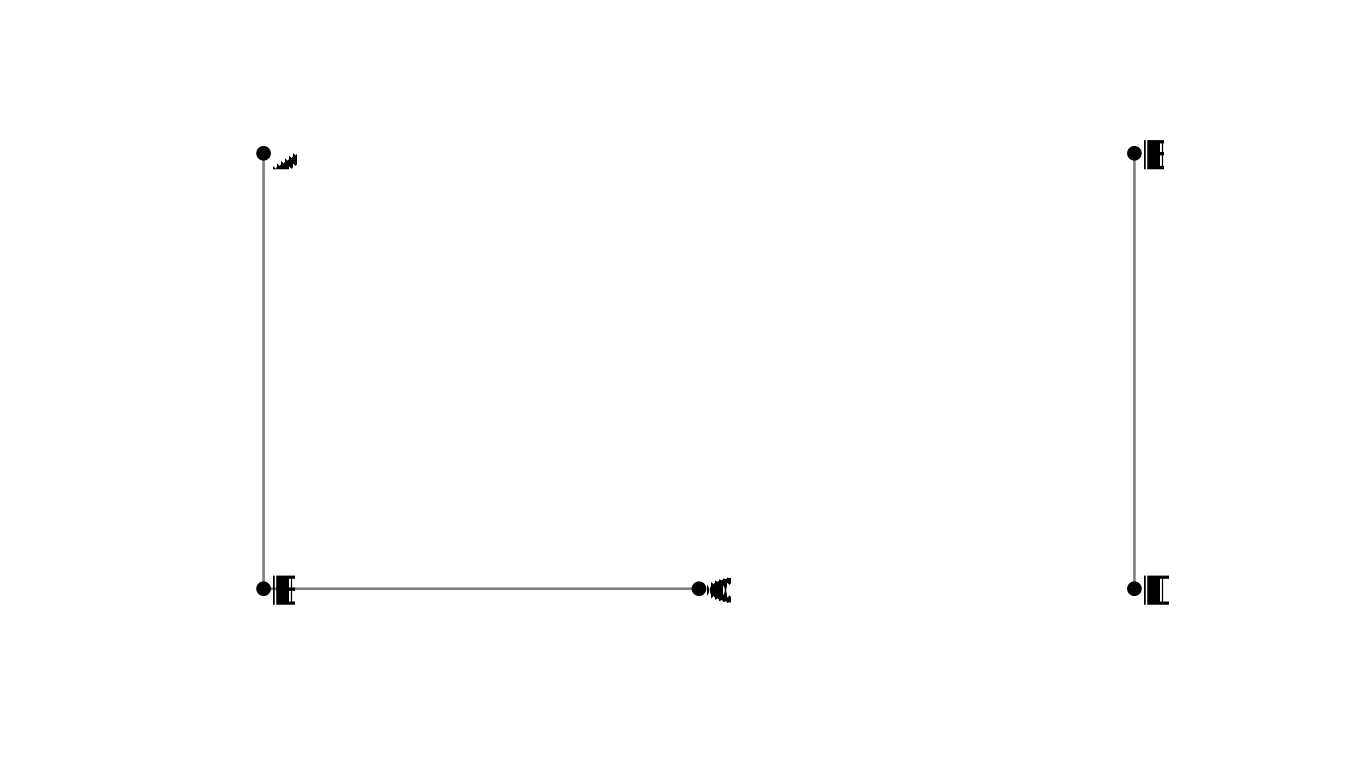
or
Consider the previous algorithm starting with:
Is it Connected?
The graph is connected!
How many edges do we need to delete to make it disconnected?
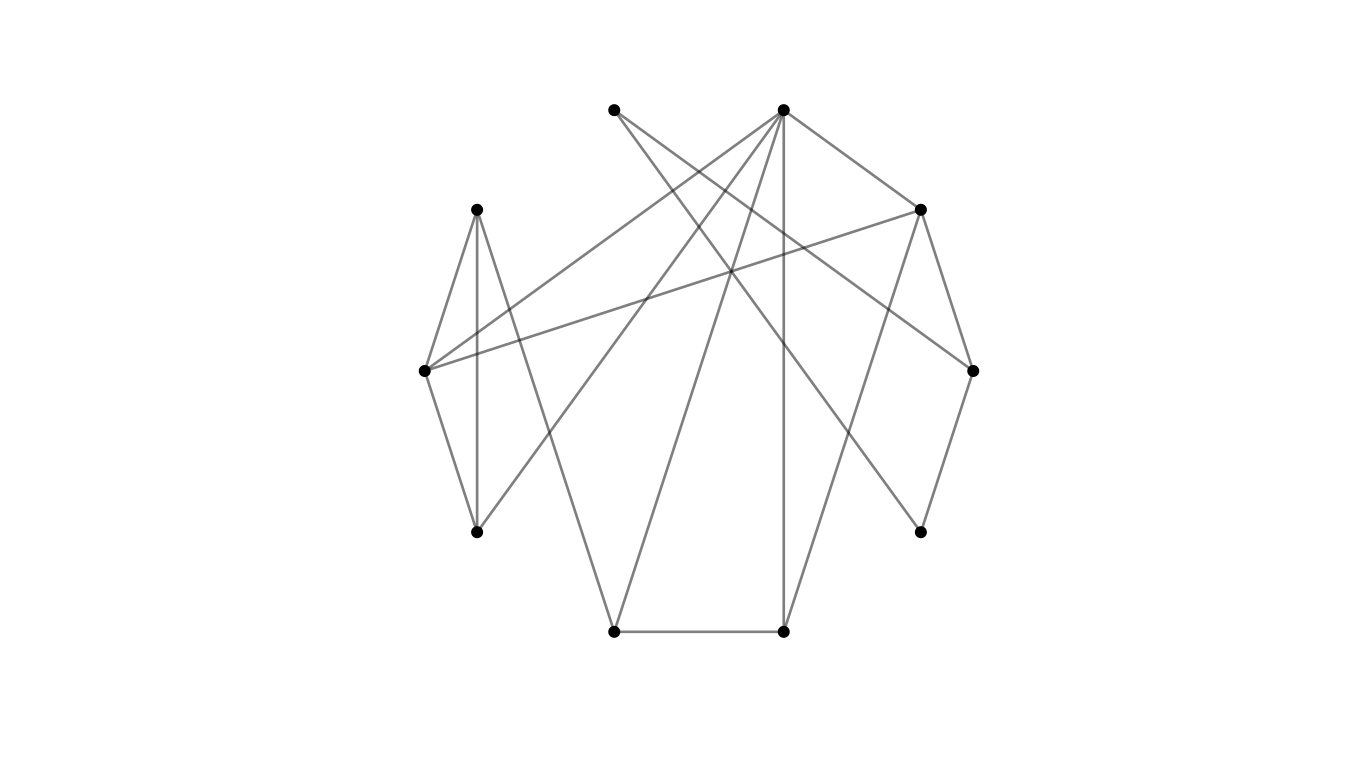
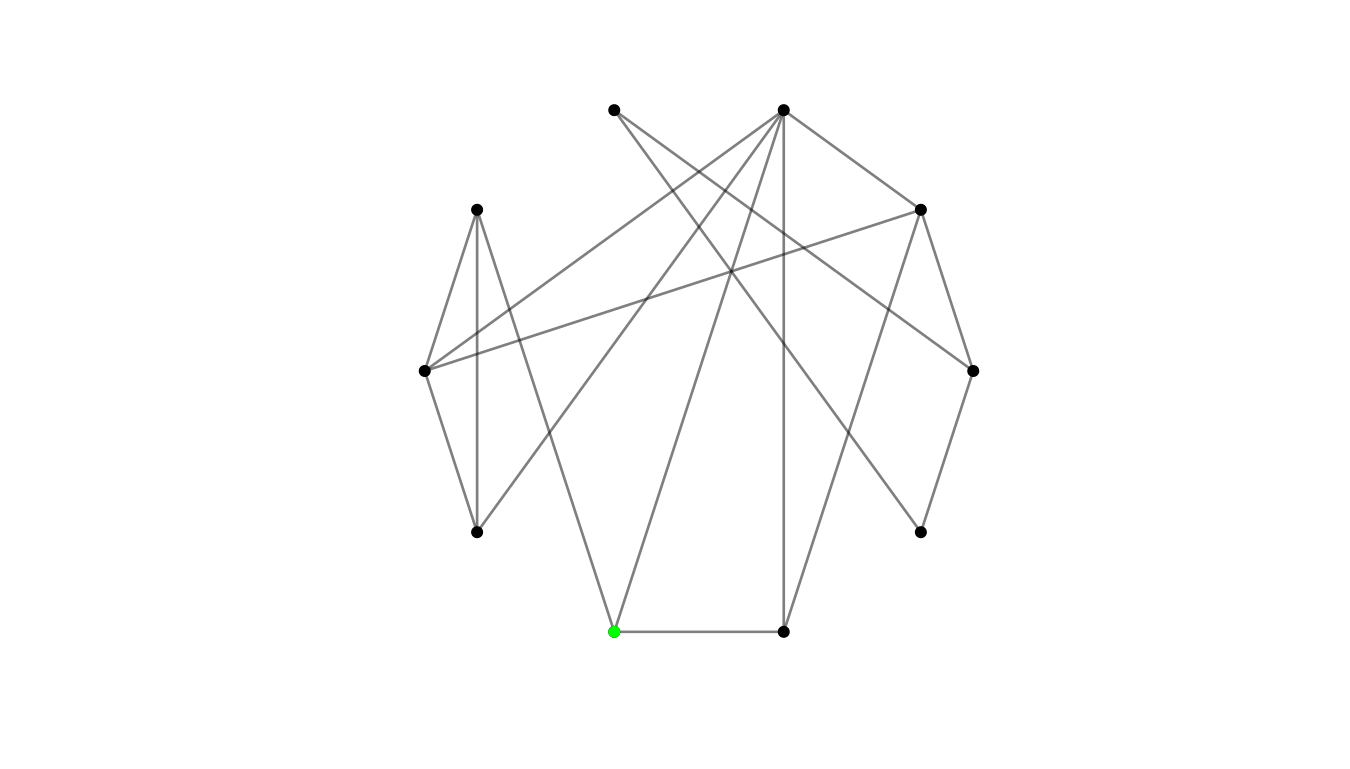
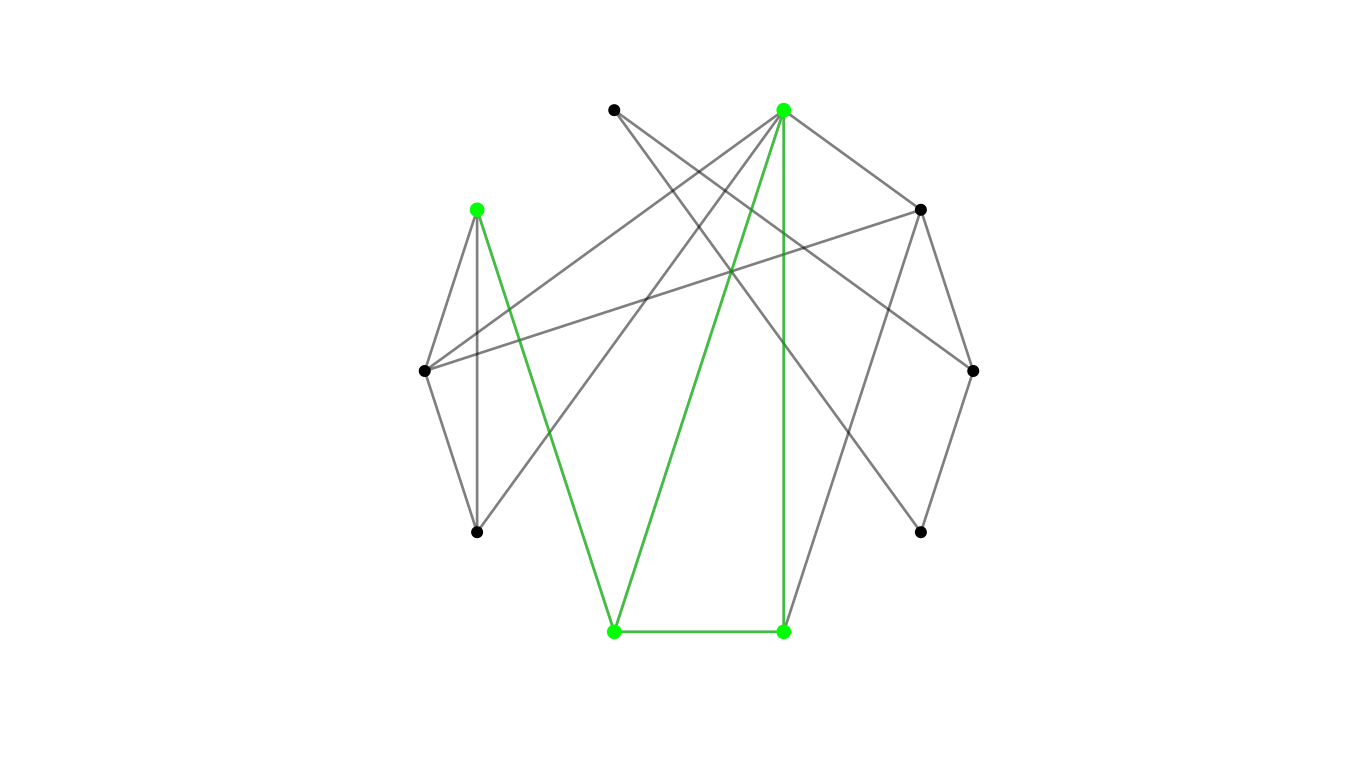
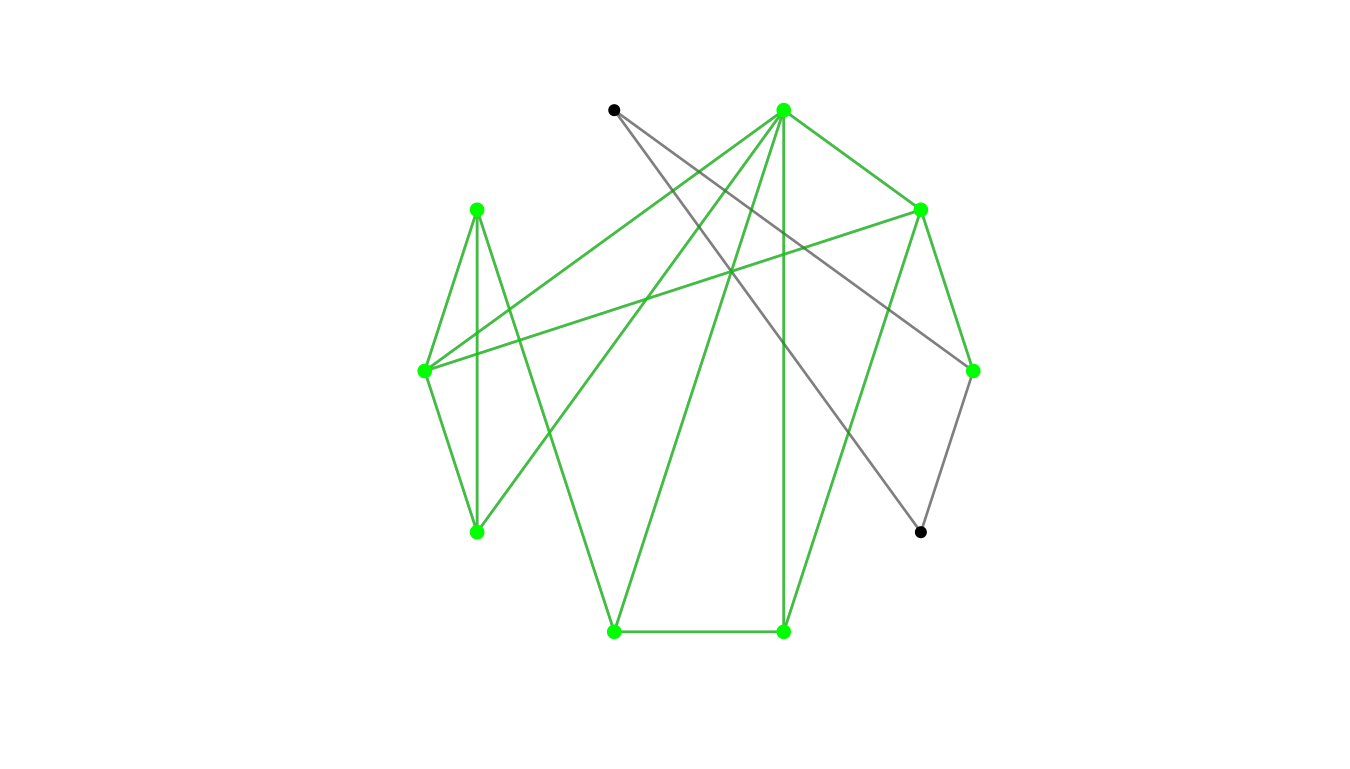
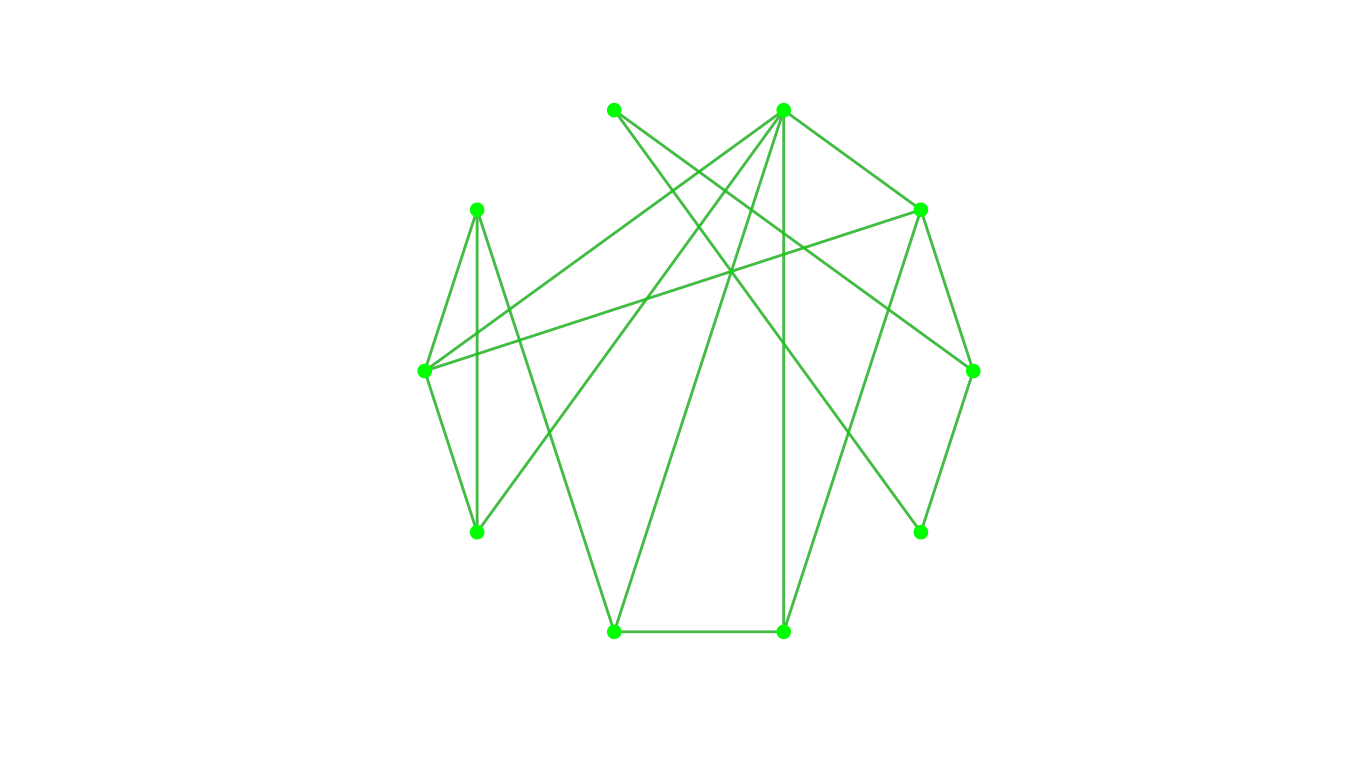
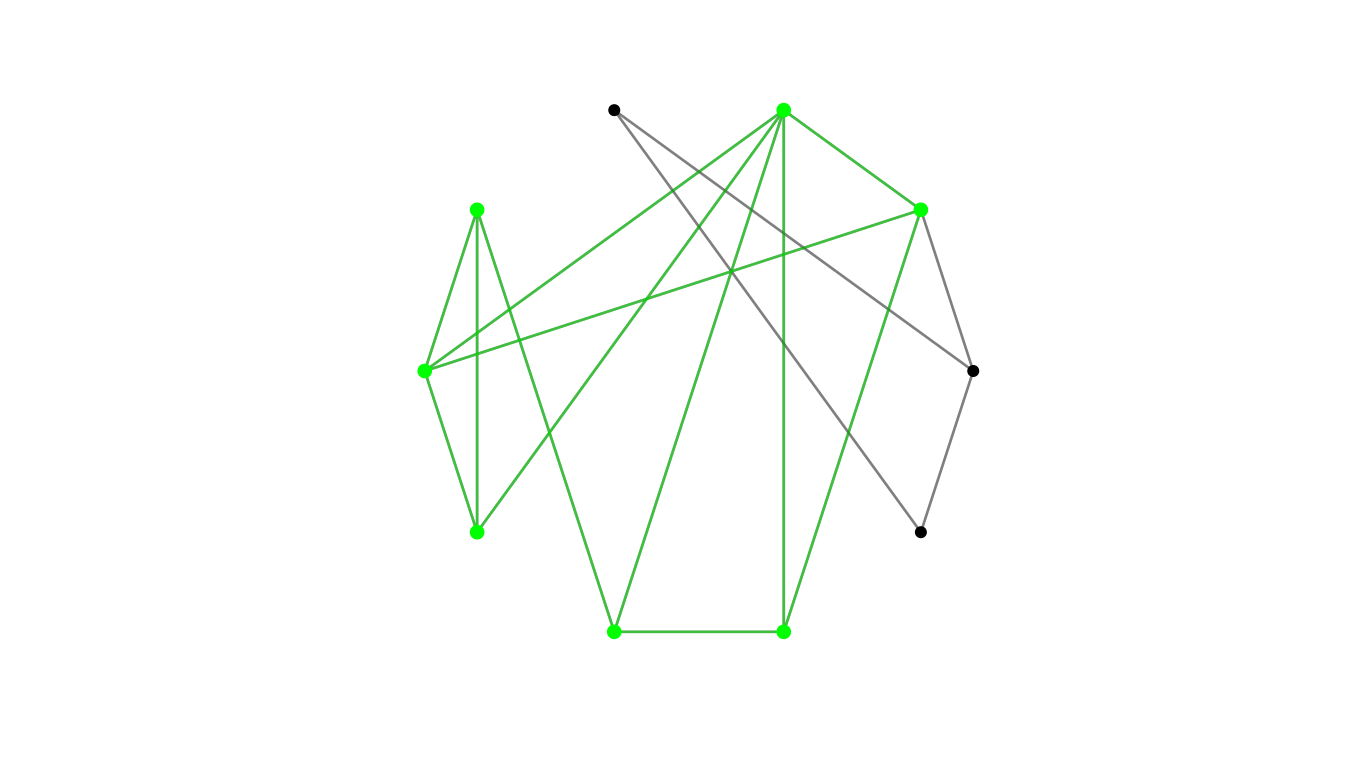
The graph has 16 edges, so we could delete each edge, then test again...
There are 120 pairs of edges, so we could delete each pair and test again...
What if that fails?
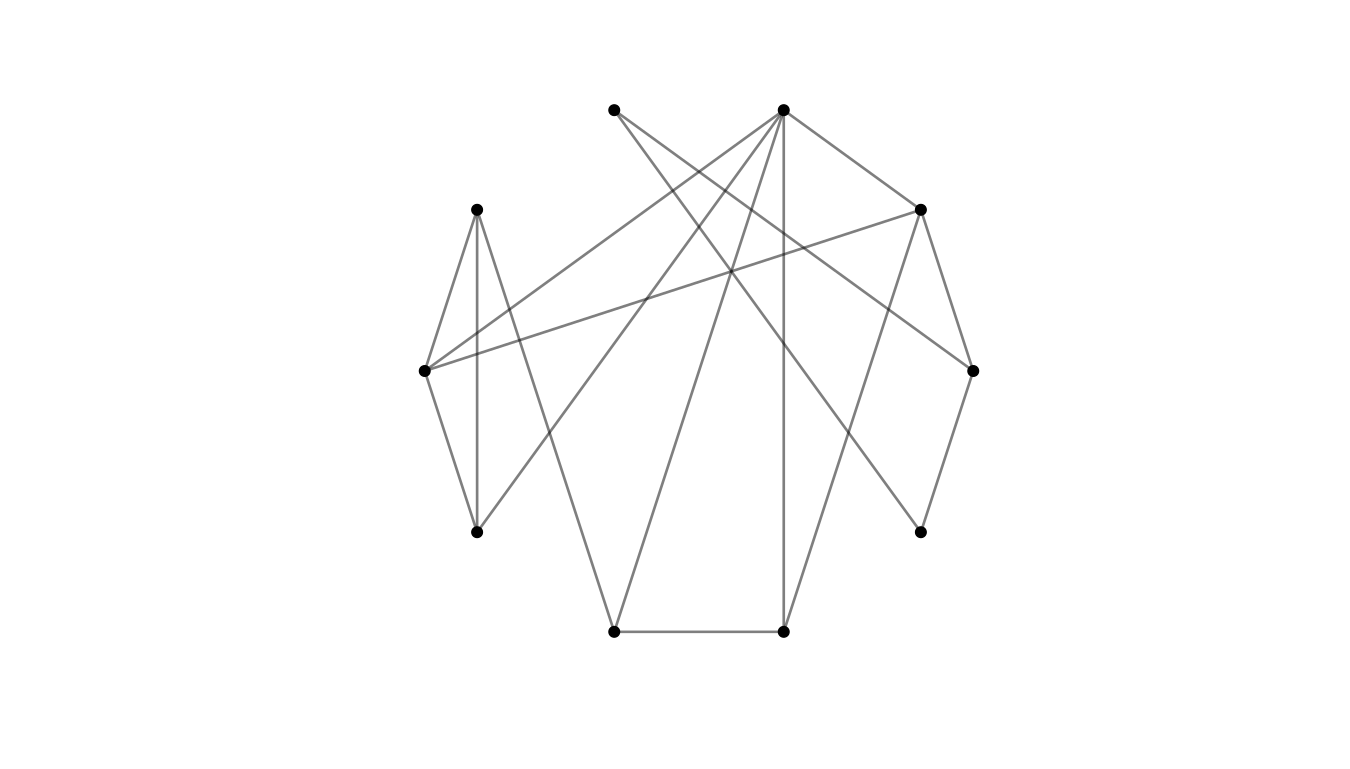
Is it Connected?
The Graph Laplacian
For a graph with vertices the adjacency matrix is given by
The degree of vertex , denoted is the number of edges incident with , that is
The Laplacian is the matrix given by
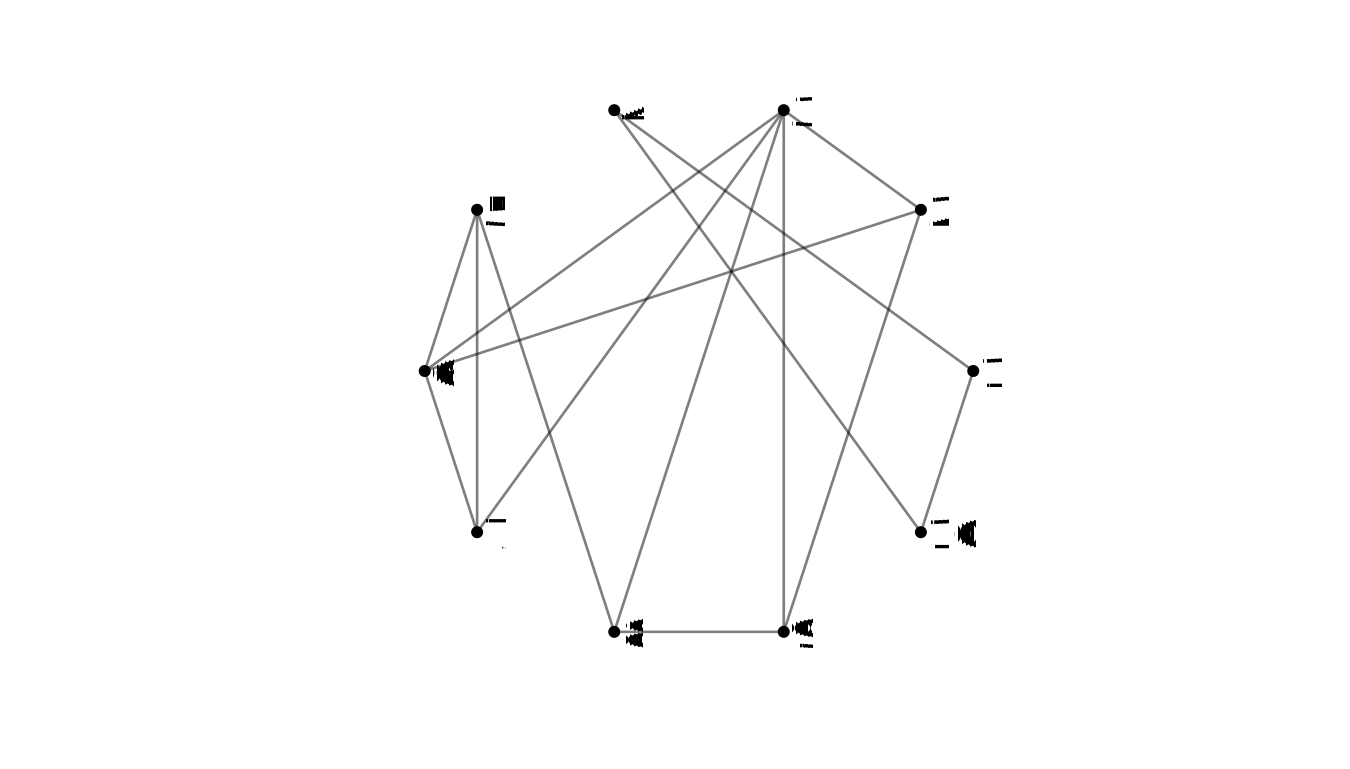
Consider the previous example:
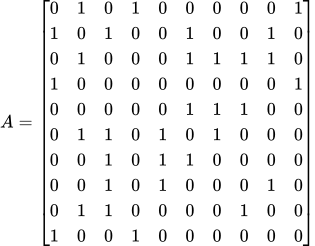
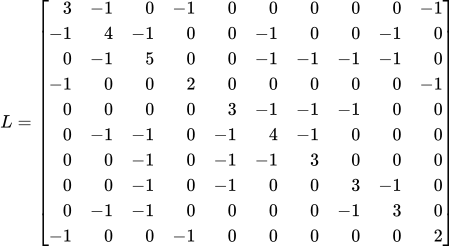
For any vector we have
Thus, since we have
Hence
For which vectors is it the case that
This occurs if and only if for all and such that .
Thus, if and only if is "constant on connected components".
In particular,
is constant on connected components.
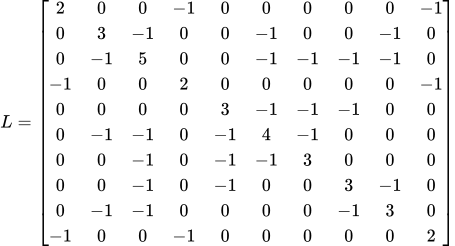
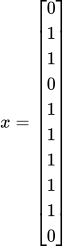
Example
For this vector :
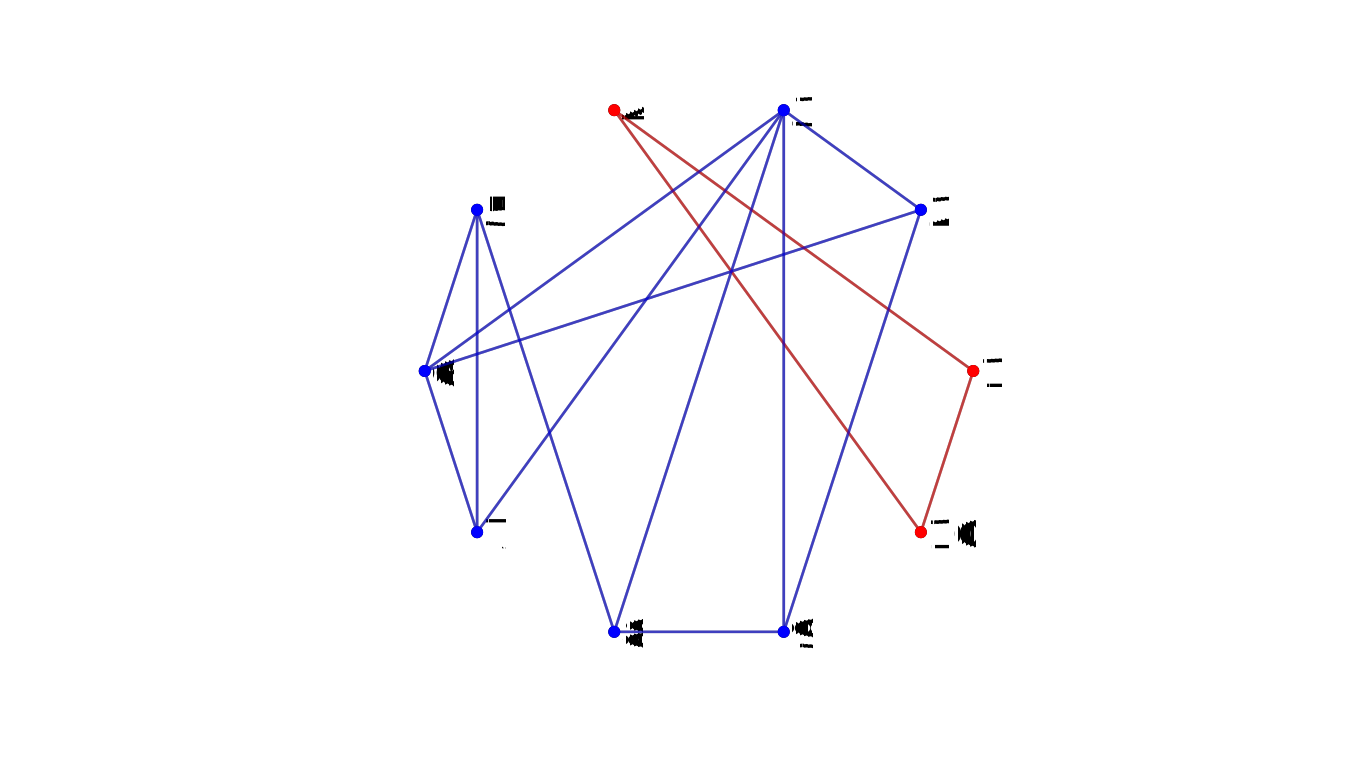
For a connected graph:
Instead of , we look for such that for the smallest .
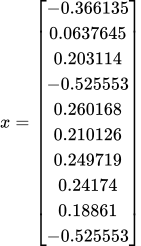
w/
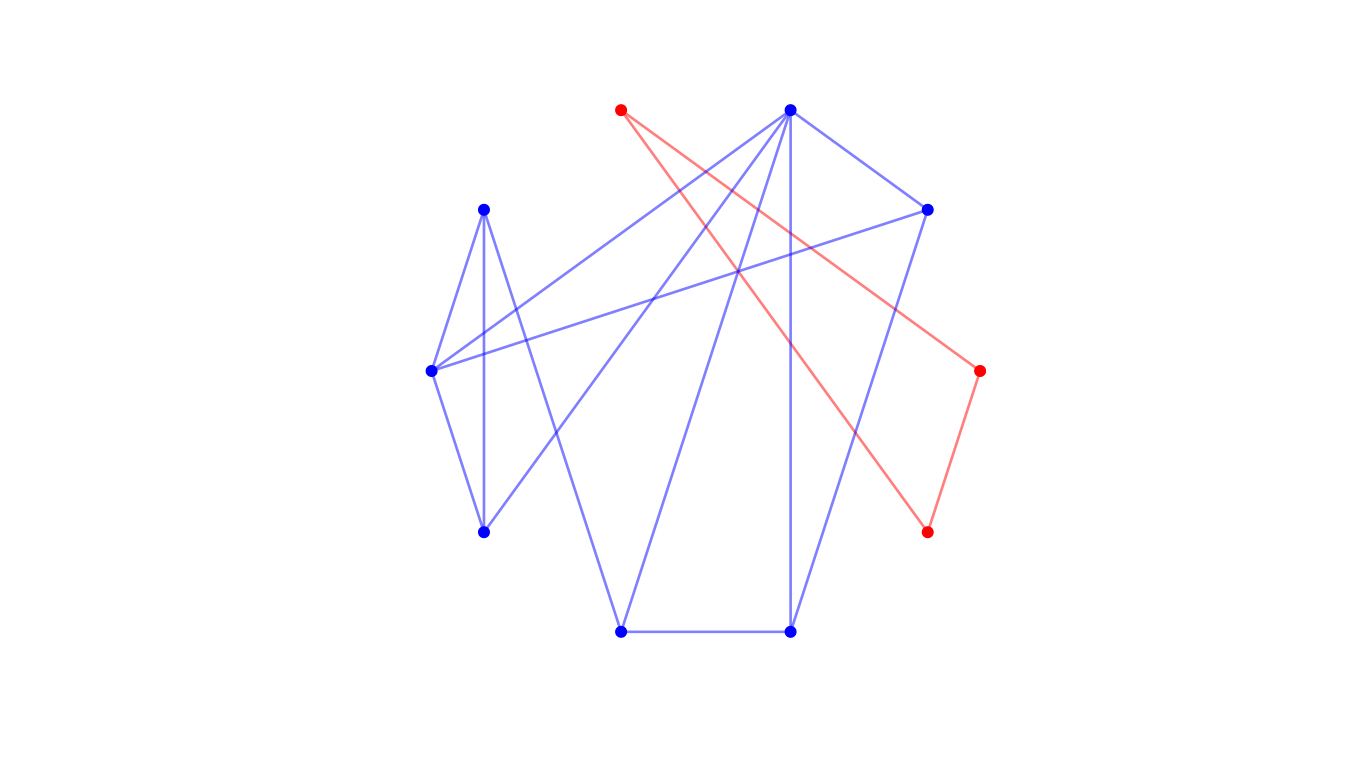

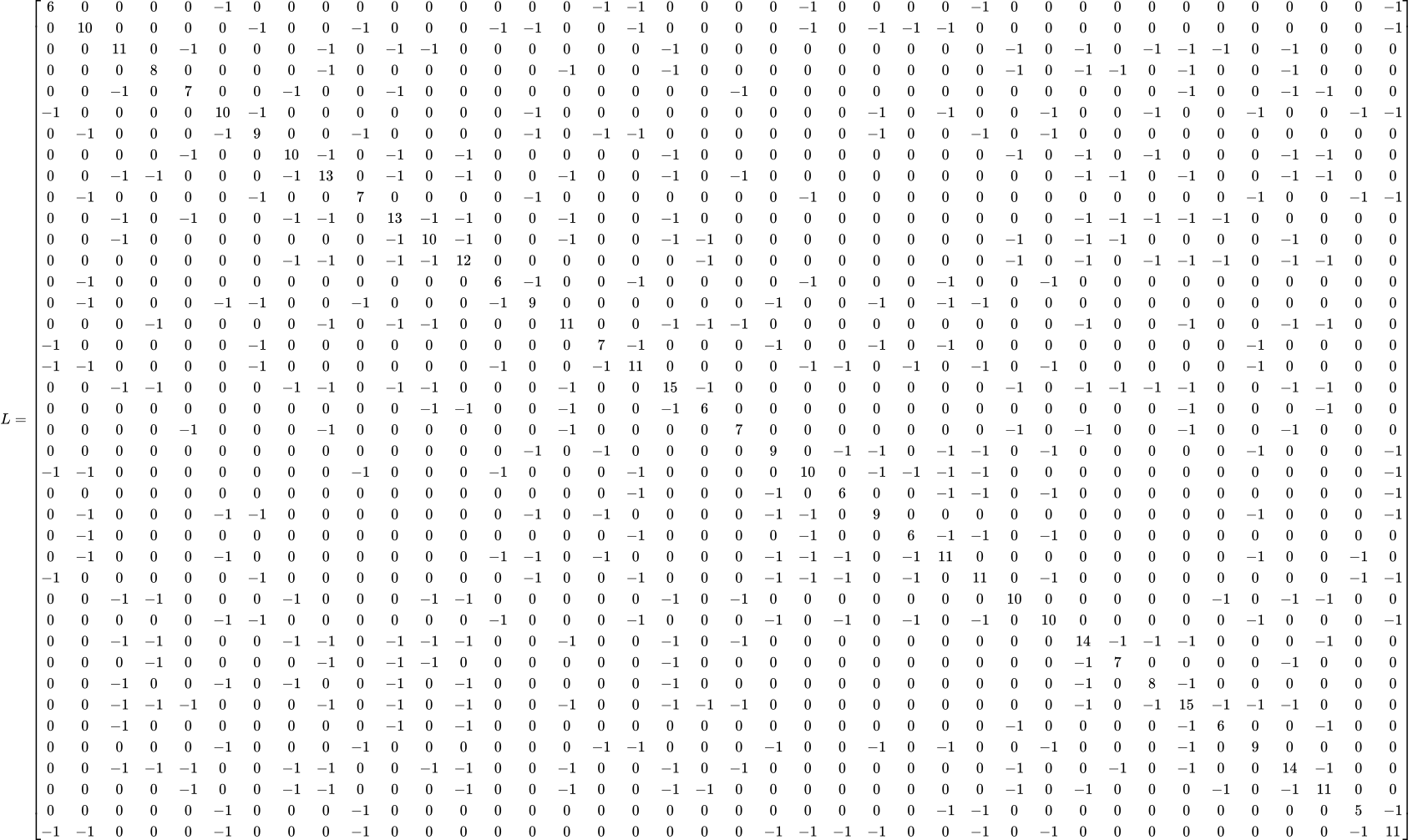



Part 1:
Fundamental Concepts
Graphs
Definition 1.1.2. A graph is a triple consisting of a vertex set , an edge set , and a relation that associates with each edge two vertices (not necessarily distinct) called its endpoints.
Example. Note that the vertex set is and the edge set is .
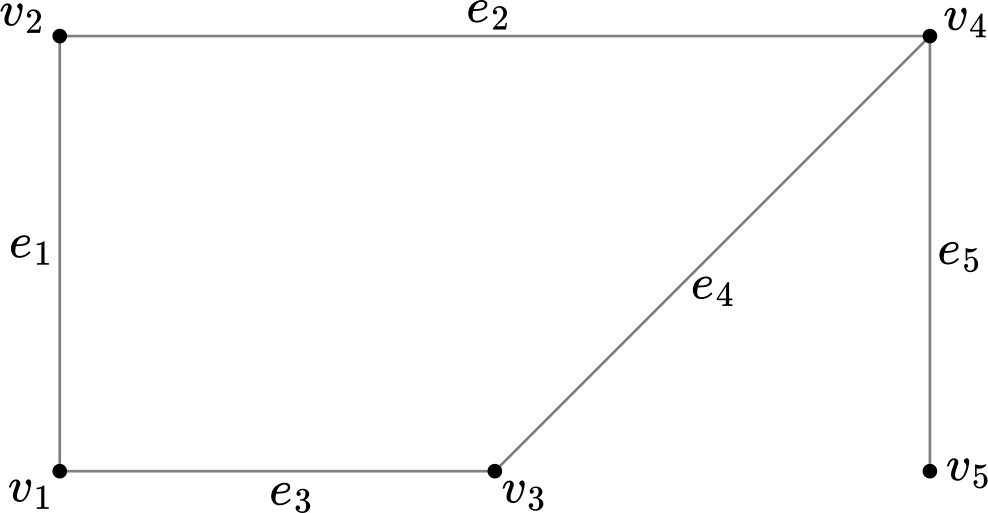
The endpoints of are and .
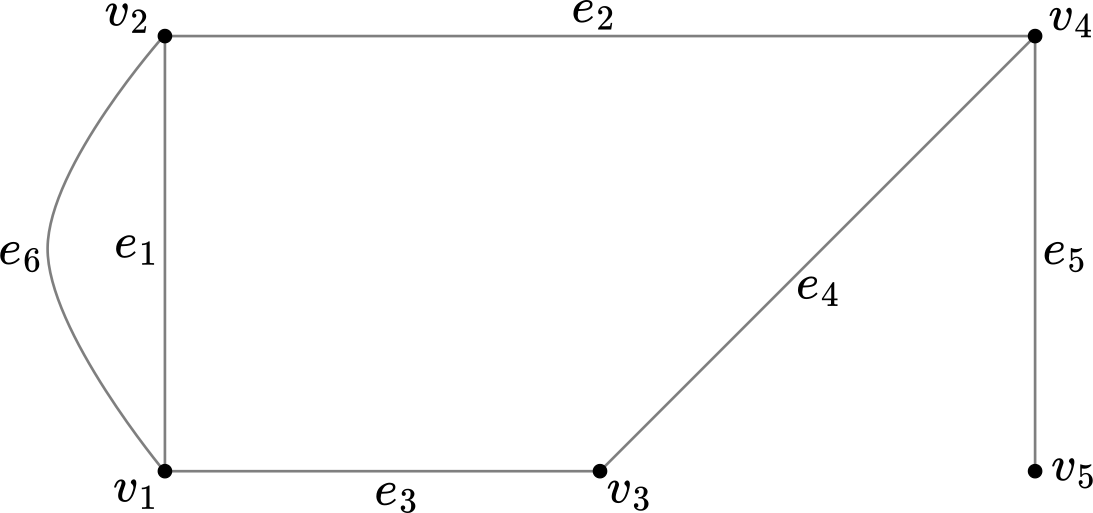
Example. The vertex set is and the edge set is .
Both and have endpoints and , thus they are multiple edges.
Example. Note that the vertex set is and the edge set is .
The edge has only one endpoint, this type of edge is called a loop.
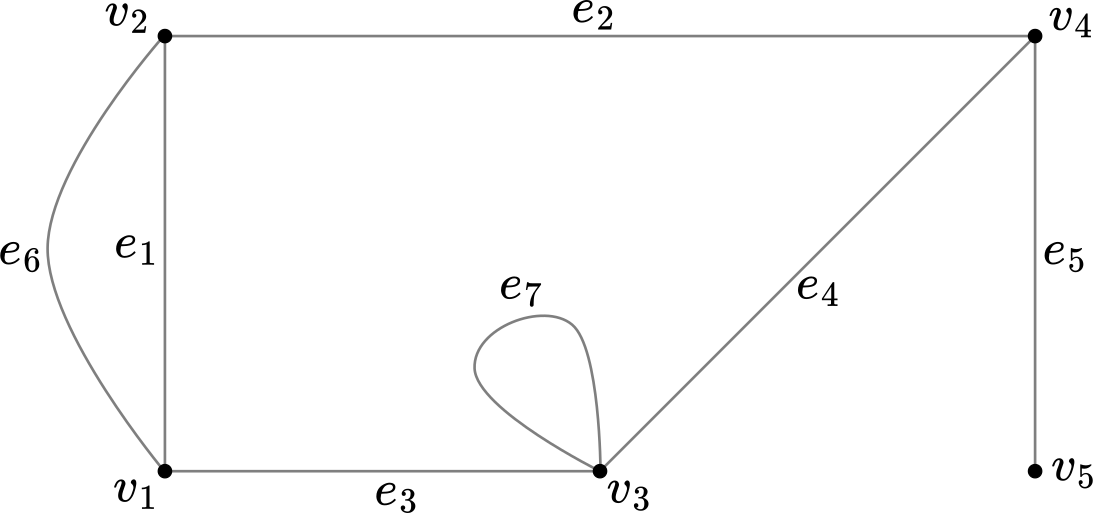
If and are endpoints of an edge, they are adjacent and are neighbors, and we write
Simple Graphs
A graph without multiple edges and without loops is called a simple graph.
In a simple graph we can name the edges by their endpoints:
In the following graph, the edge set is
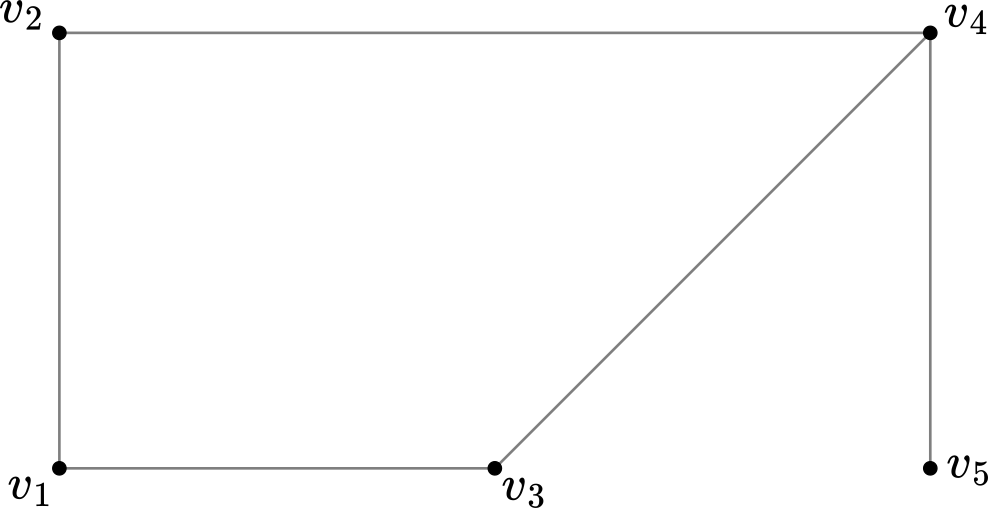
Definition 1.1.8.
- The complement of a simple graph is the simple graph with vertex set defined by if and only if .
- A clique in a graph is a set of pairwise adjacent vertices.
- An independent set (or stable set) in a graph is a set of pairwise nonadjacent vertices.
Example.
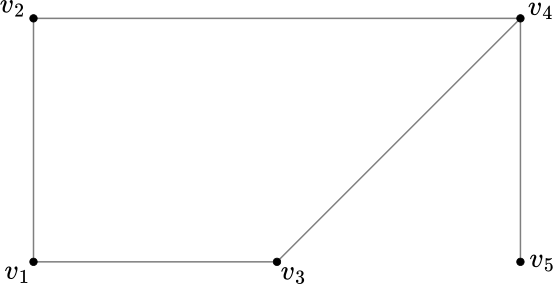
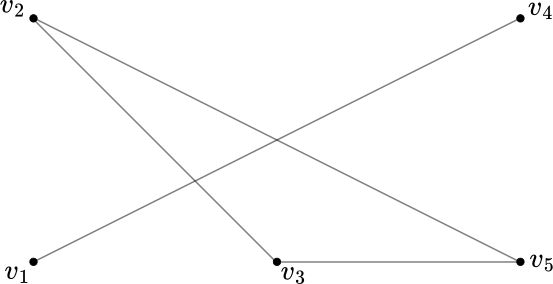
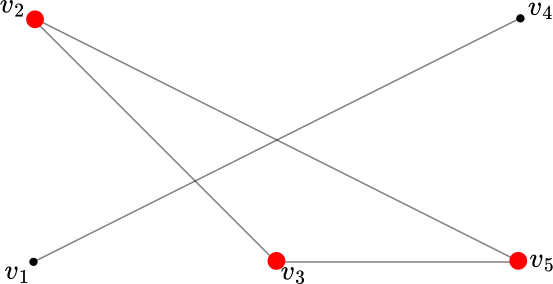
is a clique in
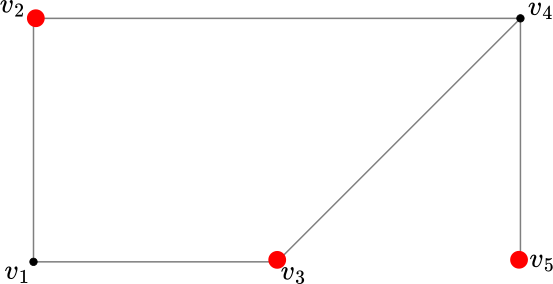
is an independent set in
Example 1.1.7. Consider a group of 5 people. Is there always a group of three who are all mutual acquaintances or mutual strangers? In other words, for every simple graph on 5 vertices , does either or contain a clique of size 3?
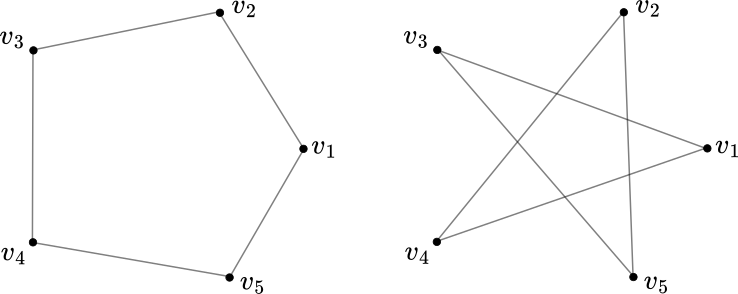
What about in a group of 6 people?
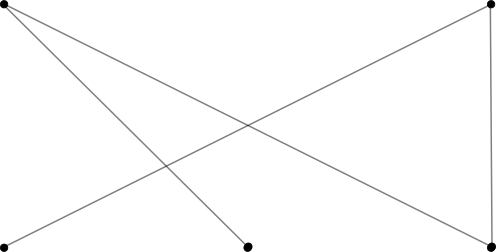
Definition 1.1.10. A graph is bipartite if is the union of two disjoint (possibly empty) independent sets called partite sets of .
Example.

Definition 1.1.15.
- A path is a simple graph whose vertices can be ordered so that two vertices are adjacent if and only if they are consecutive in the list.
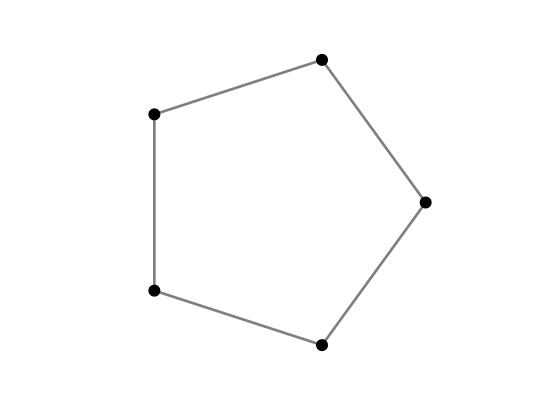
- A cycle is a graph with an equal number of vertices and edges whose vertices can be placed around a circle so that two vertices are adjacent if and only if they appear consecutively along a circle.
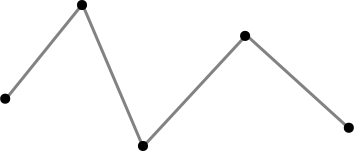
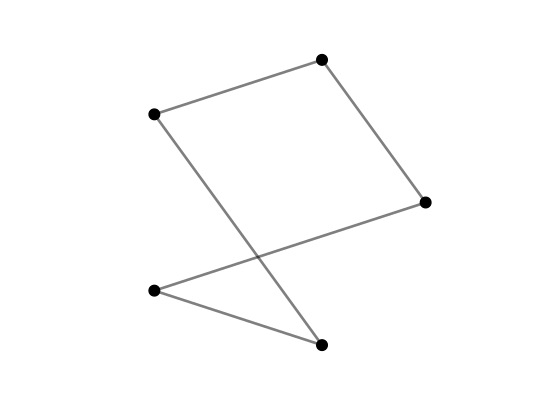
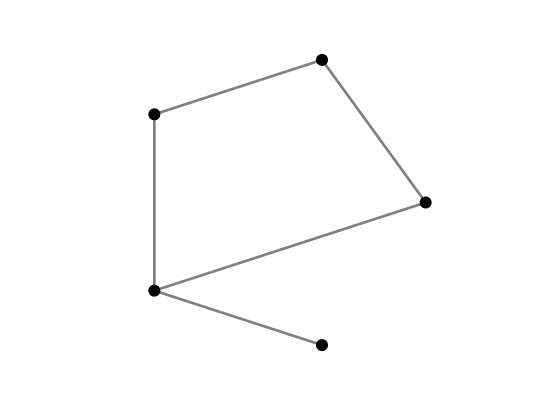
Path
Path
Cycle
Cycle
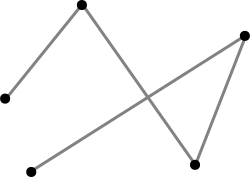
Neither
Definition 1.1.16.
- A subgraph of a graph is a graph such that and and the assignment of endpoints in is the same as in . We write and say " contains ".
- A graph is connected if each pair of vertices in belongs to a path contained in .
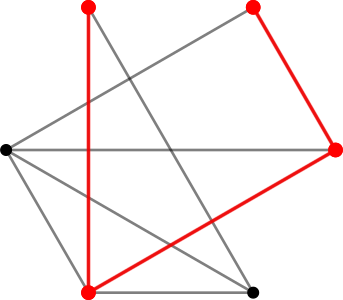
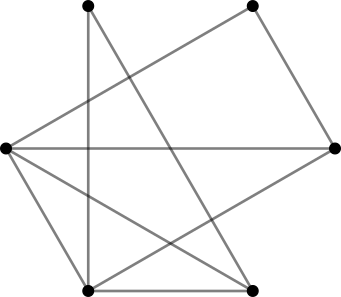
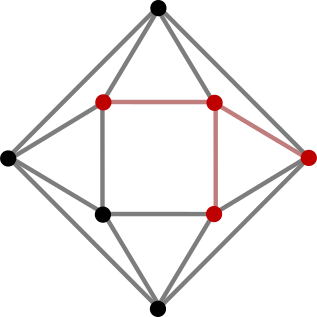
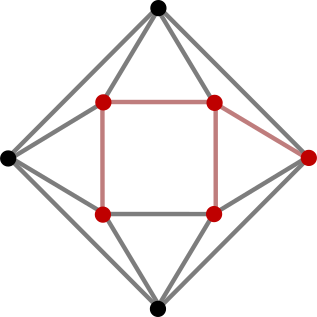
Example. The red vertices and edges are a subgraph. This subgraph is a path.
Example.
Matrices and IsoMorphism
Consider the simple graph with
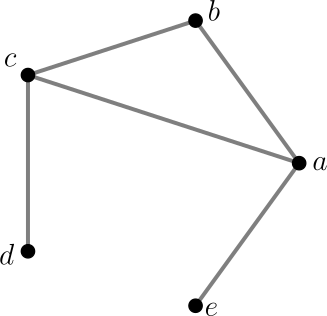
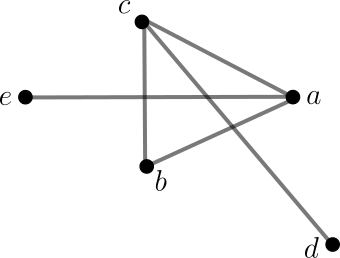
Consider the graph where
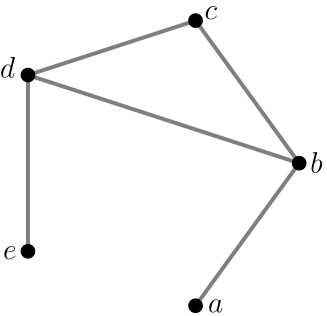
Definition 1.1.17. Let be a loopless graph with vertex set and edge set . The adjacency matrix of , written is the matrix with entry in row , column is the number of edges in with endpoints . The incidence matrix is the matrix in which the entry in row , column is if is an endpoint of edge , and zero otherwise.
If vertex is an endpoint of edge , then and are incident. The degree of a vertex (in a loopless graph) is the number of incident edges.
Example. Consider the simple graph with
Are these graphs "the same"?
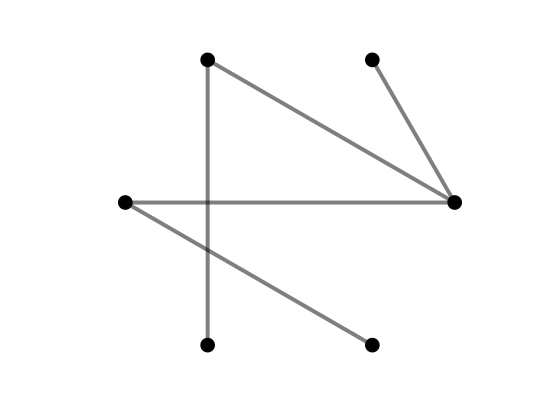
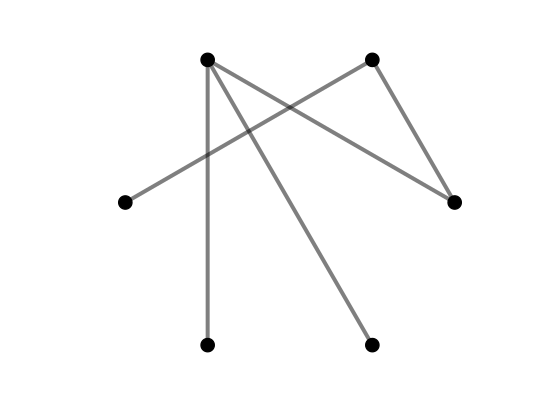
Graph isomorphism
Definition 1.1.20. An isomorphism from a simple graph to a simple graph is a bijection such that if and only if . We say that " is isomorphic to ", written , if there is an isomorphism from to .
Consider the simple graph with and
Consider the simple graph with and
The function such that
is an isomorphism from to .
Proposition. If is an isomorphism from and , then for any the degrees of and are the same. Moreover, if
are the lists of the degrees of their vertices of and , respectively, listed in nonincreasing order, then these lists are identical.
Proof. Consider a vertex with degree . This means that there are other vertices that are adjacent to , that is for each . By the definition of an isomorphism, the vertices adjacent to are exactly . Thus has degree .
Example. None of the following graphs are isomorphic:
Definition. A permutation matrix is a square matrix with entries in and exactly one in each row and each column.
Example. Some permutation matrices:
Multiplying a matrix by a permutation on the left permutes the rows:
Multiplying a matrix by a permutation on the right permutes the columns:
Permutation matrices
Rows:
Columns:
If we multiply by on the right and on the left, then we permute the rows and columns in the same way:
Isomorphism:
Consider permuting the rows and columns of an adjacency matrix:
Theorem. Two simple graphs and are isomorphic if and only if there is a permutation matrix such that
Thus, if we can find a permutation matrix such that , we can conclude and are isomorphic. If and are not isomorphic, it is harder to prove.
Definition 1.1.25. An isomorphism class of graphs is an equivalence class of graphs under the isomorphism relation.
Example. Every simple graph on vertices is isomorphic to one of the following:
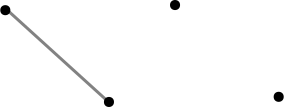
So, there are two isomorphism classes of graphs on vertices.
Example. How many isomorphism classes are there on vertices?
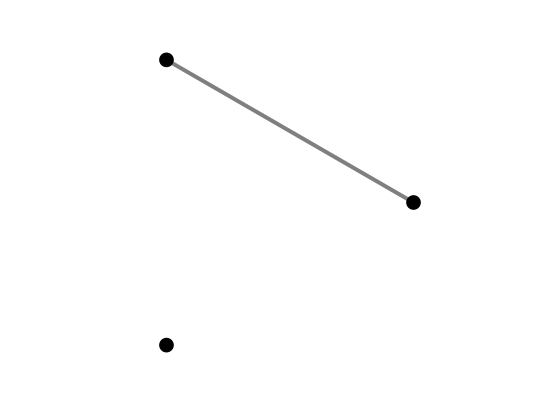

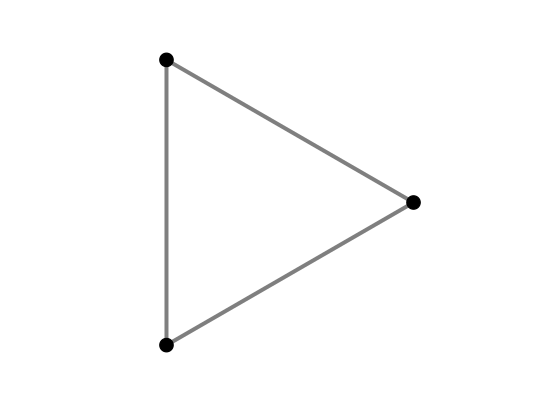
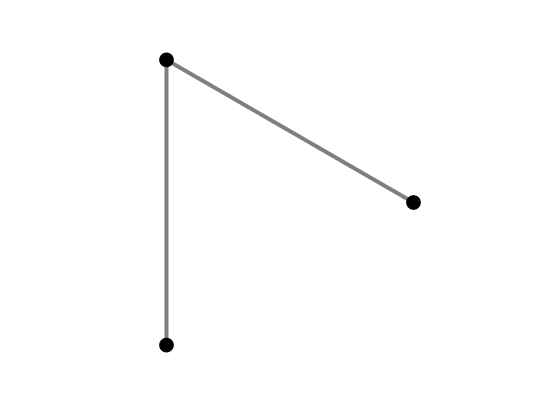
The "structural" properties of a graph are the same for all isomorphic graphs. For example, number of edges, number of vertices, degree of vertices (already proven), sizes of cliques, sizes of independent sets, etc.
independent set of size
NO independent set of size
Connection
in
Graphs
Definition 1.2.2.
- A walk is a list of vertices and edges such that, for , the edge has endpoints and .
- A trail is a walk with no repeated edge.
- A -walk or -trail has first vertex and last vertex ; the vertices and are called its endpoints.
- A -path is a path whose endpoints are and ; the other vertices are called internal vertices.
- The length of a walk, trail, path, or cycle is its number of edges. A walk or trail is closed if its endpoints are the same.
Lemma 1.2.5. Every -walk contains a -path.
Proof. (On the board)
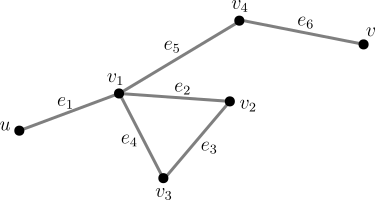
Example. A walk with a repeated vertex:
Definition 1.2.6. A graph is connected if for every pair of vertices and , there is a -path contained in the graph. Otherwise, we say that the graph is disconnected.
If has a -path, then we say that is connected to in .
Definition 1.2.8. The components of a graph are its maximal connected subgraphs. A component is trivial if it has no edges otherwise it is nontrivial. An isolated vertex is a vertex of degree .
Proposition 1.2.11. Every graph with vertices and edges has at least components.
Note, if a graph contains a -path and a -path, it is not clear that contains a -path. However, if we concatenate these paths, then we get a -walk which contains a -path by Lemma 1.2.5. Thus, the connection relation on vertices is transitive. It is also reflexive (vertices are connected to themselves), and symmetric (since paths are reversible).
Proof. Adding an edge to a graph decreases the number of connected components by at most .
Definition 1.2.12.
- A cut-edge or cut-vertex of a graph is an edge or vertex, respectively, whose deletion increases the number of components.
- We write or for the subgraph of obtained by deleting an edge or a set of edges .
- We write or for the subgraph obtained by deleting a vertex or a set of vertices .
- An induced subgraph is a subgraph obtained by deleting a set of vertices.
- We write for , where ; this is called the subgraph of induced by .
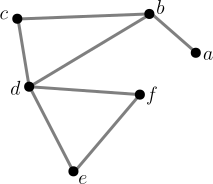
Cut-edges:
Cut-vertices:
If then is shown in red.
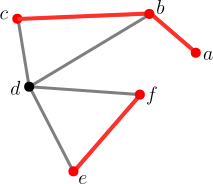
Theorem 1.2.14. An edge is a cut-edge if and only if it belongs to no cycle.
Proof. (On the board)
Note that this theorem is the statemet that the following two implications about an edge in a graph both hold:
is a cut-edge belongs to no cycle
and
belongs to no cycle is a cut-edge
Given an implication , it is often useful to consider the equivalent statement , which is called the contrapositive. (Here is the statement " does not hold".)
Thus, we could instead prove the contrapositives of the above implications
belongs to a cycle is not a cut-edge
and
is a not a cut-edge belongs to a cycle
Eulerian Circuits

Seven Bridges of Konigsberg
Is there a path that crosses all 7 bridges exactly once?
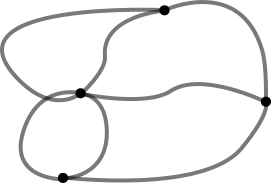
Seven Bridges of Konigsberg
Is there a path that crosses all 7 bridges exactly once?
Seven Bridges of Konigsberg
Is there a path that crosses all 7 bridges exactly once?
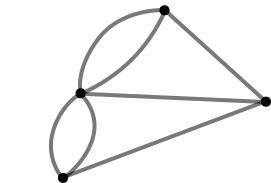
Definition 1.2.24.
- A graph is Eulerian if it has a closed trail containing all its edges.
- A circuit is a closed trail with vertices listed in cyclic order.
- An Eulerian circuit or Eulerian trail is a circuit or a trail (resp.) containing all the edges.
- An even graph is a graph with vertex degrees all even. We call a vertex odd or even when it has odd or even degree, respectively.
Lemma 1.2.25. If every vertex of a graph has degree at least 2, then contains a cycle.
Theorem 1.2.26. A graph is Eulerian if and only if it has at most one nontrivial component, and all its vertices have even degree.
Proof idea. By Lemma 1.2.25 the graph contains a cycle. If we delete all the edges in that cycle, then new graph has fewer edges, but each vertex still has even degree. Thus, we can use induction on the number of edges. (Details are on the board and in the text.)
Proof. (On the board and in the text.)
Consider a path in a graph . If there is another path such that then we call an extension of . Since only has finitely many vertices, we cannot extend a path forever. If a path has no extension, then we call a maximal path.
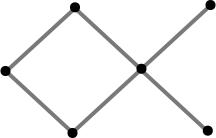
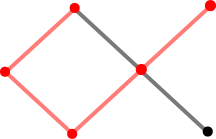
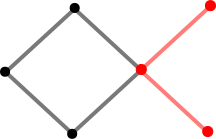
Proposition 1.2.27. Every even graph decomposes into cycles.
Proposition 1.2.28. If is a simple graph in which every vertex has degree at least , then contains a path of length at least . If , then contains a cycle of length at least .
Proposition 1.2.29. Every graph with at least one nonloop edge has at least two vertices that are not cut vertices.
Theorem 1.2.33. For a connected nontrivial graph with exactly odd vertices, the minimum number of trails that decompose it is .
Note: This "decomposition" is a partition of the edges. The cycles may share vertices. Indeed, every vertex of degree must be in more than one cycle.
Vertex Degrees and counting
Definition 1.3.1.
- The degree of a vertex in a graph , written or , is the number of edges incident to , except that each loop at counts twice.
- The maximum degree is denoted , the minimum degree is denoted , and is regular if .
- The graph is -regular if .
- The neighborhood of , denoted or , is the set of vertices adjacent to .
Regular graphs and Degree
and
Example.
The Petersen Graph
Definition 1.1.36. The Petersen graph is the simple graph with vertices consisting of all -element subsets of , that is,
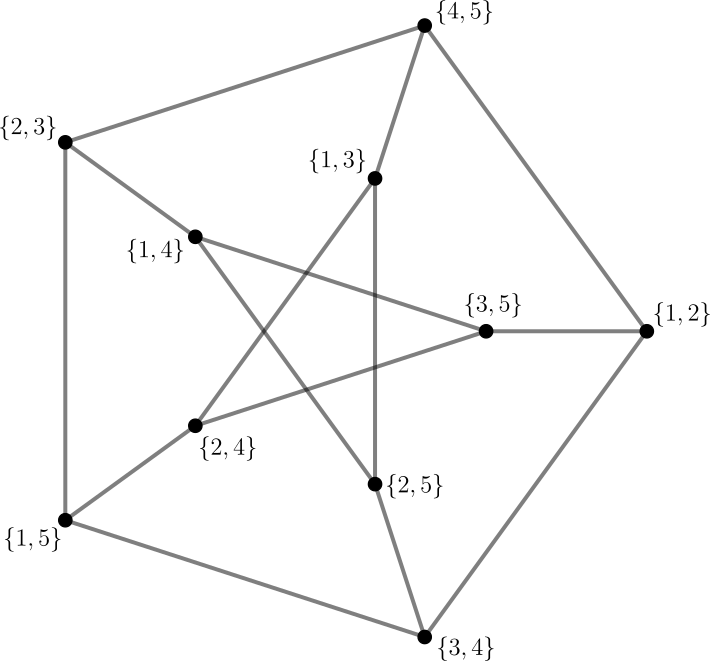
and two vertices are adjacent if the sets are disjoint.
Note that
Thus, the Petersen graph is -regular.
Definition 1.1.27.
- The path and cycle with vertices are denoted and , respectively. An -cycle is a cycle with vertices.
- A complete graph is a simple graph whose vertices are pairwise adjacent. The complete graph on vertices is denoted
- A complete bipartite graph or biclique is a simple bipartite graph such that two vertices are adjacent if and only if they are in different partite sets. When the partite sets have sizes and , the graph is denoted
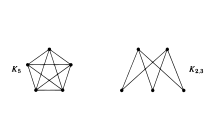
Some important graphs
Definition 1.3.2.
- The order of a graph , written , is the number of vertices in .
- An -vertex graph is a graph of order .
- The size of a graph , written , is the number of edges in .
- For , we define .
Proposition 1.3.3. (Degree-Sum Formula) If is a graph, then
Proof. Recall that is the number of edges with endpoint . Since each edge has two endpoints, adding up all the degrees we count each edge twice.
Corollary 1.3.4. In a graph , the average vertex degree is , and hence
Corollary 1.3.5. Every graph has an even number of vertices of odd degree. No graph of odd order is regular with odd degree.
Corollary 1.3.6. A -regular graph with vertices has edges.
Proposition 1.3.9. If , then a -regular bipartite graph has the same number of vertices in each partite set.
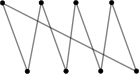
regular bipartite graphs
Example. Consider the -regular bipartite graph below
- 4 vertices in
- Each is incident with edges
- This is all the edges!
- Same is true for
Proof. Let and be the partite sets, then Thus .
6-cycles in the petersen graph
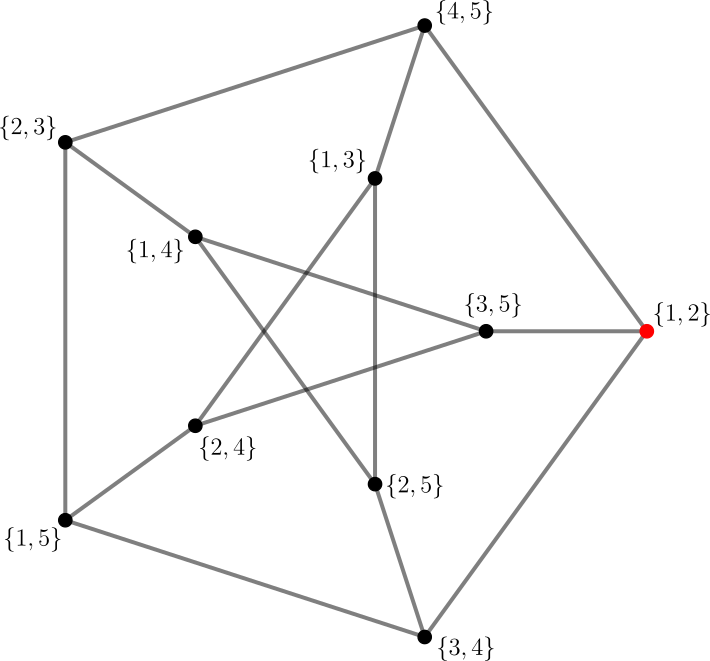
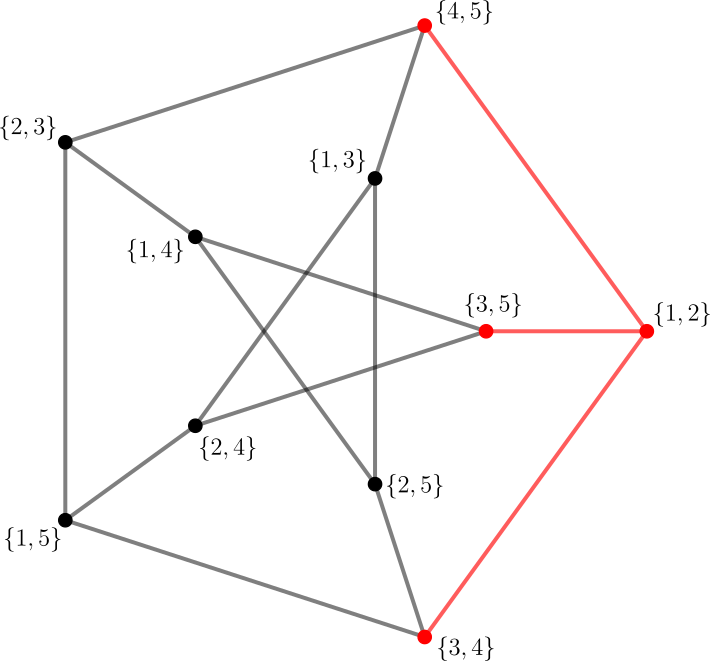
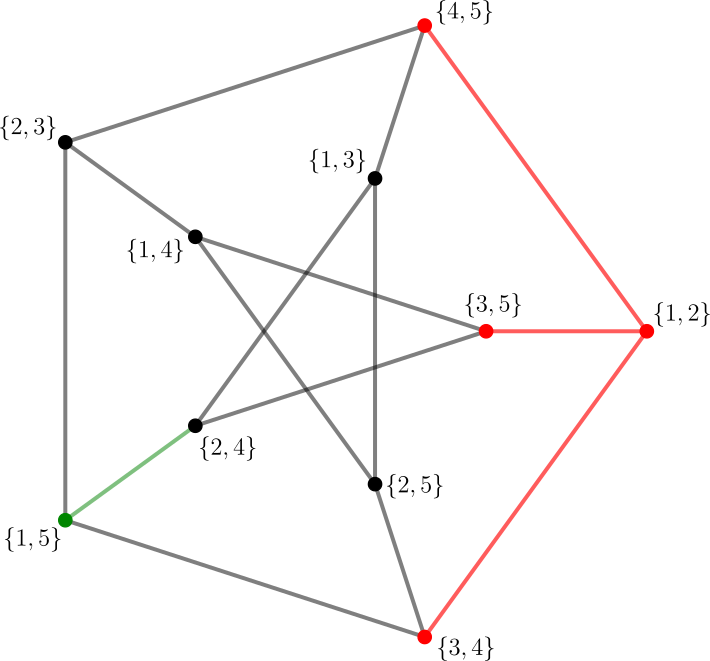
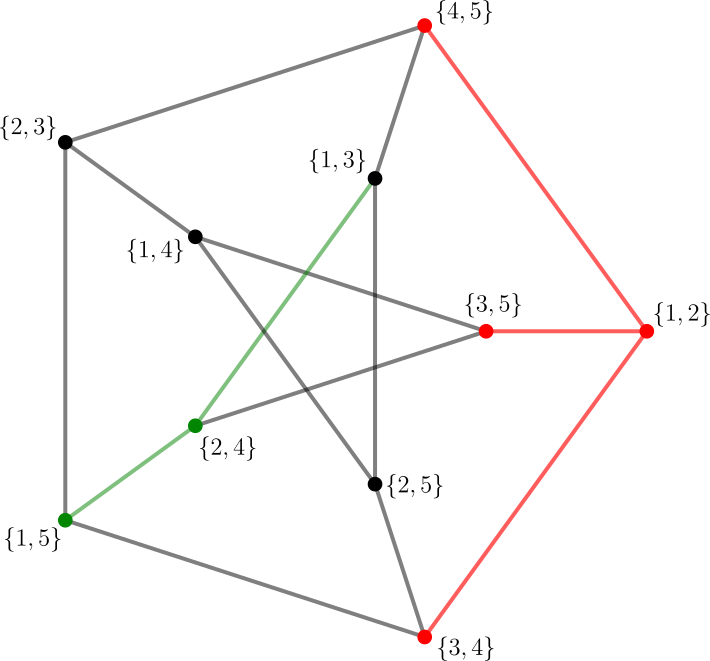
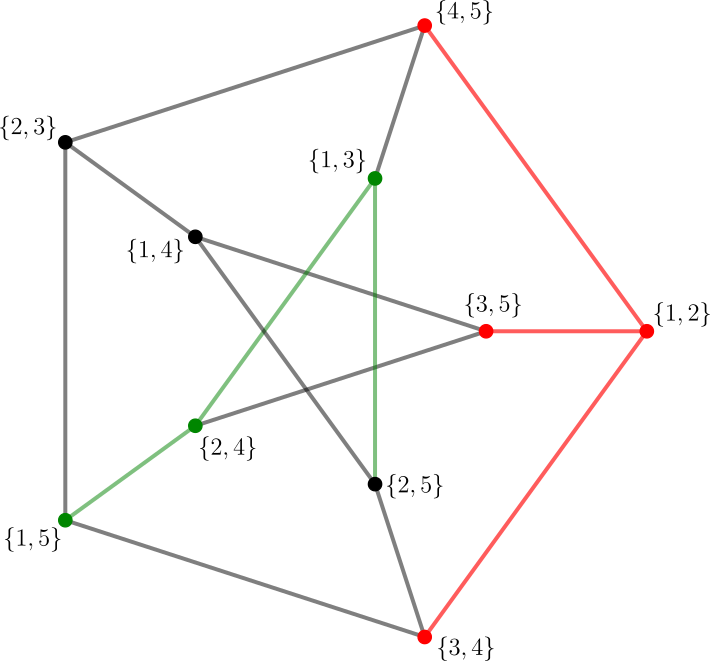
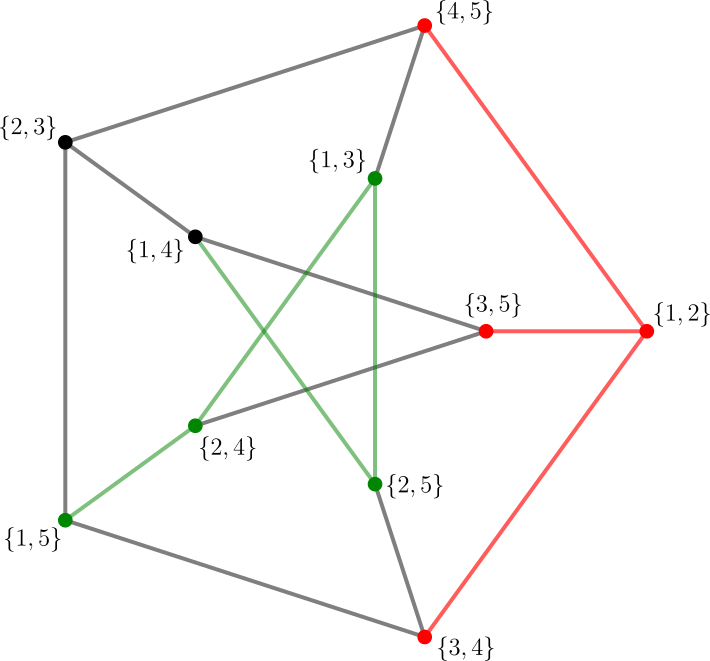
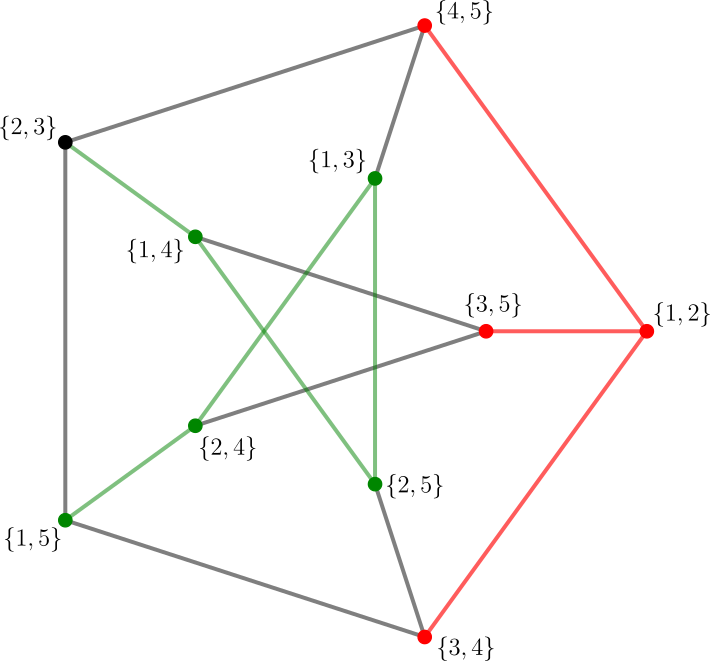
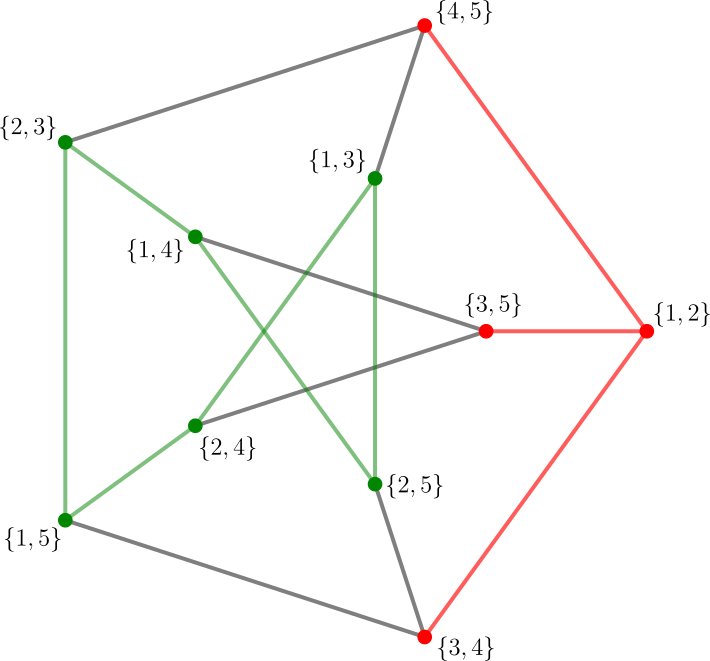
6-cycles in the petersen graph
Delete vertex and the vertices adjacent to it.
The remaining vertices are the two element sets that contain either or .
and
Cycle:
cycles vertices:
6-cycles in the petersen graph
Consider a 6-cycle in the graph.
Cycle:
cycles vertices:
Two numbers and show up three times on this list.
Hence, this cycle is the one we obtained by deleting vertex and its neighbors.
Proposition 1.3.11 For a simple graph with vertices and ,
Conjecture 1.3.12. (Reconstruction Conjecture) If is a simple graph with at least three vertices, then is uniquely determined by it's list of vertex-deleted subgraphs.
A subgraph obtained by deleting a single vertex is called a vertex-deleted subgraph.
Vertex-deleted subgraphs
Examples.
- The vertex-deleted subgraphs of the cycle of length , , are all .
- The vertex-deleted subgraphs of the path of length, , are
Example. Consider the following vertex-deleted subgraphs:


What order 5 graph?
Example. Consider the graph and its vertex-deleted subgraphs:

Extremal Problems
Proposition 1.3.13. The minimum number of edges in a connected graph with vertices is .
Proposition 1.3.15. If is a simple graph with vertices and then is connected.
Example 1.3.16. We wish to show that the inequality in Proposition 1.3.15 is sharp, that is, for any there exists an -vertex graph such that and is disconnected.
For even consider , for odd consider .
Definition 1.3.17. The union of two graphs and with disjoint vertex sets, is called their disjoint union or sum, and it is denoted . The disjoint union of copies of is denoted .
degree sequences
Definition 1.3.27. The degree sequence of a graph is the list of vertex degrees, usually written in nonincreasing order .
If is the degree sequence of a graph , then the vertex-sum formula implies is even.
To be a degree sequence of a graph, it is necessary that is even. Is this condition also sufficient?
w/o loops, but w/ multiple edges, things are more complicated:
Exercise 1.3.63. The nonnegative integers are the vertex degrees of some loopless graph if and only if is even and
With loops in our graphs, yes!
Proposition 1.3.28. The nonnegative integers are the vertex degrees of some graph if and only if is even.
Theorem 1.3.31. For , an integer list of size is graphic if and only if is graphic, where is obtained from by deleting the largest element of and subtracting from each of its next largest elements. The only -element graphic sequence is .
Definition 1.3.29. A graphic sequence is a list of nonnegative numbers that is the degree sequence of some simple graph.
Graphic sequences
What about degree sequences of simple graphs?
Example. The degree sequences of both graphs are
But these are not isomorphic graphs!
Example. Consider the sequence .
Reorder
How to build from : Suppose


The sequence is graphic since:
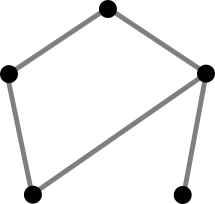
Deleting degree 3 vertex
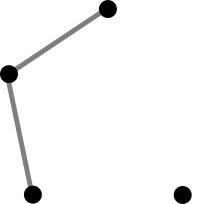
So is graphic, but why is graphic?
We want a graph with degree sequence AND...
these vertices
this one's neighbors are...
Why does graphic graphic?
Modify the graph so that and
BUT, keep degrees the same
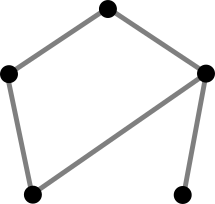
Add:
Delete:
Pick a vertex y:
and
Delete:
Add:
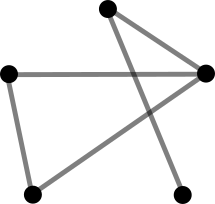
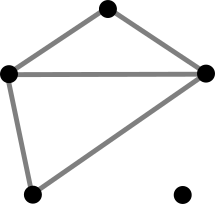
Directed graphs
Definition 1.4.2.
A directed graph or digraph is a triple consisting of a vertex set , an edge set , and function assigning each edge an ordered pair of vertices. The first vertex in the ordered pair is the tail of the edge, and the second is the head; together, they are the endpoints. We say that an edge is from its tail to its head.
What is a Directed graph
Example. Let and
and the function that assigns edges to points is given by
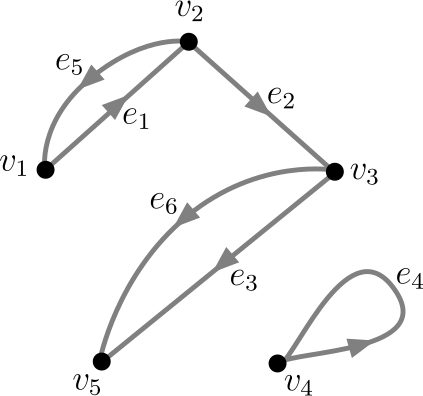
Definition 1.4.3. In a digraph:
- A loop is an edge whose endpoints are equal.
- Multiple edges are edges having the same ordered pair of endpoints.
- The digraph is simple if each ordered pair is the head and tail of at most one edge (Note: loops are allowed!)
In a simple digraph:
- We write for an edge with tail and head .
- If , then the edges and are different.
- If there is an edge from to , then is a predecessor of , and is a successor of .
- We use to denote "there is an edge from to ."
Not simple!
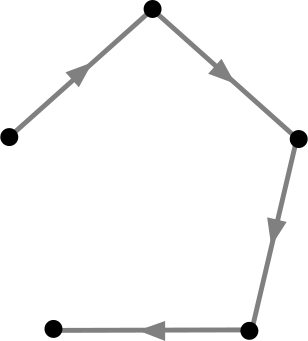
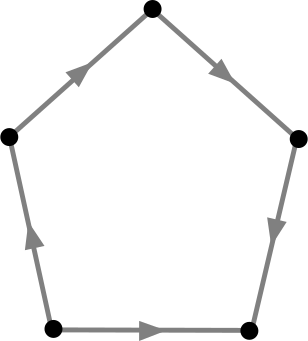
Definition 1.4.6. A digraph is a path if it is simple, and all of the vertices can be listed (without repetition) such that
A digraph is a cycle if it is simple, and all of the vertices can be listed (without repetition) such that
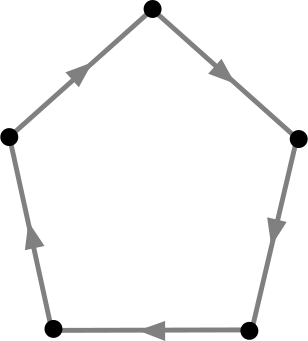
Cycle
Path
Neither
Example: Markov Chain
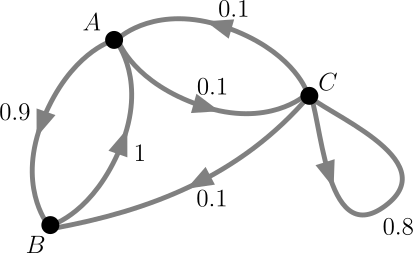
Given a vector of nonnegative entries we interpret as the probability that we're in state
Then gives the probabilities that we're in each state after another step.
Example: Markov Chain
Let be the vector of probabilities after steps.
If we start at , then , and
Digraph degrees
Definition 1.4.17. Let be a vertex in a digraph.
- The outdegree is the number of edges with tail .
- The indegree is the number of edges with head .
- The out-neighborhood or successor set is the set
- The in-neighborhood or predecessor set is the set
- The minimum and maximum indegree are and ; for outdegree we use and .
Proposition 1.4.18. In a digraph ,
Proposition 1.4.19. A list of ordered pairs of nonnegative integers is realizable as the degree pairs of a digraph if and only if the sum of the first coordinates equals the sum of the second coordinates.
Eulerian Digraphs
Definition 1.4.22.
- An Eulerian trail in a digraph is a trail containing all edges.
- An Eulerian circuit is a closed trial containing all edges.
- A digraph is Eulerian if it has an Eulerian circuit.
Lemma 1.4.23. If is a digraph with or , then contains a cycle.
Theorem 1.4.24. A digraph is Eulerian if and only if for each vertex and the underlying graph has at most one nontrivial component.
Definition 1.4.9. The underlying graph of a digraph is the graph obtained by treating the edges of as unordered pairs.
We have already seen that graphs are Eulerian if and only if they are even. What about digraphs?
Trees
Definition 2.1.1.
- A graph with no cycle is acyclic.
- A forest is an acyclic graph.
- A tree is a connected acyclic graph.
- A leaf is a vertex of degree .
- A spanning subgraph of is a subgraph with vertex set .
- A spanning tree is a spanning subgraph that is also a tree.
Some floral definitions

Forest
Tree
Tree

Each of these vertices is a leaf.
Lemma 2.1.3. Every tree with at least two vertices has at least two leaves. Deleting a leaf from an -vertex tree produces a tree with vertices.
Theorem 2.1.4. For an -vertex graph (with ), the following are equivalent:
A) is connected and has no cycles, that is, is a tree.
B) is connected and has edges.
C) has edges and no cycles.
D) For , has exactly one -path.
The next theorem give several alternate characterizations of graphs that are trees. Note that each of A, B, and C is the statement that two of the following hold: 1) is acyclic, 2) is connected, 3) has edges.
Some other characterizations of trees
Corollary 2.1.5.
a) Every edge of a tree is a cut edge.
b) Adding one edge to a tree forms exactly one cycle.
c) Every connected graph contains a spanning tree.
Proposition 2.1.6. If and are spanning trees of a connected graph , and , then there is an edge such that is a spanning tree of .
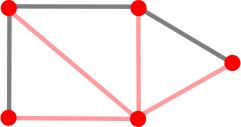
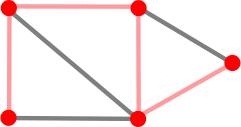
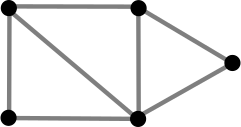
Proposition 2.1.7. If and are spanning trees of a connected graph , and , then there is an edge such that is a spanning tree of .
Spanning Trees
Suppose is a tree and is a simple graph. What must be true about and to ensure that is a subgraph of .
If has one vertex adjacent to all of the others, then is called a star.

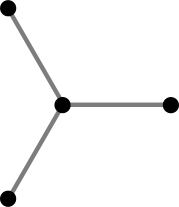
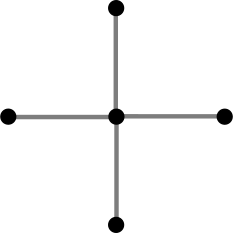
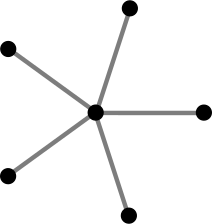
Clearly, is a subgraph of if and only if has a vertex of degree , that is, .
Is is sufficient? No! is not a subgraph of the star with vertices.
What about ?
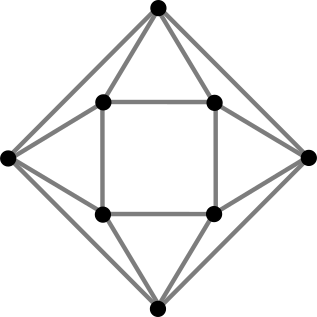
Not a subgraph of
Subgraph of
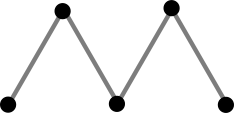
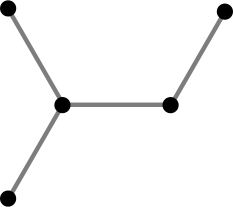
What about the other trees with 4 edges?
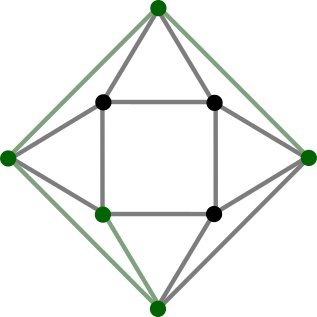
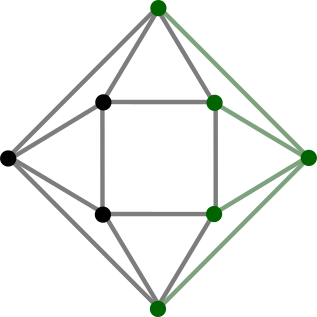
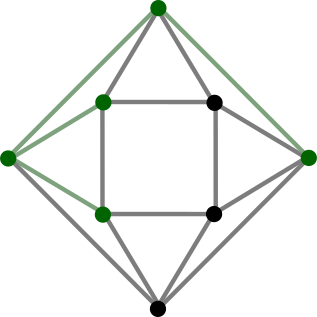
Proposition 2.1.8. If is a tree with edges, and is a simple graph with , then is a subgraph of
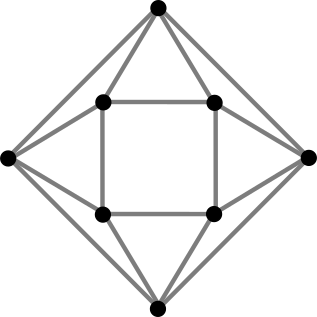
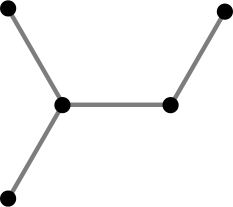
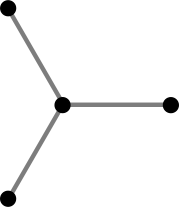
Call its neighbor
Pick a leaf
Delete
Find in
Since
and
adj. to , but not in
Proposition 2.1.8. If is a tree with edges, and is a simple graph with , then is a subgraph of
Proof outline. Use induction on :
- For we have a tree with no edges, that is, an isolated vertex.
- Clearly an isolated vertex is a subgraph of any graph.
Suppose that for some the claim holds for trees with edges. Let be a graph with , and let be a tree with edges.
- Let be any leaf in and let .
- Let be the neighbor of in
- is a tree with edges.
- By the inductive hypothesis is a subgraph of .
- Since , the vertex has at least neighbors in .
- Since has edges, has at most neighbors in .
- There exists a vertex such that
- Make by adding the edge between and to .
Distance in Graphs
Definition 2.1.9.
- If has a -path, then the distance from to , written or simply , is the length of the shortest -path.
- If there is no -path in , then .
- The diameter of is given by
- The eccentricity of a vertex is given by
- The radius of a graph is given by
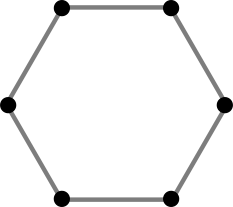
Example.
Theorem 2.1.11. Suppose is a simple graph. If , then .
Proof. Since , there are two nonadjacent vertices and with no common neighbor.
Hence, for either or .
Note that and are adjacent in . And any other vertex is adjacent to either or in .
Therefore, for any two vertices, there is a path of lenghth at most in .
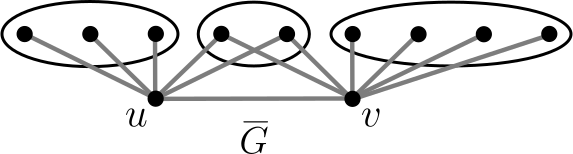
Definition 2.1.12. The center of a graph is the subgraph induced by the vertices of minimum eccentricity.
Theorem 2.1.13. The center of a tree is either a vertex () or an edge ().
the center
Proof. We use induction on the number of vertices in a tree .
Inductive step:
- Suppose and the theorem is true for trees with vertices.
- Let be the graph obtained by deleting every leaf of .
- For the farthest vertex was a leaf, thus .
- Leaves of are not in the center of .
- The center of is the same as the center of .
- By the inductive hypothesis the center of is a vertex or an edge.
Basis step: , then or and the center is .
If we want a graph with all vertices close together, then we want a small diameter.
On the other hand, if we want a graph where most vertices are close together, then we might want the average distsnce between points to be small. That is, if is a graph with vertices, then we want
to be small. Equivalently, we want the Wiener index:
to be small.
The next theorem gives us the extremes of this index among all trees.
Theorem 2.1.14. For trees with vertices, the Wiener index is minimized by stars and maximized by paths, both uniquely. That is, if is a tree with vertices, then
moreover, if then and if then .
Optimization and Trees
Weighted graphs
A weighted graph is a graph together with a nonnegative number for each edge.
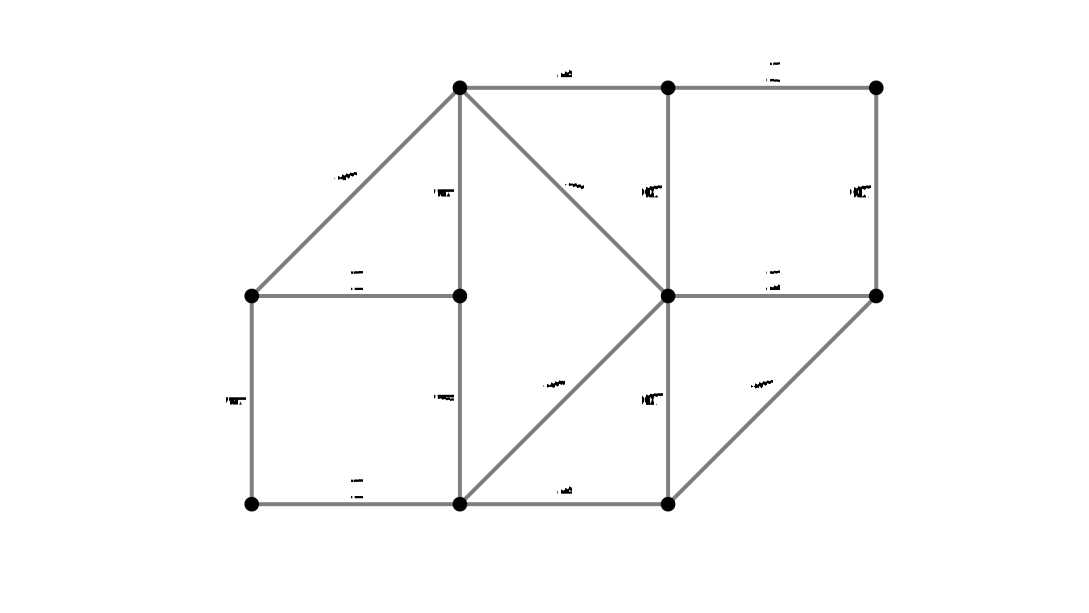
Our goals:
Find a minimum spanning tree: a spanning tree such that the sum of the edge weights is minimal
Find shortest path from to :
The path from to such that the sum of the edge weights is minimal.
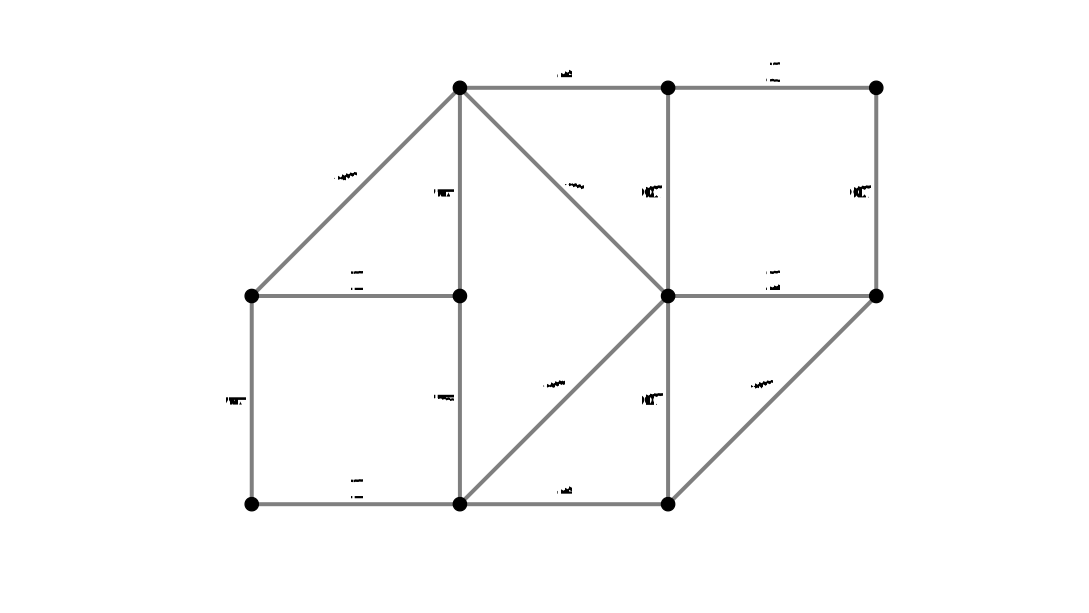
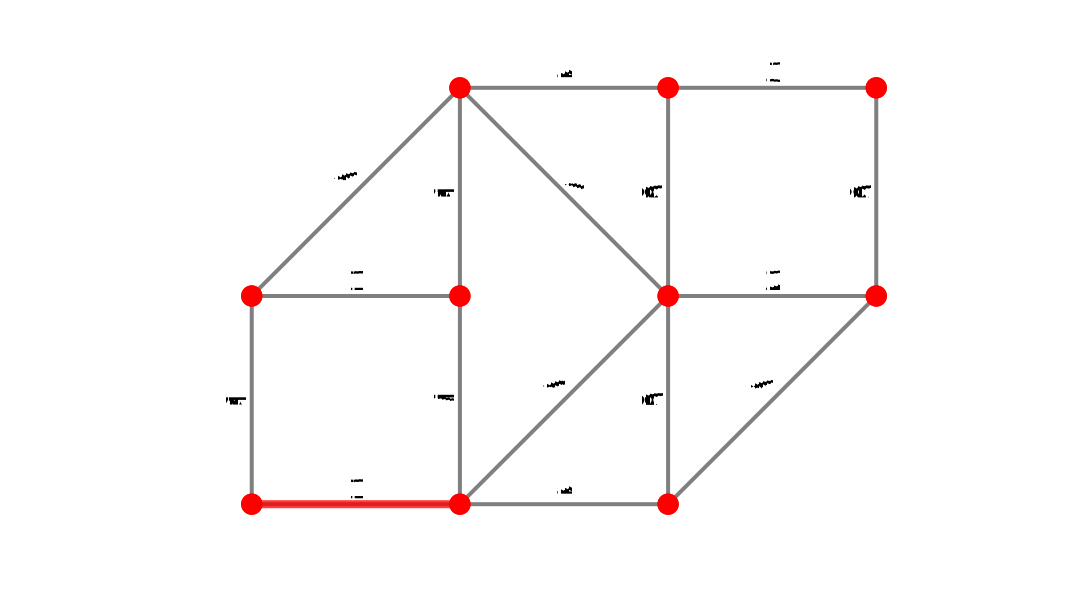
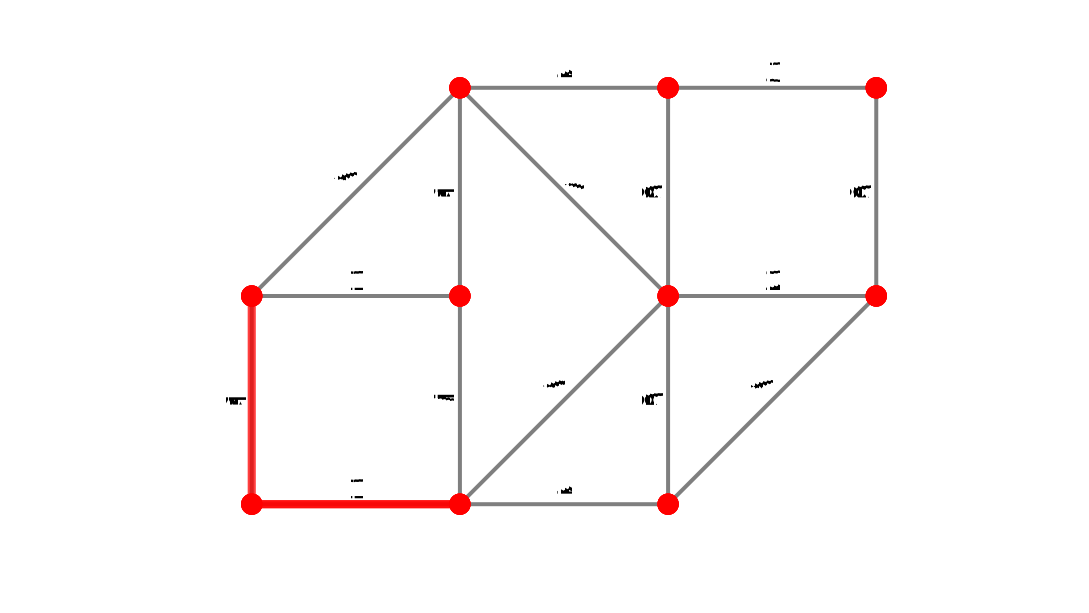
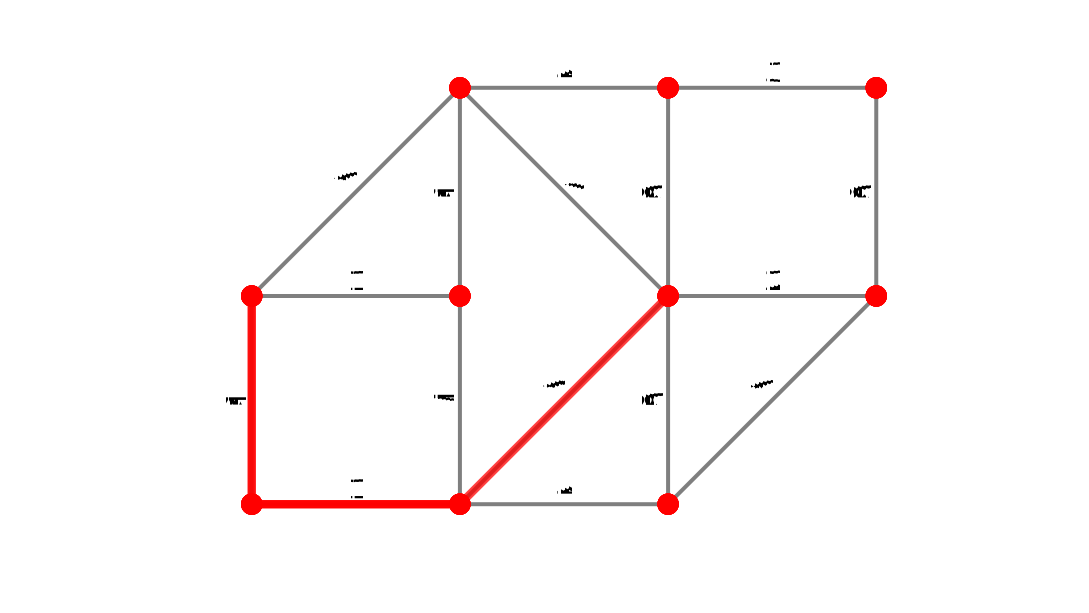
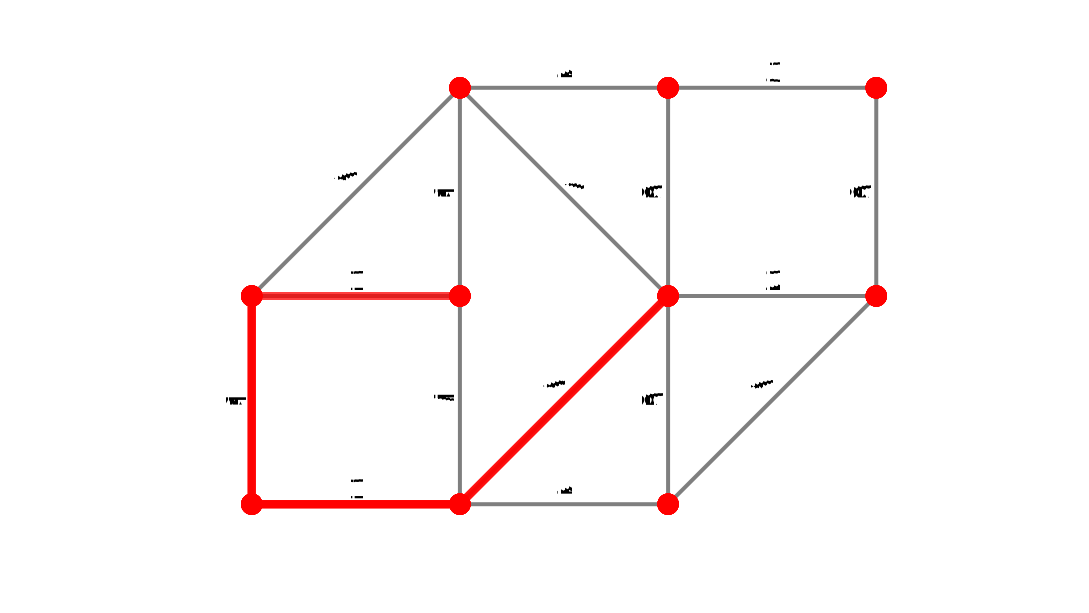
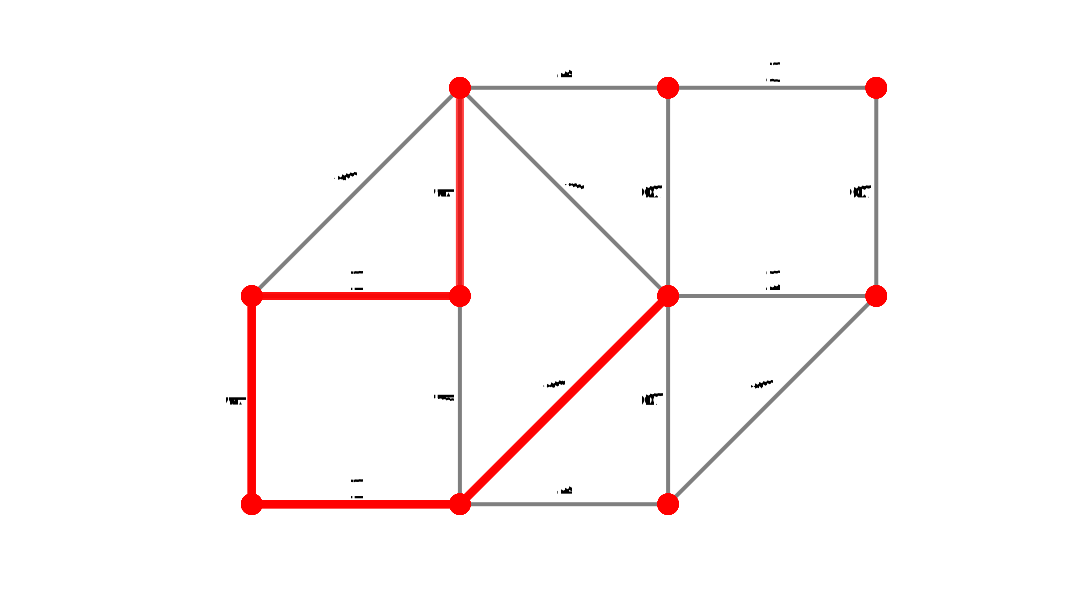
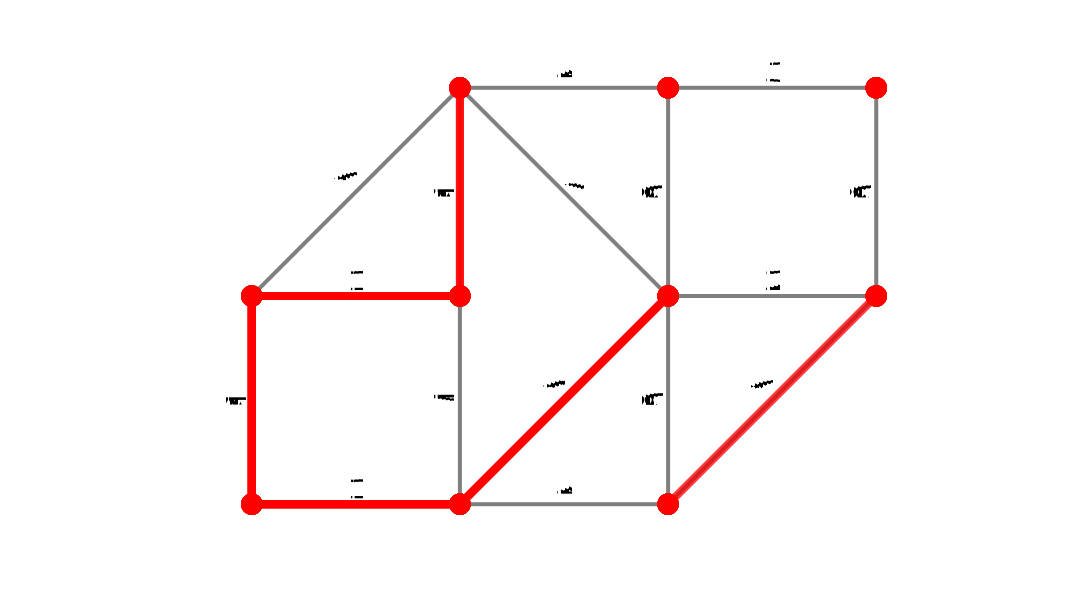
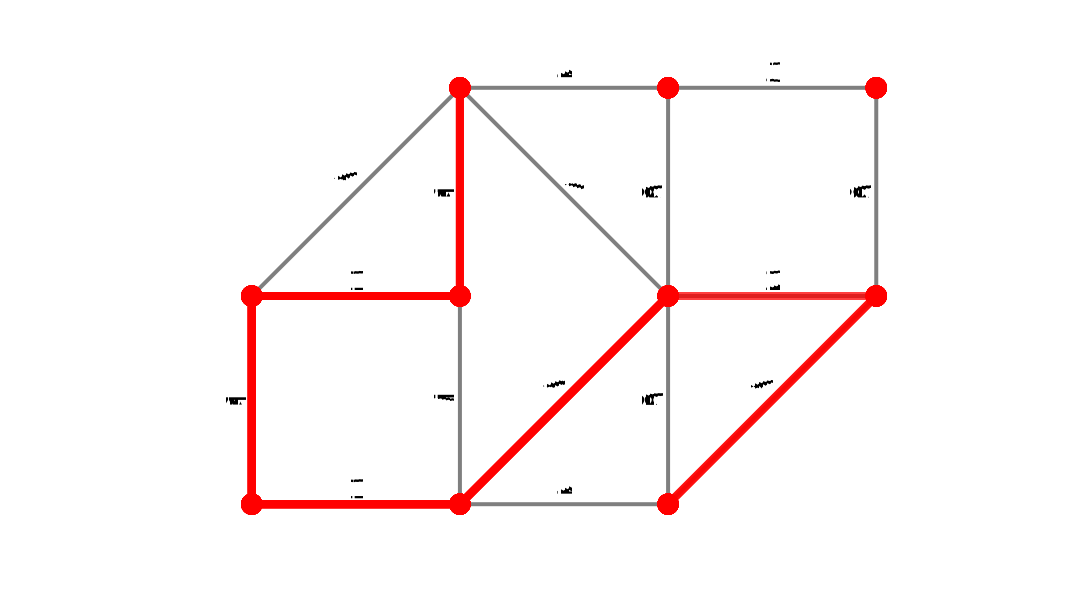
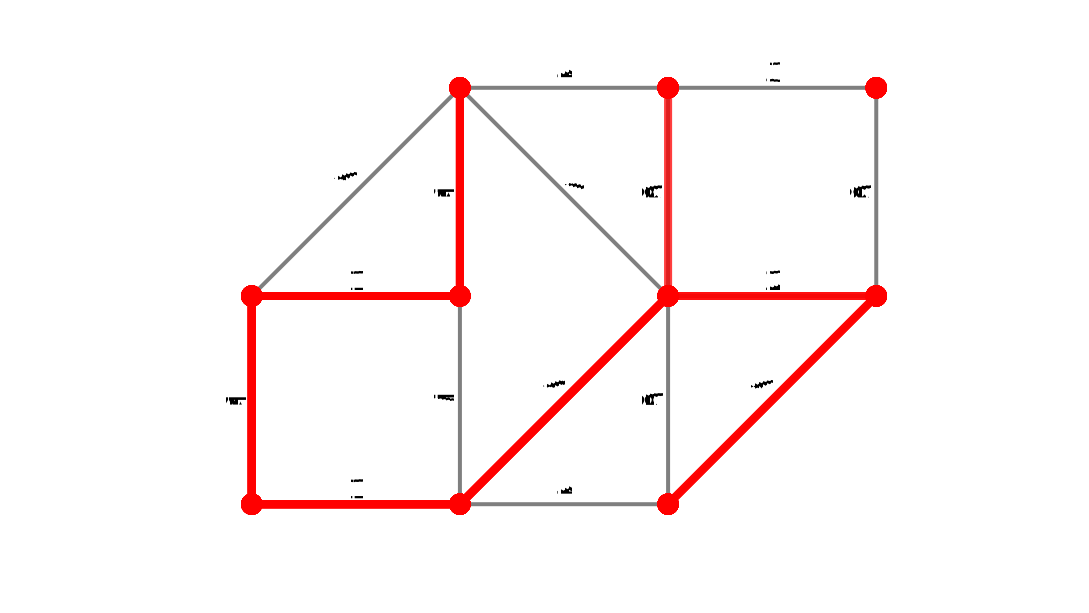
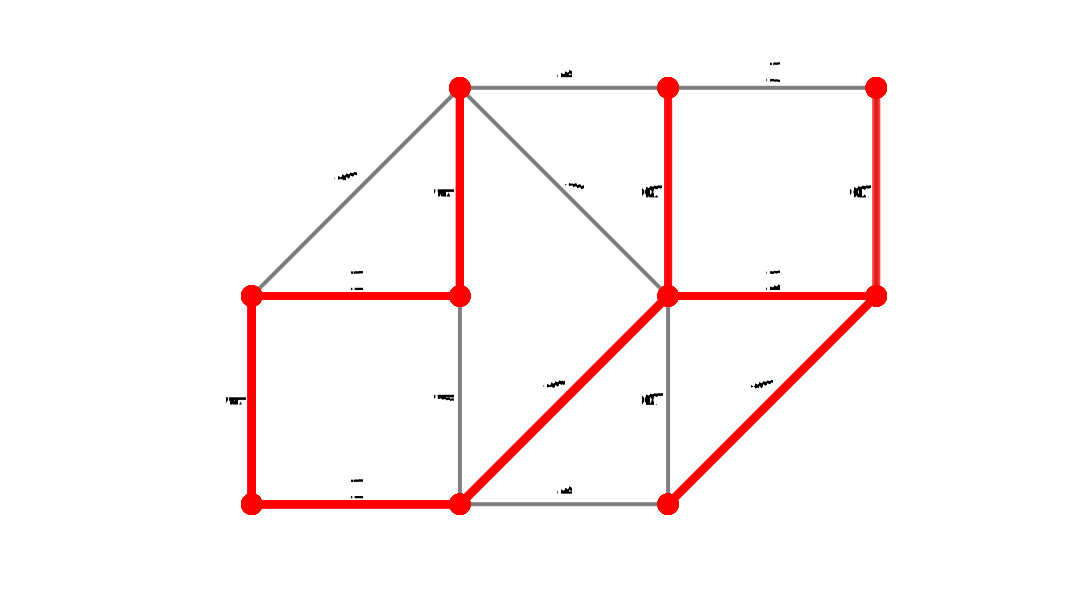
Kruskal's Algorithm
Define the subgraph with and .
While it's possible
Add an edge to from that does not create a cycle in , and has minimal weight among these.
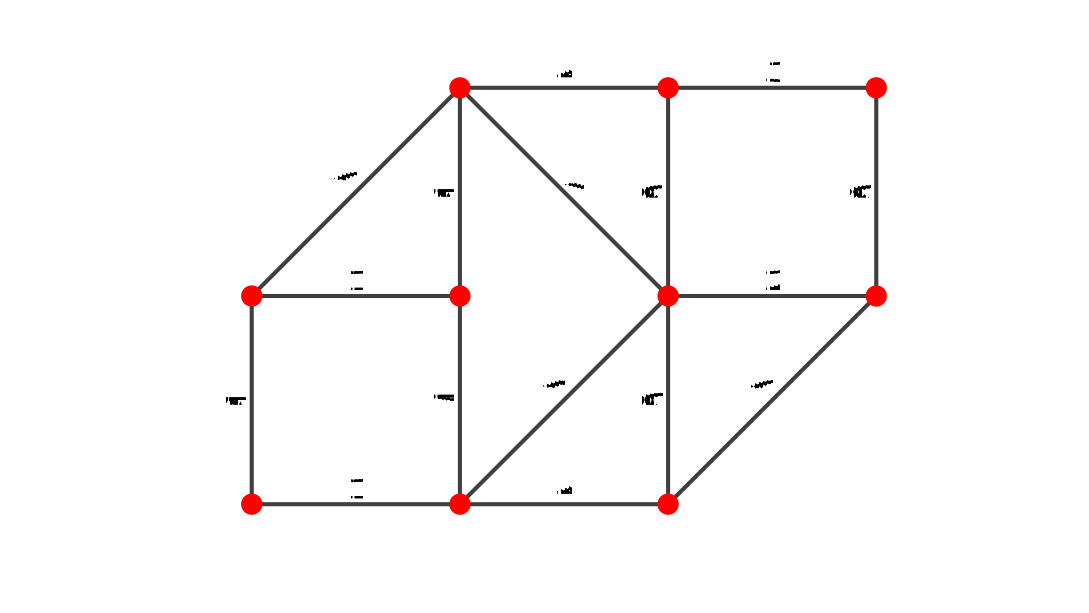
Suppose is a connected, weighted graph with vertices:
End when no such edge exists
Theorem 2.3.3. In a connected weighted graph , Kruskal's Algorithm constructs a minimum-weight spanning tree.
- By construction, the graph is acyclic at each step, and thus the final graph is acyclic.
- If has component, then a path in between two components of includes an edge with endpoints in different components.
- The algorithm terminated, so such an edge does not exist.
Suppose is a spanning tree of minimum weight. If then we're done.
- Let denote the first edge that we added to that is not in .
- (Proposition 2.1.7)There exists such that is a spanning tree.
- Since (when performing the algorithm) we chose and not we know that the weight of is at most the weight of
- Thus the weight of is at most the weight of .
- is minimum-weight, and agrees with for one more step in the algorithm.
- Repeat to find a minimum-weight tree that agrees with .
Proof. First, we see that the output, which we call , is a spanning tree
Dijkstra's Algorithm
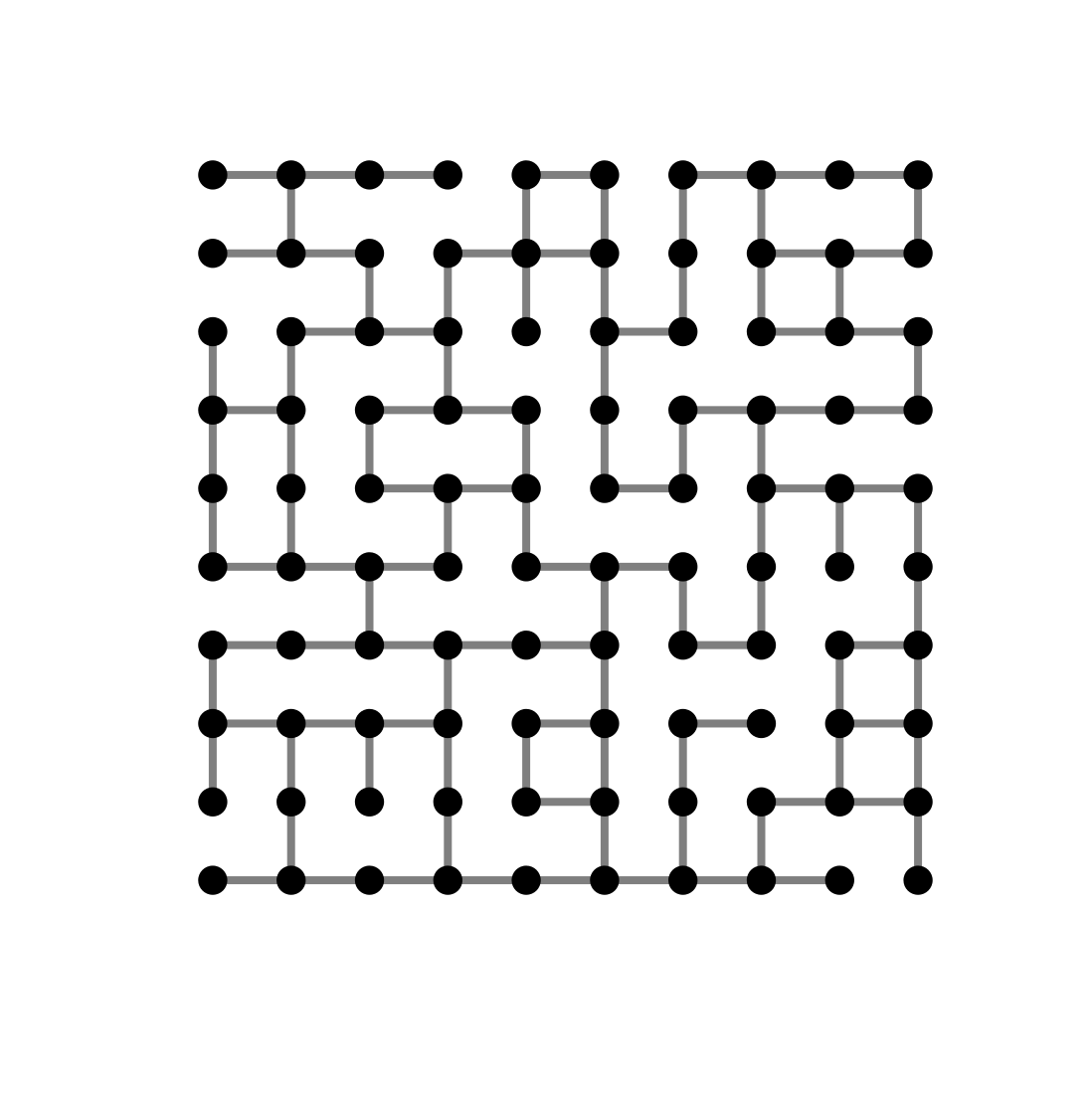
What is the shortest path from vertex to vertex ?
Start with a list of distances for and for the rest.
- Pick unvisited vertex w/ smallest distance (currently)
- For all neighbors update distance to neighbors, if shorter

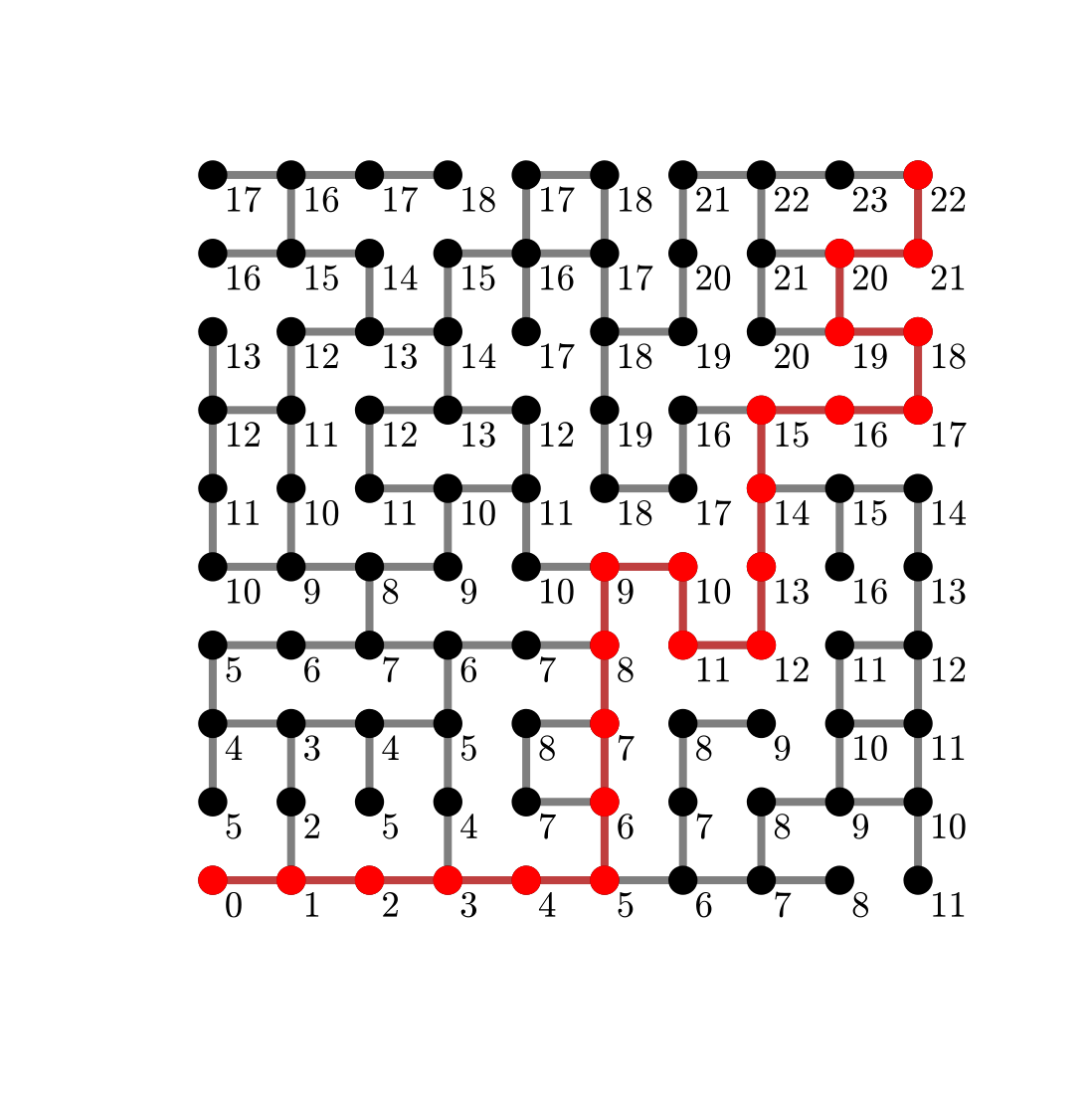
Dijkstra's Algorithm
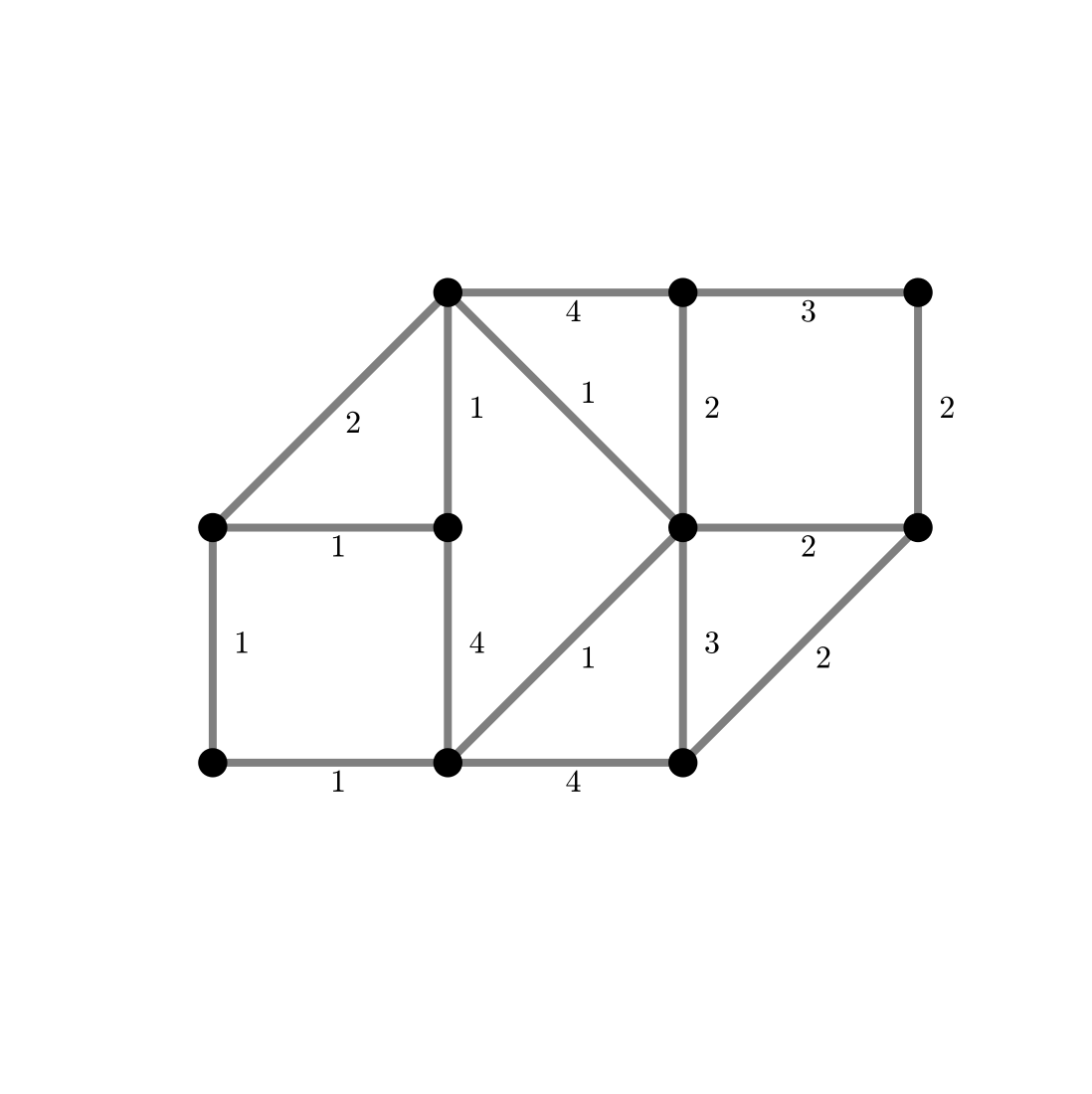
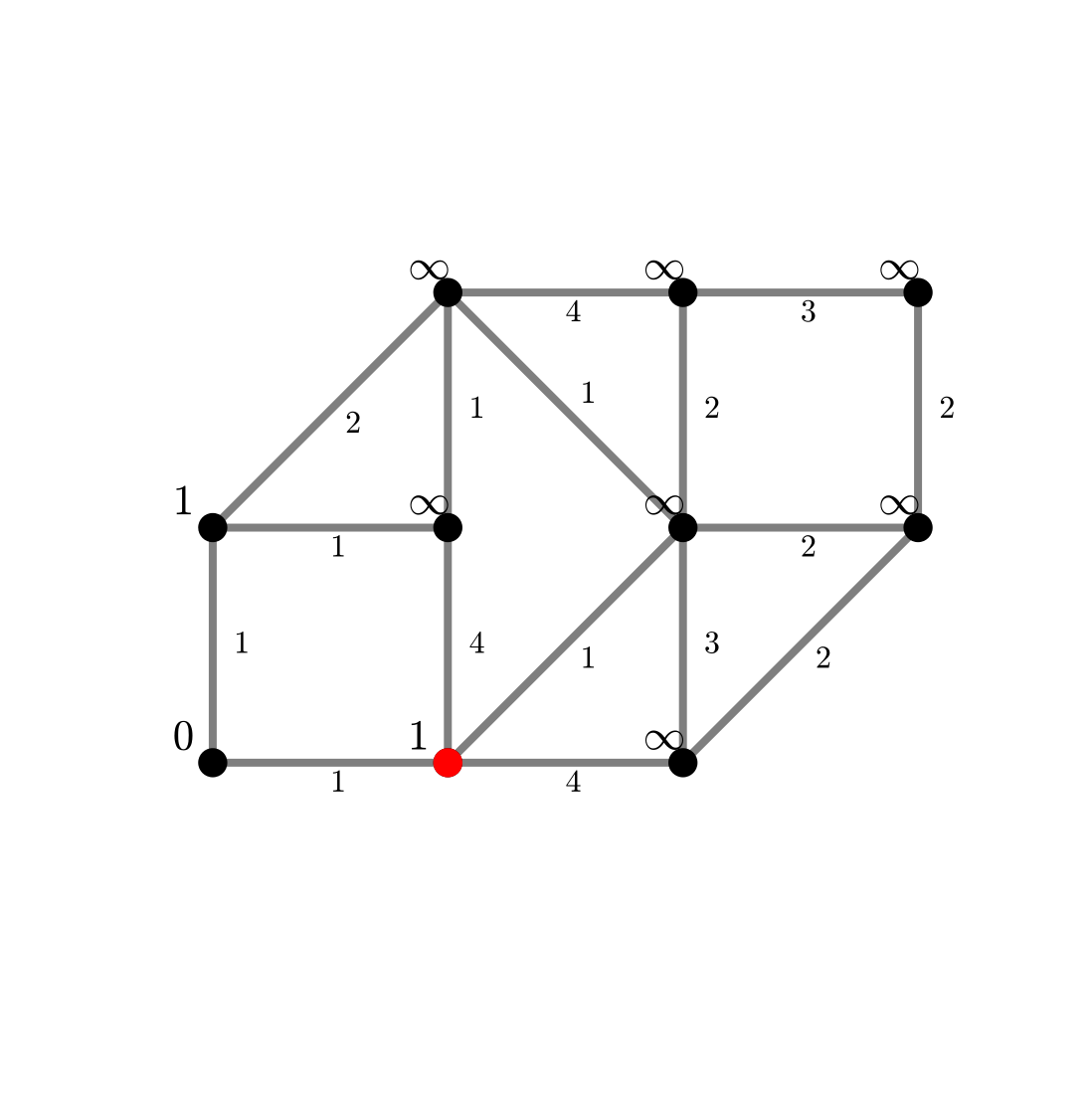
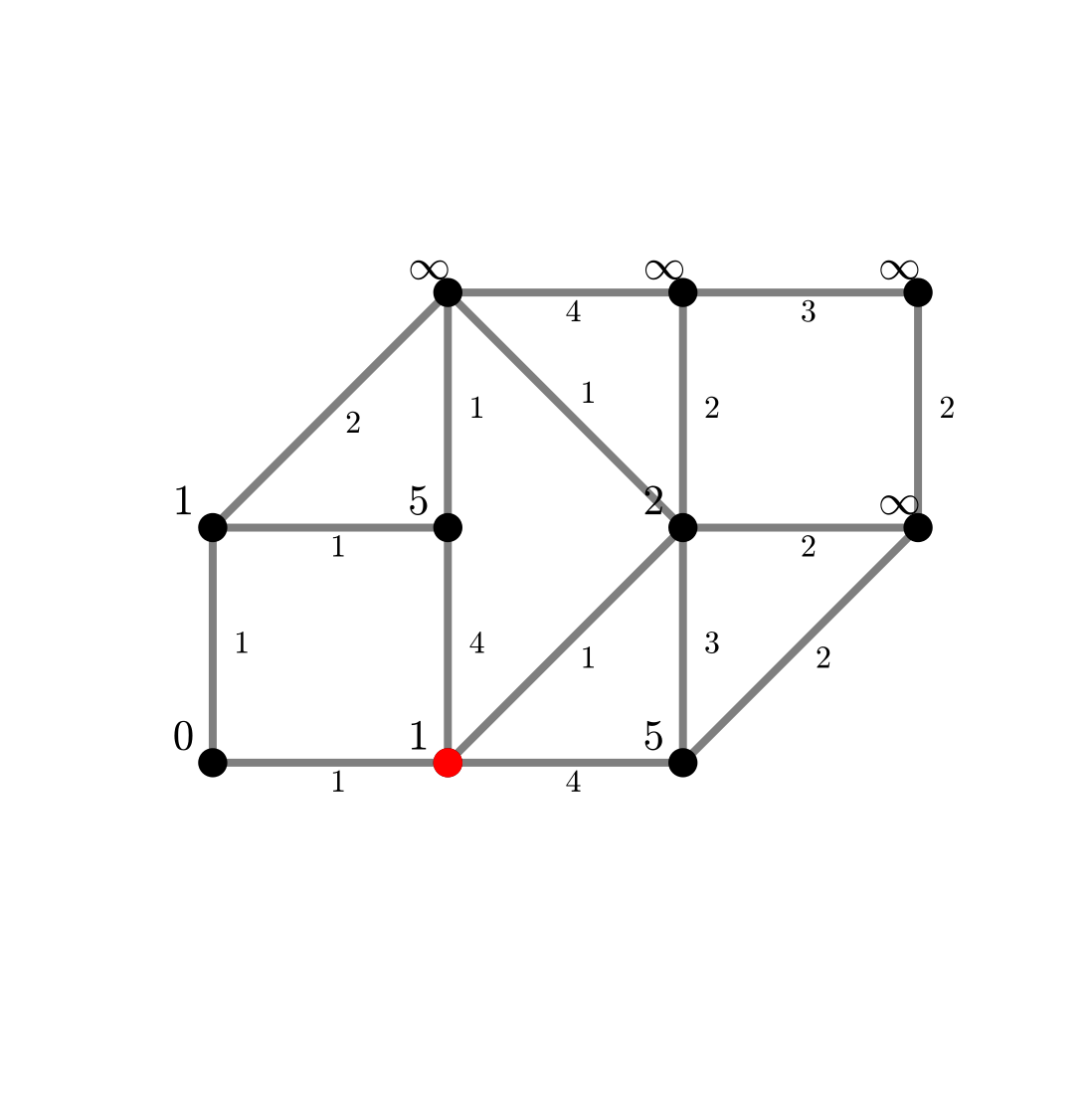
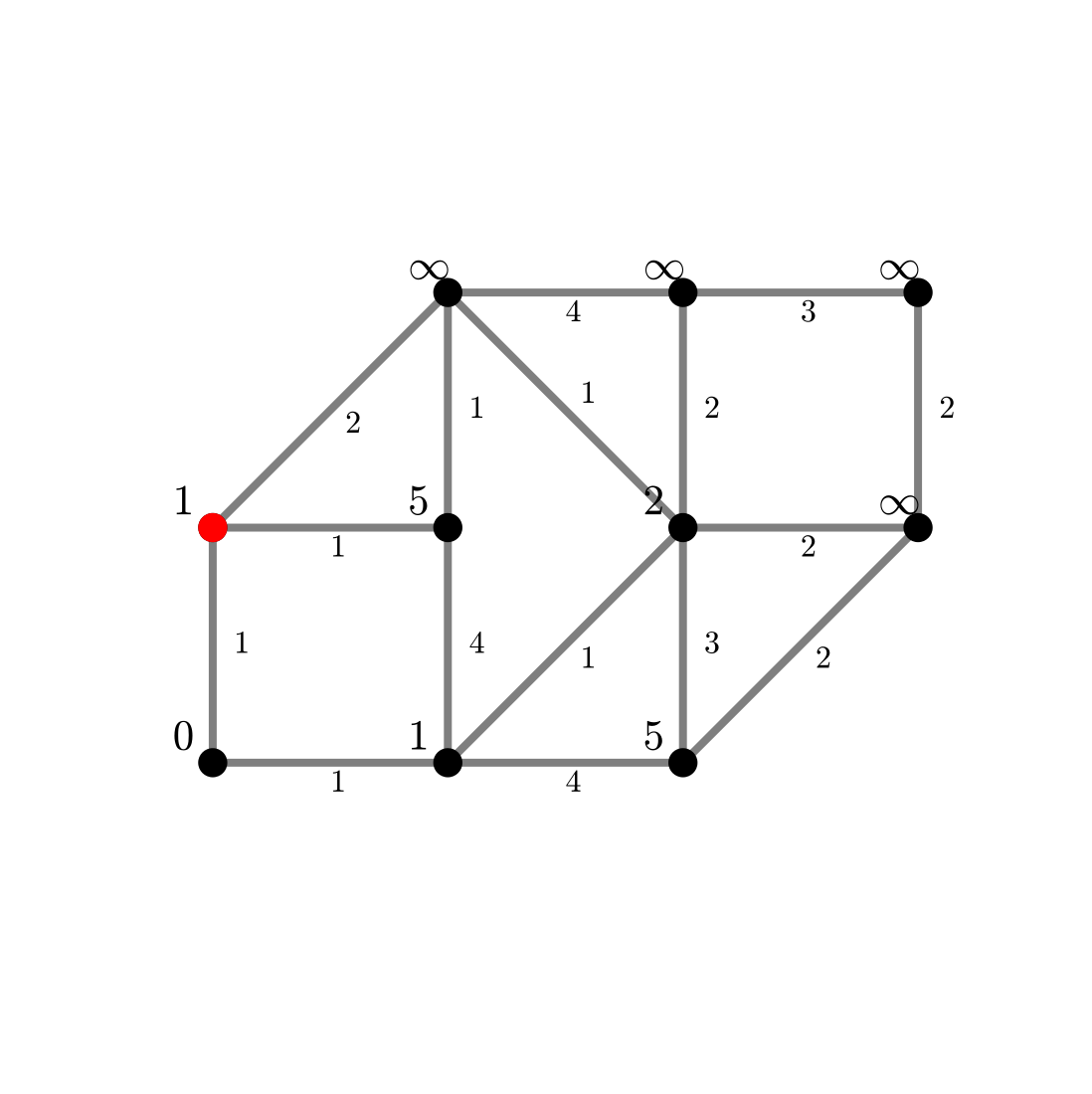
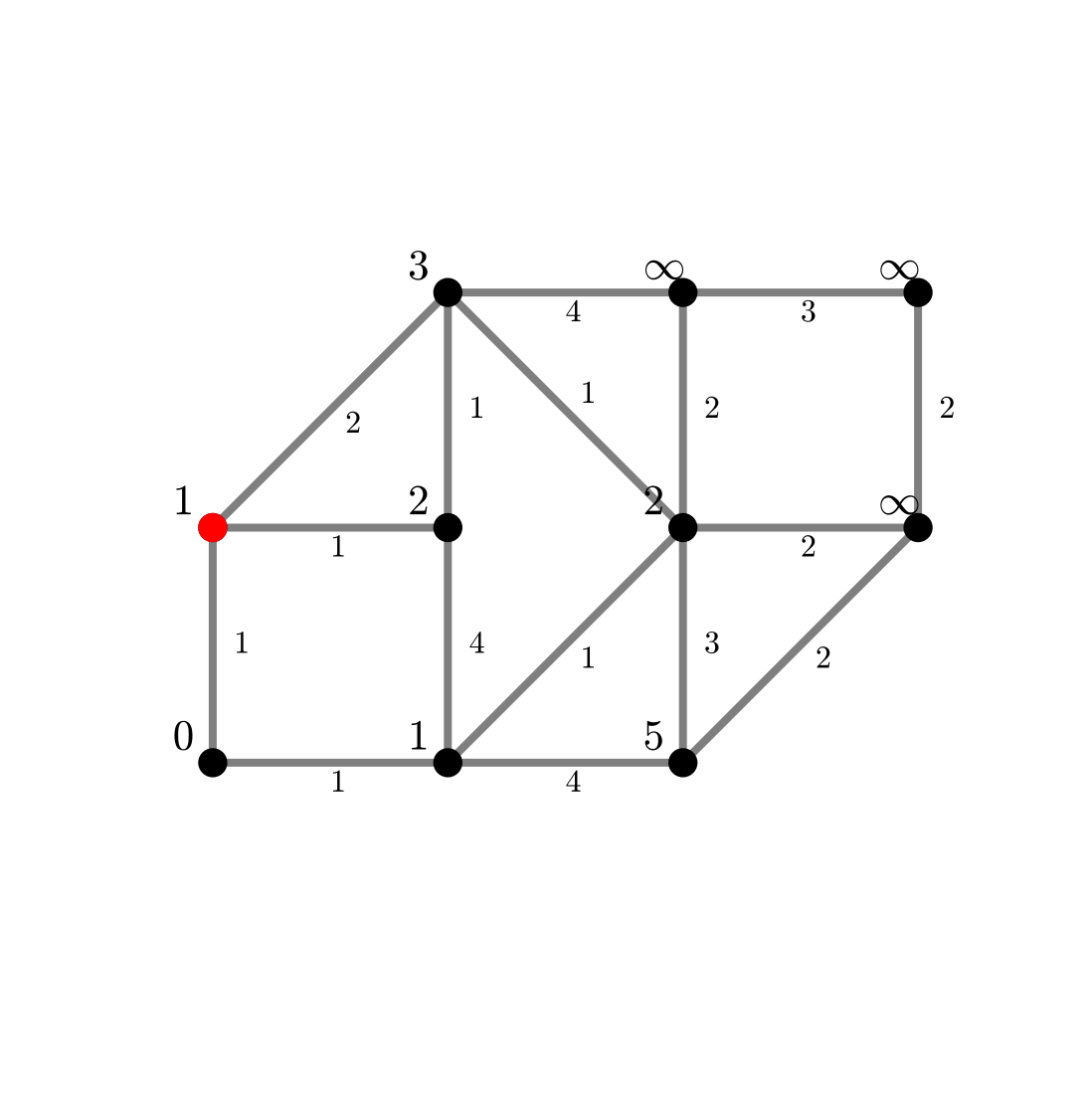
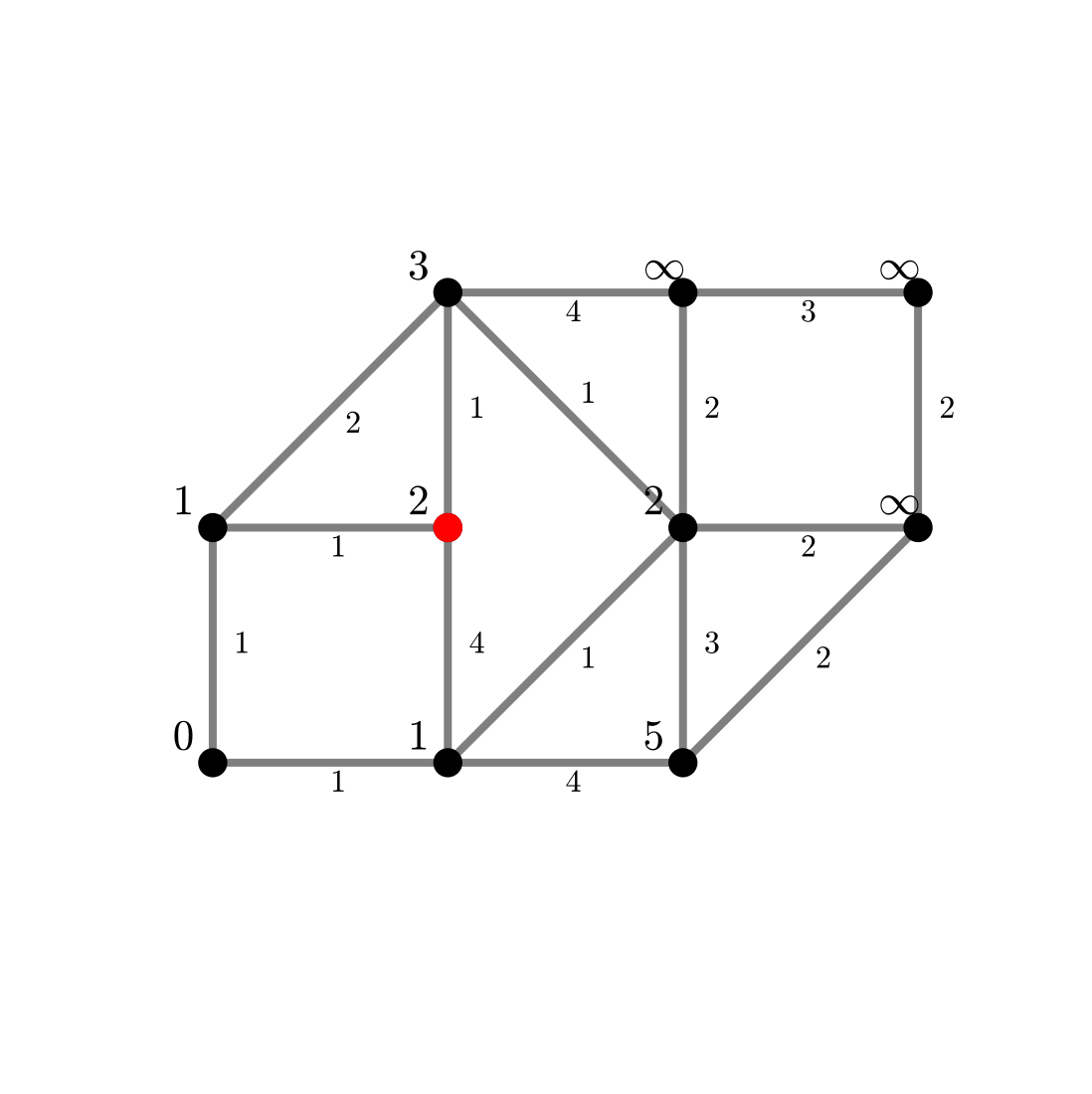
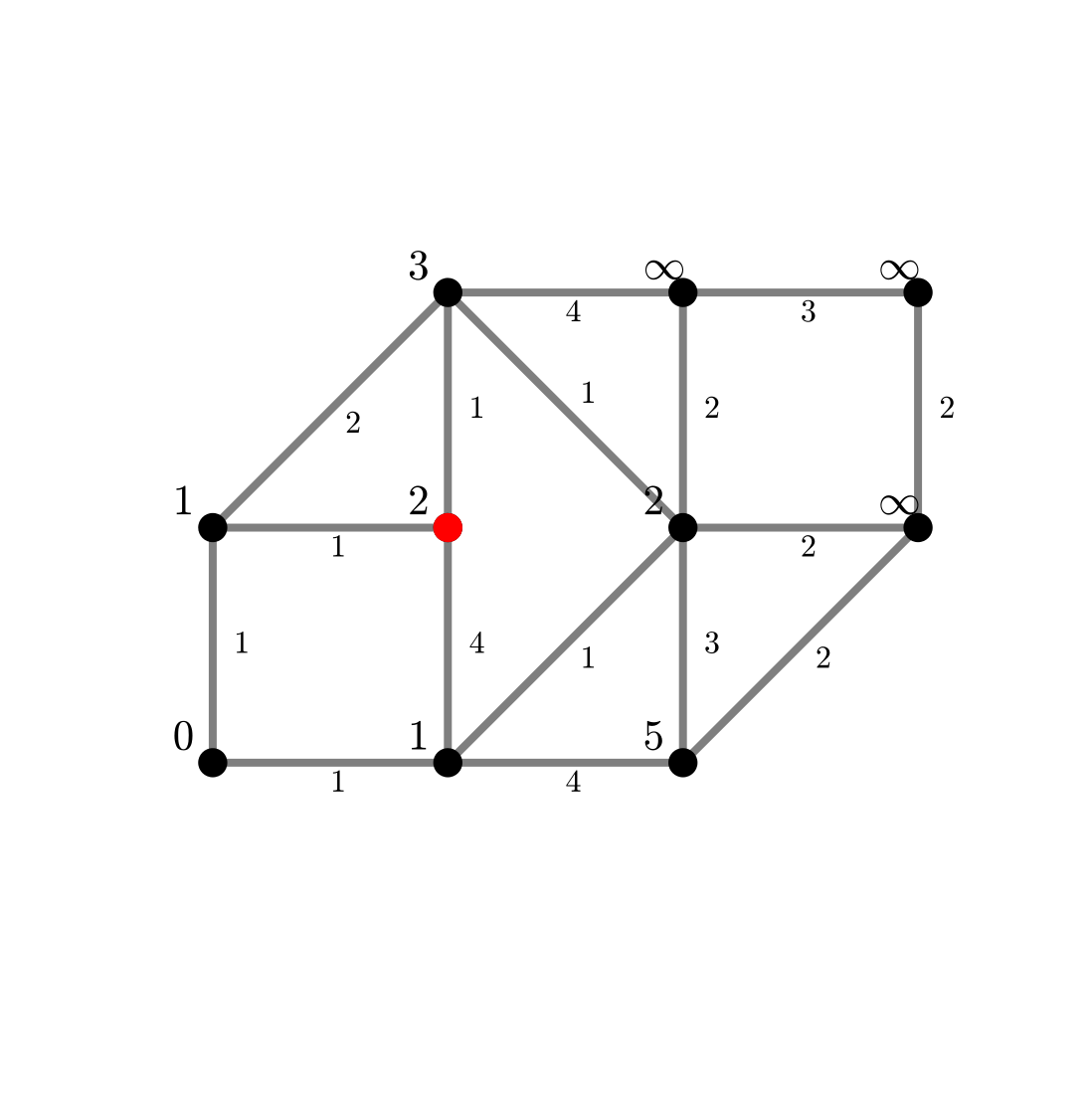
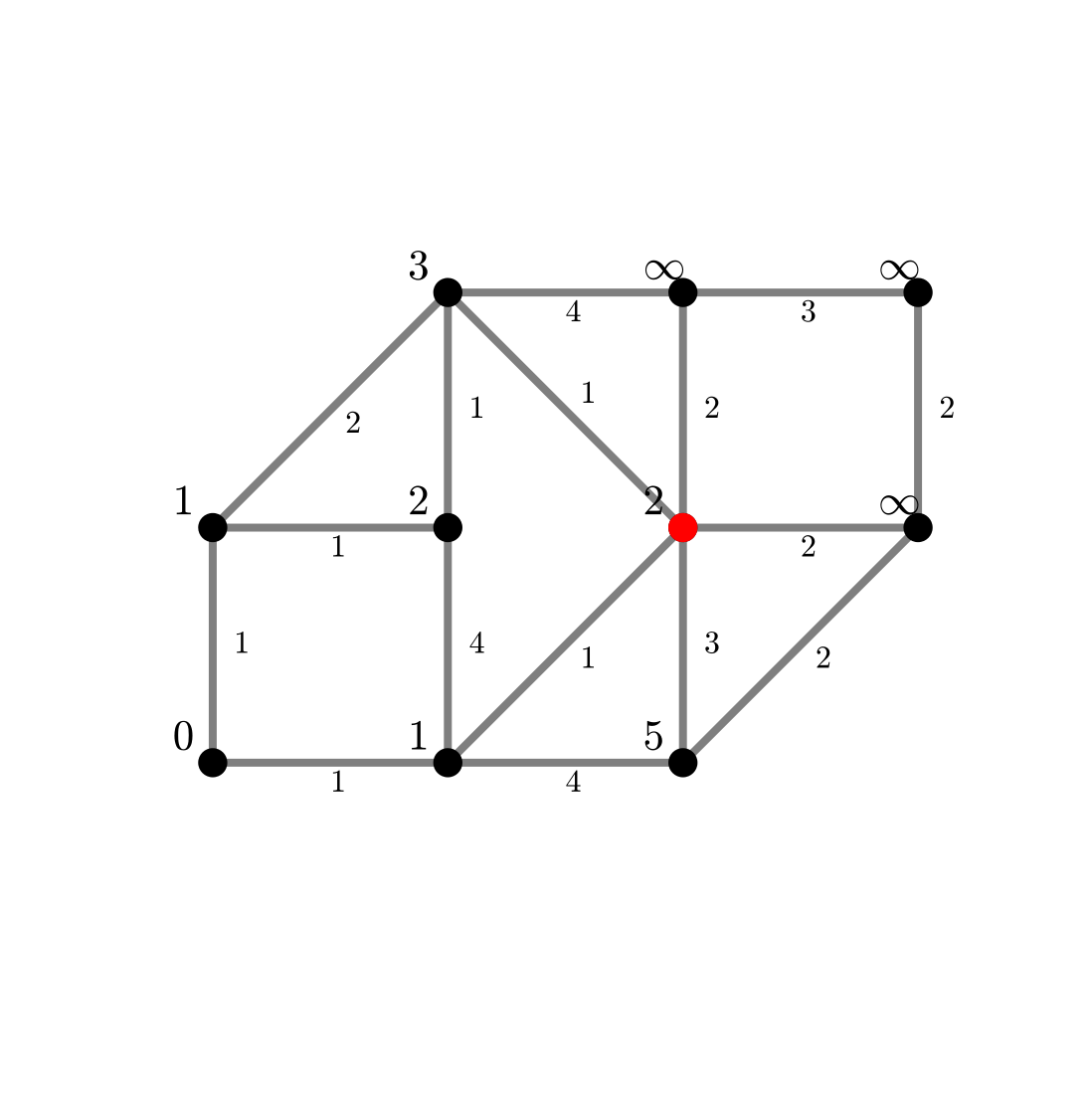
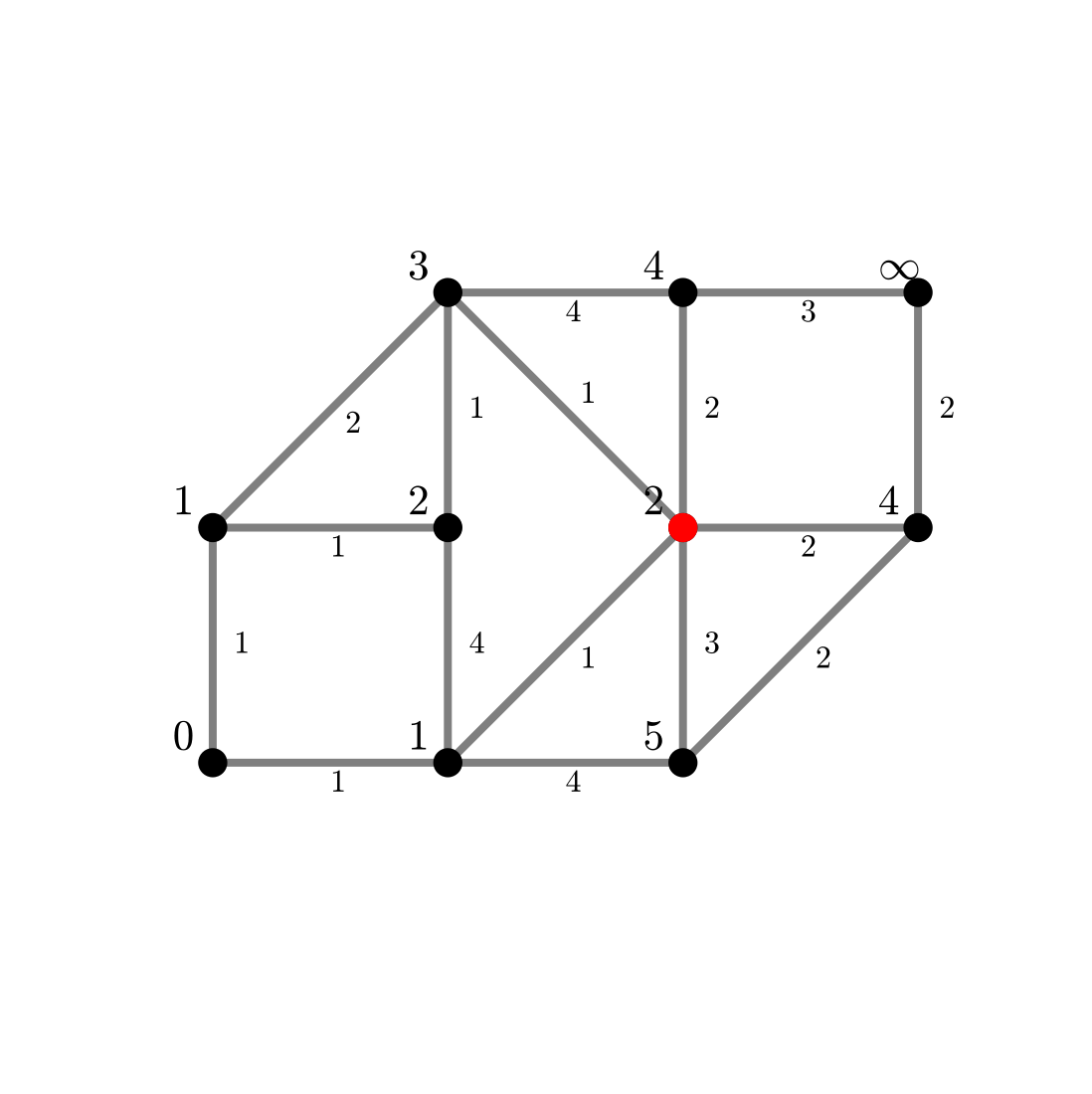
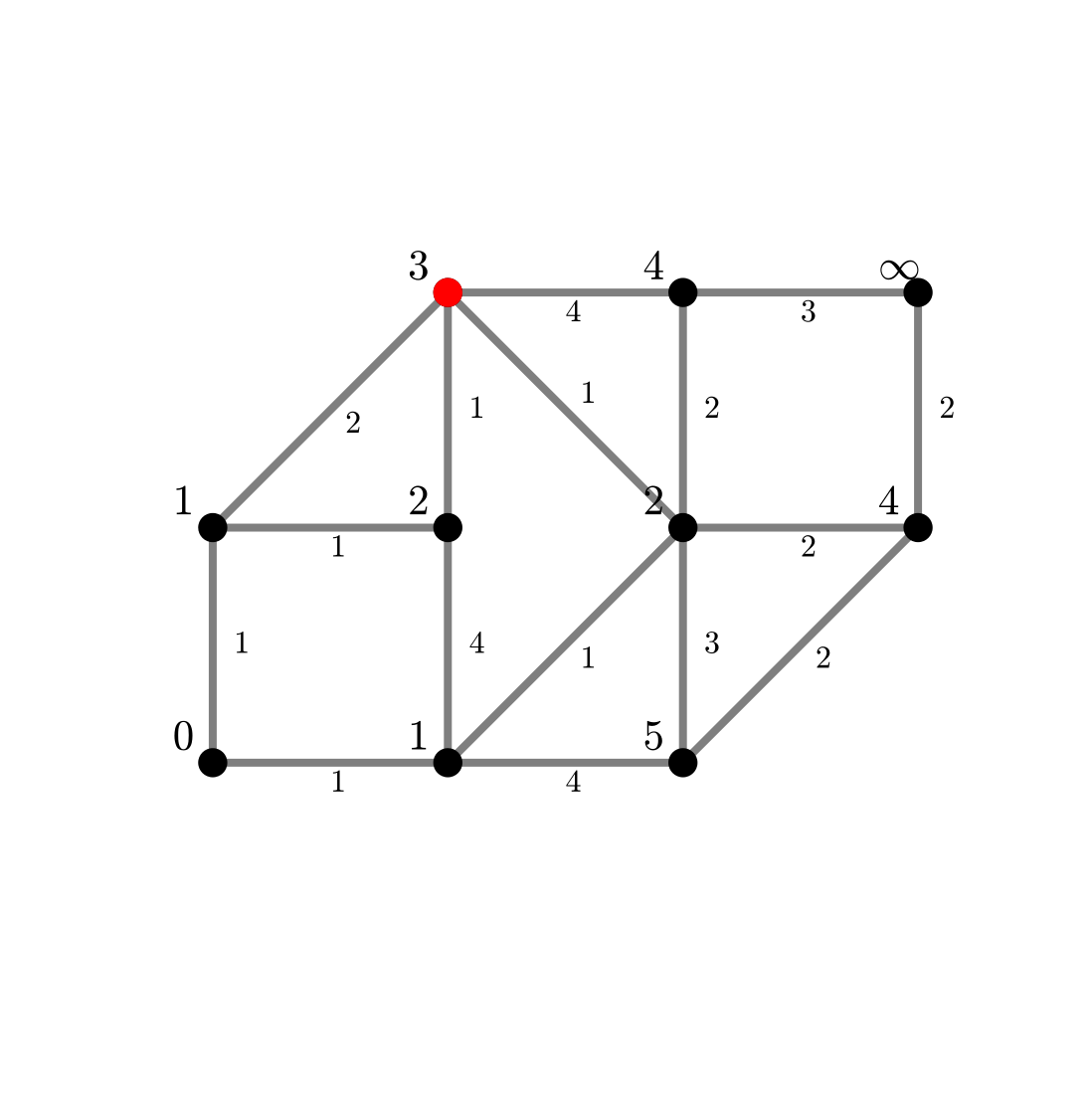
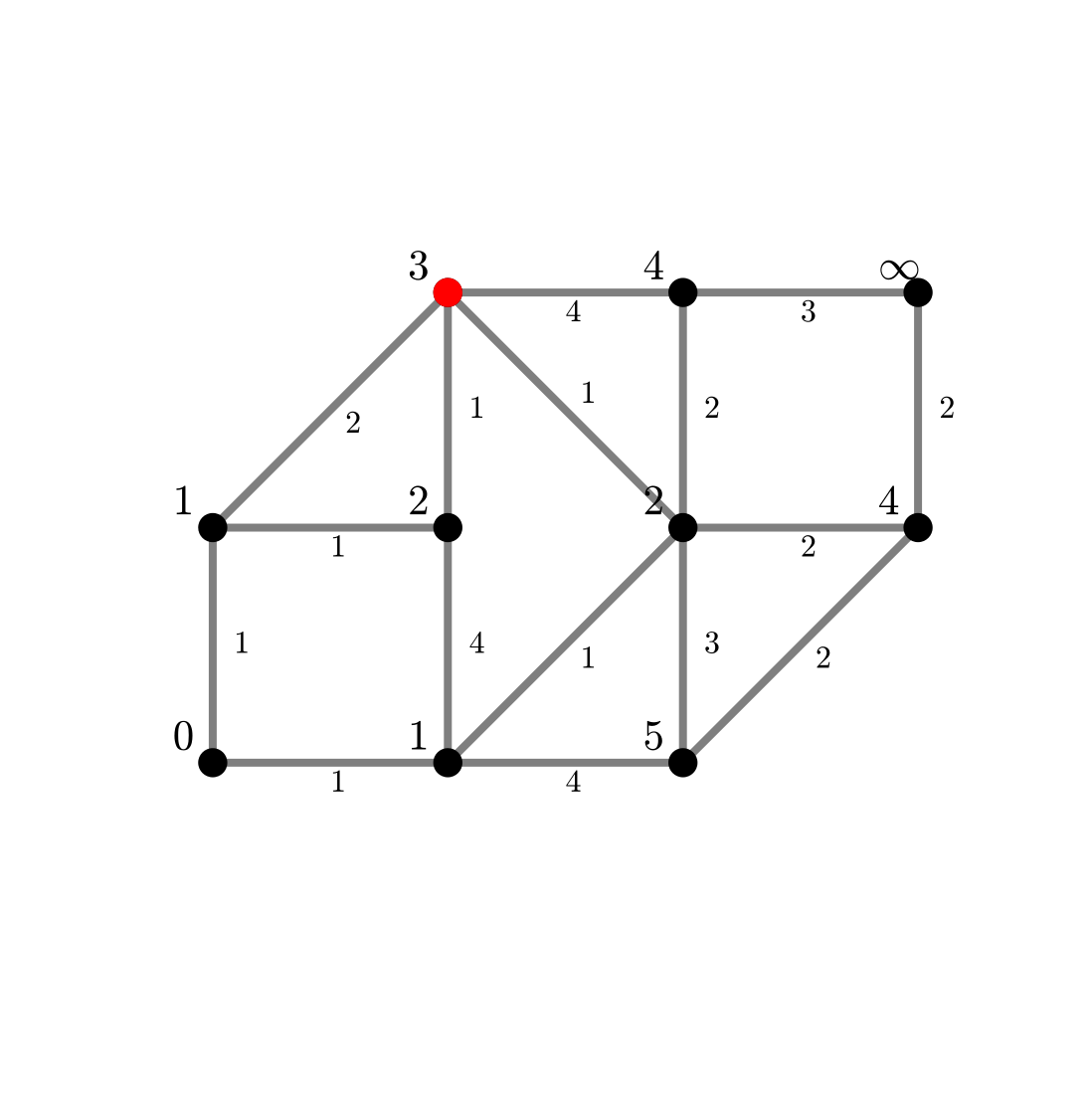
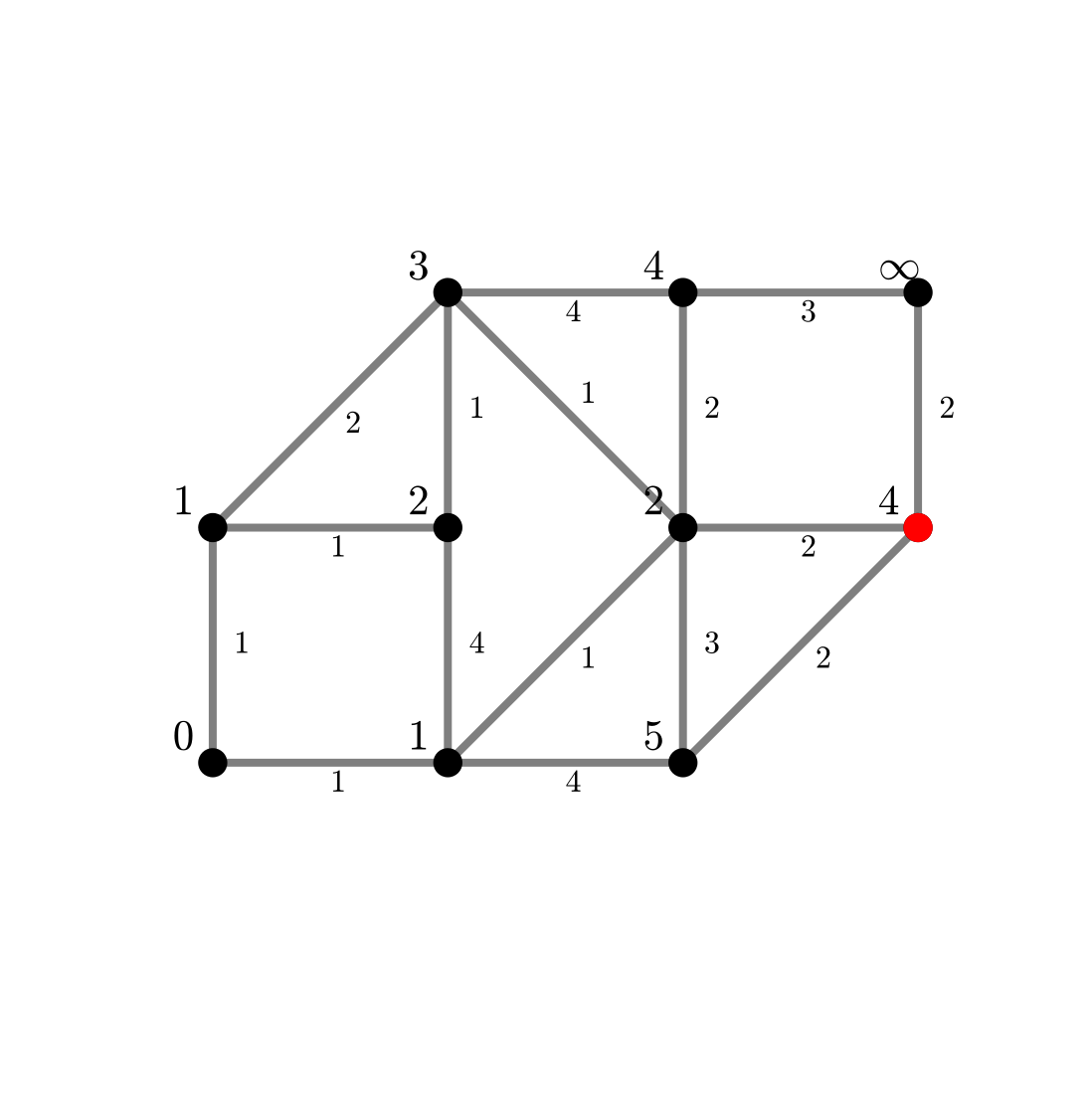
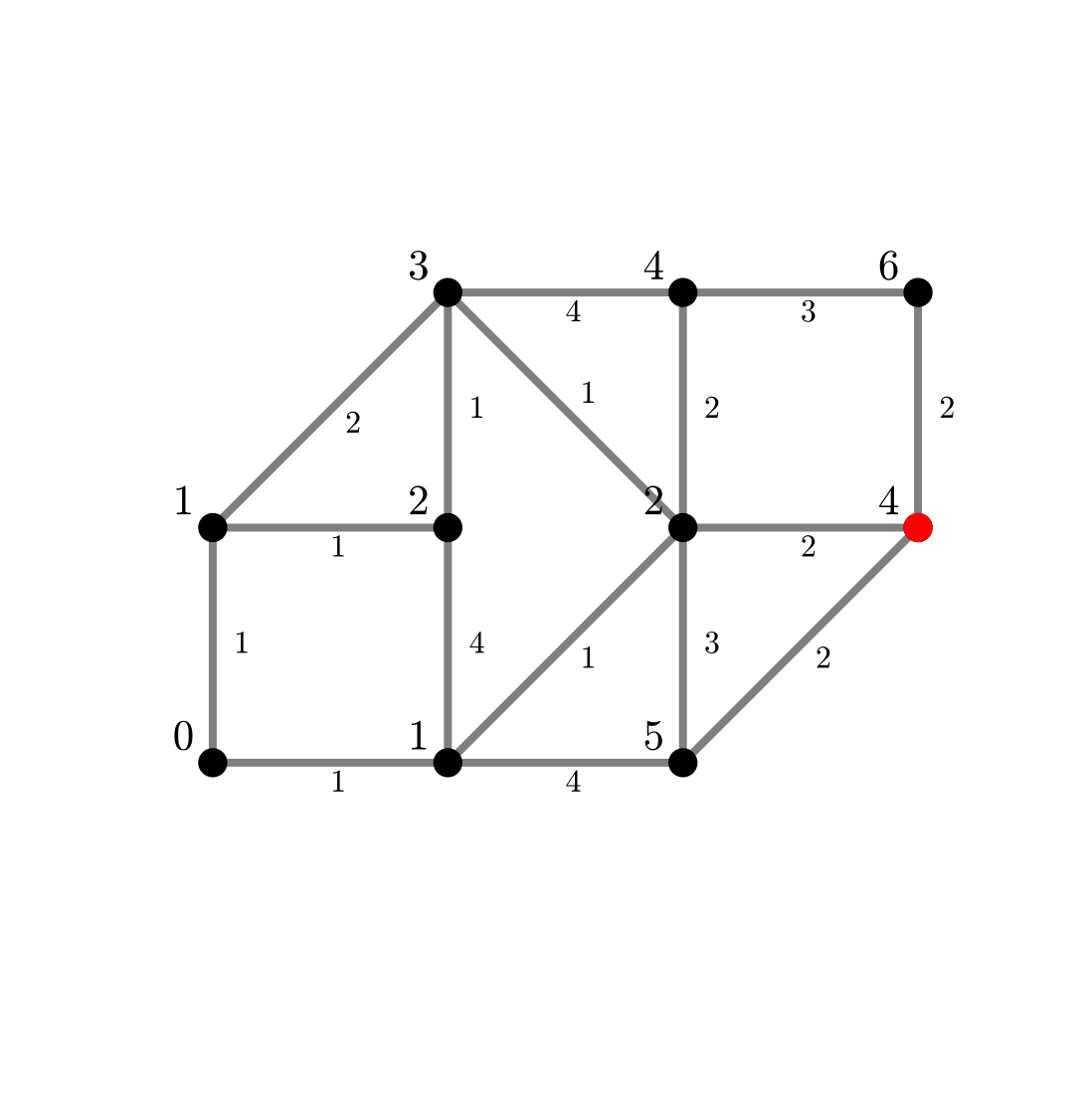
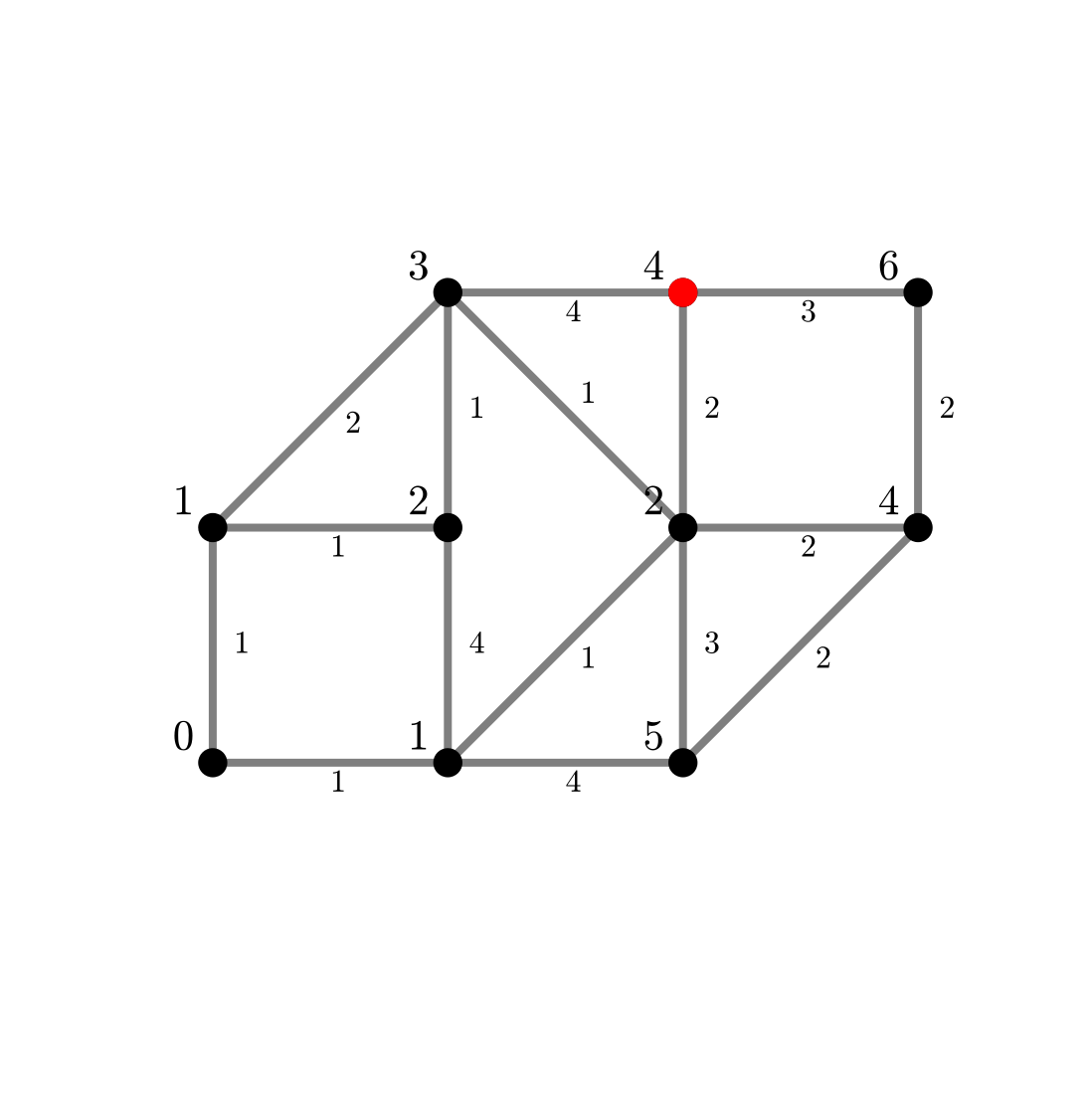
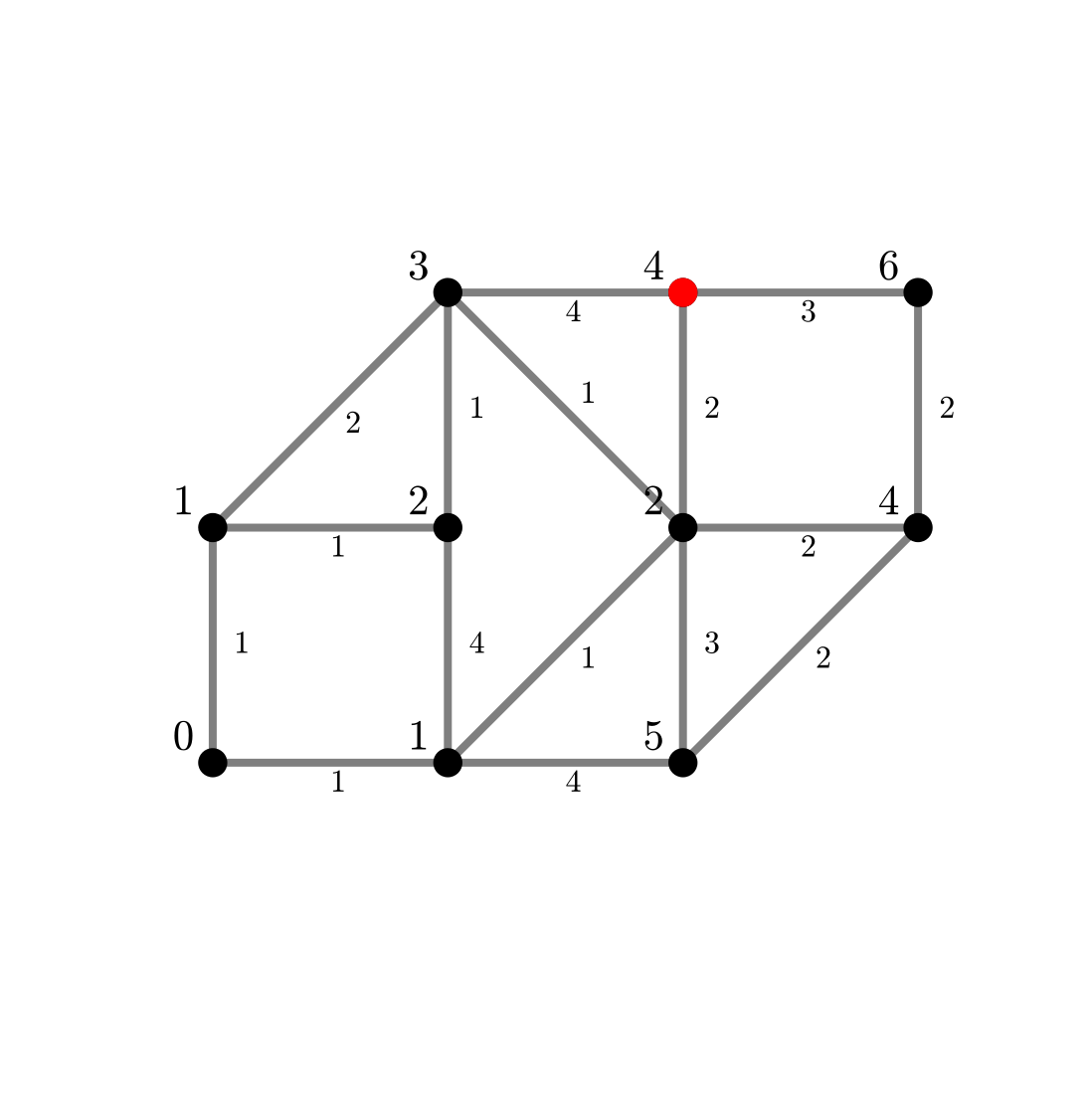
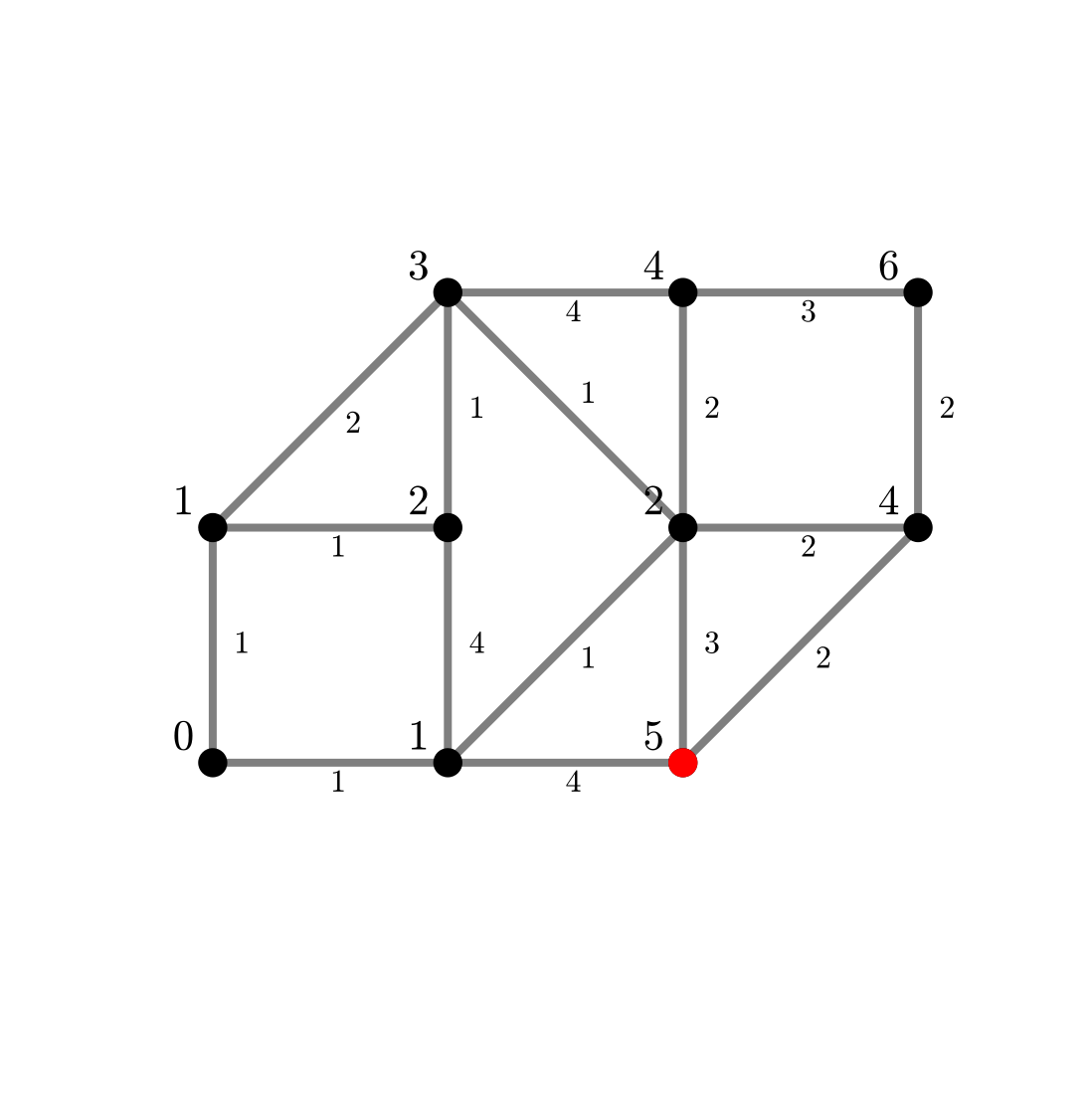
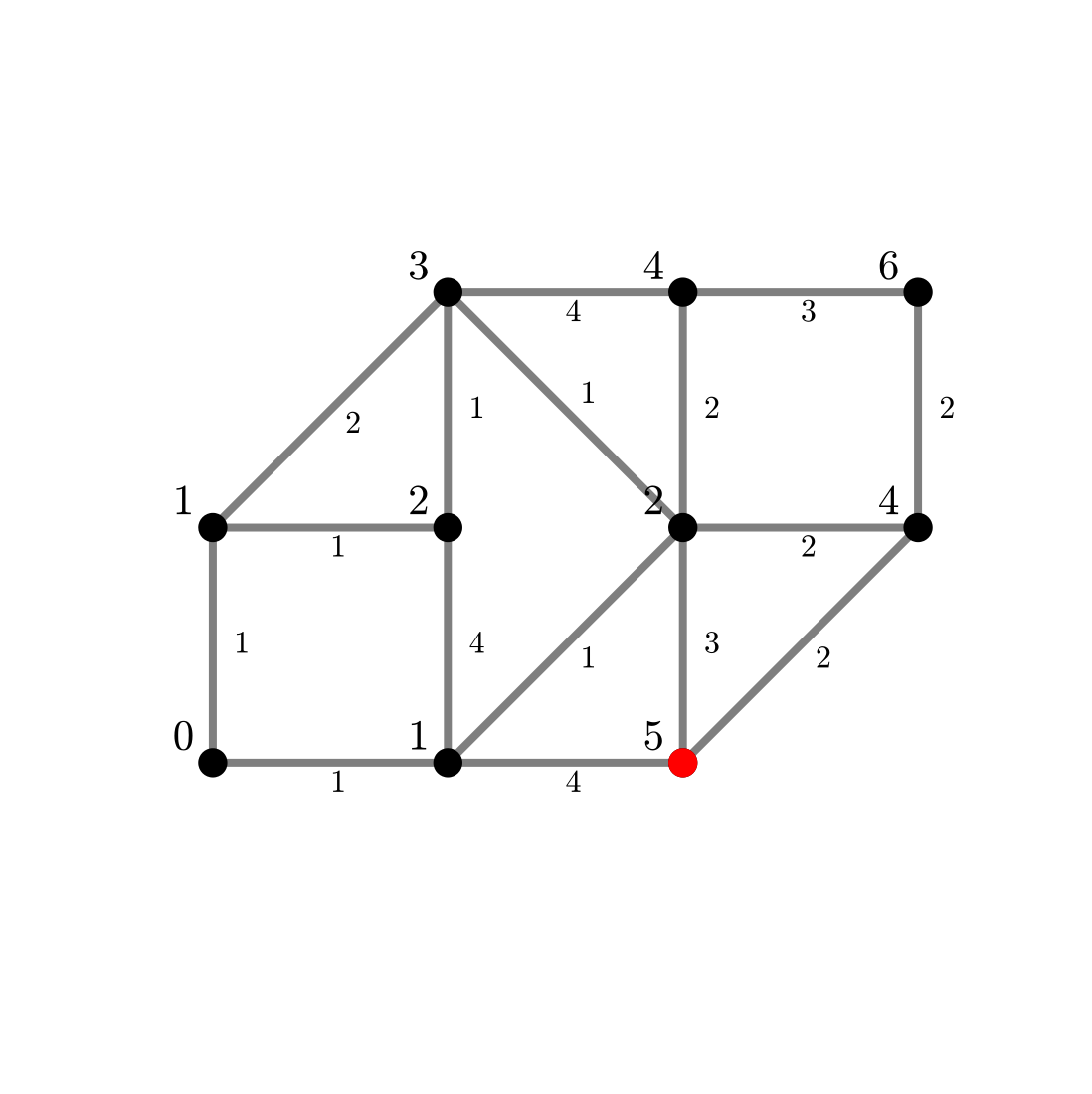
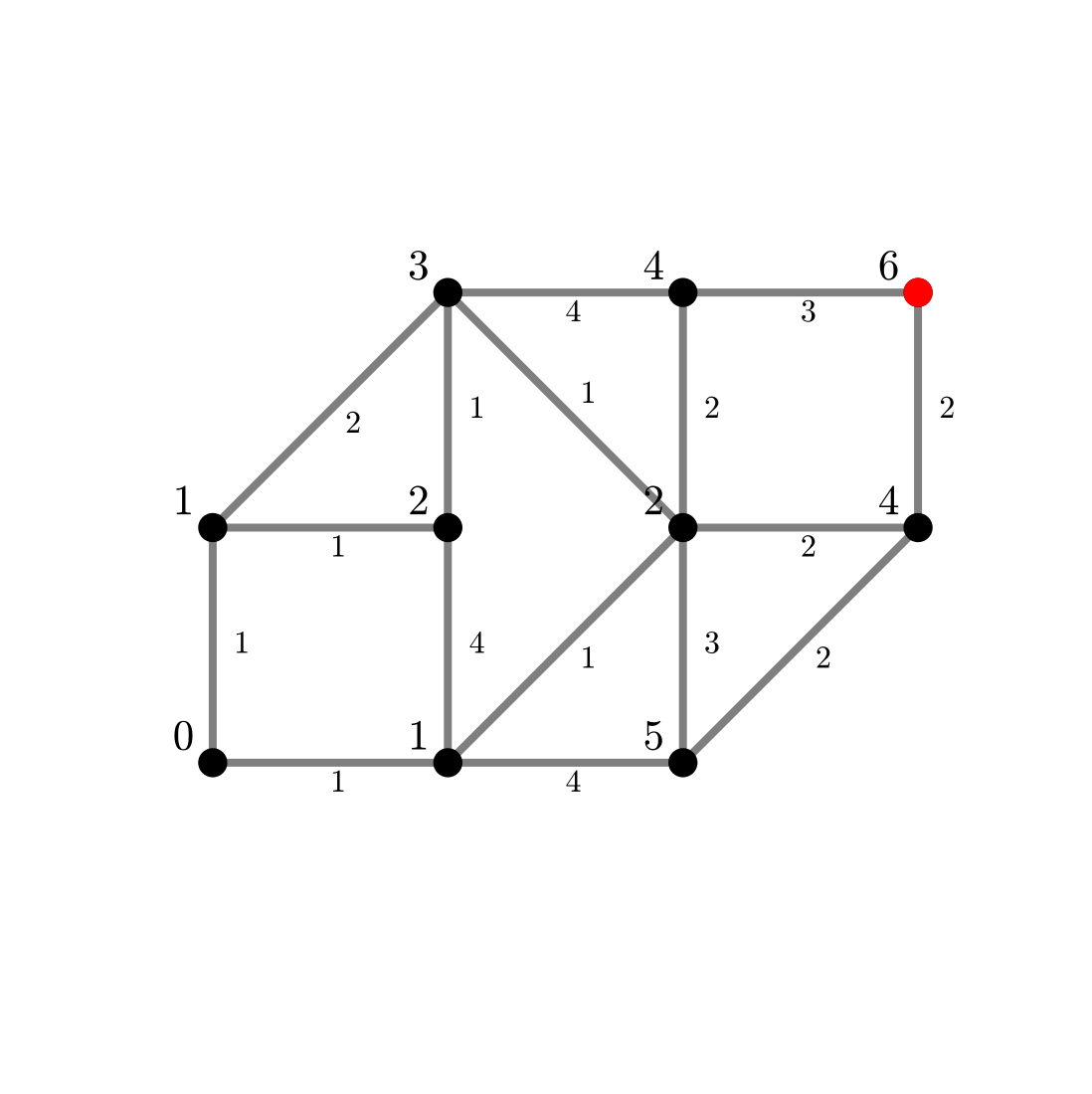
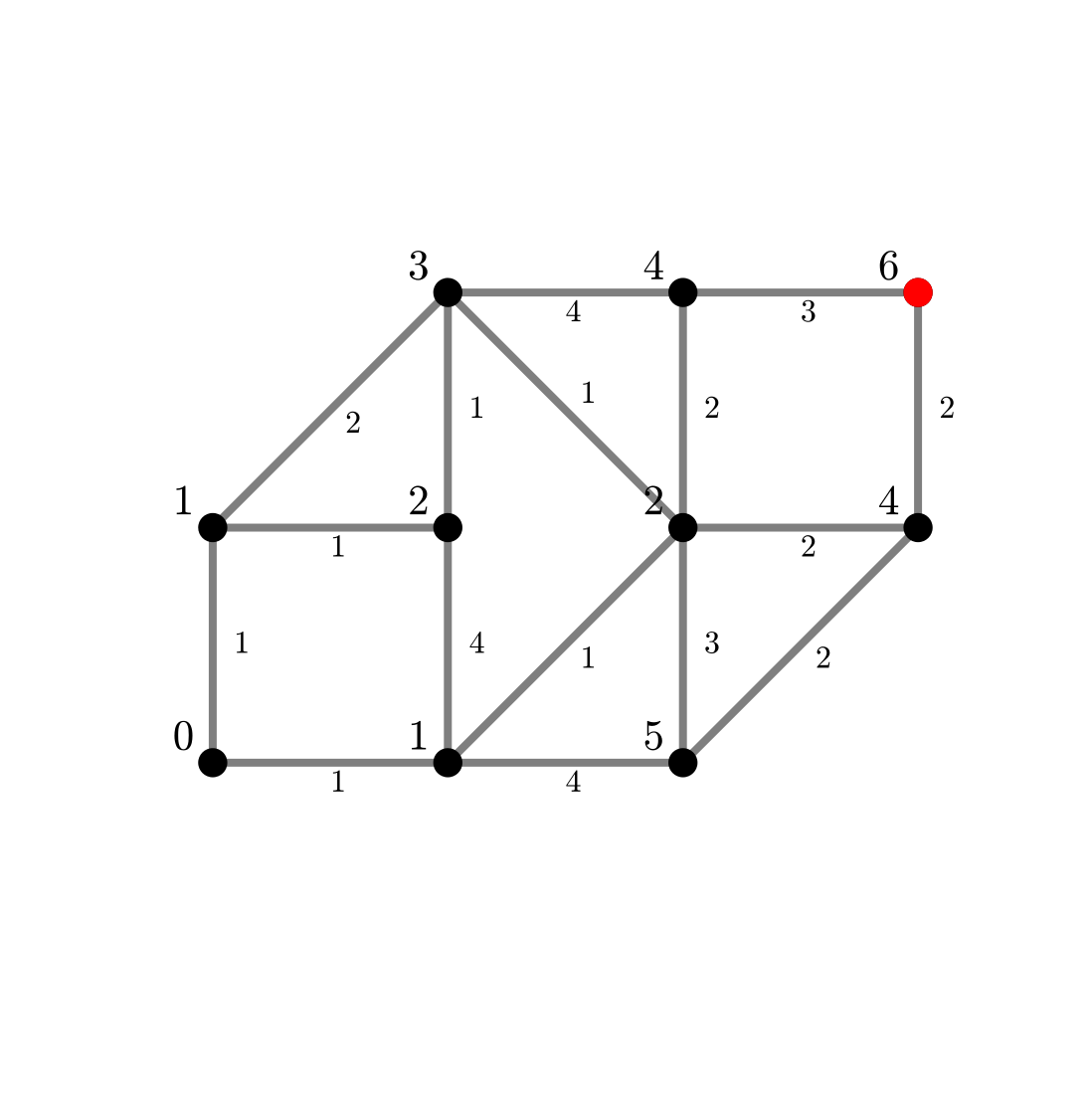
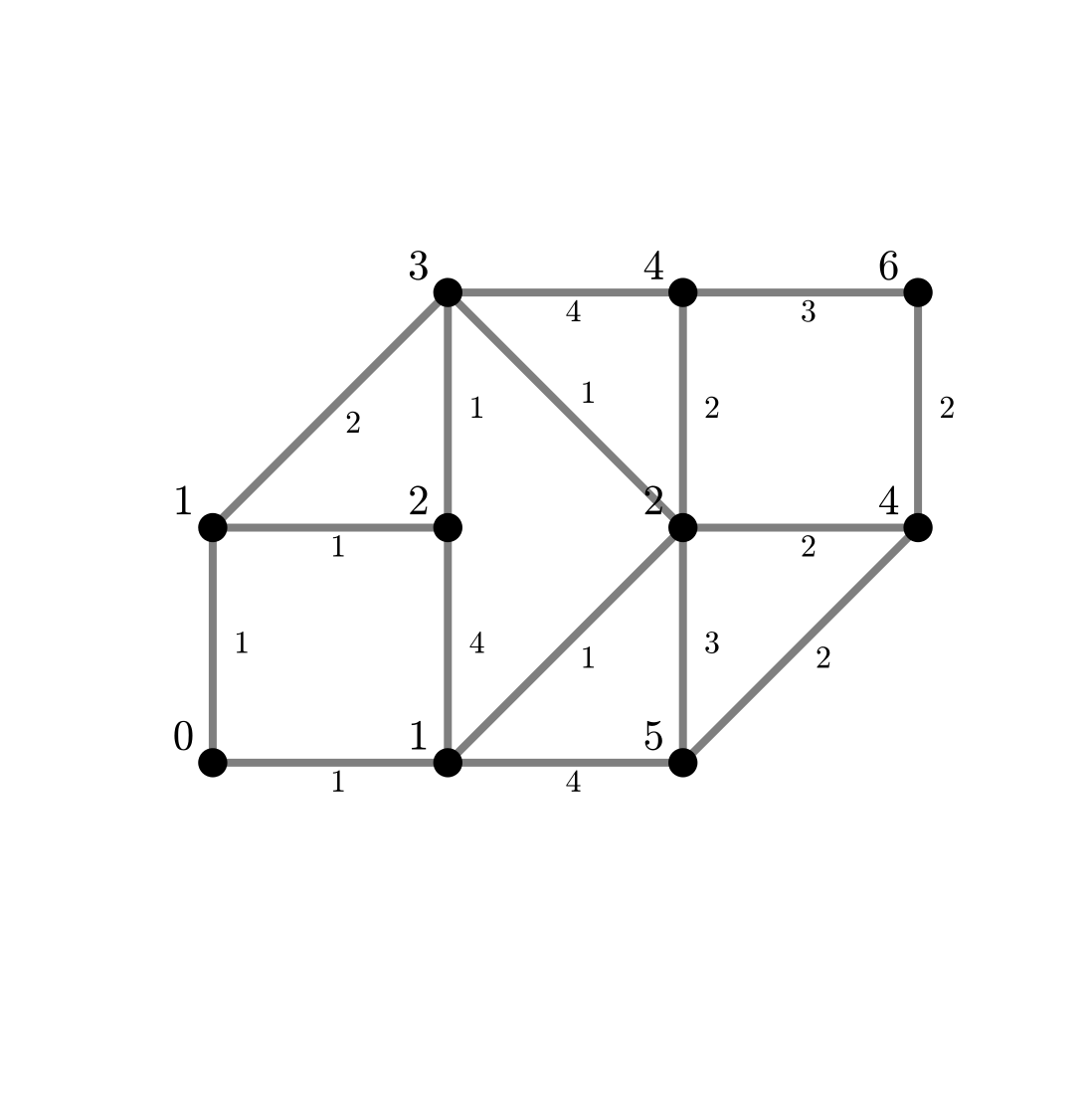
More generally, take the distance between vertices to be the smallest sum of weights among all -paths.
What is ?
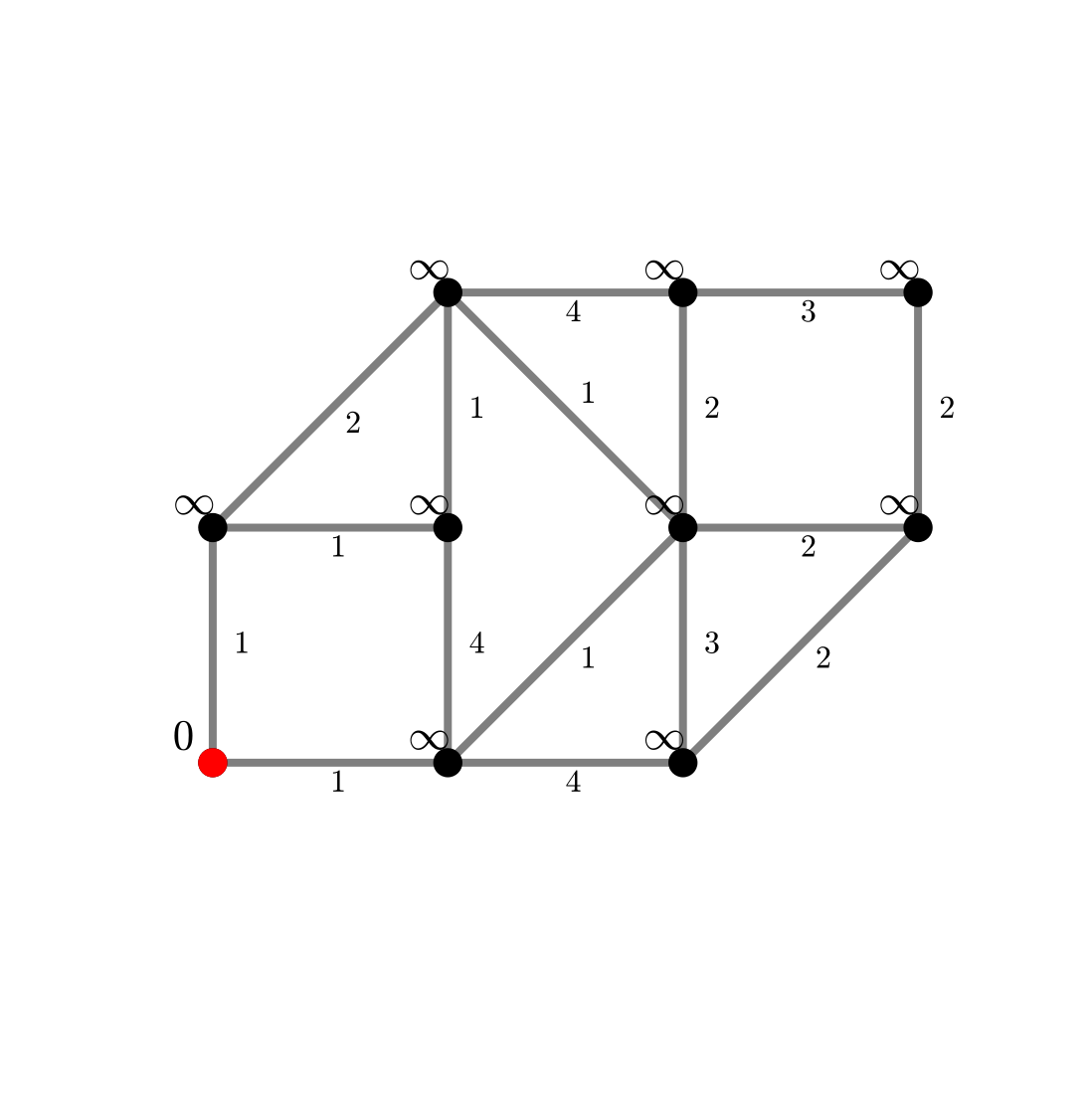
Start with a list of distances for and for the rest.
- Pick unvisited vertex w/ smallest distance (currently)
- For all neighbors update distance to neighbors, if shorter
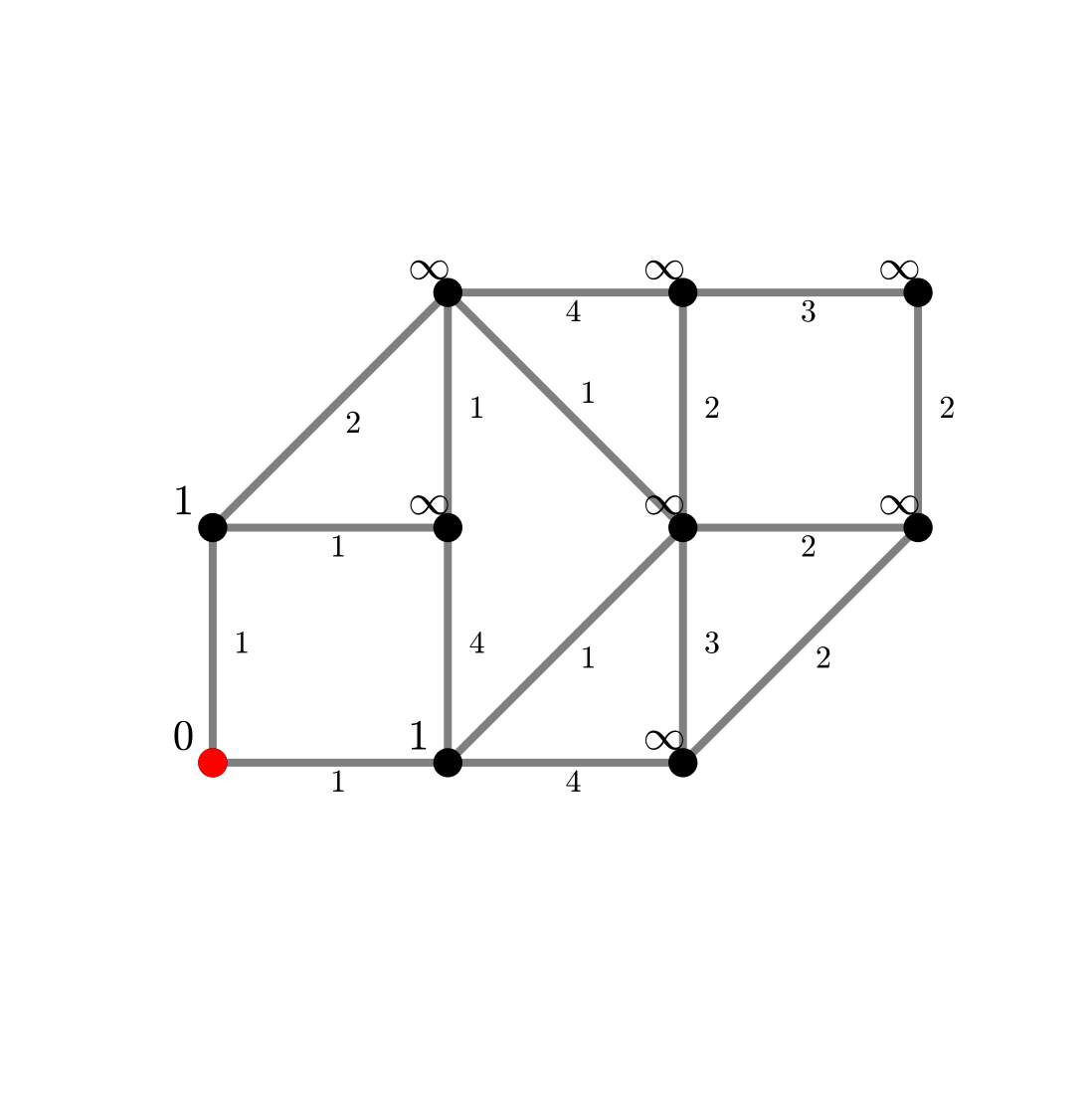
Step 1: Update tentative distances:
Pick next vertex to visit: .
Step k>1: Update tentative distances:
Pick next vertex to visit: .
For each edge , let denote the weight of the edge.
Step 1: Update tentative distances:
Pick next vertex to visit: .
Given vertices vvv and uuu, define d(v,u)d(v,u)d(v,u) to be the minimum, over all v,uv,uv,u-paths, of the sum of the edge weights along the path.
Theorem 2.3.7. Given a graph and a vertex , Dijkstra's Algorithm computes for each vertex .
Dijkstra's Algorithm (It works!)
Breadth-first search
For an unweighted graph, Dijkstra's algorithm is called a Breadth-First search.
However, we just take the next unvisited vertex that we've "seen" instead of the vertex with smallest tentative weight.
Matchings and Covers
Definition 3.1.1.
- A matching in a graph is a set of non-loop edges with no shared endpoints.
- The vertices incident to the edges of a matching are saturated by ; the others are unsaturated.
- A perfect matching in a graph is a matching that saturates every vertex.
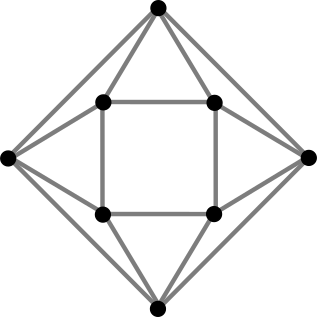
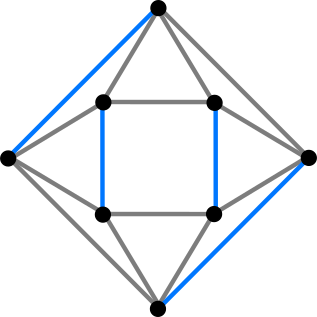
Example.
The blue edges are a perfect matching
Are there other perfect matchings?
Example. If a graph has a vertex with degree , then it contains no perfect matching.
Give an example of a graph such that , but no perfect matching?
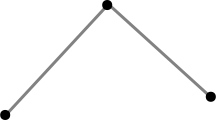
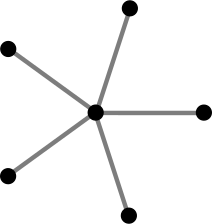
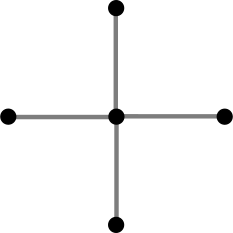
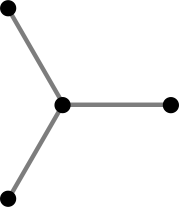
The only star that contains a perfect matching is .
Stars!
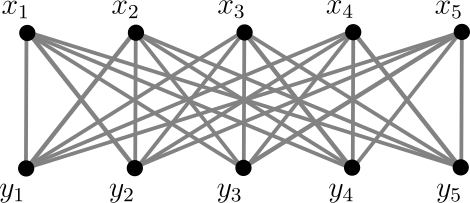
Example 3.1.2. A perfect matching in corresponds to a bijection of the partite sets.
If and are the partite sets of vertices, then a bijection gives a perfect matching, namely, the edges for each .
Conversely, given a perfect matching of edges, each edge has one endpoint in and one in , thus, for each edge in the perfect matching, we can define a bijection by if and only if is in the perfect matching.
The number of bijections is , and thus there are perfect matchings in .
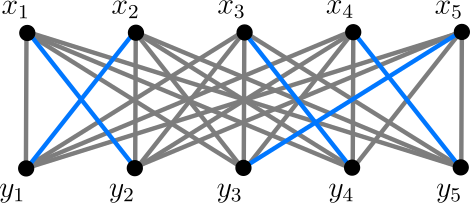
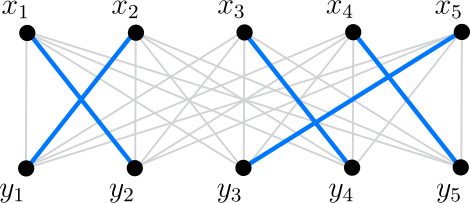
Corresponding bijection:
Example 3.1.3. Why is there no perfect matching in , , ?
If has a perfect matching, then the order of must be even!
Does have a perfect matching for each ?
YES! The set of perfect matchings of is in one-to-one correspondence with the partitions of into subsets of size . How many such partitions are there?
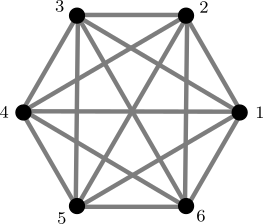
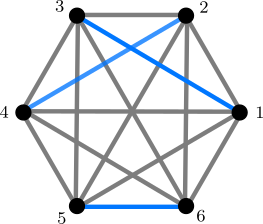
Partition:
Definition 3.1.4. A maximal matching in a graph is a matching that cannot be enlarged by adding an edge. A maximum matching is a matching of maximum size among all matchings in the graph.
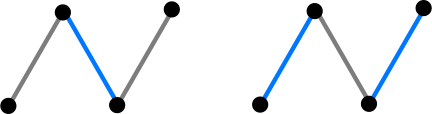
Maximal matching
(not maximum):
Maximum matching:
Definition 3.1.6. Given a matching , an -alternating path is a path that alternates between edges in and edges not in . An -alternating path whose endpoints are unsaturated by is an -augmenting path.
Definition 3.1.7. If and are graphs with a common vertex set , then the symmetric difference is the graph with vertex set whose edges are all those appearing in exactly one of and . We similarly define the notion of symmetric difference for sets of edges.
Lemma 3.1.9. Every component of the symmetric difference of two matchings is a path or an even cycle.
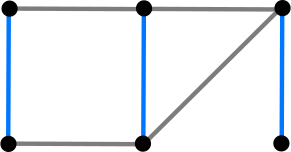
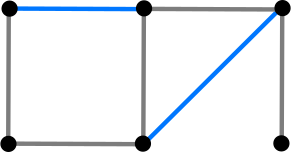
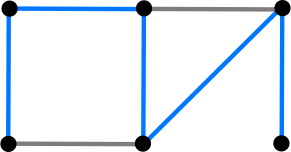
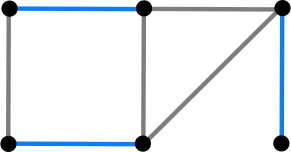
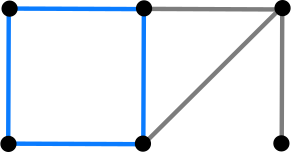
Theorem 3.1.10. A matching in a graph is a maximum matching in if and only if has no -augmenting path.
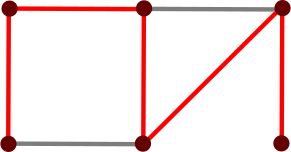
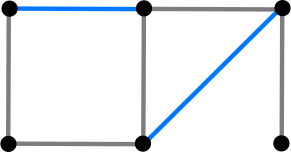
Consider the matching in blue
the -augmenting path in red
and...
Replacing with every other edge in we obtain a matching with more edges:
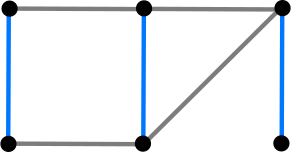
Thus, if is a maximum matching, then there is no -augmenting path.
Saturating partite sets
Given a bipartite graph , and one of the partite sets , one might ask whether there is a matching that saturates .
Consider the following graph:
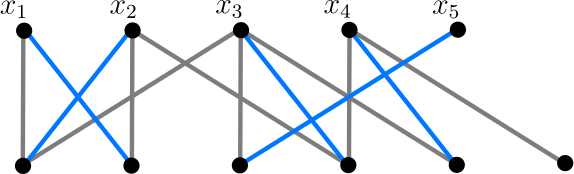
The blue edges are a matching that saturates .
If , then clearly the number of vertices adjacent to must be the number of vertices in .
Theorem 3.1.11. (Hall's Theorem) An -bigraph has a matching that saturates if and only if for all .
Recall:
- A bipartite graph with partite sets and is called an -bigraph.
- Given a set of vertices , the set neighborhood of is the set
- Given a finite set , the cardinality of is the number of elements in , denoted .
Hall's Matching condition
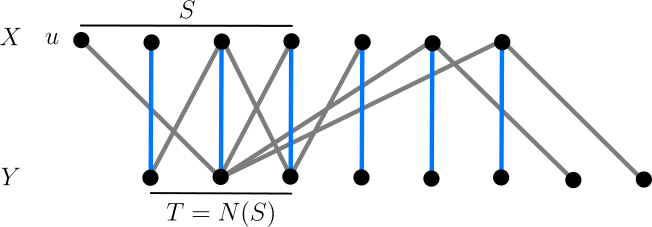
Corollary (the Marriage Theorem). An -bigraph contains a perfect matching if and only if both of the following hold:
- For every , .
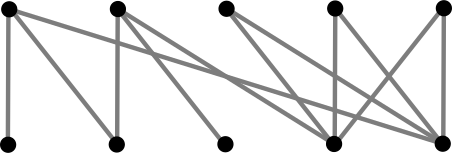
Does the following bigraph have a perfect matching?

Thus, the graph contains no perfect matching.
Corollary 3.1.13. For , every -regular bipartite graph has a perfect matching.
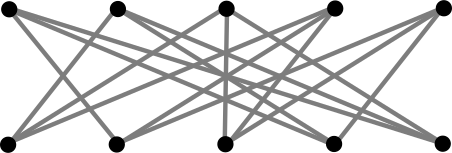
Does the following bigraph have a perfect matching?
Since it is -regular, by Corollary 3.1.13...YES!
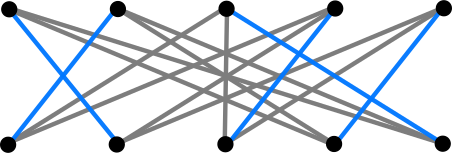
Example. A group of 50 pets and 50 people meet one day and they decide whether they are compatible. Each pair decide whether they are mutually compatible.
At the end, each person is compatible with 10 of the pets, and each pet is compatible with 10 of the people.
Is there a way to match all 50 people compatible pets?
Min-max Theorems
Definition 3.1.14. A vertex cover of a graph is a set that contains at least one endpoint of every edge. We say that the vertices in cover .
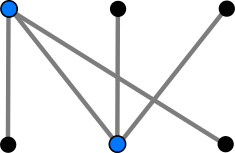
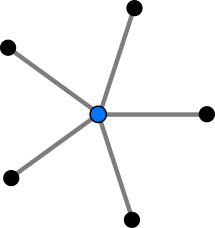
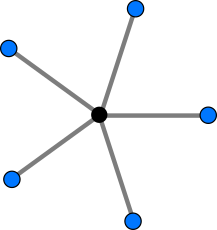
Example. In each of the following graphs, the blue vertices comprise a vertex cover:
blue
Theorem 3.1.16. If is a bipartite graph, then the maximum size of a matching in equals the minimum size of a vertex cover of .
This is an example of a min-max relation since it establishes the equivalence between a maximization problem and a minimization problem.
Theorem 3.1.16. If is a bipartite graph, then the maximum size of a matching in equals the minimum size of a vertex cover of .
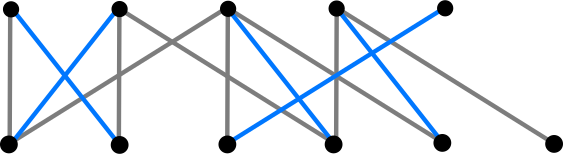
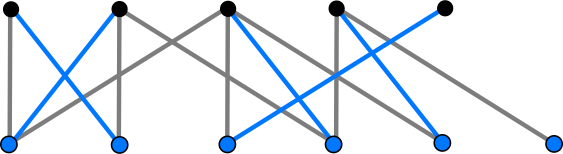
- The blue edges form a maximum matching .
- A vertex cover must include one endpoint of each of these edges.
- There might be more vertices, not incident with any edge in .
Extra vertex
One vertex in for each edge in .
Proof. First, we show that if is any vertex cover, and is a maximum matching, then . Therefore, a vertex cover of minimum size has at least as many vertices as the number of edges in a maximum matching.
Proof. Suppose and are the partite sets in . Let be a vertex cover of minimum size.
- Set .
- Let and be the subgraphs induced by and , respectively.
Theorem 3.1.16. If is a bipartite graph, then the maximum size of a matching in equals the minimum size of a vertex cover of .
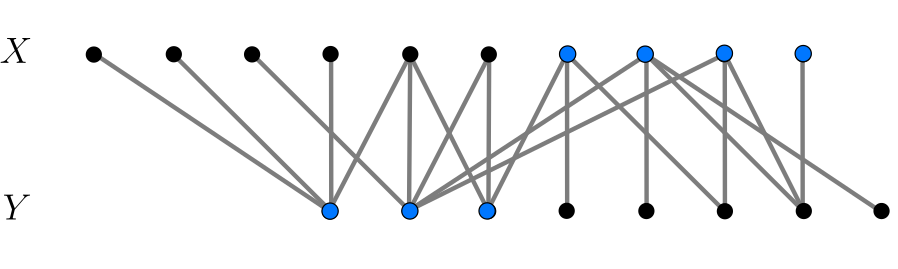
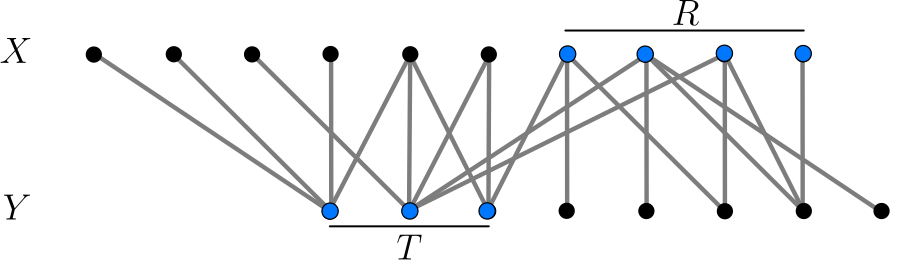
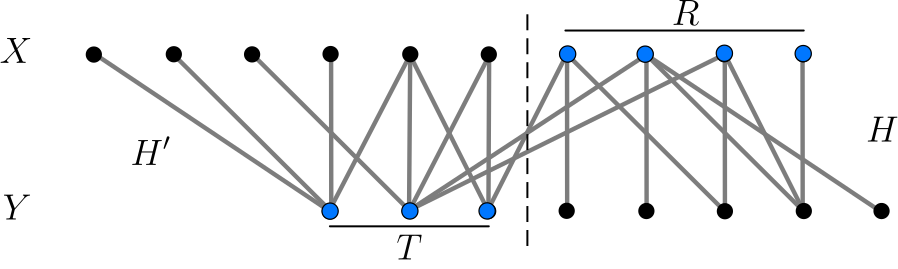
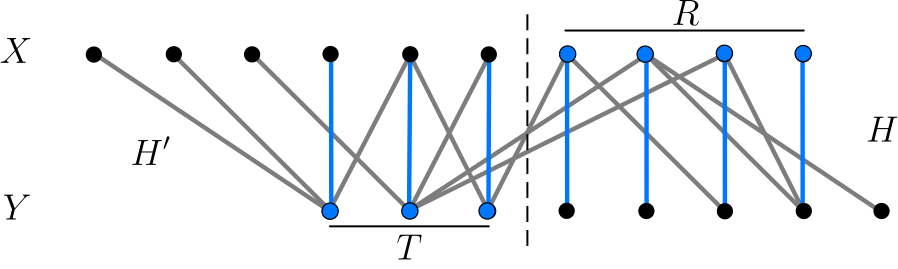
We'll use Hall's theorem to find a matching in that saturates and a matching in that saturates .
Since , together these matchings give a matching in of size .
Proof. For each we consider .
Theorem 3.1.16. If is a bipartite graph, then the maximum size of a matching in equals the minimum size of a vertex cover of .
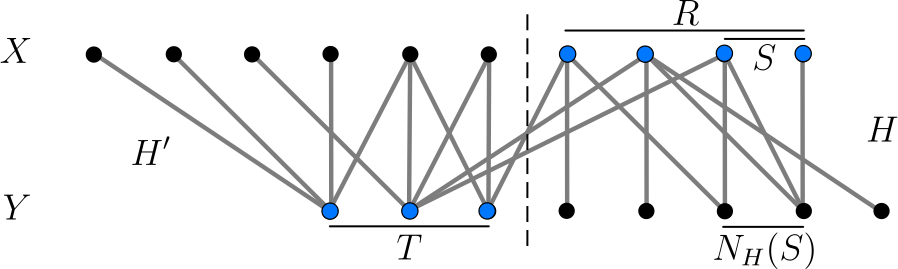
If , then we could replace with in to obtain a smaller vertex cover.
The union of the matchings in and is a matching with edges in it.
Since is minimum size, we see .
The same argument shows Hall's condition holds in .
Independent Sets and Covers
Definition. The independence number of a graph is the maximum size of an independent set of vertices.
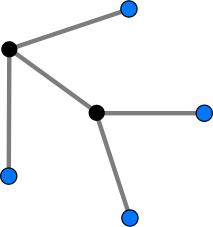
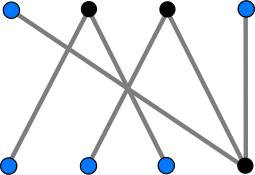
Is the independence number of a tree equal to the number of leaves?
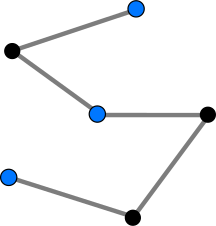
Is the independence number of a tree the number of leaves?
No!
No! Consider
Is the independence number of a bipartite graph equal to the size of one of the partite sets?
No!
Definition 3.1.19. An edge cover of a graph is a set of edges such that every vertex of is incident to some edge of .
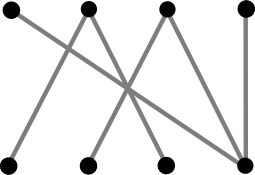
How many edges are in the smallest edge cover of the following graph?
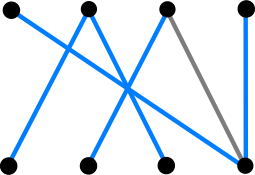
5 edges!
Lemma 3.1.21. In a graph , a subset is an independent set if and only if is a vertex cover, and hence .
Theorem 3.1.22. If is a graph without isolated vertices, then
Definition 3.1.20.
- is the maximum size of an independent set in
- is the maximum size of an matching in
- is the minimum size of an vertex cover in
- is the minimum size of an edge cover in
Theorem 3.1.24. If is a bipartite graph without isolated vertices, then
Proof. We have the following equivalent statements:
- is independent
- every edge has at most one endpoint in
- every edge has at least one endpoint in .
Theorem 3.1.22. If is a graph without isolated vertices, then
Definition 3.1.20.
- is the maximum size of an matching in
- is the minimum size of an edge cover in
Proof that .
- Let be a maximum matching in . We will construct an edge cover of size .
- For each vertex not saturated by , add to an edge incident with . This produces an edge cover, call it
- Each edge in covers two vertices, the rest cover exactly one, thus
- Thus
Theorem 3.1.22. If is a graph without isolated vertices, then
Definition 3.1.20.
- is the maximum size of an matching in
- is the minimum size of an edge cover in
Proof that .
- Suppose is a minimum edge cover in .
- For an edge , if both of its endpoints are covered by edges in , then , since otherwise would be a smaller edge cover.
- Thus, the graph formed by the edges in contains no paths of length . It's a forest and each component is a star!
- For each component, take one edge, this forms a matching .
- If is the number of components, then (each edge counts one leaf, but we also must count the central vertex in each star).
- Thus,
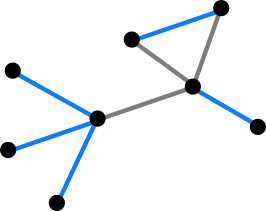
Maximum Bipartite Matching
Augmenting Path Algorithm
Inputs:
Initialize:
Iteration: If then by the next theorem is a minimum cover, and is a maximum matching.
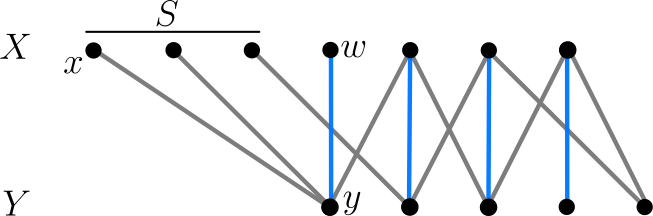
If , the select . Go through each such that .
- If is unsaturated by : there's an -alt. path to from to , adding the edge gives an -augmenting path.
- If is sat. by , then an -alternating path from to . Add to and to .
Note: , and is the "marked vertices".
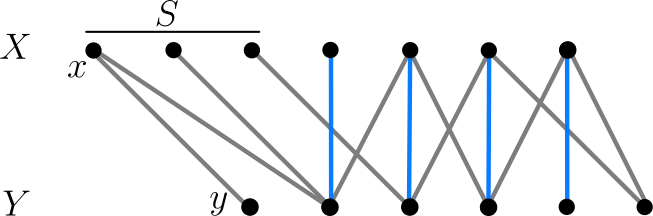
After all 's have been explored, add to .
Example.
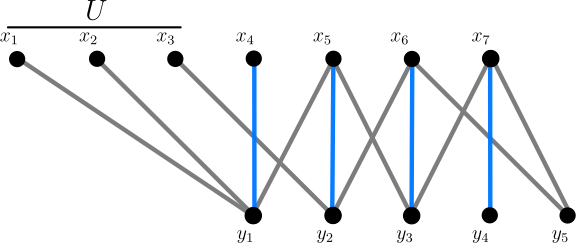
We see but is unsat. Since is in , there is an -alternating path from to , extend this path to for an -augmenting path!
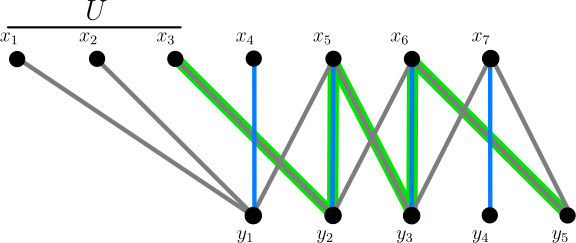
Example.
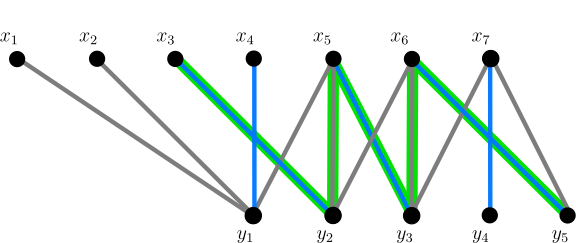
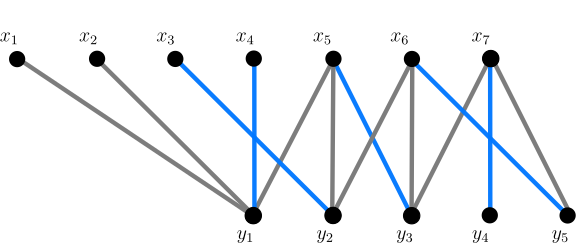
A bigger matching!
Theorem 3.2.2. Repeatedly applying the Augmenting Path Algorithm to a bipartite graph produces a matching and a vertex cover of equal size.
Theorem 3.1.16. If is a bipartite graph, then the maximum size of a matching in equals the minimum size of a vertex cover of .
Recall the König-Egerváry Theorem:
Hence, the Augmenting Path Algorithm gives a maximum matching and a minimum vertex cover in a bipartite graph.
Connectivity
Definition 4.1.1.
- A separating set or vertex cut of a graph is a set such that has more than one component.
- The connectivity of , written , is the minimum size of a separating set, or if no separating set exists.
- A graph is -connected if its connectivity is at least .
Example. Consider the complete graph . Deleting a vertex results in , which is also connected. So has no separating set.
Thus, we say .
Example. What about ?
If and are a bipartition of the graph, then any separating set must contain either or , thus, .
In this section all graphs have no loops.
Lemma.
Proof. Let be a vertex with degree . Clearly is a separating set or is a single vertex. Thus .
Given a graph on vertices which is -connected, how many edges must have?
Clearly, we must have , and hence every vertex of must have degree .
By the degree-sum formula:
Since is an integer, we have the following:
Proposition. If is a -connected graph on vertices, then has at least edges.
Harary graphs
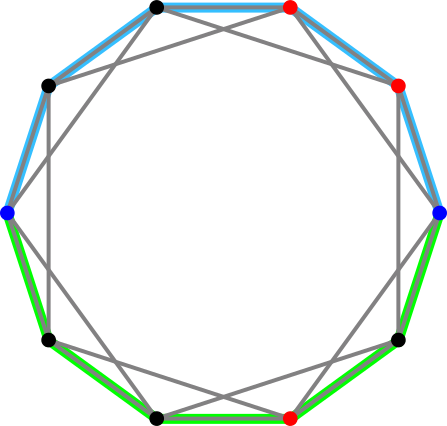
Definition (see Example 4.1.4.). Given the graph has vertices placed equidistant around a circle, each vertex is connected to the vertices closest to it in each direction around the circle.
If is odd and is even, add an edge between antipodal vertices as well.
If is odd and is odd, label the vertices , and add an edge between vertices and for .
The graphs , , and are shown here:
Theorem 4.1.5. , and hence the minimum number of edges in a -connected graph on vertices is .
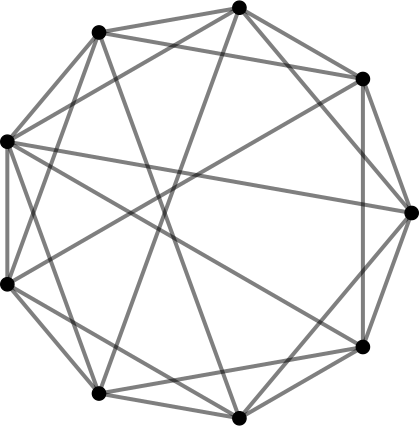
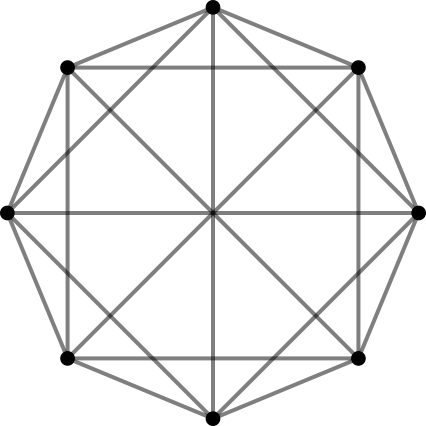
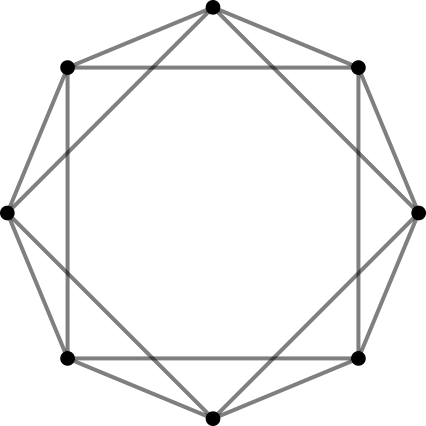
Harary graphs
Theorem 4.1.5. , and hence the minimum number of edges in a -connected graph on vertices is .
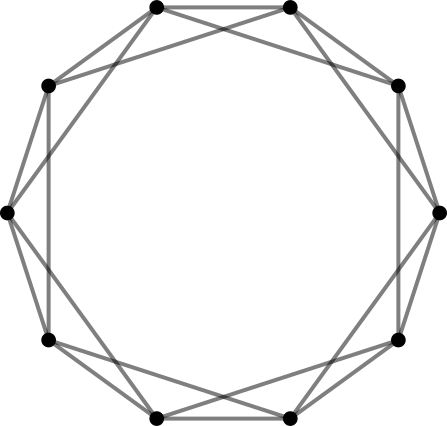
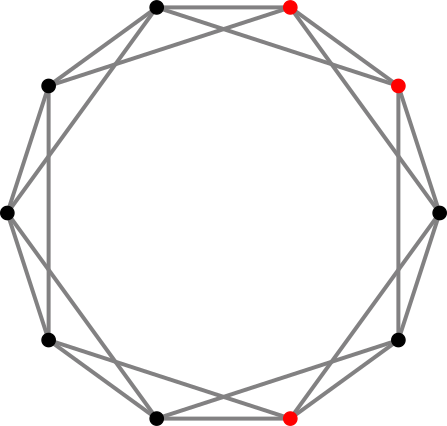
- Suppose with
- We'll find a path from between any two vertices in
- Consider the two paths around the circle
- One path contains internal vertices not in .
- Each of these vertices is adjacent, so we have a path
Since we see that .
is shown here:
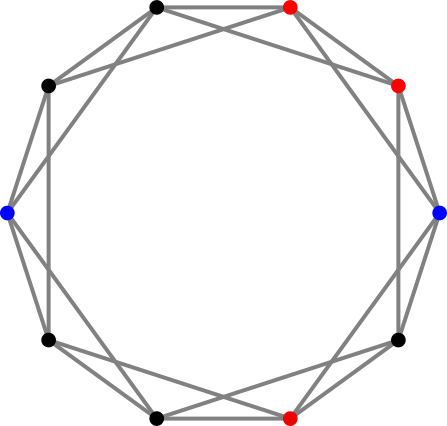
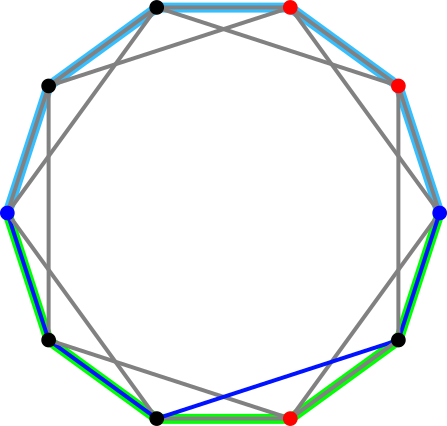
Similar proofs work with is odd
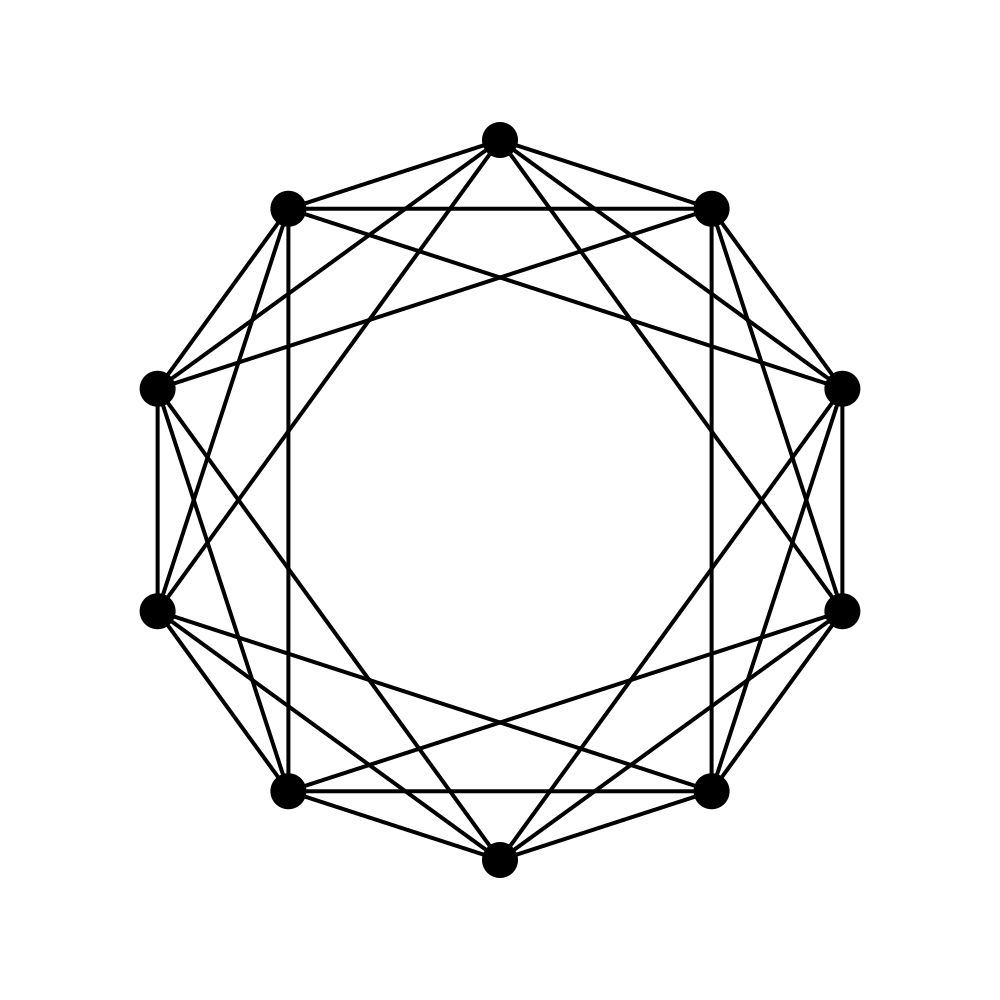
Definition 4.1.7.
- A disconnecting set of edges is a set such that has more than one component.
- A graph is -edge-connected if every disconnecting set has at least edges.
- The edge-connectivity of , denoted , is the is minimum size of a disconnecting set.
- Given , we write for the set of edges having one endpoint in and one endpoint in .
- An edge cut is an edge set of the form , where and .
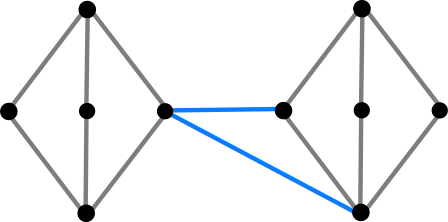
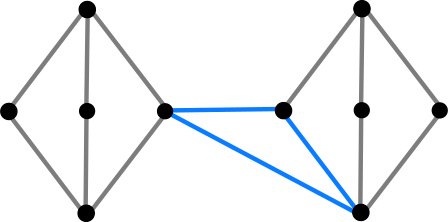
Disconnecting set
Not an edge cut
Edge cut
Disconnecting set
Disconnecting set
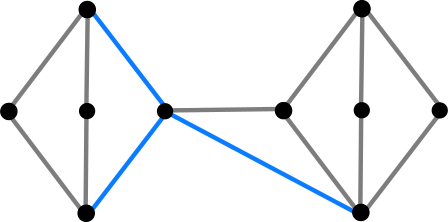
Not an edge cut
Note: A minimal disconnecting set is an edge cut.
Theorem 4.1.9. If is a simple graph, then
Given disconnecting set , we can delete one endpoint for each edge in to disconnect the graph, right?
We conclude there is a vertex cut with , and thus , right?
Disconnecting sets vs. Separating sets
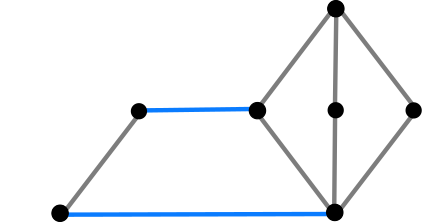
The edges in blue are a disconnecting set.
If we delete the red vertices...
the graph is still connected.
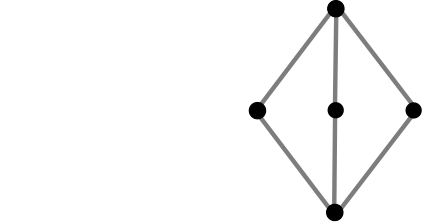
So, is it true that ?
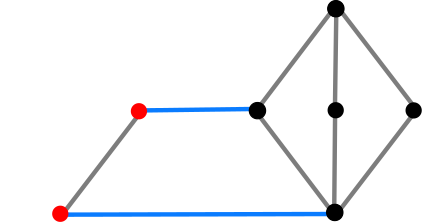
Theorem 4.1.9. If is a simple graph, then
Disconnecting sets vs. Separating sets
Proof. The set of edges incident with a vertex of degree is an edge cut, thus .
Thus, we must show :
- First note that .
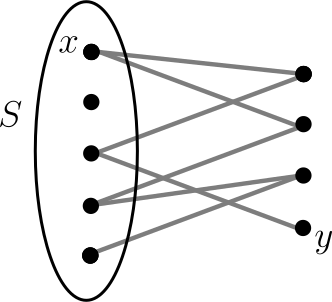
- Let be a smallest edge cut.
- If every vertex of is adjacent to every vertex of , then
- Otherwise, take and with .
- Let be vertices in adj. to and in adj. to .
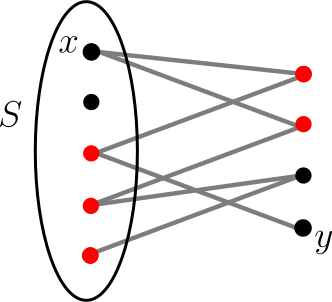
- Choose one edge for each vertex in
- Any -path has a vert. in (red vertex)
- is a separating set
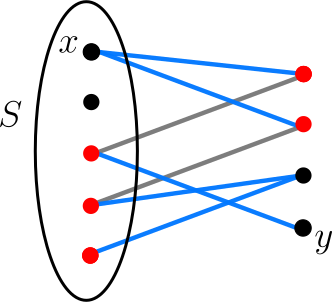
- blue edges
Vertex Coloring
How many colors do we need so that every bordering territory is a different color?
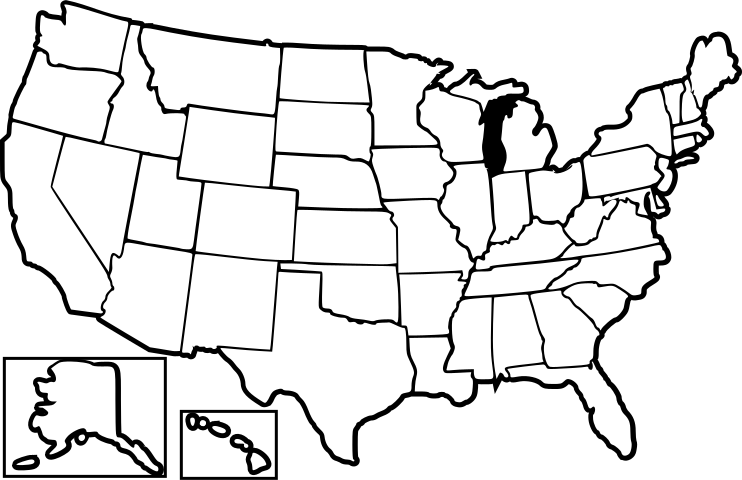
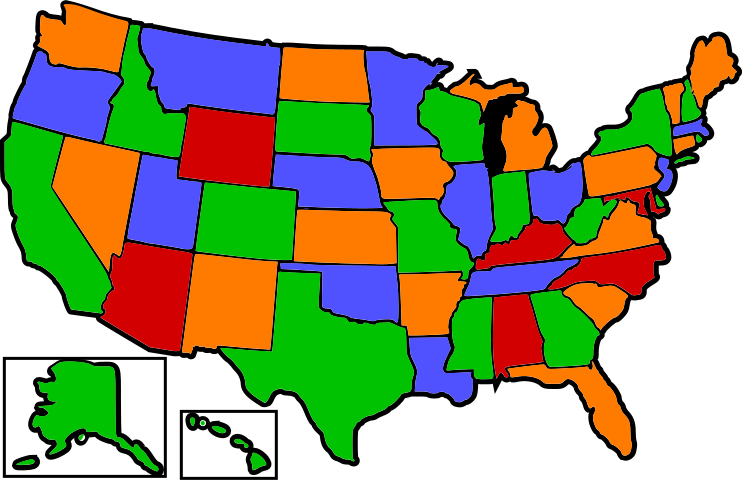
How many colors do we need so that every bordering territory is a different color?
Four colors
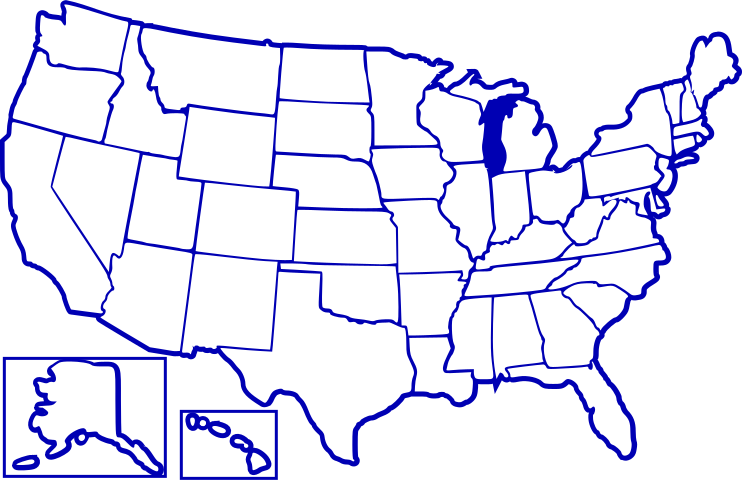
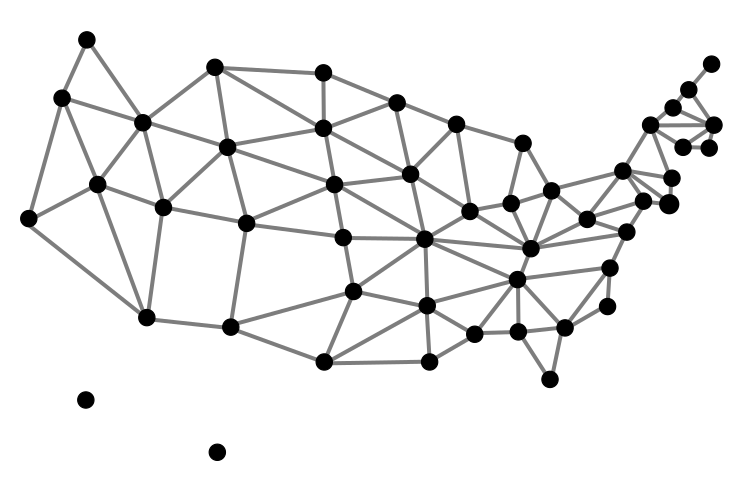
Its a graph theory problem!
Its a graph theory problem!
Its a graph theory problem!
How many "colors" do we need so that we can color each vertex and no adjacent vertices are the same color?
Definition 5.1.1.
- A -coloring of a graph is a labeling , where .
- The labels are colors; the vertices of one color form a color class.
- A -coloring is proper if adjacent vertices have different labels.
- A graph is -colorable if it has a proper -coloring.
- The chromatic number is the least such that is -colorable.
Proposition. A graph is -colorable if and only if it is bipartite.
Proposition. is not -colorable.
Proof. Assume toward a contradiction there exists a proper -coloring . Label the vertices such that and are adjacent if and only if (mod ). By the pigeonhole principle, at least vertices are labeled the same color. Let these vertices be where . Note that and . Therefore . We conclude and , and since (mod ), we see . Thus is not a proper coloring, which is a contradiction.
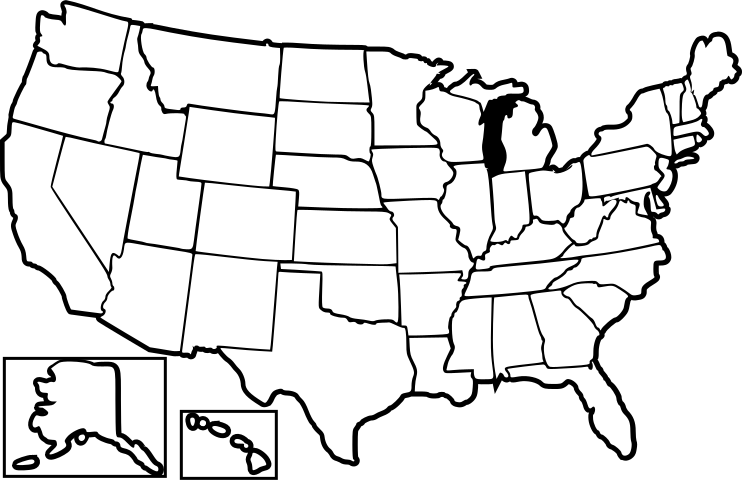
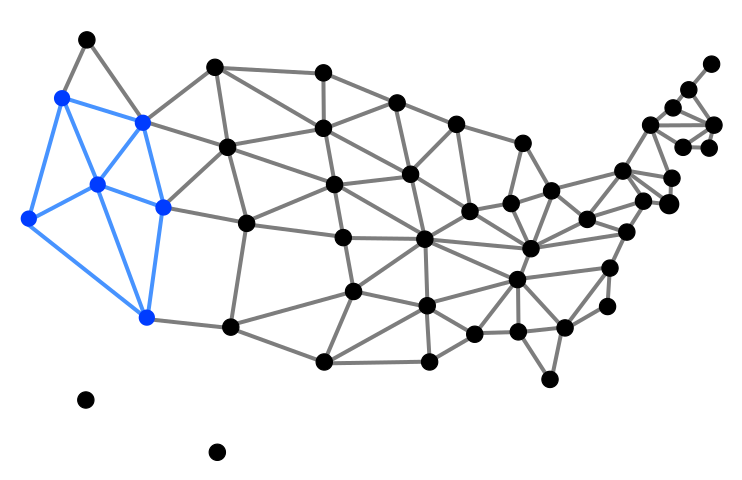
The US map has a chromatic number of
Definition 5.1.6. The clique number of a graph , written , is the maximum size of a set of pairwise adjacent vertices (a clique) in .
Theorem 5.1.7. For every graph ,
Theorem 5.1.13. .
Proof. Label the vertices . In order, label each vertex with the smallest label not used on a neighbor with an index smaller than (this is just the greedy algorithm). One will never use more than colors.
Bounds on the chromatic number
Proof. A proper coloring of a clique on vertices requires colors. Thus, the first inequality is clear.
Each color class is an independent set. Let be the color classes of a minimum proper coloring, then , and
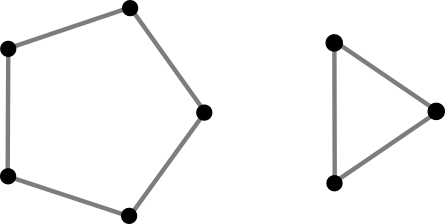
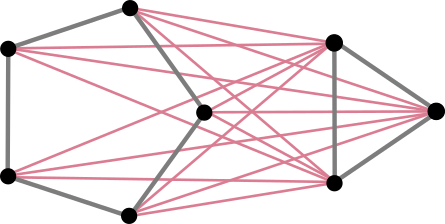
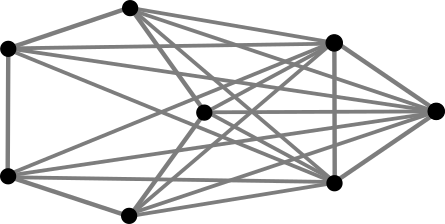
Example. Consider the join of and , which is denoted (see Definition 3.3.6)
Note that and
Since contains no triangles, we see that .
We cannot use any of the same colors in and , thus .
A better bound
Theorem 5.1.13. .
Proposition 5.1.14. If a graph has degree sequence
then .
Proof. Use the greedy algorithm on the vertices, but listed in nonincreasing order by degree.
Example. Consider the graph below:
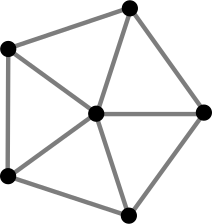
- , so Theorem 5.1.13 gives .
- The degree sequence is , so Proposition 5.1.14 gives .
Planar graphs
Example 6.1.1. Alice, Bob, and Chris each need to hook up gas, water, and electricity to their homes. The hookups don't need to be straight, but the lines cannot cross. Can it be done?
In other words, can we draw the graph of in the plane without the edges crossing?
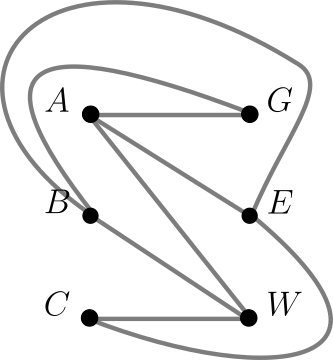
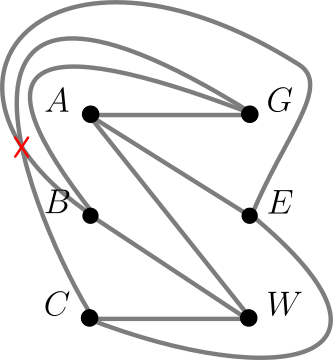
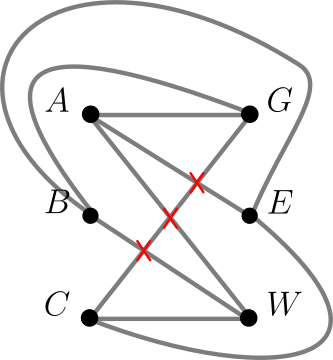
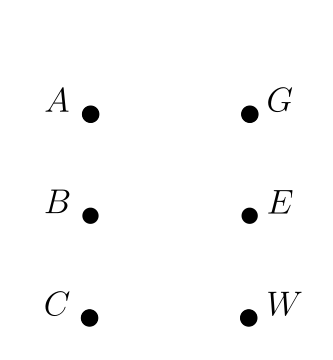
We still need to hook Chris up to gas!
Proposition 6.1.2. The graphs and cannot be drawn in the plane without edges crossing.
Proof. First, consider :
- Suppose can be drawn in the plane without edges crossing.
- Let be a -cycle in . ( is in blue, the partite sets are red and black vertices)
- The rest of the edges must be entirely within the curve formed by or entirely outside it.
- Two of the three remaining edges must be both inside or both outside.
- If two are inside, then the first cuts the inside into two pieces. The endpoints of the remaining edge are in different pieces.
- Similarly, if there are two edges outside.
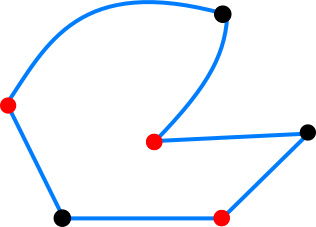
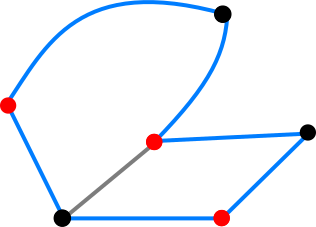
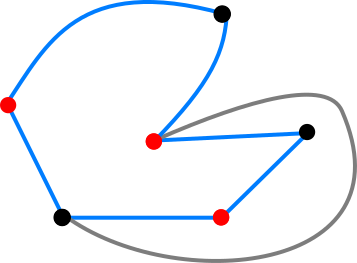
The proof that cannot be drawn without crossings is similar.
Definition 6.1.4.
- A graph is planar if it has a drawing without crossings.
- Such a drawing is a planar embedding of .
- A plane graph is a particular planar embedding of a planar graph.
- A curve is closed if its first and last points are the same.
- It is simple if it has no repeated points other than possibly the first and last.
Definition 5.2.19. A subdivision of is a graph obtained by successively replacing edges with paths. That is, an edge is replaced with the path , where the new vertices are only adjacent to the adjacent vertices in the path.
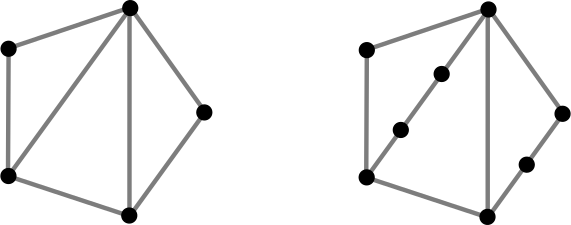
subdivision of
Characterization of Planar graphs
Proposition 6.2.1. If a graph has a subgraph that is a subdivision of or , then it is nonplanar.
Theorem 6.2.2. A graph is planar if and only if it does not contain a subdivision of or .
Proof. If a subdivision of a graph is planar, then removing degree vertices and replacing them with edges would result in a planar graph. Thus, if a subdivision of or were planar, then or would be planar, which they are not.
Characterization of Planar graphs
Theorem 6.2.2. A graph is planar if and only if it does not contain a subdivision of or .
Proof idea:
- A minimal nonplanar graph (MNG) is a nonplanar graph such that every proper subgraph is planar. (Examples?)
- Deleting a vertex or edge make an MNG planar.
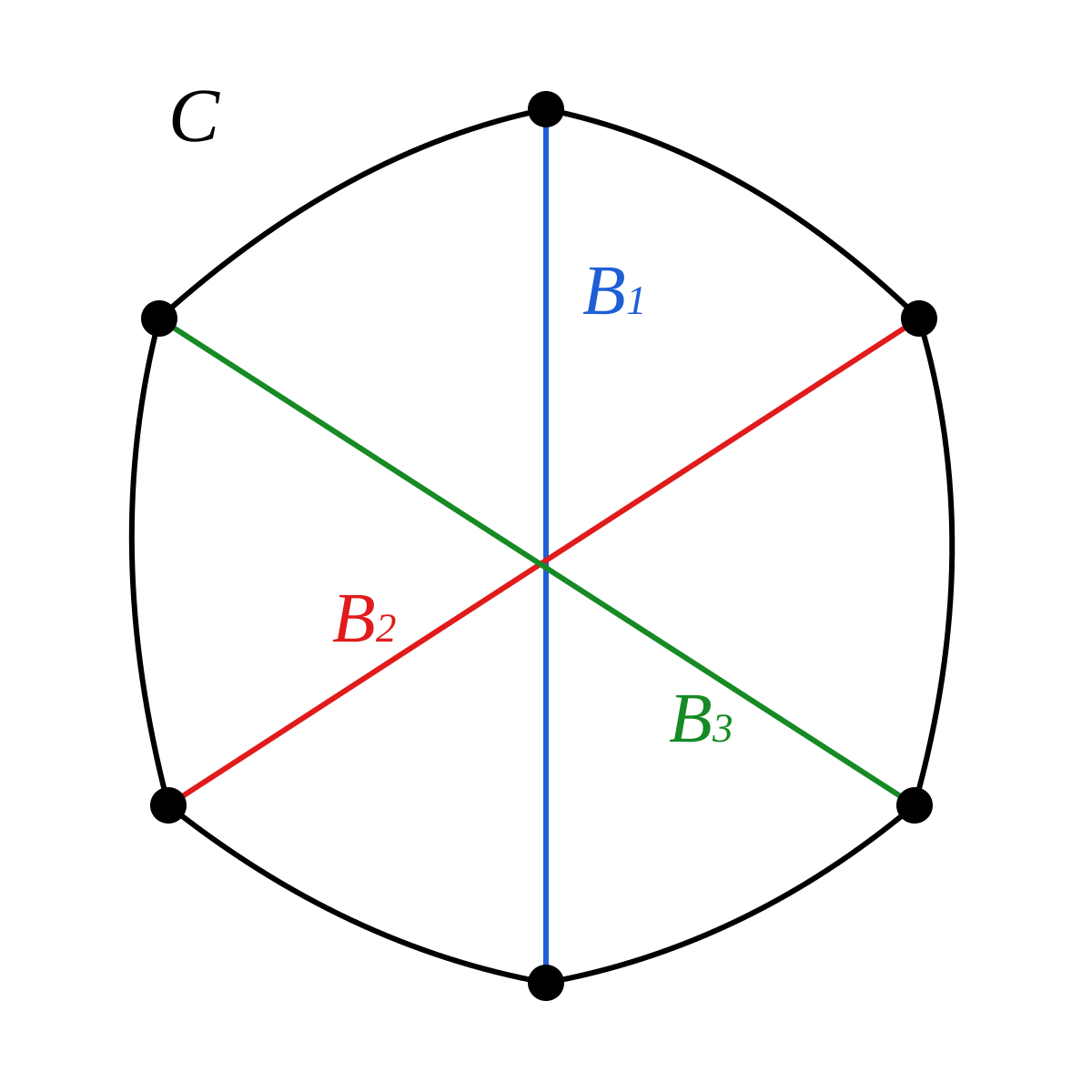
- Forests are planar, so nonplanar graphs contain a cycle \(C\).
- WLOG \(C\) has \(\geq 5\) vertices.
- Analyze the "bridges":
- Find a subdivision of \(K_{3,3}\) or \(K_{5}\).
Theorem 6.1.21 (Euler's Formula). If a connected plane graph has exactly vertices, edges, and faces, then .
Faces of a planar graph and Euler's formula
Definition 6.1.5.
- An open set in the plane is a set such that for every , there is a small distance such that all points with in from are also in .
- A region is an open set that contains a continuous path between any two points in the set.
- The faces of a plane graph are the maximal regions of the plane that contain no point used in the embedding.
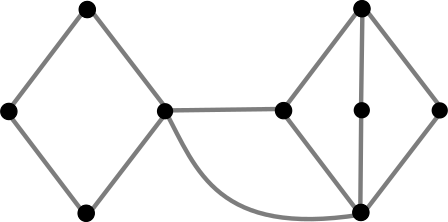
How many faces?
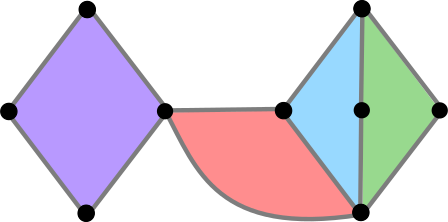
Don't forget the unbounded face

4
X
5
Theorem 6.1.21 (Euler's Formula). If a connected plane graph has exactly vertices, edges, and faces, then .
Faces of a planar graph and Euler's formula
Proof. Use induction on :
- Basis step (): is just a bunch of loops.
- One face for each edge, plus the "unbounded face", thus .

Inductive step: Suppose has vertices, edges, and faces.
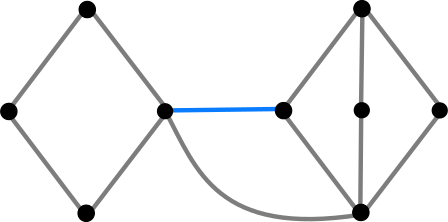
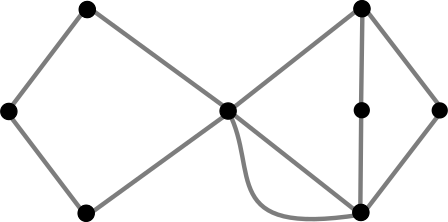
- Since is connected some edge is not a loop.
- Contract the edge.
- The new graph has , vertices edges, and faces.
- By the inductive assumption
Theorem 6.1.23. If is a simple planar graph with at least vertices, then . If is triangle free, then .
An application of Euler's Formula
Proof. Let be the faces of . Let be the number of edges on the boundary of face . Each edge is counted twice, and thus
Since is simple and , each face has at least edges on it's boundary, and thus
By Euler's formula , substituting this in the above inequality gives
If is triangle free, then , and hence
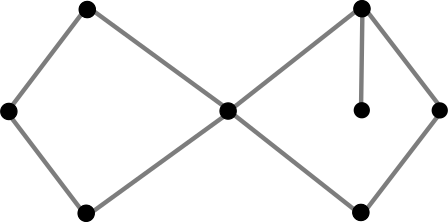
This face has 6 edges on its boundary
Theorem 6.1.23. If is a simple planar graph with at least vertices, then . If is triangle free, then .
An application of Euler's Formula
Example. Note which implies is not planar.
Similarly and since is triangle free, is not planar.
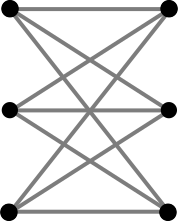
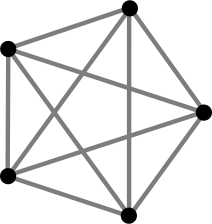
Theorem 6.1.23. If is a simple planar graph with at least vertices, then . If is triangle free, then .
An application of Euler's Formula
Corollary. If is simple and planar, then .
Proof. Assume toward a contradiction that . For each we have . By the degree-sum formula we have
By Theorem 6.1.23
This is a contradiction, and shows .
The Five color theorem
Theorem 6.3.1. Every planar graph is -colorable.
Proof. We will use induction on . For the basis step we note that any graph with is -colorable.
Next, suppose is a planar graph with :
- By the previous corollary, there is a vertex with .
- By the inductive hypothesis, the graph is -colorable.
- If , then we're done.
- Label the neighbors (In order!)
- In the 555-coloring of G−v0G-v_{0}\(G-v_{0}\) each of these vertices has a different color, so suppose \(v_{i}\) is colored iii.
- Consider the subgraph \(G_{i,j}\) induced by the vertices colored iii and jjj.
- If \(v_{i}\) and \(v_{j}\) are in different components, we can switch colors \(i\) and \(j\) in one component.
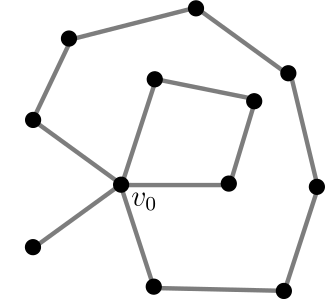
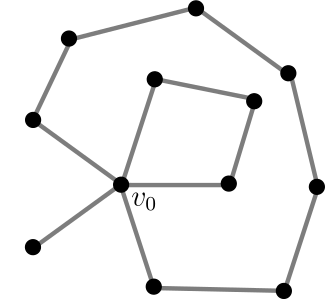
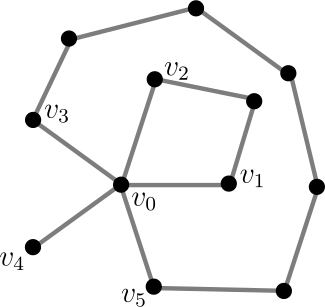
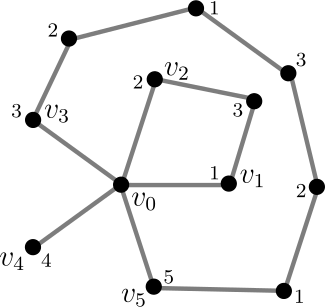
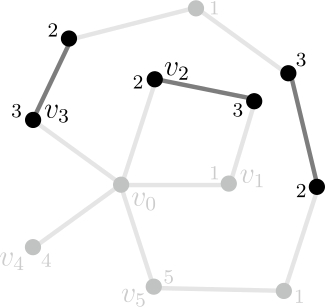
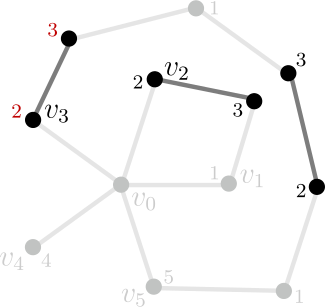
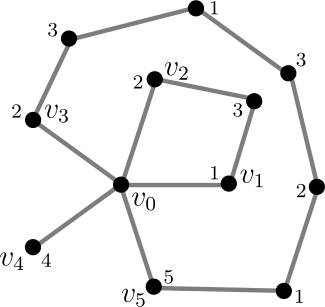
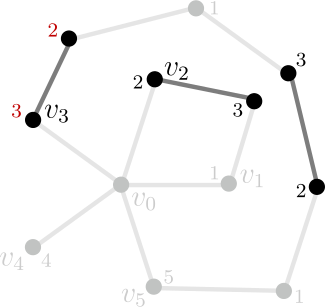
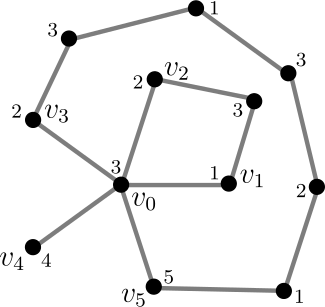
- Now, suppose that for each pair , the vertices and are in the same component of .
- Let be a path from to in .
- Since we listed the vertices in order, the path cuts off from .
- More precisely, form the cycle by adding to . This forms a face.
- By the ordering of the vertices and cannot both be inside or outside the face.
- Thus, the path must cross .
- This contradicts the assumption that is planar
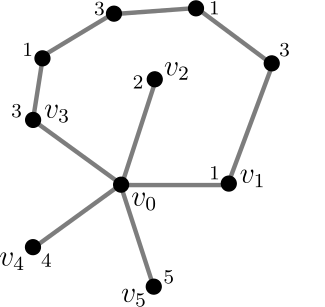
- Thus there's a pair such that and must be in different components of .
- Switching colors on one of those components frees up a color to color .
- Thus, we have the desired -coloring.
The four color theorem
Theorem 6.3.6. Every planar graph is -colorable.
Proof...
An application graph coloring
A wedding has guests, but some refuse to sit at the same table.
How many tables are needed so that no one is sitting at a table with someone they hate?
Consider the graph on vertices, labeled .
Draw an edge if guest refuses to sit with guest .
The chromatic number of this graph is the minimum number of tables needed.