Introduction to
HAPC Model
Overview
- What is Hierarchical Age-Period-Cohort (HPAC) Model?
- Aging effect vs. Period effect vs. Cohort effect
- Estimating APC models using Multilevel Models
-
Age effects are variations linked to biological and social processes of aging specific to individuals. They refer to accumulation of social experiences linked to aging, but unrelated to the time period or birth cohort to which an individual belongs.
-
E.g. individuals become more conservative in finances when getting older
Aging effect
-
Period effects result from external factors that equally affect all age groups at a particular calendar time. It could arise from a range of environmental, social and economic factors e.g. war, famine, economic crisis.
-
E.g. Common experience of WWII, General Depression
-
Methodological changes in outcome definitions, classifications, or method of data collection could also lead to period effects in data.
Period effect
-
Cohort effects are variations resulting from the unique experience/exposure of a group of subjects (cohort) as they move across time.
-
The most commonly defined group is the birth cohort based on year of birth.
-
A cohort effect is conceptualized as an interaction or effect modification due to a period effect that is differentially experienced through age-specific exposure or susceptibility to that event or cause.
-
E.g. Change in curricula leading to generational changes in attitudes such as same sex marriage
Cohort effect
-
Estimating Age, Cohort (Generational) & Period Effects With Survey Data
-
Longstanding Problem – Intractable with cross-sectional data
-
Recent Progress – Yang & Land (2013)
-
HAPC Approach – Multilevel Models
-
HAPC Models are Two-Level Hierarchical Models with cohort and period effects cross-classified at the 2nd Level
-
-
See, e.g., Raudenbush & Bryk (2002: ch. 12)
-
Electoral Studies Symposium (March 2014)
-
Software – HLM, Stata, SAS
Hierarchical Age-Period-Cohort (HAPC) Models
-
Multiple Surveys Over Long Time Span Desirable – e.g., ANES, GSS
-
Regular Time Interval Desirable – e.g., every 2, 4 years
-
Large N’s for large age cohorts
-
Co-ordination with Electoral Cycle Desirable
-
Individual-Level Panels Useful But Not Requisite
-
Repeated Cross-Sections Useful
Survey data for HAPC Models

General HAPC Model
Raudenbush & Bryk (2002) Notation
- Equation (1) is Individual-Level Model
- Equation (2) is Level 2 Model with Period (b) x Age Cohort (c) Components
Political Efficacy and Age: Unemployment Random Intercept Effect
- Taiwan interesting case – new democracy
- Models for Voting Turnout, Attention to Politics, Political Efficacy (No Say in Politics) & KMT Party Identification Have Significant Age, Cohort & Period Variation.
- E.g., Attention to Politics (Null Model):
- Individual-Level: \(\theta = 1.81, t = 23.57***\)
- 2nd Level (Age Cohort x Period):
Rows (Period): Variance: \(\tau_{b00} = .01, X^2 = 35.27***\)
Column (Age Cohort): Variance: \(\tau_{c00} = .19, X^2 = 122.78***\)
HAPC Logit Voting Turnout Model:
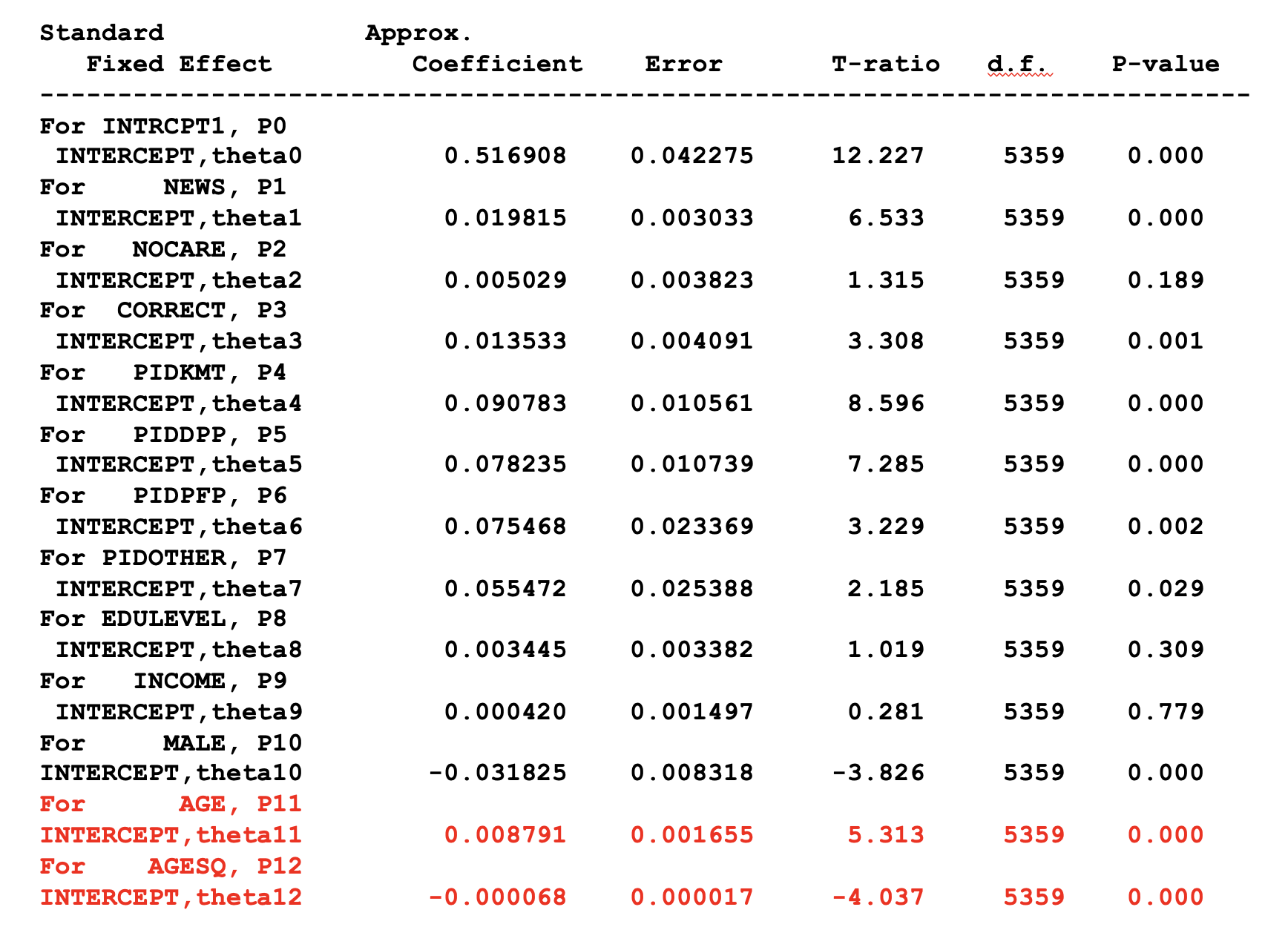
HAPC Logit Model of KMT Party ID - Random Intercept Parameterized - GDP Per Capita – Period, Not Cohort, Covariate
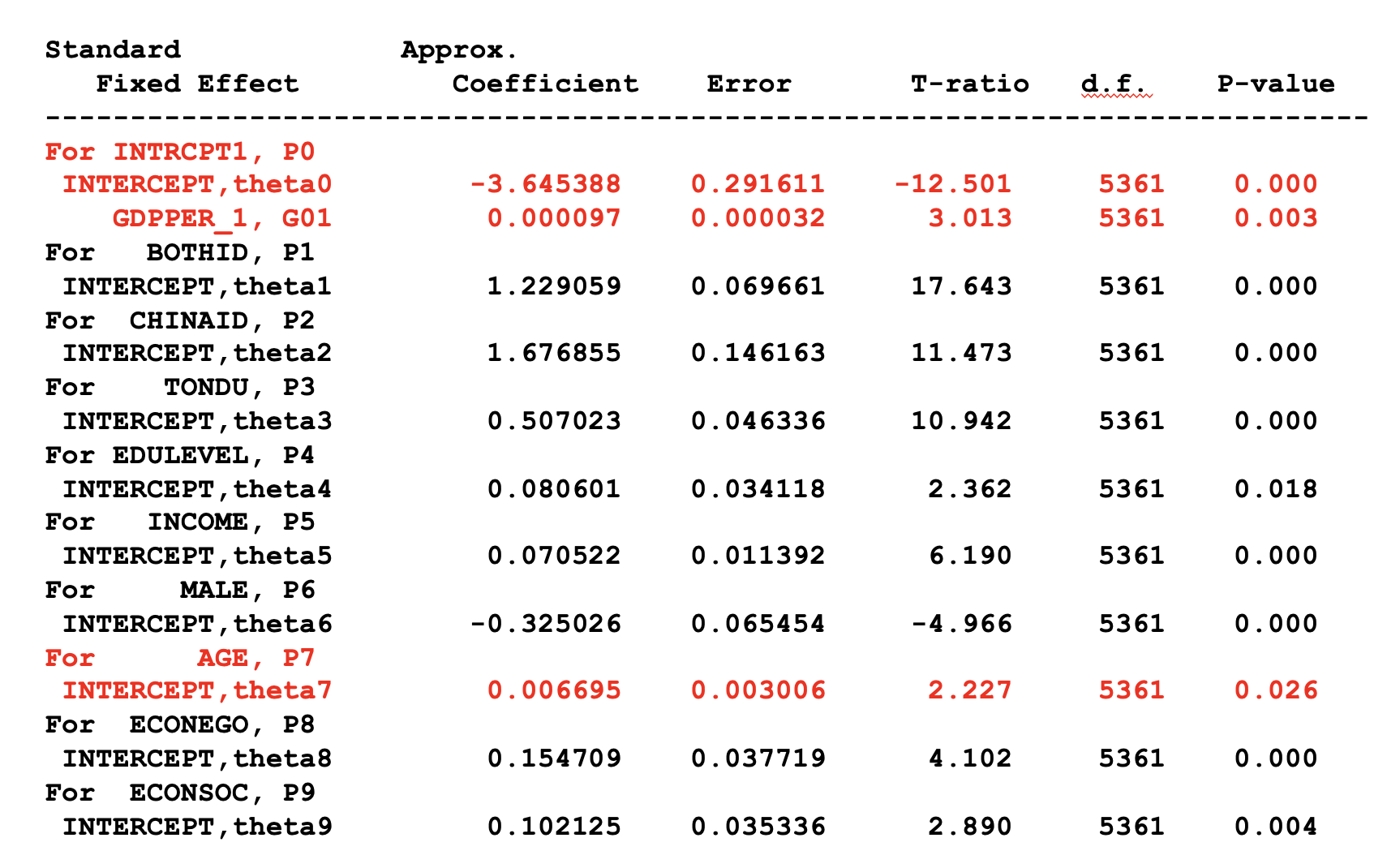
HAPC Political Efficacy Model With Period & Cohort Cross-Level Covariates
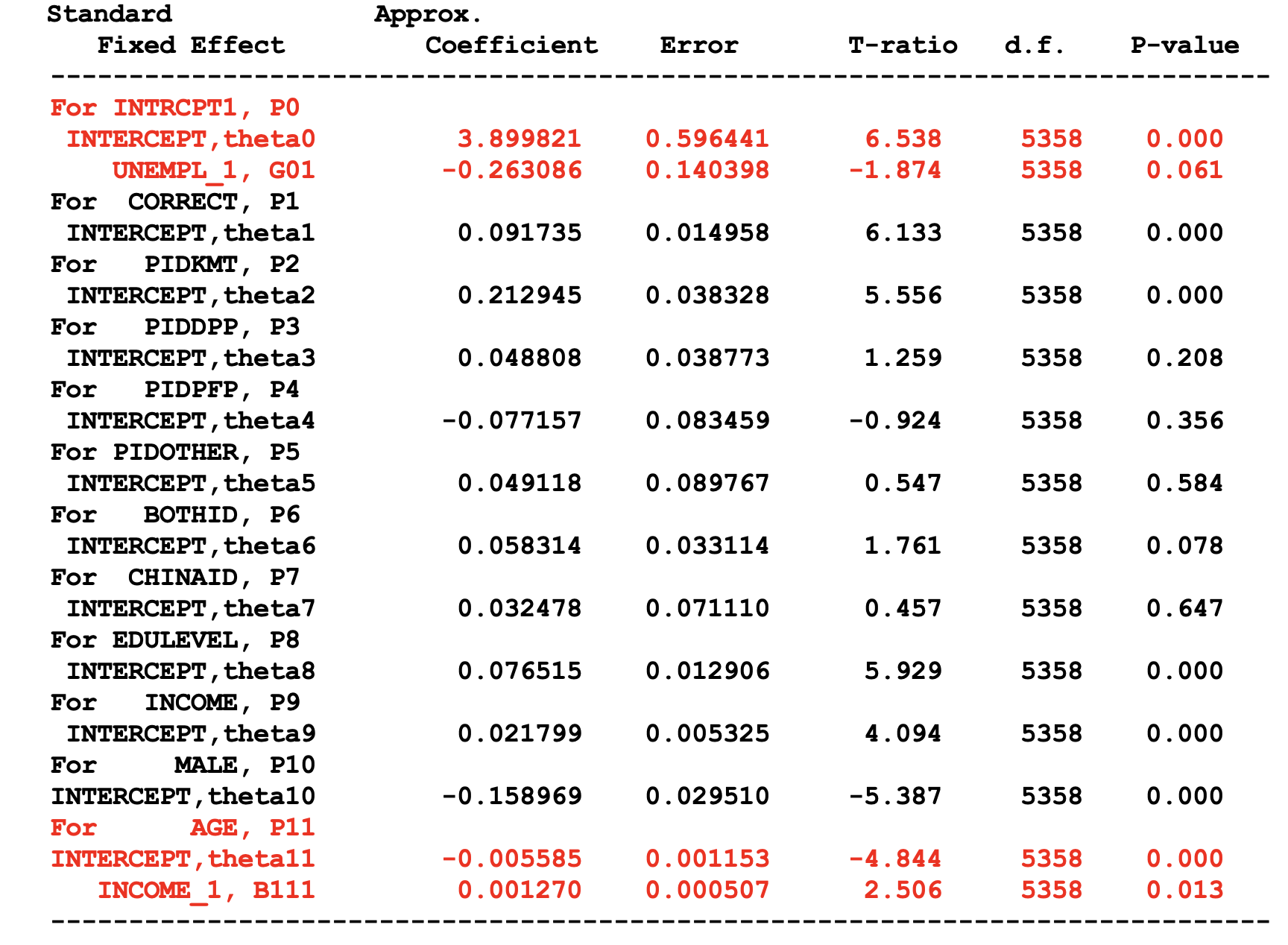
Political Efficacy and Age: Unemployment Random Intercept Effect
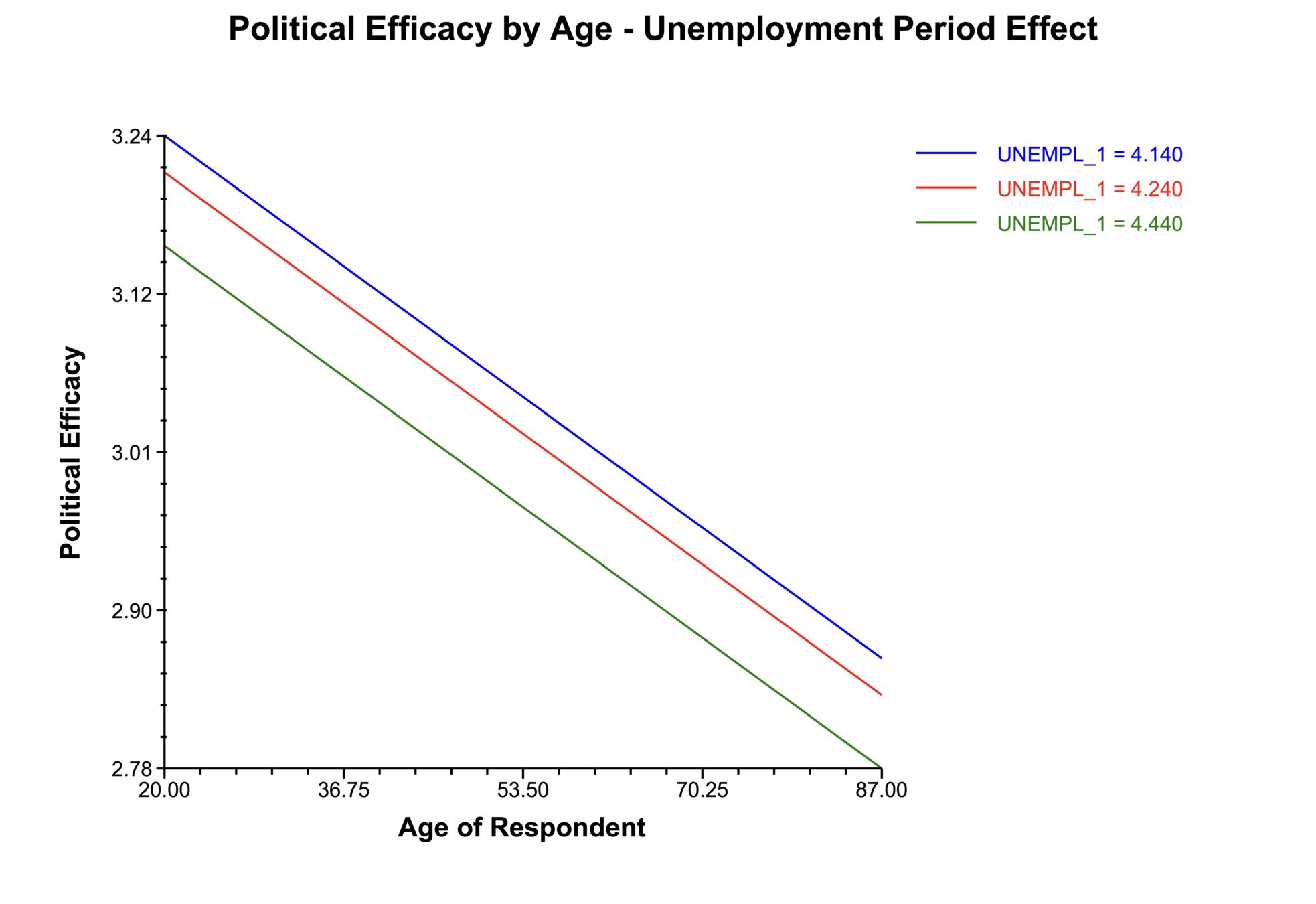
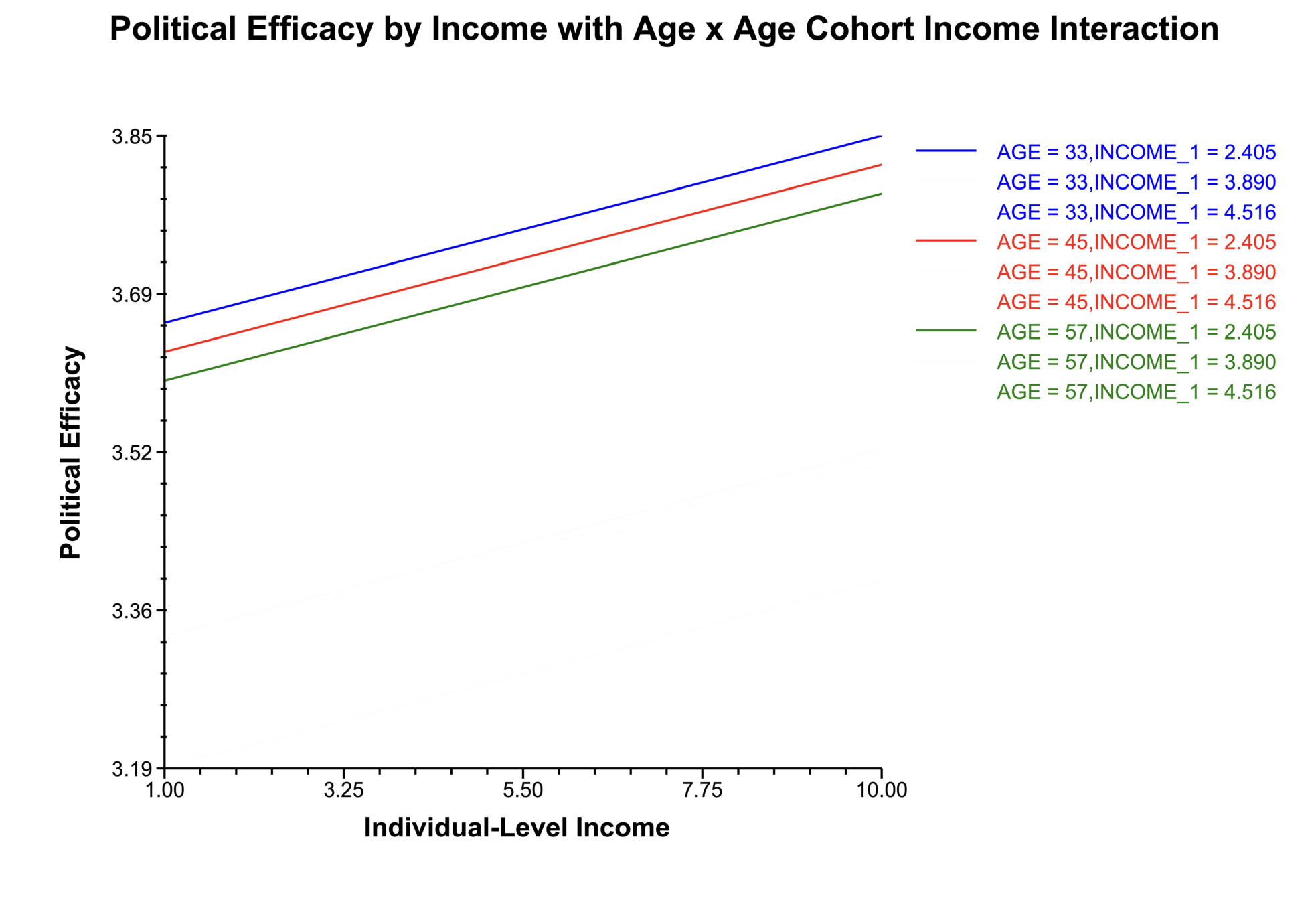
Political Efficacy: Age x Age Cohort Income Cross-Level Interaction