Looking for Romance Trends 2025-2026
Nat 'Nose' Connors
<nat@kindletrends.com>
Instalove University 2026
Me (v. briefly)
-
Small-town romantic comedy -
Short romance -
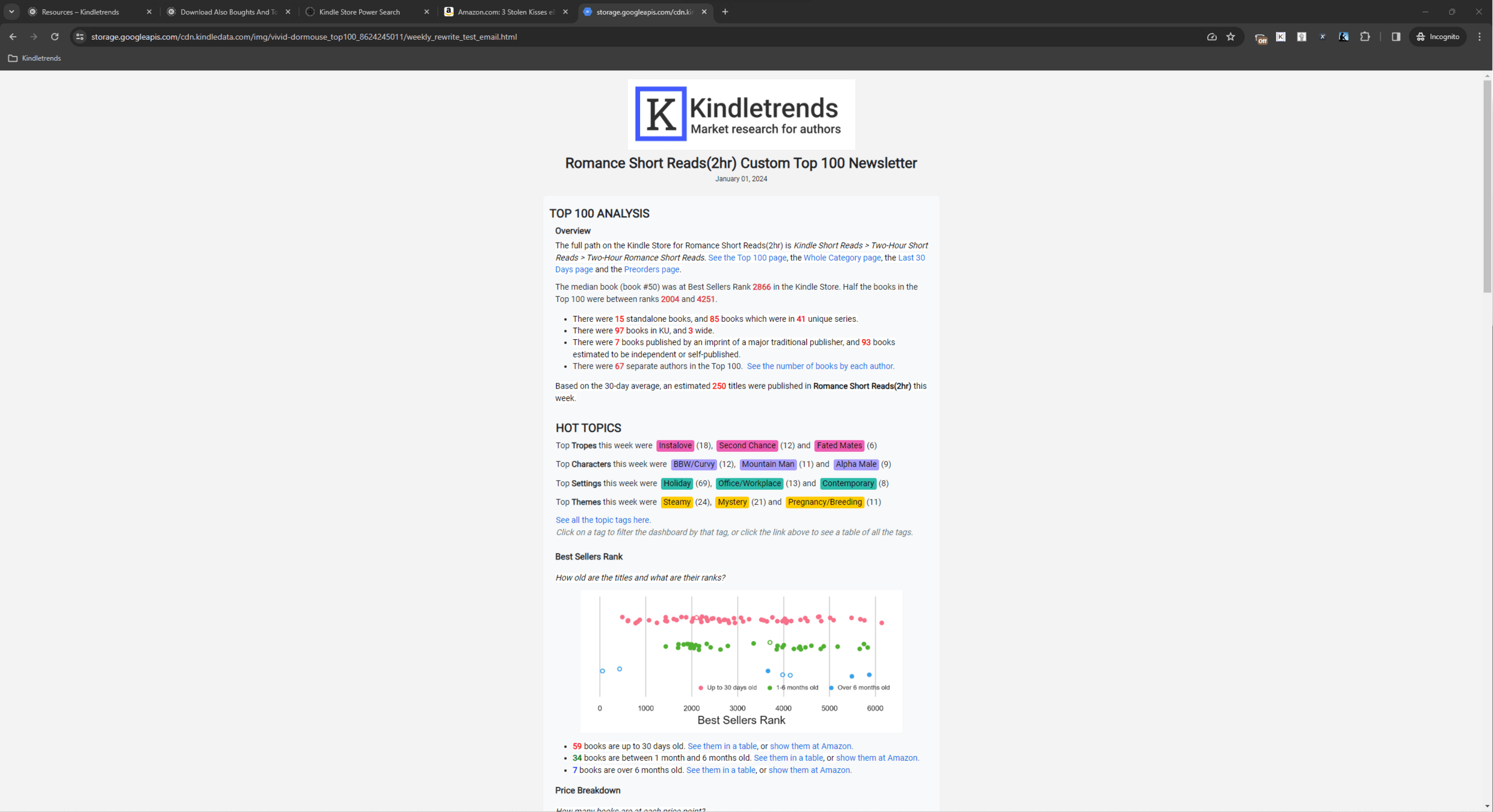
The Kindletrends newsletter
Kindletrends
-
Weekly and monthly information for your genre
- First month free
- You can cancel anytime you want
- One price for everything. No upselling, premium tiers, ads, or sponsorship.
- Use the code INSTALOVE during the conference, and subscribe for USD10/month forever.
Some free resources:
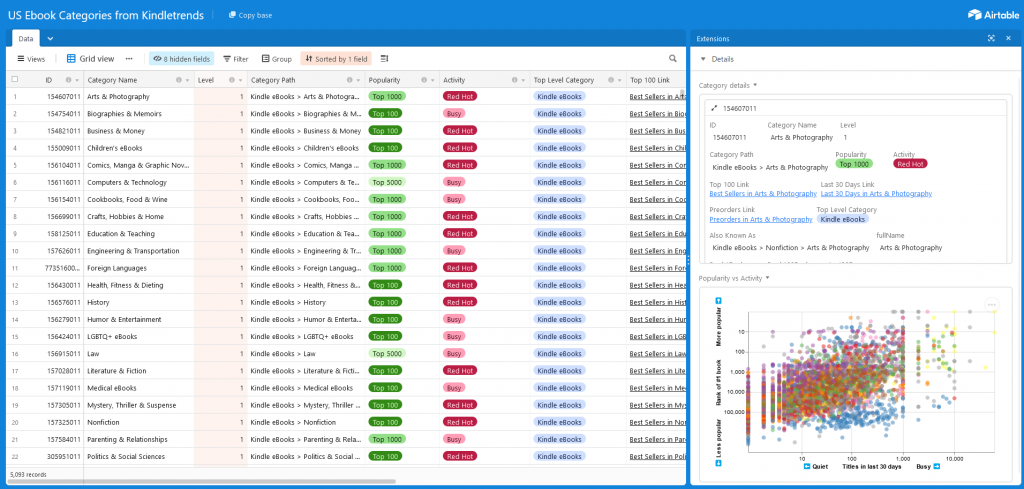
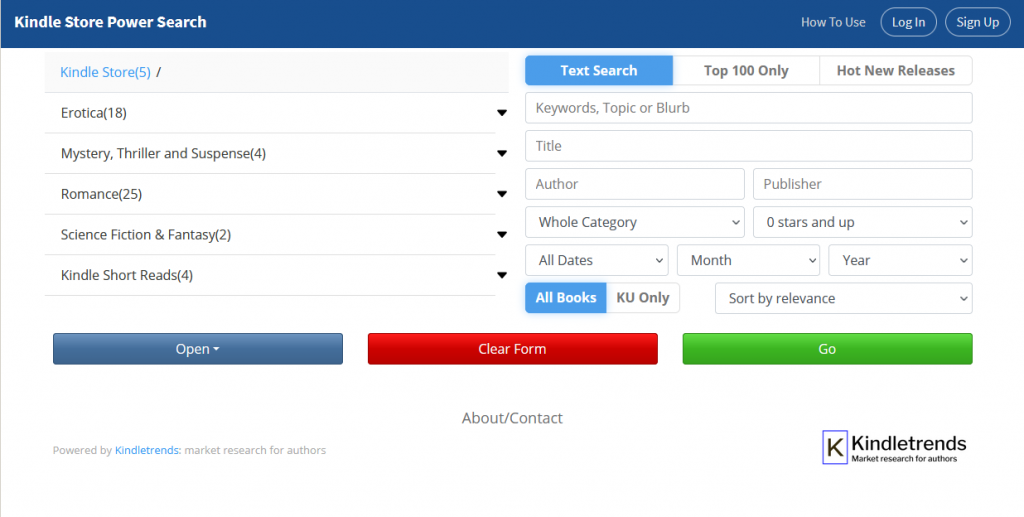
Listing all Kindle Store categories
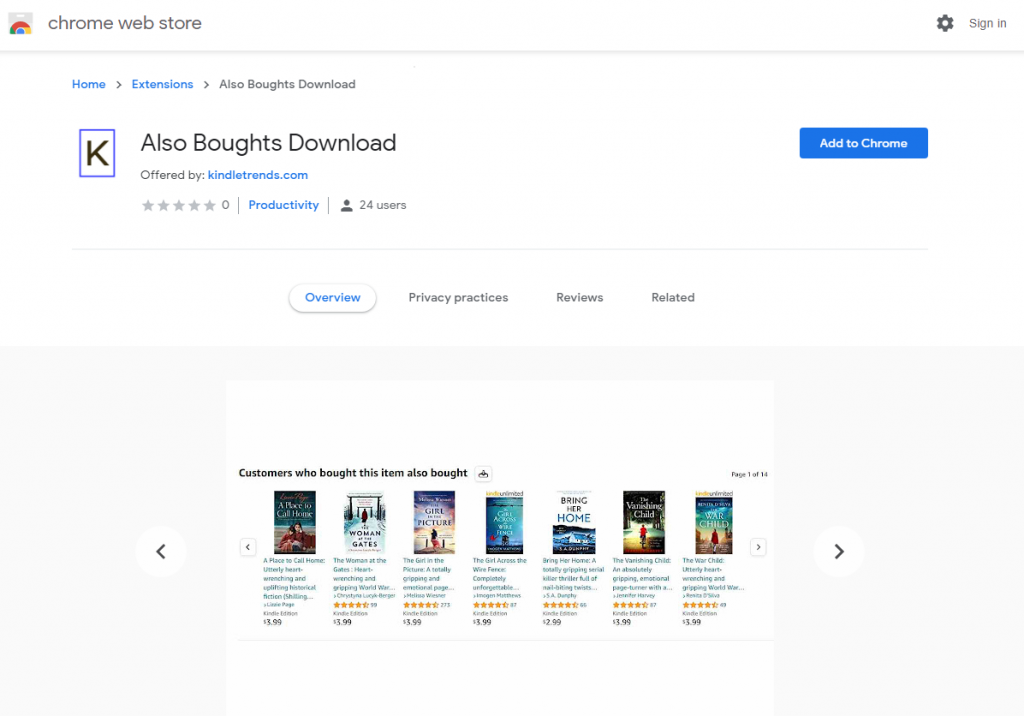
Downloading the Top 100
Searching the Kindle Store
Follow along!
This is a web-based slide presentation. To go forward, press the space bar, use the arrow keys, or swipe if you're on a touchscreen.
A story element
is a shorthand for a 'package' of emotions and experiences
Story elements month-by month
Story elements month-by month
I counted all the tropes/settings/character types/themes advertised in the bestselling 400 books, month-by-month
Some of them were simple, like 'Enemies to Lovers'
Others were 'umbrella' terms: 'Duke', 'Earl', 'Baron' -> 'Aristocracy'
The goal was to get an idea of what changed over the year
Romance Overall
Historical Romance
Paranormal Romance
What this means
What this means
(At this high level) romance genres aren't as 'trendy' as we might think (or worry about)
The things that were popular at the beginning of last year - were basically still pretty popular at the end of last year
We can slice and dice the approach, and change trope/element definitions, but it doesn't change the result (much)
Big changes do happen - but not often
This is a good thing
What can we do then?
Maybe
The changes we perceive aren't about high-level tropes or settings
Instead, they are about interpretation and communication - how these popular story elements are interpreted, and how they are communicated to readers
Let's try some other ways to look at them
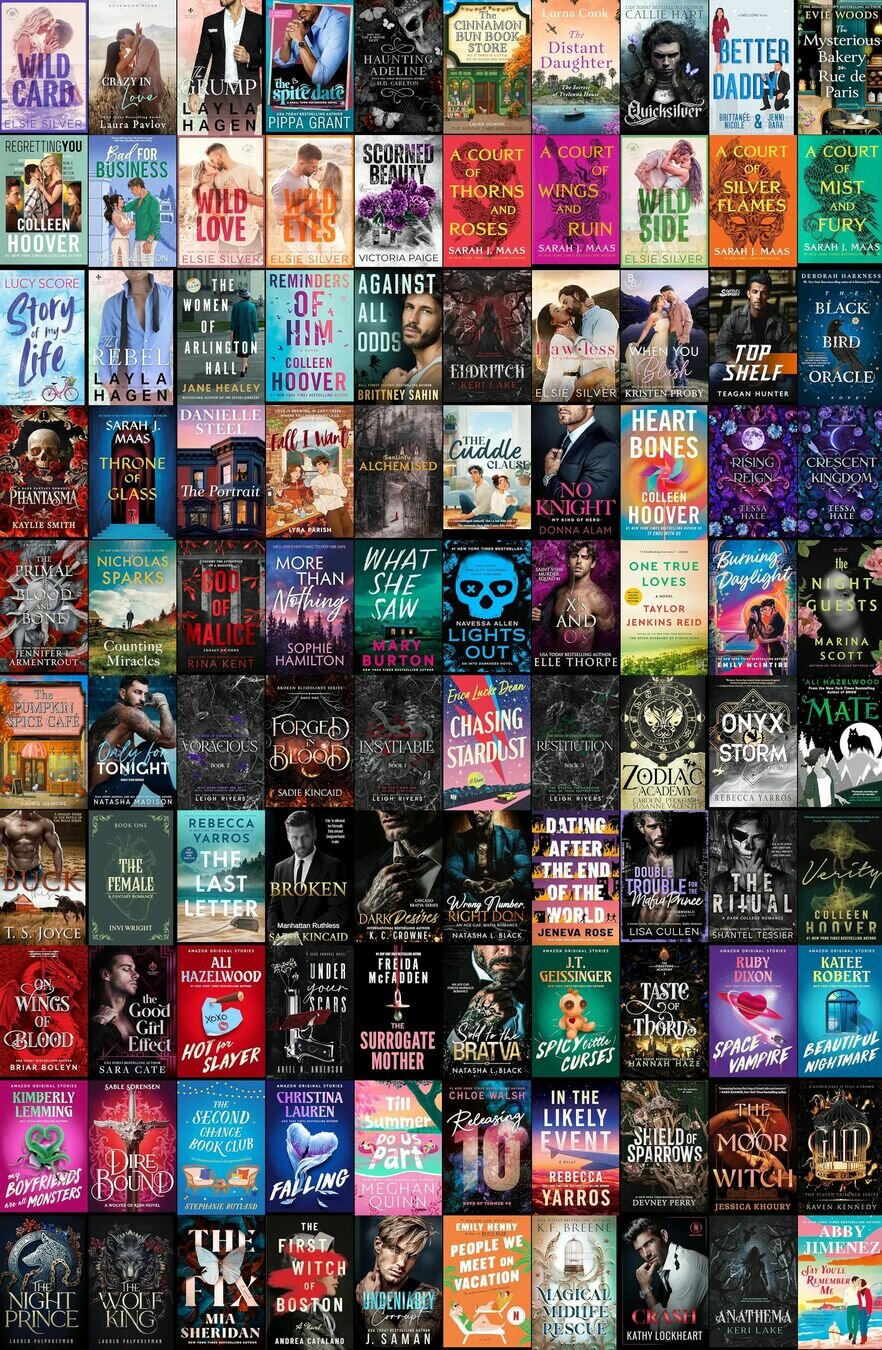
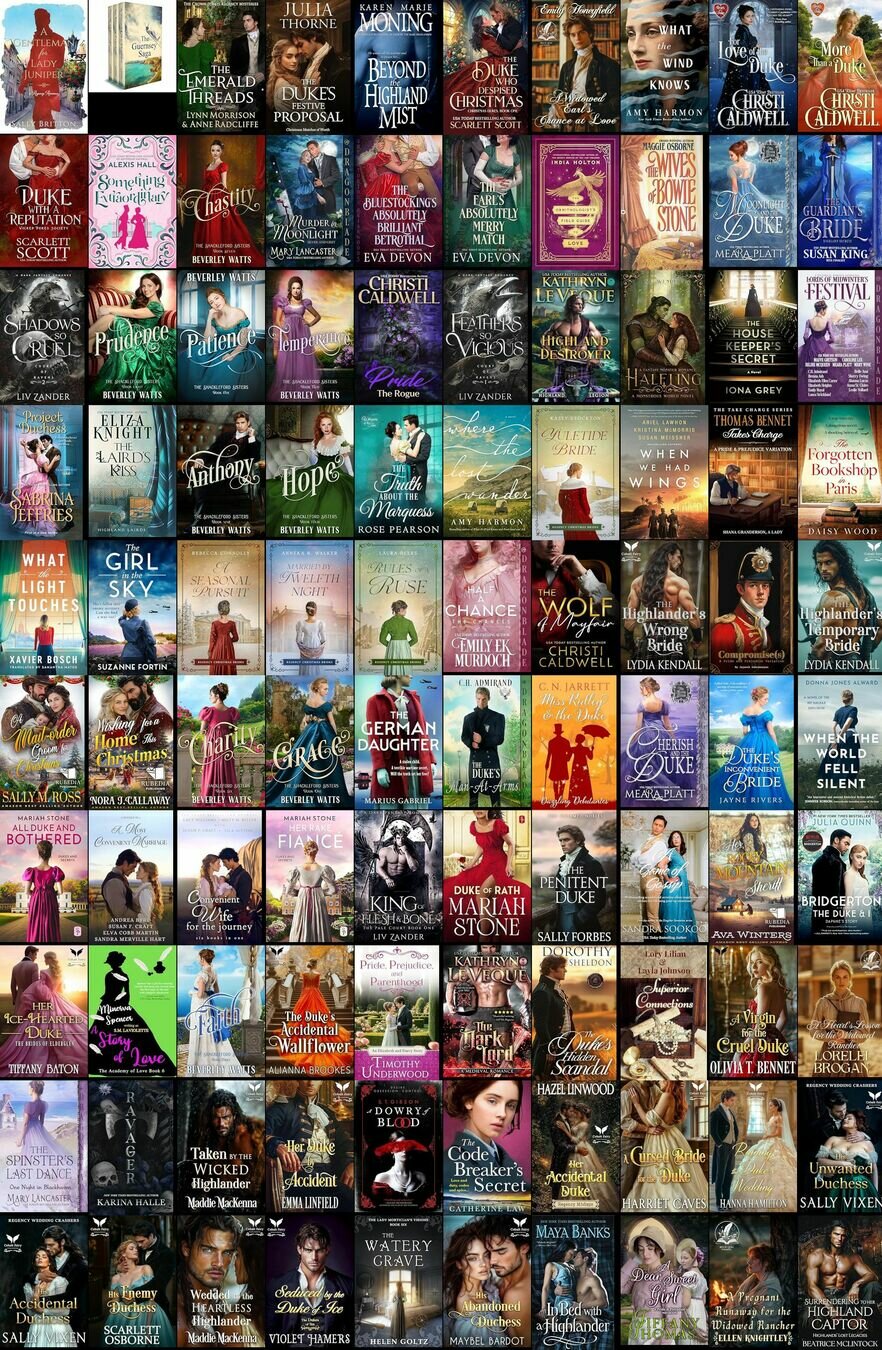
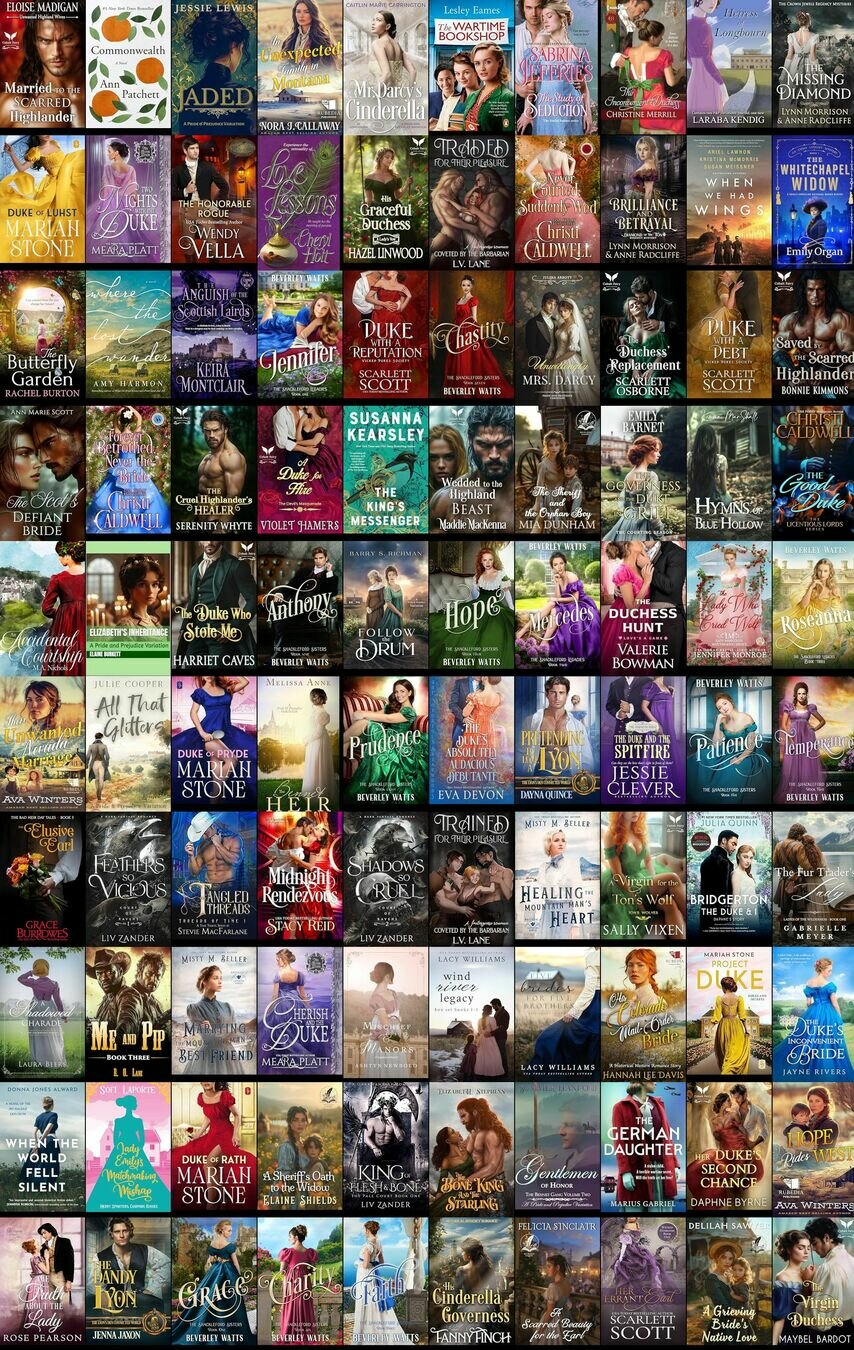
Covers
Covers
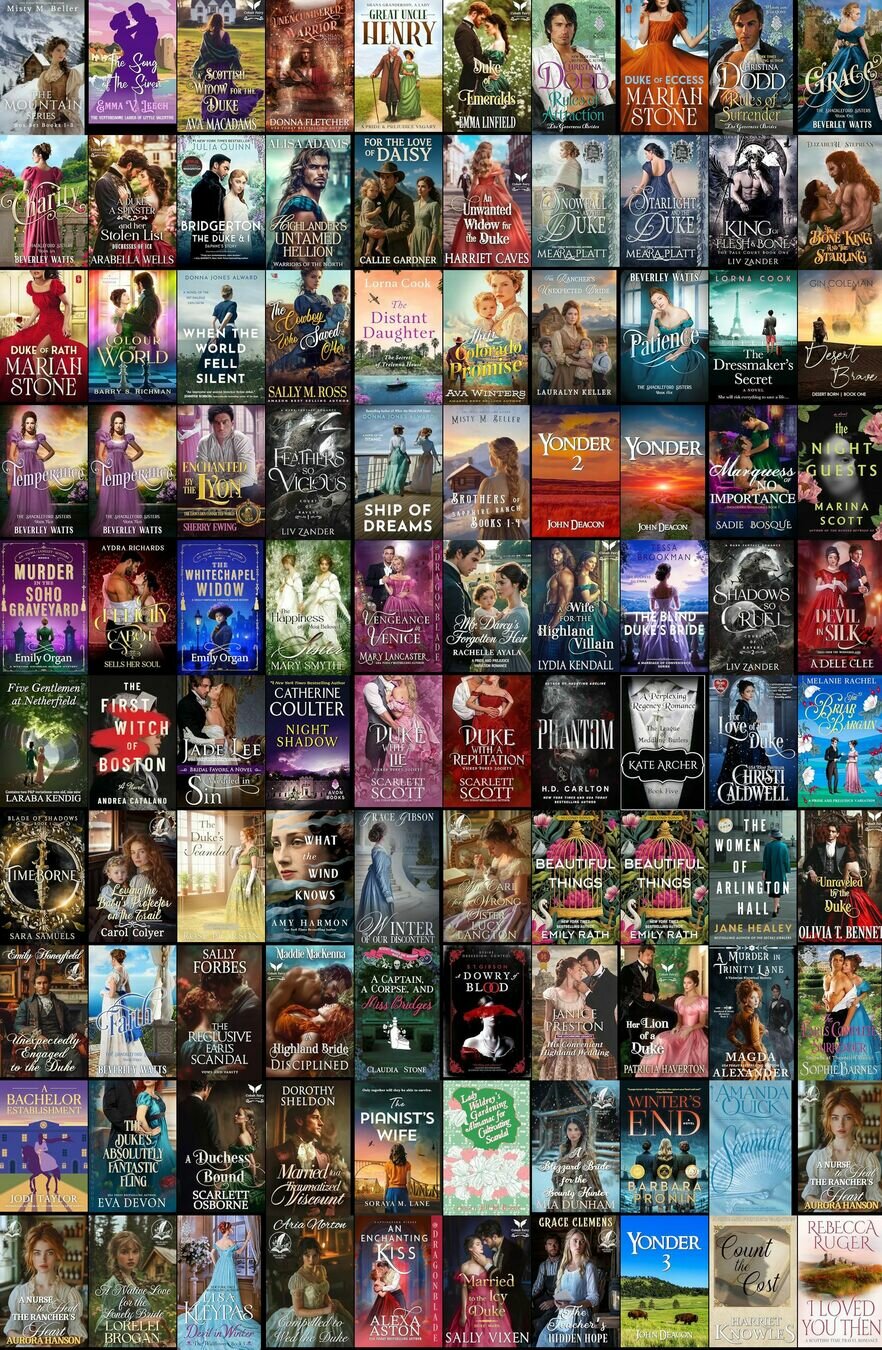
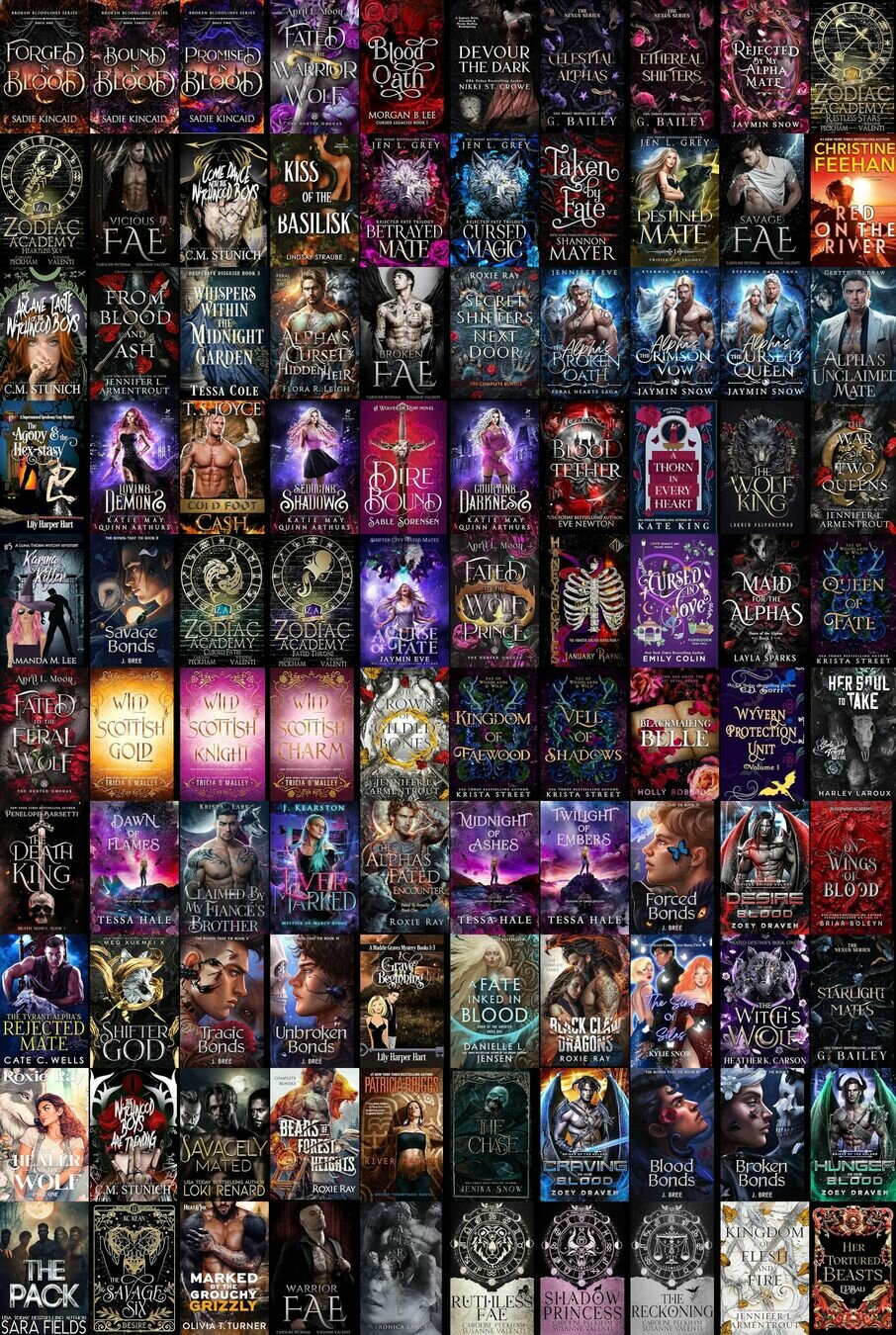
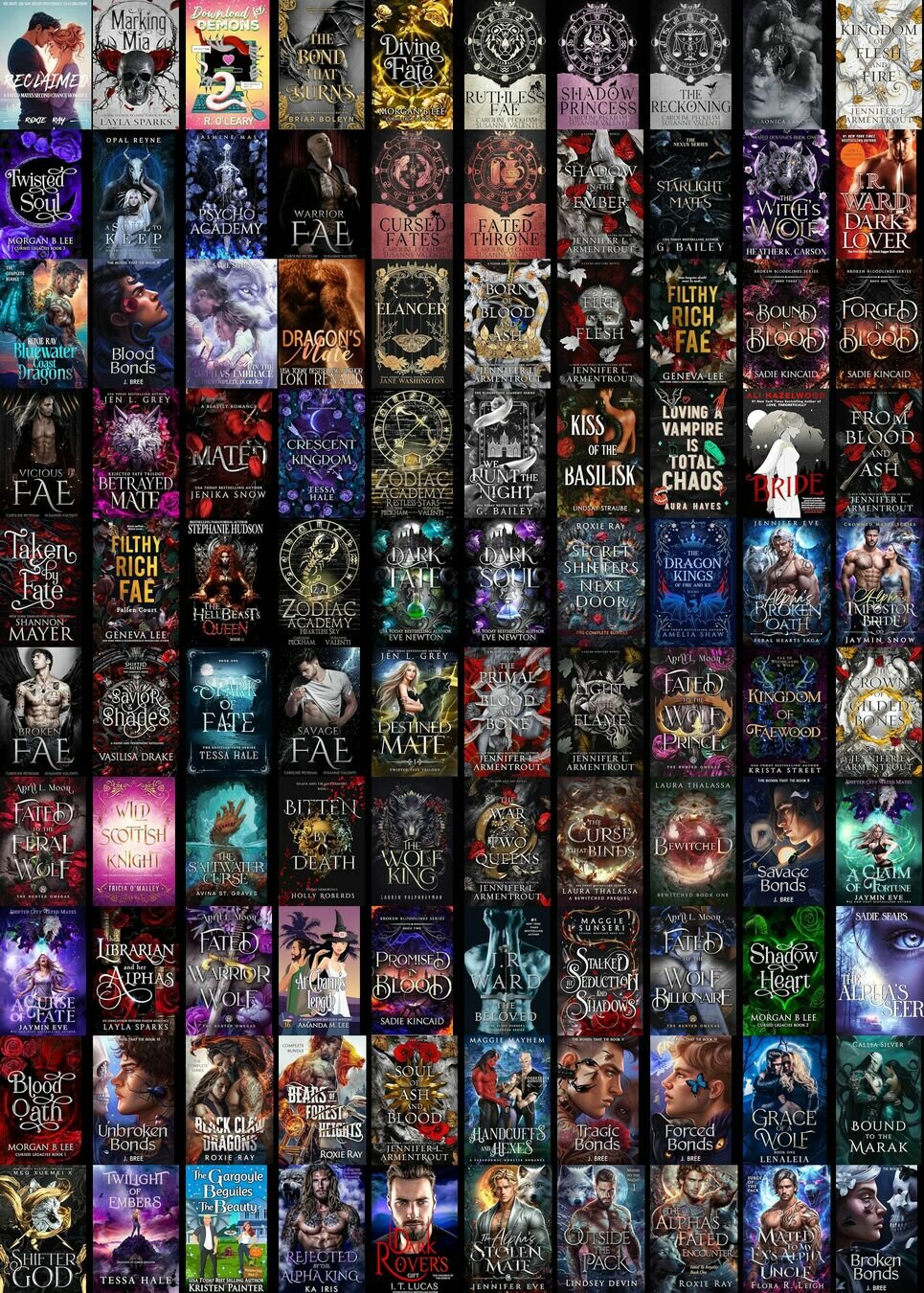
We know that cover elements communicate genre expectations, as well as series and author branding
Let's look at Top 100 covers from each quarter of last year
Romance Overall
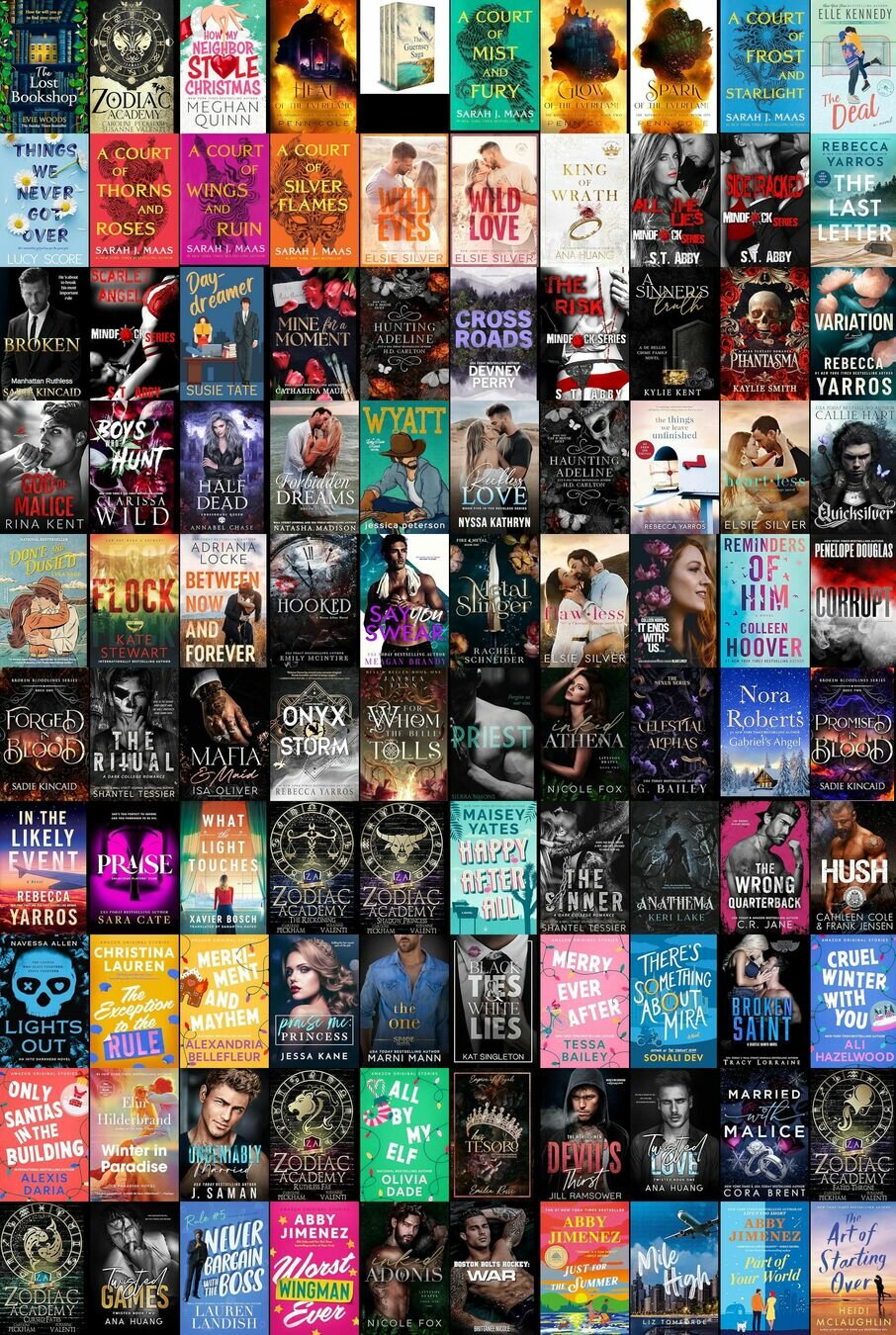
January 2025
April 2025
July 2025
October 2025
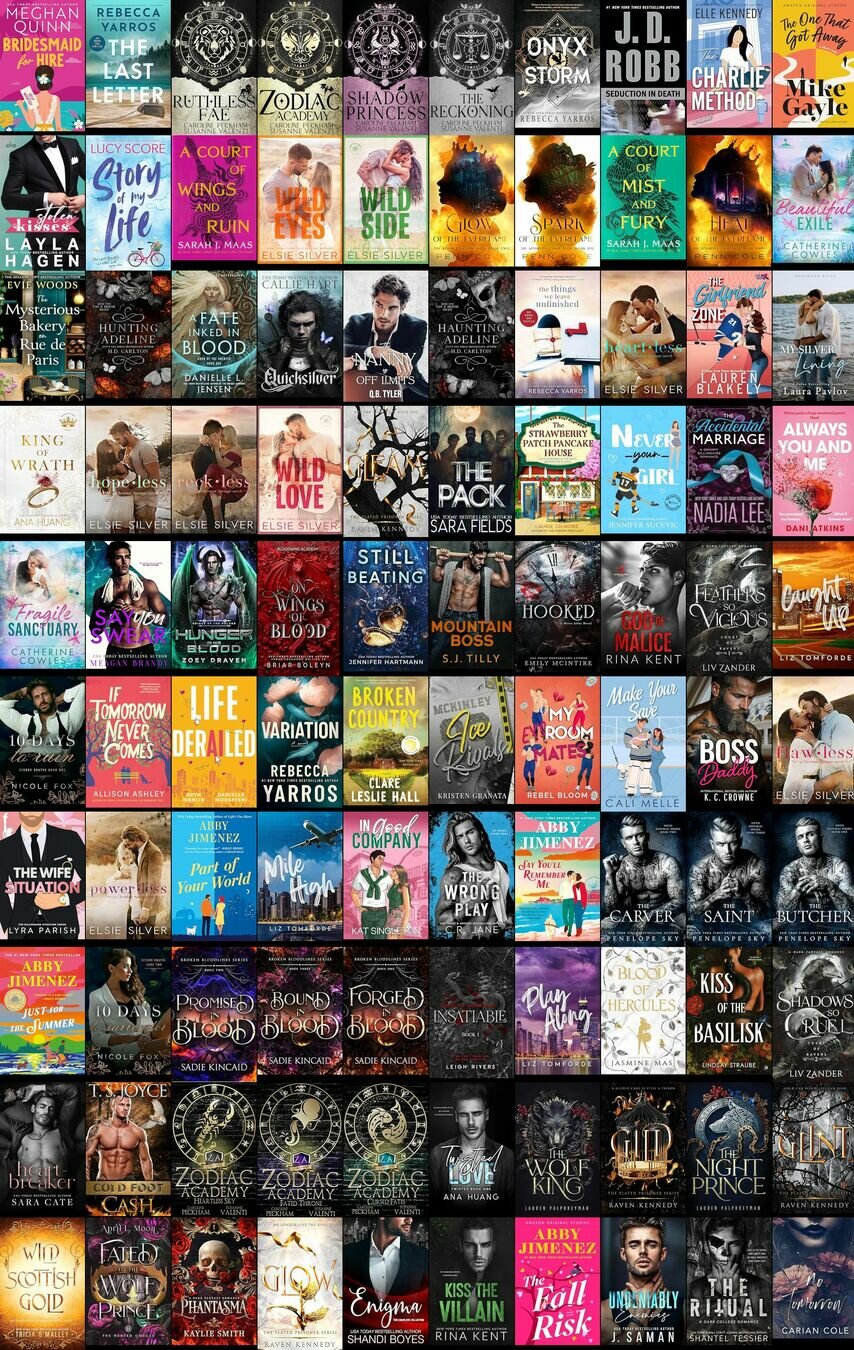
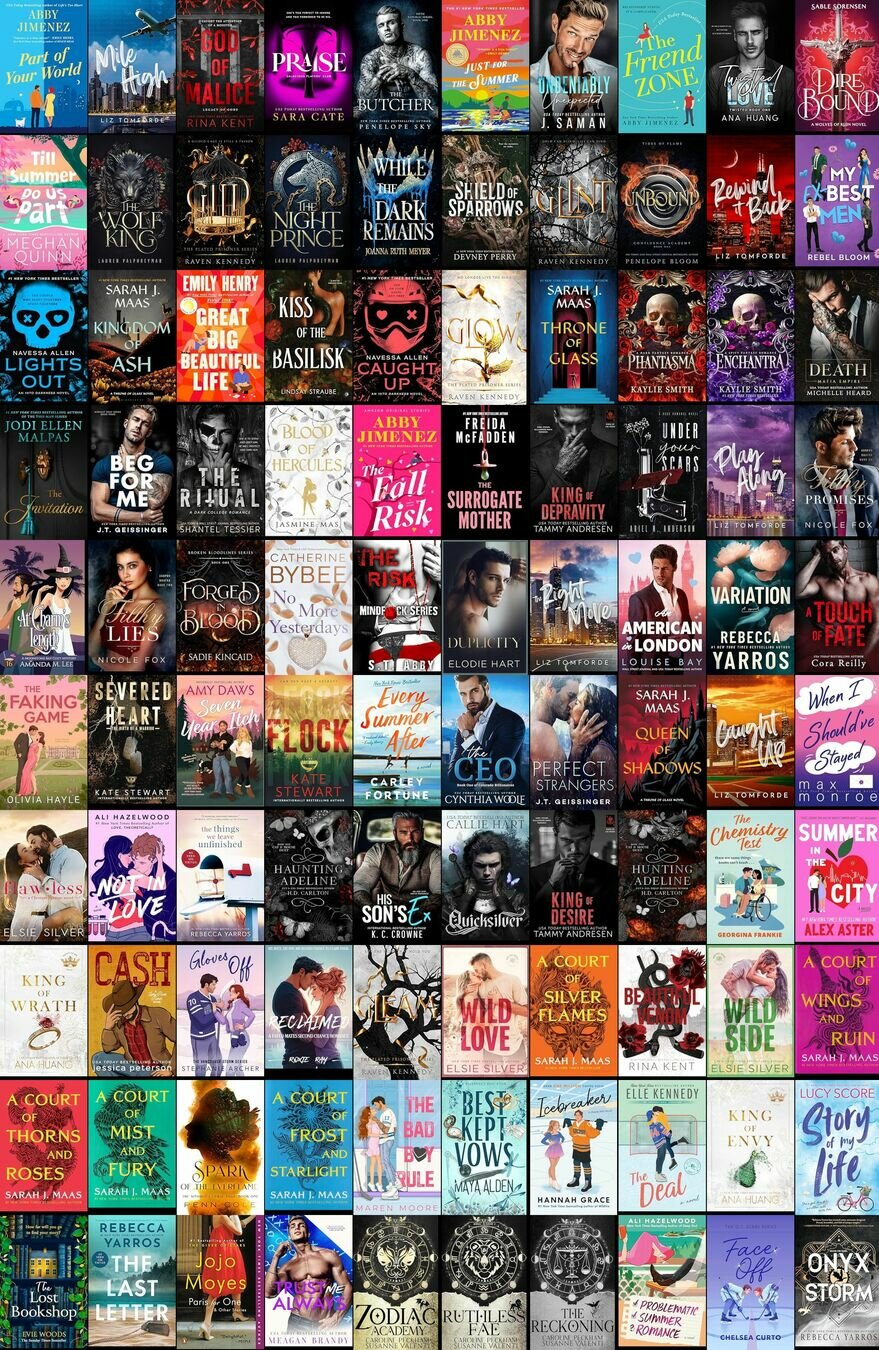
Historical Romance
January 2025
April 2025
July 2025
October 2025
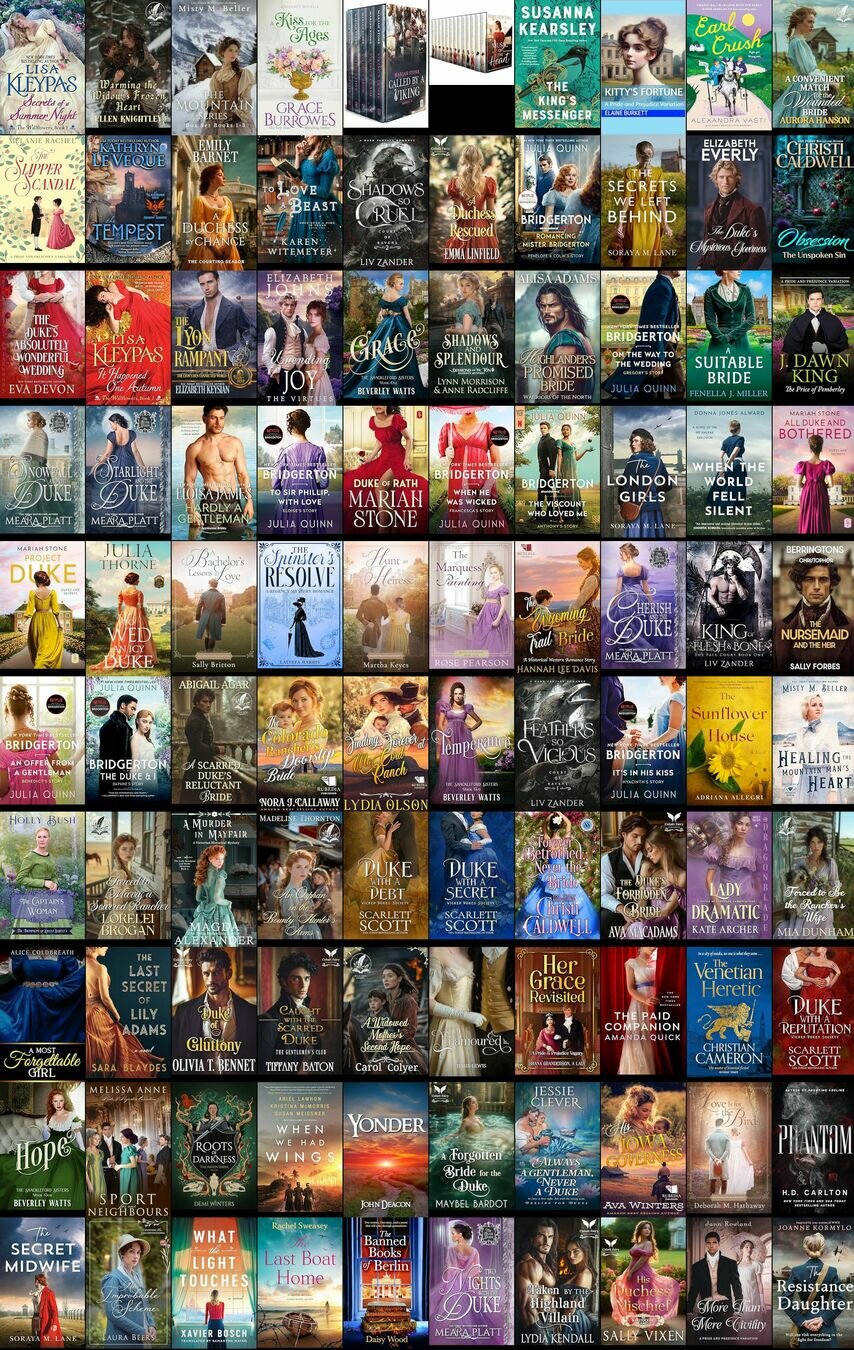
Paranormal Romance
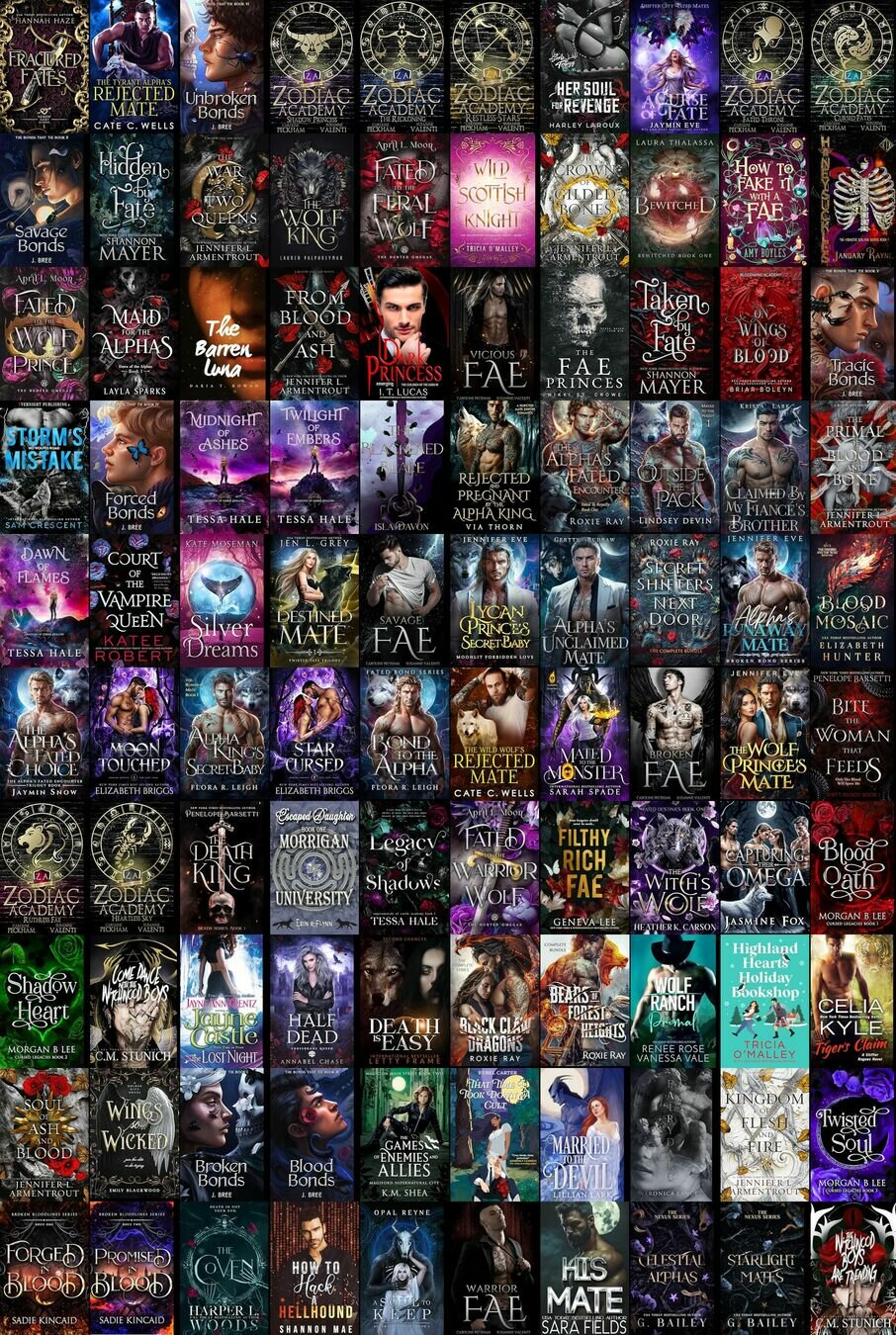
January 2025
April 2025
July 2025
October 2025
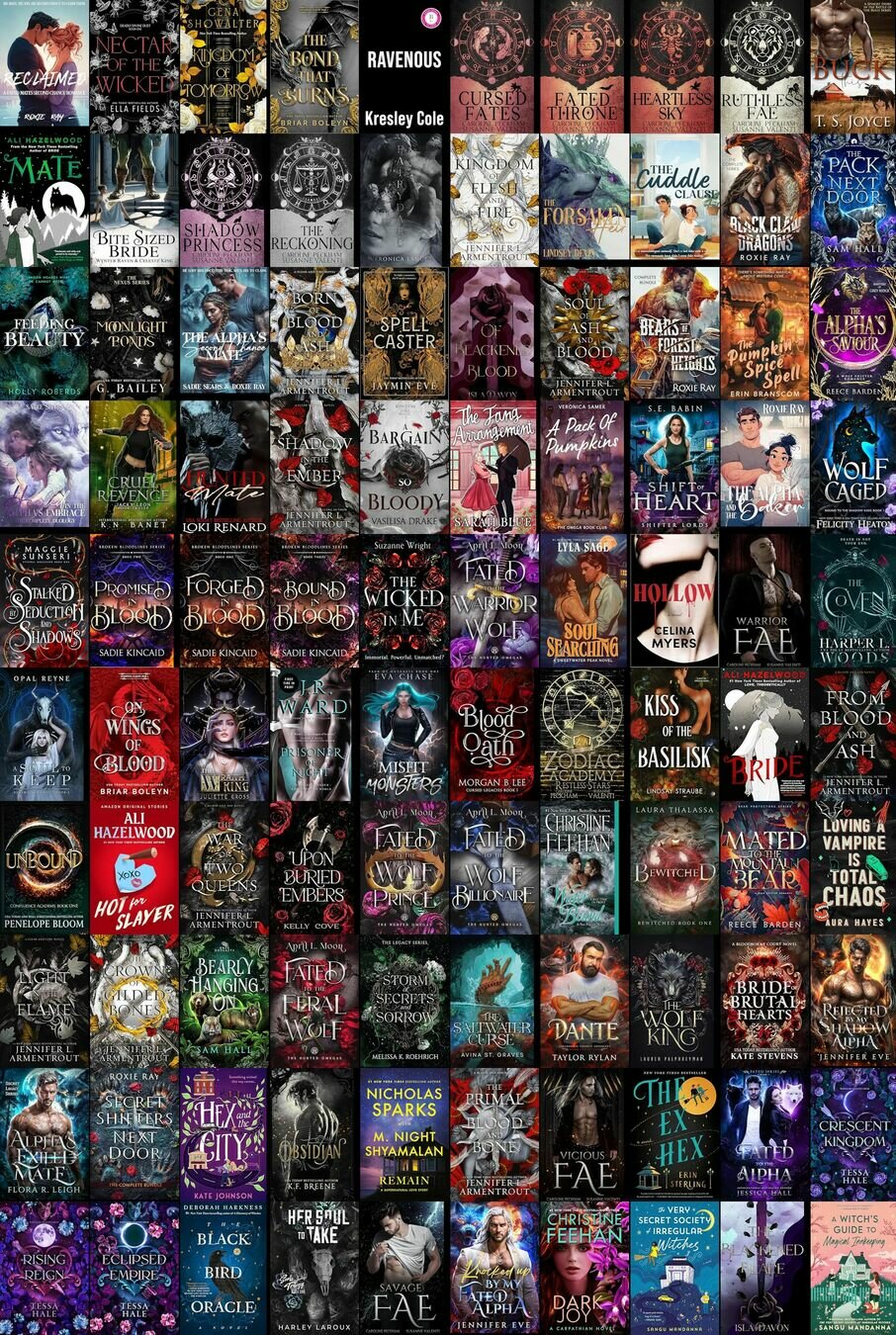
What did we learn?
Cover elements indicate subgenre very clearly, and maybe tone a little bit
They don't (usually) tell us as much about what's in the story
It's quite difficult (at the moment) to see obvious broad-based changes by looking at covers
Some changes do seem to be visible, but they are often just one or two covers, so hard to know how important they are
Blurbs
Blurbs
We know that blurbs expand and add detail to the promises that are made in covers
Those promises are often about tone and atmosphere as much as they are about actual plot elements
We're interested in changes to blurbs at a detailed level
Blurb Changes
What are authors talking about in January 2026 that they weren't in January 2025?
I counted the words in Top 100 blurbs in January 2025, and compared them to the words in January 2026
This approach takes a bit of thinking to interpret, but it can tell us things that aren't obvious in other ways
Romance Changes 2025-2026
Romance Changes 2025-2026
'player' - Heated Rivalry
'brutal/warrior/gold/
ancient' - more romantasy
'hollywood' - Golden Age mystery romances?
'bond' - romantasy influence?
Searching the blurbs
reveals:
Historical Changes 2025-2026
'julia' - partly Bridgerton, but partly as a more common character name(!)
'slow', 'burn', 'forced', 'proximity', 'trope' - tropes are being listed much more explicitly than in 2025
Searching the blurbs
reveals:
Historical Changes 2025-2026
Paranormal Changes 2025-2026
Paranormal Changes 2025-2026
'bear' - definitely more bear shifters in 2026
'holiday' - more Christmas stories in the Top 100 in 2026
Searching the blurbs
reveals:
'cliffhanger' - oddly enough this isn't just 'no cliffhangers' (!)
Conclusions
(1) At a high level, popular story elements stay popular
(2) But the ways that story elements are interpreted and communicated do change
Covers: Illustrated vs. photorealistic vs. object 'discreet' covers.
Font choices: Serif vs. sans-serif vs. script
Blurbs: Sometimes we see seasonal changes, like the increase in Christmas stories in Paranormal
Sometimes it's words related to trope/genre, rather than an explicit mention of it (e.g. romantasy-adjacent words)
But also structural changes in blurbs, like trope lists in Historical Romance
(3) Doing this yourself
Kindle Power Search
https://kpowersearch.com/
Also Boughts and Top 100s Downloader
https://kindletrends.com/download-also-boughts-chrome-extension/
Bonus: List of all Kindle Store categories
https://kindletrends.com/categories/
Kindletrends
A weekly and monthly market research newsletter
Research done for you, in your inbox every week
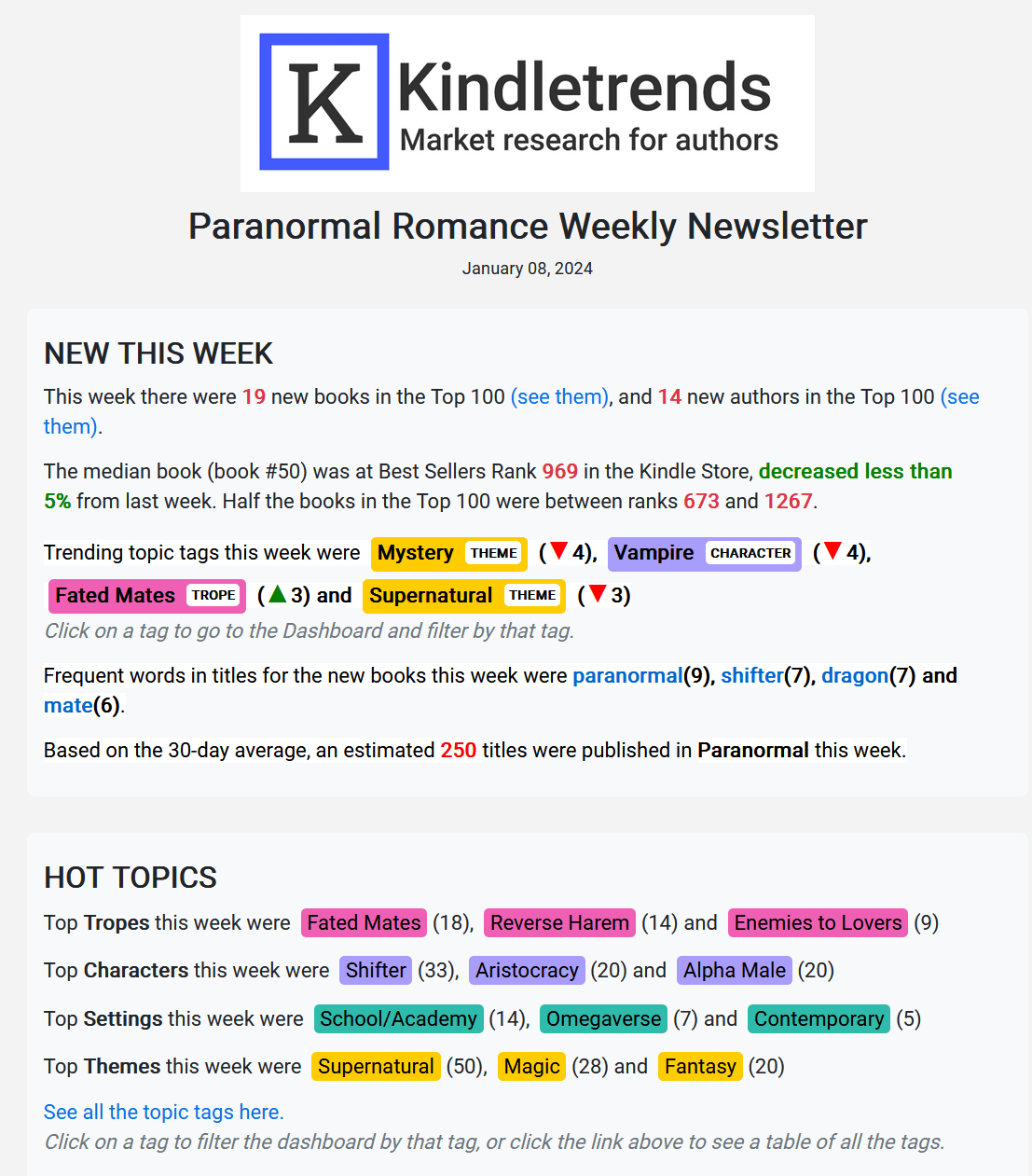
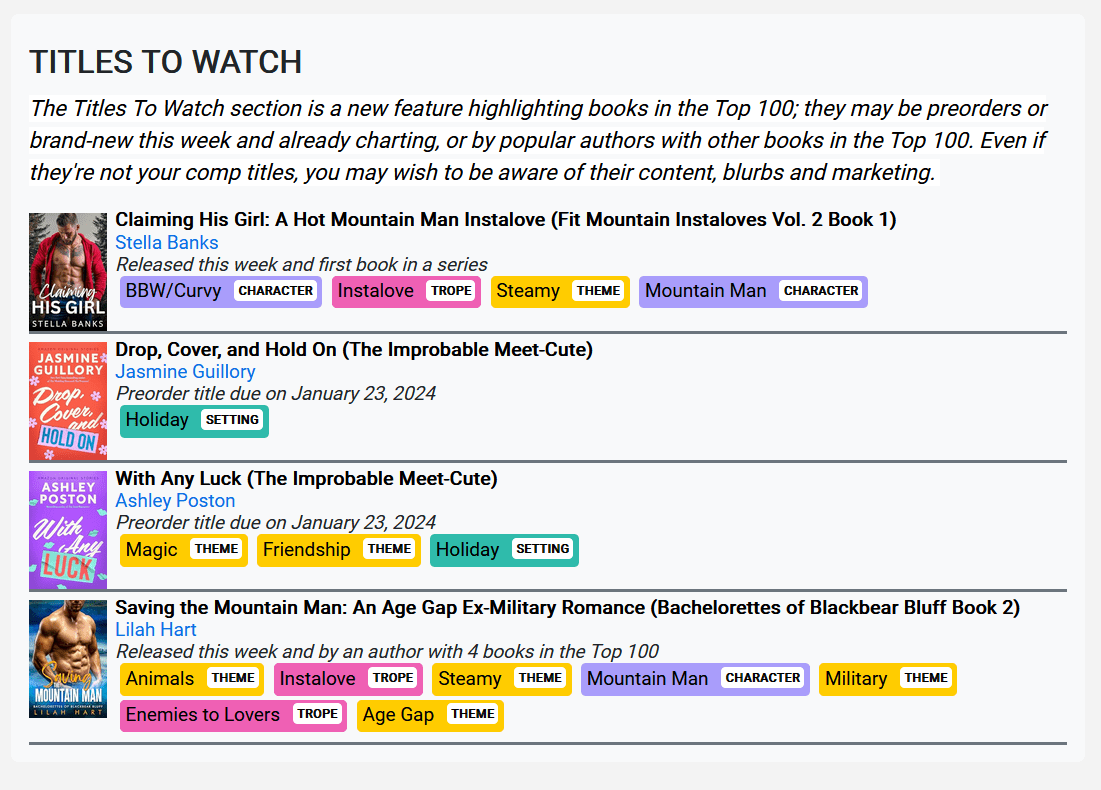
Summaries
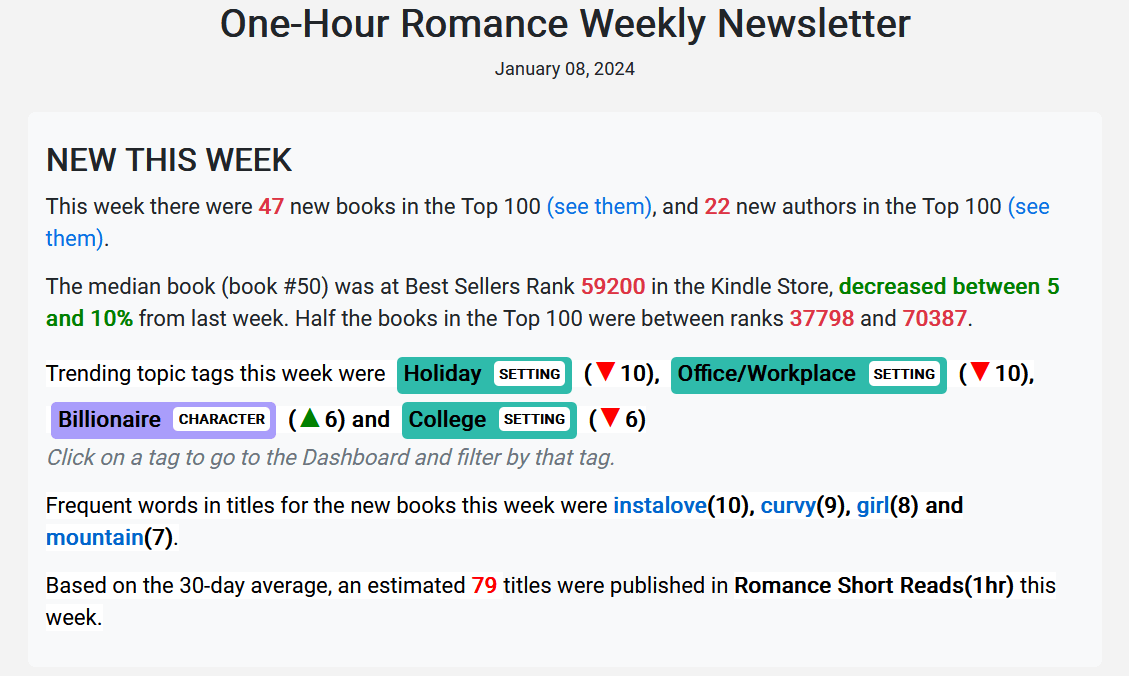
Interactive tools for research
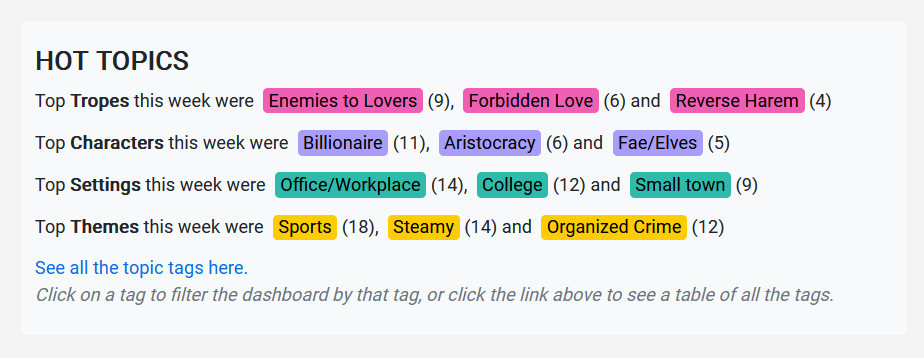
Alerts about books
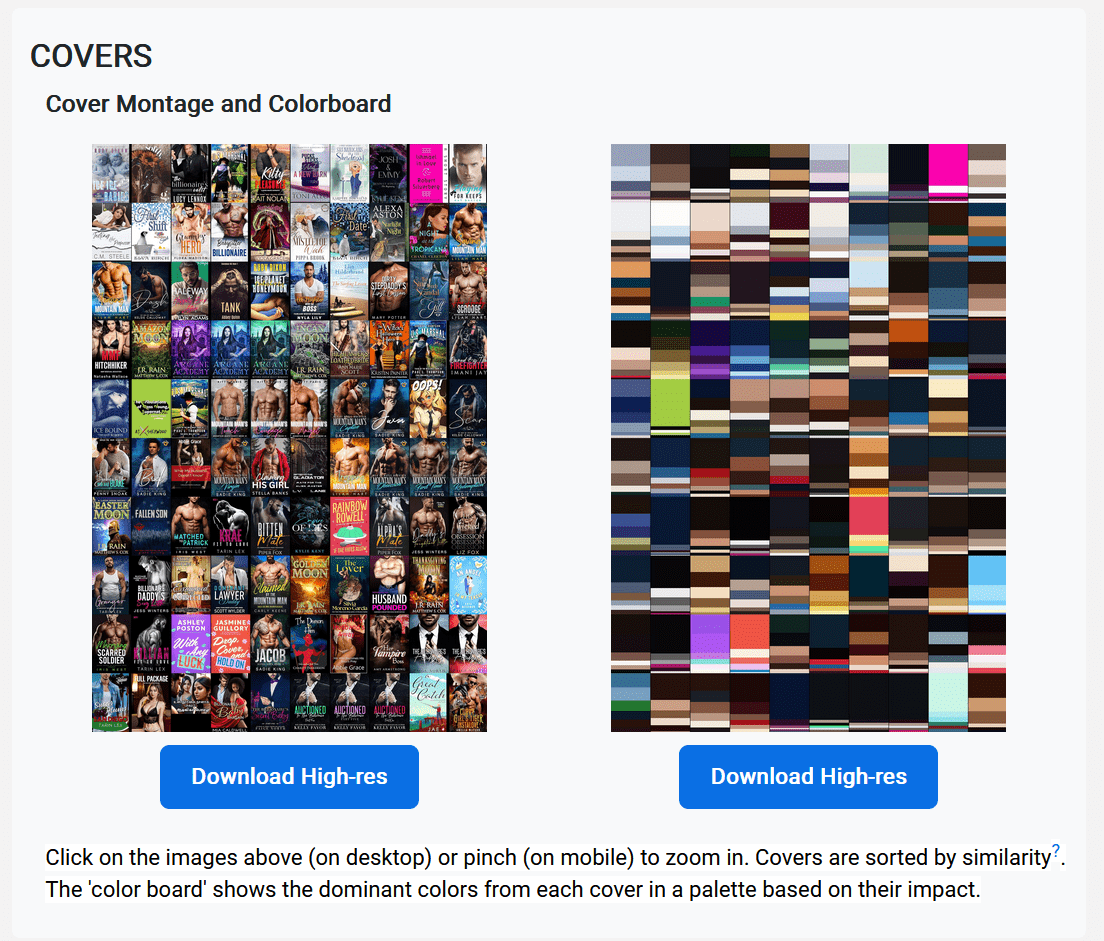
Cover montages
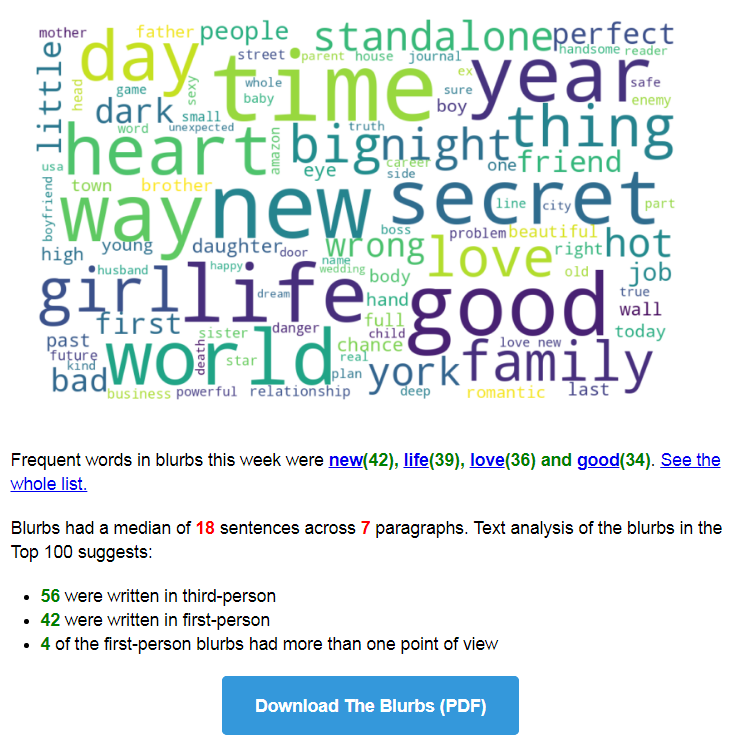
Blurb trends and details
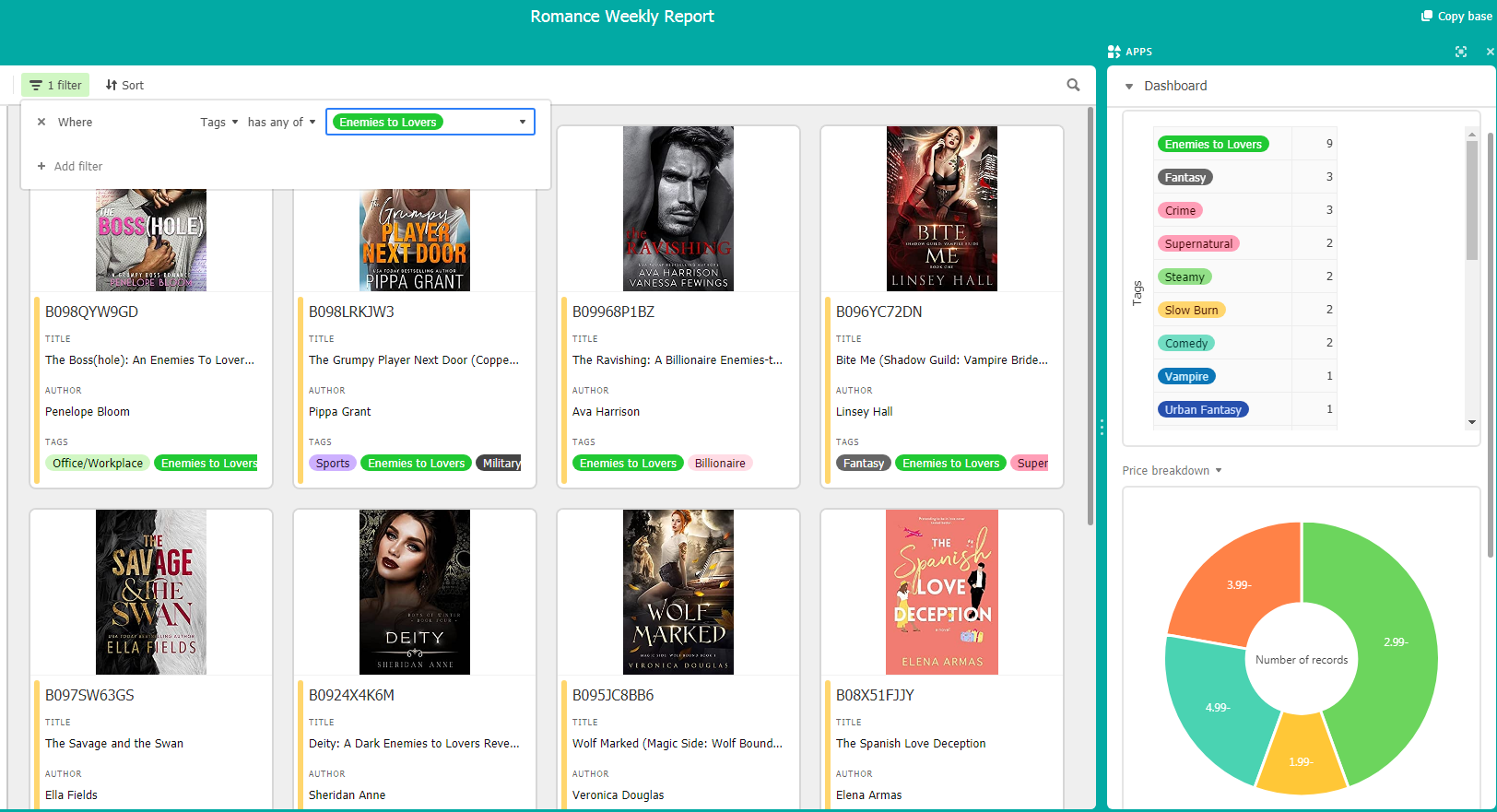
Filter for specific elements
14 genres in one subscription
Romance
One-Hour Romance (KSR)
Paranormal Romance
Gay Romance
Historical Romance
Science Fiction Romance
Mystery, Thriller & Suspense
Cozy Mystery
Science Fiction
Fantasy
Teen & Young Adult
Urban Fantasy
-
Your first month is completely free - You can cancel any time you want
- Use the code INSTALOVE during the conference, and subscribe for USD10/month forever.
Acknowledgements
Lana Love
Cassie Mint
Hope Ford
Frankie Love
Lizzie Dunlap from Pixie Covers
Elizabeth Brady
Thank you to all the authors and artists who helped with this talk
Hope and the Instalove University support team for giving me a chance to speak
All of you for your time and attention
Thank you for watching!
For more free resources, check out:
For the slides for this talk: