When do disks form?

"At the beginning."

Animation by S. Raymond
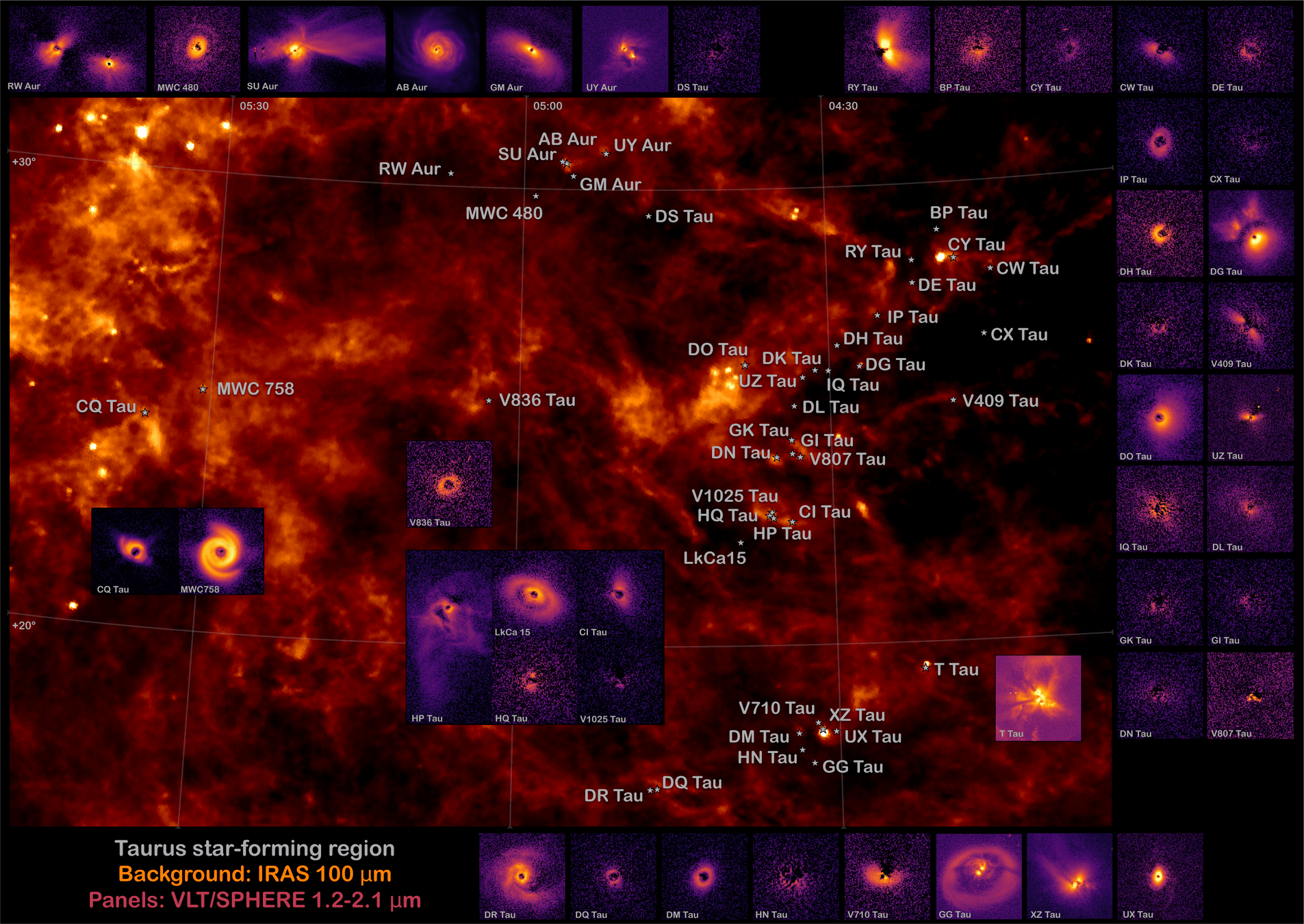
Credit: Garufi et al. 2024
Issue: disks are rarely isolated.
Two phase process:
Obligatory initial collapse followed by varying amount of post-collapse infall
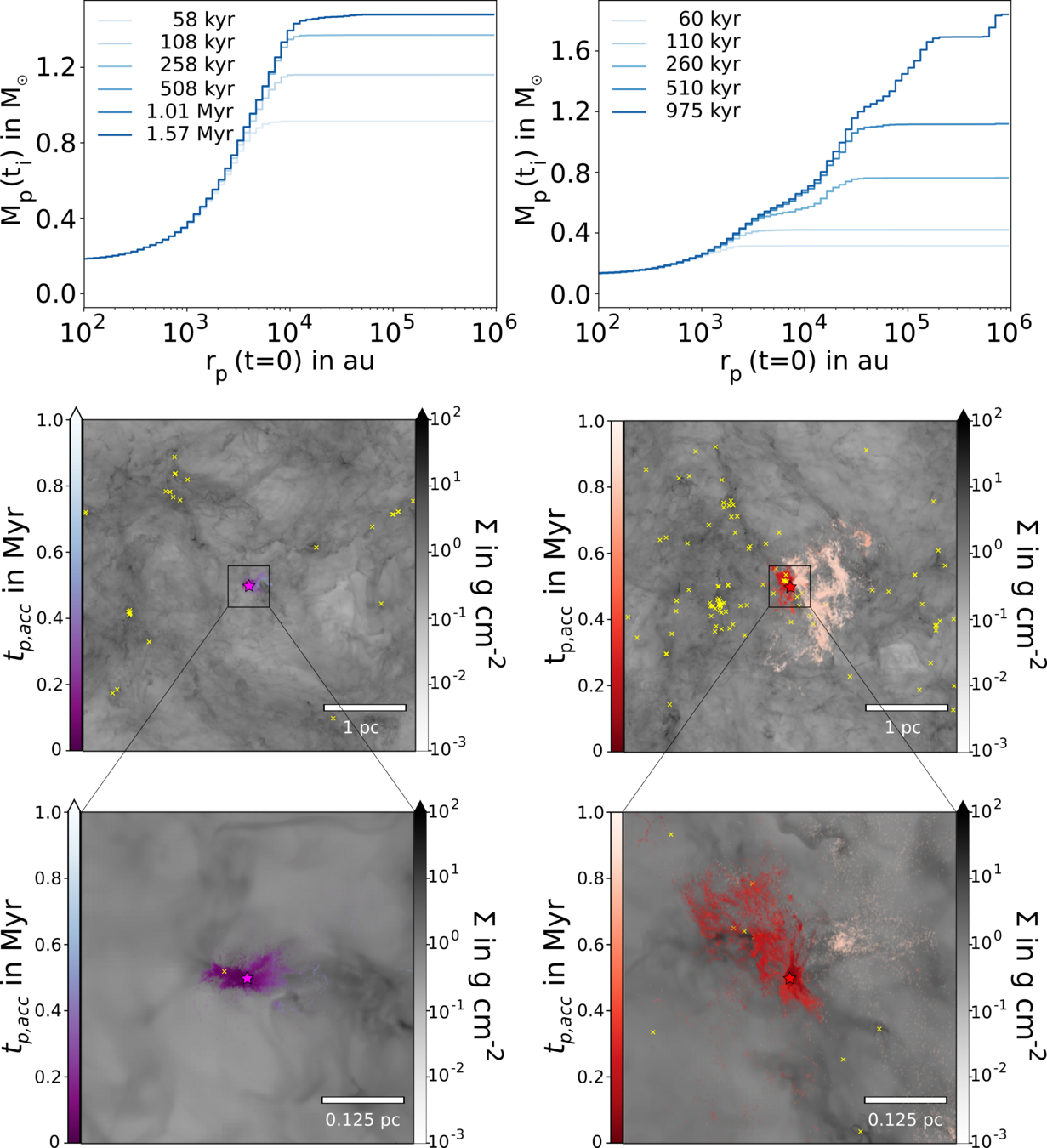
Küffmeier, Jensen & Haugbølle '23
Star formation is two-phase process
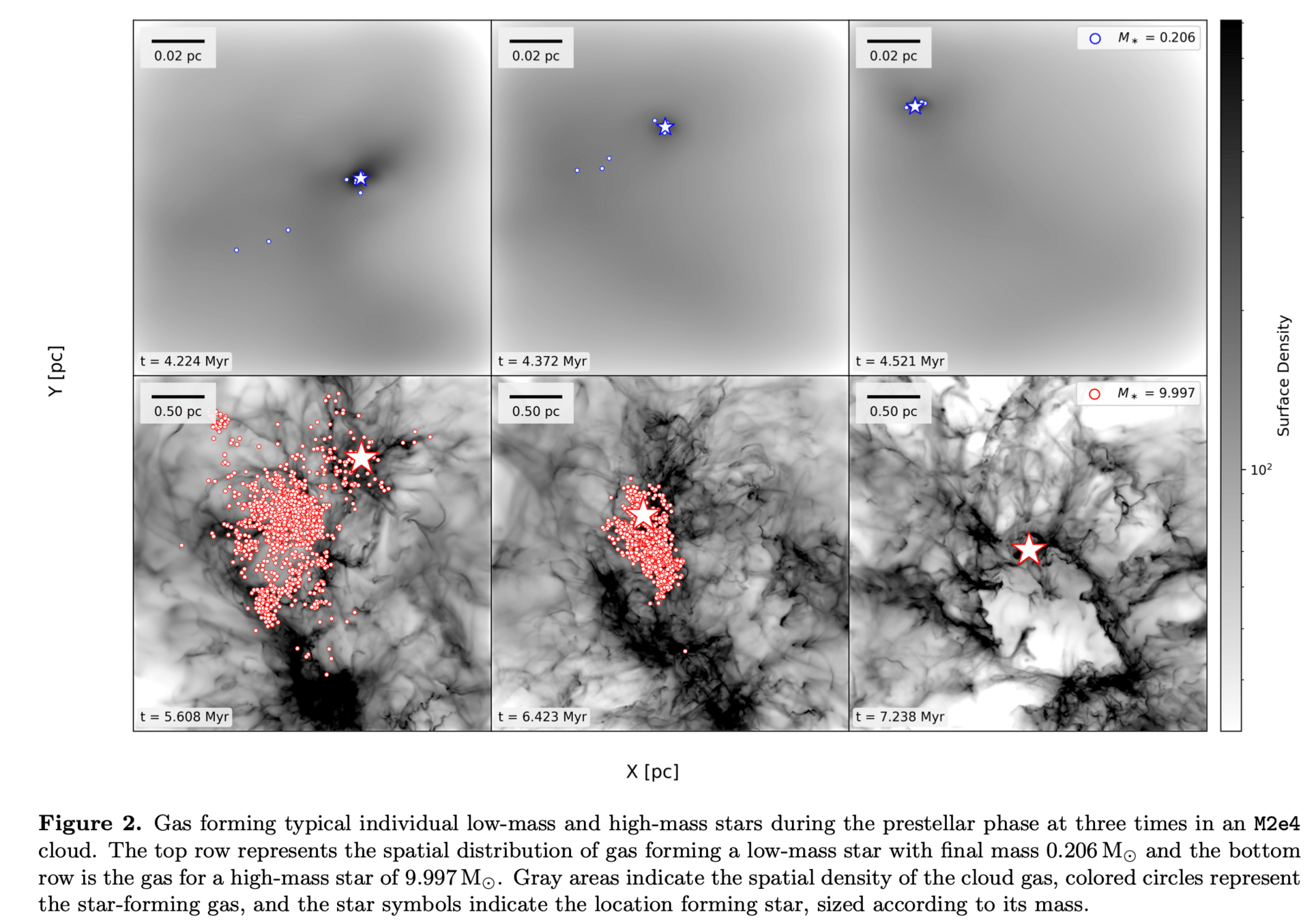
Star formation is two-phase process
Two phase process:
Obligatory initial collapse followed by varying amount of post-collapse infall
Kaalva, Offner, Filippova & Grudic '26
Disks solely from early collapse is not the full story.
Do we really know disk "lifetimes"?
Fraction reflecting occurrence of infall events instead of disk age?
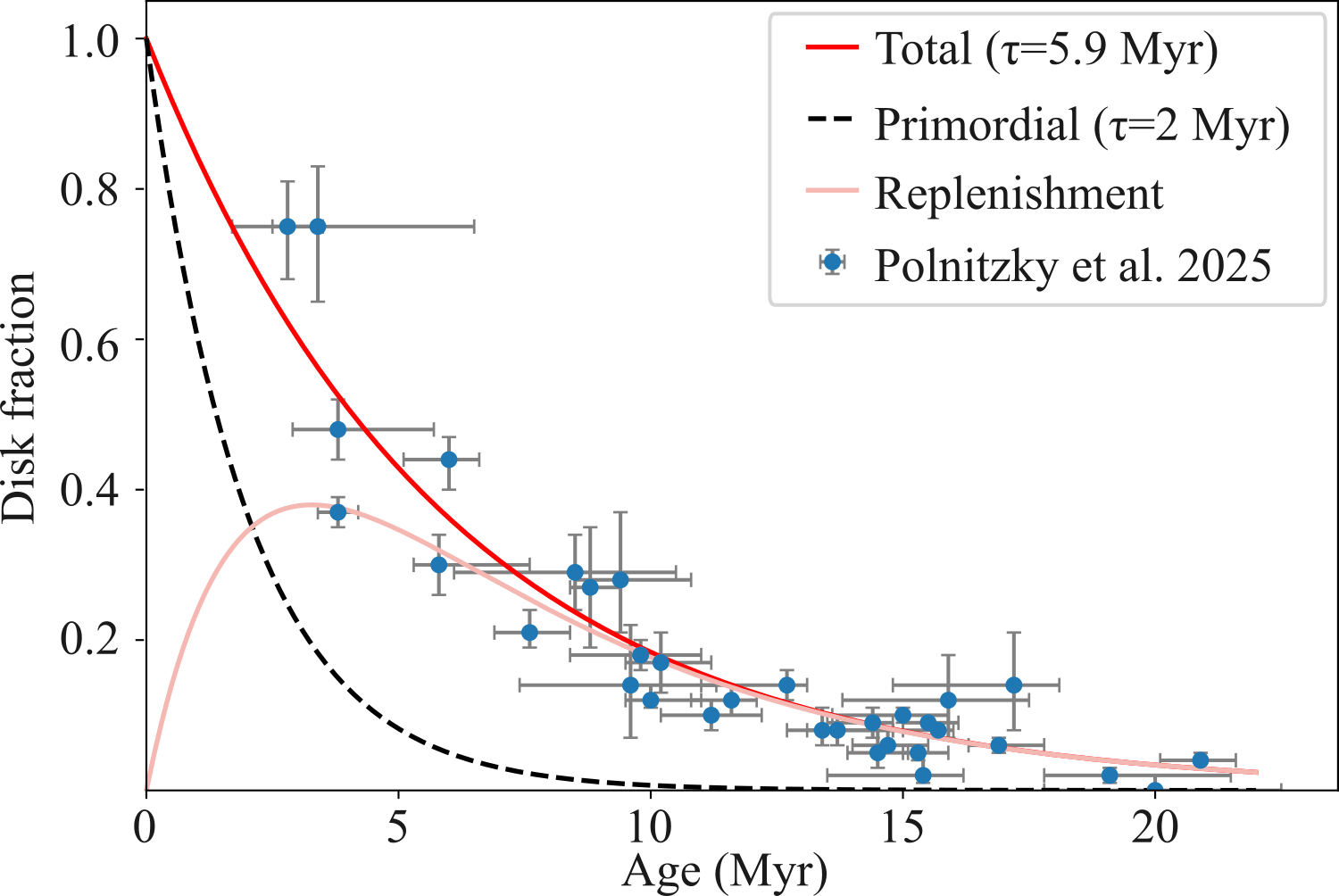
Fraction reflecting occurrence of infall events instead of disk age?
Do we really know disk "lifetimes"?
Are disks multi-generational entities?
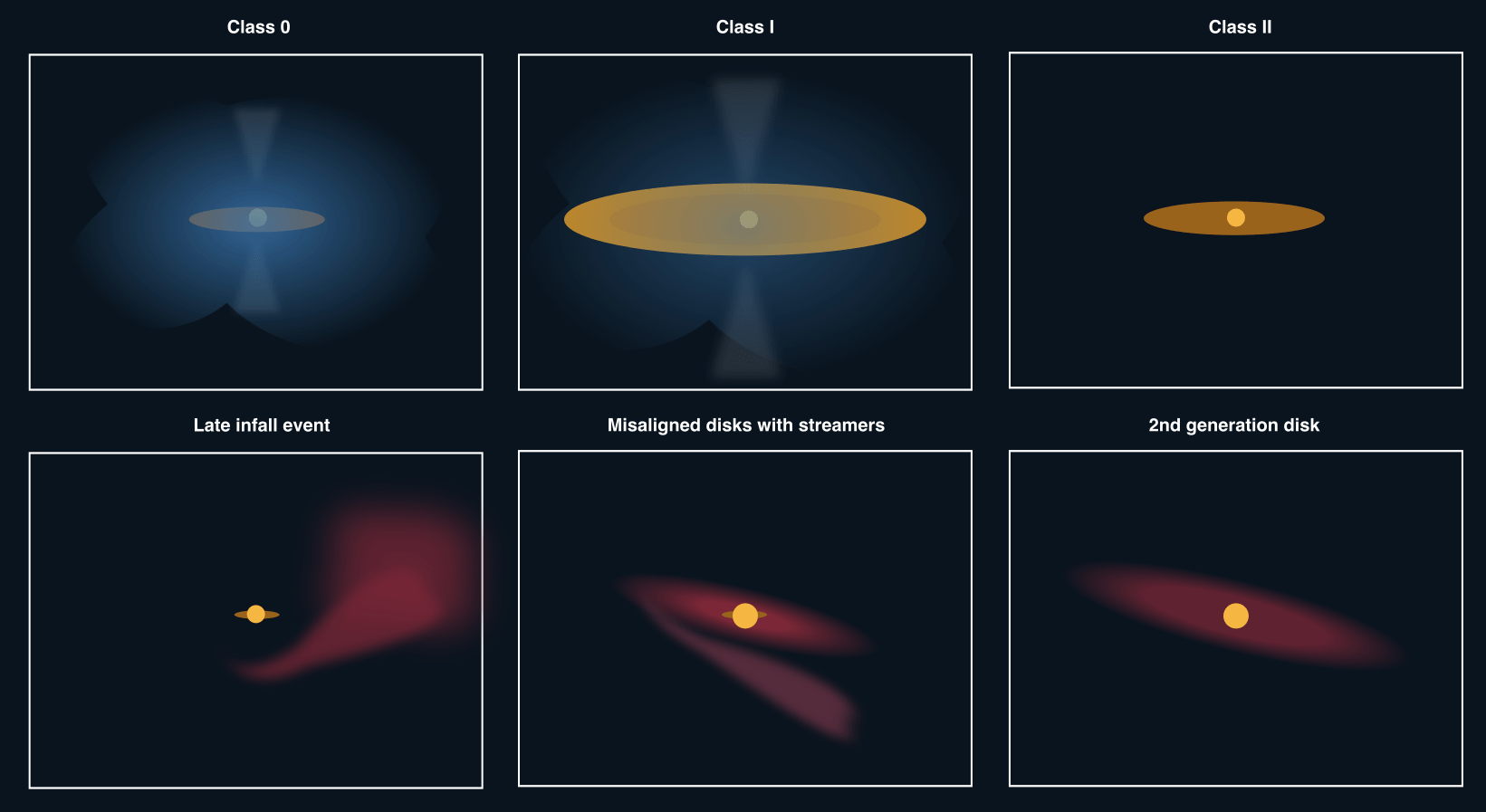
Disk (re-)formation
Origin of accreting gas
"In the case of the more massive stars, accretion from the environment outside the original core volume is even more important than that from the core itself. [...]
The assumption of spherical symmetry cannot be applied to the majority of collapsing cores, and is never a good description of how stars accrete gas from outside the original core radius."
(Smith, Glover, Bonnell, Clark & Klessen 2011)
"We find that, once a protostar forms, the lifetime of the unaccreted gas correlates with the final stellar mass, where low-mass stars (M∗ < 0.5 M⊙) accrete for 0.5-0.6 Myr from a relatively local reservoir of gas, and high-mass stars (M∗ > 2 M⊙) accrete over 3.3-4.7 Myr from a much larger volume."
(Kaalva, Offner, Filippova & Grudic 2026)
inertial-inflow model (Padoan+ '20)
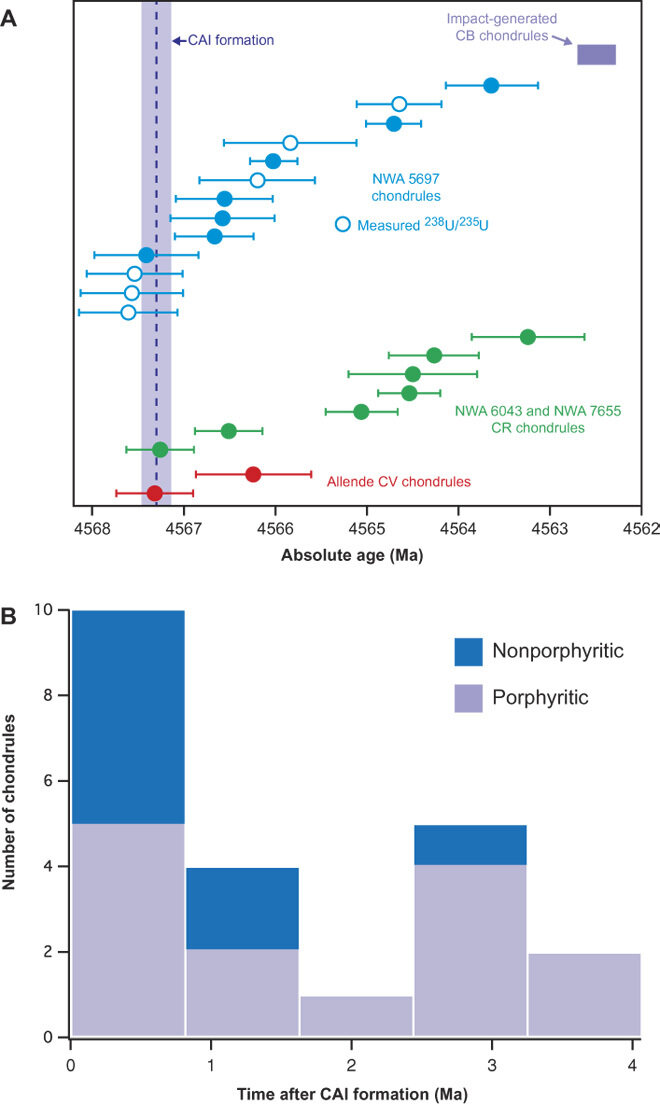
Bollard et al. '17
When?
Spherical collapse models simulate a few 10 kyr.
When?
When?
Classical picture: the disk is detached and only evolves afterwards.
When?
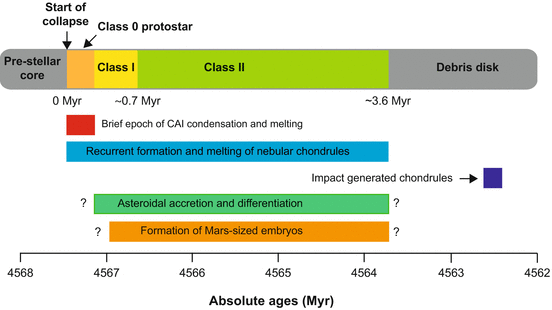
Bizzarro et al. 2017
Late infall is common for stars
On average, even solar mass stars gain ~50 % of their final mass through accretion of initially unbound material
Note that some protostars still accrete after 1.2 Myr
Küffmeier, Jensen & Haugbølle '23
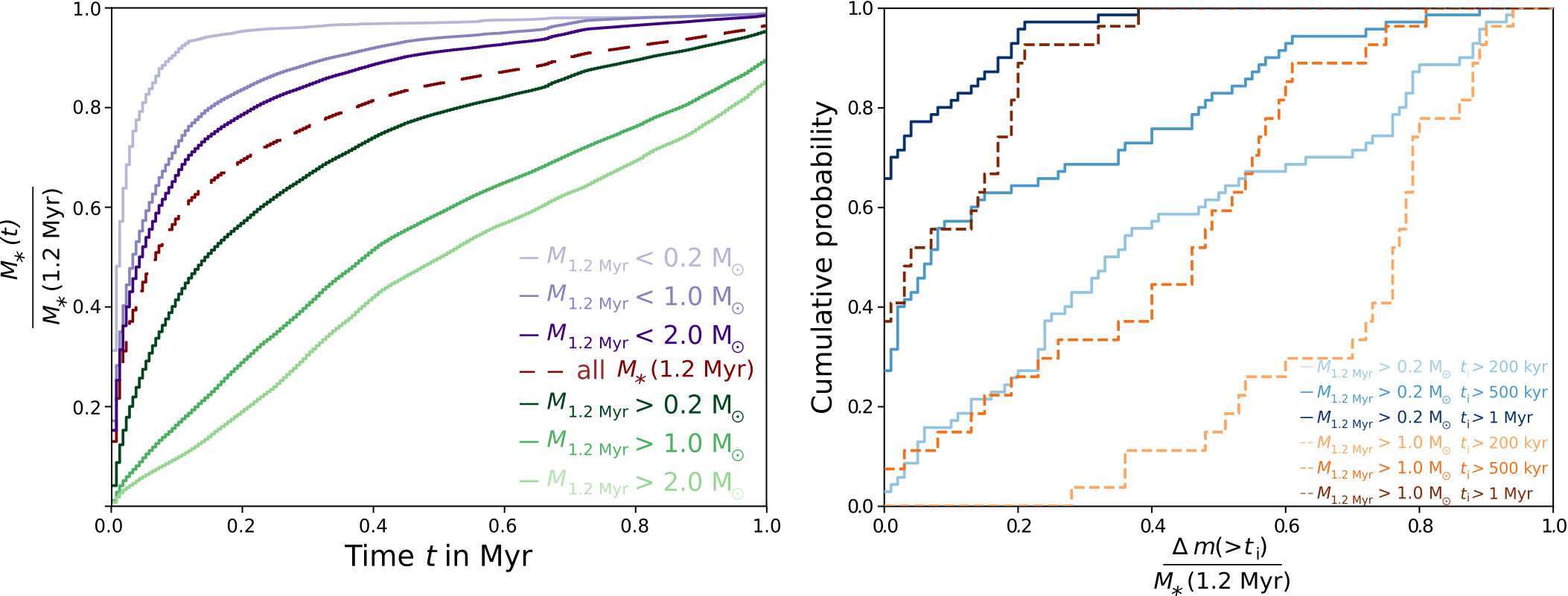
(Pelkonen et al. 2021)