IS&T College Constitution Amendments
Advisory Commitee
Brian Dorn, Ann Fruhling, Briana Morrison, Sajda Qureshi, Peter Wolcott, Matt Hale (Chair)

Slides available at: slides.mlhale.com/istchanges/
Today's Meeting
- Overview of Rationale and Proposal Introduction – Matt Hale
- Process Overview – Matt Hale
- Robert’s Rules Introduction/Refresher – Peter Wolcott
- Per Amendment Consideration – Faculty body of the whole
Overview of Rationale
Diversity and Inclusion and Faculty Governance Improvements
Overview of Rationale
Diversity and Inclusion and Faculty Governance Improvements
Short Answer:
Diversity is important WE should recognize and treat it as a first-order priority
Climate Assessment of classroom and culture
Implicit Bias training
Investigating State of Lab facilities
How can we recruit and retain diverse students?
How can we make PKI and IS&T facilities more accessible?
Longer Answer
Increasing Diversity and Inclusion
So what? Why a standing Committee?
Resourcing, permanence, and ability to effect change
Overview of Rationale
Diversity and Inclusion and Faculty Governance Improvements
Short Answer:
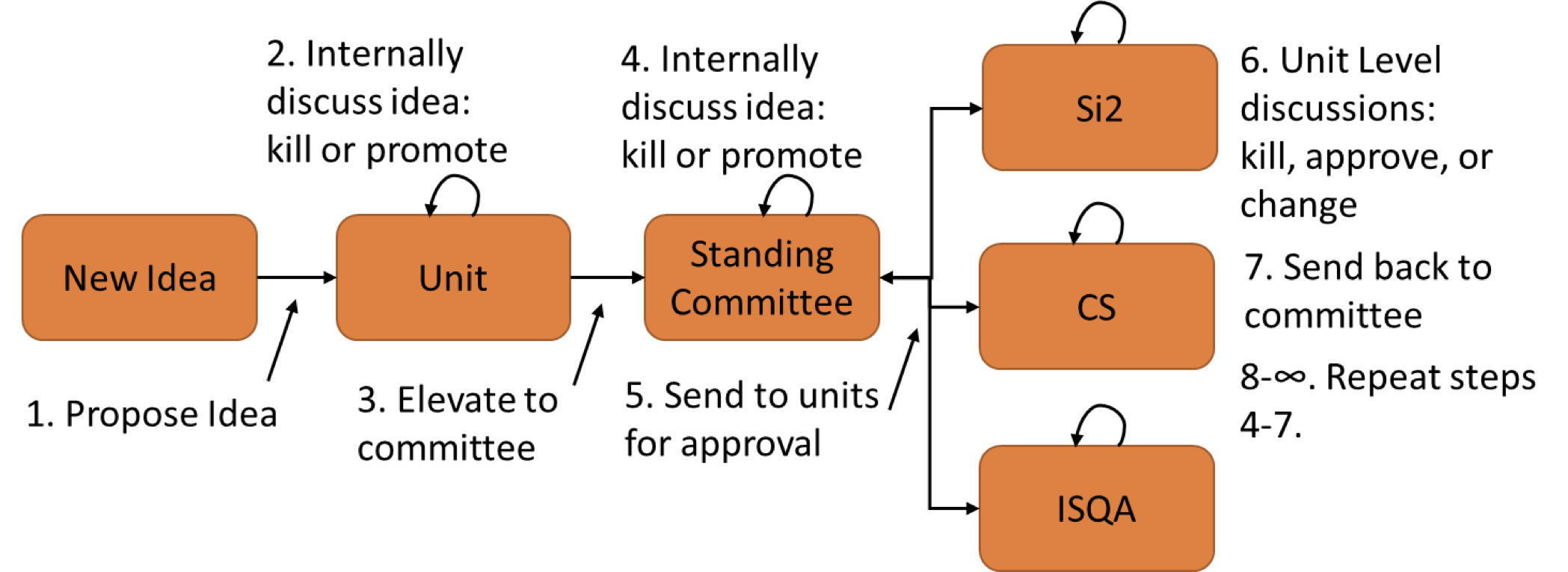
Improve Efficiency and Agility for College-wide Decisions
Longer Answer:
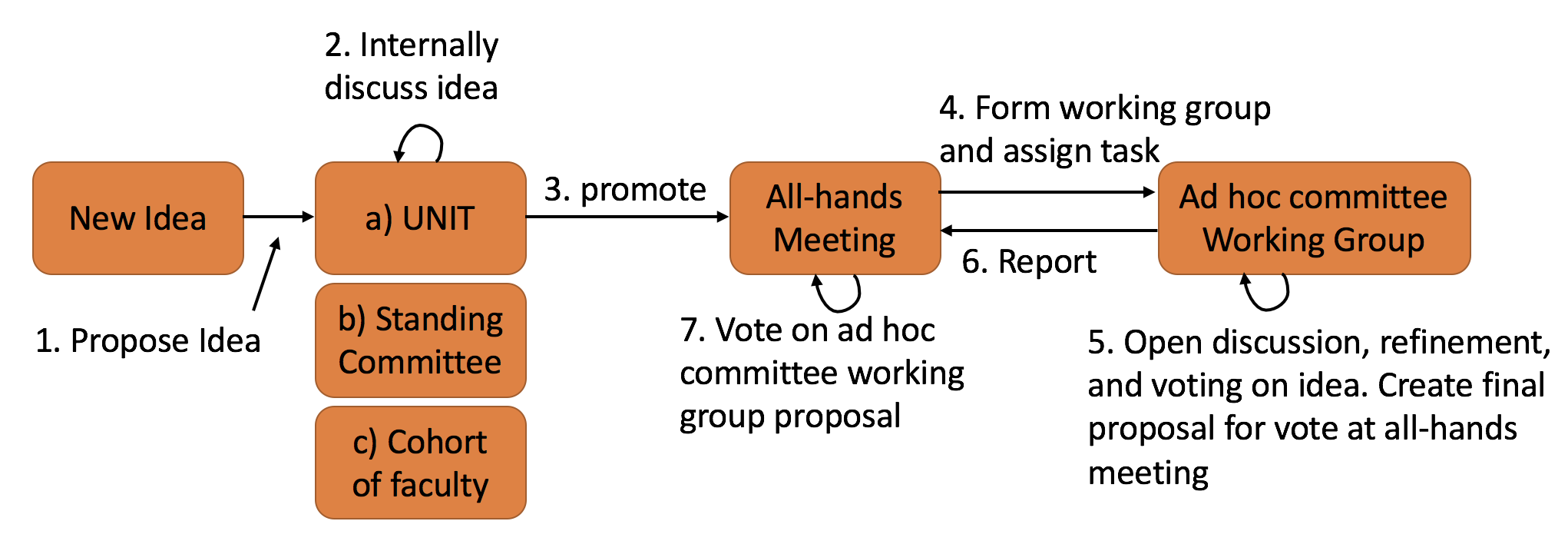
- Increase participation, collaboration, and efficiency in college-wide decision-making processes by improving faculty governance
- Reduce the time required to make a college-wide change to one semester
- Facilitate collaboration and consensus-building between Units on college-wide issue resolution
Longer Answer: (current Process)
Longer Answer: (Proposed PRocess)
Constitutional Change Process Overview
- Amendment introduction
- Amendment presented as a motion by the IS&T Advisory Committee. (Does not require a second as it comes from a committee.)
- Discussion of amendment (alternates between pro/con) until either:
a) there is no further discussion
b) a motion to end discussion is approved
c) secondary motion to postpone discussion or refer the motion to a committee is approved - Repeat step #1-3 for each amendment
- For each motion whose discussion ends with 3(a) or 3(b)
a) Ballots will be distributed
b) After 10 working days, ballot will be counted
c) 2/3 majority required for approval
Amendment 1 (Diversity and Inclusion)
Amend Article II, Section 1 add item f as follows:
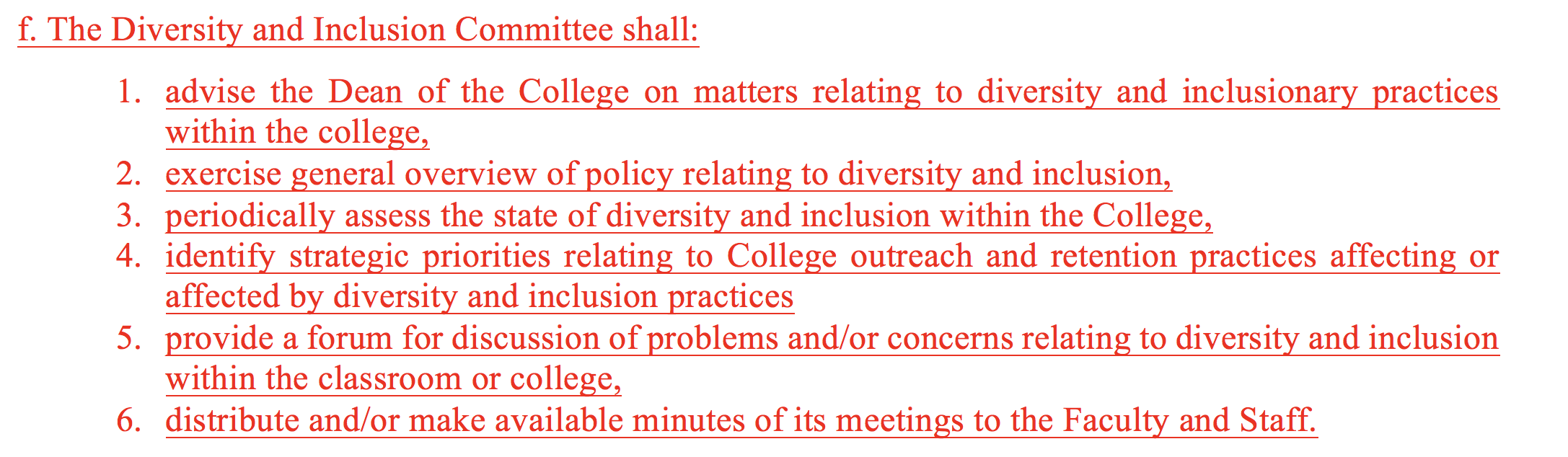
Motion: The advisory committee moves to consider Amendment 1 as stated above per the rules set forth by Article VI of the college constitution.
Amendment 2: (Diversity and IncLusion)
Amend College Governance Procedures, Provision 1 add item g as follows:
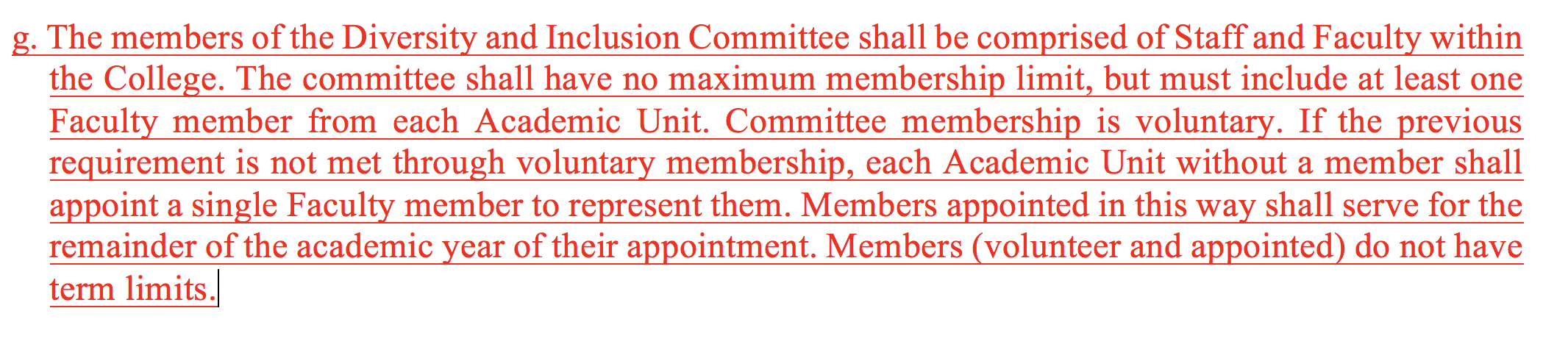
Motion: The advisory committee moves to consider Amendment 2 as stated above per the rules set forth by Article VI of the college constitution.
Amendment 3: (Faculty Governance)
Amend Article I, Section 4 amend provision a as follows (revisions shown in red/underline):

Motion: The advisory committee moves to consider Amendment 3 as stated above per the rules set forth by Article VI of the college constitution.
Amendment 4: (Faculty Governance)
Amend Article I, Section 4 add provisions e, f, and g as follows:
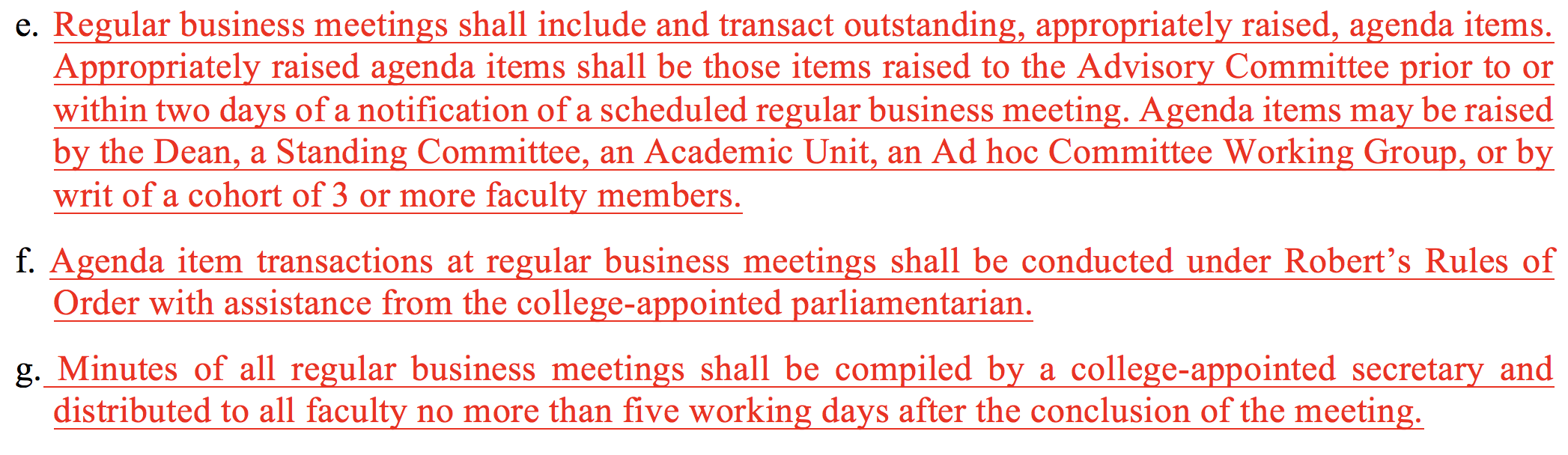
Motion: The advisory committee moves to consider Amendment 4 as stated above per the rules set forth by Article VI of the college constitution.
Amendment 5: (Faculty Governance)
Amend Article II, Section 1 add provisions 7 and 8 as follows:
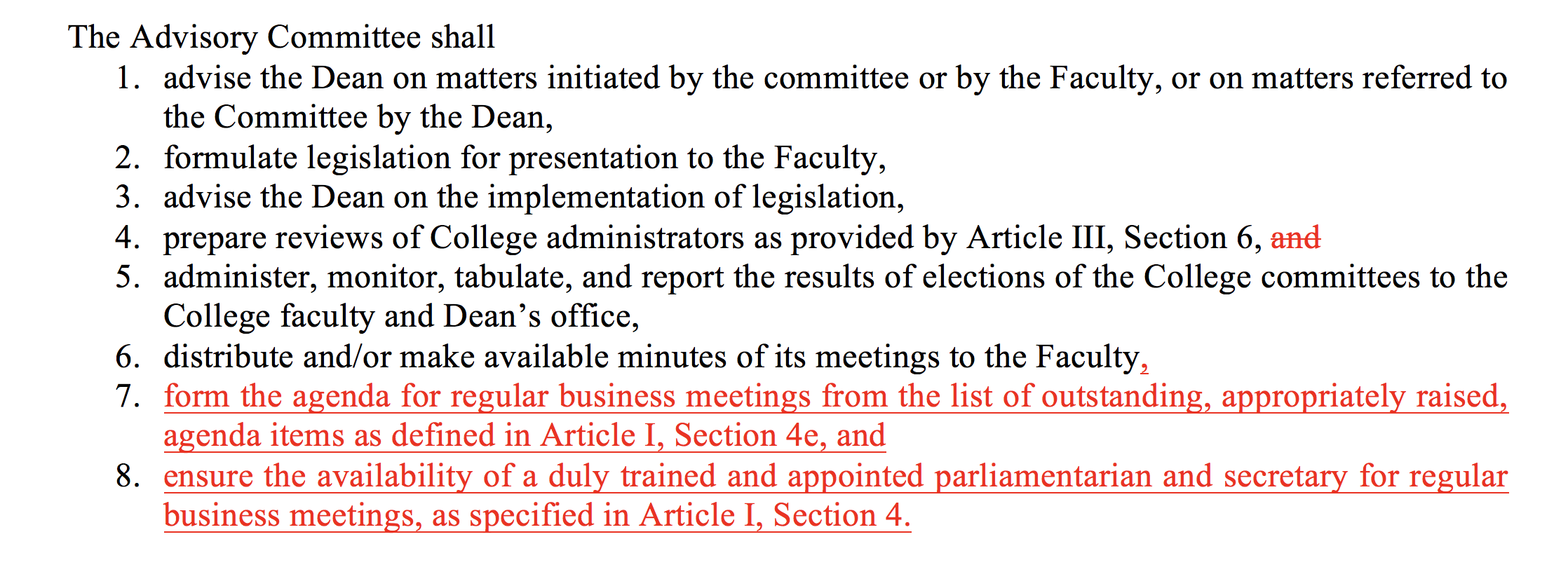
Motion: The advisory committee moves to consider Amendment 5 as stated above per the rules set forth by Article VI of the college constitution.
Amendment 6: (Faculty Governance)
Amend Article II, Section 2 amend Section 2 as follows:
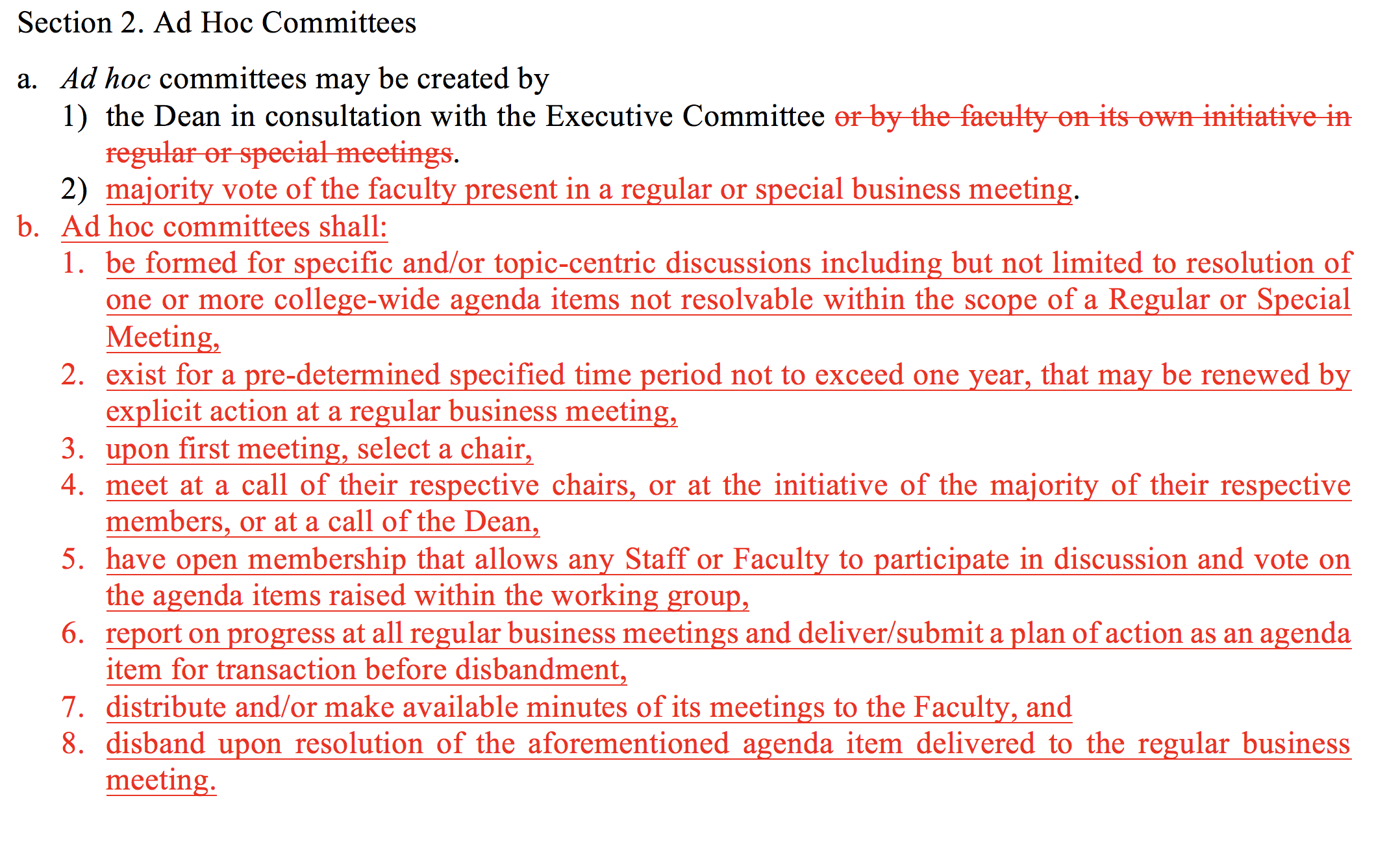
Motion: The advisory committee moves to consider Amendment 6 as stated above per the rules set forth by Article VI of the college constitution.
Questions?


Matt Hale, PHD
University of Nebraska at Omaha
Assistant Professor, Cybersecurity
mlhale@unomaha.edu
twitter: @mlhale_