Lessons Learned from Designing and Evaluating a Robot-assisted Feeding System for Out-of-lab Use
Amal Nanavati, Ethan K. Gordon, Taylor Kessler Faulnker, Siddhartha Srinivasa, et al.
Work supported by: NSF (NRI; GRFP), DARPA, NIBIB, ONR, Amazon, and Cobot
ethan@ethankgordon.com
COMMUNITY-BASED PARTICIPATORY SYSTEM DESIGN
STUDY 1: MULTI-USER, IN-PUBLIC
Everything Open-Source
robotfeeding.io
LESSONS LEARNED AND FUTURE WORK
INTRODUCTION
If I can have a robot [working with me], it would be me feeding me, and that would be a huge deal.
-Tyler Schrenk, 1985-2023
Our goal is to develop an end-to-end robot feeding system that users can independently use to feed themselves meals of their choice outside the lab.
With CR1 and CR2, we designed a system following 5 guiding principles
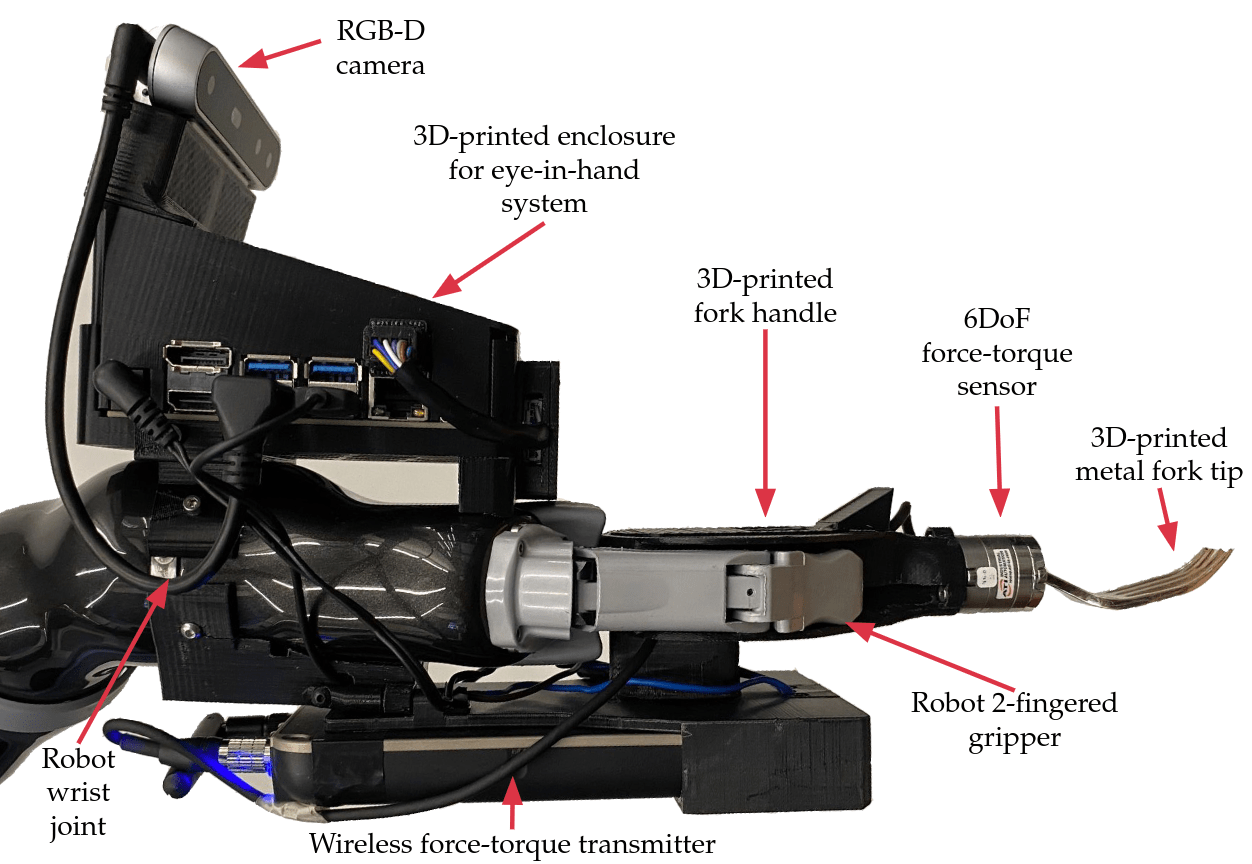
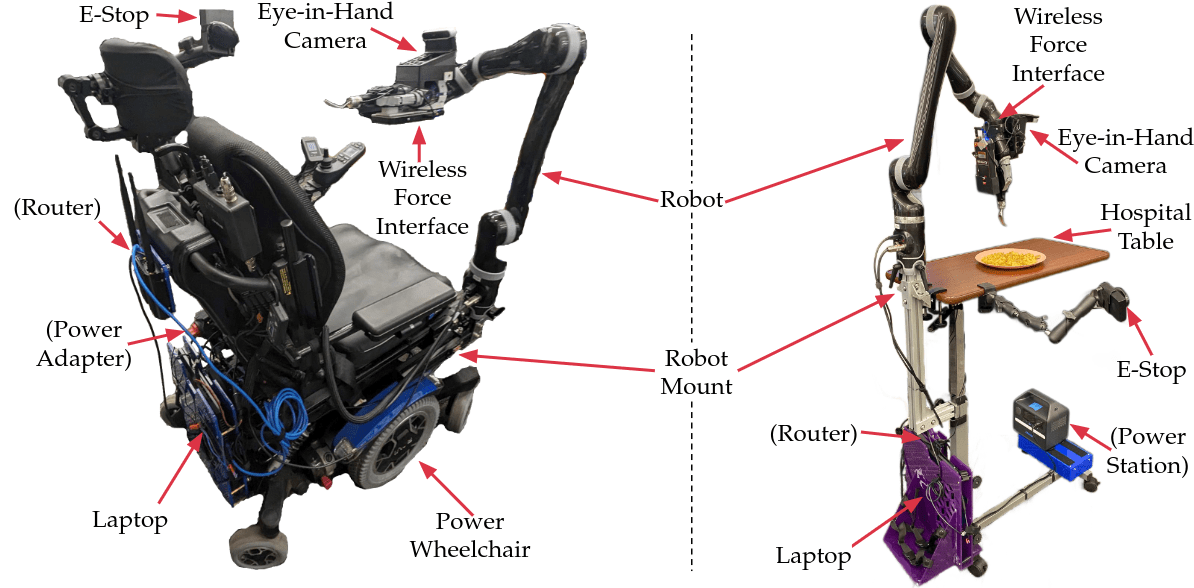
- Portability. No internet required, powered from a wheelchair battery
- Safety. Many-layered: software watchdog, force sensor, accessible e-stops, etc.
- Customizability. App-based settings, retrofit to user's existing devices
- User Control. Behavior Tree (BT)-based task planning transparently communicates robot state for the user to direct and handles off-nominal fallback behavior
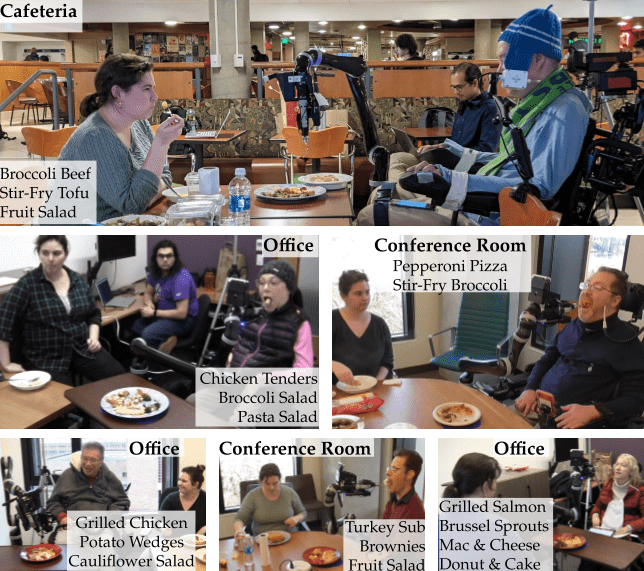
How does the system perform across different users in out-of-lab settings?

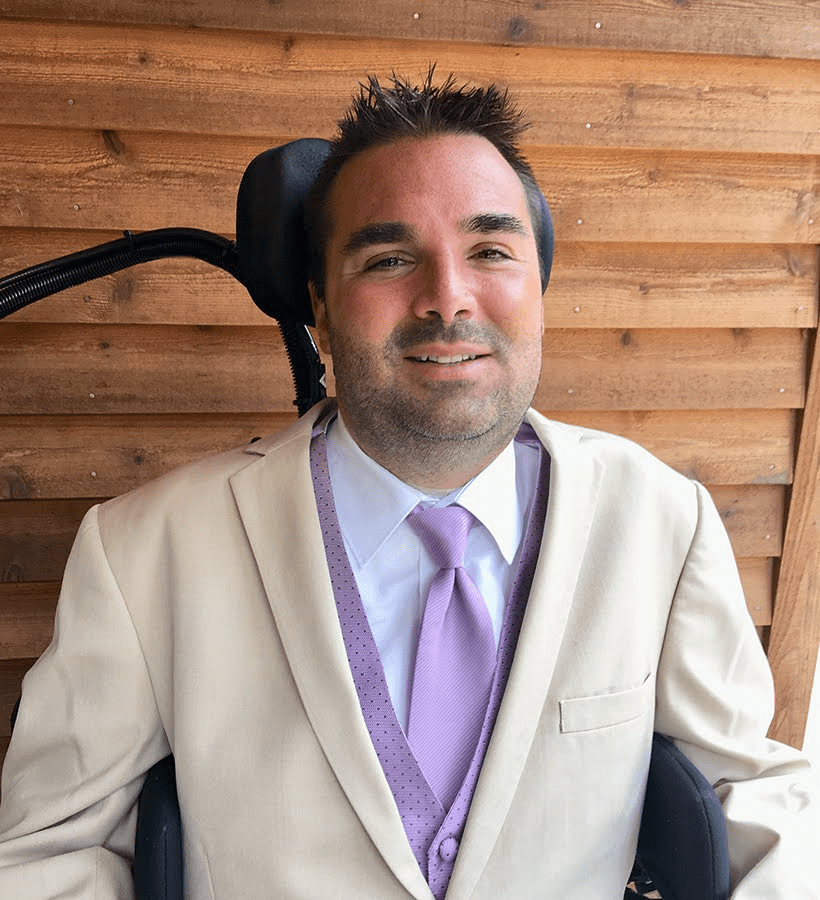
CR2: Jonathan

CR1: Tyler
STUDY 2: SINGLE USER, 5-DAY, IN-HOME

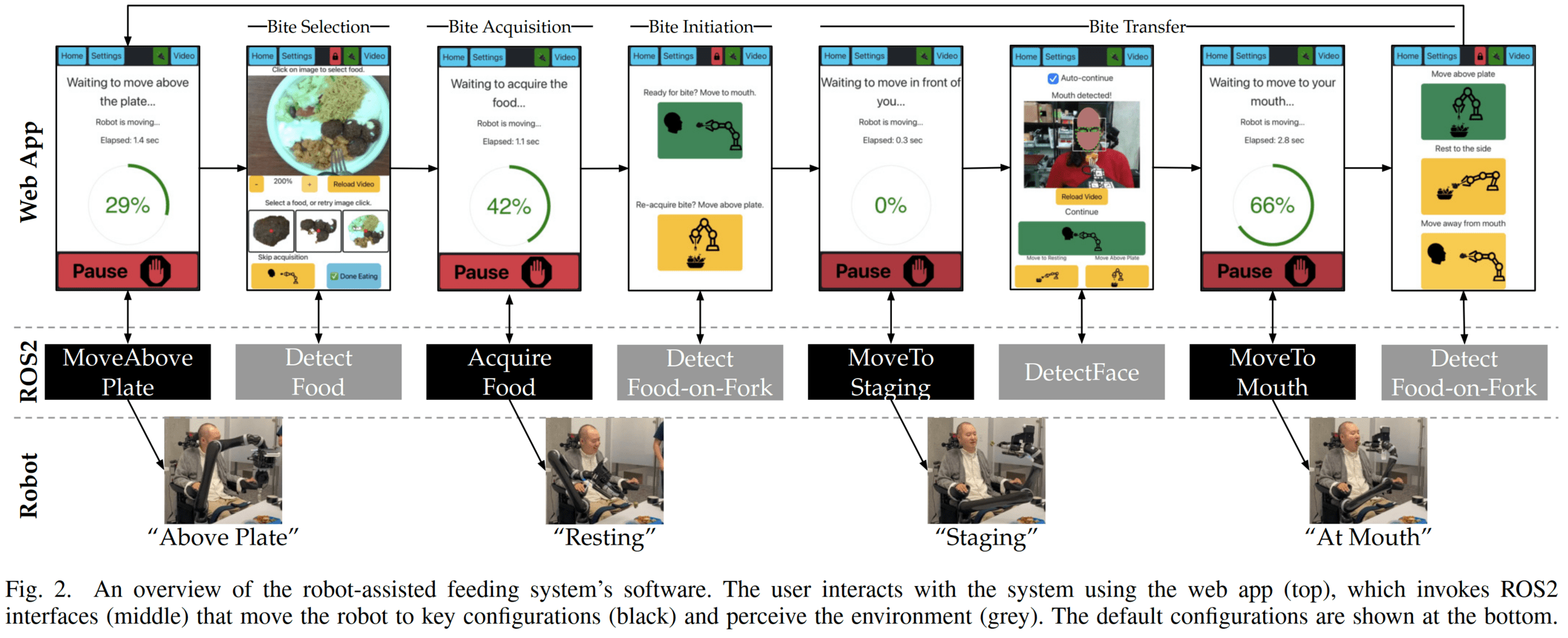
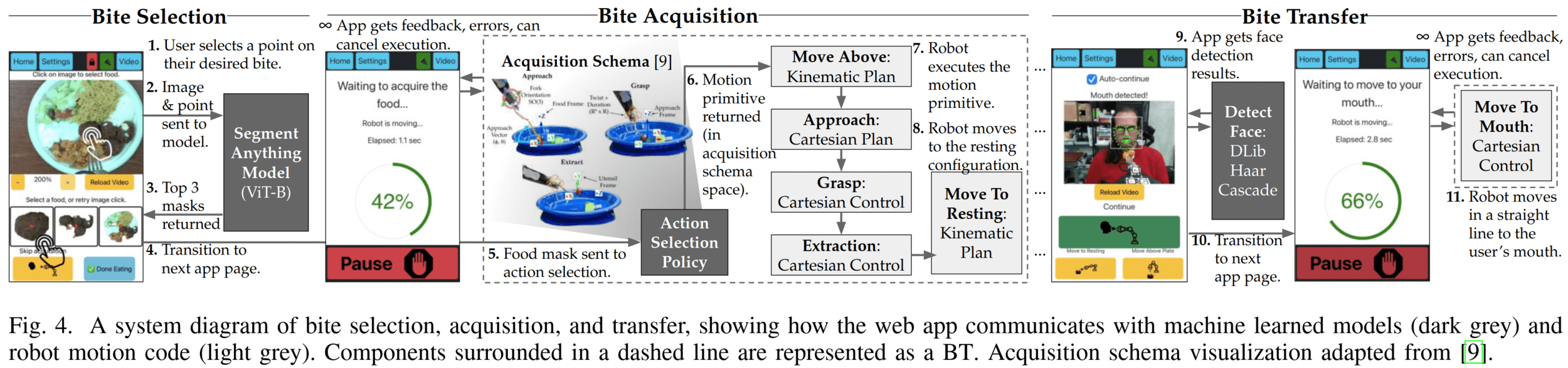
Key Challenge: Off-Nominal Scenarios Will Arise
Key Insight: With customization and shared autonomy, users can independently overcome those scenarios.
Integrated Tech: face detection for transfer, online learning for novel food acquisition, cartesian end-effector control for intuitive movements.
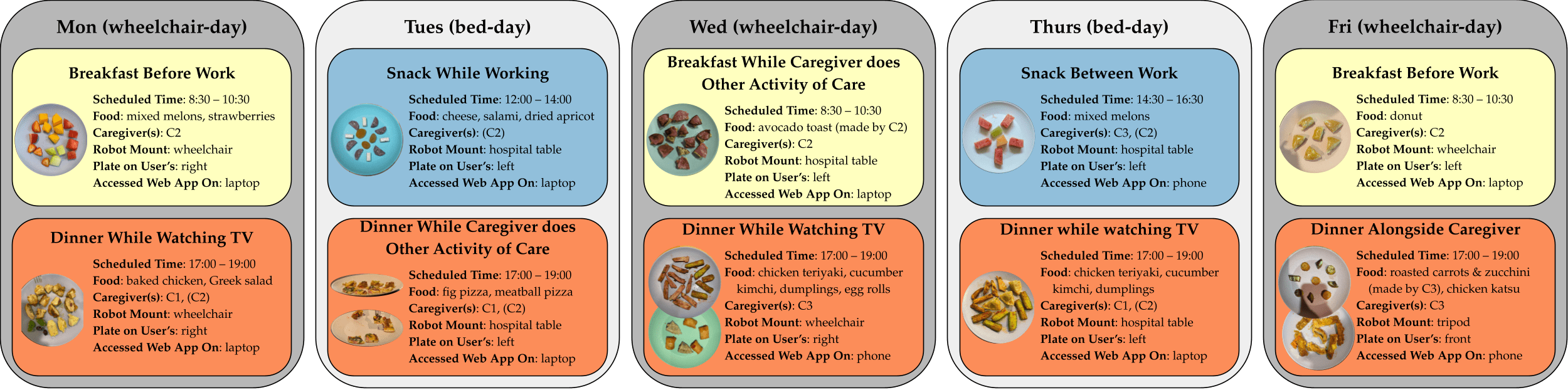
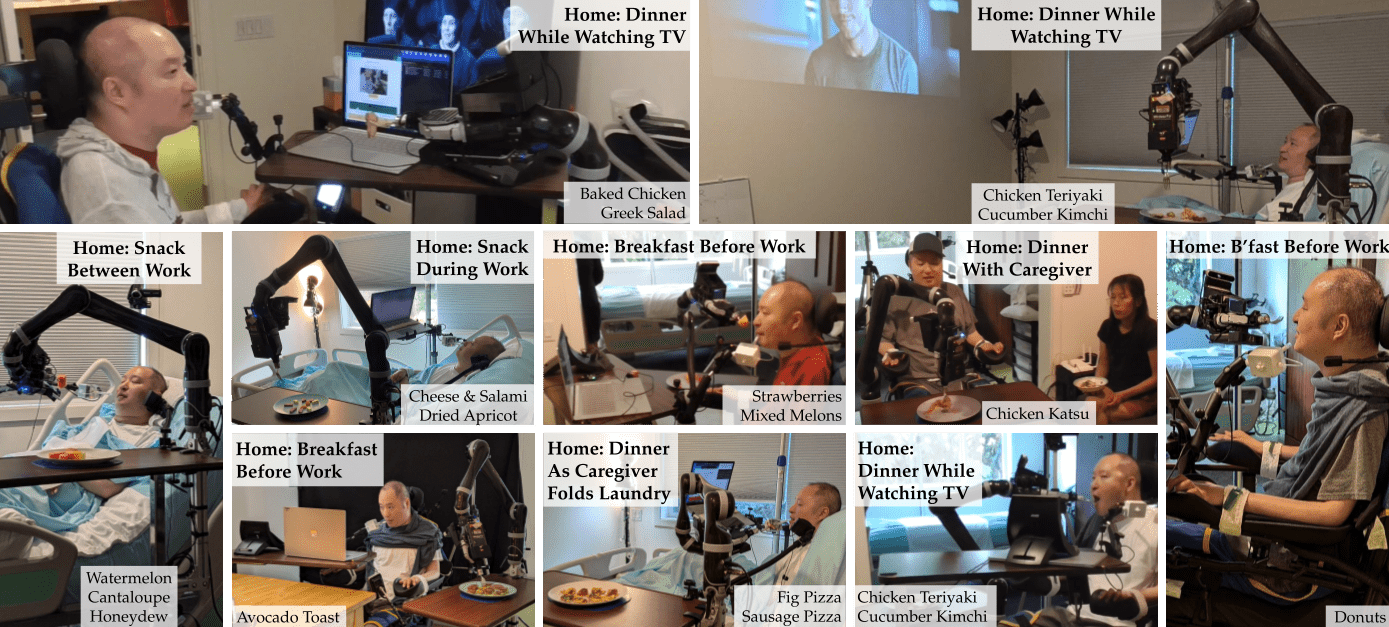
How does the system perform across the diverse contexts that arise when eating in the home?
- Spatial Context. CR2 cannot sit up continuously, and so alternates between bed and wheelchair
- Social Context. CR2 has 3 caregivers who typically feed him
- Temporal Context. Mornings and daytime are busy with work, evenings are relaxed
- Activity Context. Deployment goals, e.g., eating while watching TV or working
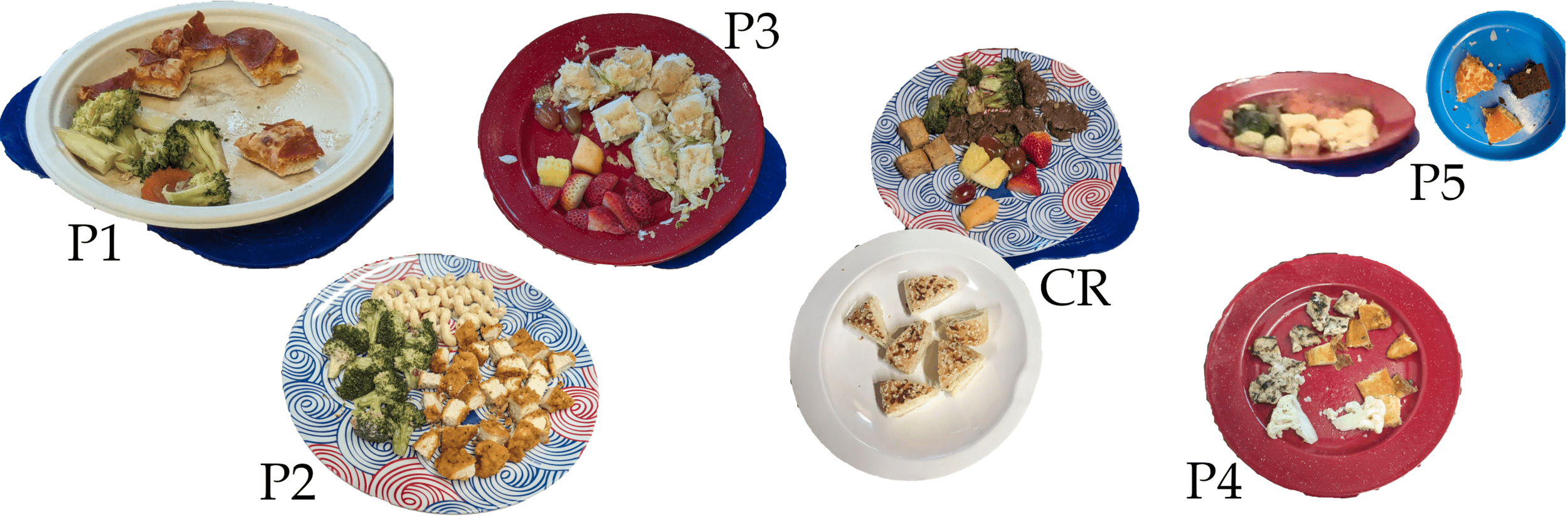
- Food Context. CR2 is flexible; Ramen, pizza, chicken, fruits/vegetables, etc.
Therapist-assessed independence increased from "dependent" to "supervision" (Medicare Section GG).


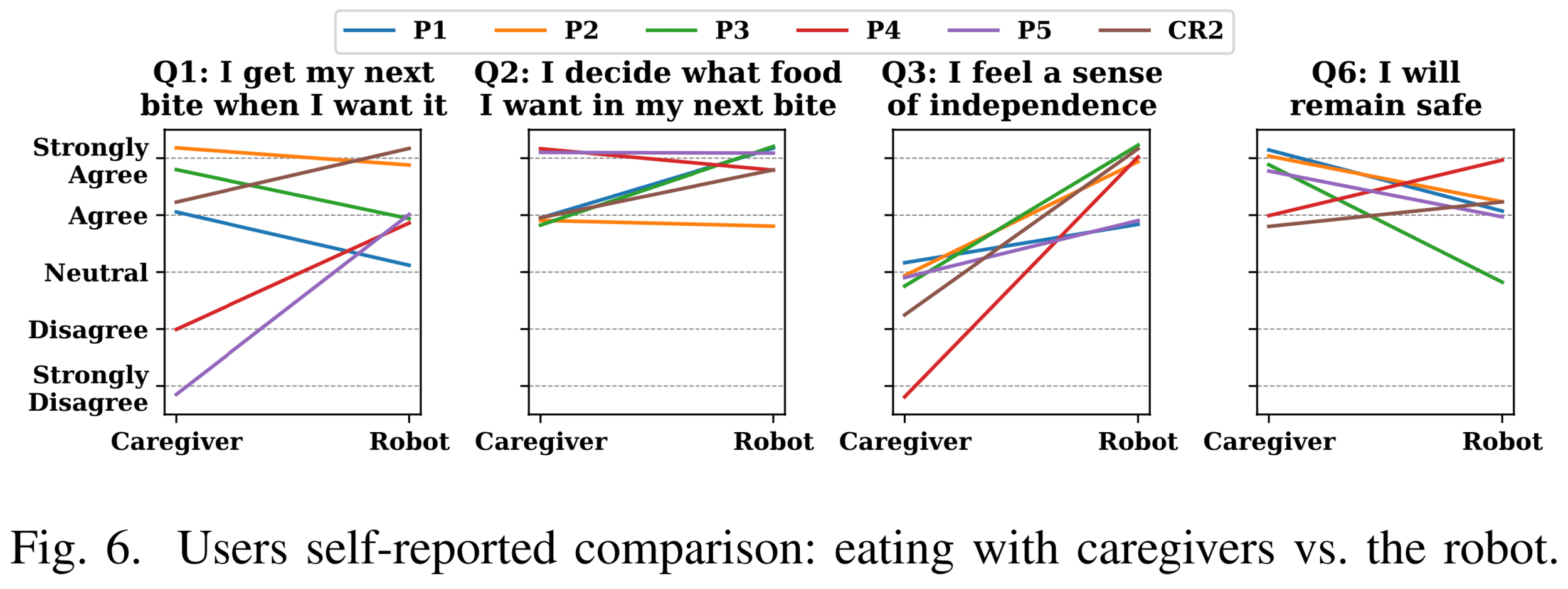
Robot outperforms in sense of independence, is comparable in sense of control, without compromising sense of safety.
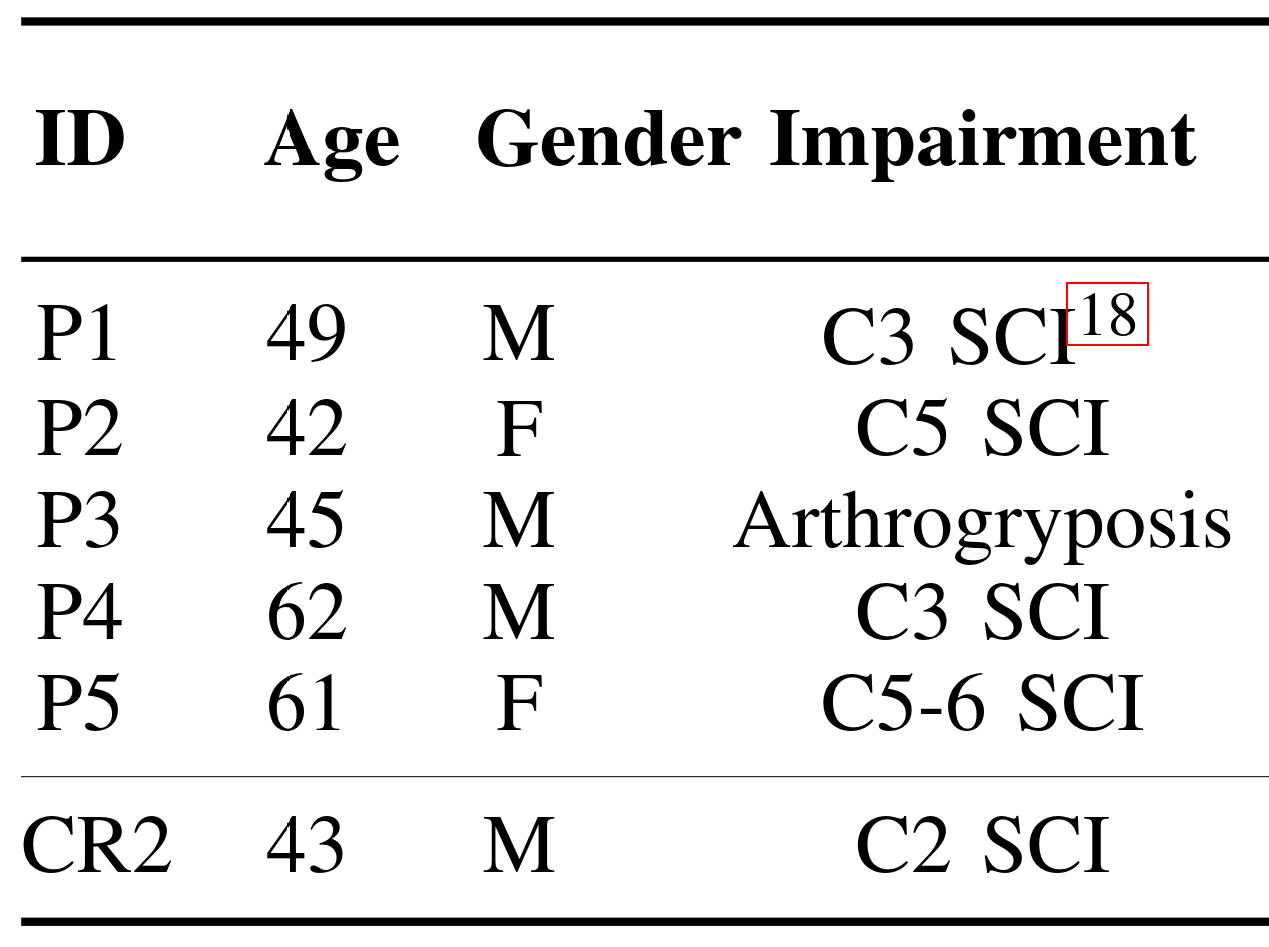
[it would help] others who can't use a self-feeding system like me - P3
Wide variability of ratings, from A+ (P4) to F (P3)
- Variable autonomy helped with off-nominals, but customization reduced effort
- Customization requires intuitive control over parameters and transparency into their downstream impacts.
- Depending on level of impairment and other contexts, robot benefits outweigh cognitive workload even when autonomy fails.
Future Work
- Bite Acquisition: expanded food variety and utensil types (this study only used a fork)
- Bite Transfer: motion variety and in-mouth motions
- User Comfort and Safety: compliant control
- User Control and Customizability: user-directed debugging and planning scenes
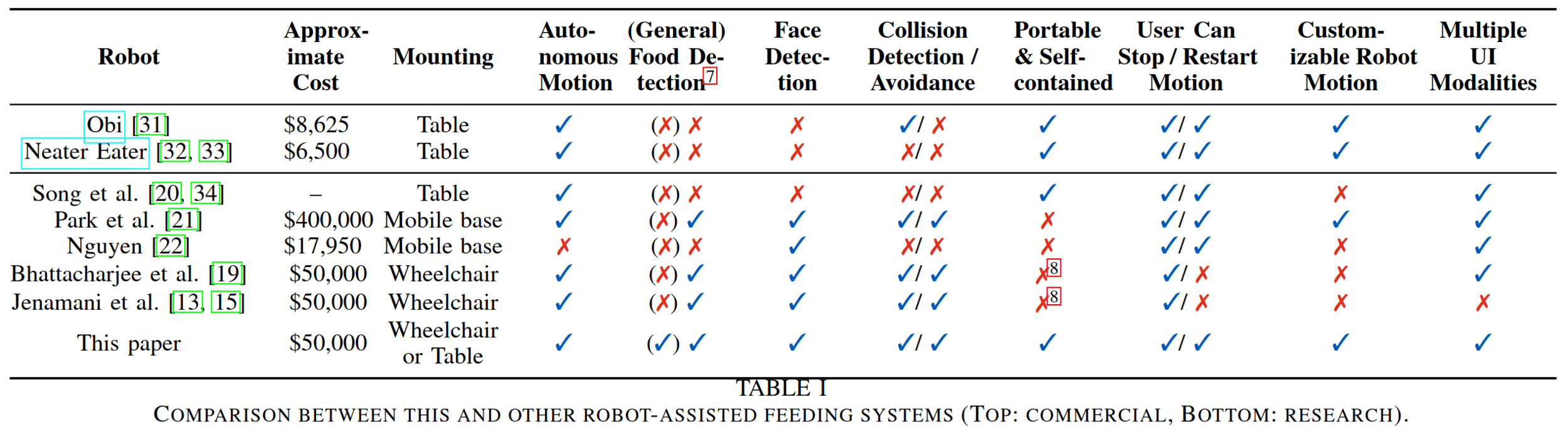
- Commercial Viability: Reduce system cost and co-design setup / maintenance procedures to integrate into existing care routines.