Javascript Promises
Özgün Bal
Contents
- What is Promise?
- Callback vs Promise
- Syntax
- Chaining Promises
- Promise methods
- Async/Await (ES7)
Simple Analogy of Promises
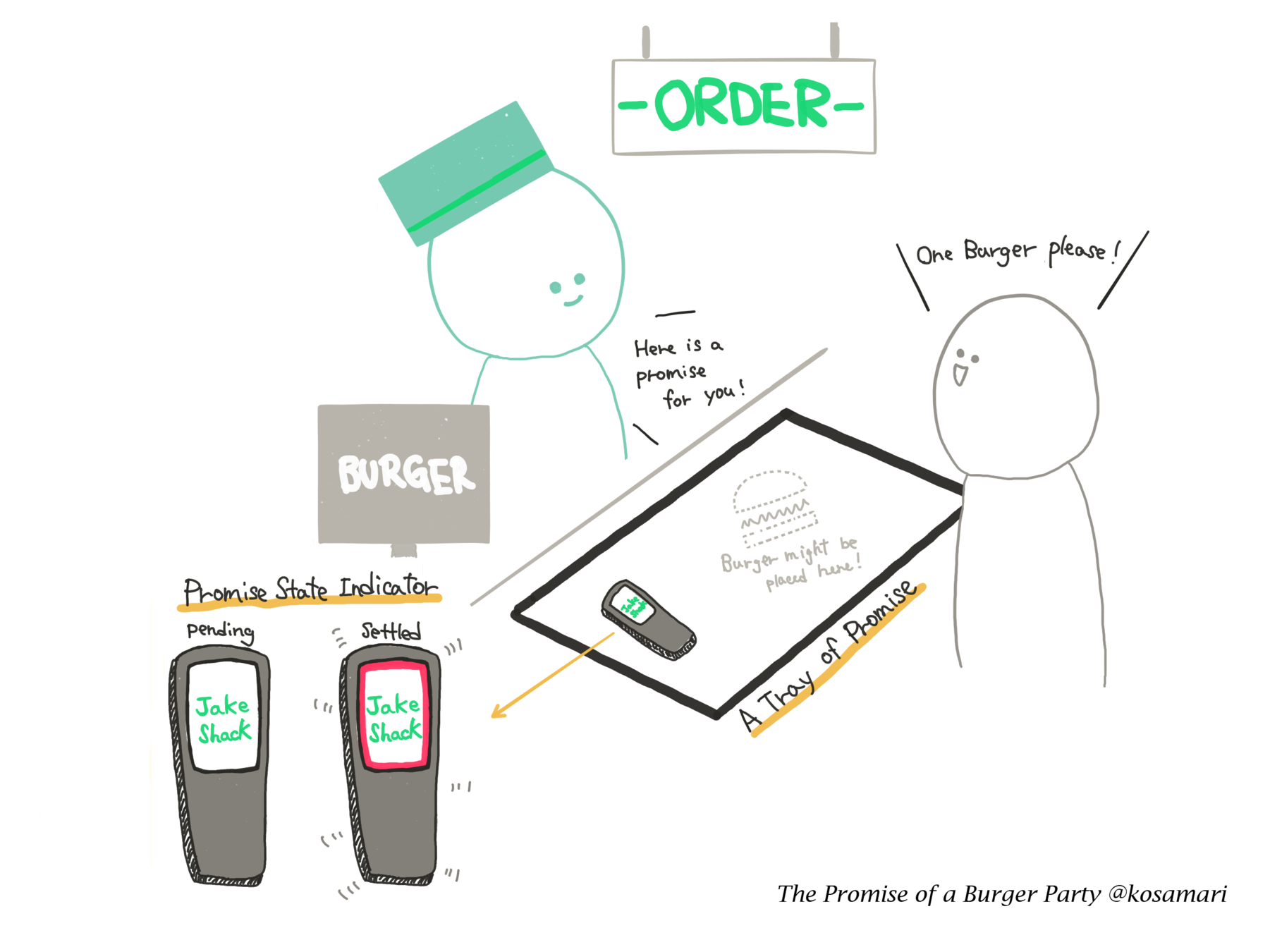
Simple Analogy of Promises
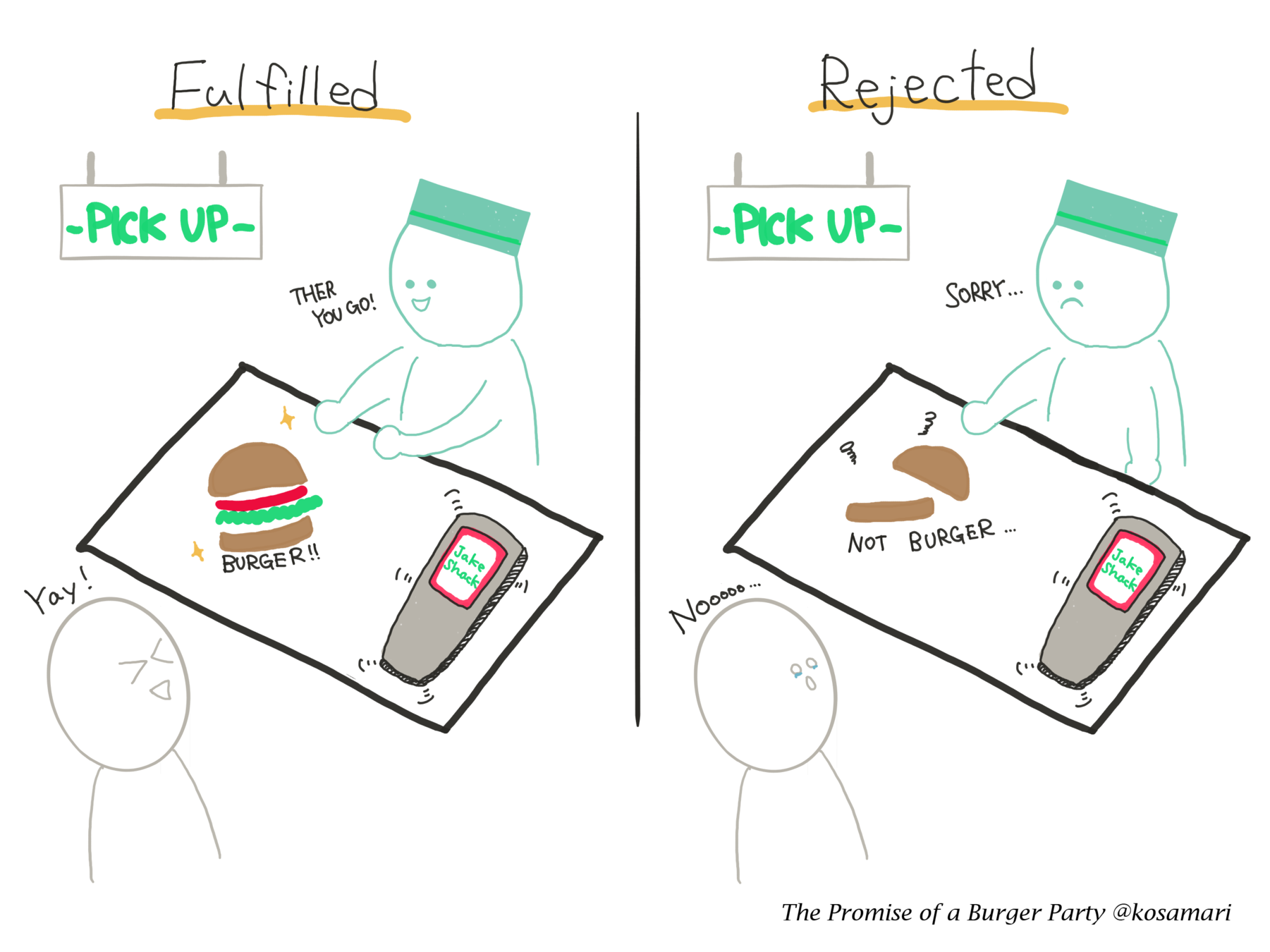
Callbacks
- A function for future call
- Causes callback hell
- Can be called too early
- Can be not called
- Can be called few or many times
- Fail to pass along any necessary parameters
- Swallow error/exceptions
Promises
- Native type for future value
- More structured way to handle asynchronous jobs
Solves these
Callback Hell

Downsides of callbacks
// Company A's API that you're using in your application
function untrustedAPIMethod (paramX, paramY, callback) {
  // 1 - If it is not actually asynchronous, may called too early
  callback();

  // 2- Callback is not called at all due to buggy implementation

  // 3- Can be called more than needed
  for(let i=0; i< task.length; i++) {
    callback();
  }

  // 4- Fail to pass parameters
  callback();
  // or
  callback(null); // instead of error first callback: callback(null, result)

  // 5- Swallow errors
  const result = `I\'m not an arry type but .map() method
     is belong to Array.prototype`.map(letter => console.log(letter))
  // Before callback, TypeError is throwed and and callback never called
  callback(result);
}
Promise syntax
- Called with new to create one
- Takes a function with two parameters
- One for fulfillment, one for rejection of the desired task
- Return a Promise object immediately
- Not mutated, resolved once
- Acquiring the value is done by .then()
const promise = new Promise(function(resolve, reject){
  if (satisfiedCondition) {
    resolve('Task is done');
  } else {
    reject('Error occured');
  }
})

promise.then(function(data){
  console.log(data) // prints 'Task is done' when promise is resolved
}).catch(function(error){
  console.log(error) // prints 'Error occured' when promise is rejected
})
Promise advantages
- Can be called only once
- resolve() and reject() takes only one parameter
- Unhandled errors cause rejection
- Always asynchronous even with immediately resolved ones
Can I use Promises?

Chaining Promises
asyncFunc()
  .then(result => {
    return anotherAsyncFunc(result);
  })
  .then(chainResult => {
    return chainResult.json();
  })
  .catch(error => {
  console.log(error);
  })
DEMO
Promise methods
- Promise.resolve()
- Promise.reject()
- Promise.all()
- Promise.race()
// Immediately resolved promise object
const resolved = Promise.resolve(5);

// Immediately rejected promise object
const rejected = Promise.reject('Oops');

// Takes array of promises and resolves if all of them resolved otherwise rejects
const allFulfilled = Promise.all([resolved, rejected]);

// Returns first resolved/rejected promise in array of promises
const raceOfPromises = Promise.race(promiseArray)
DEMO
Async/Await
- Better code
- More readable
- Uses new words: async and await
- ES7 feature
const makeRequest = async () => {
  const value1 = await promise1()
  const value2 = await promise2(value1)
  return promise3(value1, value2)
}
const value;
promise1()
.then(value1 => {
value = value1
return promise2(value1);
})
.then(value2 =>{
return promise3(value, value2);
})DEMO
Can I use Async/Await?

Useful Resources
- You Don't Know Javascript: Async & Performance
- https://github.com/getify/You-Dont-Know-JS
- Udacity - Javascript Promises
- https://www.udacity.com/course/javascript-promises--ud898