Object Oriented Javascript
Özgün Bal

github: /ozgunbal
mail: ozgunbal@gmail.com
medium: @ozgunbal
Contents
- Object introduction
- Constructor vs Instances
- Prototypal Inheritance
- "Class" in Javascript
- Design patterns
- References
Object
- can be created via Object literal or Object constructor
- prefer object literal unless you have reasons
- can take any data structure as a property
- number, string, boolean, array, function, object
- use "delete" for removing a property
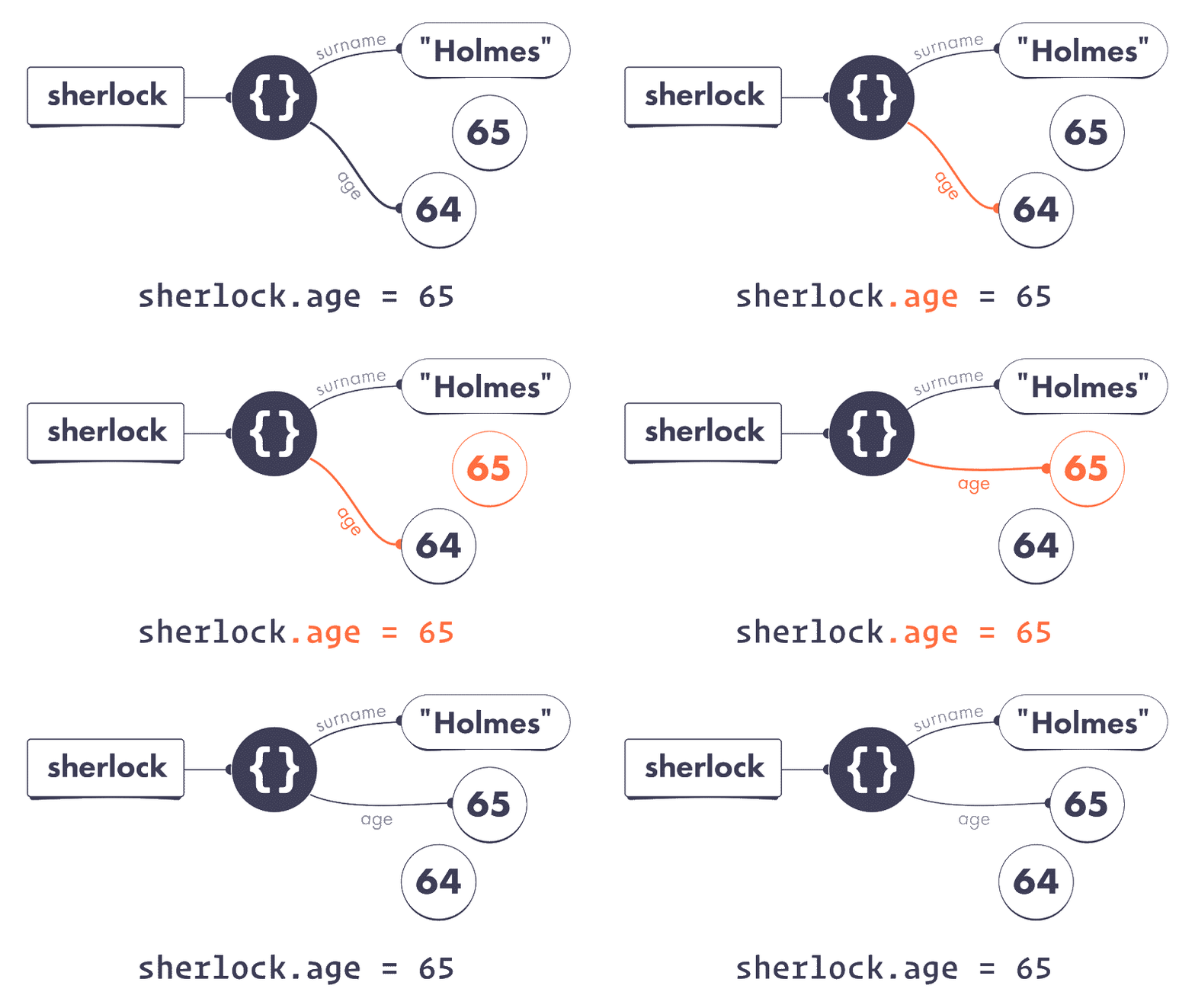
- mutable
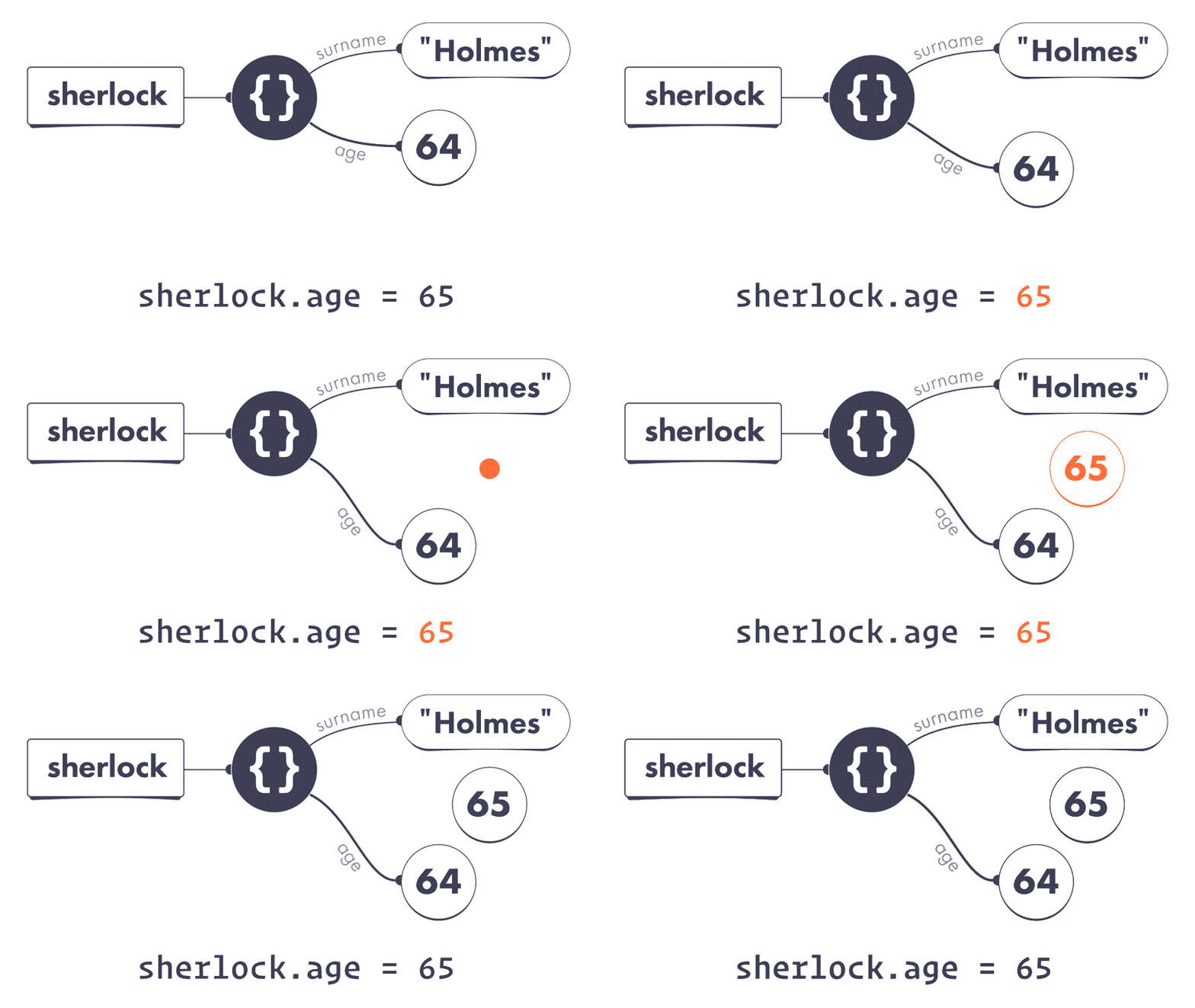
- copied by reference
const obj = {}; // Object literal
const obj2 = new Object(); // Object constructor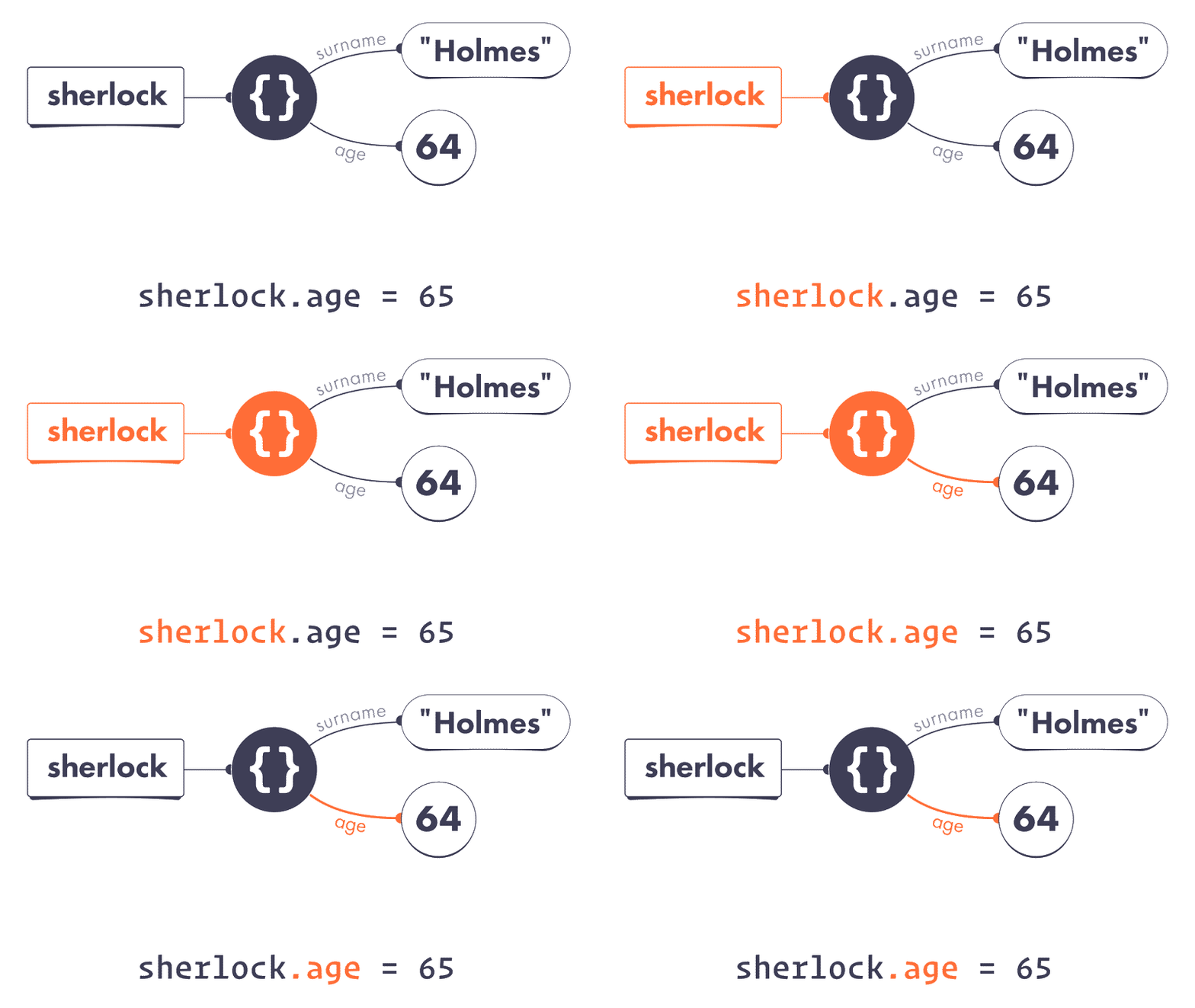
from Just Javascript - Dan Abramov and Maggie Appleton
from Just Javascript - Dan Abramov and Maggie Appleton
from Just Javascript - Dan Abramov and Maggie Appleton

Object (cont.)
- this inside of object methods is that object (except call-site changes)
- common object methods
- Object.keys()
- Object.values()
- Object.entries()
const presenter = {
  name: 'Özgün',
  welcomeSpeech: function () {
    console.log(`My name is ${this.name}`);
  },
};
Explicit call-sites
- apply({}, [...]) -> object, array of arguments
- call({}, a, b, c) -> object, comma-separated arguments
- bind({}, args...)
Constructor
- convention is PascalCase but not required
- not different than regular function
Instance
- created with new keyword
- can be checked via instanceof
function Presenter () {
  this.name = name;
  this.welcomeSpeech = function () {
    console.log(`My name is ${this.name}`);
  };
}
const jsPresenter = new Presenter('Özgün');
jsPresenter instanceof PresenterPrototypal Inheritance
- behaviour delegation
- inherits its prototype's properties
- related methods & properties:
- Object.prototype.hasOwnProperty()
- Object.prototype.isPrototypeOf()
- Object.getPrototypeOf()
- Object.prototype.constructor
function Stream (name) {
  this.name = name;
}

Stream.prototype.hasPublicAccess = true;
Stream.prototype.play = function () {
  console.log(`${this.name} has${this.hasPublicAccess ? ' ' : ' not '}public access...`)
};

const youtube = new Stream('Youtube');
youtube.play(); // Youtube has public access...
youtube.hasPublicAccess; // true
Sub-classes & "class"
- make prototype connection with Object.create()
- __proto__
- class is only syntactic sugar
function ITGuy(name) {
  this.name = name;
  this.department = "IT";
}

function Developer(name) {
  ITGuy.call(this, name);
  this.unit = "Software Development";
}

Developer.prototype = Object.create(ITGuy.prototype);
Developer.prototype.constructor = Developer;
class ITGuy {
constructor(name) {
this.name = name;
this.department = "IT";
}
}
class Developer extends ITGuy {
constructor(name) {
super(name);
this.unit = "Software Development";
}
}Design Patterns
- Constructor
- Module / Revealing Module
- Factory
- Mixins
constructor pattern
function Furniture (type, color) {
  this.type = type;
  this.color = color;

  this.paint = function (anotherColor) {
    this.color = anotherColor;
  }
}
function WhiteGoods (type, color) {
this.type = type;
this.color = color;
}
WhiteGoods.prototype.paint = function (anotherColor) {
this.color = anotherColor;
};module/revealing module pattern
- encapsulates private data
- returns object
- can be used as IIFE
const multiplier = (mult = 2) => {
  let count = 1;

  return () => {
    count *= mult;
    return count;
  }
}
Factory pattern
- creates different types of instances
- easily extendable
- might bring more complexity
const StuffFactory = {
  Stuff : function (stuffType) {
    return Object.create(this.stuffs[stuffType]);
  },
  stuffs: {
    whitegood: {
      color: 'white',
      electricity: true,
    },
    furniture: {
      electricity: false,
    },
  },
}
Mixins
- reusable extender in simple
- similar to React.js hooks
function extend (obj, mixin) {
  return Object.assign(obj, mixin);
}

myMixins = {
  paint: function (newColor) {
    this.color = newColor;
  },
}

function Furniture(type, color) {
  this.type = type;
  this.color = color;
}

function WhiteGoods(type, color) {
  this.type = type;
  this.color = color;
}

extend(Furniture.prototype, myMixins)
extend(WhiteGoods.prototype, myMixins);
References
- Kyle Simpson - You Don't Know Javascript
- Udacity - Intermediate Javascript Nanodegree
- MDN
- Dan Abramov & Maggie Appleton - Just Javascript
- Marijn Haverbeke - Eloquent Javascript
- Addy Osmani - Learning JavaScript Design Patterns