CI/CD
for Frontend Projects
Contents
- What is CI/CD?
- Continuous Integration
- Continuous Delivery
- Advantages of CI/CD
- Responsibility: Developers or DevOps?
- CI Tools
- Frontend deployment variations
- Best practices
- Integrations
- Useful tools
- Q & A
What is CI/CD?
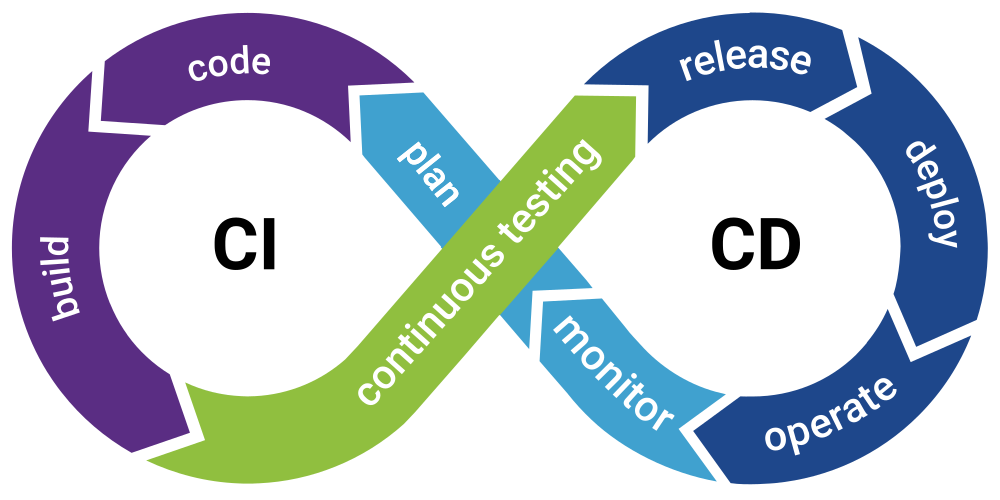
- Abbreviation of Continuous Integration and Continuous Delivery (or Deployment)
- A stage of application development
- Enforces automation
- building
- testing
- deployment
- monitoring
Continuous Integration
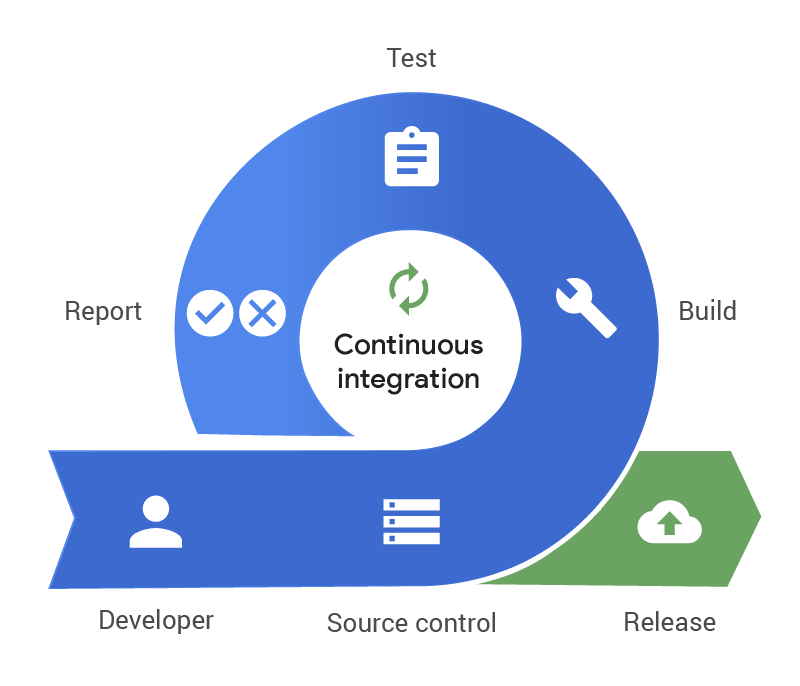
- Source Control (Github, Gitlab, BitBucket, Azure Repos etc.)
- Build
- Test (unit, integration, e2e)
- Report (Pass & Fail)
- Agent is responsible to execute the steps
- It can be used without CD
Continuous Delivery
- Automation
- Managing environments is easier
- It can be applicable for any time
- Eliminates human intervention
- It can't be used CD without CI
Advantages of CI/CD
- Easy to collaborate with multiple developers
- Better DX (Developer experience)
- Reduce risks (fails early)
- Better code quality
- Shorter review time
- Static code quality checks (eslint, stylelint etc.)
- Semantic assessments might be supported by AI
- Measurable progress (built times, release frequency etc.)
Responsibility:
Developers or Devops?
- At minimum, developer team should decide their requirements
- Application developers know their own build environment and necessities
- At most tools, pipeline configs stay inside source control (Jenkinsfile, gitlab-ci.yml, azure-pipelines.yml, Dockerfile)
- Installations, upgrades, domain and network configs are not managed by developer team
CI Tools
- Gitlab CI/CD
- Jenkins
- Bamboo
- Azure Pipelines
- Bitbucket Pipelines
- Github Actions
- Jetbrains Teamcity
They might be cloud-based or on-premises



Frontend Deployment variations
- Single Page Application
- old school ftp copy (manual)
- http server(apache, nginx) + asset copy
- dockerized (asset + nginx conf)
- SSR
- node on server + copy build folder
- dockerized version
*builds might be on agent itself or docker image
Case 1
- Source Control: Gitlab
- CI Tool: Jenkins
- Config is at the repository: Jenkinsfile
- Checkouts at MR's -> build status
- Automatic deploy for dev merge
- Manual trigger for test, uat, prod
- Docker images with versions stored at Nexus
- Relevant environment pulls and runs container
- Same container can be run with different environment variables for different environments
Case 2
- Source Control: Gitlab
- CI Tool: Bamboo
- Config is at the Bamboo UI
- Checkouts at MR's -> build status stayed at Bamboo
- Build artifacts are stored (assets, scripts etc.)
- Assets are sent to http server via sftp
Case 3
- Source Control: Gitlab
- CI Tool: Jenkins
- Config is at the repository: Jenkinsfile
- Checkouts at MR's -> build status
- npm package is published to Gitlab package registry
Case 4
- Source Control: Gitlab
- CI Tool: None
- CD:
- Code push to mirror repo on Azure Repos
- Build & Deploy config at the Azure Pipelines UI
Best Practices
- Localization update
- Codegen integration
- PR or MR pass/fail status
- Typescript checks
- npm package updates
- npm audit
Best Practices (cont.)
- Dockerized applications (more control over underlying technologies)
- Versioning and easy rollback
- Handling environment variables
- Reduce built times with caching (on-premises)
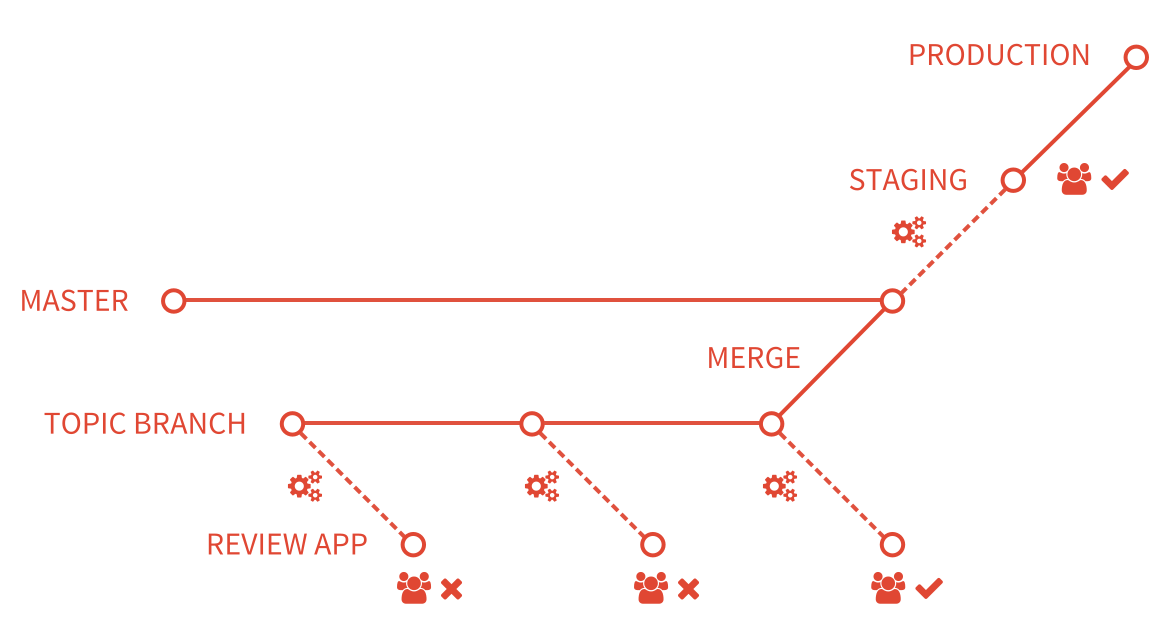
- Review Apps*
Review Apps

Integrations
- Deployment Notifications (Teams, e-mail etc.)
- Pipeline fail notifications
- Task status changes (JIRA, Azure Boards, Gitlab Issues)
Useful tools
- Nginx (http server)
- Proxying
- Docker
- Pm2 (node process manager)
- Kubernetes (rancher, lens)
- Nexus
- Gitlab (Package & container registries)