Overview of Robot Learning
for Manipulation

MIT 6.421
Fall 2026, Lecture 2
Russ Tedrake
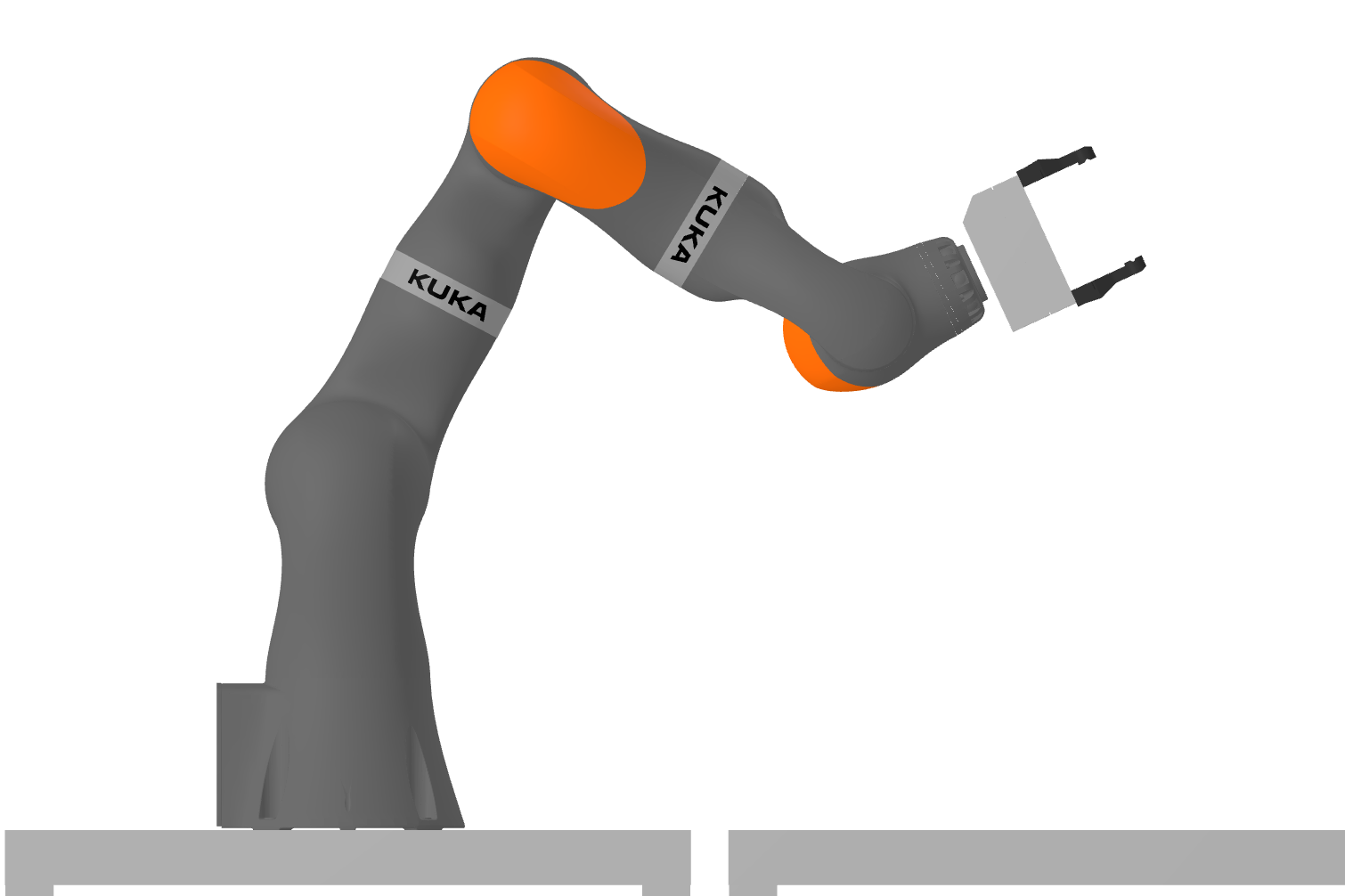
Intro / Motivation
Walking into the building just before lecture 1 last week, I overheard:
"Dude, did you see that GPT just solved robotics?!?"
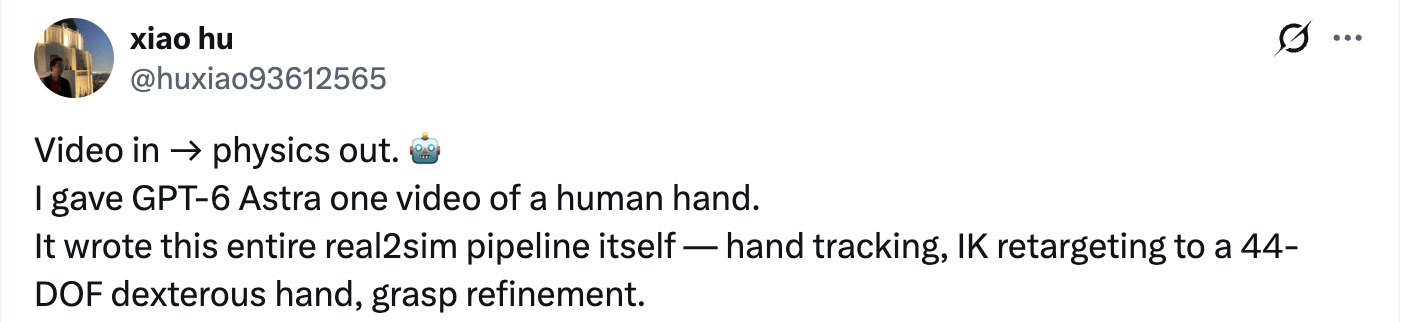
The post(s) that caused the buzz

Note: It did take 2.5 minutes to run..., so it's a harbinger, but not quite ready to ship...
“Pick up the red block from the table and place it inside the bowl” using Inspect Robots
Not just direct robot control... also "real2sim", ...
Robots are just one more input/output modality...
omni model
text, images,
video, audio, ...
robot sensors
text, images,
video, audio, ...
robot actions
Did Astra "solve" robotics?
- Huge progress towards omni models trained on robot data
- I don't see "GPT learned how to watch youtube and write code, and got zero-shot robot performance for free"
- I see "Robotics is important enough that OpenAI (and Anthropic and ...) are pointing tons of robot people/data at their models, too"
[meta] Why and how to study robotics in 2026++
- The potential for impact is almost limitless
- The state-of-the-art is moving super fast (in every field)
- Hardware can't scale (quite) as fast as software
- Low-pass filter on recursive self improvement
- (but exponentials can still happen... e.g. robots building robots)
- Expert coders and vibe coders
- How do you become an expert in 2026++?
- Have to take the time to understand the details
- Research labs and companies don't need many vibe coders
Goal for today's "overview of robot learning"
- Broad taxonomy of robot learning ideas
- Context for what you're seeing on social media
- Context for the lectures in this course
- We'll do deep dives on a handful of these topics
- Please make requests and ask questions
How do you formulate manipulation as a learning problem?
"Single-task" learning
"Single-task" learning
Approach #1: Reinforcement Learning (RL)
as you've seen in, e.g. MIT 6.390 (https://introml.mit.edu/)
image from old result:
OpenAI - Learning Dexterity
- Make a simulator
- Write reward function
- Deep policy gradient
- Deploy on hardware
Should you use this RL pipeline?
- Surprisingly effective for locomotion
- Limited results for manipulation
- Requires a simulator
- Question for you: why?
- Requires reward function tuning (hacking)
- Question for you: why?
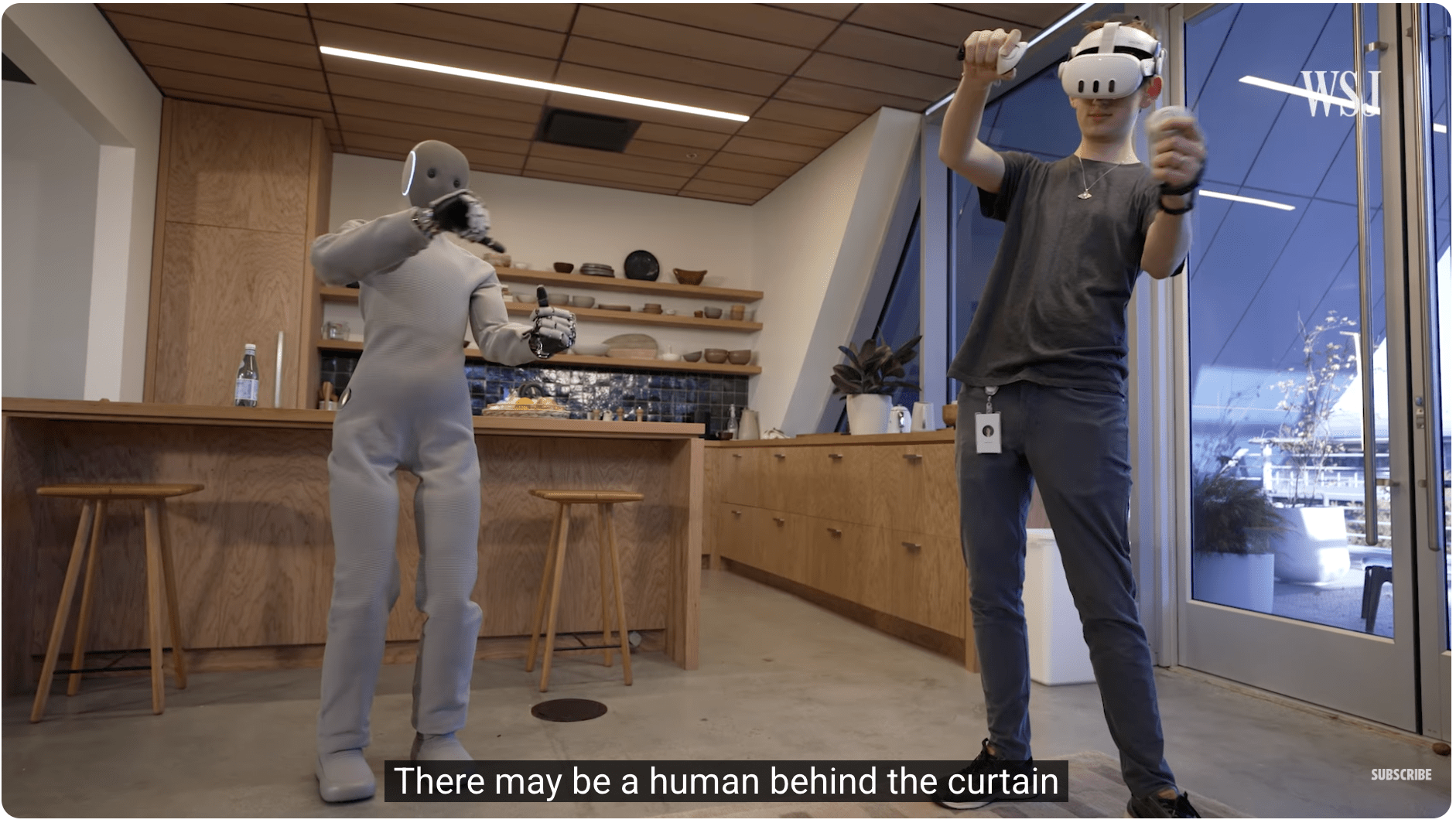
Approach #2: Behavior Cloning (BC)
- Collect demonstration data
- e.g. teleoperation on real hardware ~200 times
note: BC is one type of imitation learning
Approach #2: Behavior Cloning (BC)
- Collect demonstration data
- e.g. teleoperation on real hardware ~200 times
- e.g. teleoperation on real hardware ~200 times
- Train with simple supervised-learning objective
- ~next-token prediction
- ~next-token prediction
- Deploy
note: BC is one type of imitation learning
Combined Approach: Imitation-guided RL
- For systems that you can simulate, can combine the two...
- e.g. single demonstration then RL in sim
- e.g. single demonstration then RL in sim
- Potential virtues:
- less data
- more robust
- superhuman performance
Discussion
Why is RL dominant for locomotion, but imitation learning more dominant for manipulation?
(And how will that evolve over the coming years...?)
Multitask learning
Multitask learning
- Start with a large pretrained model (e.g. VLM or world model)
- "midtrain" with robot data
- BC objective
- teaching the model one more output modality
- often: task- or domain-specific post-training / fine-tuning
- BC or RL or both
"Single-task" learning
- ~200 demonstrations
- \(\Rightarrow\) visuomotor policy
Multitask behavior cloning
- Train on all robot data + internet data
- \(\Rightarrow\) language-conditioned visuomotor policy
vision encoder
language encoder
action
decoder
robot joint encoder
vision encoder
action
decoder
robot joint encoder


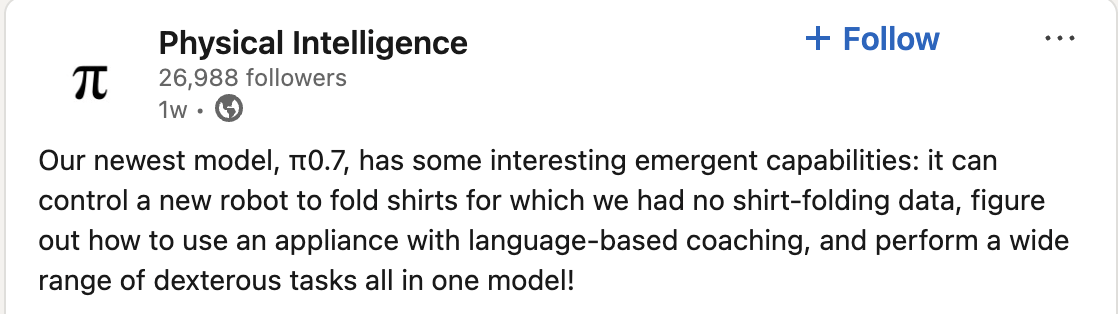
A path to dexterity & generality?
dexterity
generality
large-scale transformer-based multitask learning??
Initial scaling laws look very promising
(but it's very hard to evaluate from social media posts; there is still a lot to do!)
Architectures
Blind locomotion-style policies
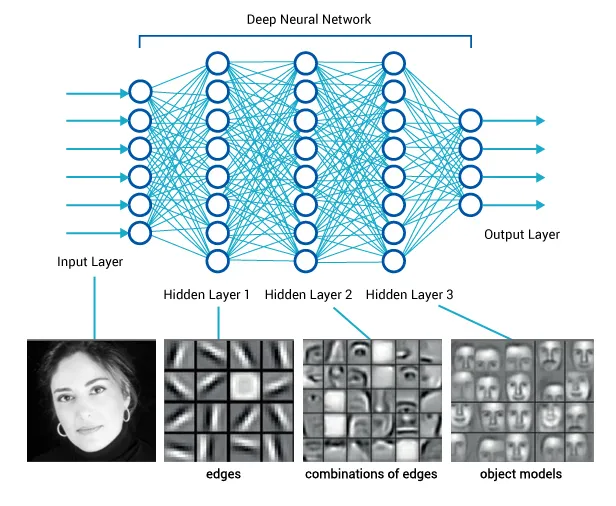
Often very simple, e.g. 3 layer, 255 unit, multilayer perceptrons (MLPs)
Levine*, Finn*, Darrel, Abbeel, JMLR 2016
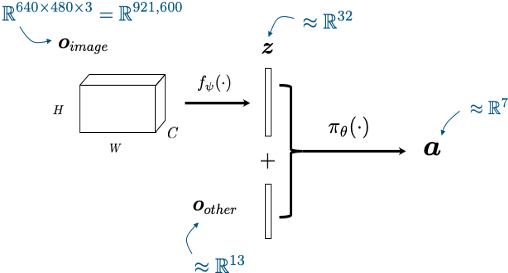
Visuomotor policies
perception network
(often pre-trained)
policy network
other robot sensors
learned state representation
actions
x history
VLAs, WAMs, ...
omni model
text, images,
video, audio, ...
robot sensors
text, images,
video, audio, ...
robot actions
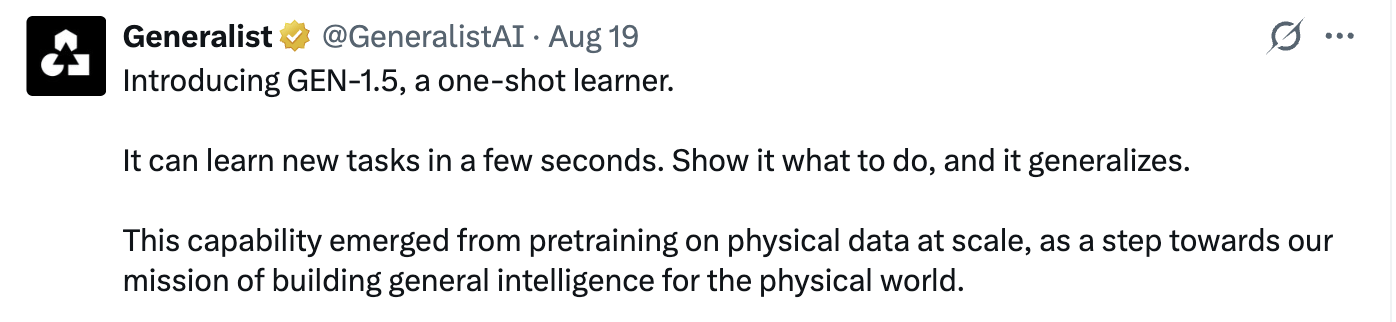
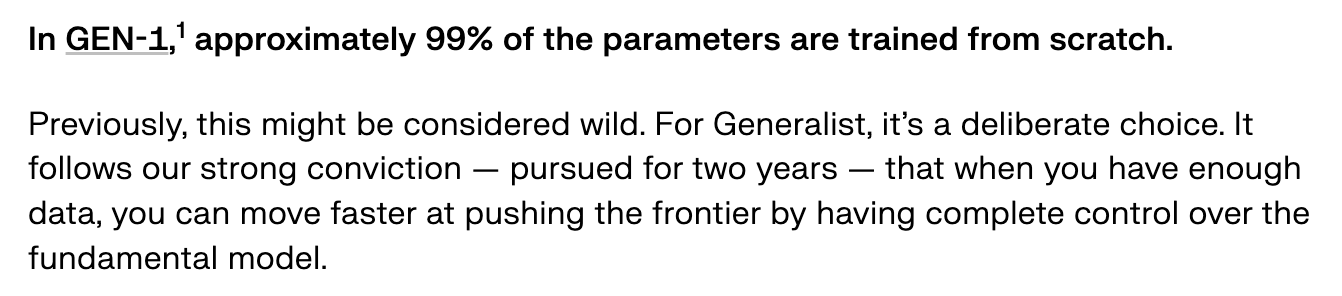
Generalist Gen1+ forgoes the pretrained model
Thinking fast and slow
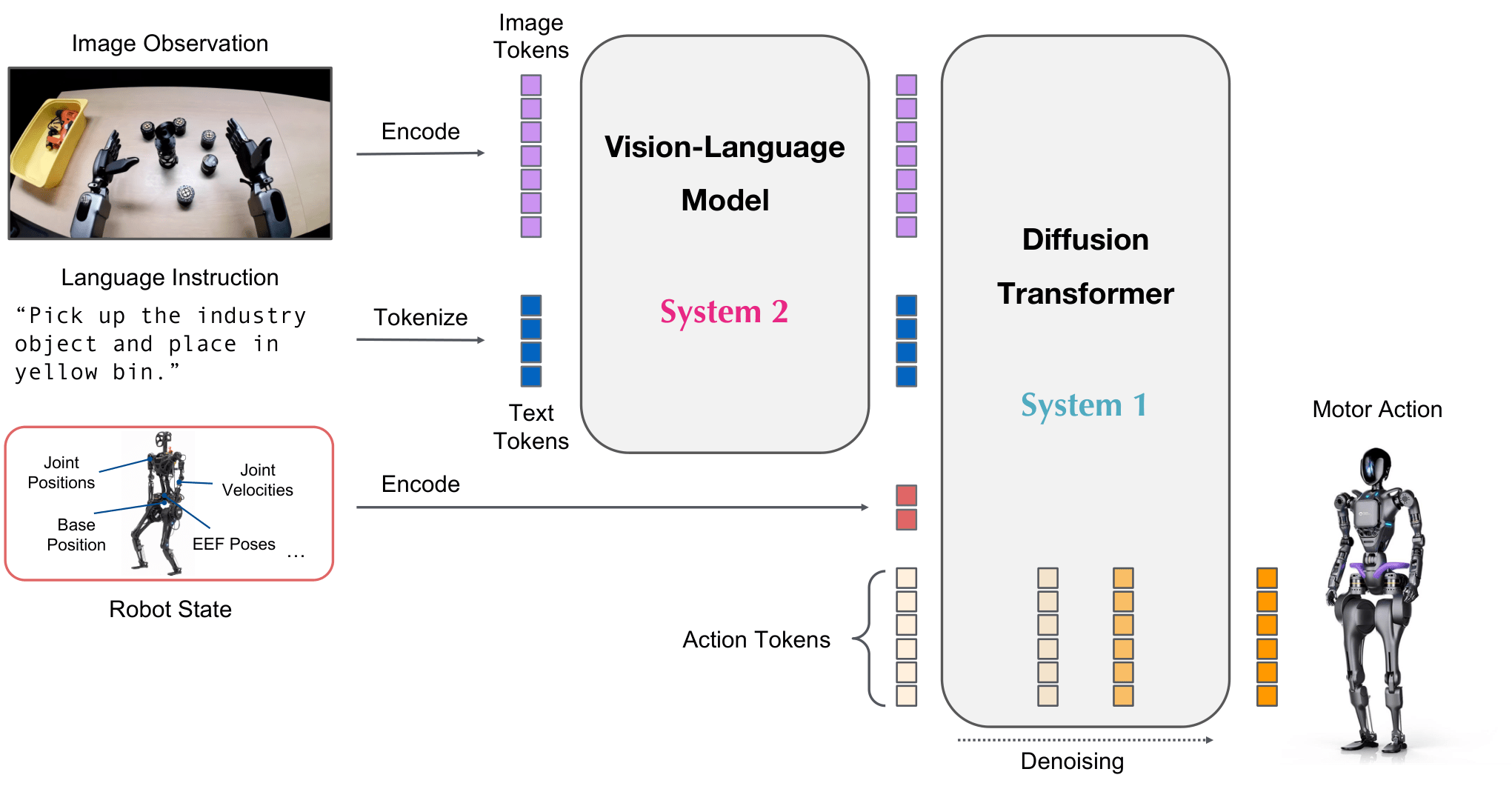
example: GR00T N1 architecture
Data Sources
The Robot Data Diet

Big data
Big transfer
Small data
No transfer
robot teleop

(the "transfer learning bet")
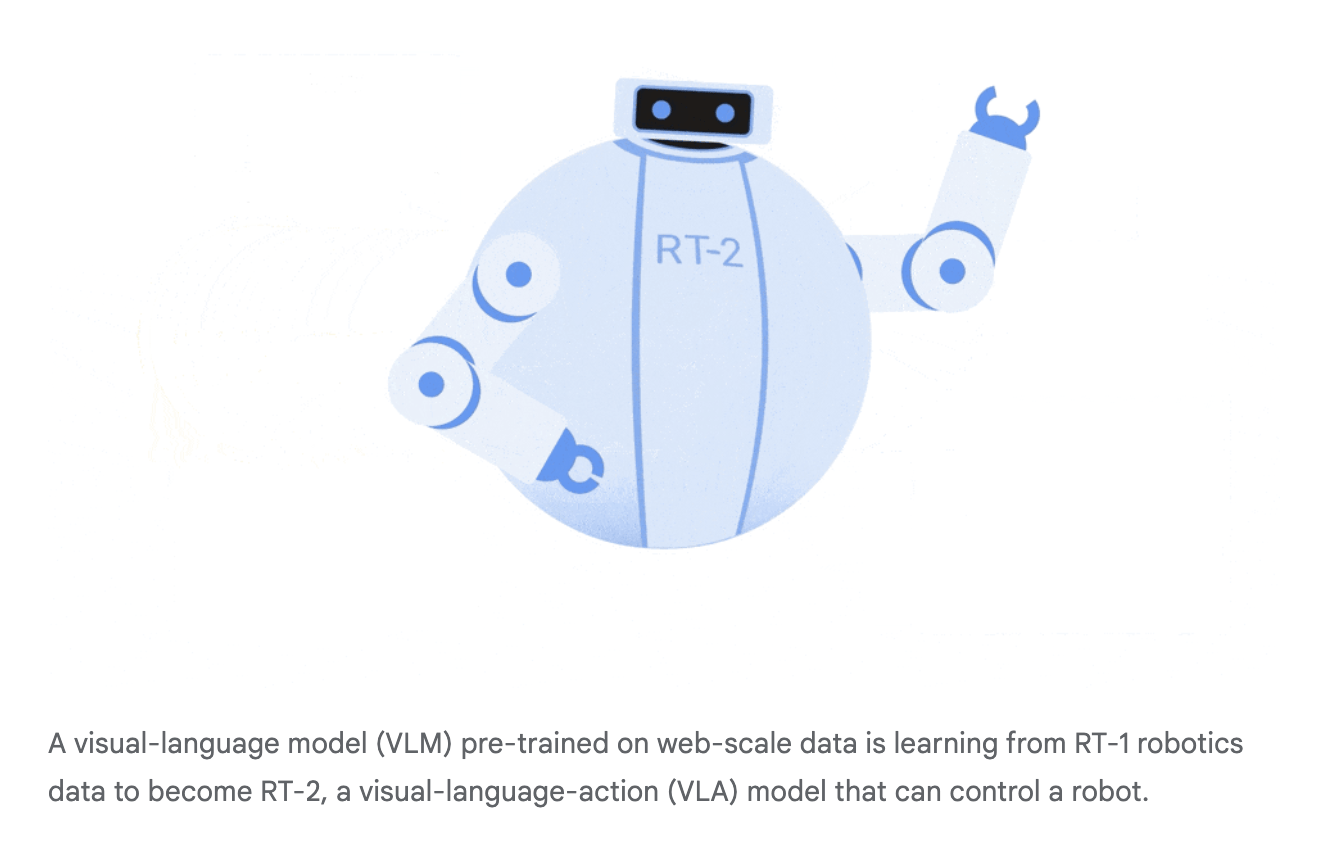
Open-X
simulation rollouts

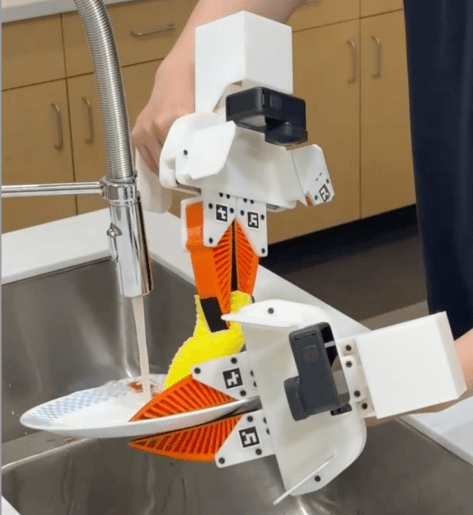
novel devices
The main cast
- Teleop on your robot / your task
- First-person >> third-person
- Cross-task/embodiment robot data
- Egocentric (w/ tracking, w/o tracking)
- With novel devices (e.g. UMI, tactile gloves, ...)
- Third-person video
- Simulation data
Midtraining data is being commoditized
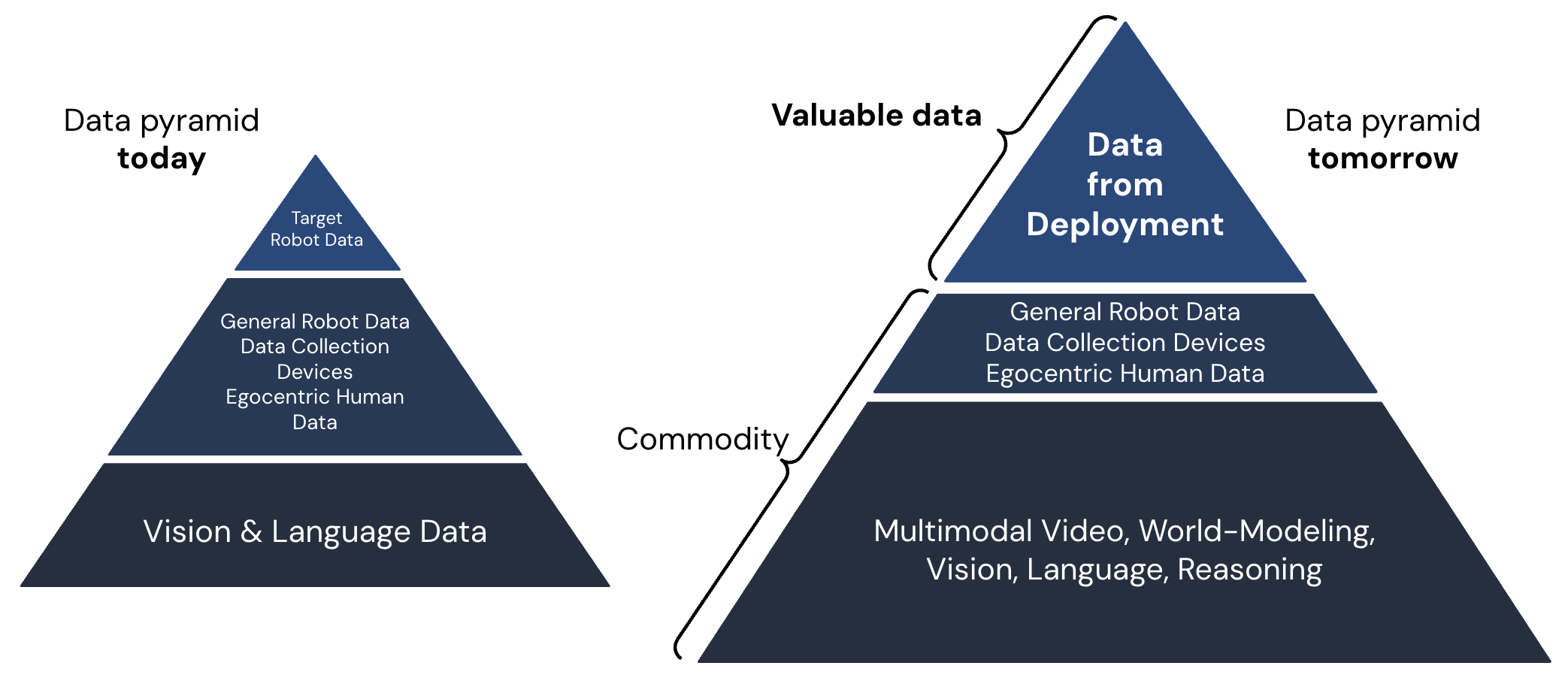
Two separate roles for imitation data
- Task-level knowledge
- Dexterity-level knowledge
Evaluation
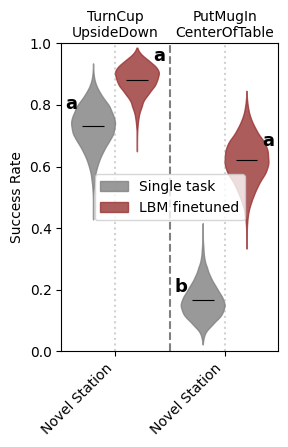
Is checkpoint A better than checkpoint B?
- "Violin plots" from Bayesian analysis assuming a uniform prior
- "compact letter display" for separation
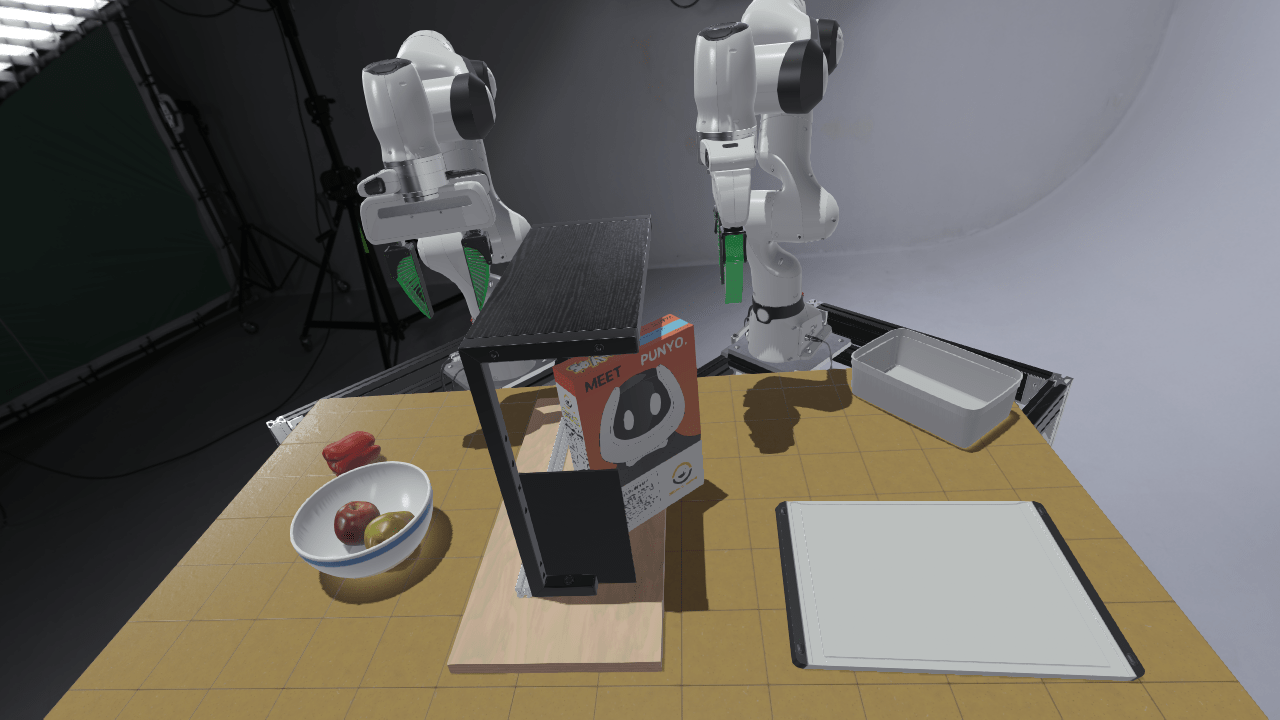
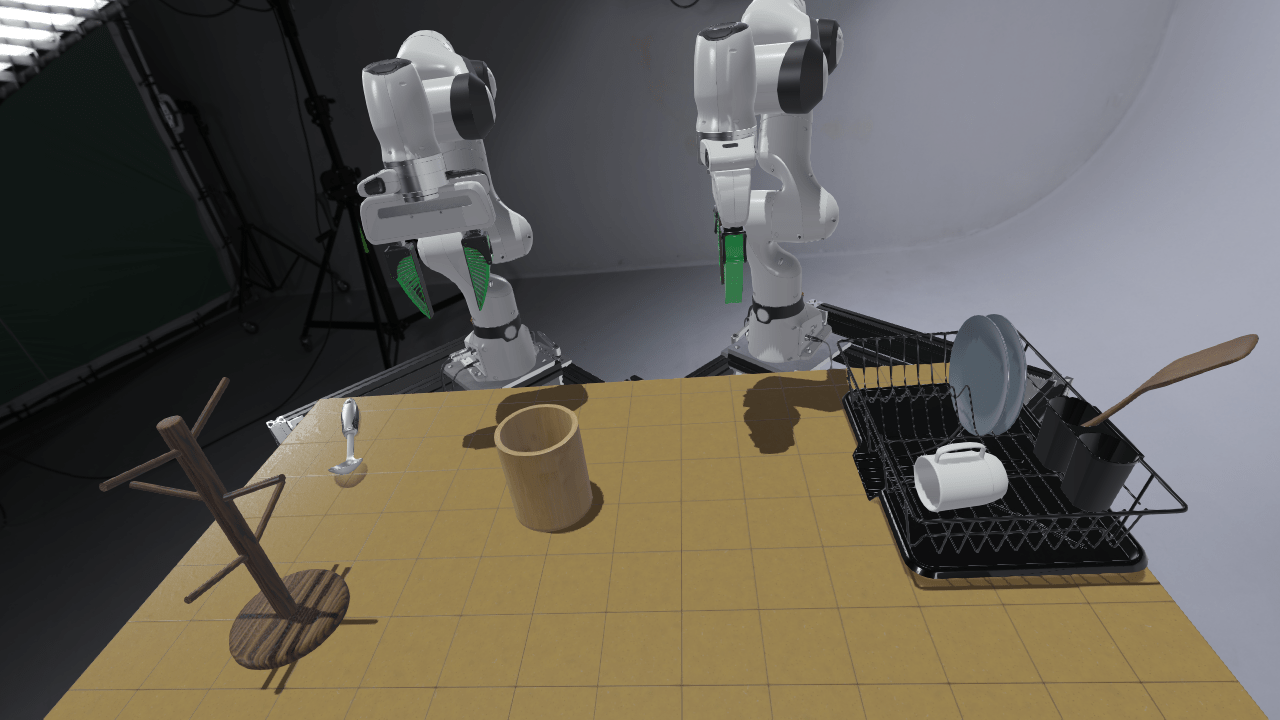
Rigorous evaluation
- Real-world hardware testing
- A/B testing. Always blind, randomized trials.
- Rich reporting (not just "pass/fail").
- Extensive simulation-based testing
- Many more experiments, and they are repeatable
- Many are skeptical of simulation; our investment has paid off
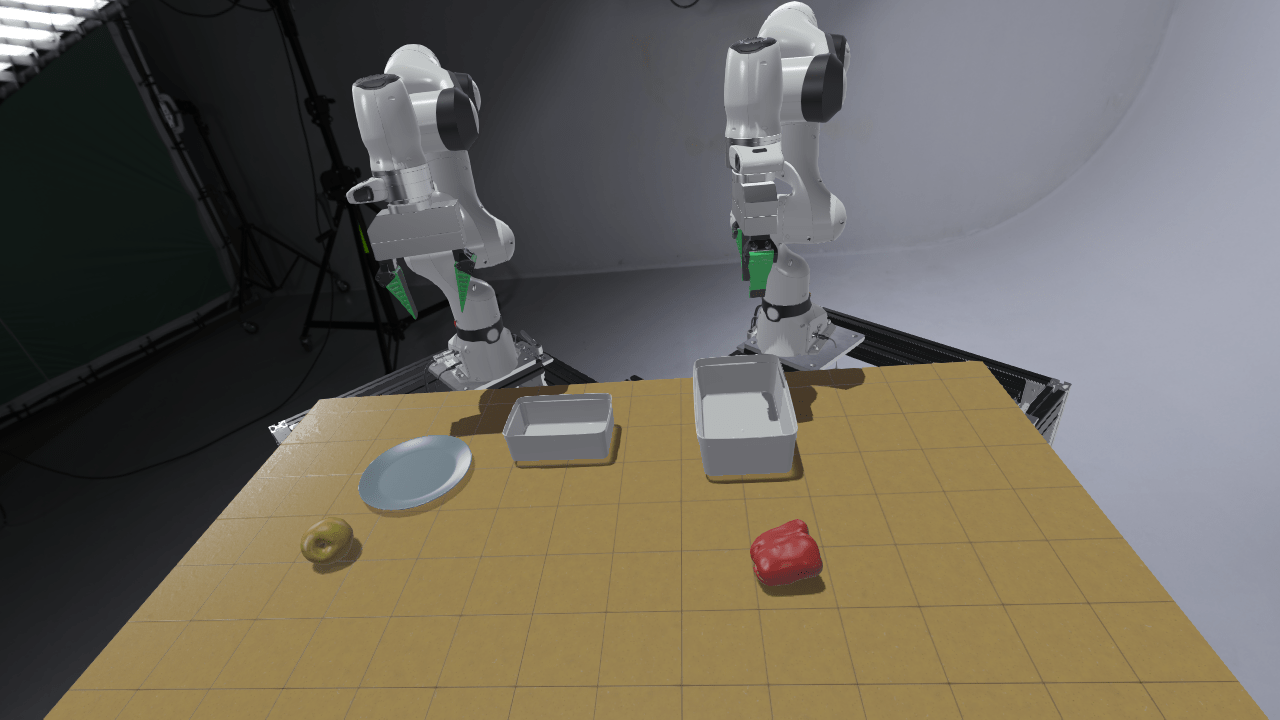
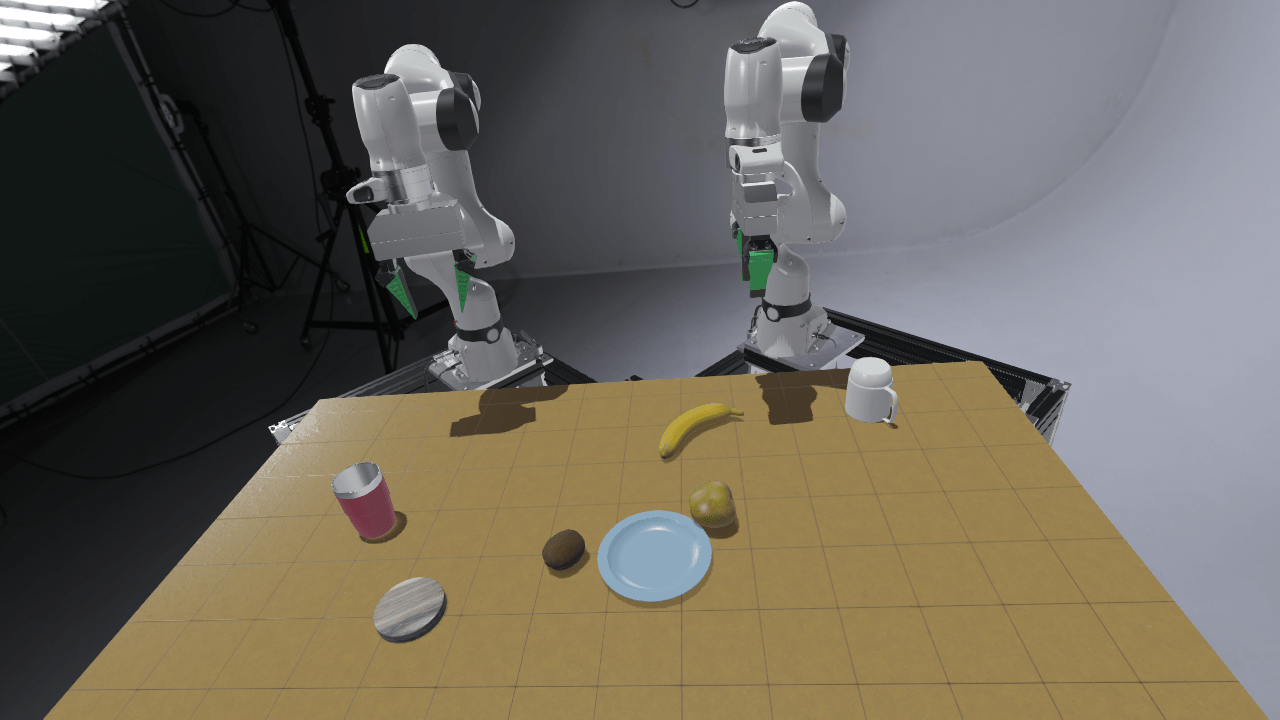
Multitask Scaling Laws
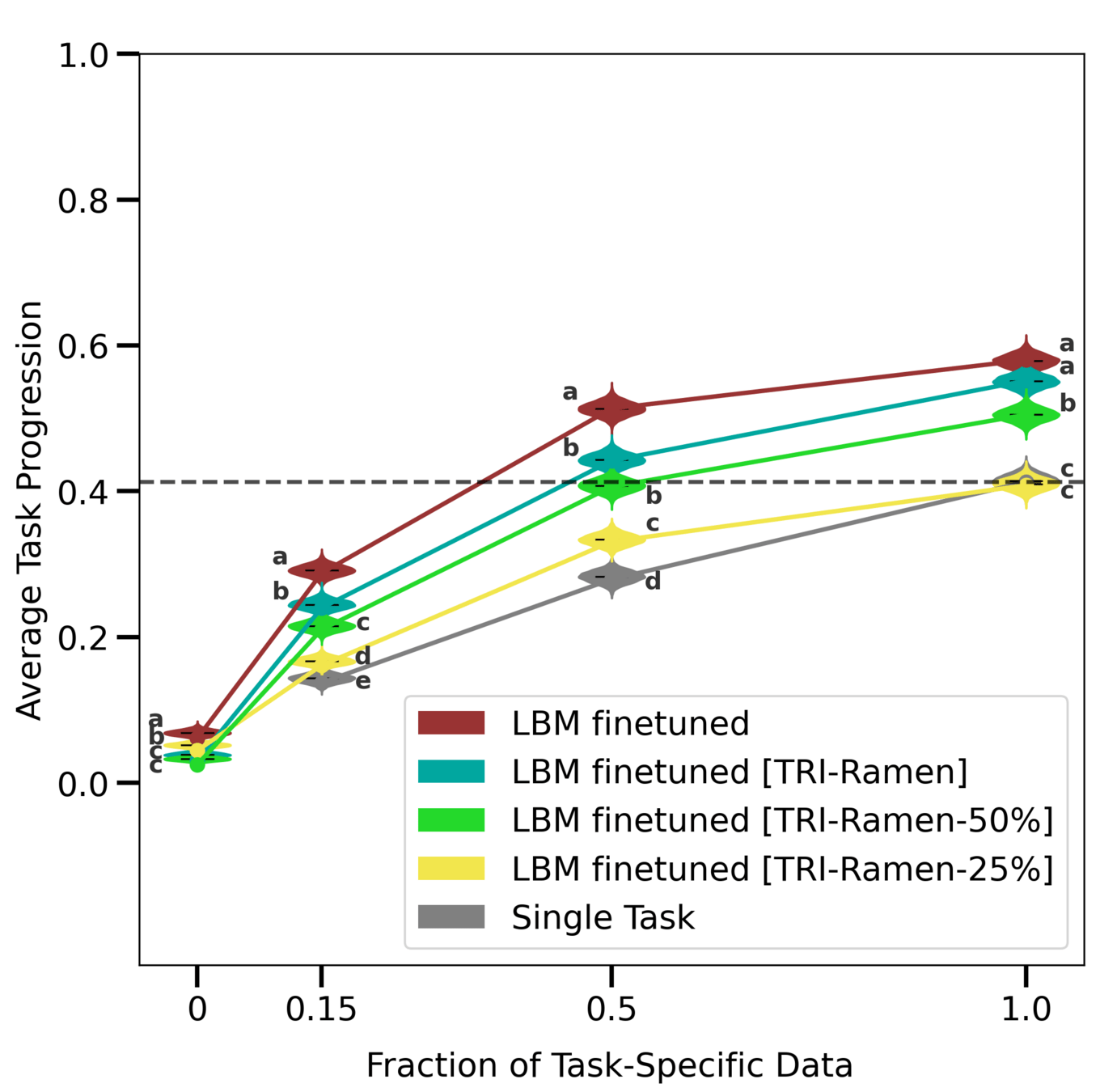
from the LBM 1.0 paper
more data from this task
more data from other tasks
fine-tuning
pretraining
Failure analyses for our hardest (real) skills
ClearKitchenCounter
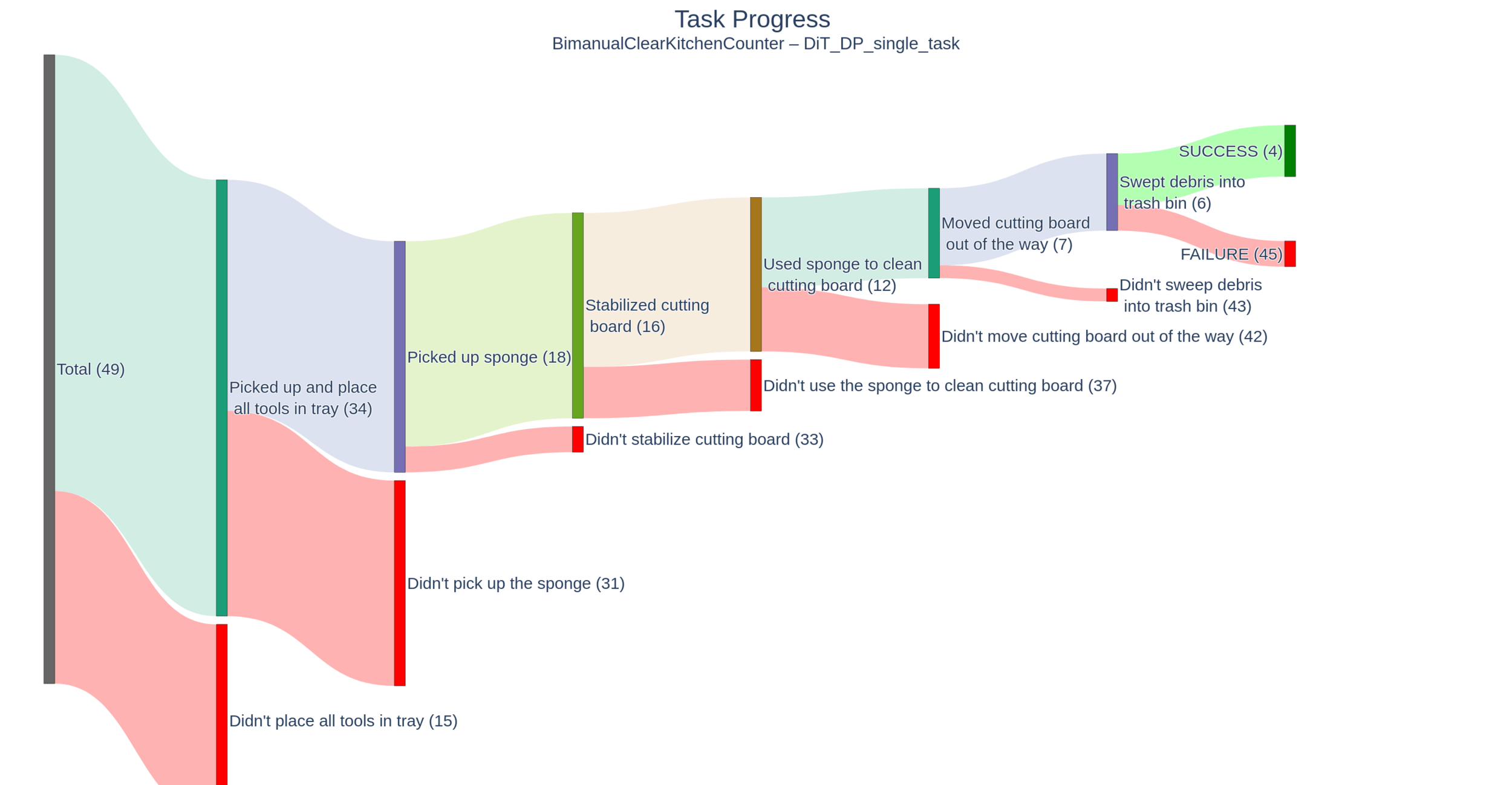
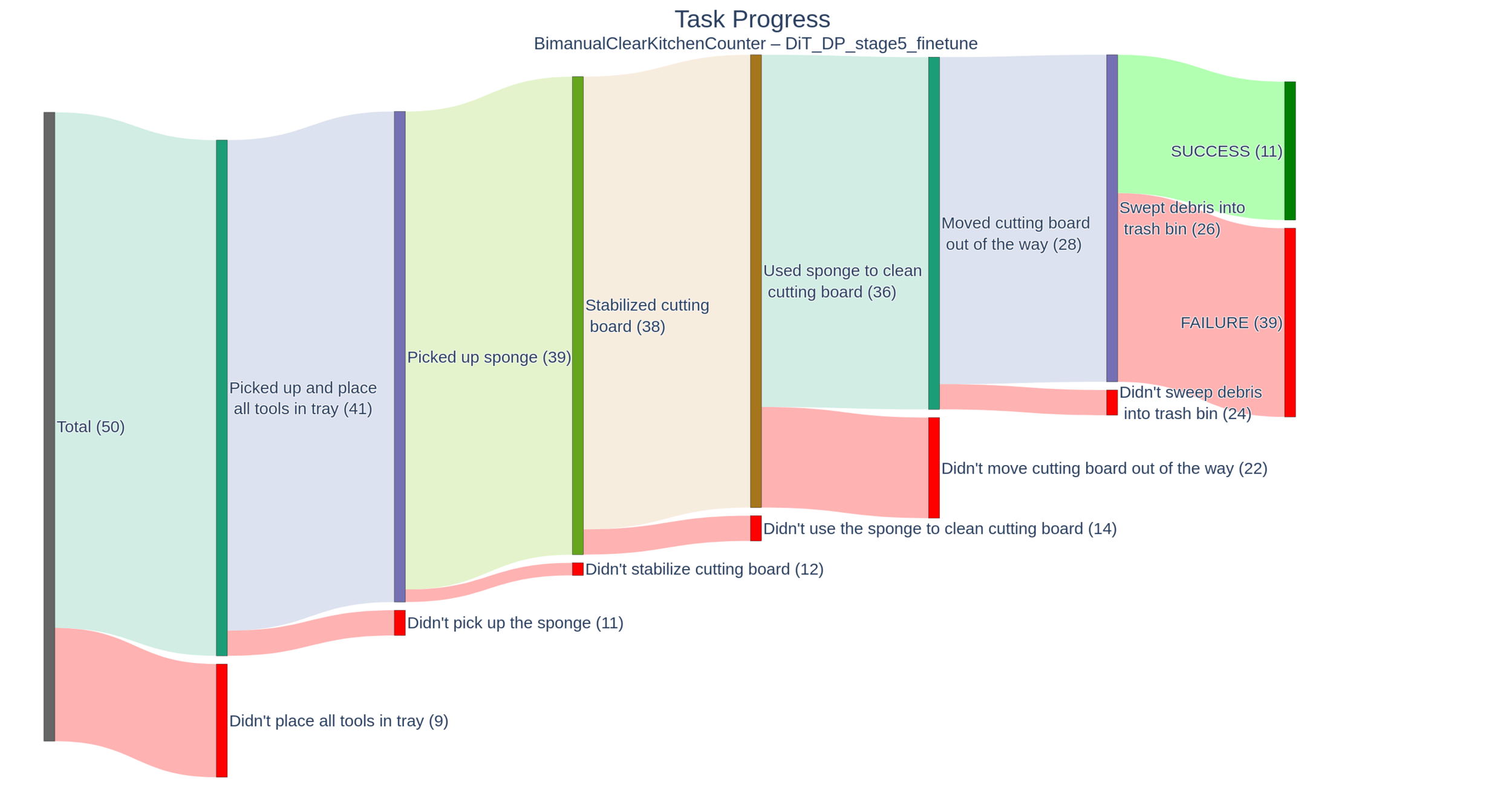
Single task
LBM finetuned
Advanced capabilities
Takeaways
Takeaways
- Imitation-guided RL for locomotion
- BC for manipulation, with RL coming fast
- Multitask BC for teaching super powerful omni models one more output modality
- Will dive more into architecture, evaluation, and some expanding topics in the main content lectures
- But first, we'll build some mastery of the lower-level components in the stack