Seminario de Probabilidad y Procesos Estocásticos, UNAM,
Mayo 27,2026,
Saúl Diaz Infante Velasco
Modeling transition: ODE → SDE

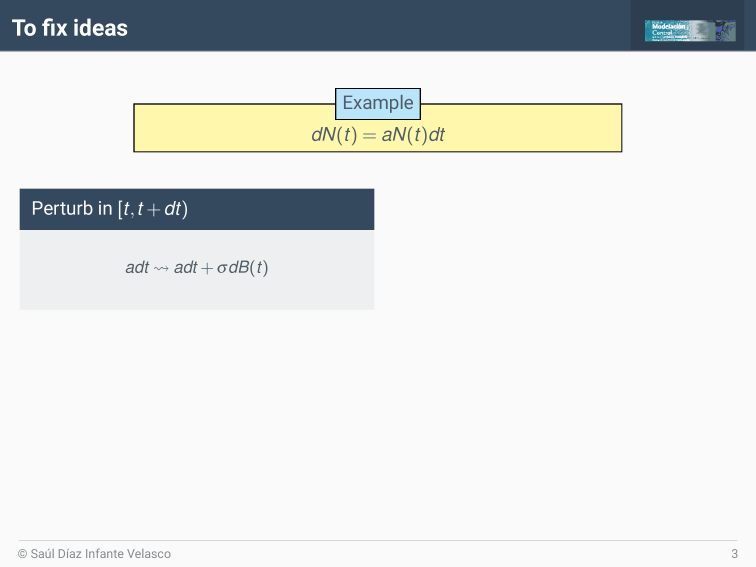
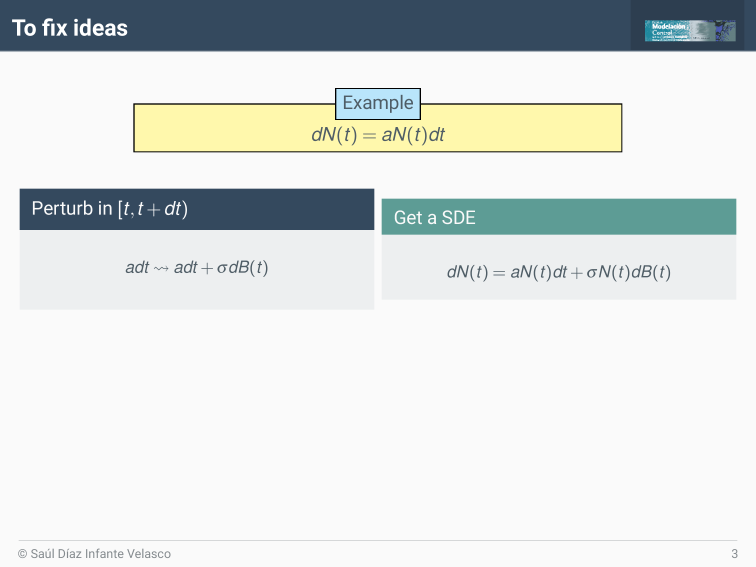
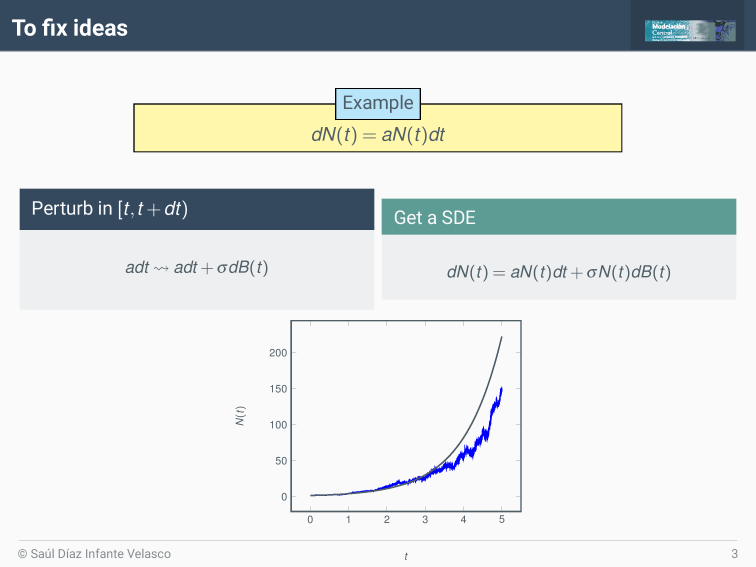
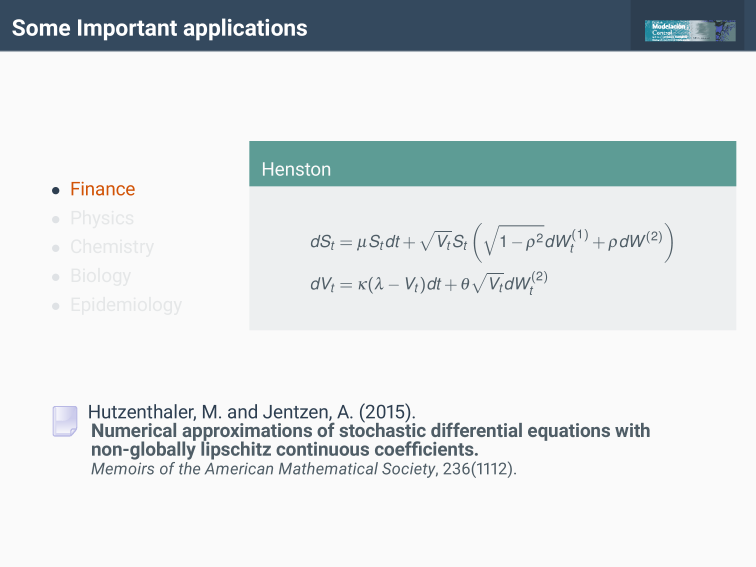
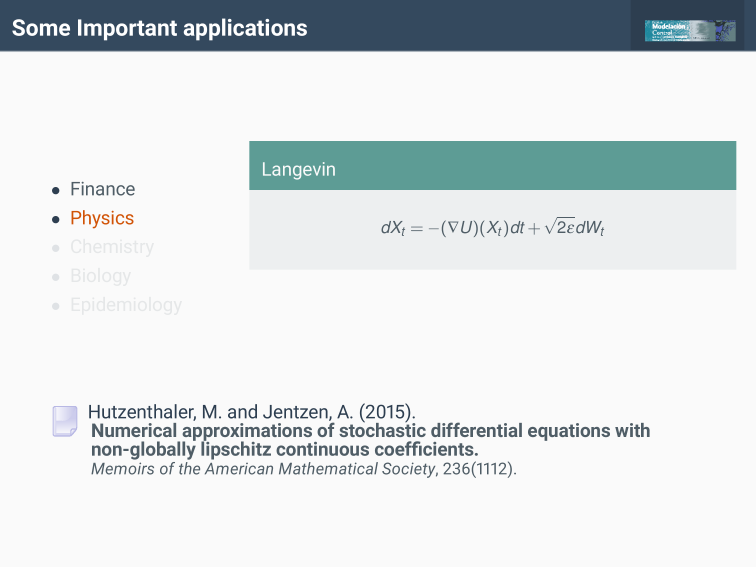
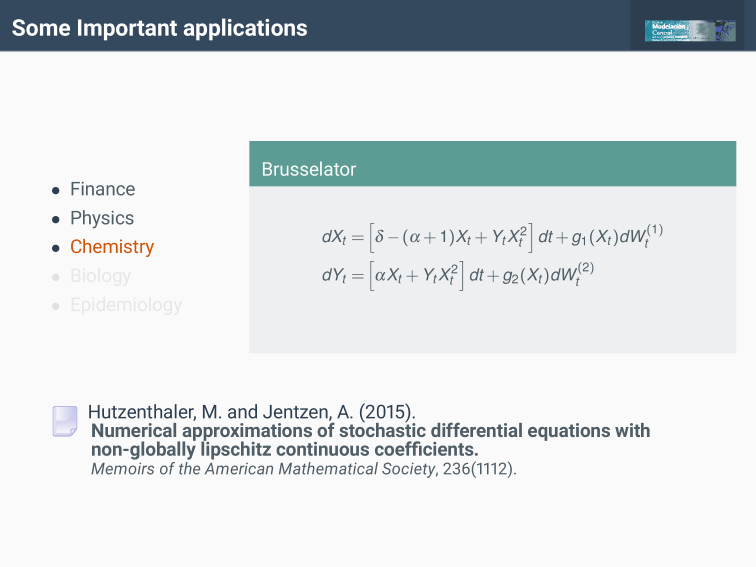
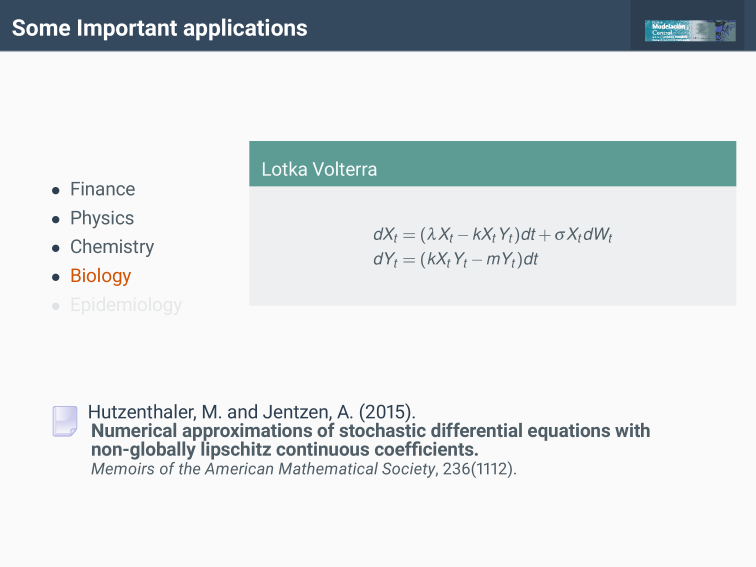
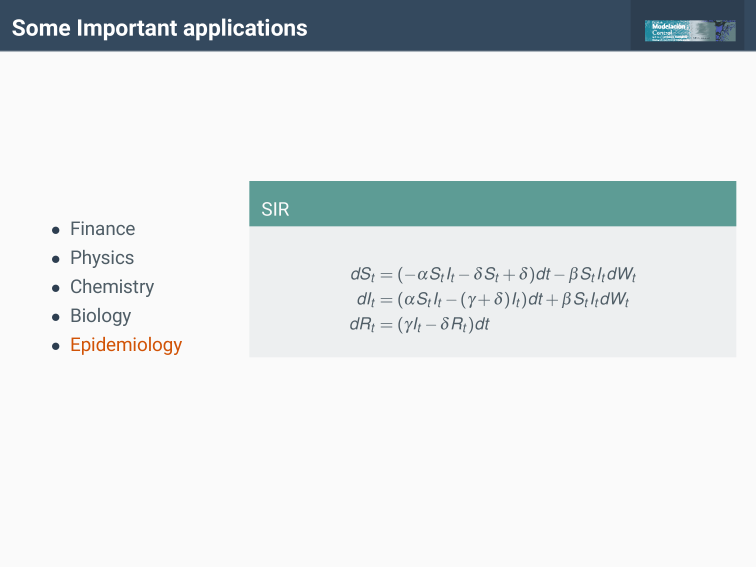
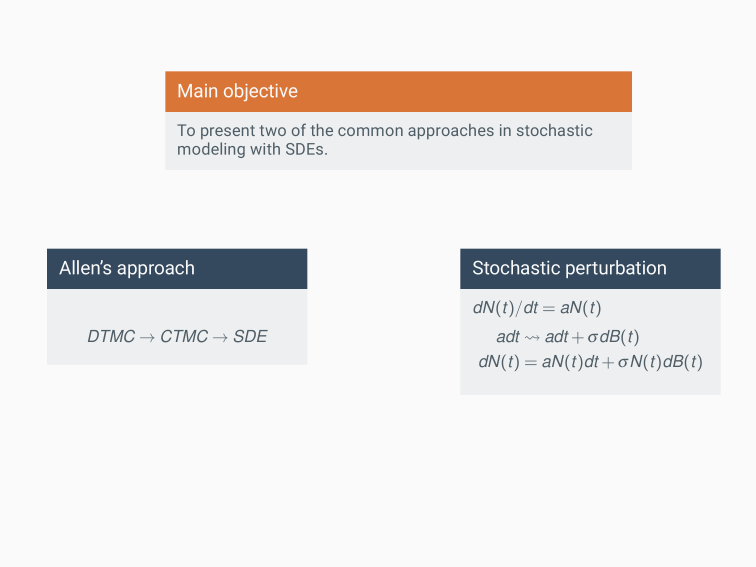
Two of the main approaches:

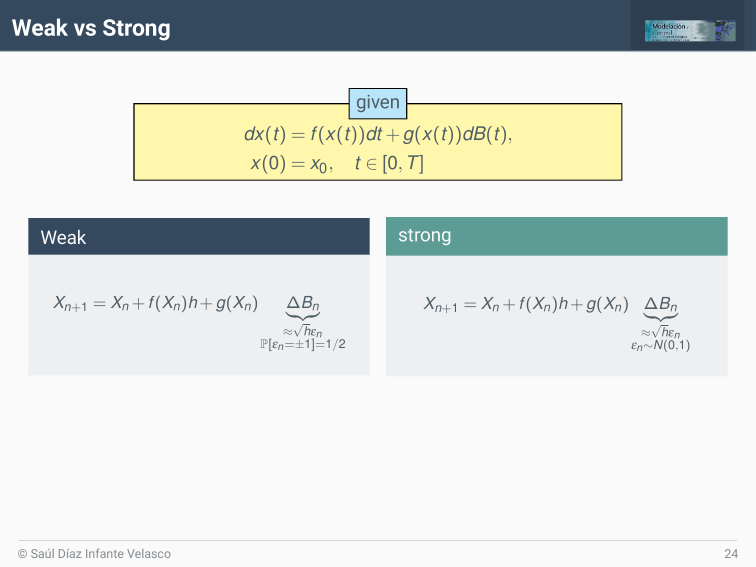
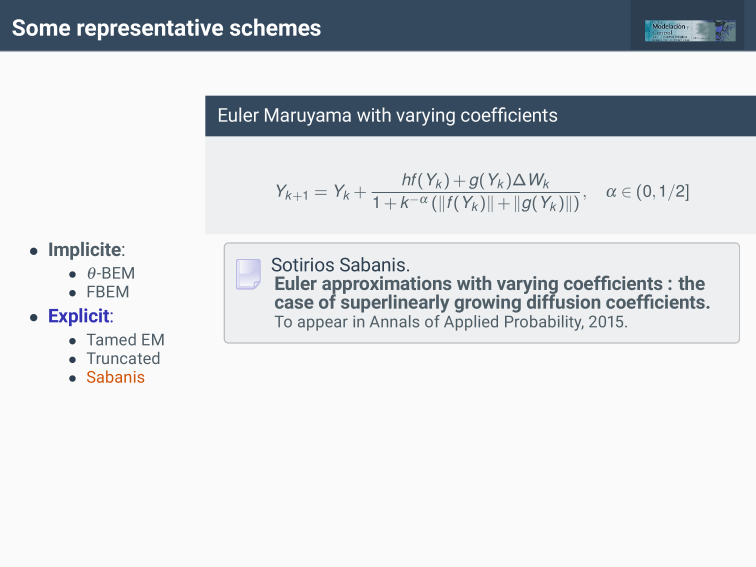
Numerical approximations
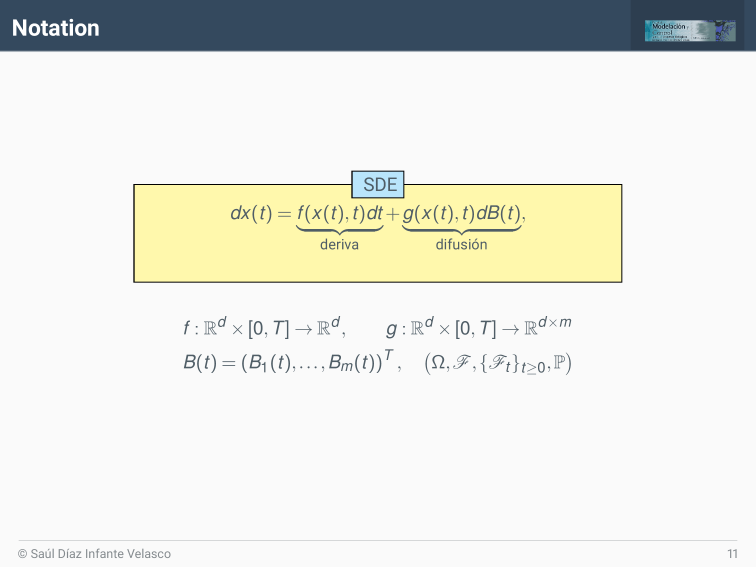
drift
diffusion
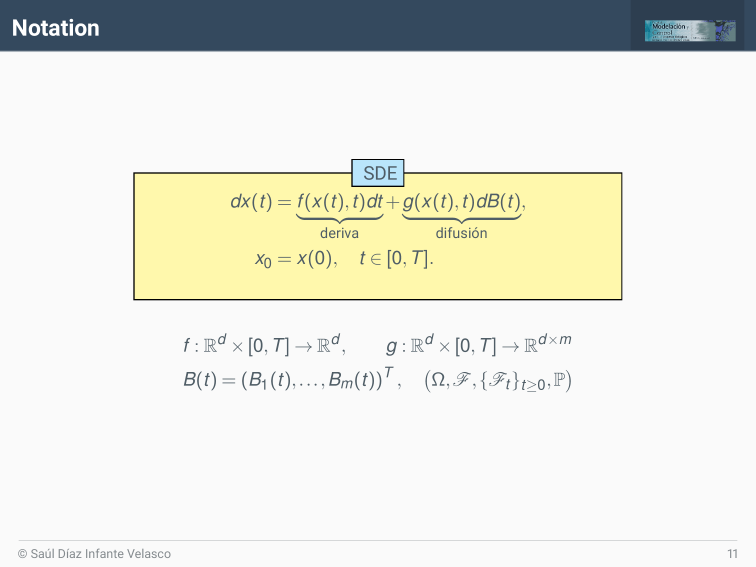
drift
diffusion
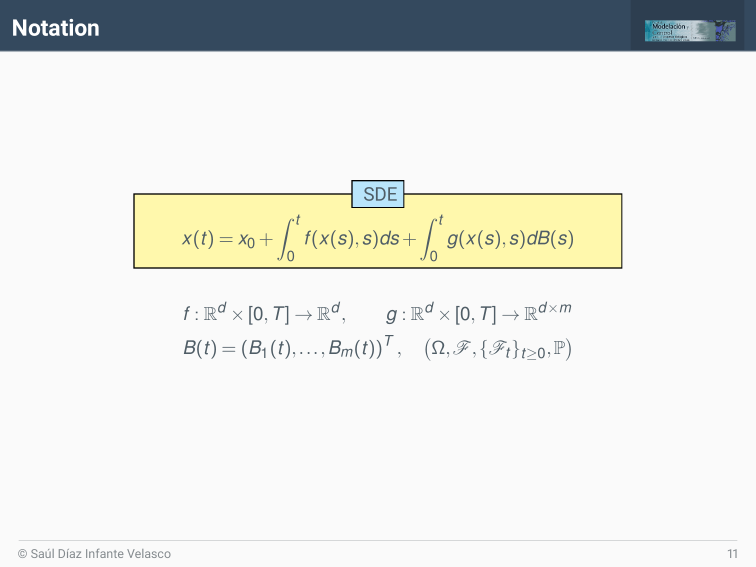
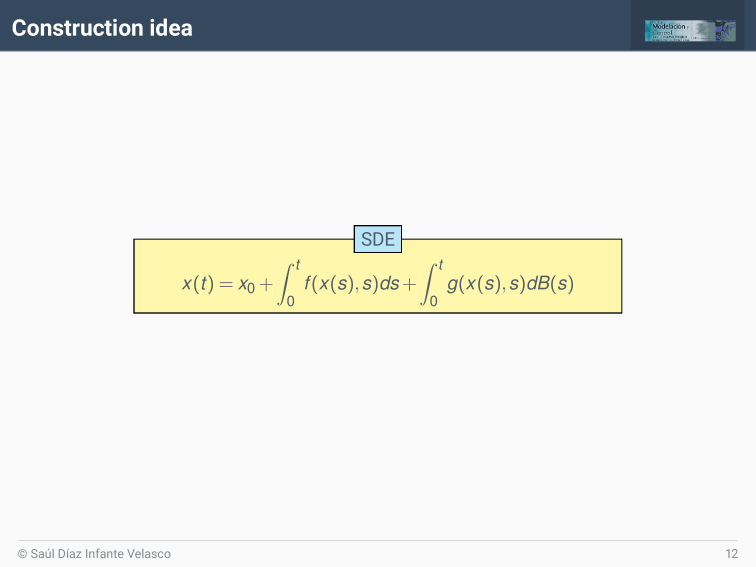
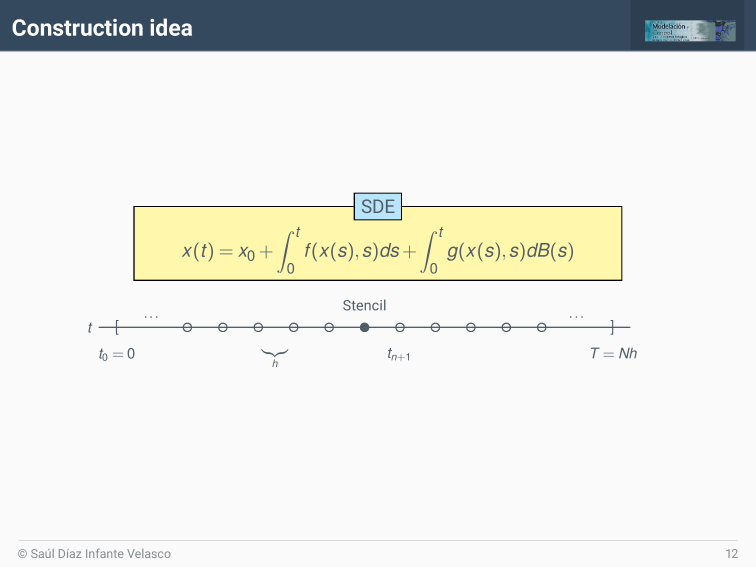
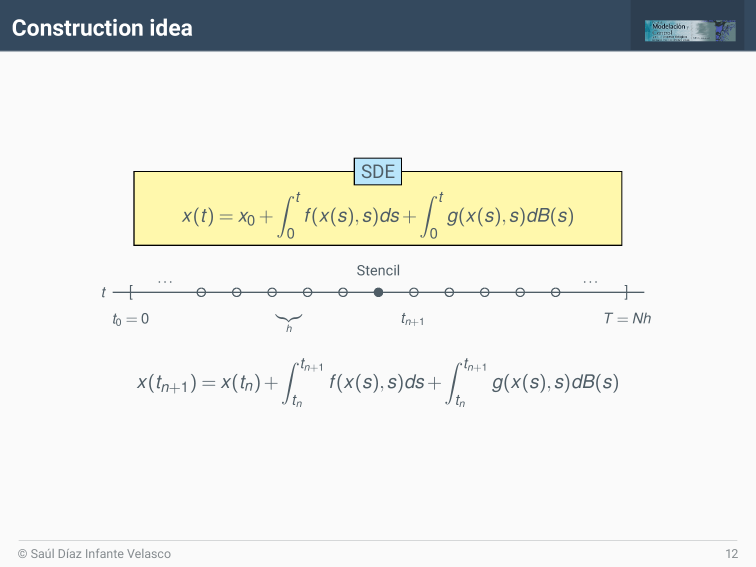
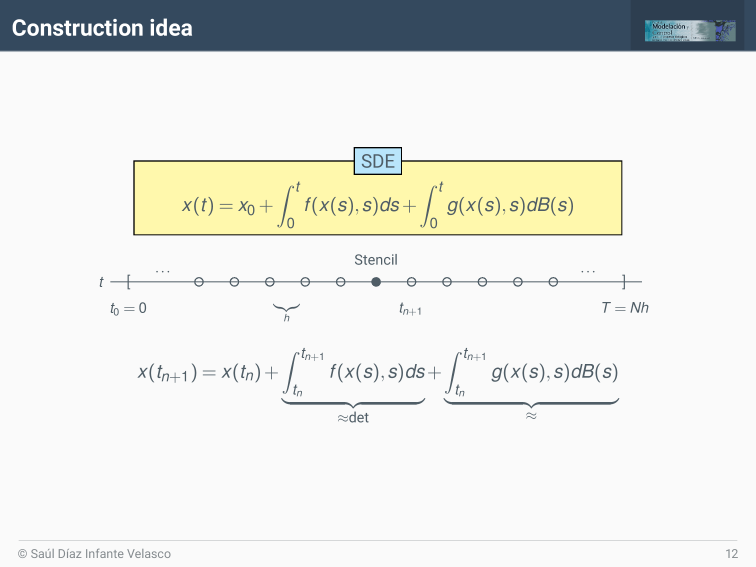
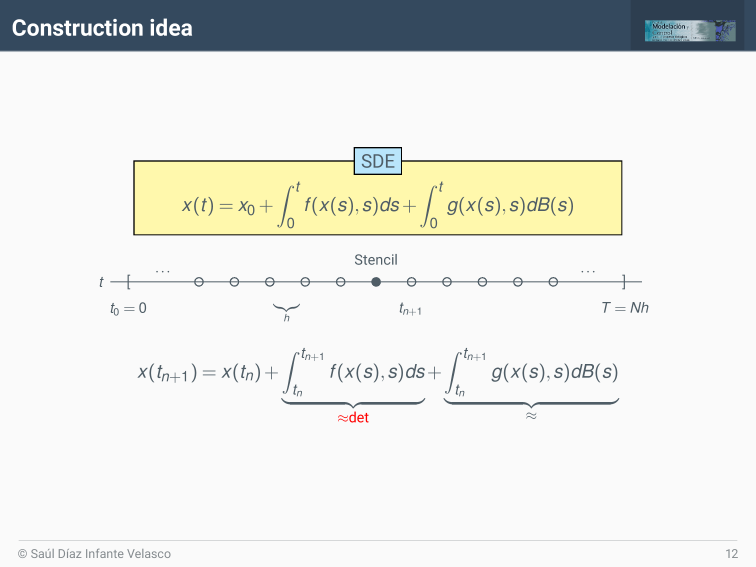
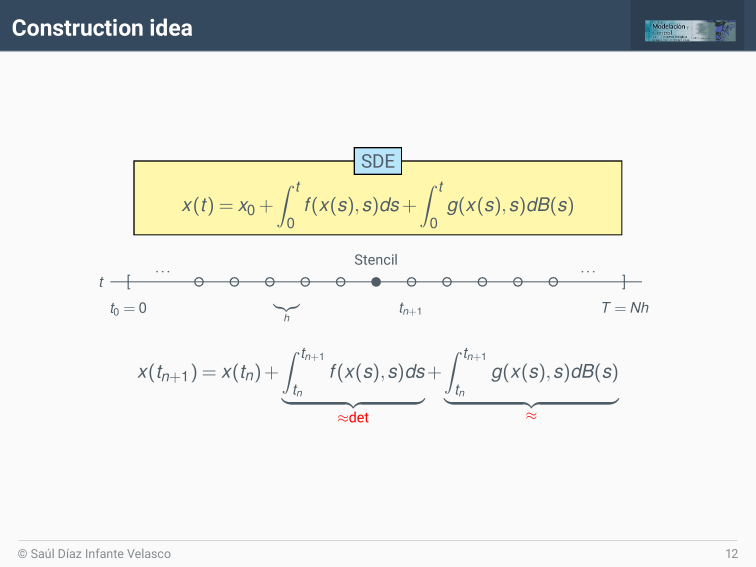
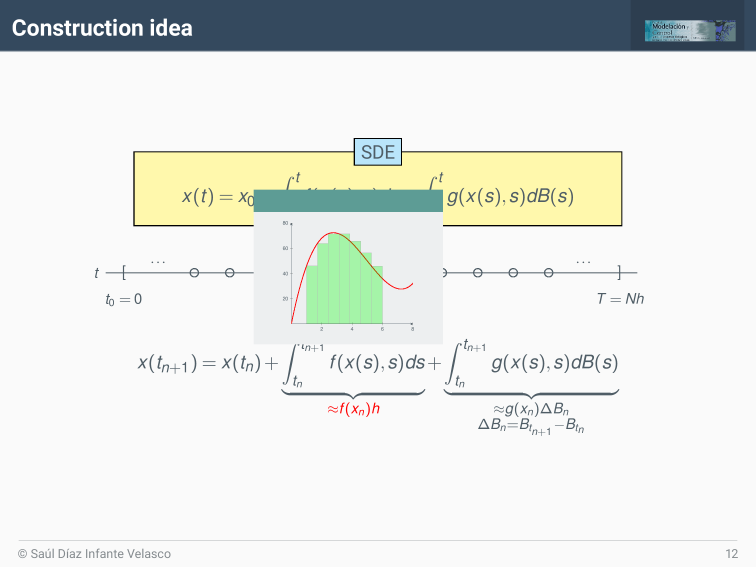
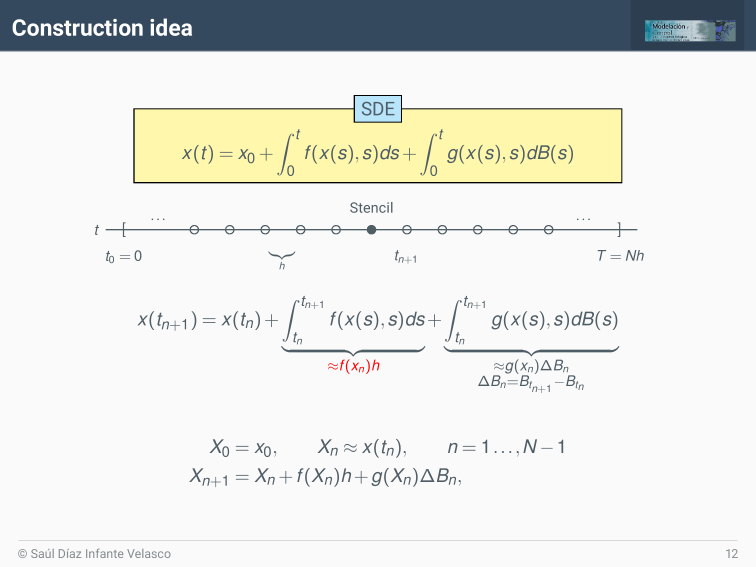
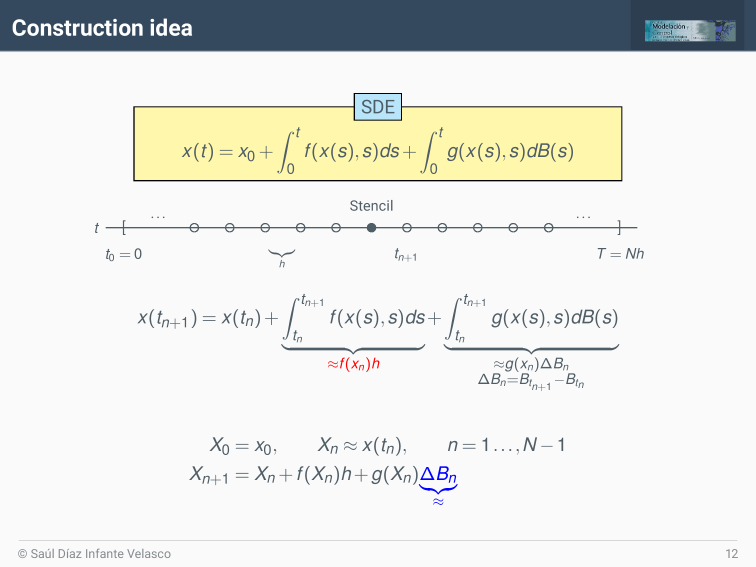


[Sec. 1.2, Thm 1.2.2]
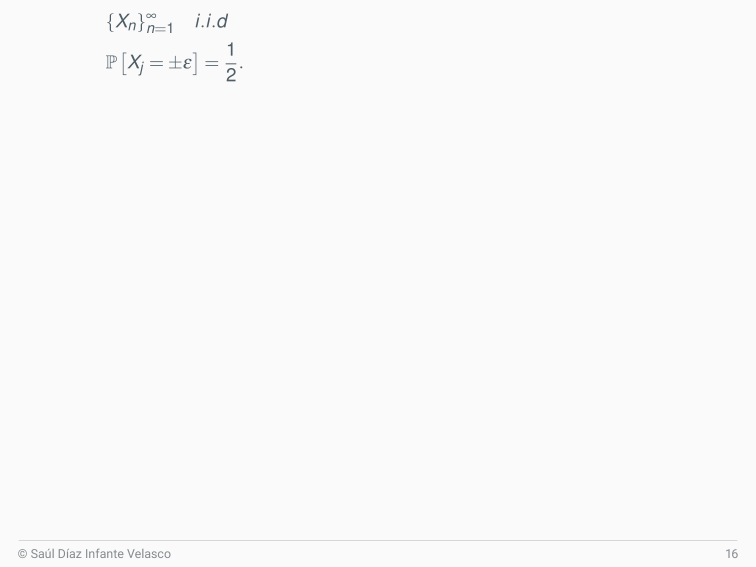
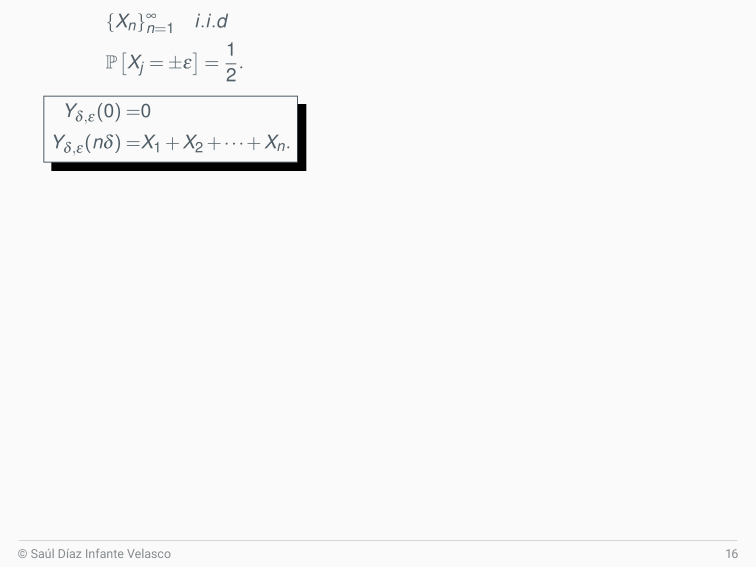
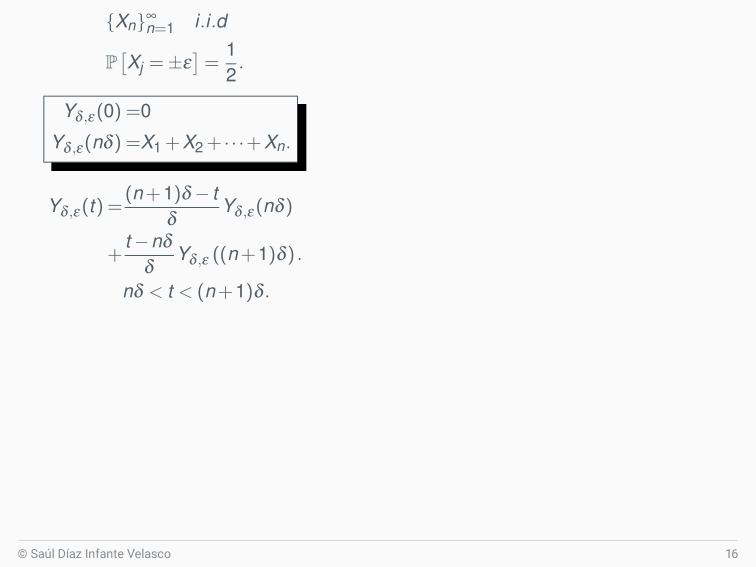
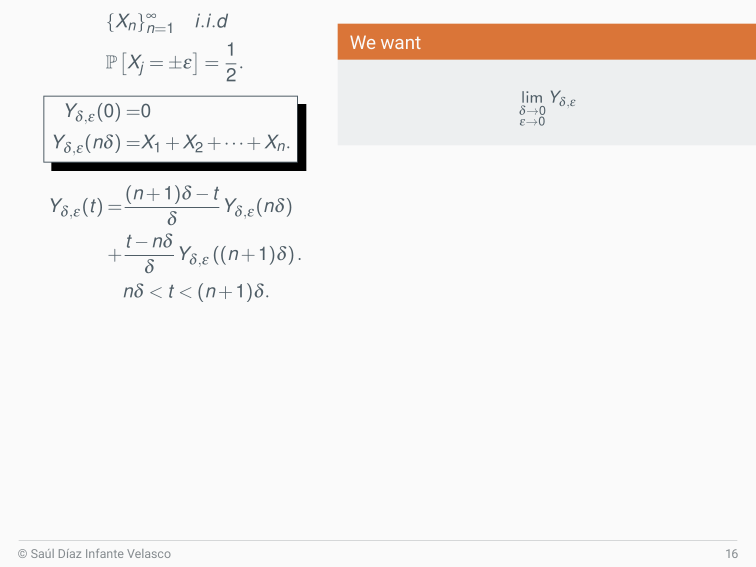
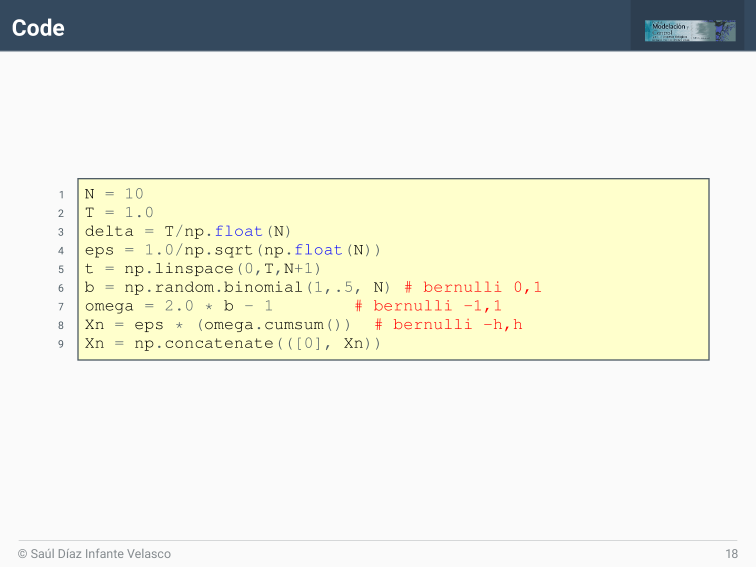
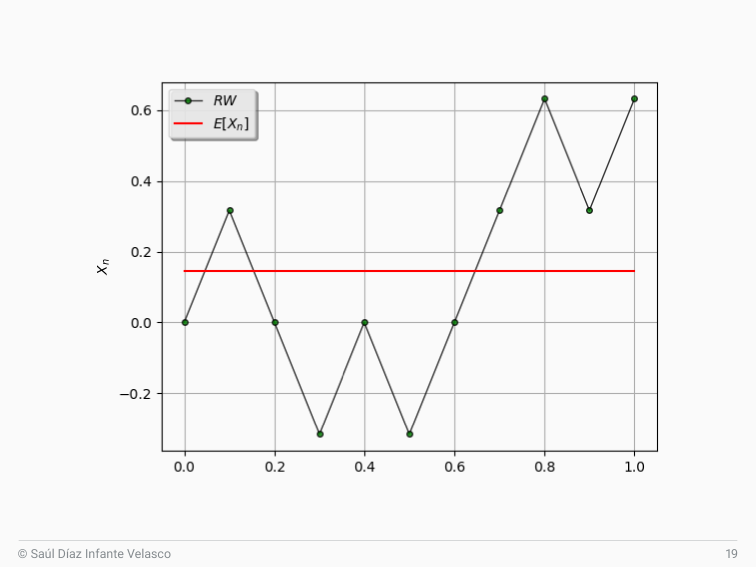
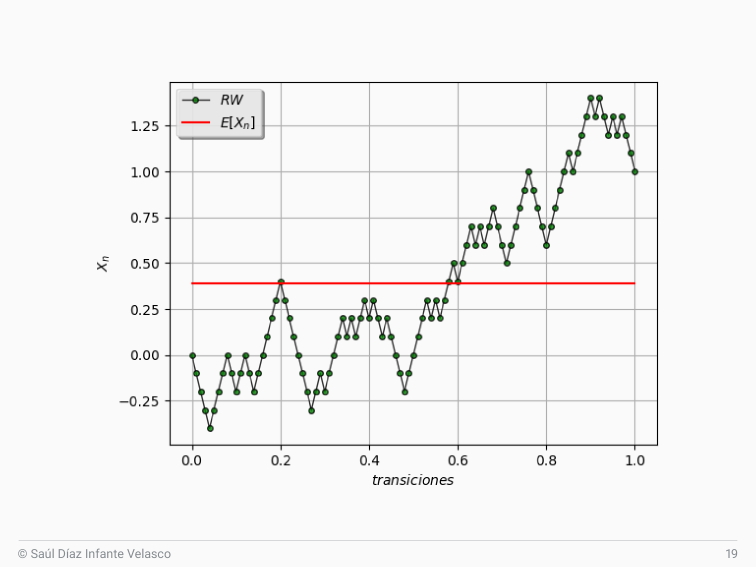
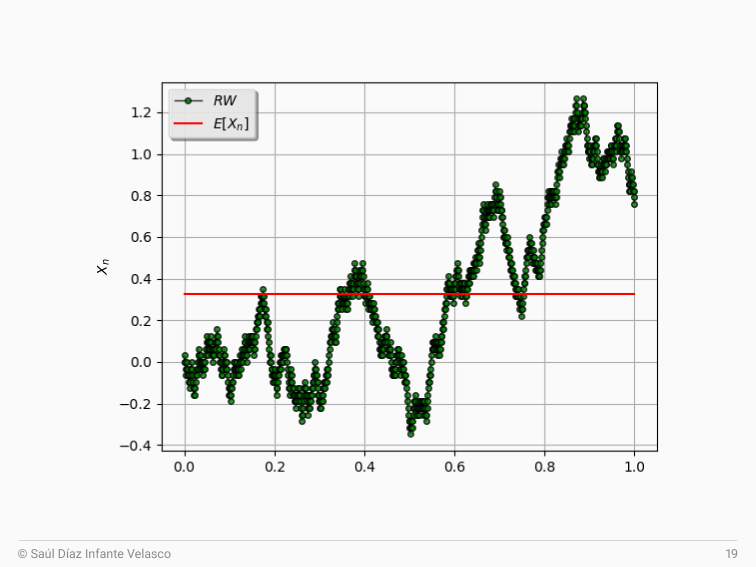
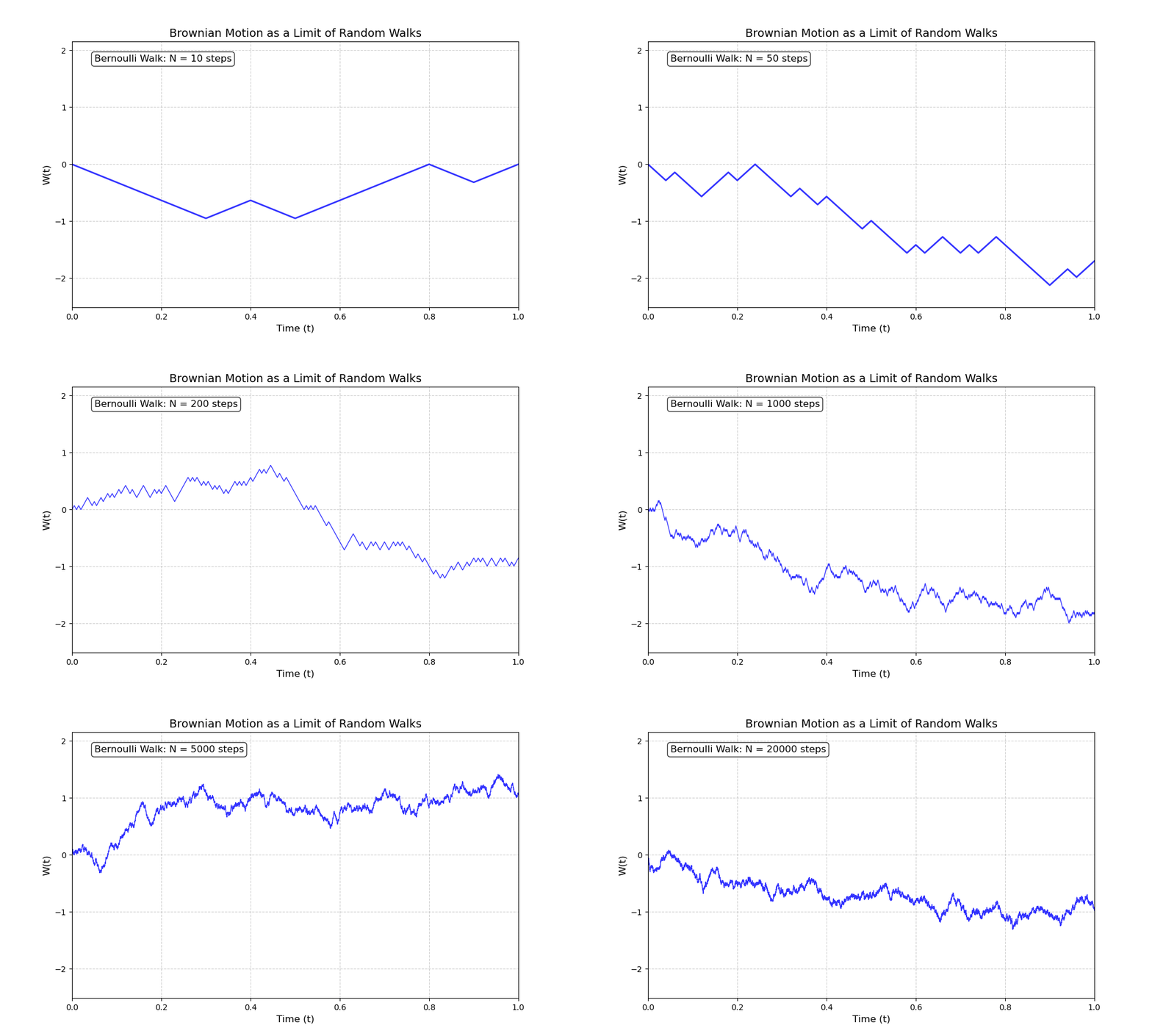
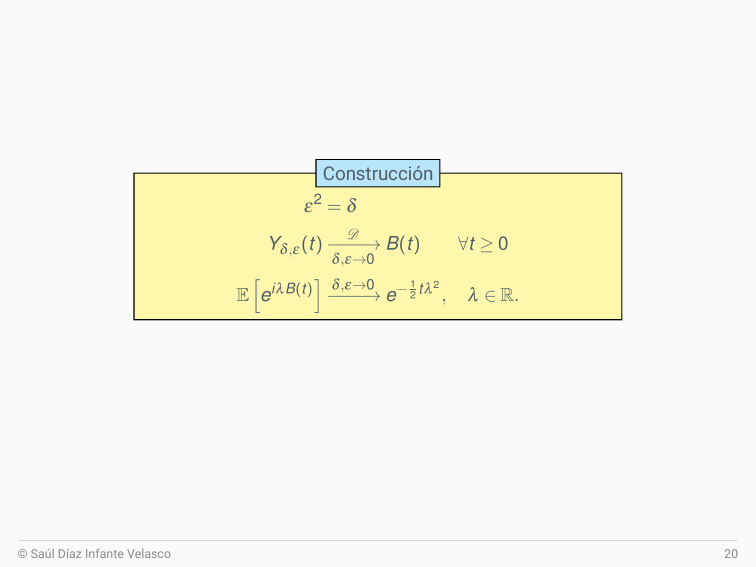
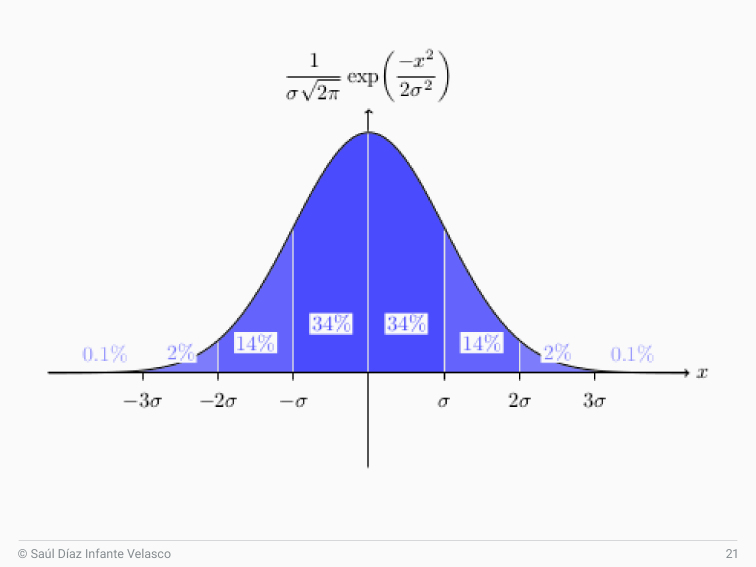
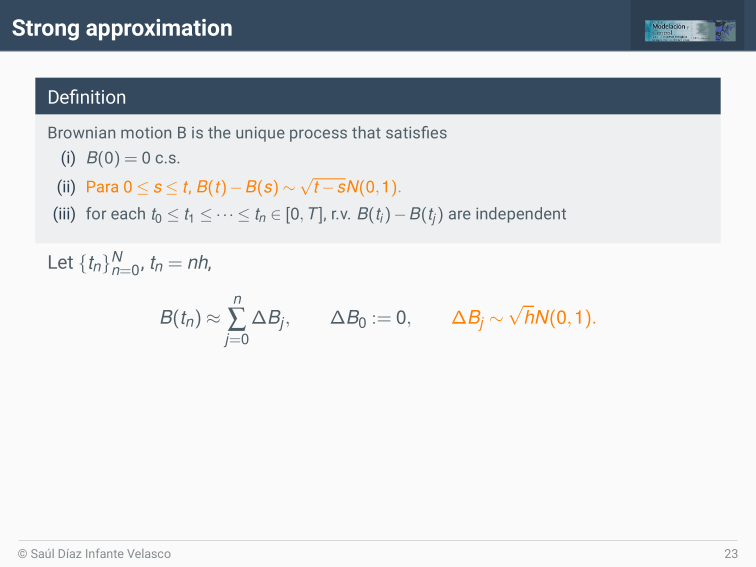
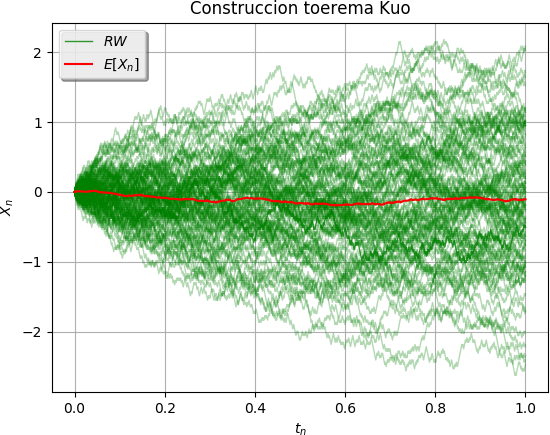
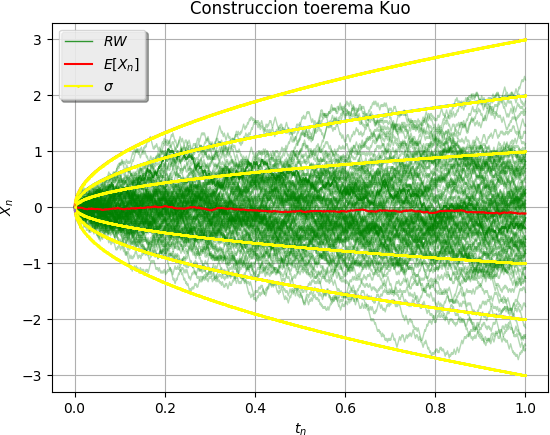
Construction
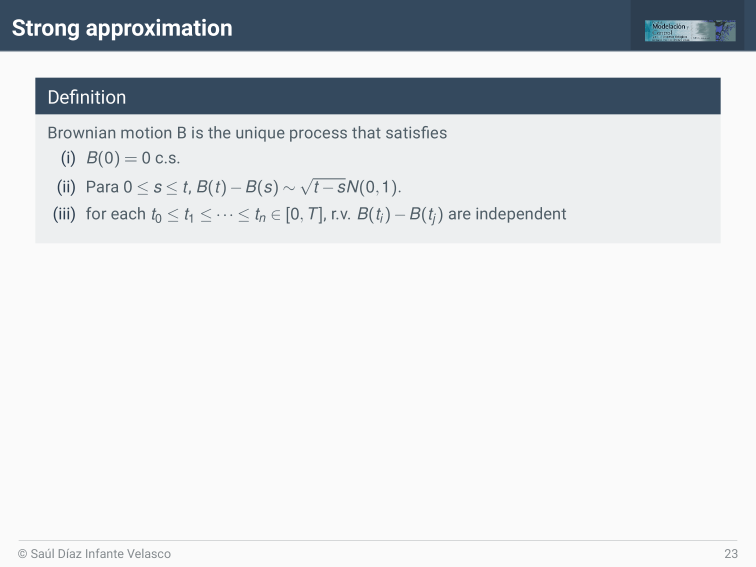
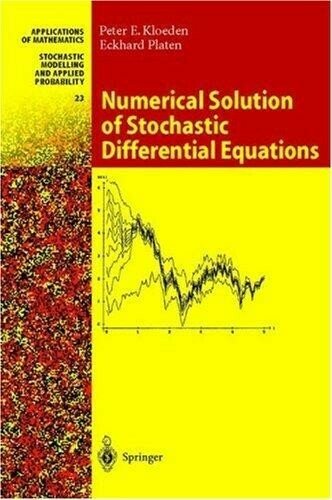
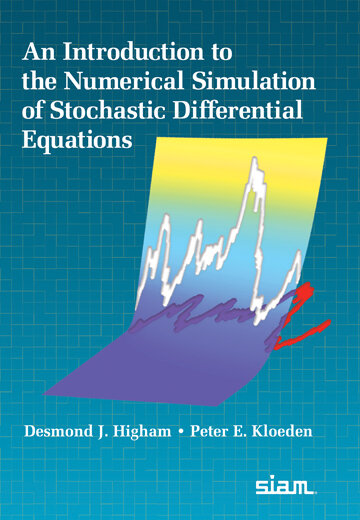
References

State-of-the-Art SDE Software for SciML
| Software Package | Language | Key Solvers | SciML & Hardware Acceleration |
|---|---|---|---|
| DifferentialEquations.jl | Julia | Milstein, SRK (SRIW1, SOSRI), implicit methods. | The benchmark ecosystem. Features automatic differentiation, event handling, and automated GPU kernel generation. [2, 3] |
| torchsde | Python (PyTorch) | Euler-Maruyama, Reversible Heun, Milstein. | Native PyTorch tensor support. Specifically engineered for Neural SDEs, featuring highly scalable adjoint sensitivity methods. |
| Diffrax | Python (JAX) | Reversible Heun, implicit stochastic methods. | JAX-native. Exceptional for generating hardware-accelerated solvers for large ensembles of equations via vectorized mapping (vmap). [3] |
| Boost.odeint | C++ | Runge-Kutta variants, Euler (customizable for SDEs). | Highly performant compiled backend. Supports CUDA and OpenCL directly, requiring C++ kernel development for peak performance. [3] |
| PyRates | Python (Code-Gen) | Interfaces with external libraries. | A code-generation tool that translates high-level network models into optimized backend implementations using Julia, PyTorch, or Fortran. [1] |
- Gast, R., Knösche, T. R., & Kennedy, A. (2023). PyRates—A code-generation tool for modeling dynamical systems in biology and beyond. PLOS Computational Biology, 19, e1011761.
- Rackauckas, C., & Nie, Q. (2017). DifferentialEquations.jl – A Performant and Feature-Rich Ecosystem for Solving Differential Equations in Julia. Journal of Open Research Software, 5, 15.
- Utkarsh, U., et al. (2024). Automated translation and accelerated solving of differential equations on multiple GPU platforms. Computer Methods in Applied Mechanics and Engineering, 419, 116591.
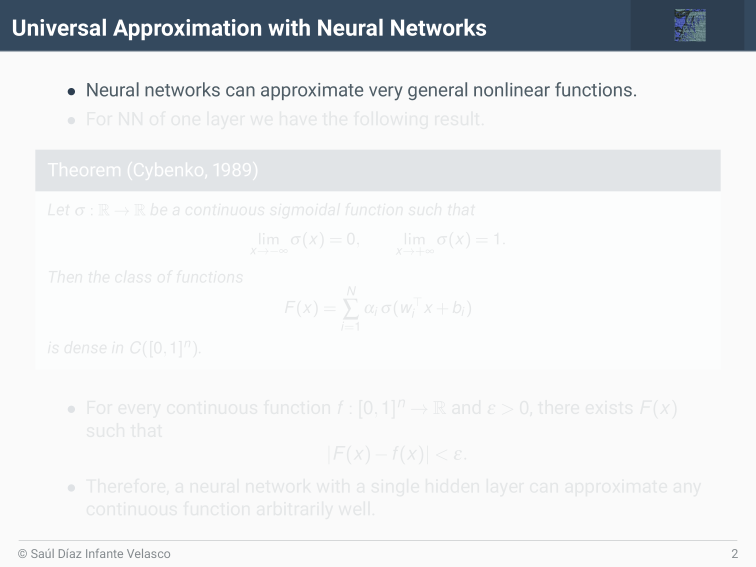
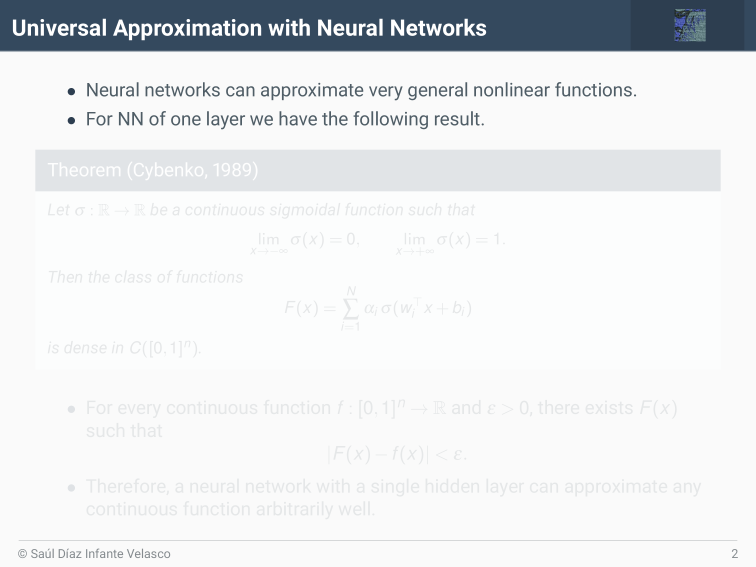
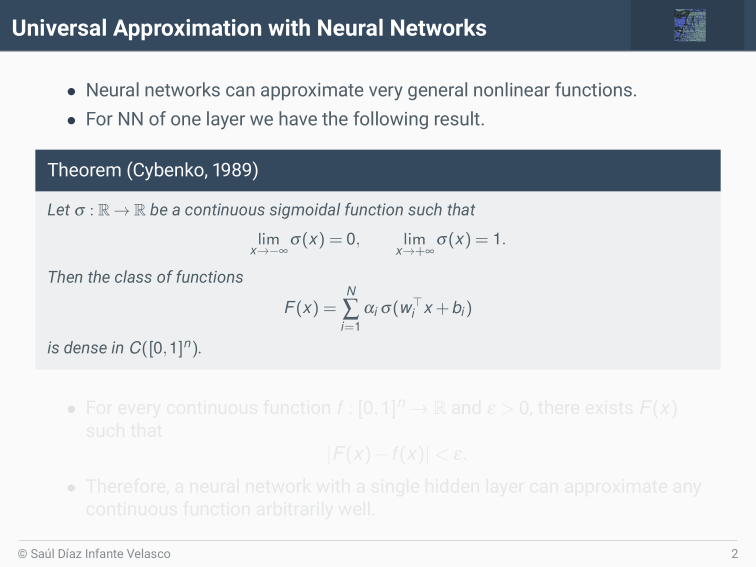
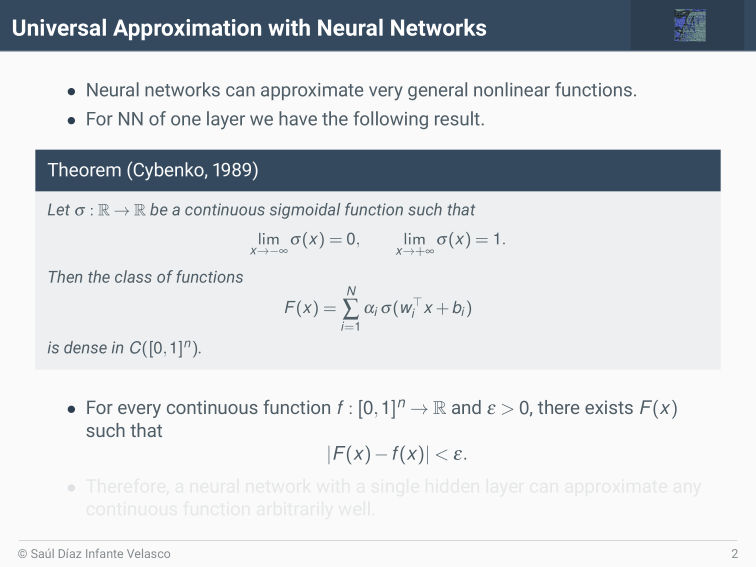
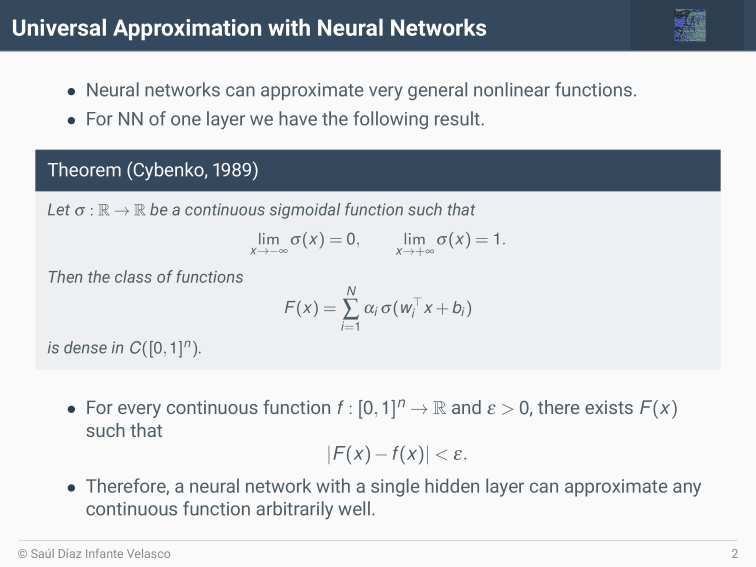
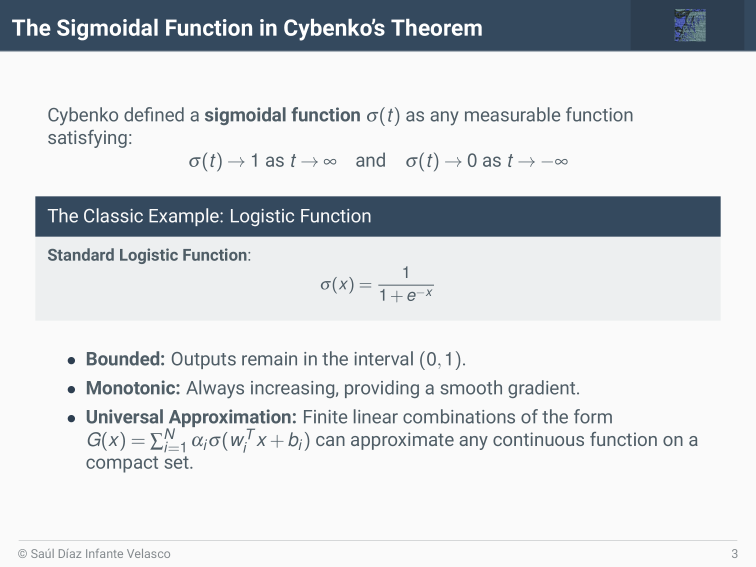
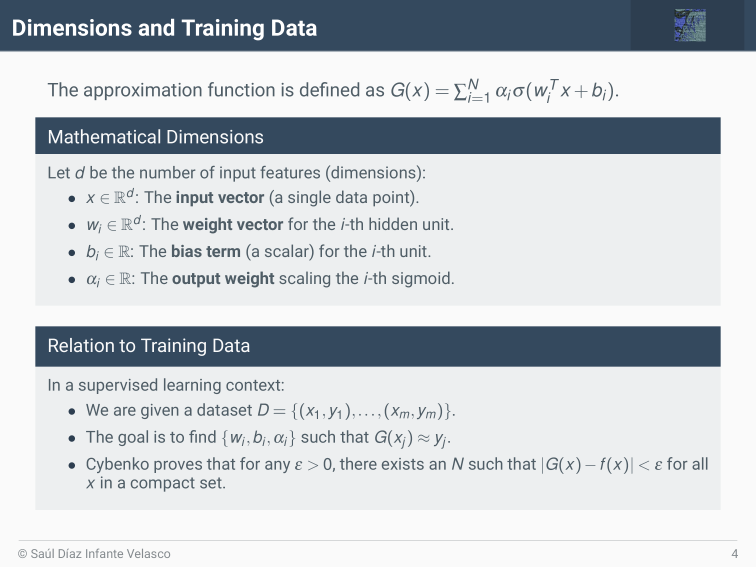
Cybenko, G. Approximation by superpositions of a sigmoidal function. Math. Control, Signals Syst. 2, 303–314 (1989).
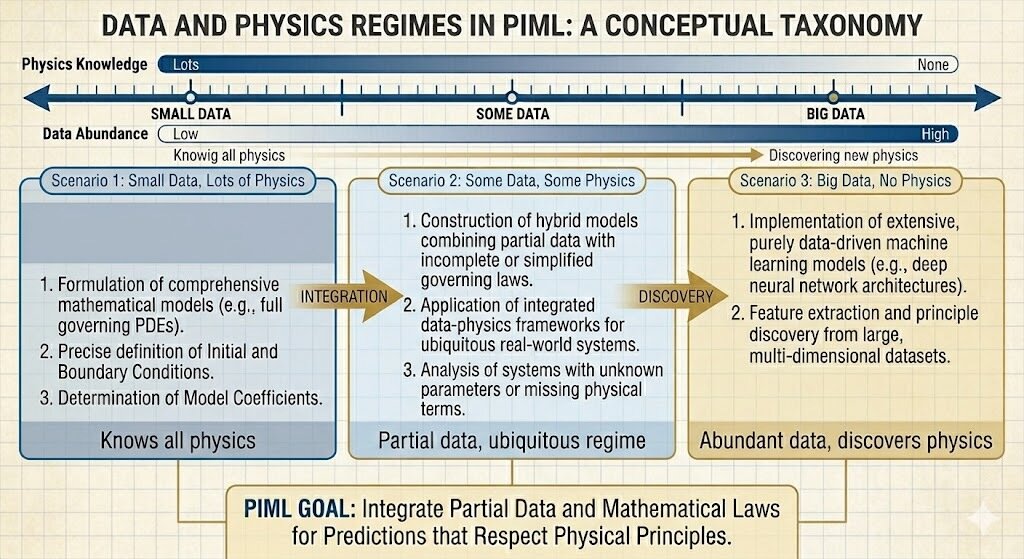
Solving With PINNs
Becouse each solution to the differential equation is obtained by solving an optimization problem.
This framework has strong overtones of collocation methods or finite element methods. This is a popular line of work.
Zubov, K. et al. NeuralPDE: Automating Physics-Informed Neural Networks (PINNs) with Error Approximations. arXiv (2021) doi:10.48550/arxiv.2107.09443.
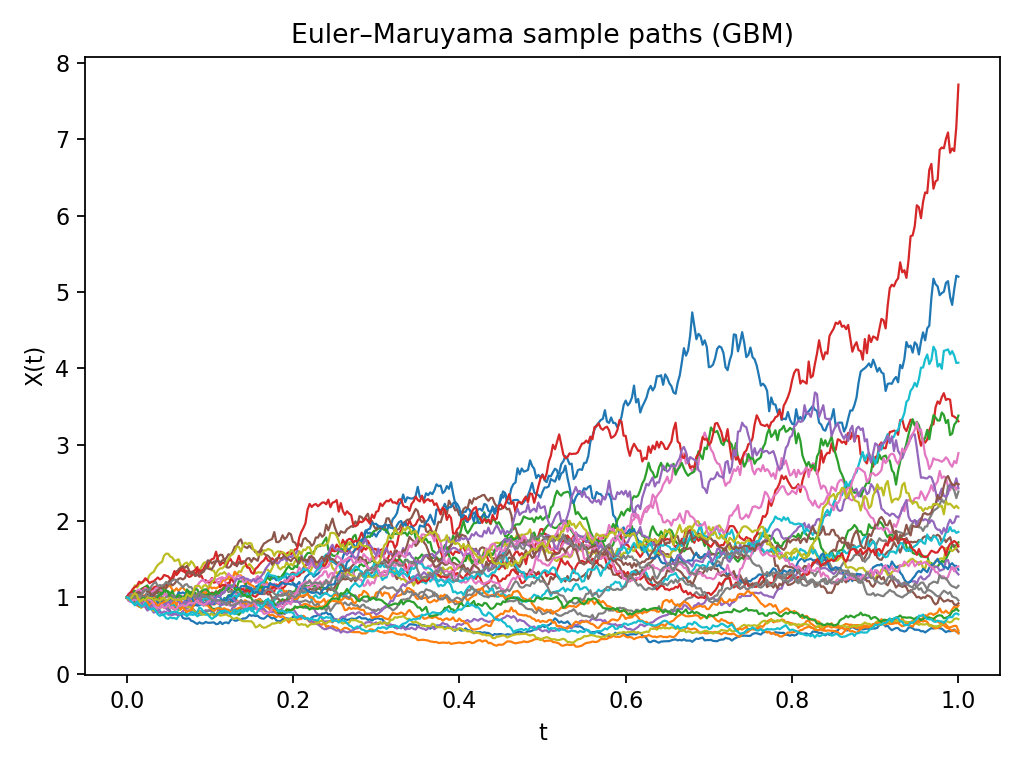
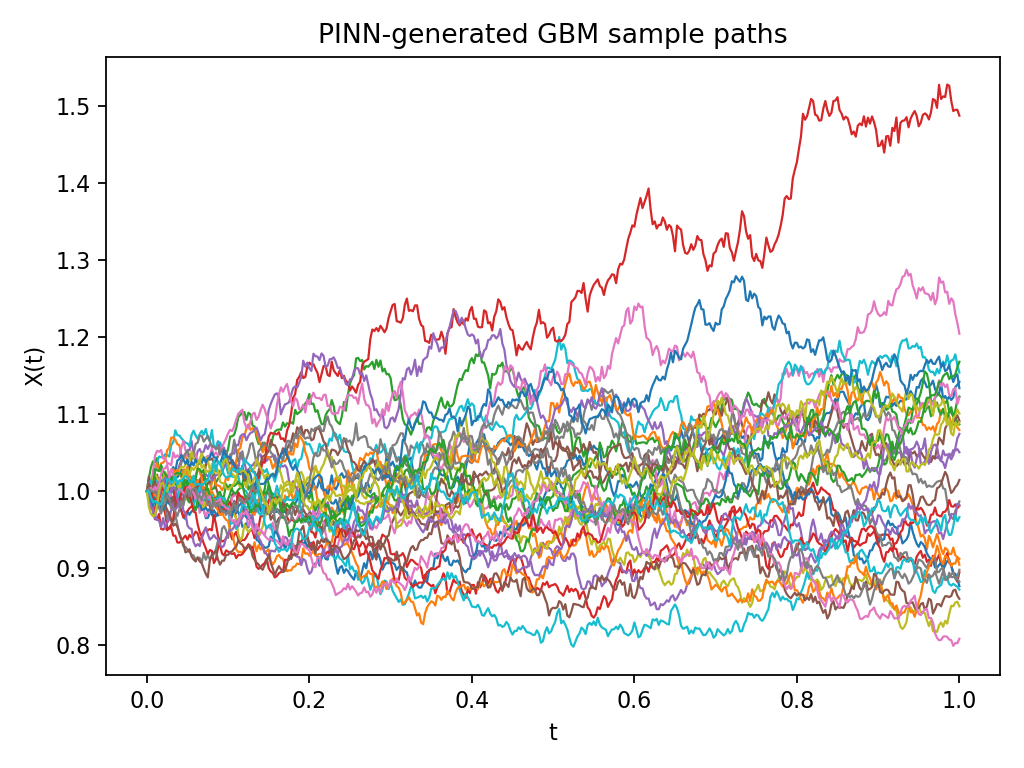
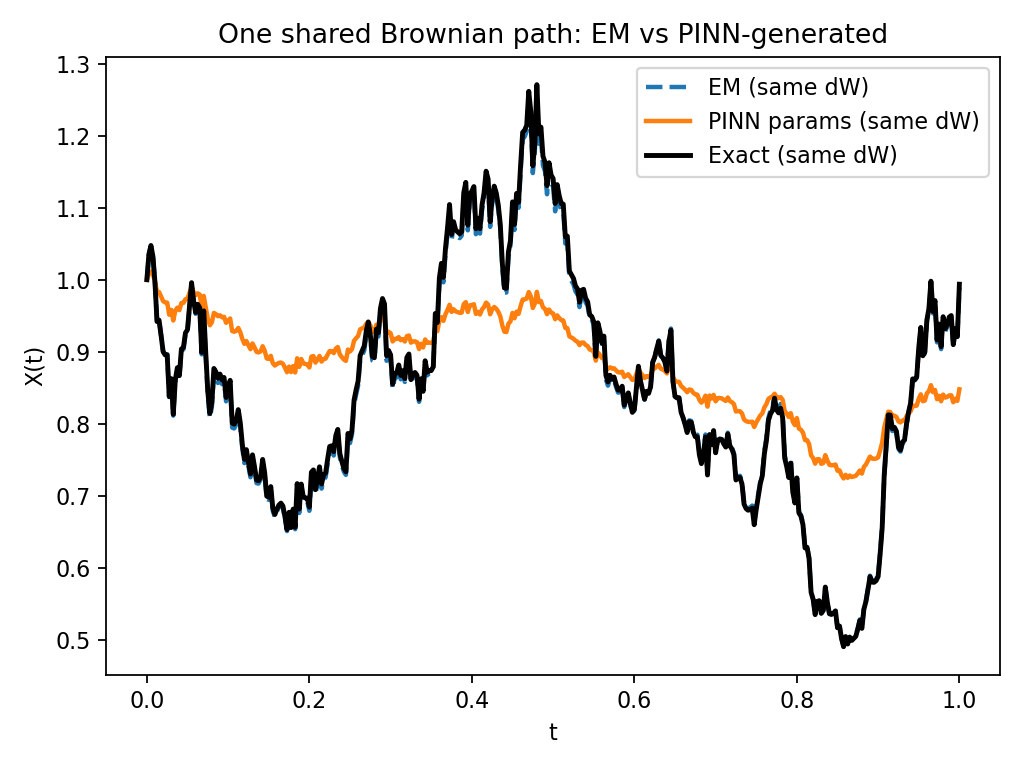
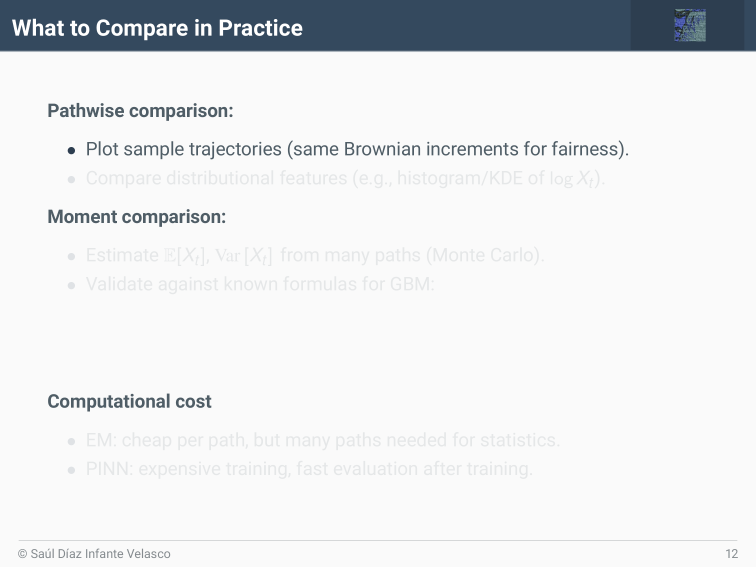
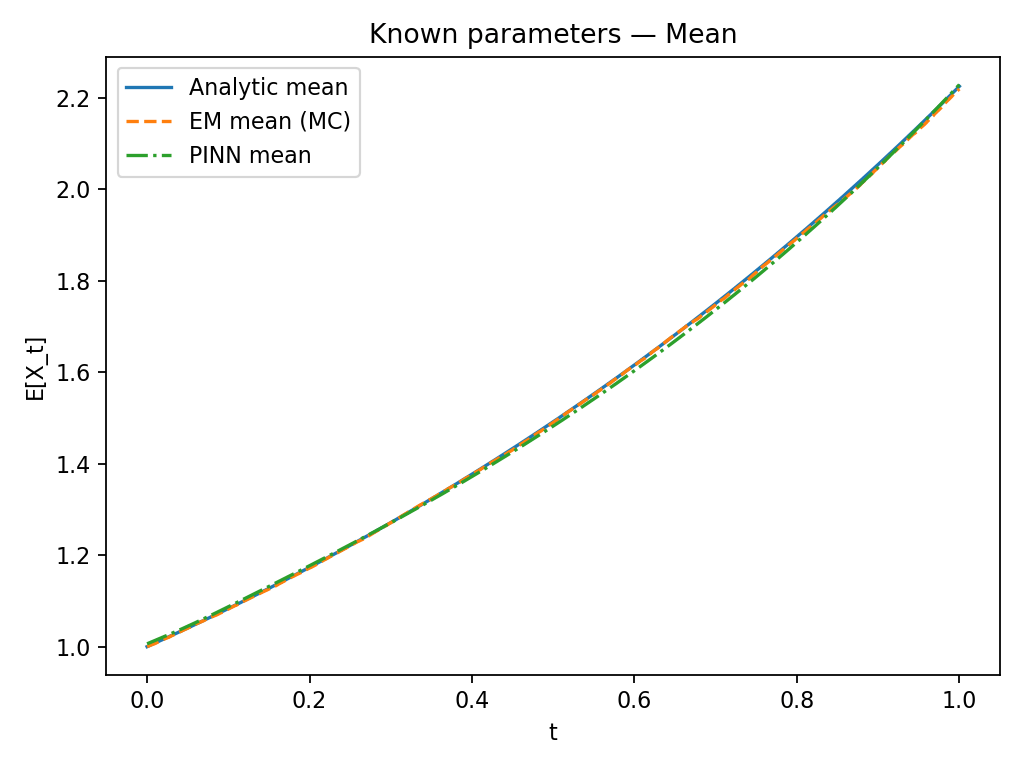
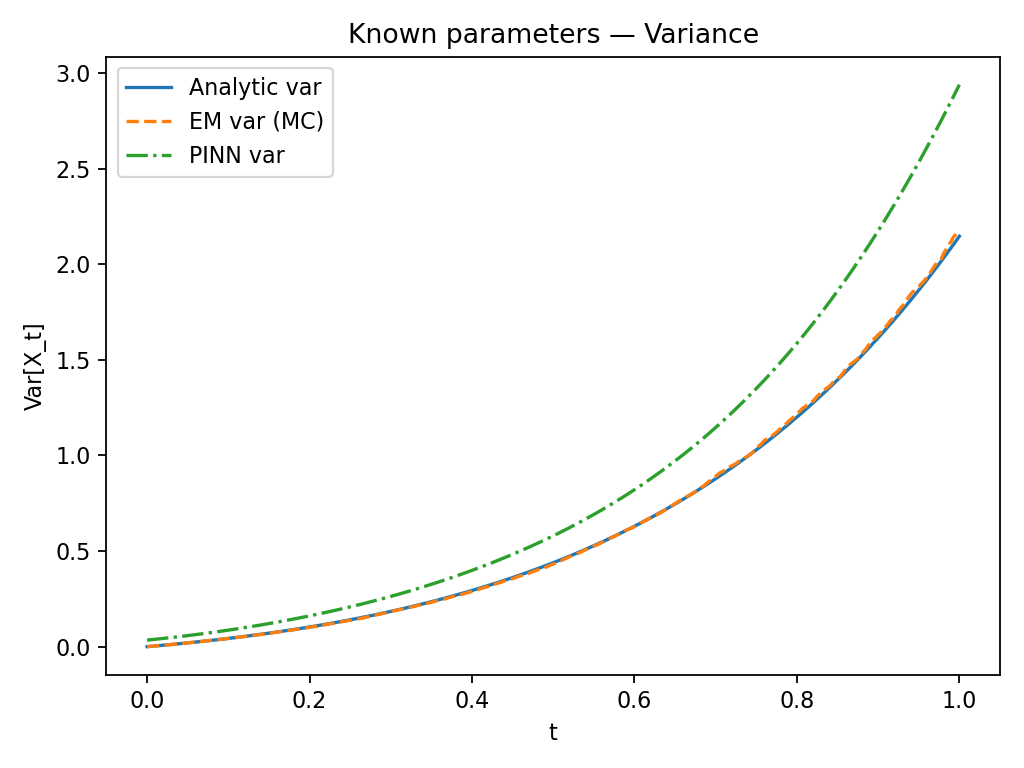
Solving a SDE: classic numerics vs PINNs
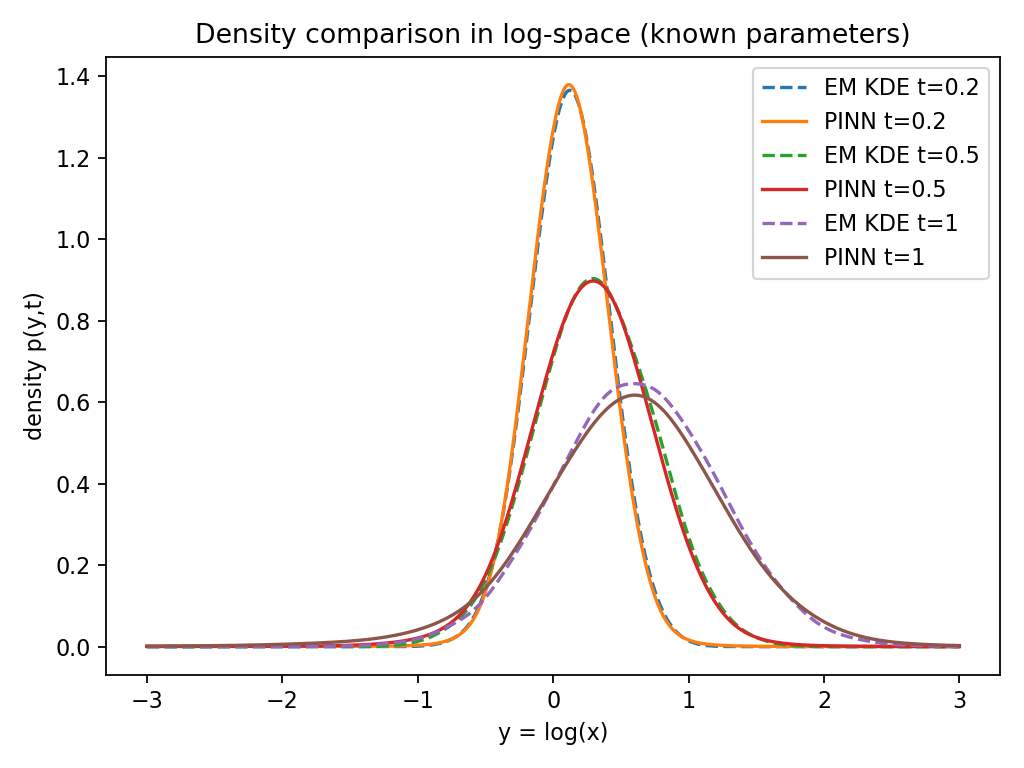
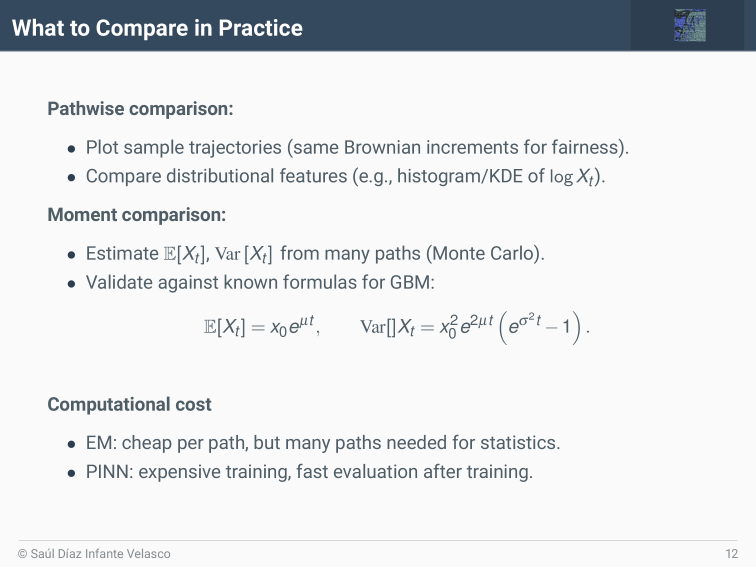
Benchmark Example
| Feature | Classic Methods | PINNs |
|---|---|---|
| Theory | Strong | Developing |
| Interpretability | High | Moderate |
| High Dimension | Hard | Better |
| Data Integration | Limited | Natural |
| Stability Guarantees | Yes | Often unclear |
Neural ODEs and Neural SDEs.
Neural ODEs
A neural ordinary differential equation is a differential equation in which a neural network parameterizes the vector field.
The central idea now is to use a differential equation solver as part of a learned, differentiable computational graph (the sort of graph ubiquitous in deep learning).
Chen et al. Neural Ordinary Differential Equations. in Advances in Neural Information Processing Systems (eds. Bengio, S. et al.) vol. 31 (2018).
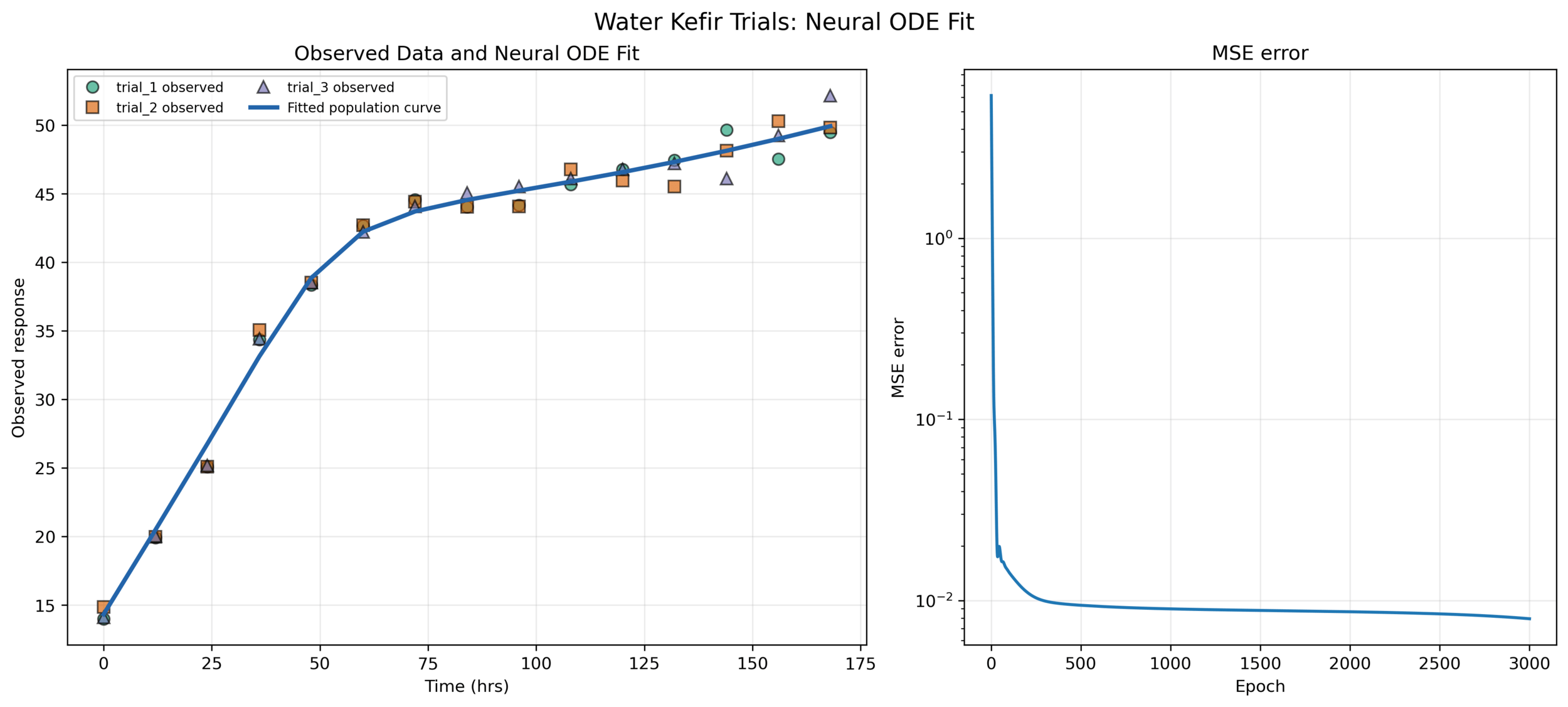
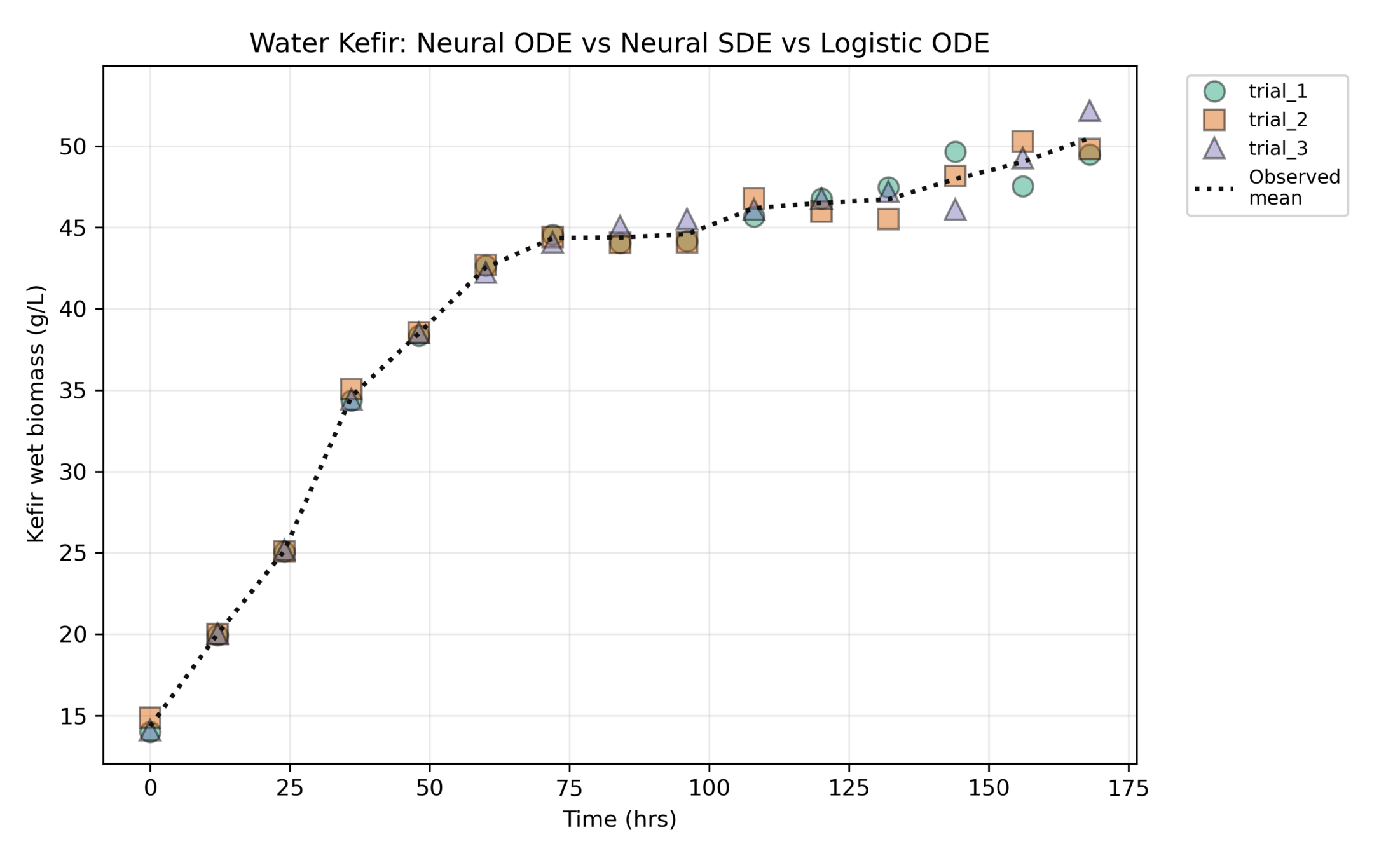
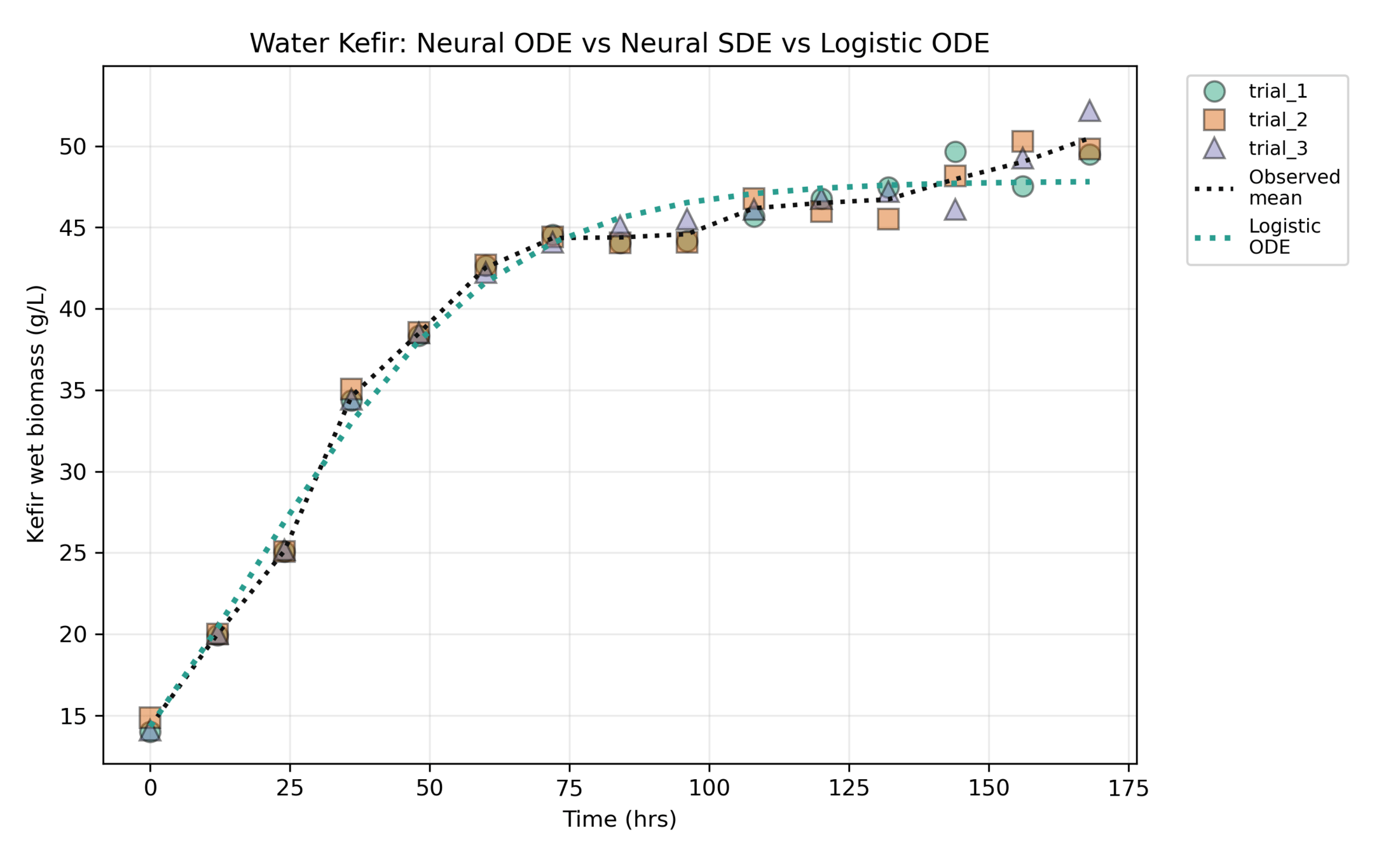
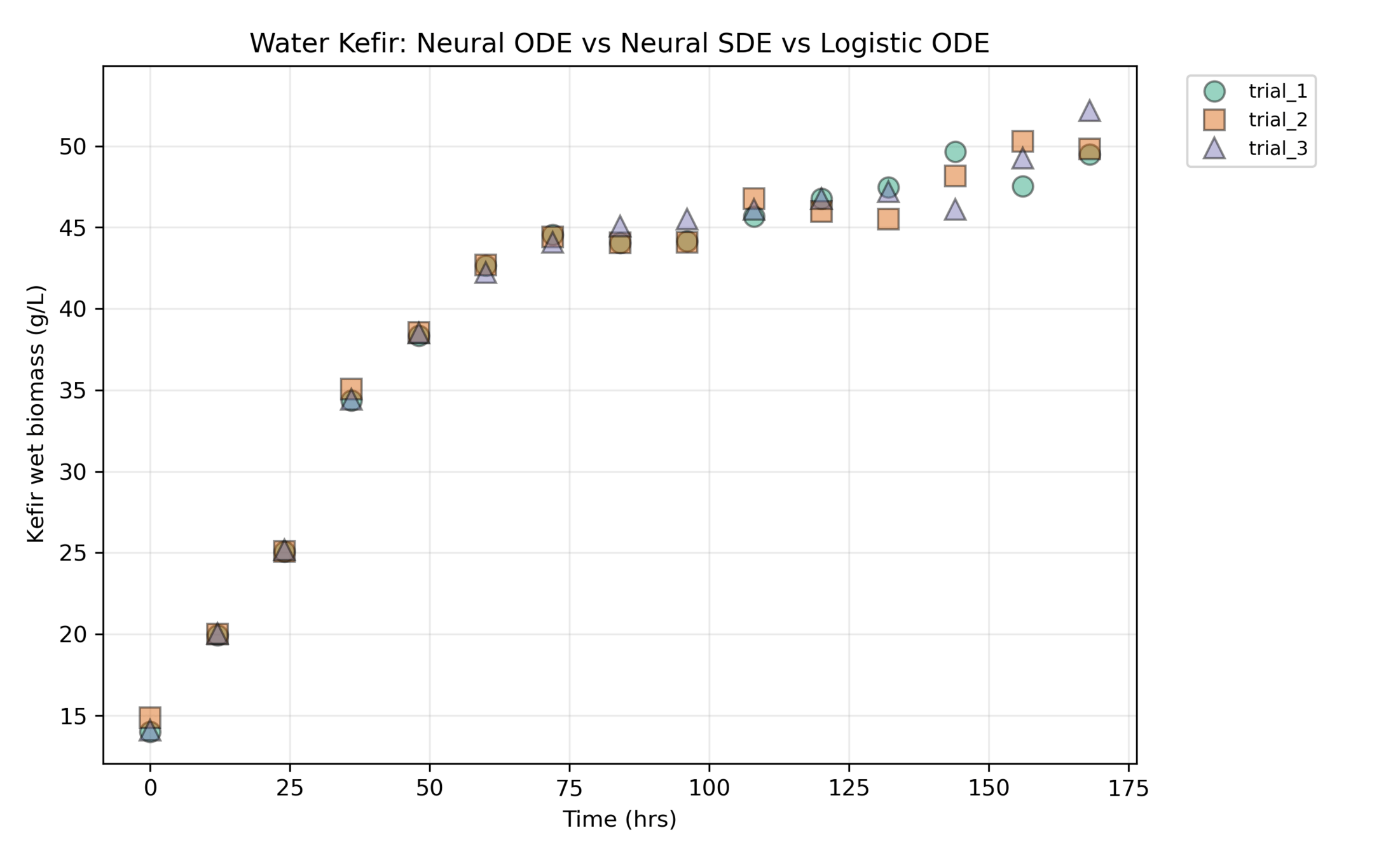
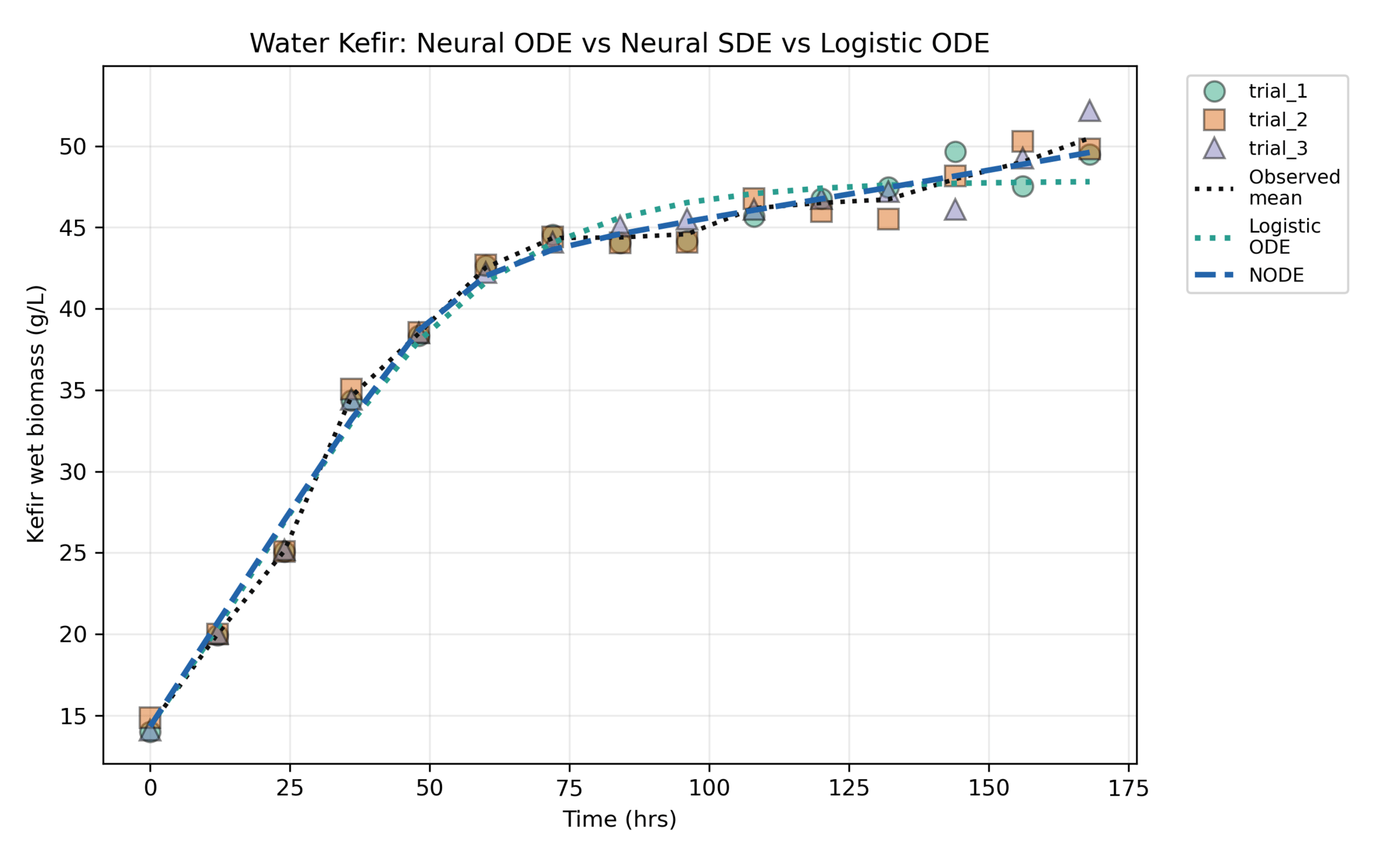
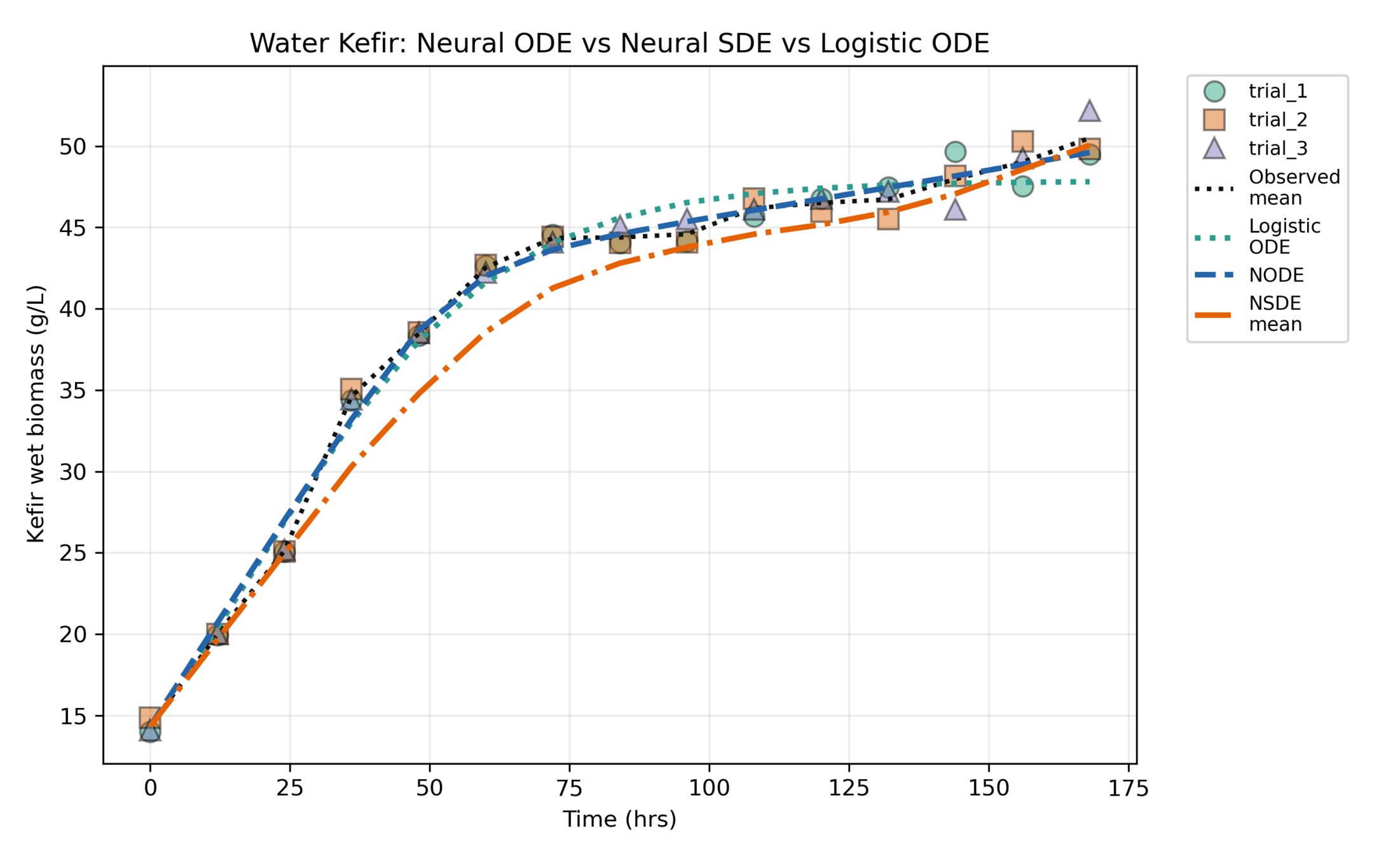
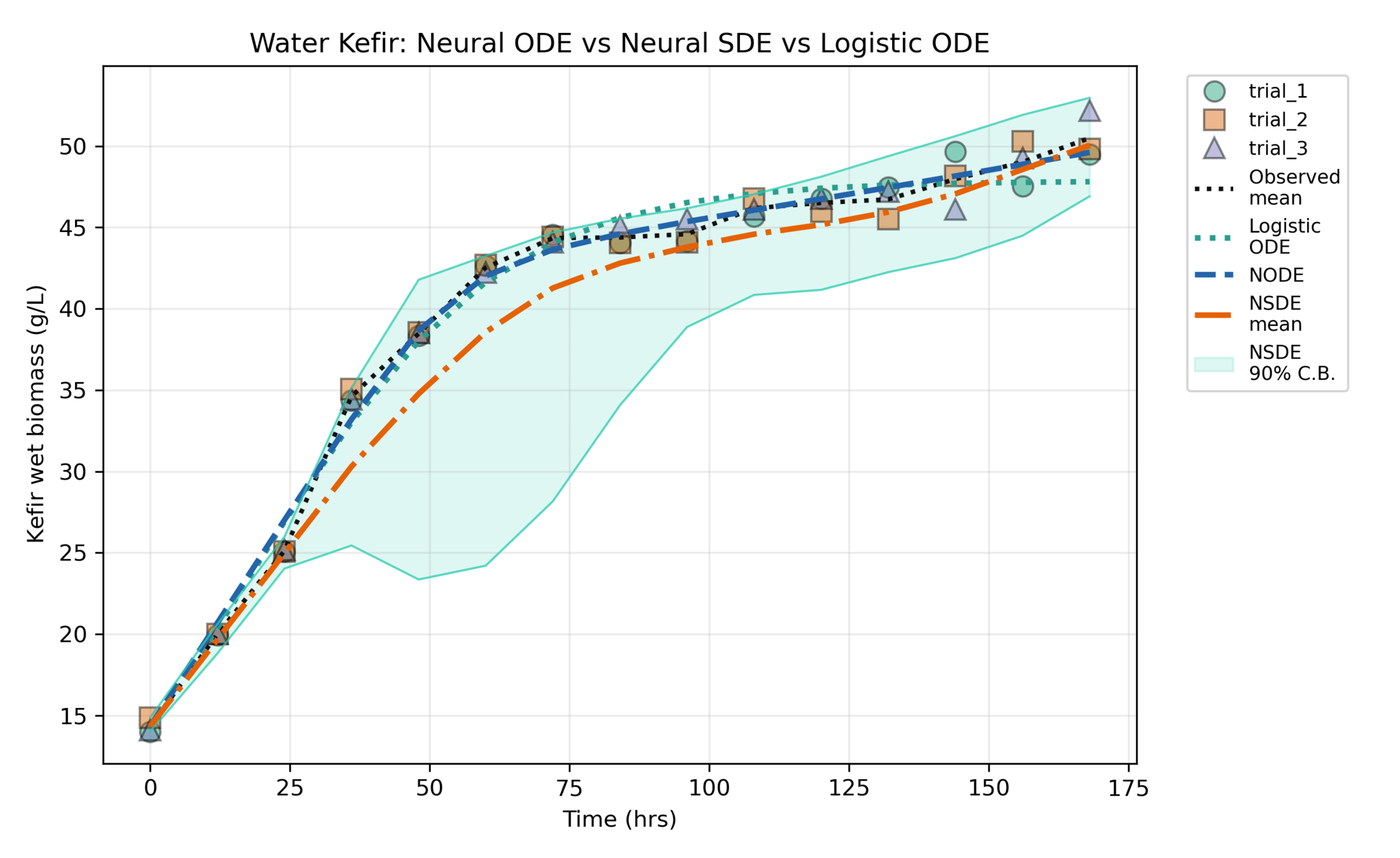
Example with real data:
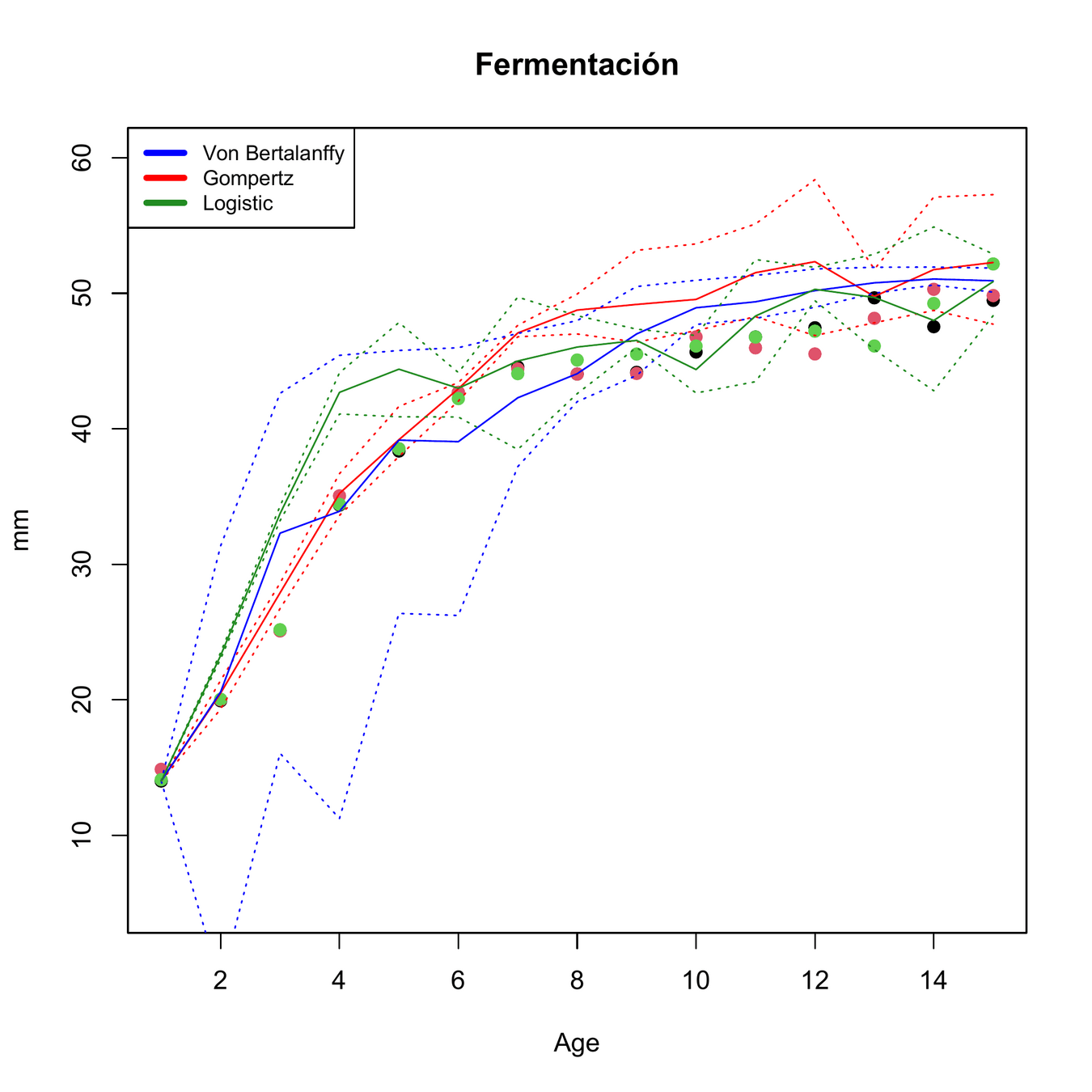
Fitting the data of water kefir production
Title Text
Gracias!