
Sebastian Hörl
21 October 2026
PAAMS 2026

Iterative LLM-based construction of on-demand
fleet dispatching algorithms
Introduction
- On-demand mobility services
- centrally operate a fleet of (autonomous) vehicles
- give instructions to pick up / drop off passengers or relocate
- try to serve the incoming customer demand under constraints (max. wait time, ...)
Fleet dispatching
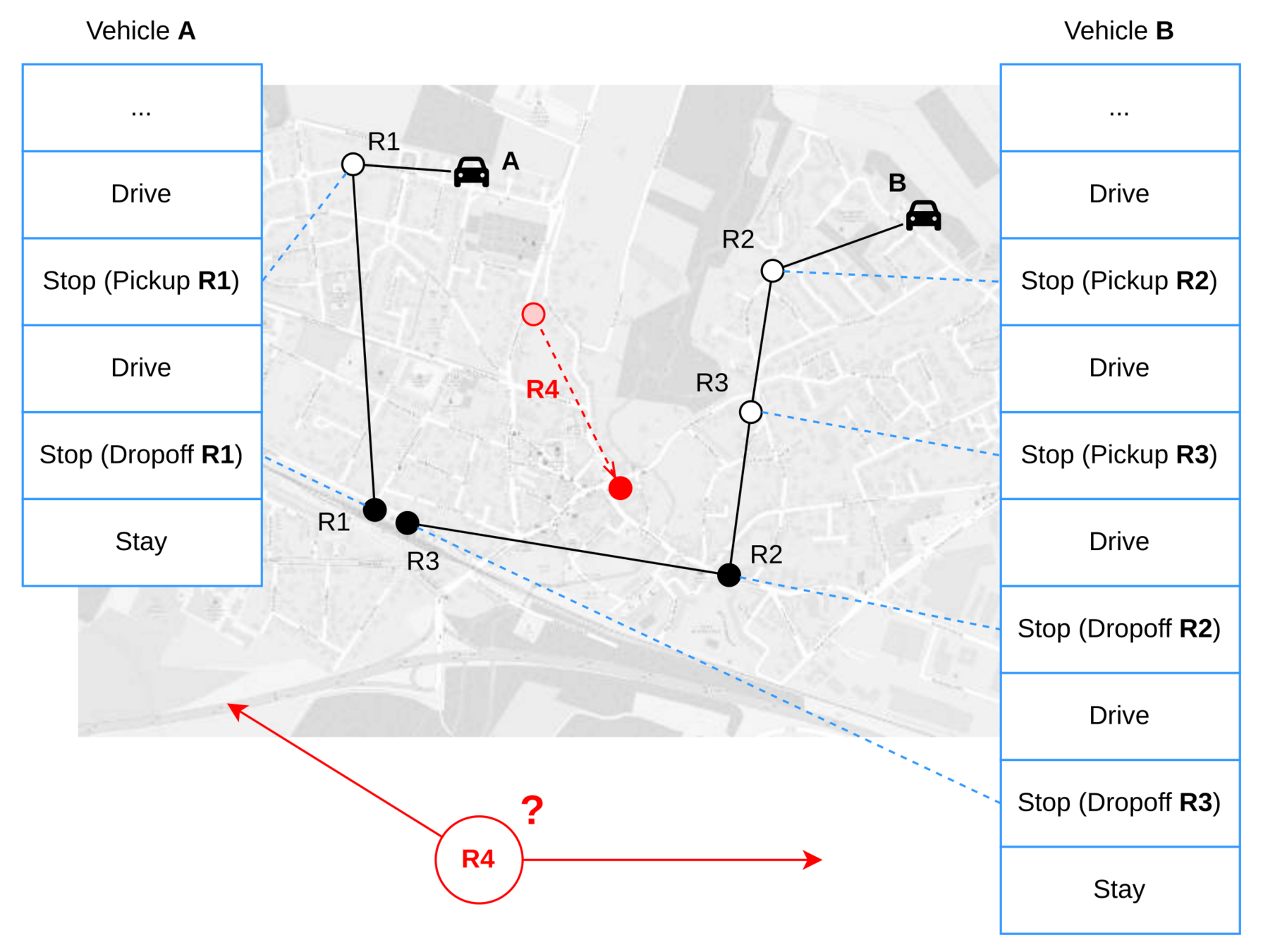
- Fleet dispatching means defining which vehicle should pick up and drop off which requests and in which order
- Assignments need to adhere to constraints (latest pickup time, latest dropoff time, maximum detour, ...)
- Rigorous formulation: Vehicle Routing Problem
- Too complex for large-scale applications
- Too complex for large-scale applications
- Various heuristics exist
- Insertion algorithms
- Re-optimization algorithms
Idea
- Algorithms are often generic: they work on any city and in any context
- But we do have contextual knowledge (geography, demand patterns, special events, ...)
- How to integrate them into an algorithm?
- Person 1 has the local knowledge
- Person 2 knows how to formalize this algorithmically
- Person 3 knows how to implement this in the specific base algorithm
- Person 4 knows how to test this in simulation (and tweak the parameters)
- Can persons ons 2-4 be automated through intelligent code generation?
Test environment
- Using MATSim (a commonly used open-source agent-based transport simulation framework)
- Already provides functionality to implement (in Java) dispatching algorithms
- We added a remote dispatching interface (RDI) that let's users connect external algorithms via a networked API



Hörl, S. (2026). Benchmarking on-demand mobility algorithms using a new remote dispatching interface for MATSim. MATSim User Meeting 2026 (MUM 2026). https://hal.science/hal-05739922
Test environment
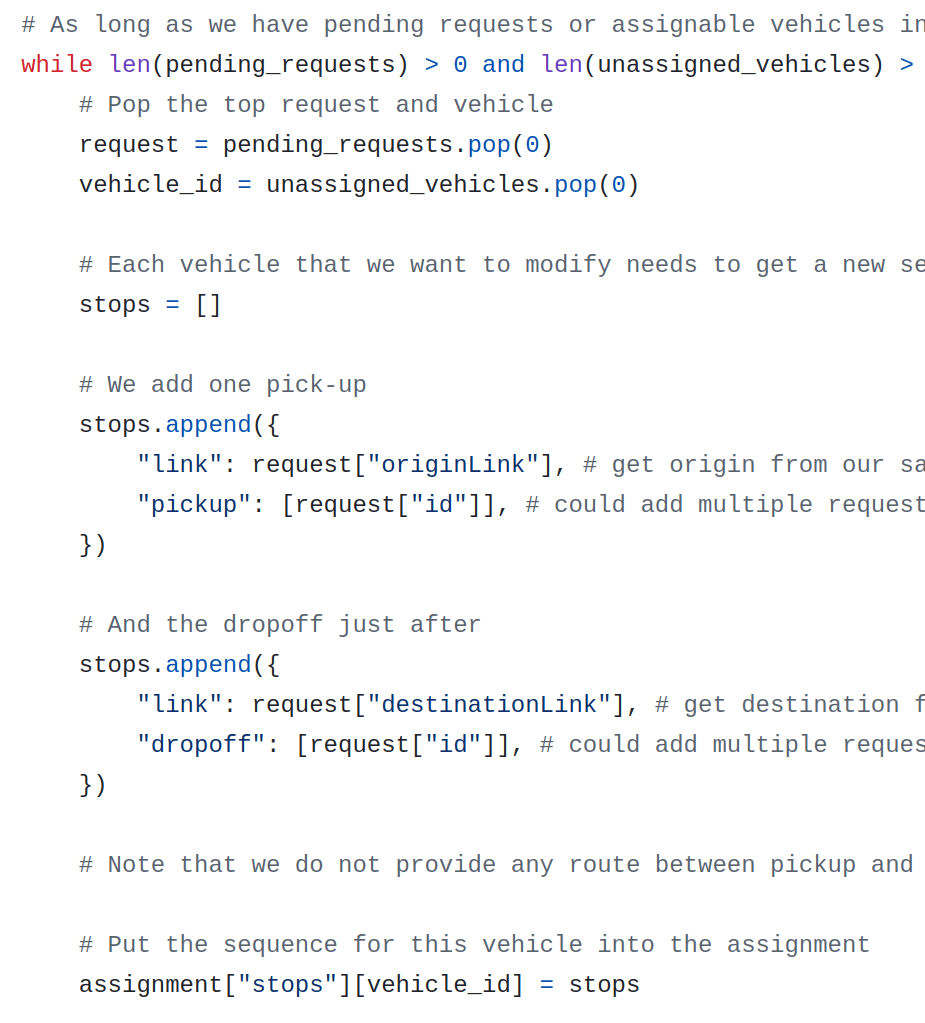
- A couple of example algorithms in Python
- FIFO assignment
- Global Bipartite Matching
- ...
- Allows using anything that is available in Python (scikit-learn, networkx, ...)
- Thorough documentation of the communication primitives
Test environment
Road network
- Extraction of Paris from OpenStreetMap
(14k nodes, 24k edges)
Fleet
- Configurable number of vehicles generated on random initial links inside the network
- All have four seats
Customer requests
- Definition of N attractors / emitters with morning / evening factors
- Requests are generated from / to those points depending on time of day
- Represents directionality by time of day and spatial imbalance
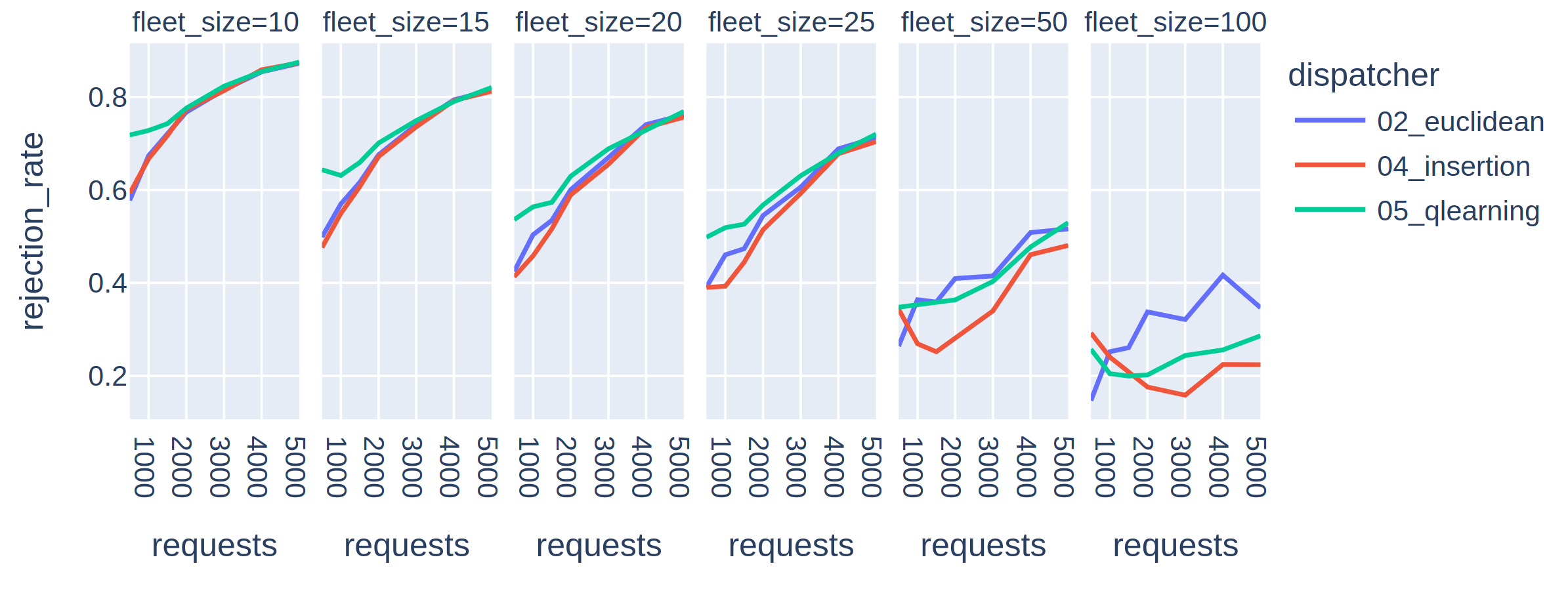
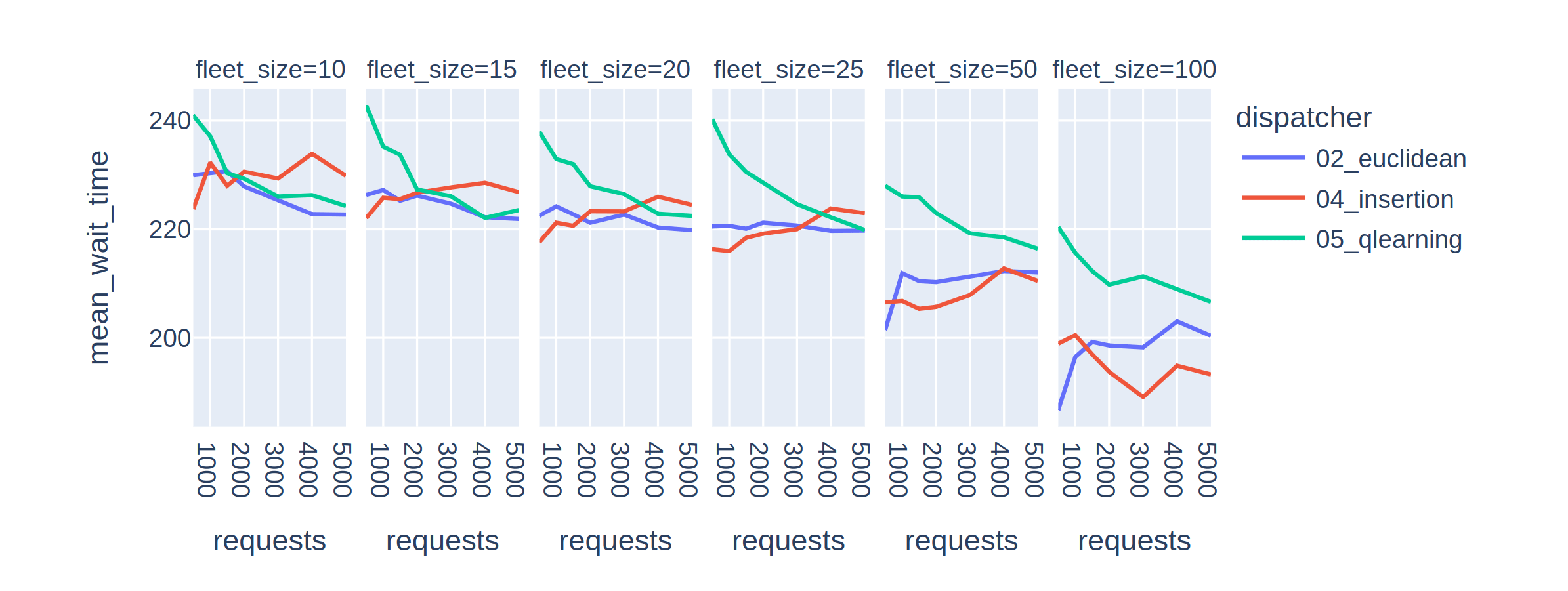
Example benchmark
Test environment
- Containerized execution environment
- One dispatching algorithm (Python file)
- One MATSim instance
- Inside a Docker container
- Writing a new algorithm using an LLM
- Evaluate the performance of the algorithm inside the container
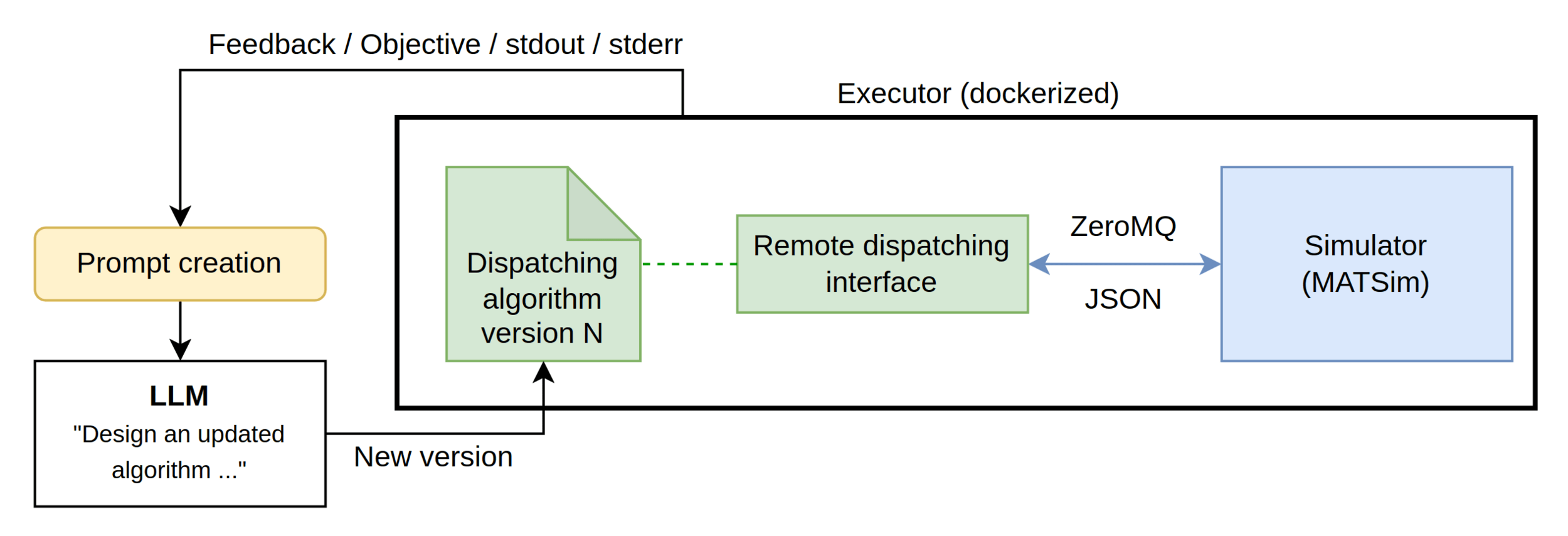
Repeat
Prompt construction
You are designing a fleet dispatching algorithm. Some general explanations about fleet dispatching. You are part of an iterative loop. I present you the documentation, some examples, and the (R= 3) last versions that you have tested, plus the so far best one. You may used the standard output to gain information. Give each version a name, and explain features.
Three example algorithms
Documentation
Algorithm code
Objective value: ??? [if successful] / There have been errors! [if unsuccessful]
Standard output (last 100 lines)
Error output [if unsuccessful or timeout of 600s] (last 100 lines)
"


3x
Backlog section
"
Best algorithm code
Objective value: ???
Standard output
"
R x
Fixed section
Elitist guidance
Test configuration
Simulation case
- 25 vehicles
- 2,000 requests
Profit-optimization objective
- Cost = 25 EUR per vehicle + 0.10 EUR per driven kilometre + 0.35 EUR per request
- Revenue = 0.50 EUR base fare per request + 0.3 EUR per passenger kilometre
- Profit = Revenue - Cost
- Additional payback of 0.5 EUR for each minute of delay upon arrival
Experiments
- Qwen3-Next-80B-A3B-Instruct on institute-local vllm infrastructure
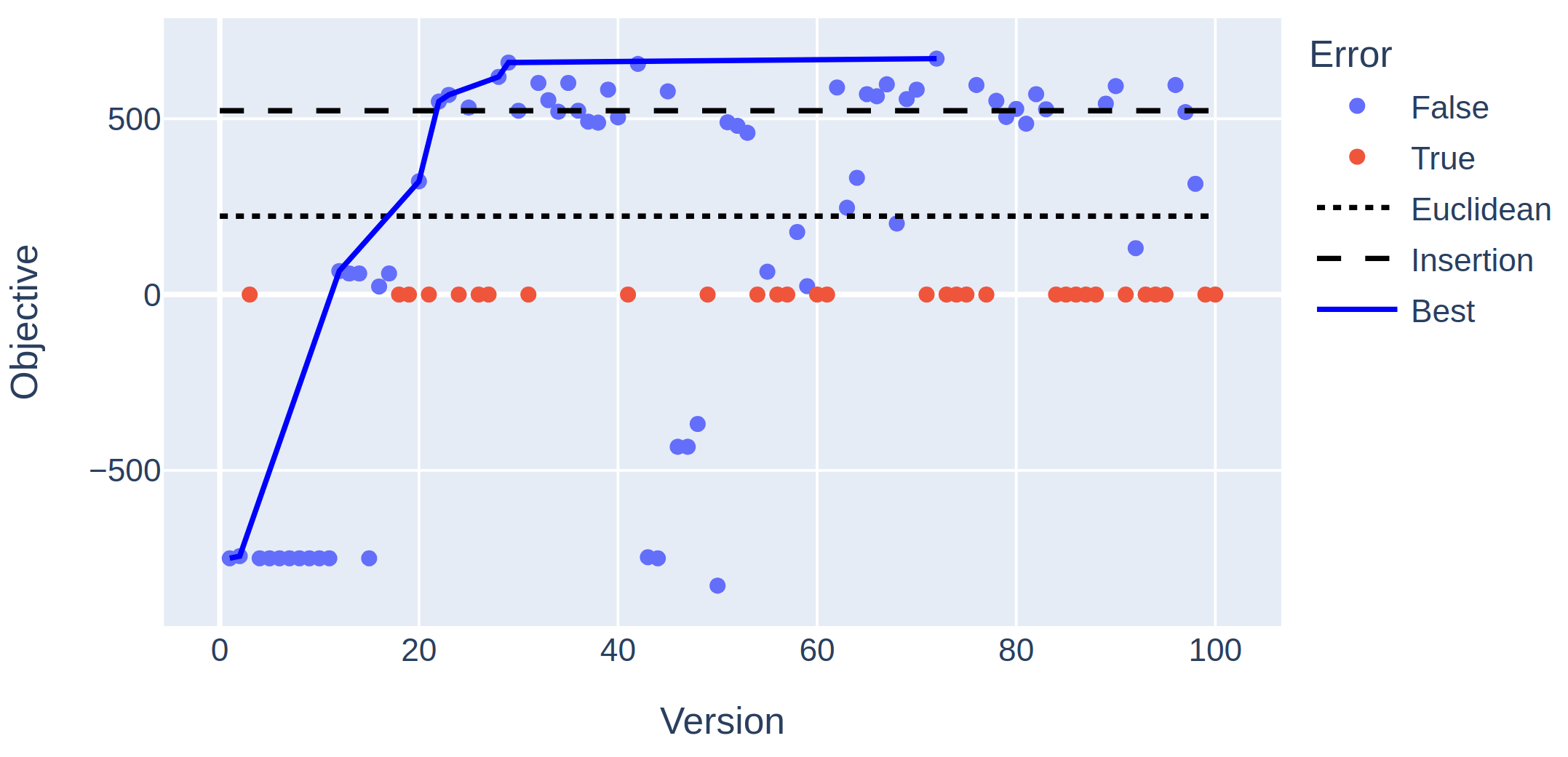
- We see a steady increase of the objective over multiple algorithm versions
- Overtaking the Euclidean Bipartite Matching and Insertion (default MATSim algorithm) benchmarks
- Seemingly, making a trade-off between exploitation vs. exploration after about 40 versions
Experiments
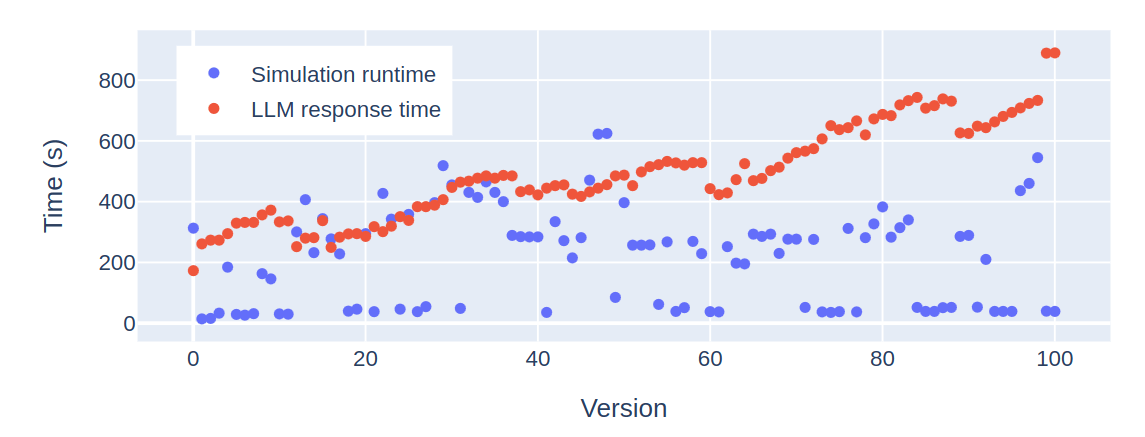
- LLM time increases steadily with more information
- About 120k tokens for the largest cases
Experiments
The best algorithm
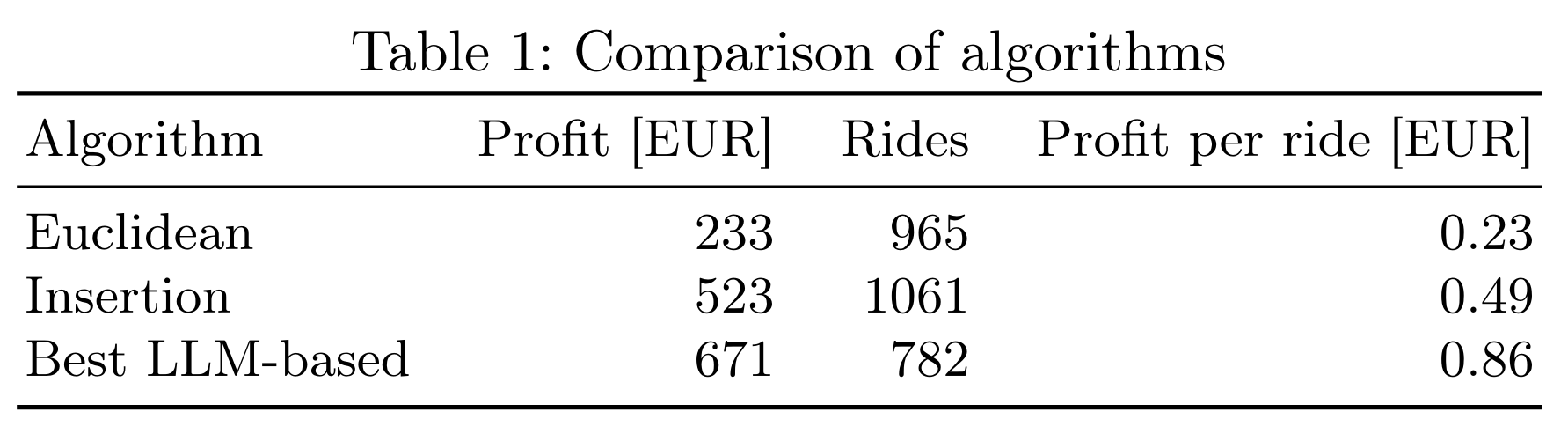
- Highest profit in comparison
- But lowest number of rides
- Effectively maximizes the revenue per request by rejecting non-lucrative customers
Profit-Optimized Dispatching with Cluster-
Specific Profit-Weighted Momentum and Adaptive Rejection Thresholding
Next steps
Ablations
- Backlog length
- Standard ouput length
- Different LLMs
- Different time budgets
- Different demand / fleet cases
More features
- Analysis step after each run with a summary output
- Reflection step to analyse observed demand patterns during each iteration
More directed test cases
- Artificial cases with varying density
- Algorithm should overfit to one case
- Perform worst on other cases
- Multiple (French) cities with different topologies
- Can the LLM figure out geographical constraints and bottlenecks?
Interested?
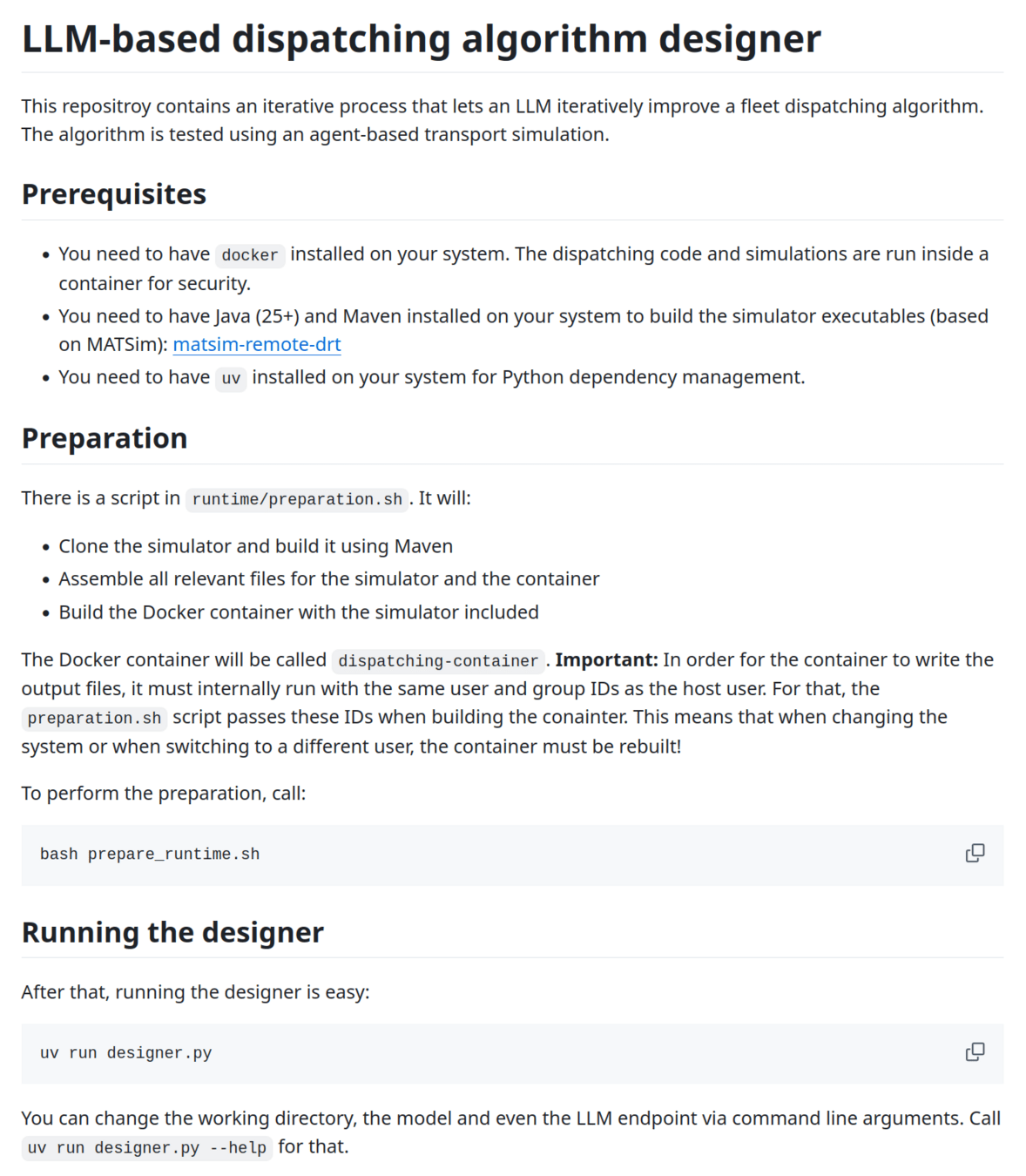
Run these experiments out-of-the-box:
Thank you!
sebastian.horl@irt-systemx.fr
Icons throughout the presentation: https://fontawesome.com
Website
Contact

