Context management in agents:
How to build a memory
Every agent you use
remembers you now
Everyone agrees how to build it.
We tried it, but shipped something else.
Alyx: the agent we built memory for
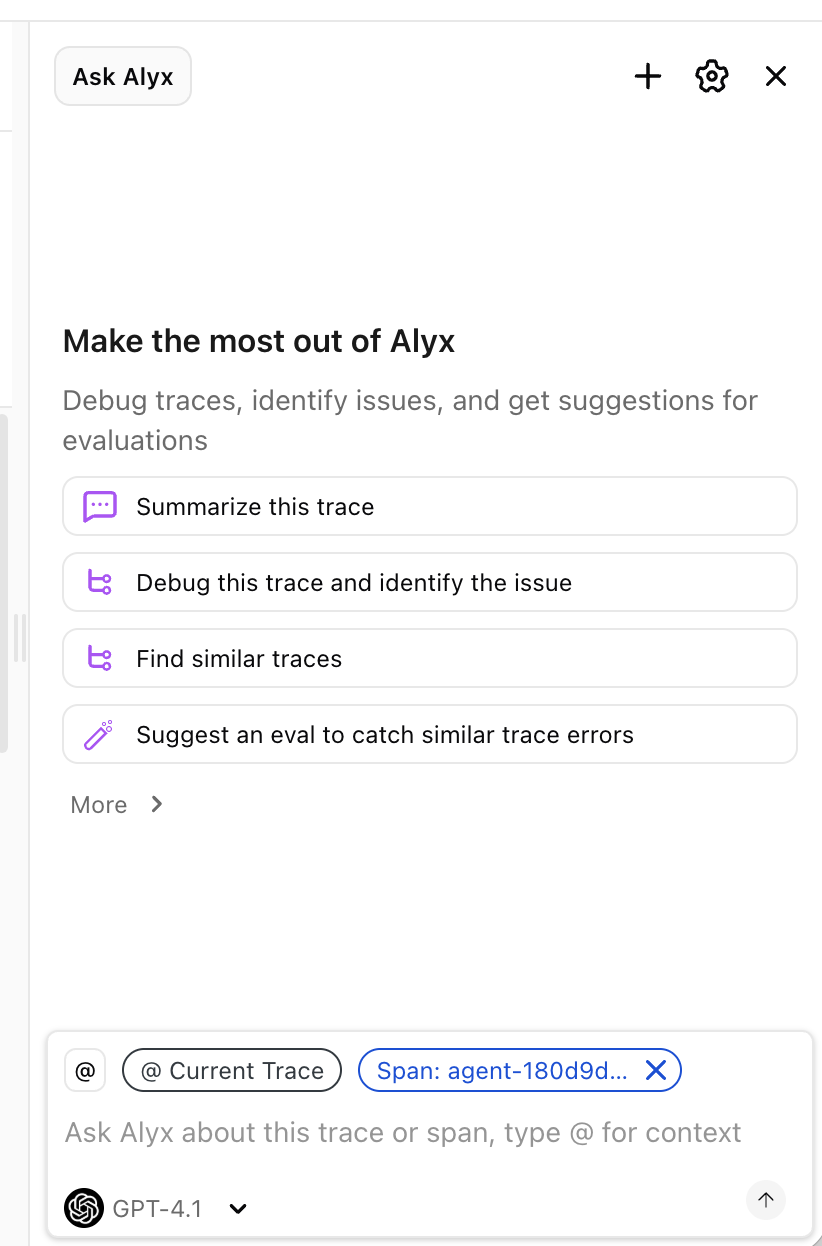
Our users jump around,
and memory has to follow them
Memory is a different kind of context
- System prompt → who the agent is
- Tools → what it can do
- Documents → facts it can look up again
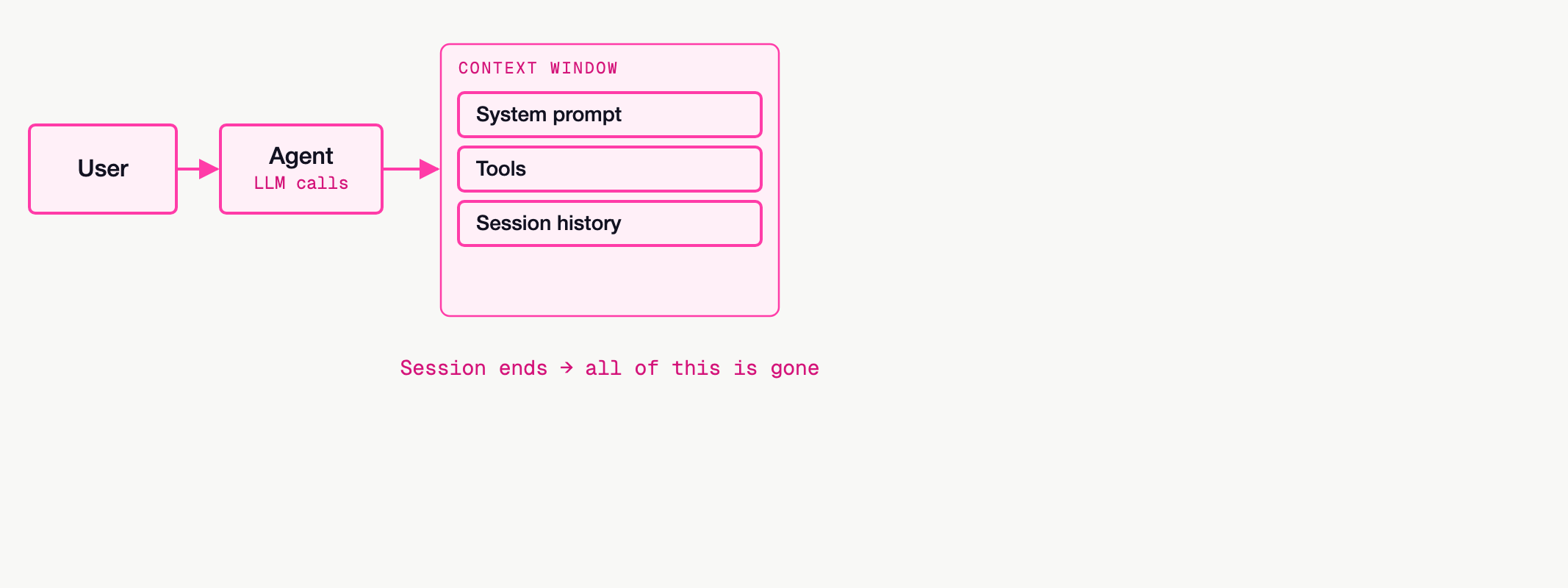
- Session history → what just happened
- Memory → what it knows about *you*
Why not just keep
the whole conversation?
- Sessions end
- Sessions rot
- Sessions get compacted
Part 1:
How everyone says to build memory
The industry agrees:
memory is a search problem
- IBM · Mem0 · Redis · AWS · Zep · every explainer blog
Step 1: an agent with a context window
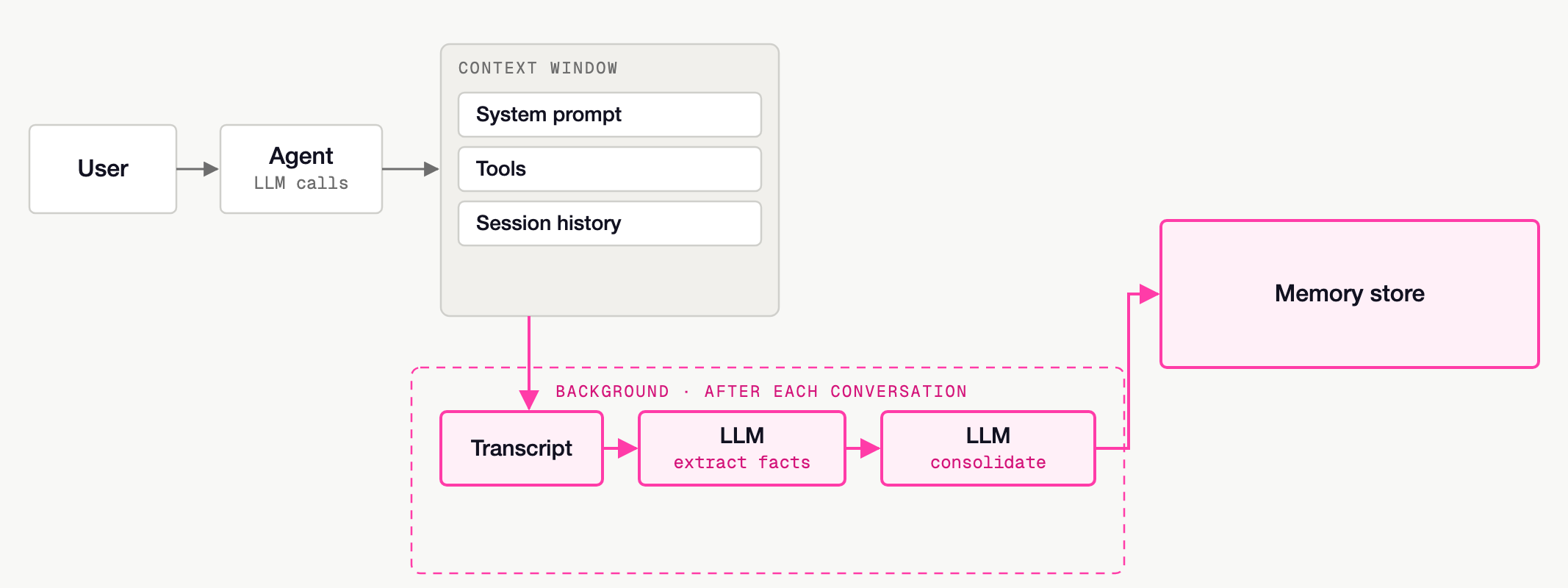
Step 2: extract memories in the background
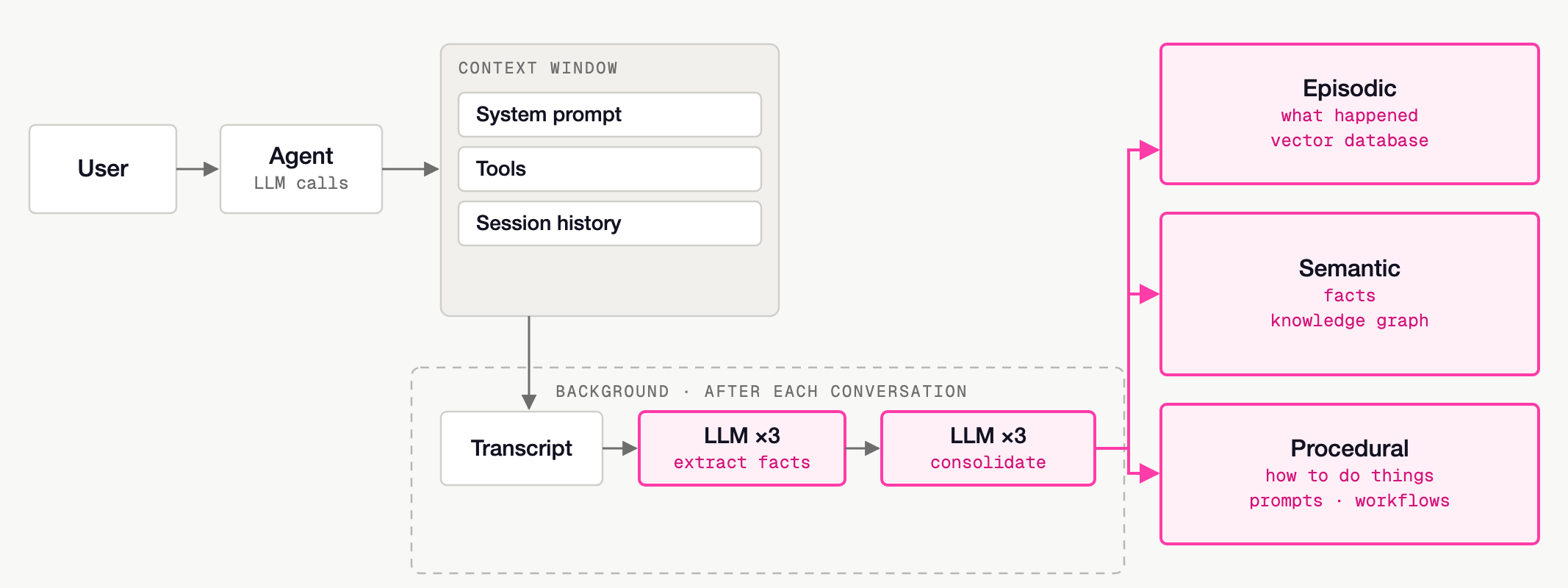
Step 3: three kinds of memory, three of everything
Step 4: a knowledge graph that understands time
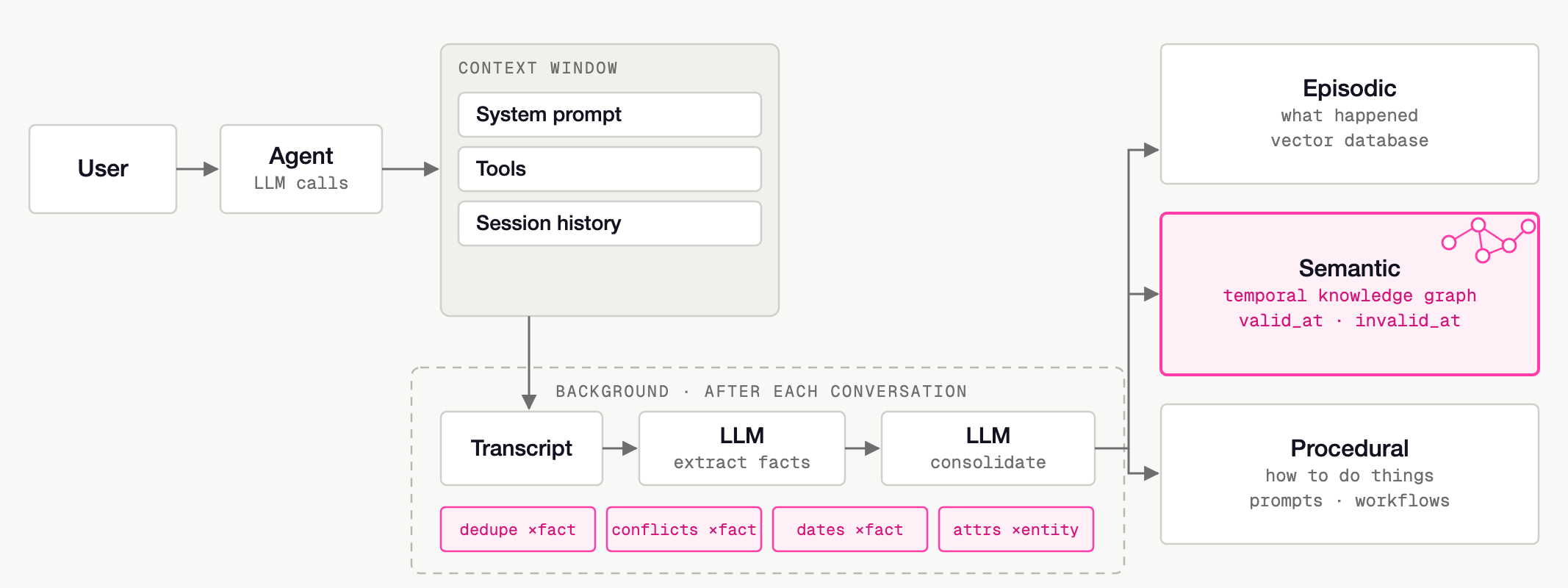
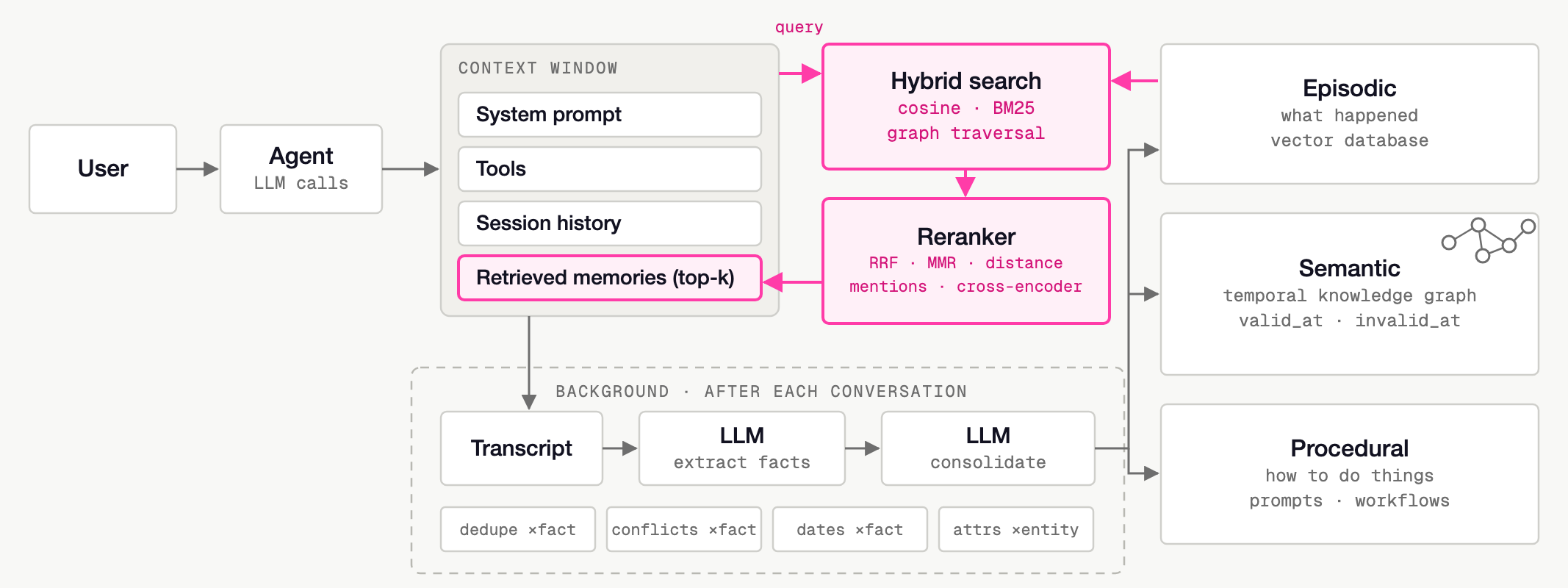
Step 5: hybrid search, then pick a reranker
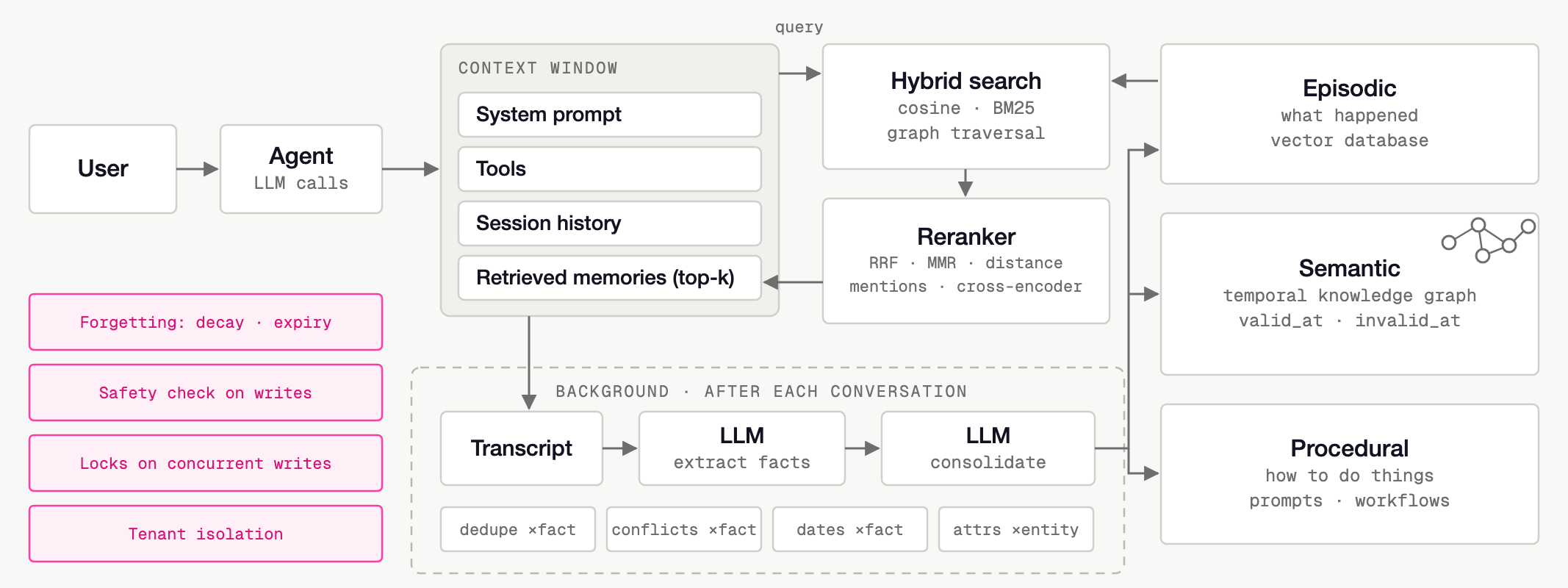
Step 6: forgetting, safety, locks, isolation
And when it's tuned, it works
- Zep:
- Up to +18.5% accuracy on LongMemEval
- Context: ~115,000 tokens → ~1,600
Part 2:
We built it
Our first prototype
was built on Graphiti
Problem 1: every write is a pile of LLM calls
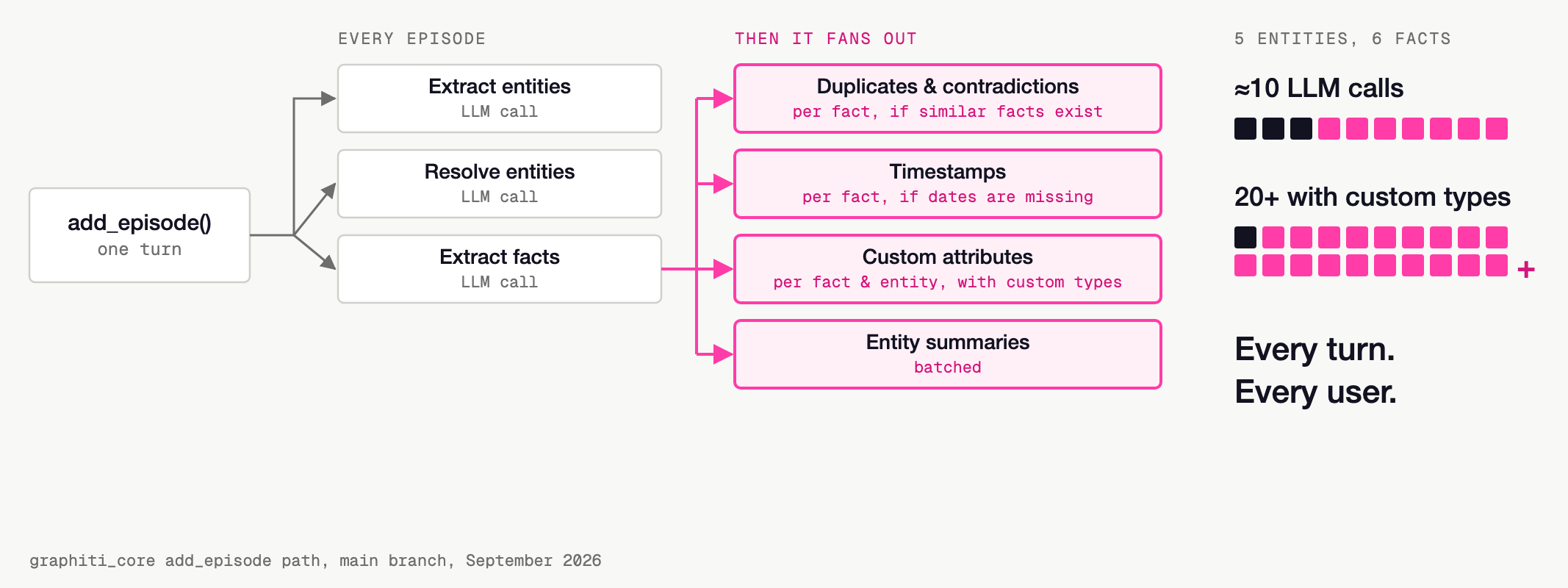
~10 LLM calls per turn.
20+ with custom types.
Problem 2: broad preferences
never get retrieved
- "Make a dataset of agent-prod traces"
- vs.
- "This user wants datasets with exactly 70 rows"
Problem 3: memory becomes
a data science project
Part 3:
What actually ships
Full context beats
every memory system
- Full conversation in context
- beat every memory system on accuracy
- - Mem0's own paper
Never underestimate the power
of a command line tool
- Letta:
- GPT-4o mini + plain files + grep-style tools
- 74.0% on LoCoMo
ChatGPT just includes everything
- "OpenAI just includes everything with every message"
- - Shlok Khemani
Coding agents just use a file.
- CLAUDE.md · AGENTS.md
- Loaded in full, every session
- "Keep it under 200 lines"
The whole architecture collapses into one file
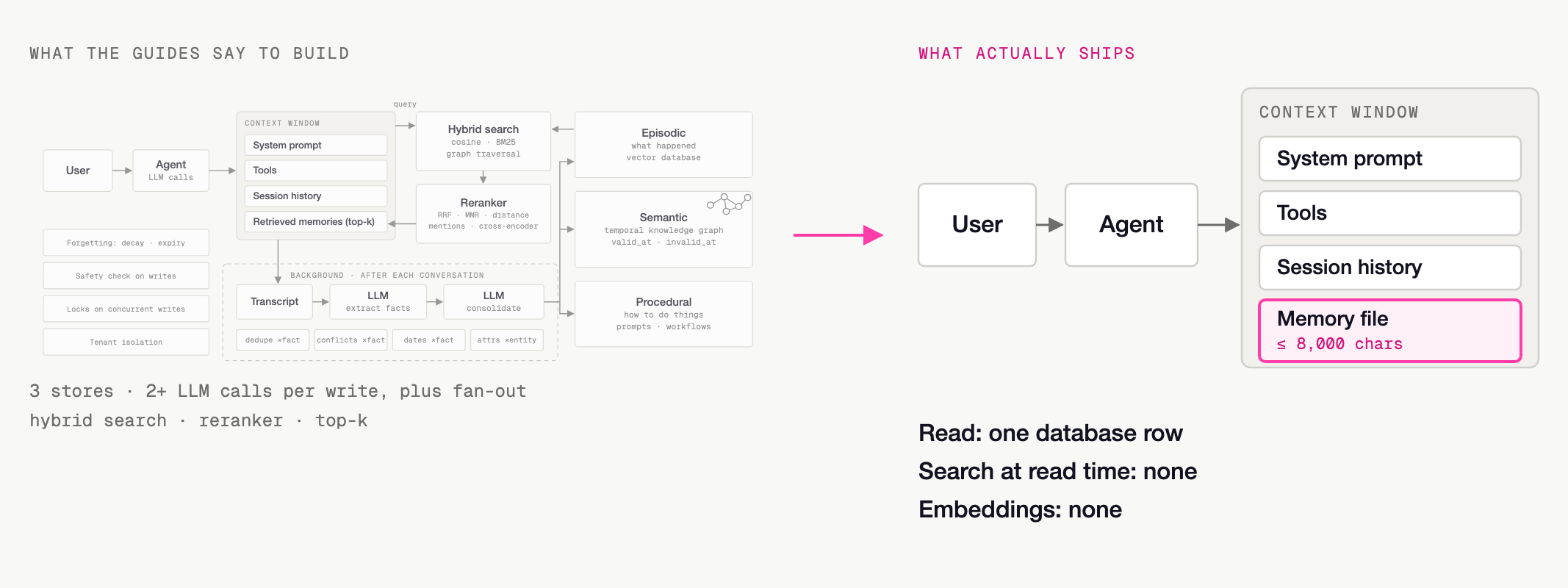
So that's what we shipped
- One file per user, per space
- 8,000 characters ≈ 2,000 tokens
- Always loaded
- No embeddings. Anywhere.
RAG is not dead
Why a file works
- Nothing to miss
- Cheap
- Easy to debug
Part 4:
Simple is not the same as easy
The complexity moves from reading memory to writing it
The bug changes too
- Graph: the right fact exists, but search misses it
- File: the right fact is in context, but isn't applied
Lesson 1: Don't make the agent decide mid-task
edit_alyx_memory()What it saved was junk
- trace IDs · encoded asset IDs · filter strings · counts
Only remember what's durable
and can't be fetched
- Durable - still true next month
- Not re-fetchable - no tool can reconstruct it
- Useful across sessions - shapes many future requests
The structure came from watching what it saved
- ## User Profile
- ## Goals
- ## Projects
- ## Assets
- ## Conventions
- ## Interaction corrections
Lesson 2: Write memory in the background
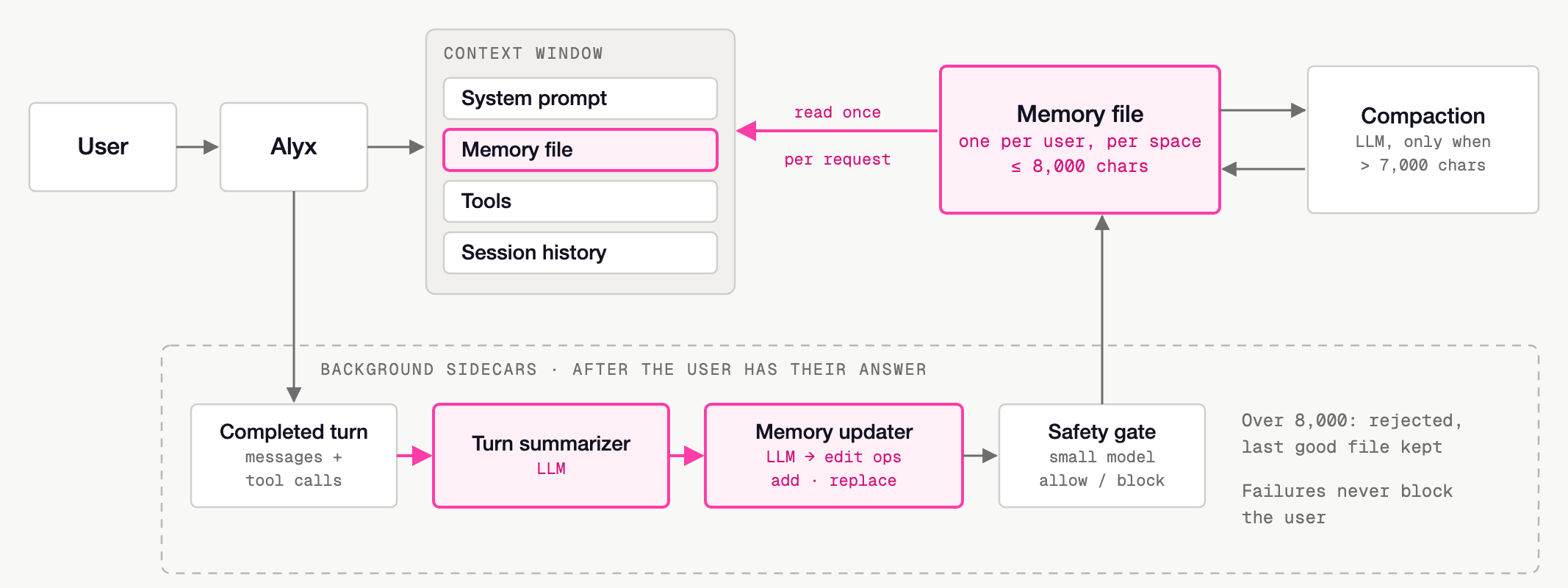
The turn summarizer is not optional
Lesson 3: Edit the file, don't rewrite it
- add → insert text after an exact anchor
- replace → swap one exact string for another
- replace with "" → delete
Even surgical edits lose things
Facts the user told you directly
get protected
- [user] datasets should have exactly 70 rows
Lesson 4: Compaction is the hard part
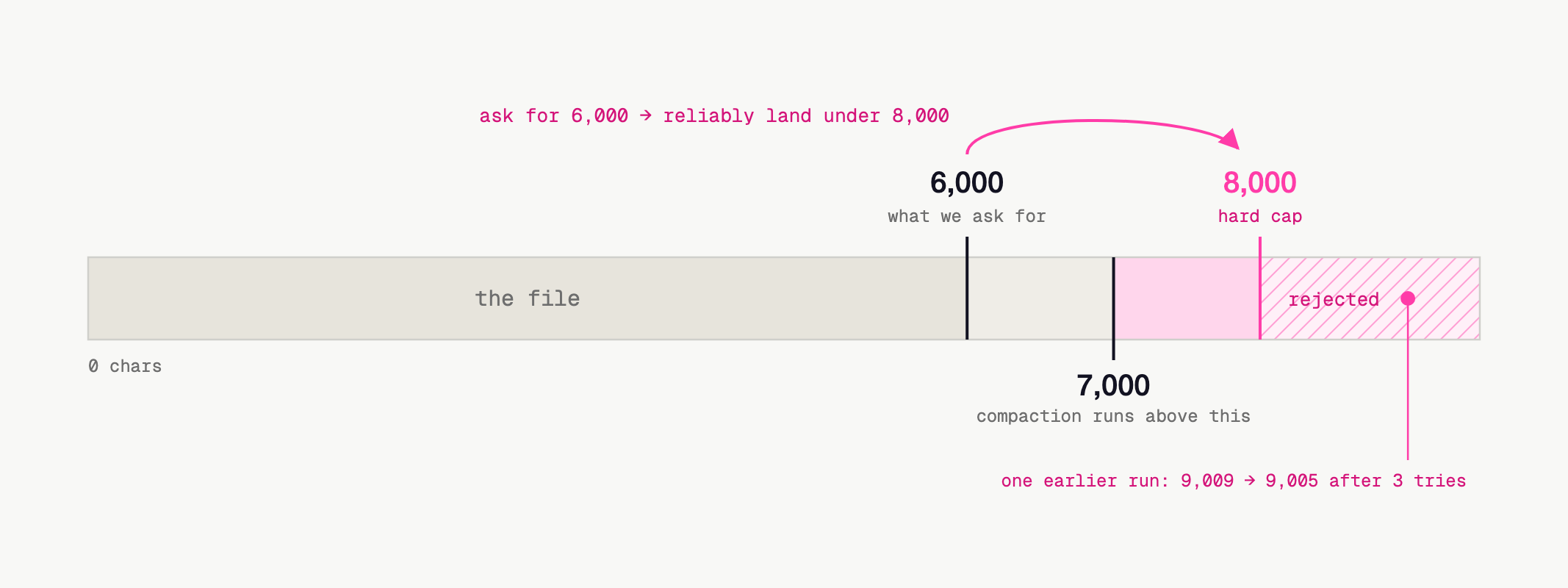
"No, I can't make it any shorter"
- Compaction ran on 22 of 48 turns
- Never once reached its target
- 3 attempts: 9,009 → 9,005 characters
LLMs can't count,
so give them percentages
- Tell it the current length
- Tell it the target length
- Tell it how much shorter, as a percentage
- Ask for 6,000 → reliably get under 8,000
Lesson 5:
Memory can make your agent worse
Test memory in both directions
- Memory-dependent: needs memory to answer well
- Memory-corruptible: memory could make it worse
Multi-session scenarios,
through the real agent
16 of 18 when memory matters.
9 of 9 when it shouldn't.
- Writes: 44 of 48 turns correct
- Memory-dependent: 16 of 18
- Memory-corruptible: 9 of 9
Memory is untrusted input
Part 5:
When a file isn't enough
One file works
because Alyx's scope is narrow
Always-loaded core,
search for the long tail
Start with the file
- One structured file, always loaded
- Save only what's durable and can't be fetched
- Write in the background, with small edits
- Compact toward a target well under the cap
- Test that memory helps *and* that it doesn't hurt
Add complexity
when an eval tells you to
Thanks
- arize.com/blog/alyx-agent-long-term-memory-architecture
Follow me:
LinkedIn: Laurie Voss
BlueSky: @seldo.com 🦋