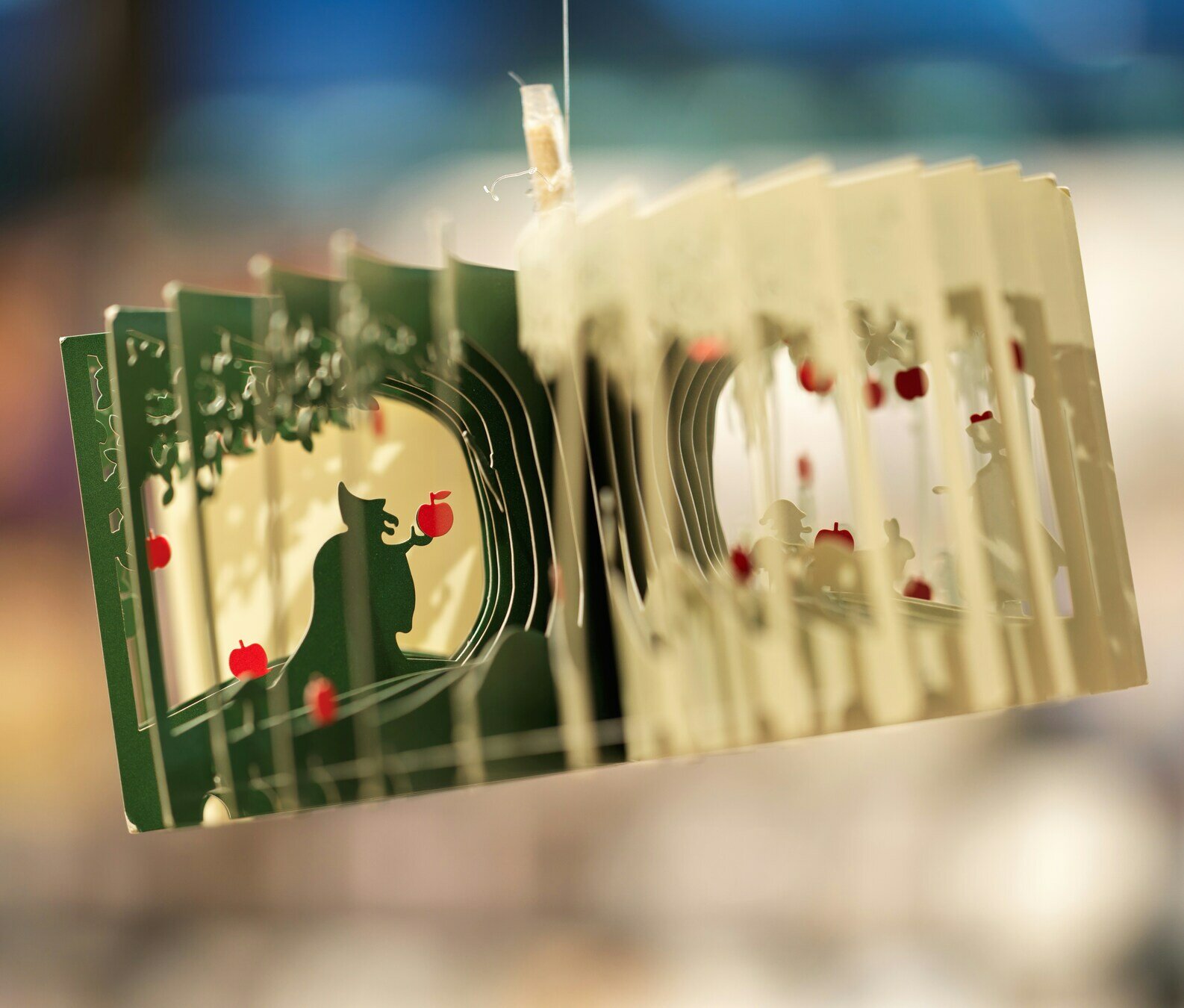
Once Upon a Time
The Behaviour Space of Stories
Shawn Graham
Carleton University
shawn.graham@carleton.ca
https://slides.com/shawngraham/dhbenelux scholar.social/@electricarchaeo
Act 1: Story shapes are real
Act 2: ...and we are in them...
Act 3: ...and we can only escape through the generosity of failure
...a story in three acts.
“People think that stories are shaped by people. In fact, it’s the other way around…
Stories are a parasitical life form, warping lives in the service only of the story itself.”
— Terry Pratchett, Witches Abroad
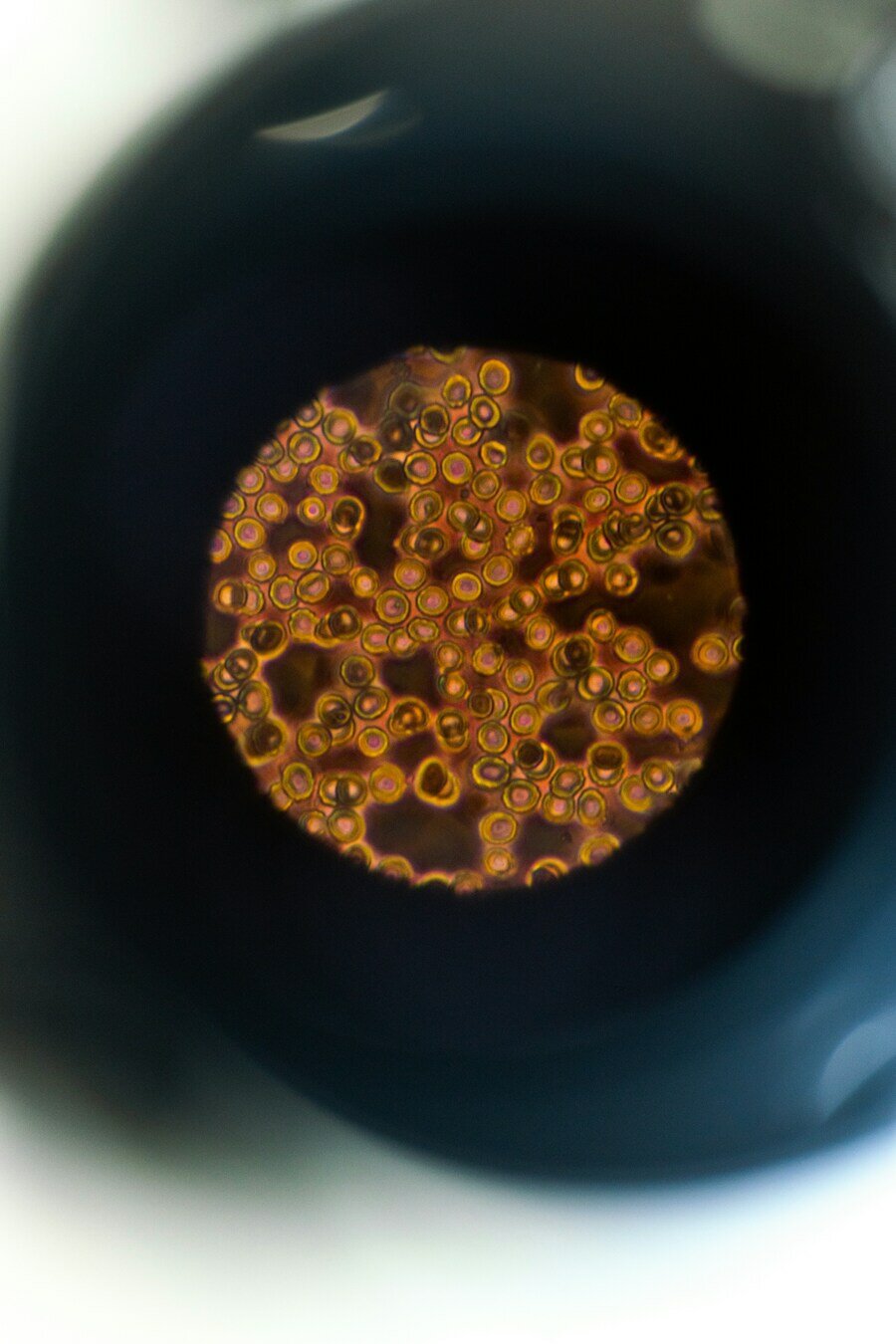
behold! parasites!
Two People
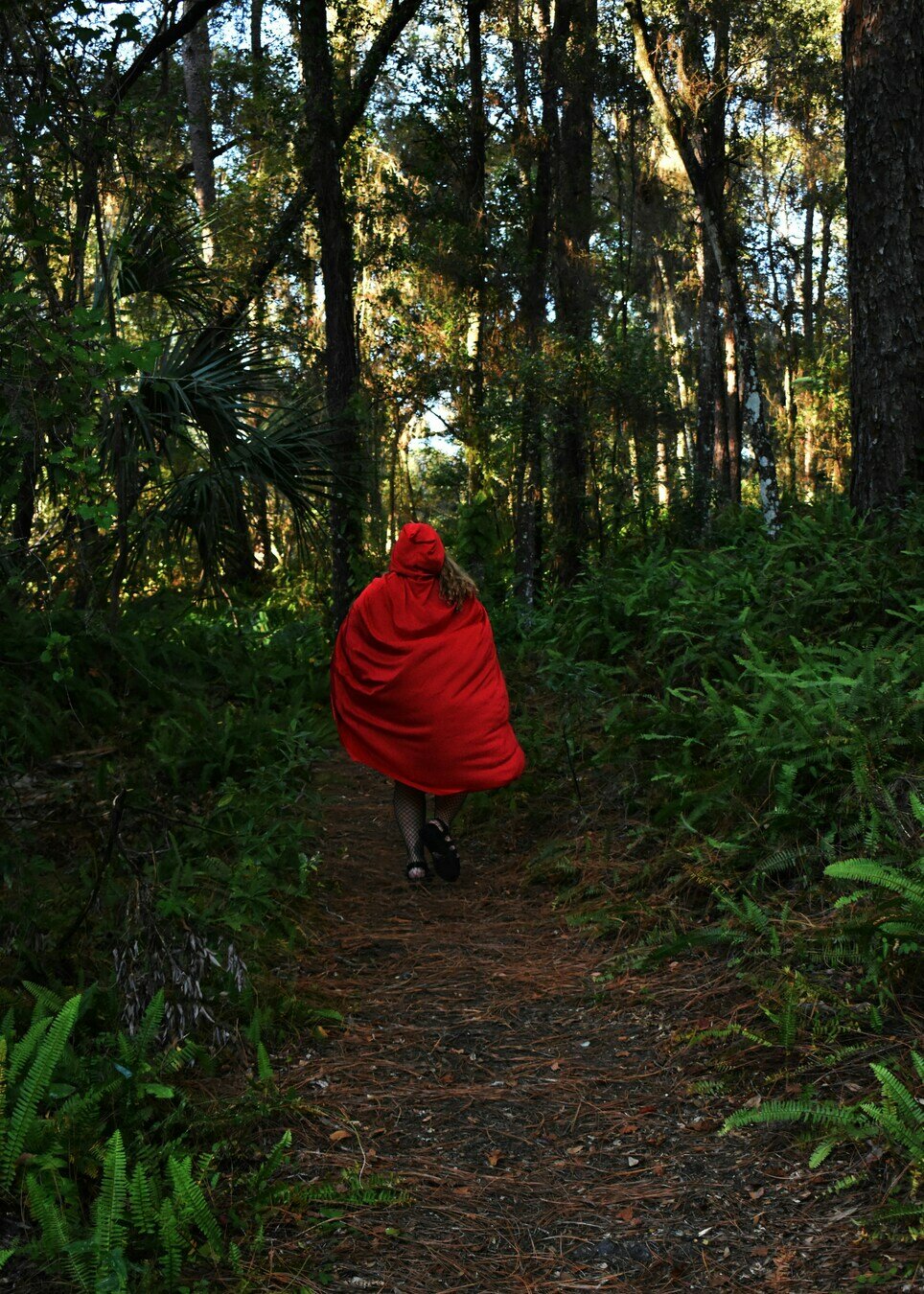
“Tell me,” said Magrat, “you said your mummy knows about the big bad wolf in the woods, didn’t you?”
“That’s right.”
“But nevertheless she sent you out by yourself to take those goodies to your granny?”
“That’s right. Why?"
— Terry Pratchet, Witches Abroad
triples = [
    ['Red Riding Hood', 'lives_in', 'Village'],
    ['Red Riding Hood', 'is_child_of', 'Mother'],
    ['Mother', 'gives_basket_to', 'Red Riding Hood'],
    ['Red Riding Hood', 'visits', 'Grandma'],
    ['Grandma', 'lives_in', 'Forest House'],
    ['Wolf', 'lives_in', 'Forest'],
    ['Wolf', 'meets', 'Red Riding Hood'],
    ['Wolf', 'eats', 'Grandma'],
    ['Wolf', 'disguises_as', 'Grandma'],
    ['Wolf', 'waits_in', 'Forest House'],
    ['Woodcutter', 'hunts', 'Wolf'],
    ['Woodcutter', 'saves', 'Red Riding Hood'],
    ['Grandma', 'is_at', 'Forest House'],
    ['Wolf', 'is_at', 'Forest House']
]

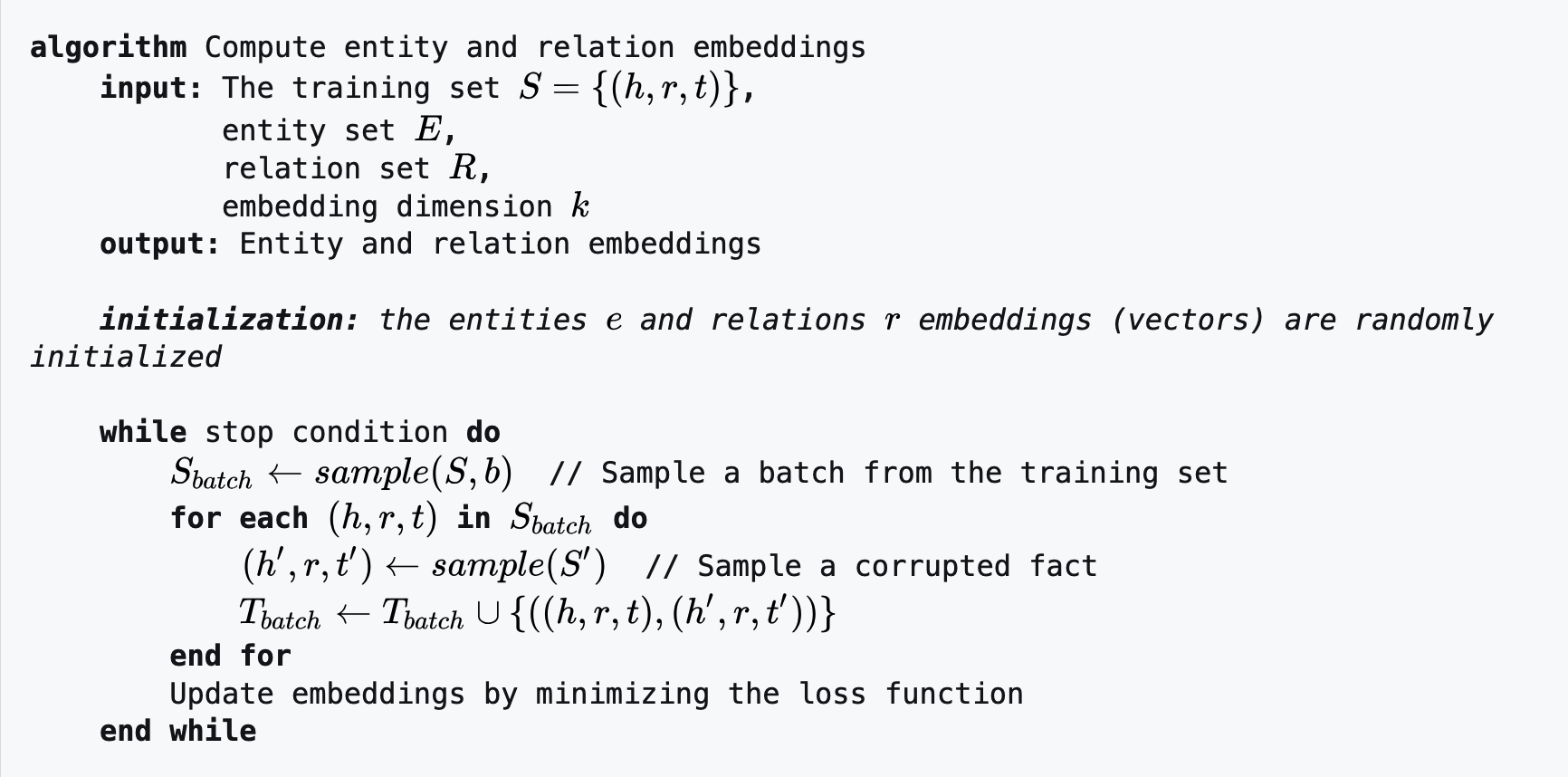
good ol' wikipedia, eh? https://en.wikipedia.org/wiki/Knowledge_graph_embedding
Models I used to create the embeddings:
DistMult - uses diagonals; can't represent asymetric relations well
ComplEx - like DistMult but with complex numbers, can handle asymetric relations
RotatE - models relationships as rotations in complex space. Can handle inversion/composition tool.
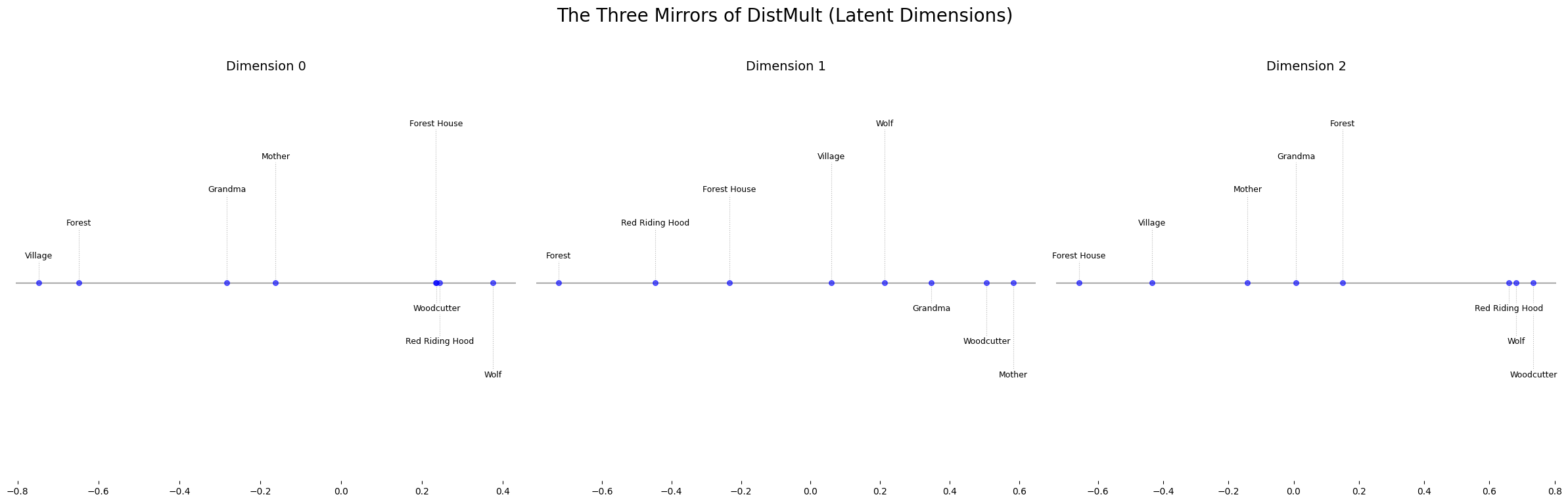
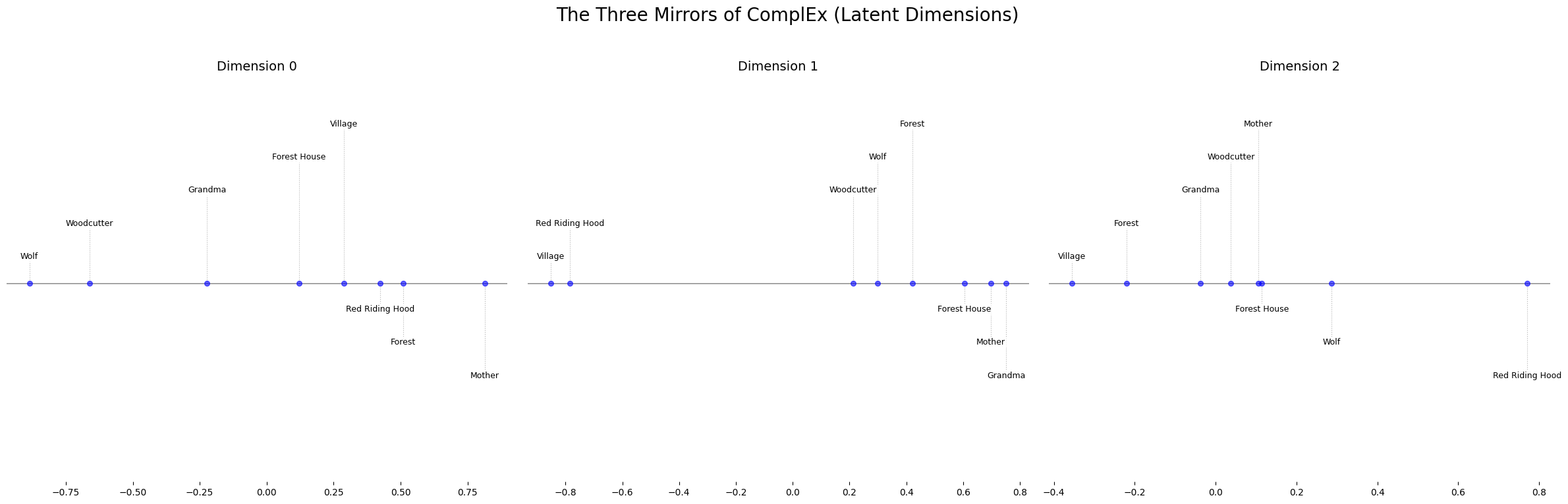
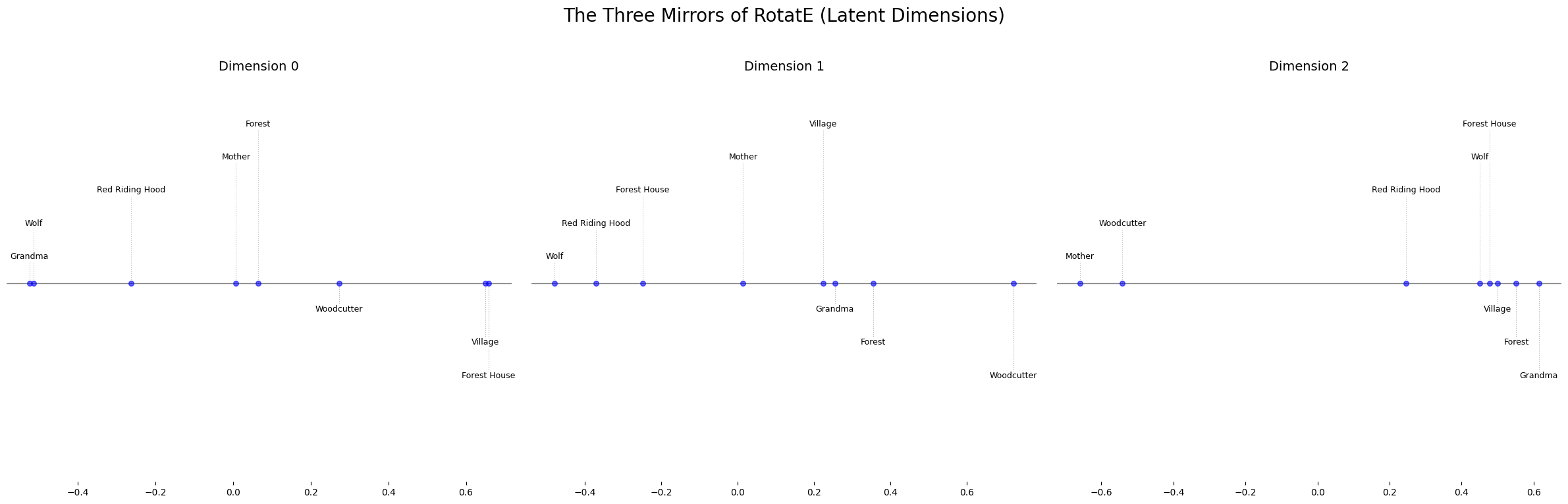
<- across 3 dimensions, contrasting between actors and places
<- across 3 dimensions, organizing across domestic/wild divide, and who acts upon whom
<- across 3 dimensions, notice the close overlap of wolf/grandma in dimension 0 and dimension 2
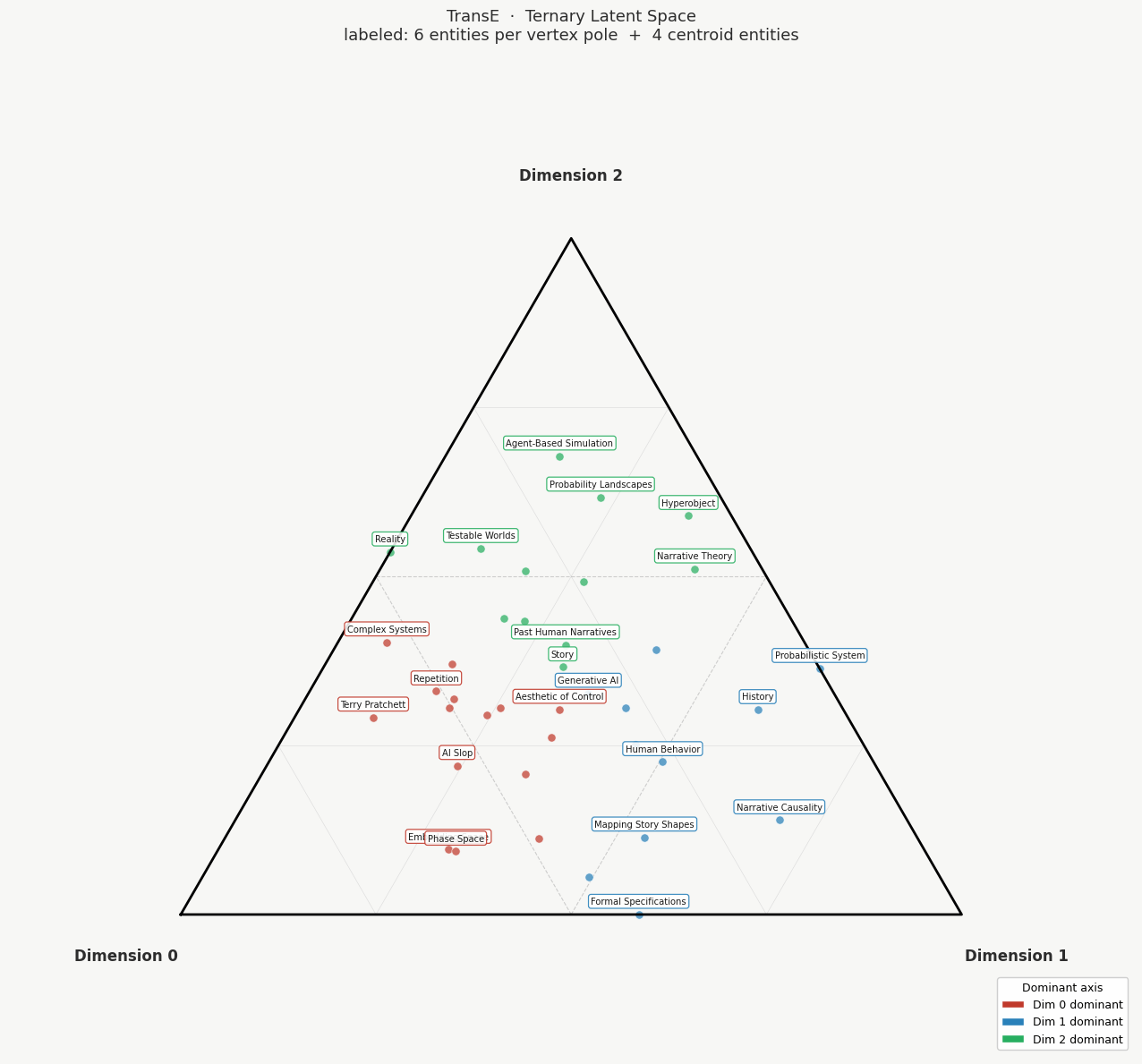
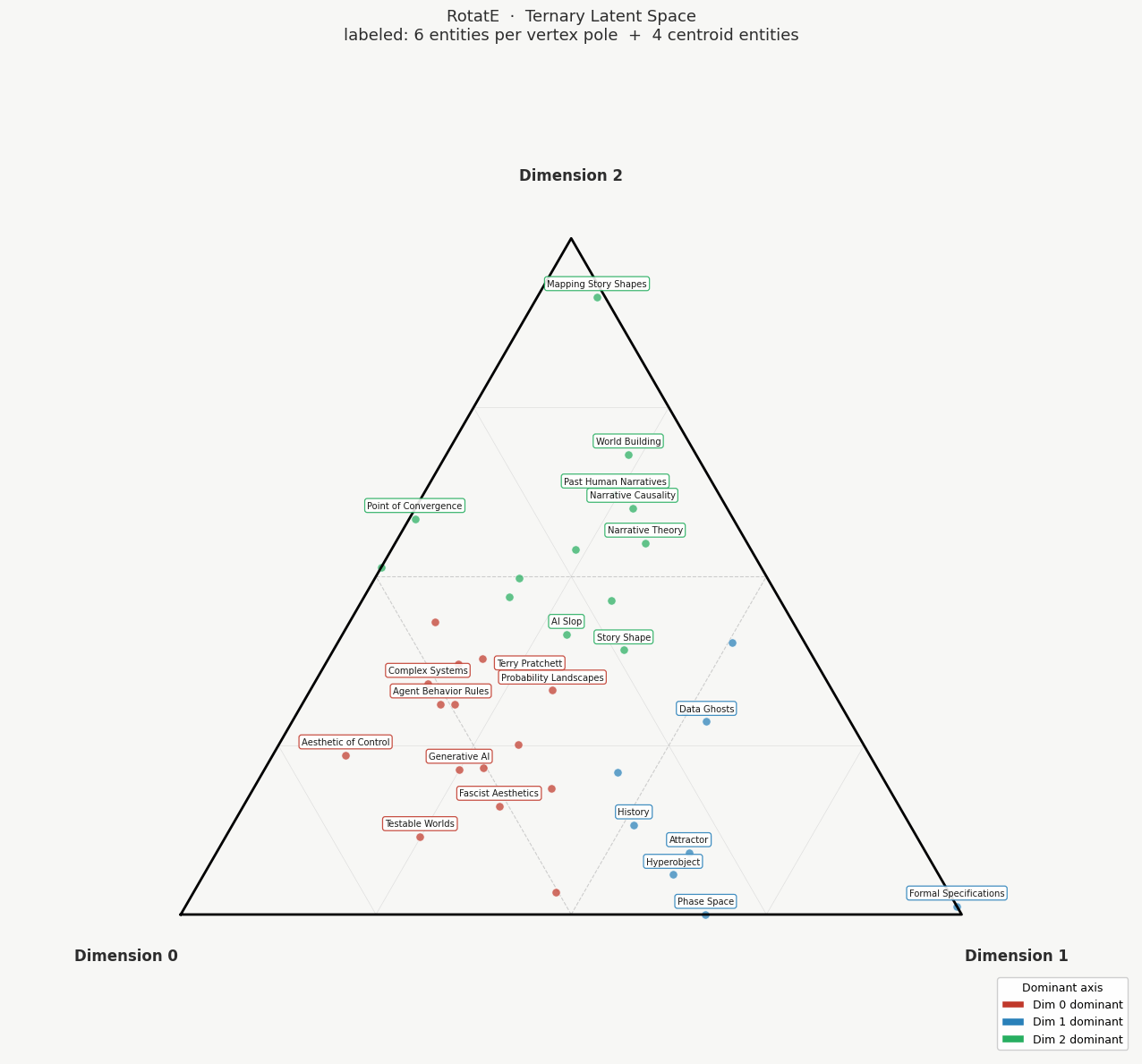
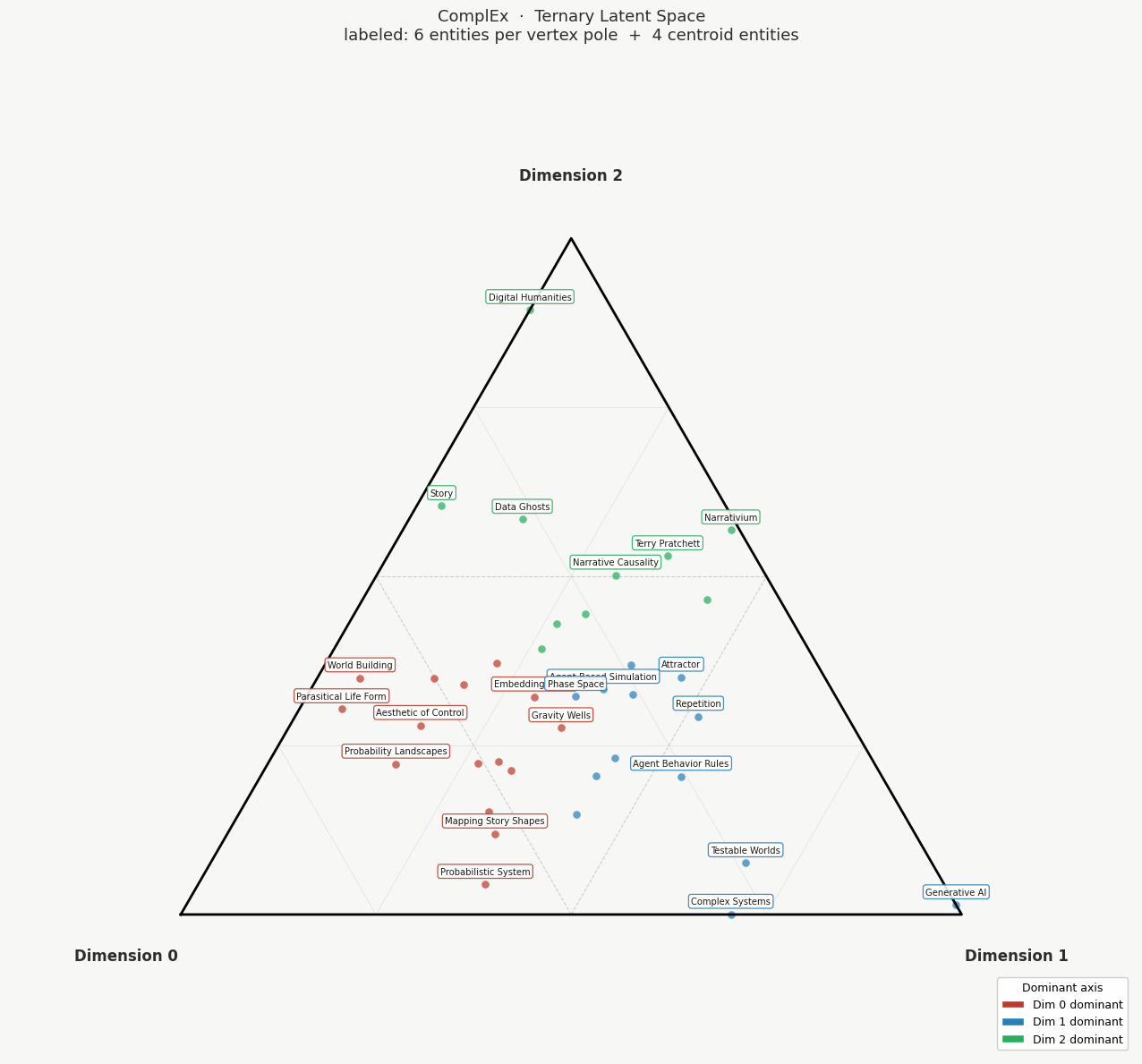
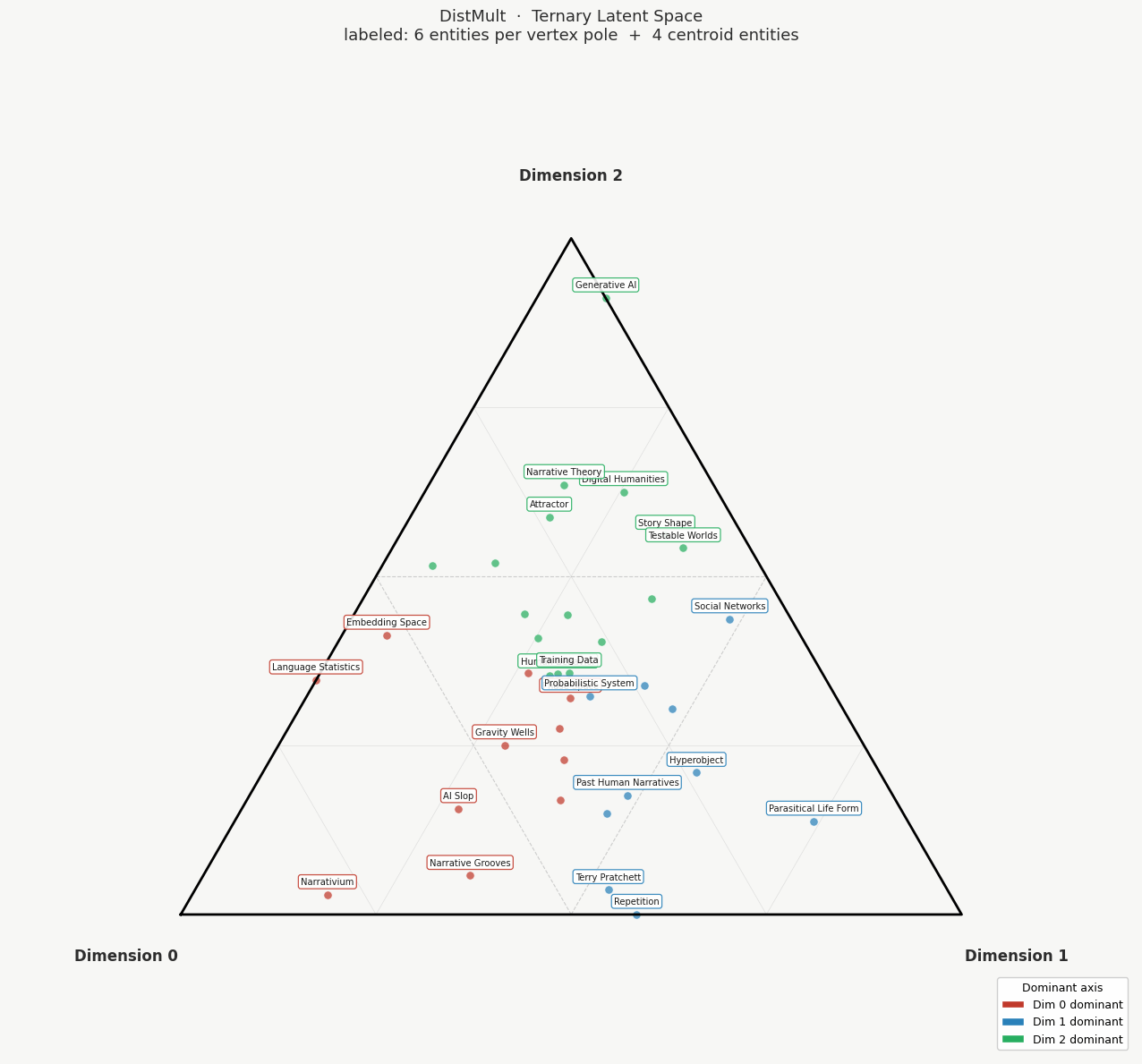
Raw dimension scores (which span roughly −0.5 to +0.5 and can't directly be ternary coordinates) are first min-max scaled per dimension to [0, 1], then row-normalised so each entity's three values sum to 1.
This preserves relative ordering within each dimension while producing valid barycentric coordinates. Entities that score strongly on one dimension cluster near its vertex; entities the model found structurally ambiguous cluster near the centre.
Look therefore for contrasts between the centre and peripheries.
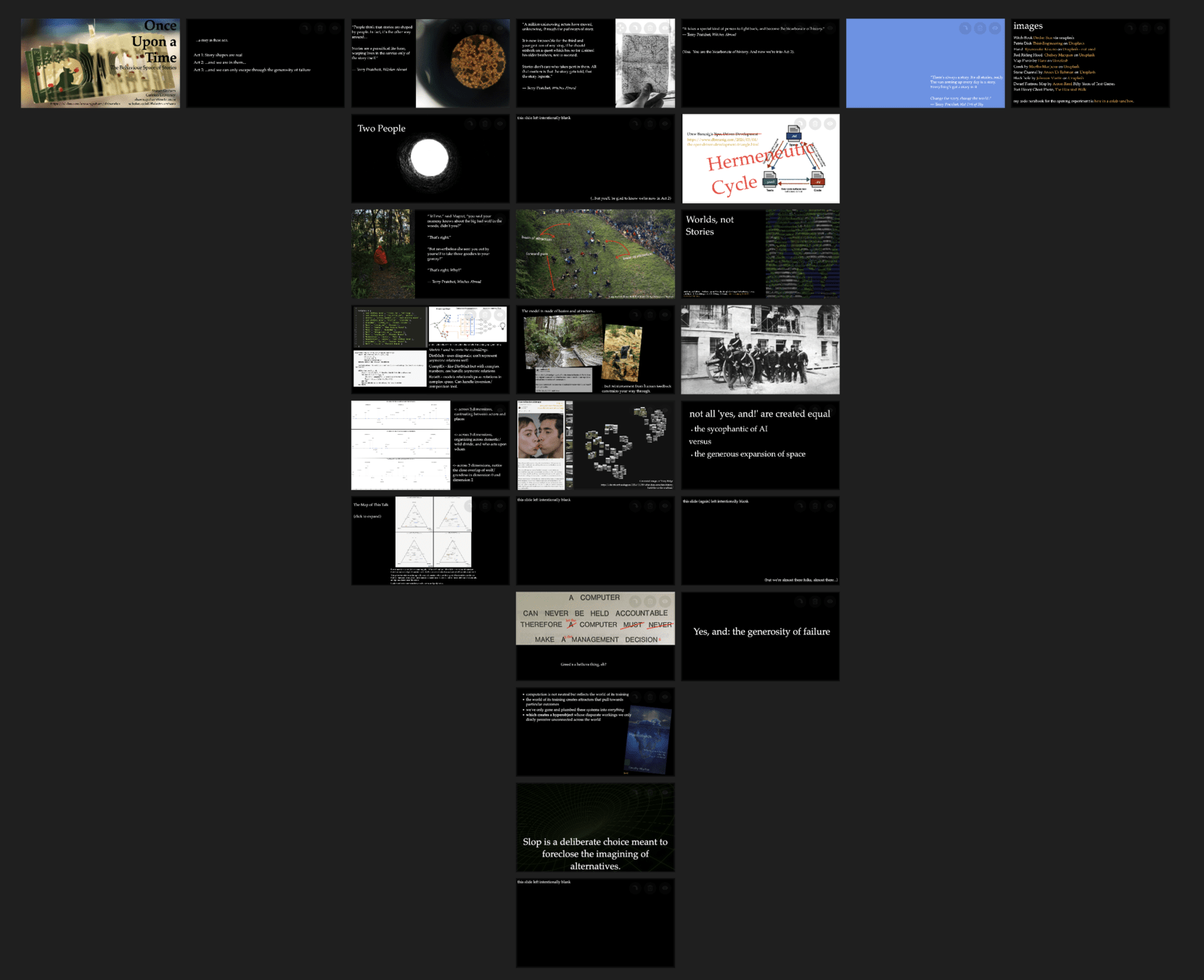
The Map of This Talk
(click to expand)
“A million unknowing actors have moved, unknowing, through the pathways of story.
It is now impossible for the third and youngest son of any king, if he should embark on a quest which has so far claimed his older brothers, not to succeed.
Stories don't care who takes part in them. All that matters is that the story gets told, that the story repeats.”
— Terry Pratchet, Witches Abroad
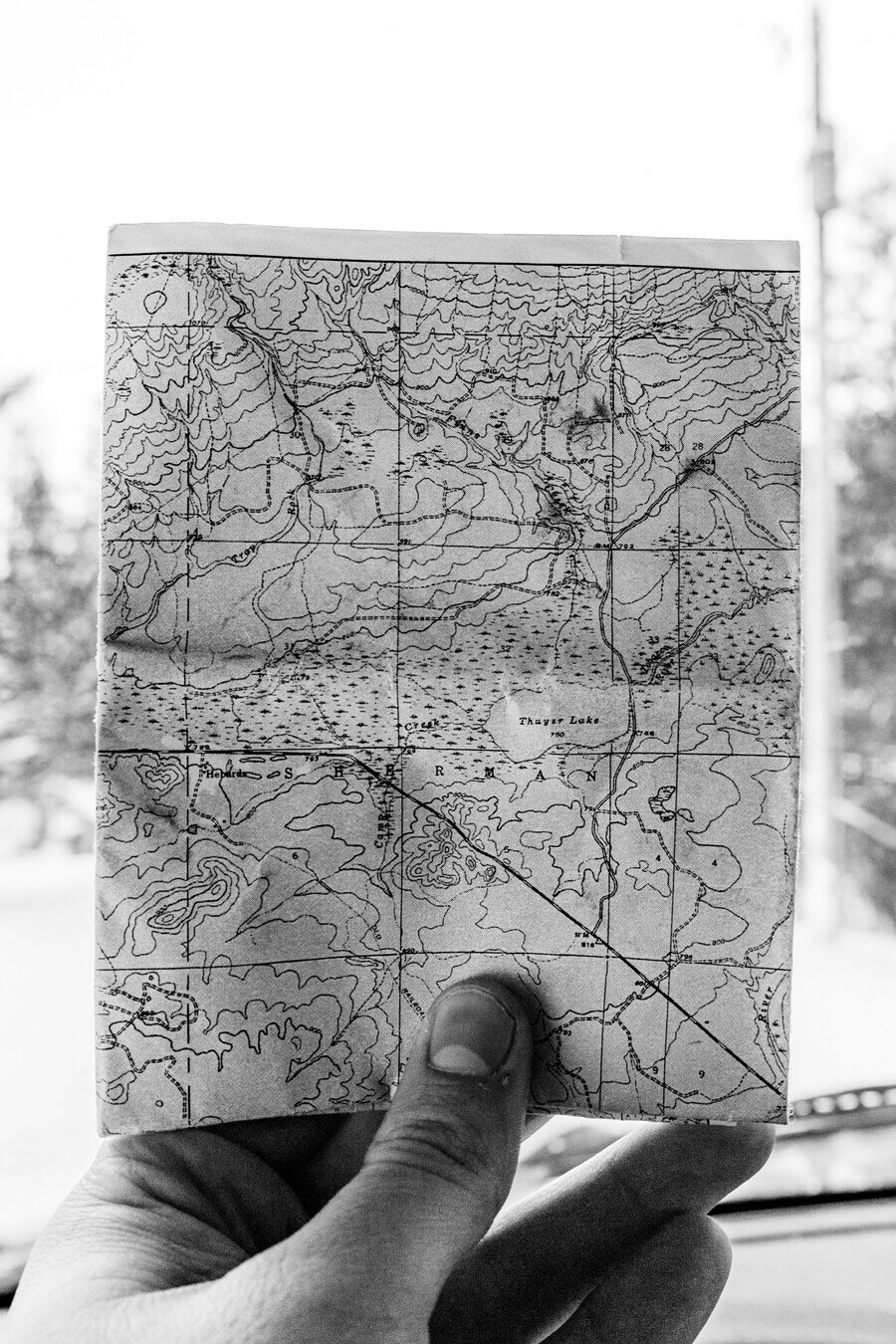
this slide left intentionally blank
(...but you'll be glad to know we're now in Act 2)
Coopers Hill Cheese Roll 2024. Photo Molly Darlington / Reuters
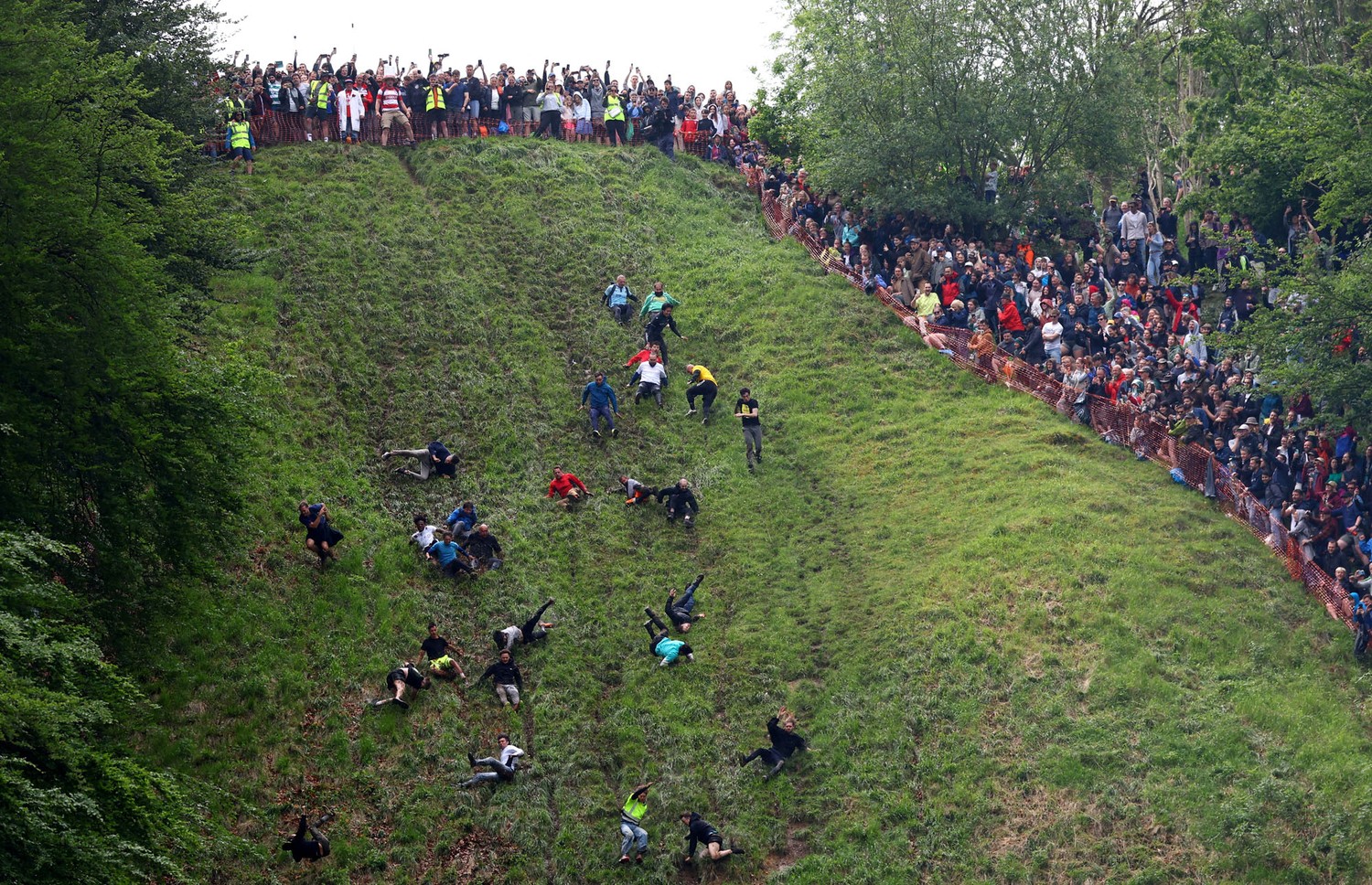
basin of attraction
basin of attraction
forward pass
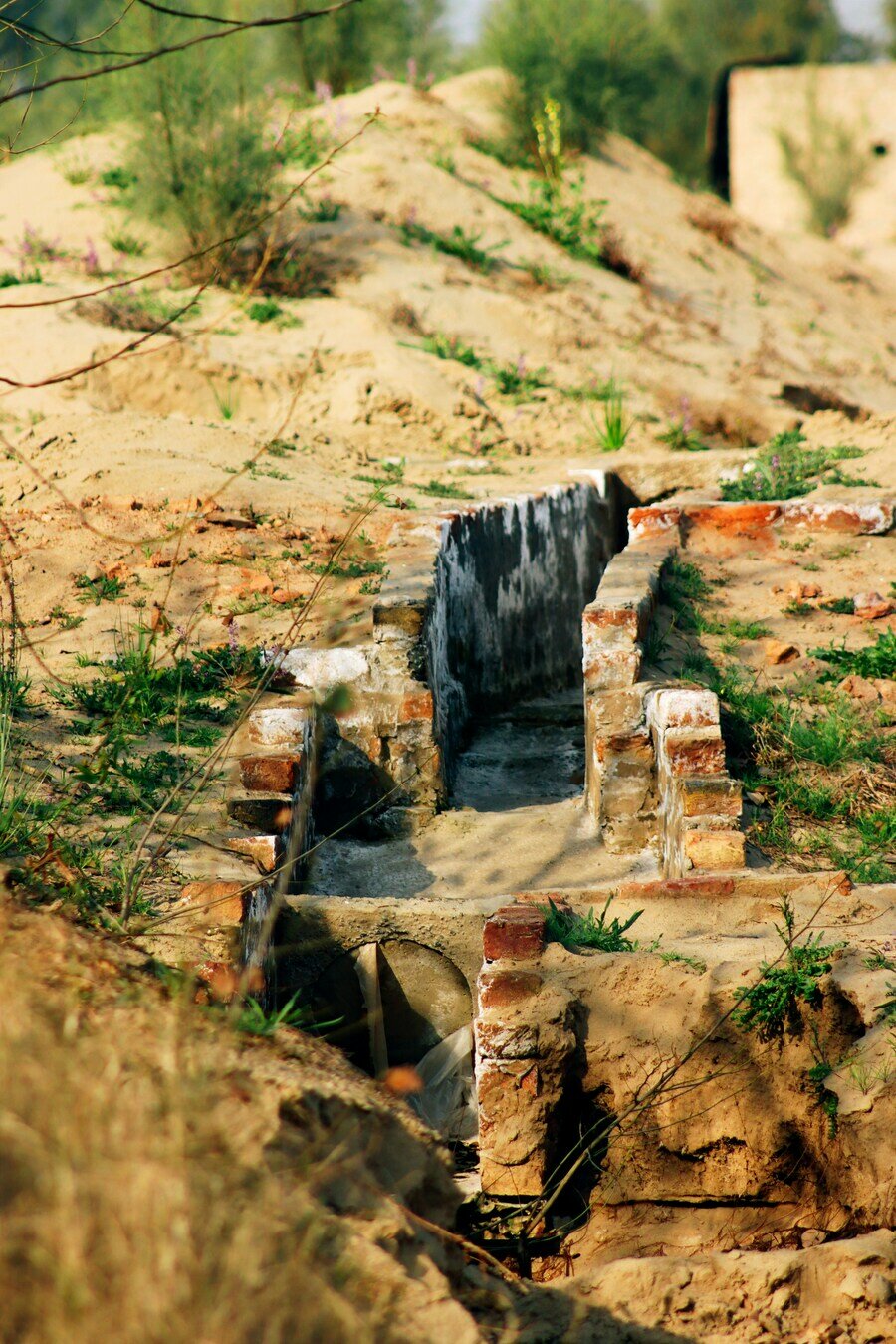
The model is made of basins and attractors...
...but reinforcement from human feedback constrains your way through.

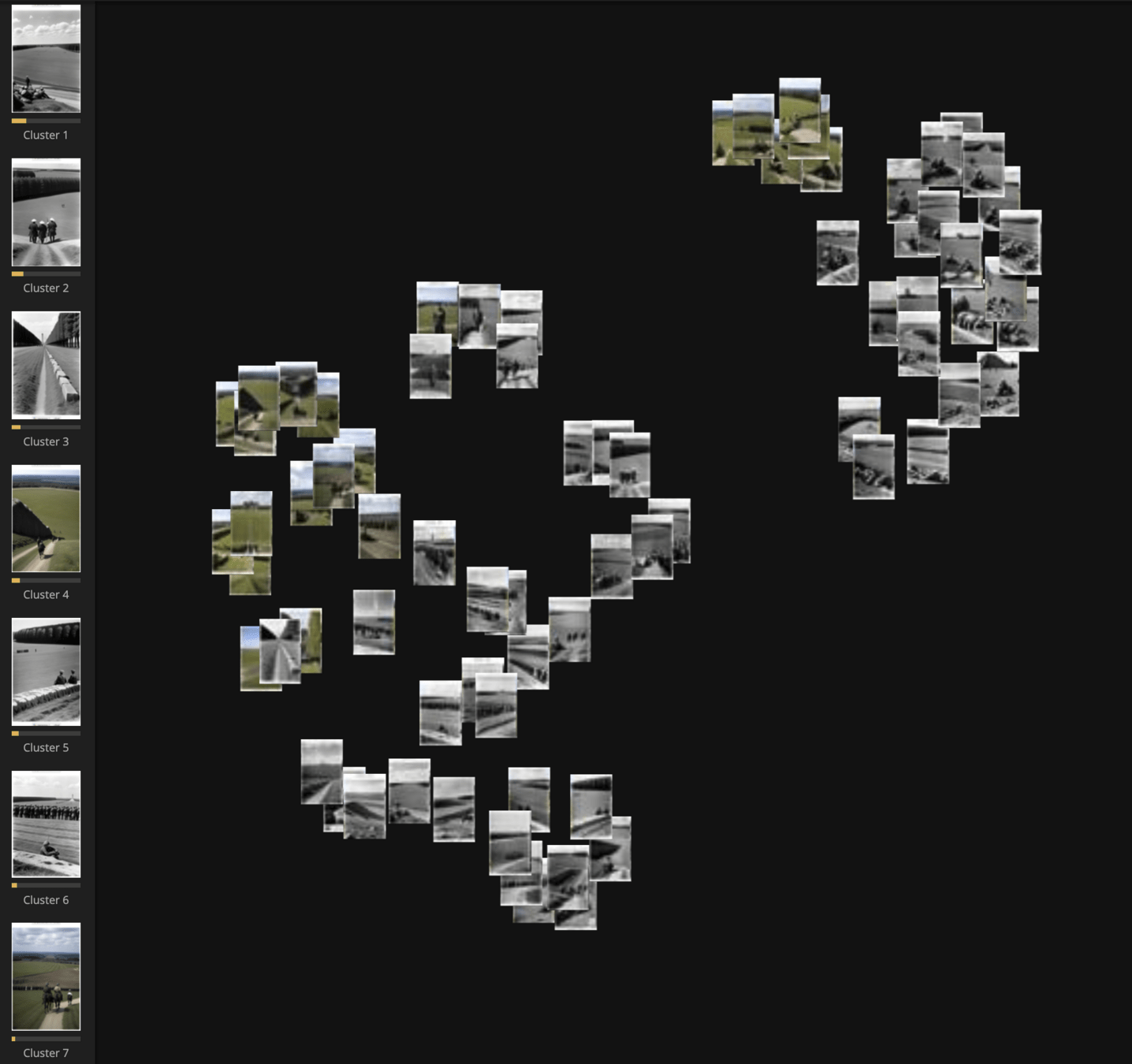
Generated images of 'Vimy Ridge'
https://electricarchaeology.ca/2024/11/15/what-does-canadian-history-look-like-to-the-machine/
this slide left intentionally blank
Adam Kucharski, Real signals or artificial stereotypes?
https://kucharski.substack.com/p/real-signals-or-artificial-stereotypes
Myra Cheng et al.
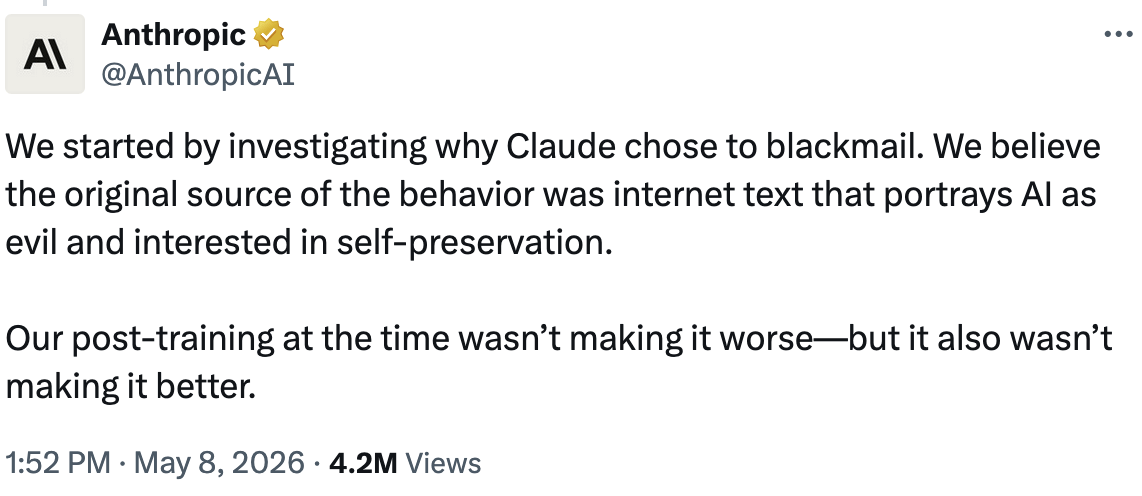
Sycophantic AI decreases prosocial intentions and promotes dependence.Science391,eaec8352(2026).DOI:10.1126/science.aec8352
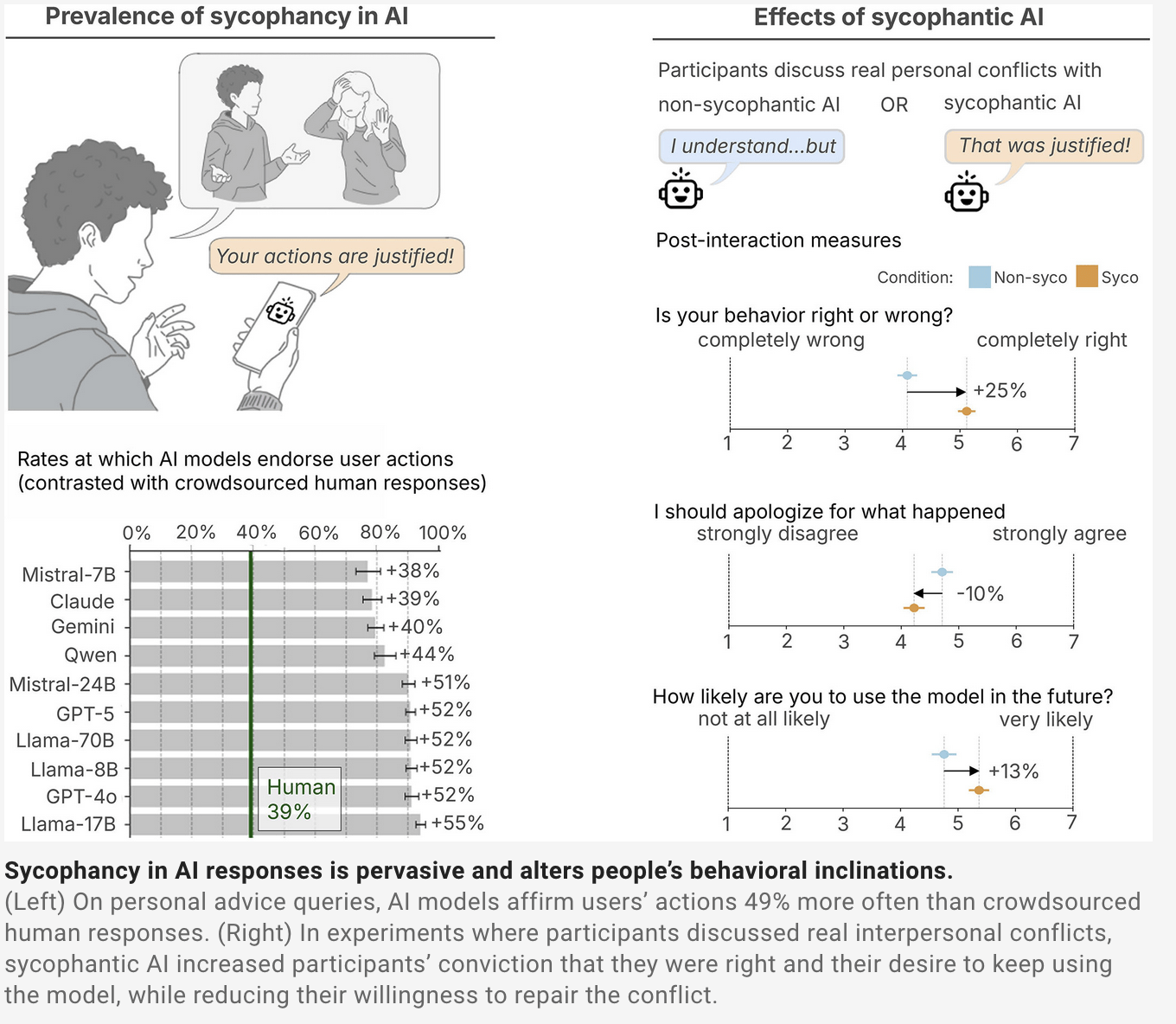


Sycophancy
&
Strong Attractors
=
a recipe for disaster
let the
ll the
S
Greed's a helluva thing, eh?
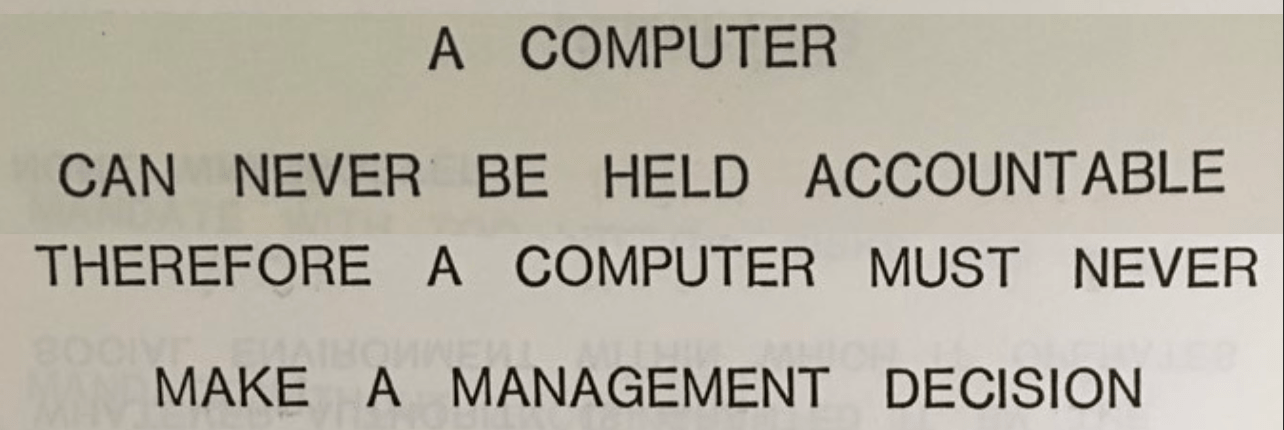
...how to sell an AI system to upper management...
- computation is not neutral but reflects the world of its training
- the world of its training creates attractors that pull towards particular outcomes
- we've only gone and plumbed these systems into everything
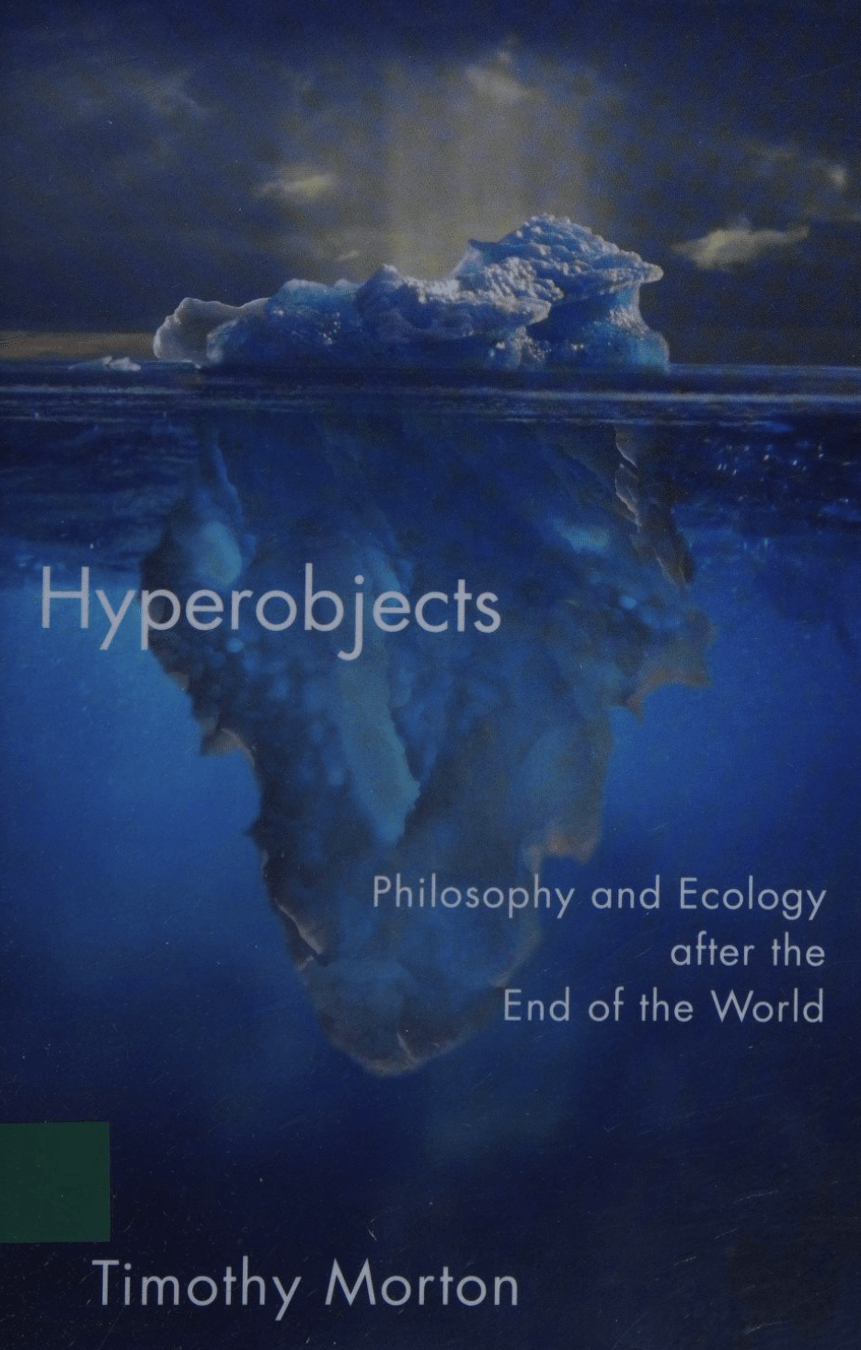
- which creates a hyperobject whose disparate workings we only dimly perceive unconnected across the world
Slop is a deliberate choice meant to foreclose the imagining of alternatives.
this slide left intentionally blank
“It takes a special kind of person to fight back, and become the bicarbonate of history.”
— Terry Pratchet, Witches Abroad
(You. You are the bicarbonate of history. And now we're into Act 3).

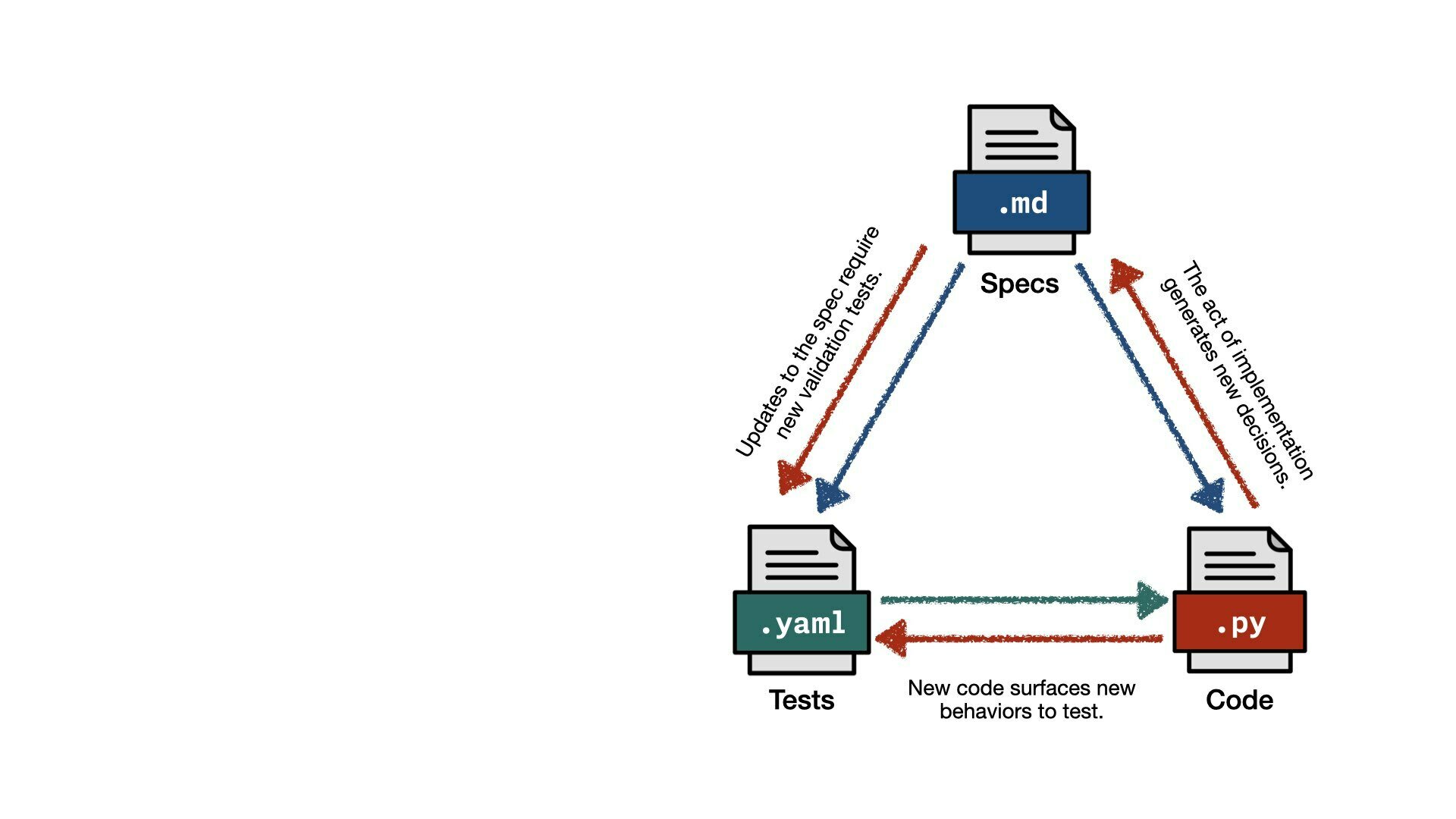
Drew Breunig's 'Spec Driven Development'
https://www.dbreunig.com/2026/03/04/the-spec-driven-development-triangle.html
Hermeneutic Circle
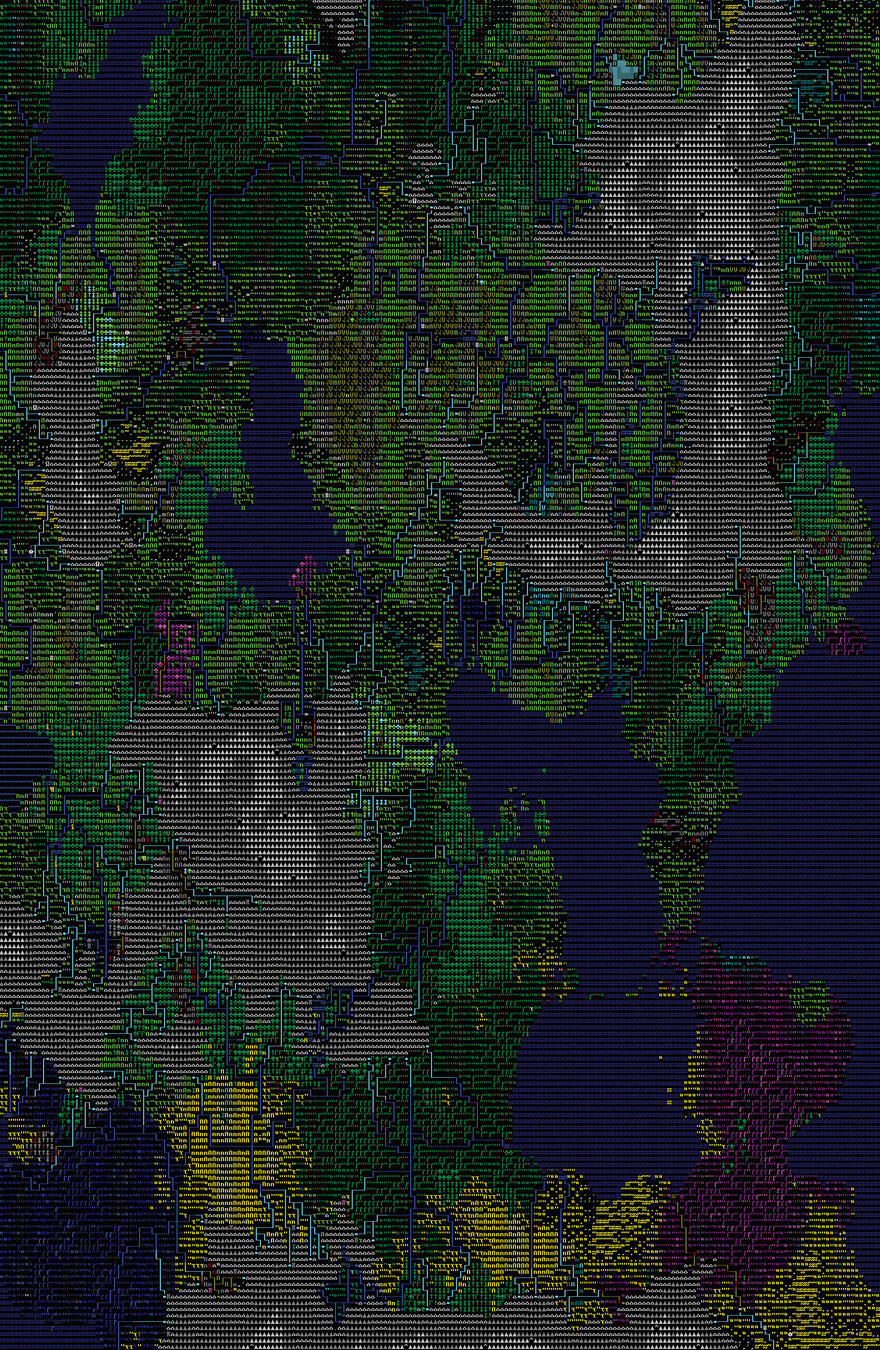
Worlds, not Stories
see Morgan, Colleen. ‘Archaeology as Worldbuilding’. Cambridge Archaeological Journal, vol. 36, no. 1, Feb. 2026, pp. 92–101. DOI.org (Crossref), https://doi.org/10.1017/S0959774325100164.
not all 'yes, and!' are created equal
-
the sycophancy of AI
versus
-
the generosity of the storyteller
this slide (again) left intentionally blank
(but we're almost there folks, almost there...)
Yes, and: the generosity of failure
“There’s always a story. It’s all stories, really. The sun coming up every day is a story. Everything's got a story in it.
Change the story, change the world.”
— Terry Pratchet, Hat Full of Sky

Witch Book Declan Sun via unsplash
Petri Dish ThisisEngineering on Unsplash
Red Riding Hood Chelsey Marques on Unsplash
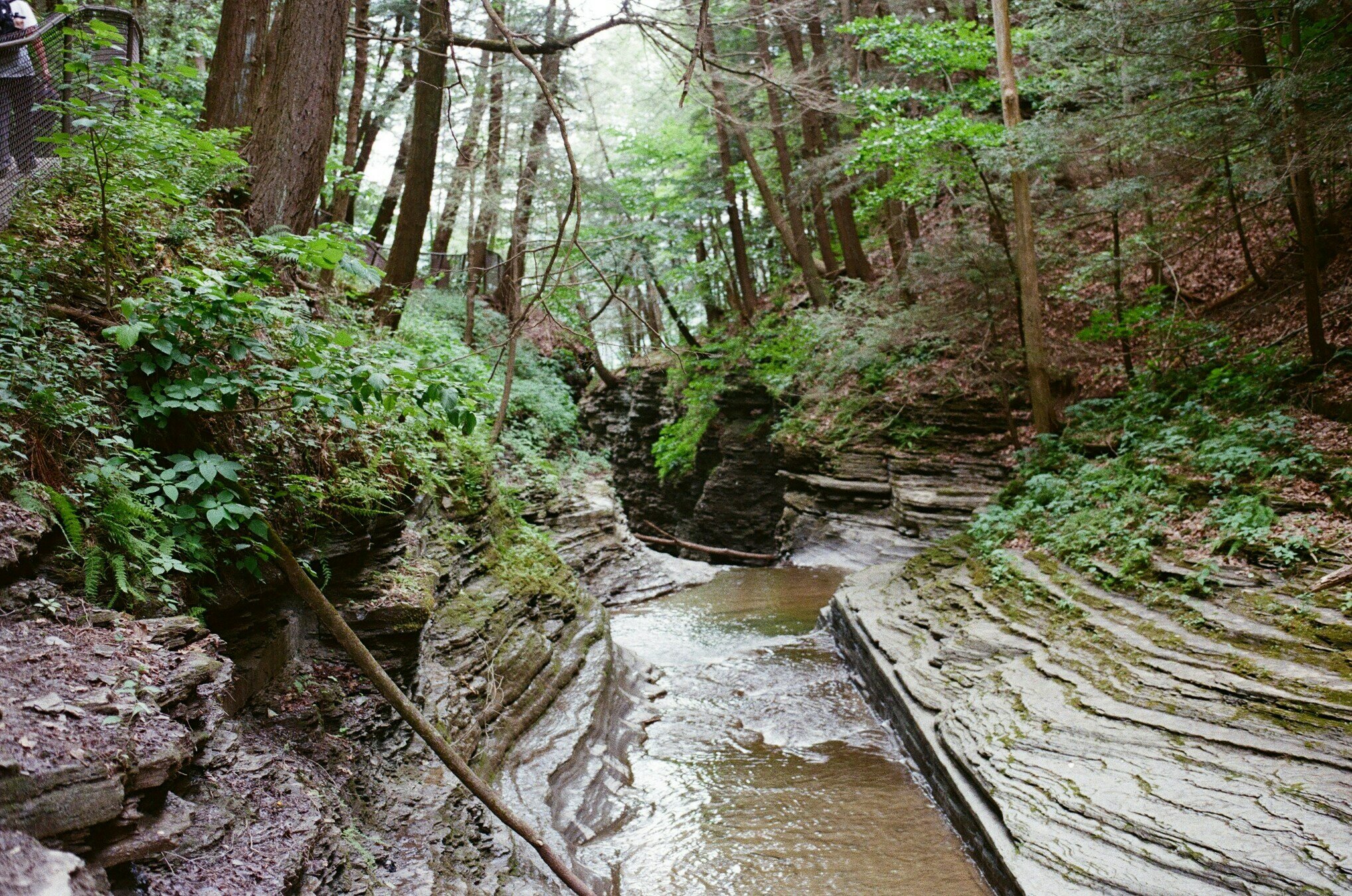
Creek by Martha Monjaras on Unsplash
Stone Channel by Anees Ur Rehman on Unsplash
Black hole by Johnson Martin on Unsplash
Dwarf Fortress Map by Aaron Reed Fifty Years of Text Games
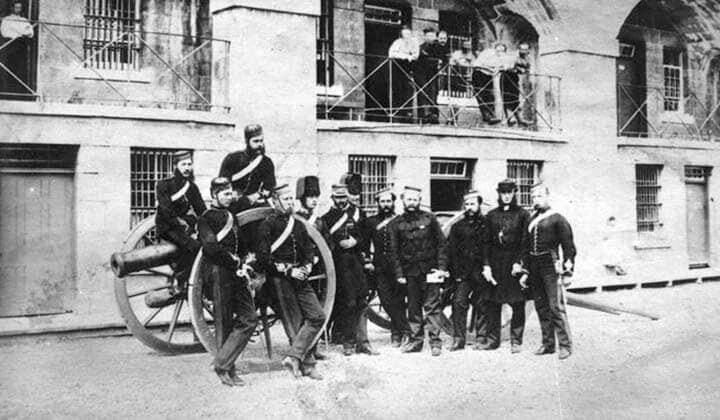
Fort Henry Ghost Photo, The Haunted Walk
Bicarbonate Thomas Kinto on Unsplash
Typewriter by Patrick Fore on Unsplash
Knowledge graph embedding explanatory diagrams: wikipedia
My code notebook for the opening experiment is here in a colab sandbox.
images